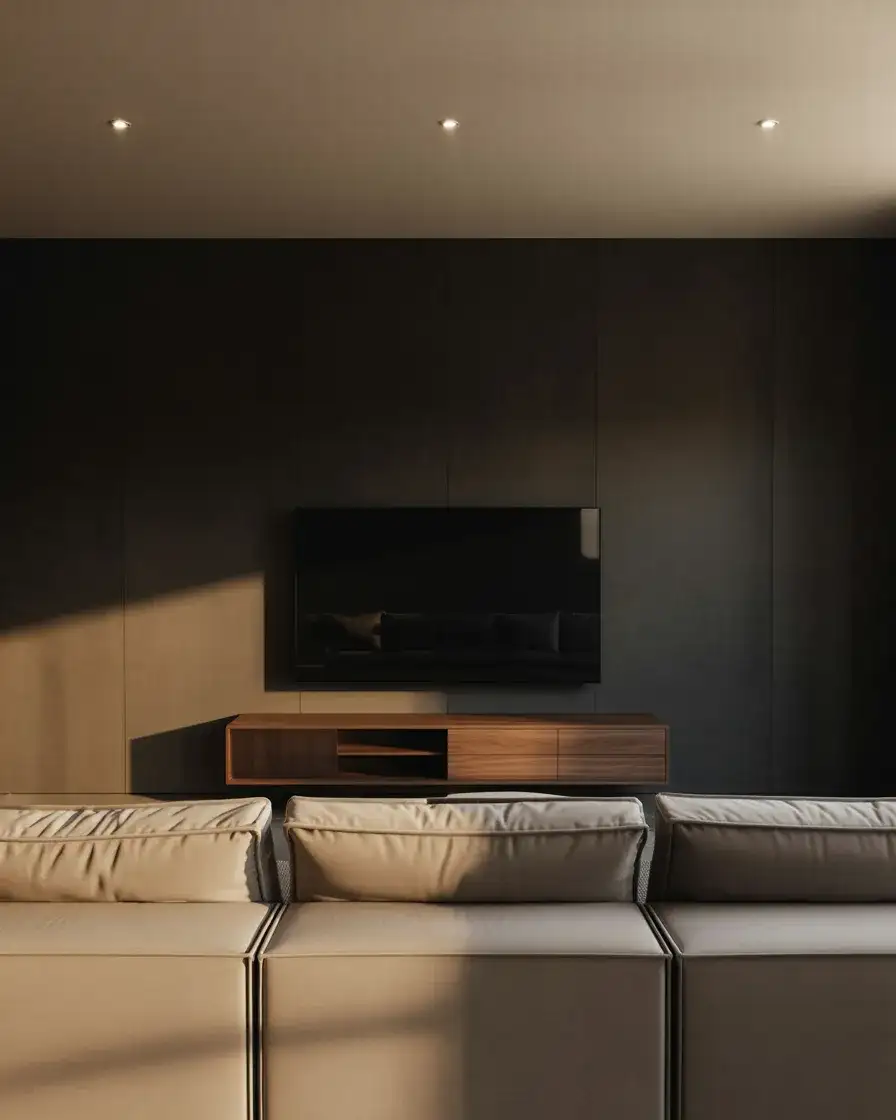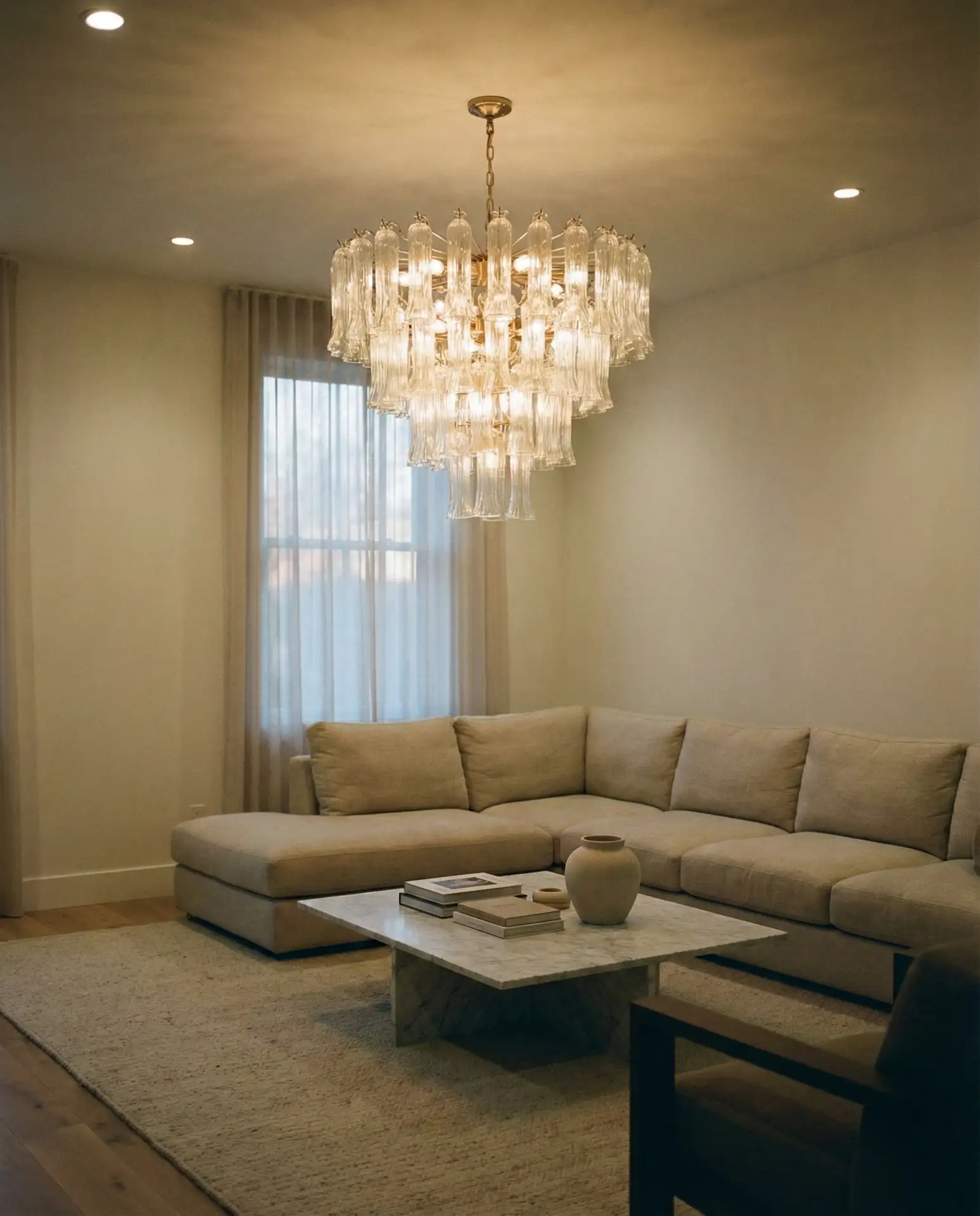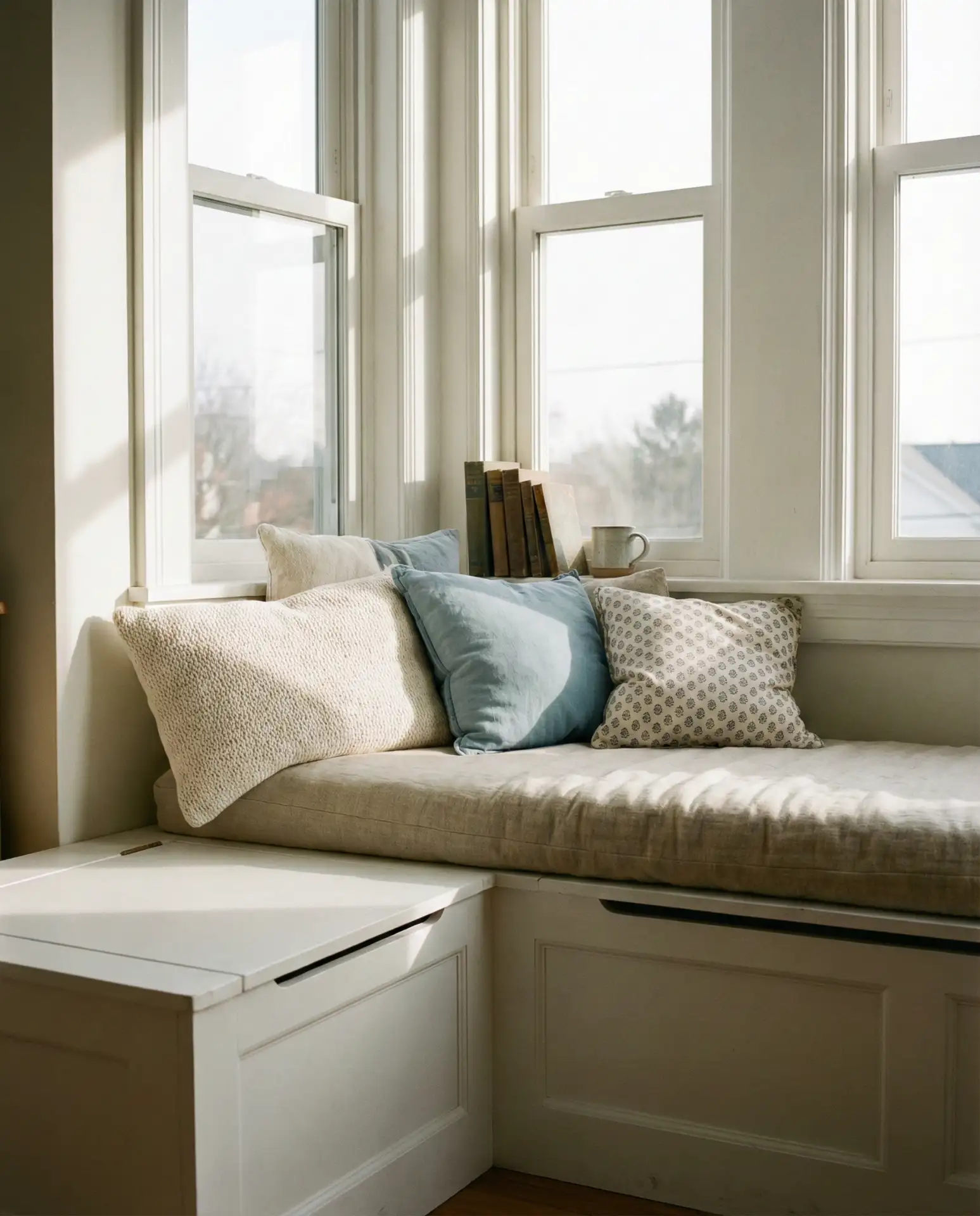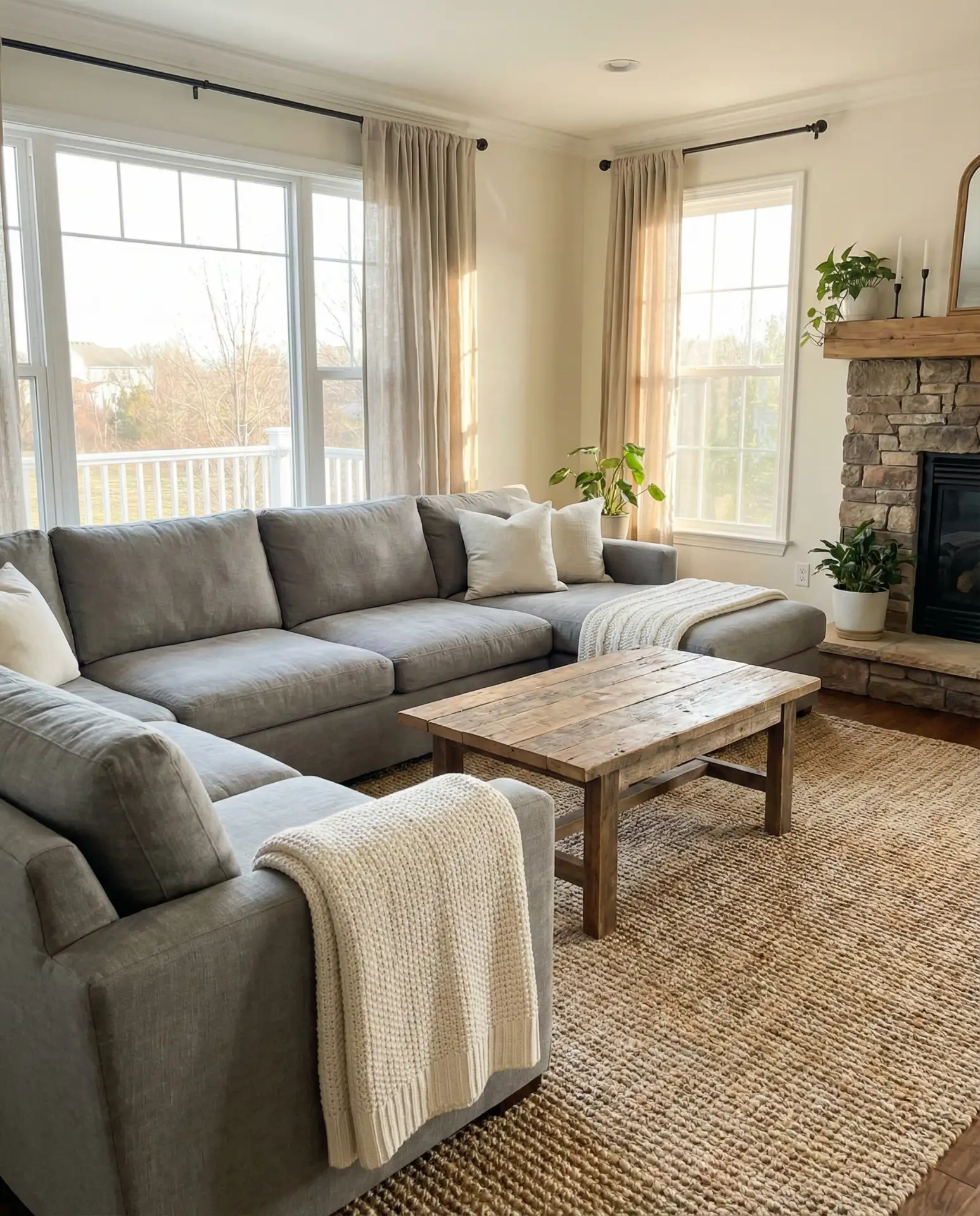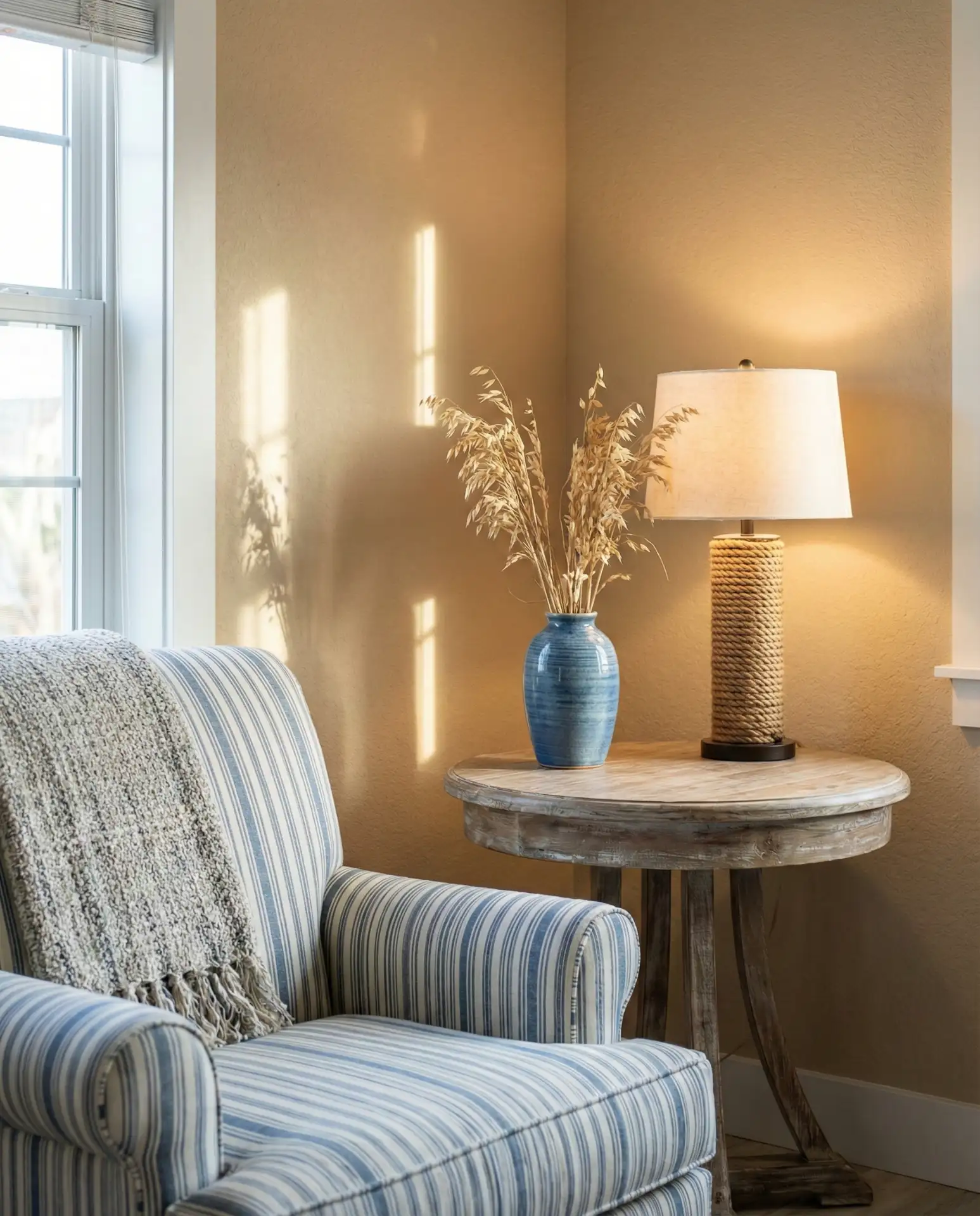
The TV wall has quietly become one of the most talked-about design decisions in any home—and in 2026, it’s having a genuine moment. Americans are flooding Pinterest with searches for everything from modern luxury setups to compact solutions for tiny apartments, and it’s easy to see why: the wall behind your television sets the entire emotional tone of a living room. Whether you’re renovating a downtown condo or refreshing a suburban family room, the right TV wall can transform a space from generic to genuinely breathtaking. In this article, we’re walking you through 24 fresh, Pinterest-worthy TV wall ideas for 2026 — from dramatic floor-to-ceiling concepts to clever small-space tricks that prove you don’t need square footage to have serious style.
1. Floating Wood Panel TV Wall
There’s something deeply grounding about wood in a living room, and a floating horizontal wood panel behind the television captures that warmth without feeling heavy. In 2026, designers are leaning into natural grain textures—think light walnut or white oak slats mounted flush against a painted wall—creating a Japandi-inspired focal point that feels both curated and livable. The TV sits centered within or atop the panel, often with a thin floating shelf below for a media console, keeping the whole setup airy and intentional.
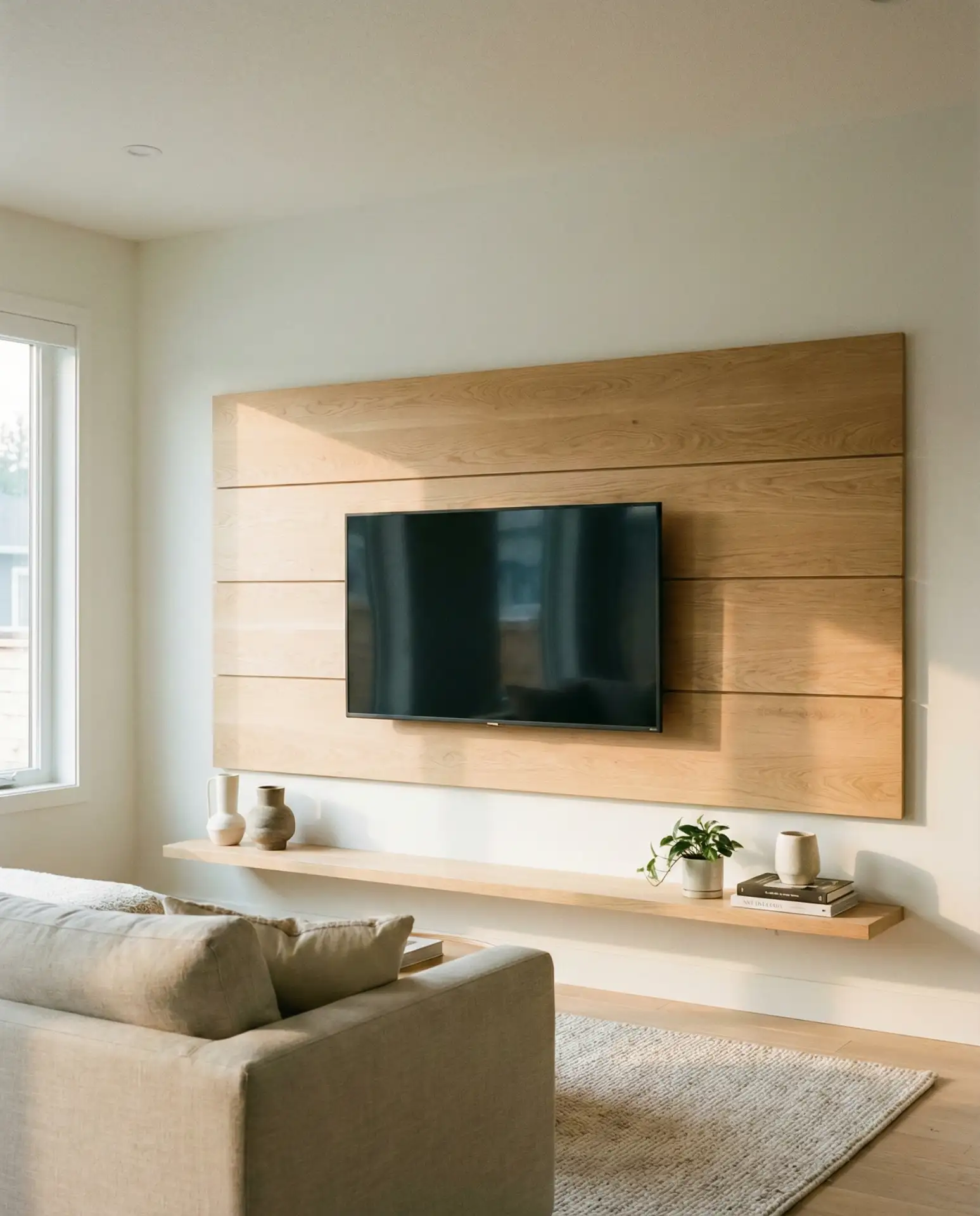
This look works best in rooms that already have some natural material story going on—a jute rug, linen curtains, or rattan accents. If you’re shopping for this look on a real budget, IKEA’s BESTÅ system paired with aftermarket oak veneer panels can get you surprisingly close to a custom-built result for a fraction of the cost. The key is keeping everything in the same warm wood family so the wall reads as one cohesive moment rather than a patchwork of mismatched finishes.
2. Black Matte Niche TV Wall
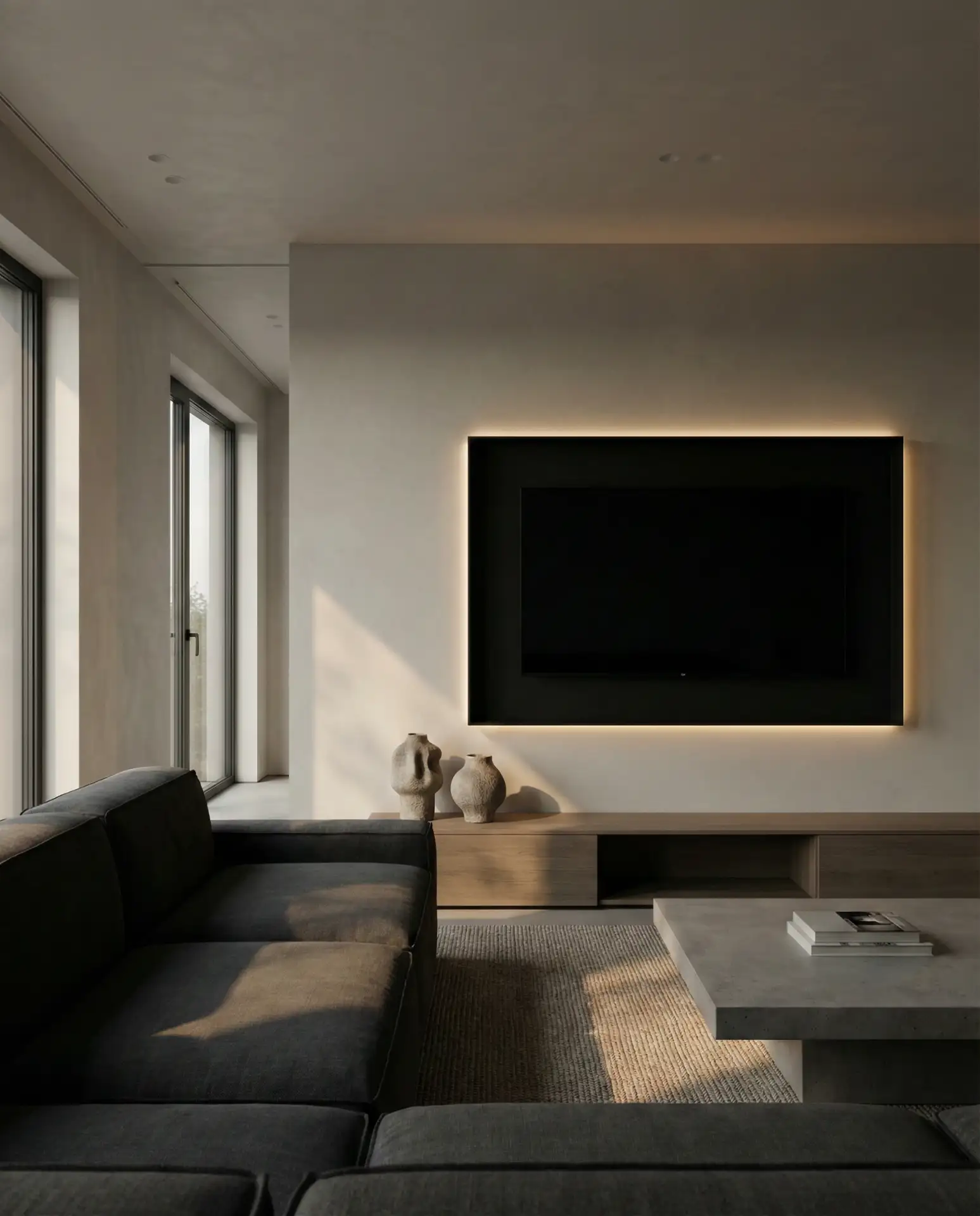
If you want drama without excess, a recessed niche painted in deep matte black is one of the most sophisticated TV wall moves you can make right now. The TV disappears into the dark recess visually, which is especially satisfying when it’s off—no glaring blank screen dominating the room. This approach suits modern luxury interiors beautifully, where the contrast between inky shadow and the surrounding light wall creates a gallery-like tension that feels expensive and deliberate.
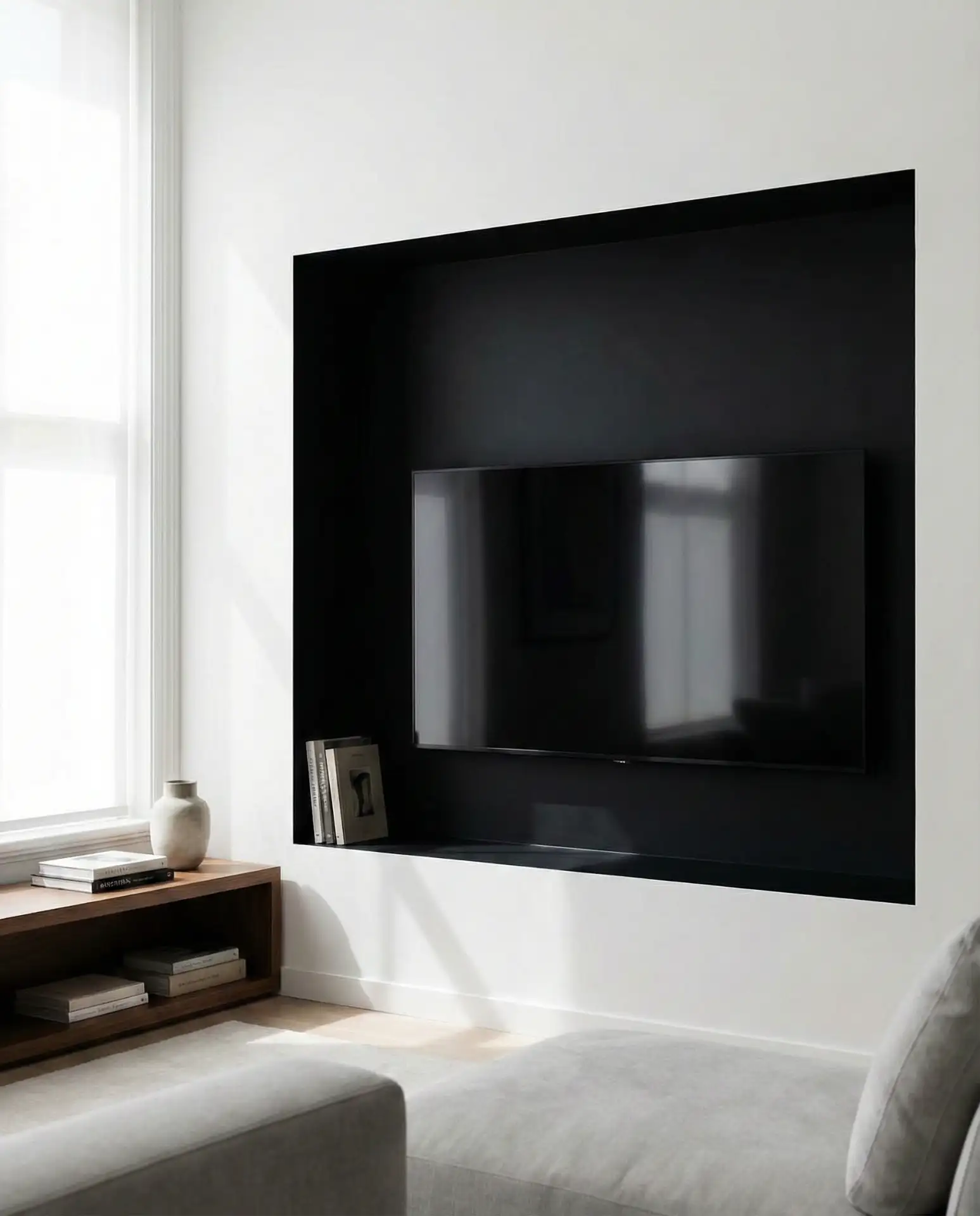
One common mistake homeowners make with dark niches is underestimating how important the paint finish is—a flat or dead matte is non-negotiable here. Any sheen and you’ll start seeing every wall imperfection and reflection. This look works best in rooms with at least one strong natural light source to balance the darkness, ideally positioned to the side rather than directly opposite the TV wall, which would create glare on the screen.
3. Luxury Marble TV Wall Surround
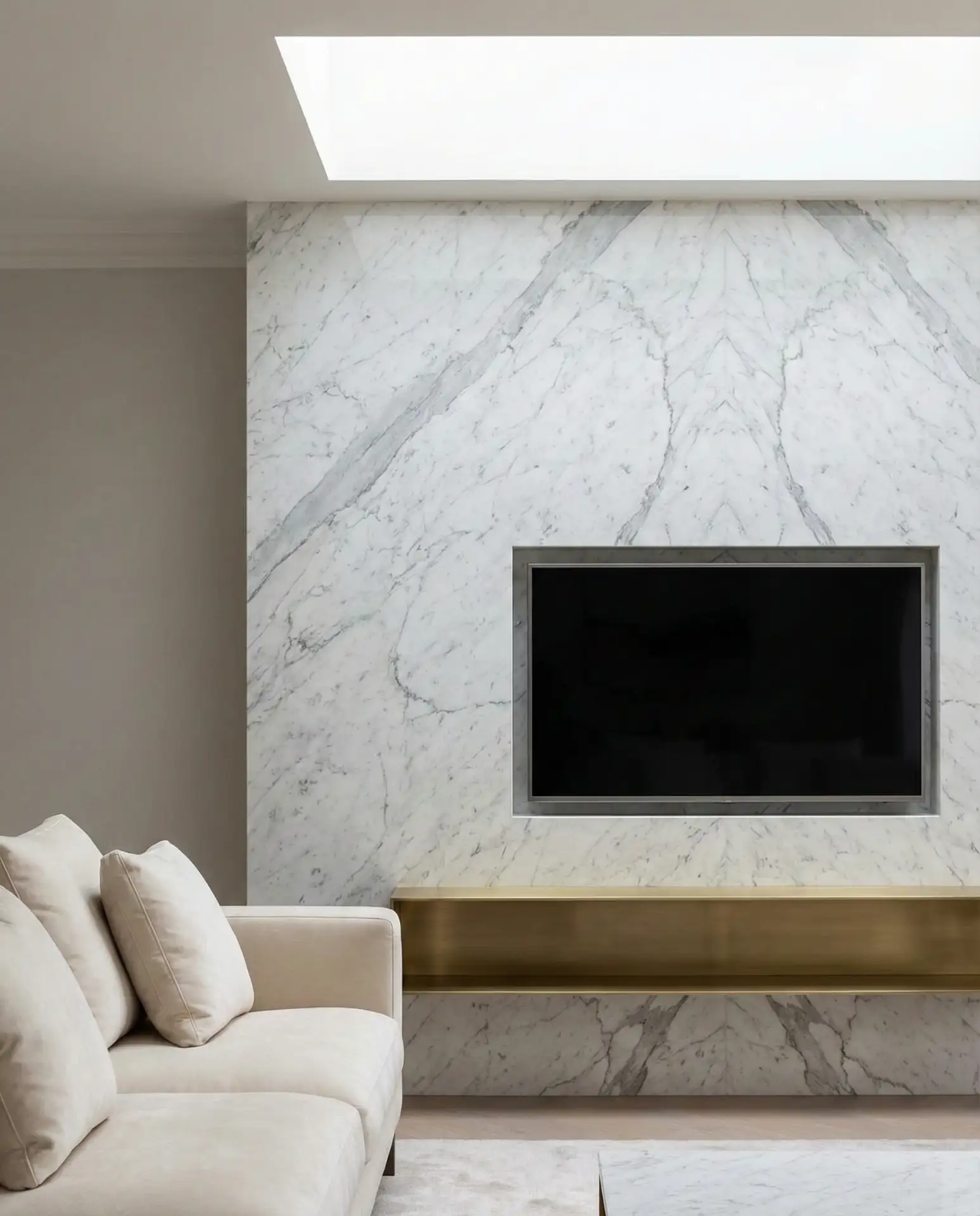
Few materials carry the immediate visual weight of real or engineered luxury marble, and using it as a full TV wall surround is a choice that reads as unequivocally high-end. In 2026, the direction is moving toward book-matched stone with dramatic grey or taupe veining on a white or cream base—the kind of pattern you’d find in a five-star resort lobby. This is inherently an elegant design direction, one that pairs naturally with brass or brushed gold hardware, integrated cabinetry, and a slim, frameless television.
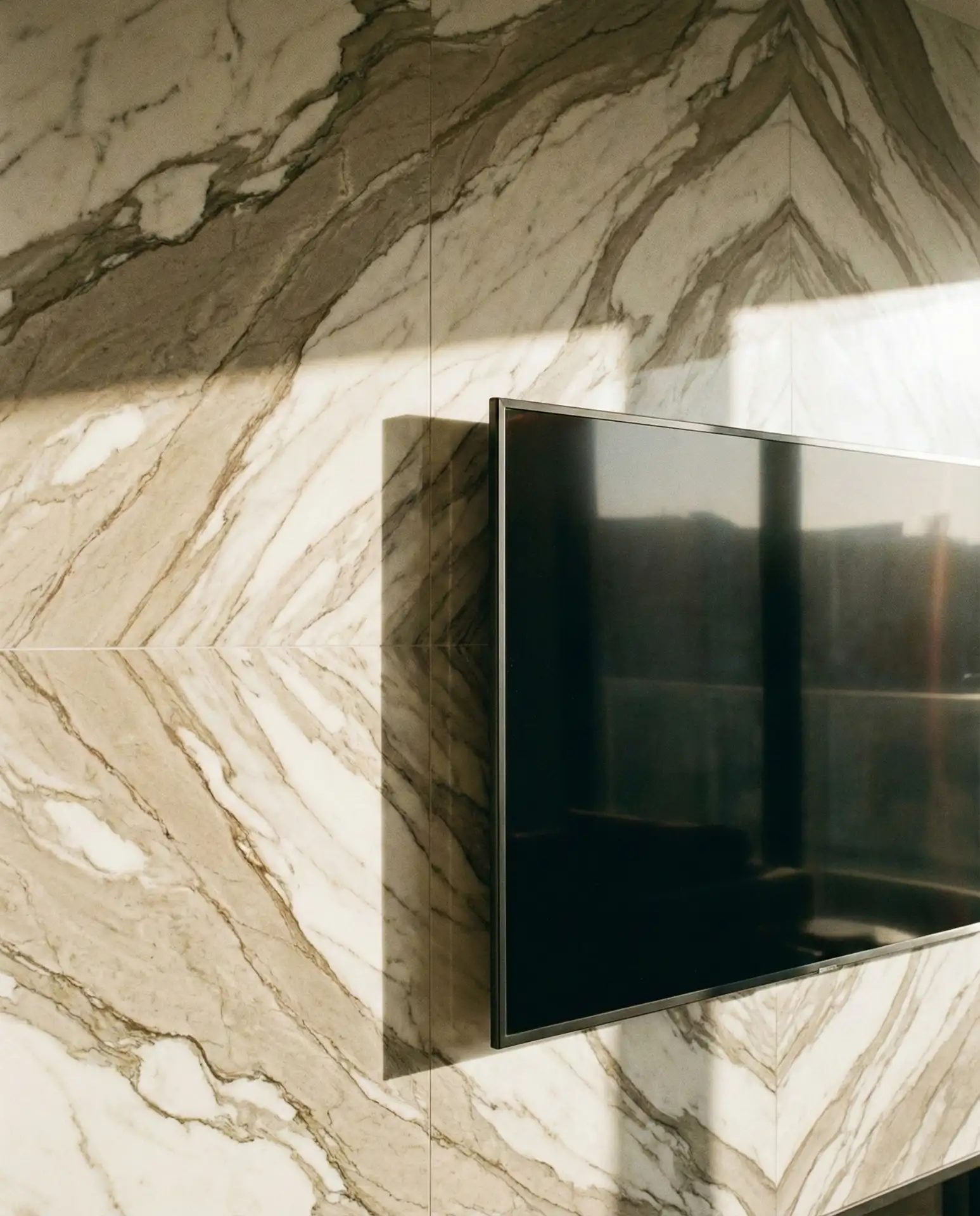
For homeowners in the American Southwest and Florida—where high-end new construction is booming—a marble TV wall often becomes the centerpiece of the main living area. If real stone is outside your budget, large-format porcelain tile in marble-look finishes has become genuinely convincing in recent years, and many tile showrooms carry book-matched options specifically designed for feature walls. Budget roughly $15–$40 per square foot for quality porcelain alternatives that achieve the same visual impact.
4. Built-In Storage TV Wall
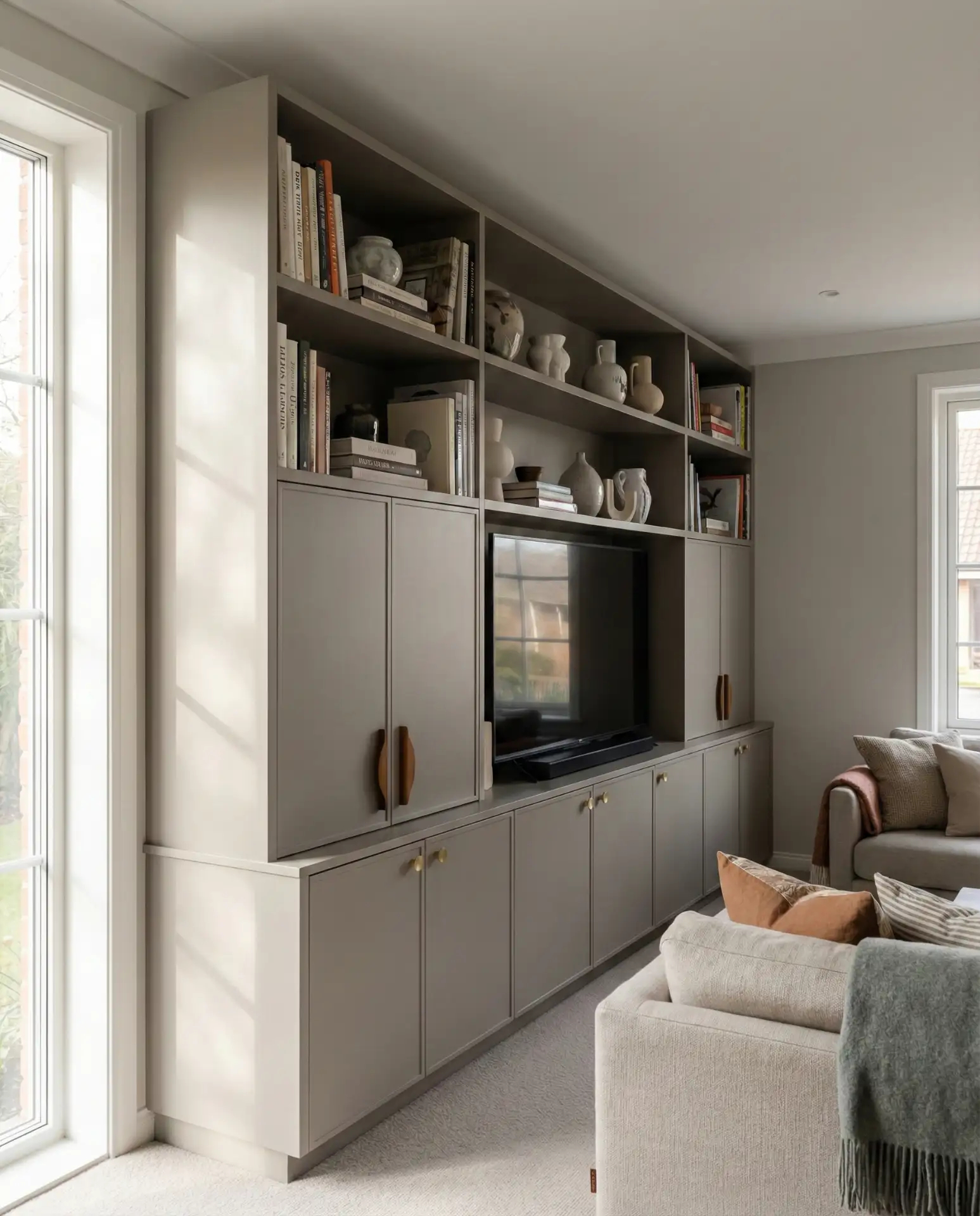
A full wall of storage flanking the television is one of the most practical—and secretly beautiful—things you can do to a living room. Floor-to-ceiling built-ins with a mix of open shelving and closed cabinetry create a sense of architectural intention that most rooms desperately need, and they solve the eternal American problem of having nowhere to put things. Done right, this kind of built-in wall looks classic and custom, even when it’s assembled from off-the-shelf components painted in a unified color.

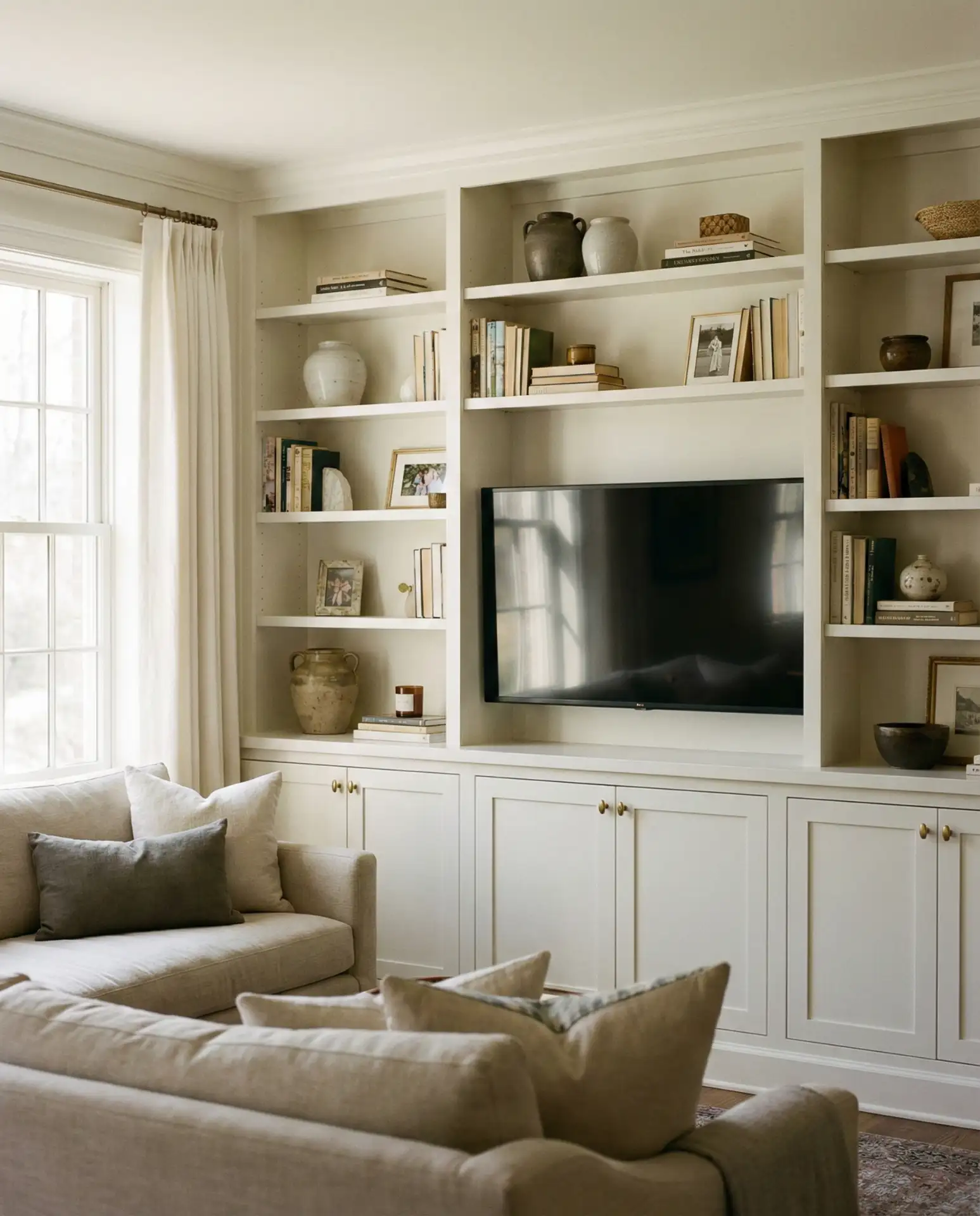
Real homeowners who’ve gone the built-in route consistently say the same thing: they wish they’d done it sooner. The transformation from a room that felt chaotic to one that felt intentional often comes down entirely to getting the clutter off the floor and into beautiful cabinetry. If you’re working with a carpenter, specify adjustable shelf pins inside the closed cabinets—life changes, and the ability to reconfigure your storage without power tools is genuinely valuable five years down the road.
5. Double Height Gypsum TV Wall
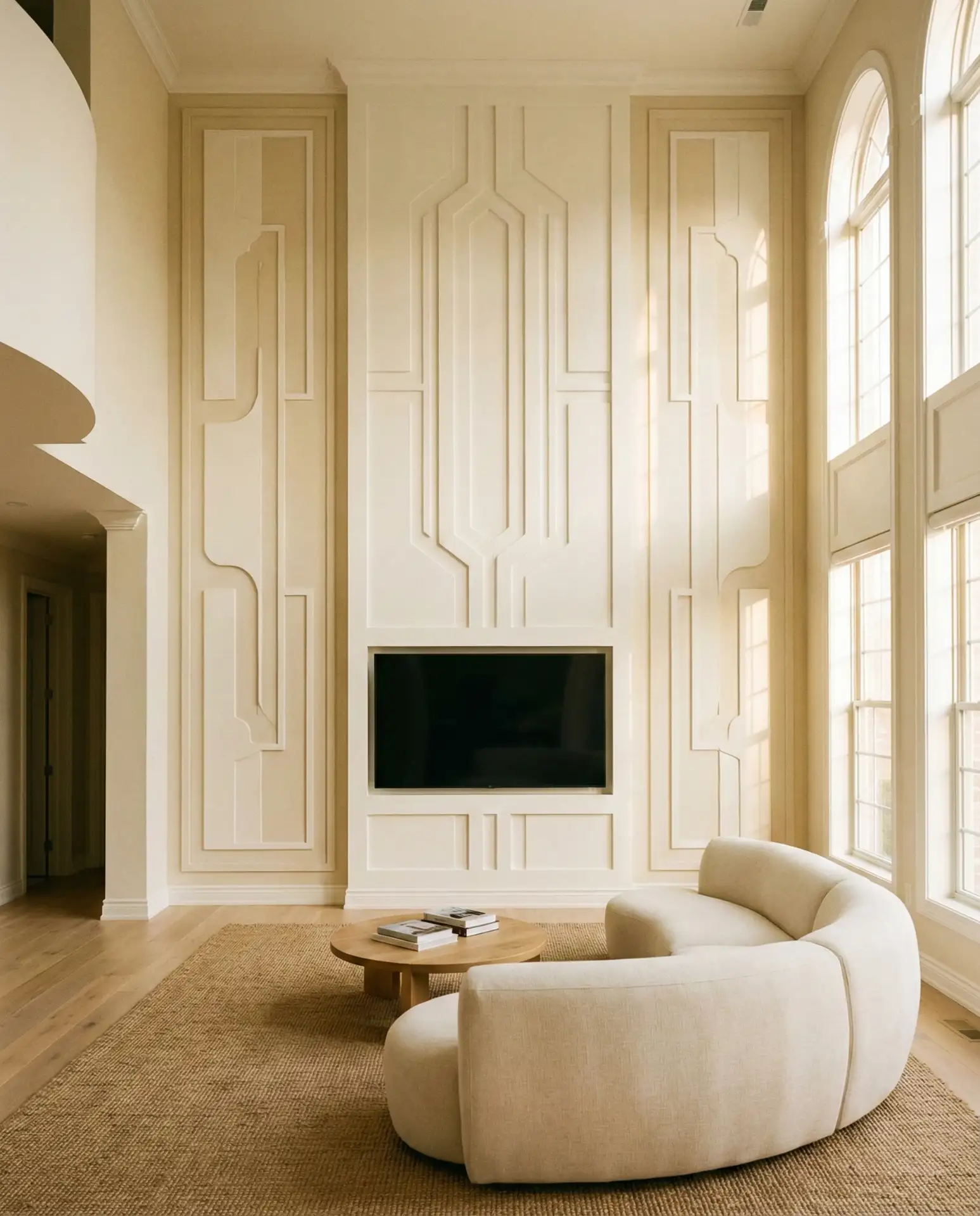
If your home has double-height ceilings—that soaring, cathedral feeling that’s become a signature of new luxury construction—a gypsum feature wall that travels the full height of the room is an architectural statement unlike anything else. Custom plasterwork or molded gypsum panels with geometric relief patterns can be designed to frame the television at the center, creating a structure that looks more like a piece of architecture than a piece of furniture. The monochromatic nature of plaster walls keeps everything feeling cohesive even at a grand scale.
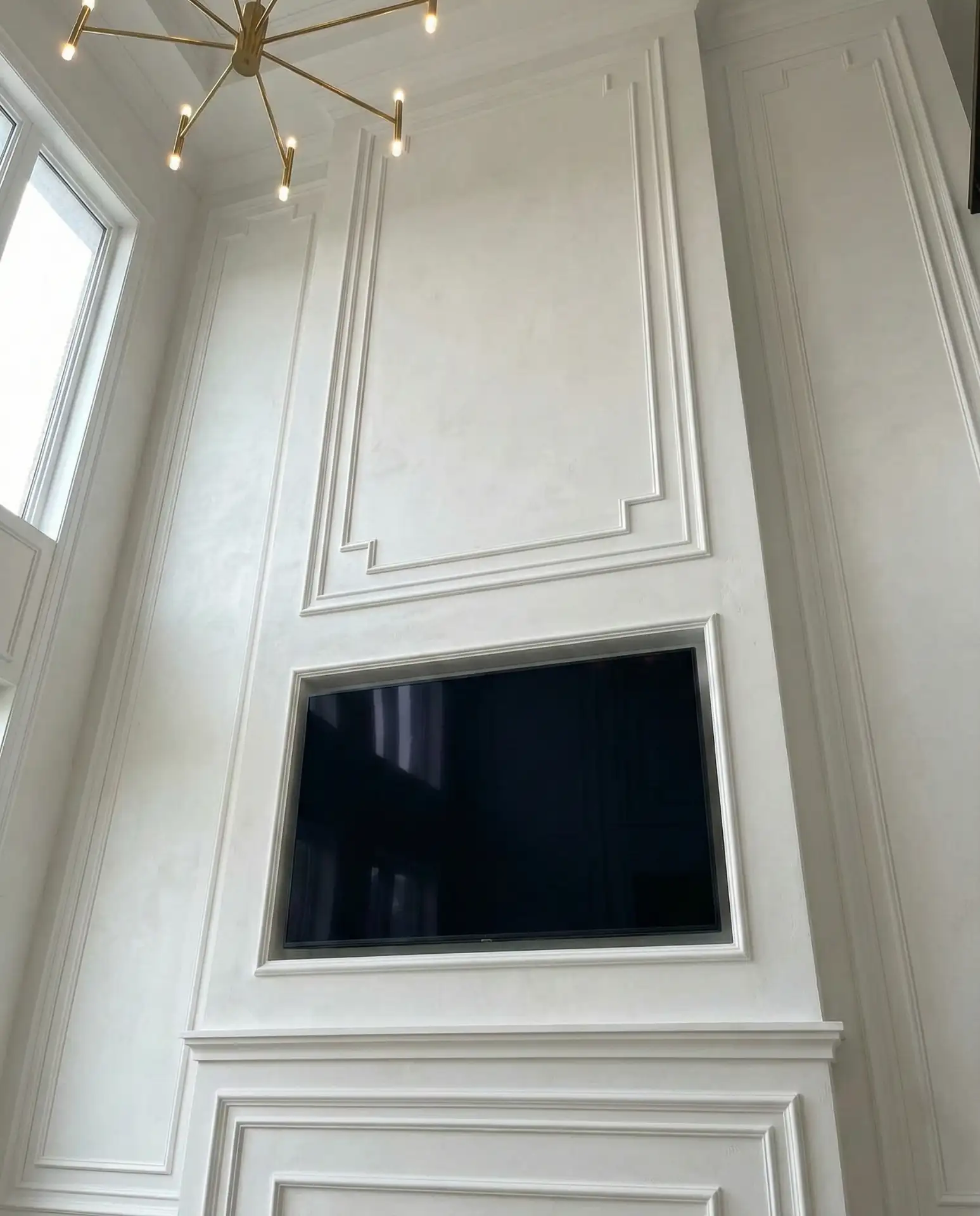
This is where expert guidance really matters. A double-height gypsum wall isn’t a weekend project—it involves structural knowledge, proper anchoring into the wall framing, and skilled plastering or panel installation. That said, in major markets like Dallas, Houston, and Phoenix, where open-plan luxury homes are everywhere, specialty interior contractors are building exactly this kind of wall regularly. Expect to invest $8,000–$25,000 depending on detail complexity and your market, but the payoff in resale value and daily visual pleasure is exceptional.
6. Minimalist White TV Wall
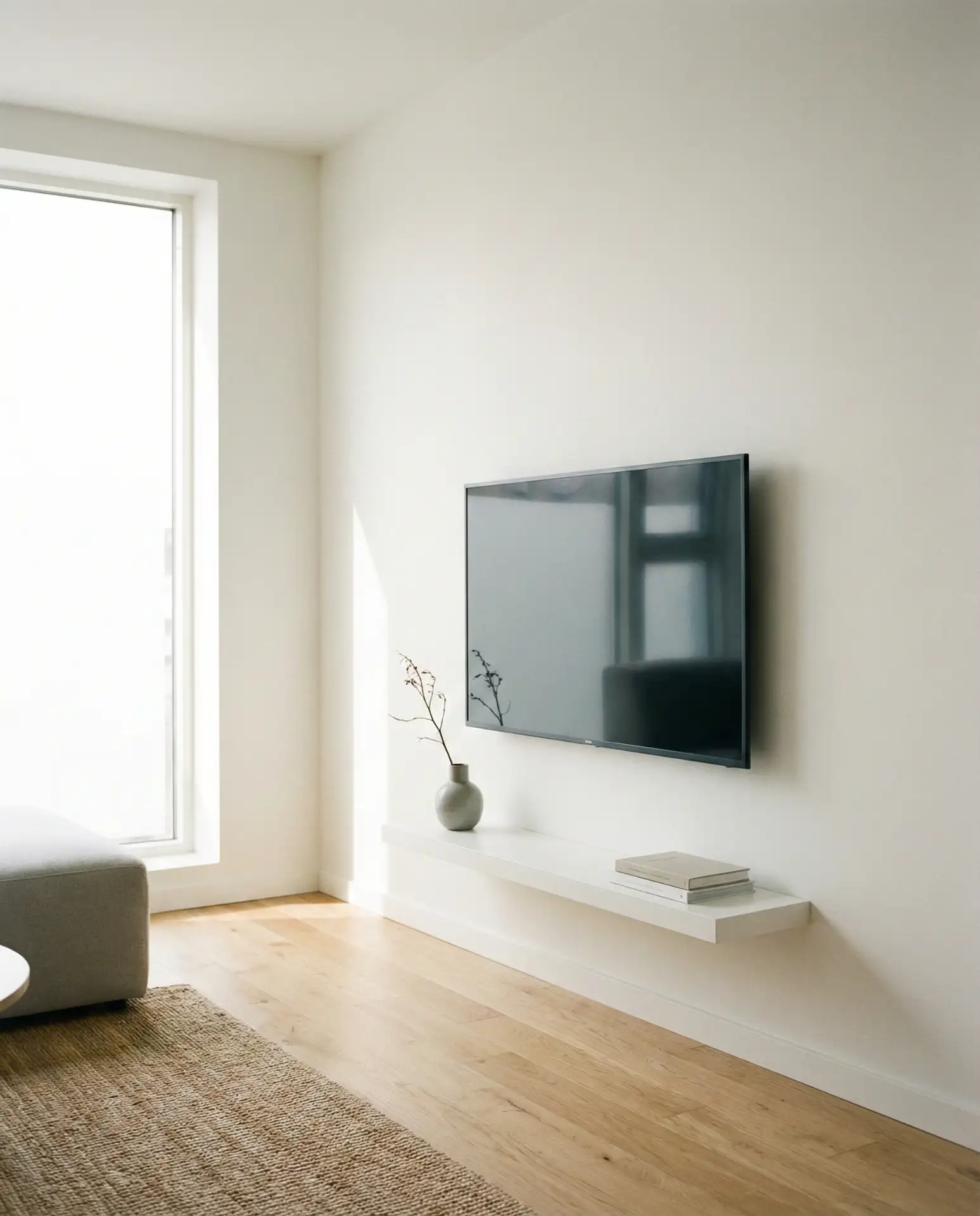
Sometimes the most powerful design choice is restraint. A minimal white TV wall—clean, flat, no molding, no paneling—lets the television exist as a purely functional object in a serene space. This approach suits small space living rooms especially well because a visually quiet wall makes the room feel larger and less cluttered. In 2026, the minimalist wall is often paired with a wall-mounted TV at precise eye level, concealed cable management, and a single slim floating shelf—nothing more.
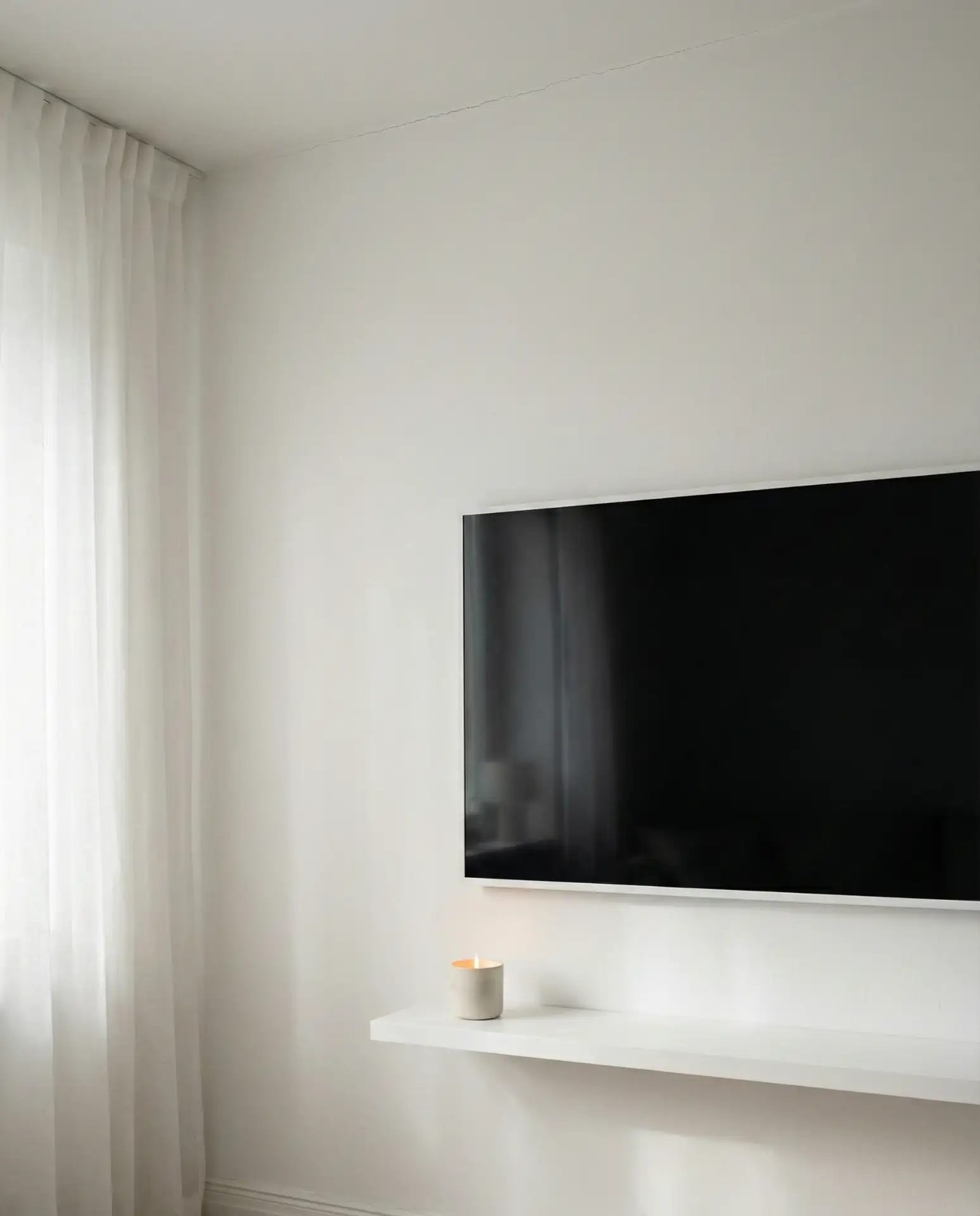
Where this works best is in spaces where the rest of the room does the heavy lifting—a beautiful sofa, a statement rug, and great lighting. The wall becomes the quiet backdrop, not the star. Think of it the way a great frame lets a painting breathe. Many young apartment dwellers in cities like Chicago, Seattle, and Boston have adopted this approach precisely because it photographs brilliantly and works across multiple life stages without feeling dated after two years.
7. Hotel-Inspired TV Wall with Upholstered Headboard Panel
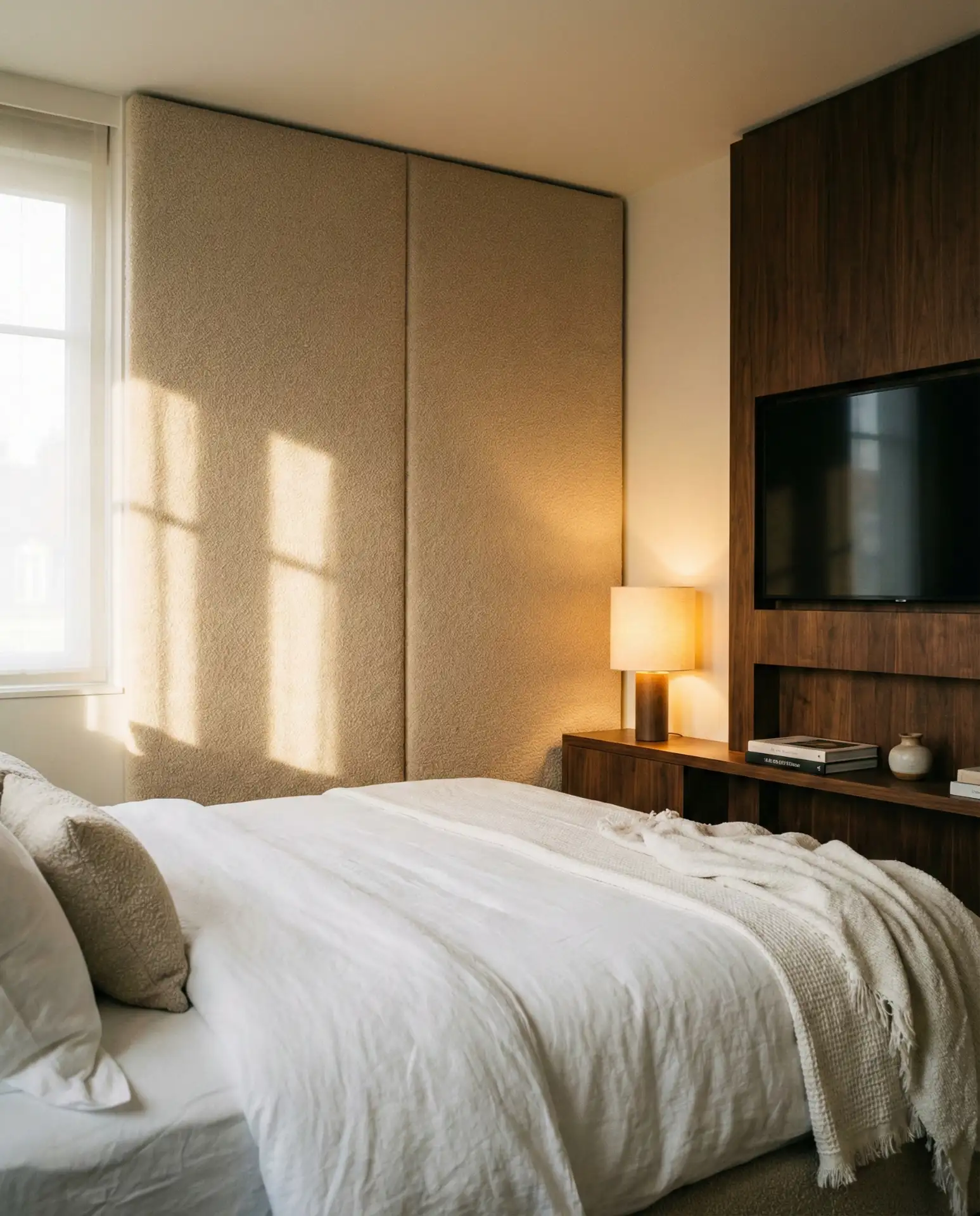
If you’ve ever stayed in a beautifully designed hotel room and thought, “I want my bedroom to feel exactly like this,” you’re not alone—and in 2026, the hotel-style bedroom TV wall is officially a mainstream aspiration. The signature look involves a large upholstered panel or fabric-wrapped wall section behind the bed, with the TV mounted either above or to the side on a complementary dark or tonal panel. It’s layered, intimate, and has that specific quality of luxury-without-trying that boutique hotels do so well.
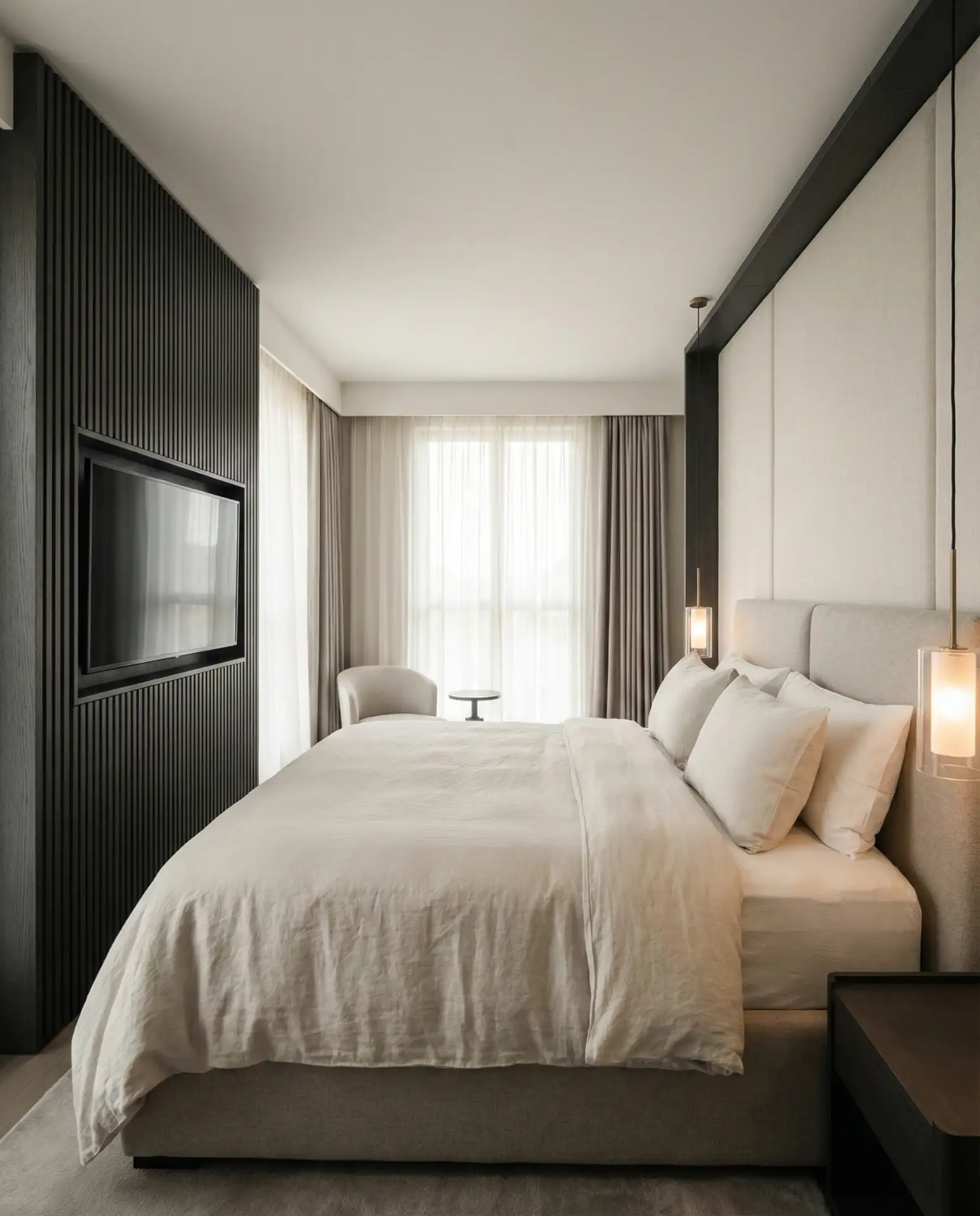
A micro anecdote worth telling: one interior designer in Nashville described a client who specifically requested “the Soho House feeling” in their master bedroom—and the solution was exactly this. A full-width upholstered panel in a warm oatmeal boucle, a slim walnut TV unit to the side, and concealed smart home controls tucked behind a flush panel. The result looked like it cost $80,000 but came in just under $12,000, mostly because the fabric panel was DIY-friendly with pre-cut foam and a staple gun.
8. Neoclassic TV Wall with Decorative Molding
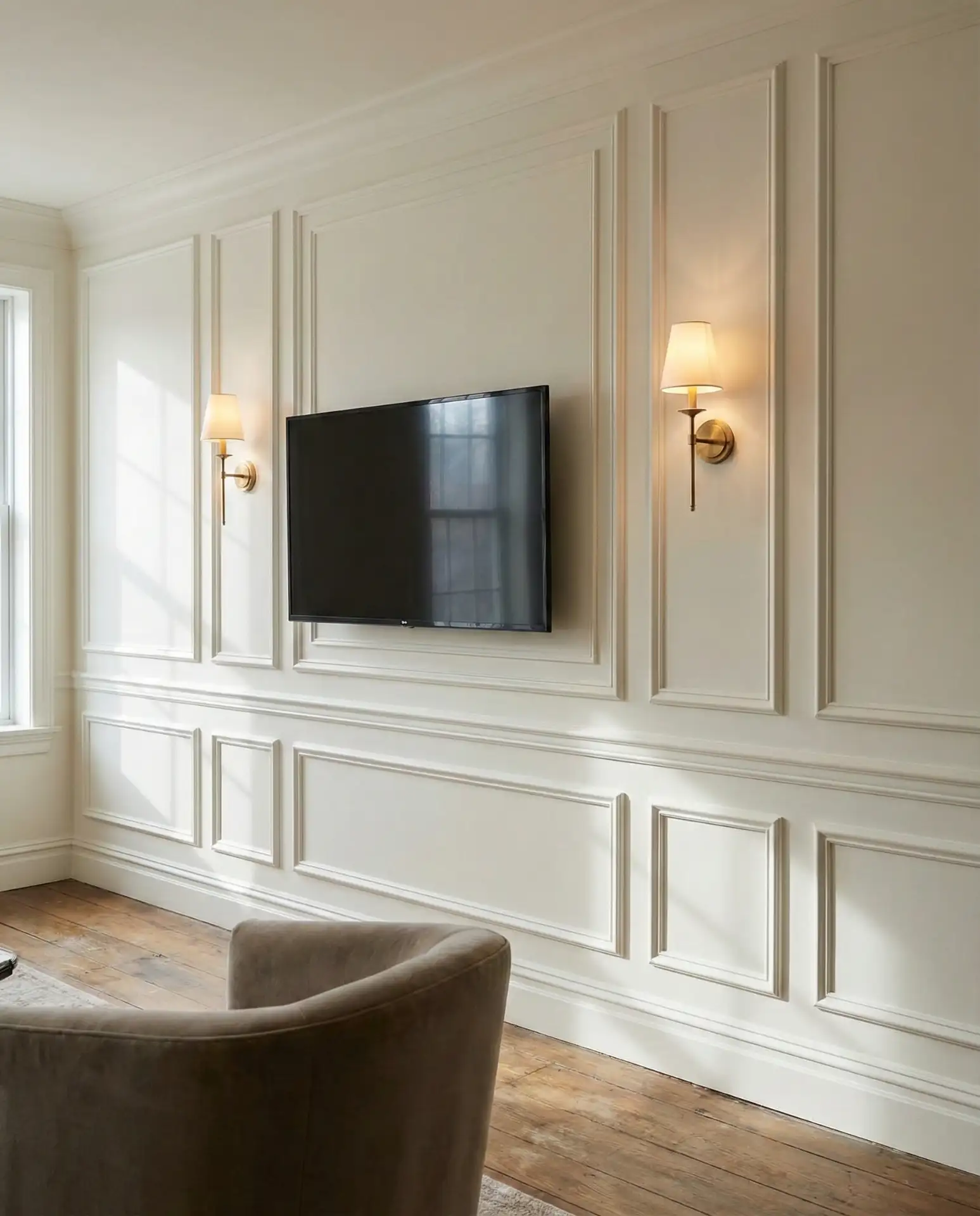
The neoclassical TV wall blends traditional architectural detailing with a clean, contemporary sensibility—and it’s one of the most searched aesthetics on Pinterest right now for good reason. Layered decorative molding in geometric or classic Georgian profiles, painted in a crisp monochrome (usually white on white or greige on greige), creates a sense of depth and craftsmanship that elevates any living room into something that feels genuinely elegant. The television is typically centered within the largest molding panel, treated almost like a painting in an ornate frame.
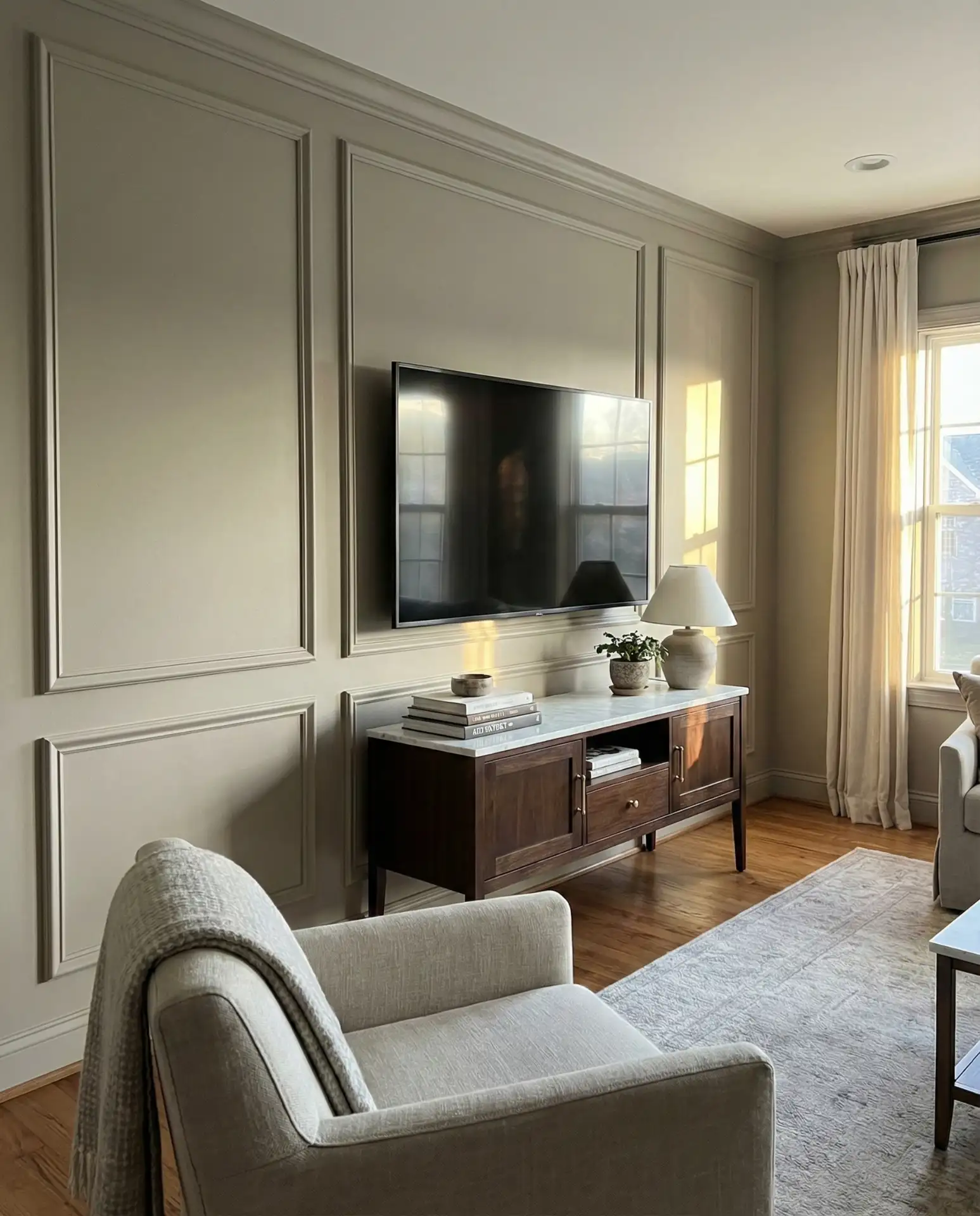
The practical beauty of this look is that it’s almost entirely a painting and trim-carpentry project—no major construction required. MDF molding from home improvement stores is inexpensive and easy to work with, and a quart of high-quality paint in the right finish (satin is ideal for molded surfaces) pulls the whole thing together. Homeowners who’ve tackled this as a weekend DIY project consistently report that the return on effort is massive—it’s one of those transformations that makes people gasp when they walk into the room.
9. Japandi TV Wall with Zen Stone Accents
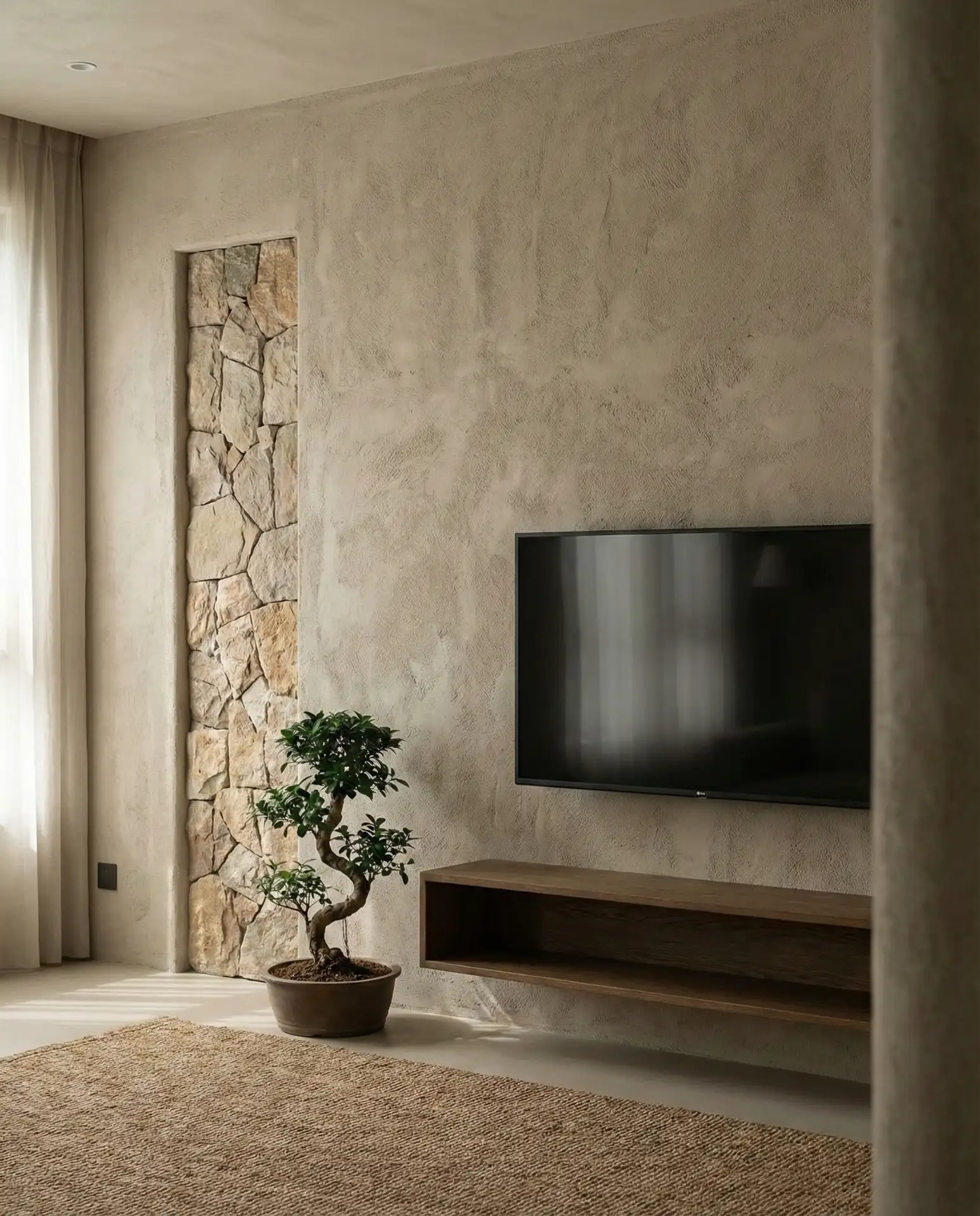
The Japandi aesthetic—that precise intersection of Japanese wabi-sabi philosophy and Scandinavian functional minimalism—continues to evolve in 2026, and the TV wall is becoming one of its most interesting expressions. Think of a backdrop of rough-textured plaster or natural sand-finish paint, a low floating media unit in dark-stained oak, and a single panel of stacked stone or rough-cut slate anchoring one side of the composition. The overall mood is meditative, earthy, and deeply minimal without feeling sparse or cold.
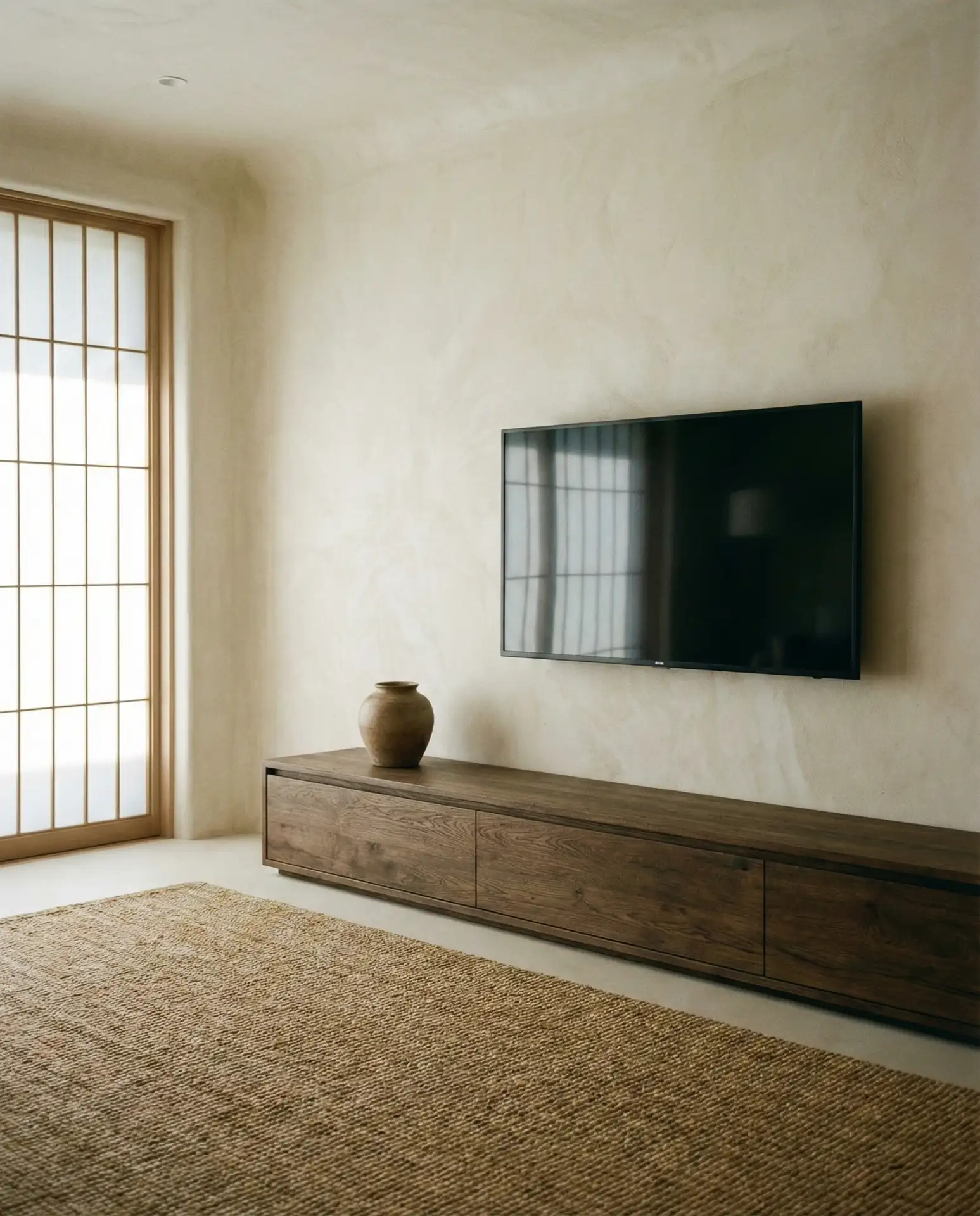
American homeowners who travel frequently to Japan—or who’ve spent time in parts of California and the Pacific Northwest where this aesthetic is culturally resonant—are often the first to bring Japandi principles home. The key styling detail that separates a successful Japandi TV wall from one that just feels unfinished is intentional negative space: leaving areas empty is not neglect; it’s the point. One well-chosen ceramic object is almost always better than three.
10. Small Space Living Room Minimalist TV Wall
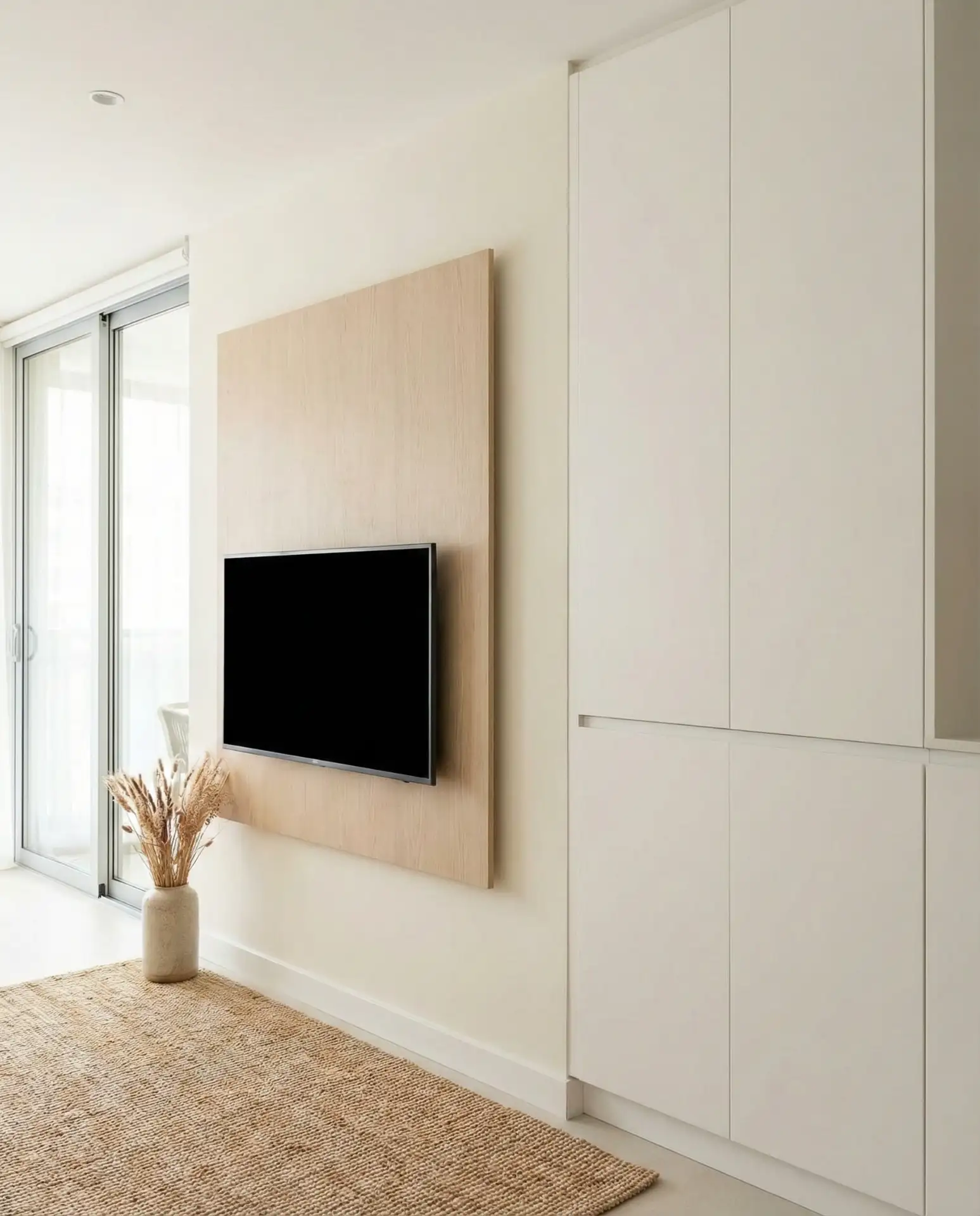
Designing a great TV wall in a small-space living room minimalist context is genuinely one of the most creative challenges in residential interiors—and the smartest solutions in 2026 are leaning into the constraint rather than fighting it. In a compact apartment or condo living room, the goal is to make the TV wall work double duty: it needs to anchor the room visually while not overwhelming the limited square footage. The answer is almost always a carefully curated, vertically oriented wall composition with a wall-mounted TV, zero floor footprint, and storage built into the wall itself.
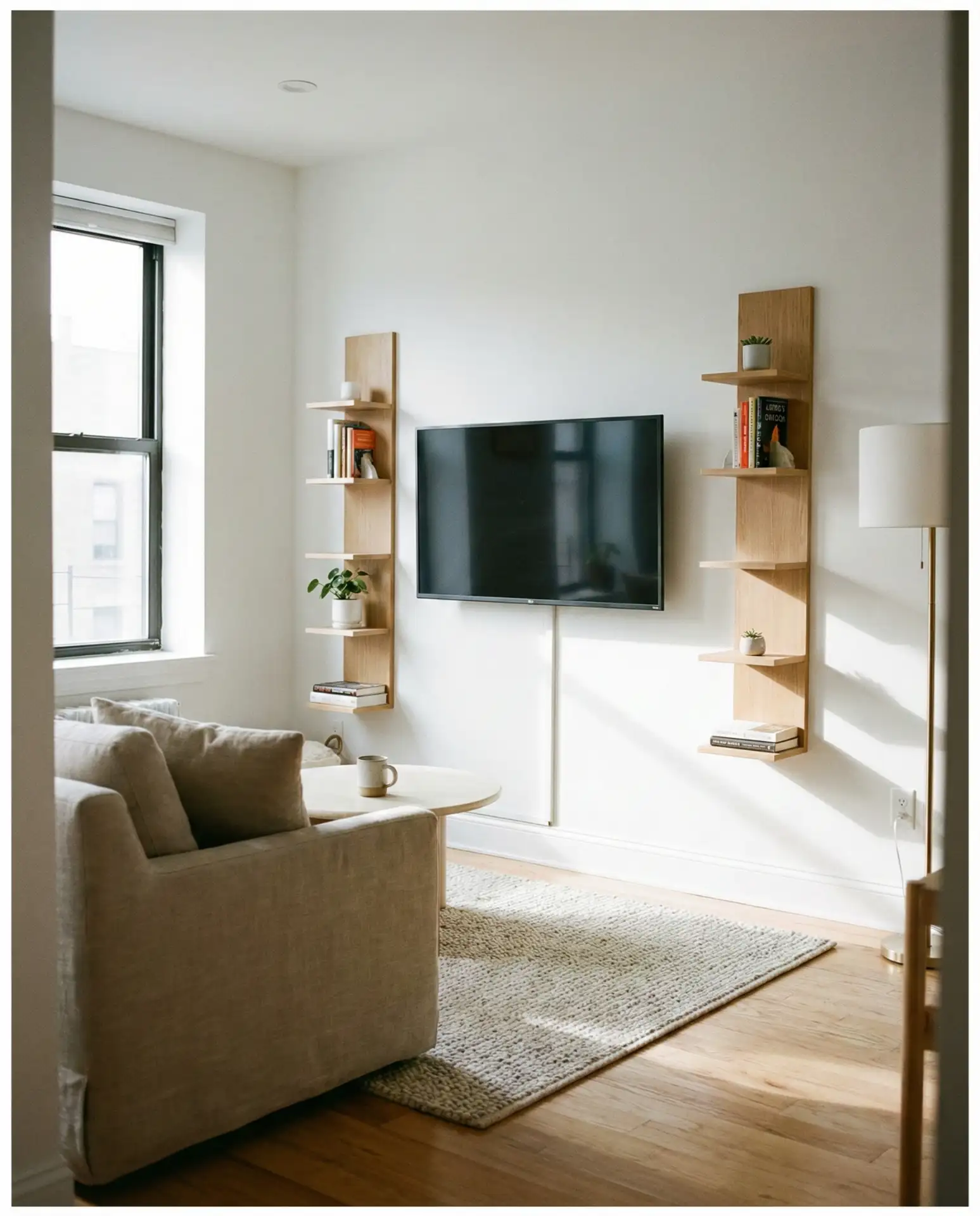
In cities like New York, Washington, DC, and San Francisco, where apartment living means accepting smaller rooms, the wall-mounted approach frees up crucial floor space and makes cleaning dramatically easier—something you don’t fully appreciate until you’ve lived with it. A good cable management system (in-wall cable routing is the gold standard) is non-negotiable in a small space, because when a room is this compact, a single visible cable reads as visual noise from every angle.
11. Luxury Classic TV Wall with Fireplace
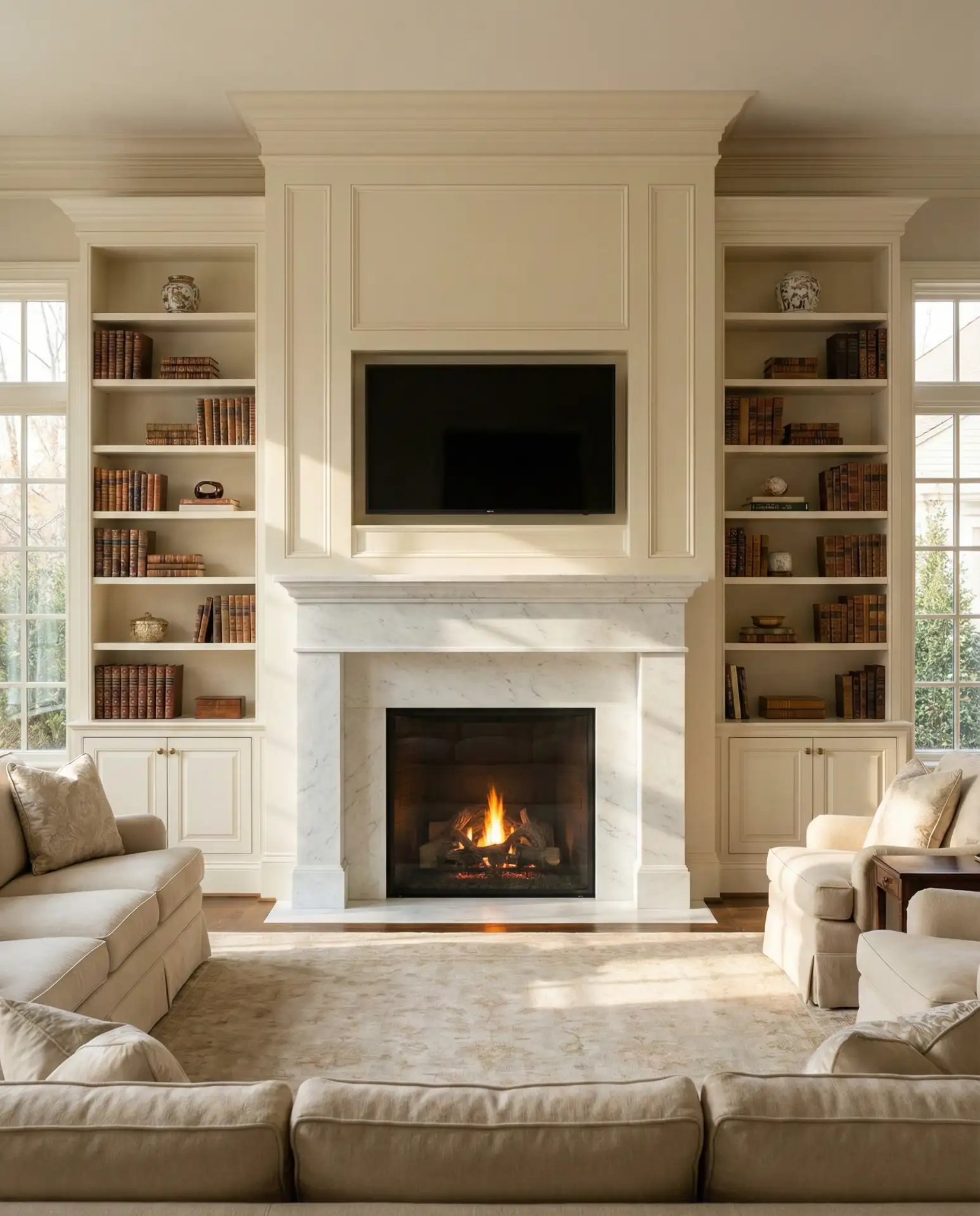
The TV-above-fireplace debate has raged for years, but the luxury classic interpretation of this pairing in 2026 has found an elegant solution: the fireplace and television become complementary elements within a single grand architectural composition, rather than competing focal points. A floor-to-ceiling surround in luxury marble or carved limestone, with the TV recessed above the mantel into a custom alcove at the proper viewing angle, creates a room that feels genuinely ceremonial—the kind of living room that makes guests stop talking when they walk in.
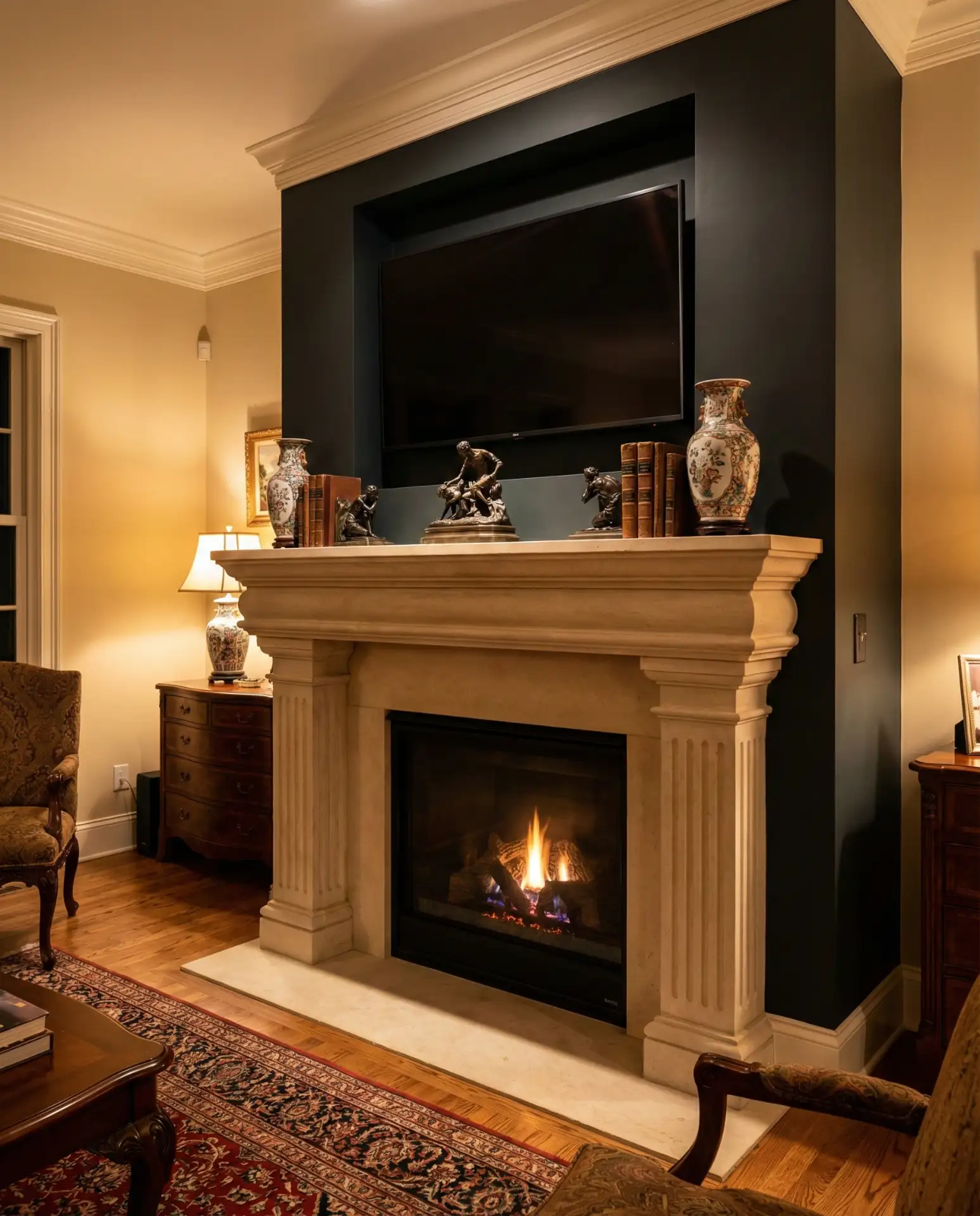
The ergonomic question—is the above-the-fireplace too high for comfortable viewing? — is a legitimate one, and the best luxury installations account for it by using a motorized tilting TV mount that allows the screen to angle downward when in use. Several American TV manufacturers now produce ultra-thin OLED screens specifically designed for above-mantel applications. If you’re building from scratch, spec the alcove to be precisely sized for your television model so there’s no visible gap around the screen.
12. Fluted Wood Panel TV Background
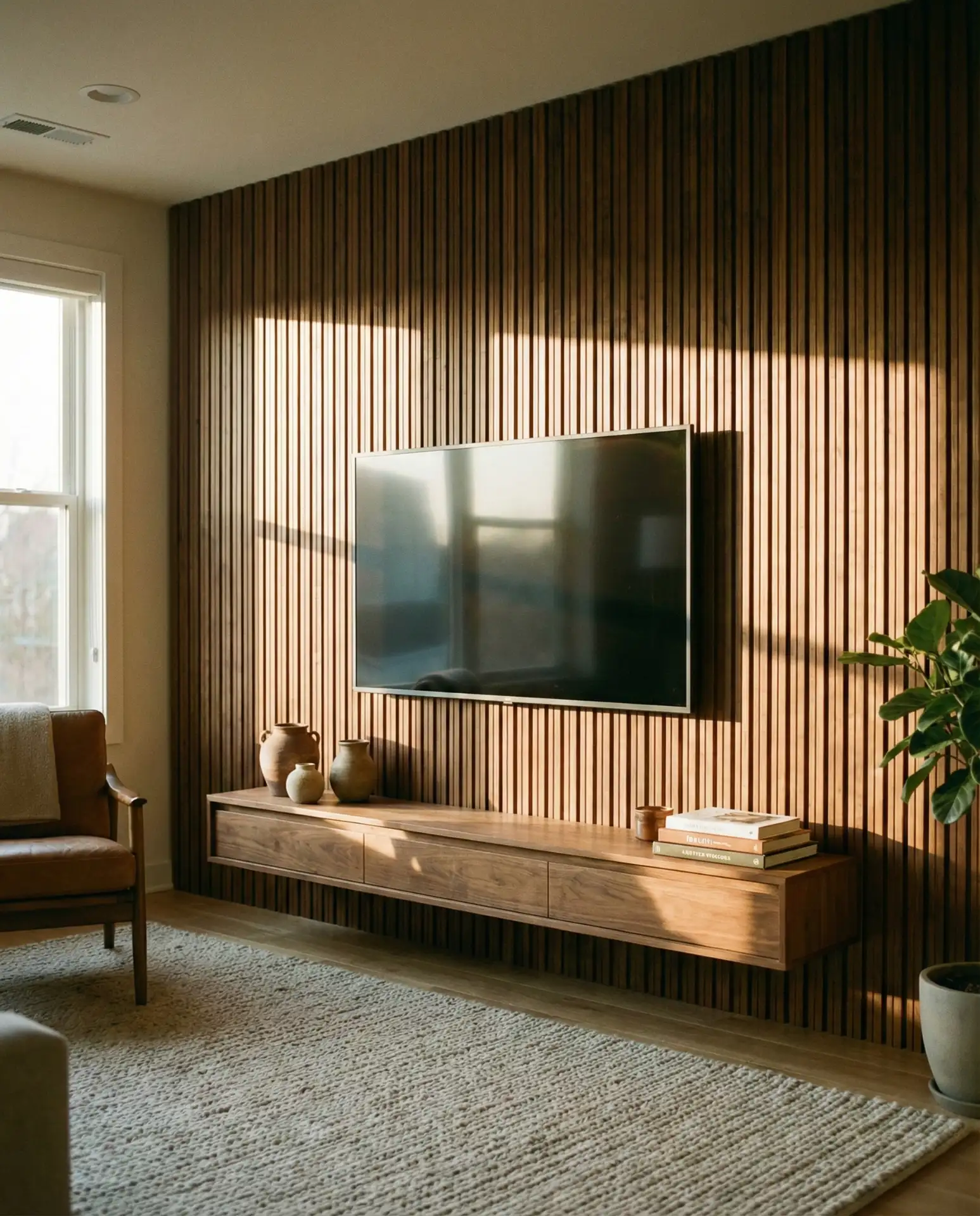
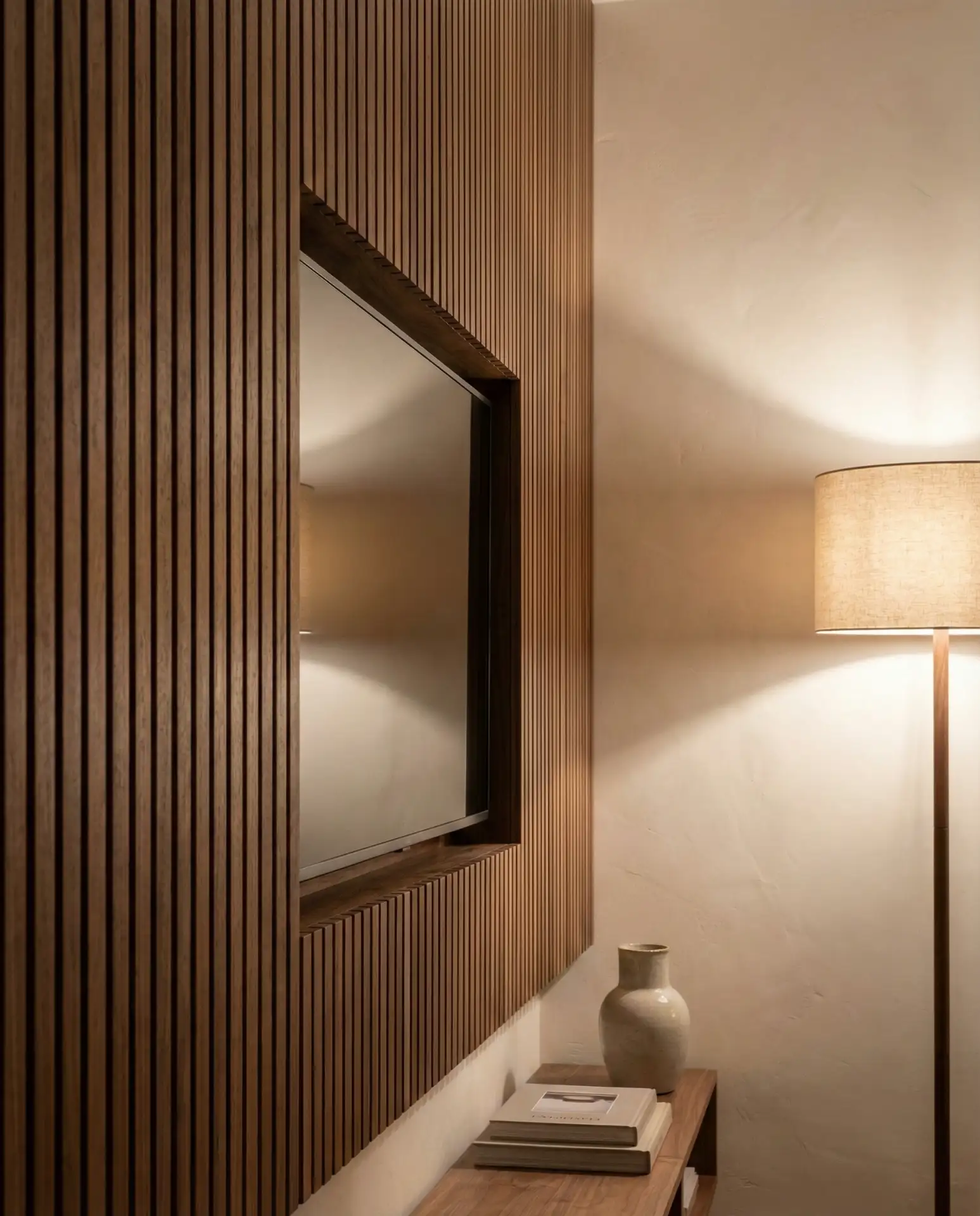
Fluted or ribbed wood paneling is having a serious moment across all of interior design in 2026 — and as a TV wall background, it’s particularly successful. The vertical ribs add tactile depth and shadow play that a flat wall simply can’t achieve, and they photograph beautifully in the golden hour light that makes Pinterest content so visually compelling. In a warm walnut or rich teak finish, a fluted panel wall feels inherently luxurious; in a painted-out white or sage, it reads as fresh and contemporary.
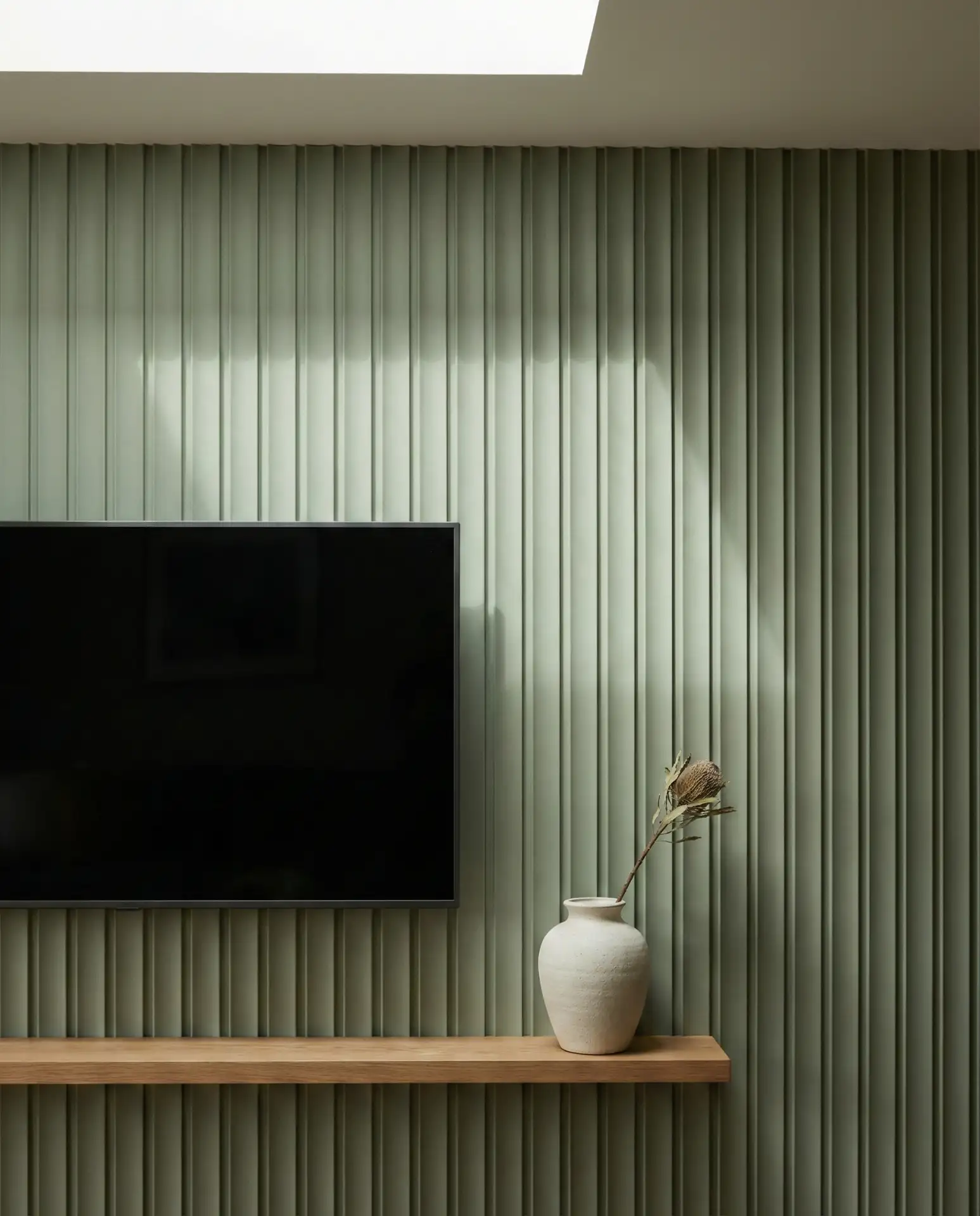
American homeowners have been particularly drawn to fluted panels because they’re one of the few design upgrades that look genuinely handcrafted but can be sourced as pre-cut, ready-to-install panels from specialty suppliers. Many small businesses now sell custom fluted MDF panels online, and the installation for a single TV wall is manageable for a confident DIY-er over a weekend. Painting your fluted panel in a deep, moody color—forest green, midnight blue—rather than a natural wood finish is a move that feels especially fresh right now.
13. Modern Luxury TV Wall with Integrated Lighting
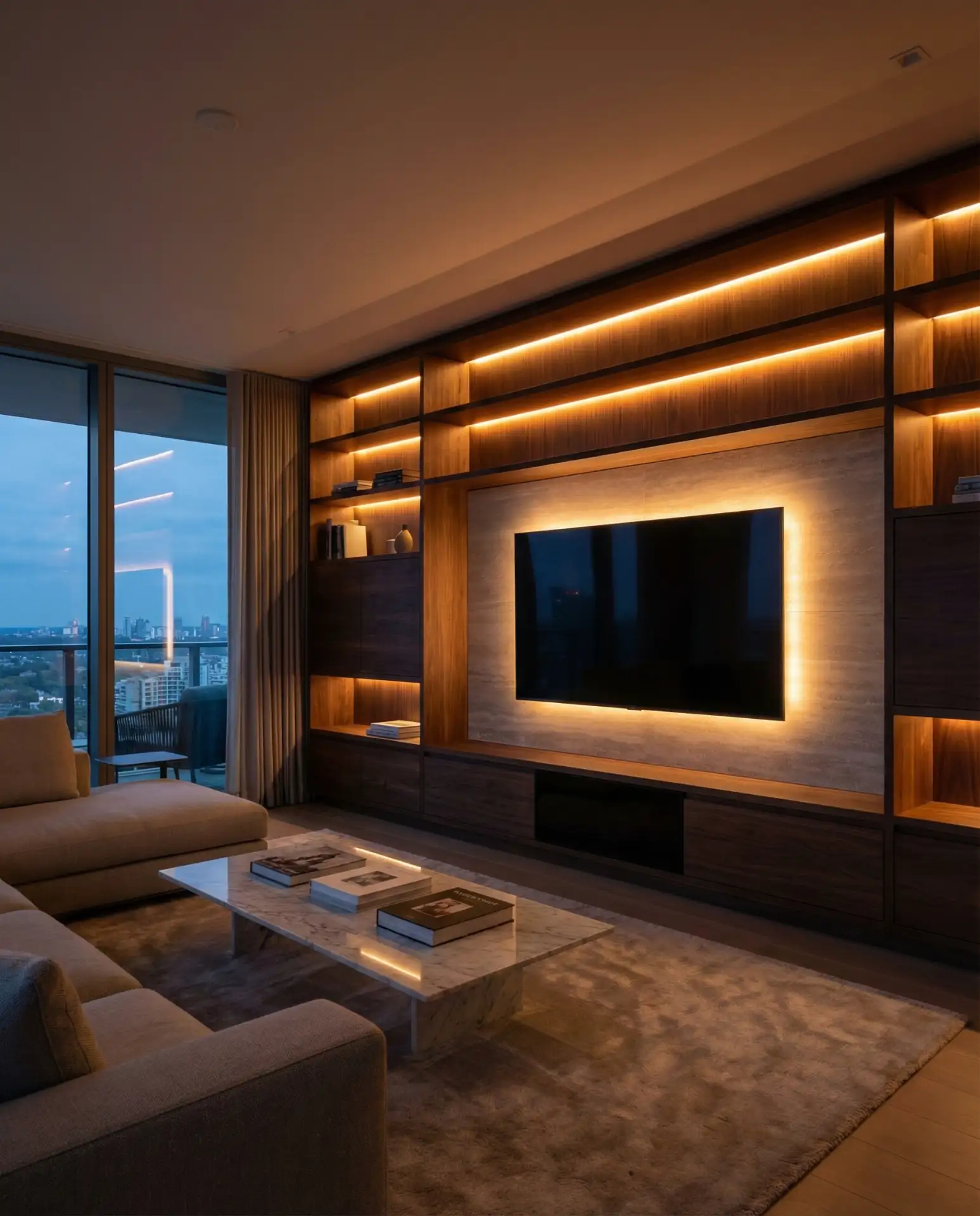
Lighting is the difference between a good TV wall and a great one—and in 2026, the most sophisticated modern luxury TV walls treat illumination as an architectural element in its own right. Recessed LED strips concealed behind floating panels, backlit niches, and programmable bias lighting behind the television itself all contribute to a wall that transforms completely between day and evening. This is the kind of 2026 modern design thinking that you see in the most-saved Pinterest posts: a room that performs differently depending on the hour and the mood.
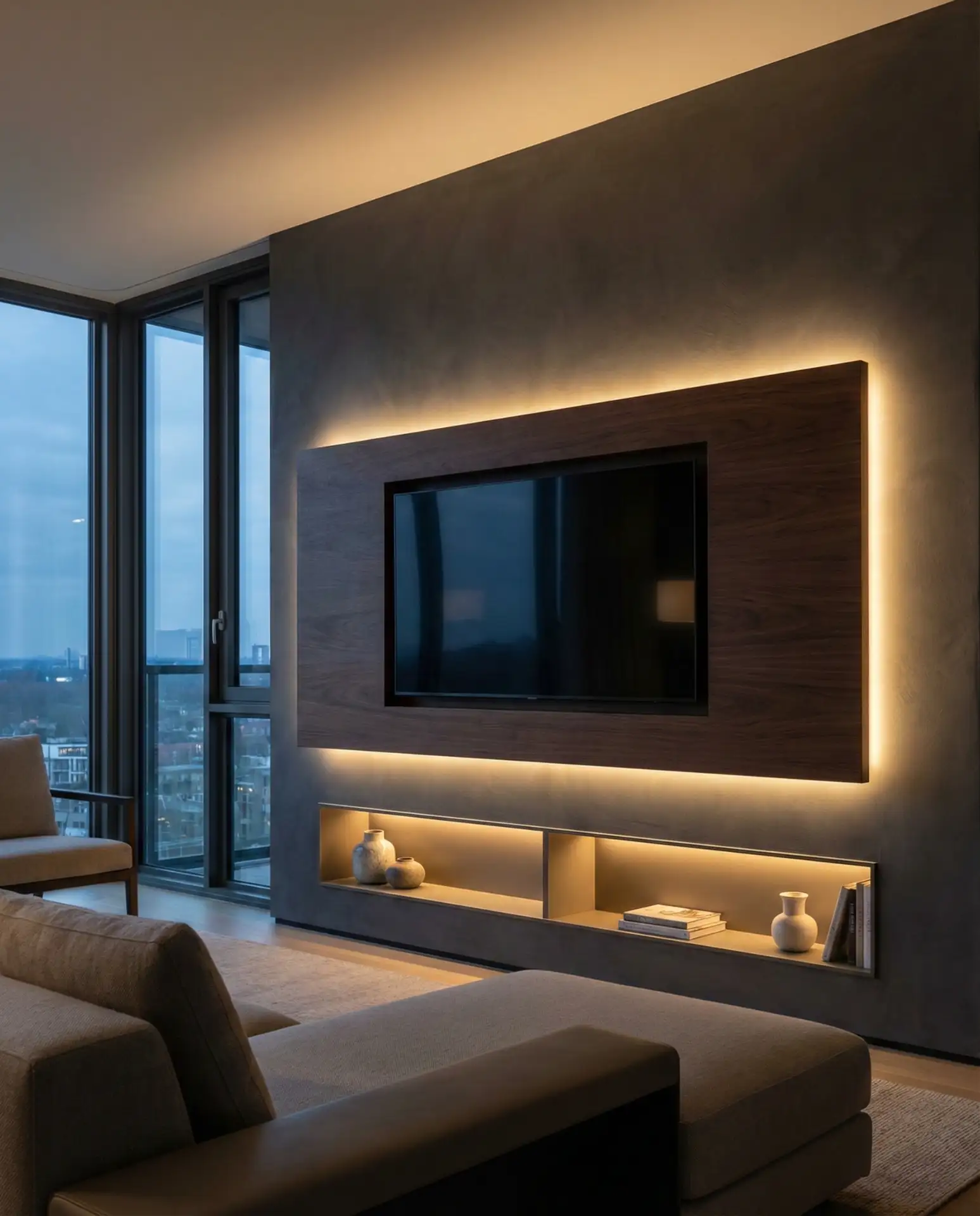
Smart home integration is making this kind of lighting architecture more accessible than ever. Systems like Philips Hue, Lutron Caséta, and newer players in the smart lighting market allow a single scene button to shift your TV wall from bright and functional during the day to moody and cinematic for an evening movie. The practical insight here: always run your LED strip power to a smart plug or dimmer switch during installation—doing it after the fact means cutting into the wall again, which nobody wants.
14. Unique Arched TV Wall Niche
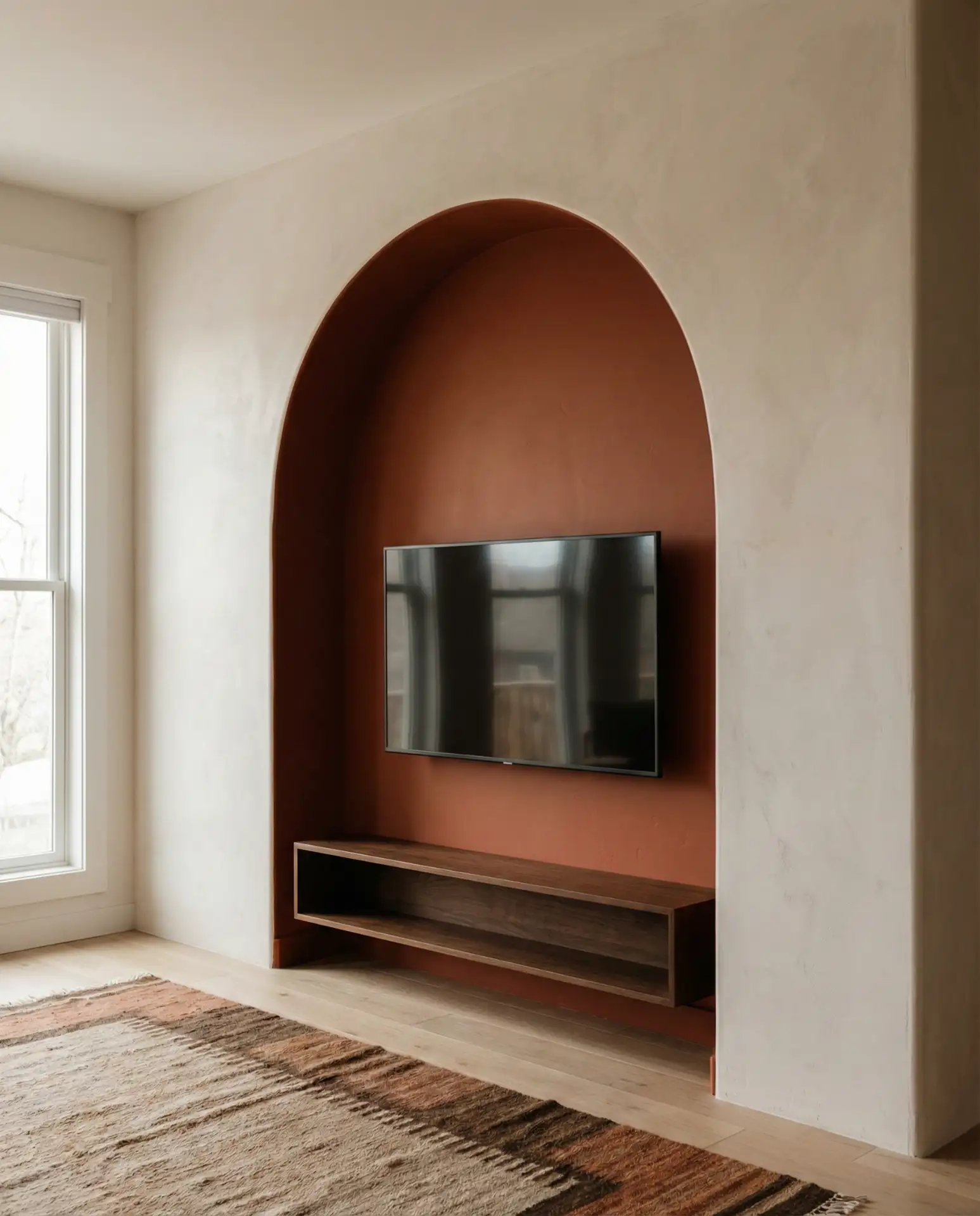
Among all the unique TV wall forms emerging in 2026, the arched niche is perhaps the most architecturally arresting. A rounded, Moorish, or Romanesque arch cut into the wall—or built out from it using drywall and plaster—creates a frame for the television that feels ancient and contemporary at the same time. When the interior of the arch is painted in a deep, contrasting color like terracotta, dusty rose, or midnight navy while the surrounding wall stays light, the effect is genuinely stunning and utterly un-generic.
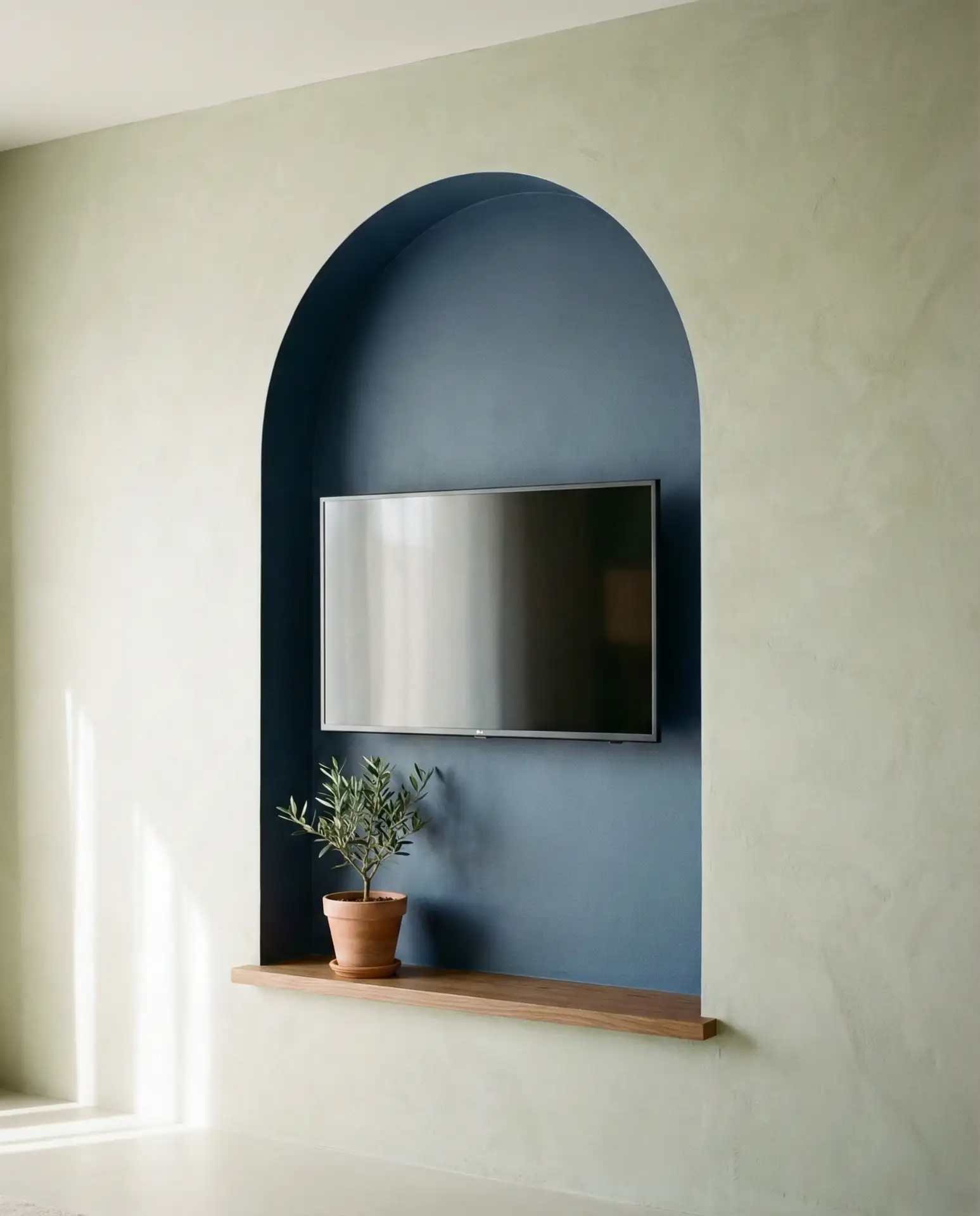
This is one of those design ideas where execution matters enormously. A poorly proportioned arch—too wide, too shallow, or with an inconsistent curve—will look like an afterthought. The key is getting the arch radius right relative to the TV’s width: generally the arch should be at least 12 inches wider than the screen on each side. If you’re hiring a plasterer, show them reference images and ask them to mock up the curve in cardboard before committing to drywall so you can evaluate the proportion in person before it’s permanent.
15. Study Table Integrated TV Wall
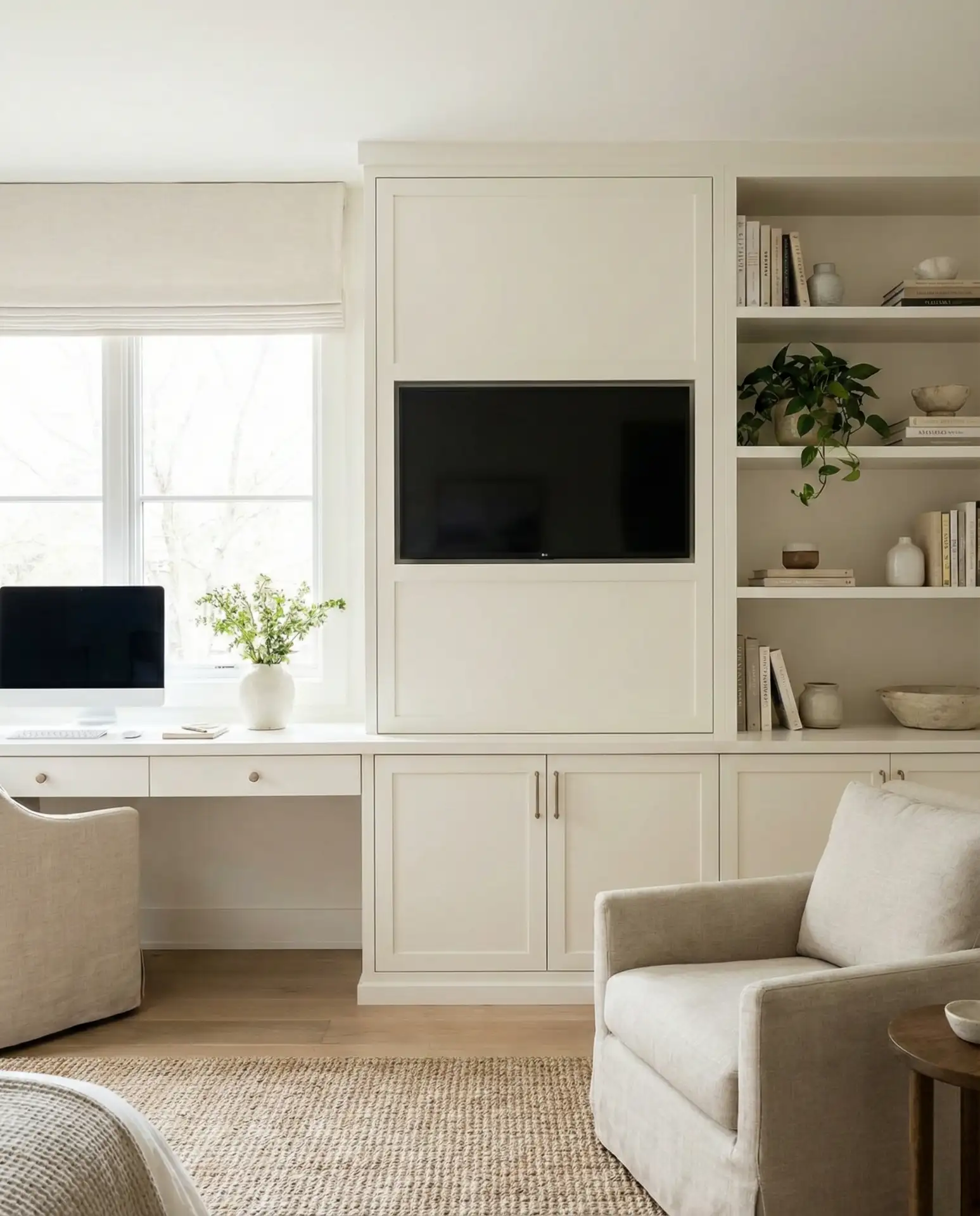
As remote work has permanently reshaped American home life, the hybrid TV-and-study table wall has become a genuinely necessary design solution for people who work from home and don’t have a dedicated office. A well-designed built-in that incorporates a floating desk surface, integrated cable management, closed storage for work supplies, and a mounted television on the upper portion is one of those rare ideas that solves two problems elegantly at once. This ideas-driven approach to the TV wall is especially relevant for guest rooms and studio apartments.
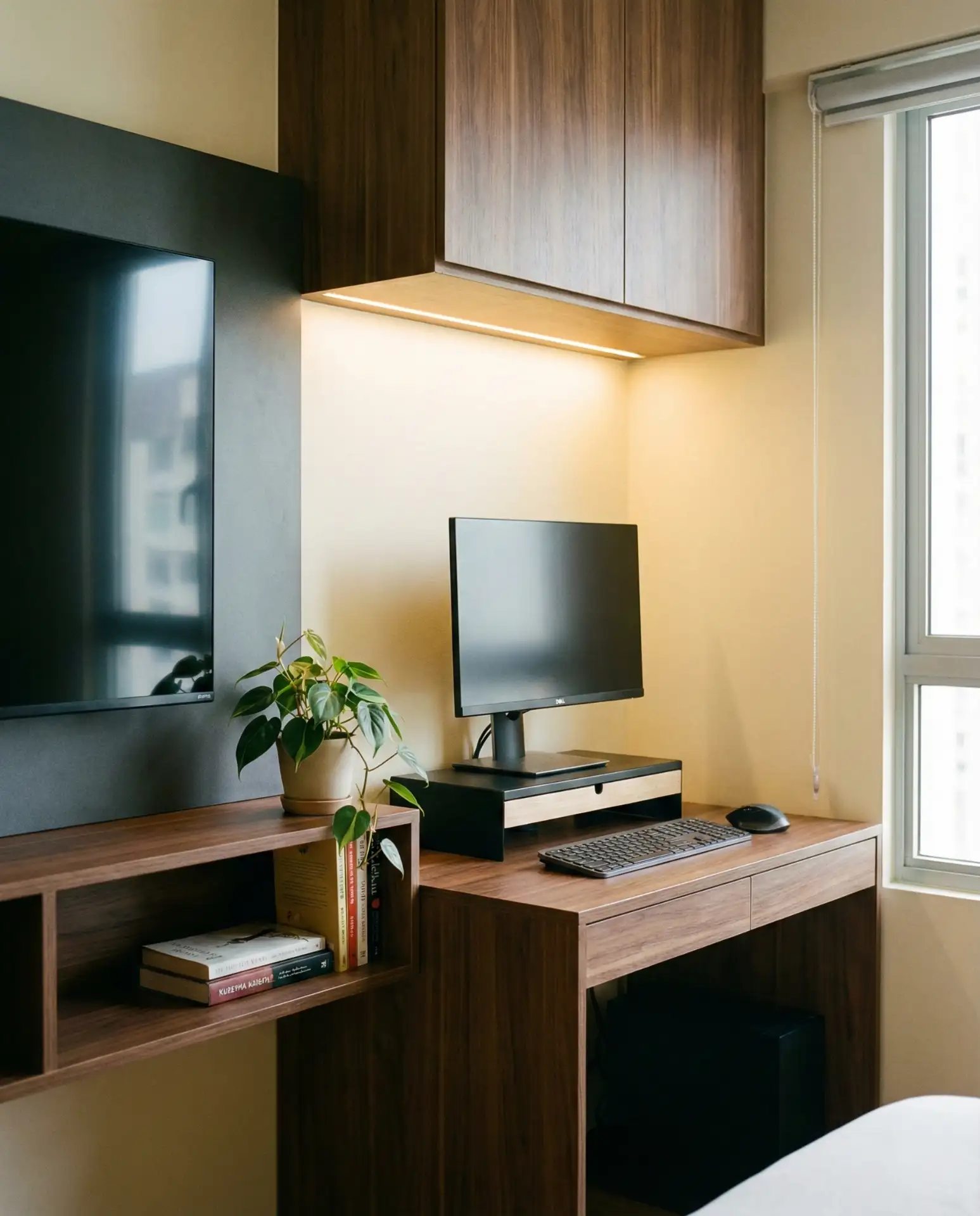
The most common mistake with this type of wall is underestimating the cable situation. A hybrid TV-desk wall has more cables than almost any other home setup—laptop chargers, monitor cables, speaker wires, TV cords, router cables—and if they’re not fully managed in-wall or through well-placed cable channels, the whole setup looks chaotic regardless of how beautiful the cabinetry is. Plan your cable routing before you finalize the built-in design, not after. It’s the step that makes or breaks the finished result.
16. Luxury TV Wall with Brass and Dark Veneer
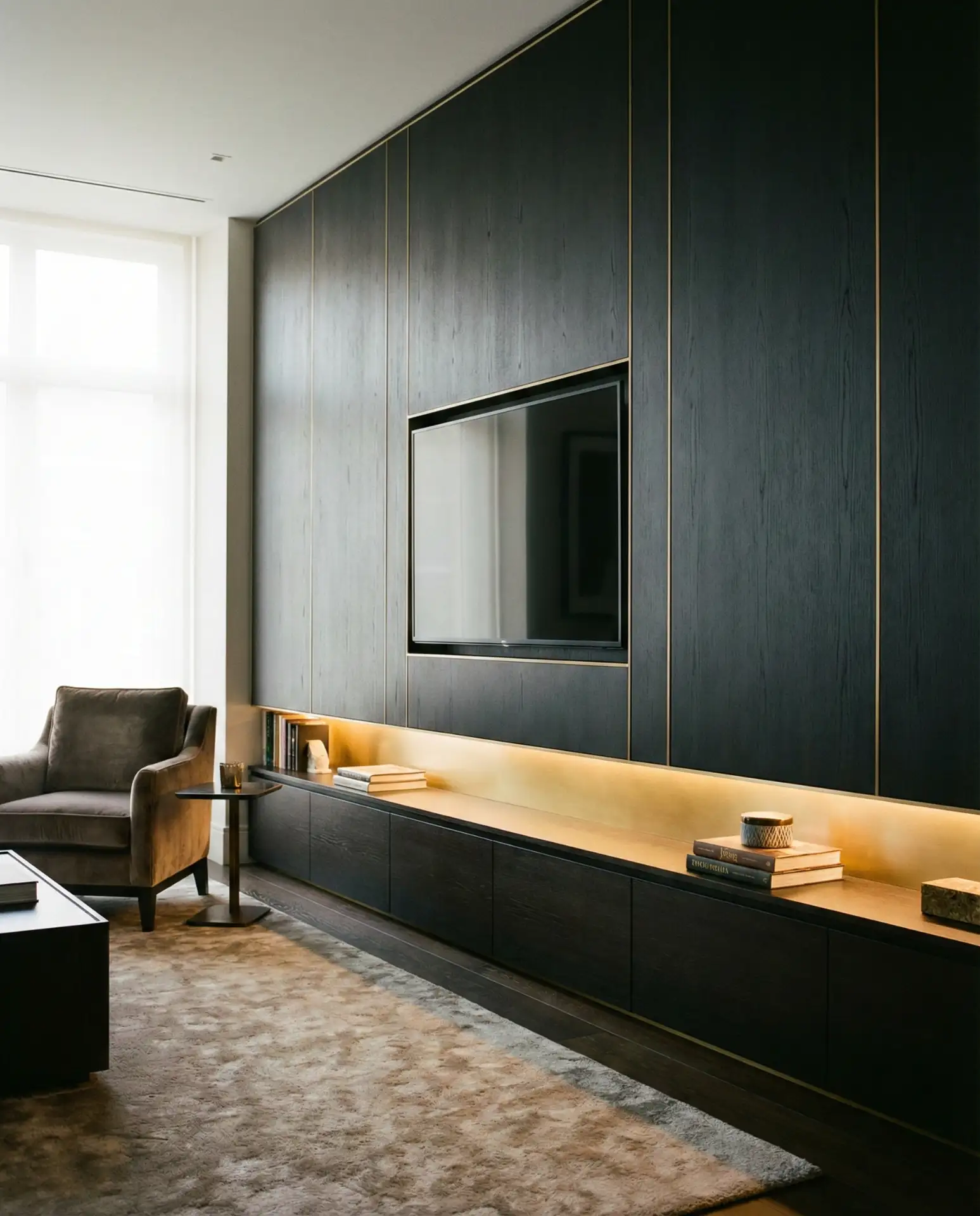
The combination of dark-stained wood veneer and unlacquered or brushed brass hardware is one of the most enduring expressions of residential luxury in contemporary interiors—and as a TV wall treatment, it carries the weight of a design decision that will still look sophisticated a decade from now. In 2026, the direction is deep espresso or ebonized oak veneer with integrated brass channel trim, brass-accented push-to-open cabinet doors, and a television that sits within a darker panel so it nearly disappears when switched off. The overall effect reads as equal parts luxury TV showcase and fine furniture.
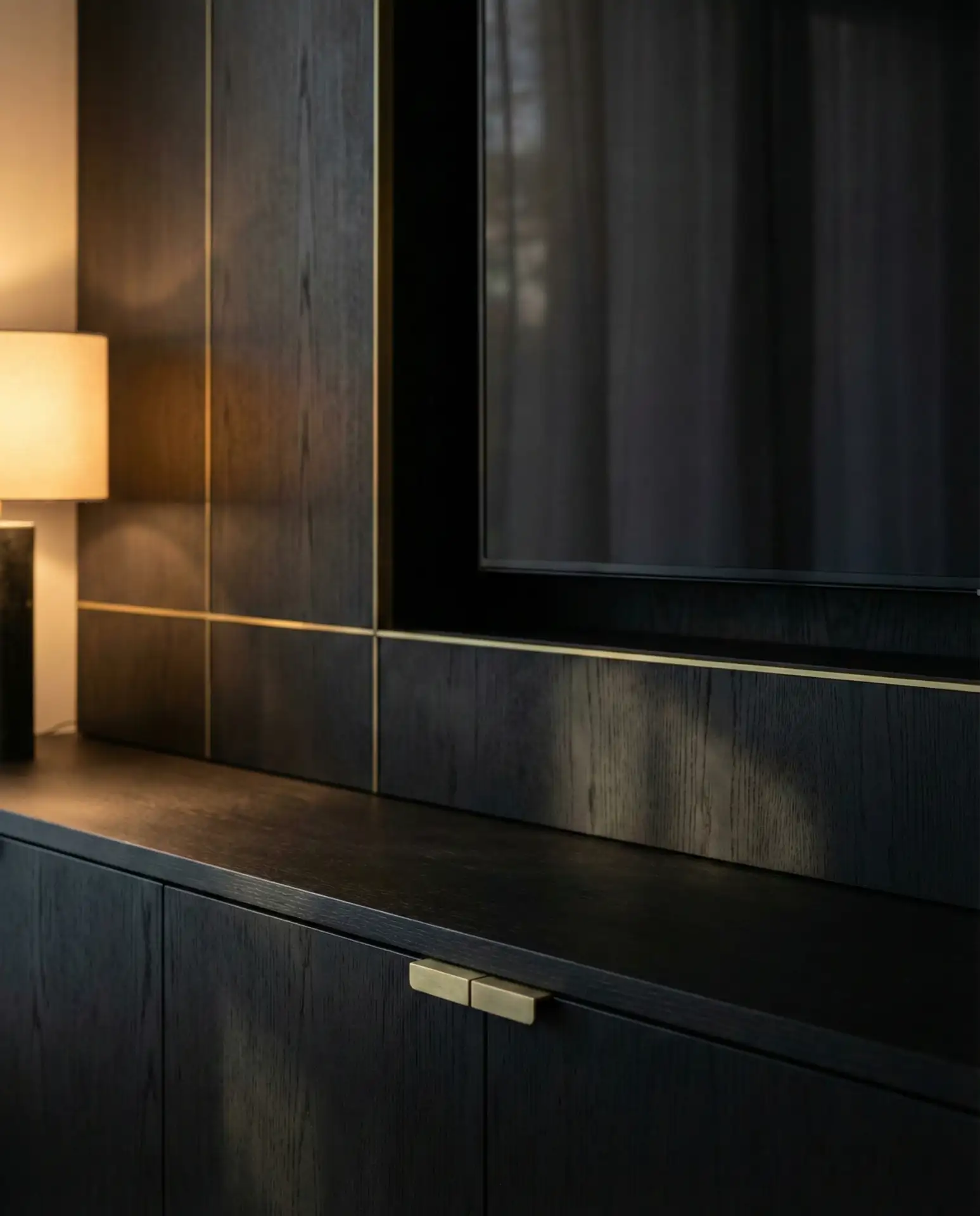
A practical note for anyone pursuing this look: the brass accents need to be consistent in finish throughout the room to read as intentional rather than random. If your TV wall has brushed satin brass, your light switch plates, door hardware, and lamp bases should echo it. Mixing unlacquered brass with satin brass or gold-plated brass creates a mismatched quality that undermines the whole composition—something interior designers call “hardware chaos,” and it’s one of the most common luxury-budget mistakes.
17. Textured Plaster TV Wall in Earthy Tones
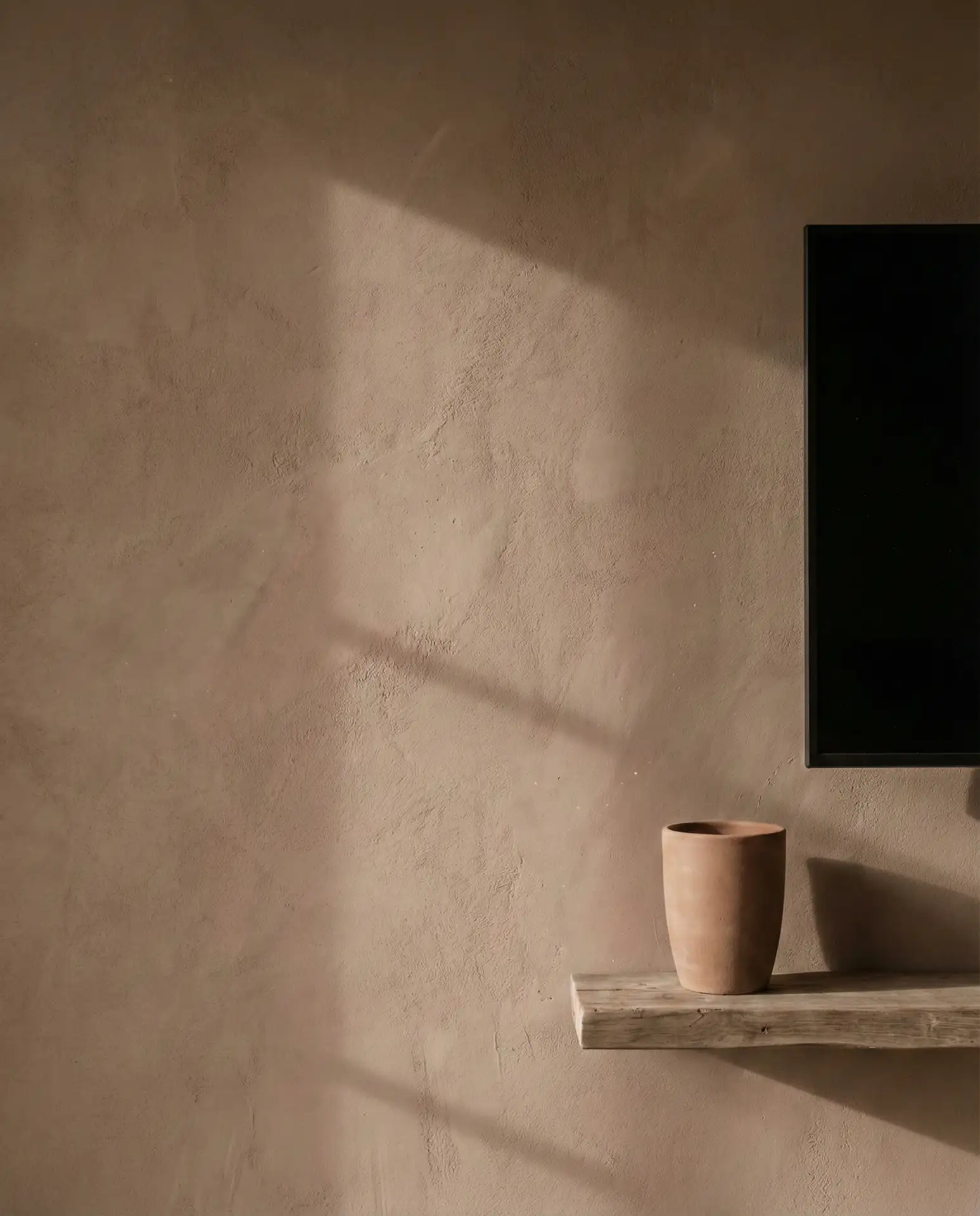
Venetian plaster, limewash, and tadelakt—the ancient plastering techniques having a very contemporary revival—create TV walls of extraordinary depth and visual complexity. In 2026, American homeowners are reaching for these finishes in warm earthy tones: raw umber, terracotta, dusty sienna, and muted ochre. A well-executed plaster wall in one of these colors feels 2026-forward and timeless simultaneously, and it pairs especially beautifully with the natural materials movement—linen sofas, boucle throws, and ceramic lamp bases. These ideas are everywhere on Pinterest right now for good reason.
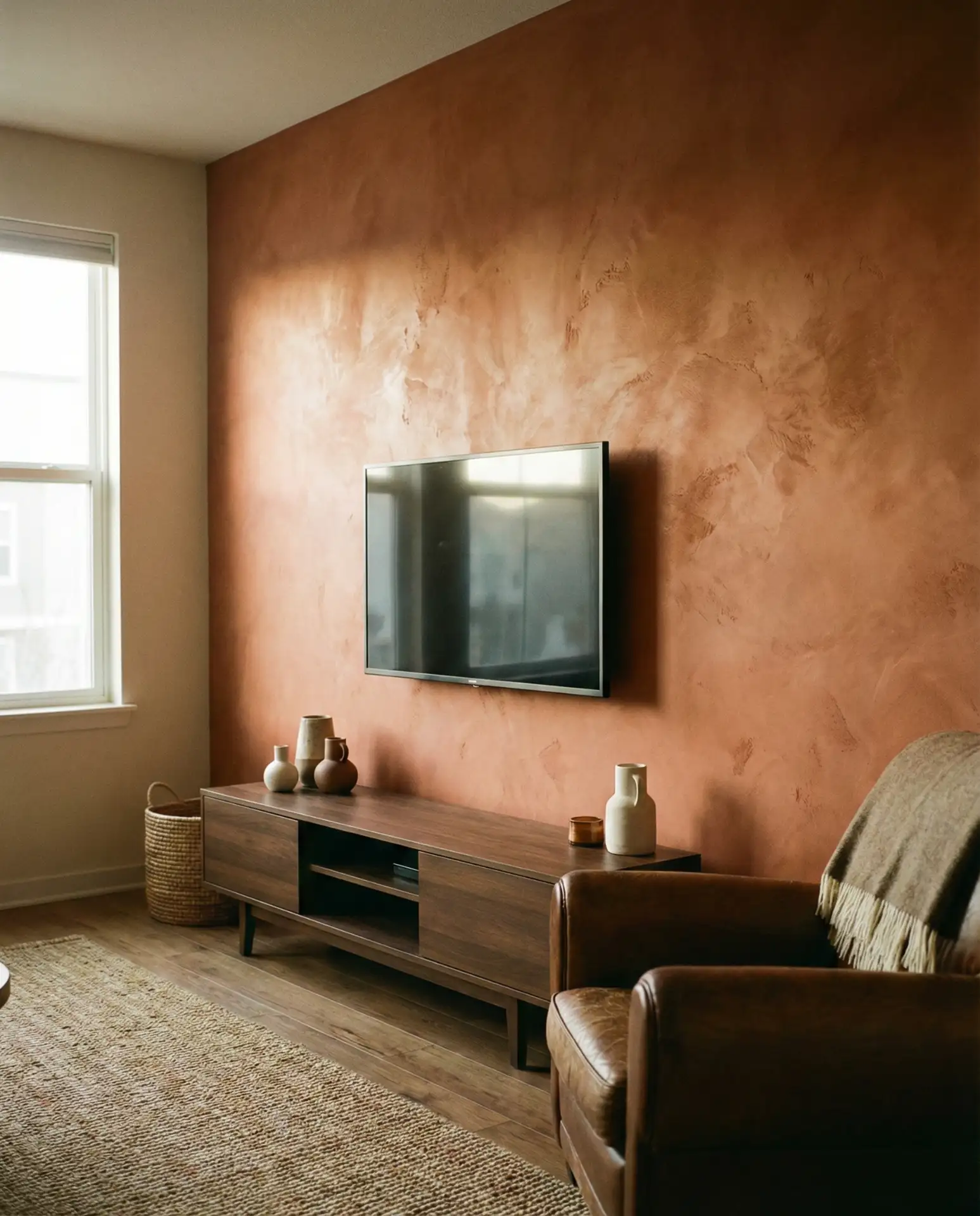
This is an area where professional application pays off significantly. While limewash paint can be applied by an ambitious DIY-er, true Venetian plaster and tadelakt require a plasterer with specific training, and a botched application is worse than a flat painted wall. If you’re in a market with access to skilled artisan plasterers—major cities generally have them, especially those with strong Italian-American craft traditions—the investment is absolutely worth making. The texture reads completely differently in person than in photos, and it’s one of those finishes that makes people reach out and touch it the moment they enter the room.
18. Black and Wood Contrast TV Wall
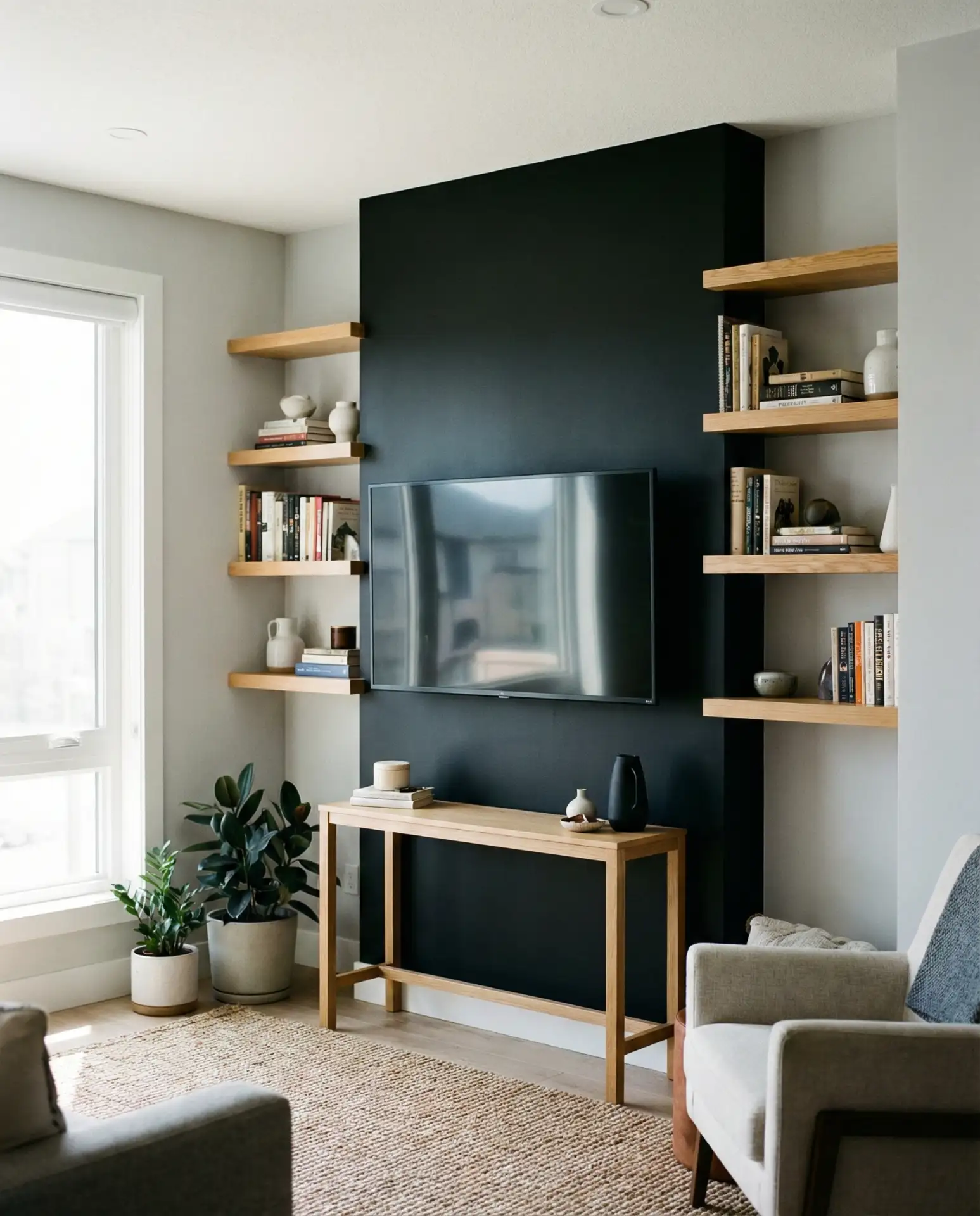
The pairing of matte black and warm natural wood is one of the most visually satisfying combinations in contemporary interior design—and as a TV wall concept, it’s practically foolproof when handled with restraint. The typical configuration involves a central black painted or paneled section framing the TV, flanked or anchored by warm wood elements—floating shelves, a wood console, or vertical wood strips that soften the darkness. This contrast has an inherently modern quality but doesn’t require an all-modern home to work successfully.
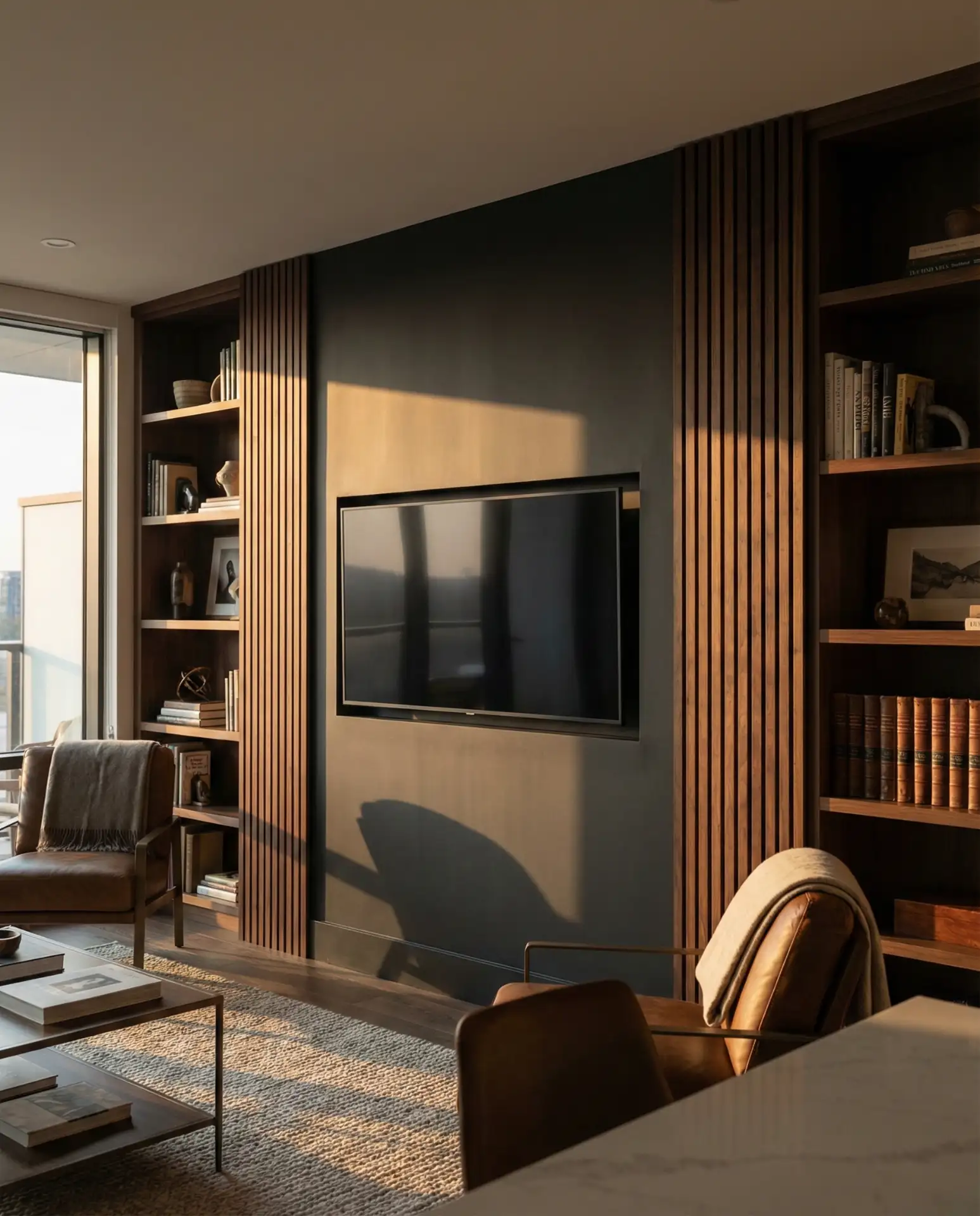
This combination works equally well across multiple American home styles—it fits as naturally in a converted Brooklyn loft as it does in a new-construction home in suburban Denver. For younger homeowners and renters who may not be ready to commit to a full renovation, painting a single section of the wall black and adding wood shelves is a relatively low-commitment, completely reversible interpretation of this look. The total material cost for a basic version can be as low as $200–$400, making it one of the highest impact-per-dollar upgrades available in home design.
19. Gypsum Ceiling-to-Wall TV Feature Panel
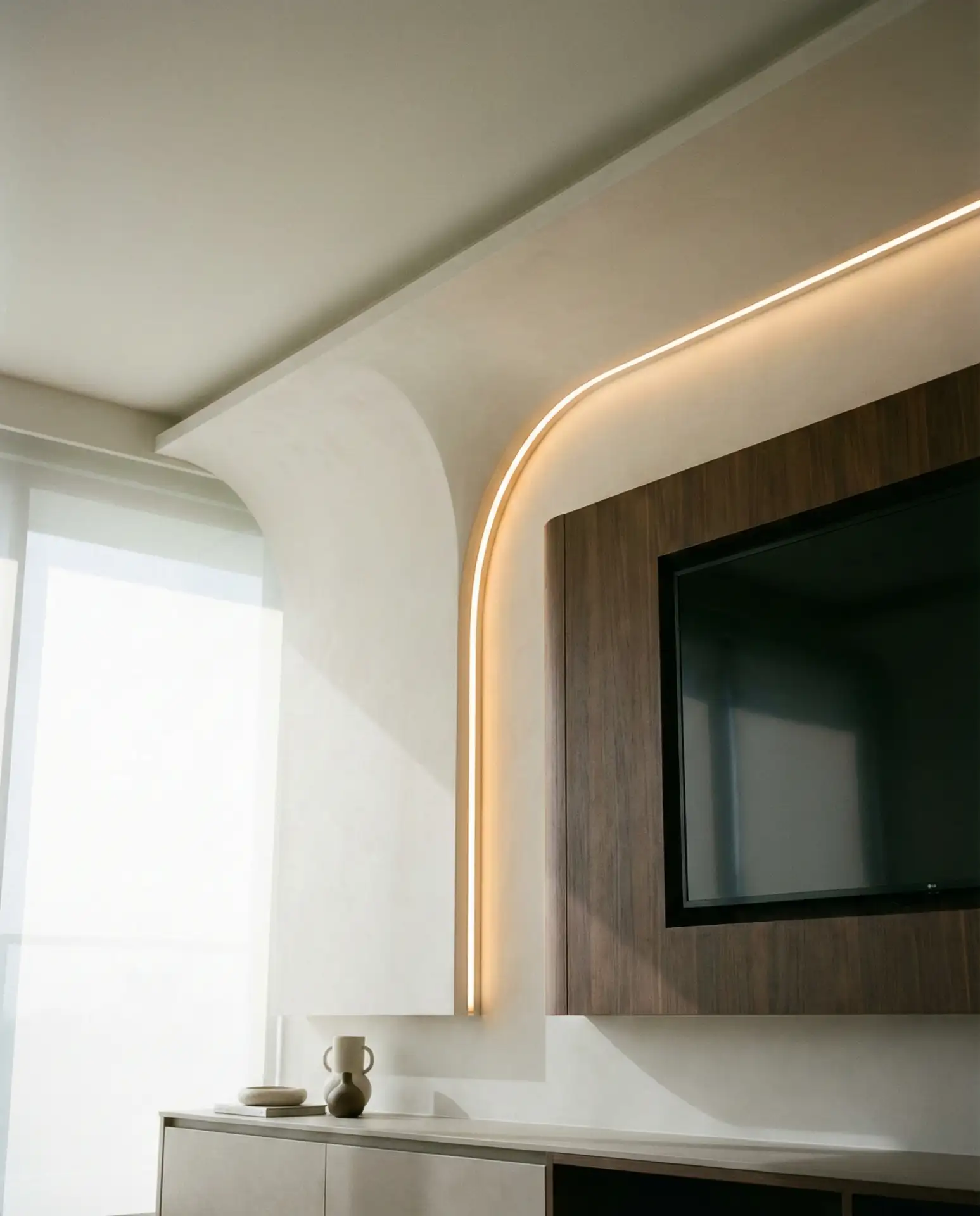
One of the most architecturally sophisticated TV wall approaches in 2026 modern design involves extending the gypsum feature panel concept upward—allowing it to flow from the TV wall itself onto a portion of the ceiling in a continuous curved or angular transition. This creates a cocoon-like effect in the seating area, visually defining the living zone within an open-plan space without the need for walls or room dividers. The result is deeply immersive and incredibly photogenic, with smooth plaster curves that look like they were sculpted rather than constructed.
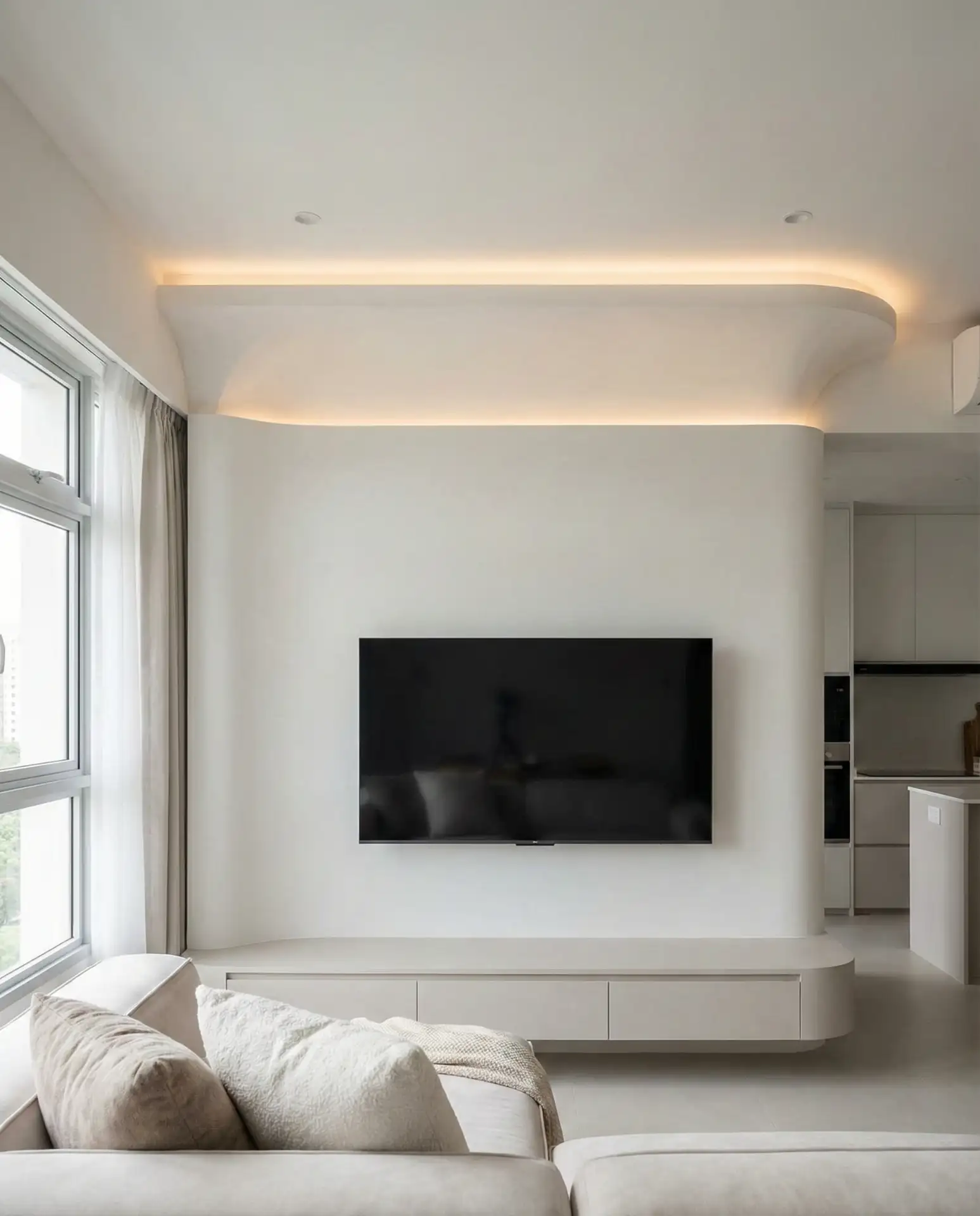
This is genuinely one of the most ambitious TV wall concepts on this list, and it should be attempted only with an experienced contractor who has done curved gypsum or plaster work before. The structural and finishing complexity is significant. That said, in new construction or during major gut renovations, it can be incorporated relatively efficiently because the ceiling framing and wall framing are being touched anyway. American architectural firms working in contemporary residential are increasingly specifying this kind of seamless ceiling-wall detail as a signature move in living room design.
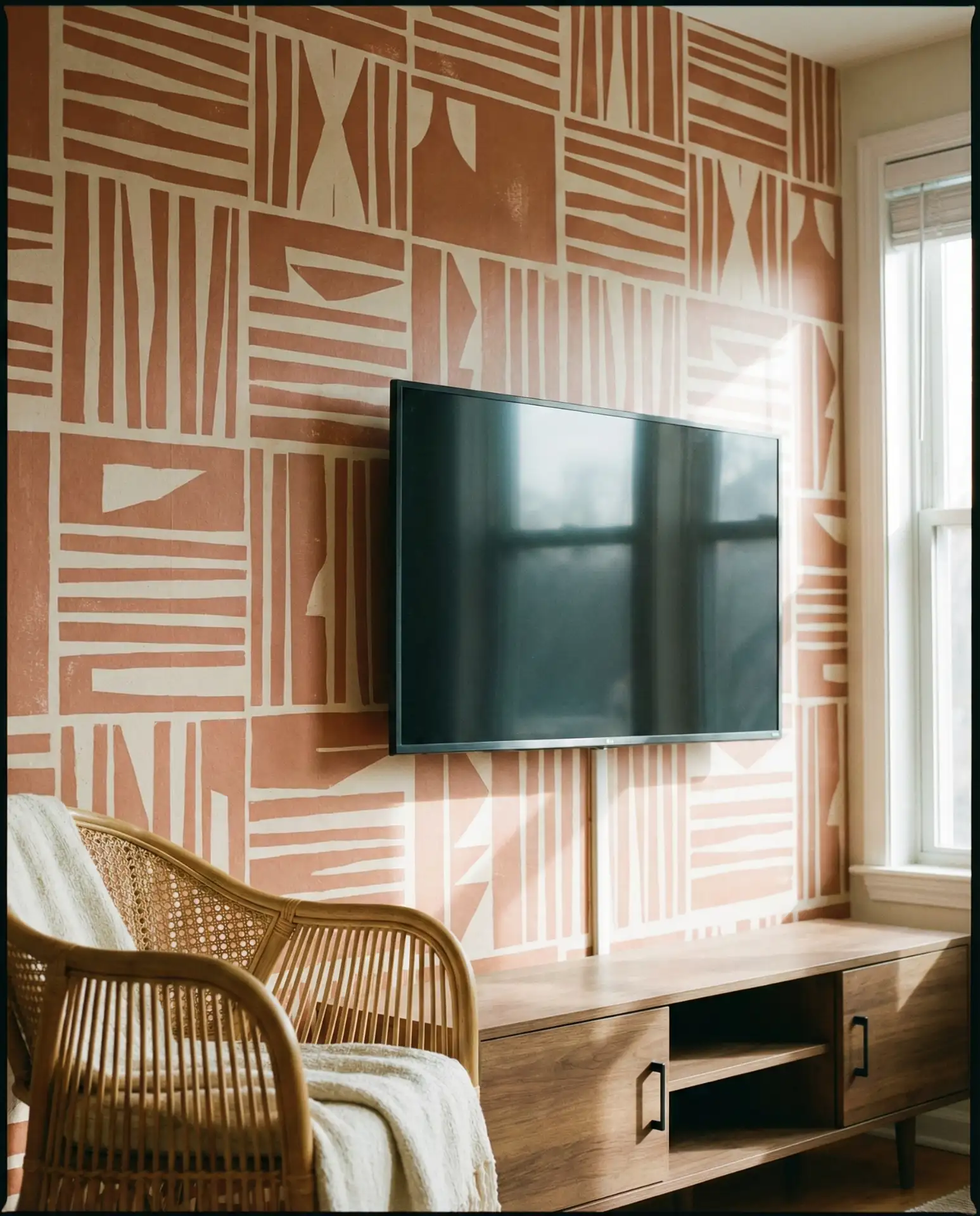
20. Wallpaper Background TV Wall with Graphic Pattern
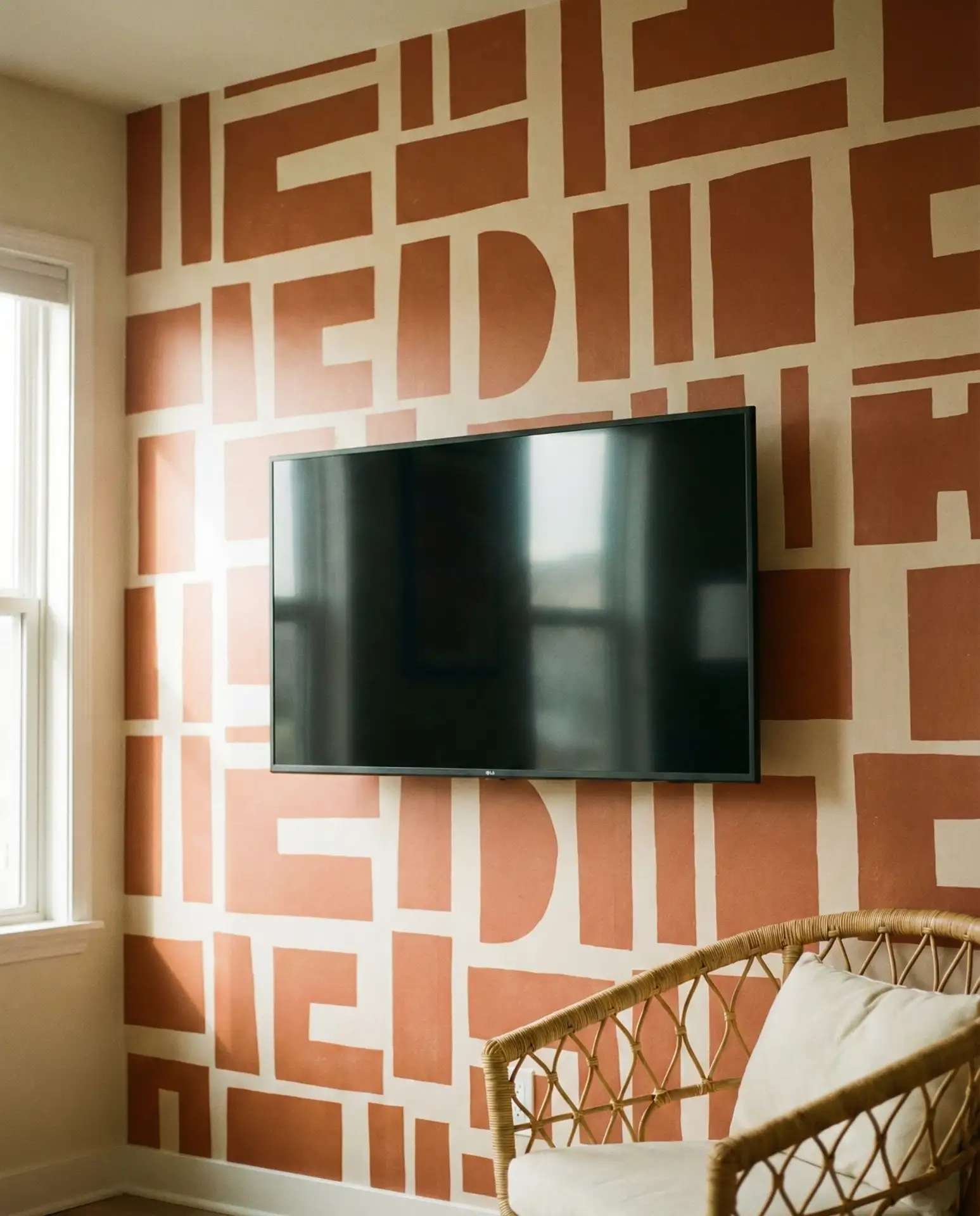
Wallpaper has completed its full comeback arc and is now operating at the highest level of interior design consideration—and using it as a TV wall background in 2026 is a move that rewards boldness. The most successful TV wallpaper walls use large-scale botanical prints, geometric abstracts, or architectural murals that create such a complete visual statement that the television essentially becomes part of the composition rather than dominating it. This suits a range of styles, from maximalist pattern lovers to those drawn to a single powerful classic motif in a largely restrained room.
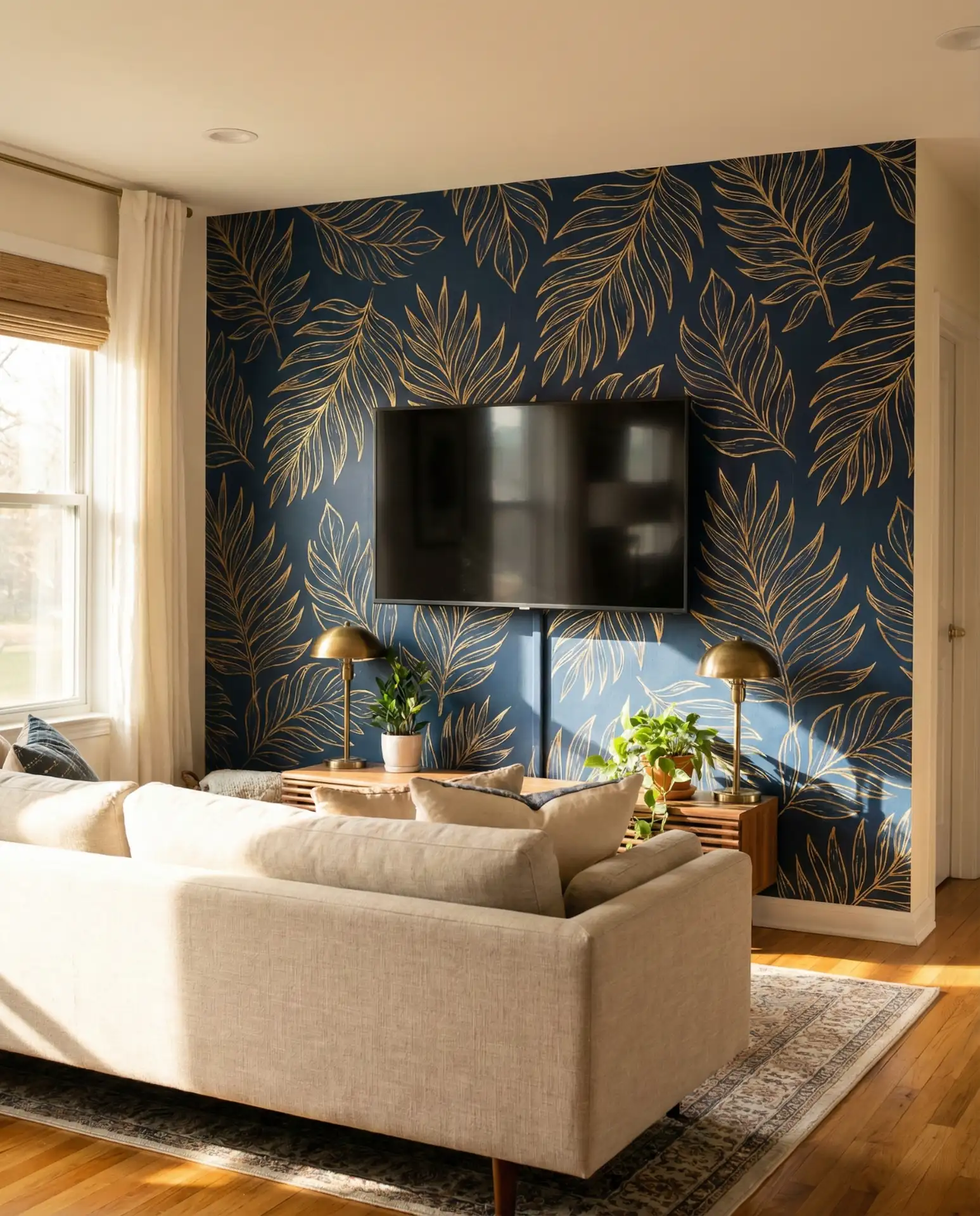
The one aesthetic trap to avoid with a patterned wallpaper TV wall is over-accessorizing. The wallpaper is the statement—everything else should support it, not compete with it. Pull one or two colors from the wallpaper into your throw pillows or rug, keep the furniture silhouettes simple, and resist the urge to add wall art. The television, when it’s off, reads as a neutral dark panel against the pattern; when it’s on, the wallpaper frames it beautifully. It’s an underrated approach that many professional designers recommend for clients who want personality without permanent renovation.
21. Luxury TV Display Wall with Art Gallery Feel
The most rarefied expression of the TV wall in 2026 treats the luxury tvs as an art object—because technologically speaking, that’s exactly what the current generation of ultra-thin OLED and MicroLED screens are. A gallery-style TV wall places the television on a pristine surface (usually a smooth plaster or very subtly textured wall) with picture rail lighting, no visible cables, and perhaps one or two actual artworks hung in relation to it, blurring the line between display screen and displayed art. This suits contemporary luxury interiors where the collection—of furniture, of art, of objects—is the conversation.
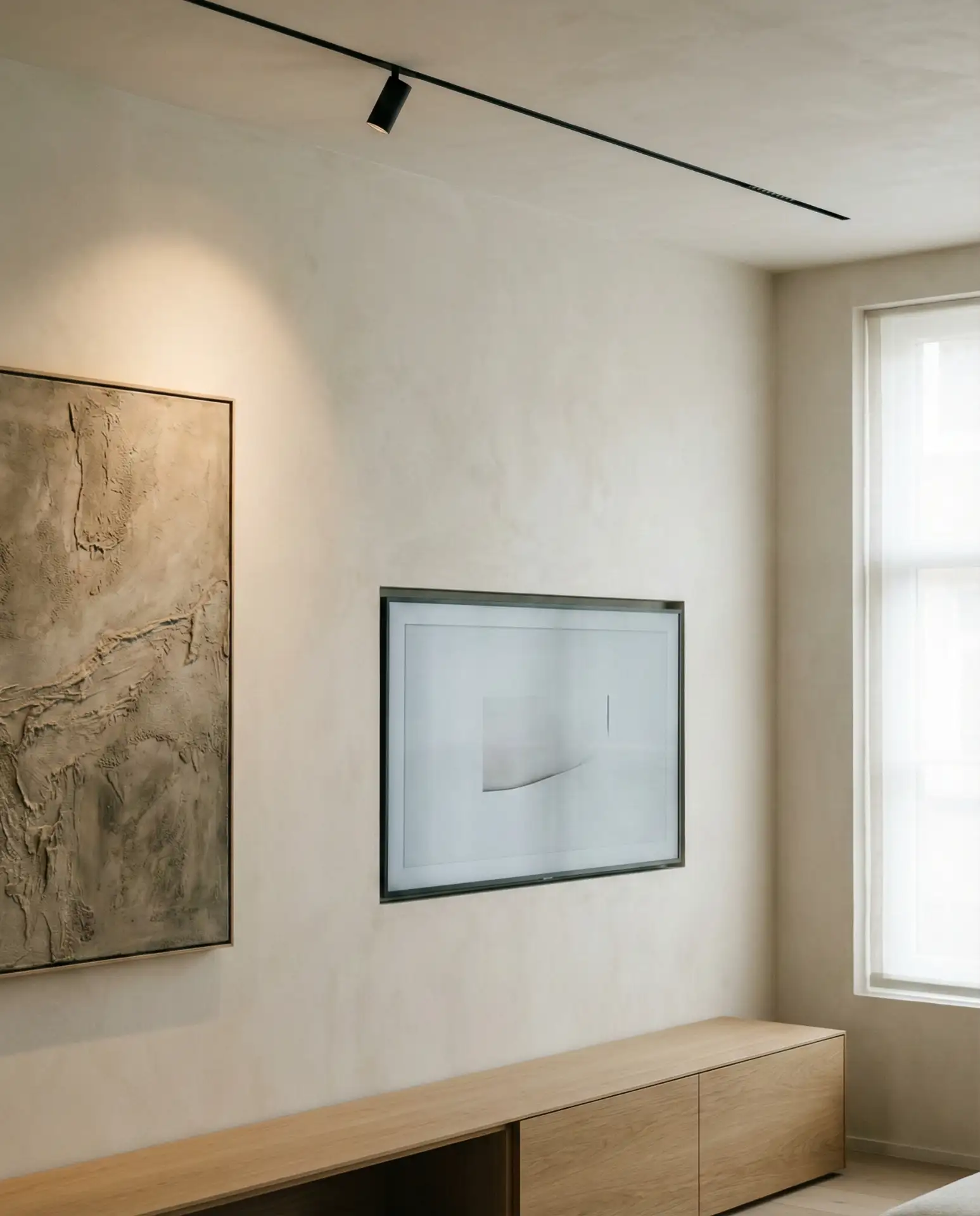
Samsung’s Frame TV and LG’s Gallery series are the most commonly referenced products in this context, and for good reason—both are designed to disappear into their surroundings when not in use, displaying artwork or staying in a low-power ambient mode. What many homeowners don’t realize is that the cable connection on these screens runs through a single translucent thread-like optical cable rather than a thick HDMI bundle, which is essential for the gallery illusion to hold. The entire setup—screen, cable management, picture lighting—can be a genuinely all-in luxury investment, but few things in interior design have as much daily impact.
22. Compact Modern TV Wall for Studio Apartments
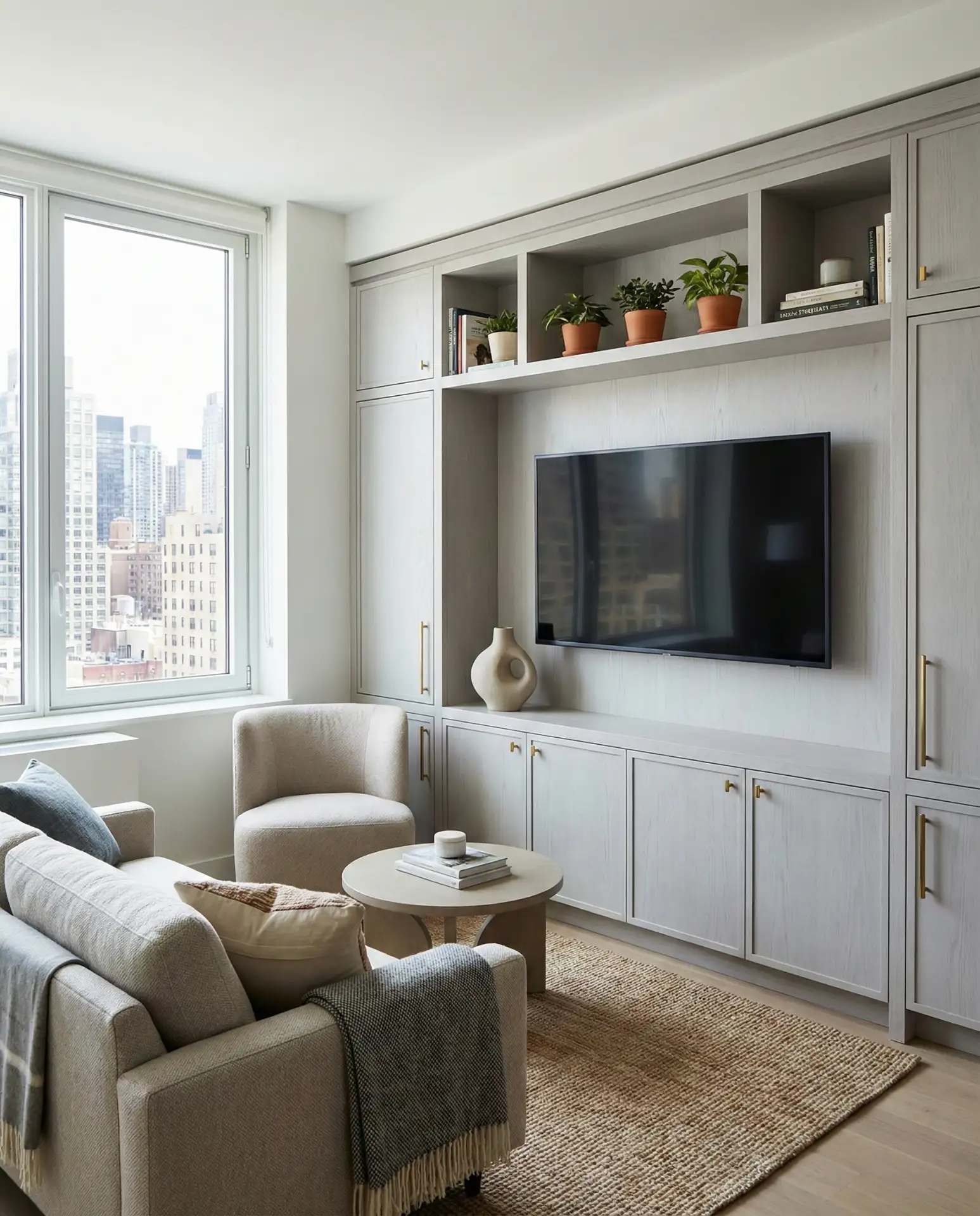
The small studio apartment context demands TV wall solutions that are ingenious rather than merely practical—and in 2026, the smartest compact TV wall designs double as spatial dividers, room anchors, and storage systems all in one. A slim, floor-to-ceiling unit with the TV centered, open shelving above for books and objects, and a fold-down surface below that functions as both a console and a small dining or work surface is the kind of multi-functional thinking that makes real life in a compact apartment genuinely enjoyable rather than perpetually compromised.
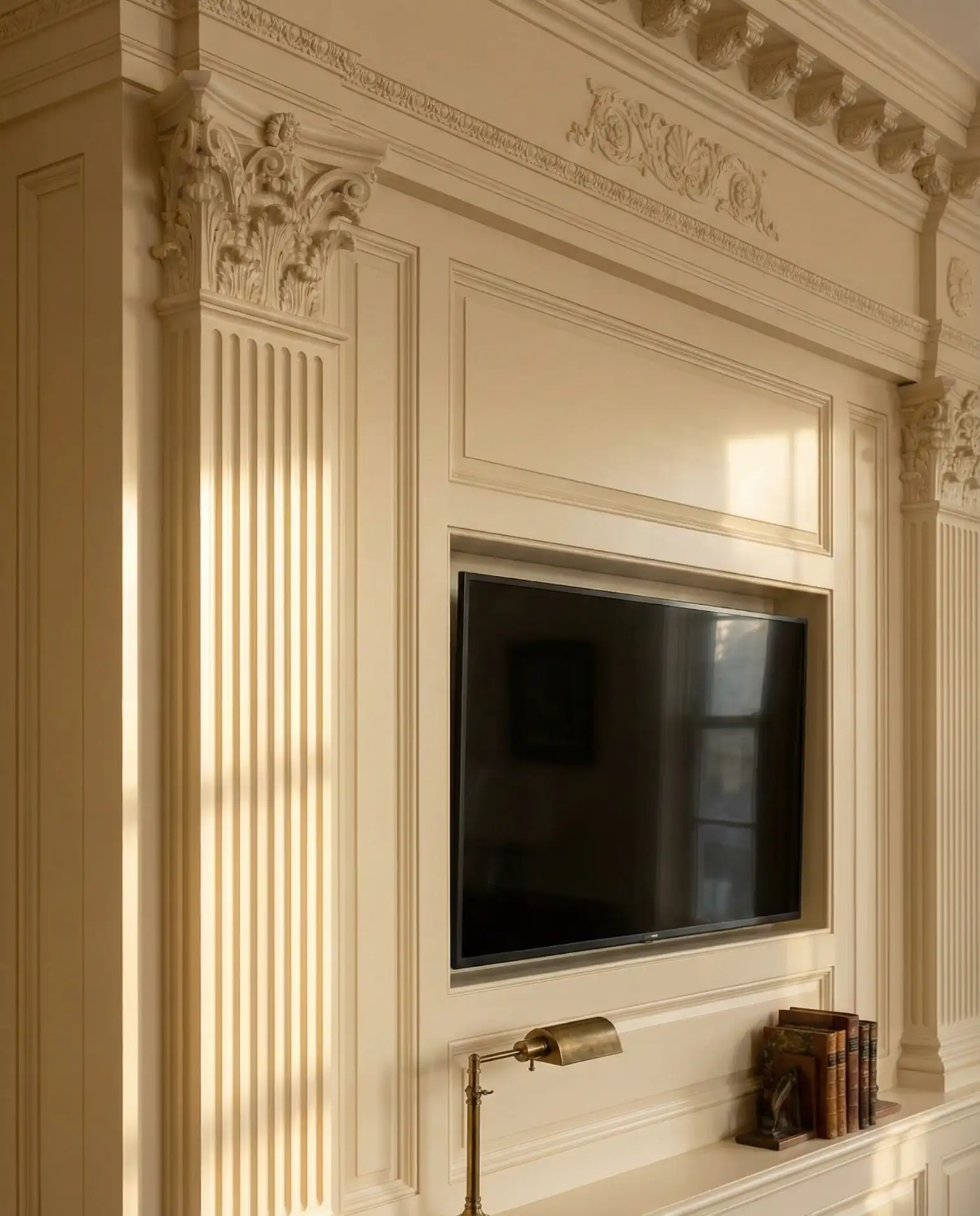
Americans in their 20s and early 30s renting their first apartments in high-cost cities are often the most creative problem-solvers in the design world—because constraint is a powerful motivator. The best compact TV wall solutions for studios are often entirely modular: freestanding units that can be disassembled and moved rather than built-in structures that stay behind when you do. IKEA’s PAX and BILLY systems, Muji’s stainless shelving, and newer DTC furniture brands targeting urban renters have all produced genuinely handsome versions of this type of flexible TV wall.
23. Neo-Classic Pilaster TV Wall
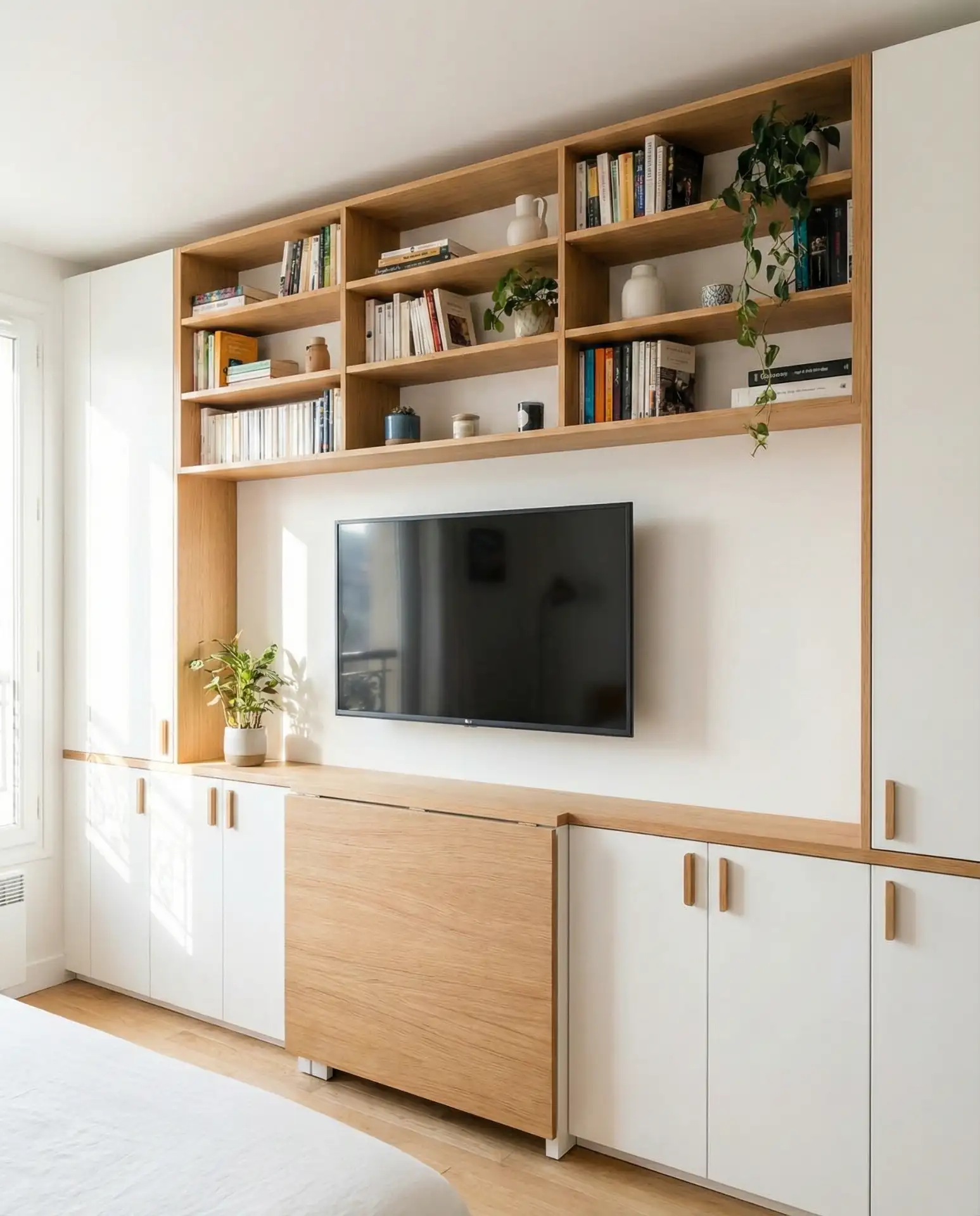
Taking the decorative molding concept a significant step further, the pilaster TV wall uses full-height classical pilasters—the flat, engaged columns that reference ancient architecture—to flank the television and create a sense of grand architectural scale within a residential living room. This is deeply neoclassical in spirit, but when executed in a crisp white or soft stone tone with a very slim profile and frameless television, it feels entirely current. Paired with a high-gloss marble-look console below, it achieves that luxury classic quality that never really goes out of style in American luxury residential design.
This is a look with deep roots in American architectural tradition—think of the formal rooms in Georgian and Federal-style homes that have defined aspirational American living for centuries. In the South particularly, where traditional architecture still commands tremendous respect and affection, a pilaster TV wall feels like a natural extension of a home’s design language rather than an imported trend. For anyone working with an older home that already has some classical detailing, commissioning a carpenter to match the pilaster profile to existing trim elements throughout the house creates a sense of historic continuity that’s deeply satisfying.
24. Full-Width Backlit Panel TV Wall
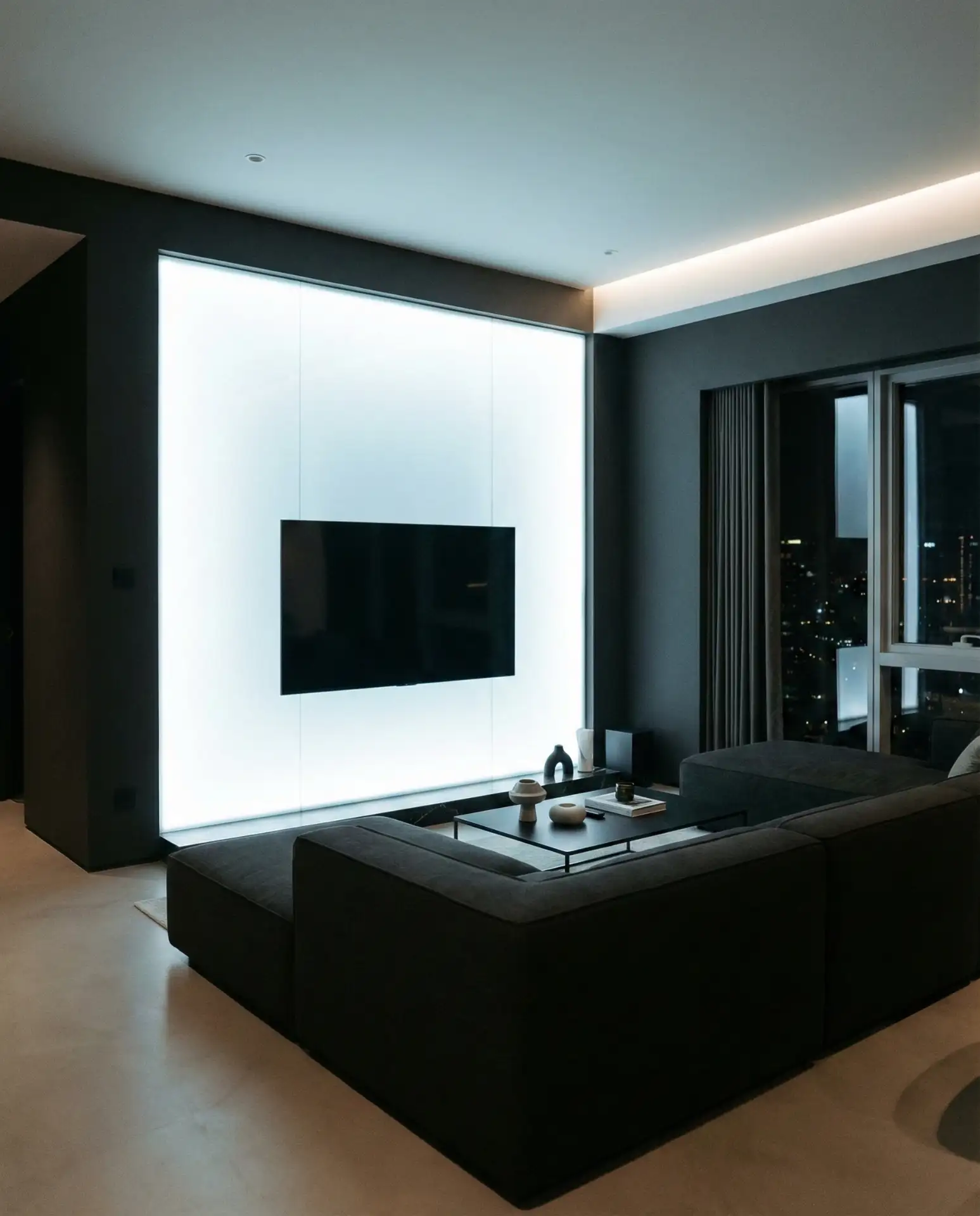
Our final idea is one of the most dramatic and visually immersive TV wall treatments available in 2026: a full-width backlit panel system that spans the entire length of the wall, with the television centered and the surrounding panels glowing with diffused ambient light. This goes beyond simple bias lighting—the entire panel structure becomes a light source, creating a luminous backdrop that’s unlike anything else in residential design. It’s an inherently modern luxury concept with a strong 2026 energy, and it’s particularly spectacular in rooms with dark or deeply saturated wall color where the contrast between the glowing panels and the surrounding space is maximized.
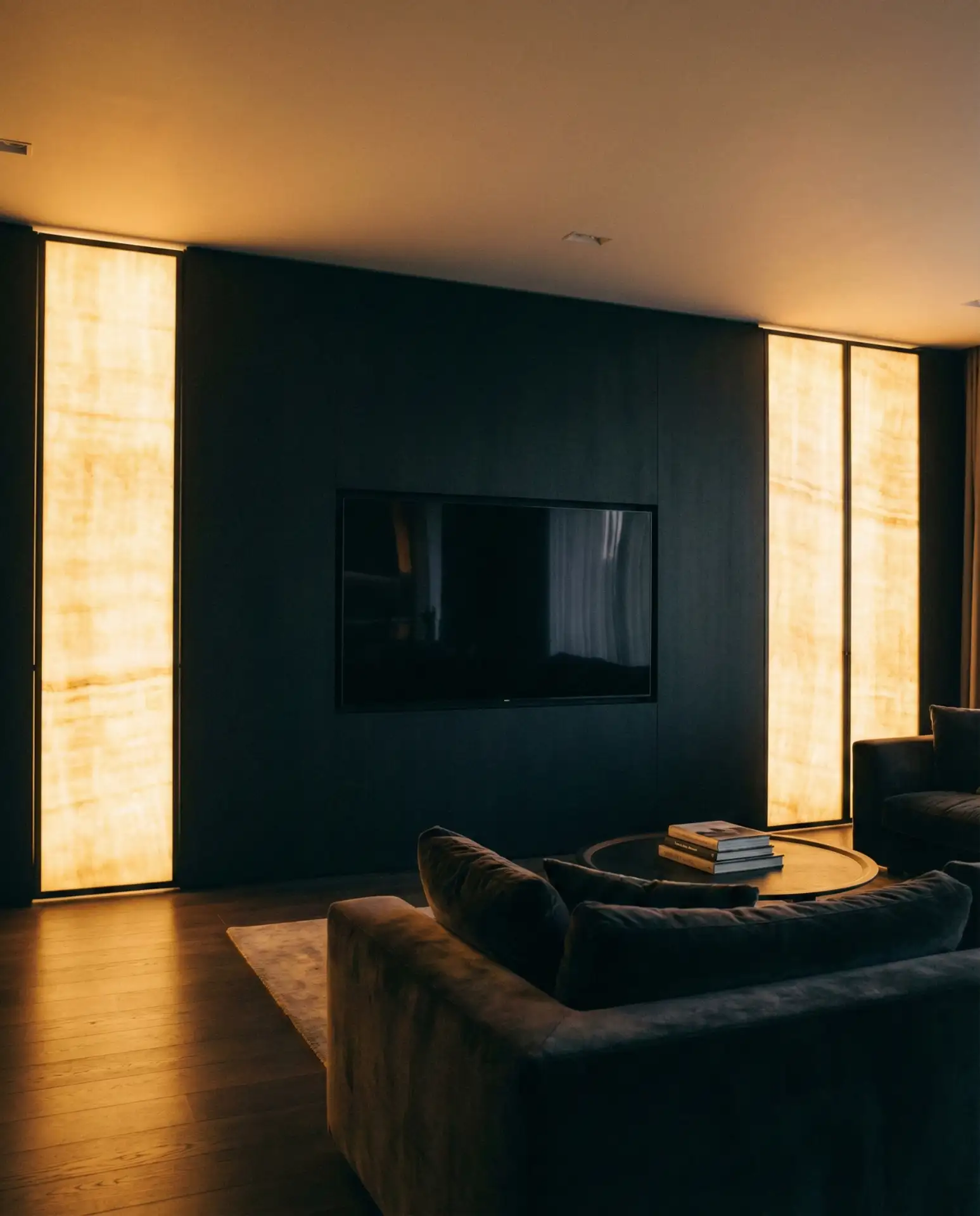
The technology driving this look has become significantly more accessible in recent years, with companies producing modular backlit panel systems specifically for residential TV walls that can be installed without specialist electrical knowledge beyond a licensed electrician’s sign-off. The key design decision is the light color temperature: warm white (2700–3000K) creates a golden, intimate mood suited to living rooms; cooler white (4000K) creates a more contemporary, alert feeling better suited to media rooms or home theaters. Whatever temperature you choose, add a dimmer—the ability to control the intensity completely changes how the wall performs across different times of day and different uses.
Conclusion
Whether you’re drawn to the sculptural drama of a gypsum ceiling curve, the quiet sophistication of a Japandi plaster wall, or the pure practicality of a small-space built-in, the TV wall you choose has the power to genuinely transform how you experience your home every single day. We’d love to hear which of these 24 ideas speaks to your space and your style—drop a comment below and tell us which direction you’re considering, or share a photo of your own TV wall. Your ideas and experiences are exactly what make this community worth being part of.