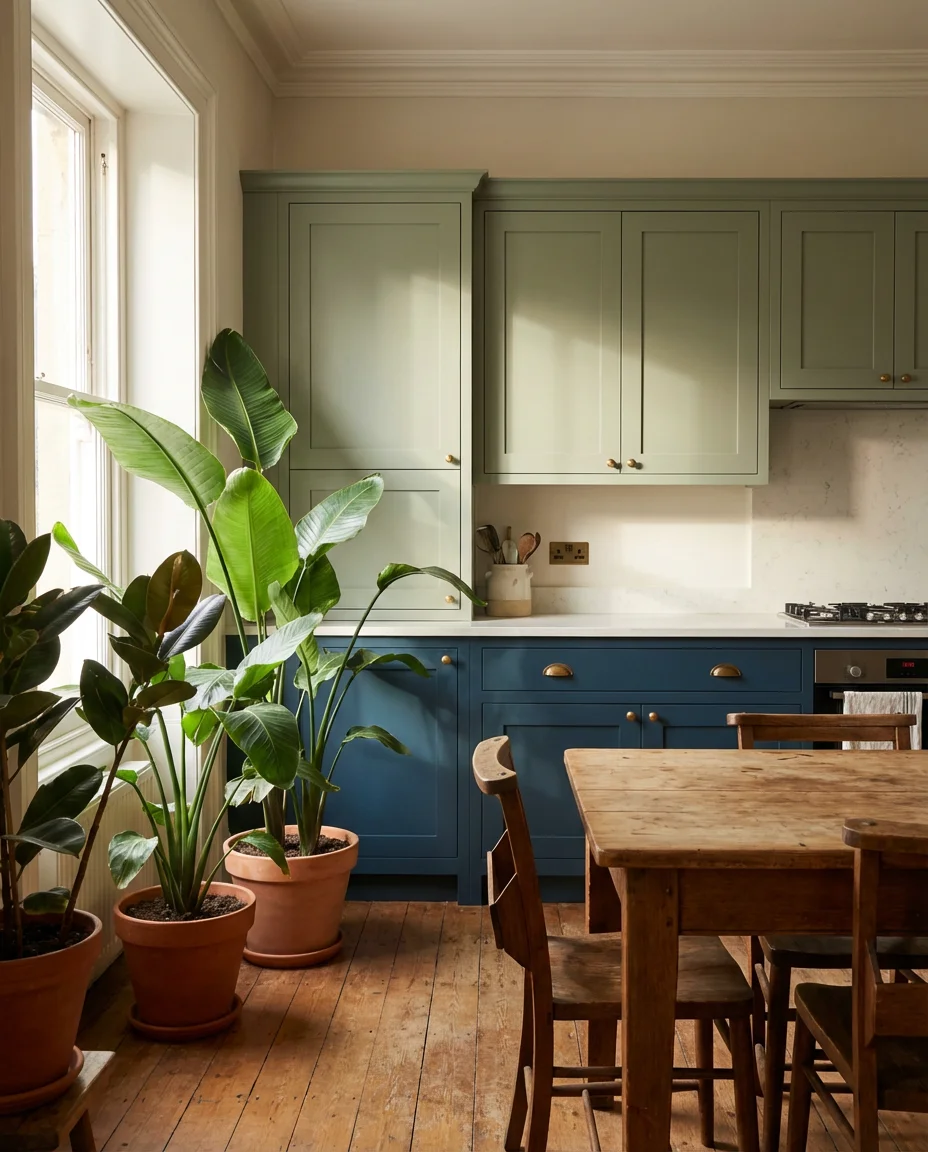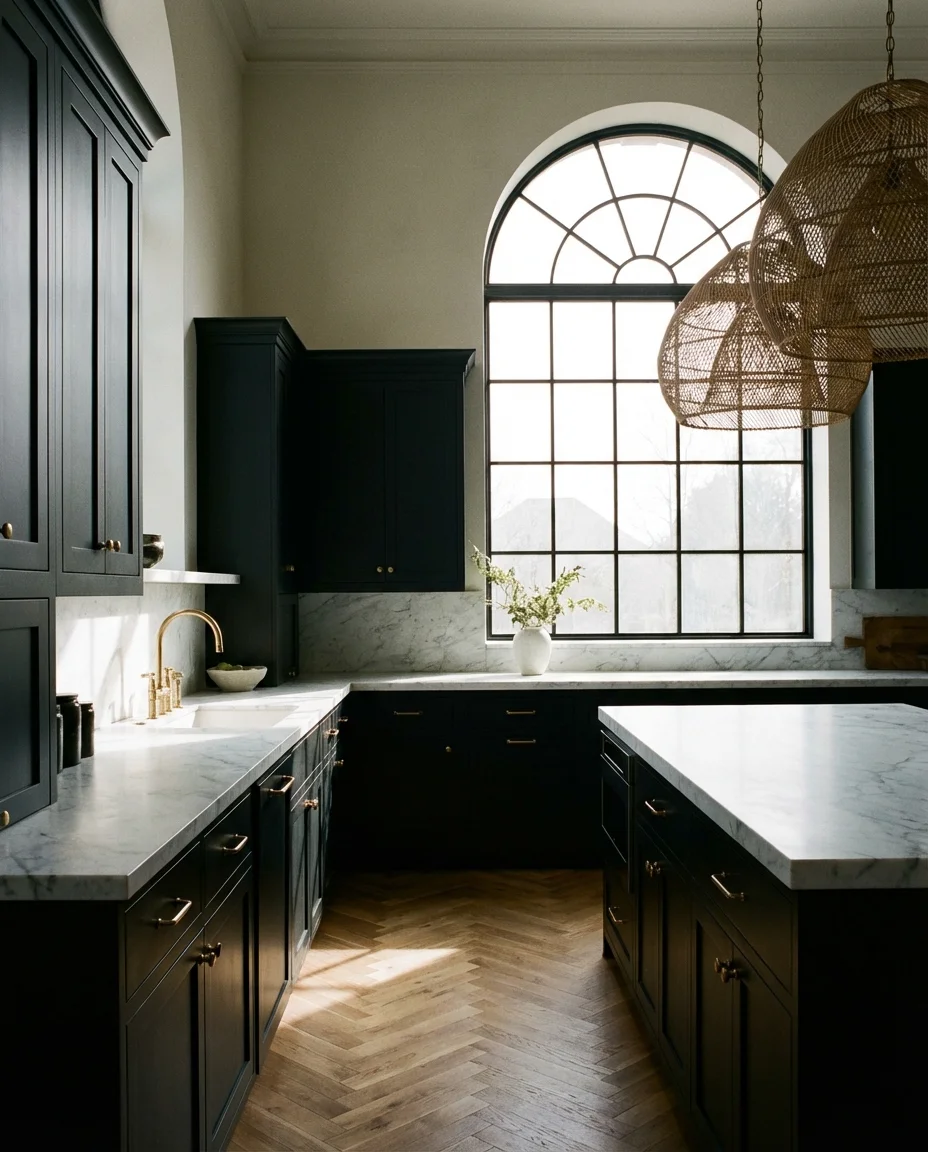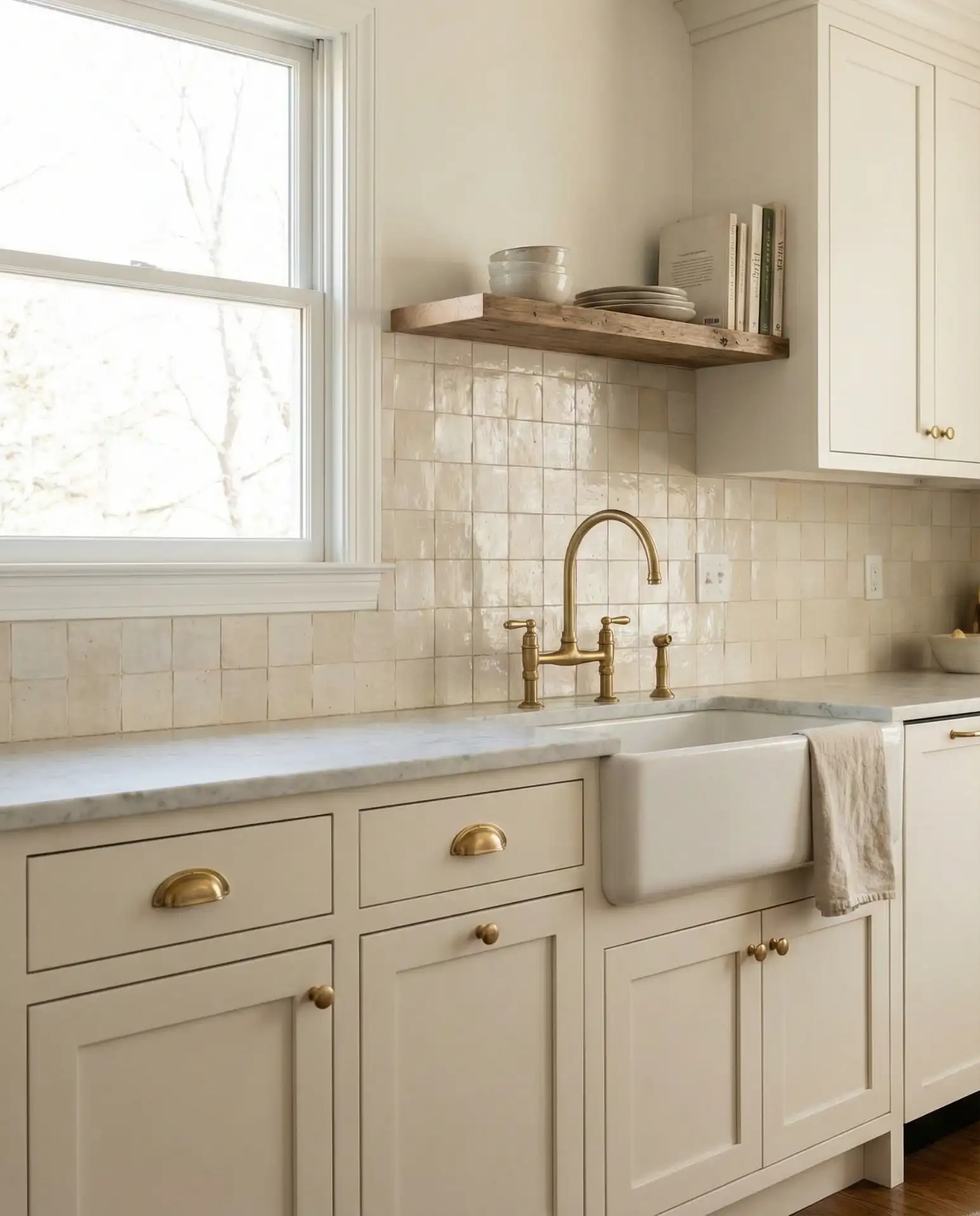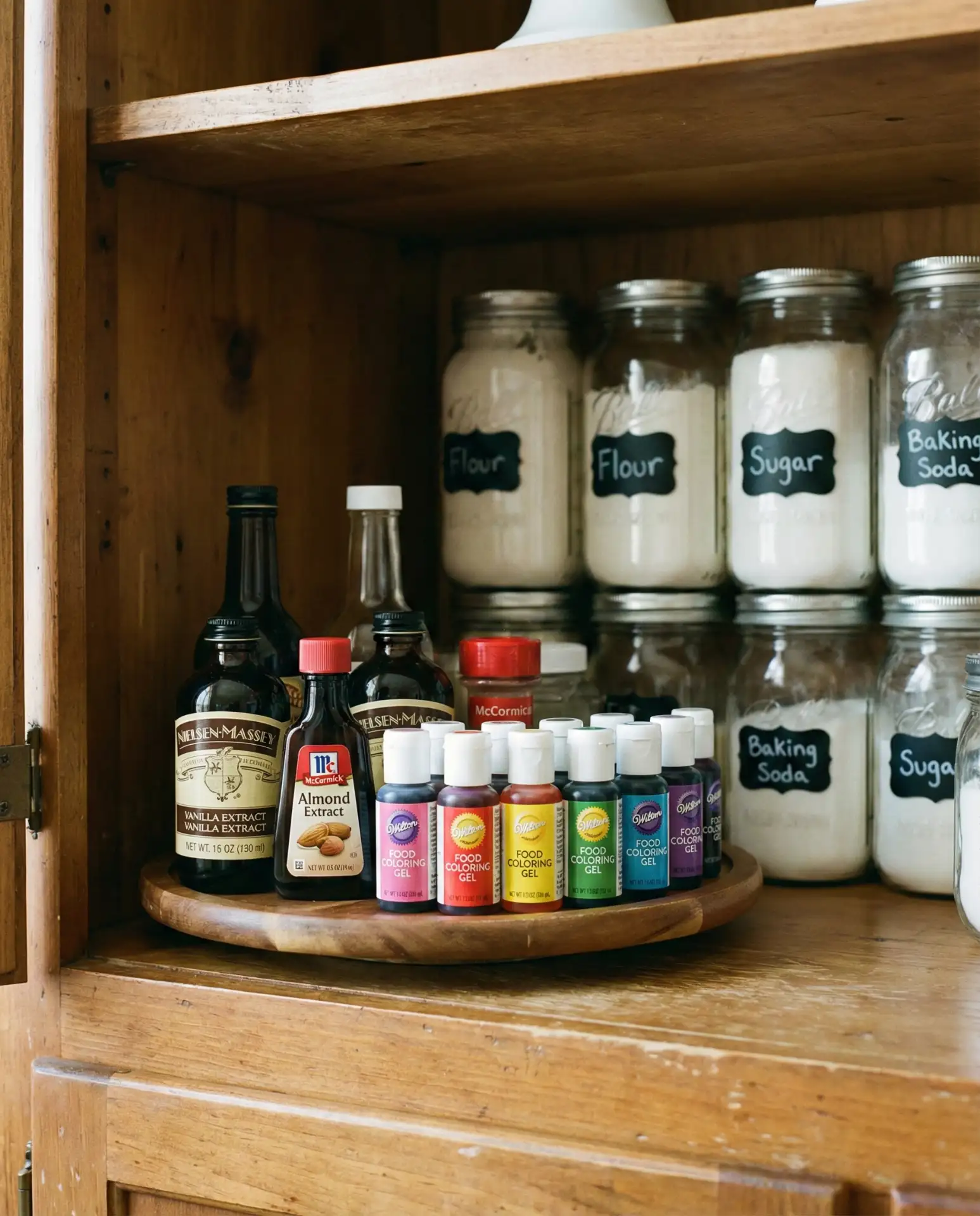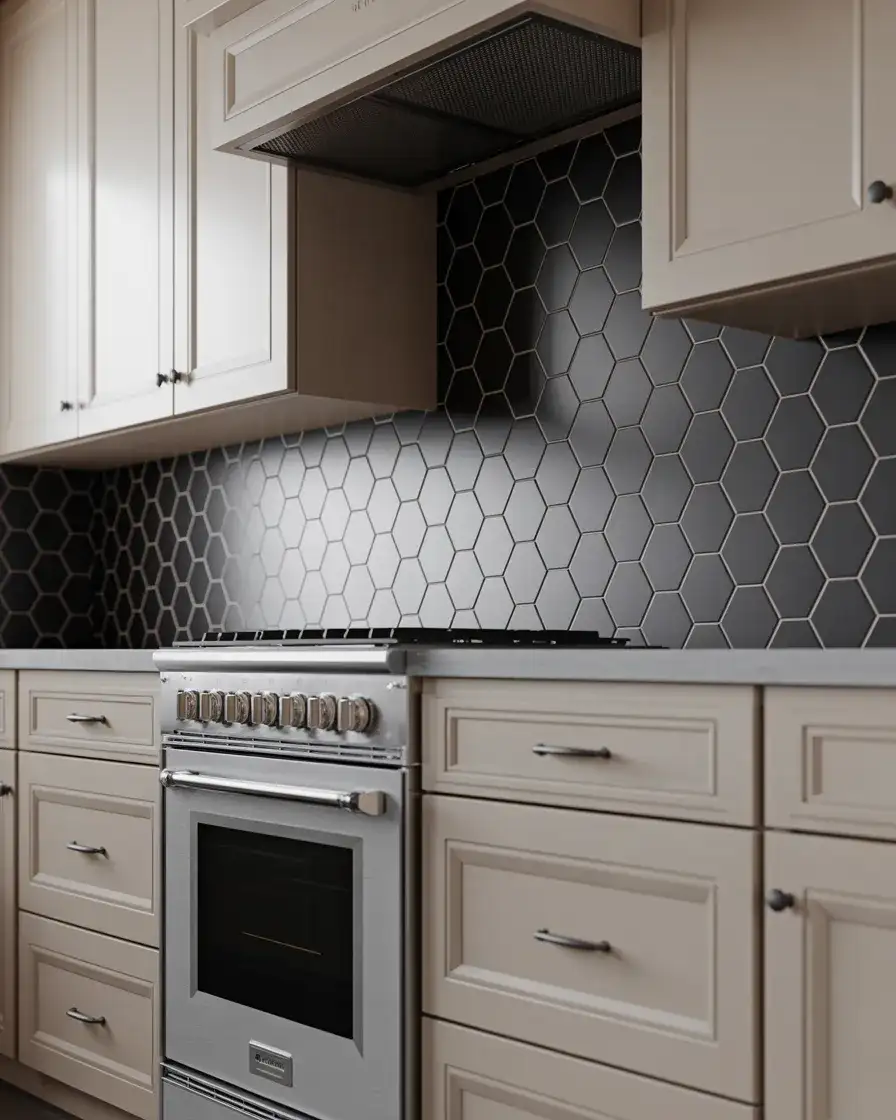
White oak kitchen cabinets are having a major moment in 2026, and it’s easy to see why. This warm, durable hardwood brings a natural elegance that works beautifully in both modern and traditional homes. American homeowners scrolling Pinterest are searching for ways to blend timeless appeal with fresh, current design—and white oak delivers exactly that. Whether you’re drawn to sleek contemporary lines or cozy farmhouse charm, these cabinets offer incredible versatility. In this guide, you’ll discover inspiring ideas that show how to style white oak cabinets with the right hardware, countertops, flooring, and color schemes to create a kitchen that feels both on-trend and enduringly beautiful.
1. White Oak Cabinets with Gold Hardware and Dark Counters
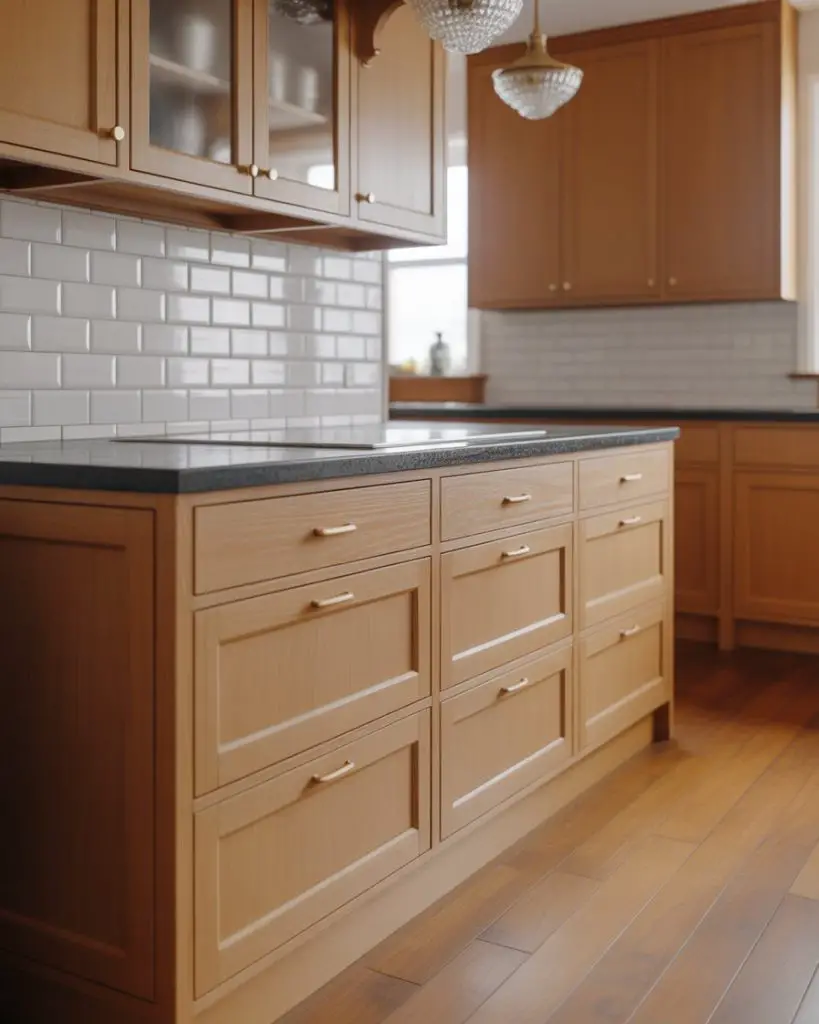
Pairing white oak kitchen cabinets with gold hardware and dark counters creates a luxurious contrast that feels both warm and sophisticated. The natural grain of the oak becomes even more pronounced when set against deep charcoal or black granite countertops, while brushed or polished gold pulls and knobs add a touch of glamour without overpowering the organic beauty of the wood. This combination works particularly well in kitchens with plenty of natural light, where the interplay between light wood, dark stone, and metallic accents can really shine. 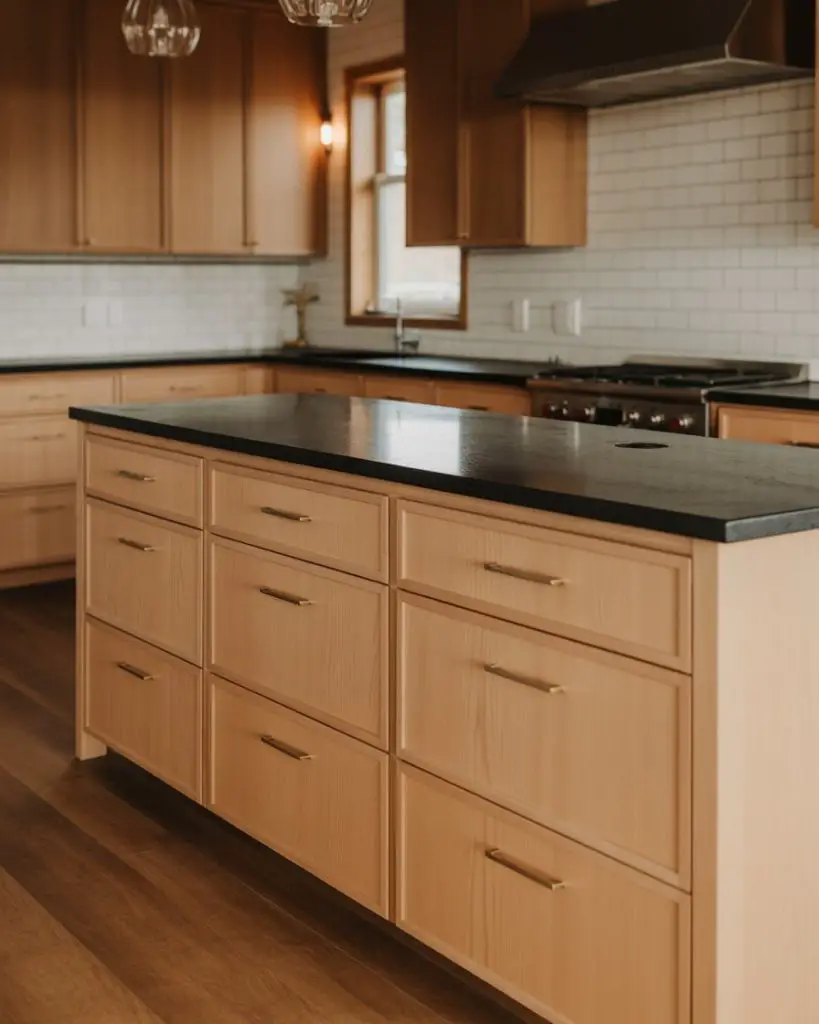
This look works best in open-concept homes where the kitchen flows into the living or dining area—the warm oak keeps things inviting while the dark counters ground the space and prevent it from feeling too light or washed out. Gold hardware in particular has seen a resurgence because it bridges the gap between traditional brass and ultra-modern finishes, making it a smart choice for homeowners who want their kitchen to feel current without chasing fleeting trends.
2. Quarter Sawn White Oak for Refined Grain Patterns
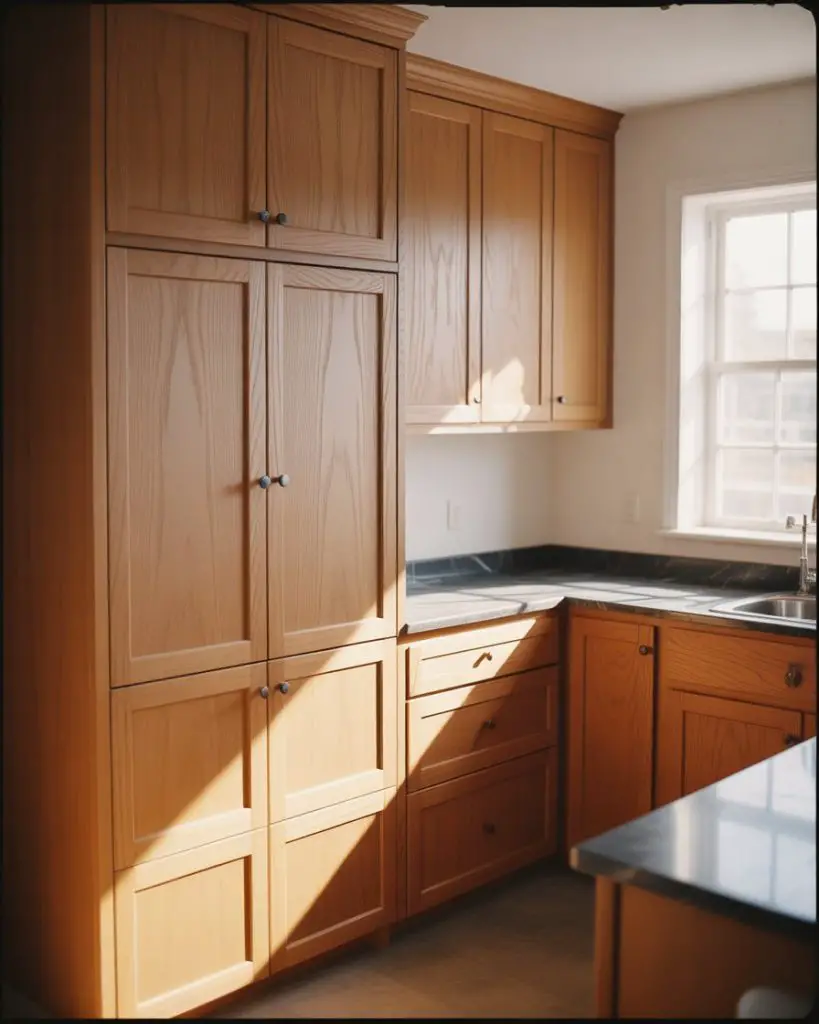
Quarter sawn white oak offers a distinctive straight grain pattern with beautiful flecking that sets it apart from plain-sawn lumber. This milling technique produces cabinets with a more formal, refined appearance that appeals to those seeking style inspiration rooted in Craftsman or Arts and Crafts design. The consistent grain makes quarter sawn white oak particularly well-suited to shaker-style doors, where the wood’s natural character can be fully appreciated without excessive ornamentation. 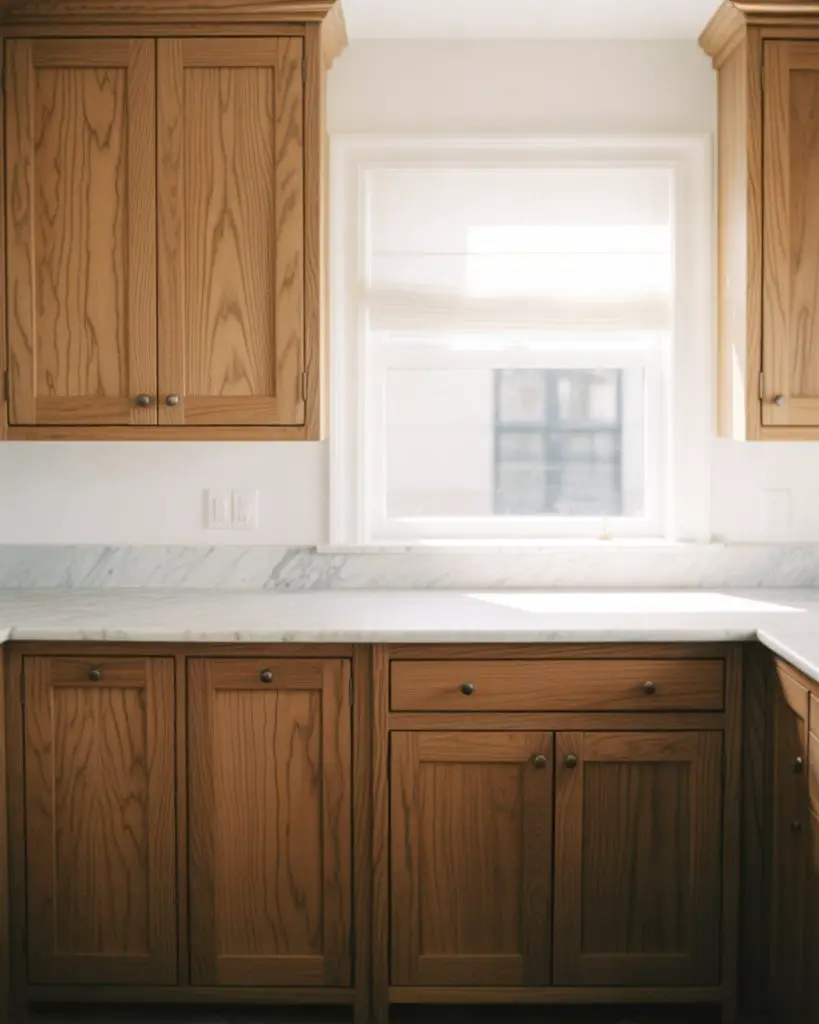
One common mistake is assuming all white oak looks the same—in reality, the cut matters enormously. Quarter sawn lumber costs more because the milling process produces more waste, but many homeowners find the investment worthwhile for the visual consistency and dimensional stability it provides. If you’re renovating a historic home or want a kitchen with timeless architectural integrity, quarter sawn white oak delivers a level of craftsmanship that’s immediately noticeable.
3. Rift Sawn White Oak with Slim Shaker Doors
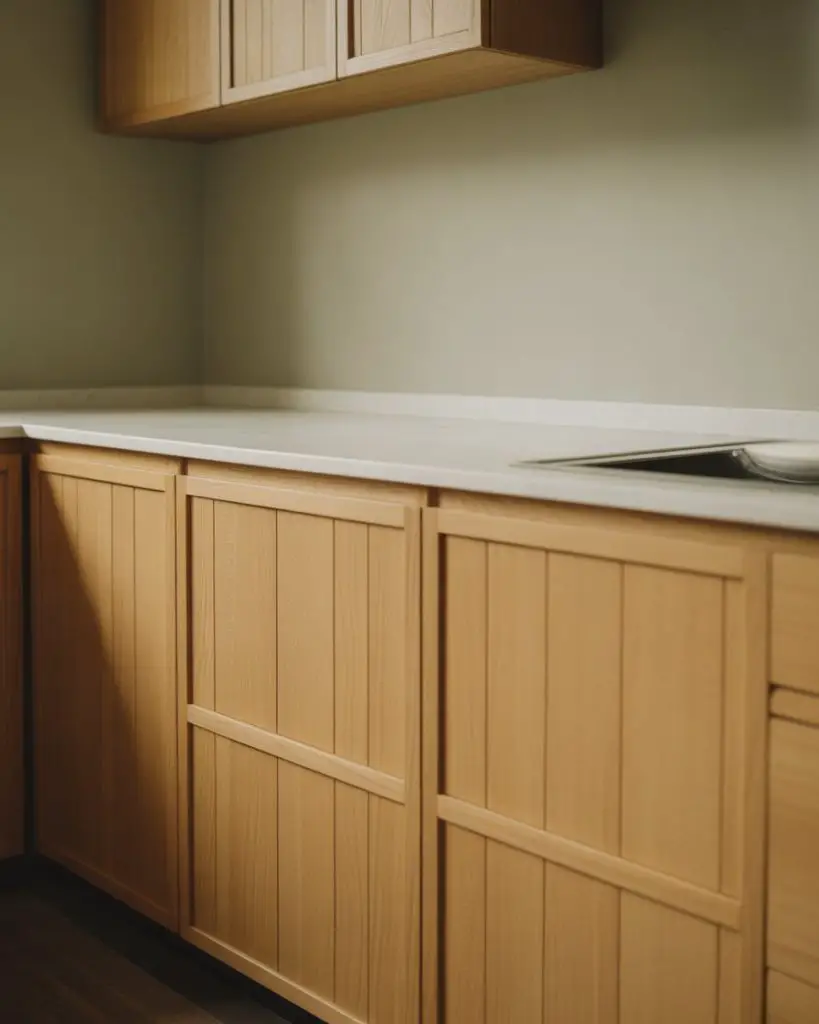
Rift sawn white oak cabinets feature an even straighter grain than quarter sawn, with minimal flecking for an ultra-clean, contemporary look. When paired with slim shaker door profiles, this combination creates a sleek, almost Scandinavian aesthetic that’s perfect for modern minimalist kitchens. The narrow frame widths of slim shaker doors emphasize the vertical grain lines, creating a sense of height and elegance that works beautifully in both small and large spaces. 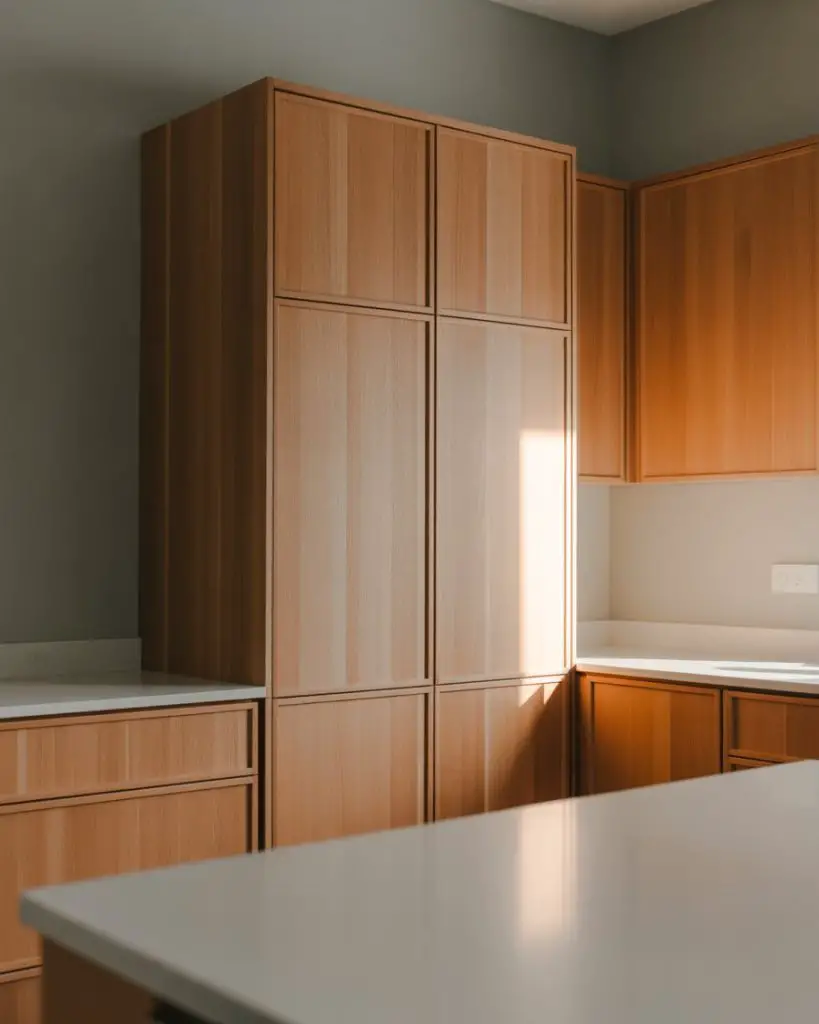
This style works best in urban lofts and newer construction where clean lines are paramount. The straight grain of rift sawn oak makes it easier to match cabinet doors across large runs, which is why designers often specify it for floor-to-ceiling installations or kitchens with extensive cabinetry. It’s a premium choice that rewards those who value visual coherence and understated sophistication over rustic charm.
4. Natural White Oak with Light Floors
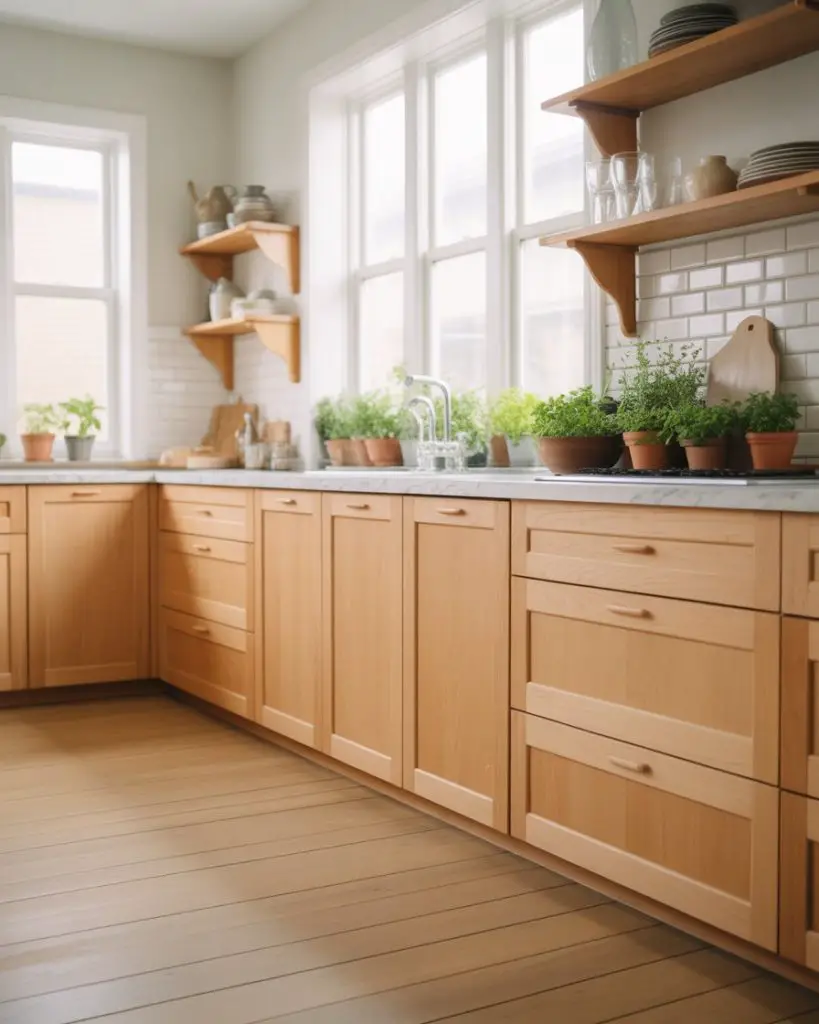
Keeping white oak cabinets in their natural state—with just a clear protective finish—creates a light, airy kitchen that feels fresh and modern. When combined with light hardwood or engineered flooring in similar tones, the effect is a gentle, monochromatic palette that expands the sense of space and brings a Scandinavian-inspired calm to the room. This approach lets the wood’s inherent warmth and grain patterns take center stage without competing colors or heavy stains.
In the Pacific Northwest and parts of New England, this light-on-light aesthetic has become especially popular as homeowners embrace biophilic design principles that connect interiors with nature. The natural finish also means easier touch-ups over time—a simple buffing can refresh the wood without the need for matching stain colors, which makes this a practical choice for busy families who want beauty without high maintenance.
5. Rustic White Oak with Brass Hardware
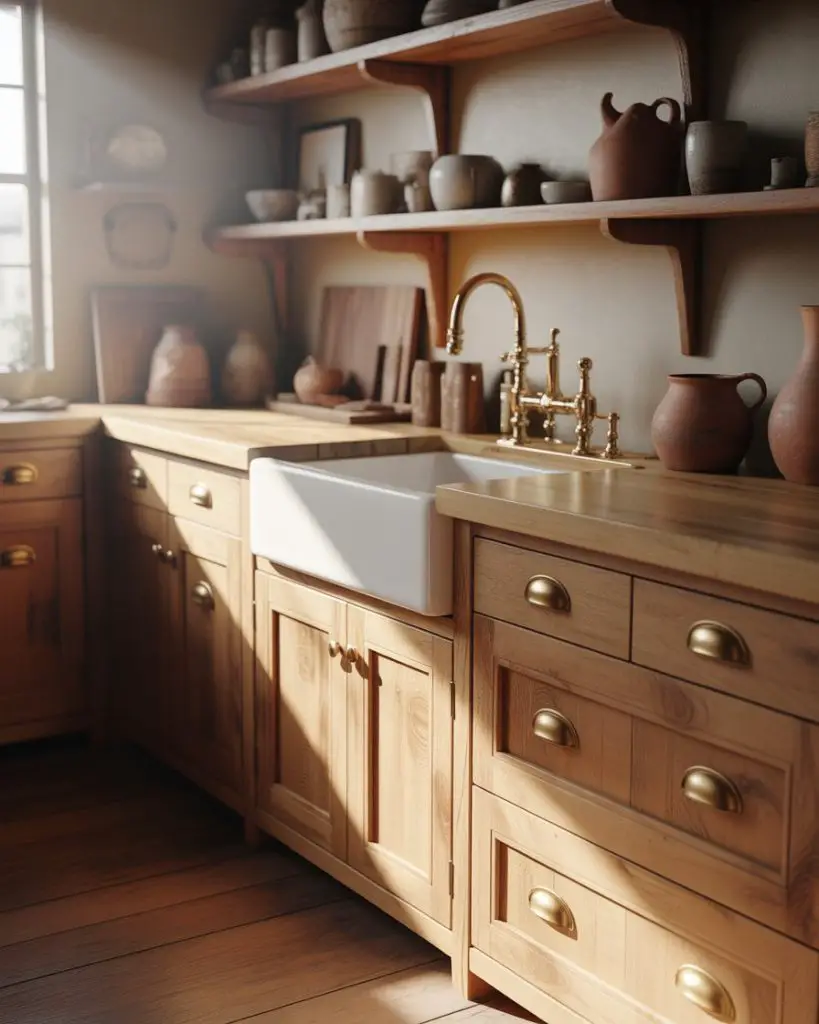
Rustic white oak cabinets bring texture and character through visible knots, mineral streaks, and natural imperfections that tell the story of the tree. Paired with brass hardware, this look channels farmhouse and country cottage charm while maintaining enough refinement for modern tastes. The warm patina of brass complements the honey tones in the oak, creating a kitchen that feels collected over time rather than installed all at once. 
Across the Midwest and rural communities nationwide, rustic white oak has become a go-to for homeowners renovating older farmhouses or building new homes with traditional character. The key is balancing the rustic cabinet finish with more refined elements elsewhere—polished brass rather than distressed bronze, for example—so the kitchen feels intentionally curated rather than overly themed. Many real homeowners report that the natural variations in rustic oak actually help hide everyday wear and fingerprints better than perfectly smooth surfaces.
6. White Oak and Black Countertops for Bold Contrast
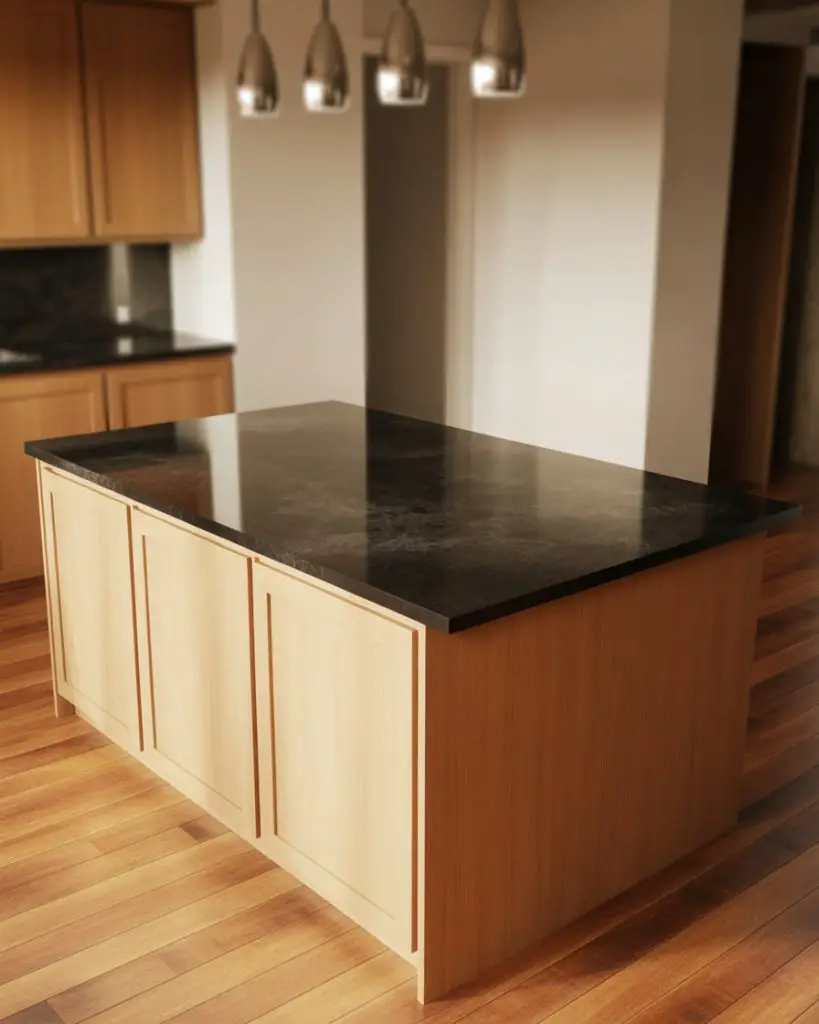
The combination of warm white oak cabinets with a black counter creates dramatic visual impact while remaining surprisingly versatile across design styles. Whether you choose honed granite, soapstone, or engineered quartz in matte black, the dark counters provide a strong horizontal line that anchors the lighter cabinetry and draws the eye across the workspace. This pairing works equally well in modern, transitional, and even industrial-style kitchens. 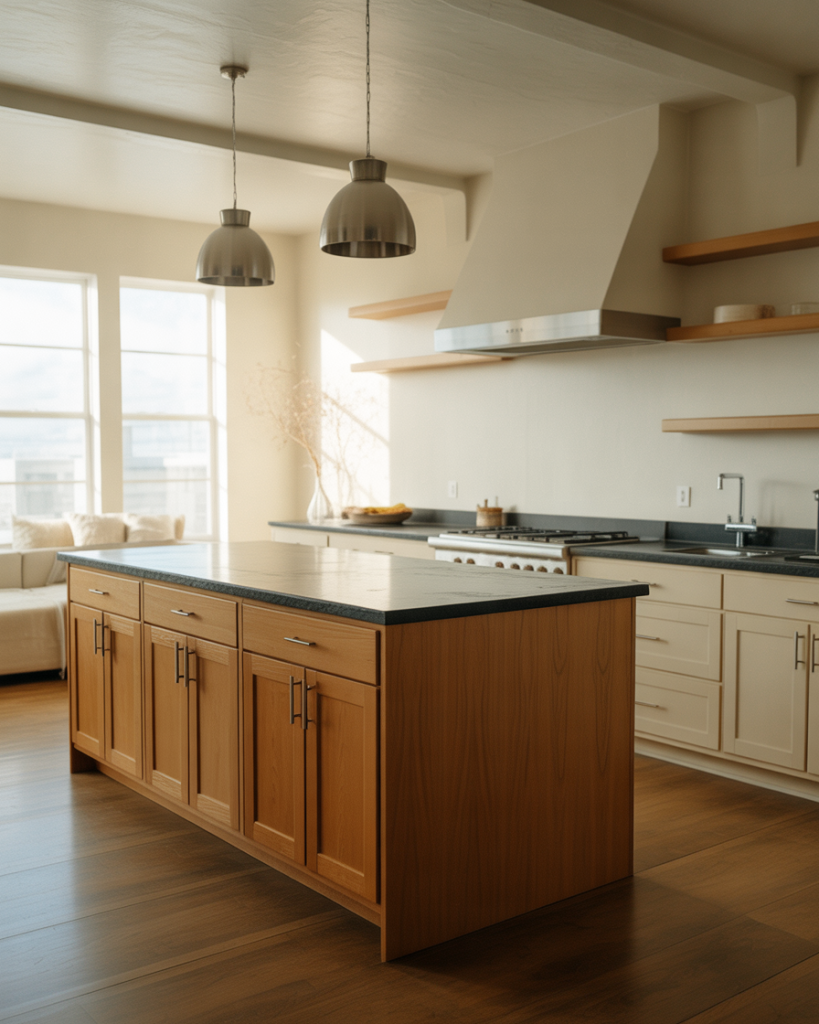
A practical insight: black countertops show dust and water spots more readily than lighter surfaces, but they’re also incredibly forgiving of knife marks and stains from coffee or wine. For families who cook frequently, choosing a honed or leathered finish rather than polished makes daily maintenance much easier while preserving that striking contrast with the oak cabinetry.
7. White Oak with Dark Wood Floors
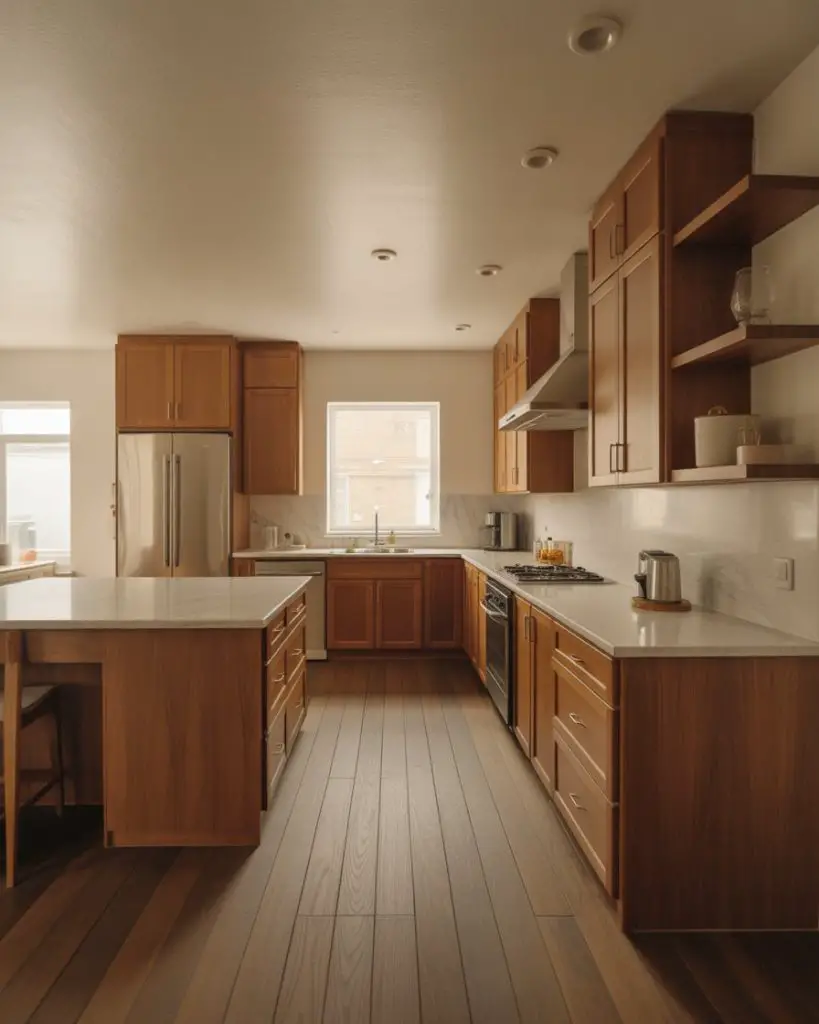
Installing dark wood floors beneath white oak cabinets creates a grounded, sophisticated foundation that prevents the kitchen from feeling too pale or floating. Rich walnut, espresso-stained oak, or dark hickory flooring provides tonal contrast that defines the room’s boundaries while allowing the lighter cabinets to remain the focal point. This combination brings depth and warmth that’s particularly effective in open floor plans where the kitchen needs to hold its own against adjacent living spaces. 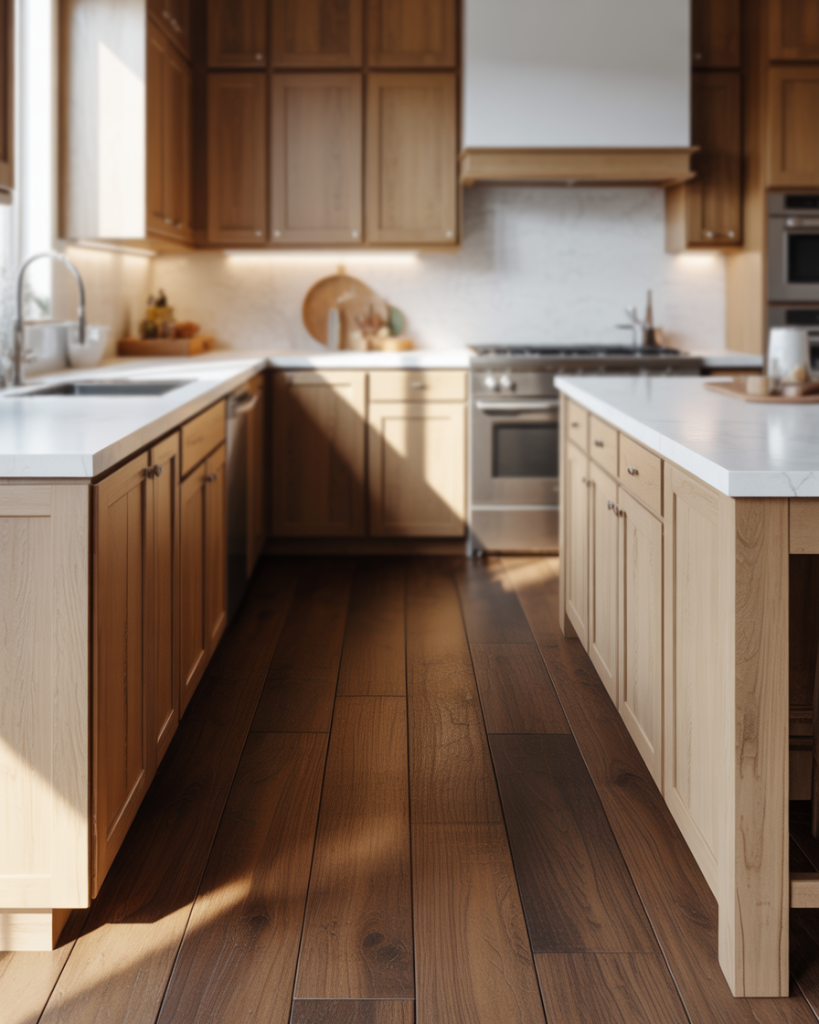
Where this works best: in homes with lower ceilings or limited natural light, where the light cabinets help reflect illumination while the dark floors add necessary visual weight. In the South and Southwest, where homes often feature large windows and bright sunlight, this pairing helps balance intense light conditions and prevents glare from overwhelming the space. It’s a designer trick that creates the illusion of higher ceilings by establishing strong visual contrast between floor and upper cabinets.
8. Backsplash Ideas for White Oak Cabinets
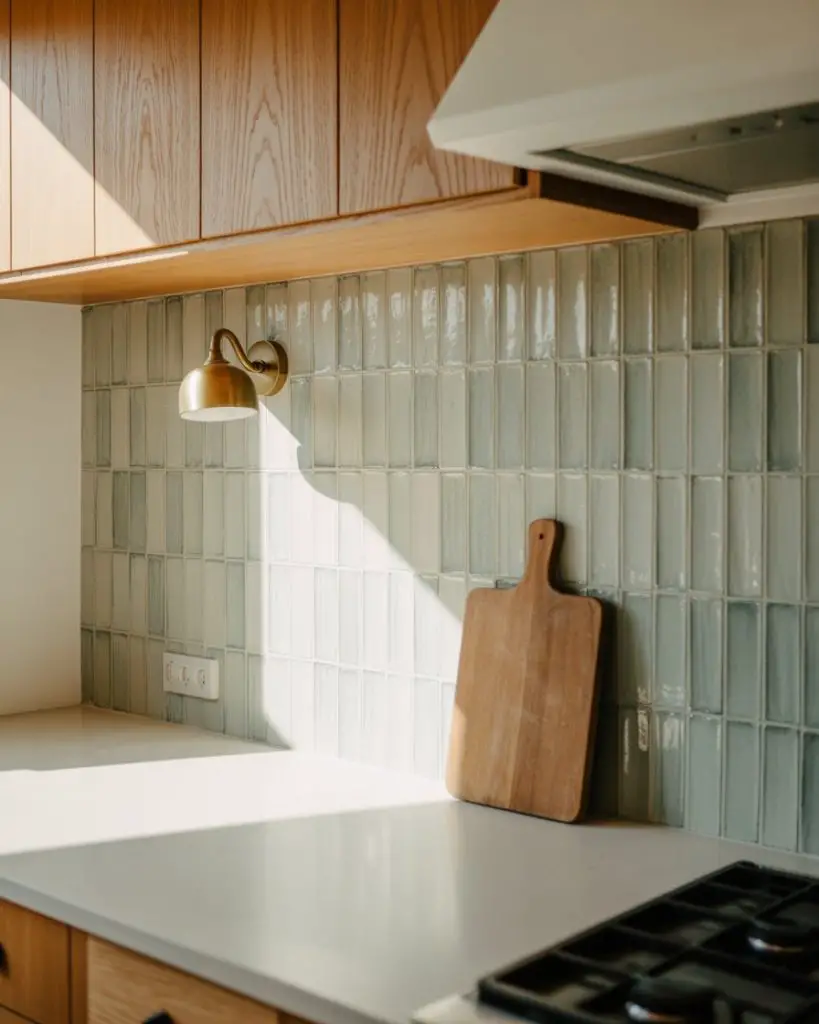
Choosing the right backsplash ideas for white oak cabinets means considering both color schemes and material textures that complement rather than compete with the wood’s natural grain. Classic white subway tile remains popular for its clean versatility, while handmade ceramic in soft greens or blues adds artisanal character. For a more dramatic approach, consider slab marble, zellige tile, or even wood-look porcelain that echoes the cabinet tones in a water-resistant format. 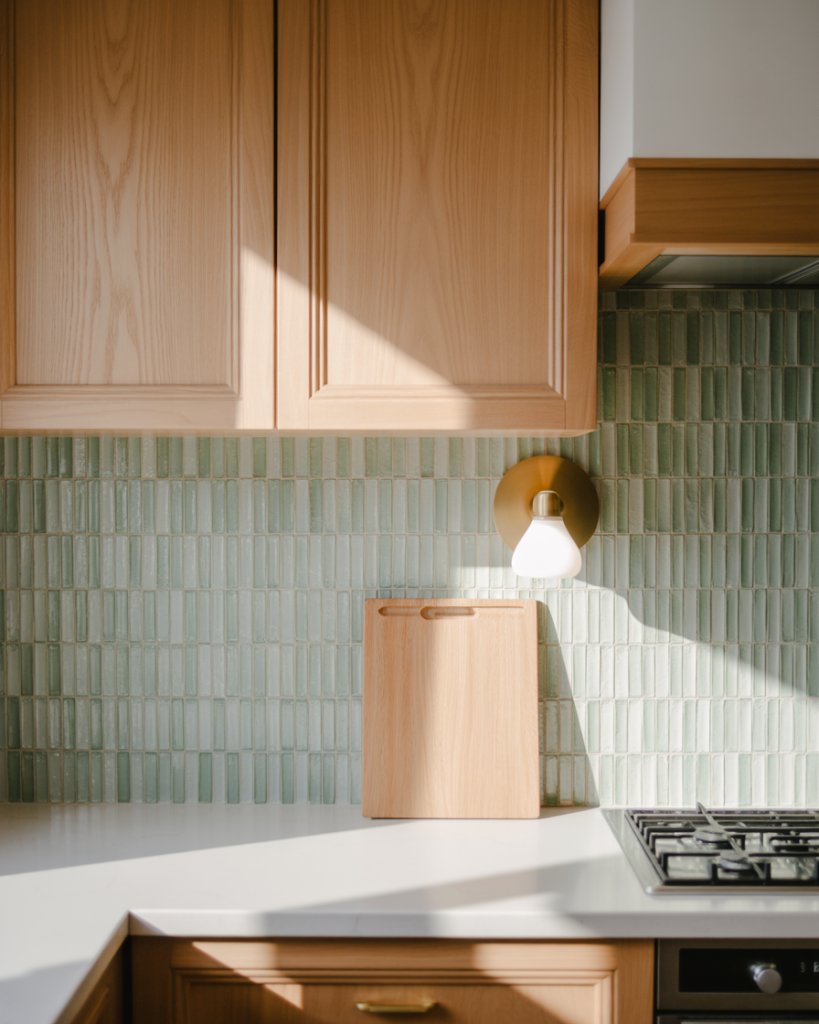
Expert designers often recommend pulling a secondary color from your countertop or flooring into the backsplash to create visual cohesion. If you have Taj Mahal quartzite counters with subtle gray veining, for instance, a pale gray glass tile backsplash creates continuity. The micro-trend emerging in 2026 leans toward larger-format tiles and slabs that reduce grout lines and create a more seamless, gallery-like backdrop for the beautiful cabinetry.
9. White Oak Cabinets with Taj Mahal Quartzite
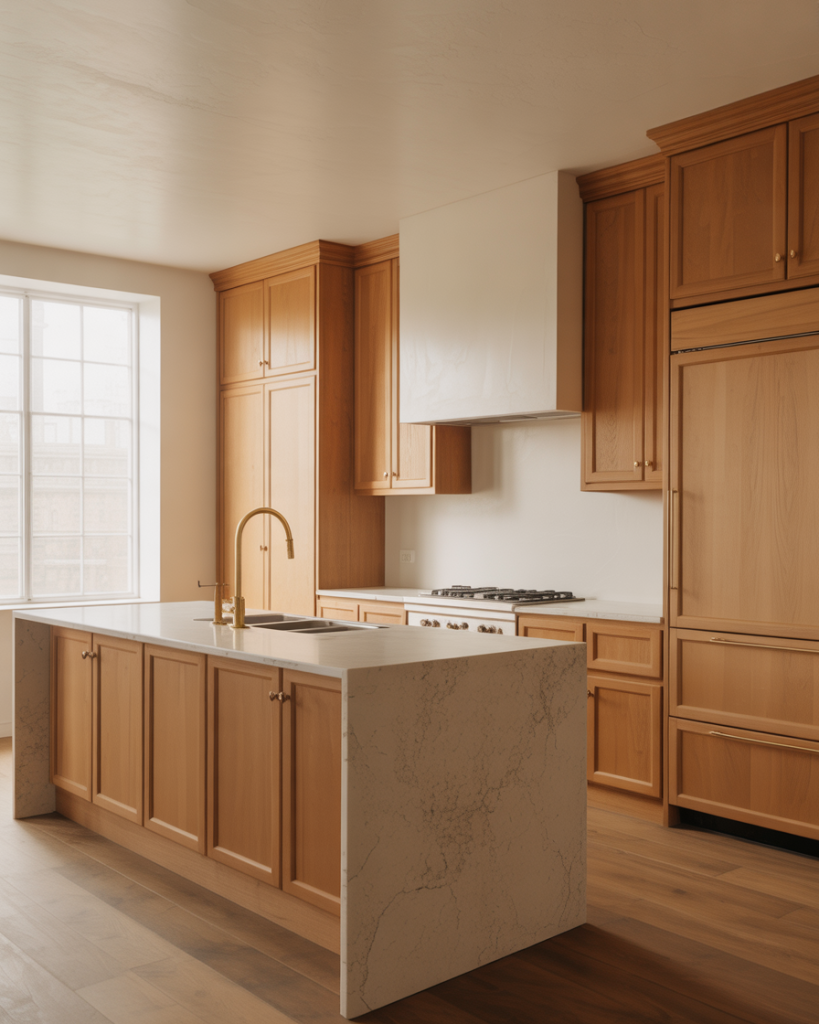
Pairing white oak cabinetry with Taj Mahal quartzite countertops delivers a sophisticated, high-end look that balances warm and cool tones beautifully. This popular natural stone features creamy white backgrounds with soft gray and taupe veining that complements the golden undertones in white oak without clashing. The subtle movement in the stone adds visual interest while maintaining the calm, organic feel that makes white oak so appealing. 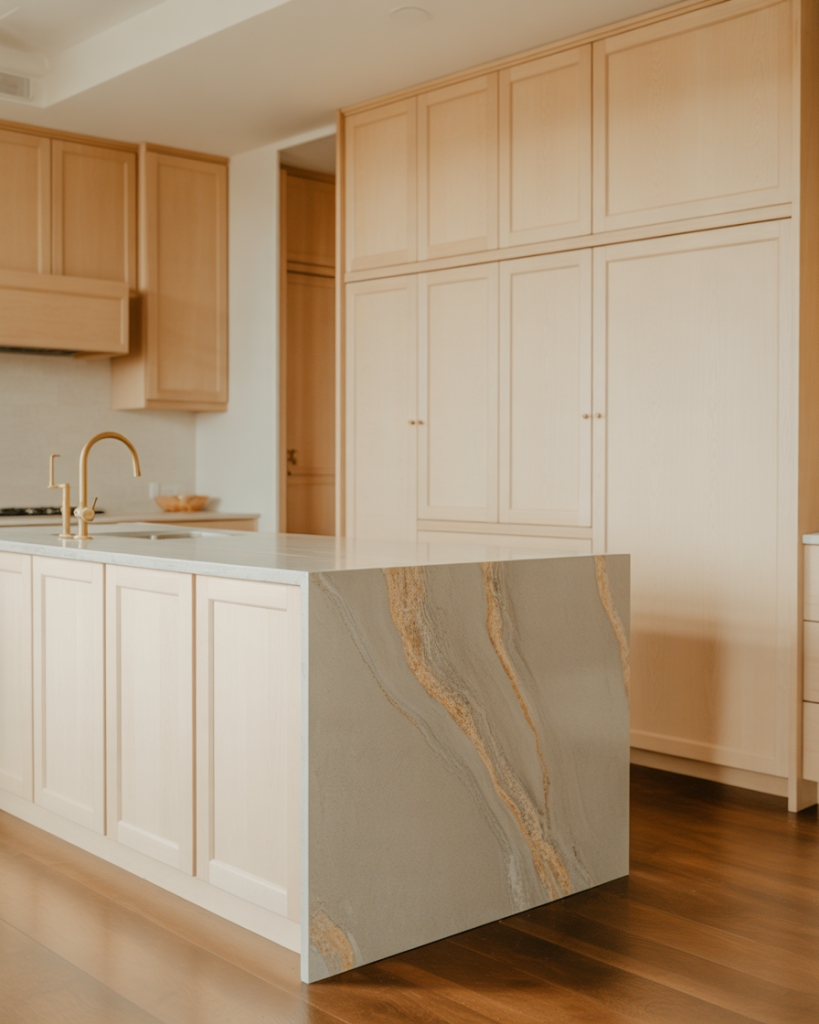
From a budget perspective, Taj Mahal quartzite sits in the mid-to-upper price range for natural stone, but many homeowners consider it worthwhile for its durability and timeless appeal. Unlike marble, it resists etching from acidic substances, making it more practical for busy kitchens where lemon juice and wine are part of daily cooking. The stone’s neutral palette also means it won’t look dated as color trends shift in coming years.
10. White Oak with Dark Floors and Grey Accents
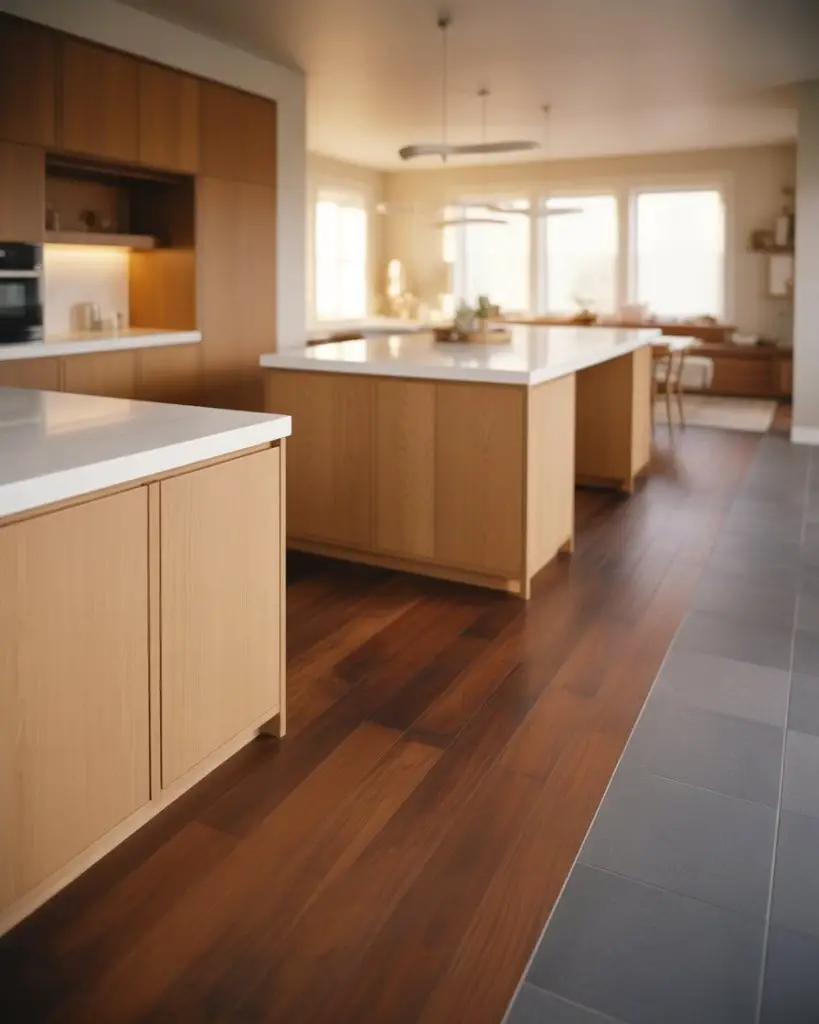
Combining white oak cabinets with dark floors and a grey floor palette in adjacent spaces creates a sophisticated transition that works beautifully in open-concept homes. When kitchen flooring in espresso tones meets living room tile or luxury vinyl in charcoal gray, the white oak cabinetry serves as a warm bridge between these cooler, deeper tones. This layered approach to flooring adds architectural interest while maintaining visual flow. 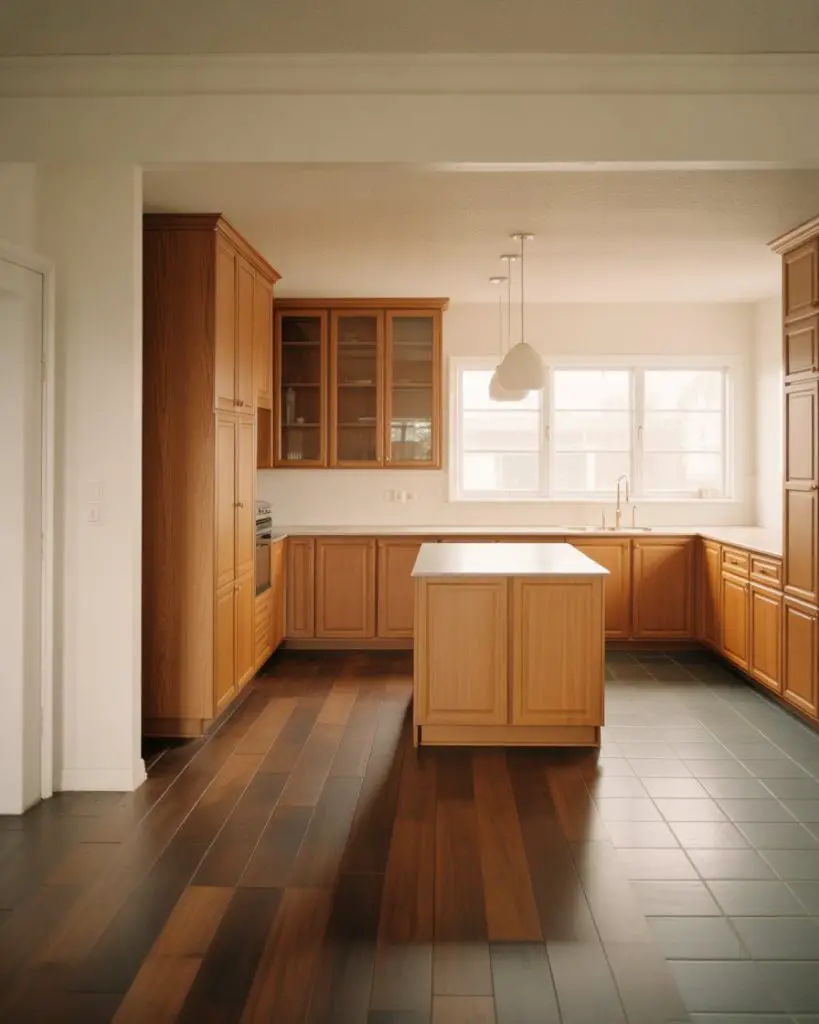
This approach has gained traction particularly in coastal and urban markets where homeowners want distinct zones without walls or abrupt transitions. A micro anecdote: one designer client in Seattle installed dark oak floors in her kitchen to define the cooking zone, then switched to pale gray concrete-look tile for the dining area, with her white oak cabinets tying both together through shared warm undertones.
11. White Oak Cabinets with Terracotta Floor Tiles
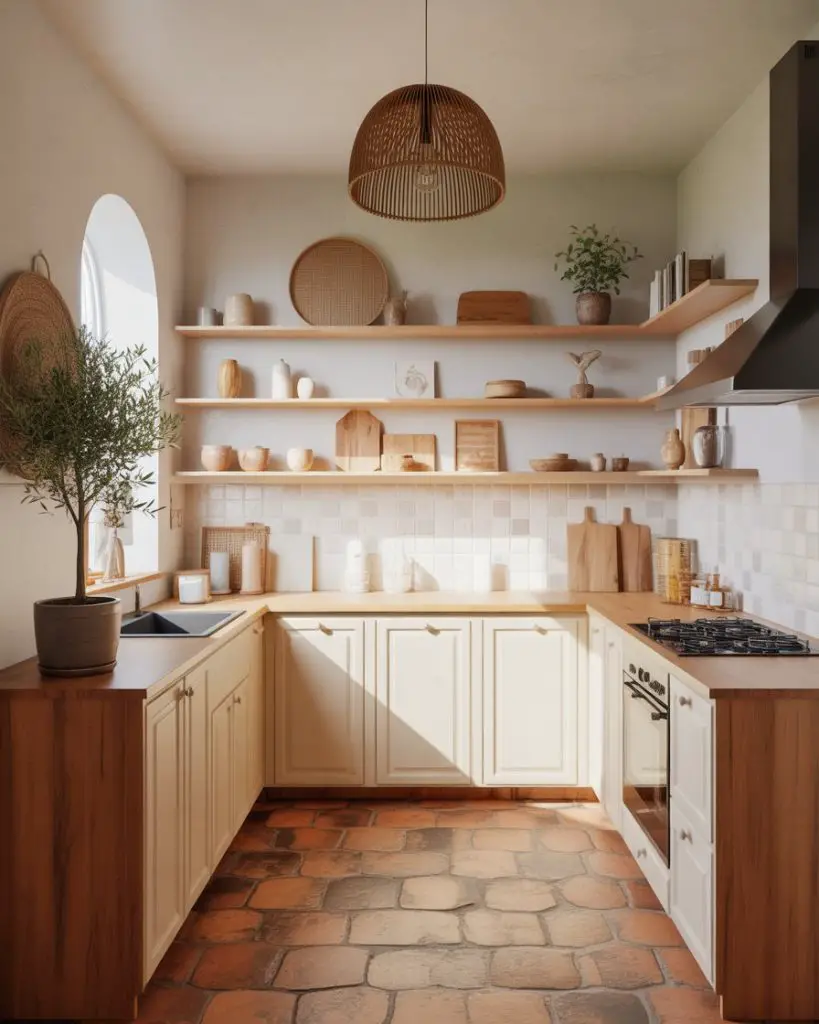
The warm, earthy tones of terracotta floor tiles create an unexpected and beautiful foundation for white oak cabinets, channeling Mediterranean and Spanish Colonial aesthetics that feel fresh again in 2026. The reddish-orange clay tones complement the golden undertones in the oak while adding texture and Old World character. This combination works especially well in kitchens with abundant natural light, where the terracotta can glow without appearing too dark. 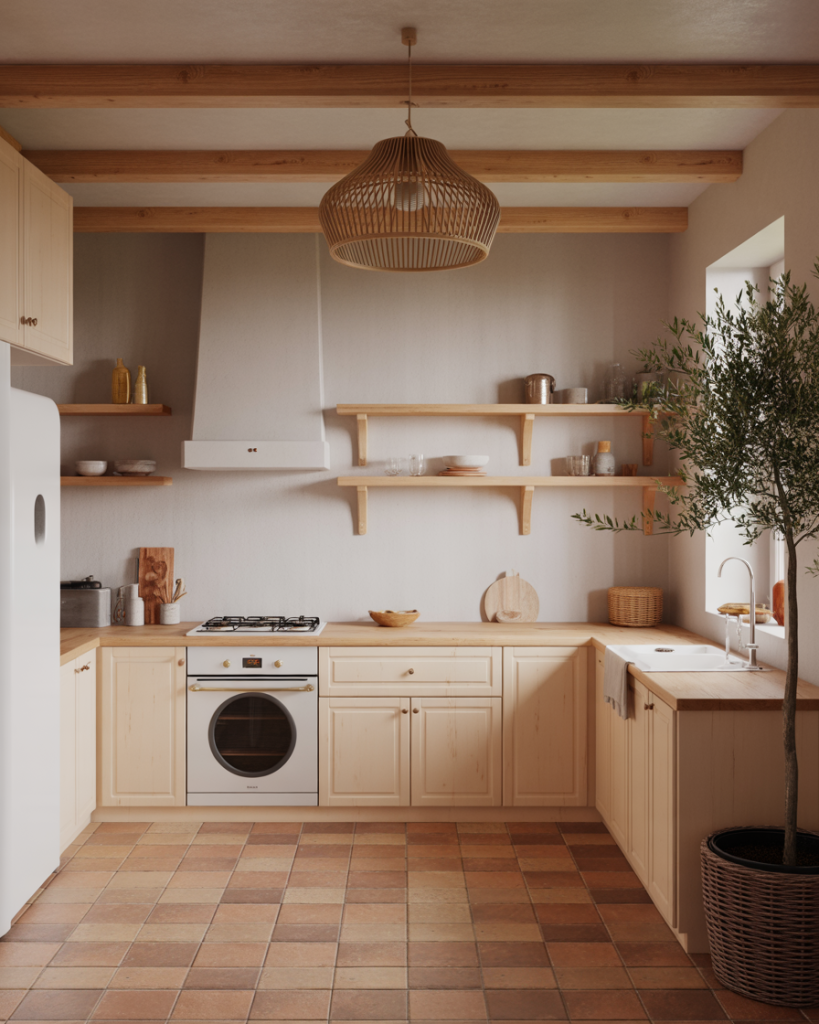
In the Southwest and California, where Spanish Revival architecture remains beloved, this pairing brings authentic regional character while avoiding the heavy, dark wood cabinets traditionally used in these styles. The lighter white oak keeps things feeling airy and updated, while the terracotta floors provide that essential connection to place and history. It’s a combination that ages beautifully—both materials develop richer patinas over time.
12. White Oak Stain Color Options
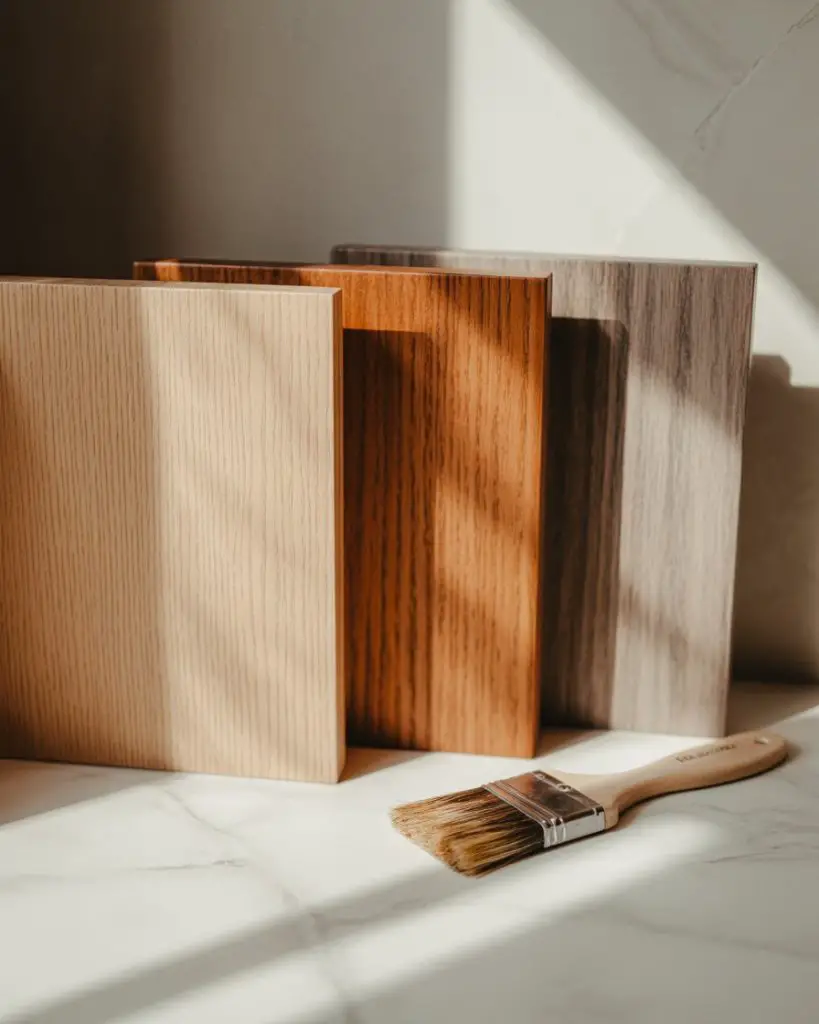
Understanding stain color options for white oak helps homeowners customize the wood’s appearance to match their vision. While many choose to keep oak natural, popular finish options include weathered gray stains for a driftwood effect, warm honey tones that enhance the grain, or even ebonized finishes for dramatic contrast. The key is selecting a stain that works with white oak’s open grain structure rather than fighting against it.
Expert cabinet makers emphasize the importance of testing stain on actual white oak samples from your cabinet order, as the wood’s color and grain can vary significantly between batches. A common mistake is choosing stain based on photos alone—the same stain can look completely different depending on whether you’re using rift sawn, quarter sawn, or plain sawn oak, and even lighting conditions in your home will affect the final appearance dramatically.
13. White Oak with Black Hardware for Modern Edge
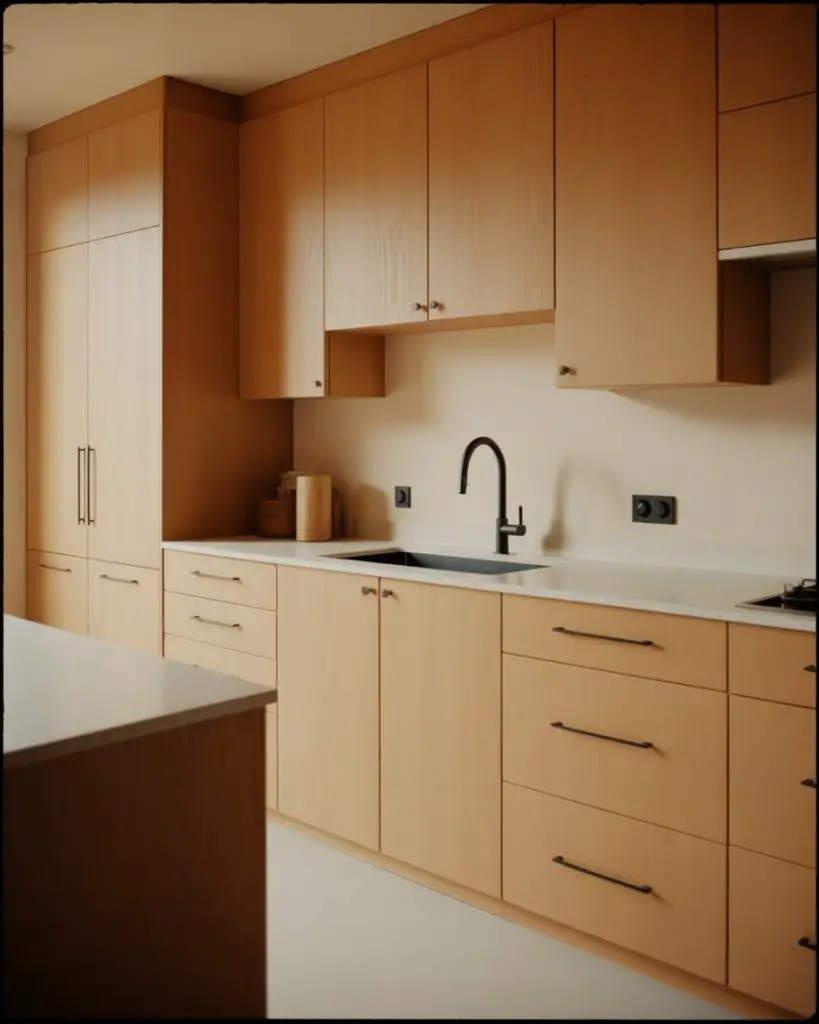
Outfitting white oak cabinets with black hardware creates a crisp, modern aesthetic that’s become a signature look in contemporary American kitchens. Matte black pulls, knobs, and hinges provide strong contrast against the lighter wood while maintaining a streamlined profile that doesn’t compete for attention. This combination works across multiple styles, from Scandinavian minimalism to modern farmhouse, making it an especially versatile choice. 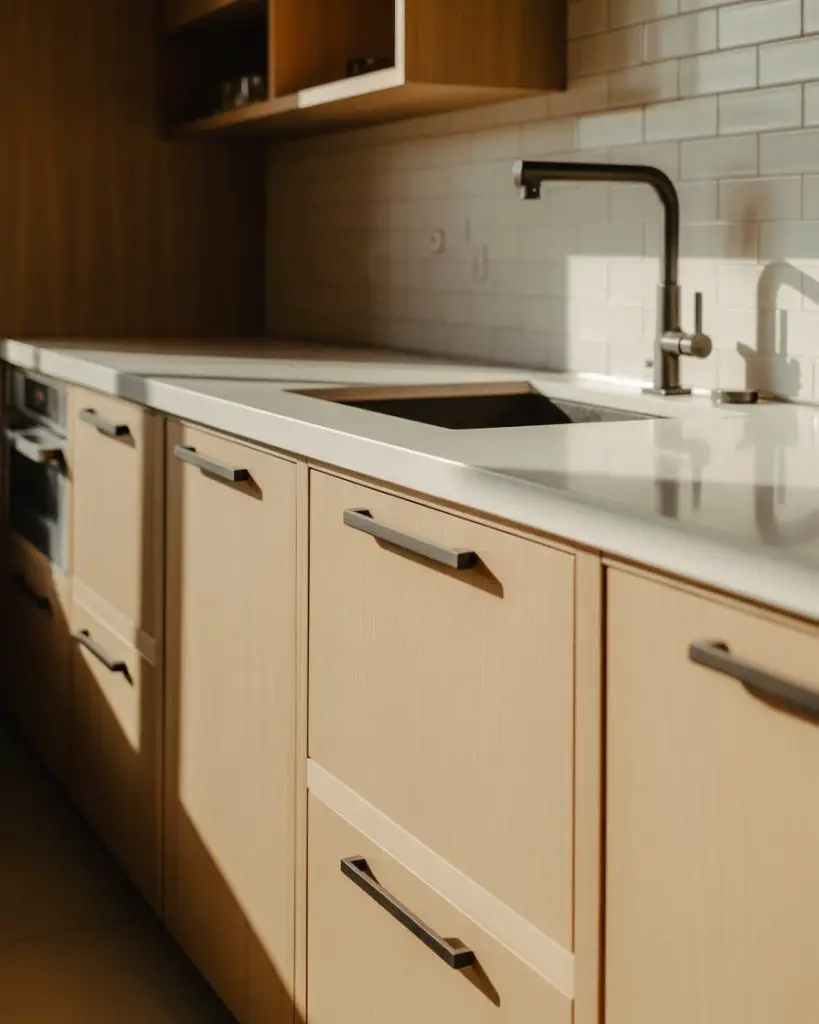
Real homeowner behavior shows that black hardware remains popular because it’s practical—it doesn’t show fingerprints as readily as polished finishes, and it’s easy to find replacement pieces if needed. Where this works best is in kitchens with other black accents like window frames, light fixtures, or appliances, creating a cohesive design thread that feels intentional rather than scattered. The boldness of black also helps define cabinet edges in very light spaces where everything might otherwise blend together.
14. White Oak and Green Island Combination

Creating a green island while keeping perimeter cabinets in natural white oak has become a popular way to inject personality and color schemes without overwhelming the kitchen. Deep sage, forest green, or even bold emerald on a central island provides a focal point and conversation piece, while the surrounding white oak keeps the overall palette grounded and warm. This two-tone approach adds visual interest and helps define distinct work zones. 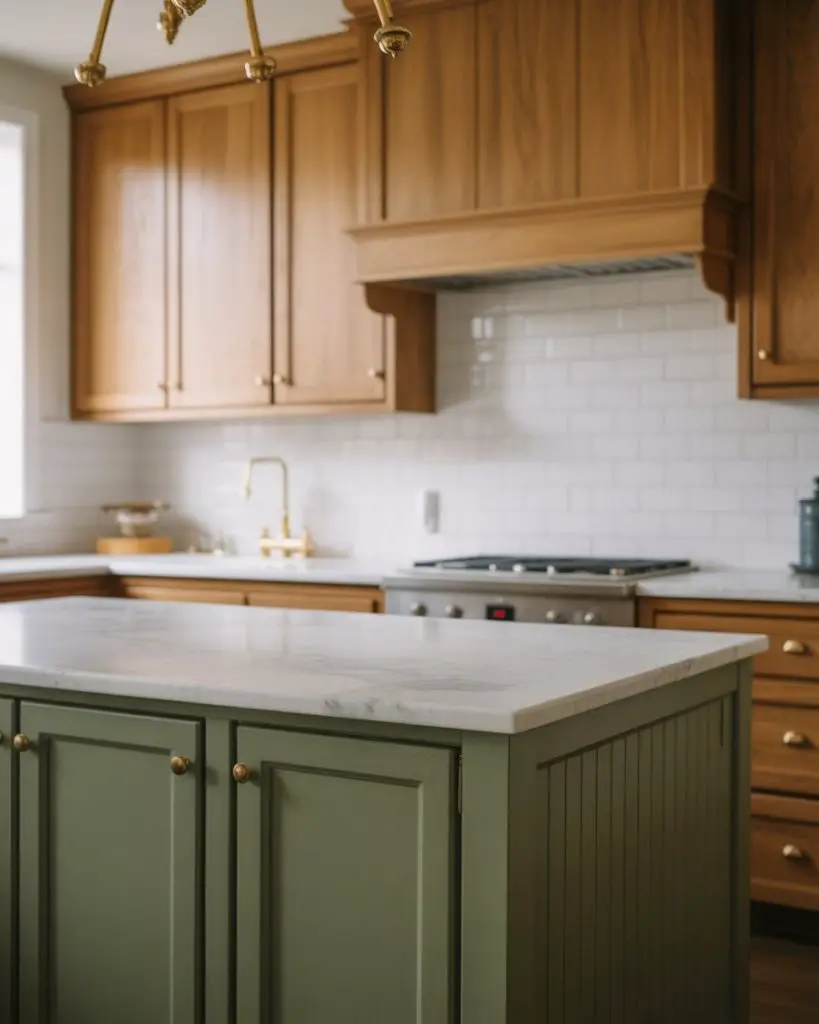
This trend gained serious momentum as homeowners moved away from all-white kitchens but weren’t ready to commit to color everywhere. The island acts as a lower-risk testing ground for bolder choices, and green in particular has staying power because it connects to nature and feels calming rather than energizing. Across suburban and rural America especially, the green island with white oak surround has become the new neutral—distinctive but not divisive.
15. White Oak Cabinets with Brass Hardware Details
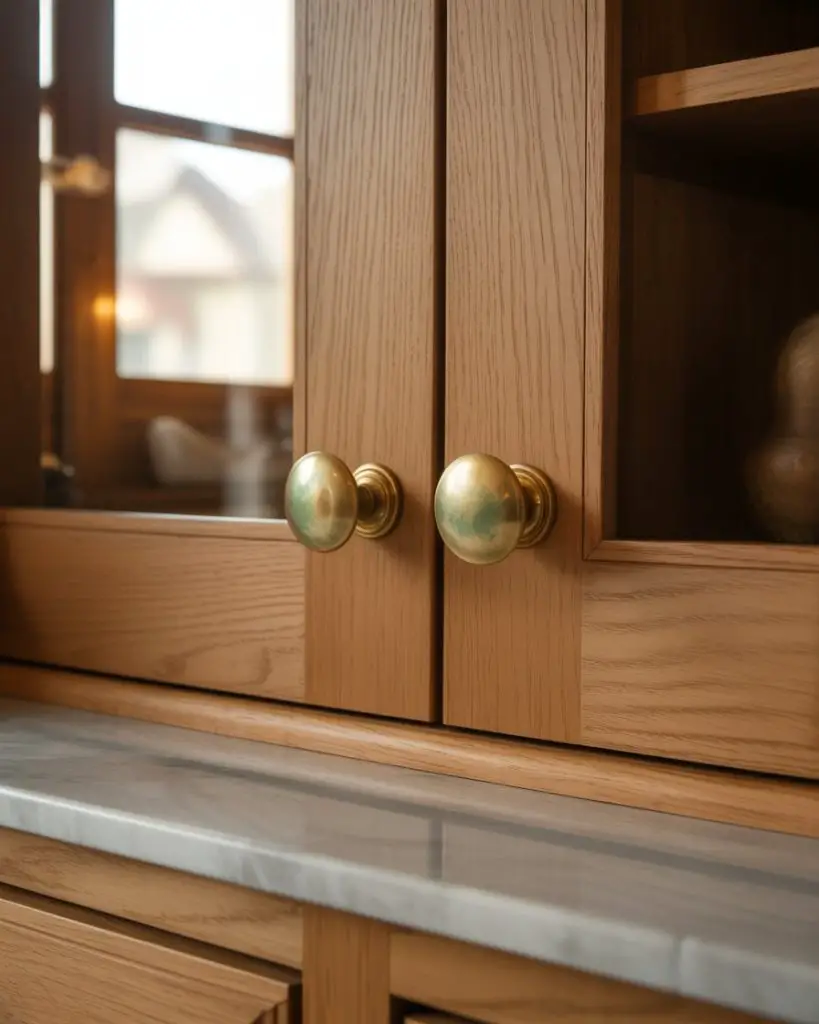
The warmth of brass hardware enhances white oak’s golden undertones, creating a cohesive, sunlit feeling throughout the kitchen. Unlike cooler metals like chrome or nickel, brass shares the same warm color family as the oak, resulting in a harmonious rather than contrasting effect. Unlacquered brass develops a living patina over time, adding character and depth that actually complements the natural aging process of wood. 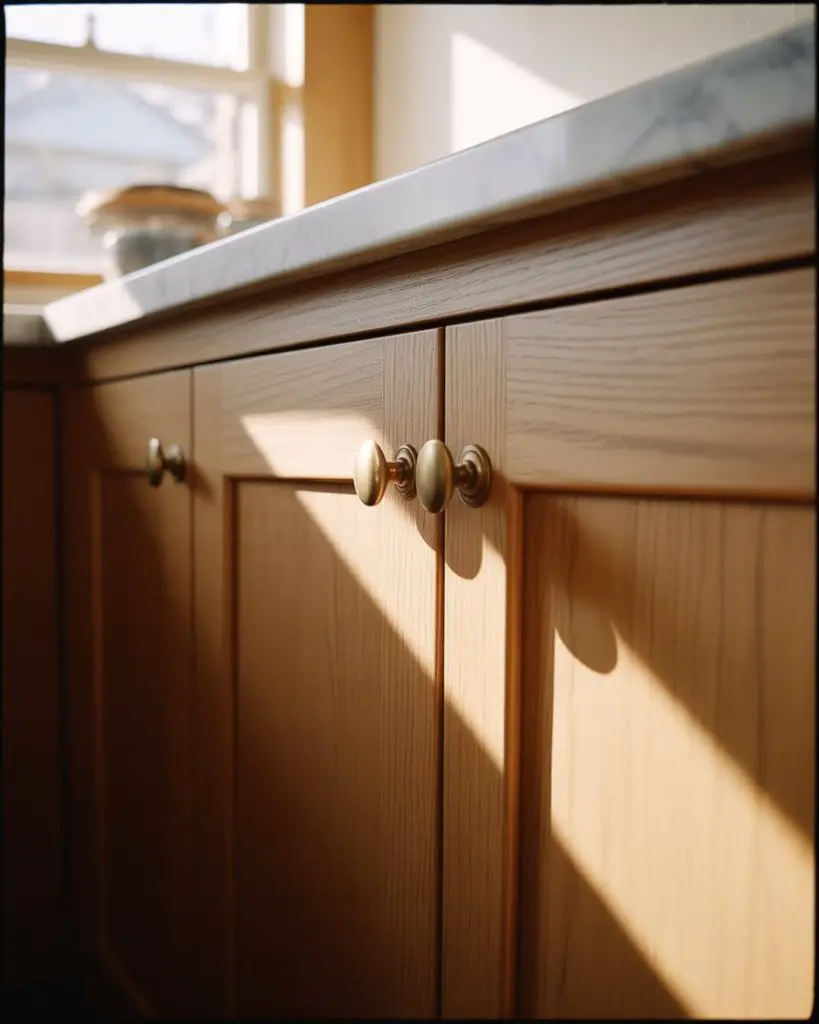
In the Northeast and Mid-Atlantic regions, where traditional brass fixtures have long been favored in historic homes, this pairing feels particularly at home. One practical consideration: unlacquered brass requires acceptance of change—the metal will darken and develop spots, which some homeowners love and others find frustrating. For those who prefer consistency, lacquered brass maintains its original finish but sacrifices some of that organic, evolving quality that makes unlacquered brass so appealing to design enthusiasts.
16. Exploring White Oak Finish Options
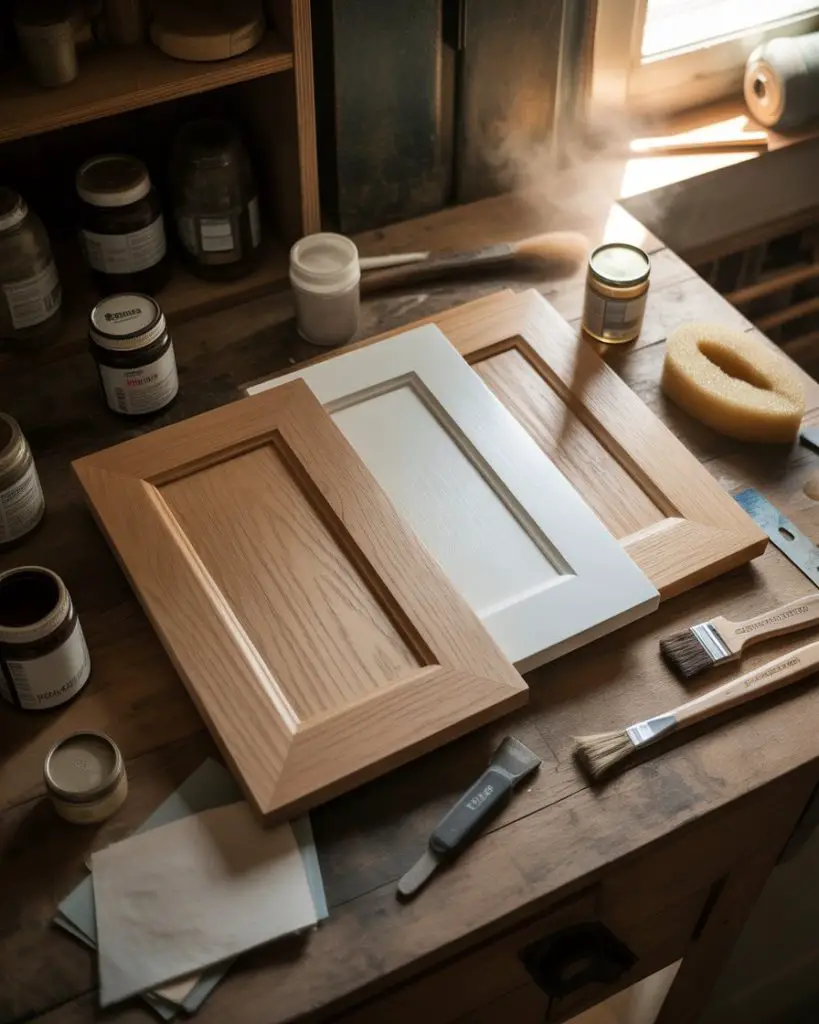
The range of finish options for white oak cabinets extends far beyond stain choices to include surface treatments that dramatically affect both appearance and durability. Matte or flat finishes create an organic, almost unfinished look that emphasizes texture, while satin finishes offer subtle sheen with good stain resistance. High-gloss lacquered finishes, though less common on oak, create a modern, furniture-like quality that works in contemporary settings.
From a longevity perspective, conversion varnish and catalyzed lacquer finishes offer superior durability for high-traffic kitchens, though they require professional application. Many American cabinet shops now offer water-based finishes that provide excellent protection with lower VOC emissions—an important consideration for families concerned about indoor air quality. The finish you choose affects not just appearance but also how the cabinets feel to touch and how easily they clean, so it’s worth requesting samples with your preferred finish applied.
17. White Oak Cabinets Style Inspiration from Craftsman Homes

Drawing style inspiration from American Craftsman architecture, white oak cabinets with simple, honest construction details honor the movement’s emphasis on quality materials and visible joinery. Quarter sawn oak was the wood of choice in original Craftsman kitchens, and modern interpretations maintain that heritage through clean-lined shaker doors, functional hardware, and minimal ornamentation that lets the wood’s character shine. 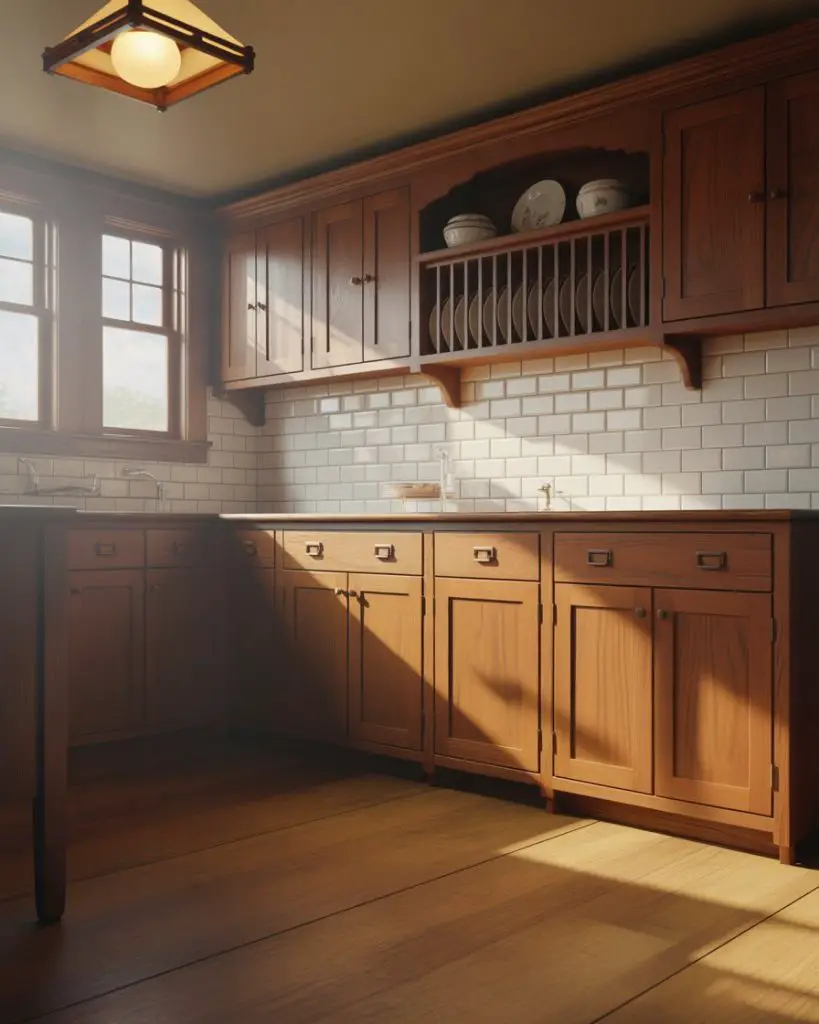
In cities like Portland, Seattle, and Chicago—where Craftsman bungalows remain abundant—homeowners renovating these period homes often choose white oak specifically to maintain architectural authenticity while updating for modern function. The key is restraint: Craftsman design celebrates simplicity and utility, so elaborate crown molding or fussy details would undermine the style’s fundamental principles. This approach remains remarkably current because it prioritizes timeless quality over trendy embellishment.
18. White Oak with Green and Neutral Color Schemes
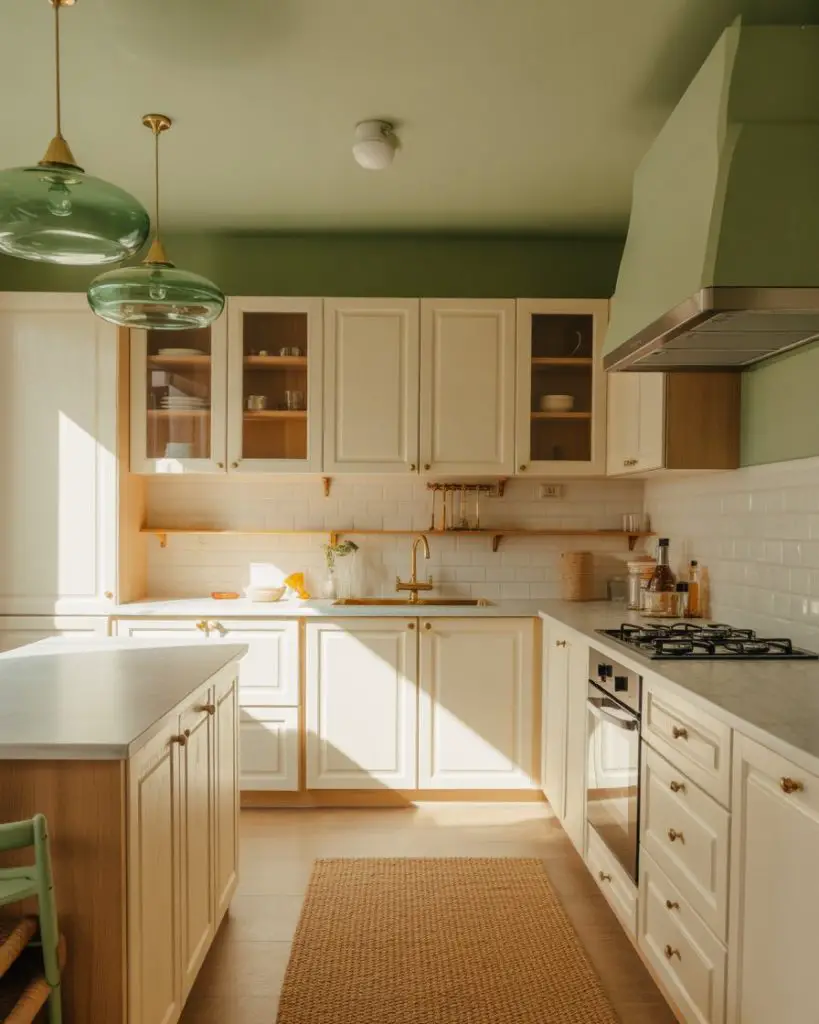
Incorporating green and neutral tones alongside white oak cabinetry creates a nature-inspired palette that feels both current and enduring. Soft sage walls, olive-toned tile, or forest green accents in textiles and accessories complement the wood’s warmth while introducing calming, biophilic elements. This color schemes approach works particularly well when balanced with plenty of white or cream to prevent the space from feeling too dark or heavily themed. 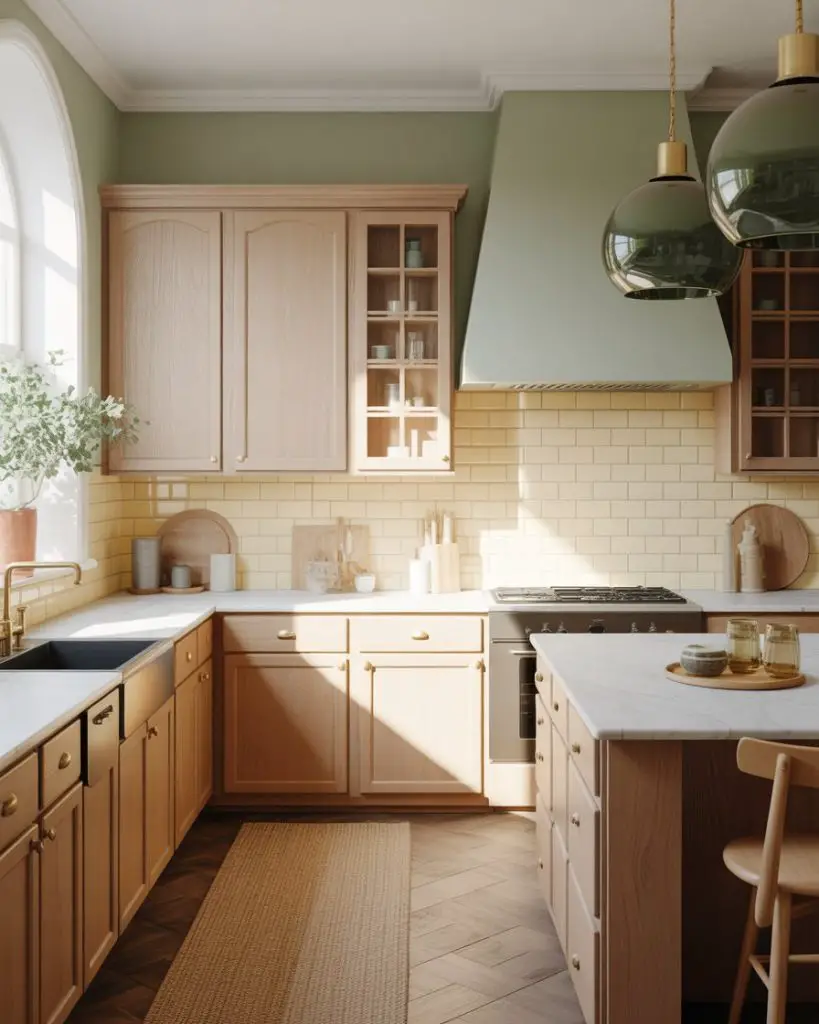
This palette has particular resonance in regions with lush landscapes—the Pacific Northwest, New England, the Southeast—where bringing outdoor colors inside creates continuity with the surrounding environment. Real homeowners often start with white oak cabinets and neutral finishes, then layer in green through easier-to-change elements like paint, tile, or accessories, allowing the color story to evolve over time without requiring major renovation.
19. White Oak Cabinets and Black Accents Throughout
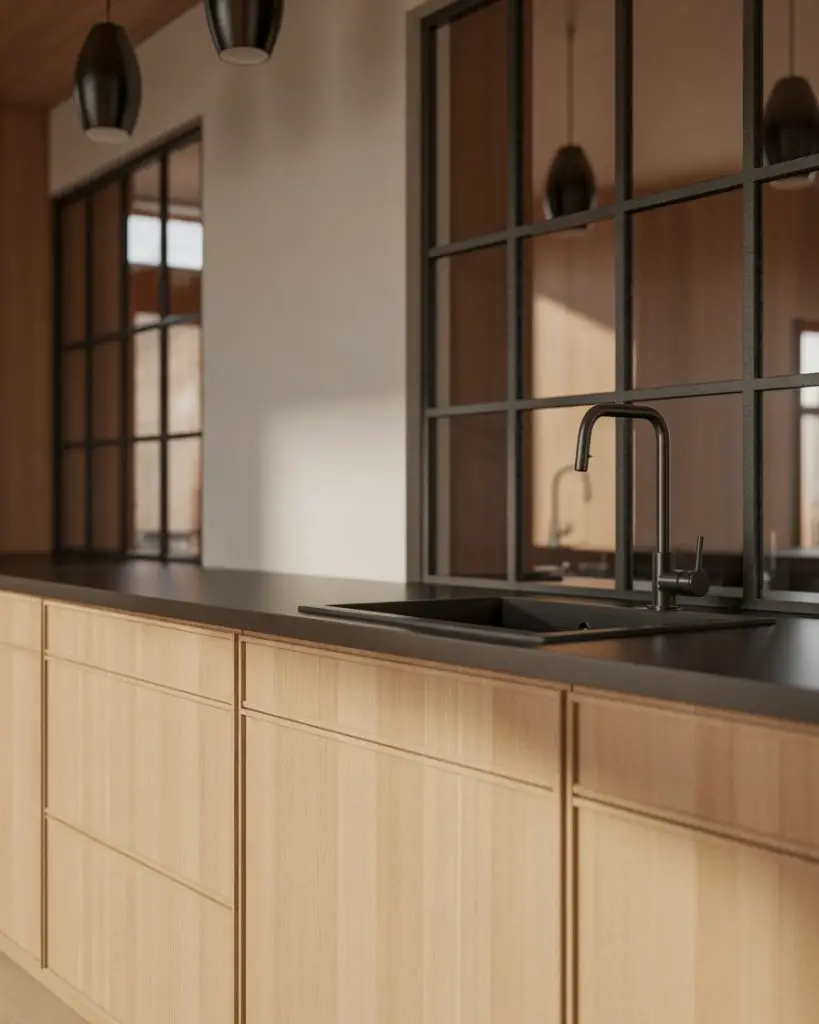
The pairing of white oak cabinets with black and throughout—black hardware, black counter edges, black window frames, or black appliances—creates a sophisticated graphic quality that defines modern kitchen design in 2026. This strong contrast emphasizes clean lines and architectural elements while allowing the oak’s organic grain to provide necessary warmth and texture. The approach works across kitchen sizes, from compact urban galleys to sprawling suburban open-concept layouts. 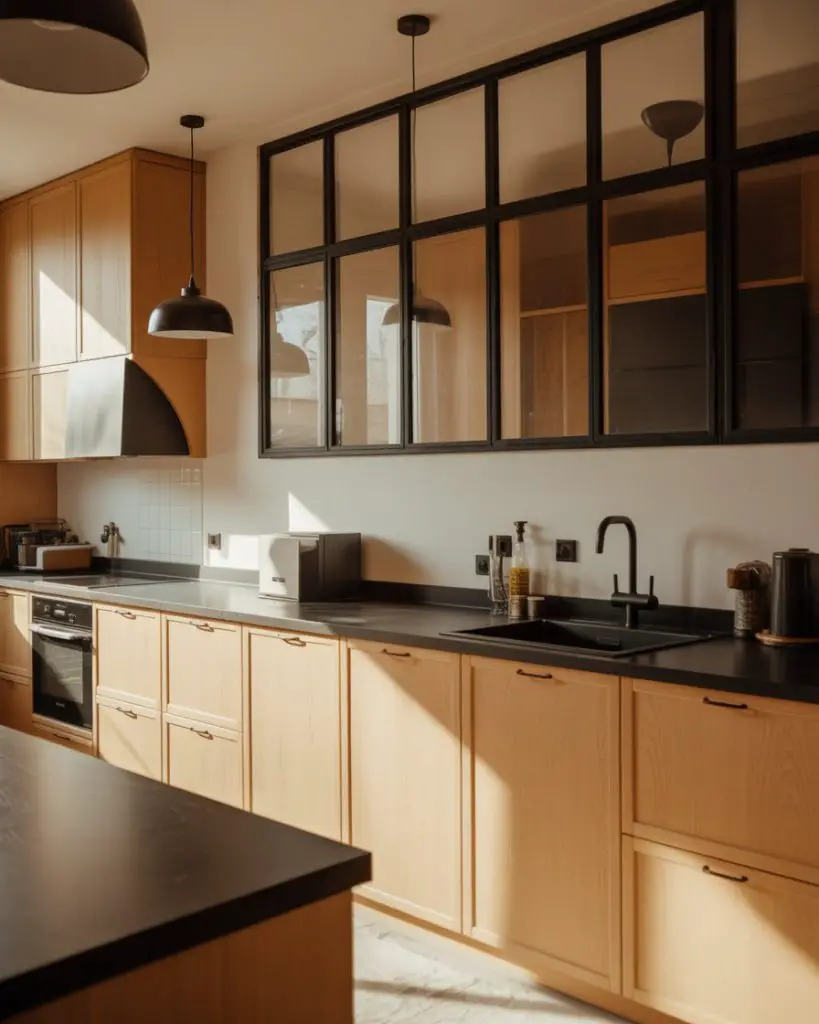
A common mistake here is overdoing the black elements—when every surface, fixture, and detail is black, the space can feel heavy and unwelcoming. The most successful executions use black strategically, perhaps on hardware and one major element like countertops or windows, while keeping walls, backsplash, and flooring lighter to maintain balance. This restraint allows the black accents to make a statement without overwhelming the natural beauty of the white oak.
20. White Oak Cabinets with Light and Airy Design

Maximizing the light, airy potential of white oak cabinetry means choosing complementary elements that enhance rather than weigh down the space. Natural or barely-there finishes on the oak, paired with white quartz or marble counters, pale tile or wood flooring, and minimal upper cabinets or open shelving, creates a Scandinavian-inspired kitchen that feels spacious and calm. Large windows, simple pendant lights, and uncluttered countertops complete the serene aesthetic. 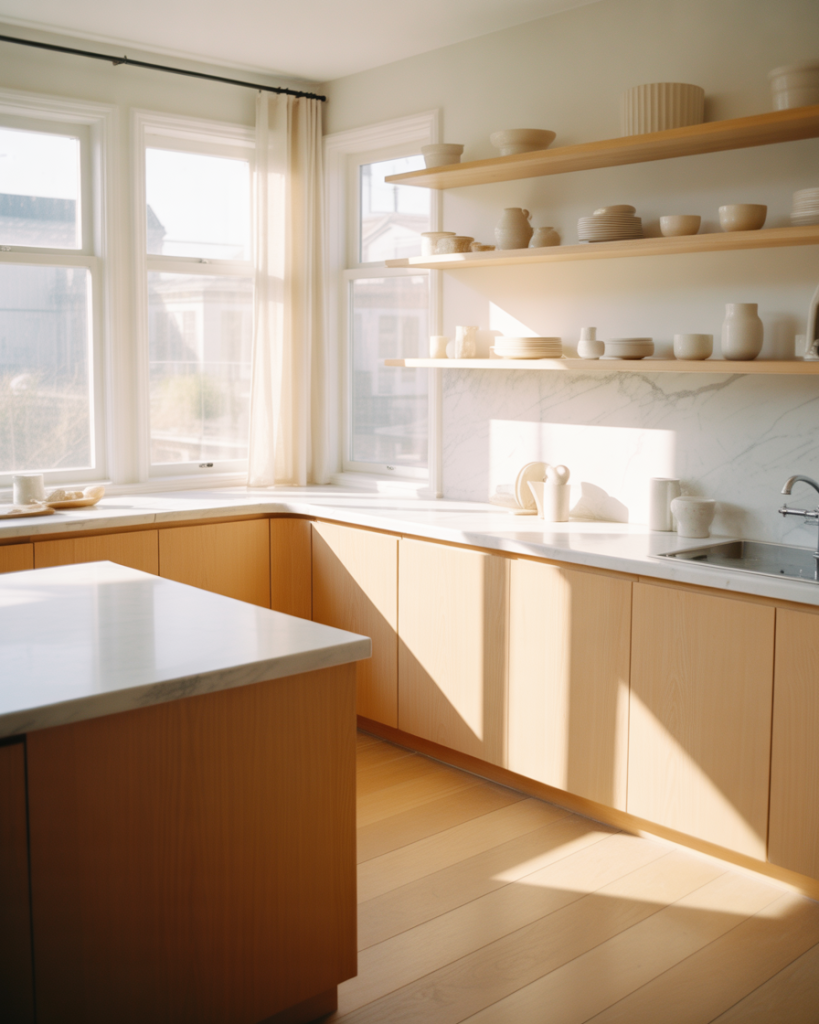
This design philosophy has taken hold especially in smaller homes and apartments where every square foot counts. By keeping the color palette light and limiting visual clutter, even a modest kitchen can feel generous and welcoming. The practical reality is that maintaining this aesthetic requires discipline—it’s not the right choice for collectors of colorful kitchen gadgets or those who prefer closed storage for everything, but for minimalist-minded homeowners, it delivers a daily sense of calm.
21. White Oak with Rustic and Natural Character
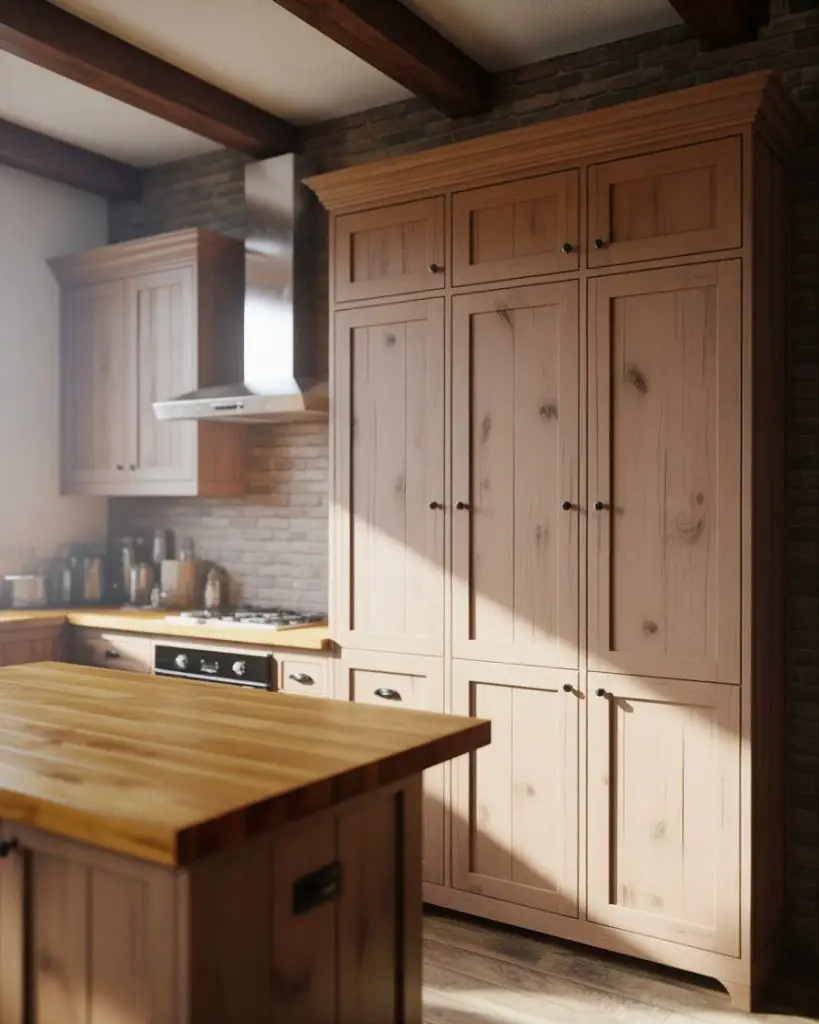
Embracing the rustic side of white oak means selecting boards with knots, mineral streaks, and color variation that celebrate the wood’s natural imperfections. This approach rejects the perfection of clear-grade lumber in favor of character and story, creating cabinets that feel handcrafted and organic. Paired with simple shaker or slab doors and minimal hardware, rustic white oak brings warmth and authenticity without veering into overly themed territory. 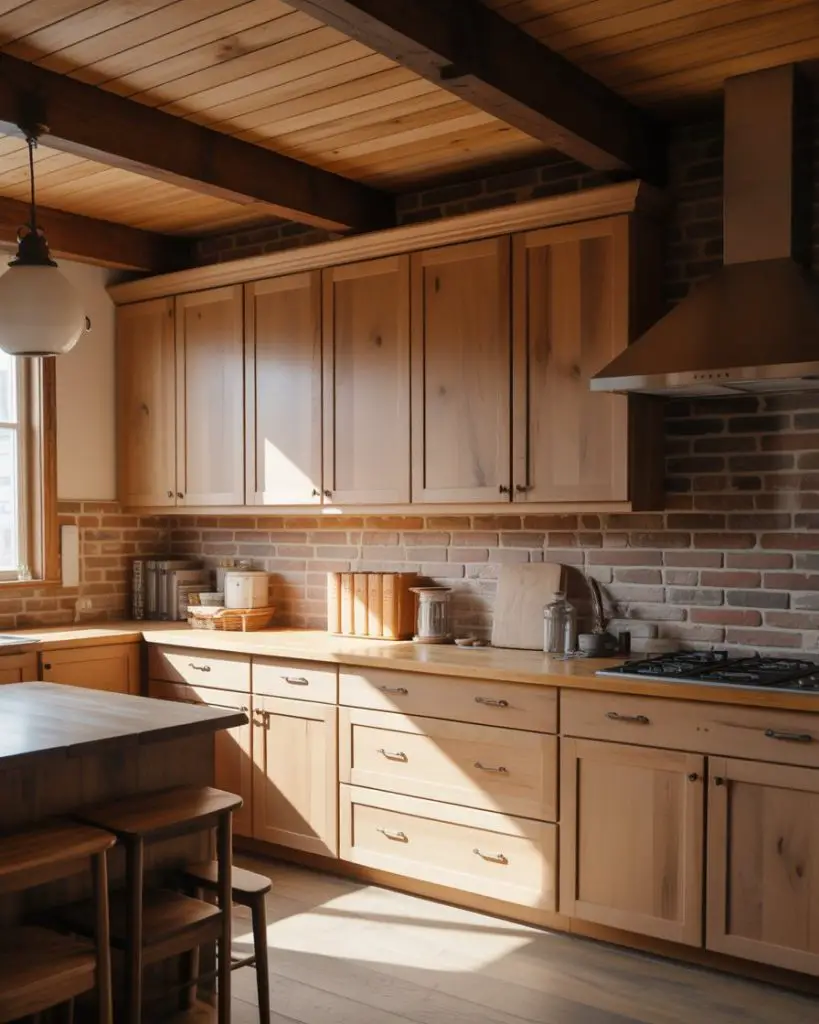
Budget-conscious renovators sometimes find that rustic-grade oak costs less than select or clear grades, making beautiful solid wood cabinets more accessible. The trade-off is accepting variation between doors and drawers—no two will be identical—which some homeowners love for its one-of-a-kind quality while others find unsettling. In farmhouse and cottage-style kitchens especially, this variation reads as authentic rather than inconsistent, contributing to a collected-over-time aesthetic.
22. White Oak Slim Shaker for Contemporary Minimalism
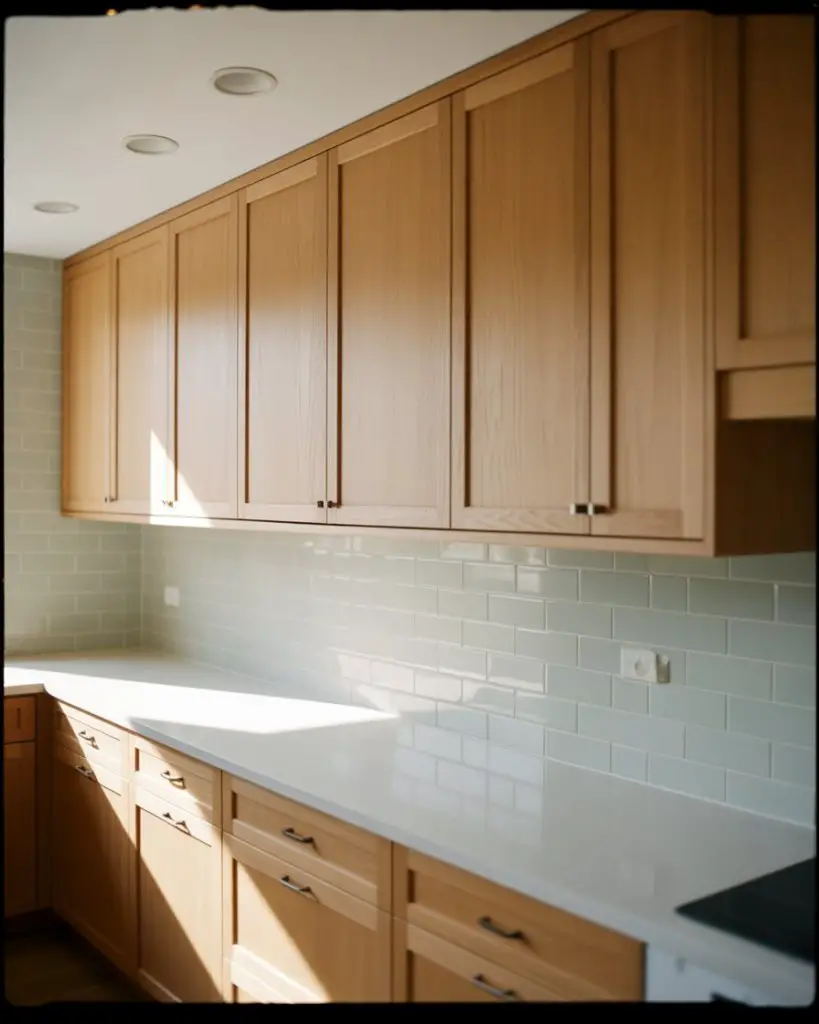
The slim shaker profile—featuring narrower frame widths than traditional shaker doors—transforms white oak cabinets into a sleek, contemporary statement that maintains warmth without feeling heavy. These refined proportions create clean vertical and horizontal lines that work beautifully in modern and transitional kitchens, especially when paired with minimal or integrated hardware. The style bridges classic and current, making it a safe bet for homeowners concerned about longevity. 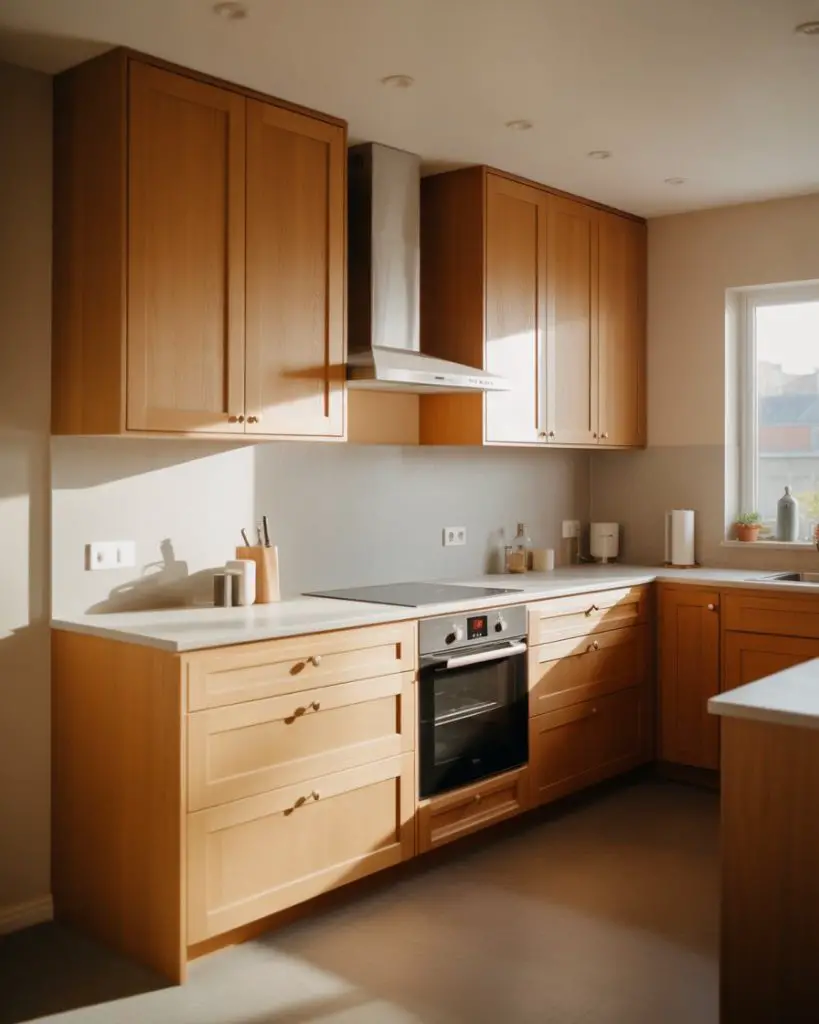
Where this works best: in newer construction or gut renovations where ceiling heights allow for taller upper cabinets—the slim proportions can make standard 30-inch uppers look dated, but 42-inch or full-height cabinets showcase the style beautifully. The streamlined appearance also complements handleless or push-to-open systems, which many American homeowners are adopting for their clean aesthetic and ease of use when hands are full.
23. White Oak Backsplash Ideas with Textural Interest
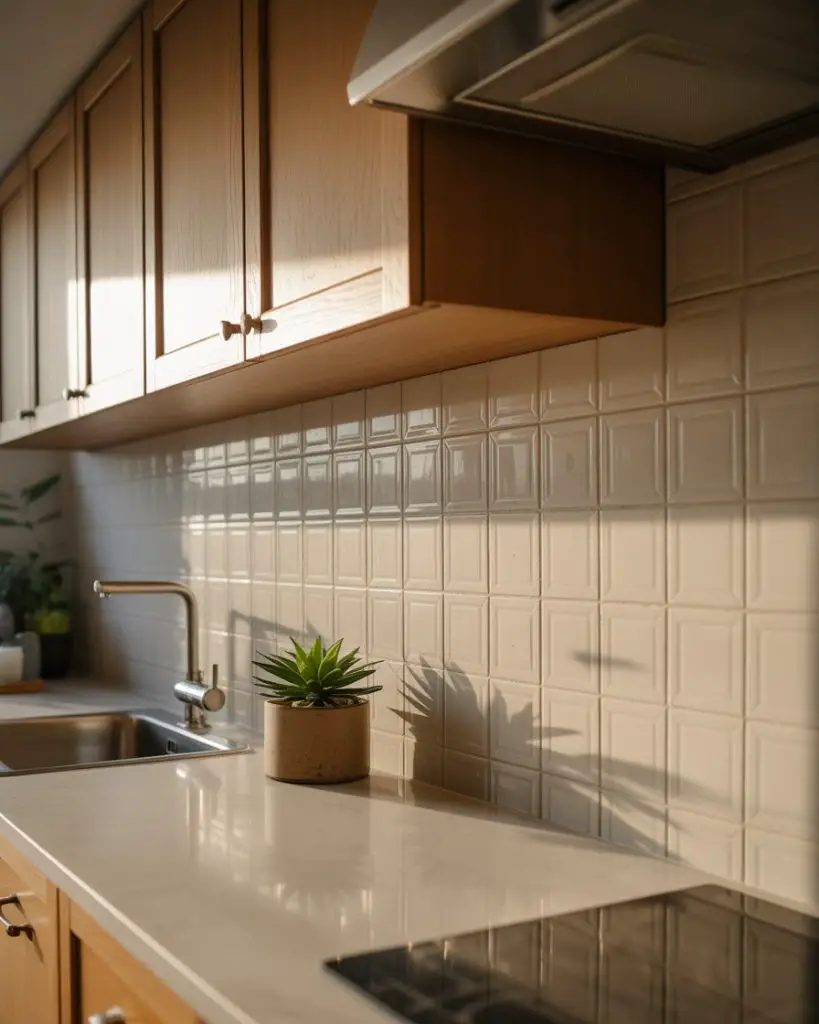
The right backsplash ideas add texture and personality while allowing white oak cabinets to remain the star. Consider dimensional options like three-dimensional ceramic tiles, stacked stone ledgers, or handmade zellige that catch light and create depth. For a more subtle approach, large-format porcelain slabs in matte finishes or natural stone with movement provide visual interest without busy patterns that might compete with the wood grain. 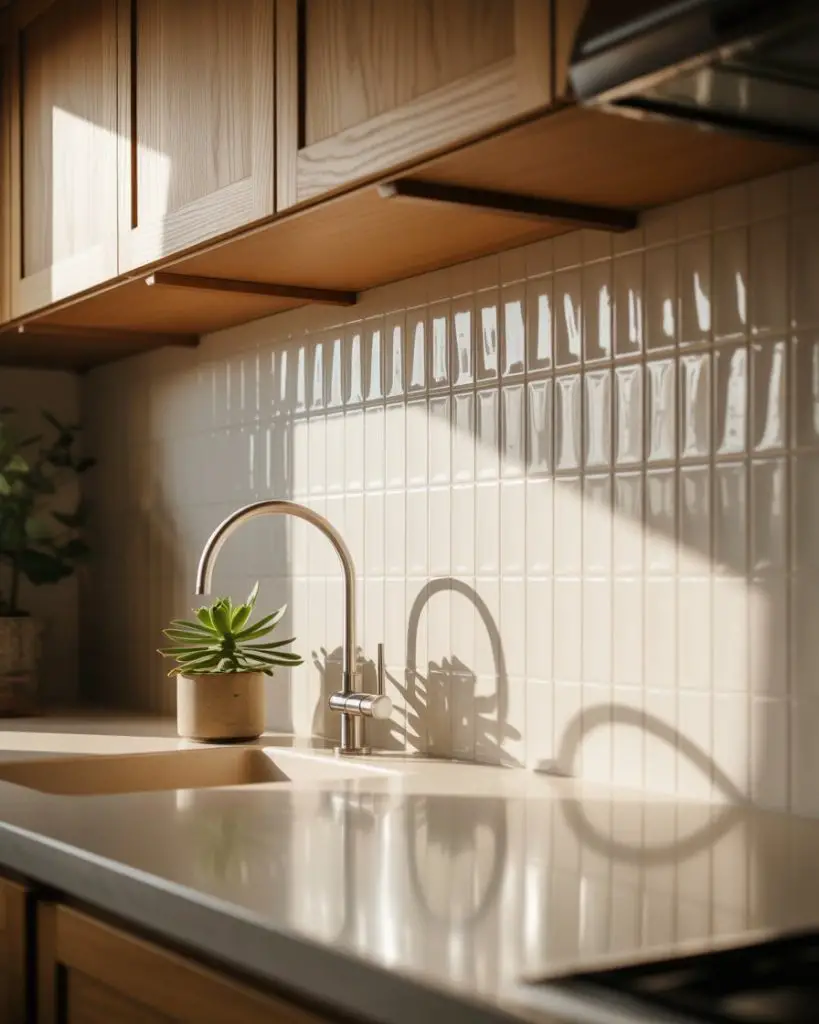
Expert insight suggests that the backsplash is one area where homeowners can take risks without enormous commitment—it’s relatively affordable to change compared to cabinets or countertops. That said, choosing something you genuinely love rather than following fleeting trends ensures you won’t regret it three years from now. The backsplash should complement your lifestyle too: busy patterns hide splatters well, while solid colors show every drop but create a sleek, gallery-like backdrop for the beautiful oak cabinets.
Conclusion
White oak kitchen cabinets offer incredible versatility for creating a space that’s both beautiful and functional, whether you’re drawn to modern minimalism, rustic warmth, or something in between. The combinations explored here show how hardware, countertops, flooring, and color choices can completely transform the same base material into dozens of distinct looks. We’d love to hear which ideas resonated with you—drop a comment below sharing your favorite pairing or any questions about bringing white oak into your own kitchen renovation.