You know the drill: it’s November, you’ve saved forty stocking photos, and none of them look like your mantel. Here’s the good news — DIY stockings are one of the few Christmas projects where handmade genuinely beats store-bought, and 2026’s crop leans hard into quilting, crochet, and stitched-on names. We combed through Etsy, Target, and Joann to narrow it down to 29 ideas that actually work, spanning everything from a $6 felt cut-out to a $180 heirloom knit — with the splurge and save versions compared side by side.
You’ll find rustic burlap, grandmillennial quilting, fair isle knitting, leopard faux fur, and a few things your grandmother would absolutely approve of. That range is no accident: this year Pinterest searches for handcrafted and personalized stockings keep climbing, because people want decorations with a name on them. And stay until the end — we break down the most common mistakes that can ruin these looks. 📌 Save this to Pinterest for later — you’ll want to revisit these ideas.
1. Quilted Bird-Appliqué Stockings on a Powder Blue Mantel
Hang stockings so the toe clears the shelf below by four inches and the cuff sits just under the mantel edge — that gap is what makes a trio read as intentional instead of improvised. Space the hooks evenly by dividing the mantel width in thirds, then nudge each hook one inch outward from the center line. On a mantel under 60 inches, skip the third stocking; two with breathing room always beat three crammed together.
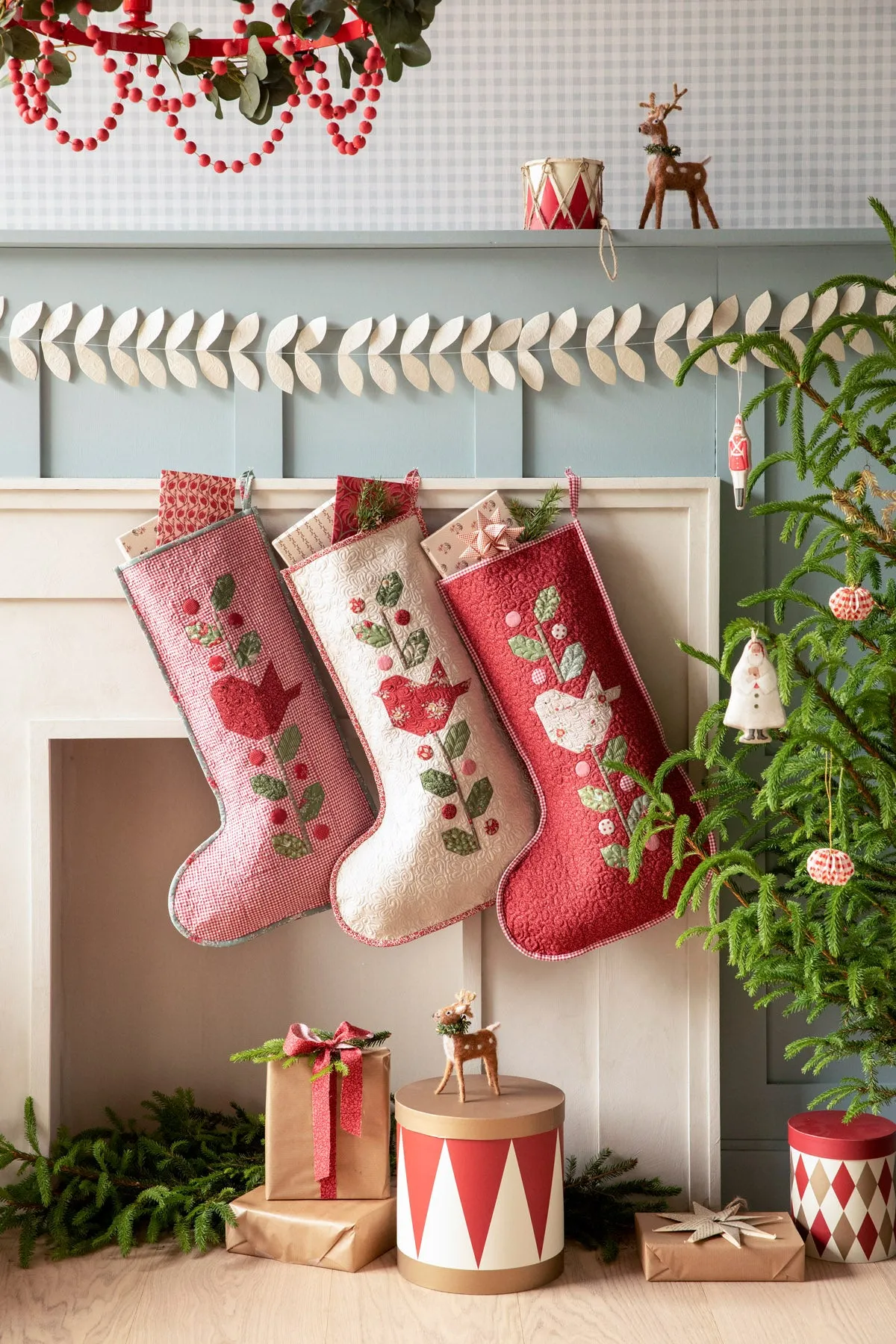
That powder blue gingham behind the mantel is the quiet hero. It picks up the pale blue in each stocking’s bird appliqué, so the wall and the textiles feel like one decision instead of two. The red-and-white drums on the shelf then echo the red berries stitched above — a small callback, but it’s why the scene hums. Grounded by brown kraft paper and natural greenery, nothing reads as too sweet.
Quilted, appliquéd stockings are having a real moment — grandmillennial styling pushed patchwork back into the spotlight, and 2026 is the year it landed on the mantel instead of just the guest bed. The upside of a trend built on craft is that it doesn’t date the way a printed novelty stocking does. Three quilted stockings you’ll still be hanging in 2036.
2. Ornate White Mantel with Quilted Stockings and Gold Deer
Here’s what it costs to build this look from scratch, mantel decor included:

- Three quilted stockings: $45–$120
- Evergreen garland with warm string lights: $30–$75
- Gold deer figurines, set of 2–3: $18–$60
- White pillar candles in varied heights: $15–$40
- Electric fireplace insert with faux logs: $150–$500
- Cream shaggy rug: $60–$180
Total: roughly $320–$975, depending on whether you already own the fireplace insert. The garland and candles do most of the visual work — start there if you’re phasing it in.
Take away the gold deer and this mantel loses its middle note. Everything else is either warm light or dark green, and those small metallic figures keep the whole thing from reading as one flat chord. Three sources of glow — string lights, candles, and the faux logs — plus a single metallic accent is the formula. Remove the gold and you have a perfectly nice fireplace that photographs like a catalog page instead of a room.
3. Off-White Linen Stockings with a Single Red Piped Edge
Think of it as 70 percent soft neutral, 20 percent evergreen, 10 percent red and gold. The stockings, ceramic house, and candles hold the neutral share; the garland carries the green; the piping, berries, and lantern handle the last 10 percent. Swap the red piping for camel leather trim and the same formula turns into a quiet Scandinavian mantel without changing a single proportion.
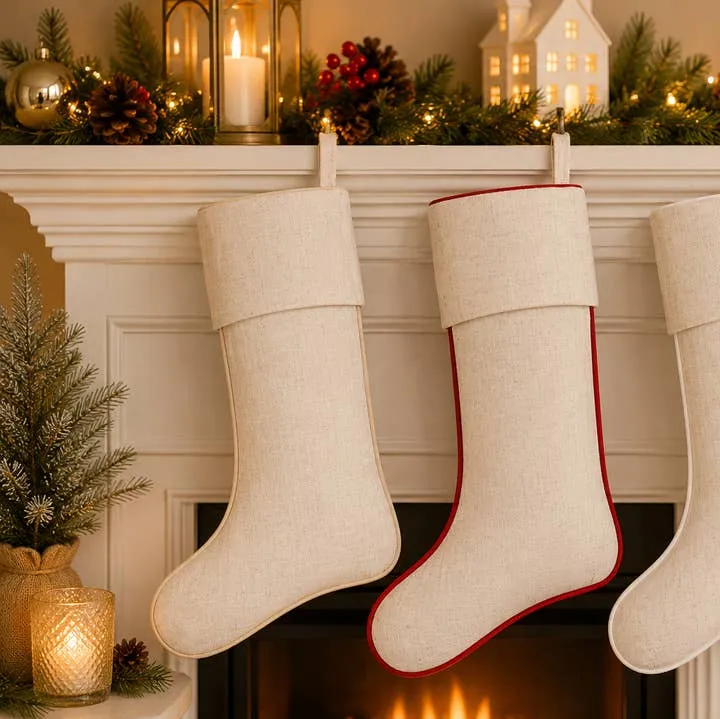
That thin red piping is a one-eighth-inch detail doing a full room’s worth of work. If you’re sewing your own, cut bias strips at 1.25 inches, fold, and stitch with a 1/4-inch seam allowance so the finished cord lands around 1/8 inch — anything wider stops being a whisper and starts being a stripe. Press the seam toward the stocking body, never the piping, or the edge ripples.
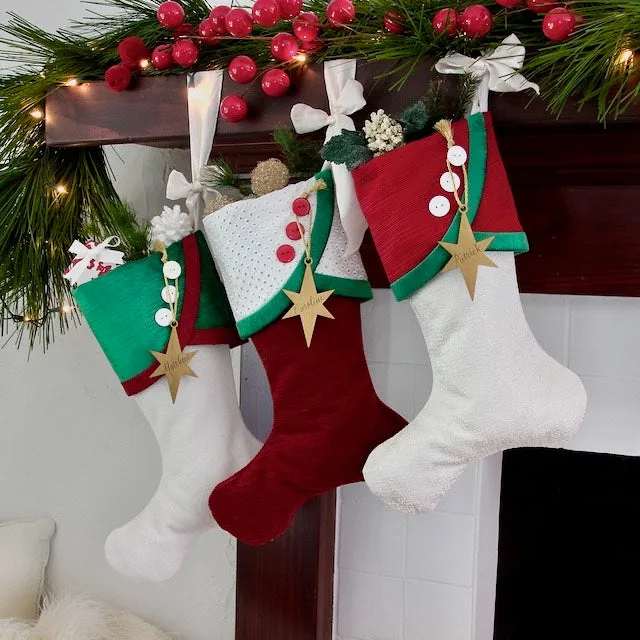
4. Button-Cuff Stockings with Wooden Star Name Tags
Wooden star name tags take about 40 minutes and under $12 for a set of four.
- Trace a 3-inch star template onto 1/8-inch basswood and cut with a craft knife or scroll saw.
- Sand the edges with 220-grit until they feel like sea glass.
- Drill a 1/16-inch hole near one point for the twine.
- Write names with a fine-tip paint pen, then seal with matte polycrylic.
- Thread baker’s twine through and knot it to the stocking loop.
Sand before you letter — paint pens grab texture and won’t forgive a rough edge.
Buttons on a stocking cuff are charming and also a small hazard if you have a toddler or a dog who chews. Stitch them with doubled thread using a shank-style attachment rather than a flat cross-stitch, or skip buttons entirely and use a contrasting cuff fabric — same charm, none of the 2 a.m. worry. And know that names on stockings are a commitment: buy one extra blank tag per kid while the design is still available.
5. Four Appliqué Stockings on Silver Snowflake Holders
You don’t need a quilt shop to get this look. Pick up four flat stockings at Target for $8–$12 each, then buy a half-yard of holiday-print cotton and fuse motifs on with HeatnBond — a tree, a snowman, a gingerbread man, whatever suits each person. The whole project lands around $60 for four stockings, versus $35–$60 each for the boutique version. Silver snowflake holders turn up at thrift stores constantly for $3–$5.
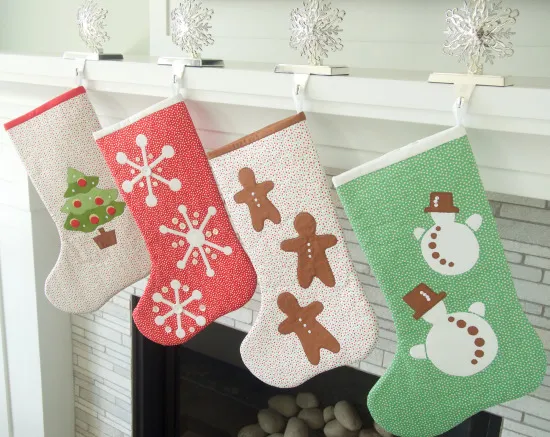
Four completely different motifs shouldn’t work together, and yet they do — because the fabric palette is locked. Every stocking pulls from the same red, green, cream, and brown family, and each one gets a coordinating cuff, so the eye reads variety in shape and sameness in color. It’s the same trick a gallery wall uses. This is the softer cousin of the quilted trio in Idea #1.
6. Knit-Cuff Stockings with Polar Bear and Penguin Appliqués
The three-dimensional animal appliqués are the entire personality of this pair. A polar bear in a Santa hat and a penguin in a beanie, both stitched proud of the surface rather than flat, give these stockings a toy-like quality you can spot from across the room. Remove them and you’d have two very nice cream stockings with blue snowflakes — lovely, forgettable. The light-blue snowflakes are supporting cast, not the lead.
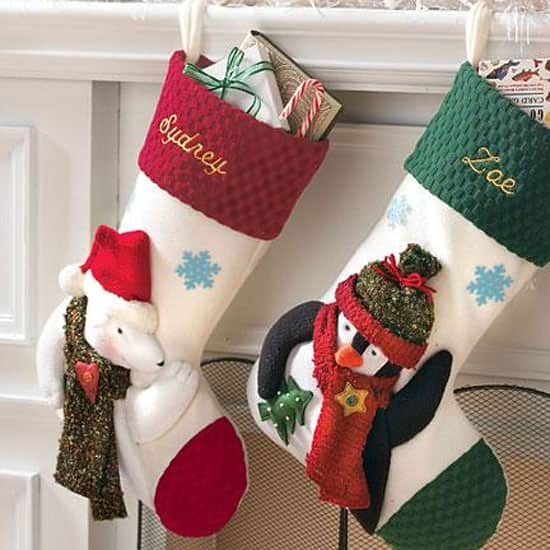
Knit cuffs pill, and they pill fastest exactly where you grab them: the top edge. Plan on a fabric shaver once mid-season. Hand-wash in cold water with wool wash and dry flat on a towel, reshaping the cuff while damp, or a 12-inch cuff becomes a 14-inch one by January. Between seasons, stuff the stockings with tissue so the animal appliqués don’t crease permanently.
7. Grey Plaid Stockings with Appliquéd Deer and Evergreens
Four stockings need real estate. Give them a mantel at least 66 inches long so each one gets 14–16 inches of air, and make sure the shelf is 8 inches deep or more — filled stockings lean, and a shallow shelf means they slump forward. In a room with 8-foot ceilings, hang the mantel 54–60 inches off the floor. Go higher only with 10-foot ceilings, where a raised mantel makes the fireplace feel grander instead of stranded.
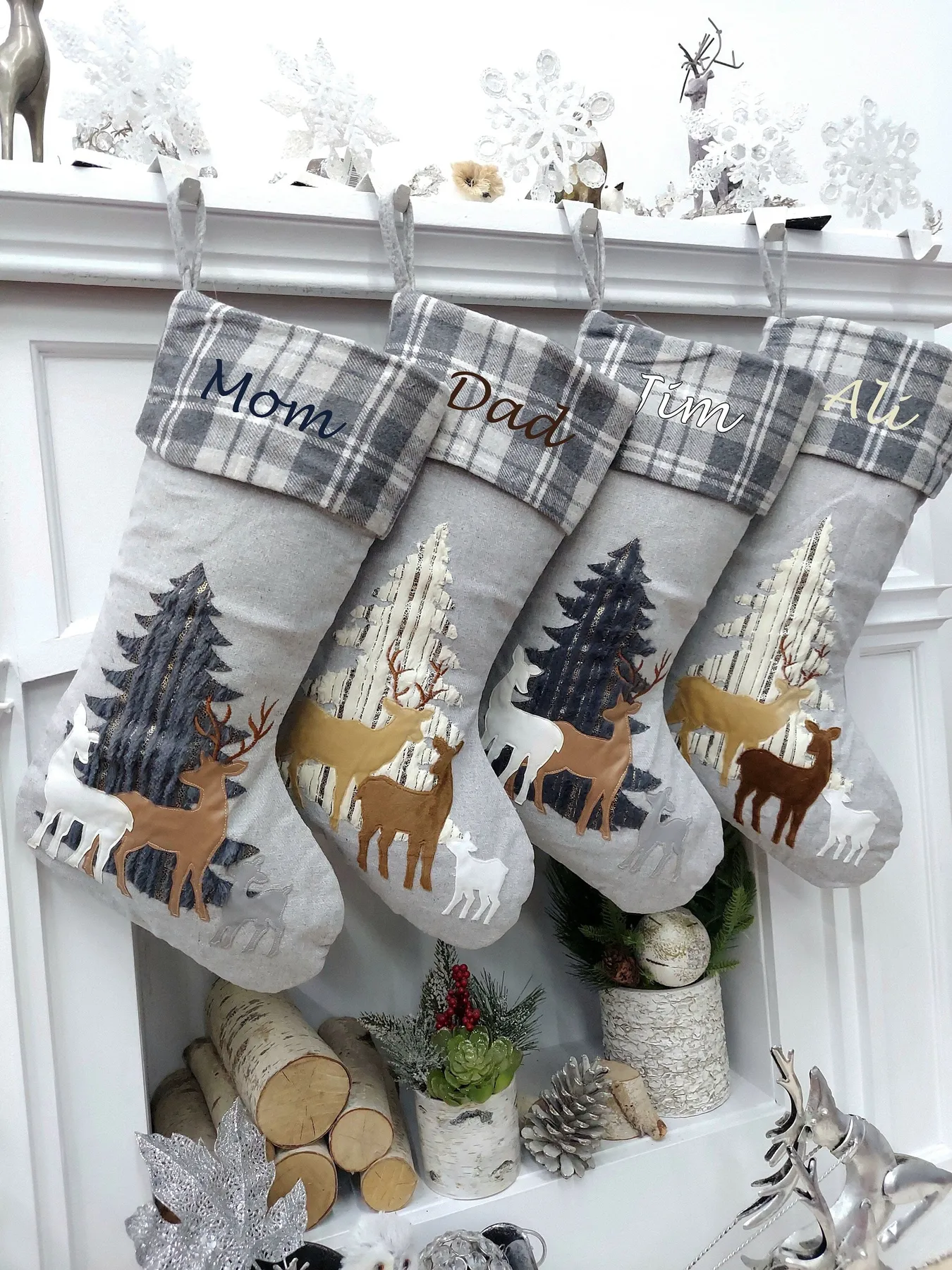
Plaid has a scale, so match it. A cuff reads small and tight because it’s on a narrow band; if the stocking body carried the same scale, the whole thing would shimmer. Use a plaid with a repeat roughly three times larger on the body, or keep the body solid as these do, and the cuff becomes deliberate instead of busy. The same logic explains why the mixed fabrics in Idea #29 still hold together.
8. Knitted Advent Stockings Draped Across a Carved Cabinet
Advent calendars stopped being a paper thing you throw out in January. The 2026 version is a knitted mini-stocking garland you hang as decor and refill every year — it scratches the same itch as a fabric advent calendar but doubles as wall art for the entire season. Expect to see a lot of these on Pinterest this winter, especially in cream and mustard against white painted furniture and flocked trees.
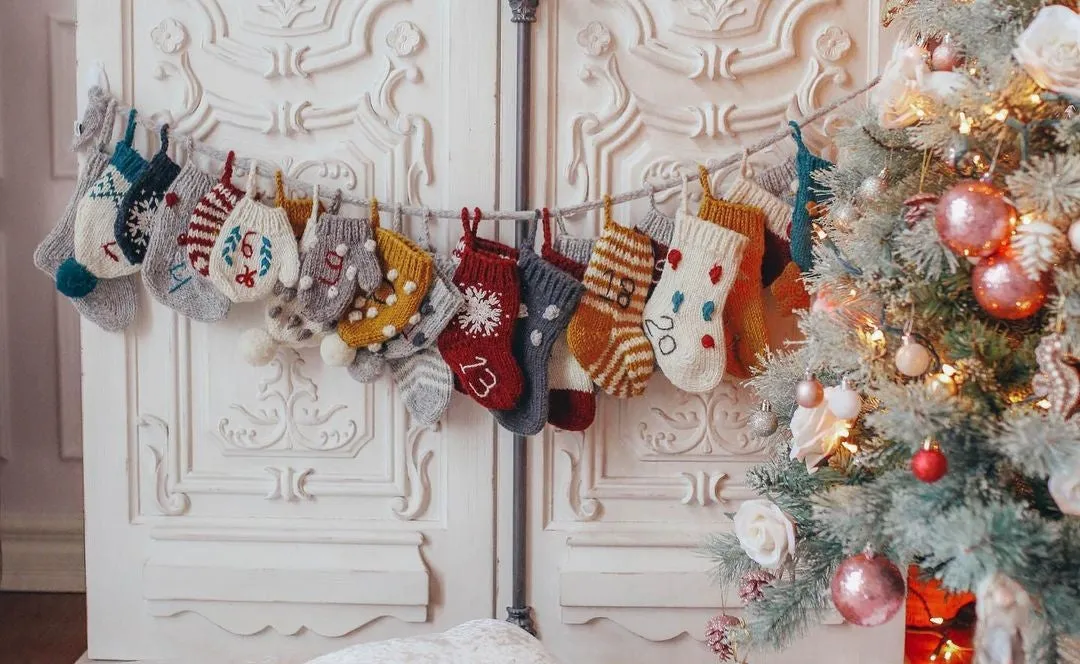
Mini stockings are cheap to buy and cheaper to make:
- 24 knitted mini stockings, Etsy or thrifted: $60–$180
- Or knit them yourself in DK yarn: $35–$50
- Jute twine or cotton cord for stringing: $6–$12
- Number tags or embroidery floss: $8–$15
- Flocked tree and pink-silver baubles for the corner: $120–$300
Total: about $80–$210 if you keep it to the garland alone. Numbers get embroidered once and reused for a decade.
9. Fair Isle Santa Stocking with a Knitted Name Cuff
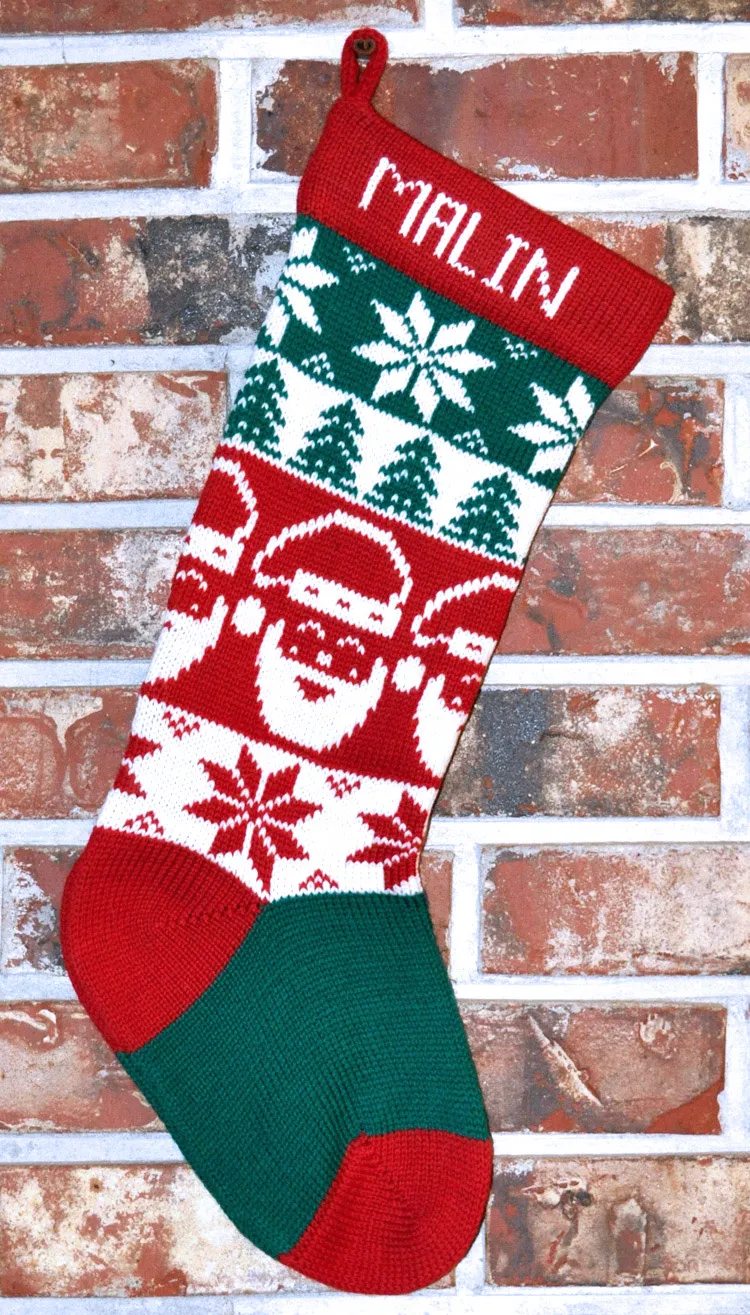
Adding a name to a finished knit cuff takes about an hour and costs almost nothing.
- Block the cuff flat and pin it so stitches sit in even columns.
- Chart your letters on graph paper, one square per knit stitch — block letters read best at this scale.
- Thread a blunt tapestry needle with the same weight yarn and come up through the base of the first stitch.
- Follow the V of each stitch with a small loop, working left to right across the row.
- Weave the tail through the wrong side and steam lightly to settle it.
Duplicate stitch sits on top of the fabric, so you can undo it later if a name ever changes.
It’s the blocky white lettering across the red cuff. A patterned stocking is already charming; a named one becomes a person. The letters here are plain, wide, and legible from across a room — not script, not tiny — which is exactly why it works on a busy fair isle body full of Santas and snowflakes. If you’re making one, chart the name first and let the pattern work around it.
10. Striped Stocking with a Solid Tan Cuff on a Stone Fireplace
Rough stone fireplaces look incredible and behave badly. Hooks mounted into mortar joints work loose as the mortar ages, and a filled stocking is heavier than it looks — figure 4 to 6 pounds once it’s got an orange and a paperback in it. Use masonry anchors rated for 15 pounds minimum, or skip the wall entirely and hang from the wood beam instead. Never drill into stone that’s already cracking.
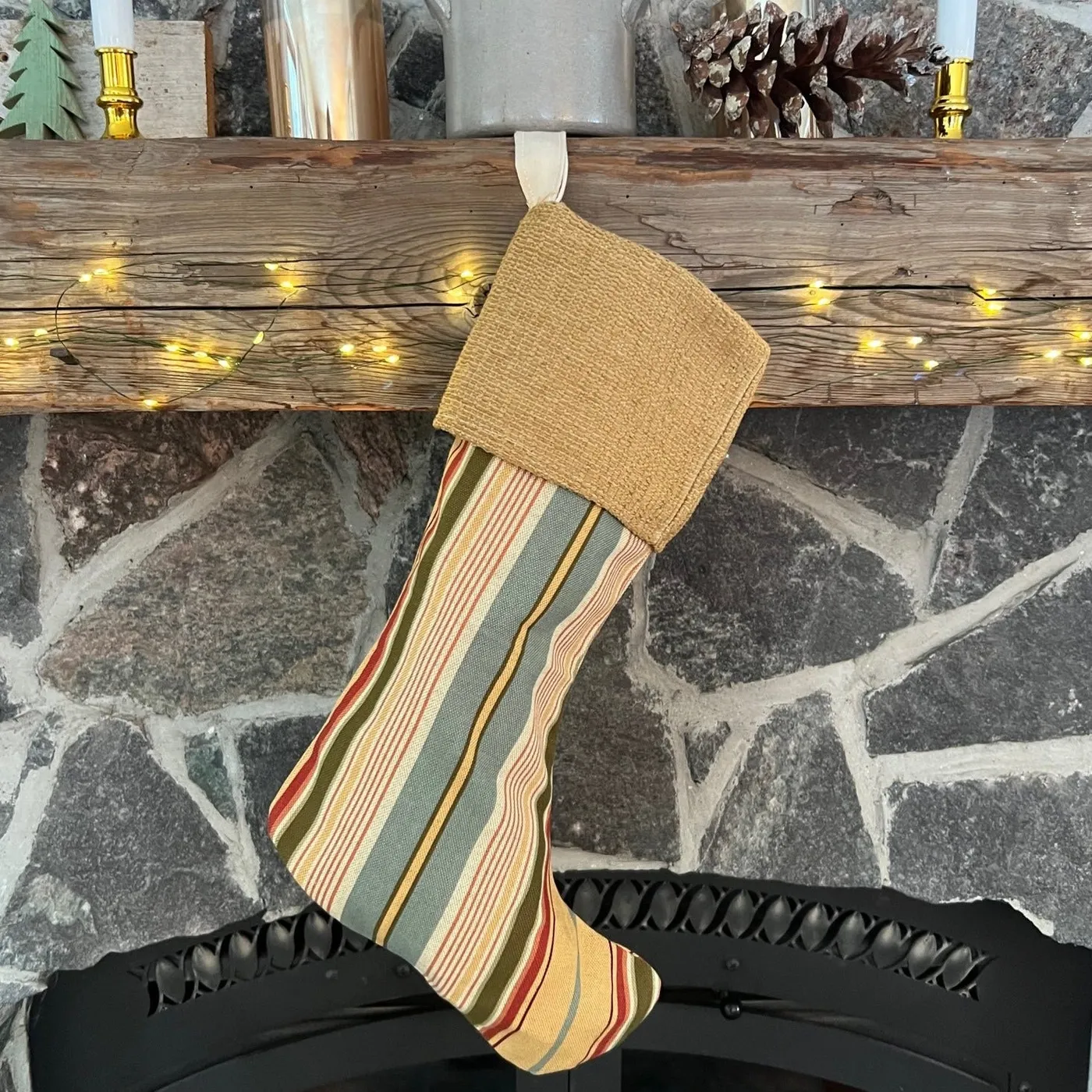
Roughly 60 percent tan and cream, 30 percent muted red, 10 percent light blue and green. The striped body carries the red, the tan cuff holds the neutral, and the little fairy lights add warmth without adding a new color. To push this toward a coastal Christmas, swap the red stripe for faded denim blue and leave everything else alone — the proportions do the heavy lifting.
- Measure your mantel depth — anything under 6 inches needs shallow hooks or a rail.
- Check what’s behind the beam: hollow, masonry, and solid wood all need different anchors.
- Confirm stocking loops are 2 inches wide minimum so they clear the hook.
- Decide battery versus plug-in lights before you drape a single strand.
11. Botanical-Print Stocking on a Rough-Hewn Beam
When you’re hanging from a rustic beam rather than a painted mantel, pre-drill a 3/32-inch pilot hole before driving a cup hook — old timber splits along the grain like a zipper, and there’s no fixing that invisibly. Choose a 1-inch cup hook with at least 5/8 inch of thread, angle it slightly upward, and the stocking swings less when the heat kicks on. A botanical print this busy also wants a plain cuff, which is why the textured cream band here keeps the whole thing legible.
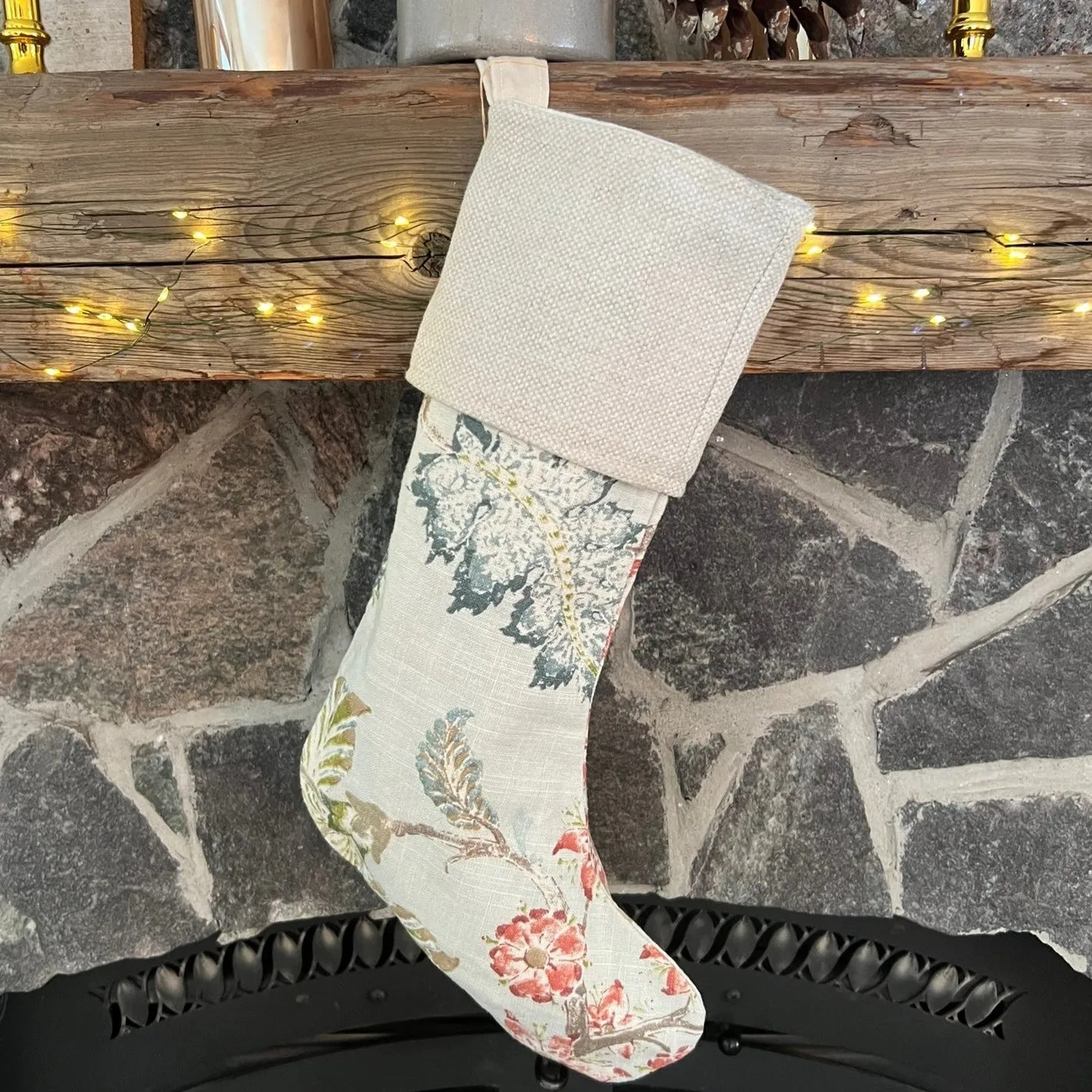
One stocking on a long beam is studied asymmetry, not a mistake — but only if you place it. Put it about one-third in from the left end rather than dead center, and let the string lights and greenery fill the rest. This works best on fireplaces 60 inches or wider; on a narrow 40-inch surround, a single stocking reads lonely instead of intentional.
12. Cream Holly-Embroidered Stocking with a Velvet Cuff
The trick to this look is contrast, not embroidery skill. Buy a plain cream cotton stocking ($10–$15 at Target or Walmart), stitch or fuse a red velvet cuff from a $6 quarter-yard, and add a pre-made embroidered holly appliqué from Joann for about $4. You land at roughly $25 per stocking against $70–$90 for hand-embroidered. If you can manage a basic satin stitch, a hand-drawn holly sprig takes one evening in front of the TV.

The red velvet cuff is the anchor. Cream embroidery on cream fabric would disappear; cream embroidery framed by deep red velvet gets a border that stops the eye at the top of the stocking and sends it back down through the holly leaves and berries. Velvet does a second job too — it absorbs light in a way cotton doesn’t, so the cuff reads richer than everything around it. Small move, big payoff.
13. Burlap Tree-Stenciled Stocking Against Weathered Wood
- Sniff-test your burlap — some treated rolls carry a chemical smell that lingers near a fire.
- Cut it outdoors or over a bin; burlap sheds like a golden retriever in July.
- Test your stencil on a scrap first — the loose weave pulls paint sideways.
- Pre-shrink natural burlap if you ever plan to wash the stocking.
- Check the yardage: a stocking body plus a 4-inch cuff takes about a half-yard.
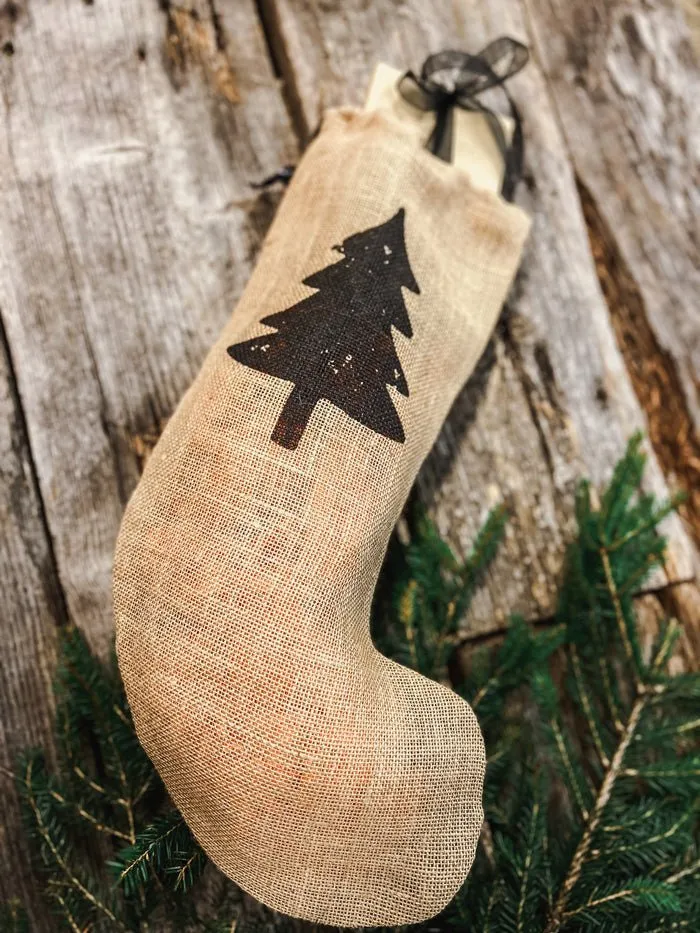
Burlap is honest, cheap, and slightly hostile. It sheds fibers onto whatever sits beneath it, so don’t hang one directly over a white rug or a plate of cookies. Stencil edges bleed along the weave — use a stiff stencil brush, barely any paint, and dab rather than sweep. And if pets or kids share the house, know that burlap’s loose weave snags on everything, including itself, so keep the stocking’s distance from chair backs.
14. Patchwork-Strip Stocking with a Shimmer Crocheted Cuff
The crocheted cuff is the only tricky part, and it’s about two hours of work.
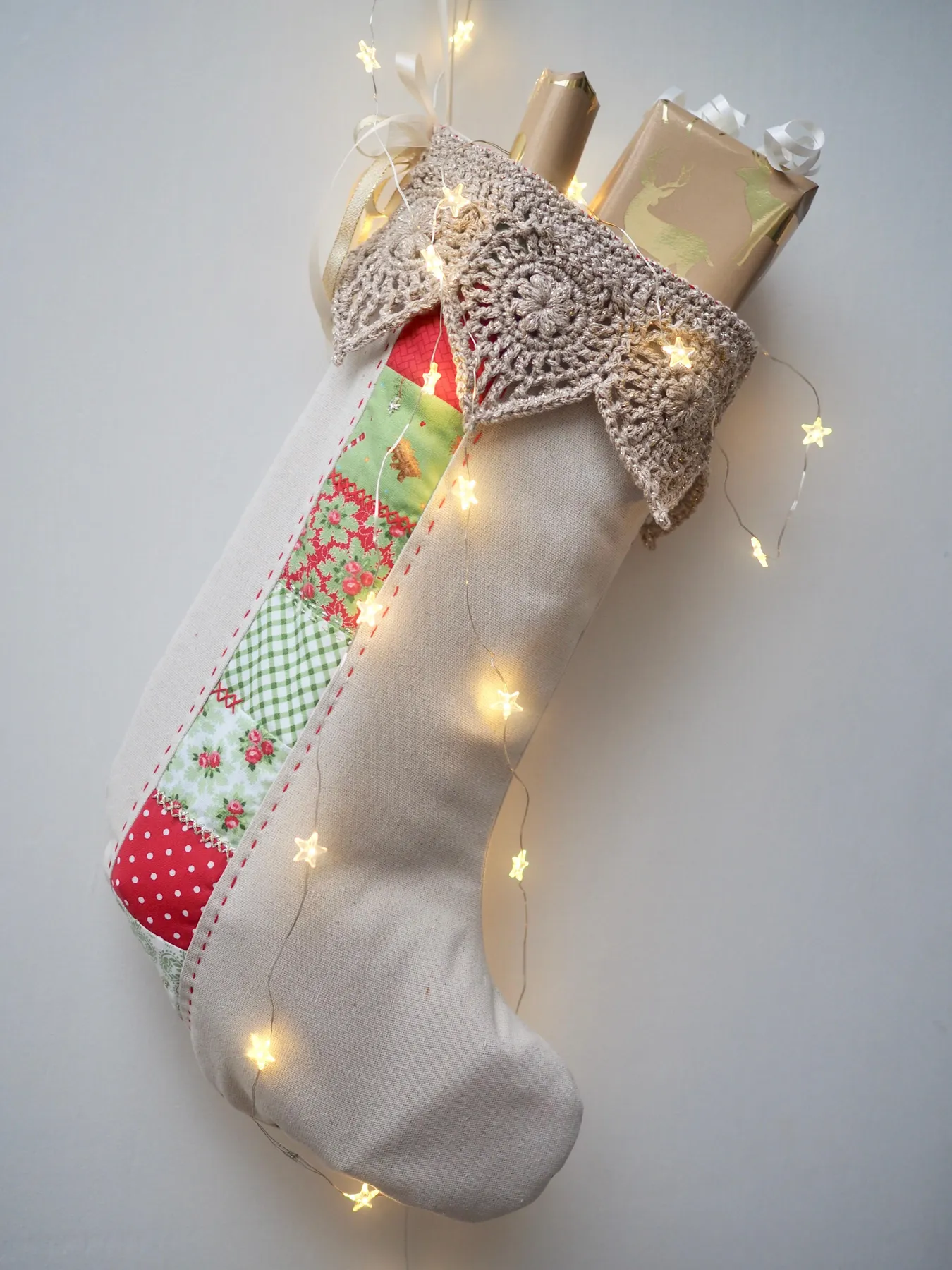
- Measure the stocking opening’s circumference and chain a length that matches it.
- Join into a ring and work half-double crochet in the round for 2.5 inches.
- Switch to a metallic or shimmer thread held double for the final two rows.
- Single crochet the last round directly onto the stocking fabric with a sharp needle.
- Block the cuff flat with steam so it doesn’t curl.
A 5.0 mm hook and worsted weight yarn give a cuff that holds its shape all season.
This one rewards a fabric stash:
- Plain beige stocking or a half-yard of linen: $10–$25
- Scraps for the vertical patchwork strip: $0–$8
- Shimmer yarn for the crochet cuff: $6–$12
- Star-shaped fairy lights: $8–$18
- Kraft paper and gold ribbon for the gifts: $5–$10
Total: $29–$73 per stocking, much of which you probably already own. Use up leftover binding and fat quarters on the patchwork strip.
15. Felt Nanny-and-Grandad Stockings with Dried Orange Slices
Glitter is a commitment. The silver snowflakes on these felt stockings will shed for the first season and occasionally forever, so hang them where the floor is sweepable. Dried orange slices brown over time and can attract tiny pantry moths if they weren’t dried through, so bake until leathery and cool completely before stringing. Store felt flat rather than folded, or you’ll be living with permanent creases by next December.
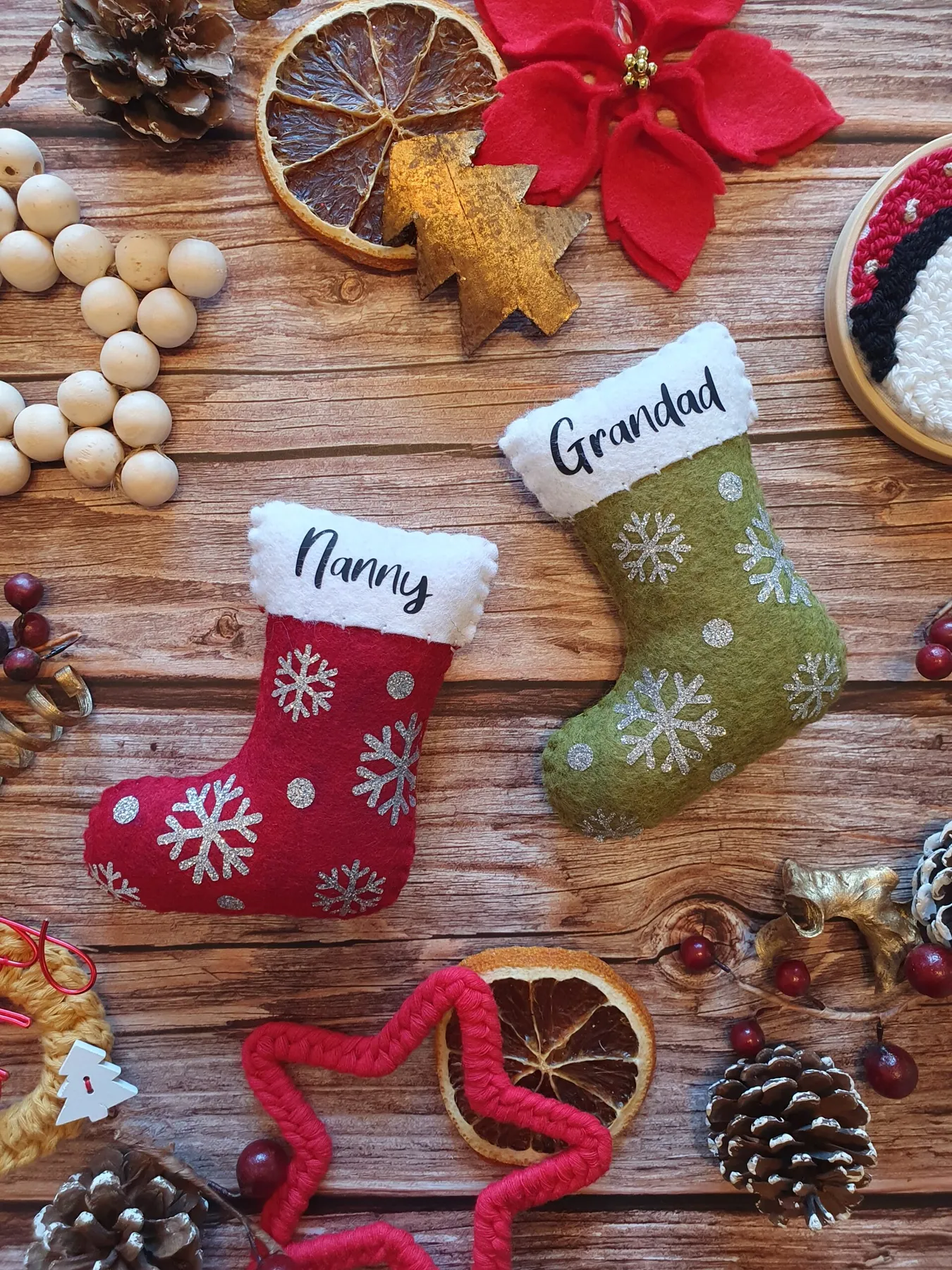
Make the dried oranges properly: slice 1/8 inch thick, blot, and bake at 200°F for 2–3 hours, flipping halfway. They should feel like stiff leather, not fruit leather — any moisture left and they’ll mold in a warm room. Thread twine through the pith rather than the flesh so the slices hold their shape on a garland, and the pair of little personalized stockings stays the star of the arrangement.
16. Plaid Stockings with Black Button Cuffs on a Wooden Ladder
A standard decorative ladder runs 5 to 6 feet, and stockings hang best on the top two rungs — lower than that and they’re at knee height where they get bumped. Two stockings on a ladder need roughly 4 feet of floor space to breathe, and this is the right solution for anyone without a mantel. A white faux fur throw over the bottom rung and a few wooden tree ornaments finish it without adding another pattern to compete with the check.
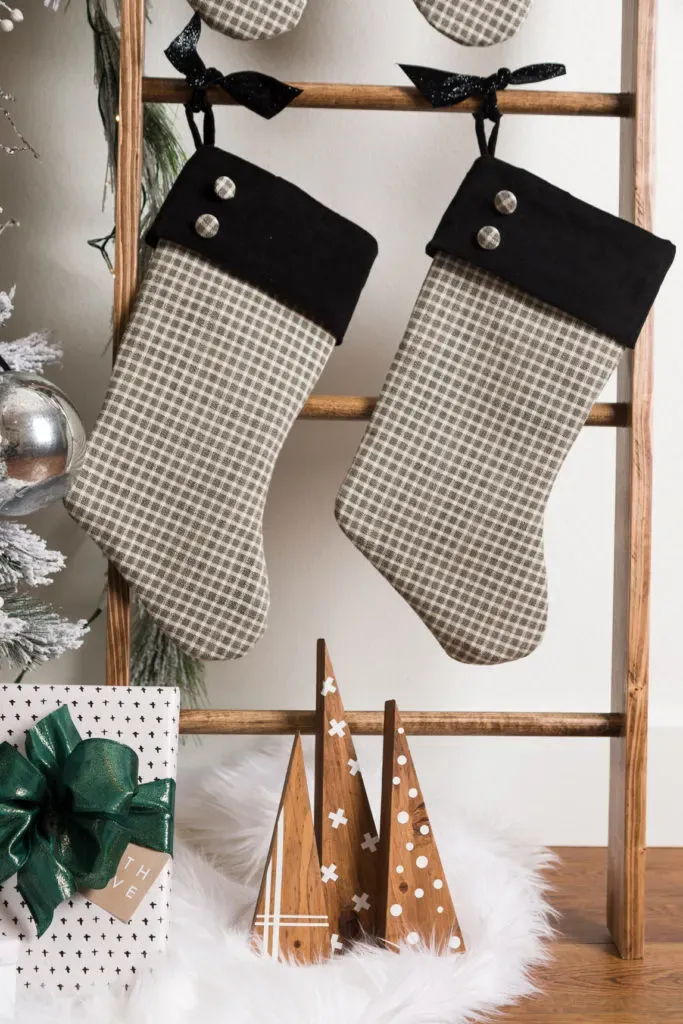
Wooden ladders are one of the last genuinely cheap decor items. Facebook Marketplace and estate sales turn them up for $15–$40; a new decorative one from a home store runs $80–$150 for the same sticks. If it’s going to hold weight, check the rung joints before you buy. Buffalo-check and plaid stockings can be had for around $10 each at Walmart, and a Target faux fur throw covers the base rung for about $30.
17. Color-Blocked Reindeer Stocking with a Knitted Name Cuff
The color blocking. A white body, a green foot, a red toe and cuff — three solid blocks that frame the reindeer like a picture mat instead of letting the motif dissolve into twenty other patterns. It’s the same logic a quilt uses when it puts a wide border around a busy center. Remove the blocking and you’d have a charming knit with nowhere for the eye to rest, and the holly sprigs around the reindeer would do all the arguing themselves.
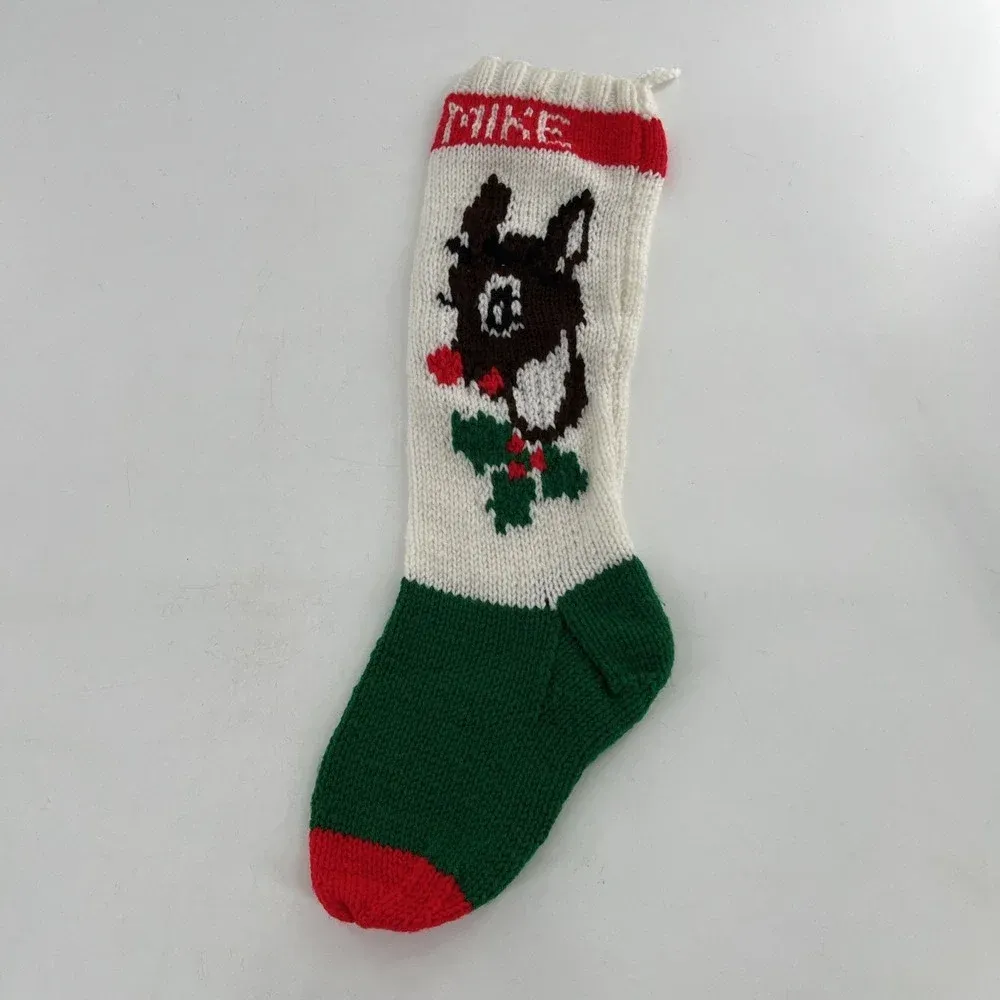
Personalized knitting is bigger than it’s been in years, and it isn’t nostalgia — it’s the same instinct behind monogrammed anything. In 2026 the names are getting duplicate-stitched onto cuffs, embroidered on felt, and painted on wooden tags. The appeal is obvious: a stocking with a name on it can’t be handed to the wrong person on Christmas morning, and it can’t be quietly thrown out, either.
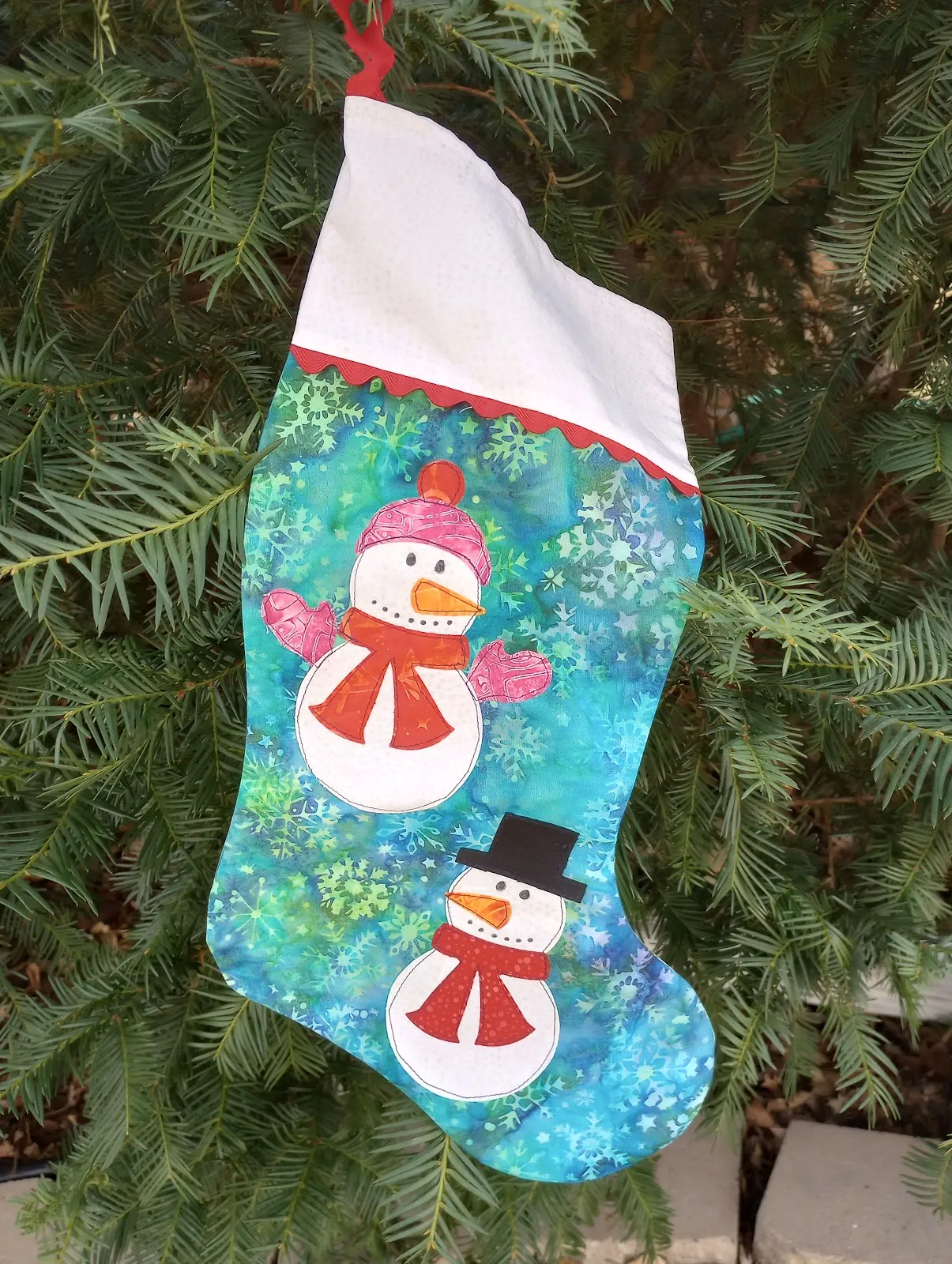
18. Batik Snowman Stocking with Red Ric-Rac Trim
Ric-rac is the cheapest way to make a stocking look finished.
- Pin the trim along the cuff seam line, right side facing the fabric, raw edges aligned.
- Match the ric-rac’s points to the seam line so the bumps show evenly after turning.
- Stitch down the center of the trim with a 1/8-inch seam.
- Flip the cuff up and press the seam from the wrong side.
- Topstitch just below the ric-rac so it stays flat through the season.
About 30 minutes, and a 3-yard package runs $2–$4.
Roughly 50 percent blue-green batik, 30 percent white, 20 percent red. The batik does the pattern work, the white cuff and snowmen give your eye somewhere quiet to land, and the red ric-rac and hanging loop hold the accent share. Swap the batik for a navy-and-silver print and the same proportions read more grown-up without losing any of the playfulness.
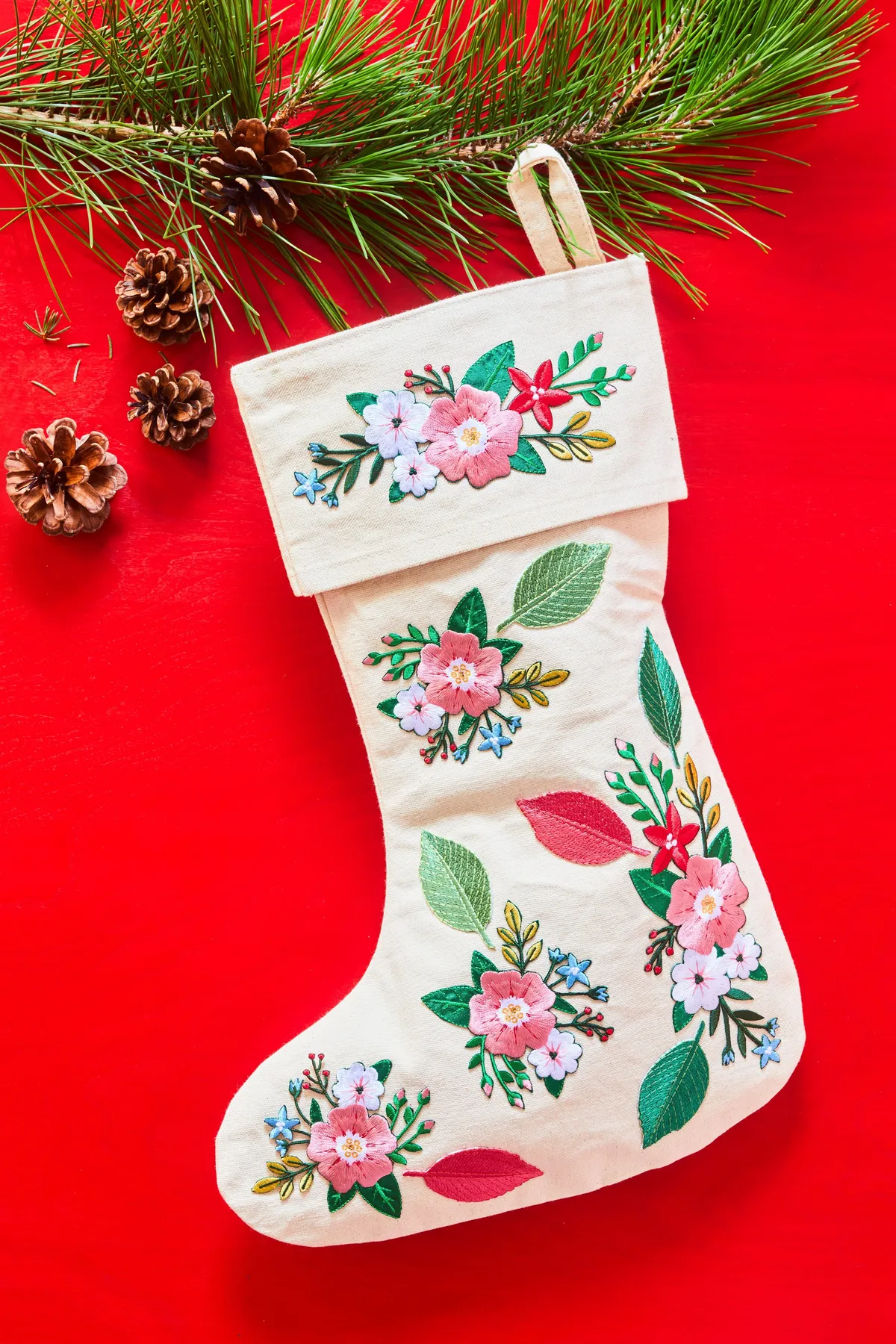
19. Cream Floral-Embroidered Stocking on Bright Red
Hand embroidery is a time cost more than a money cost:
- Cream cotton or linen stocking blank: $12–$25
- Embroidery floss in five colors: $6–$12
- Hoop, needles, and transfer pen: $8–$15
- Pine branches and pinecones for styling: $0–$15
- If you commission the embroidery instead: $45–$120
Total: $26–$52 DIY, or $57–$145 to have it made. A simple five-flower spray takes most people three evenings of television.
Cream fabric shows every thumbprint, and embroidery hoops leave rings that don’t always press out. Wash your hands before you stitch, work over a towel, and once the hoop comes off, steam the fabric rather than ironing it flat — flattened stitches look dead. This is a display stocking. Don’t let a toddler use it to carry a juice box.
The embroidery here is scattered, not centered. Small floral motifs drift across the lower two-thirds and stop short of the cuff, which keeps the stocking’s shape readable and lets all that cream breathe. Center one big bouquet and it starts looking like a sampler instead of a stocking.
20. Five Crocheted Character Stockings on a Green Wall
Crochet stockings live or die on gauge. Work a 4-inch swatch in single crochet with worsted weight and a 5.0 mm hook; if you get more than 16 stitches across, drop to a 4.5 mm or your stocking comes out wide and slouchy. And crochet a shorter foot than you think you need — single crochet stretches under the weight of gifts by close to an inch, which is how handmade stockings end up looking tired by Boxing Day.
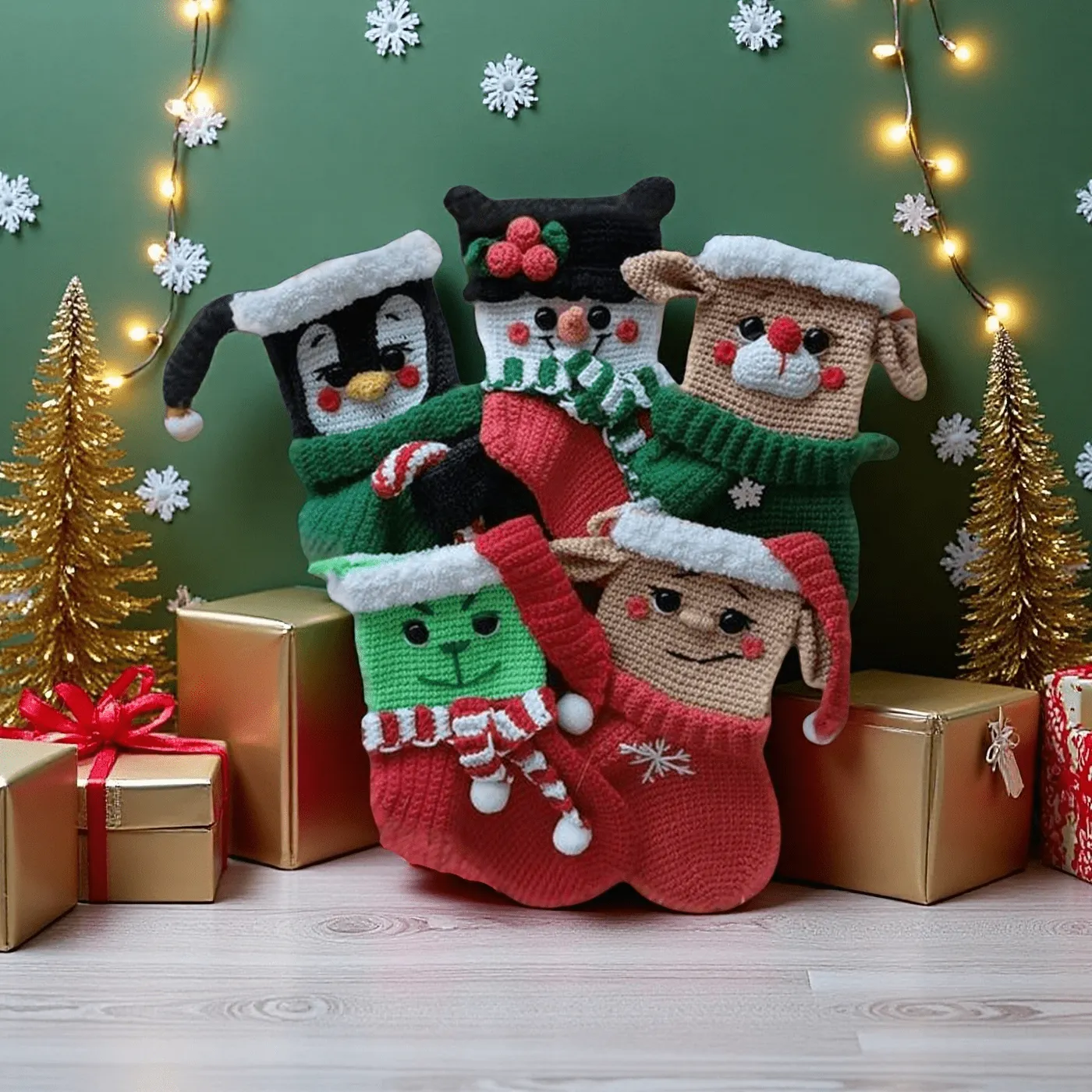
Five stockings, five characters, one palette. The variety is in the faces; the unity is in the red, gold, and forest green yarn running through all of them, plus a solid green wall that lets the reds pop without competing. Repeating an object an odd number of times and varying only one attribute is a reliable formula — see the four-motif fabric version in Idea #5 for the sewn equivalent.
21. Leopard Faux Fur Stocking with Pointed Ears
Faux fur is one of the great thrift-store finds — old throws and jacket trims give you enough yardage for two stockings for under $10. Pair a leopard remnant with a red shimmer fur from Joann ($12–$18 a yard, and you need maybe a third of one) and you’re at $20 for a stocking that looks like it came from a boutique. The pointed ears are just two small triangles sewn into the top seam before you turn it right side out.
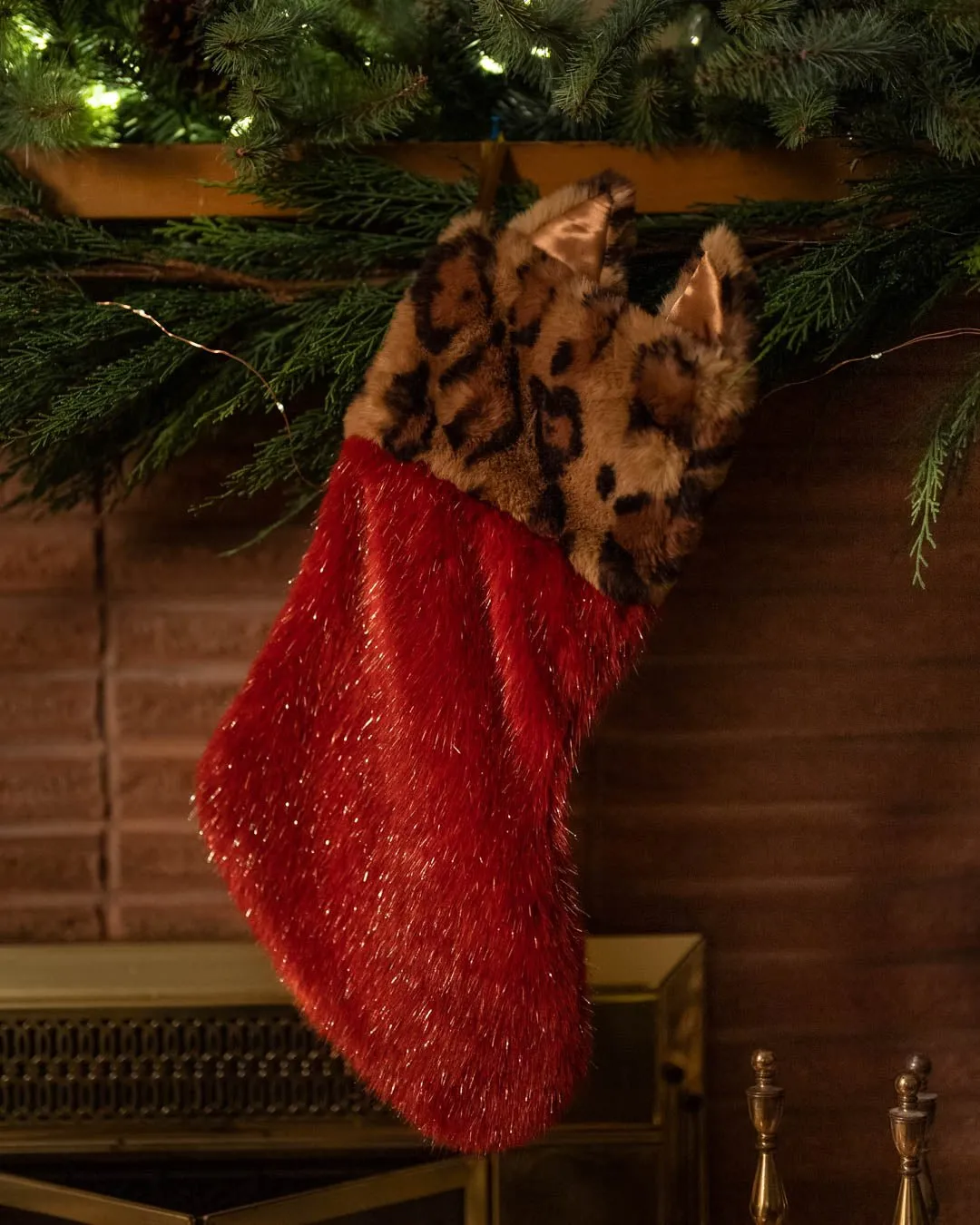
Faux fur mats. Brush it with a soft pet brush in the direction of the pile after hanging, and never iron it — even low heat melts synthetic fibers into a permanent shine. Vacuum only with a brush attachment on the lowest setting. Shimmer fur also sheds for the first week, so shake it out over a bathtub before it goes anywhere near a dark sofa or a wool coat.
22. Buffalo Check Stockings on a Garland-Wrapped Stair Rail
Garland math is 1.5 times the length of your railing if you want it lush rather than skimpy — a 10-foot rail needs 15 feet of greenery. Zip-tie it every 12 to 15 inches, and hang stockings on the widest posts so they don’t slide. This works on any staircase with 30 inches of clear rail, which makes it the fix for every house without a mantel. The ladder version in Idea #16 solves the same problem at floor level.
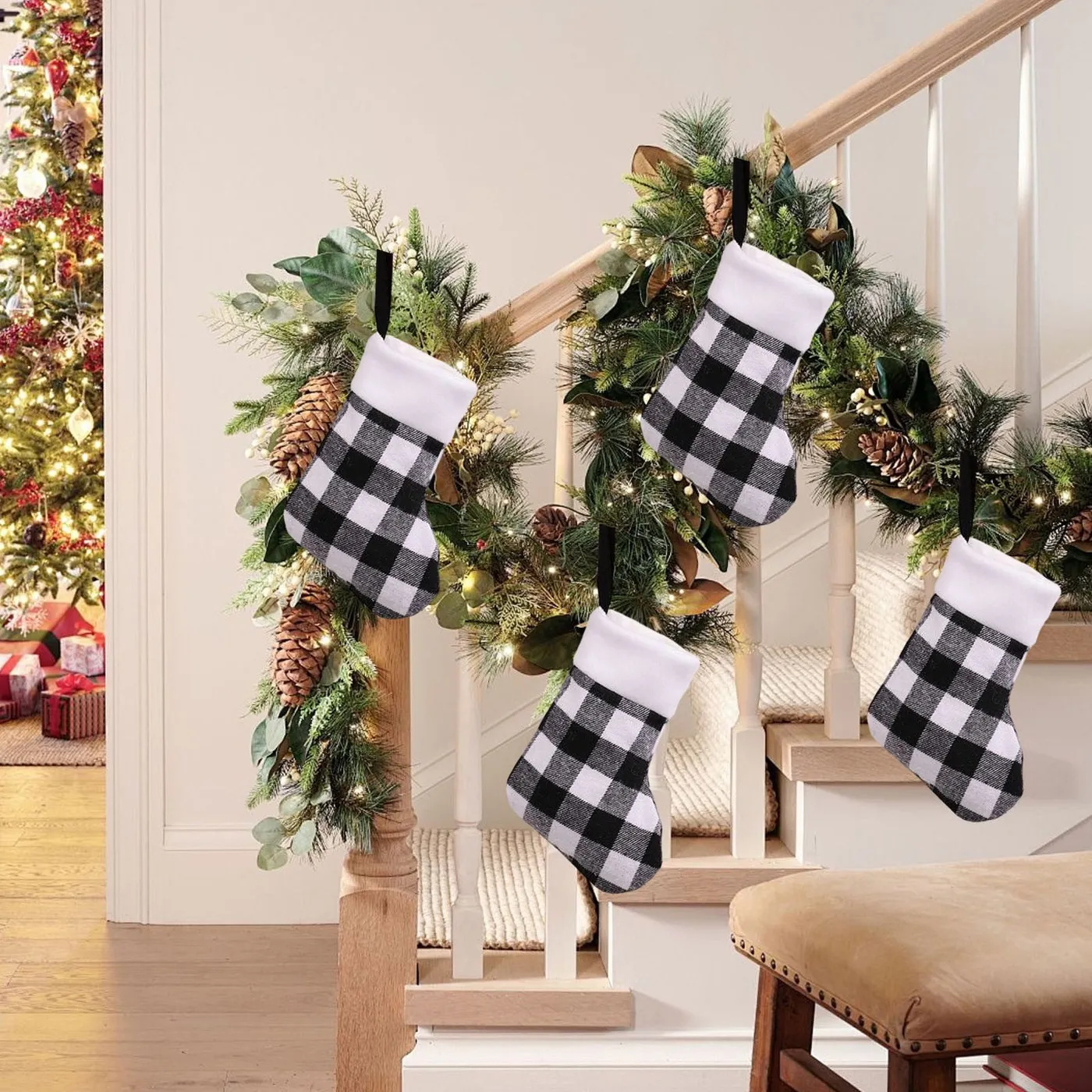
The garland is the display; the stockings are punctuation. Lush greenery with pinecones, white berries, and warm lights gives buffalo check something to sit against — otherwise four black-and-white stockings on a bare rail look like laundry. If you’re trimming the budget, spend it here. A good garland rescues cheap stockings; the reverse is never true, no matter how much you spend on the stockings.
23. Six Mixed-Plot Stockings on a Dark Mantel
About 50 percent black and white, 30 percent red, 20 percent gold. Plaid, stripe, and solid all live inside that ratio, which is why six mismatched stockings still read as a set instead of a pile. Swap the gold for copper and the whole arrangement warms up; swap it for silver and it goes crisper and slightly more modern. Keep the ratio and you can change everything else without starting over.
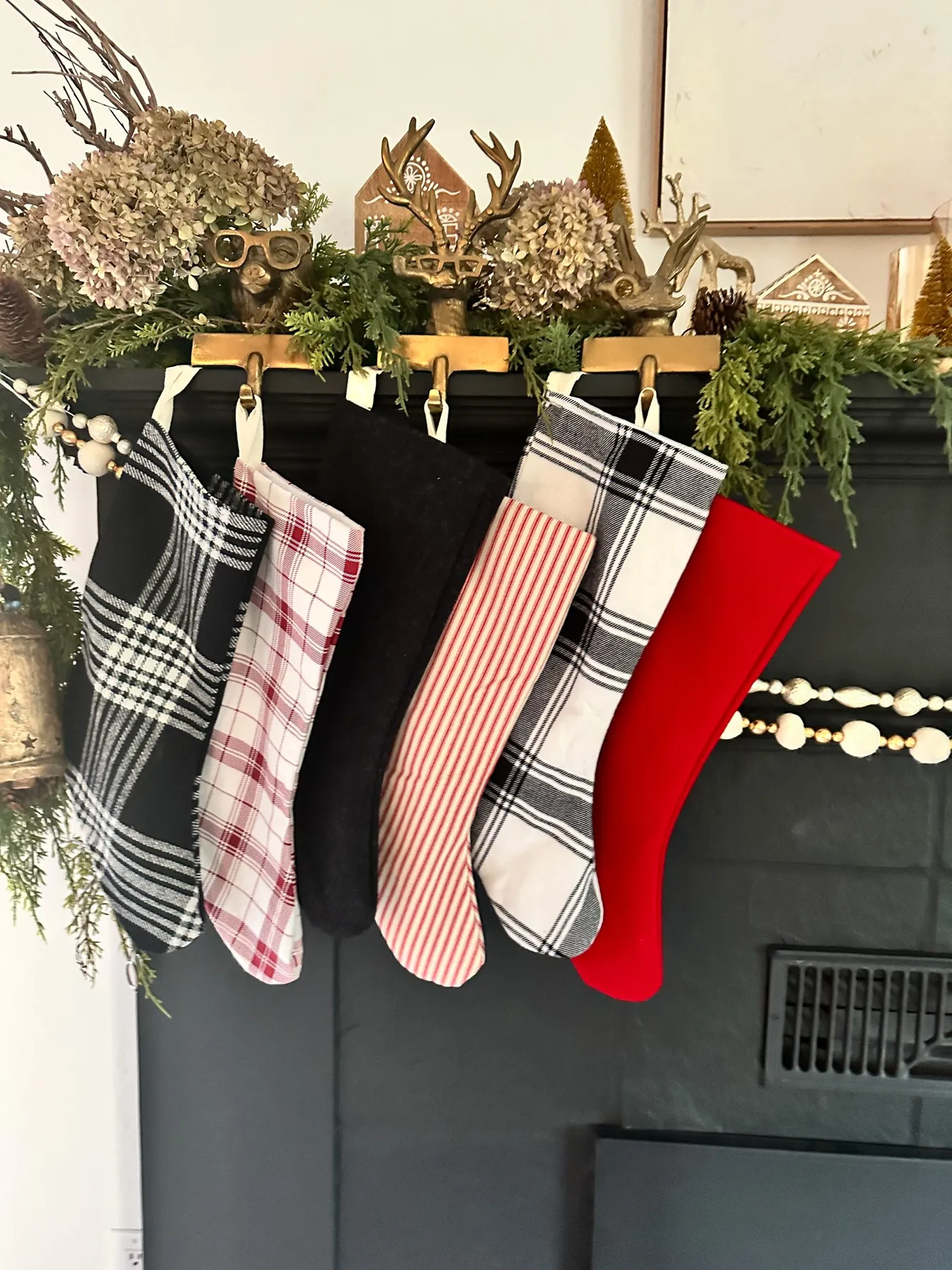
- Weigh a filled stocking — six of them can hit 30 pounds, so check each hook’s rating.
- Confirm the mantel shelf is at least 8 inches deep; six stockings need room to lean.
- Count your hooks before you buy stockings — mismatched hangers wreck this fast.
- Hold the garland’s greenery against your wall color in daylight before committing.
Dried hydrangeas are gorgeous and they shed like confetti. Expect florets on the hearth all season, and keep them away from any real flame — they’re essentially tinder. Beaded garlands tangle if you coil them, so loop them over a hanger instead. And gold finishes tarnish where fingers touch, so handle those little reindeer once at setup and then leave them alone.
24. Knitted Stockings on a Pale Pink Mantel
Pink Christmas stopped being a niche about three years ago and now it’s a full lane — pastel mantels, pink bottle brush trees, gingerbread houses with rose-colored icing. The version that ages well keeps the pink in the architecture (a painted mantel) and lets red and green stay in the textiles. That way January doesn’t require repainting anything, and next year’s stockings don’t have to match a color you’re tired of.
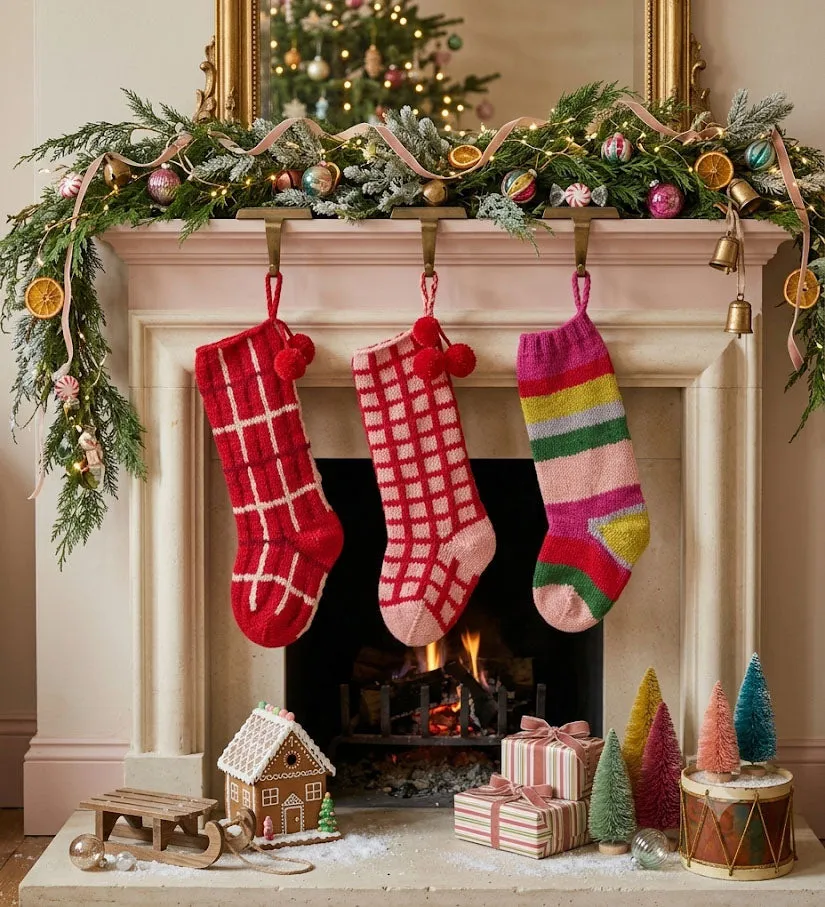
Brass hooks patina, which is lovely on an antique and terrible on a $12 set. Wipe new brass with a dry cloth and skip the polish — lacquer-free brass darkens within a season, and against pale pink that reads as intentional age rather than neglect. If you want it bright forever, buy lacquered brass and never touch it with an abrasive. Small haberdashery decisions decide whether a themed mantel looks collected or costumed.
25. Navy Needlepoint Stockings Under a Plate Wall
The plate wall is doing the heavy lifting. Those blue, green, and white plates repeat the navy of the stockings and the green of the boxwood garland, so the mantel and the wall above it feel like one composition rather than two separate decorations. The pink peonies then add a single warm interruption. Remove the plates and the needlepoint goes from collected to merely hung — which is the whole difference between a decorated house and a styled one.
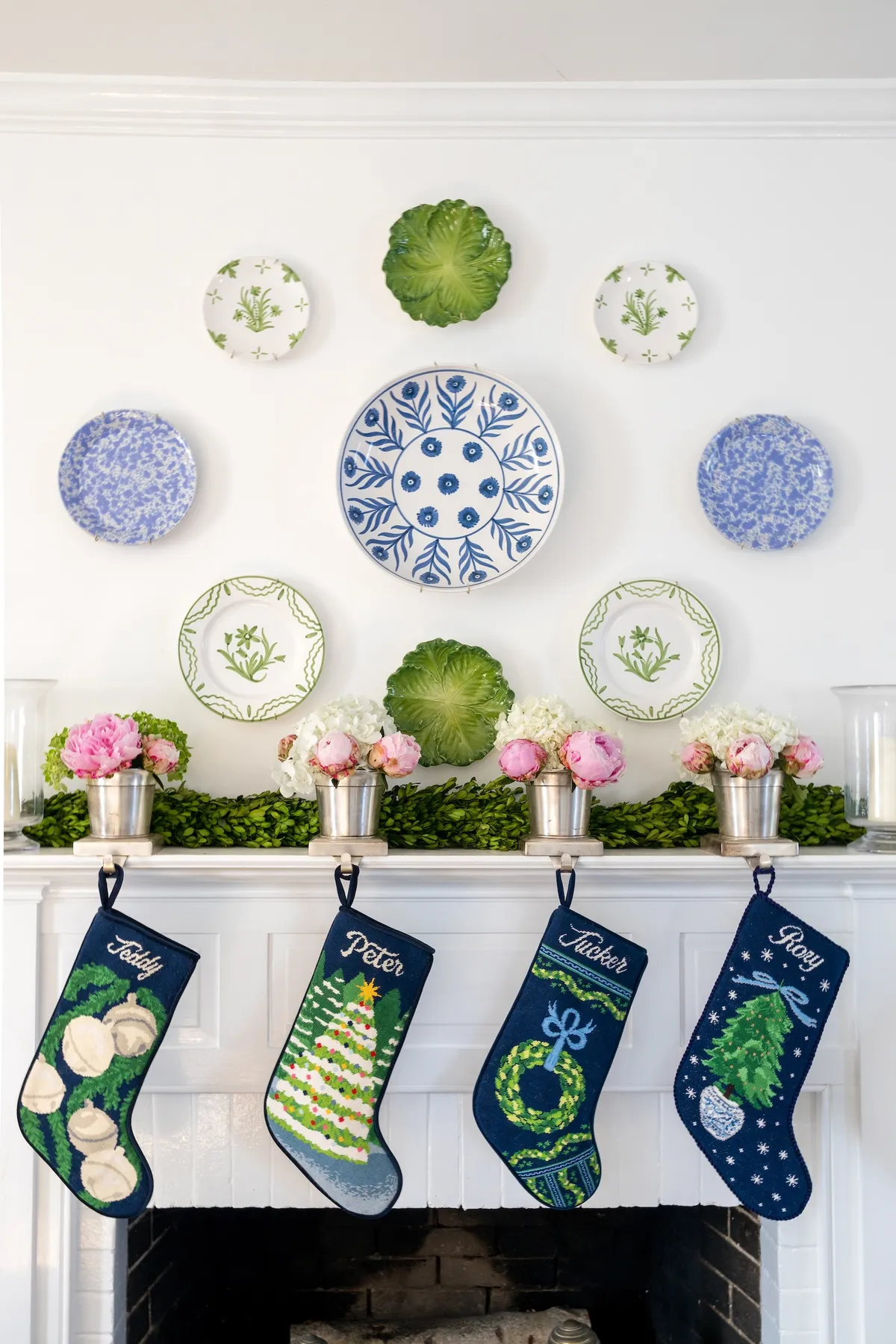
The look is more affordable than it appears:
- Four needlepoint stockings, vintage or Etsy: $80–$240
- Boxwood garland, 6 feet: $35–$70
- Silver pails or buckets: $12–$30
- Faux peonies and hydrangeas: $20–$45
- Vintage plates from thrift stores: $3–$10 each
Total: $160–$415, with the stockings as the wildcard. Thrifted needlepoint shows up more often than you’d think — check the framed-art aisle, not the Christmas aisle.
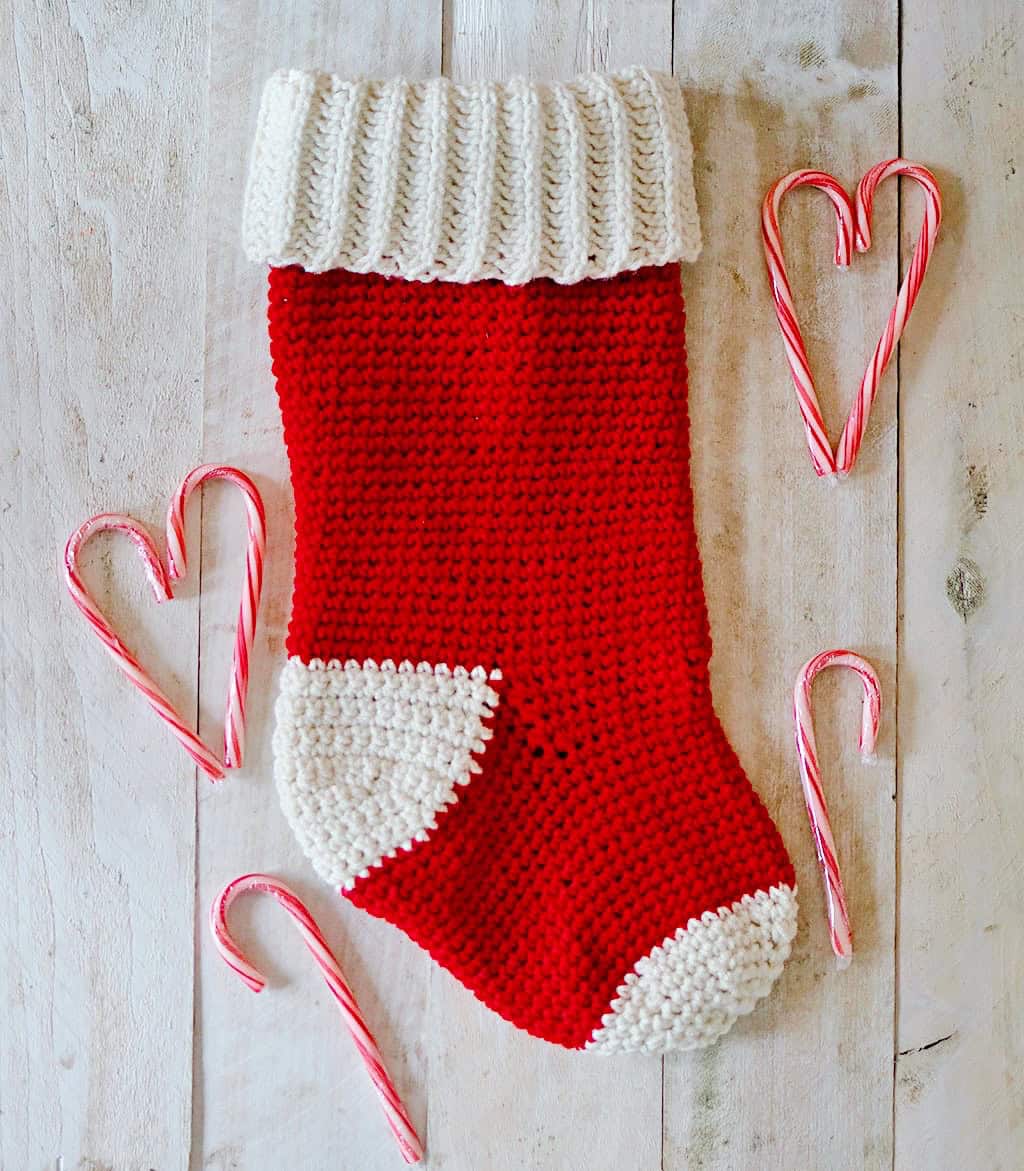
26. Red Crochet Stocking with Candy Cane Hearts
The candy cane hearts take five minutes and cost about $3.
- Warm two candy canes in your hands for 30 seconds so they’re slightly pliable.
- Lay them hook to hook, facing each other, on a sheet of parchment.
- Bake at 250°F for 3–4 minutes, watching constantly — they soften fast.
- Press the joining ends together with a butter knife and hold for 20 seconds.
- Cool completely on the parchment before moving them.
Do not walk away from the oven. Four minutes is the difference between a heart and a puddle.
A crocheted stocking is two things: yarn and time. One skein of red worsted weight runs $4–$8 and makes a full stocking with some left over; white for the cuff, heel, and toe is another $4. That’s a $12 stocking that would sell for $45–$70 handmade. If crochet isn’t your thing, thrift stores regularly have hand-crocheted stockings nobody recognized as valuable — check the bin under the linens.
27. Striped Stocking on a Distressed Mantel with String Lights
Those tiny warm string lights along the mantel edge are usually battery-powered, and batteries die exactly when guests arrive. Buy rechargeable AAAs or pick a plug-in strand with a discreet cord cover. Keep any cord well away from the firebox, and if you’re burning real wood, skip the lights on the mantel entirely — heat and thin wire don’t mix. Flameless candles solve the same problem with zero risk and no cord to hide.
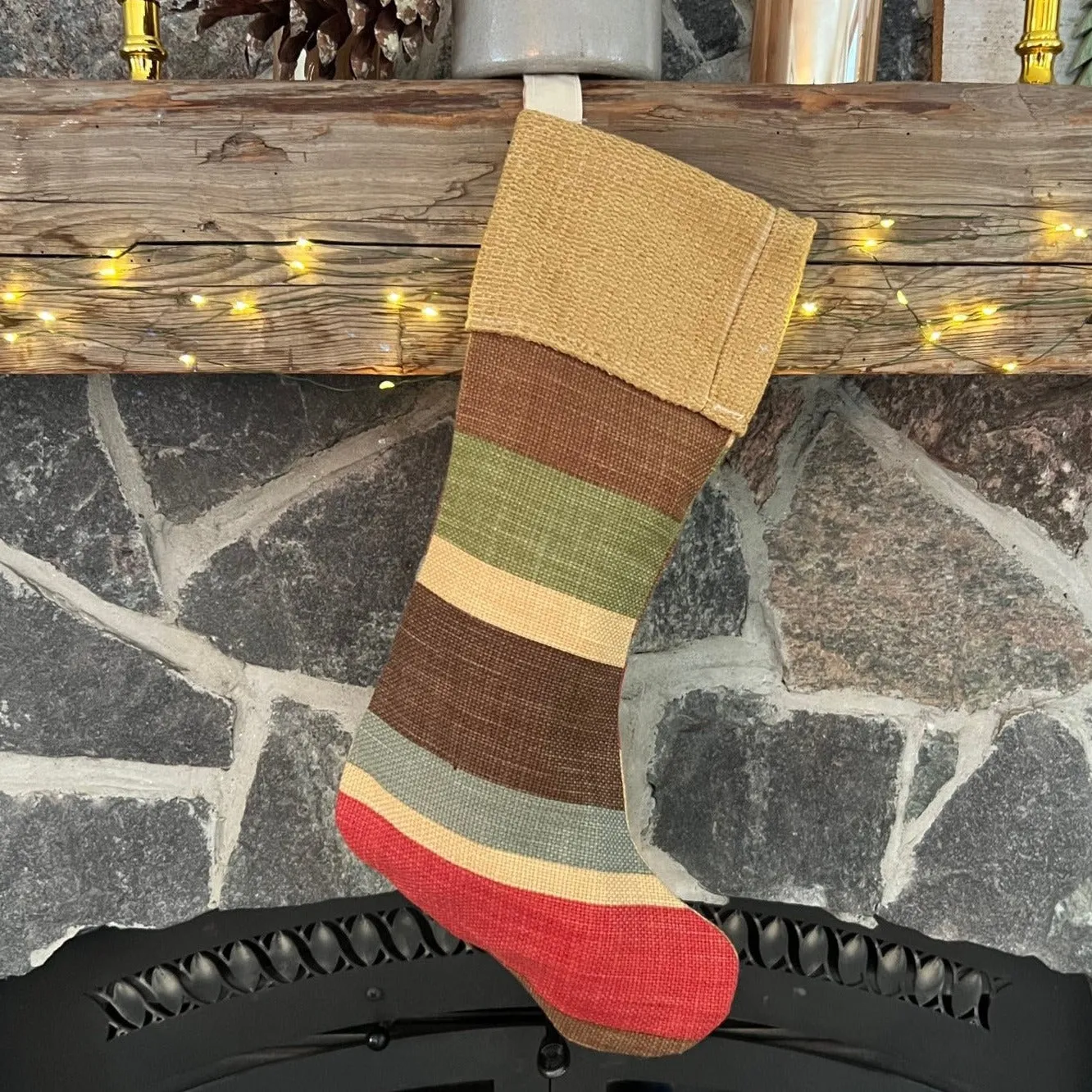
Narrow rustic mantels like this one run 6 to 8 inches deep, and they hold exactly one stocking comfortably. That’s fine. A single stocking with lights and a pinecone reads deliberate; three on the same shelf reads crowded. Anything under 48 inches wide should stay a solo act — compare the beam version in Idea #11 if you want a second take on the one-stocking approach.
28. Houndstooth-Banded Knit Stocking with a Braided Tie
Five colors is the ceiling for a patterned stocking this busy. This one runs deep red, white, dark blue, green, and yellow — and it works because the red is quarantined to the cuff, heel, and toe. Pick your five, assign one to the structural parts, and let the rest live in the pattern. Six colors and it turns to static, which is the most common reason ambitious knit projects get abandoned halfway through the foot.
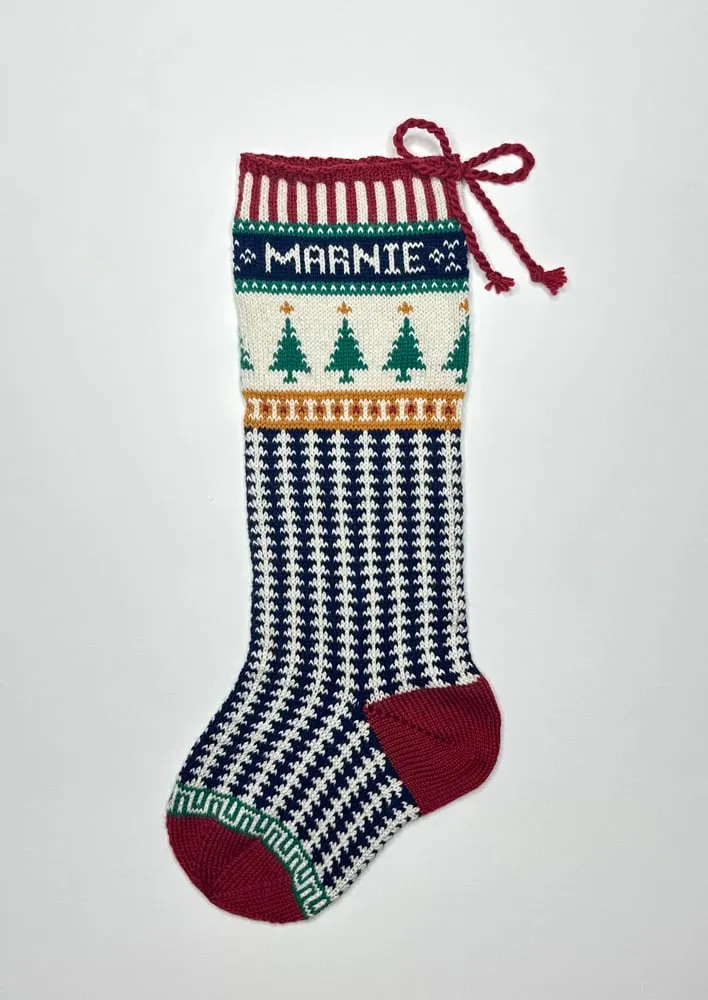
The braided red tie. It’s a two-dollar detail that turns a knitted tube into an object with a finishing point, and it solves a real problem — a knit loop stretches out after a few seasons of holding anything heavy. Braid three strands of the same red yarn to about 8 inches, knot both ends, and stitch it into the cuff seam. Do that and the stocking hangs straight for years instead of drooping by New Year’s.
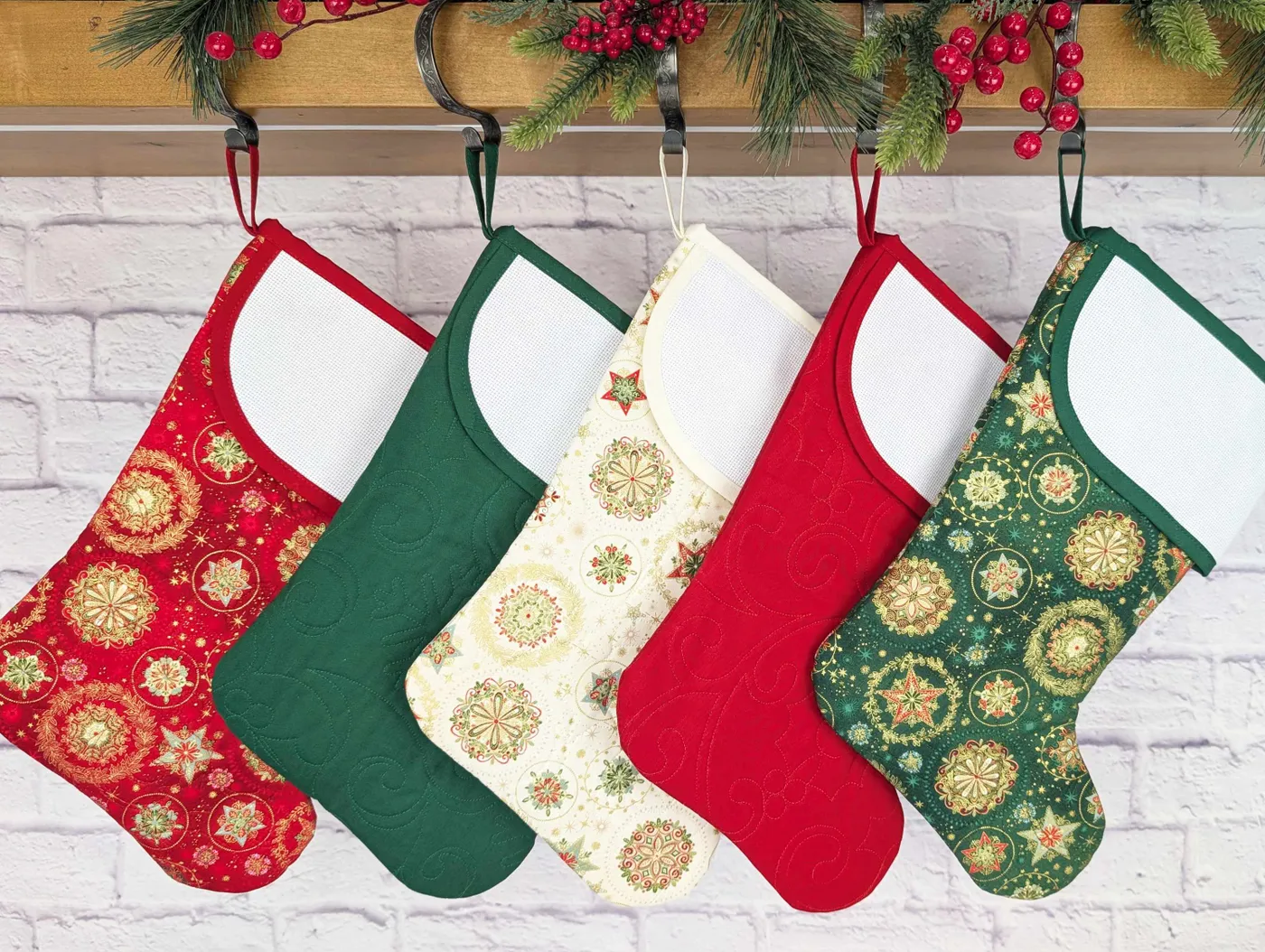
29. Five Quilted Stockings on Dark Metal Hooks
Five stockings is a commitment, so here’s how to phase it:
- Five quilted stockings: $75–$250
- Dark metal hooks, set of six: $15–$35
- Wooden shelf or mounting board: $20–$60
- Faux evergreen garland with red berries: $25–$55
- Assorted patterned fabric if you sew your own: $30–$60
Total: $165–$460 as shown, or roughly $90 if you sew four of the five. Start with two and add one per year — nobody will notice the collection growing.
Five stockings, five different fabrics, one white textured cuff on every single one. That repeated cuff is the entire reason this reads as a set instead of a pile — it gives every stocking the same top edge, so the eye locks onto the pattern below without getting lost. It’s a small discipline with a big payoff, and it’s why the six-stocking mix in Idea #23 also holds together.
Your Mantel Is Three Stitches Away
You don’t need a sewing machine, a knitting degree, or a mantel that looks like it came from a catalog — you need one stocking, one evening, and a hook that actually holds. Start with the idea that made you stop scrolling, make it badly the first time, and hang it anyway; the second one always goes faster. 📌 Save this guide to Pinterest so it’s waiting for you next November, and tag us when your mantel finally looks the way you pictured it.