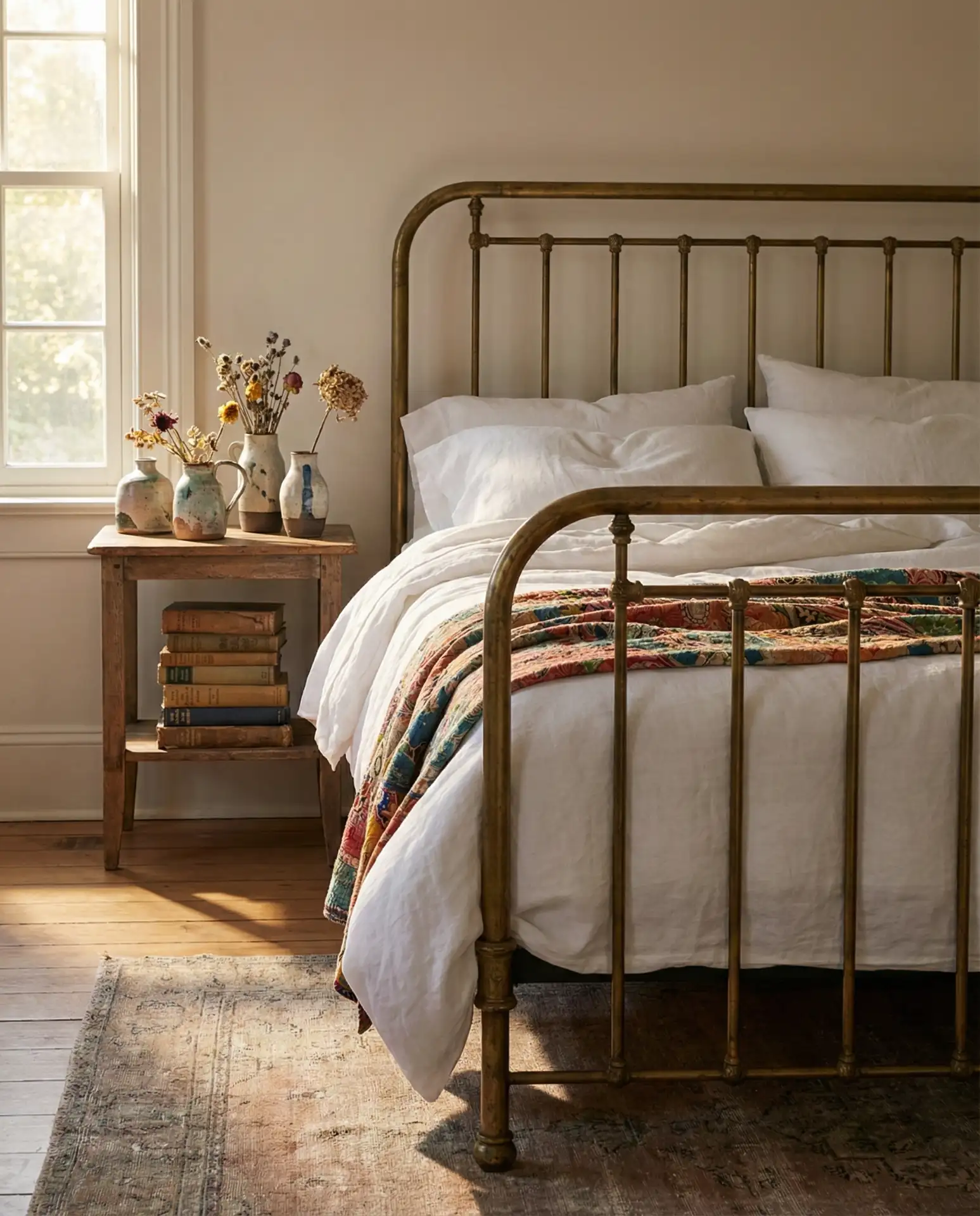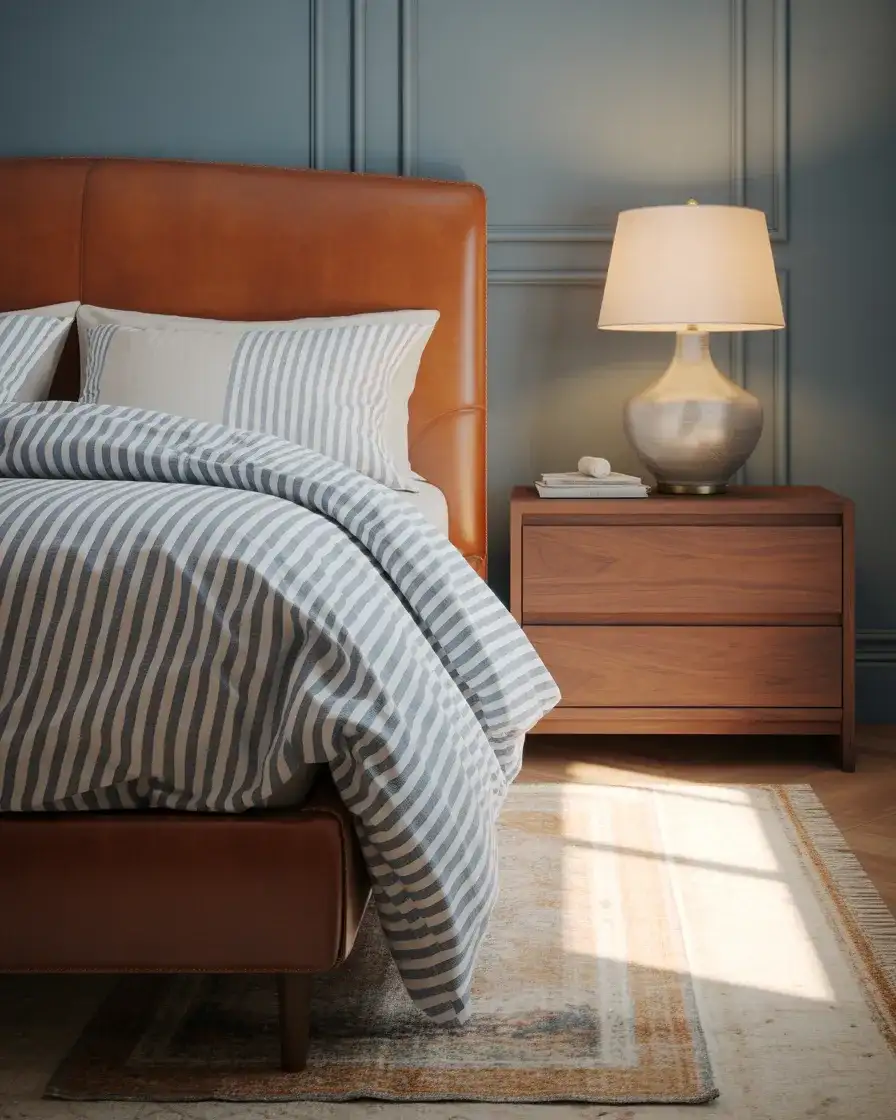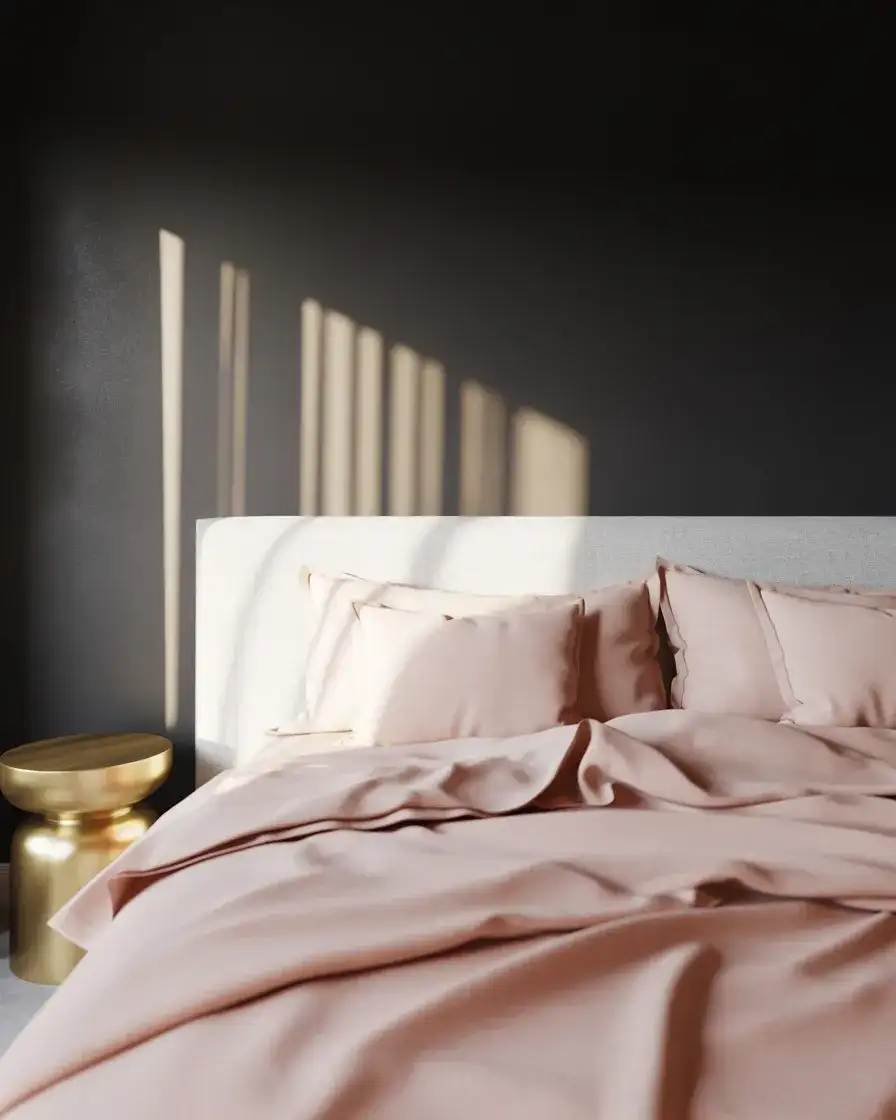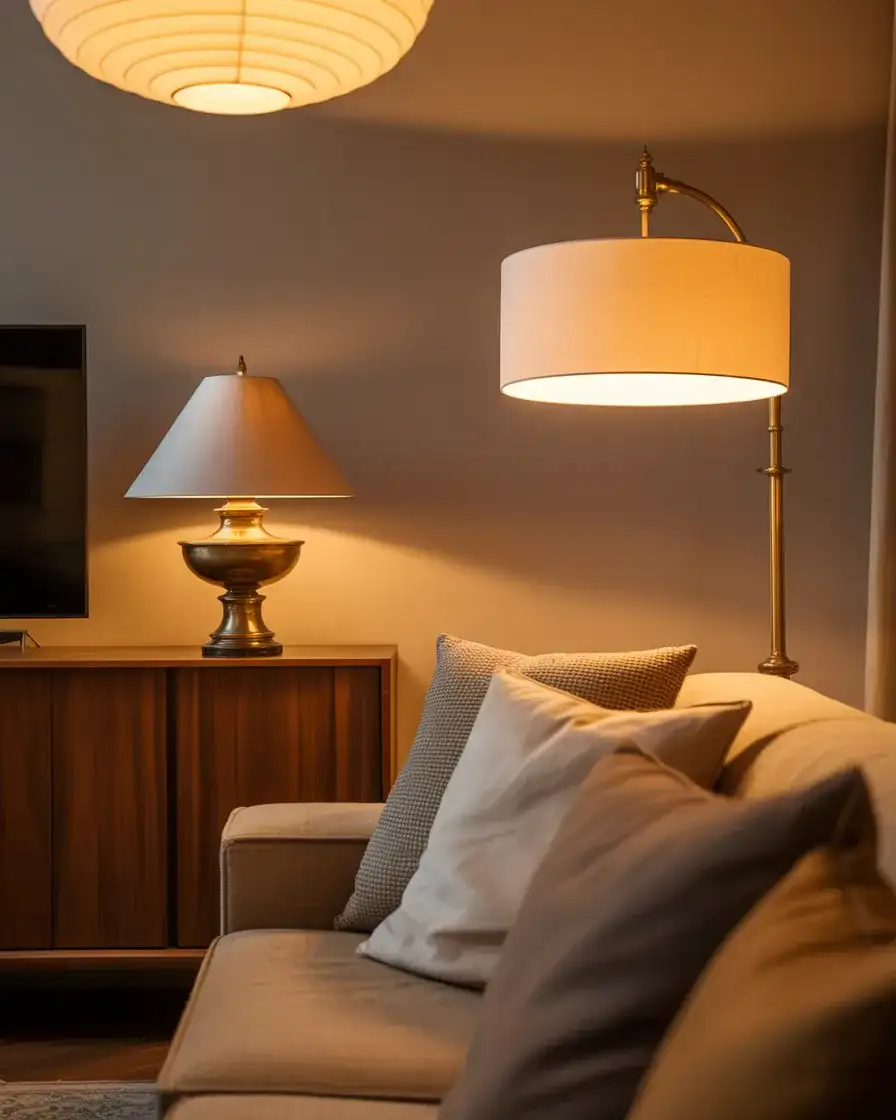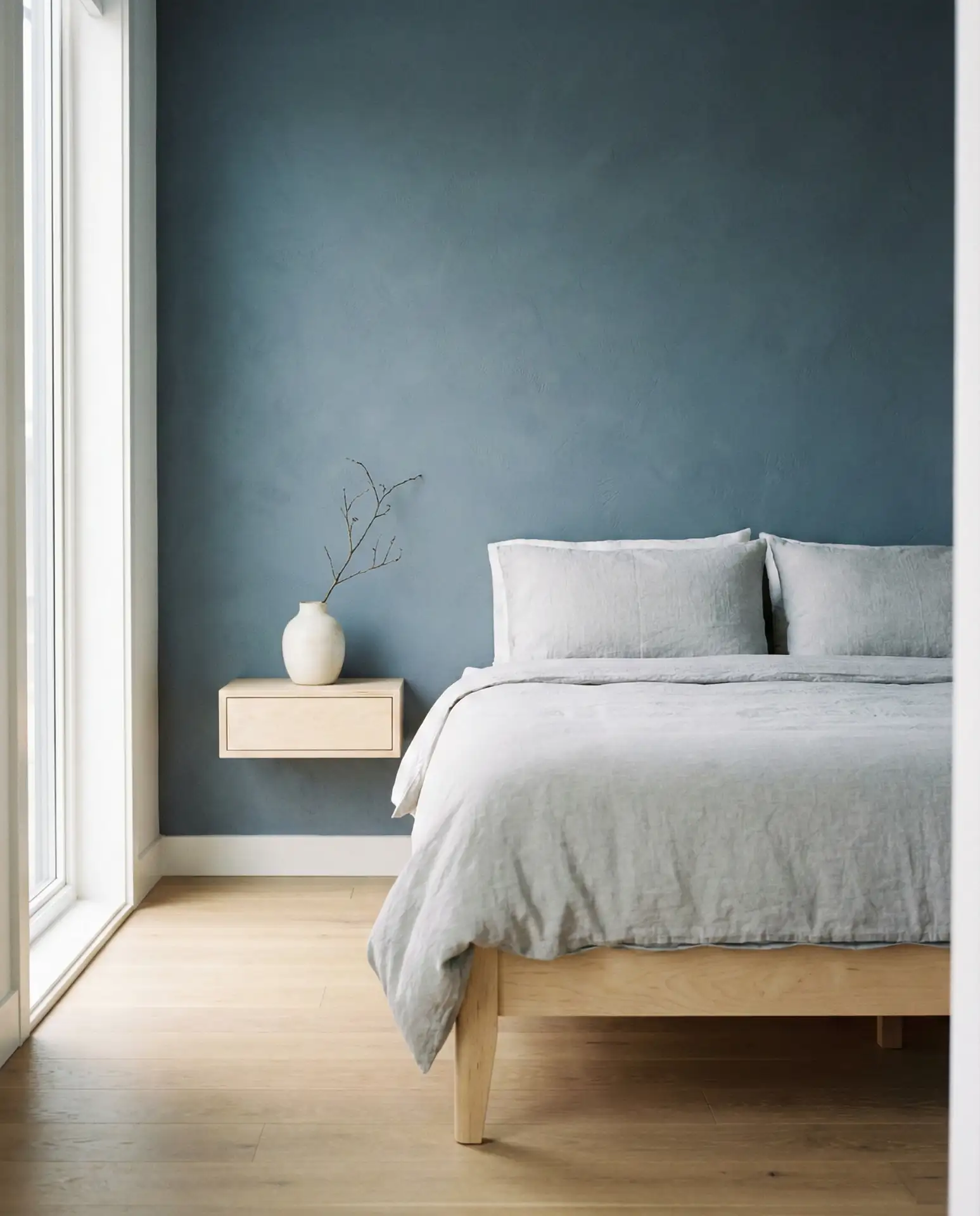
Basements have quietly become one of the most exciting frontiers in American home design—and in 2026, they’re having a full-blown moment. Whether you’ve got a rough, unfinished space crying out for a makeover or a finished lower level begging for a personality upgrade, the interest in basement bedrooms has exploded on Pinterest as homeowners look for smarter ways to use every square foot of their homes. This guide breaks down 24 real, achievable ideas—from moody palette picks to clever layout solutions for low ceilings—so you leave with actual inspiration you can use, not just pretty photos to scroll past.
1. Dark, Dramatic Accent Walls
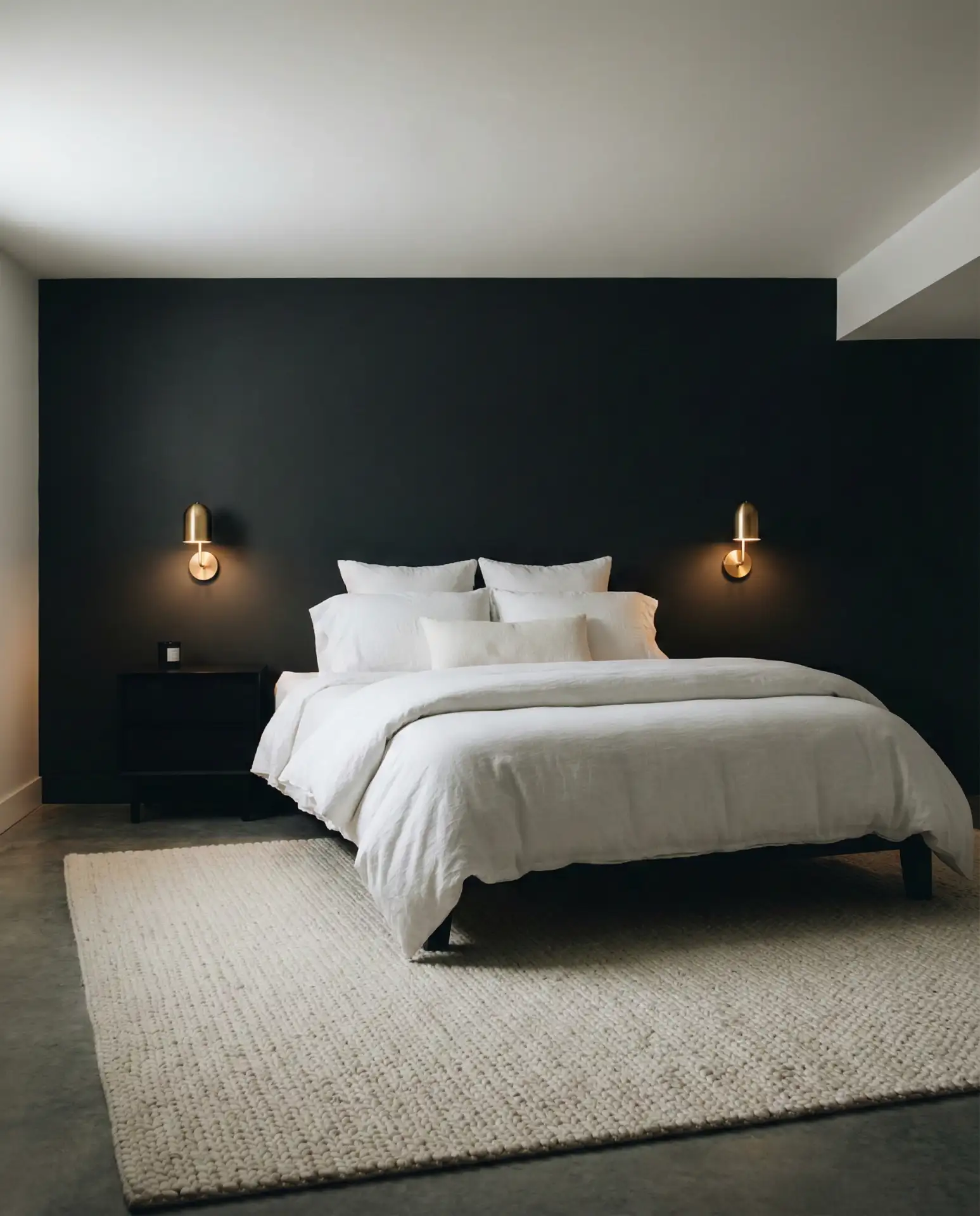
If there’s one trend that has quietly taken over basement bedroom aesthetics in recent years, it’s the commitment to going genuinely dark on at least one wall. Deep charcoal, forest green, and inky navy create a sense of depth that actually works in a basement’s favor—the lower light levels and cooler ambient temperatures feel intentional rather than unfortunate. This approach transforms a potentially drab, unfinished-looking space into something that feels curated and moody.
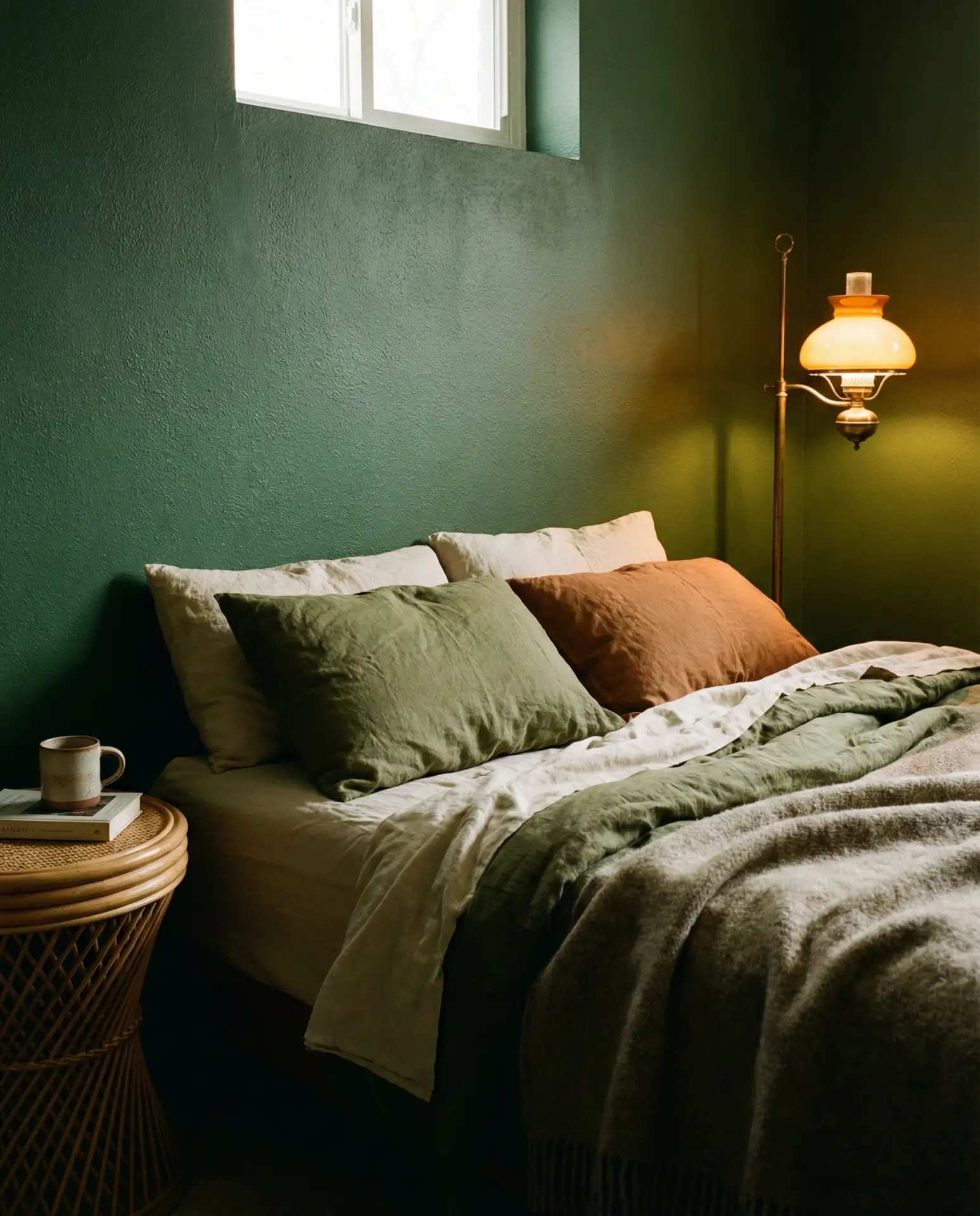
The practical insight here is that dark paint on a single wall doesn’t darken a room the way people fear—it anchors it. Paint the remaining walls in a warm white or off-cream, and the dark wall reads as sophisticated contrast rather than cave-like. In a basement bedroom with limited windows, this trick keeps the room feeling finished and styled rather than dim and accidental.
2. Low Ceiling Solutions That Actually Work
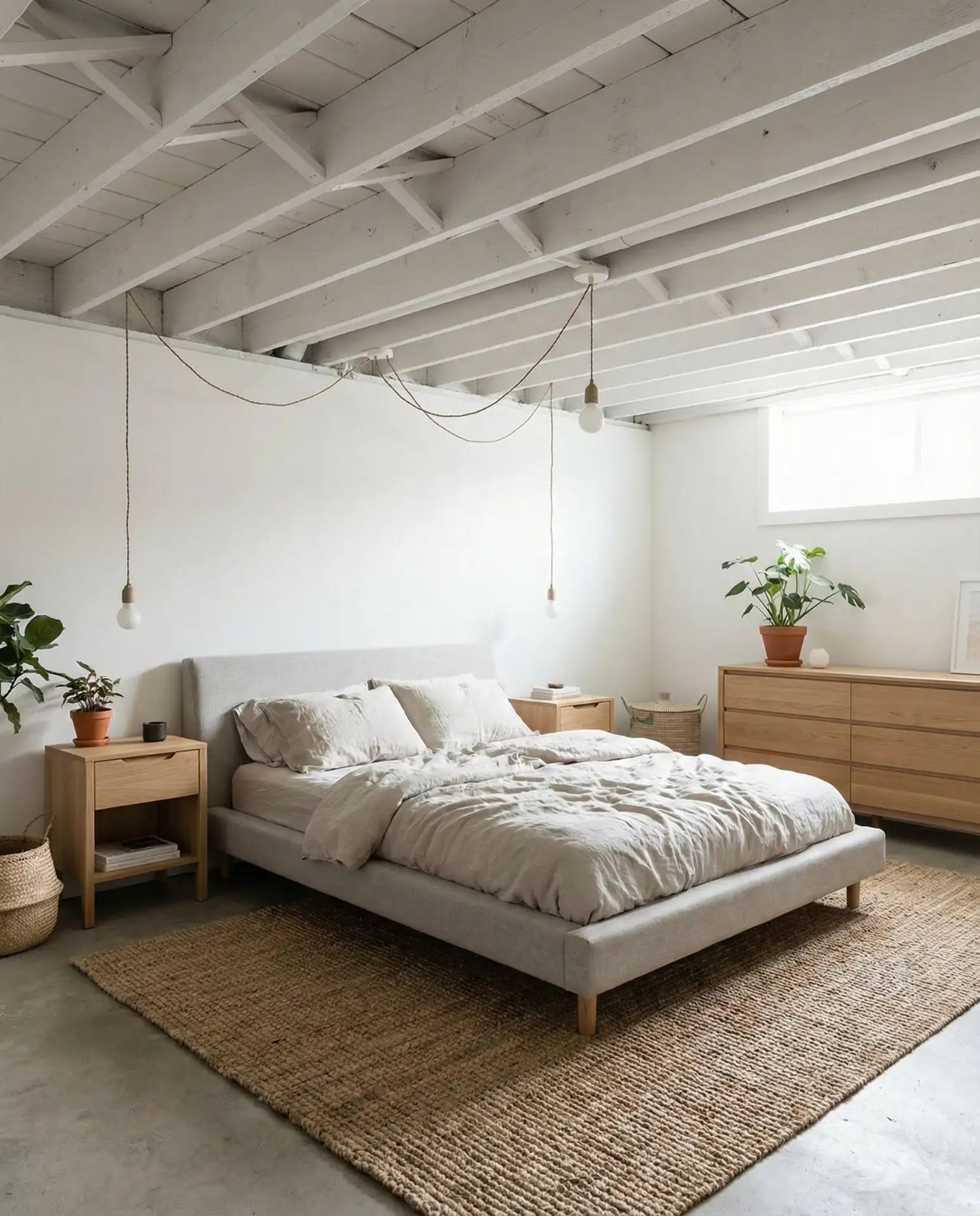
One of the most common challenges people hit when converting a basement into a bedroom is the dreaded low ceiling. Eight feet feels like a luxury; seven feels manageable; anything under that starts to make people nervous. The trick isn’t to fight it—it’s to design around it deliberately. Layout ideas like platform beds flush to the floor, horizontal stripes on the walls, and recessed lighting mounted flush to the ceiling all work together to make the space feel taller than it is.
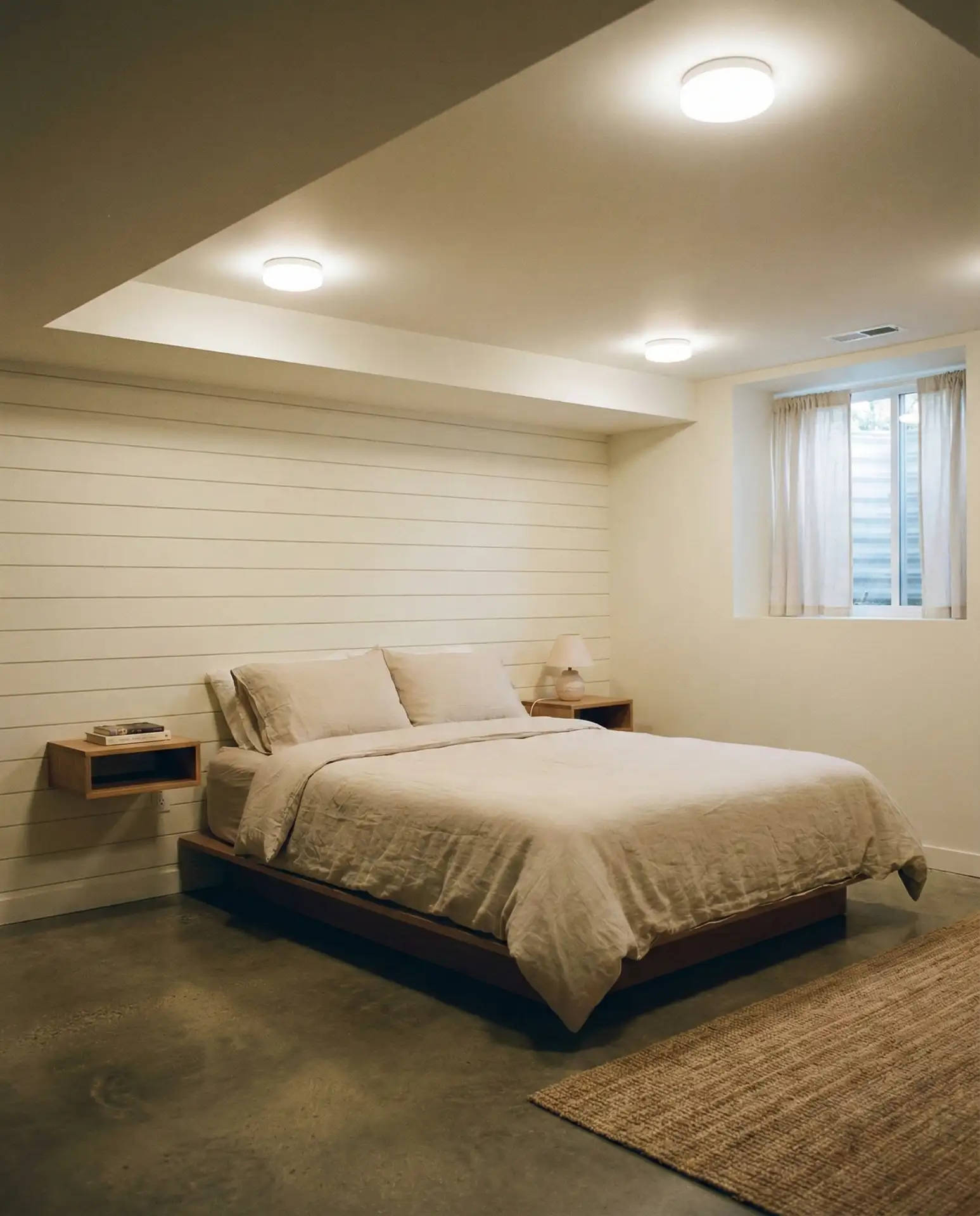
Where this works best is in older homes with poured concrete ceilings that simply can’t be raised. Rather than spending thousands on a drop ceiling, many homeowners simply paint the joists and pipes above in matte black or white to create a loft-style effect that’s both affordable and genuinely cool. It shifts the ceiling from a flaw to a feature without a contractor in sight.
3. Cozy Reading Nook Alcove
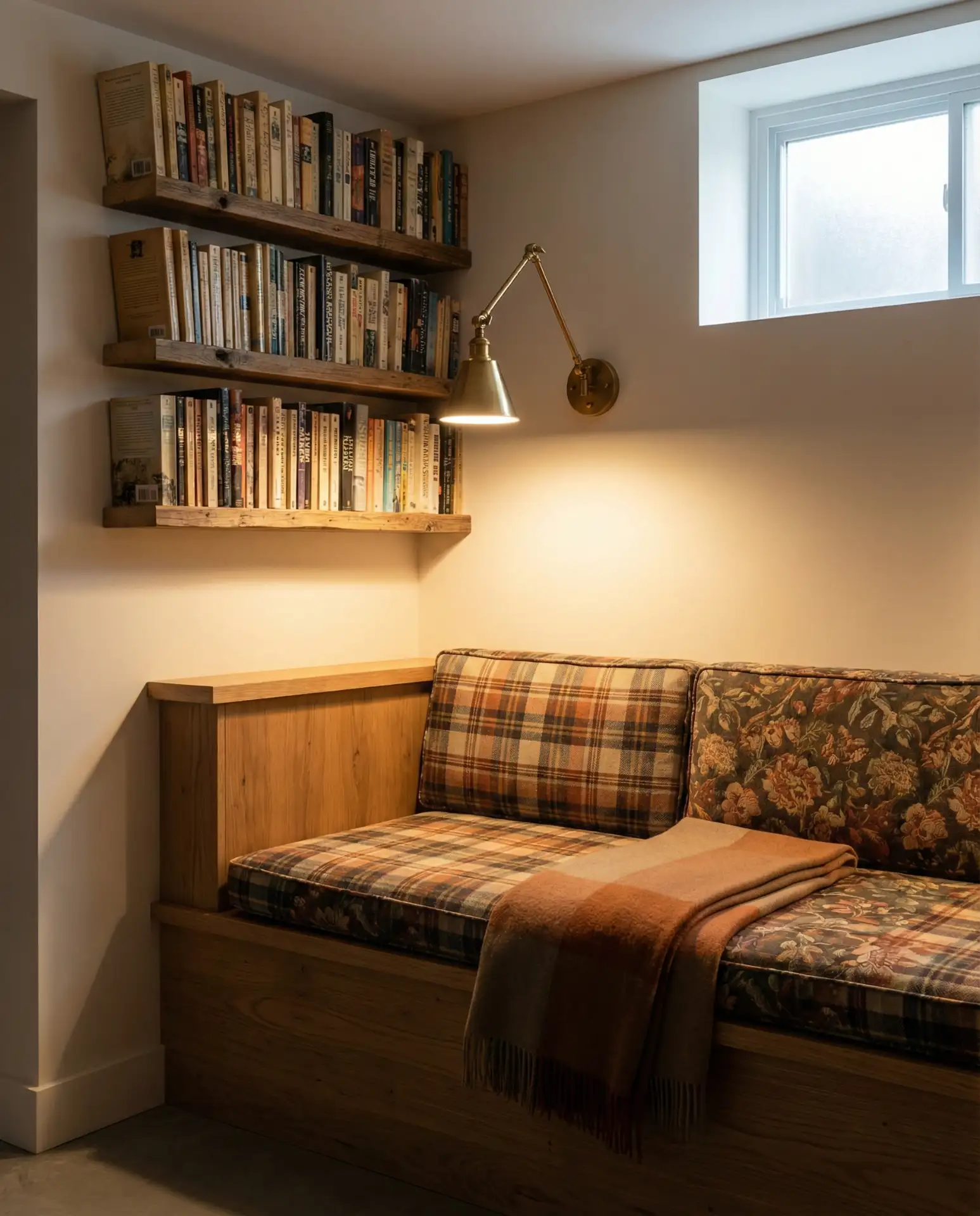
Basements often have awkward nooks and bump-outs left over from structural elements—and the smartest homeowners are turning them into intentional cozy reading corners. A built-in bench seat with cushioning, a small floating shelf for books, and a wall-mounted reading light are all it takes to transform a dead corner into the most-used spot in the room. This micro-zone gives the bedroom personality without requiring a full redesign of the layout.
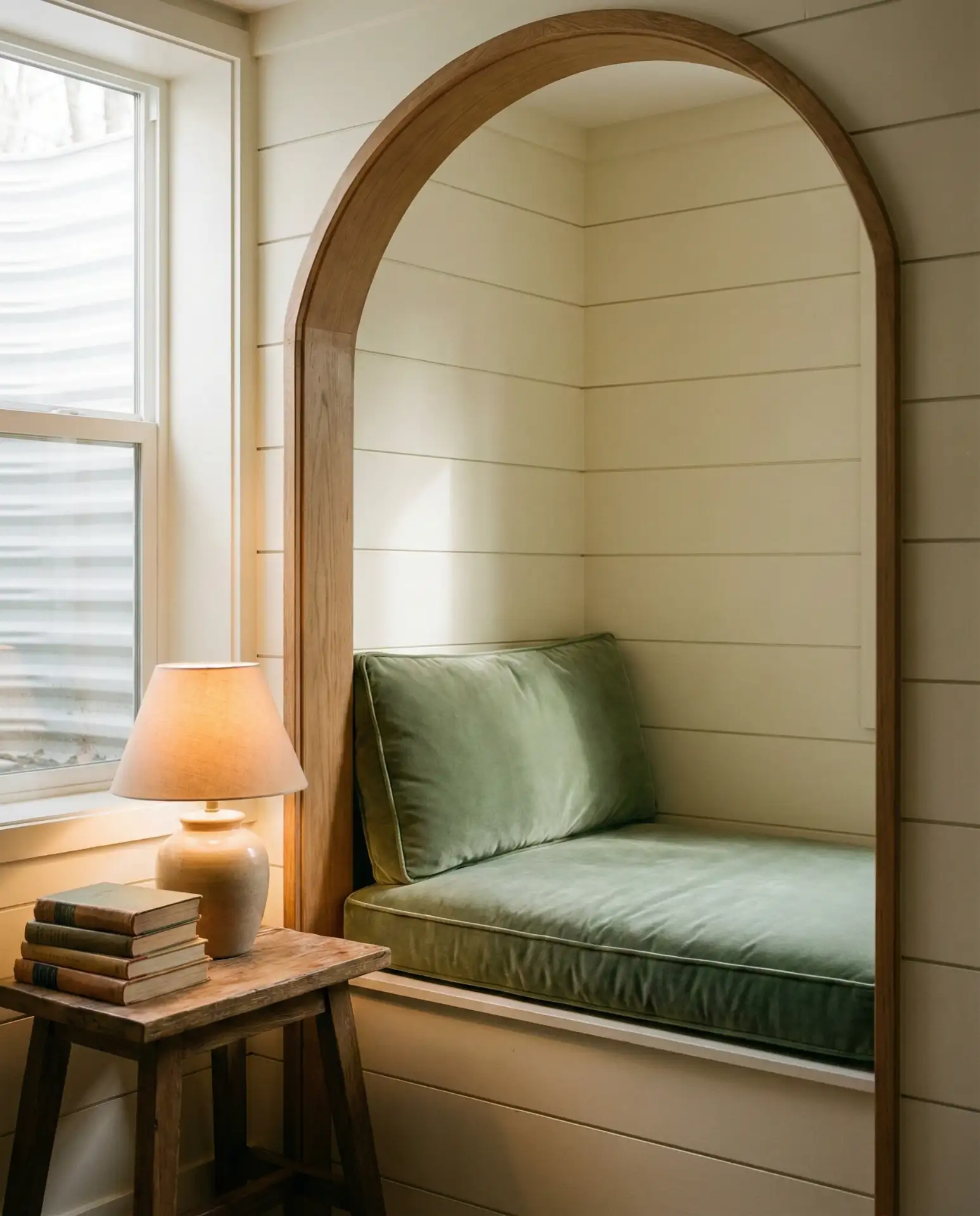
One homeowner in Minneapolis transformed an odd bump-out near their water heater access panel into a reading bench by simply boxing in the walls, painting the interior in a warm terracotta, and adding a hinged lid for storage beneath. The awkward structural oddity became the best corner in the room—proof that constraints can be the best design prompt you’ll ever get.
4. No-Window Bedroom With Smart Lighting
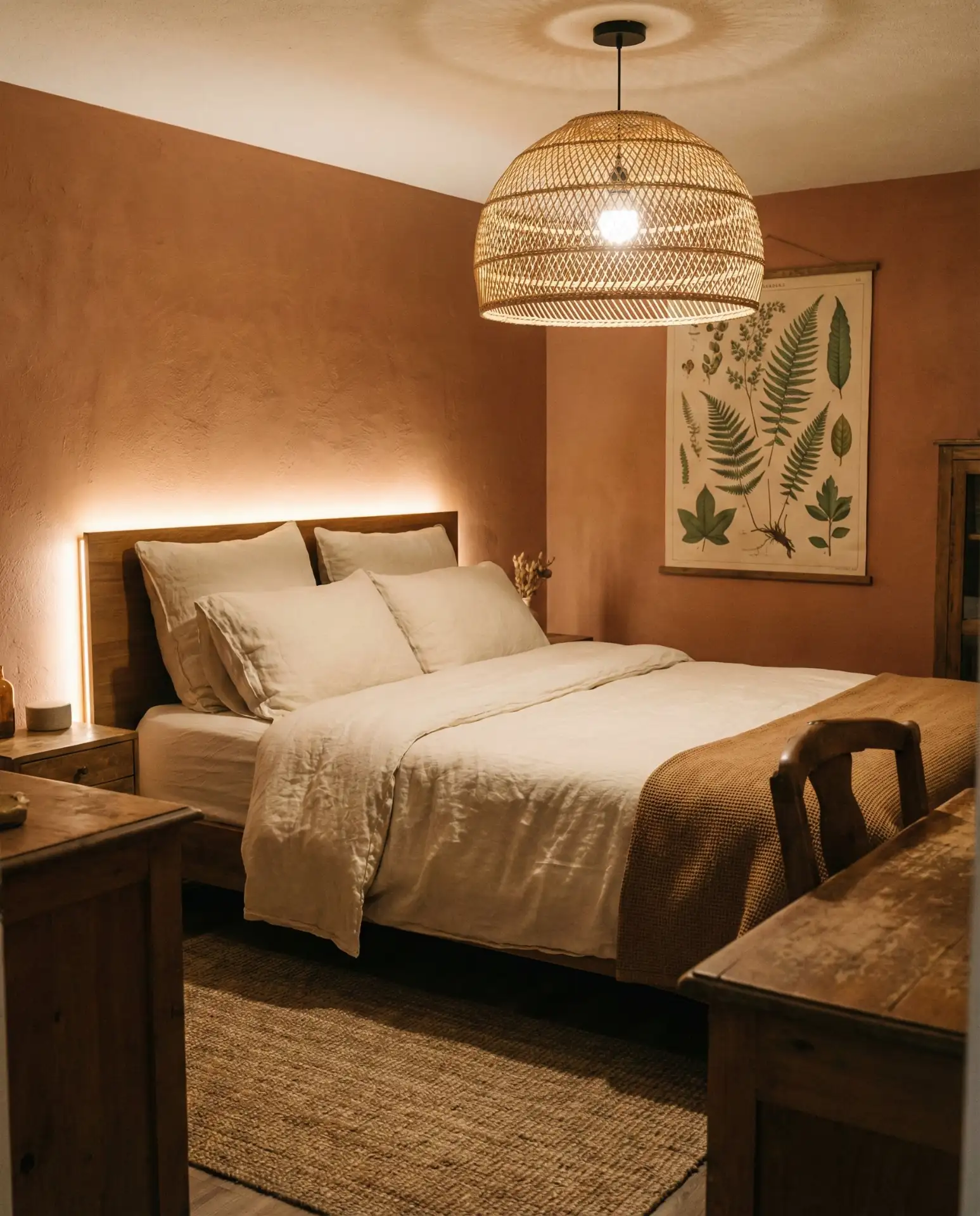
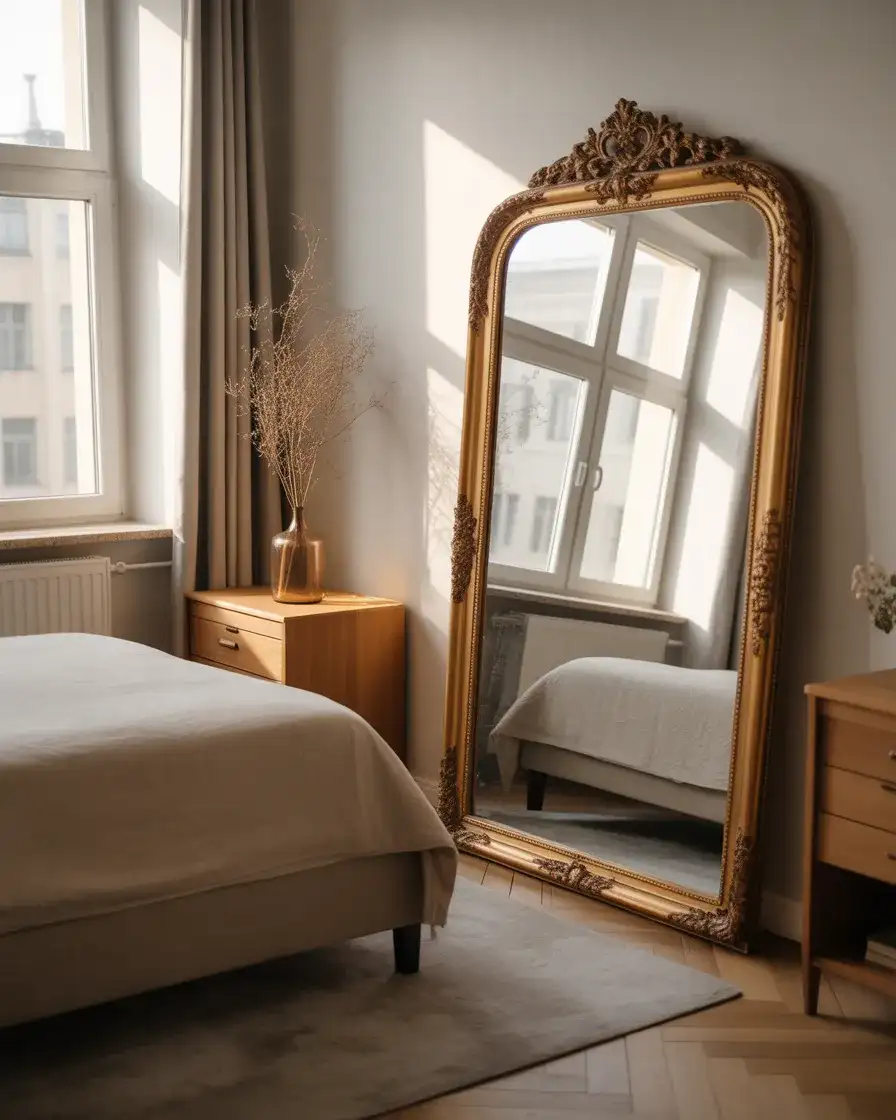
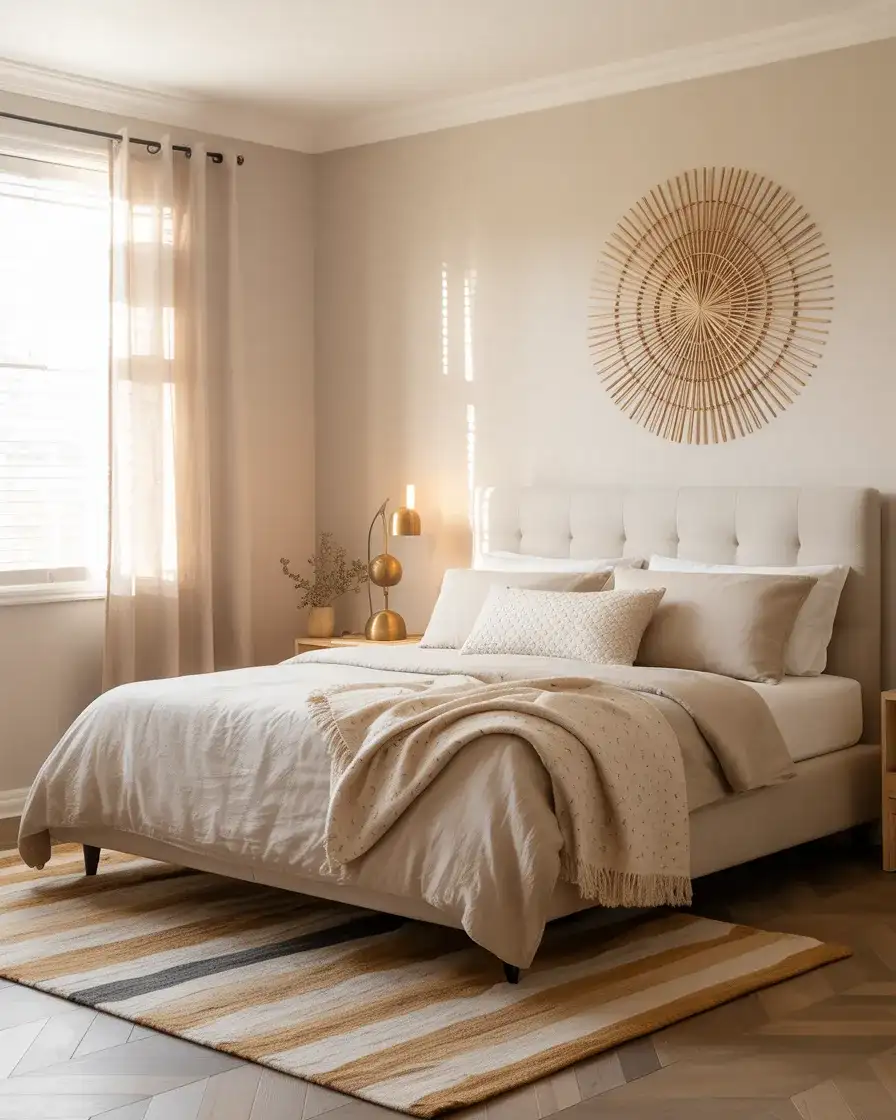
Designing a basement bedroom with no windows is a real challenge—and in most jurisdictions, a legal bedroom requires an egress window, so that’s always worth checking locally. But for a flex space or guest room, a windowless basement can still feel genuinely livable with the right approach. Layered lighting inspo is everything here: ambient ceiling sources, warm-toned sconces, and at least one floor lamp create the illusion of a naturally lit room even at midnight.
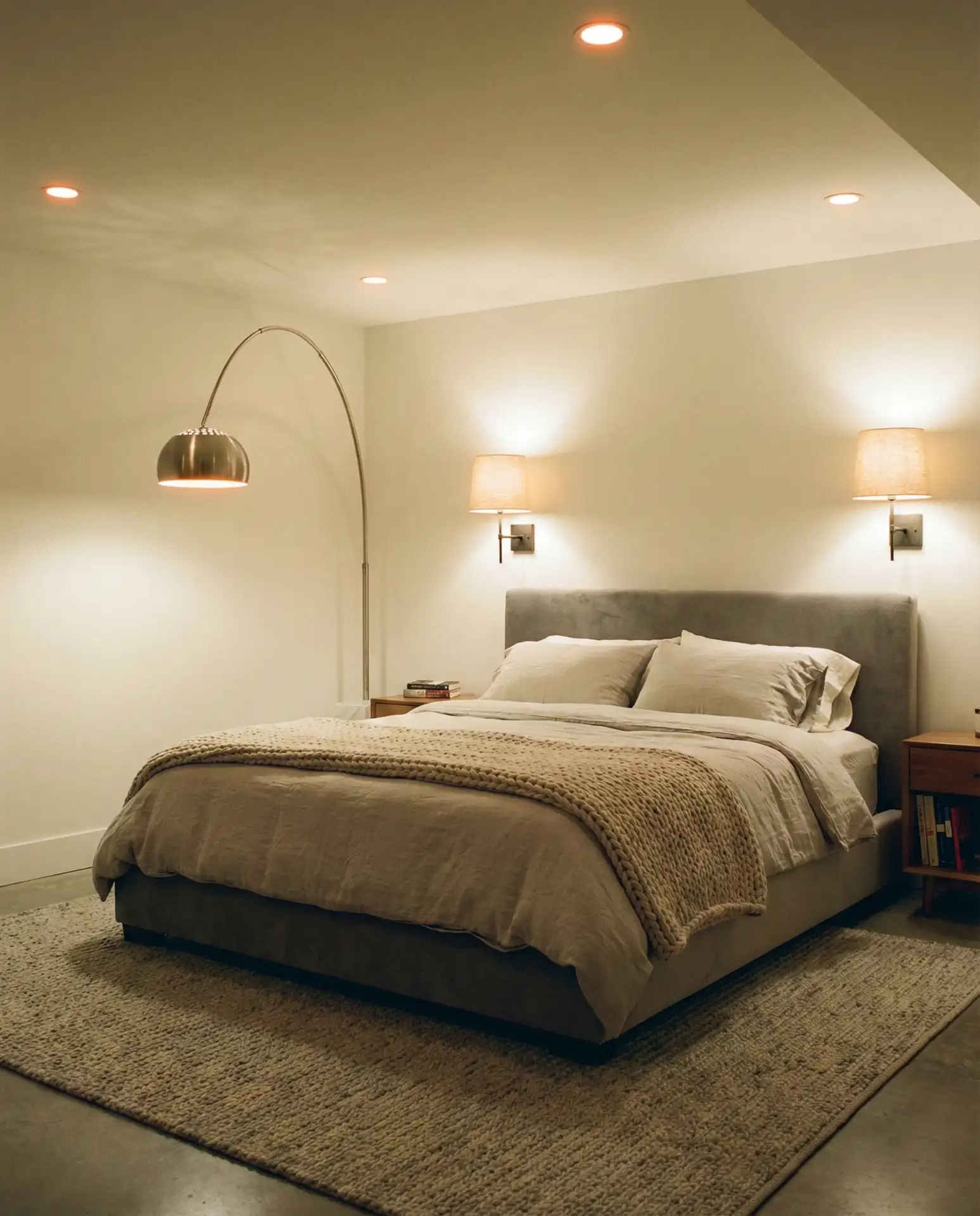
Smart bulbs set to a warm 2700K temperature are a game-changer in these spaces—you can program them to gradually brighten in the morning the way sunlight would, easing the disorientation that comes from waking up in a dark room. Pair that with a large mirror on one wall to bounce the artificial light around, and the space stops feeling like a bunker and starts feeling like a boutique hotel room.
5. Teen Bedroom With Personality
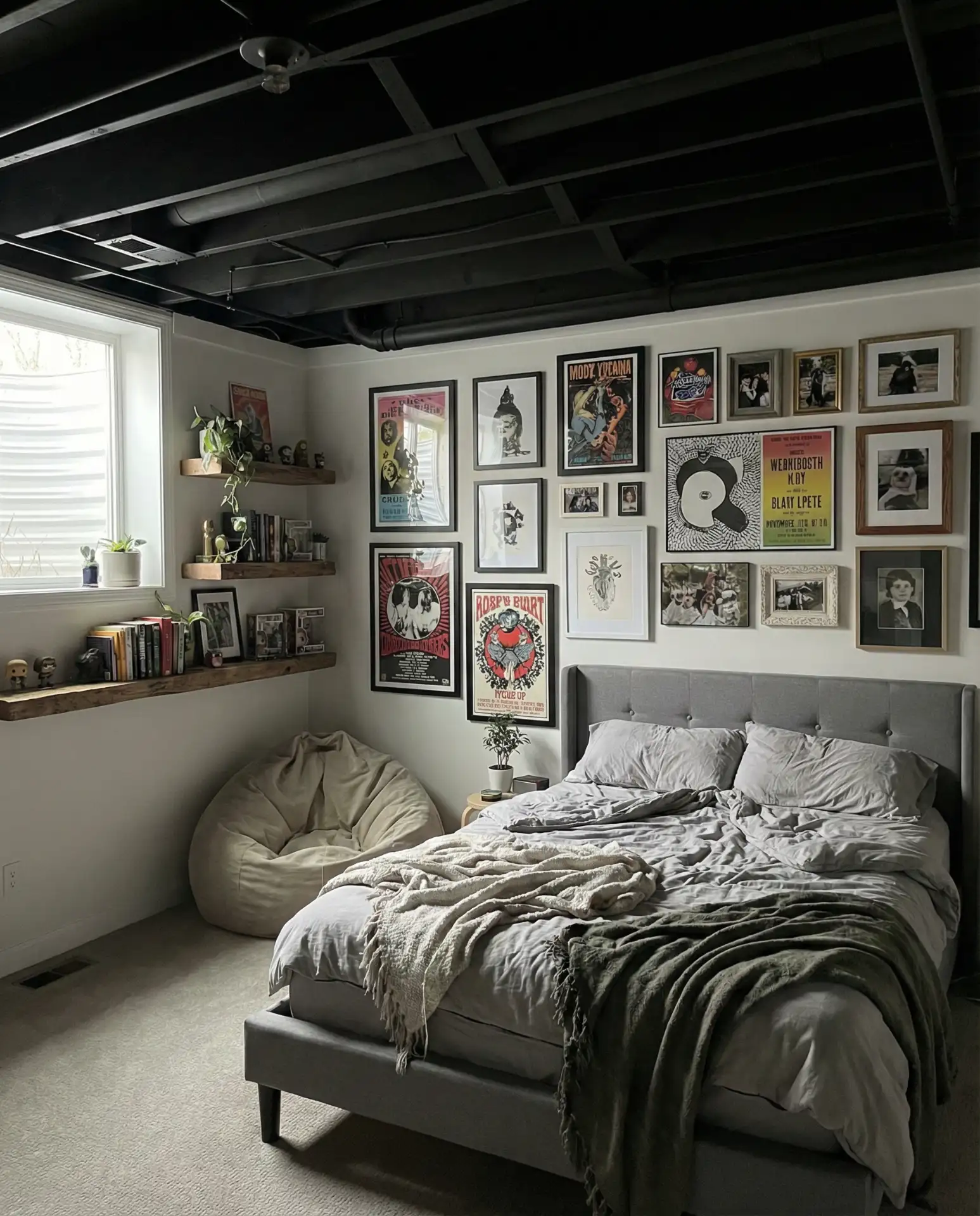
Basement bedrooms have become one of the most popular destinations for teen bedroom ideas in American homes—and it makes sense. Teens get privacy, parents get their main floor back, and the basement’s slightly industrial bones actually complement the maximalist, aesthetic energy that most teenagers gravitate toward. Think neon signs, gallery walls, oversized bean bags, and a gaming setup built into a dedicated corner.
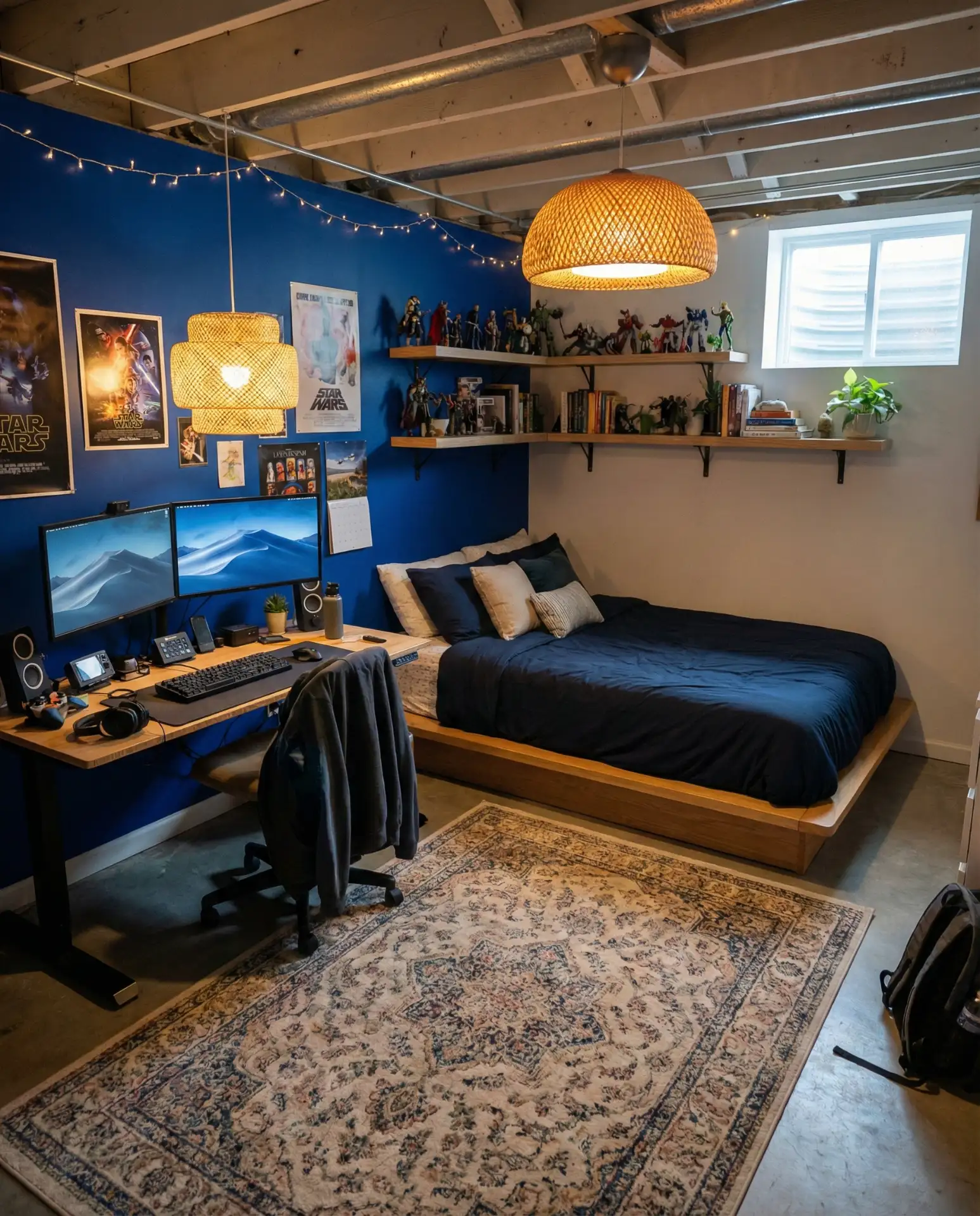
The budget angle is worth noting here: teenagers, more than any other demographic, are natural thrift store and IKEA hackers. A $30 IKEA Kallax unit, some contact paper, and a weekend of labor can create a custom-looking shelving wall that rivals anything from a high-end furniture store. This is a room where creativity and a tight budget actually produce better results than a big one.
6. Exposed Ledge Wall as a Design Feature
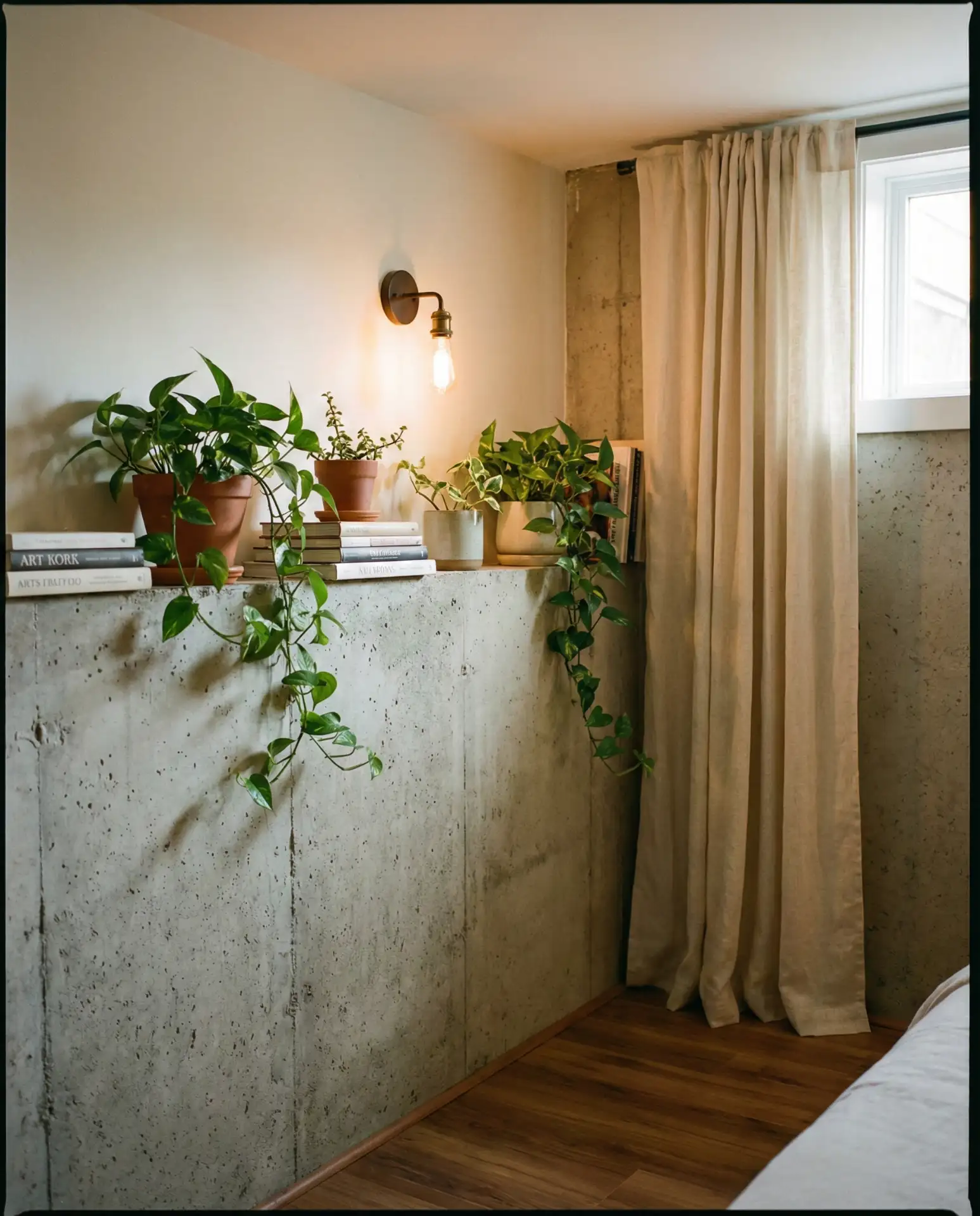
If your basement has a ledge wall—that concrete step-out that follows the foundation line—you’re sitting on one of the best free design features in the house. Most people try to hide it or cover it up, but in 2026 the move is to lean into it completely. Style it like a built-in shelf: a row of plants, a few stacked books, and a candle or two, and suddenly that structural quirk reads as intentional and charming rather than unfinished.
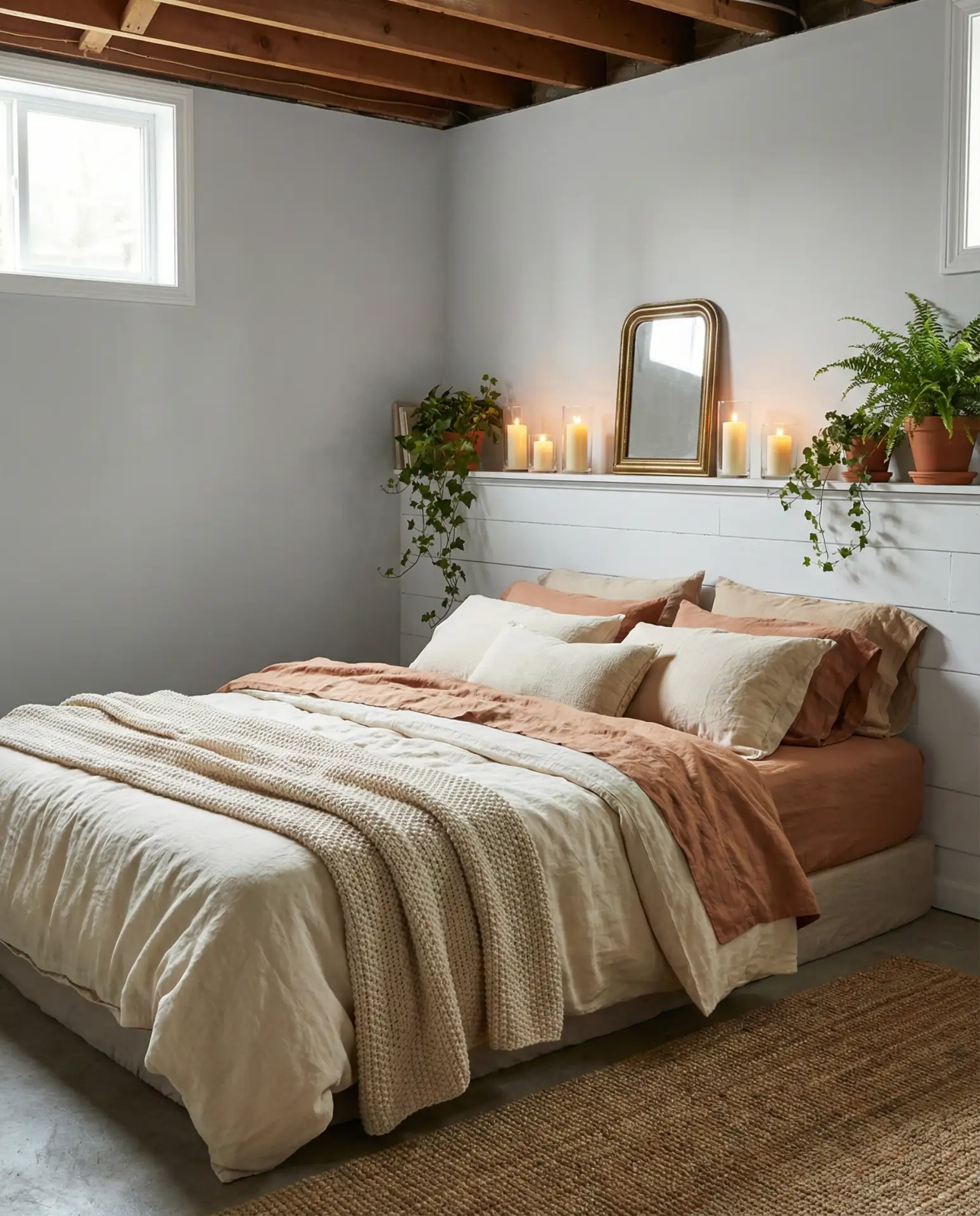
Expert-level insight: the ledge wall actually solves one of the trickiest problems in basement bedroom design—where to put things when you can’t hang heavy anchors in poured concrete. By treating the ledge as a display shelf, you eliminate the need for most wall mounting altogether. It’s practical, it’s beautiful, and it costs nothing to implement beyond a few well-chosen objects.
7. Budget-Friendly Makeover With Paint
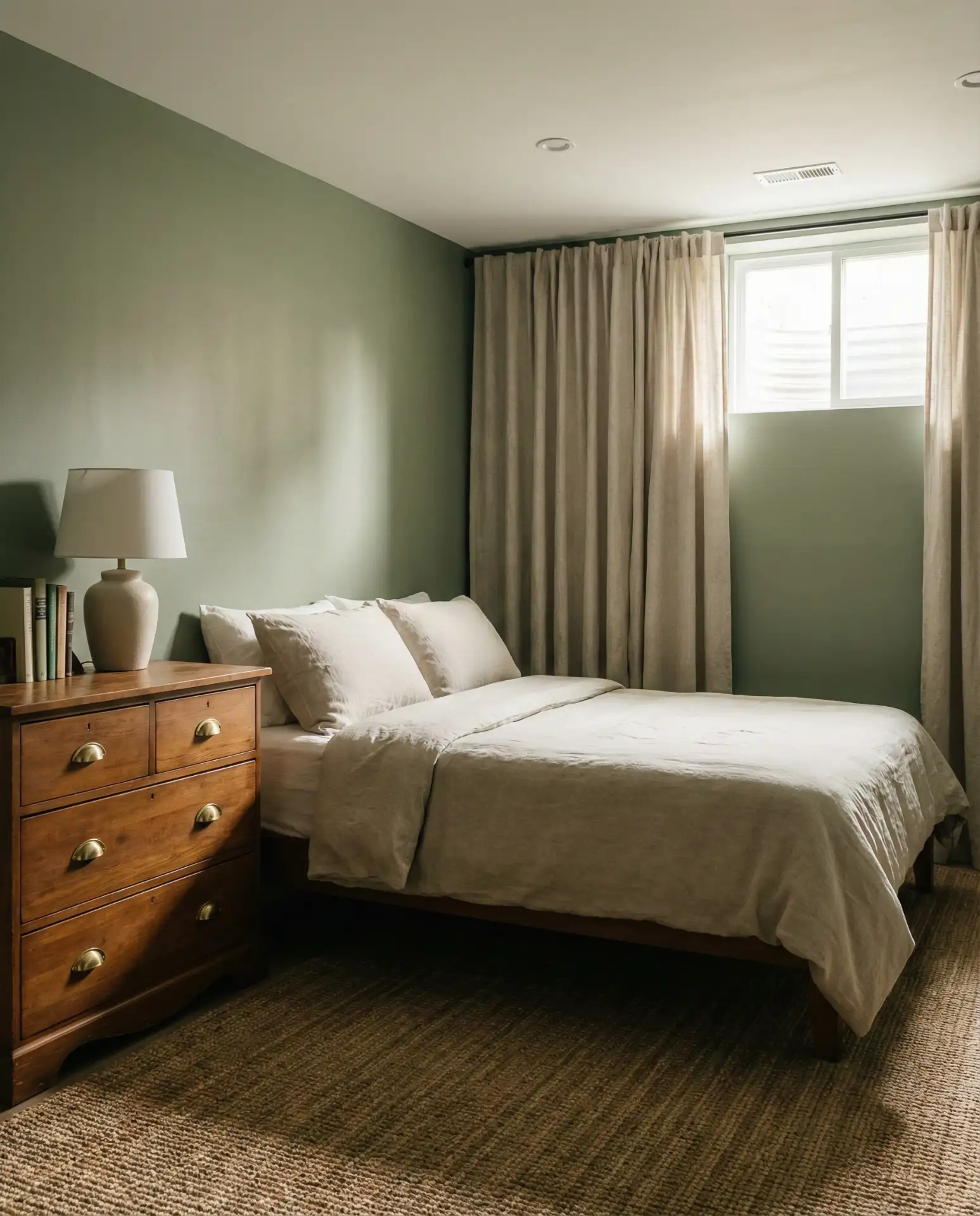
Among all the basement bedroom ideas on a budget, paint remains the single highest-return investment you can make. A gallon of quality interior paint runs between $35 and $65, and the right color can completely transform the feel of the space—no contractor, no permits, and no demo required. In 2026, the most searched paint colors for basement bedrooms lean warm: mushroom beige, soft terracotta, sage green, and warm white are all dominating Pinterest saves.
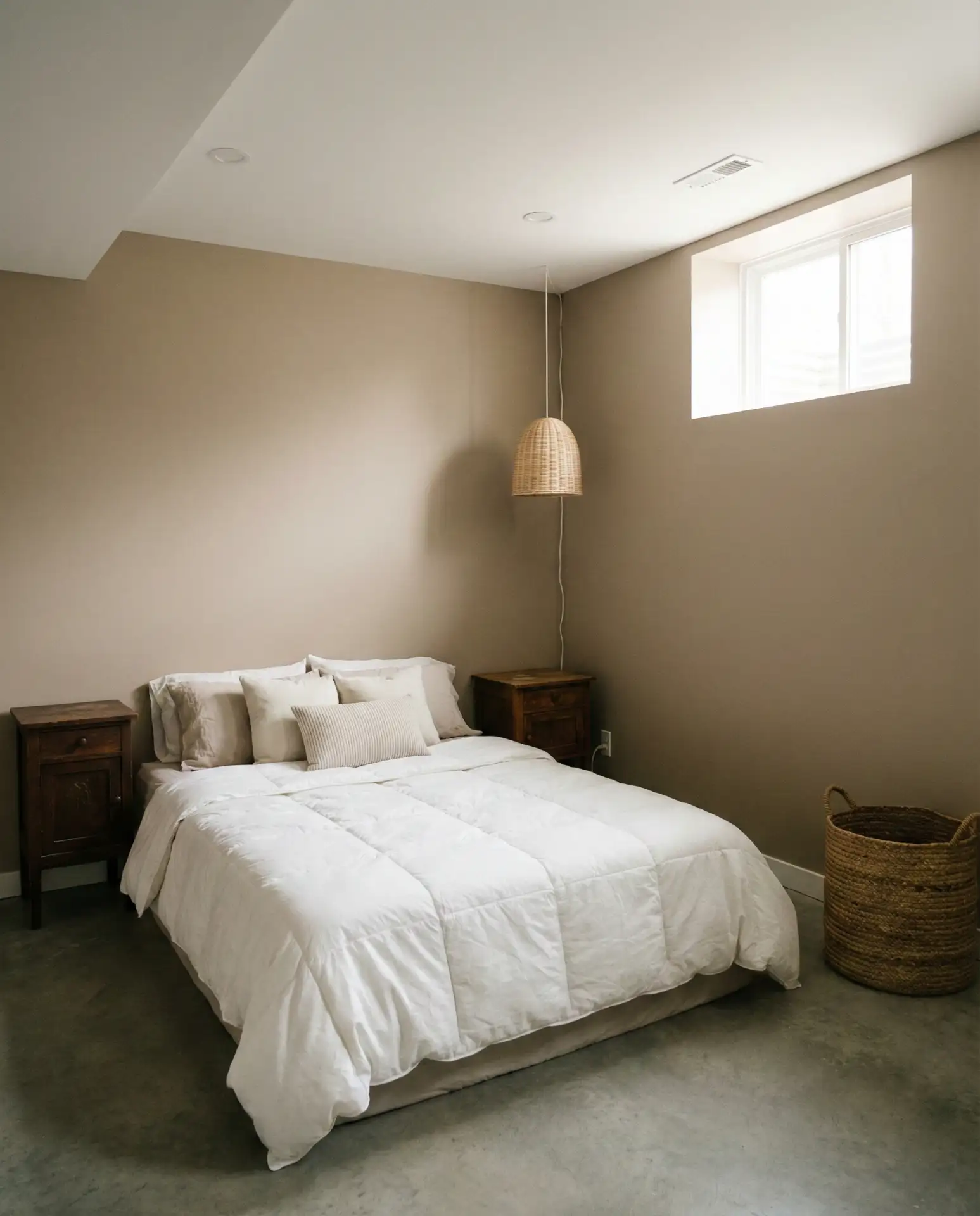
The biggest mistake people make when painting a basement bedroom is choosing cool grays or stark whites without testing first. Basements run cool—literally—and cool-toned paints amplify that. Always test your swatches under artificial light (the light you’ll actually live with) before committing to the whole room. What looks beautiful in the store can look institutional in a finished basement.
8. Finished Basement Master Suite
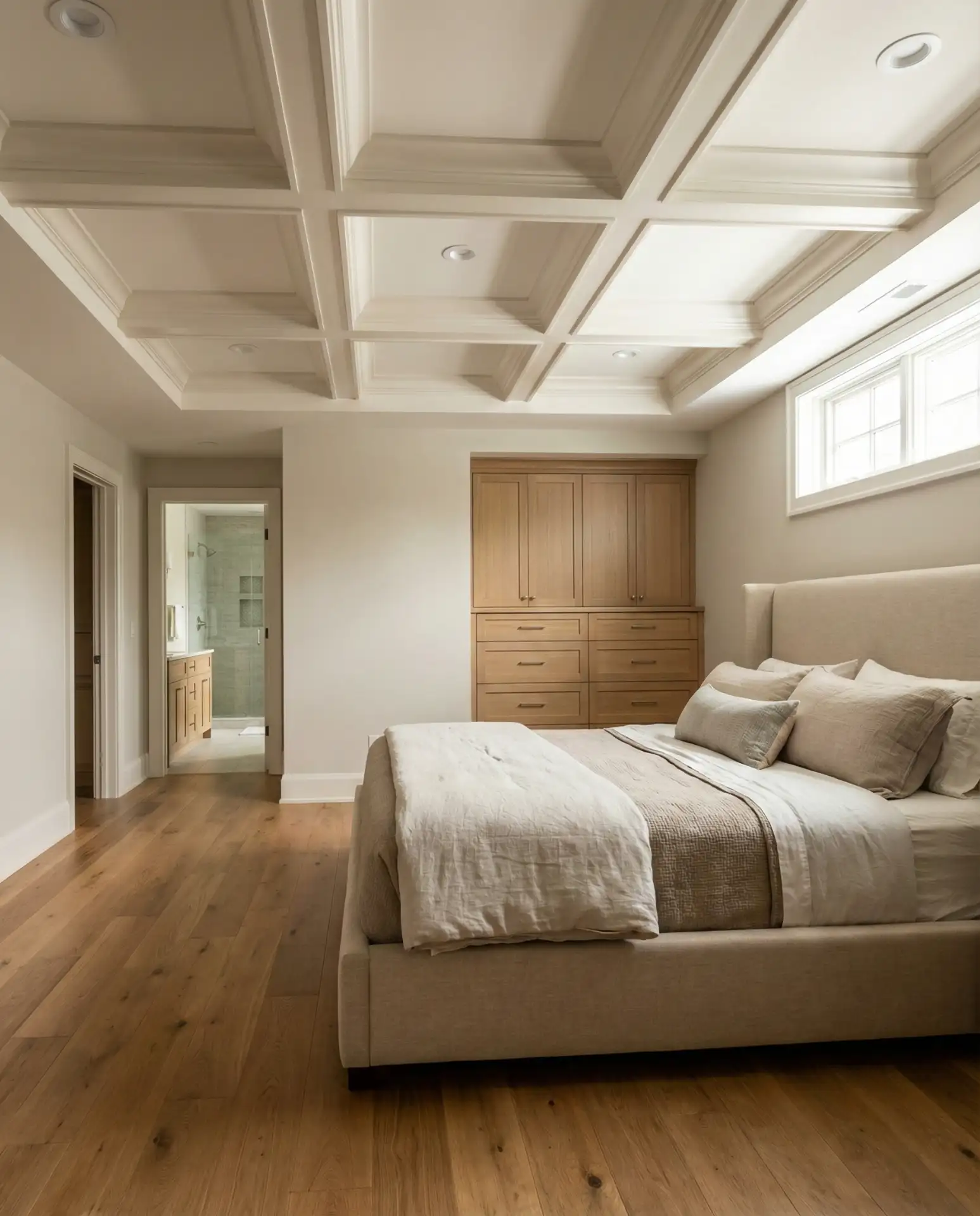
The concept of a below-grade master suite layout has gone from unusual to genuinely aspirational. In cities like Denver, Minneapolis, and Chicago—where homes are older and square footage is tight on the main floors—a fully finished basement master suite with its own bath and walk-in closet is a real estate feature, not a last resort. The key to making it feel like a true primary suite rather than a converted utility room is commitment: every finish has to be as polished as anything upstairs.
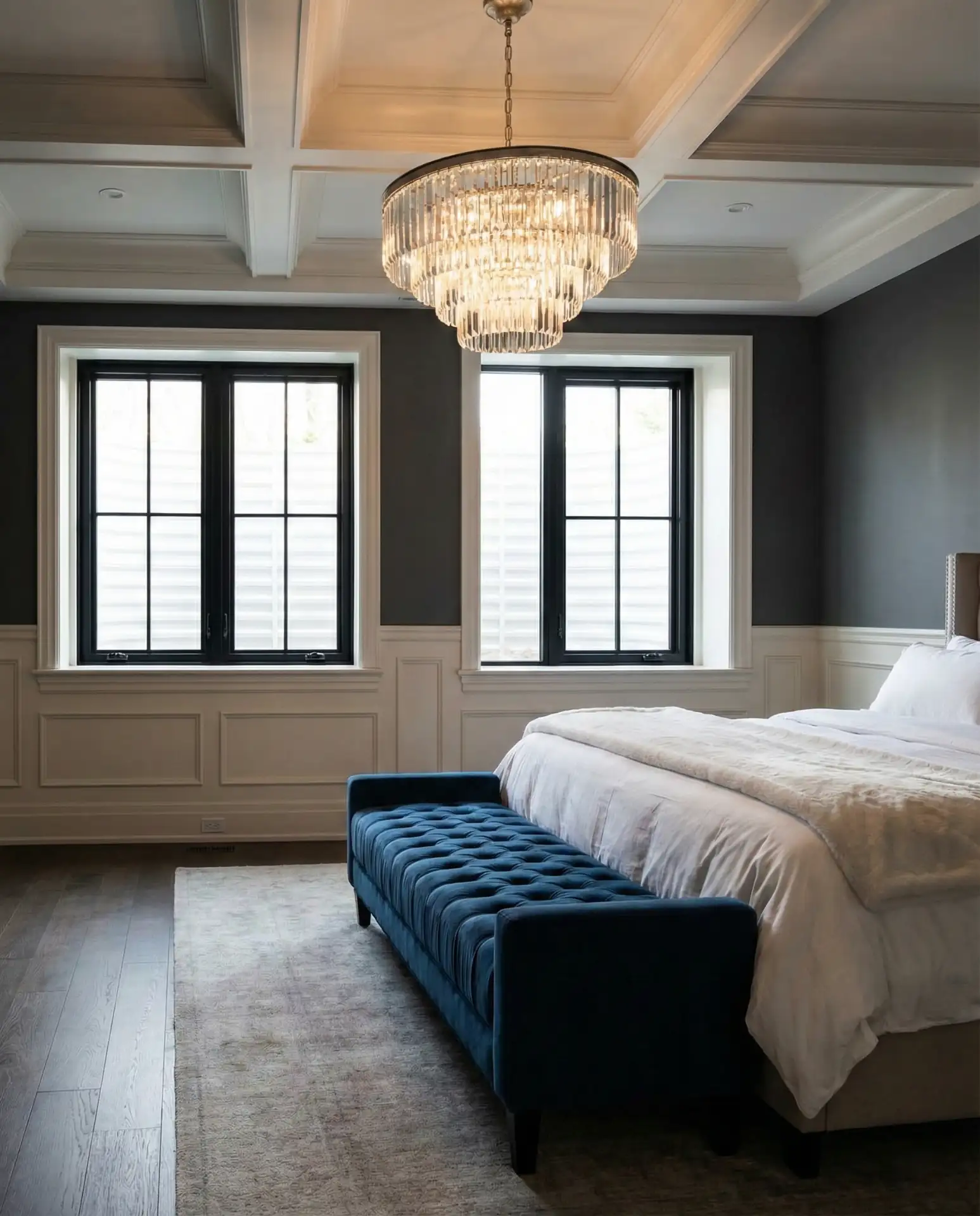
American lifestyle context: in regions where the housing market has made upgrading impossible for many families, finishing the basement into a master suite has become a genuine alternative to buying a bigger house. Homeowners who invest $25,000–$50,000 into a quality basement master suite often recoup that investment and more in resale value—especially in markets where below-grade square footage counts toward overall listed square footage.
9. Moody, Intimate Color Palette
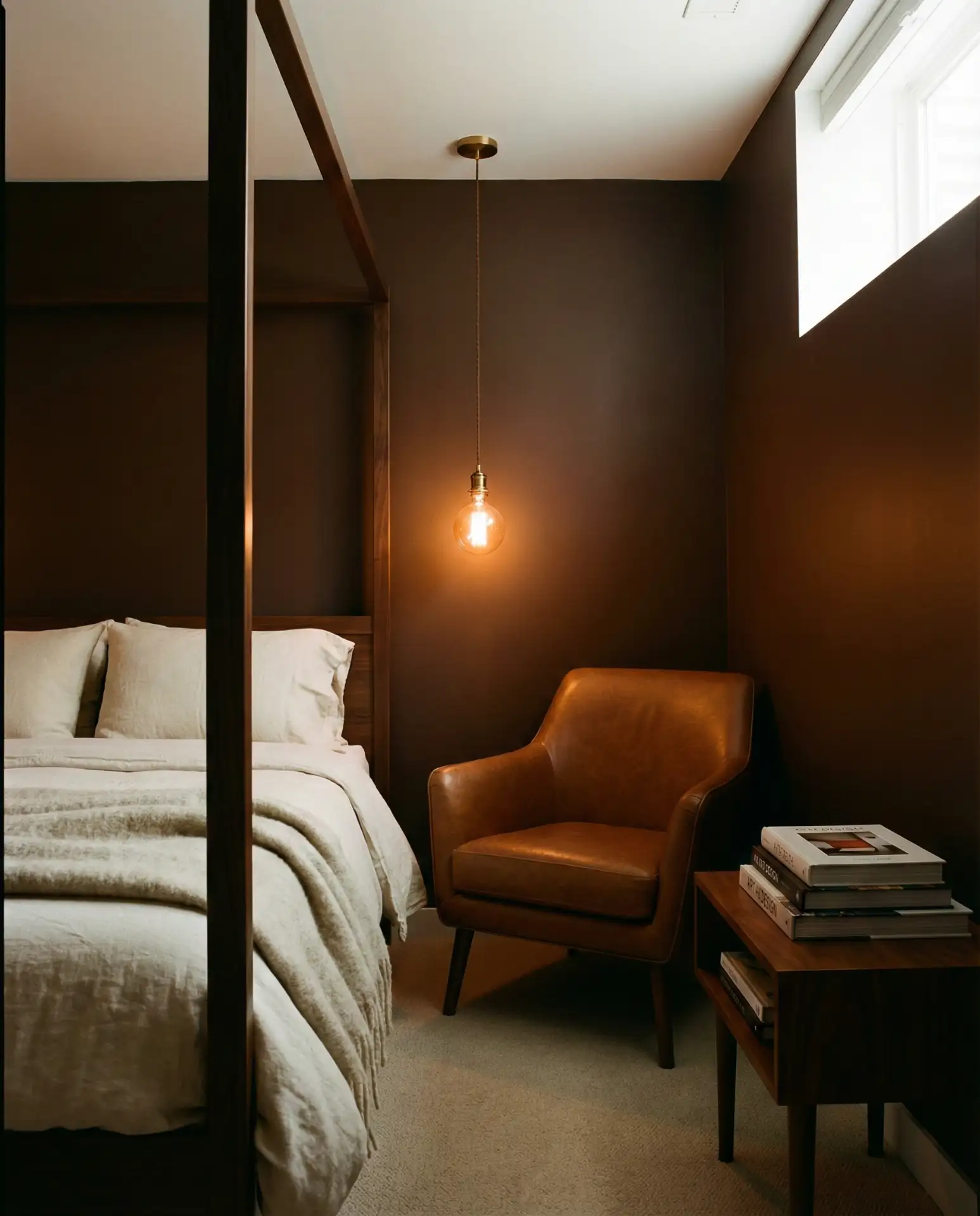
Few design trends have been as Pinterest-persistent as the moody bedroom aesthetic, and it plays particularly well in basement spaces where lower natural light actually supports the vibe rather than fighting it. Think deep plum walls with aged brass fixtures or warm chocolate brown with cognac leather accents. These color ideas work because they stop apologizing for what the basement is and instead make darkness feel deliberate, even glamorous.
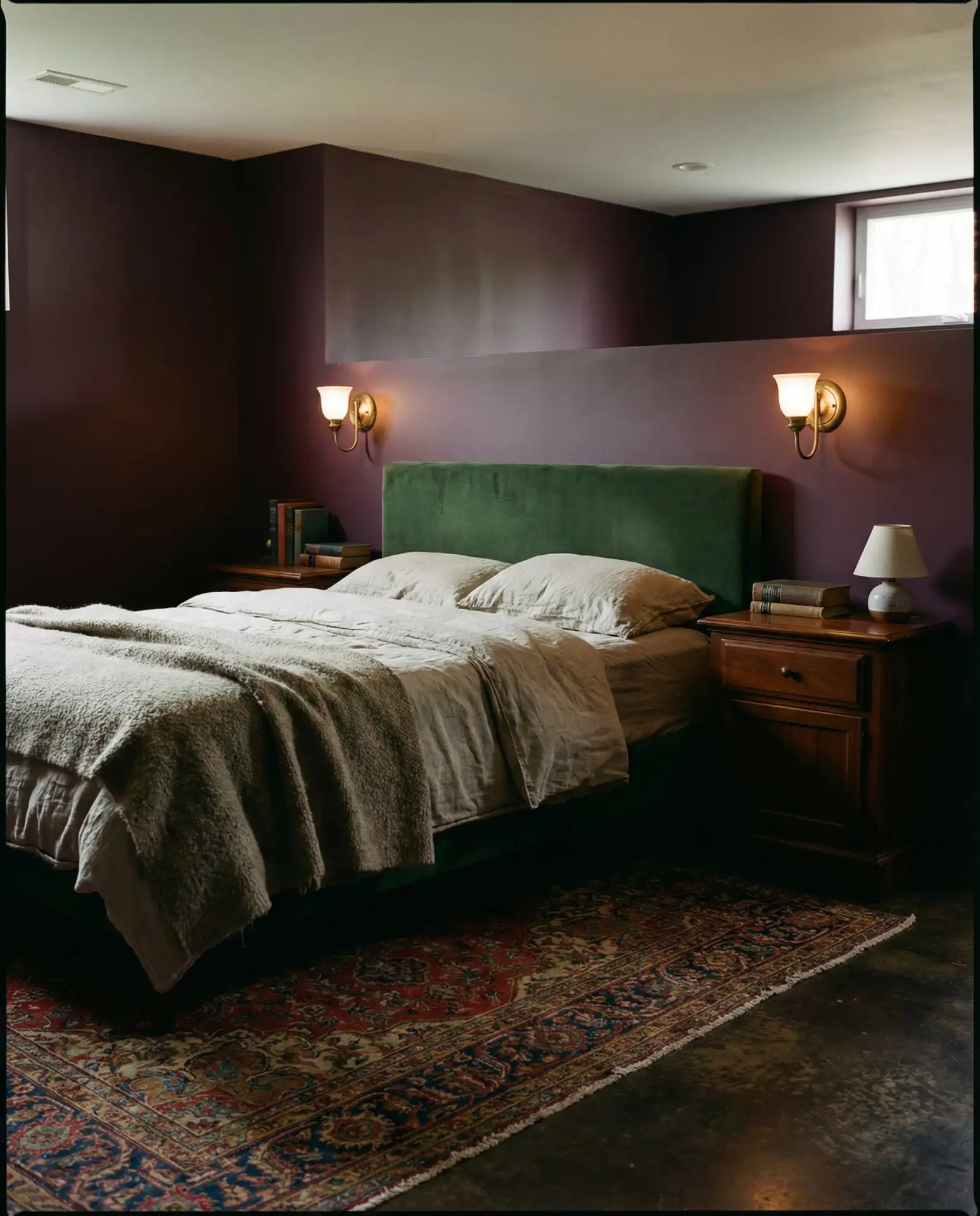
Real homeowner behavior shows that people who lean into moody basement palettes almost never regret it—but people who try to fight the basement’s nature with stark white and forced brightness often redo the room within a year. Work with what you’ve got. Basements are naturally dark and cool. Make that the aesthetic identity of the room, and it stops being a limitation and starts being a brand.
10. Egress Windows as Natural Light Heroes
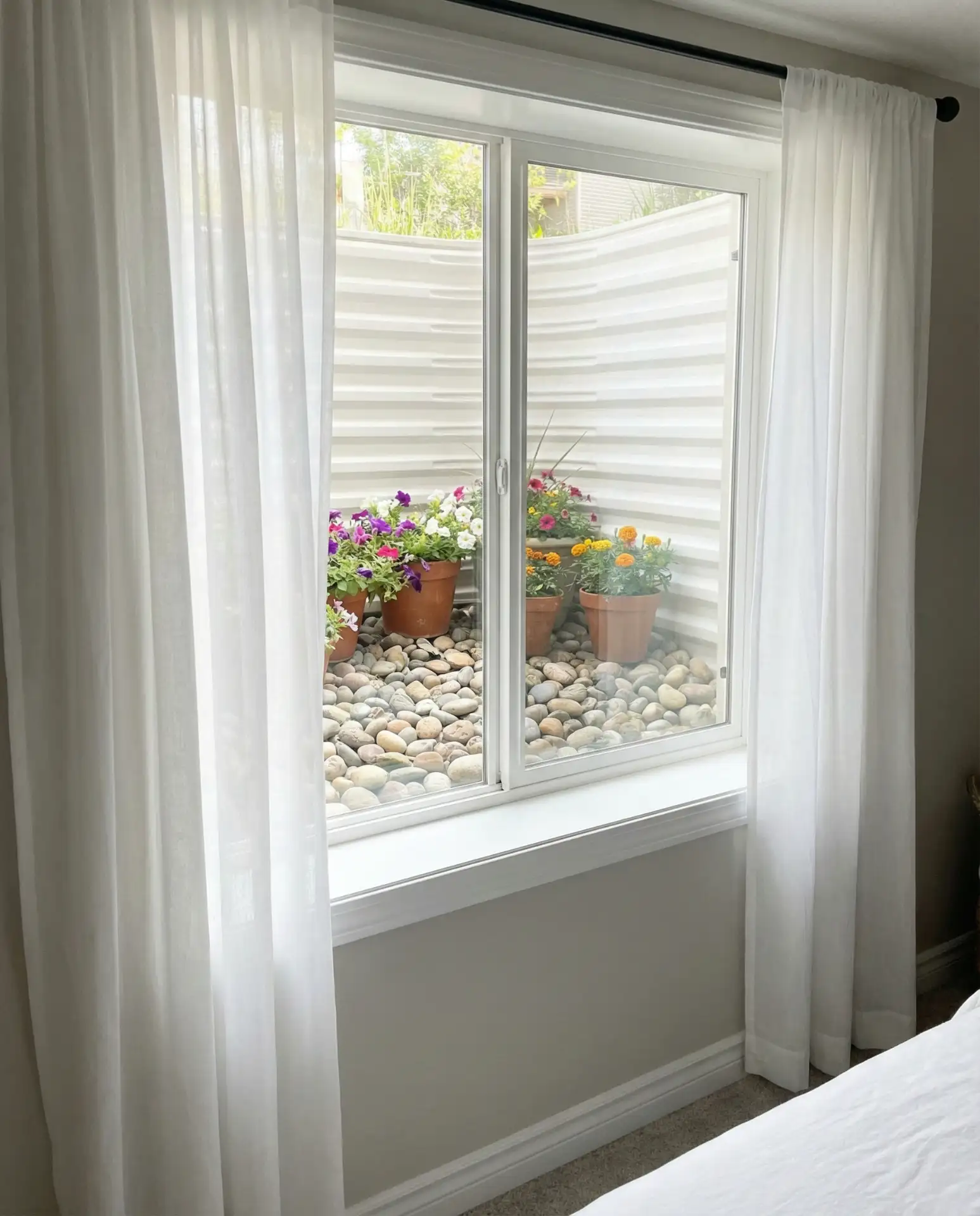
Adding an egress window to a basement bedroom isn’t just a code requirement—it’s one of the best design investments you can make in the whole project. The right windows in a basement bedroom change everything: natural light shifts the mood entirely, and a properly sized egress well can become a charming architectural feature with the right landscaping and a French drain. For legal bedrooms in most American states, egress is non-negotiable, so you might as well make it beautiful.
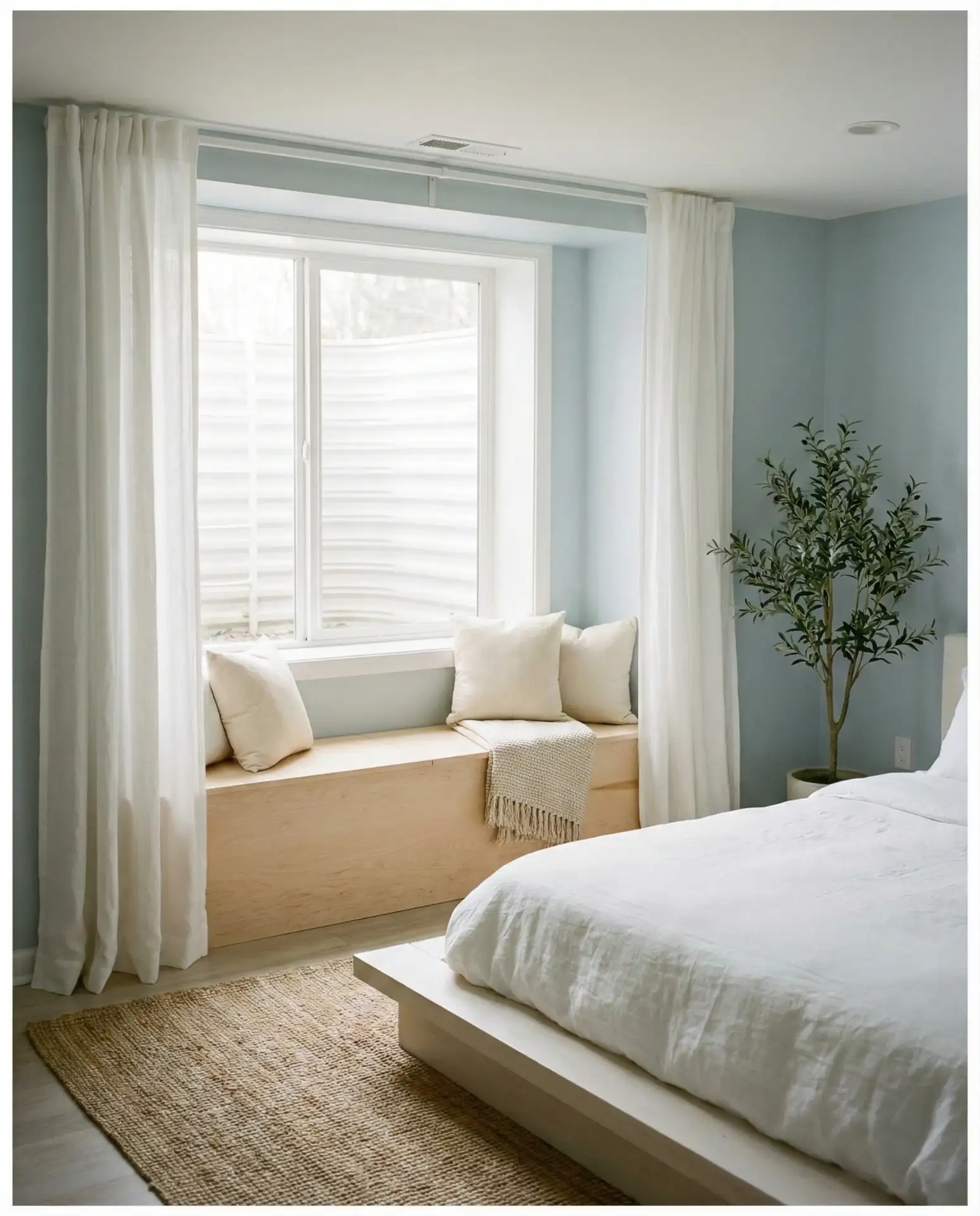
Where this works best is in homes where the grade allows for a well-placed egress on a south- or west-facing wall—the afternoon light pours in and makes the space feel completely different from the typical basement experience. Egress window installations in the US typically run $3,000–$6,000 fully installed, but the return in livability—and legal bedroom status—makes it one of the most justified expenses in the entire project.
11. Unfinished Basement With Rustic Charm
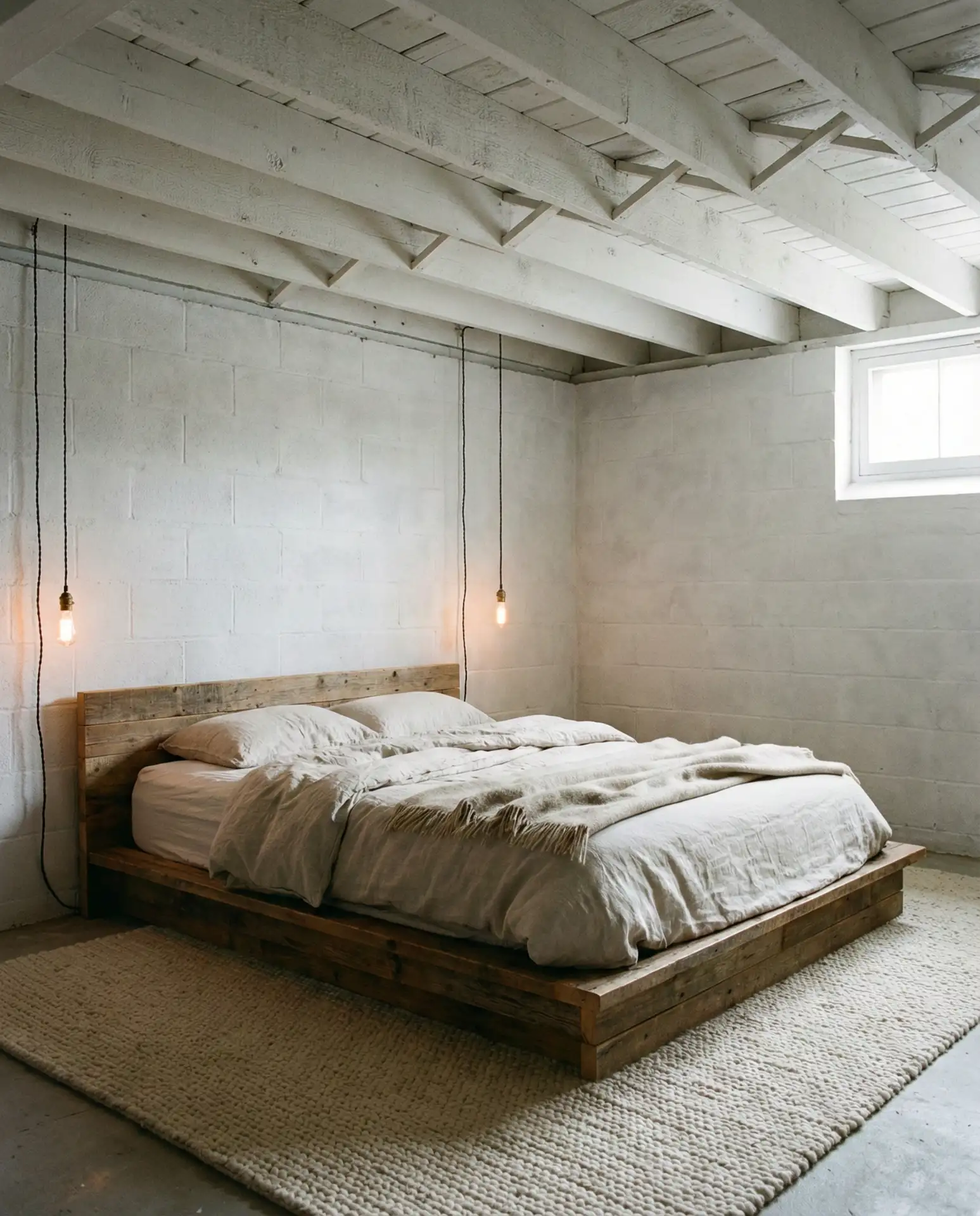
The rise of the unfinished aesthetic—where raw concrete, exposed pipes, and rough-hewn wood are celebrated rather than concealed—has given basement bedrooms a whole new design vocabulary. You don’t have to drywall the ceiling or hide the joists to create a genuinely beautiful room. In fact, for inspiration rooted in loft-style living, leaving structural elements visible and painting them intentionally can produce a space that feels more authentic and considered than a standard build-out.
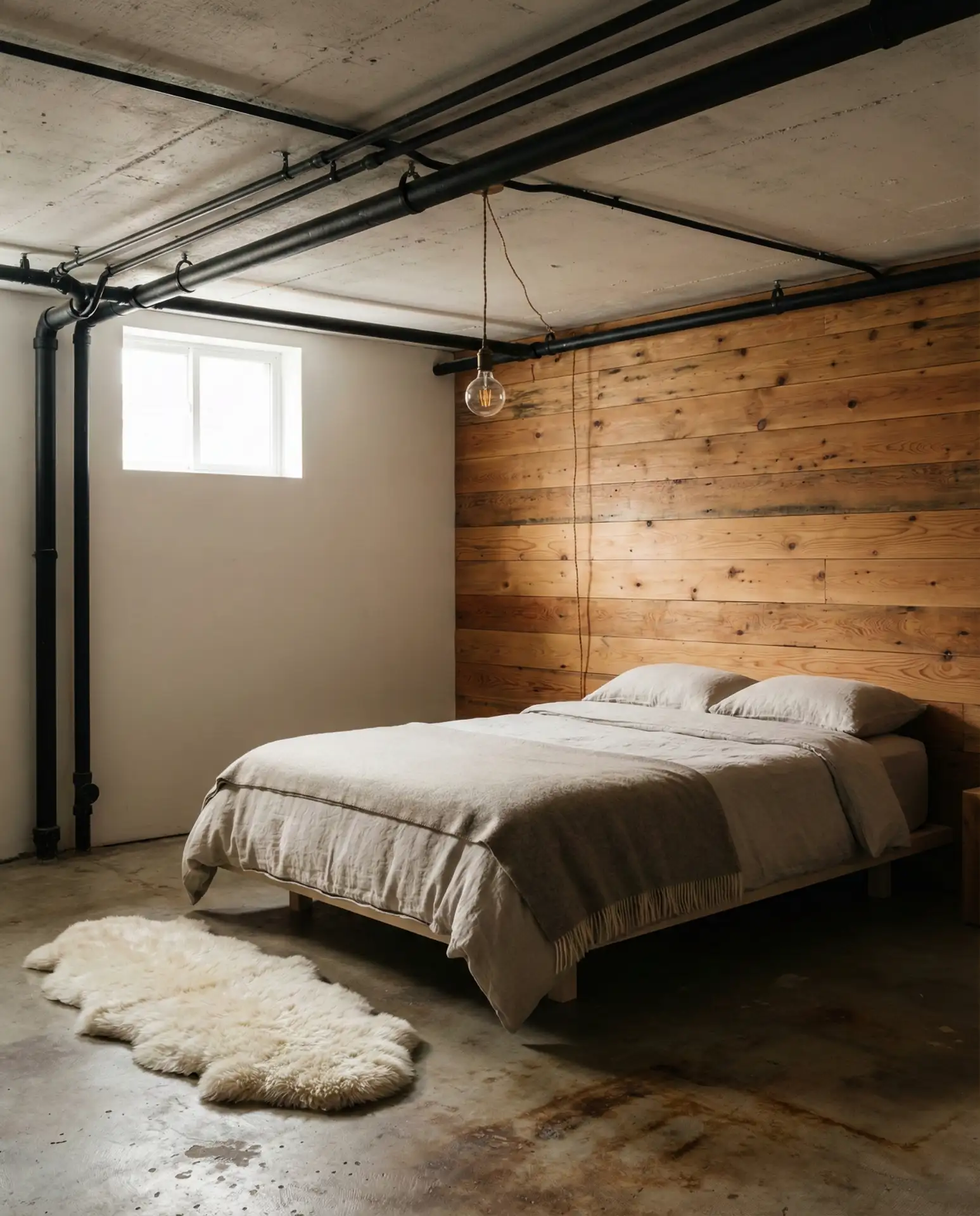
The common mistake here is inconsistency—going raw and rustic on the ceiling but then trying to add formal, polished furniture that clashes with the industrial bones. The rooms that nail this aesthetic commit to a cohesive material story: raw wood, matte black metal, natural textiles, and earthy tones throughout. The moment you introduce glossy lacquer furniture, the exposed elements start to look unfinished rather than intentional.
12. Bright White Basement Bedroom
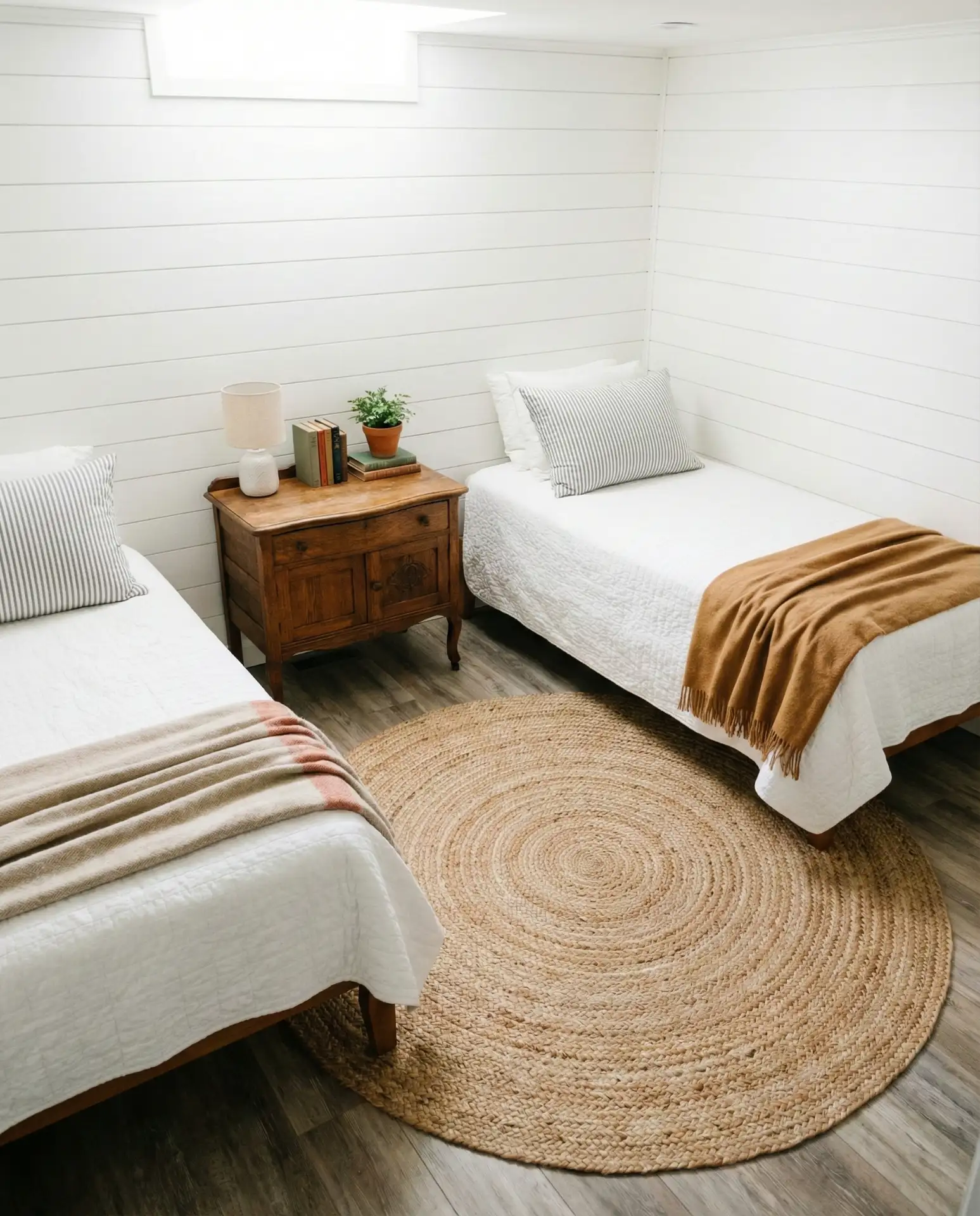
Going bright in a basement bedroom is a genuine design challenge—but when it works, it works beautifully. The key is heat: warm whites and off-whites with yellow or red undertones keep the space from feeling cold and clinical. Benjamin Moore’s White Dove, Sherwin-Williams Alabaster, and Farrow & Ball’s Pointing are three paint colors that regularly show up in the most successful bright basement bedroom transformations on Pinterest and design blogs alike.
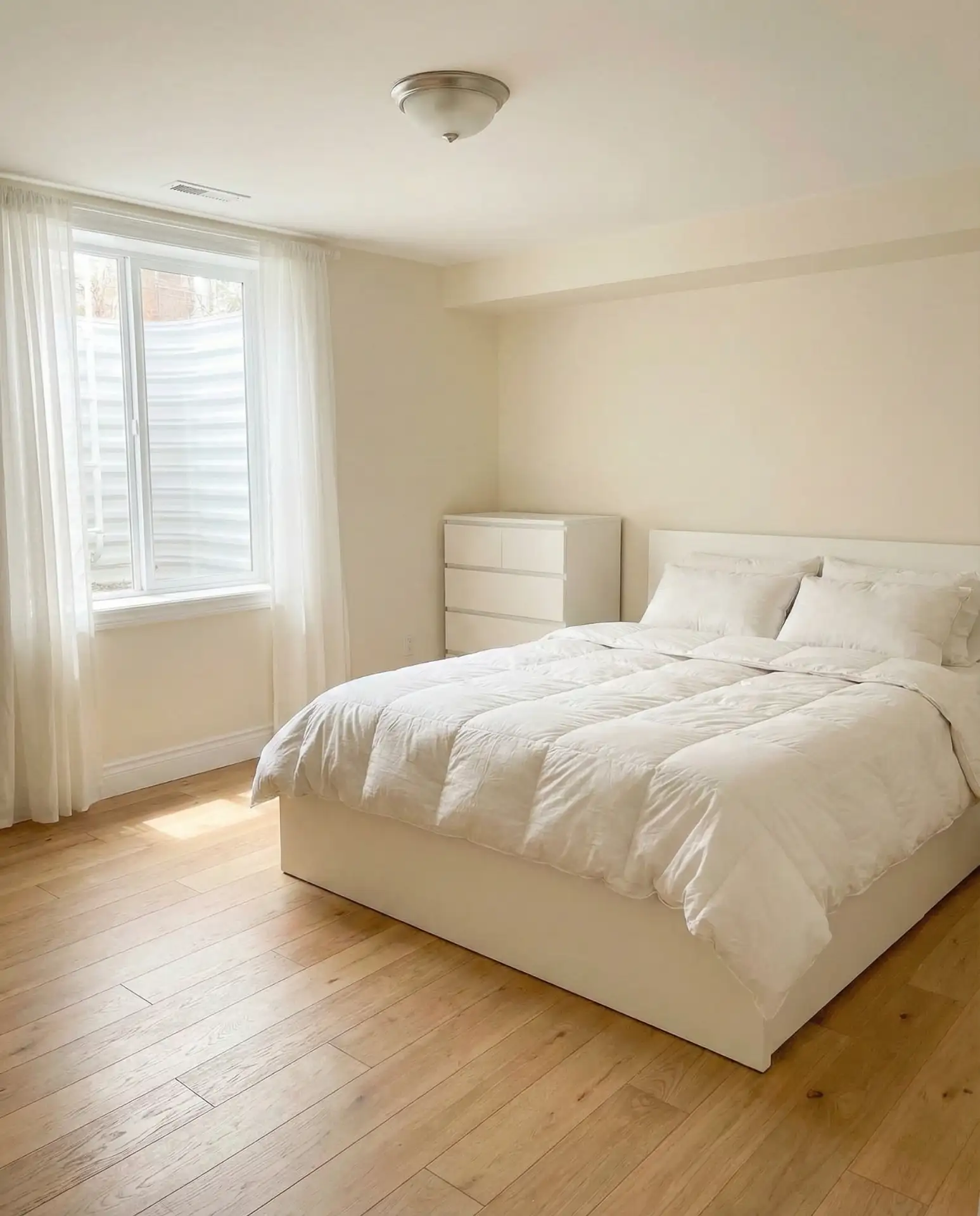
Practical insight: the single biggest mistake people make when trying to create a bright basement bedroom is neglecting the floor. Light walls on a dark, dingy concrete or stained carpet floor will never read as bright—the eye is always drawn down. White, light ash, or blonde wood flooring (or even a large, light-colored area rug over the existing floor) is the final piece that lets the bright wall palette land the way you’re picturing it.
13. Basement Bedroom and Living Room Combo
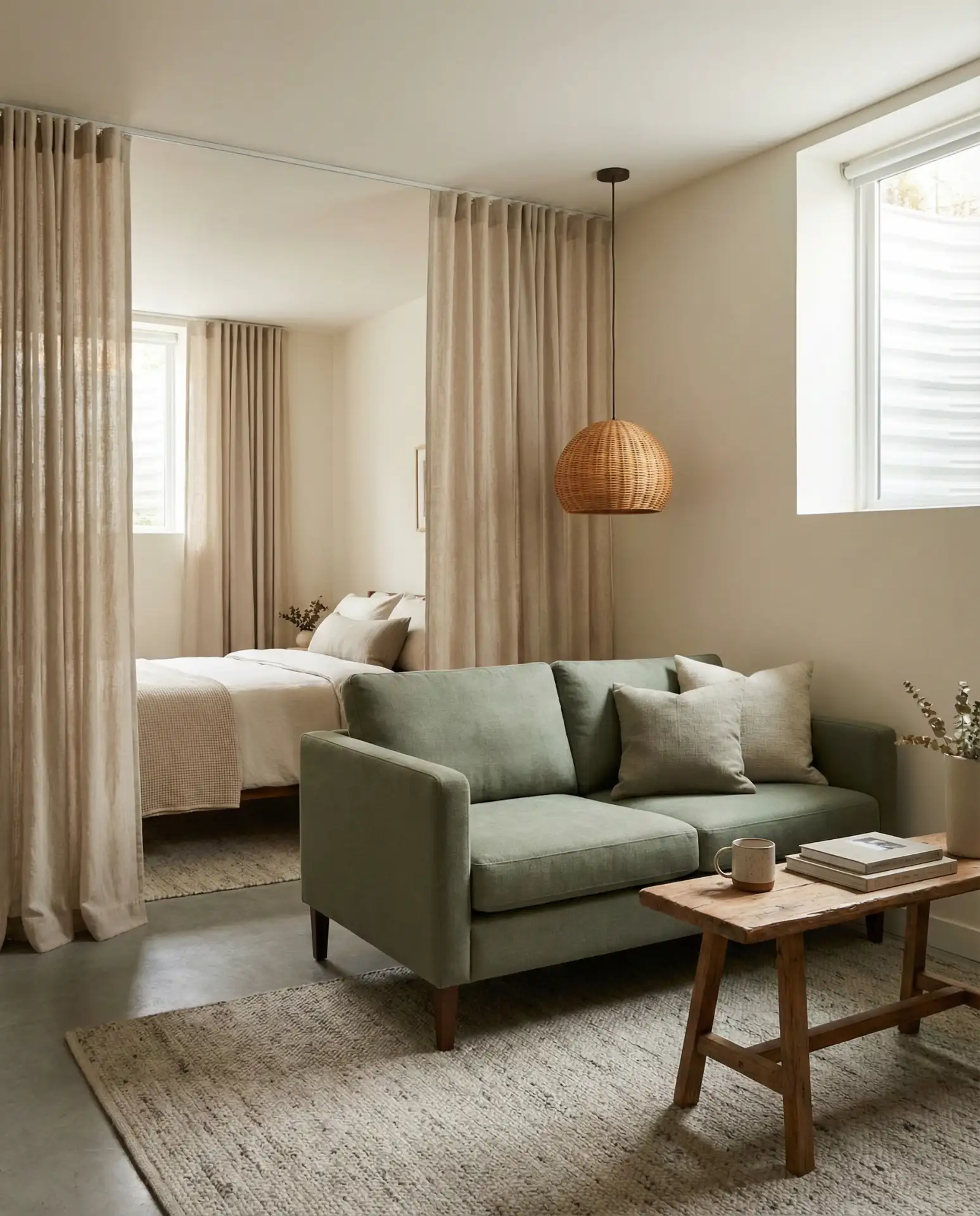
The living room combo layout has become the default solution for guest suites and in-law quarters in American basements—and it’s not hard to see why. A single open space divided by furniture arrangement and a well-placed area rug gives guests a full living experience without requiring wall construction or significant structural changes. The layout ideas that work best here put the bed against the wall farthest from the stairs and the seating zone closer to any egress windows.
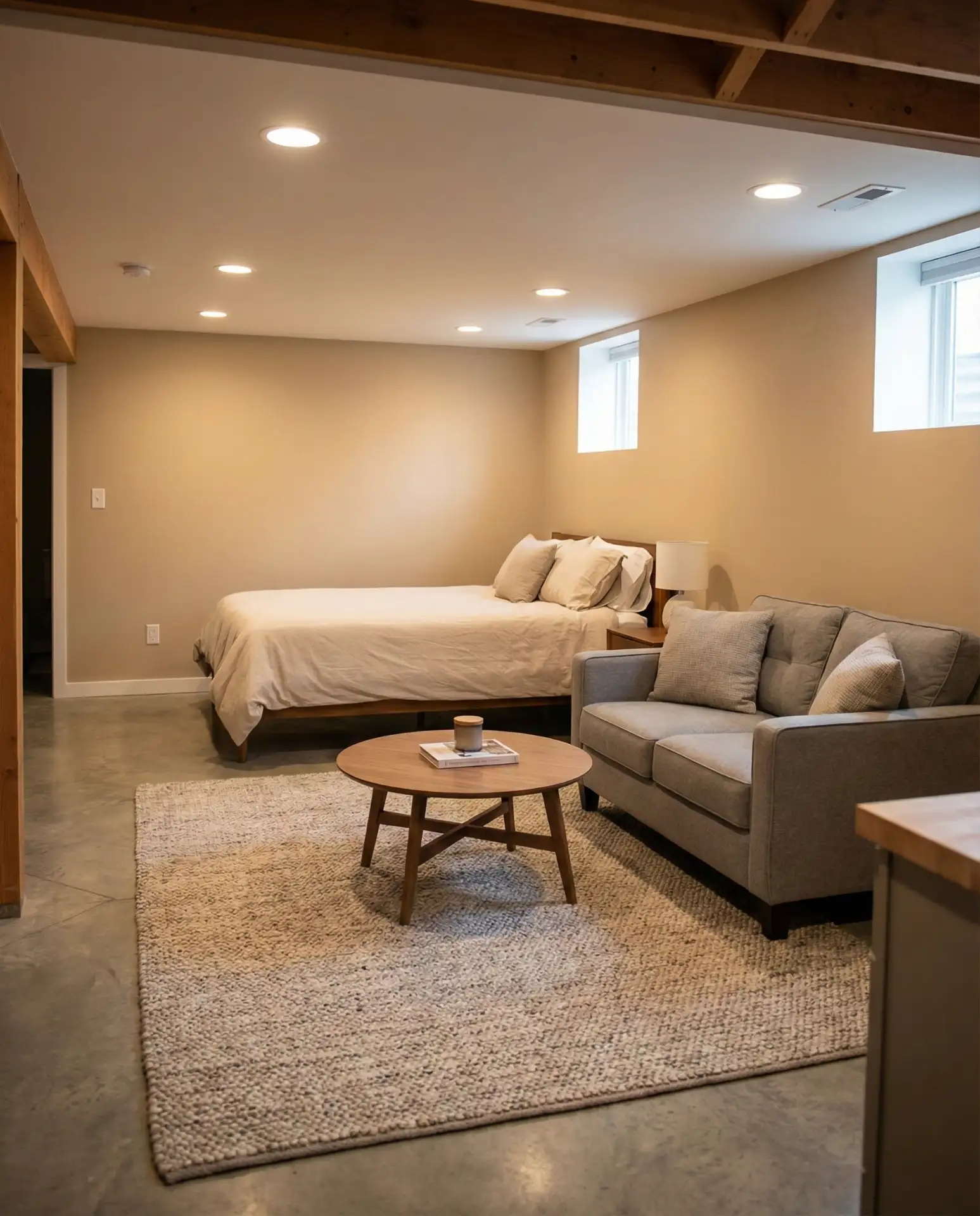
A curtain partition—whether on a ceiling-mounted track or a simple freestanding curtain rod—is the best tool available for defining the sleeping zone without closing it off. Heavy linen or velvet curtains in a color that pulls from the room’s palette add softness and visual interest while creating genuine psychological separation between sleep space and lounge space. It’s an elegant solution that costs a fraction of a built wall.
14. Earthy, Nature-Inspired Palette
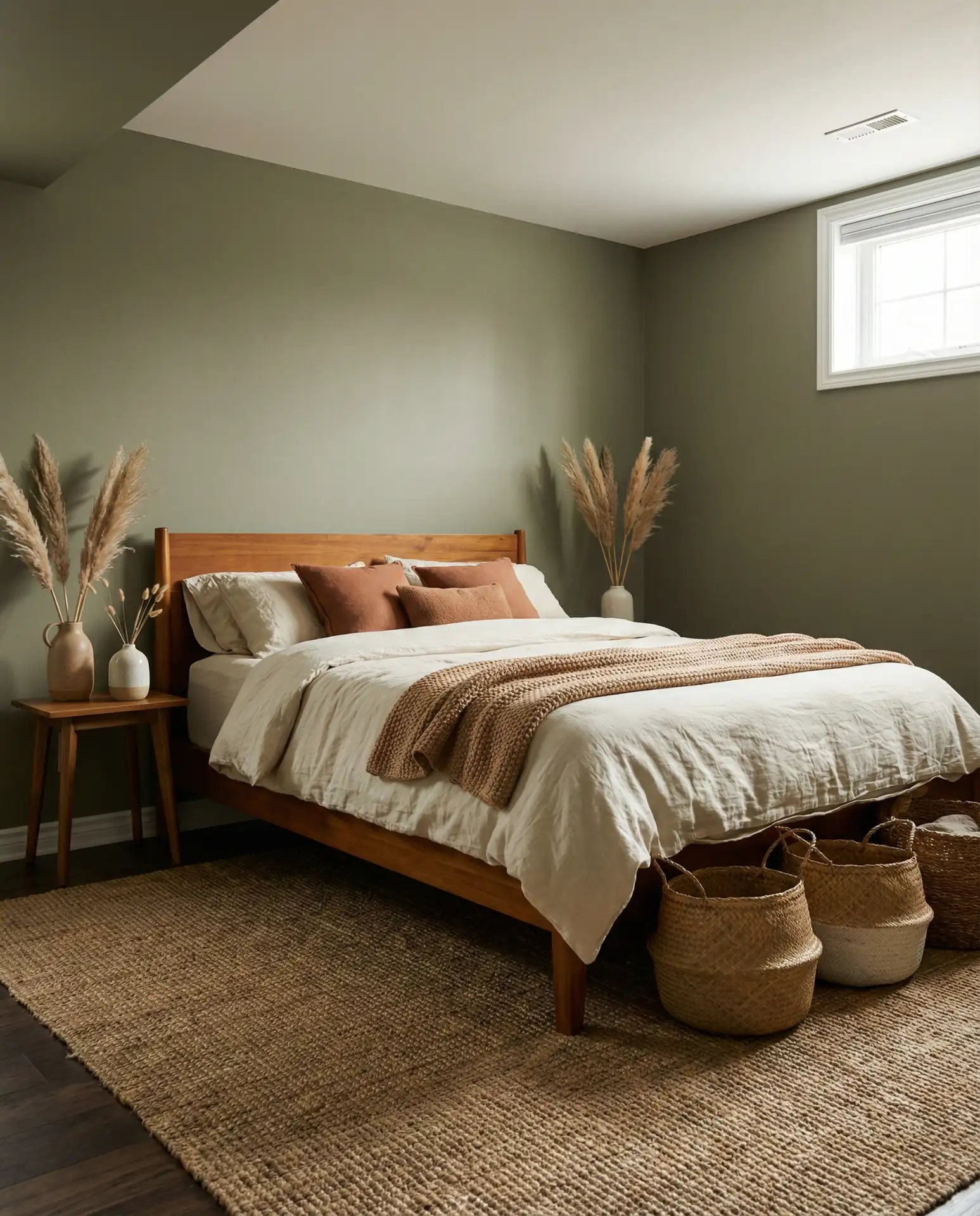
In 2026, the most beloved basement bedroom colors on Pinterest aren’t the crisp blues and neutral grays of five years ago—they’re earthy, warm, and organic. Clay, warm taupe, terracotta, olive green, and dusty rust are showing up in bedroom makeovers across every demographic, and they work exceptionally well below grade because they bring warmth and life to a space that can otherwise feel disconnected from the natural world above.
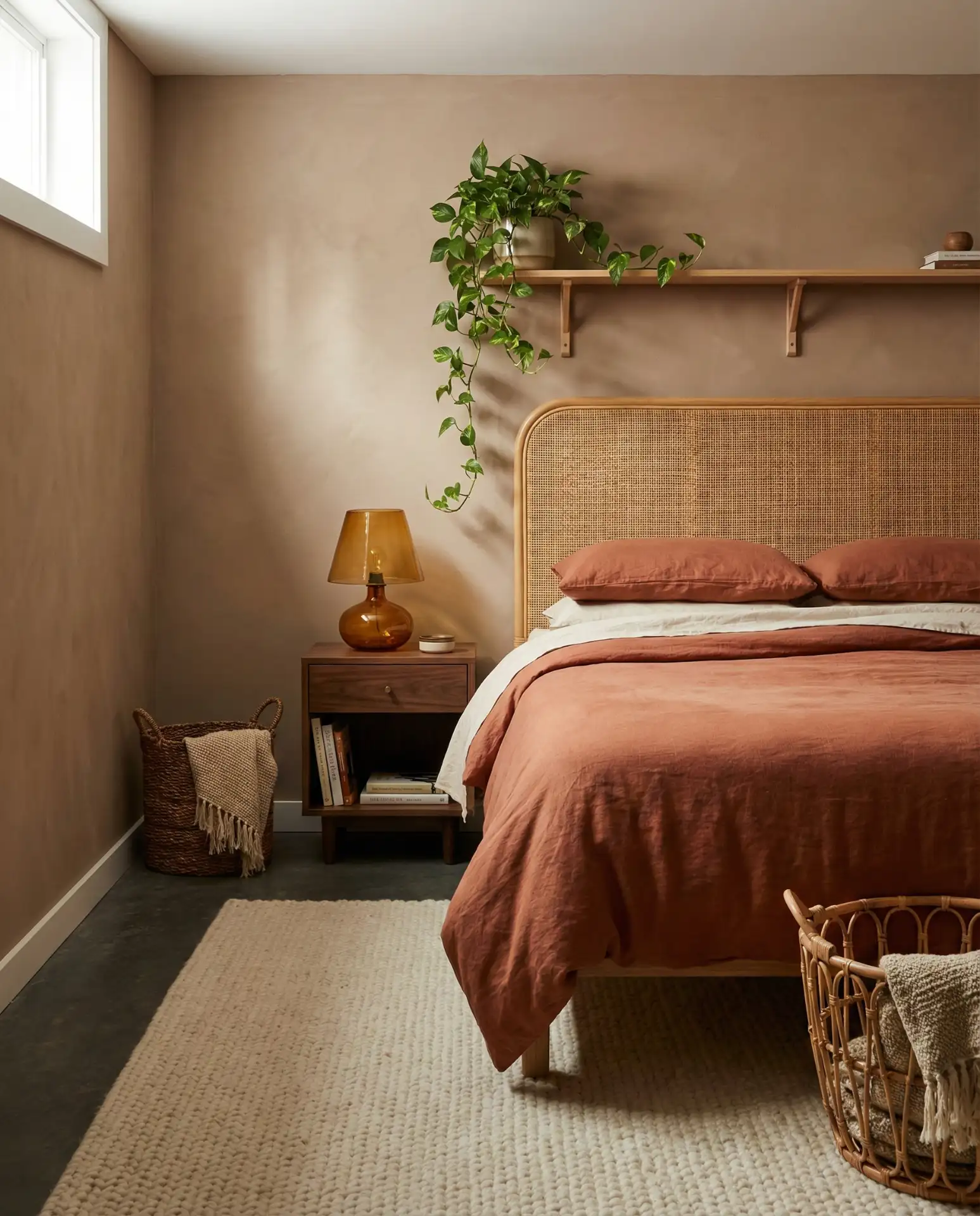
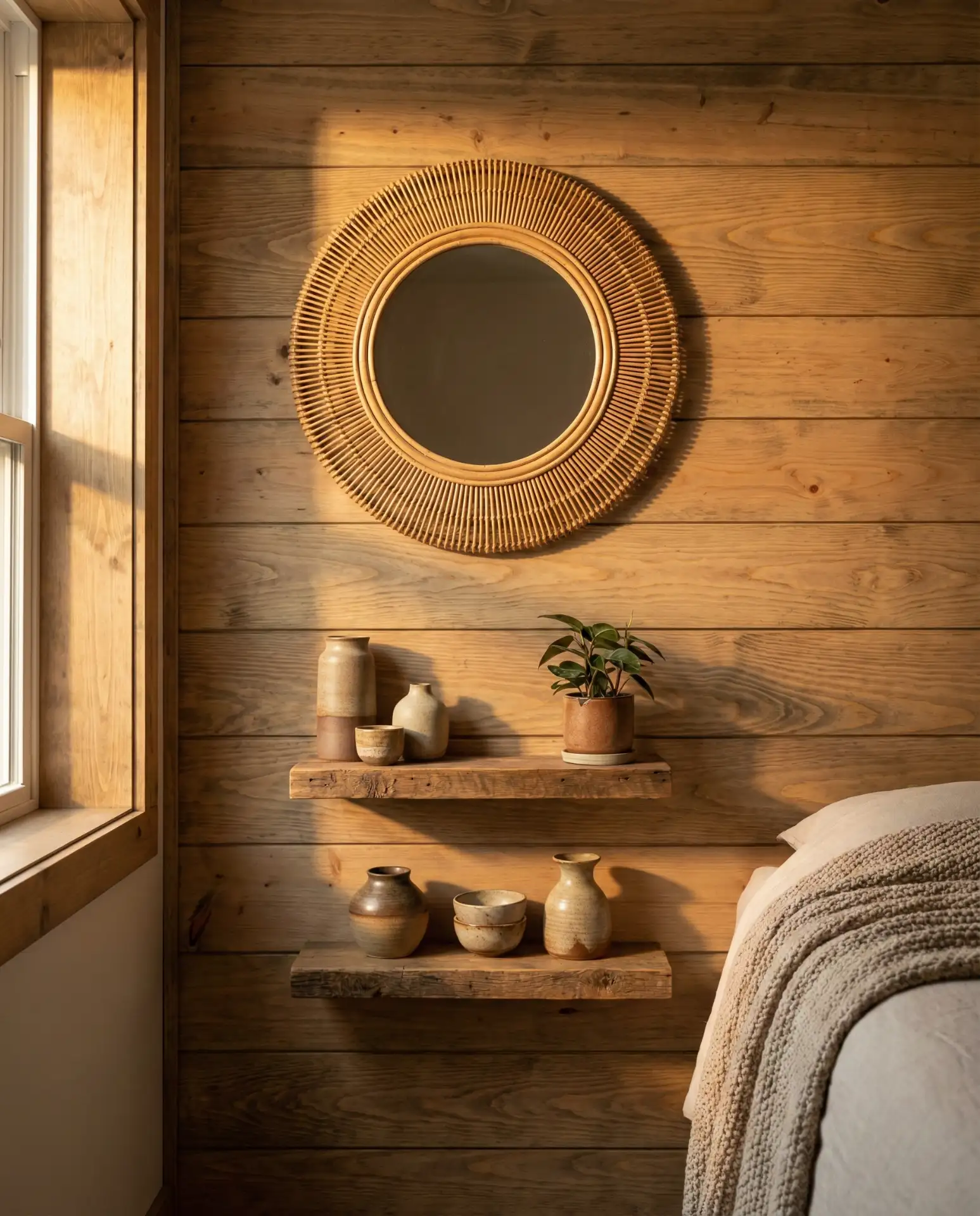
Expert-style commentary: interior designers working on below-grade spaces consistently recommend anchoring the palette in warm earth tones before introducing any cooler or brighter accents. The earth tones do the heavy lifting of making the space feel safe and grounded—which is the subconscious signal any bedroom needs to send to work well for sleep. Add contrast through texture (linen, jute, ceramic, rattan) rather than through color, and the room will feel sophisticated without feeling cold.
15. Sleek Modern Aesthetic
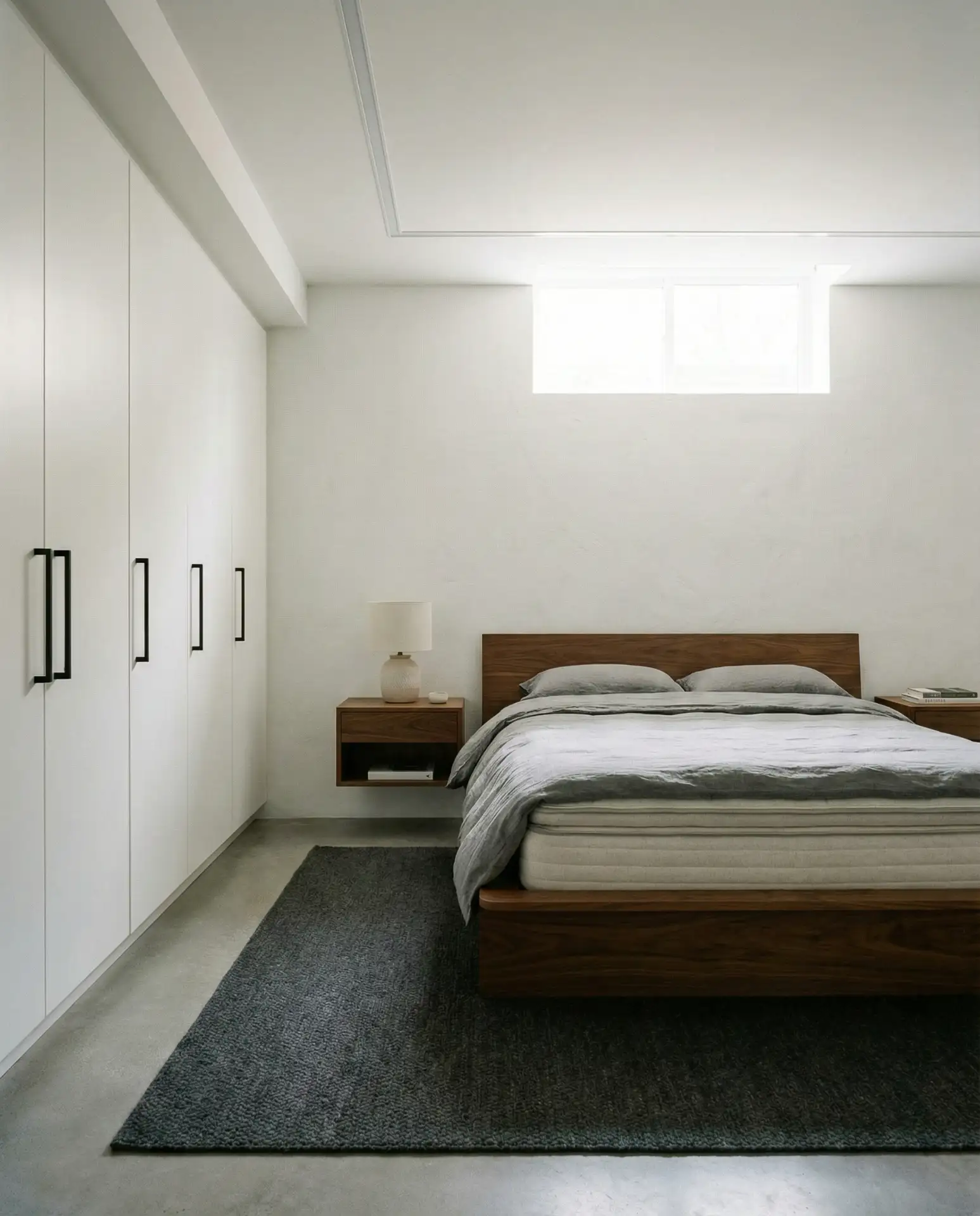
The clean lines and low-profile furniture of modern design happen to solve several basement bedroom challenges at once. A low platform bed maximizes headroom under a low ceiling. Built-in storage eliminates the visual clutter that makes small spaces feel chaotic. Matte finishes on walls and furniture absorb light evenly so the room doesn’t feel uneven. For homeowners chasing a basement bedroom aesthetic that feels fresh and contemporary, modern minimalism is the most reliable path.
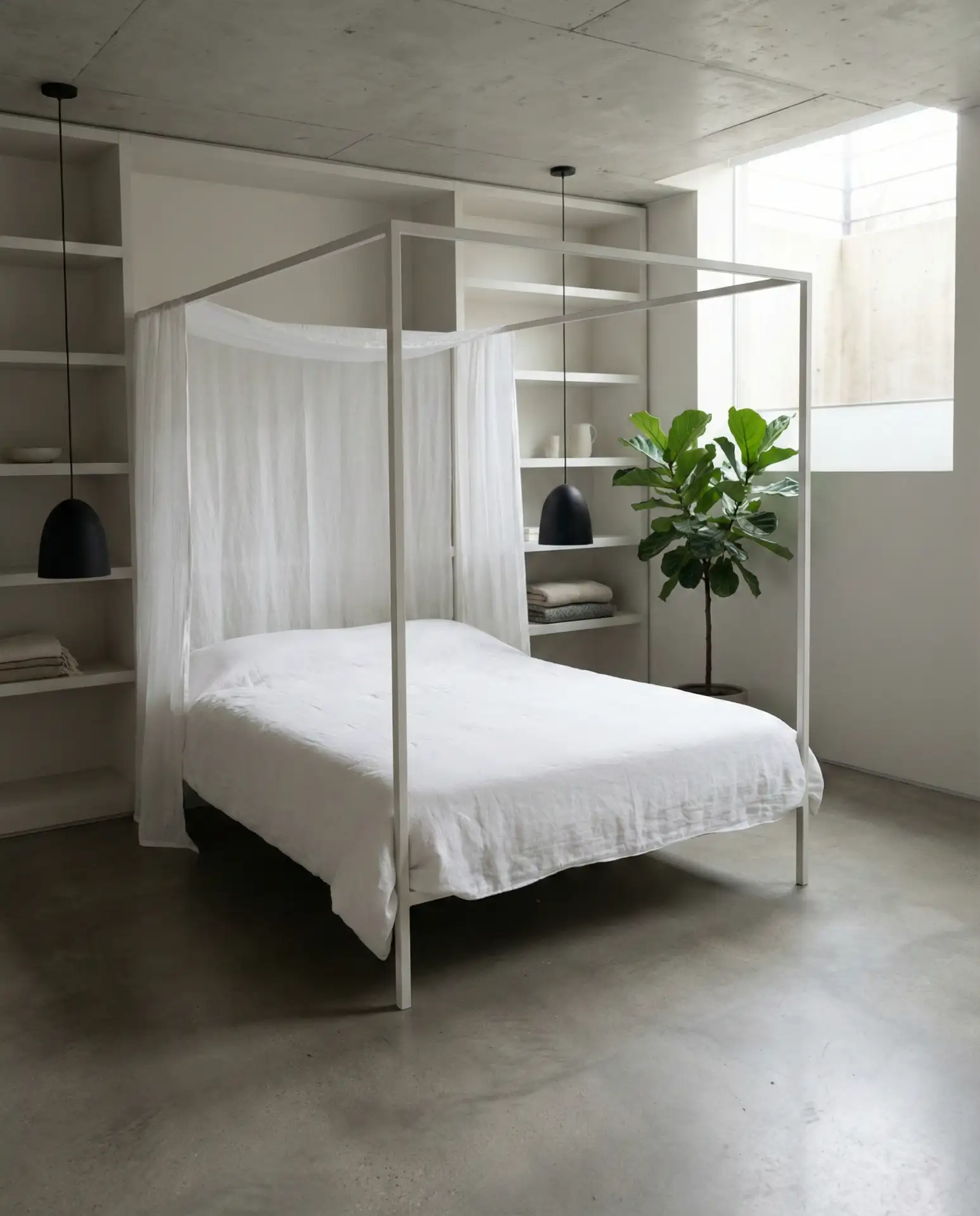
The American lifestyle context here is relevant: in cities like Austin, Seattle, and Boston, where younger homeowners are purchasing older homes and finishing basements themselves, the modern aesthetic often wins because it’s achievable with flat-pack furniture and a good eye. You don’t need custom millwork to pull off modern—you need restraint. Buy less, buy better, and resist the urge to fill every surface.
16. Shiplap Accent Wall
Shiplap has been a design staple for years now, but its application in basement bedrooms is particularly smart—it covers uneven concrete block or parged walls without requiring a full drywall installation, it adds texture and warmth, and it photographs beautifully for the room ideas boards that drive Pinterest traffic. Whether painted crisp white for a cottage feel or left natural for a farmhouse look, a shiplap accent wall transforms the architectural character of the whole room.
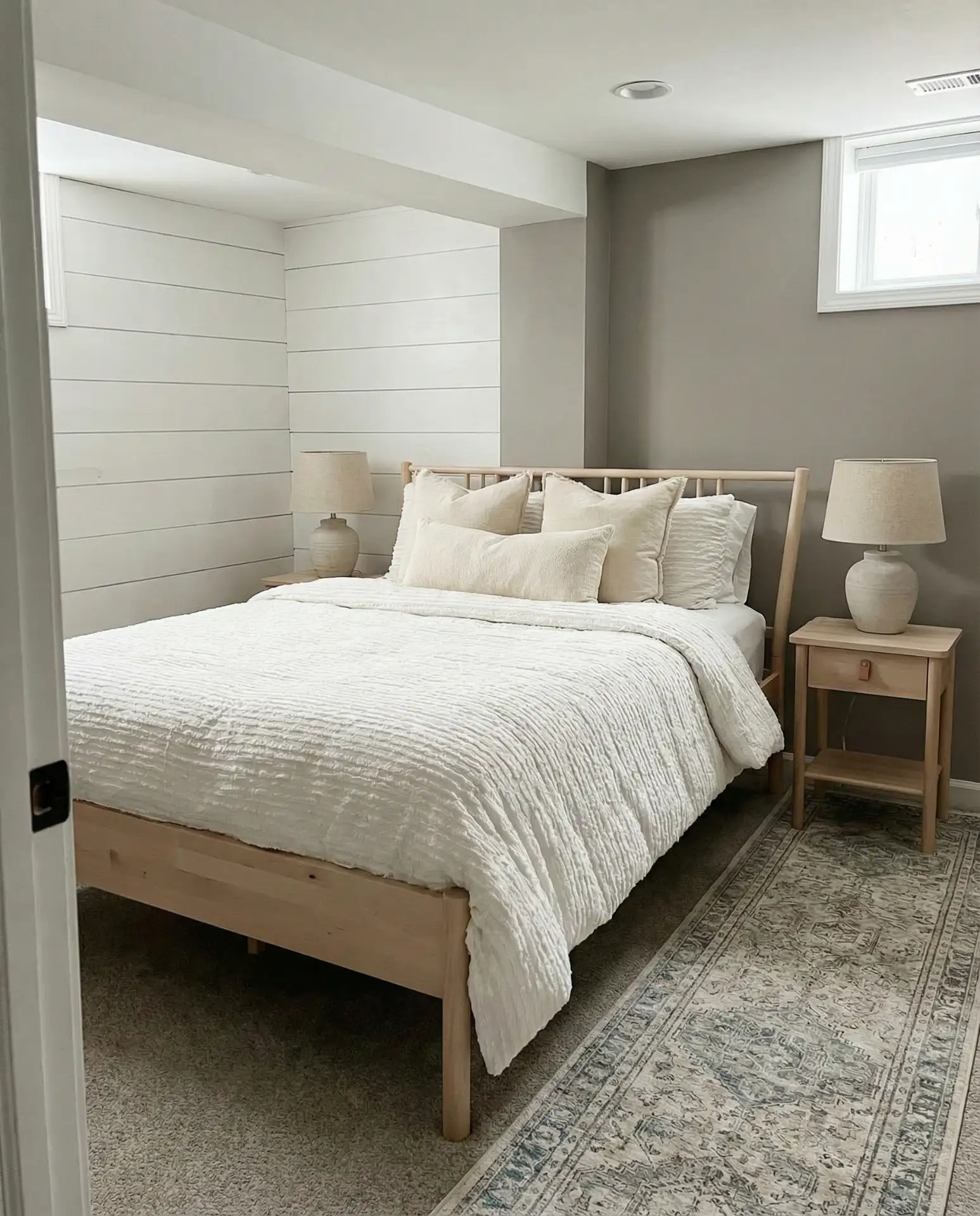
Micro-anecdote: a couple in Nashville installed pre-primed shiplap boards from their local big box store over a weekend for under $400. They’d been quoted $2,800 by a contractor for the same wall. The result was indistinguishable from professional work—and it became the most-saved photo from their home tour on social media. Sometimes the best basement bedroom upgrades are the ones you do yourself on a Saturday.
17. Layered Textile Approach
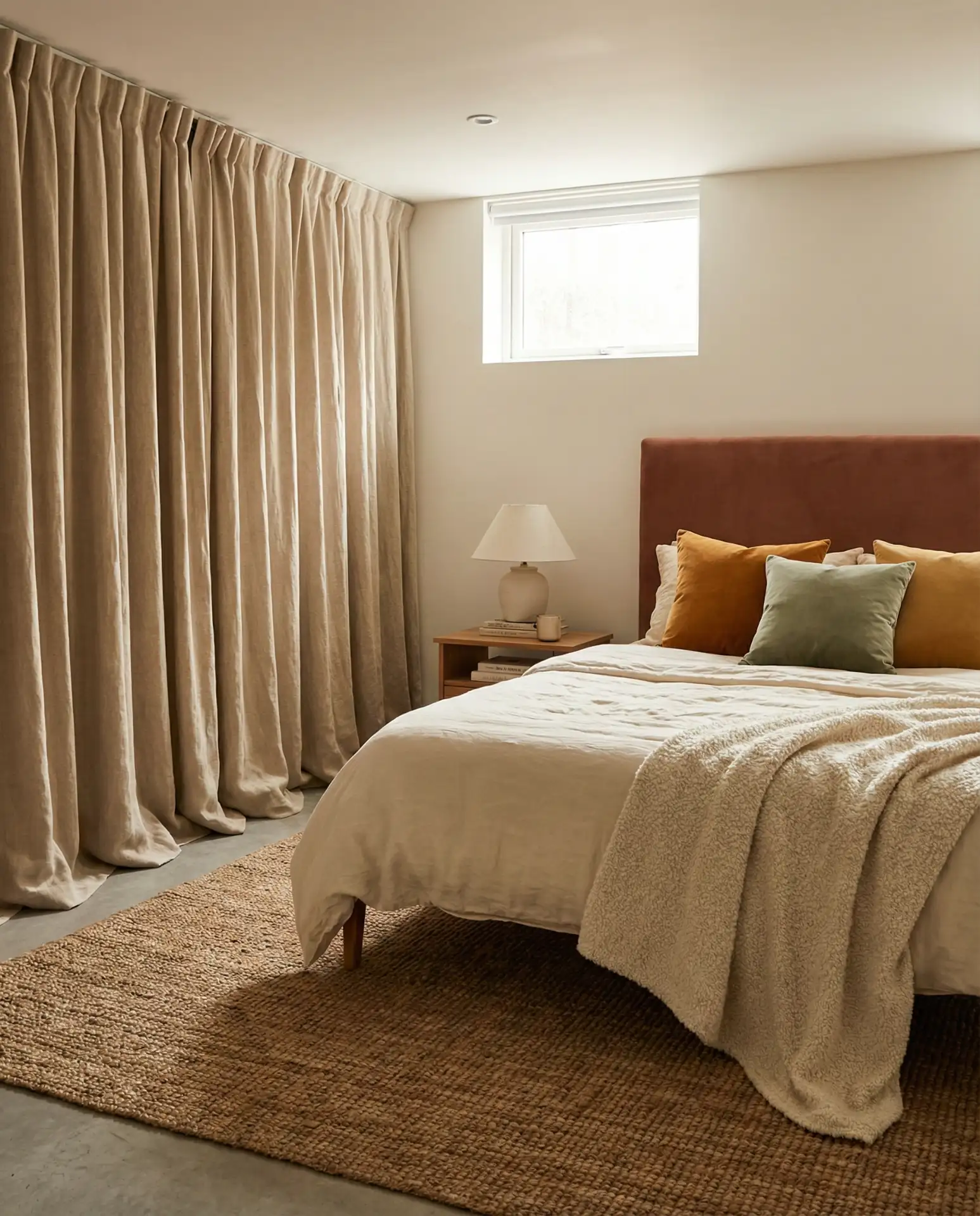
Basements are acoustically hard—concrete walls and floors bounce sound in a way that makes rooms feel cold and echoing. The solution isn’t just aesthetic: it’s physical. A layered textile approach—area rug, curtains, throw pillows, and upholstered headboard—absorbs sound and makes the room feel cozy in a measurable way. For the finished basement bedroom that feels like a real room rather than a retrofitted storage space, textiles are the most important investment.
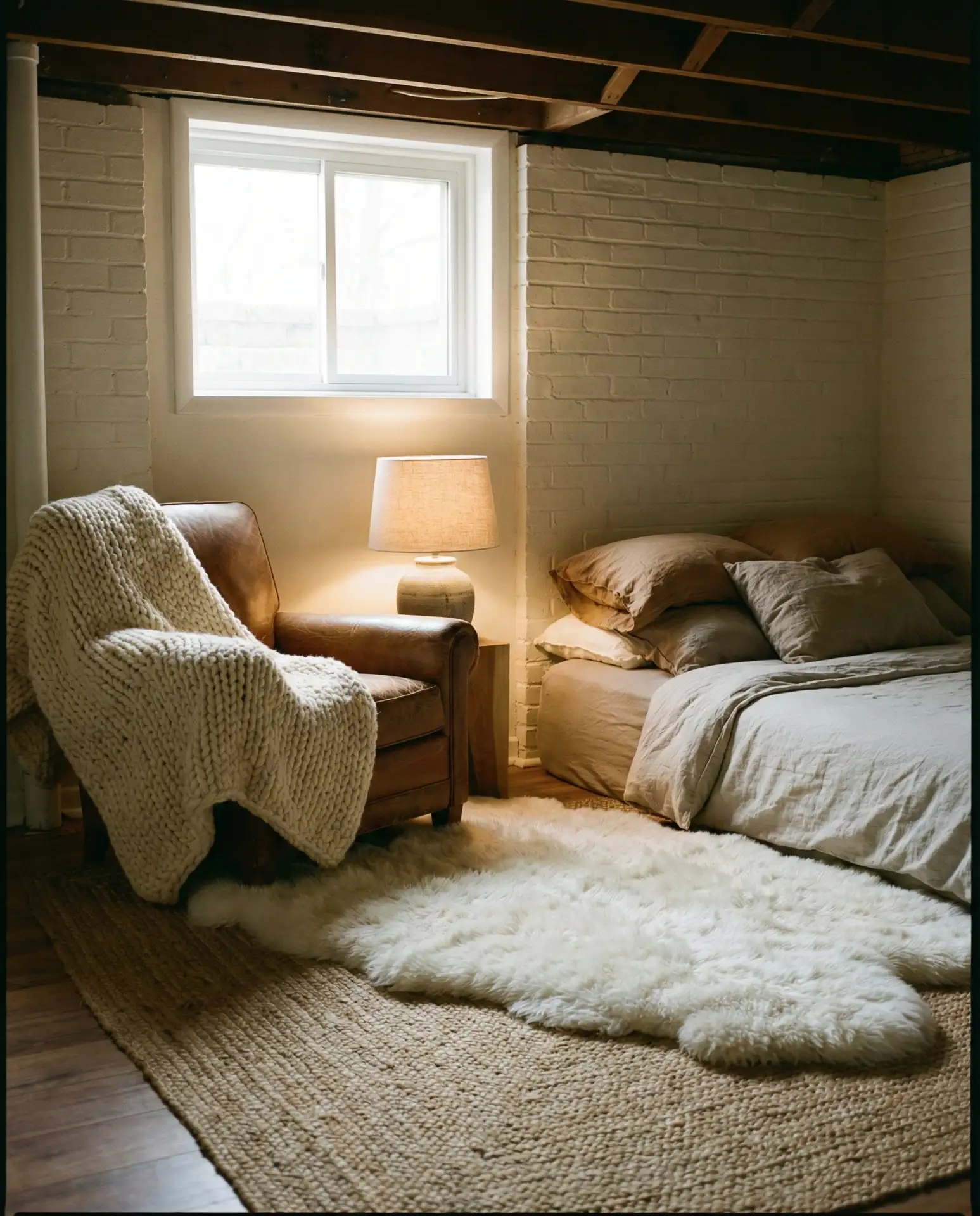
Real homeowner behavior shows that people consistently underestimate how much rugs matter in a basement bedroom—then install one and can’t believe the difference. A large, thick rug not only adds visual warmth but also actually creates a thermal barrier between the bed and the cold concrete or tile floor below. In cooler climates, this alone can make the difference between a basement bedroom that feels pleasant year-round and one that only works in summer.
18. Dramatic Wallpaper Statement
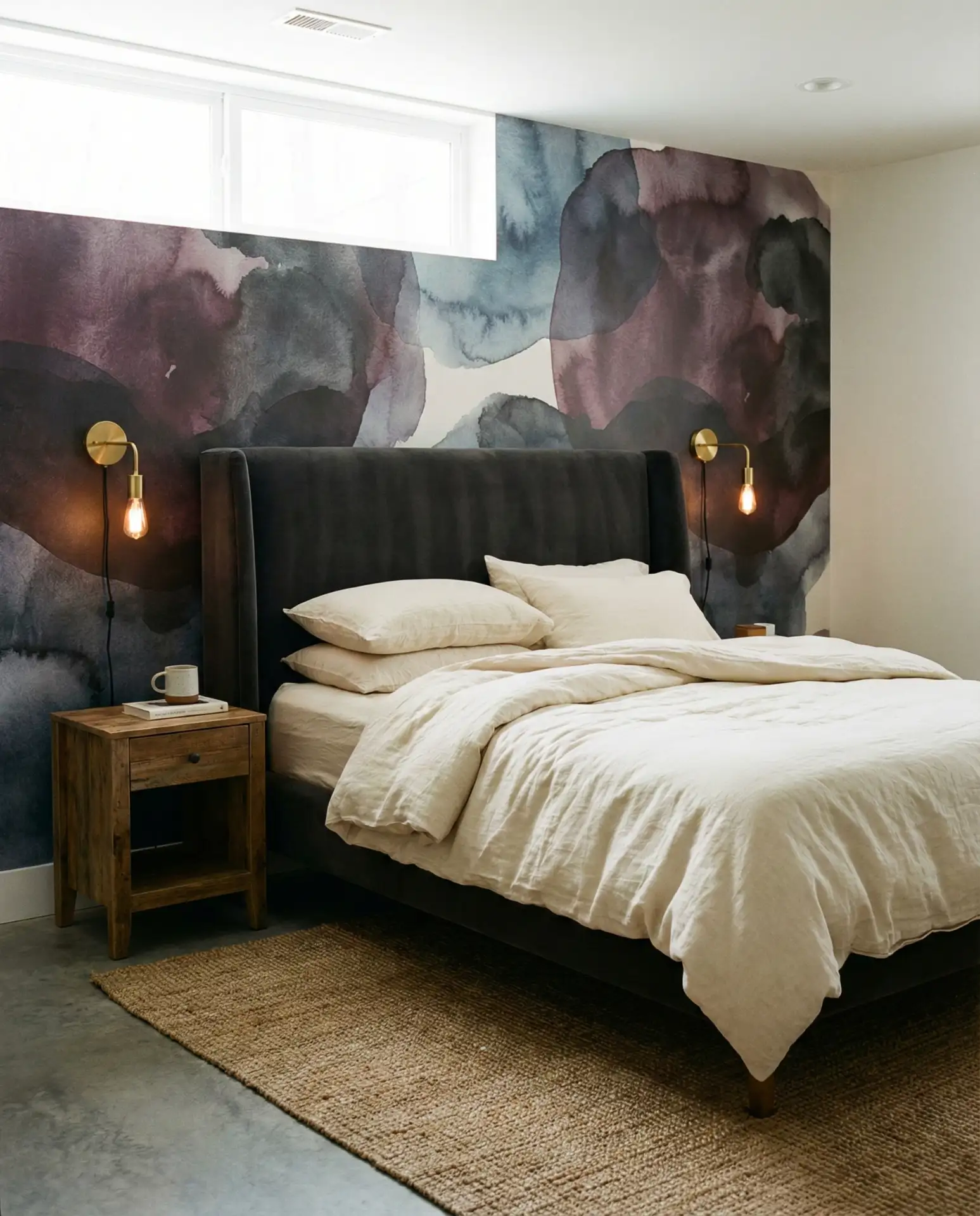
Wallpaper in a basement bedroom is one of those ideas that sounds risky but almost always delivers. A single wallpapered accent wall—especially behind the bed—instantly elevates the room from functional to editorial. In 2026, the patterns driving the most basement bedroom inspo on Pinterest are bold botanicals, abstract watercolor prints, and moody geometric textures in dusty jewel tones. It’s a confident, aesthetic move that doesn’t require a renovation.
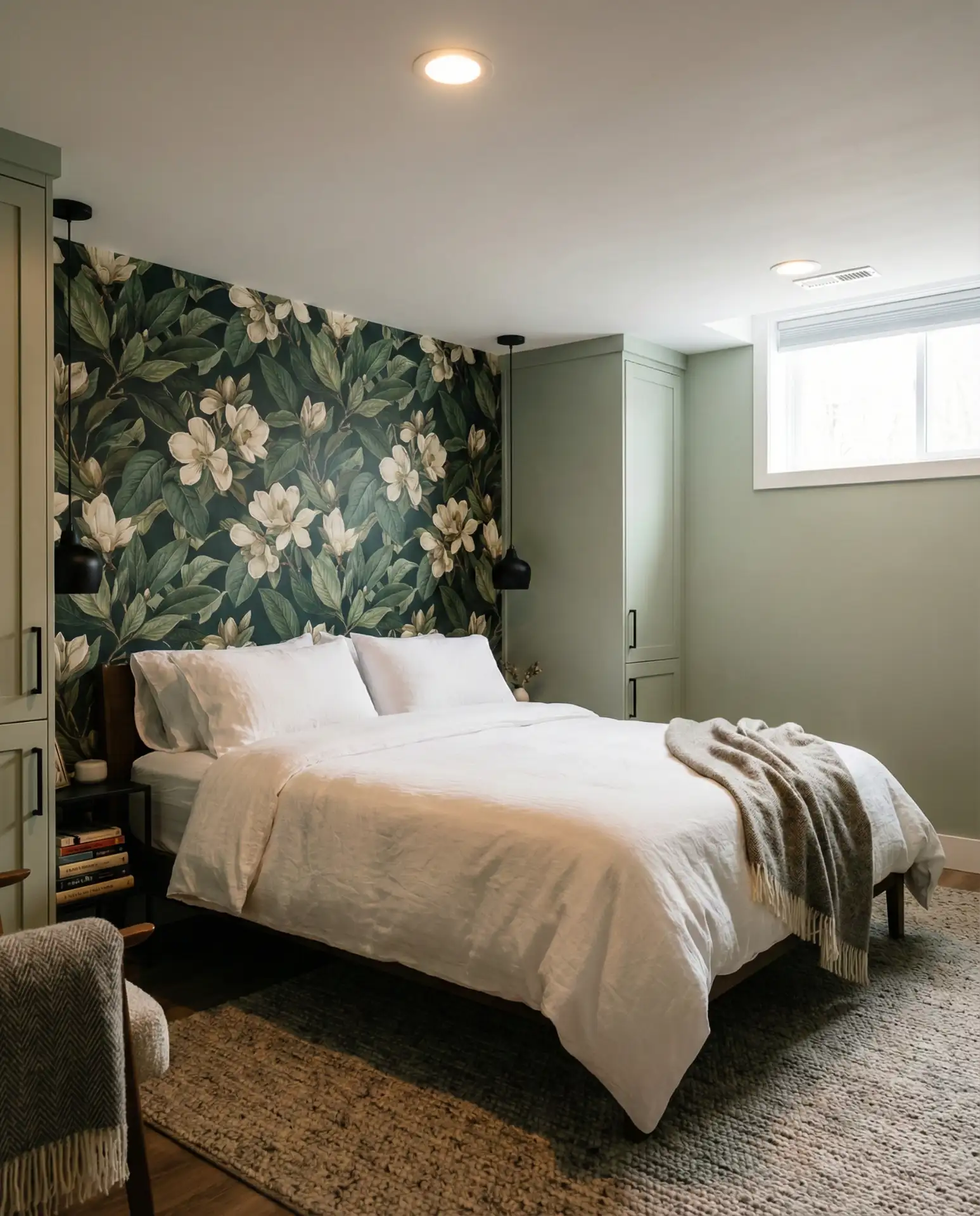
The wallpaper caveat in basement spaces: moisture is the enemy. Before hanging anything, check for any signs of seeping, efflorescence, or humidity issues and address them first. Peel-and-stick wallpaper is a particularly smart choice for basement bedrooms because it can be removed without damage if moisture becomes an issue—and in rental situations or unresolved spaces, it’s a commitment-free way to get the full dramatic effect without permanence.
19. Built-In Storage Solutions
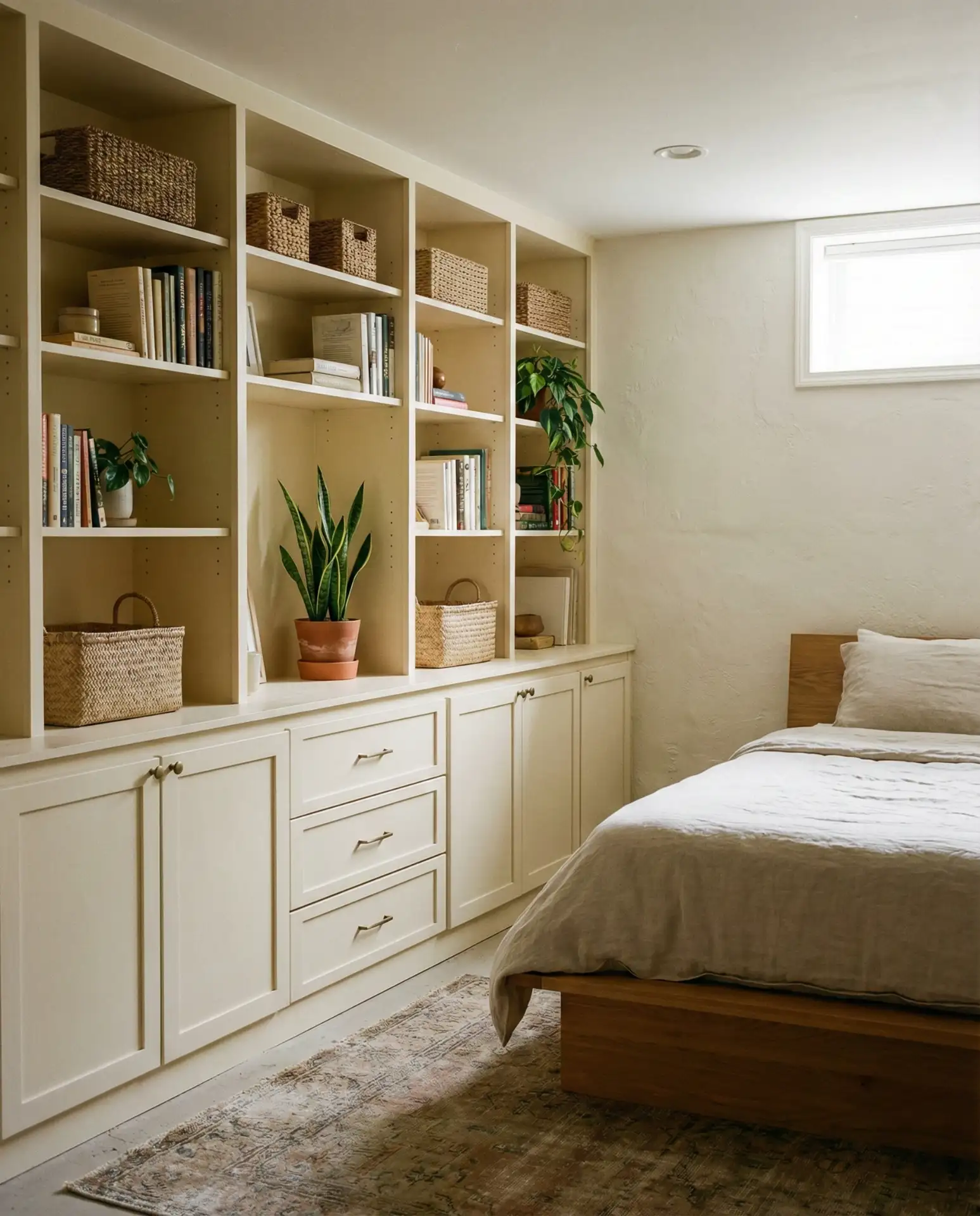
One of the most common complaints about basement bedrooms is the lack of closet space—particularly in older homes where the basement was never intended to be living space. The solution is built-ins, and in 2026, the most popular basement bedroom makeover approaches involve floor-to-ceiling built-in wardrobe systems along one full wall. IKEA’s PAX system has become the standard affordable solution, offering custom-looking results at a fraction of custom millwork pricing.
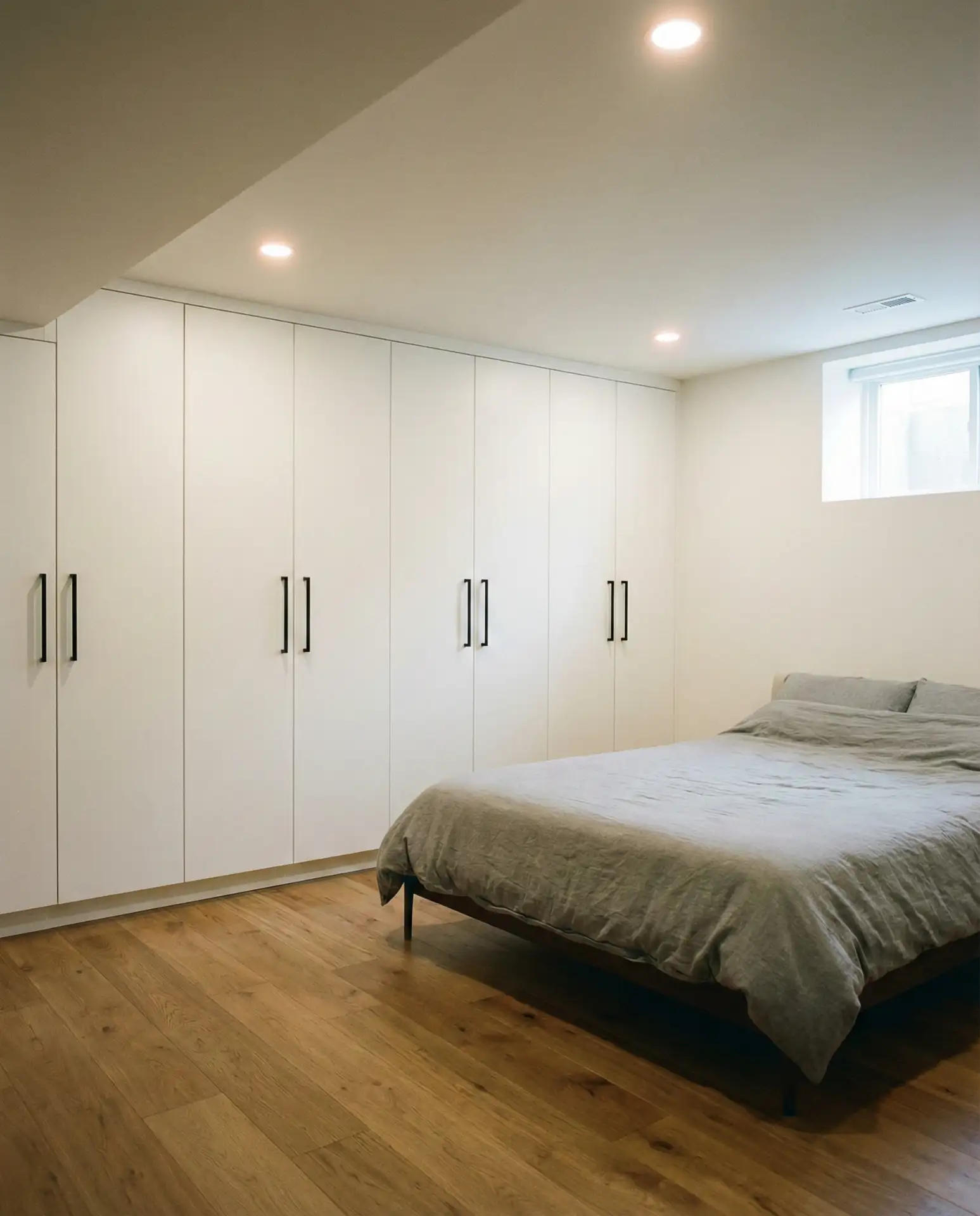
Where this works best is in long, narrow basement bedrooms where one full wall can be dedicated to storage without eating into the floor plan. The visual continuity of wall-to-wall built-ins actually makes the room feel larger rather than smaller—the eye reads a single organized surface rather than a collection of mismatched furniture pieces competing for attention. It’s one of the smartest layout decisions you can make in a basement bedroom.
20. Scandinavian-Inspired Minimalism
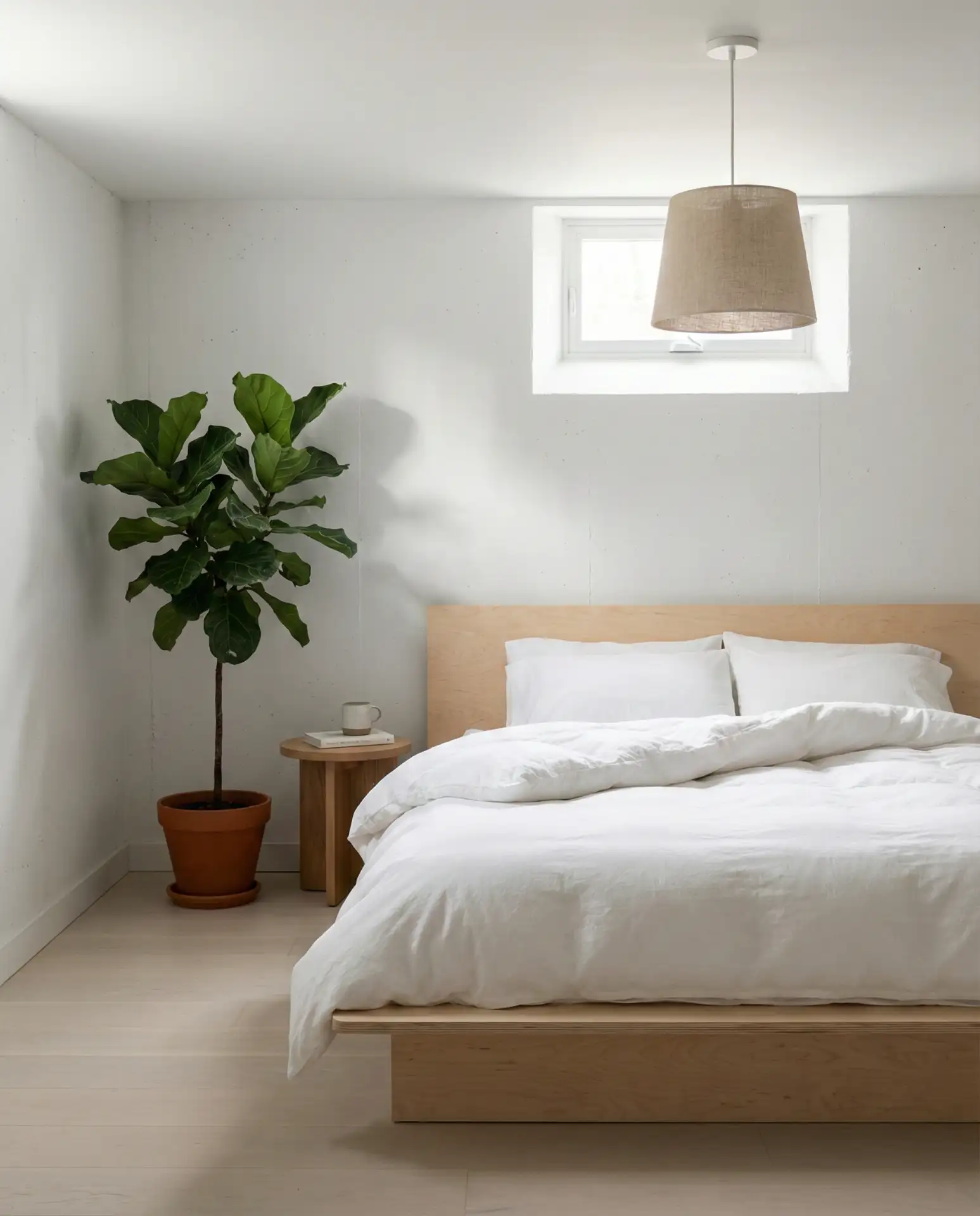
The Scandinavian aesthetic has been a basement bedroom go-to for years—and for good reason. The design philosophy’s central tenet of hygge (coziness) and its emphasis on warm natural materials translates almost perfectly to below-grade spaces. Light wood, white linen, clean lines, and a single statement plant are enough to create a basement bedroom that looks finished, livable, and genuinely beautiful without overthinking it. This approach works on nearly any budget.
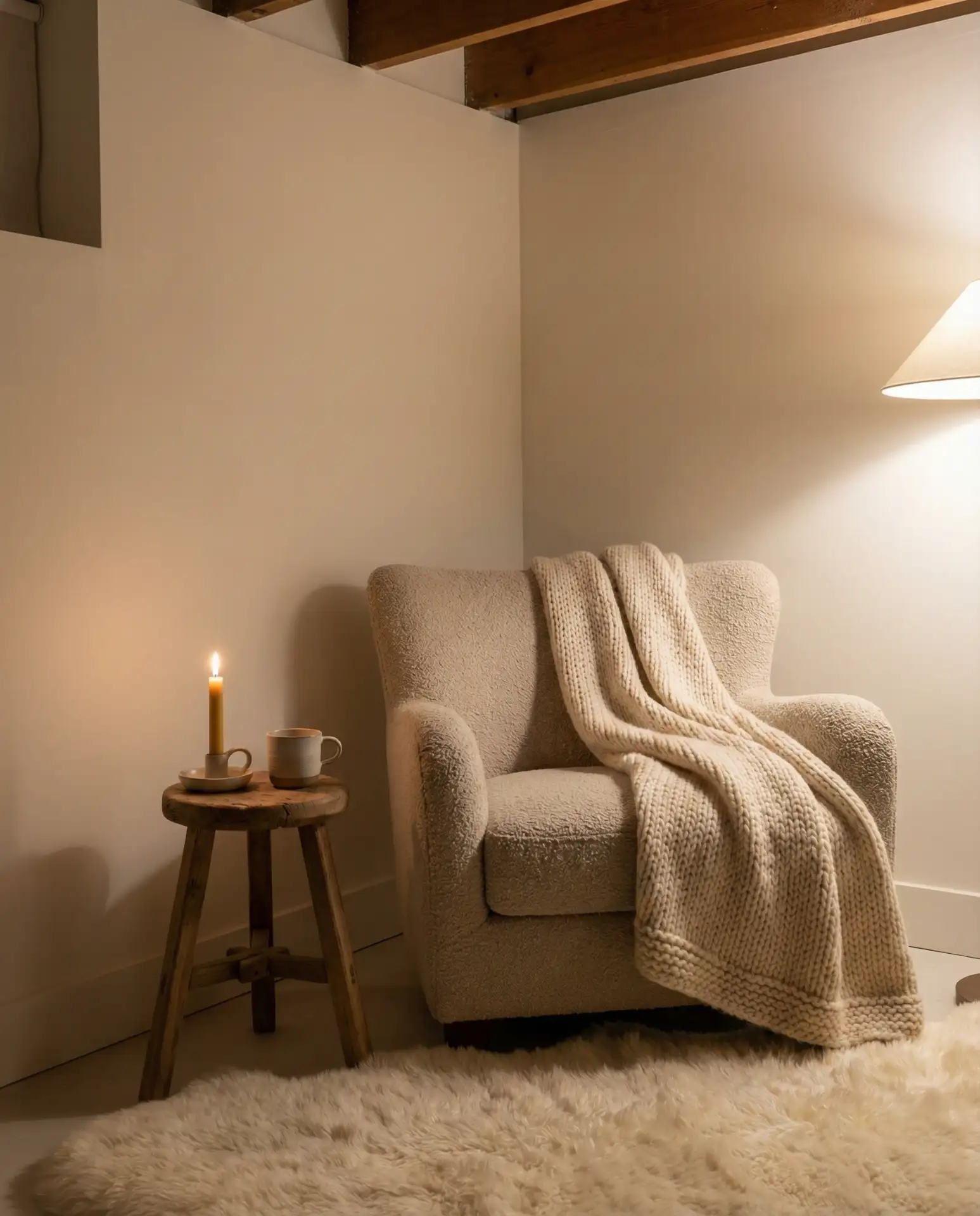
Expert-style commentary: interior designers who specialize in Scandinavian-influenced spaces often note that the style’s discipline—only keep what you love and use—is actually harder to maintain than it looks on Pinterest. The empty space between objects is a design element, not a failure to decorate. In a basement bedroom where square footage may be limited, that philosophy is particularly useful: restraint creates breathing room, and breathing room is what makes a small basement bedroom feel like a sanctuary.
21. Industrial Loft Vibe
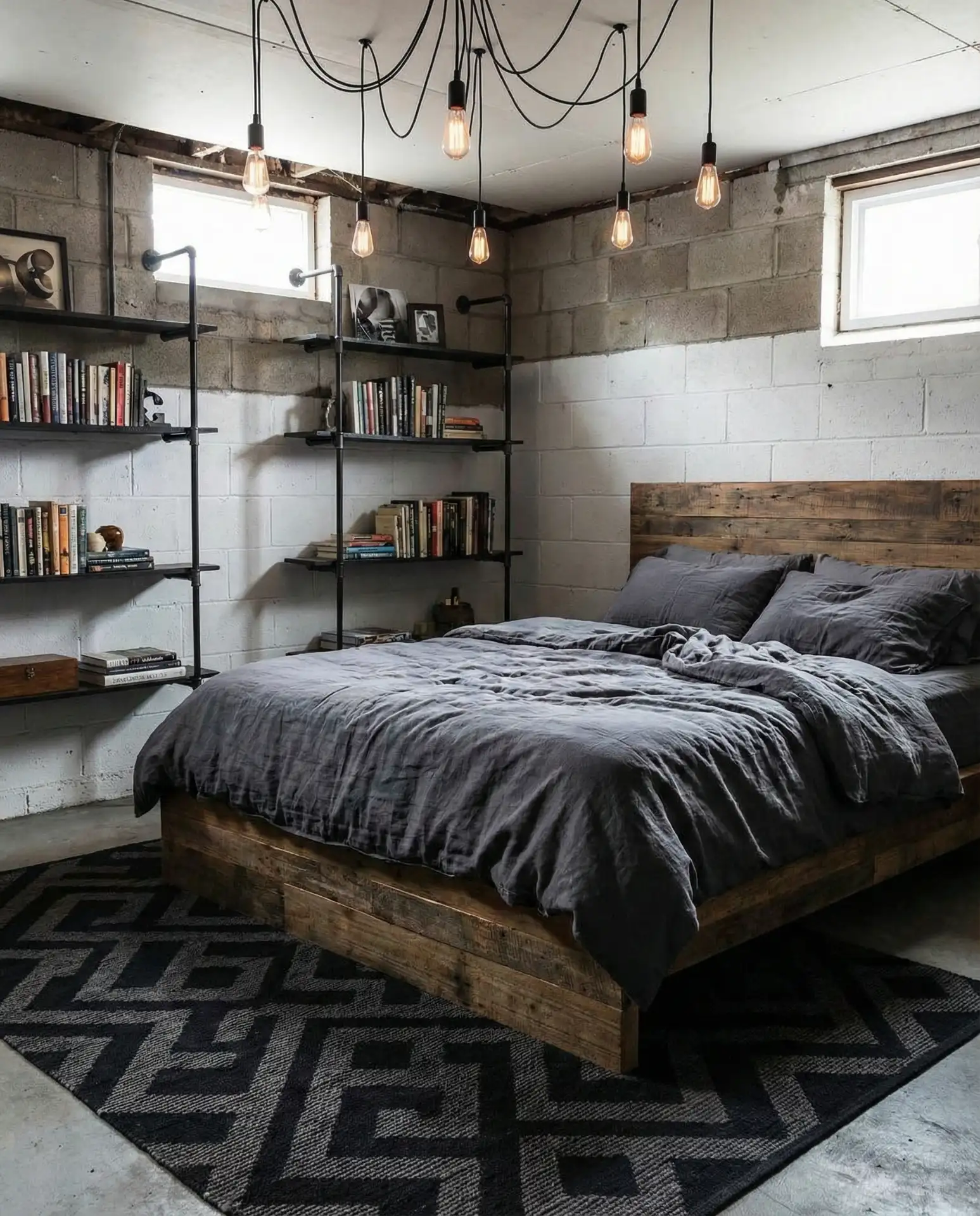
If any bedroom style was born for a basement, it’s industrial. Exposed concrete walls, black steel shelving, Edison bulbs, reclaimed wood accents, and mechanical pipe details are all elements that basements provide for free—you just have to stop covering them up. This basement bedroom aesthetic works particularly well for young homeowners and renters who want something that feels genuinely urban without paying Manhattan prices. The moody industrial look is low-maintenance and high-character.
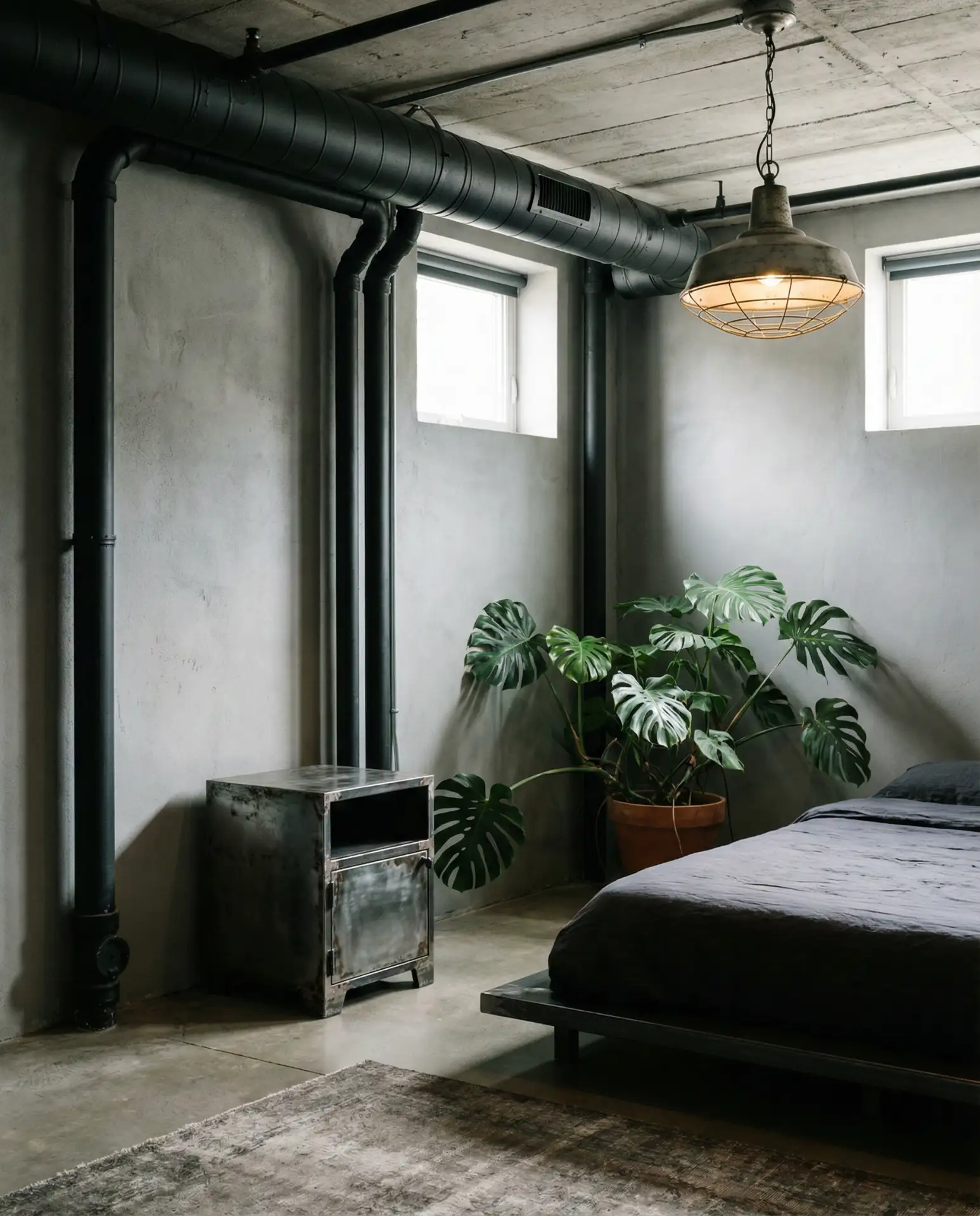
American lifestyle context: the industrial aesthetic has particularly strong appeal in the Midwest and Northeast, where older home stock often comes with exactly the raw basement bones that this style celebrates. In cities like Detroit, Cleveland, and Pittsburgh, where mid-century homes are being renovated by a new generation of homeowners, the industrial basement bedroom has become a defining aesthetic of the urban home revival movement. It’s a look that respects the building’s history while making it livable for today.
22. Guest Suite With Hotel-Level Comfort
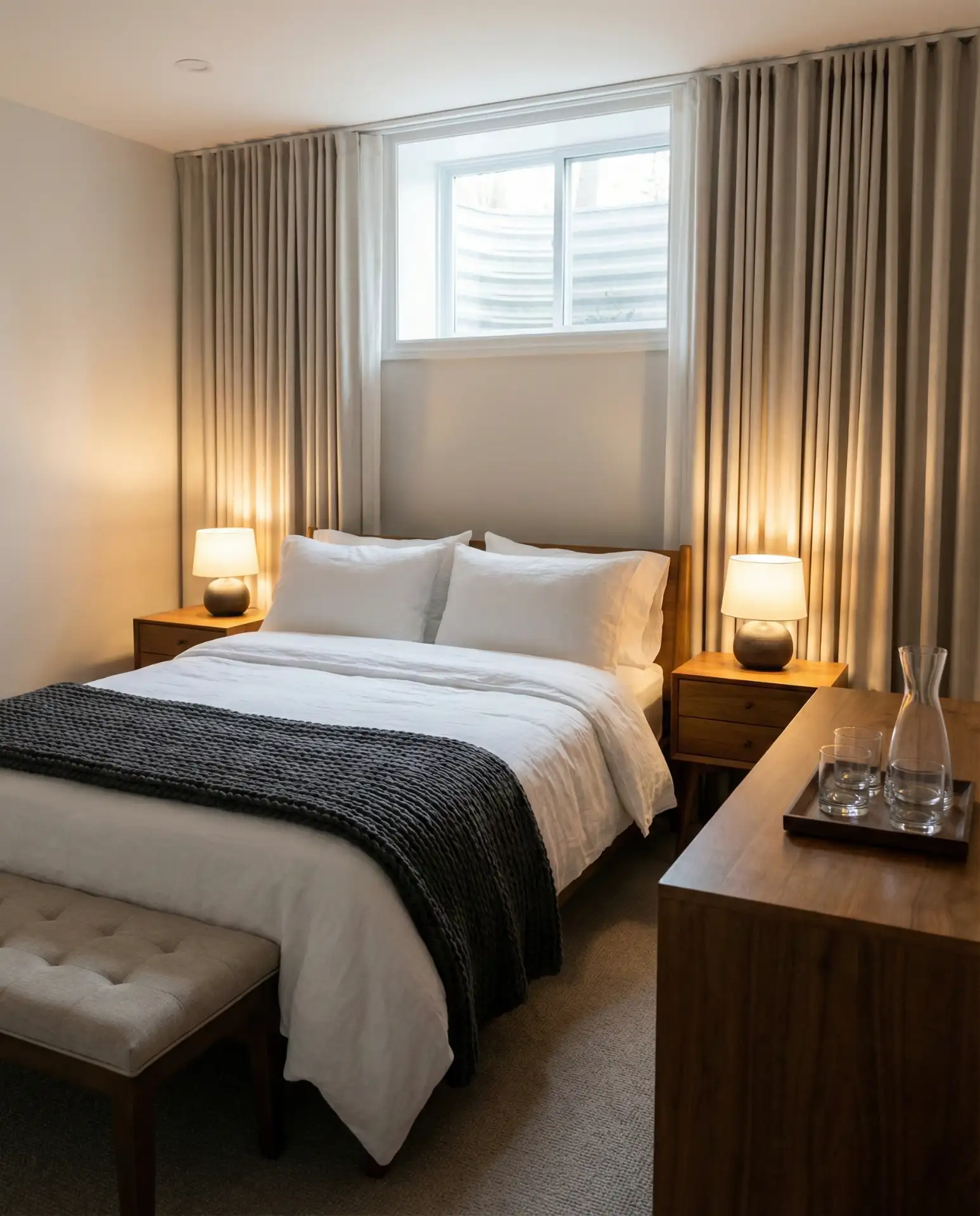
The best basement guest bedrooms treat visitors like hotel guests—and the details that make that possible are more achievable than most homeowners realize. A quality mattress, high-thread-count linens, blackout curtains (basements are naturally dark, which helps), and a small dedicated space for luggage and personal items are the fundamentals. Add a bedside carafe of water, a folded towel on the foot of the bed, and a USB charging station, and you’ve created something that people will genuinely want to return to.
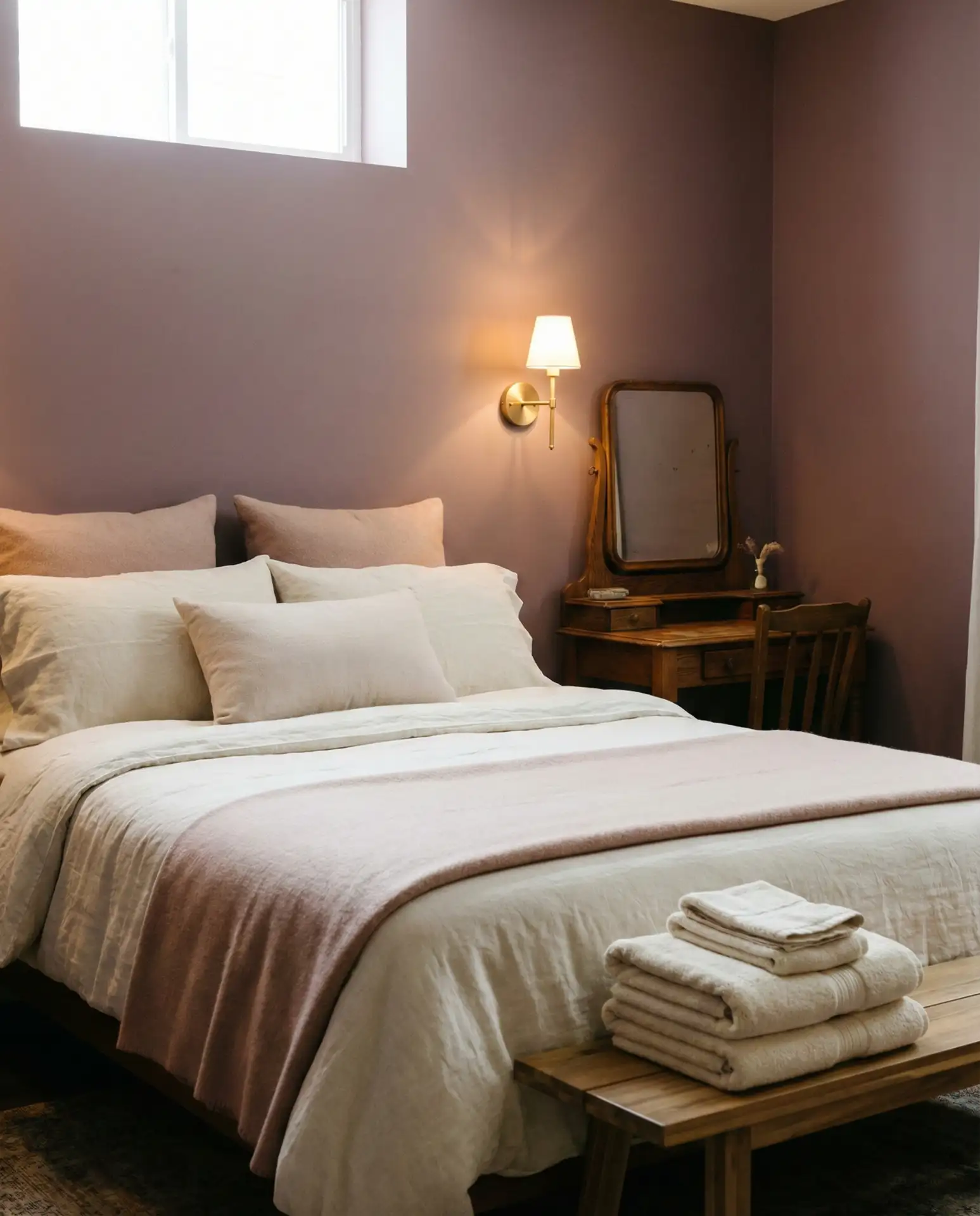
Where this works best is in homes that regularly host family visits—think holiday gatherings, summer stays, and milestone celebrations. Investing in the basement guest suite pays dividends in relationship quality. One homeowner reported that their in-laws—previously hotel-stayers on every visit—now actually prefer the basement suite and have extended their stays since the room was upgraded. Comfort is a form of generosity that people remember.
23. Basement Bedroom for the Remote Worker
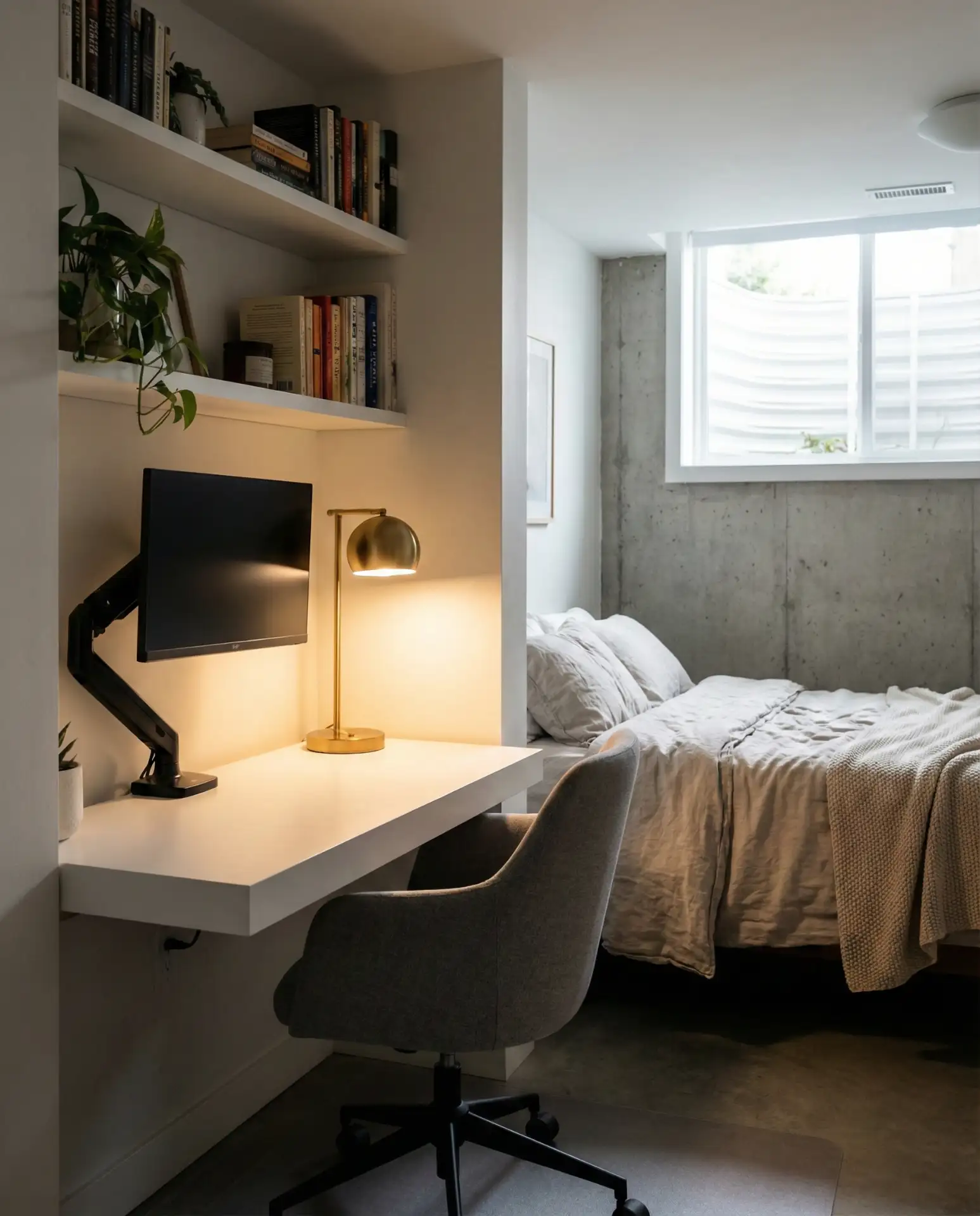
In post-pandemic America, the basement bedroom has taken on an additional function for millions of households: it’s also the home office. The layout ideas that support this dual life are specific—a dedicated desk zone that feels separate from the sleeping area, smart lighting that can shift from work-appropriate brightness to evening ambiance, and acoustic considerations that make video calls sound professional. The cozy bedroom and functional office don’t have to fight each other.
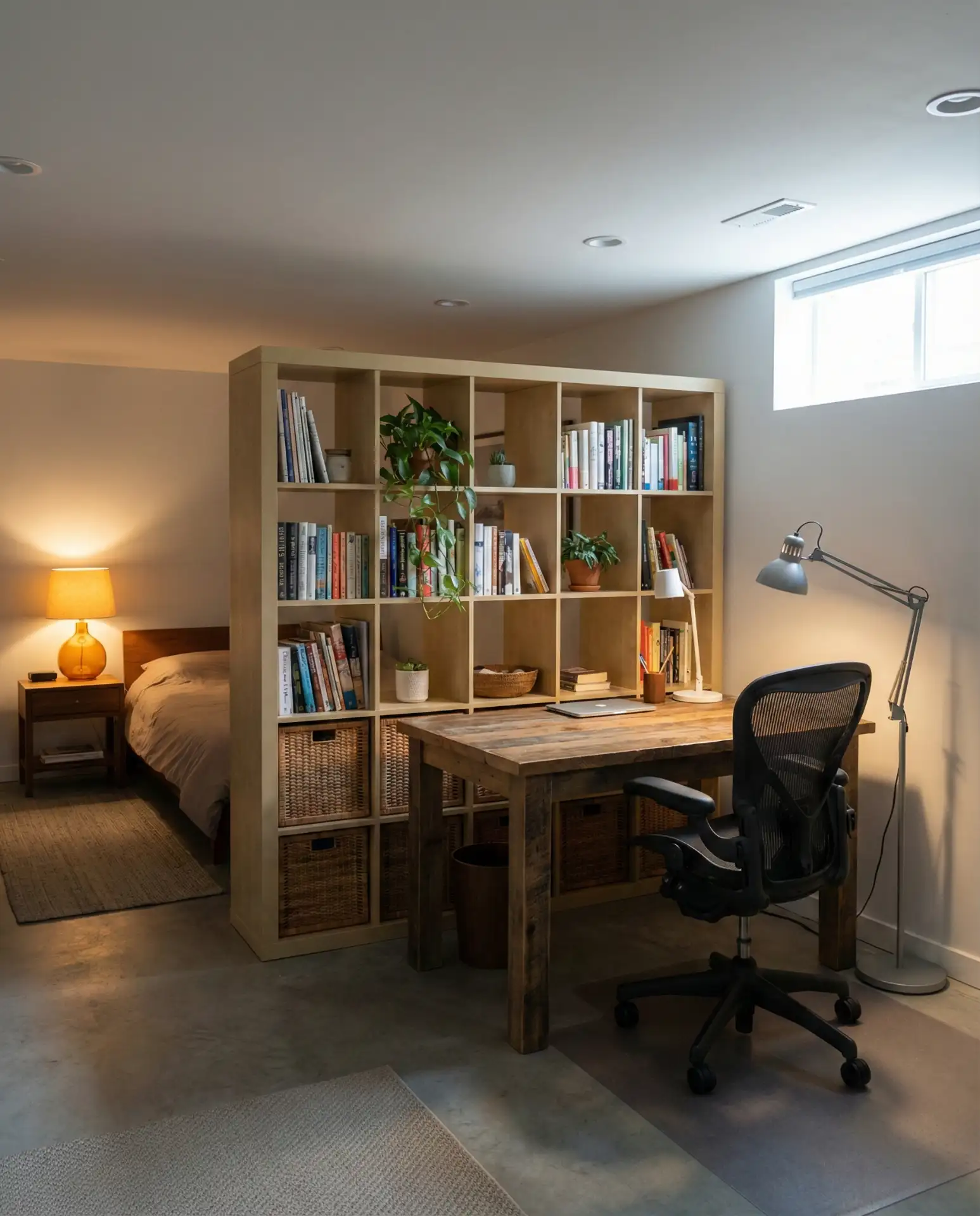
The most effective trick for making a bedroom-office combo feel psychologically healthy is physical separation, even if subtle. A bookshelf acting as a room divider, a rug that defines the sleep zone separately from the work zone, or even a curtain that can close off the desk area at night all help the brain understand when it’s time to rest versus time to work. In a basement bedroom office, that mental separation is the difference between a space that serves you and one that quietly stresses you out.
24. Boho Basement Bedroom
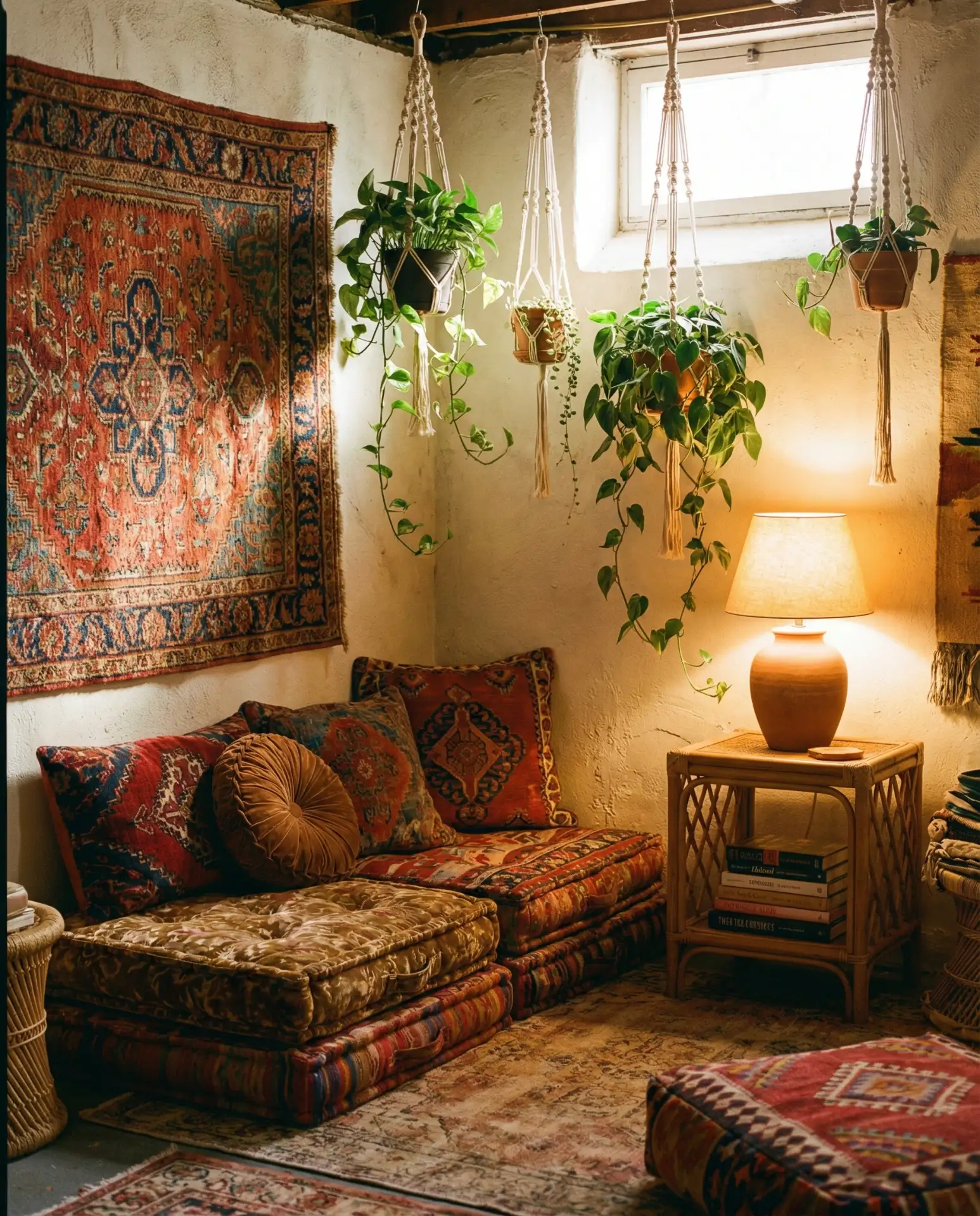
Bohemian design and basement bedrooms have an underappreciated natural compatibility. The boho aesthetic’s celebration of texture, layering, plants, and collected objects does exactly what a basement bedroom needs: it fills the space with warmth, personality, and life. Macramé wall hangings, patterned kilim rugs, rattan furniture, trailing plants on high shelves, and a canopy of fairy lights combine into something that feels genuinely personal and alive—the opposite of the sterile, unfinished basement stereotype.
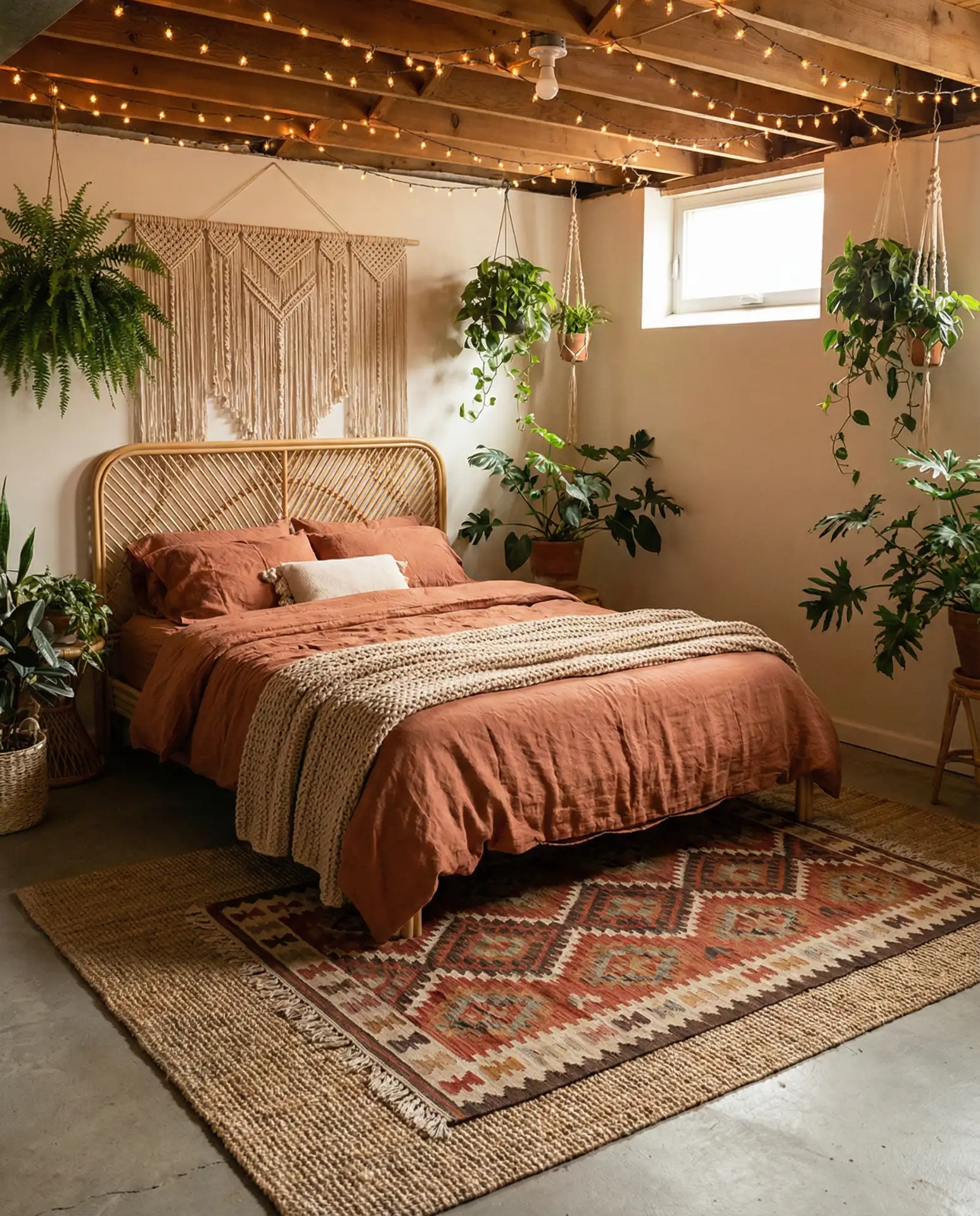
The boho aesthetic is also one of the most thrift-friendly design styles available, which makes it a natural for basement bedroom ideas on a budget. Vintage shops, estate sales, and Facebook Marketplace are the best sources for the one-of-a-kind pieces that give bohemian spaces their character—and finding them is half the fun. This is a room that actually improves as your collection grows, rewarding patience and curiosity over big-ticket purchases.
Conclusion
Whether you’re working with an empty shell or breathing new life into a room that never quite came together, there’s a basement bedroom idea in this list for every budget, taste, and square footage. We’d love to hear what resonated—drop a comment below with your favorite idea, or share a photo of your own basement bedroom project. The best inspiration often comes from real homes, not showrooms.