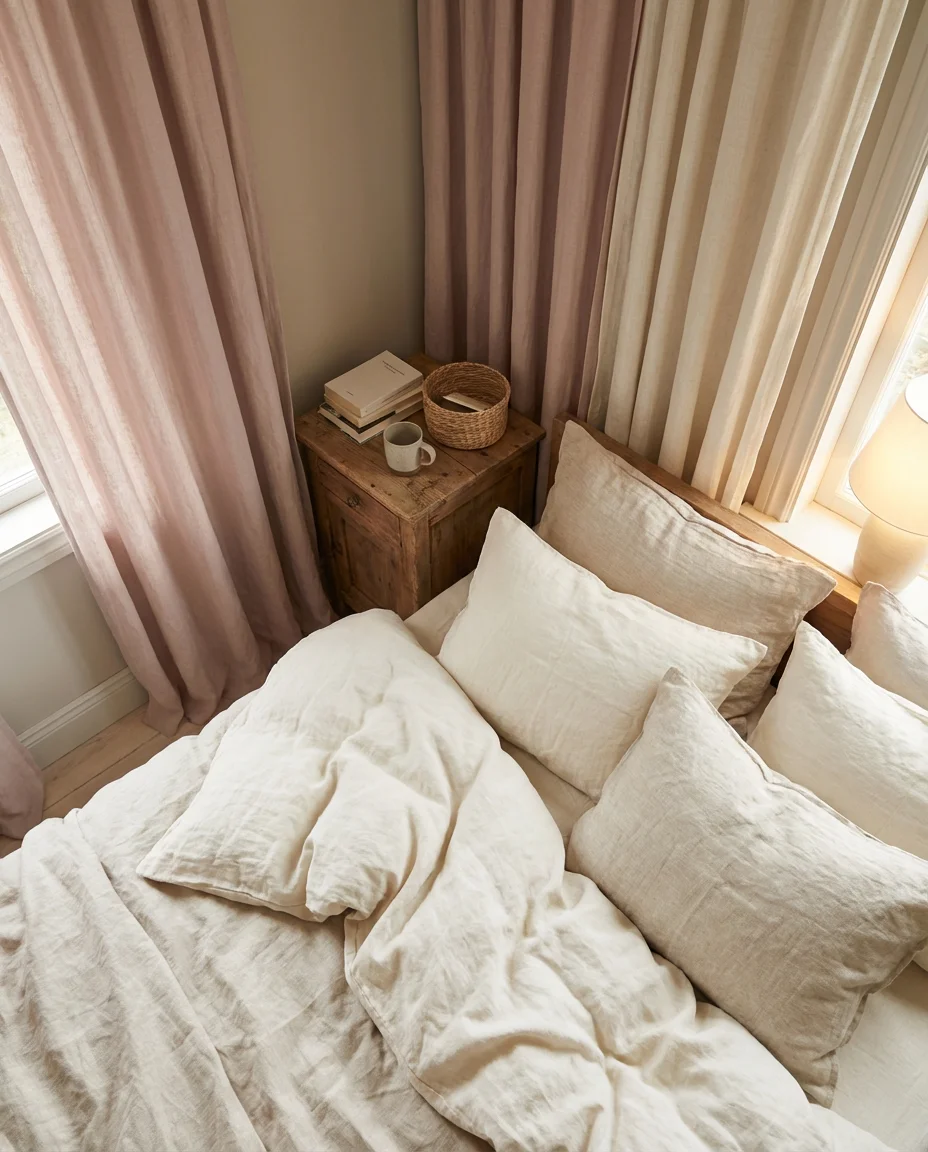
As we move into 2026, bedroom design continues to evolve with fresh approaches that blend comfort, functionality, and personal style. Americans are turning to Pinterest in droves, searching for inspiration to transform their sleeping spaces into sanctuaries that reflect current trends while maintaining timeless appeal. Whether you’re working with a compact urban apartment or a spacious suburban home, this year’s bedroom ideas embrace everything from minimalist aesthetics to cozy layered textures. The following collection showcases 21 distinct approaches to bedroom design, each offering practical solutions and creative inspiration for creating a space that feels uniquely yours.
1. Layered Neutrals with Textural Depth
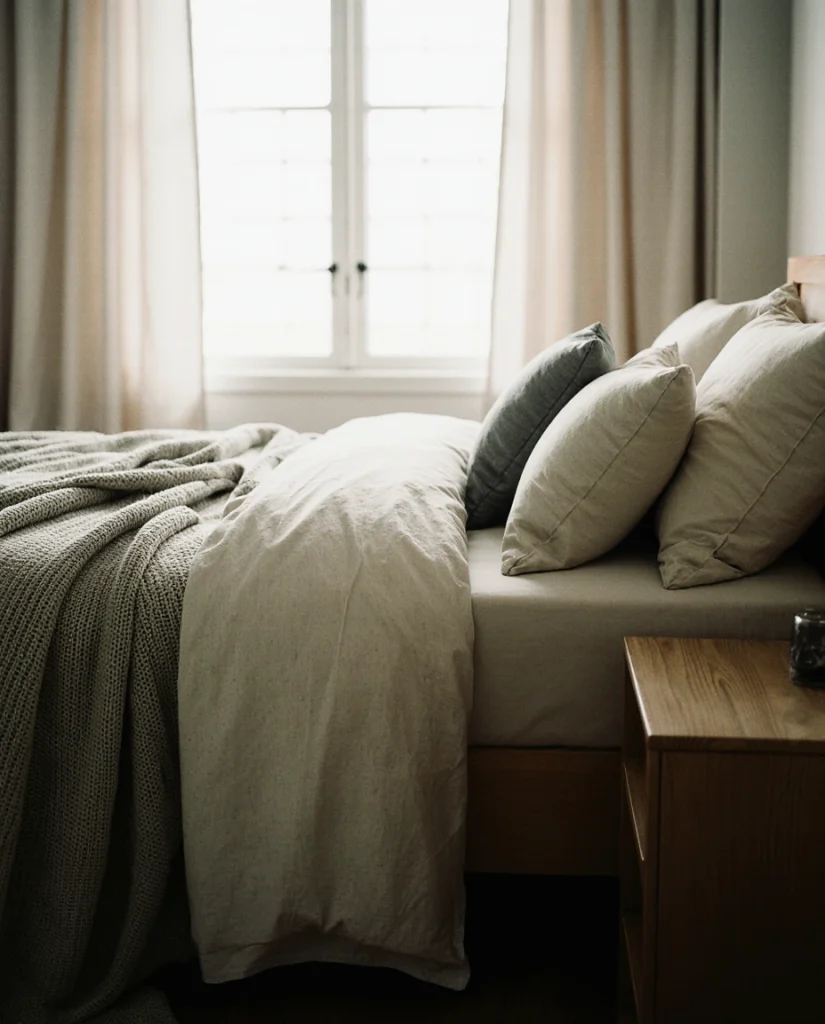
This approach transforms white and grey bedrooms into sophisticated retreats by playing with multiple fabric weights and surface finishes. The concept works beautifully in primary bedrooms where you want a calming foundation that never feels stark or cold. Instead of relying on a single shade, layer cream linens with charcoal throws, add a chunky knit blanket, and incorporate linen curtains that filter morning light softly. 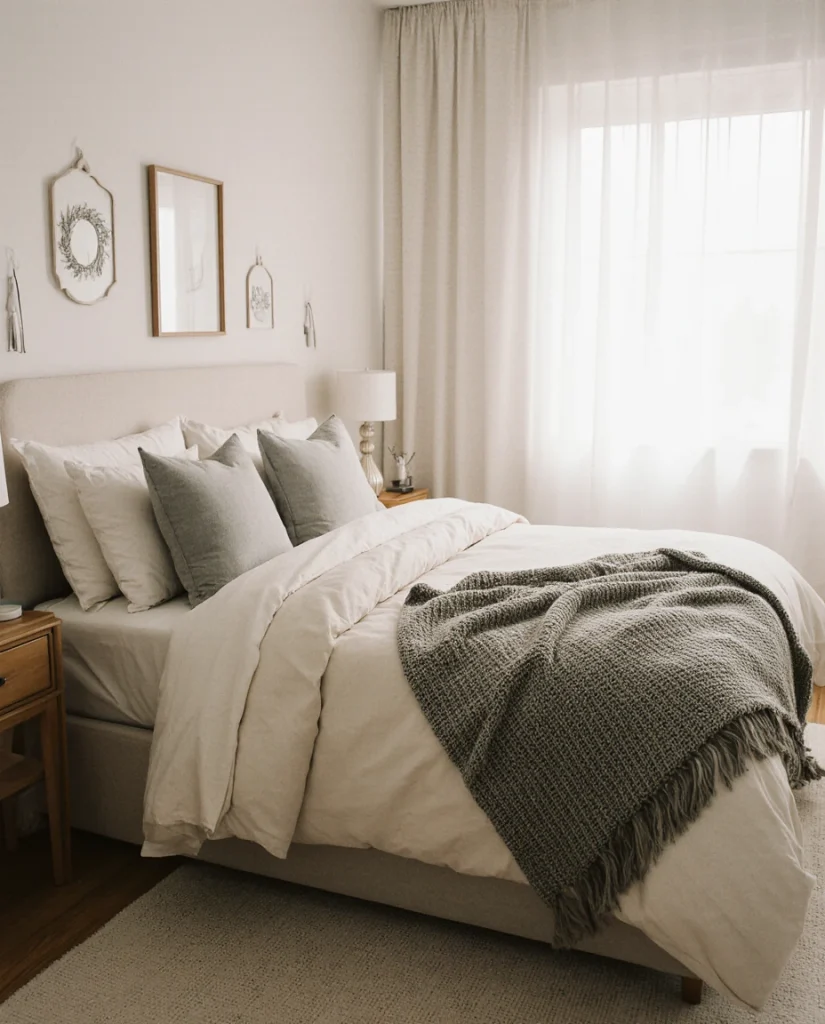
This strategy works particularly well in Northeast homes where natural light can be limited during winter months. The layered textures catch and reflect available light differently throughout the day, creating visual interest without color. Most homeowners find they can update this look seasonally by swapping just one or two textile pieces, making it budget-friendly over time.
2. Compact Sleeping Nook with Built-In Storage
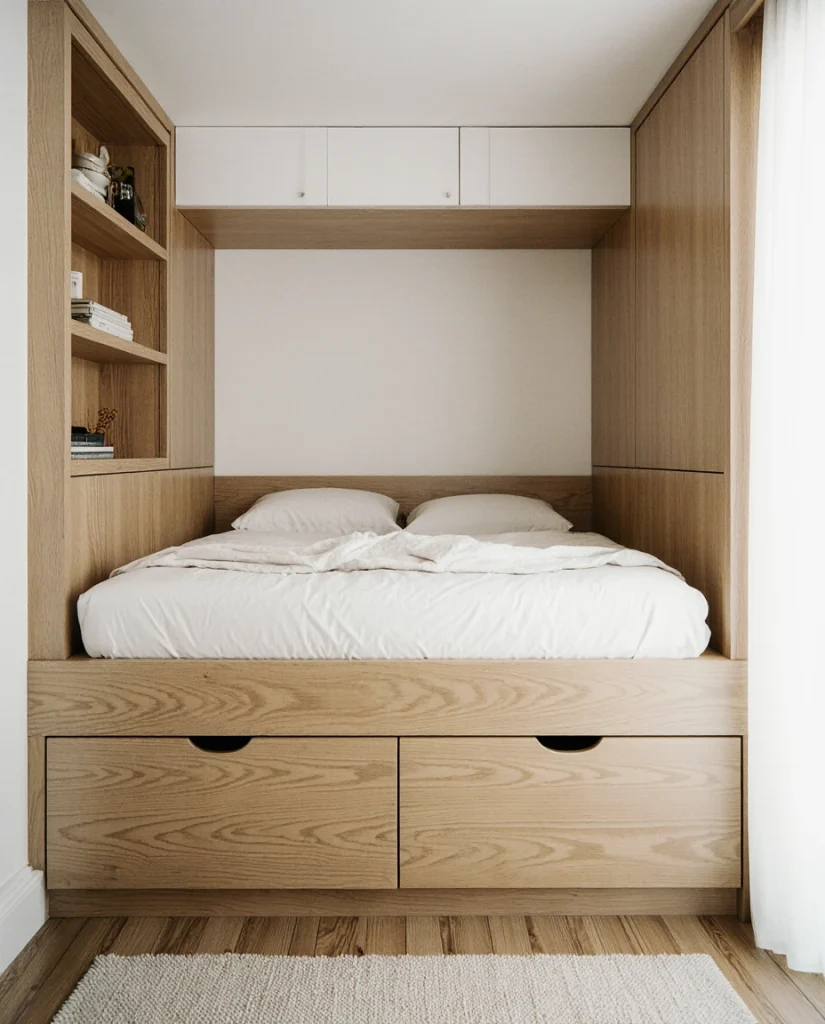
Perfect for small rooms and tiny spaces, this idea maximizes every inch by integrating the bed platform with surrounding storage. Think drawers beneath the mattress, shelving that frames the headboard, and even shallow cabinets that tuck into wall recesses. It’s especially popular in urban apartments where basement conversions or attic renovations demand creative spatial solutions. 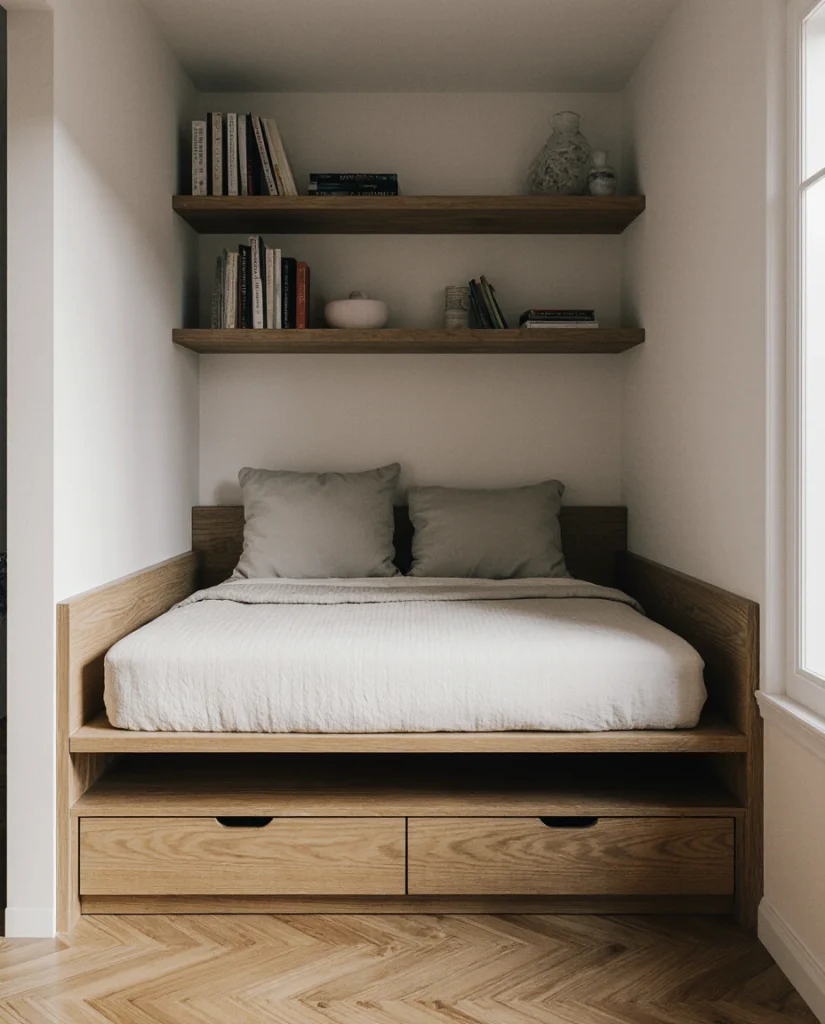
In cities like San Francisco and New York, where square footage comes at a premium, designers report that clients are willing to invest in custom built-ins that make a 10×10 room feel twice as functional. The key is keeping the color palette light and ensuring adequate lighting in storage areas so the space doesn’t feel cramped.
3. Earthy Green Sanctuary
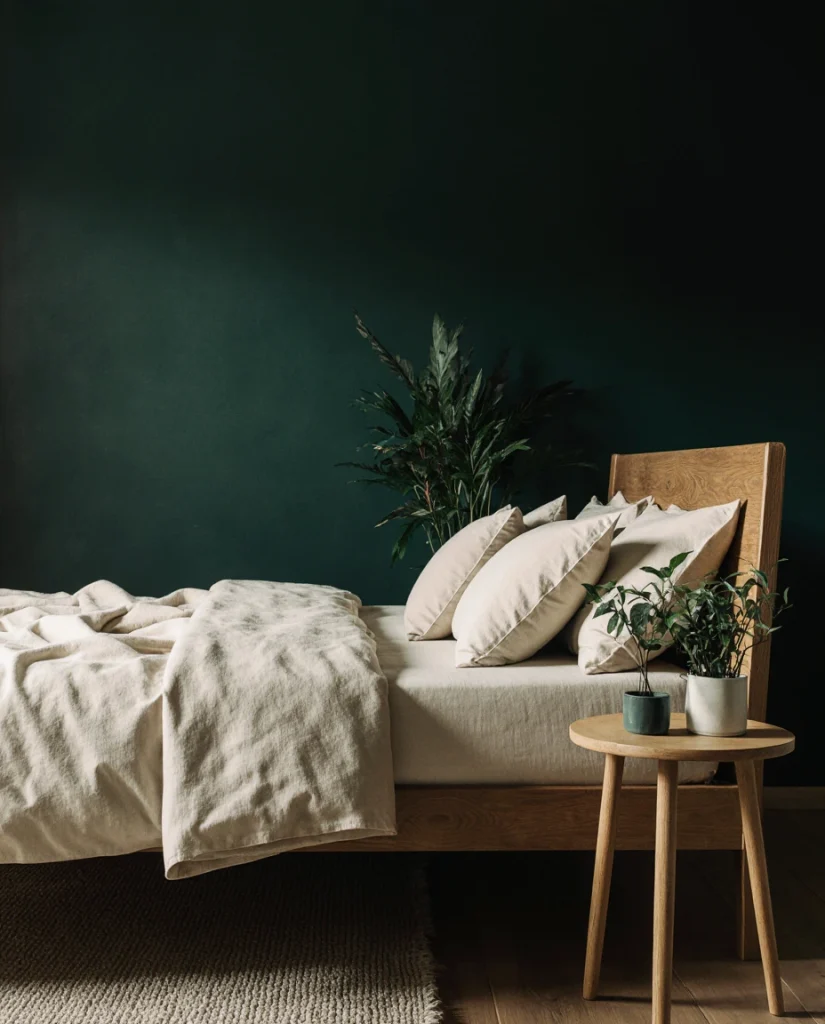
Deep forest green walls paired with natural wood furniture create an immediate sense of calm that appeals to nature-loving Americans. This aesthetic works whether you’re styling a guest room or your own sleeping space, offering a grounding alternative to typical beige or blue schemes. Add live plants, rattan accents, and cream-colored bedding to complete the organic feel. 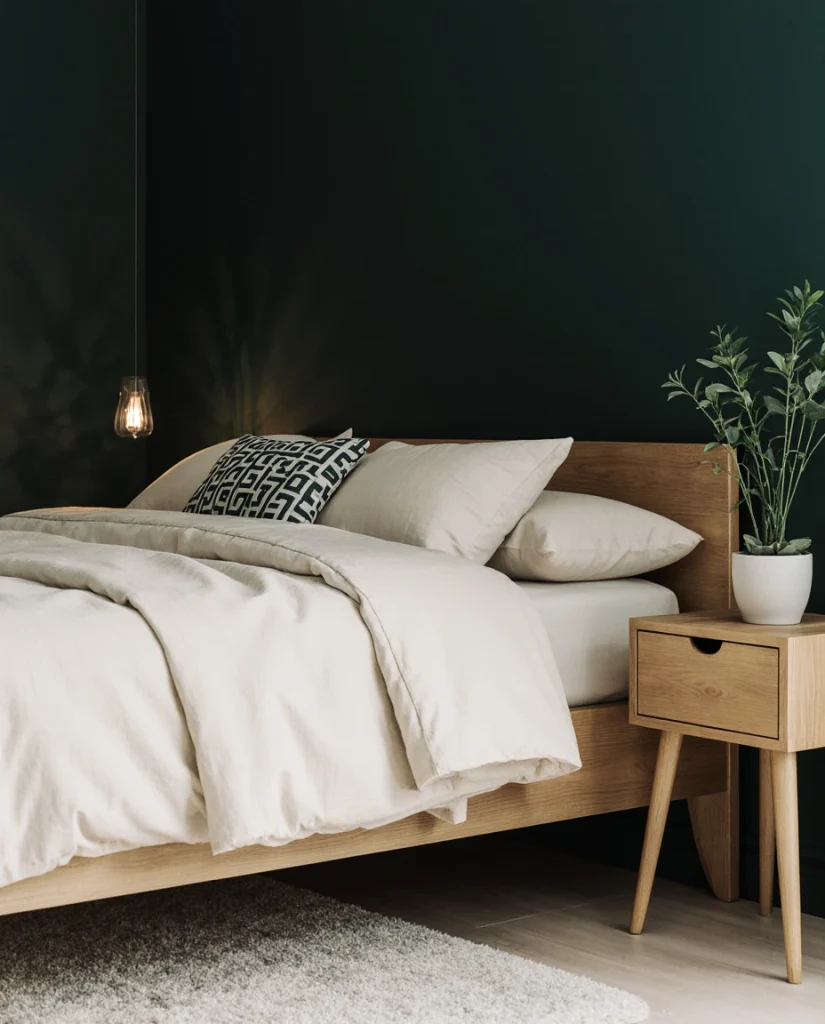
Where it works best: Rooms with good natural light or those facing east, where morning sun brings out the richness of green tones without making the space feel dark. West-facing rooms might need lighter sage variations. Keep window treatments simple and light-filtering rather than blackout to maintain the airy, garden-inspired atmosphere.
4. Monochrome Drama in Black and White
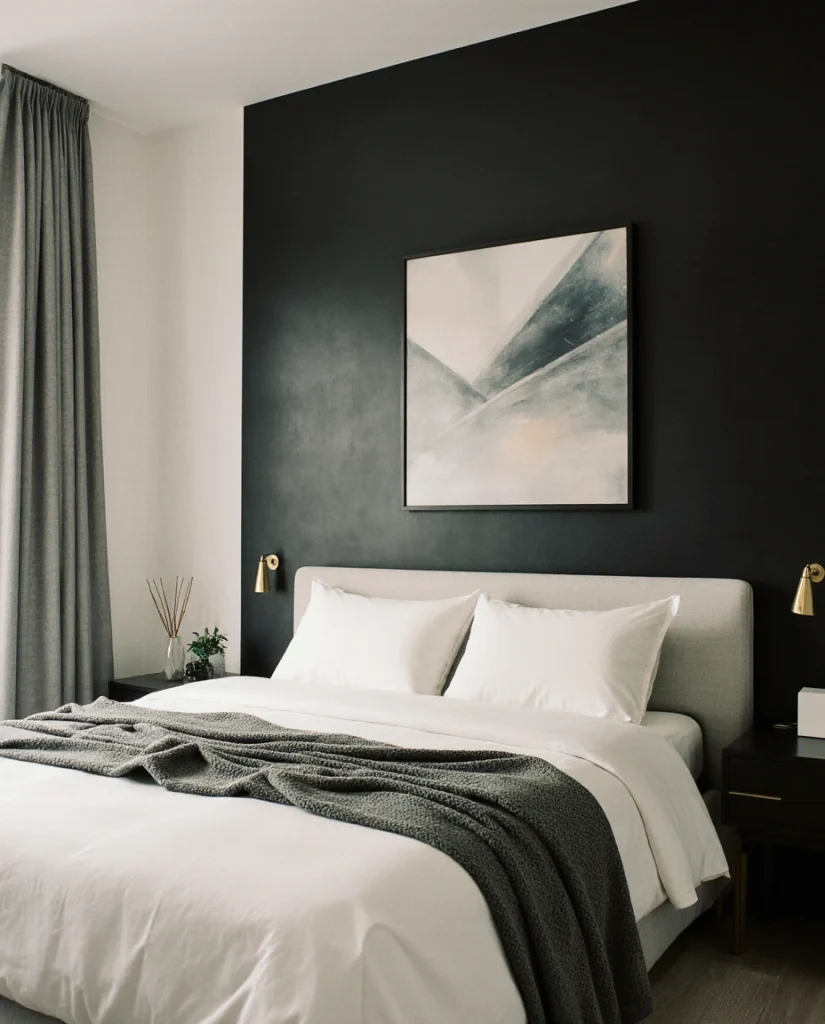
Bold black and white schemes are making a strong comeback, especially in modern lofts and contemporary homes. This isn’t about harsh contrast—it’s about sophisticated layering where charcoal grays bridge the gap between pure white linens and black accent walls. Incorporate graphic artwork, striped textiles, and metallic hardware in brushed nickel or matte black. 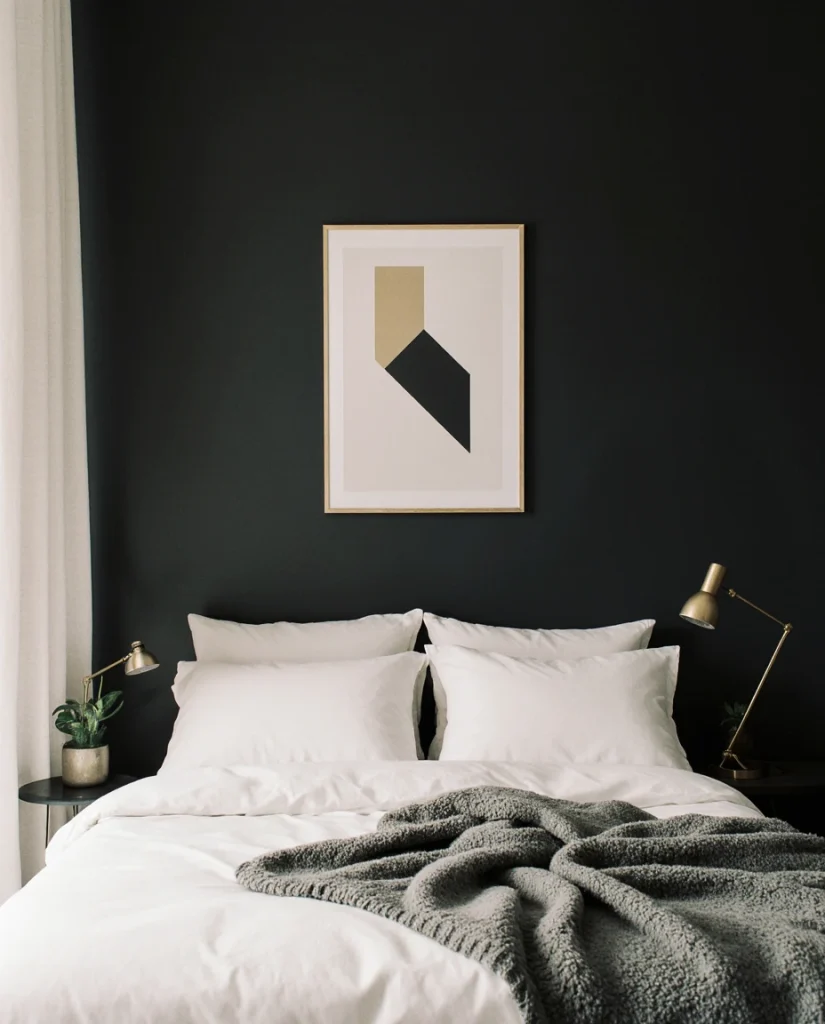
A common mistake here is going too stark—homeowners often regret skipping the grey transitional tones that prevent the room from feeling like a checkerboard. Interior designers recommend introducing warmth through wood furniture or a single warm metal like brass. Budget tip: Start with paint and bedding, which runs around $300–500 total, before investing in furniture.
5. Soft Pink Haven with Vintage Touches
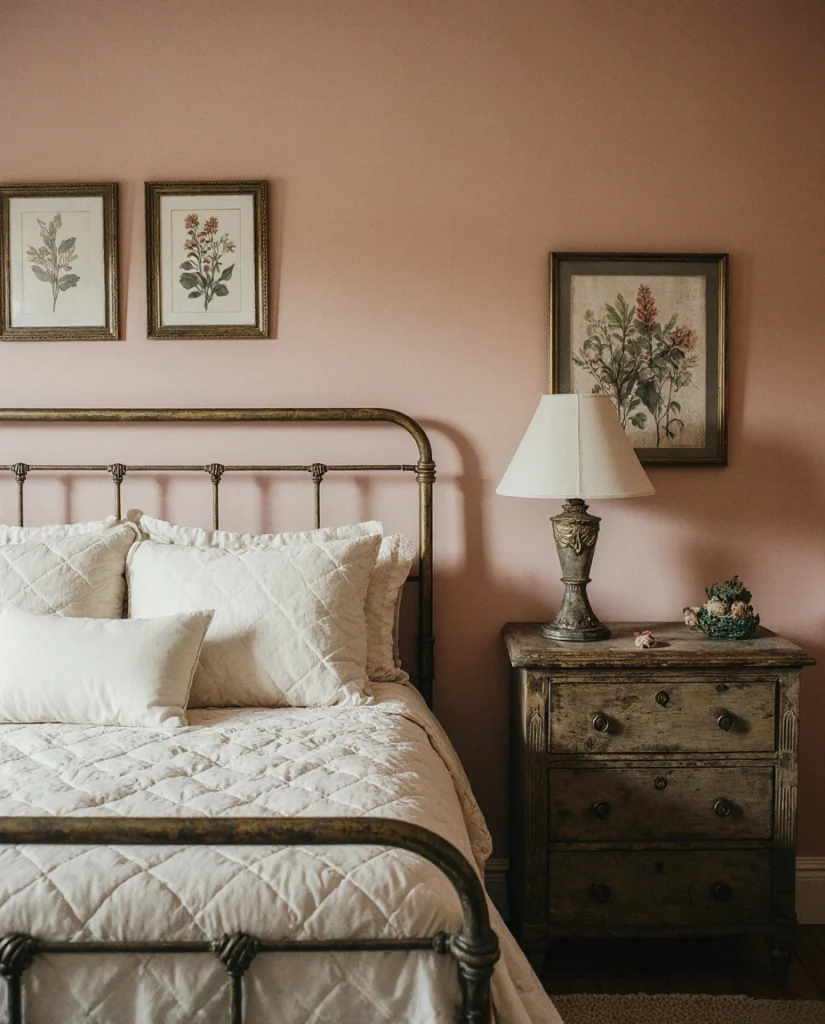
Dusty pink walls create an unexpectedly sophisticated backdrop when paired with vintage furniture and brass fixtures. This approach appeals to those seeking a cozy aesthetic that feels collected over time rather than decorated all at once. Layer in cream textiles, weathered wood pieces, and botanical prints for a look that’s romantic without feeling overly sweet. 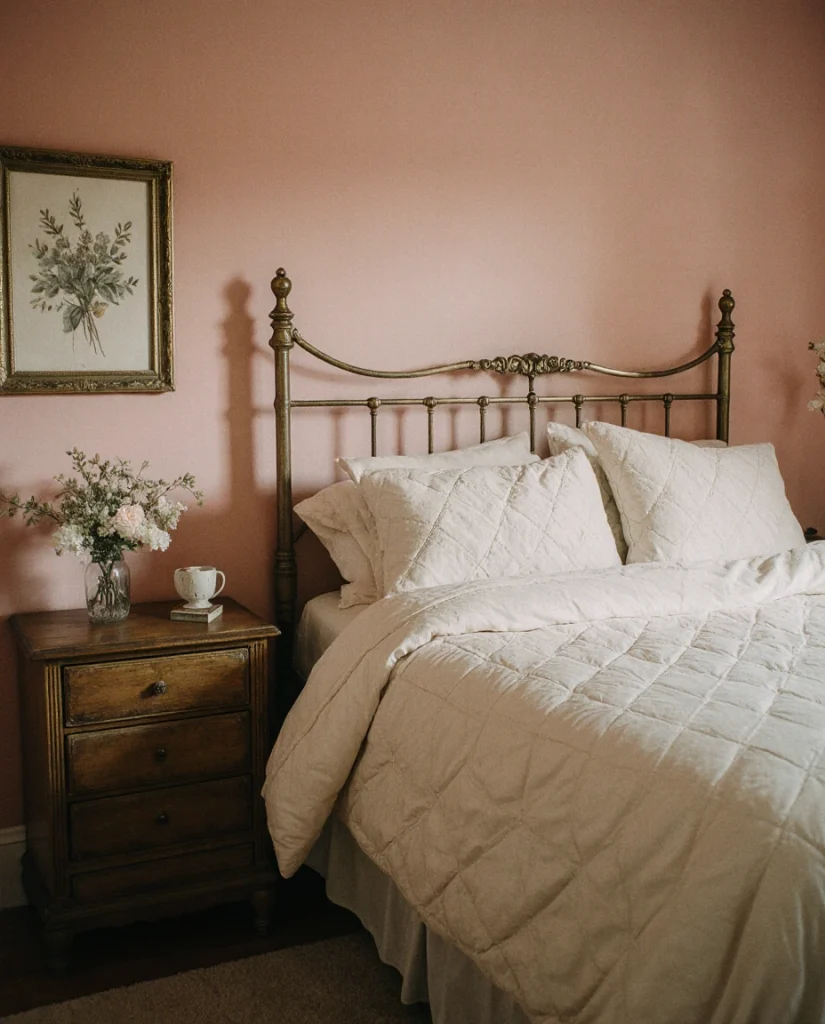
This color scheme particularly resonates in Southern and Midwestern homes, where traditional design still holds strong appeal. The key is choosing a pink with grey or brown undertones rather than bubble-gum hues—think terracotta’s softer cousin. Most paint brands offer “dusty rose” or “blush” options that read sophisticated rather than juvenile.
6. Industrial Loft with Exposed Elements
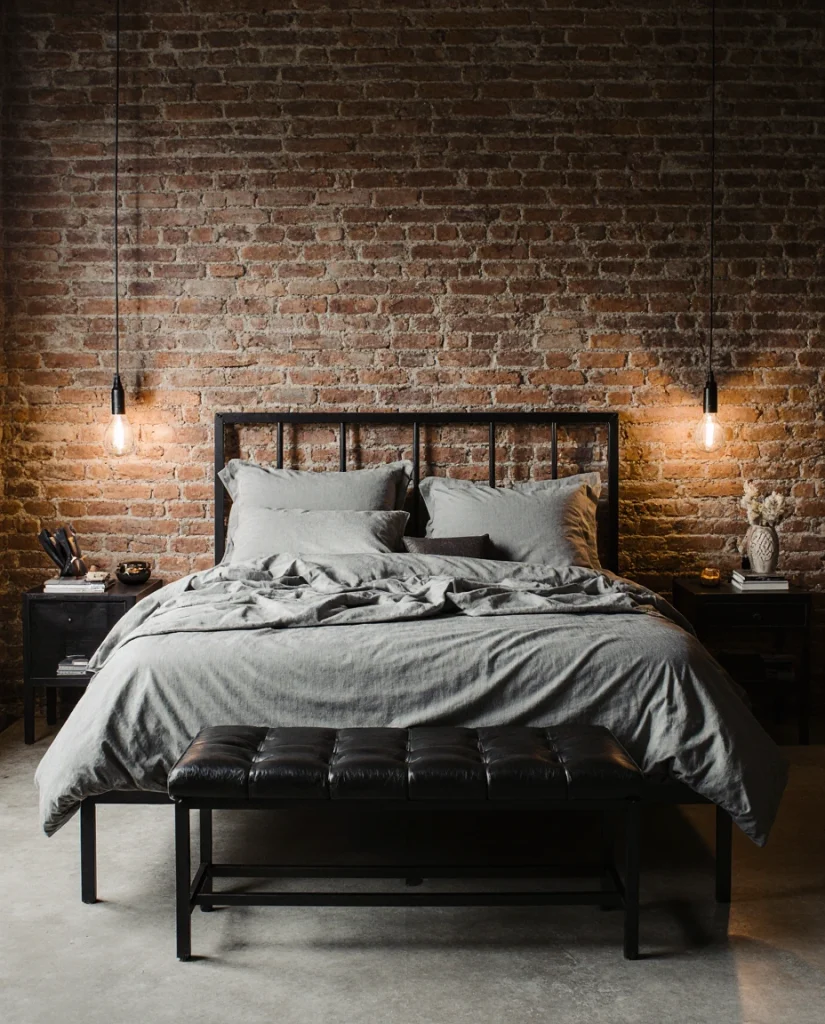
Celebrating raw materials like exposed brick, concrete floors, and metal fixtures appeals to urbanites in converted warehouse spaces. This aesthetic has migrated from city centers to suburbs, where homeowners add faux brick panels or concrete-look wallpaper to achieve the vibe. Keep the palette neutral with grey, brown, and black, softening the industrial edge with plush textiles. 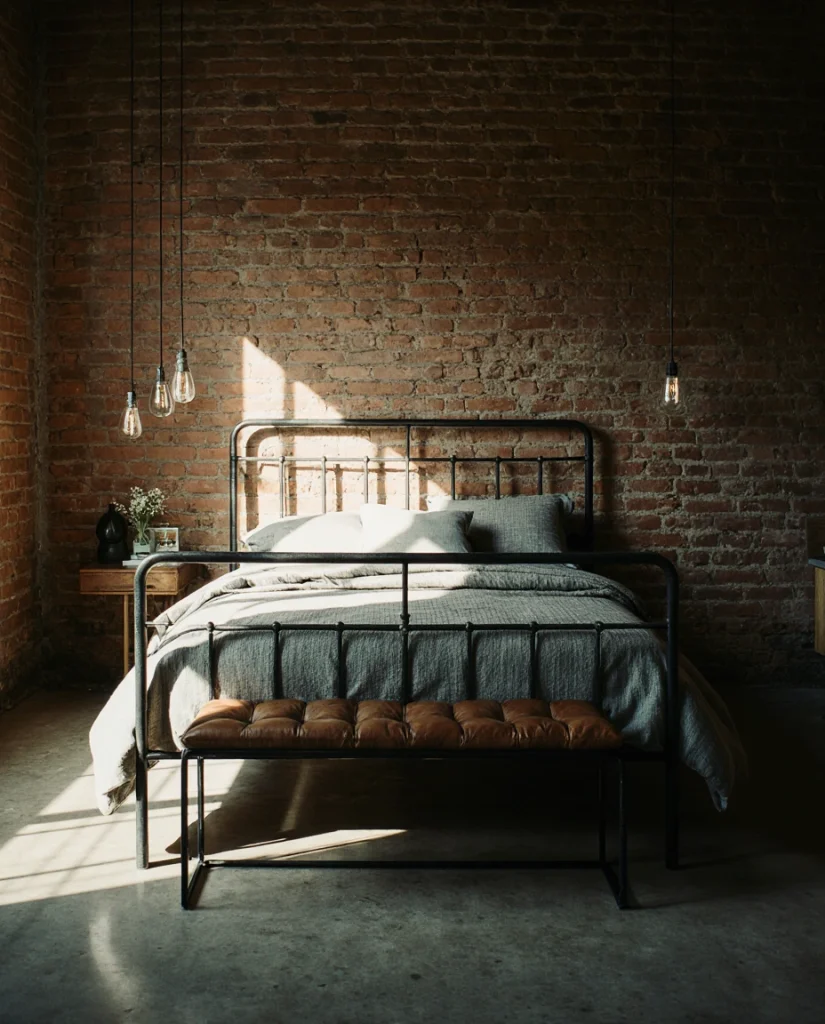
How real homeowners behave illustrates that people infrequently commit to an entire industrial design—we tend to grab elements, such as metal lighting or a brick-accented wall, and leave out other pieces to avoid that cold feeling that comes with overdoing raw materials. Getting a large area rug is, however, necessary for the warmth and sound absorption.
7. Coastal Blue Serenity
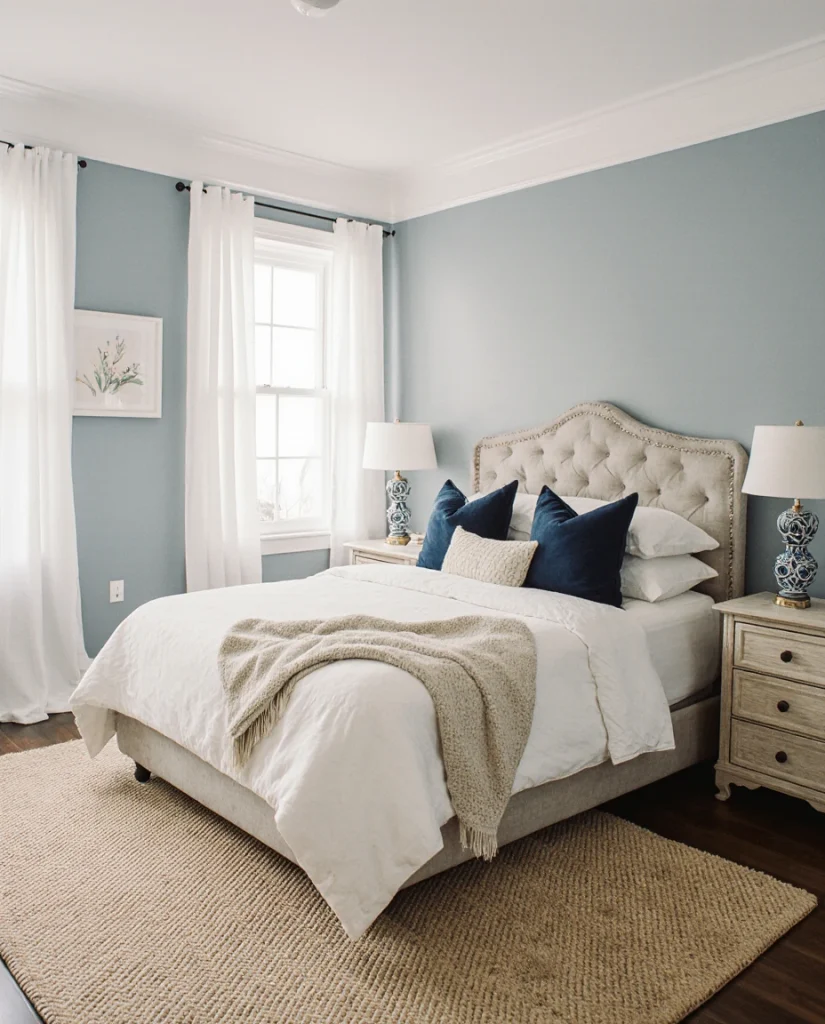
The calming, peaceful feeling that comes from an ocean is represented through a variety of blue shades from powder blue walls to navy accent pieces. It has become, one of the most searched, bedroom themes among Americans living nowhere near a coast as it is, and remains, that calming. The breezy, vacation home feeling that translates beautifully to both primary and guest bedrooms is completed with white trim, natural fiber rugs, and bleached wood furniture. 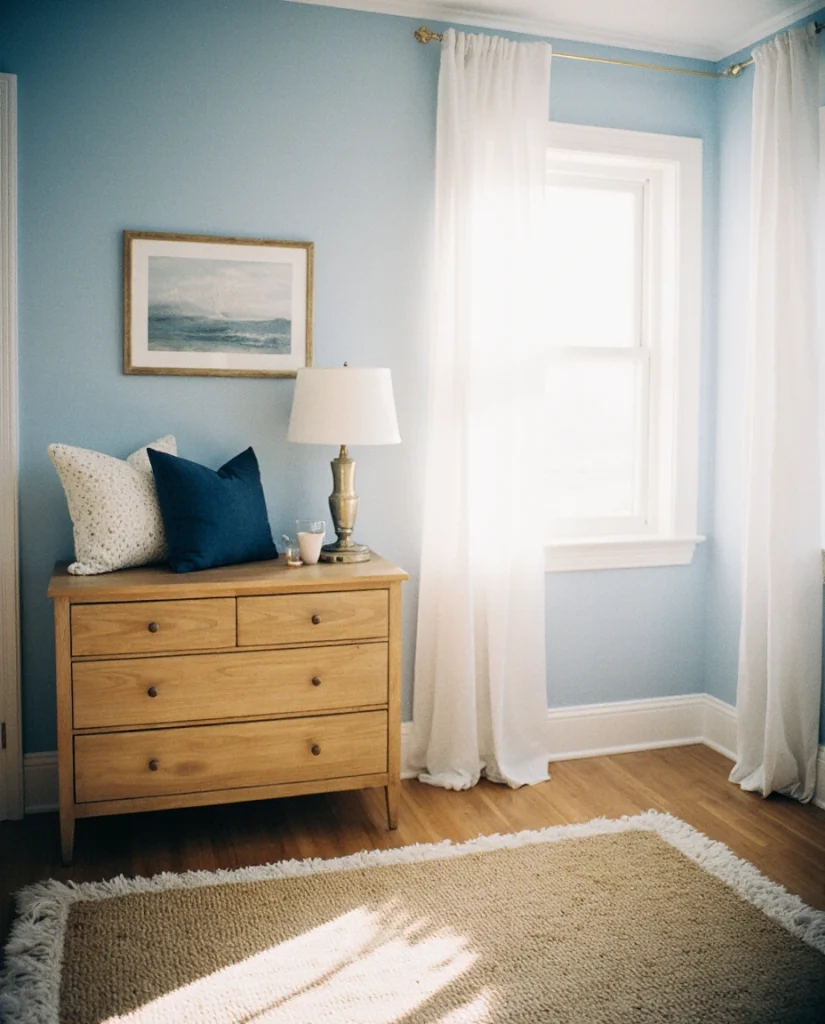
A designer from Charleston explained that this look is often requested by clients after a beach vacation when they would like to recreate that feeling at home. The trick is to avoid the nautical clichés, such as anchors and rope detailing, and instead to stay focused on the colors and natural textures. This approach is flexible with climate and usually costs $400 to $700 to execute with new textiles and paint.
8. Warm Minimalism with Brown Tones
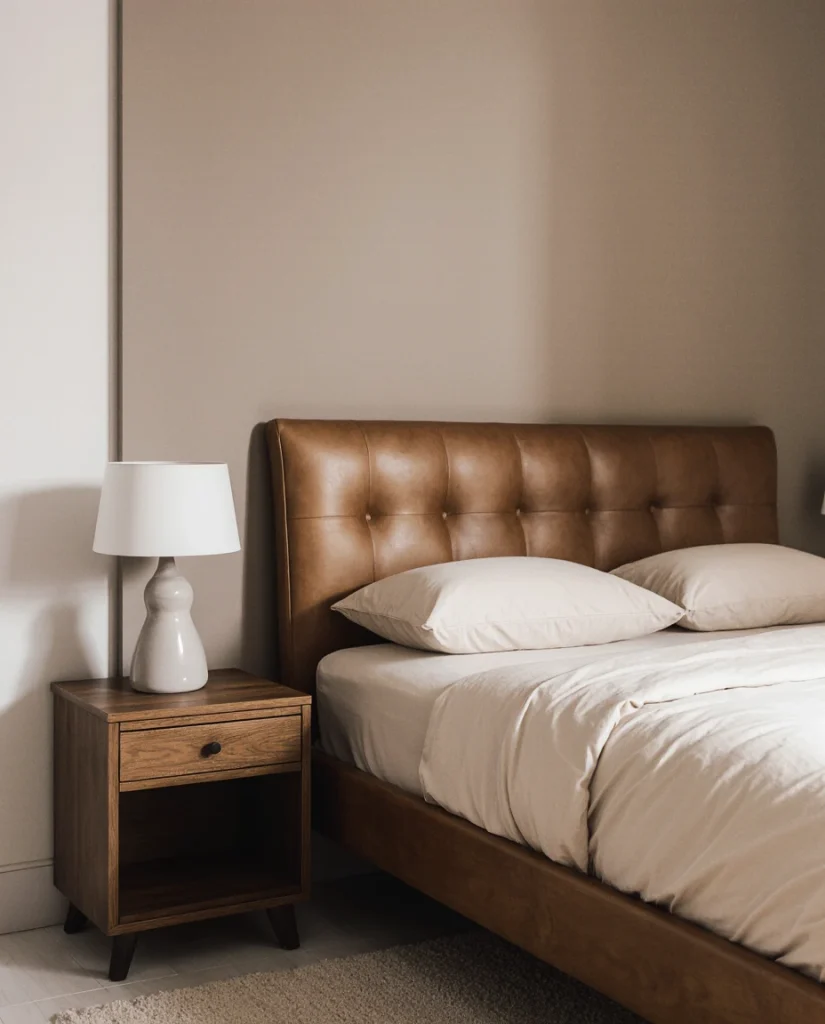
Since moving away from the typical all-white minimalism, brown toned bedrooms embrace warmth and minimalism. Imagine caramel colored leather headboards with walnut nightstands and coffee accent walls along with white cream bedding. This warmth works perfectly with couples bedrooms that want to avoid fussy details. 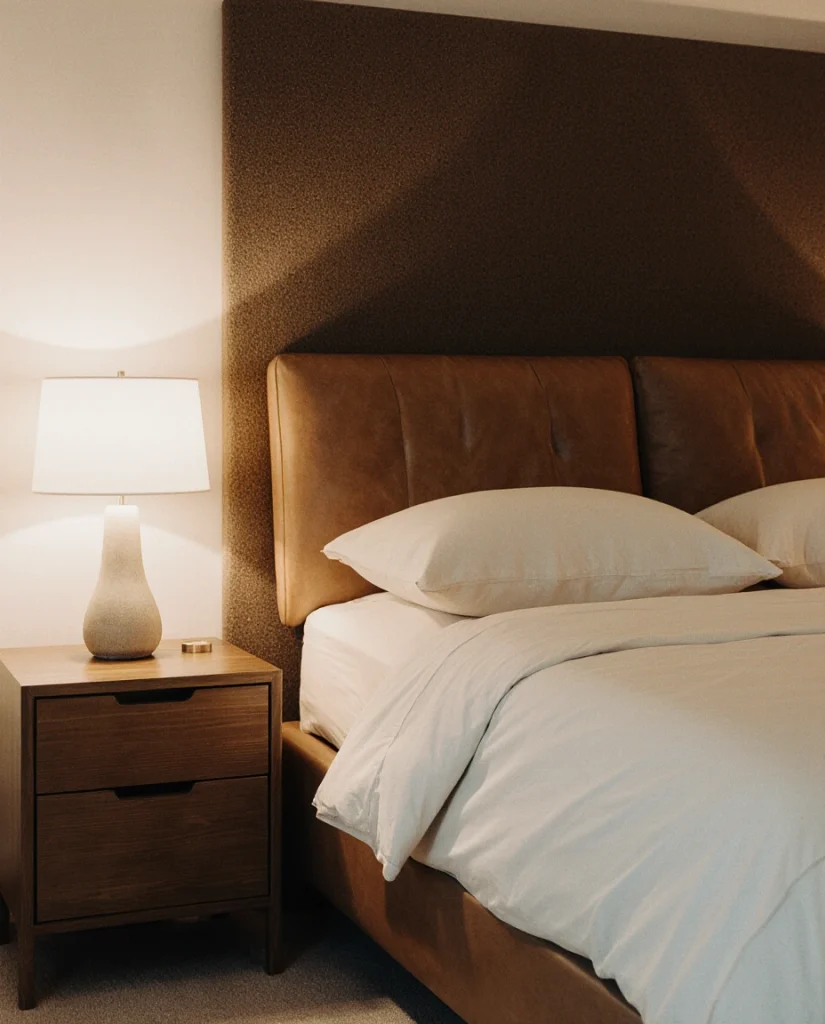
Expert commentary: Interior designers note that brown is having a major moment as people tire of grey’s decade-long dominance. The key is layering different brown tones—chocolate, caramel, tan, and cream—to create depth. This palette photographs beautifully for those who share their spaces on social media, yet remains timeless enough to avoid quick dating.
9. Vaulted Attic Retreat
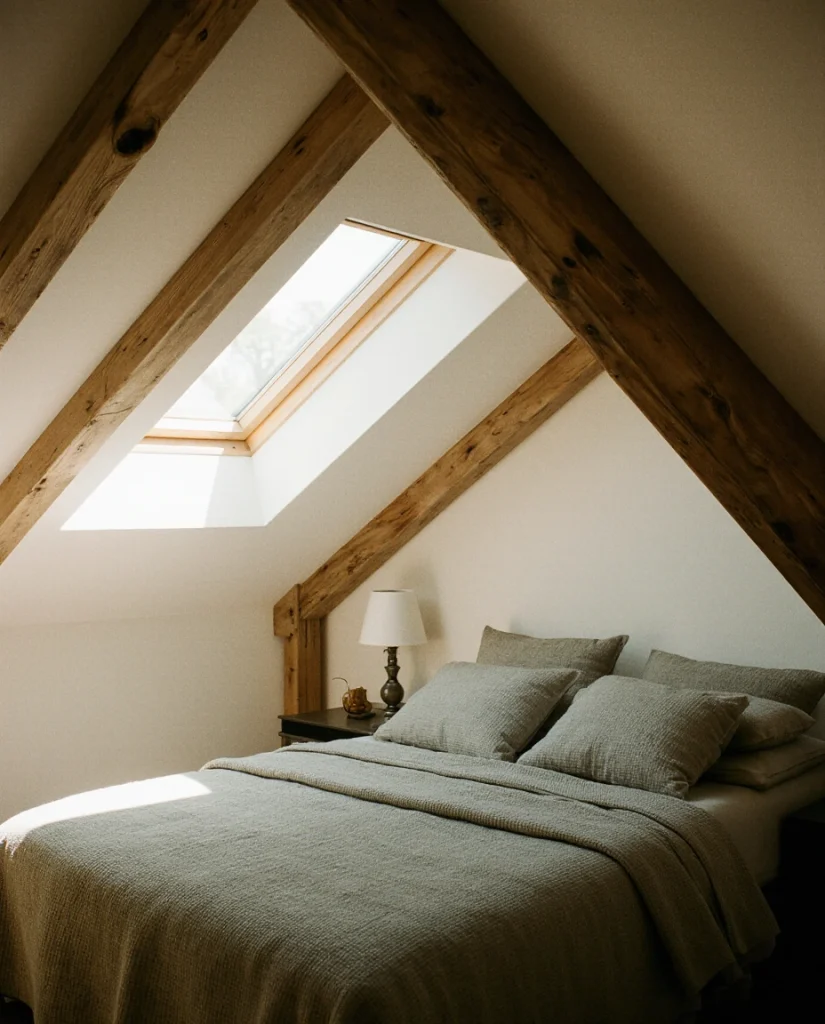
Attics are often one of the most underappreciated areas of a home. Casting architectural charm that lower levels often lack, attics have character with exposed wooden beams, sloped roofs, and dormer windows. When styled with light paint, attics character shines. This is often great for guest spaces or teen rooms, this is a great place for privacy, and the room is unique. 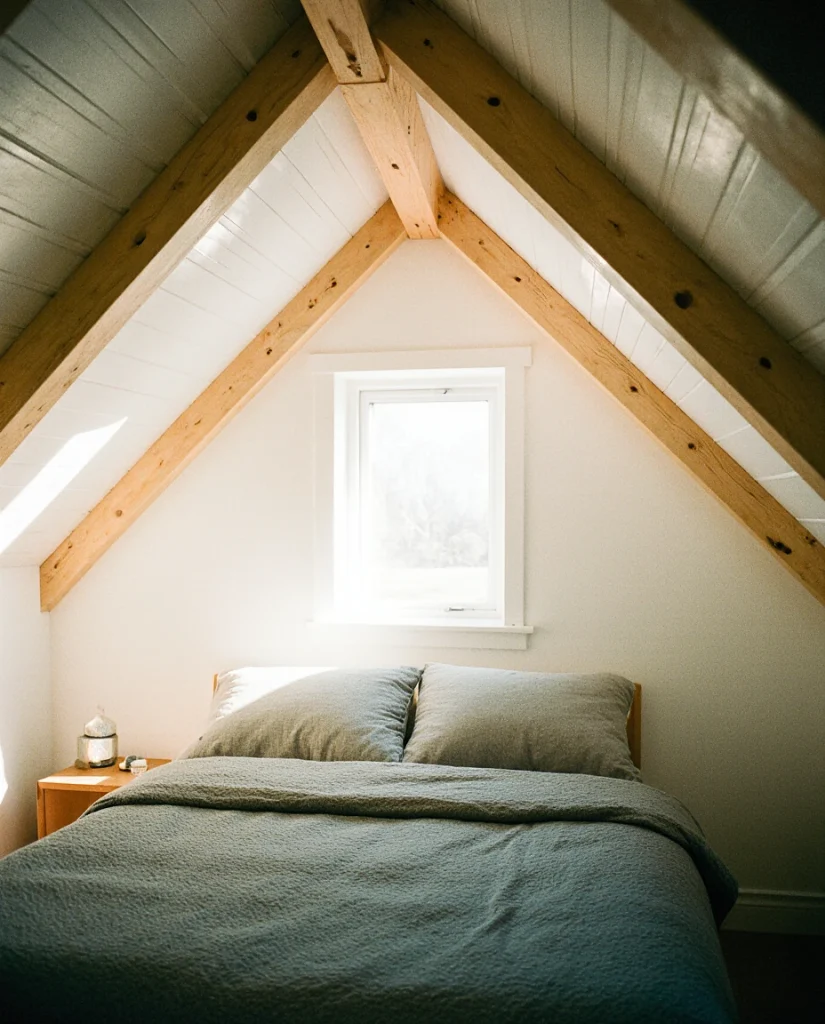
Where ther works best: Most homes that are built prior to the 1960s have attics that have plenty of ceiling height for conversion.
10. Gaming-Inspired Teen Space
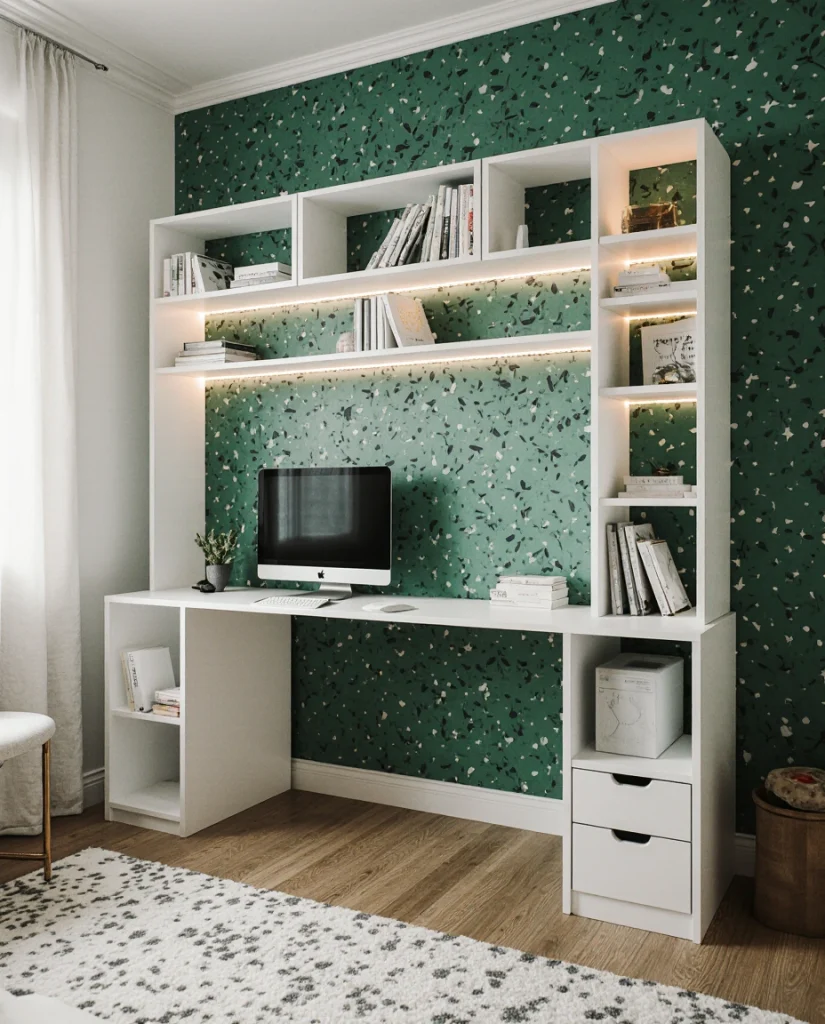
While younger decorators are influenced by Minecraft and Bloxburg when looking for designs on Pinterest, translating the aesthetics from these games into physical spaces requires some restraint. Instead of literal recreations, incorporate colors and geometric patterns from some of their favorite games. Green accent walls, modular furniture that reconfigurable for different activities, and smart lighting systems that alter colors depending on the mood are also good additions for the room. 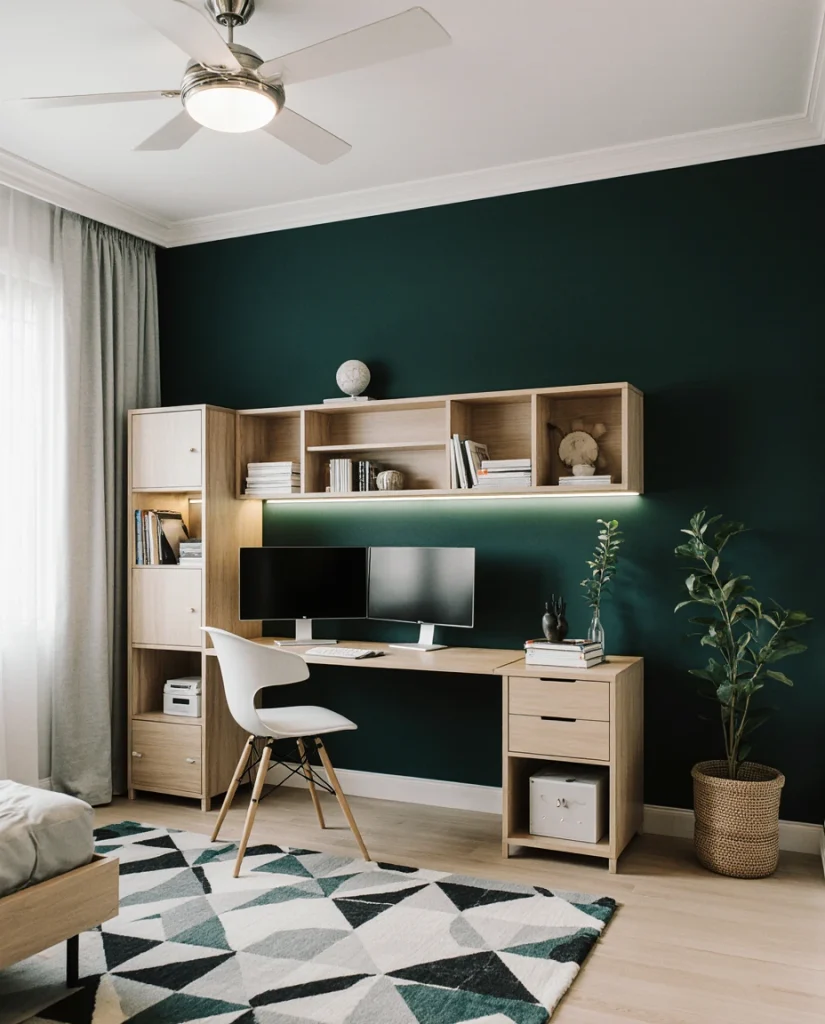
Practical insight: When considering designs for a teen’s room, parents like it when they can see that the design could grow with their child. Find some good quality furniture in some neutral colors to use as a base, then game-inspired designs as fast decor in bedding, posters, lighting and other things that can be removed easily. This method means you won’t have to redecorate the whole room in a few years. LED strip lighting can cost $30 to $50 for a large impact in design with minimal cost.
11. Southwestern Desert Palette
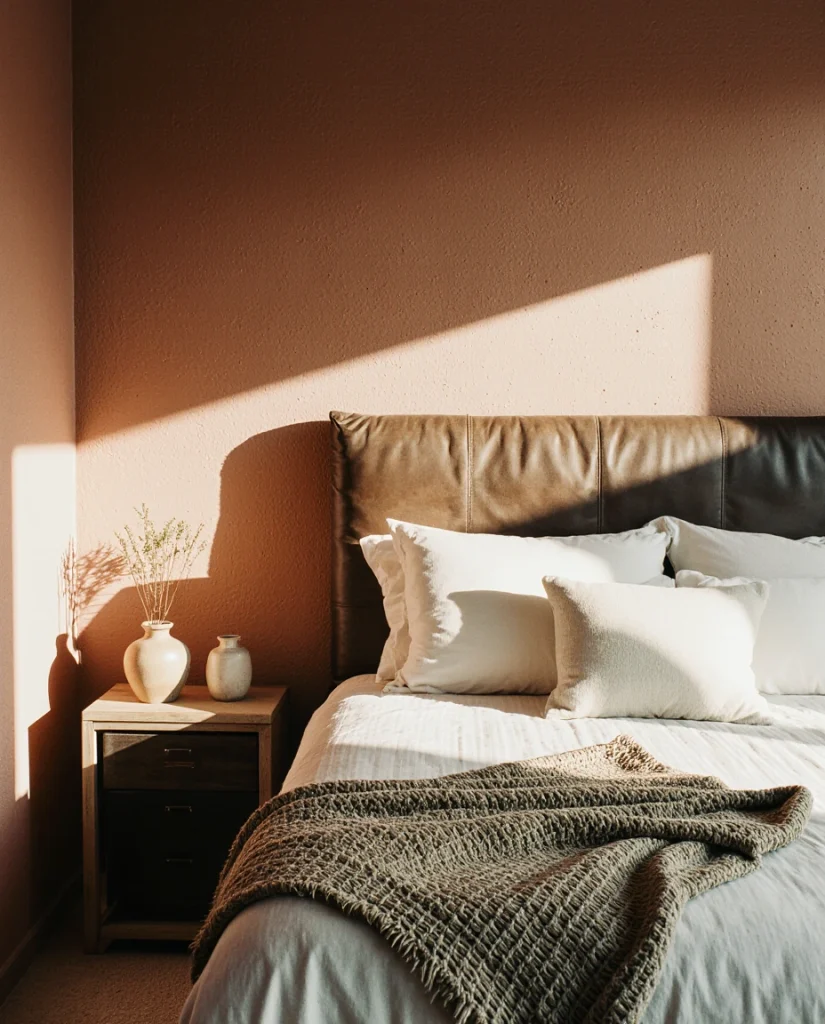
The Western aesthetic is also very easily incorporated into a bedroom design, so you can use terracotta, some warm browns, and cream for the base colors.
For a combination of rugged and refinement, consider incorporating woven textiles, some leather accents, and basic pottery. This style is especially popular in Arizona, New Mexico, and Texas; however, it can be utilized anywhere that warmth and earthy sophistication is needed in a primary bedroom. 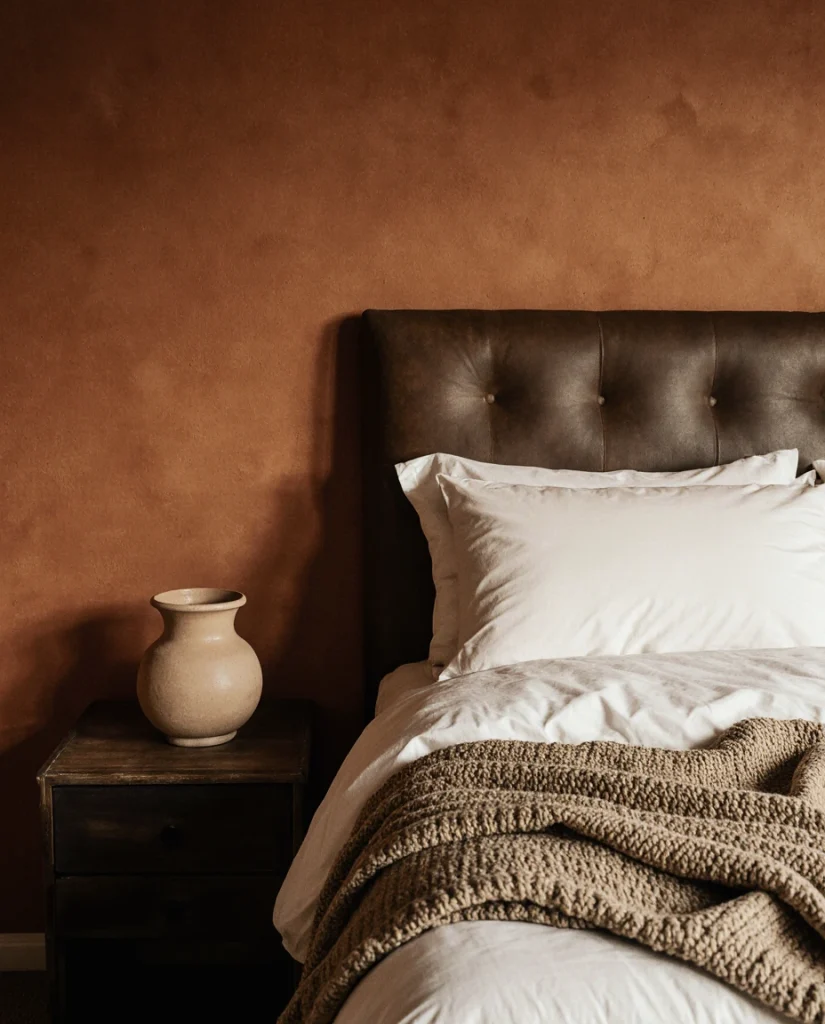
One of the homeowners from Tucson stated that after moving from Seattle, she wanted to \\”embrace the desert climate in the bedroom rather than fight it. She selected terracotta walls that glow during the afternoon and exchanged bulky curtains for lighter woven shades. This outcome is customized to the desert while keeping the interior cool and comfortable. She claims to be sleeping better in a space that is truly regional \\”.
12. Multifunctional Spare Room
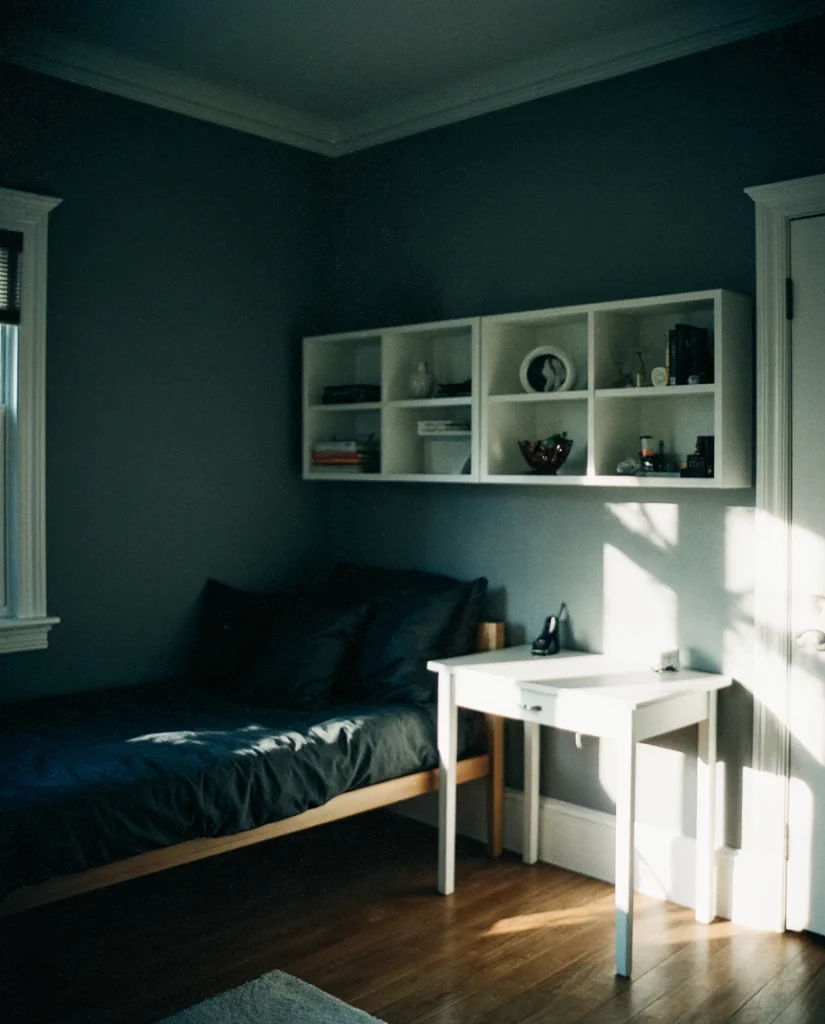
Modern spare bedrooms need to work harder than traditional guest rooms, often doubling as home offices or hobby spaces. The solution involves Murphy beds, sleeper sofas, or daybed configurations that preserve floor space when guests aren’t present. Style with grey or white as a neutral foundation, adding personal touches through artwork and textiles that reflect the room’s dual purpose. 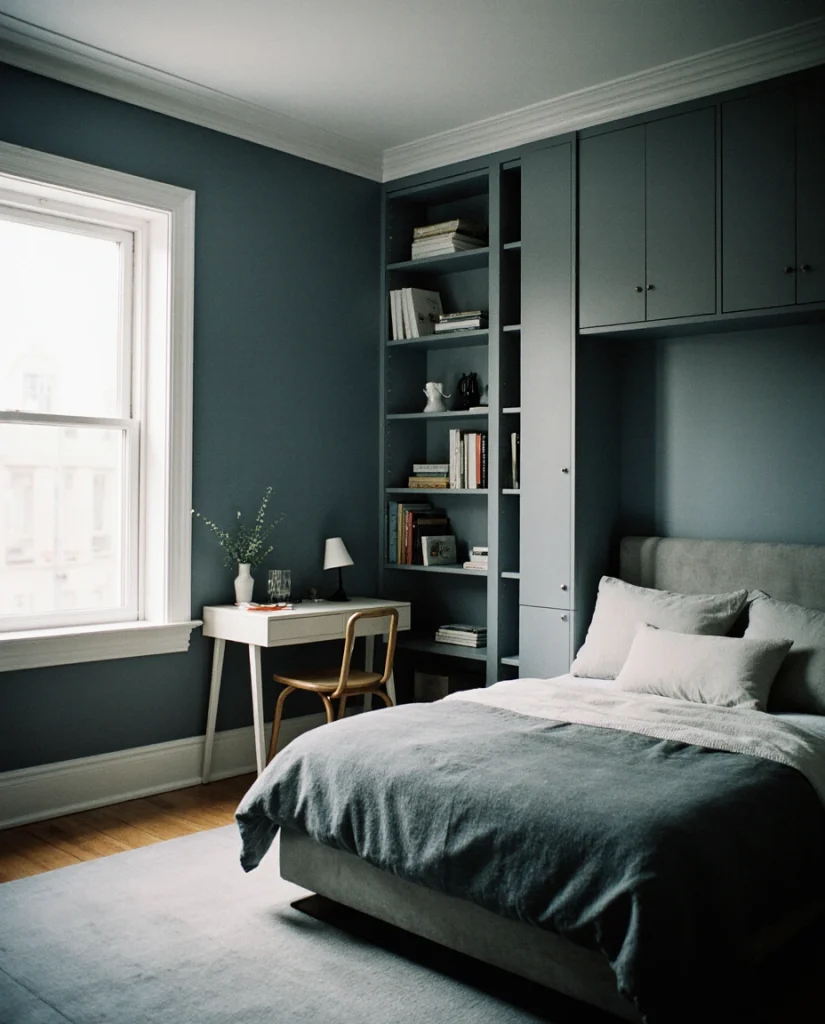
Real homeowner behavior reveals that most spare rooms sit empty 300+ days per year, making dedicated guest-only spaces feel wasteful. The trend now is toward rooms that serve daily needs while accommodating occasional guests. A quality Murphy bed costs $1,500–3,000 but reclaims roughly 25 square feet of usable space—meaningful in homes where every room counts.
13. Maximalist Color Play
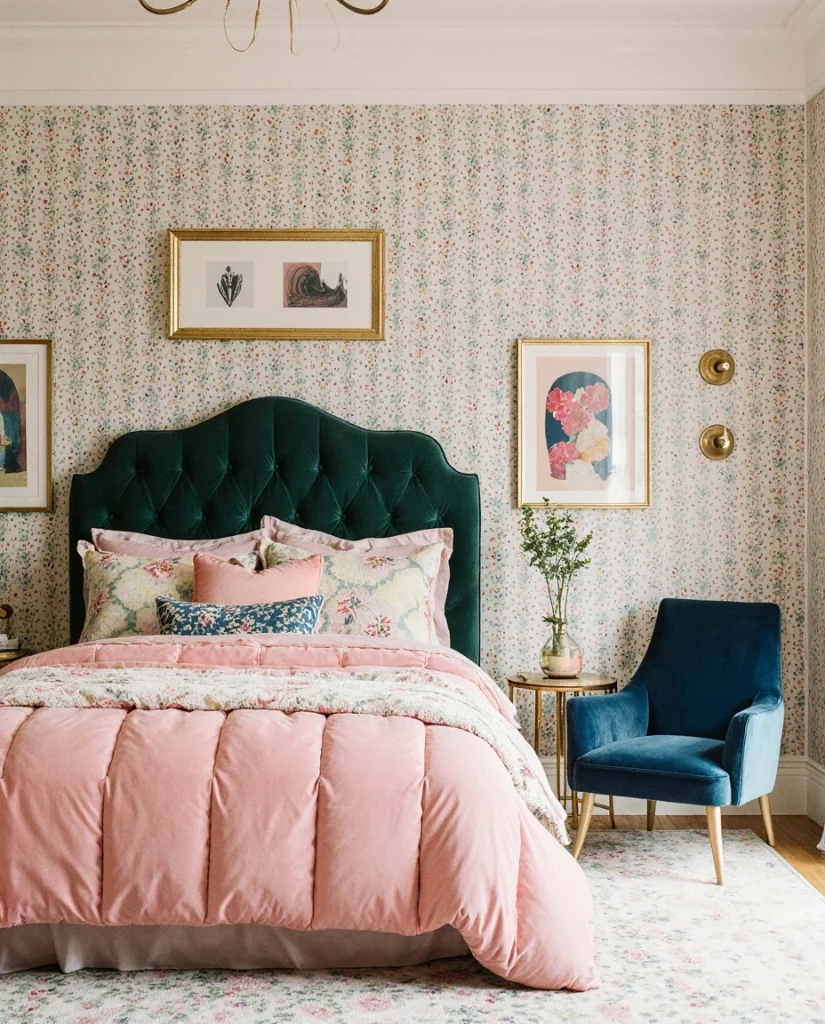
For those tired of neutral fatigue, layering pink, green, and blue in a single space creates joyful, energetic bedrooms. The key is choosing shades with similar saturation levels so they harmonize rather than clash. This bold approach works best in rooms with good natural light and appeals to creative personalities who find cozy comfort in visual richness rather than minimalism. 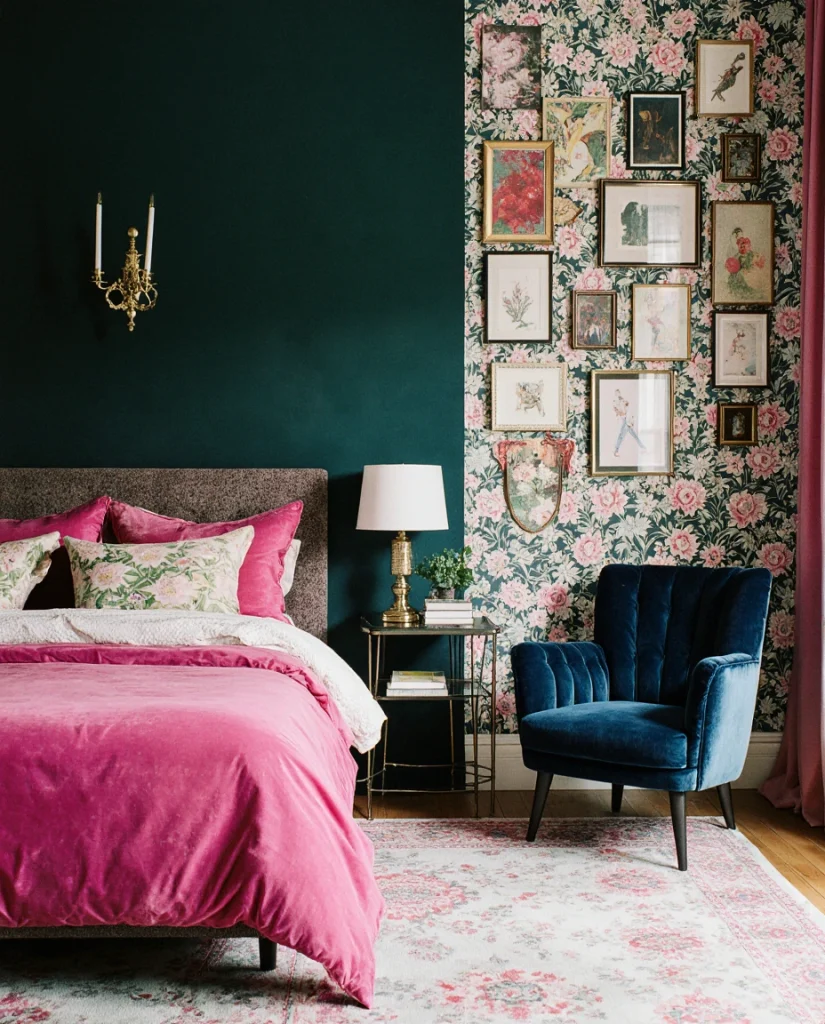
Common mistake alert: While some think of maximalism as a free-for-all approach, starting maximalism without a plan creates chaos. Choose three of your favorite colors, and make sure you see each of them at least twice throughout the room via different features. Have pink in the bedding and artwork, green in the walls and plant, and blue in a chair and lamp. This way, repetition of intention of colors is created, versus just a random color bomb.
14. Dark Moody Elegance
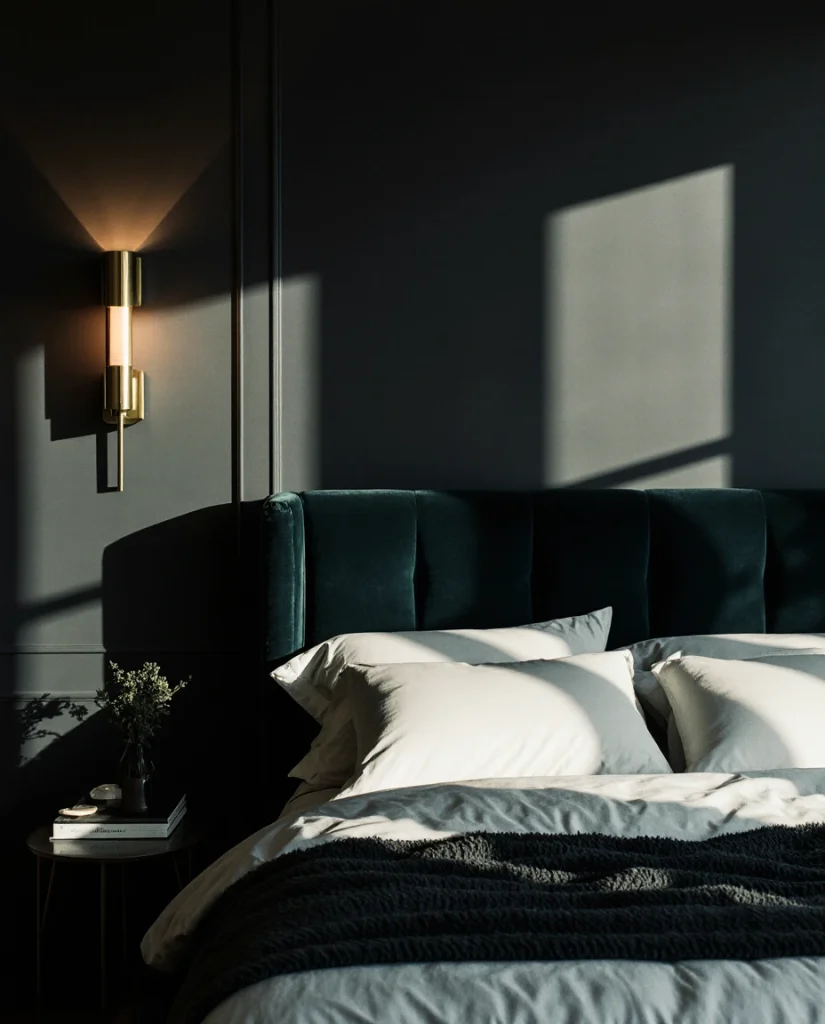
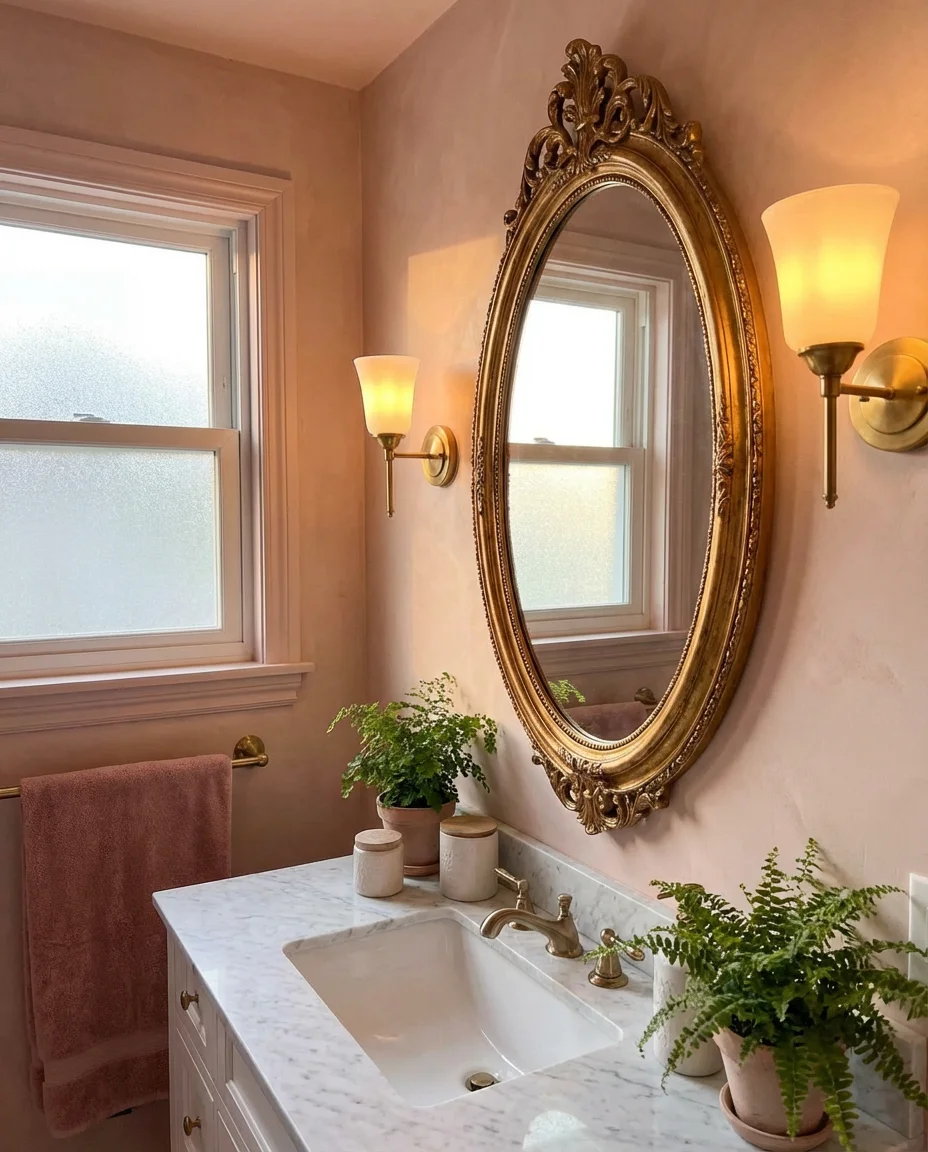
Another way to achieve cocoons of coziness in a bedroom is to embrace dark walls, paint them in charcoal, navy, or forest. This is a cozy approach and a little defies the wisdom of keeping small rooms light and instead uses color saturation to make small rooms feel more infinite. Where cozy fixtures, rich textiles, and warm lighting are used helps to not get a cave light deprivation effect. 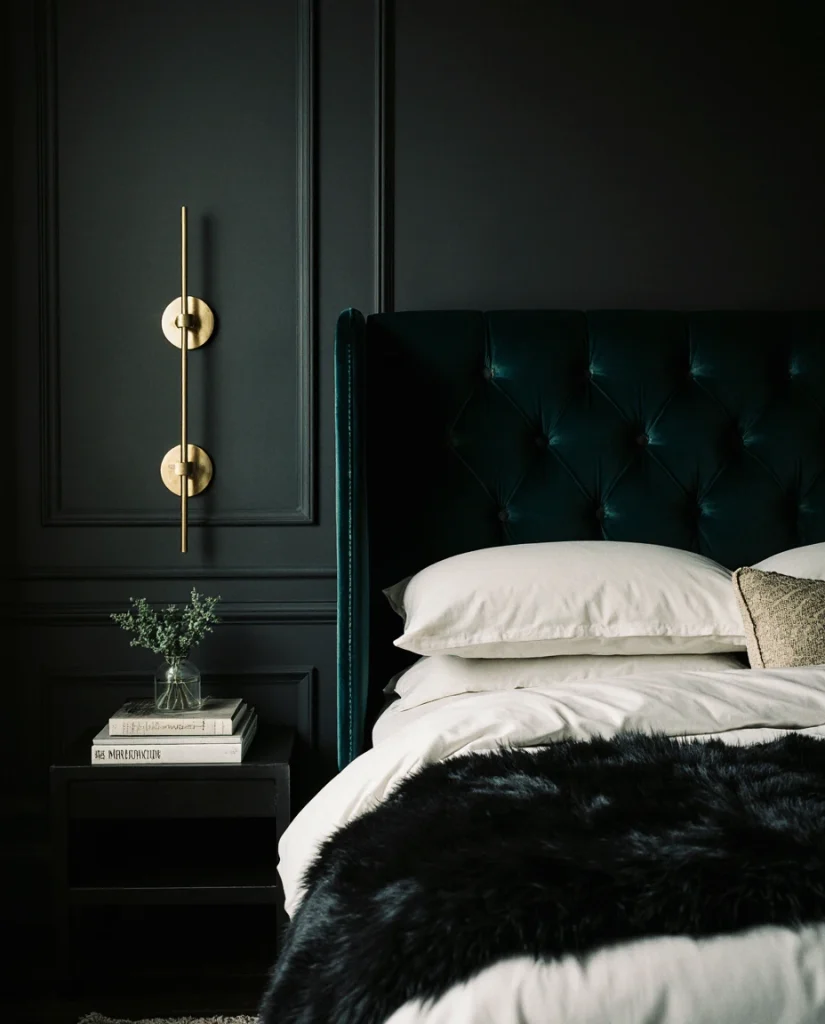
Expert commentary from a Brooklyn designer: Dark bedrooms are having a moment because they photograph dramatically but also solve real problems. Light sleepers appreciate how dark walls don’t reflect streetlight or early morning sun. The approach works best in bedrooms used primarily for sleeping rather than morning routines—nobody wants to apply makeup in a dark cave.
15. Scandinavian Simplicity
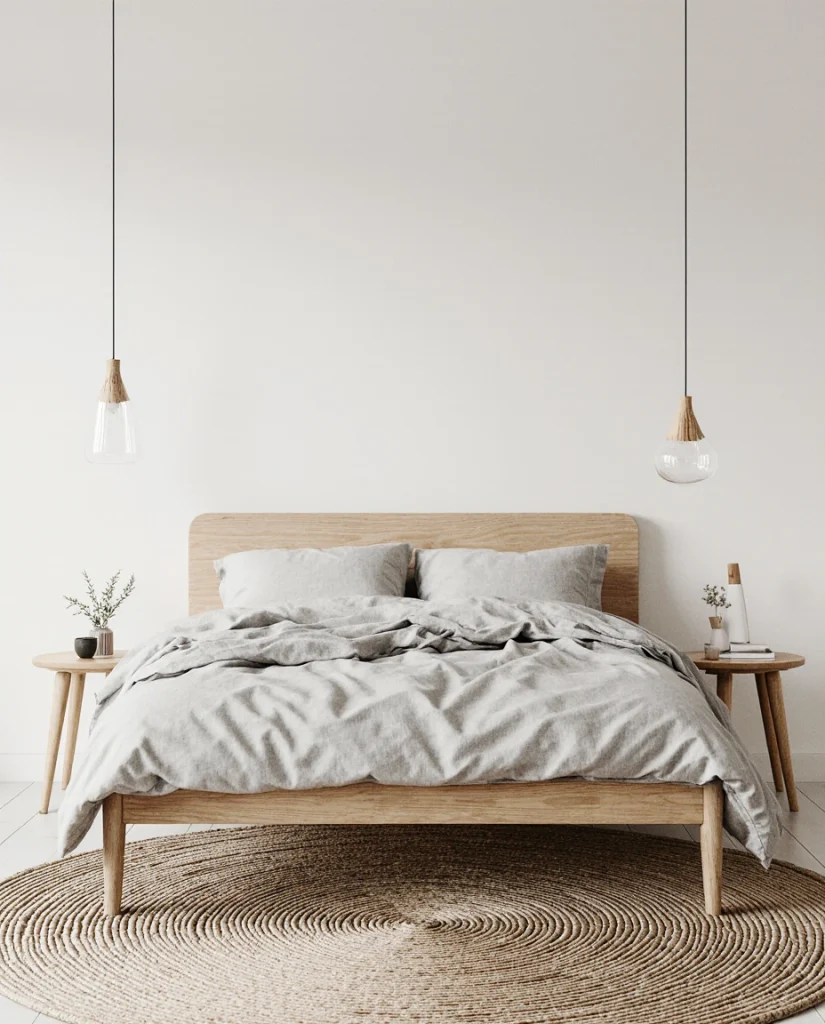
Clean-lined furniture, white walls, and grey accents define this enduringly popular approach that originated in Nordic countries but translates beautifully to American homes. The aesthetic emphasizes function, natural materials, and excellent lighting—both natural and artificial. This works particularly well in small rooms where visual simplicity makes limited space feel sufficient rather than cramped. 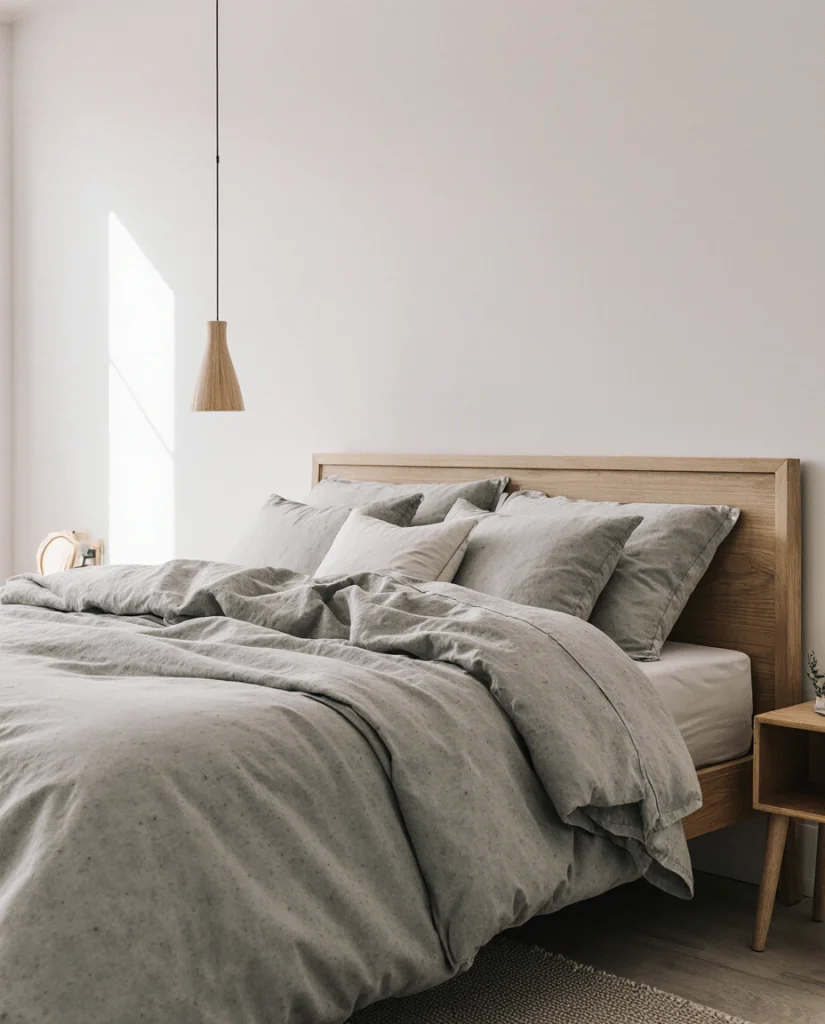
This aesthetic dominates Pinterest for good reason—it’s achievable on various budgets, and mistakes are hard to make when you stick to the fundamental principles. In Midwestern states with long winters, homeowners appreciate how the bright, airy feeling combats seasonal gloom. IKEA has made Scandinavian pieces accessible at entry-level prices, typically $500–1,500 for a complete bedroom setup.
16. Vintage Eclectic Mix
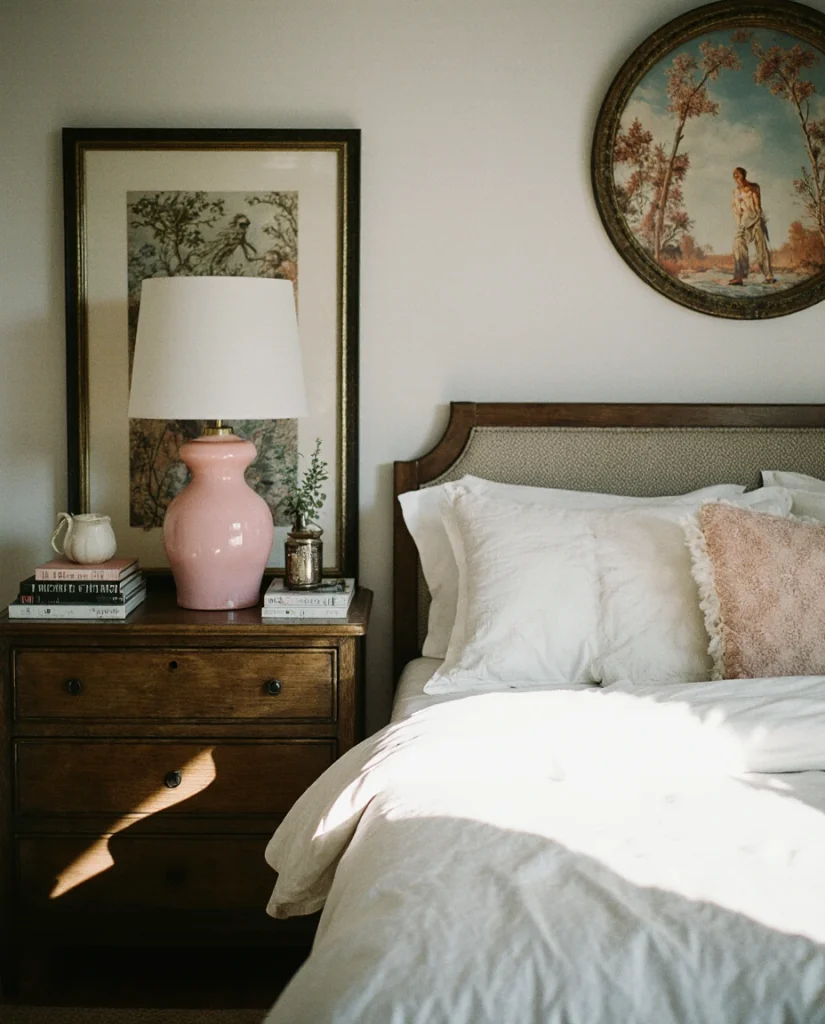
Combining cute vintage finds with modern comfort creates personalized bedrooms that feel collected over time. This approach appeals to thrift store enthusiasts and those seeking sustainable decorating alternatives. Mix pink vintage lamps with white modern bedding, pair antique dressers with contemporary artwork, and let the room evolve as you discover special pieces. 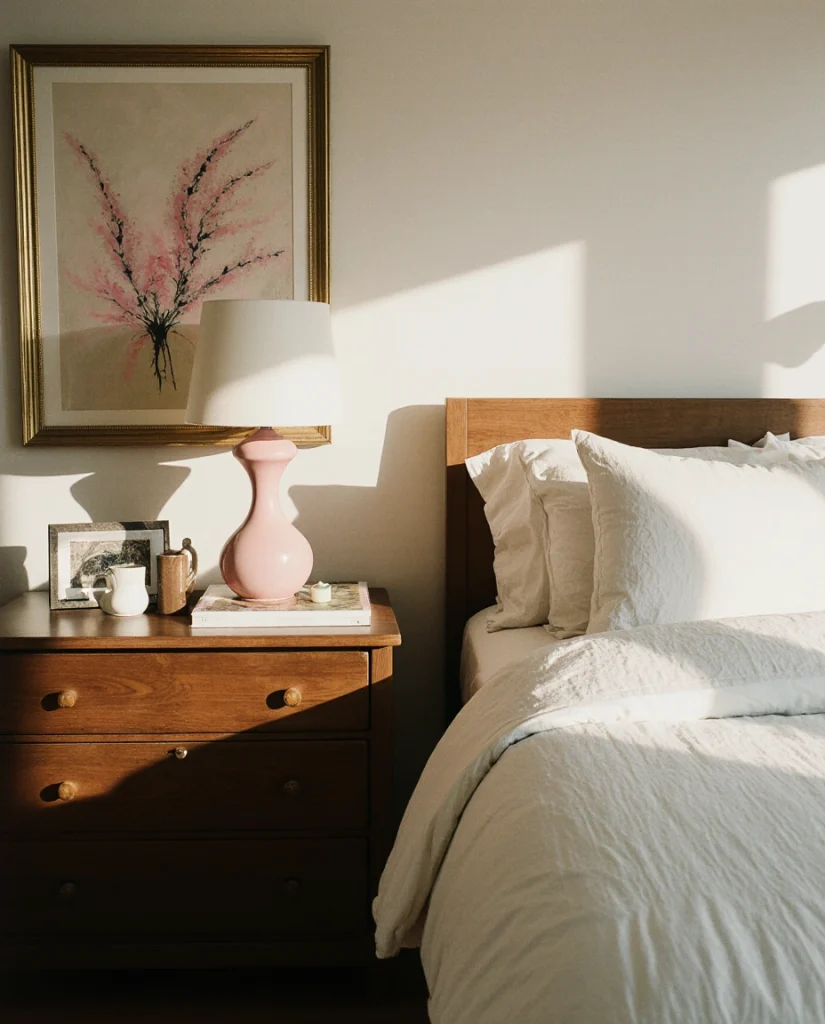
American lifestyle context: The secondhand market has exploded as younger homeowners embrace sustainability and reject fast furniture. Estate sales, Facebook Marketplace, and vintage shops offer quality pieces at fractions of retail costs. A solid wood dresser from the 1960s might cost $150–300 and outlast anything comparable at big-box stores. The key is refinishing or updating hardware to make vintage pieces feel fresh.
17. Boutique Hotel Luxury
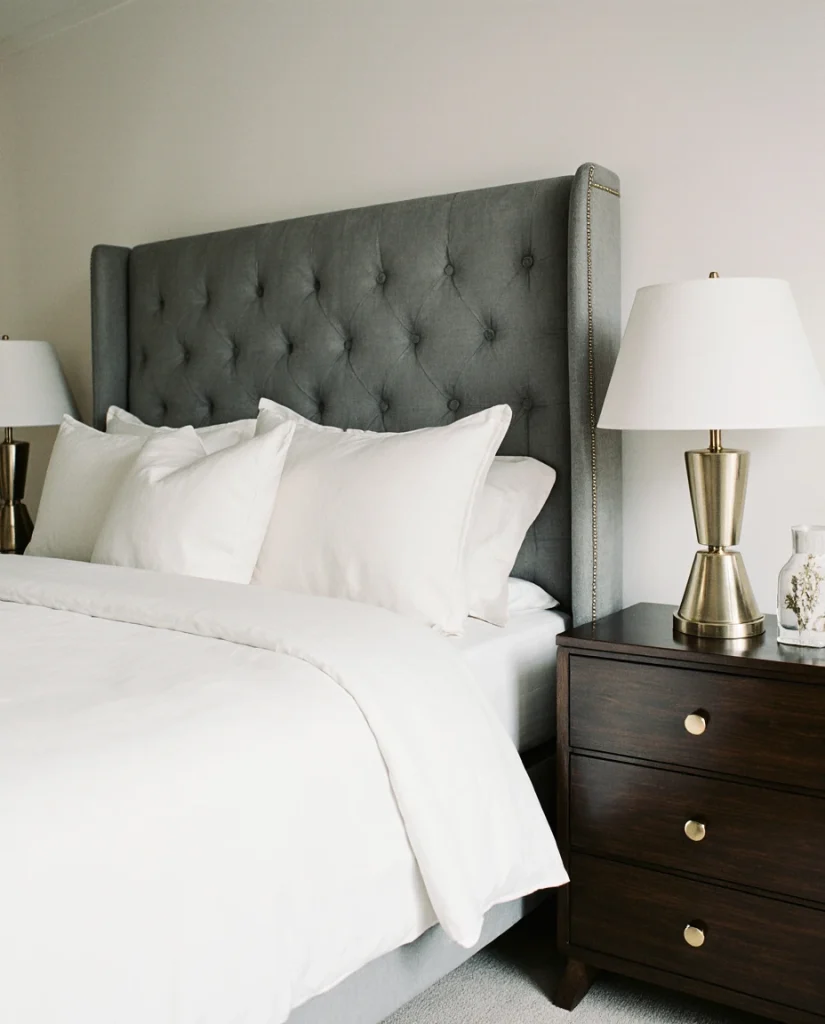
Bringing five-star hotel comfort home involves layering textures, investing in quality bedding, and creating symmetrical nightstand arrangements that feel professionally designed. This aesthetic works beautifully in couples’ bedrooms and primary suites where adults want a sophisticated retreat. Use white or grey as the foundation, adding luxury through thread count, pillow layers, and subtle metallic accents. 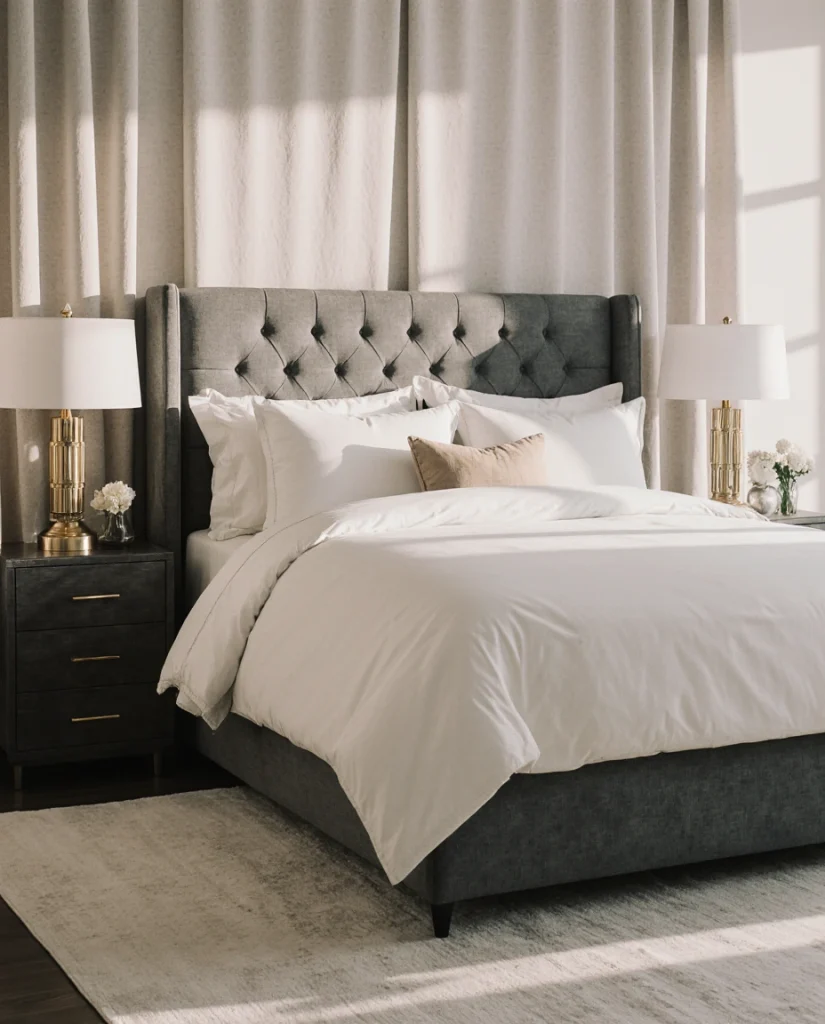
Budget angle: You don’t need to spend thousands to achieve this look. The secret is in the details—invest in one set of high-quality sheets ($150–300) rather than multiple cheap sets, add a duvet cover that can be washed weekly, and arrange pillows symmetrically even if they’re from different sources. The structured arrangement creates the luxury feeling regardless of furniture cost.
18. Converted Basement Bedroom
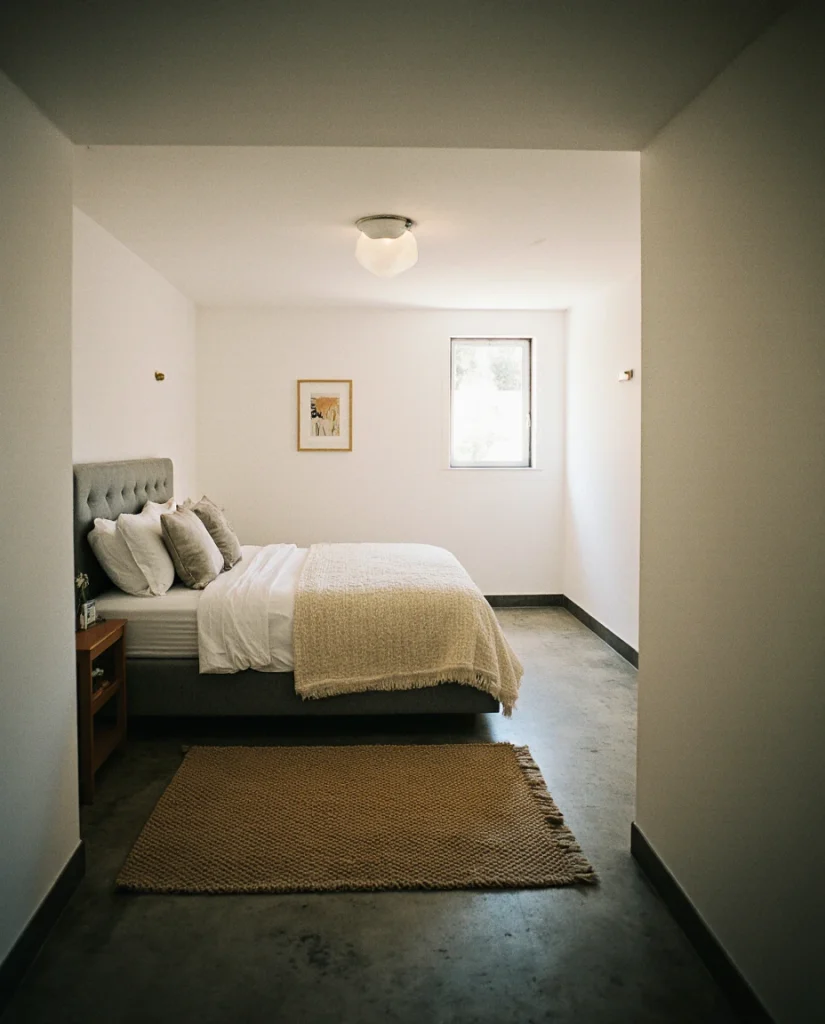
Finishing basement spaces into bedrooms solves square footage needs but requires addressing lighting and moisture concerns. Paint everything white or very light colors to maximize brightness, install excellent artificial lighting including recessed ceiling fixtures and layered lamps, and use a dehumidifier to prevent musty odors. This works well for guest accommodations or teen rooms where privacy is valued. 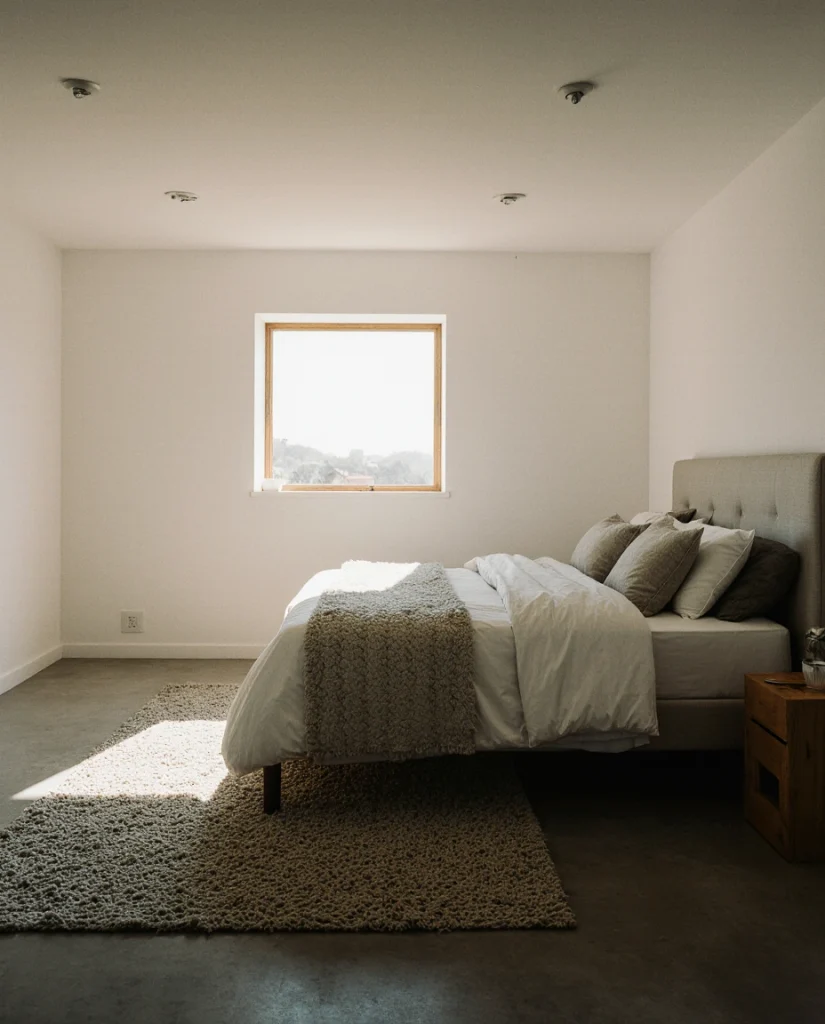
Where it works best: basements with at least one window meeting egress code, ceiling heights of 7+ feet, and existing HVAC venting. Installation costs vary widely—$10,000–30,000 depending on whether you need to add bathroom facilities and whether plumbing/electrical already exists. Check local codes carefully; many jurisdictions have strict requirements for basement bedrooms regarding emergency exits and ceiling heights.
19. Creative Kids’ Sanctuary
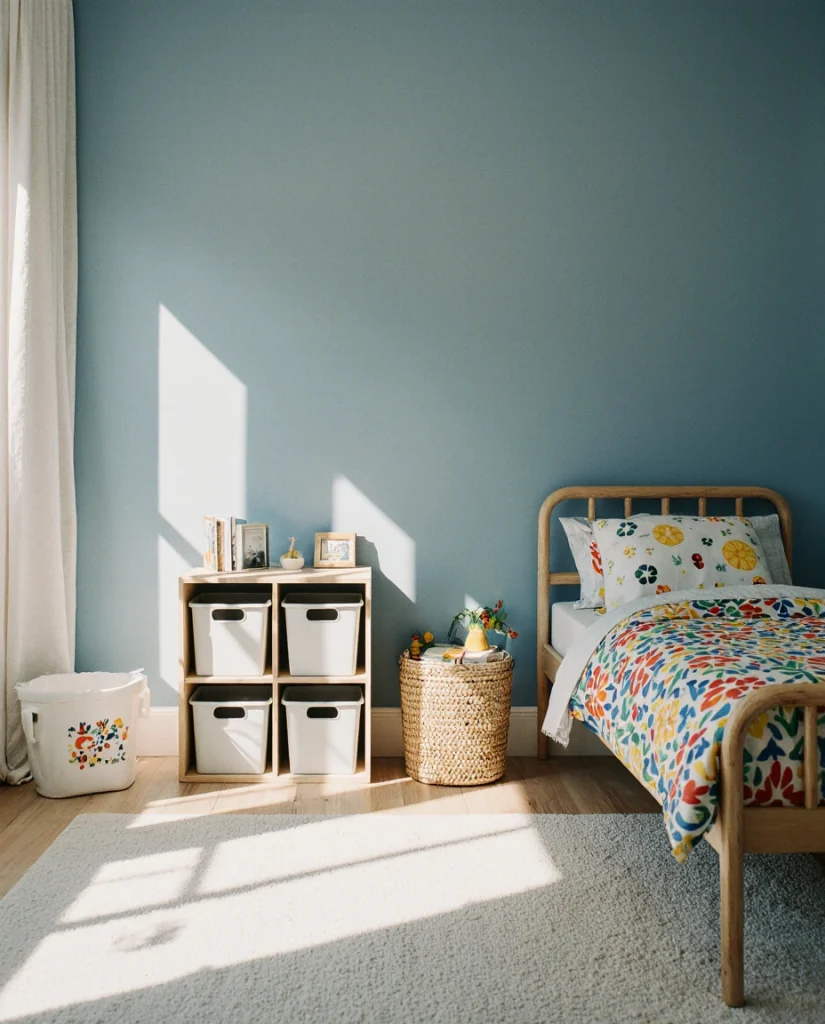
Children’s bedrooms inspired by Toca Boca games and other digital play spaces favor bright pops of color, organized storage systems, and flexible furniture that grows with them. Use blue or green as primary colors for longevity, adding cute removable elements through bedding and decor. The goal is to create spaces that encourage both play and rest while being practical for parents to maintain. 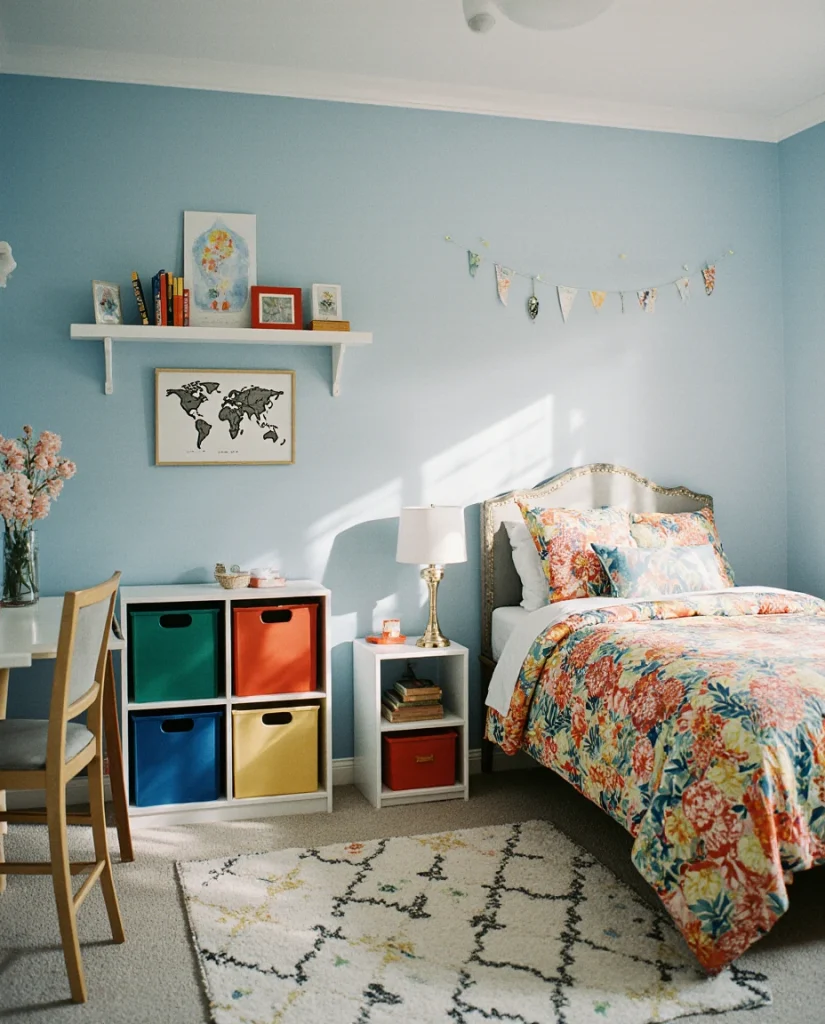
Practical insight: Parents consistently report that storage is more important than aesthetics in kids’ rooms. Invest in low, accessible shelving and bins where children can actually put things away independently. This teaches organizational skills while keeping spaces functional. Quality kids’ furniture typically costs $800–1,500 for a complete room, but choosing convertible pieces (toddler bed to twin, changing table to dresser) maximizes value.
20. Statement Wallpaper Feature
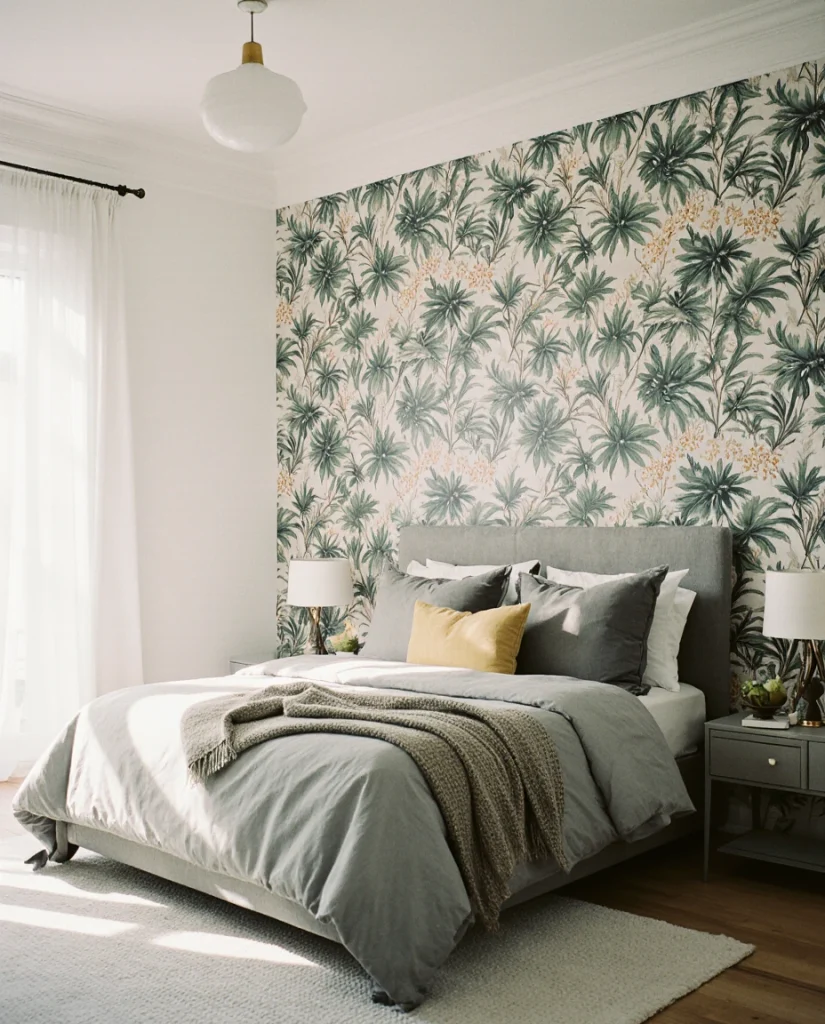
A single wallpapered wall creates dramatic impact in primary bedrooms without overwhelming the space. Botanical prints, geometric patterns, or subtle textures work beautifully behind the bed, adding personality while keeping other walls neutral in white or grey. This approach offers a commitment-free way to embrace bold patterns—if you tire of it, you’re only removing one wall rather than repainting an entire room. 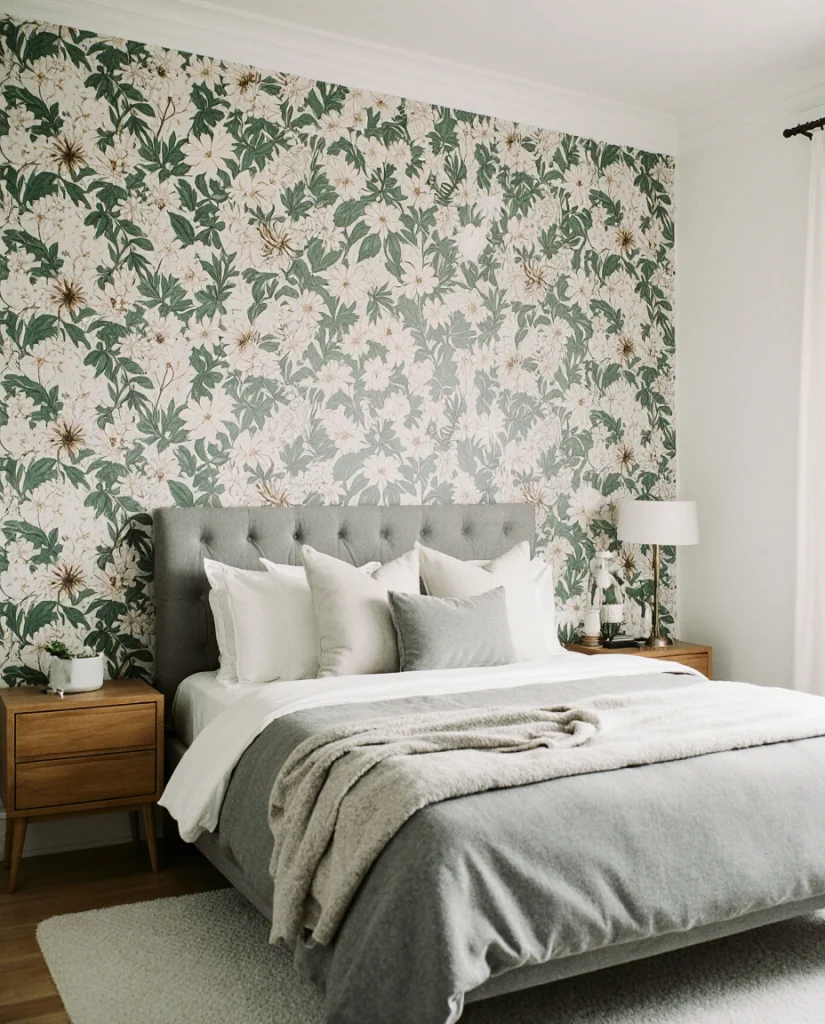
Real homeowner behavior shows that removable wallpaper (peel-and-stick) has democratized this trend since it requires no special skills or commitment. A single accent wall typically requires one or two rolls at $50–100 per roll, plus about two hours of application time. The key is choosing patterns with colors that appear elsewhere in the room’s textiles or artwork for cohesion.
21. Natural Material Focus
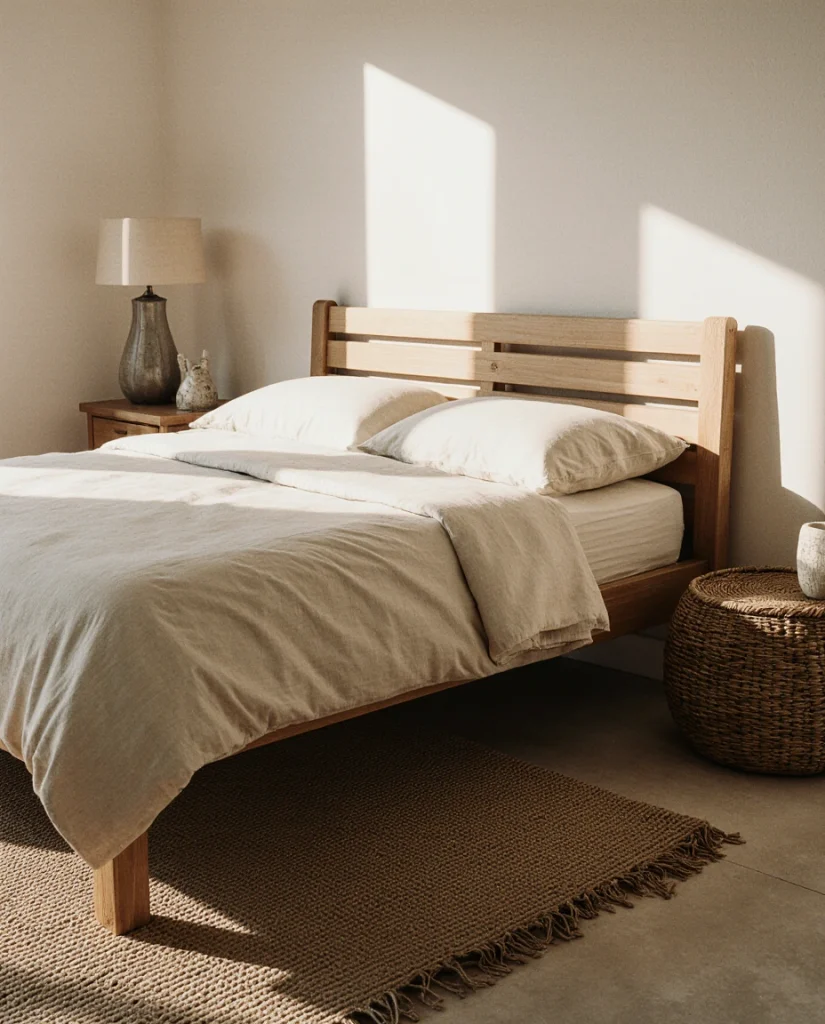
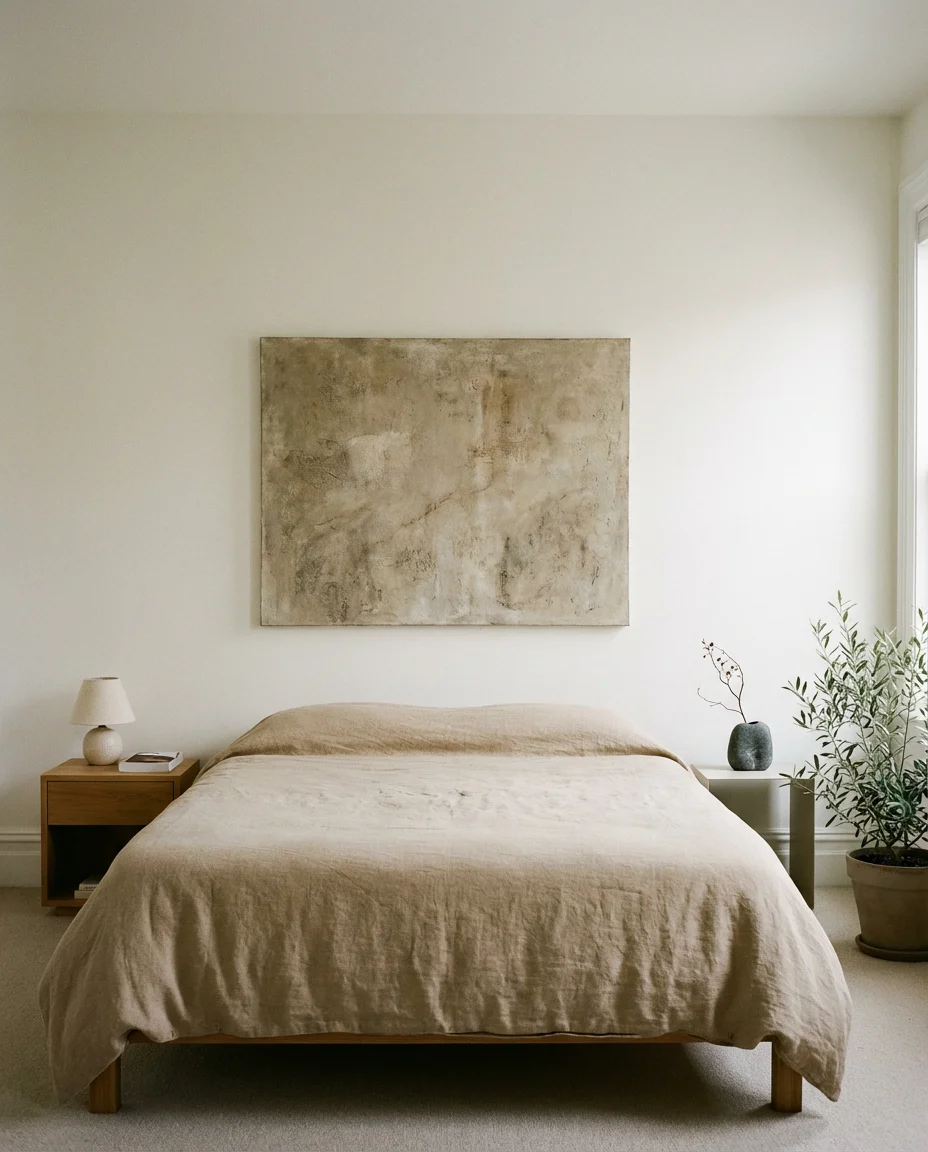
Emphasizing wood, stone, linen, and other natural materials creates cozy bedrooms with inherent warmth and texture. This aesthetic works universally well in guest, primary, and even small rooms, providing richness through material quality rather than color or pattern. Choose a wooden bed frame, linen bedding, a jute rug, and stone lamp bases to build a cohesive natural palette. 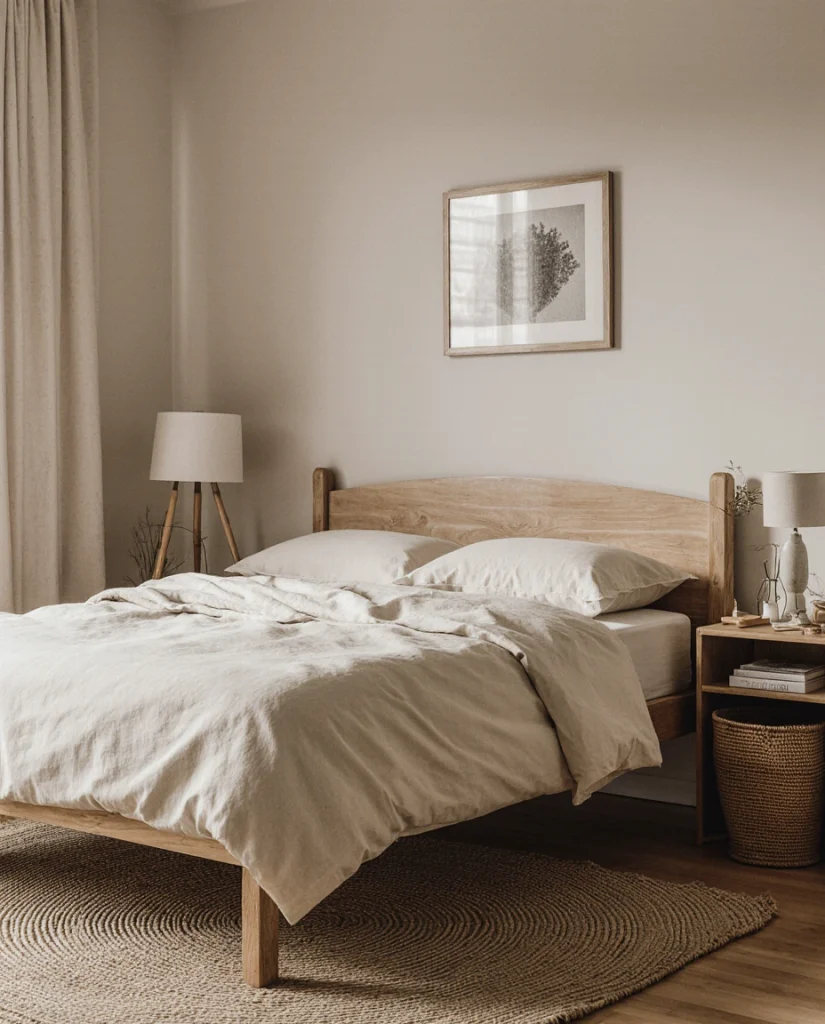
Expert commentary: This trend responds to increasing screen time and digital overwhelm—people crave spaces that feel grounded and real. Natural materials age beautifully rather than looking worn, making them smart long-term investments. A solid wood bed frame costs $800–2,000 but lasts decades, while particle board alternatives need replacing every 5–7 years. The upfront cost balances when you consider longevity and the improved sleep quality many people report in naturally styled rooms.
Conclusion
These 21 bedroom ideas represent the breadth of design possibilities available as we move through 2026, from bold color choices to smart storage solutions. The beauty of bedroom design is its personal nature—your sleeping space should reflect your lifestyle, aesthetic preferences, and practical needs rather than following trends blindly. We’d love to hear which ideas resonate with you or how you’ve adapted these concepts in your own home. Share your thoughts in the comments below and let us know what bedroom challenges you’re currently facing or what transformations you’re planning.