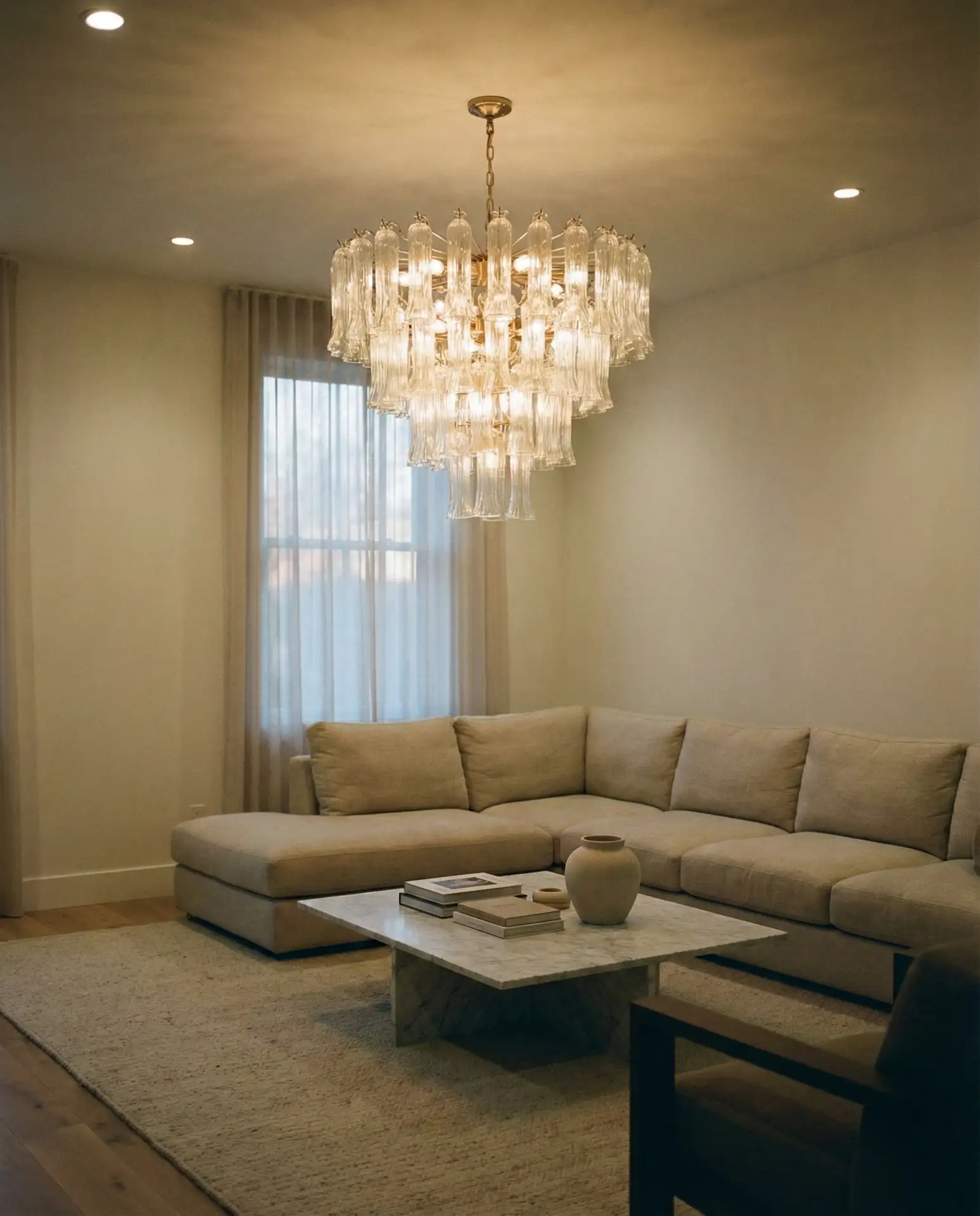
Blue is having a serious moment in American homes, and 2026 is shaping up to be the year it fully takes over the living room. From deep midnight navy to soft duck egg and airy sky tones, blue speaks to something timeless—calm, confident, and endlessly adaptable. If you’ve been saving pins like your life depends on it, you’re not alone: blue living rooms are among the most-searched interior ideas on Pinterest right now, and for good reason. In this article, you’ll find genuinely inspiring ideas to help you style your living room with blue in a way that feels personal, current, and totally livable.
1. Dark Navy Walls with Warm Wood Accents
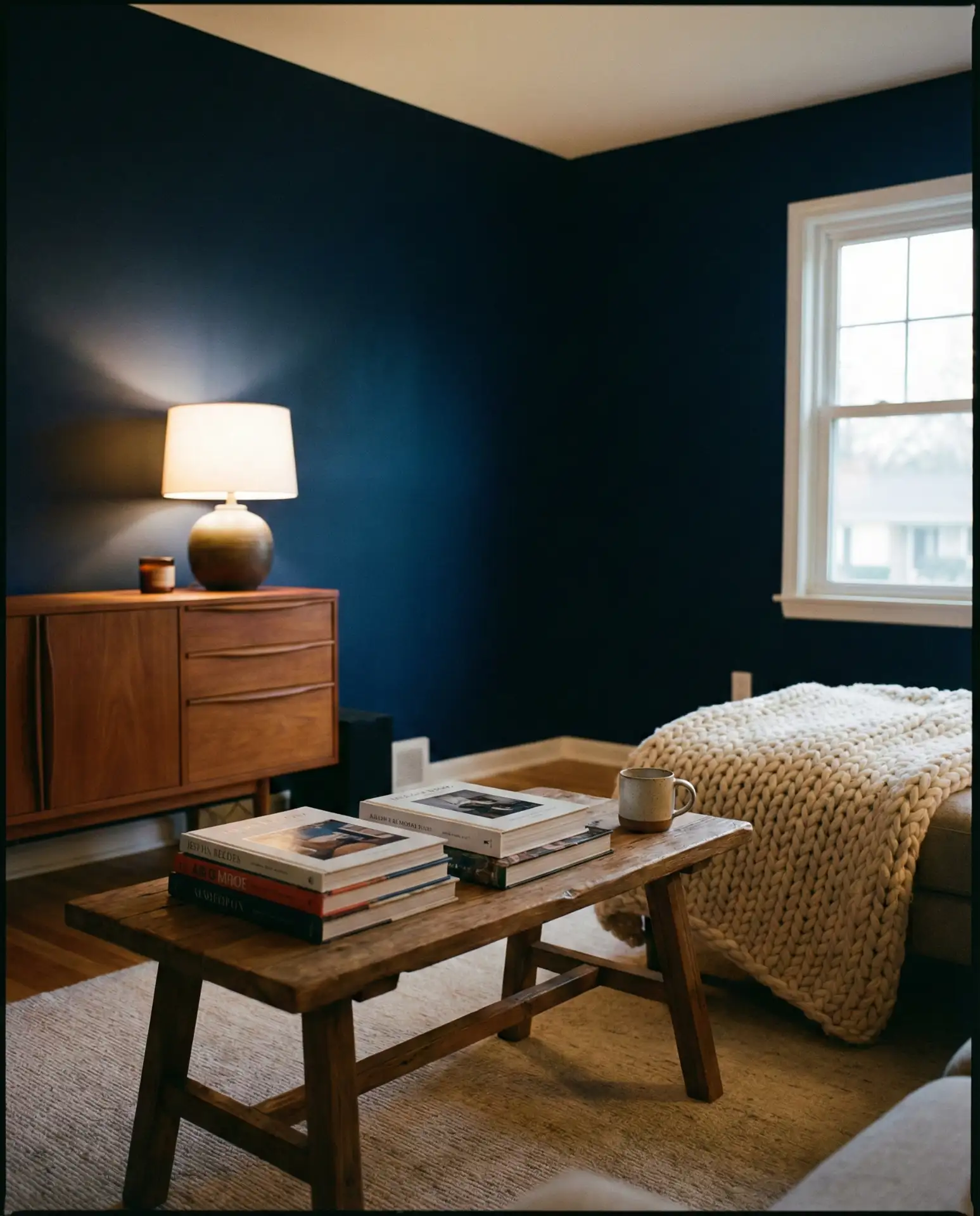
There’s something deeply satisfying about a living room anchored by dark navy walls—it’s the kind of color scheme that makes a room feel like it was designed with intention. Paired with warm walnut shelving and honey-toned wood floors, navy stops feeling heavy and starts feeling rich. It’s a look that works especially well in rooms with generous natural light, where the contrast between the deep wall color and warm wood tones creates a balance that feels both dramatic and grounded. The moody atmosphere is unmistakable without being oppressive.
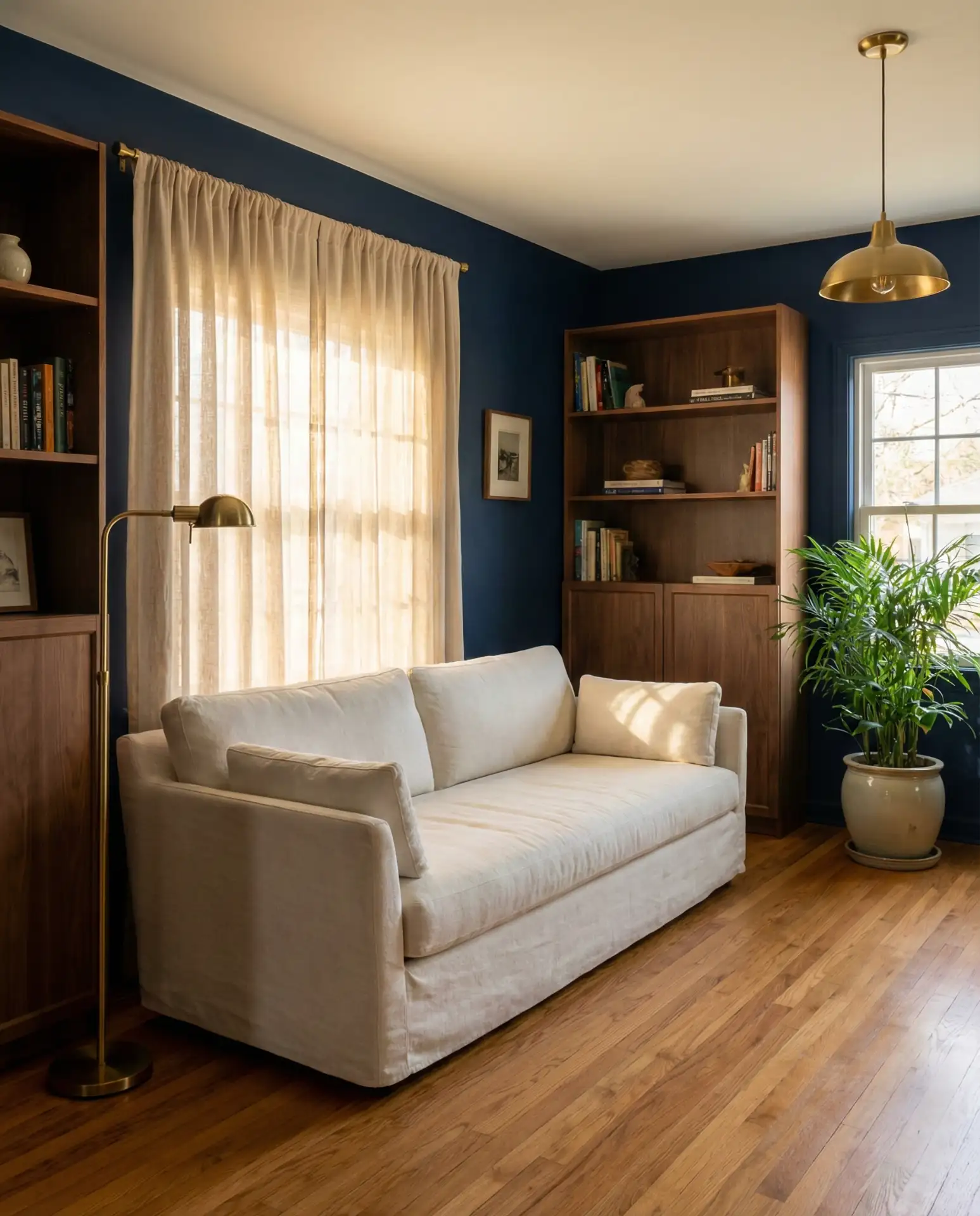
This pairing is a designer favorite for a reason. If you’re worried about going too dark, start with just the accent wall behind the sofa—navy reads differently on four walls versus one, and a single statement wall lets you test the depth without full commitment. A common mistake is to pair navy with cool-toned metals like chrome or steel, which can make the room feel cold. Stick to brass, bronze, or matte gold hardware, and you’ll keep the space warm and welcoming from every angle.
2. Light Blue and Beige Layered Living Room
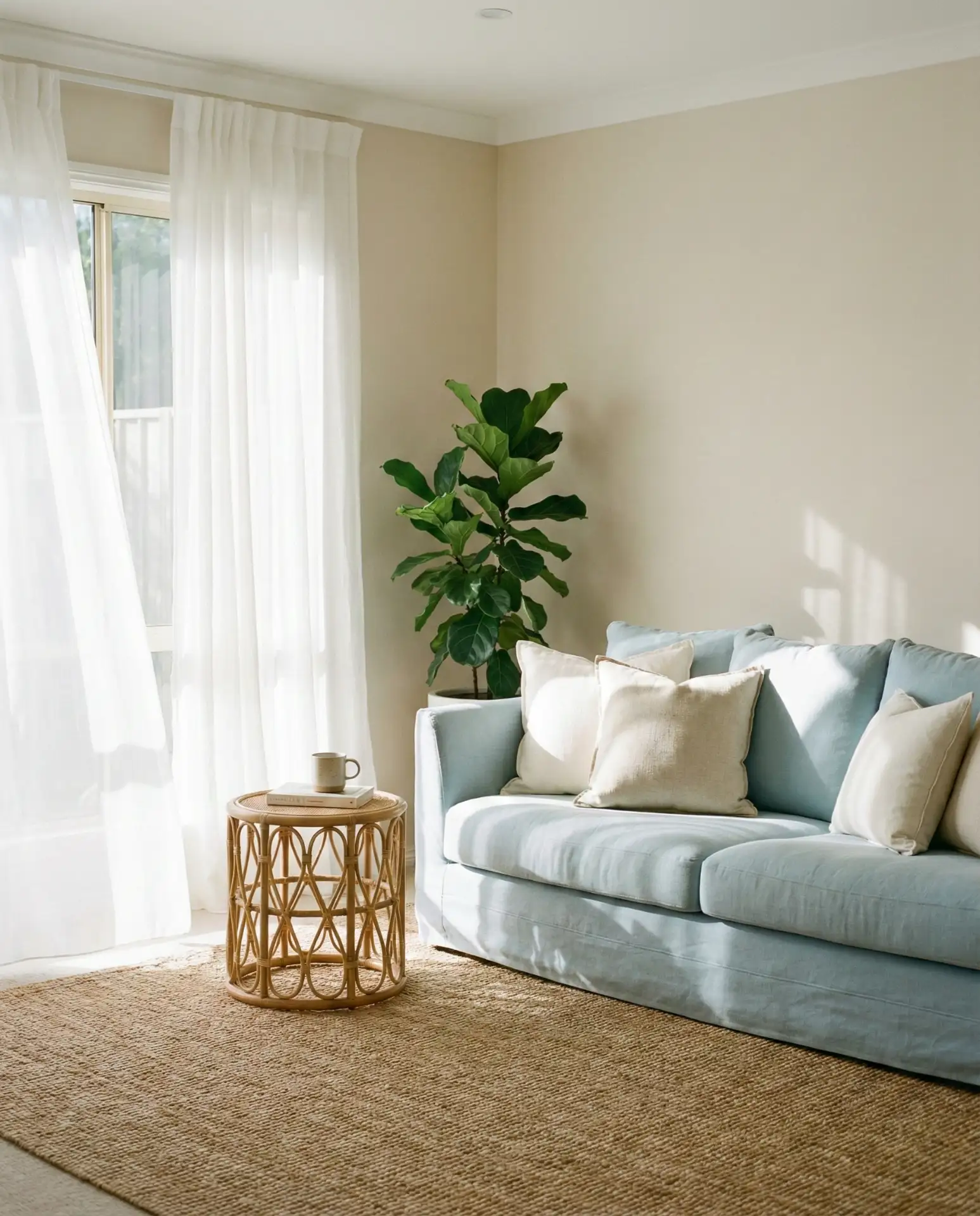
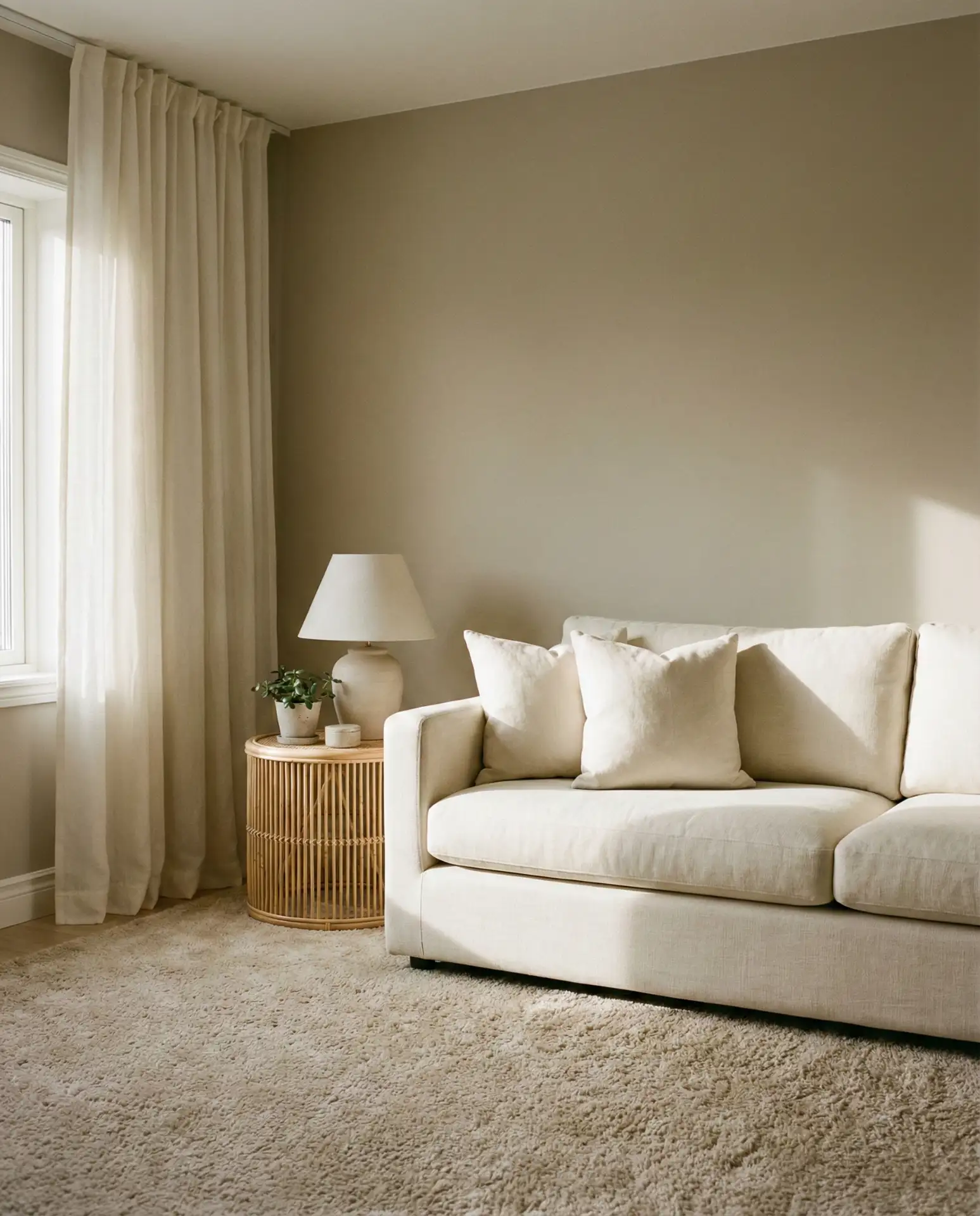
If you want a living room that breathes, the combination of light blue and beige and neutral tones is practically foolproof. Think of a pale powder-blue sofa set against linen-colored walls, jute rugs underfoot, and layers of cream and sand-toned cushions. It’s the interior equivalent of a deep exhale—visually quiet but never boring. This palette works especially well in open-plan American homes where the living area flows into a dining space, because the soft blue keeps things cohesive without competing with adjacent rooms.
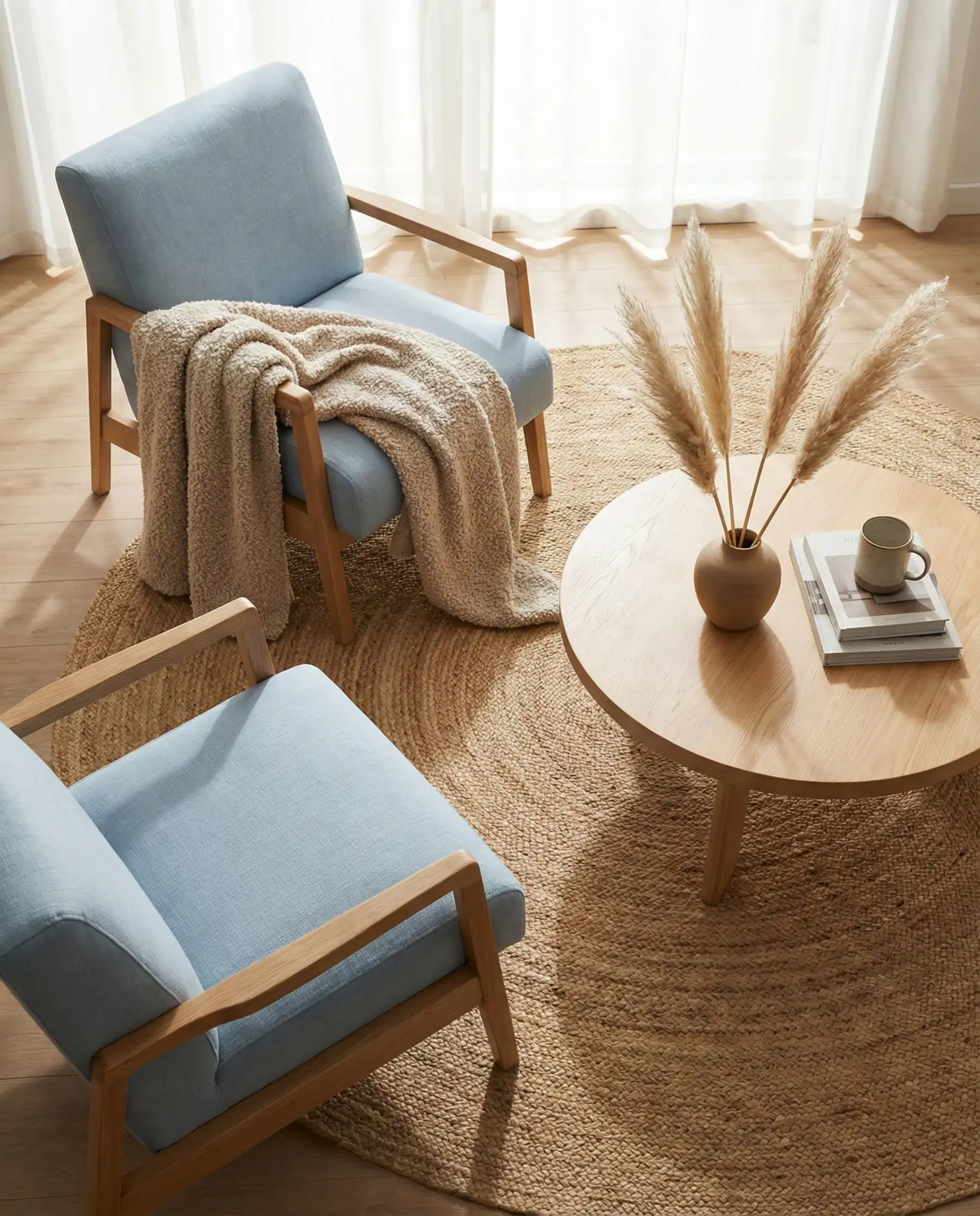
In terms of budget, this palette is one of the most accessible on this list. Light blue paint tends to be widely available at every price point, and neutral furniture—the stuff you’re layering it with—rarely goes out of style, so you’re not starting over every few years. Many homeowners who’ve tried this combination admit they were skeptical the blue would feel “too beachy,” but in practice, the sandy beige grounds it completely. It feels coastal without the kitsch.
3. Inchyra Blue Statement Sofa
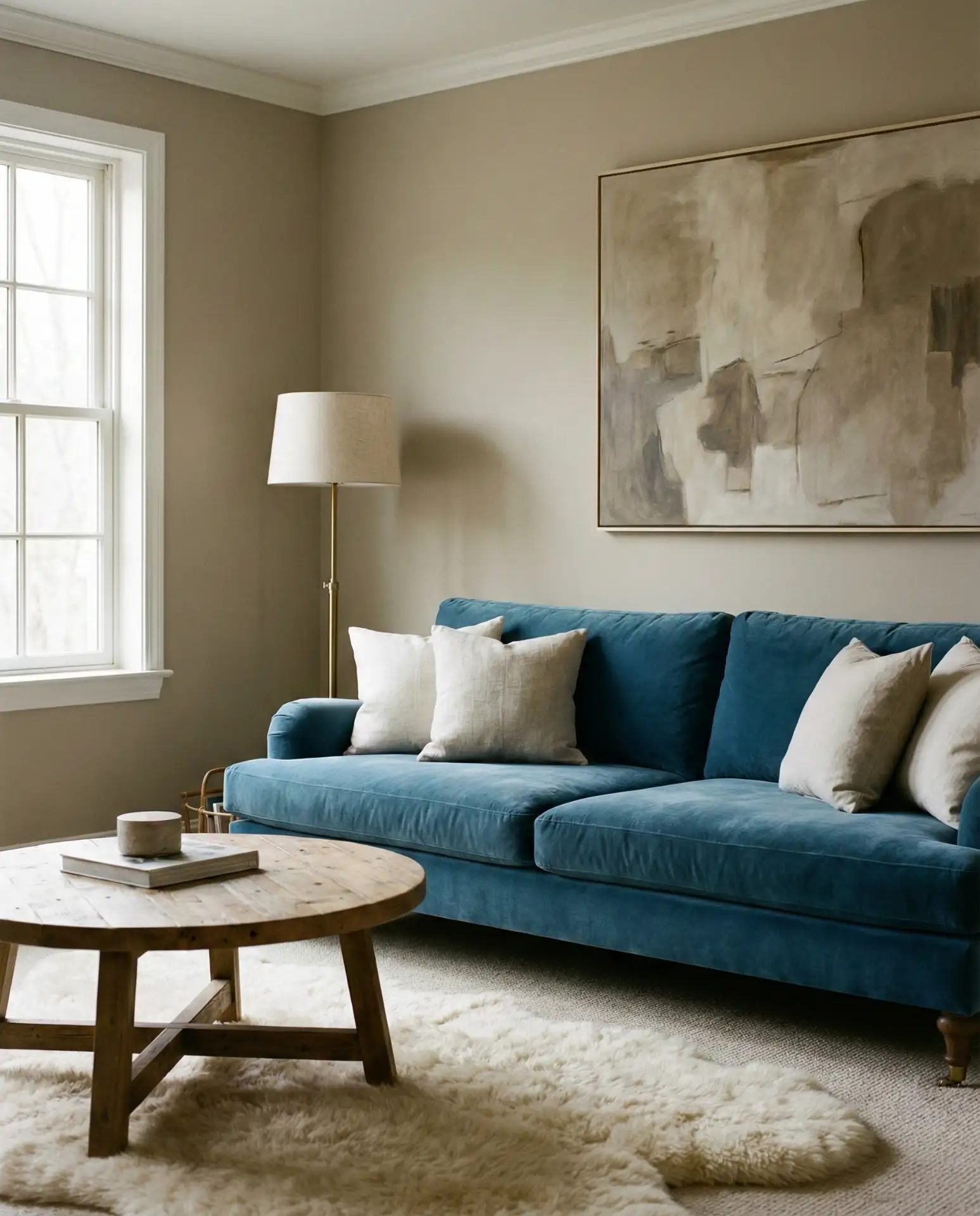
Inchyra blue—that moody, greenish-grey-blue made famous by Farrow & Ball—is one of those colors that photographs beautifully and lives even better. When it shows up on a velvet sofa, the result is genuinely show-stopping. Pair it with neutral and warm-toned walls in a soft white or barely-there greige, and the sofa becomes the undisputed focal point. This approach works brilliantly in smaller living rooms where you want big personality without a total commitment to wall color. One piece, total transformation.
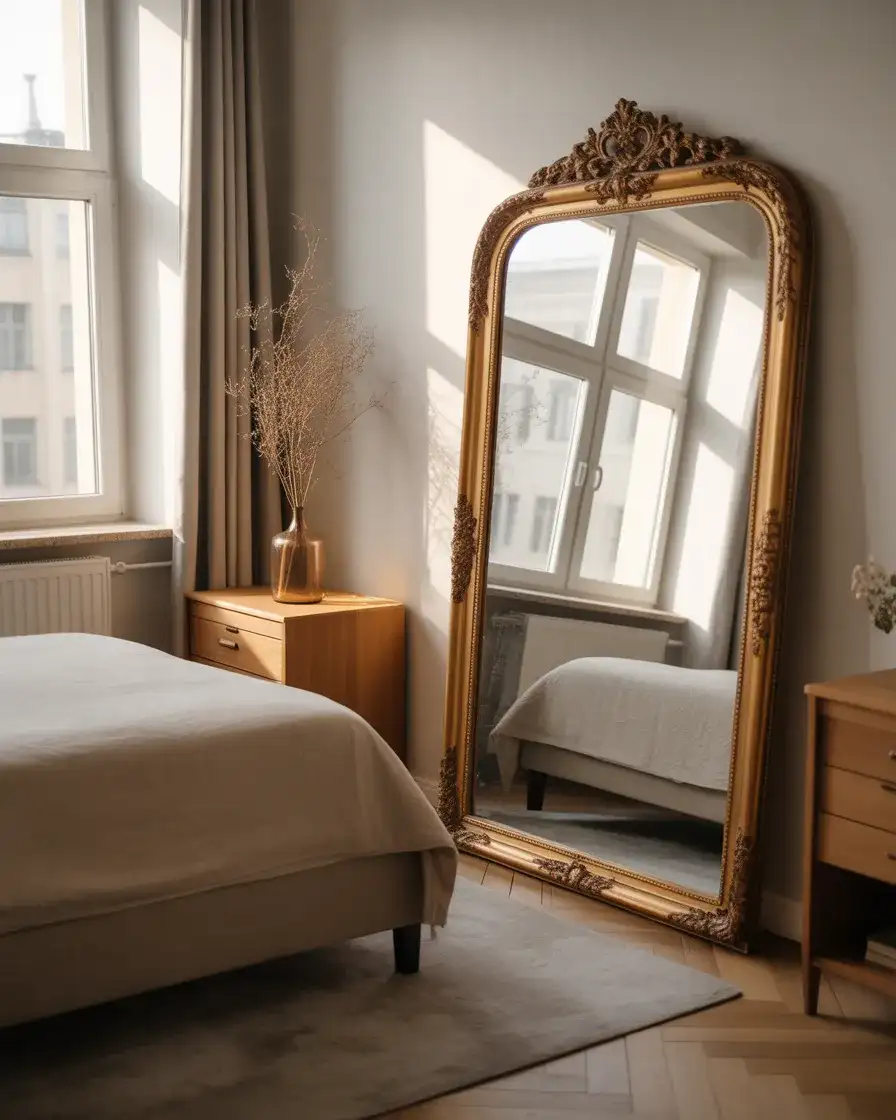
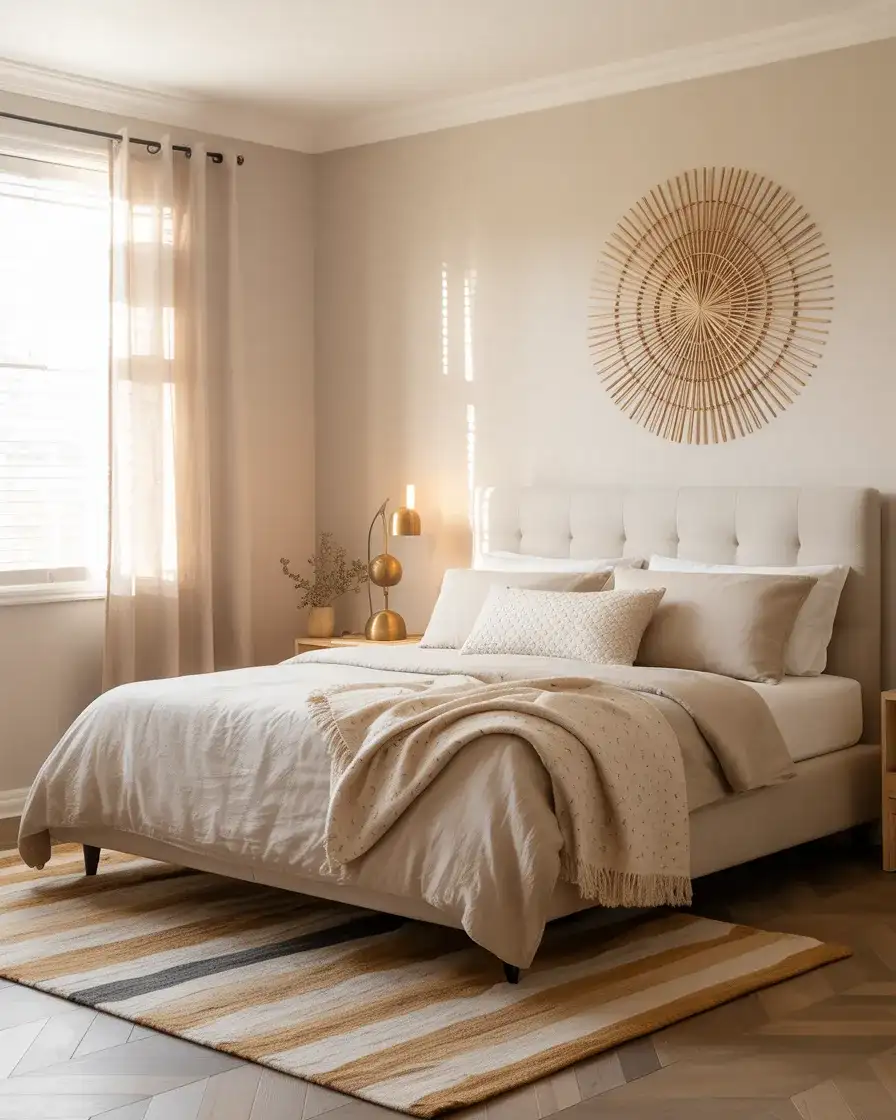
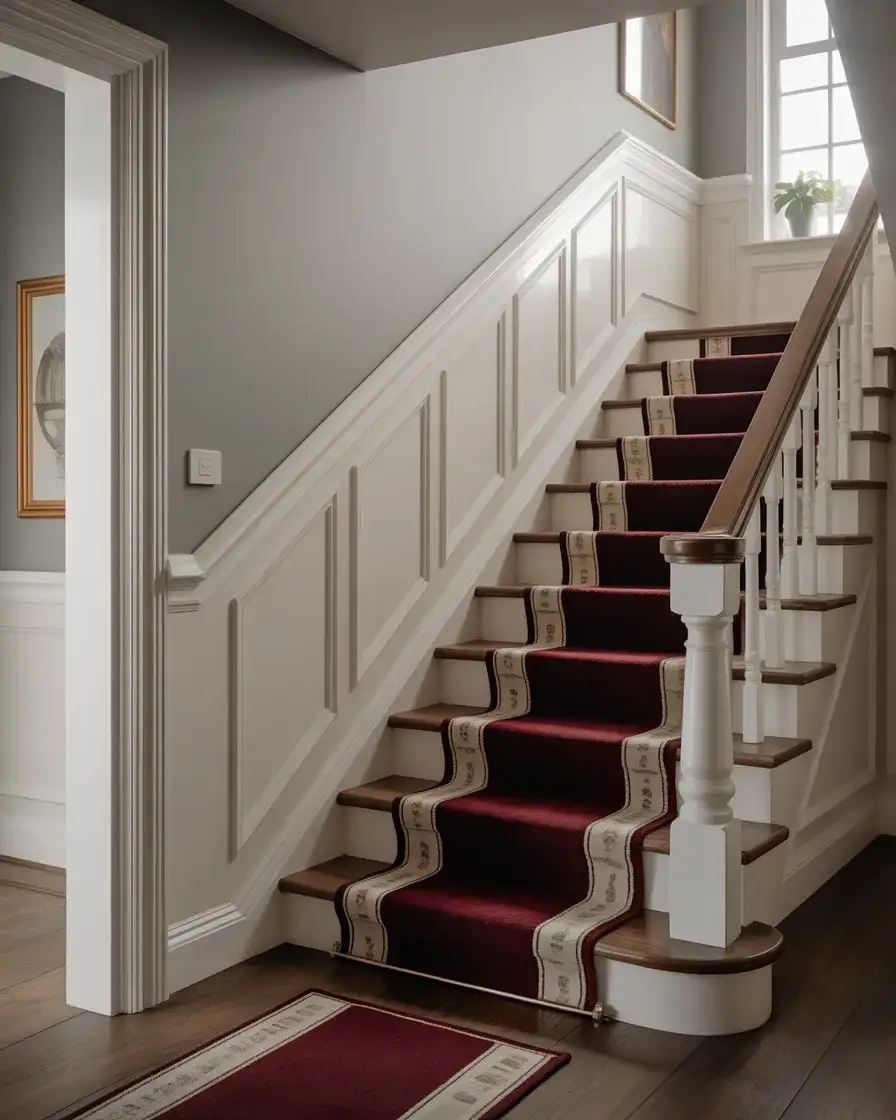
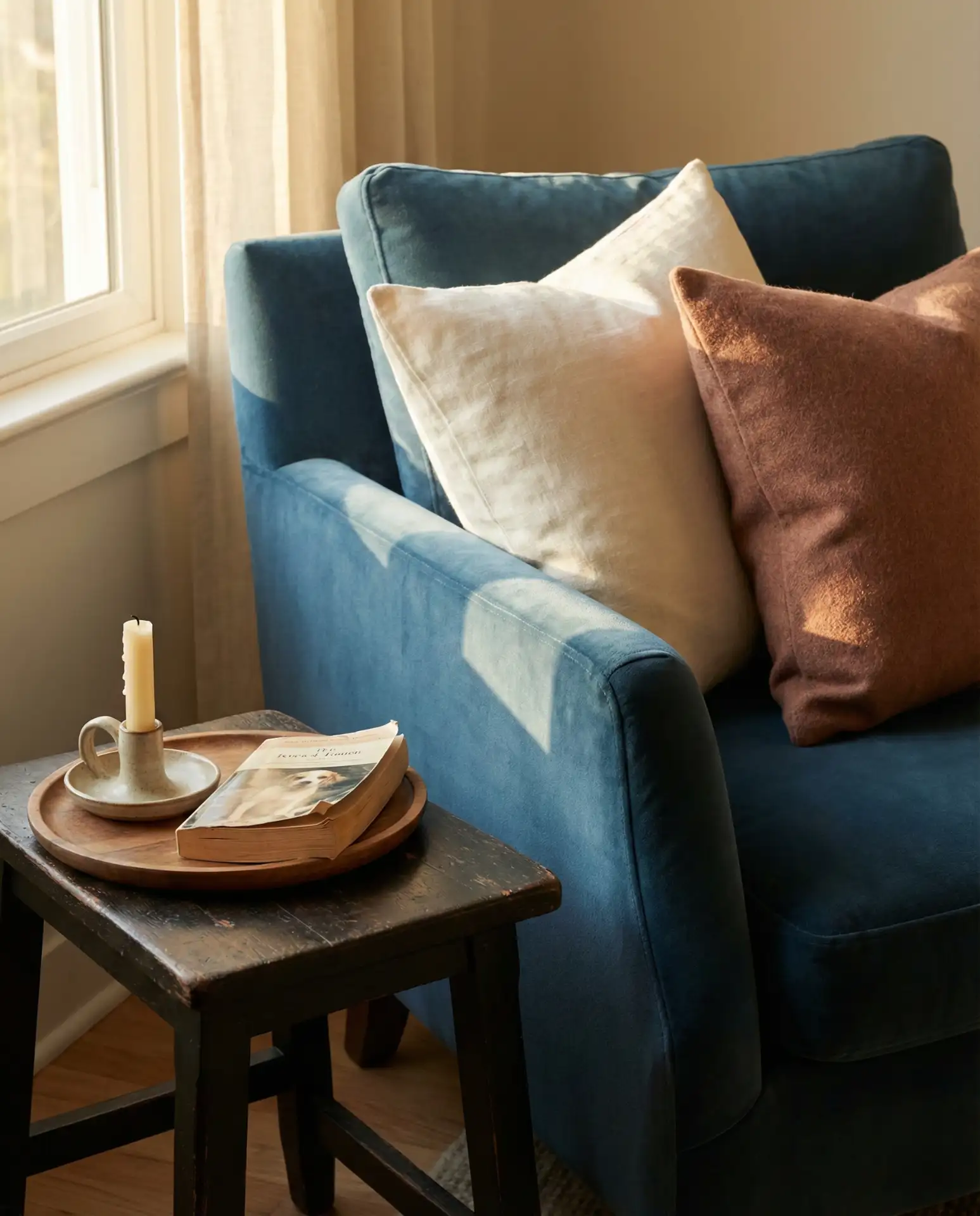
An interior designer who specializes in transitional American homes once put it this way: “The right sofa color can make white walls feel intentional rather than unfinished.” That’s exactly what Inchyra does. It’s sophisticated enough for a formal living space but relaxed enough for a family room. If you’re shopping on a mid-range budget, there are excellent velvet sofas in this color family from brands like Article, Joybird, and West Elm that won’t require a second mortgage.
4. Blue and Brown Earthy Living Room
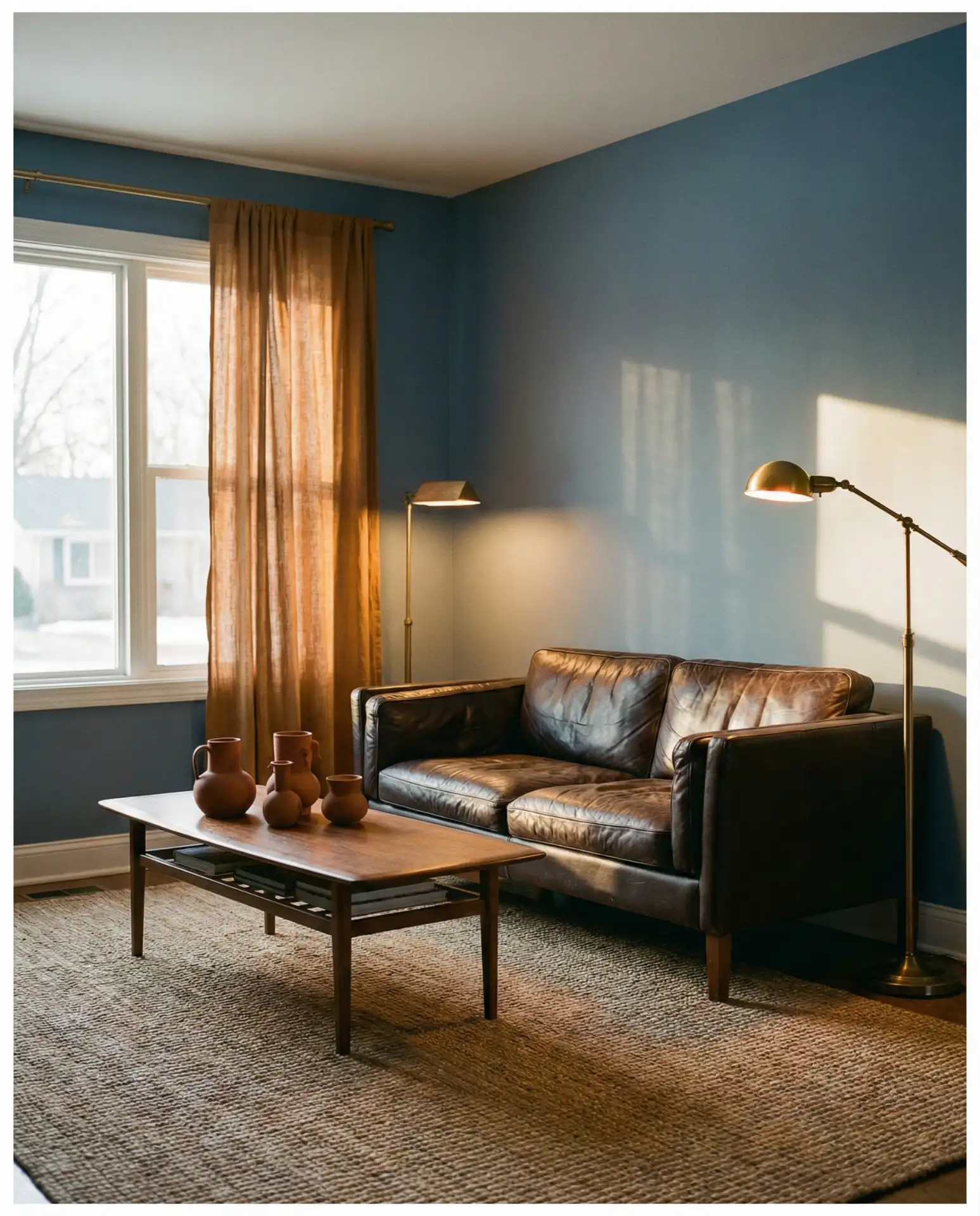
The combination of brown and blue might sound unexpected, but it’s one of the most naturally beautiful pairings in interior design—think of a clear sky over a stretch of rich, dark earth. In a living room, this translates to navy or slate-blue walls anchored by chocolate leather furniture, dark walnut frames, and earthy terracotta accessories. The color tension between the cool blue and warm brown creates visual depth that feels collected and considered rather than coordinated from a single catalog page.
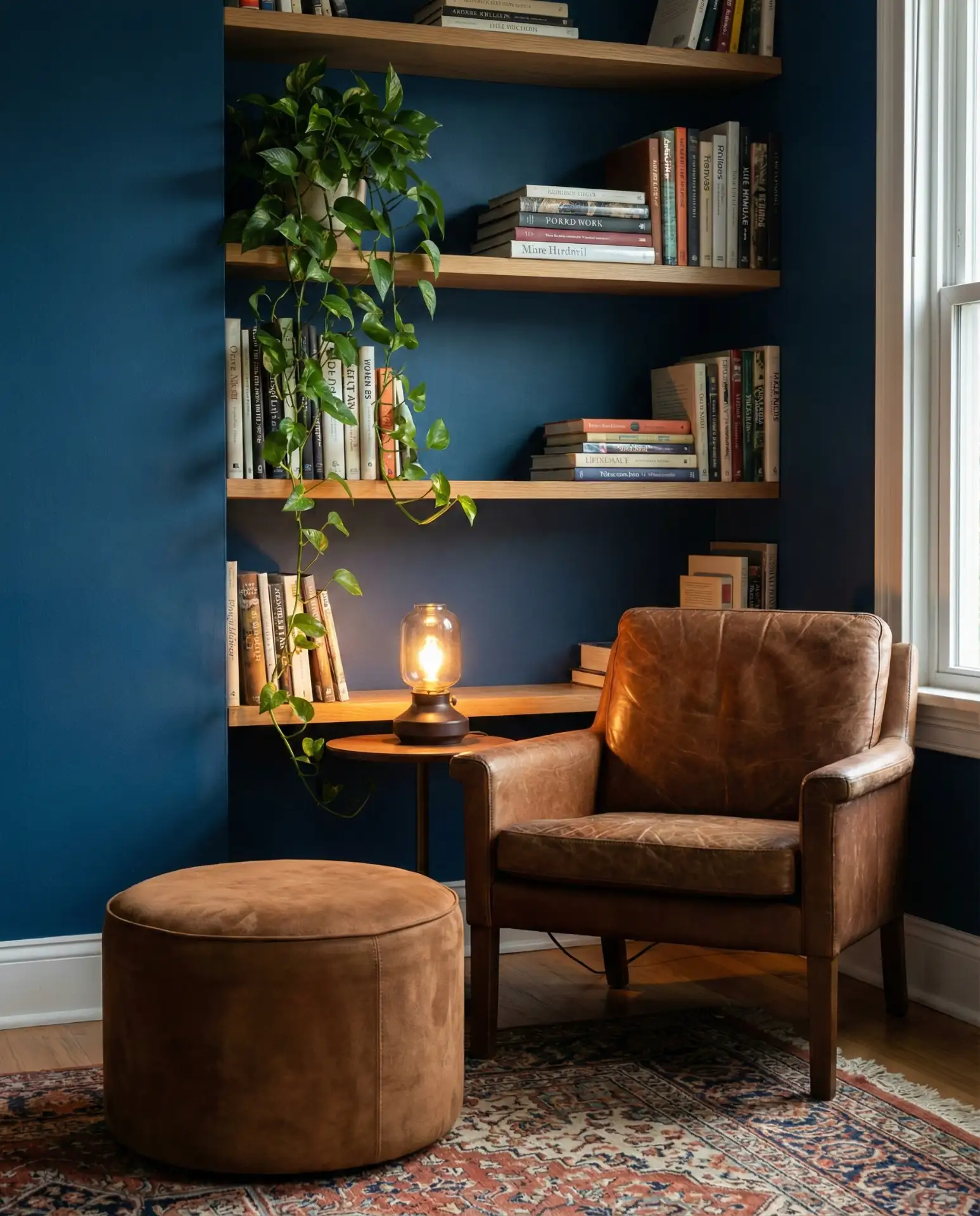
This is a look that works particularly well in the American Midwest and Southwest, where earthy design traditions already lean into warm browns and natural textures. If you live in a ranch-style home or a craftsman bungalow, the blue-brown pairing feels rooted in the architectural language of the space rather than dropped in from a trend board. The key is to let the brown anchor the room through furniture and flooring while blue lives primarily on the walls or in textile layers.
5. Cozy Midnight Blue Reading Nook
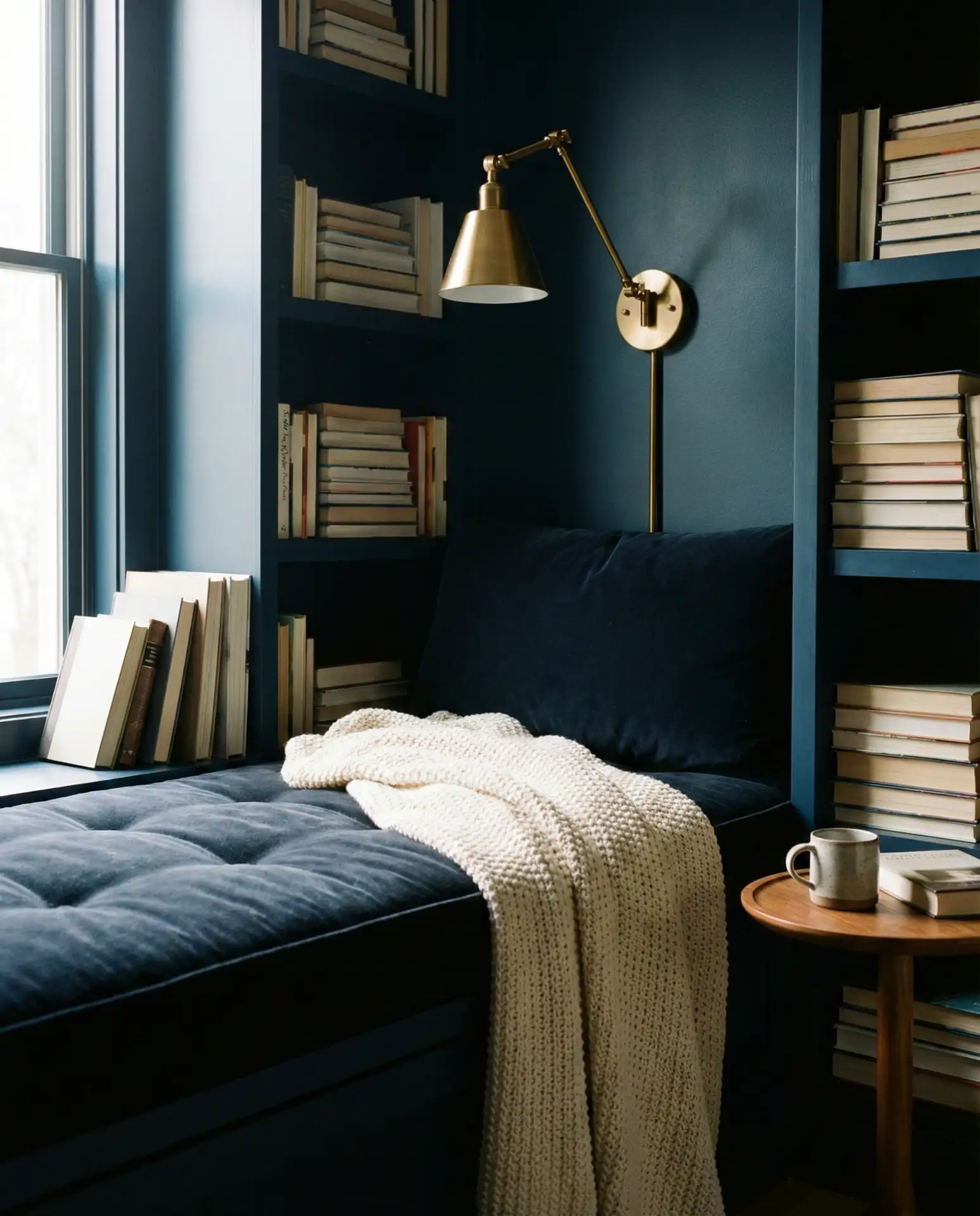
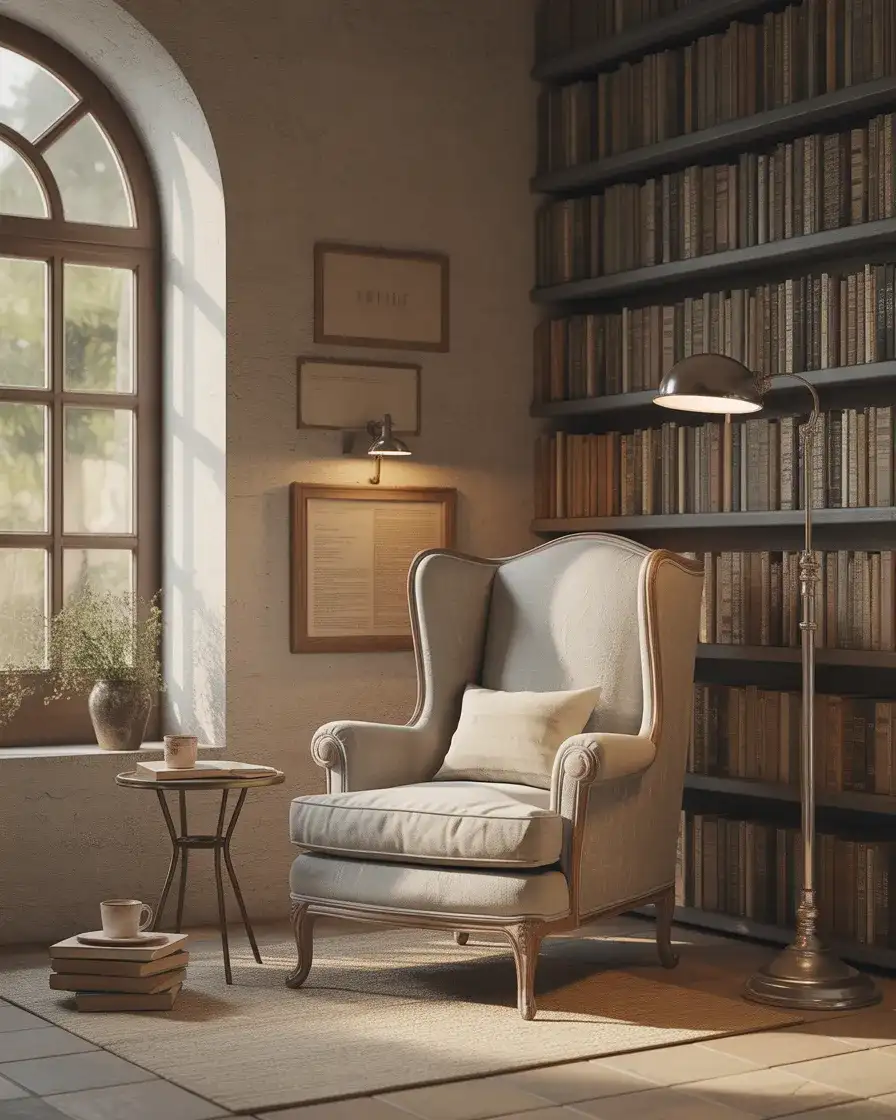
Carving out a cozy corner within your living room is one of the smartest things you can do with square footage, and wrapping it in midnight blue makes it feel like a world unto itself. Think a built-in window seat or a deep armchair tucked between bookshelves, all painted in that inky, almost-black blue. Layer in a reading lamp with a warm bulb, a soft throw, and a side table just big enough for a cup of coffee, and you’ve created the kind of spot people linger in for hours without meaning to.
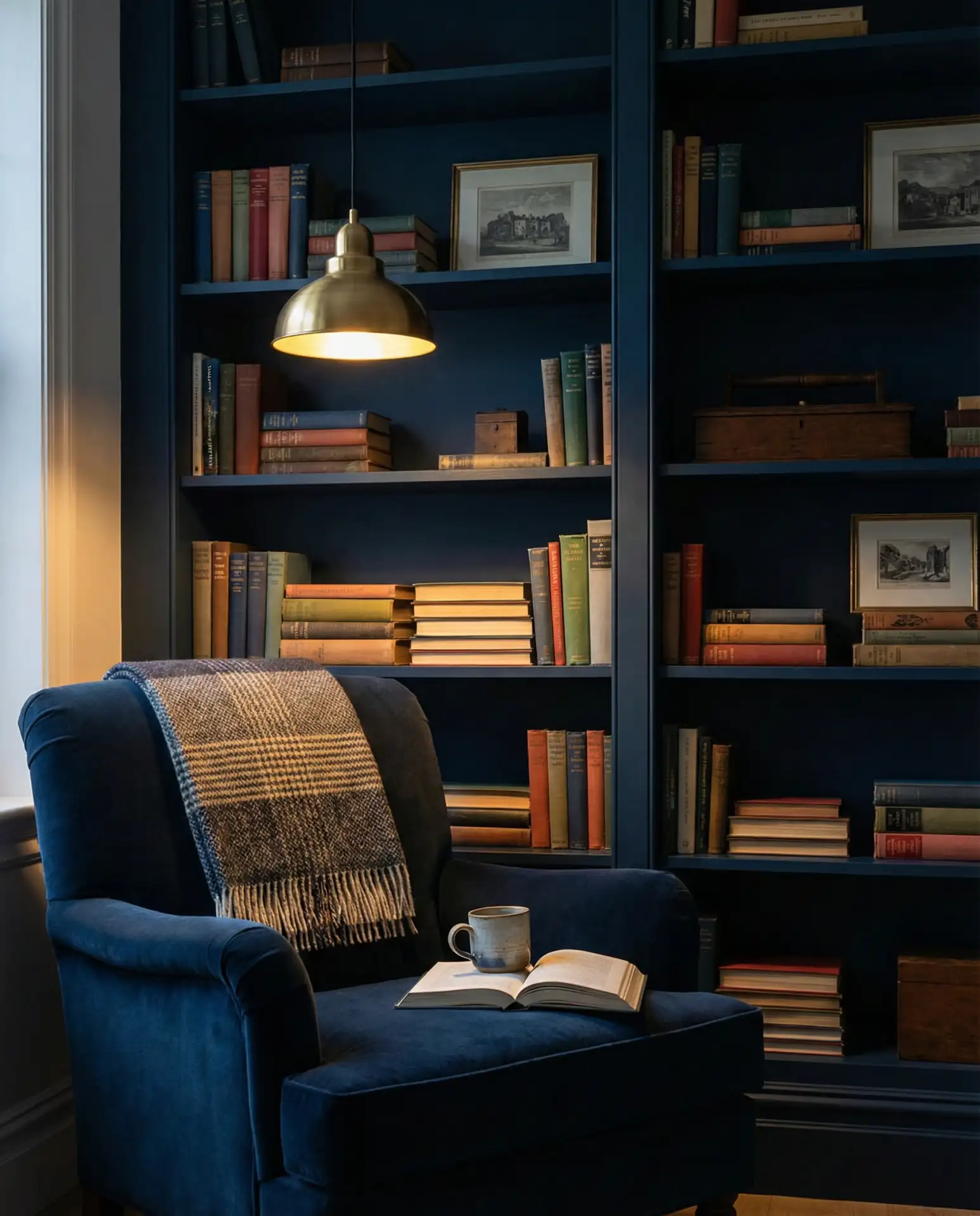
One homeowner who renovated her Chicago apartment described the midnight reading nook as “the only room in the house my husband and I actually fight over.” The key to making dark blues work in a small nook is lighting—never rely on overhead alone. A directional reading lamp and a secondary ambient source (a small table lamp or sconces mounted to the bookshelf sides) keep the space from feeling like a cave. Dark blue absorbs light, so you’re not fighting the color; you’re working with it.
6. Duck Egg Blue Walls with White Trim
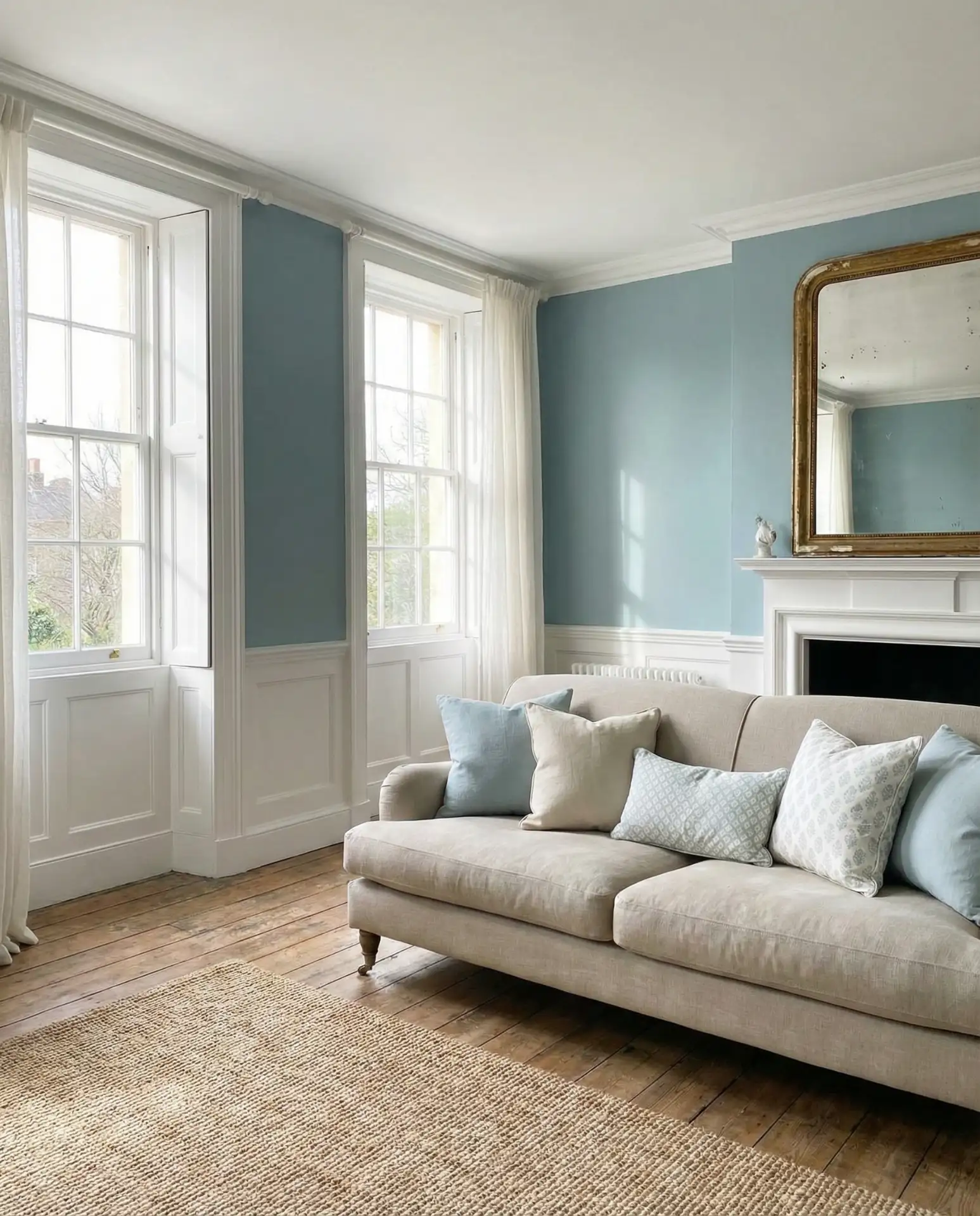
Duck egg blue is that elusive shade that sits somewhere between green and blue—soft, quiet, and completely charming. When paired with crisp white trim and millwork, it produces the kind of living room that looks effortlessly polished whether you’re styling it traditionally or with a more contemporary lean. This combination is particularly popular in older American homes with architectural detail—crown molding, window casings, and wainscoting—where the white trim creates a clean frame that lets the duck egg wall color breathe and shine.
Where this works best: Colonial, Craftsman, and Victorian-era homes along the East Coast and in the Pacific Northwest, where the greenish undertone of duck egg echoes the natural landscape outdoors. It also reads exceptionally well in rooms with south-facing windows, which bathe the walls in warm light that softens the cooler green notes in the paint. In rooms without much natural light, test the paint color through morning, afternoon, and evening before committing—duck egg can skew quite green under artificial lighting.
7. French Blue Living Room with Linen and Antiques
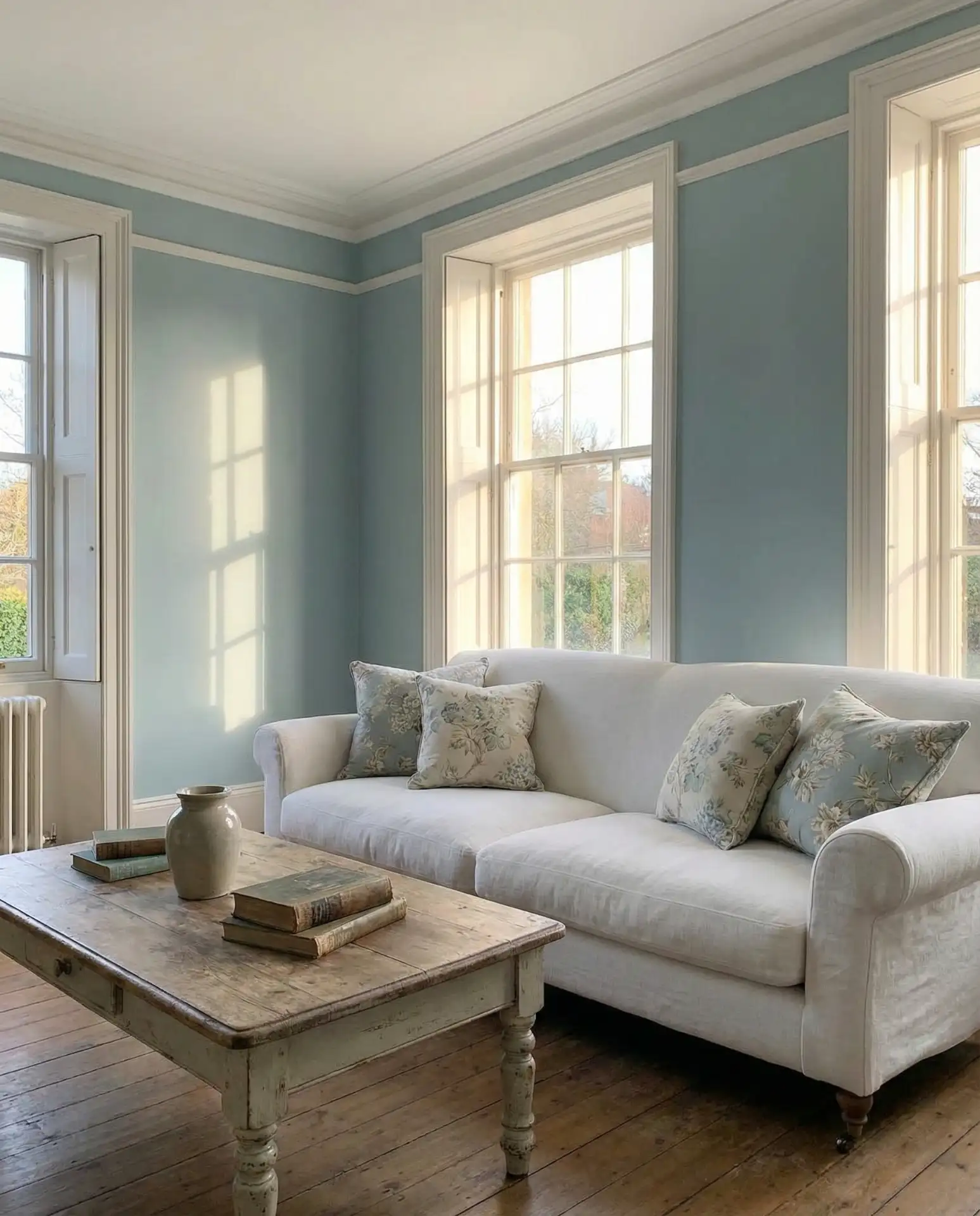
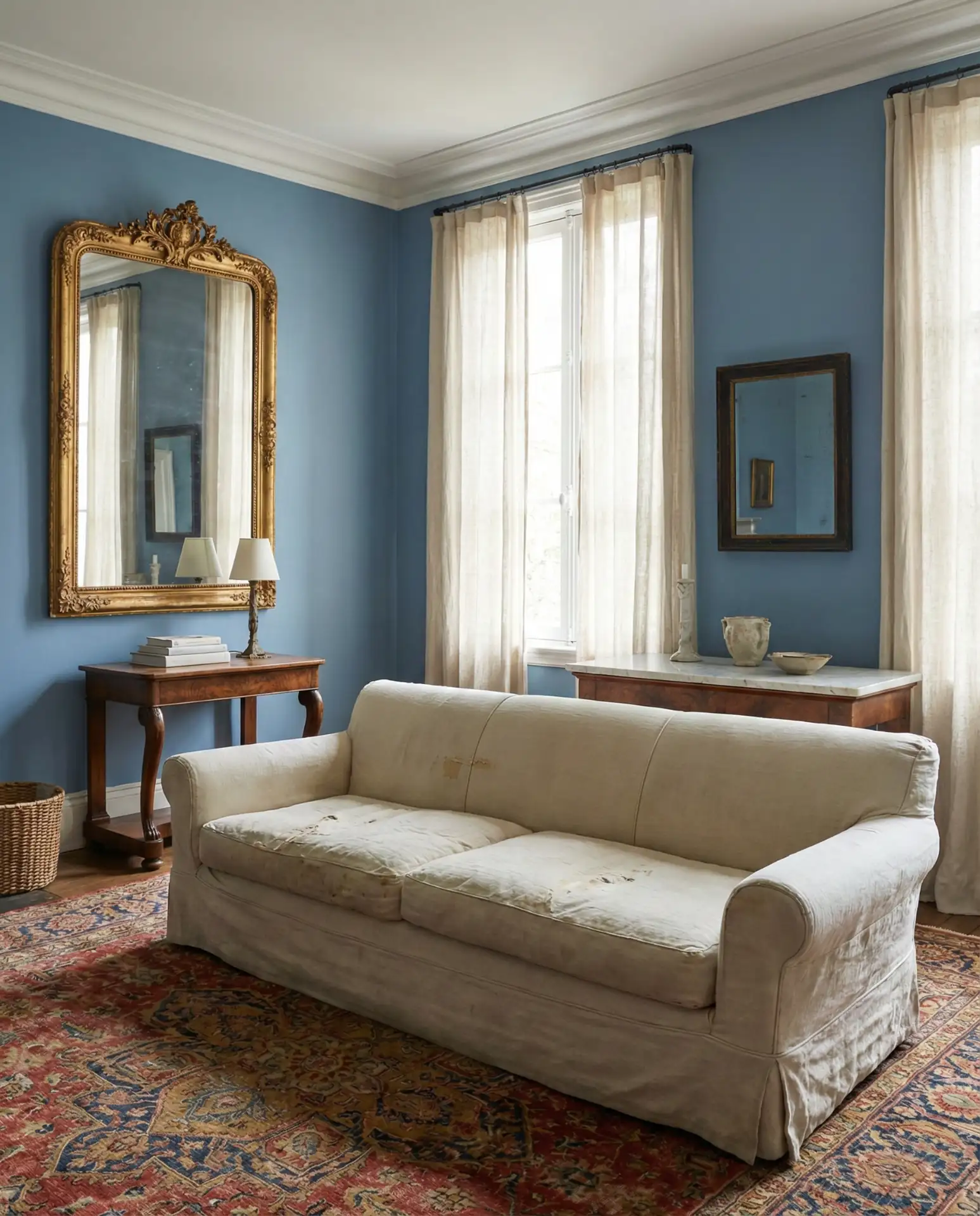
There’s a reason French blue has never really gone out of style—it’s a color with history, warmth, and just enough imperfection to feel lived-in. In a living room, it pairs beautifully with worn linen slipcovers, gilded mirrors, and the kind of antique furniture that looks like it was inherited rather than purchased. The overall effect is layered and personal, like a room that has accumulated its character over decades. Add a faded Persian rug and a marble-topped side table, and you’ve got something that feels genuinely European but also deeply, comfortably American.
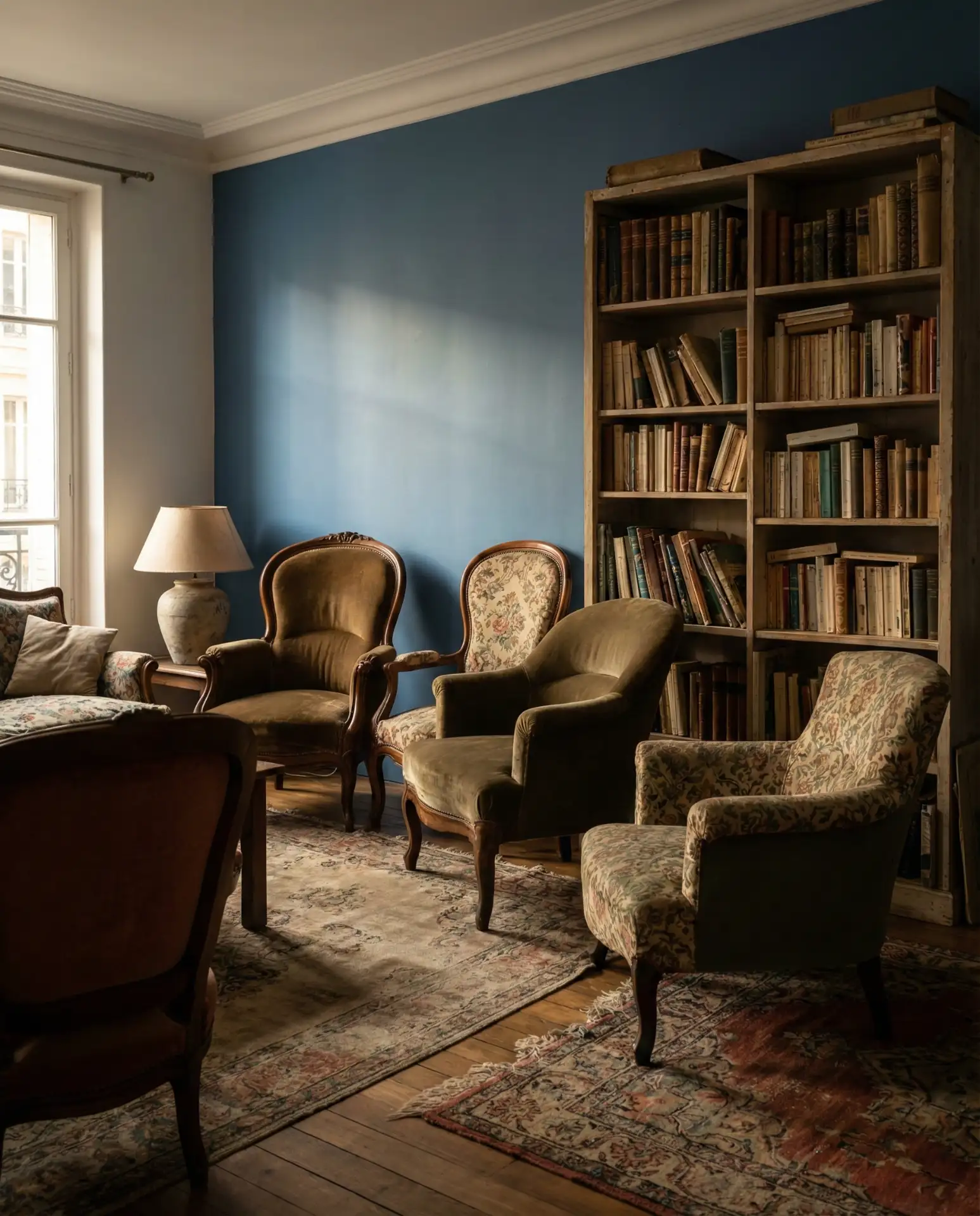
The antique approach doesn’t require a big budget—it requires patience. Estate sales, Facebook Marketplace, and local thrift stores are full of the worn wooden pieces and quirky decorative objects that make this style work. The practical insight here is that French blue acts as a unifying backdrop: even a collection of mismatched antiques will feel intentional against a strong, consistent wall color. Think of the blue as the connective tissue that brings all your found pieces into conversation with each other.
8. Blue and Green Botanical Living Room
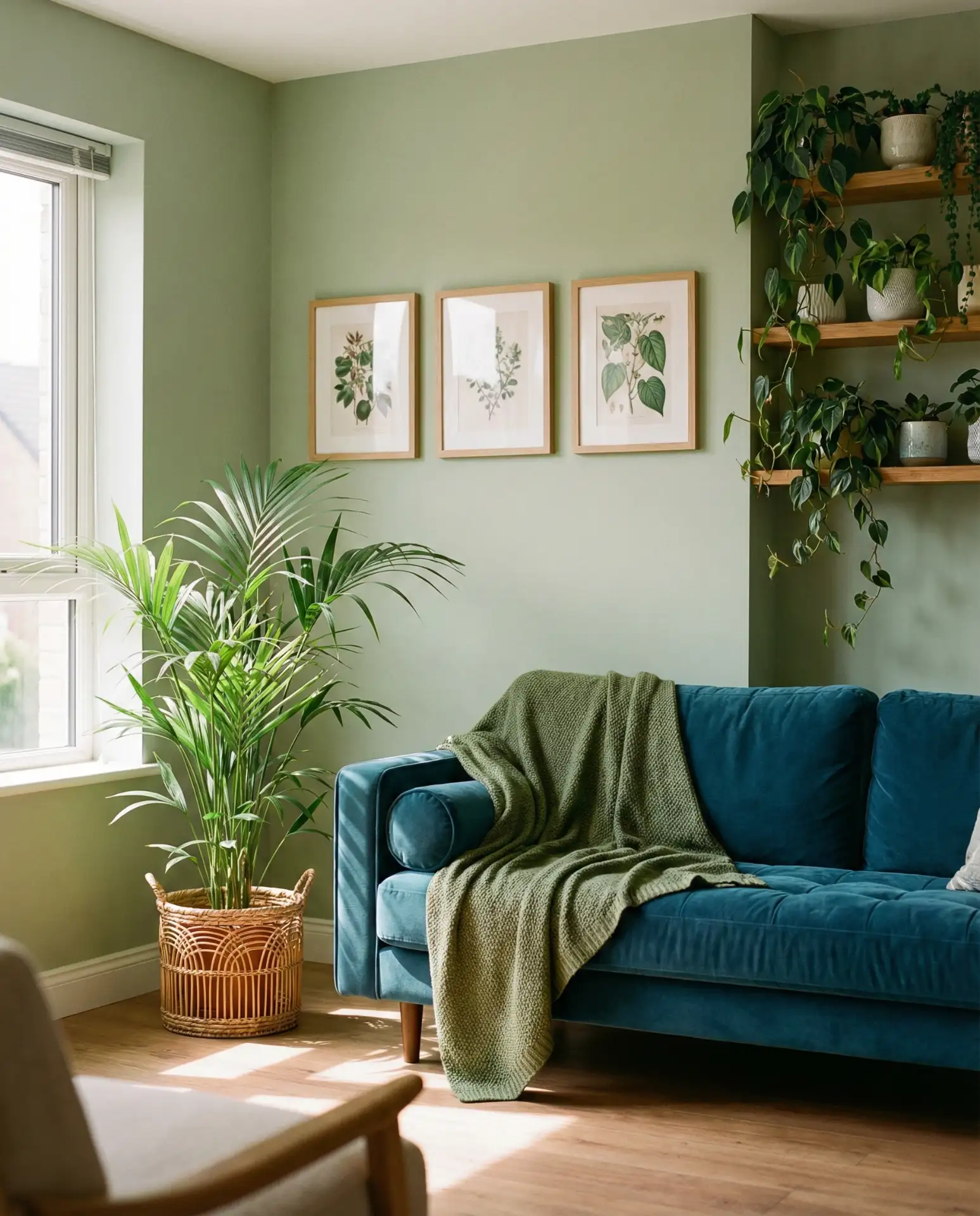
Pairing green and blue in a living room is one of those moves that sounds risky on paper and looks stunning in real life. The trick is to treat them as analogous colors—neighbors on the color wheel—rather than contrasts, so the palette feels cohesive and organic. Think sage green walls with a deep teal-blue velvet sofa, layered with botanical prints, potted palms, trailing ivy, and textiles in mossy, forest, and ocean tones. This is the living room for the person who has strong feelings about houseplants and considers the outdoors a primary source of design inspiration.
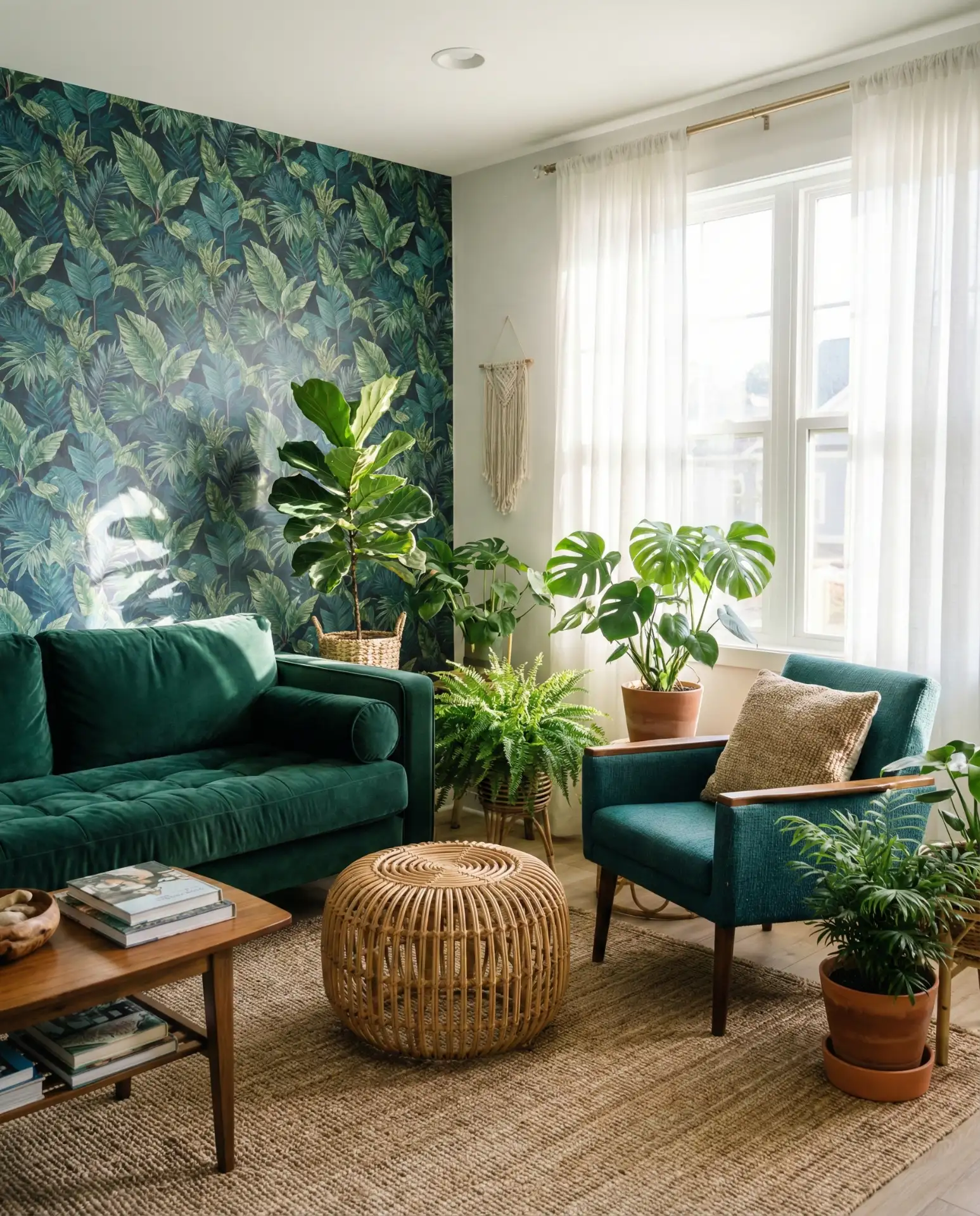
Expert-level tip: if you’re worried the blue-green combination will feel too intense, use texture to quiet it down. A linen or cotton slipcover in a muted sage will read as more neutral than a saturated velvet in the same color, allowing you to introduce the blue more boldly in smaller doses—a cushion, a vase, a side table. This technique lets the palette breathe while keeping the overall room spirit intentionally botanical and layered.
9. Blue and Grey Modern Minimalist Living Room
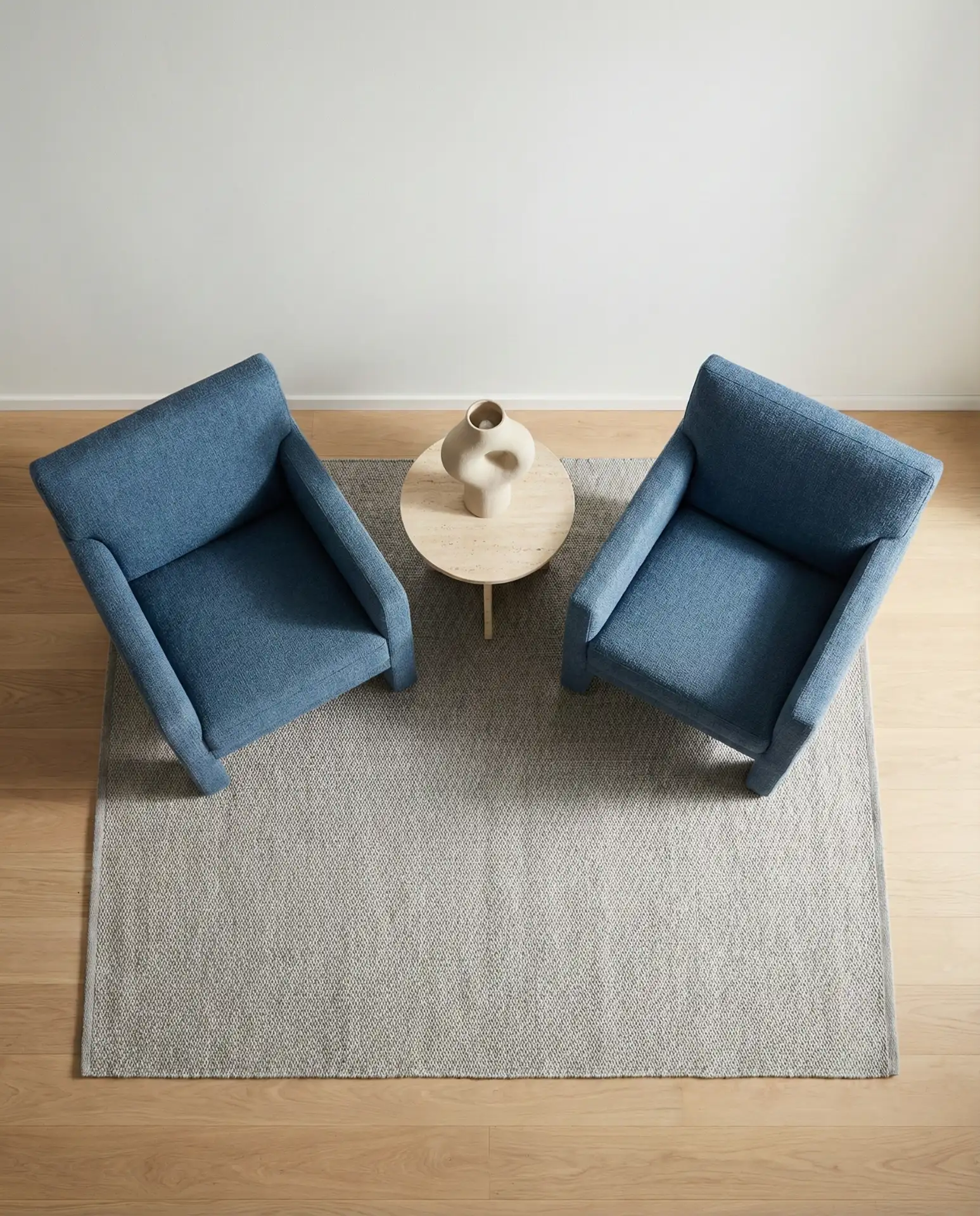
For those who believe a living room should be a place of quiet focus rather than visual noise, the grey and blue minimalist palette delivers exactly that. Cool slate grey walls paired with a steel-blue sofa and clean-lined furniture in pale ash or concrete create a room that feels serene and architectural. There are no unnecessary layers here—just well-chosen pieces, thoughtful proportions, and the kind of visual calm that only comes from a genuinely disciplined color scheme. It’s a look that photographs beautifully and lives even better.
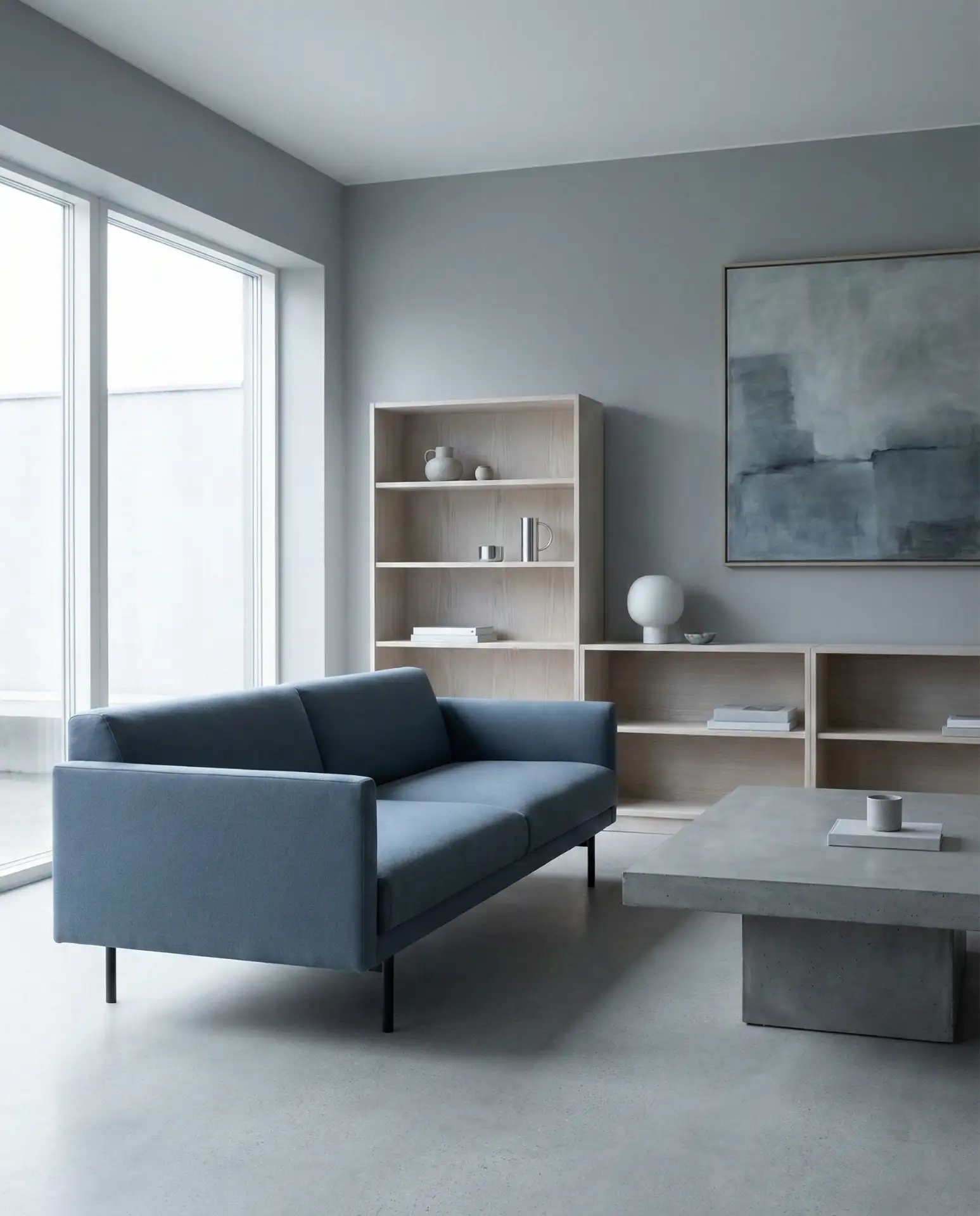
The most common mistake in a blue-grey minimalist room is going too cold. Without warmth introduced somewhere—a single warm-toned wood side table, a cream area rug, or a brass floor lamp—the room can start to feel clinical rather than calm. Real homeowners who’ve lived in grey-blue minimalist spaces often add one warm natural material over time: a sheepskin draped over the sofa arm or a small olive wood bowl on the coffee table. These small additions make the difference between a showroom and a home.
10. Dusty Blue and Terracotta Living Room
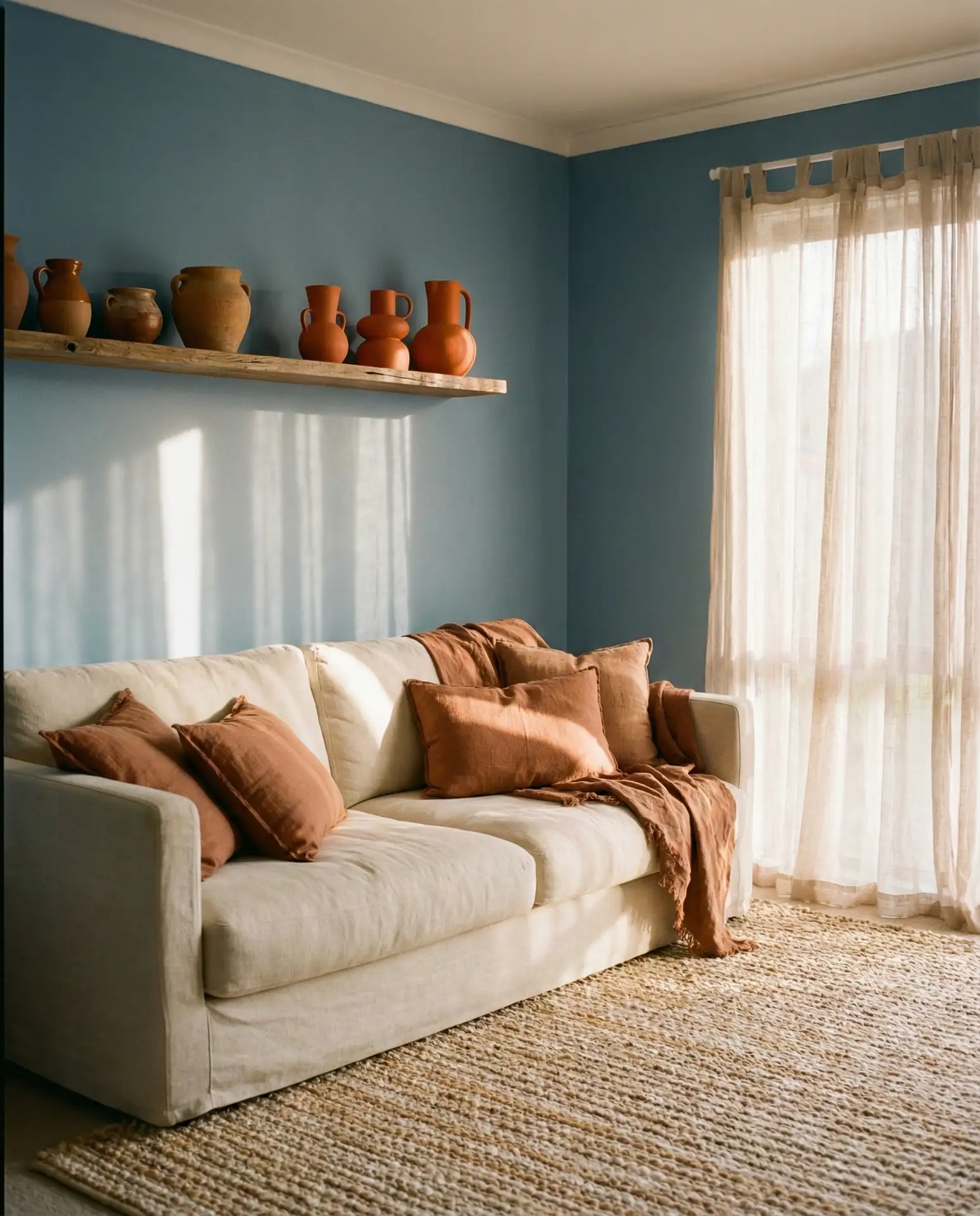
Dusty blue and terracotta is one of those unexpected pairings that makes complete sensory sense—like the Southwestern sky at dusk meeting the warm desert earth beneath it. In a living room, it plays out as dusty, chalky blue walls or upholstery set against burnt orange ceramic accessories, rust-toned cushions, and warm clay pottery. The palette feels simultaneously boho and sophisticated, earthy and breezy. And it has the particular quality of making a room look intentionally designed no matter how casually you’ve actually put it together.
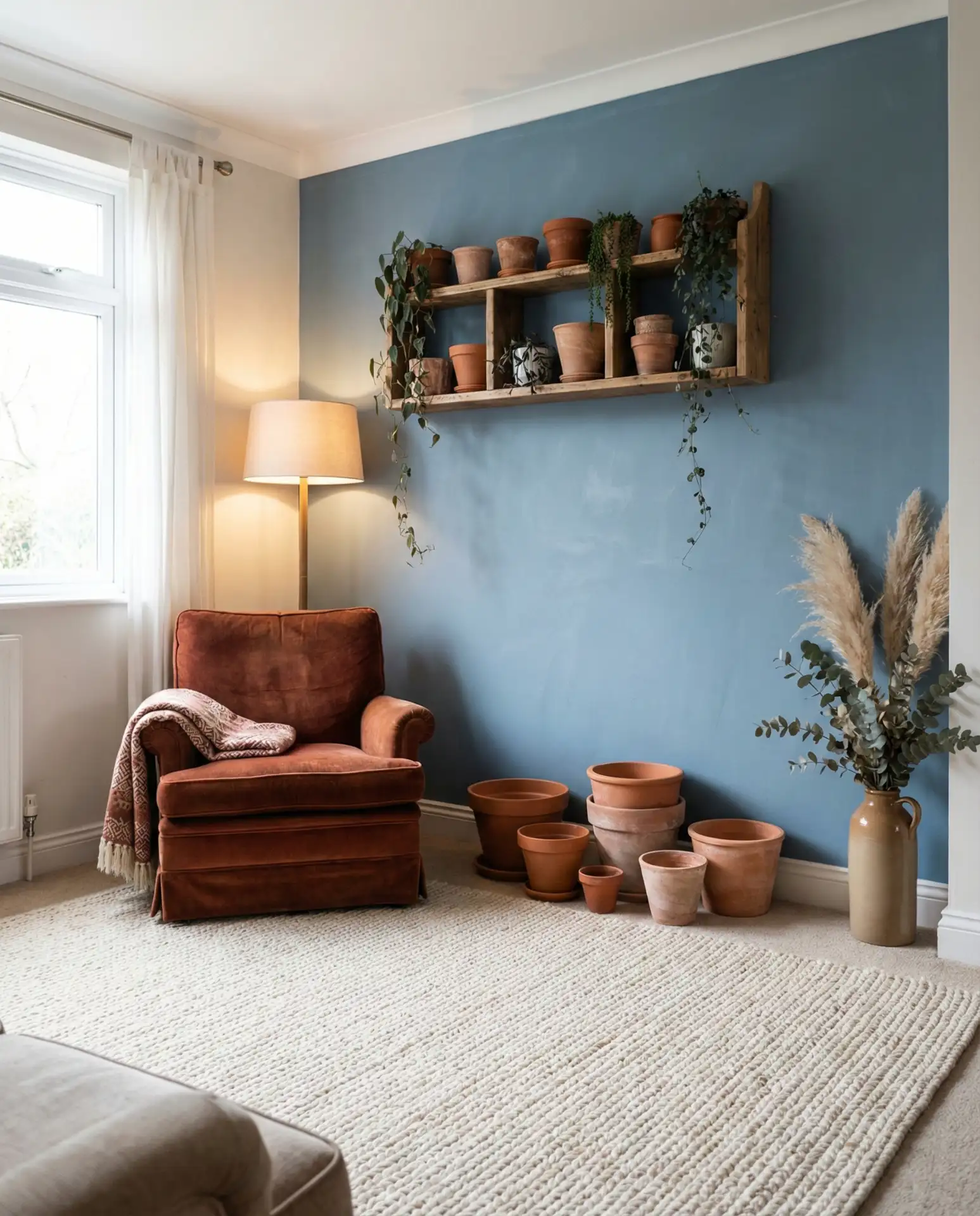
This palette thrives in the American Southwest—Arizona, New Mexico, and Southern California—where the color combination echoes the regional landscape. But it works just as well in a Brooklyn apartment or a Denver townhouse, because the dusty quality of both tones keeps them from feeling too regional or costumey. If you’re decorating on a tighter budget, this is also a palette where thrift stores and ceramic markets shine: terracotta vessels and dusty blue textiles are abundant and affordable when you know where to look.
11. Hague Blue Fireplace Wall
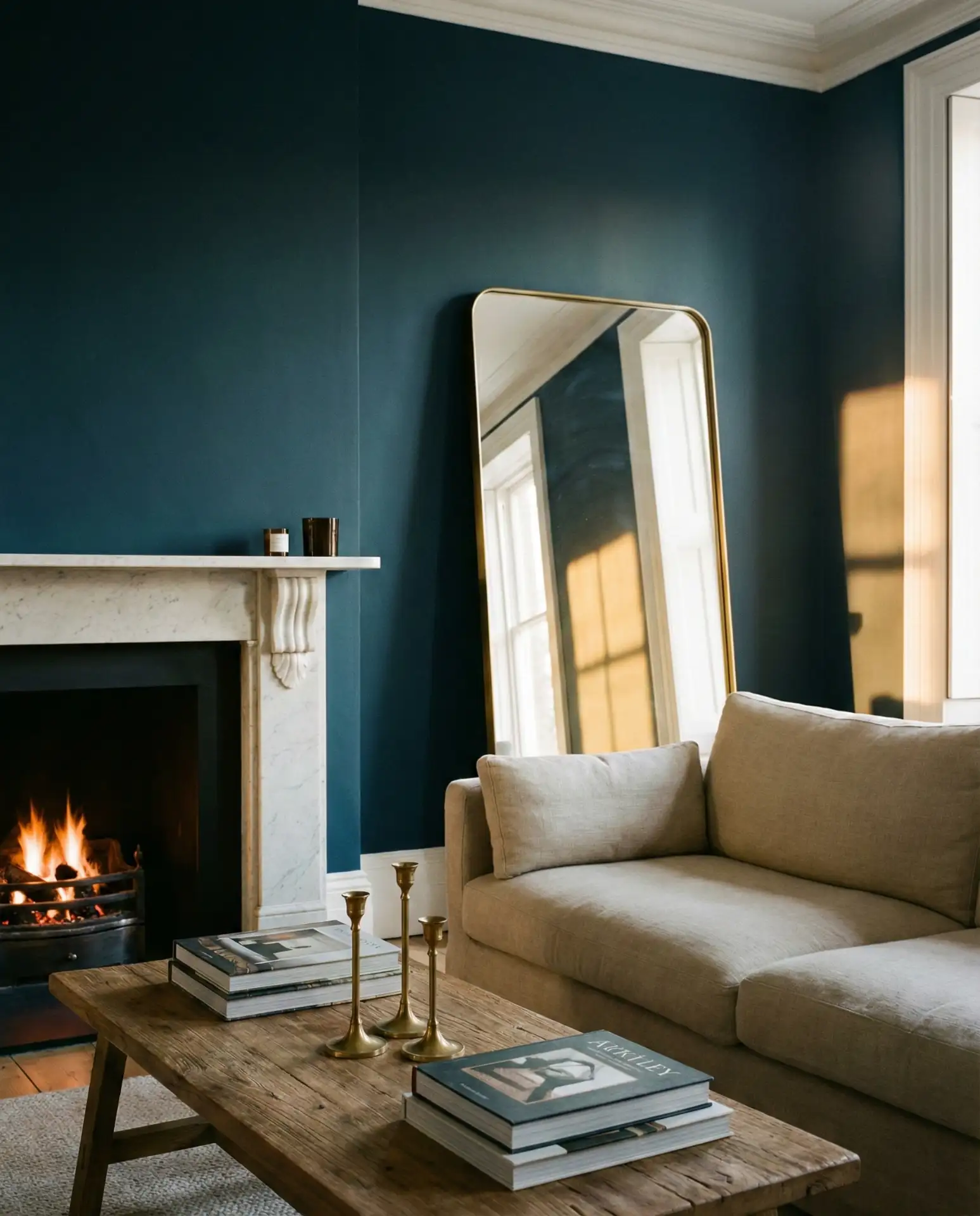
If you have a fireplace and you haven’t painted the wall around it in Hague blue, you’re sitting on untapped potential. Hague blue—Farrow & Ball’s deeply saturated, almost green-tinged blue—is one of the most dramatic and versatile paint colors available. On a fireplace wall, it creates an immediate focal point that makes the entire room cohere around it. The depth of the color is enhanced by the play of firelight and warm lamp glow, creating a moody atmosphere that feels pulled from the pages of a British country house editorial.
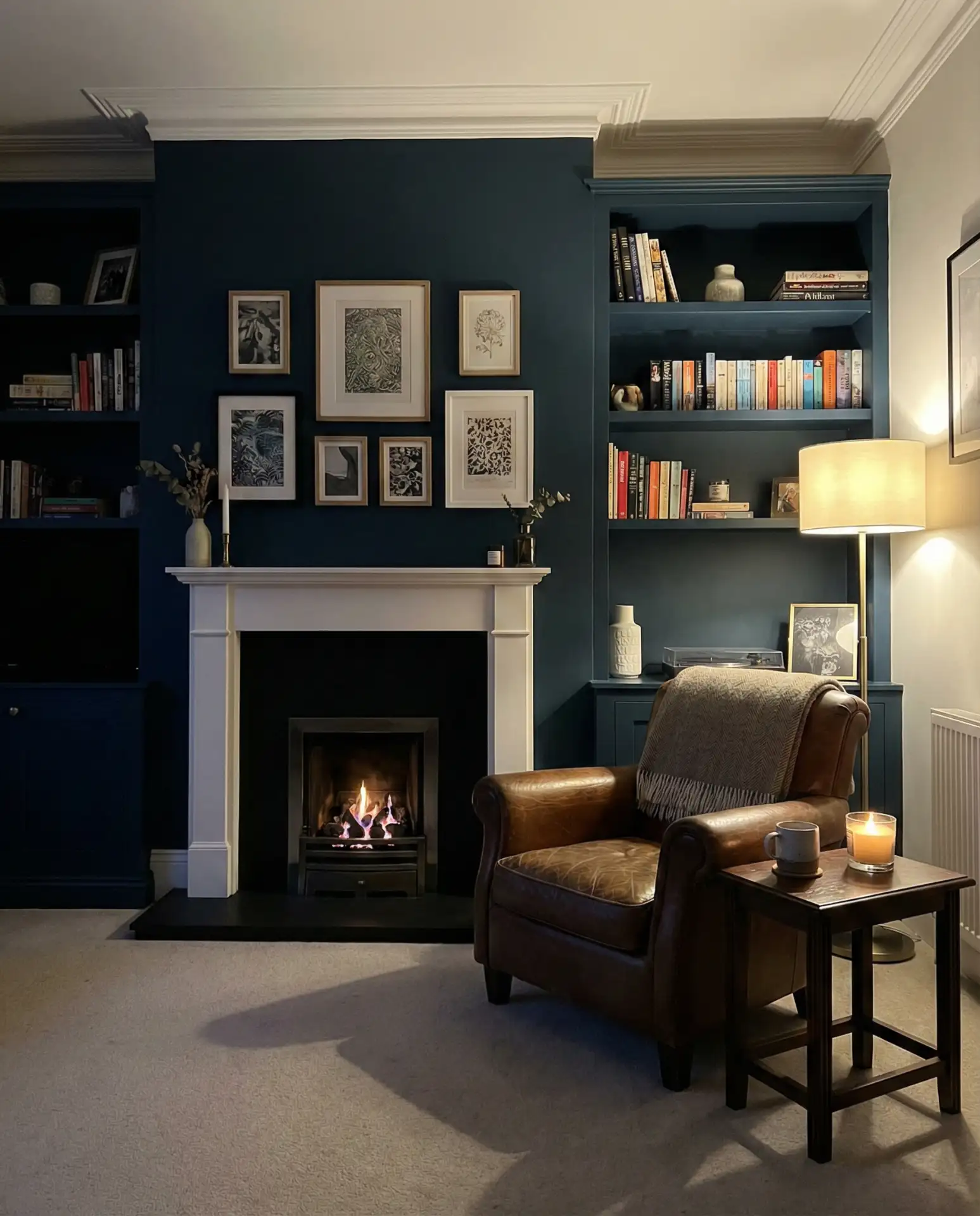
Where this works best: rooms with high ceilings and generous proportions, where the intense saturation of Hague blue has enough space to expand rather than crowd. In smaller rooms with lower ceilings, limit Hague to just the chimney breast—from floor to ceiling—and keep the remaining three walls in a softer, complementary tone. Many interior designers recommend Farrow & Ball’s Cornforth White or String as the perfect adjacent wall color to balance Hague’s intensity without fighting it.
12. Sky Blue Ceiling for an Unexpected Statement
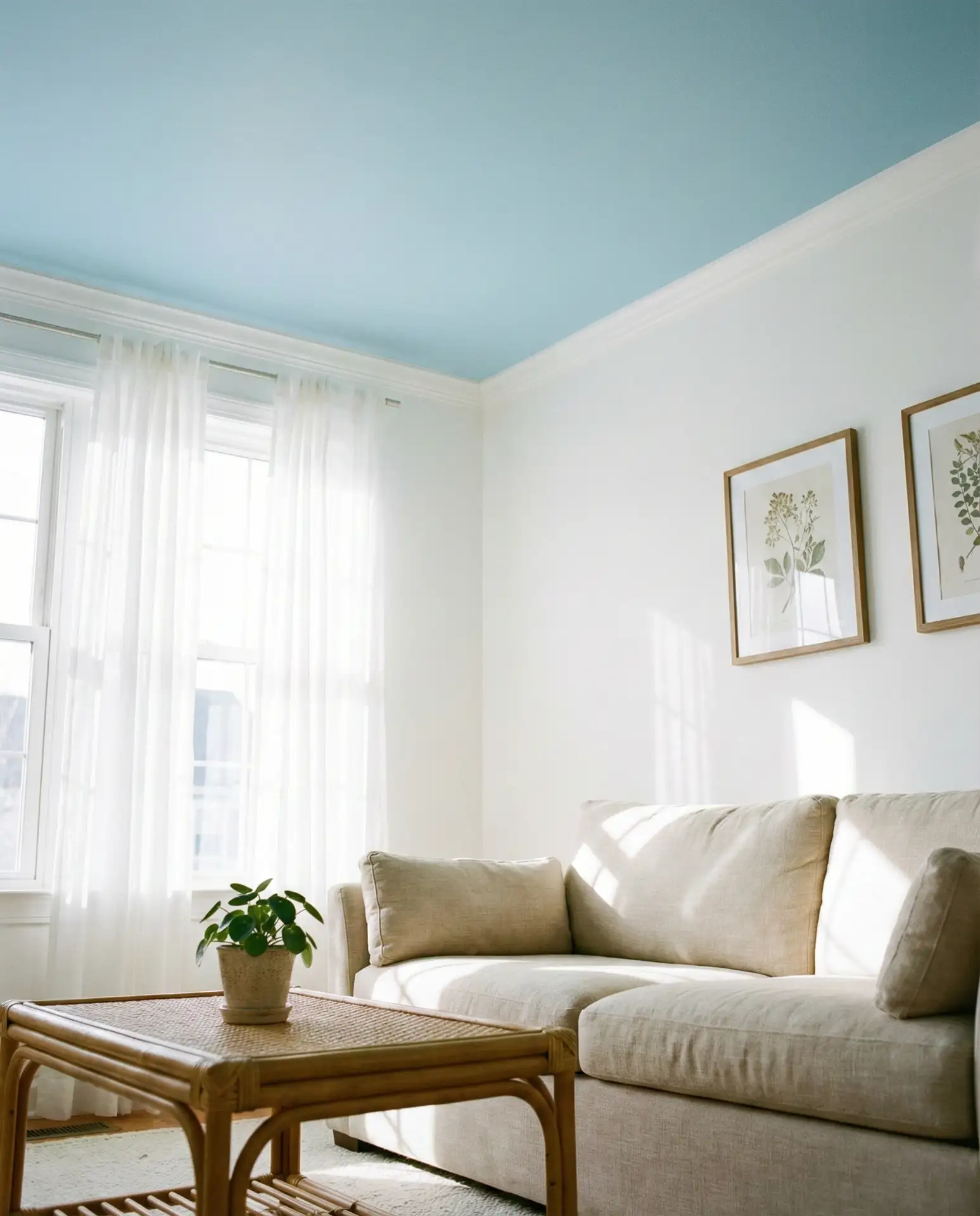
Painting your ceiling is one of the most transformative things you can do in a living room, and sky blue is the color that has been driving the most conversation in the design world lately. When you look up at a pale, airy sky blue ceiling in a white or neutral room, the effect is genuinely open and joyful—like the room has been given an extra dimension. It’s a particularly clever trick in rooms with low ceilings, where the sky reference plays a perceptual game that makes the space feel taller and more expansive than the actual measurements suggest.
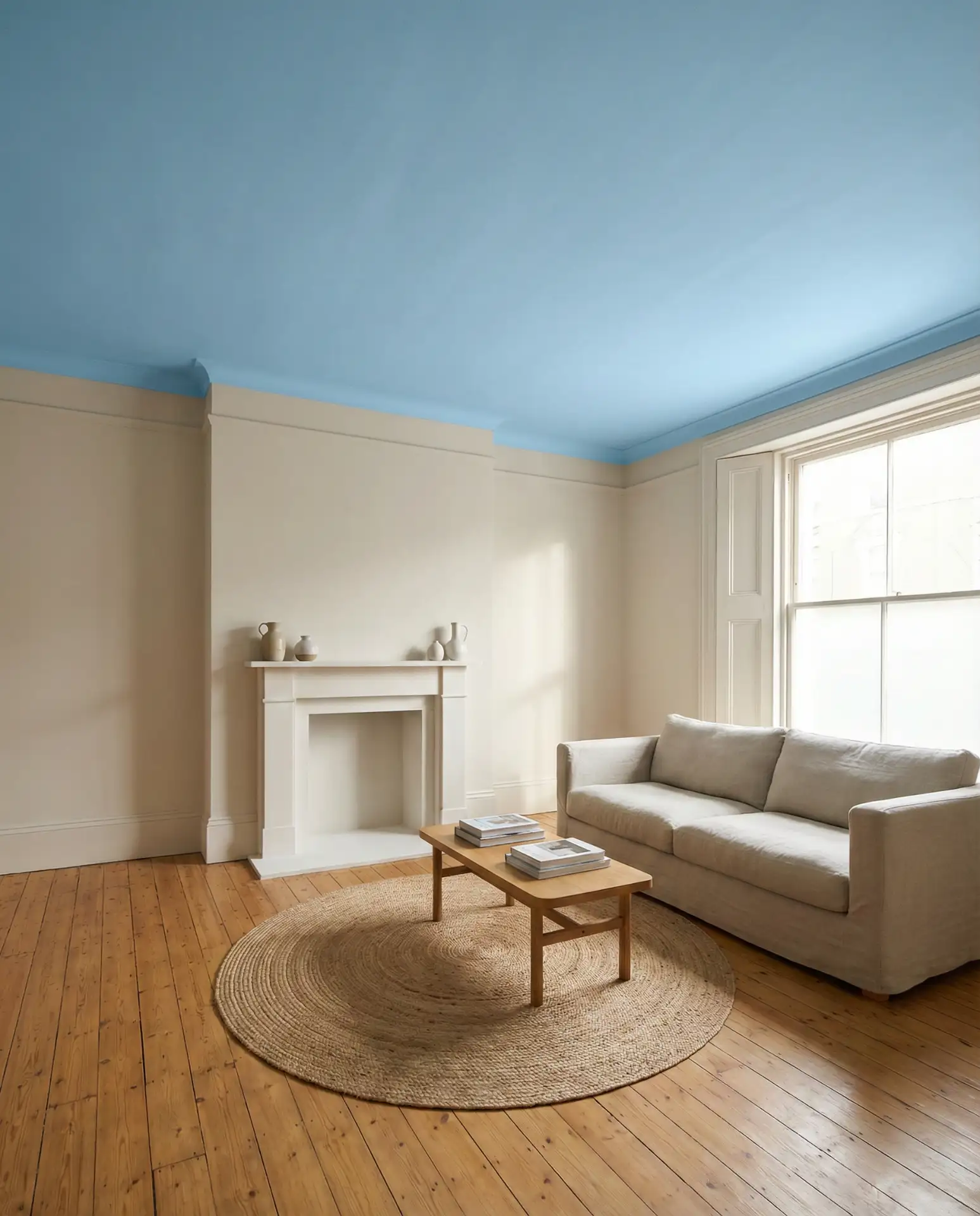
Here’s a micro-anecdote that captures the unexpected power of this move: a homeowner in Nashville painted her 8-foot ceilings sky blue on a whim one weekend, fully planning to repaint them white the following month. Two years later, every person who walks into the room comments on how spacious it feels—and the ceiling is still blue. The effect on perceived space is real, and it only costs the price of a quart of paint and an afternoon of your time.
13. Navy and Pink Bold Maximalist Living Room
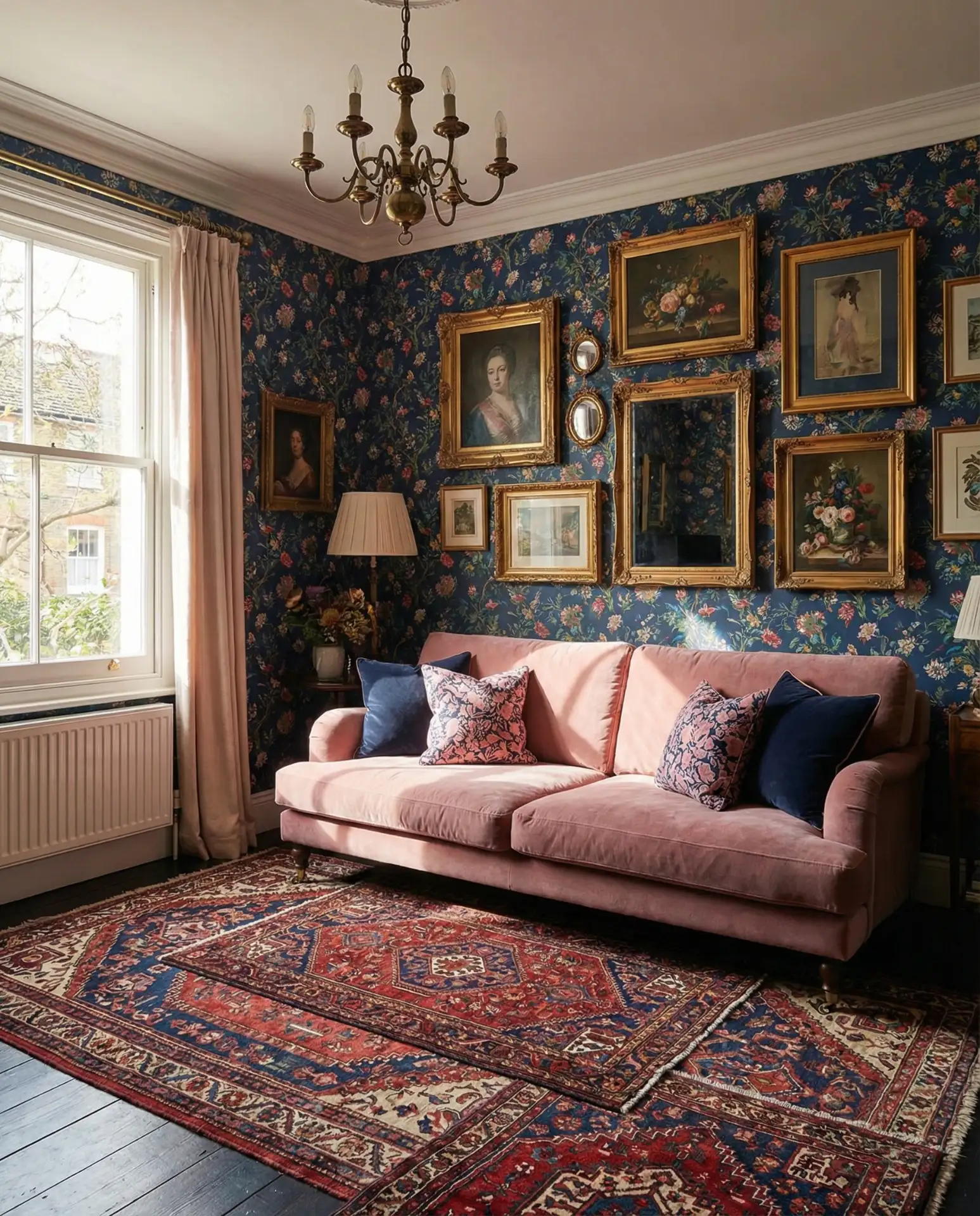
For the decorating fearless, pairing deep navy with dusty pink and blush creates a living room that is unabashedly maximalist and genuinely unforgettable. This is not a palette for the timid—it asks you to commit. Think navy grasscloth wallpaper or rich velvet curtains against a backdrop of dusty rose furniture, layered with pattern and texture: floral prints, Turkish rugs, tufted cushions, and gold-leafed picture frames. The navy provides the gravity that keeps the pink from reading as sweet or girlish, turning the whole thing into something sophisticated and deliberate.
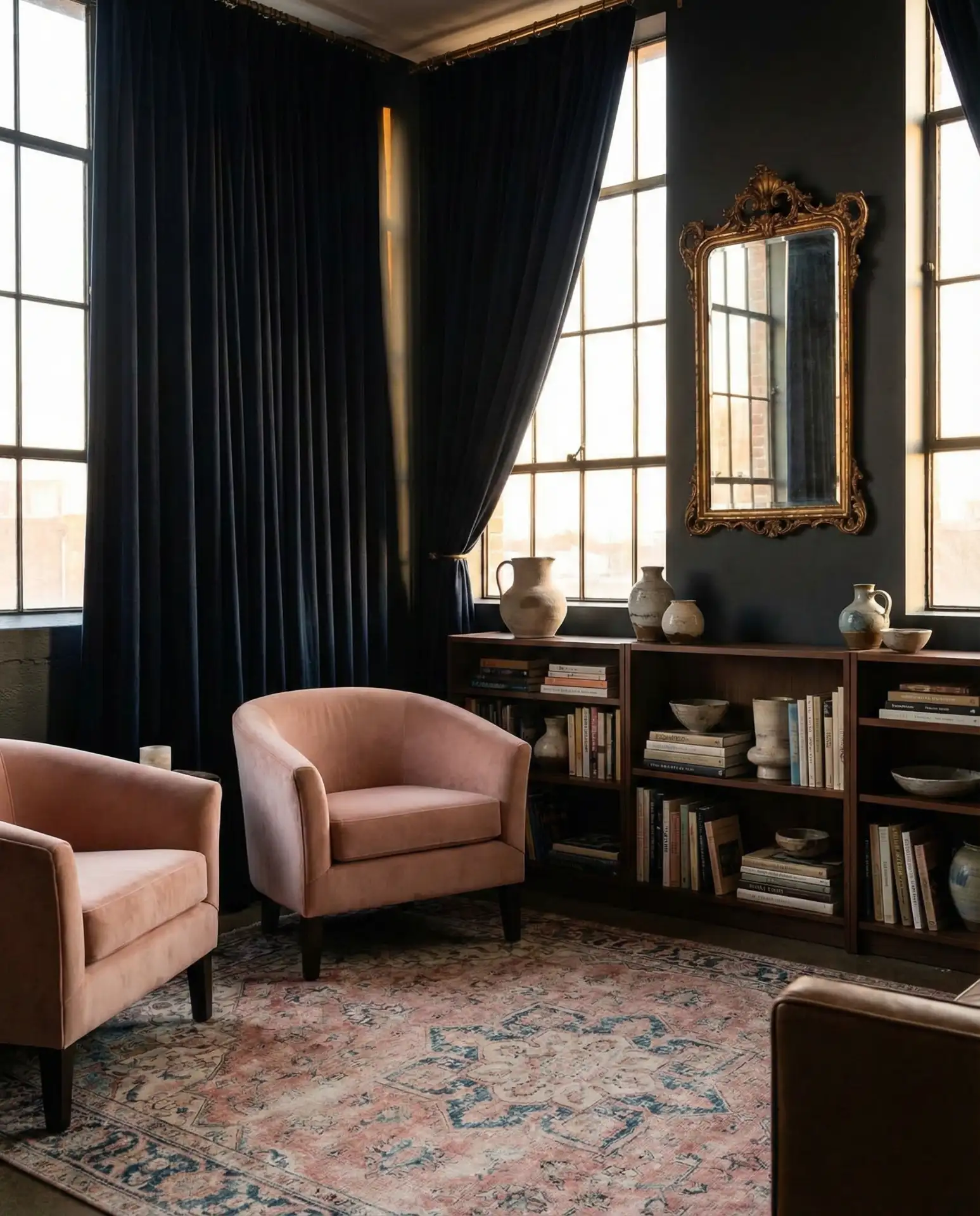
An interior designer who specializes in bold residential spaces notes that navy and pink work best when the navy appears in the largest surfaces—walls, curtains, or rugs—and the pink enters through upholstery and accessories. This ratio keeps the pink feeling luxurious rather than overwhelming. Reversing the ratio (all-pink walls with navy accents) can tip the room toward a confectionery vibe that’s harder to live with long-term. Scale the navy up, and let the pink be the reward.
14. Blue and Orange Jewel-Toned Living Room
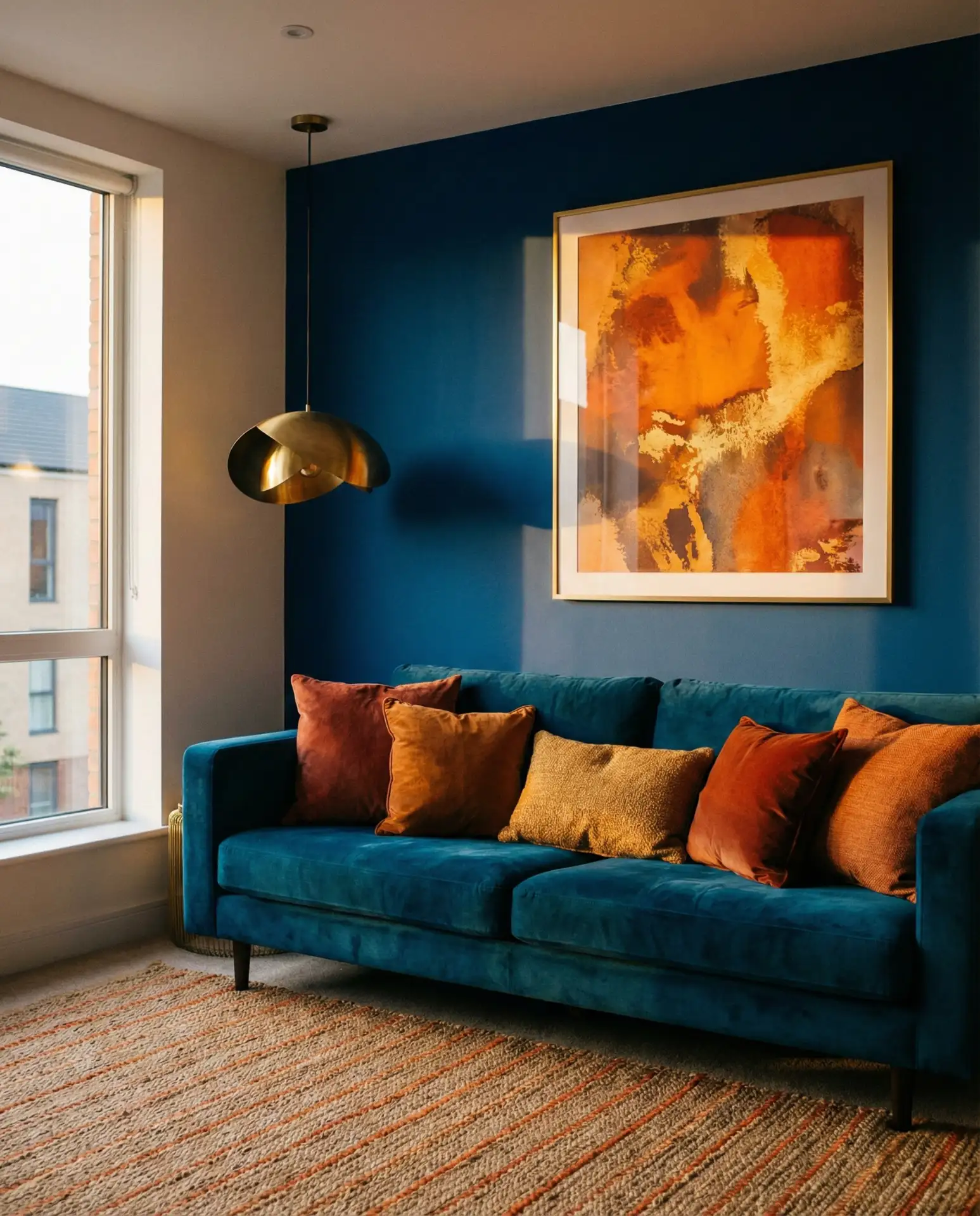
Blue and orange and teal is a complementary pairing that interior designers have quietly relied on for decades because the contrast is vibrant without being aggressive. In a jewel-toned living room, this plays out as deep sapphire or teal walls set against amber, burnt orange, and cognac furniture—think a velvet sofa in peacock blue beside a cognac leather armchair. The result is rich, layered, and visually exciting without feeling like a lot of work to maintain. It’s a color story that rewards close inspection.
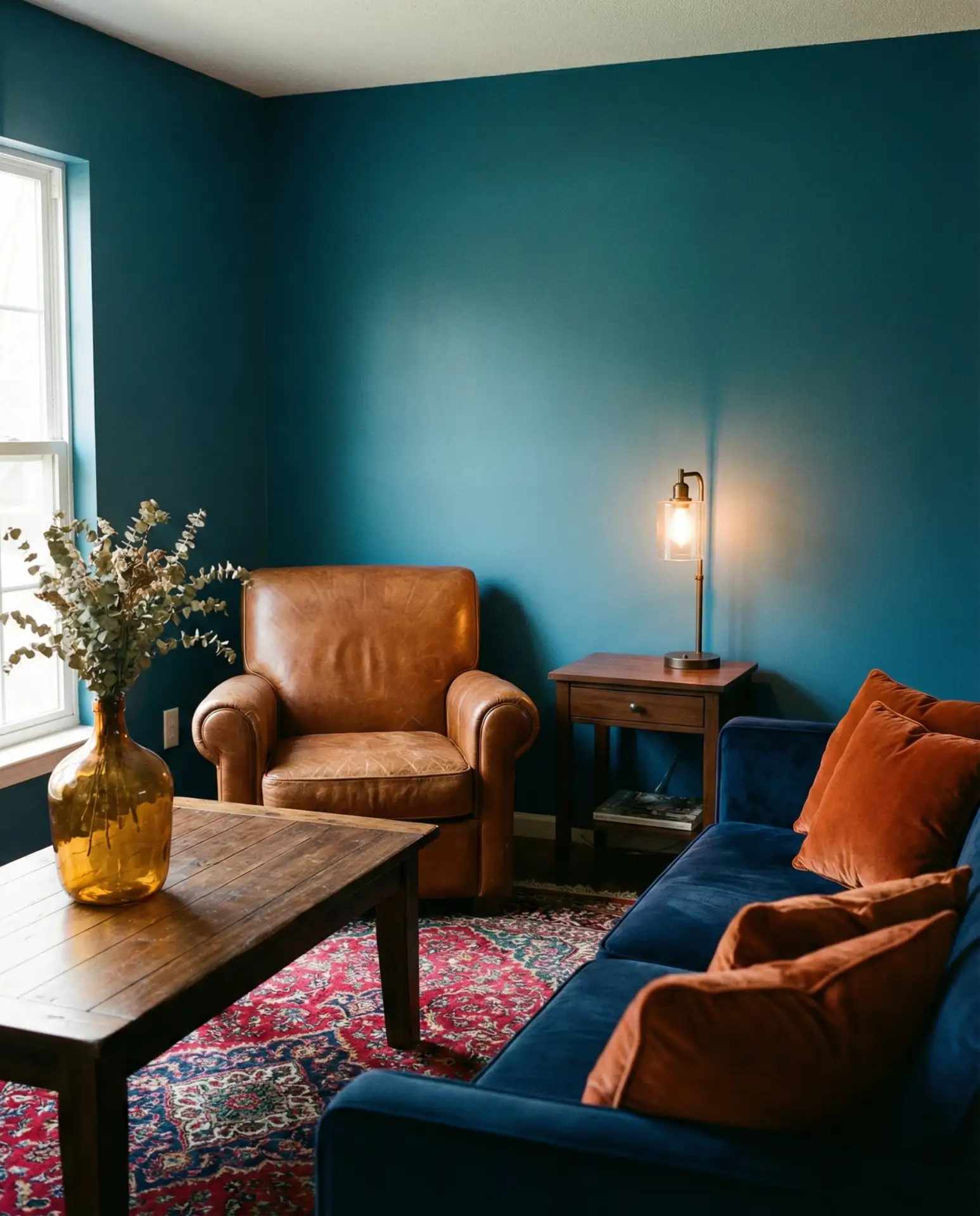
This is the palette that genuinely performs in a living room used for entertaining. The jewel tones catch and reflect light—especially candlelight and warm lamp glow—creating an atmosphere that makes every gathering feel slightly elevated. If you’re styling for a home that doubles as a social space, this combination does a lot of the atmospheric heavy lifting so you don’t have to. Style the coffee table with amber glass candleholders, and you’ve got a living room that looks ready for company any night of the week.
15. Moody Blue Velvet Decor Layer
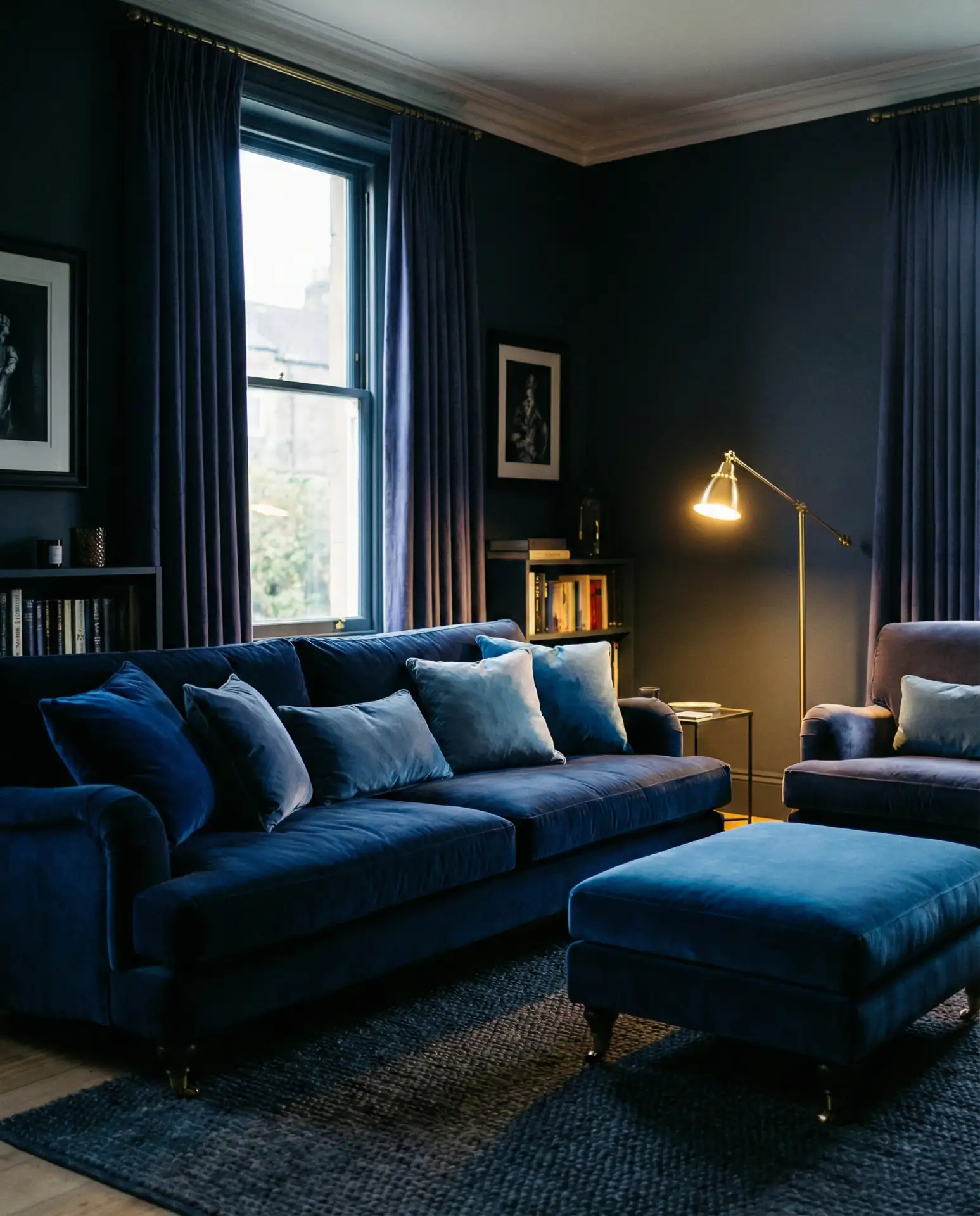
Sometimes the best way to introduce blue into a living room isn’t through paint at all—it’s through decor and textiles, layered up until the room hums with it. A moody blue velvet approach means leaning into the luxurious, light-catching quality of the fabric across multiple surfaces: a velvet sofa, velvet cushions, and velvet curtains. It creates depth and atmosphere that paint simply cannot replicate, because velvet shifts color depending on the light and the direction you’re looking at it. The room feels different at noon than it does at midnight, and that kind of dynamism is genuinely addictive.
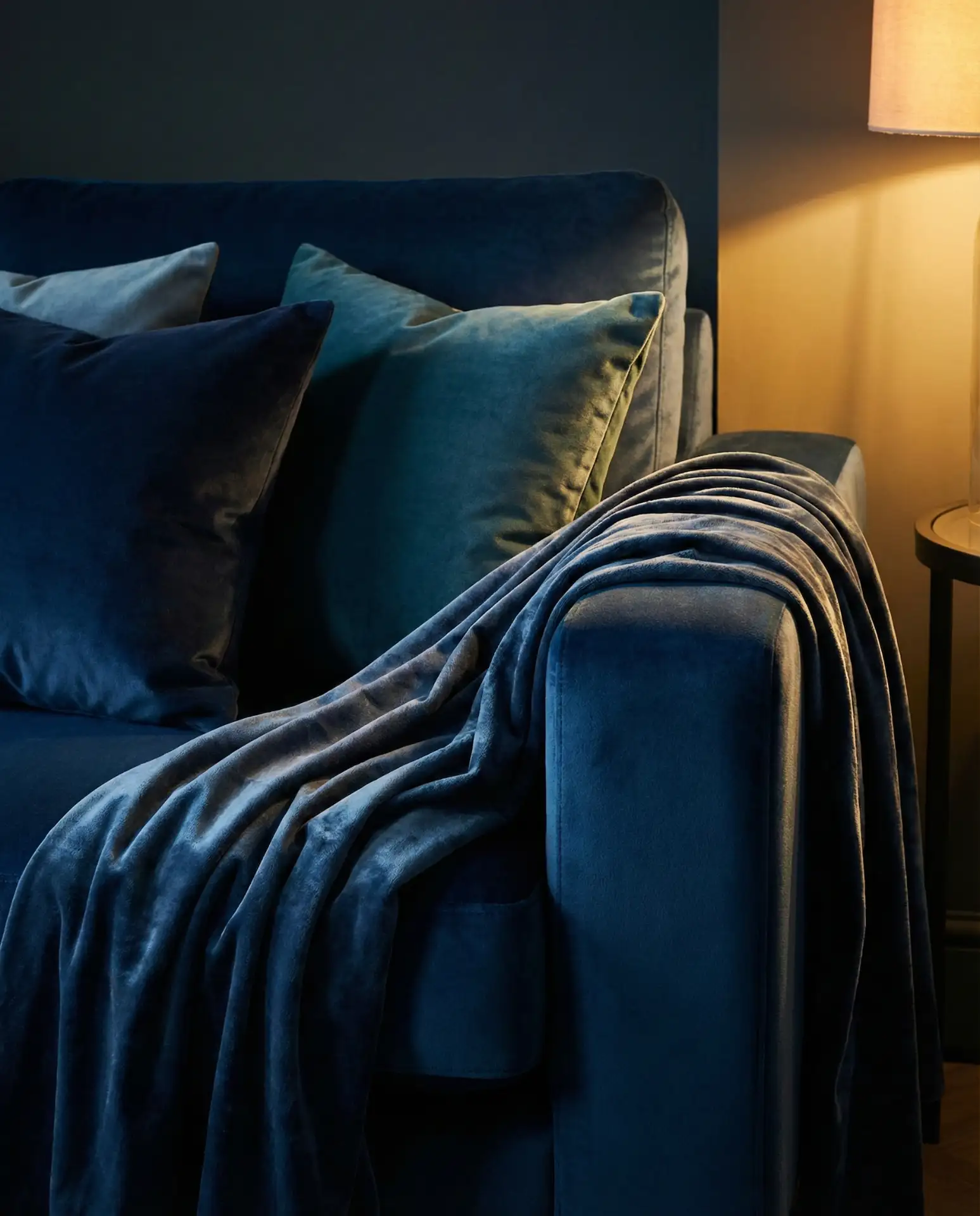
The common mistake people make with velvet is buying all one shade and losing the tonal depth that makes this approach work. The goal is to mix at least two or three distinct blue tones within the velvet layer—a navy sofa, a petrol blue cushion, a steel-blue throw—so the room reads as deliberately curated rather than matched. Real homeowners who nail this look often describe stumbling into it accidentally: they bought a navy sofa, fell in love with a teal cushion at HomeGoods, and kept going from there.
16. Gray and Blue Scandinavian Living Room
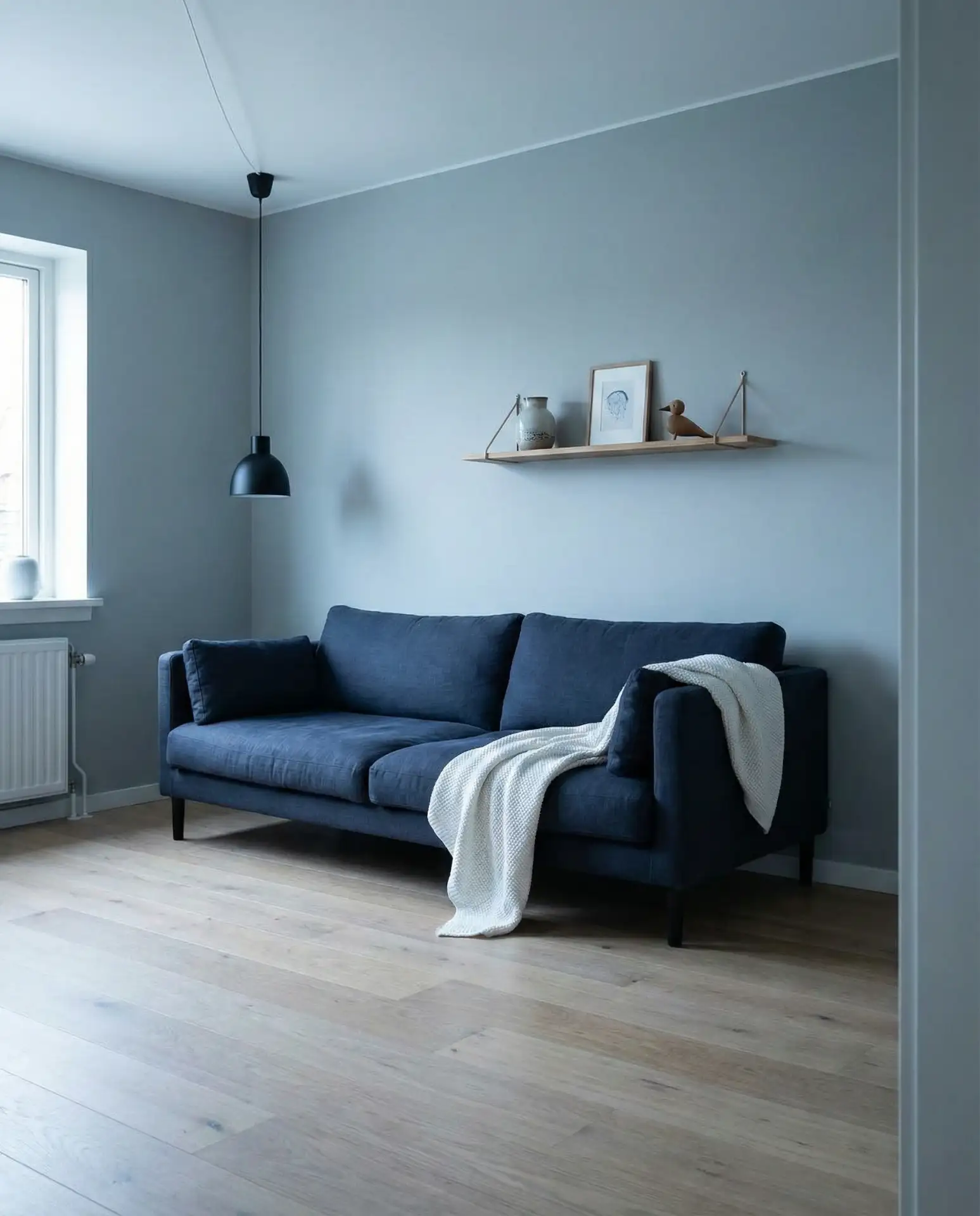
The gray and blue Scandinavian living room is built on restraint—and it’s one of the most quietly impressive aesthetics in residential design. The formula is deceptively simple: pale grey walls, blue-grey upholstered furniture, blond wood accents, and a strict limit on decorative objects. What remains is a room that feels edited, calm, and deeply functional. This is the living room for the person who finds beauty in negative space and believes that a well-chosen object is worth ten mediocre ones. The ideas here are all about discipline and intention.
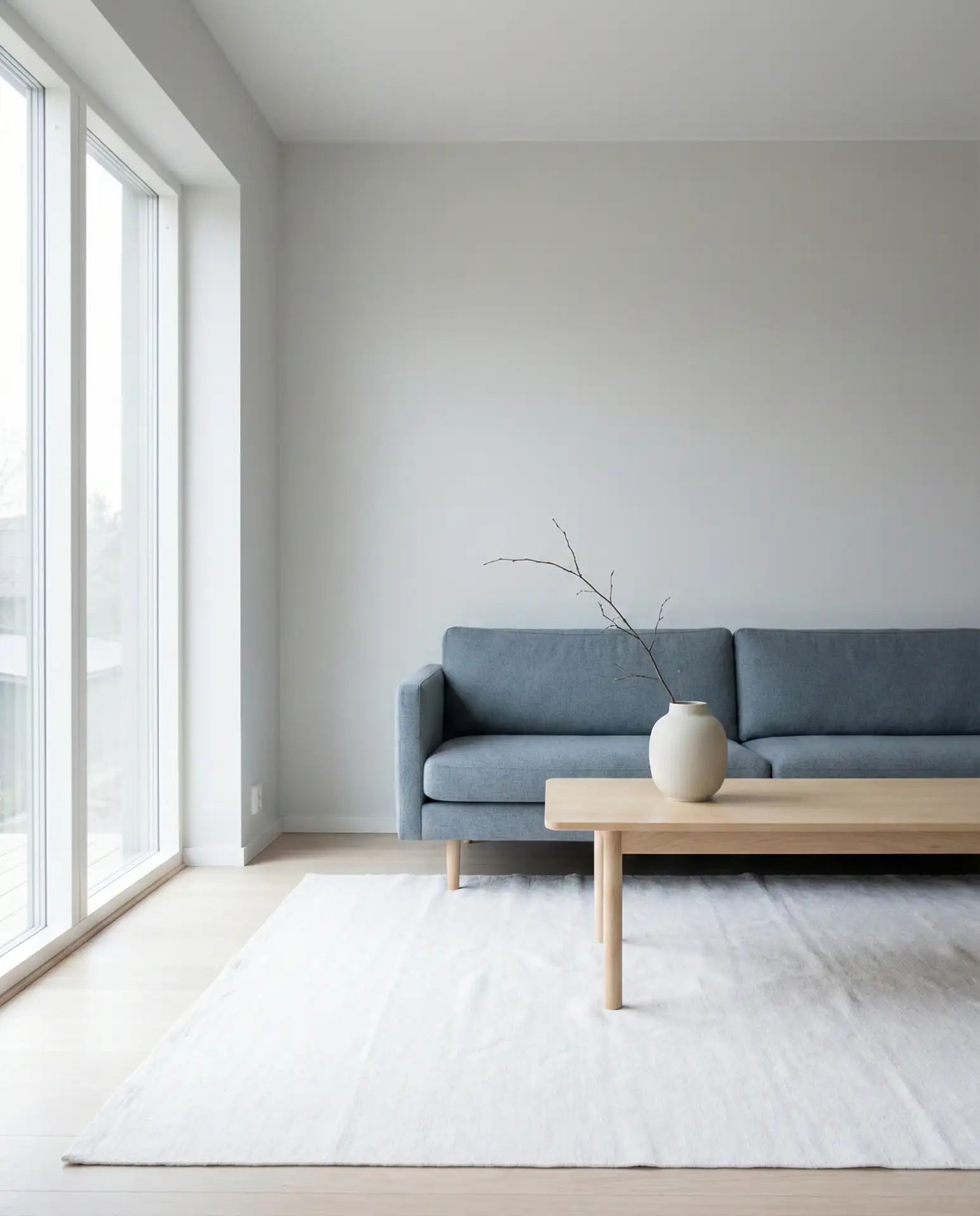
This aesthetic is particularly well-suited to American apartments and condos in urban areas, where square footage is at a premium and every design choice needs to work hard. The Scandinavian approach to grey-blue eliminates visual clutter and makes small rooms feel significantly larger than they are. The practical budget insight: Scandinavian-style furniture has become widely accessible in the US through IKEA, CB2, and a growing number of direct-to-consumer brands, so you don’t need to spend a fortune to achieve the look with integrity.
17. Blue Walls with Bold Patterned Rug and Neutral Furniture
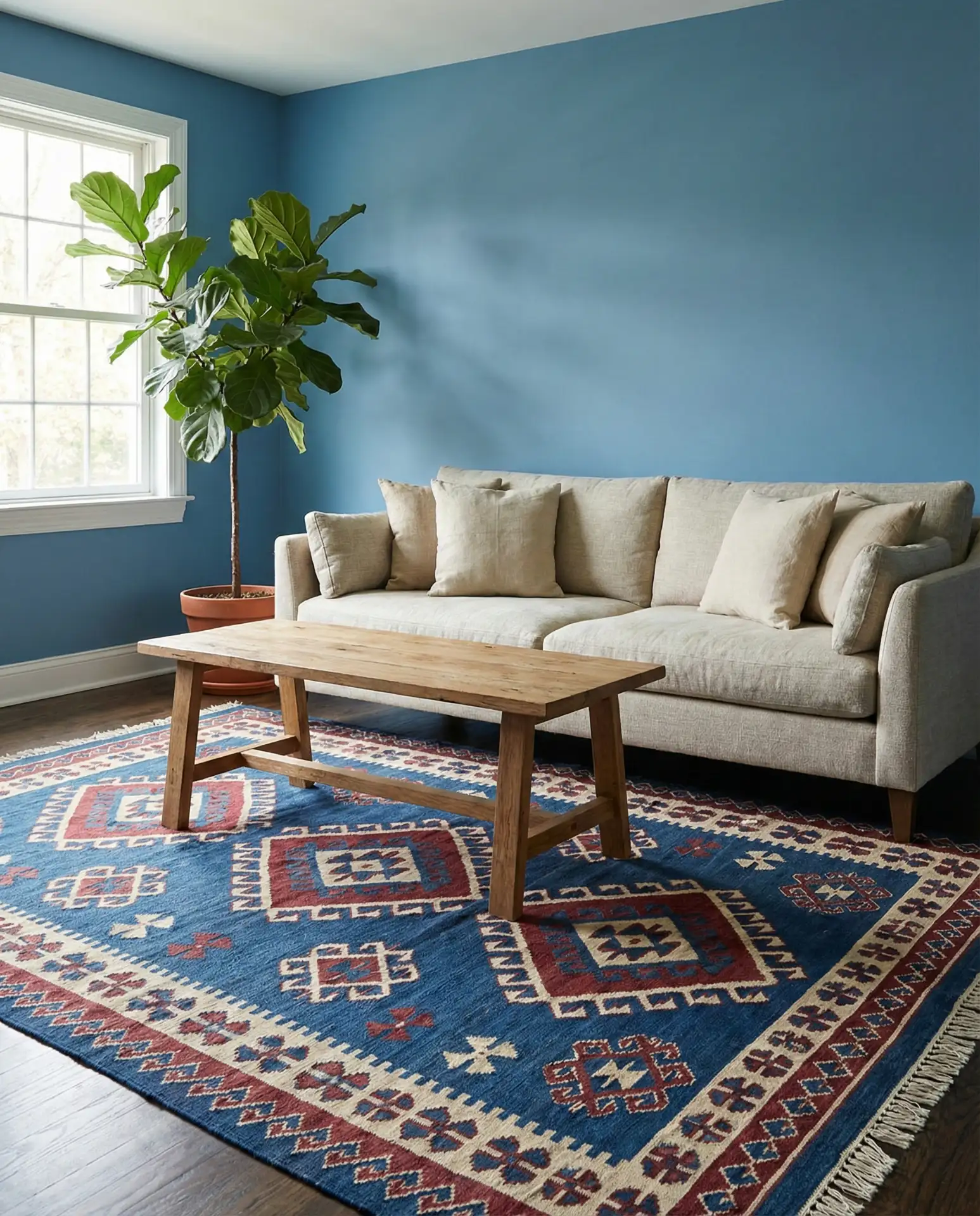
One of the most reliably beautiful formulas in living room design is walls saturated in blue combined with a boldly patterned rug and furniture kept deliberately neutral and restrained. The rug does the heavy lifting narratively—a Moroccan tile pattern, a geometric kilim, an abstract block print—while the blue walls frame it like a painting and the neutral furniture refuses to compete. The result is a room that feels dynamic and considered, with the rug as the hero and everything else in a supporting role.
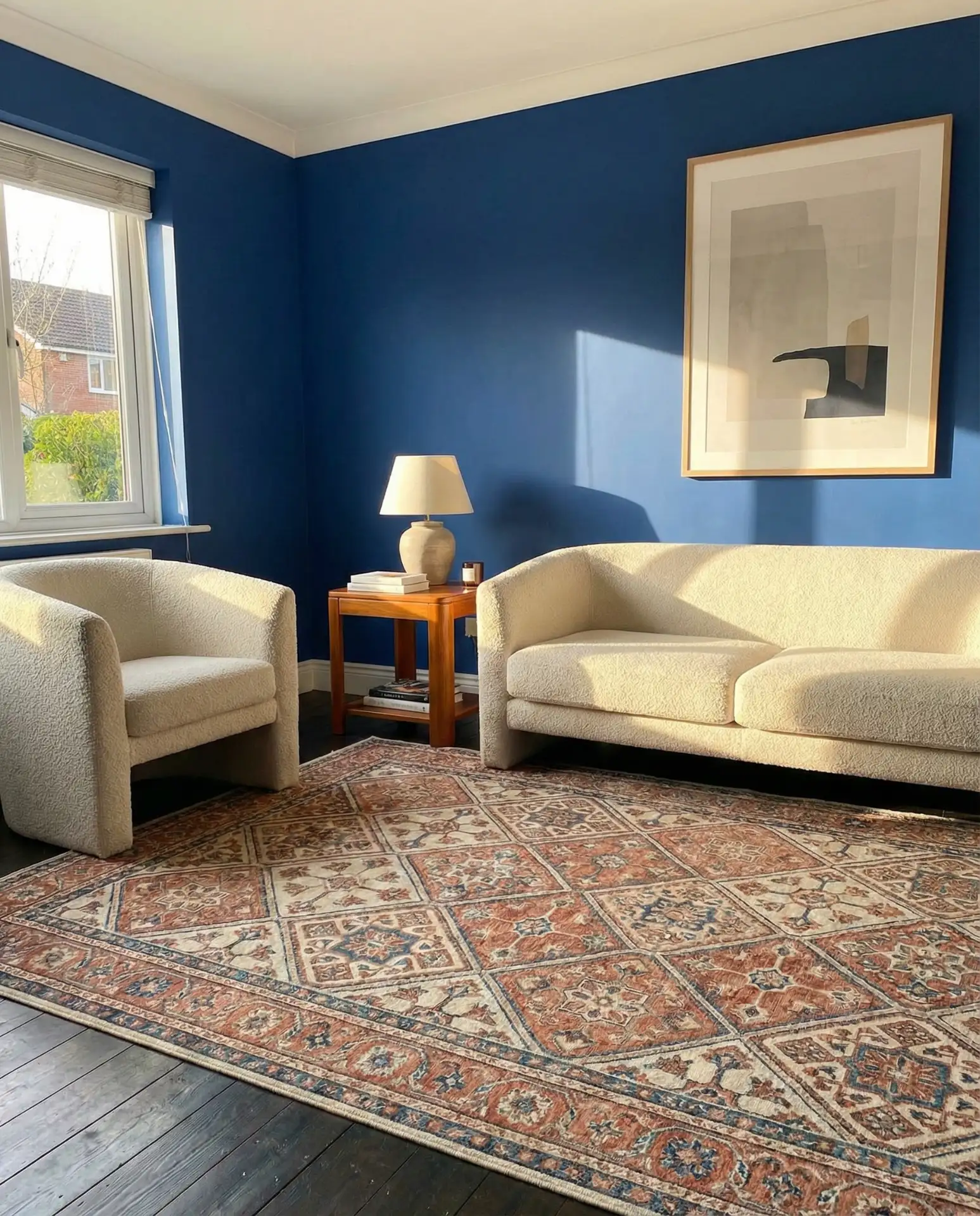
Here’s where a lot of people go wrong: they choose the paint first and then struggle to find a rug that works with it. Experienced designers always recommend reversing the order. Find the rug you love—the one that makes you feel something when you look at it—and then pick your wall blue from within the rug’s color palette. This way the rug and walls will always be in dialogue rather than competition. It sounds obvious, but it changes everything about how the room comes together.
18. Dark Blue Built-In Bookshelves
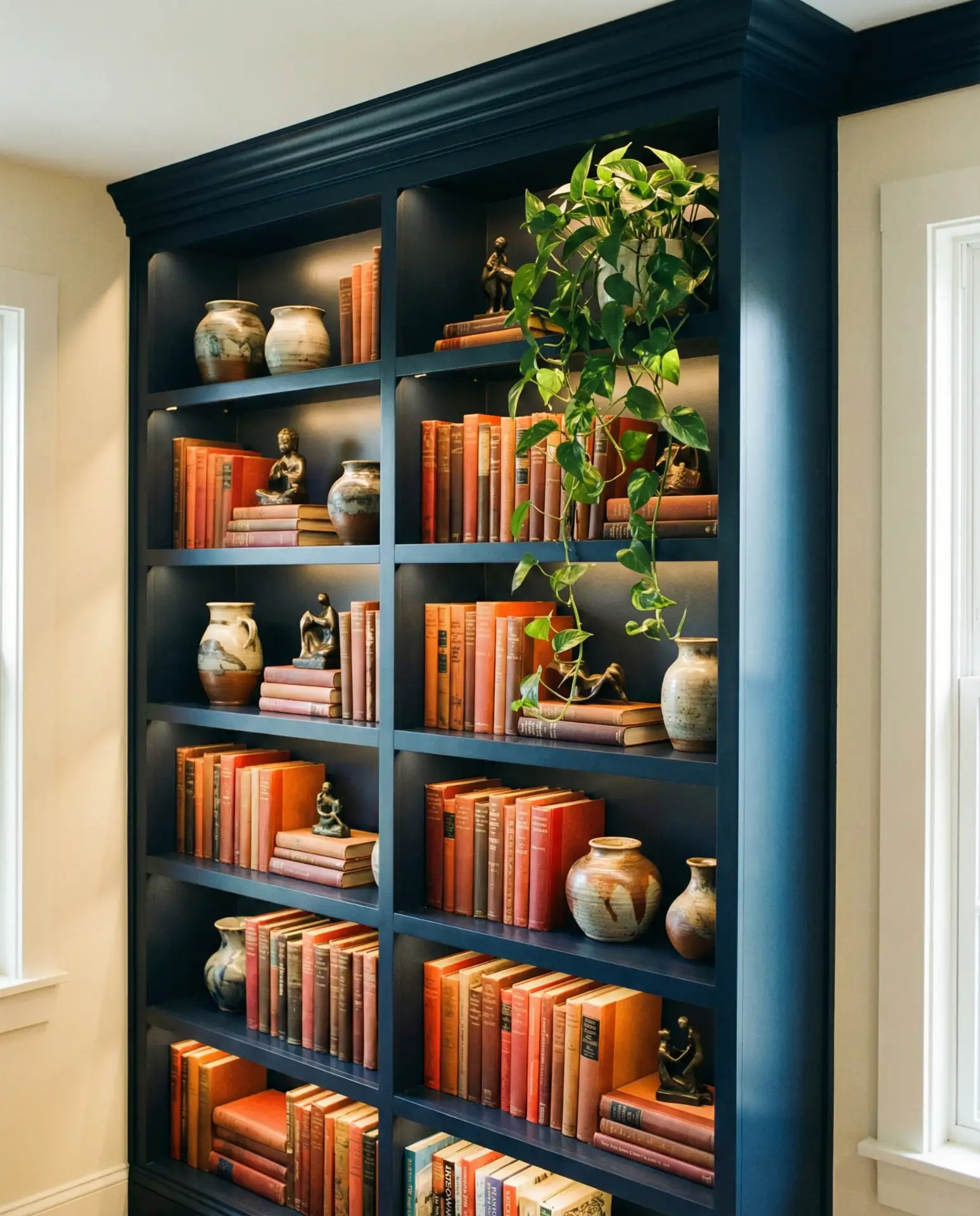
Painting built-in bookshelves in a dark blue—especially when they flank a fireplace or span an entire wall—is one of the most architecturally impactful things you can do in a living room without knocking down a wall. The color transforms what might have been purely functional storage into a design statement, creating depth and visual drama that makes the room feel custom and considered. Books, objects, and plants displayed against the dark blue backdrop become vignettes rather than clutter. Every shelf becomes a curated gallery moment.
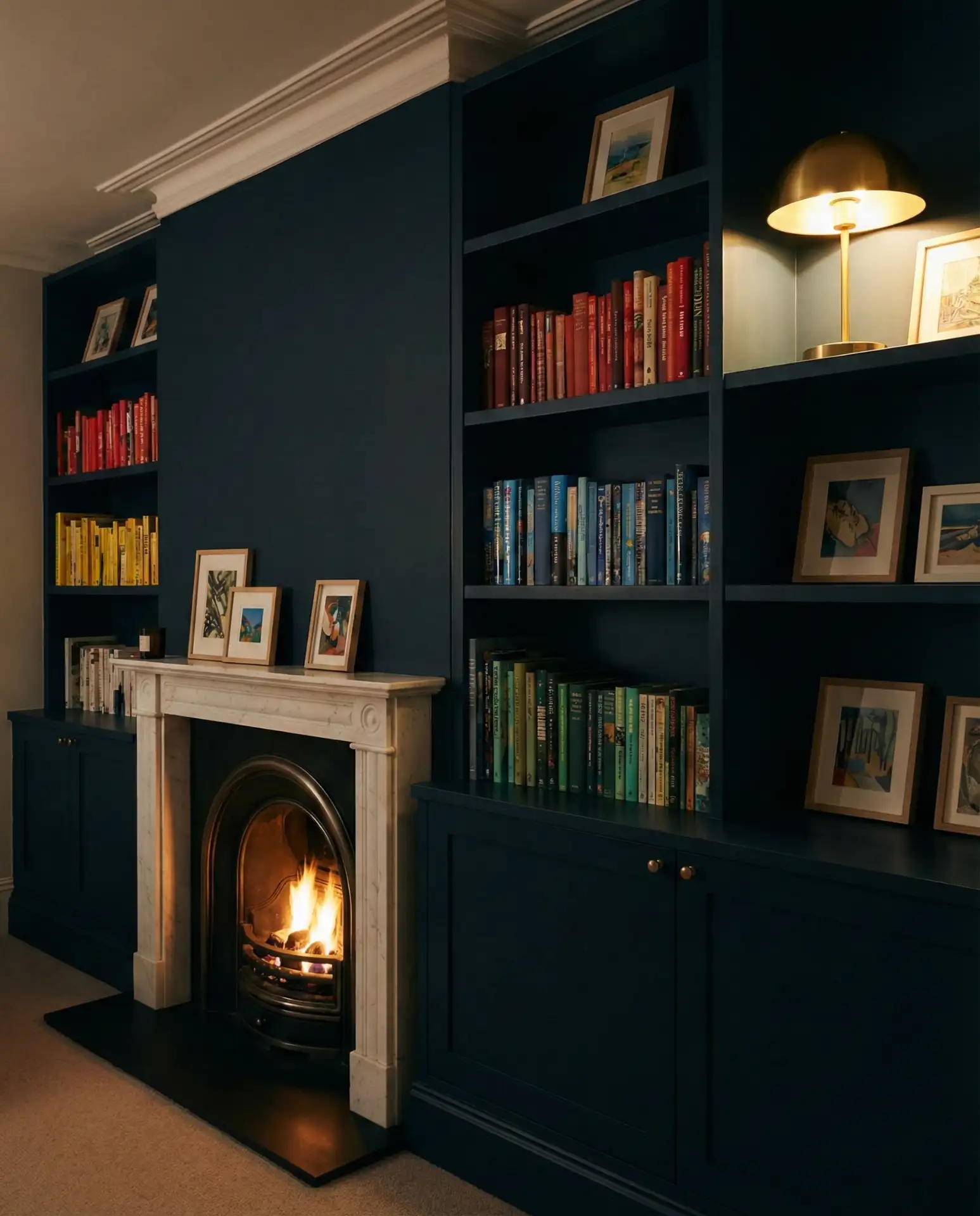
The American homeowner who does this well tends to approach it in phases rather than all at once. They paint the built-ins first, live with the new color for a few weeks, then edit the objects on the shelves to work with the dark backdrop. A common early mistake is keeping too many objects in light colors—the white spines, the pale ceramics—which can read as chaotic against a dark background. Introduce warm-toned objects in amber, terracotta, and gold, and leave breathing room between groupings so the dark blue has space to show itself.
19. Blue and Beige French Country Living Room
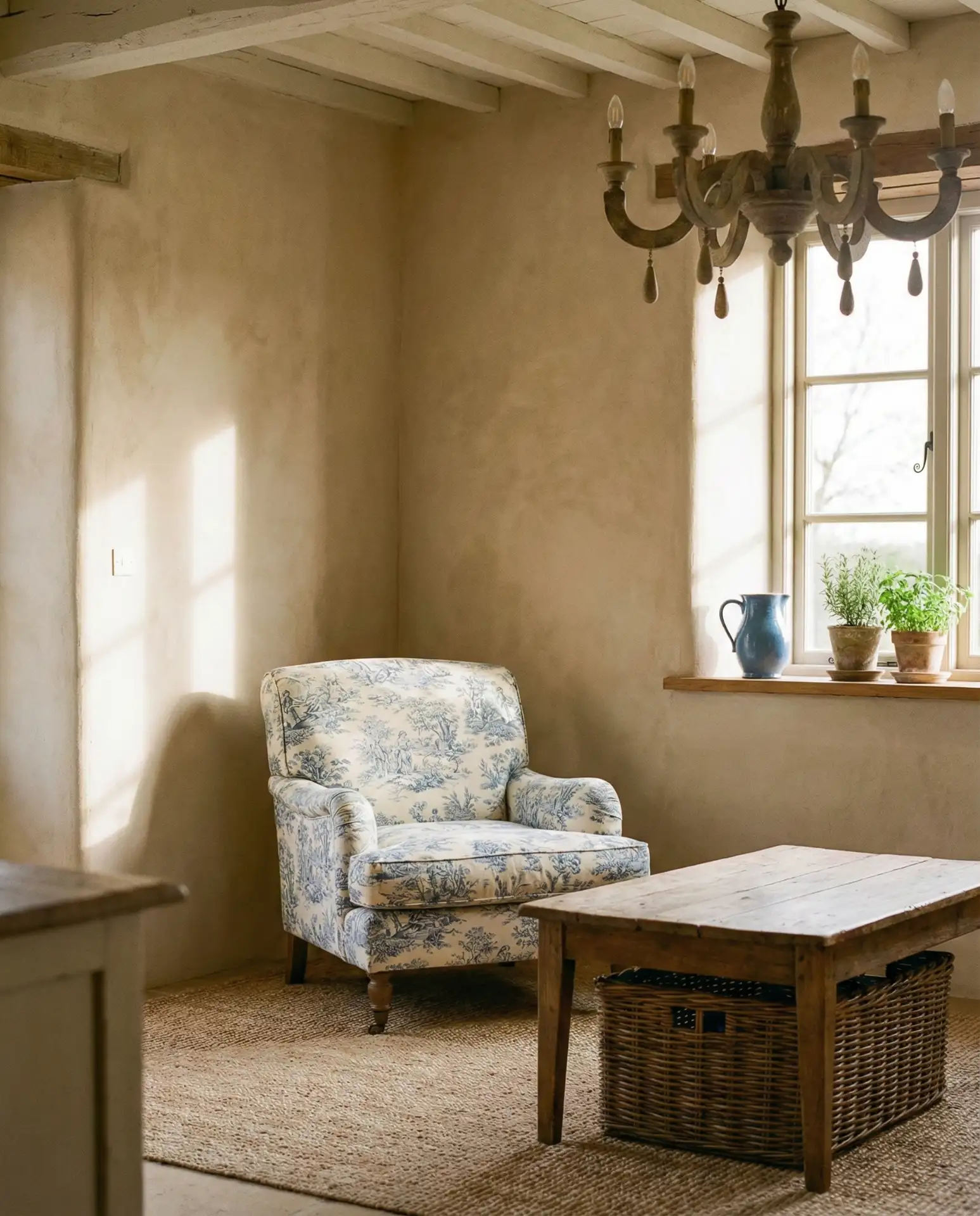
The French country living room is a study in relaxed elegance, and when it leans into a beige and blue palette, the result is endlessly livable. Imagine soft cornflower blue linen curtains pooling slightly on whitewashed floorboards, a slipcovered sofa in worn natural linen, and a farmhouse coffee table with a bouquet of dried lavender at its center. The walls might be a chalky off-white or a warm stone tone, which lets the blue in the textiles sing without being too saturated. It’s a room that feels like Sunday morning, every day of the week.
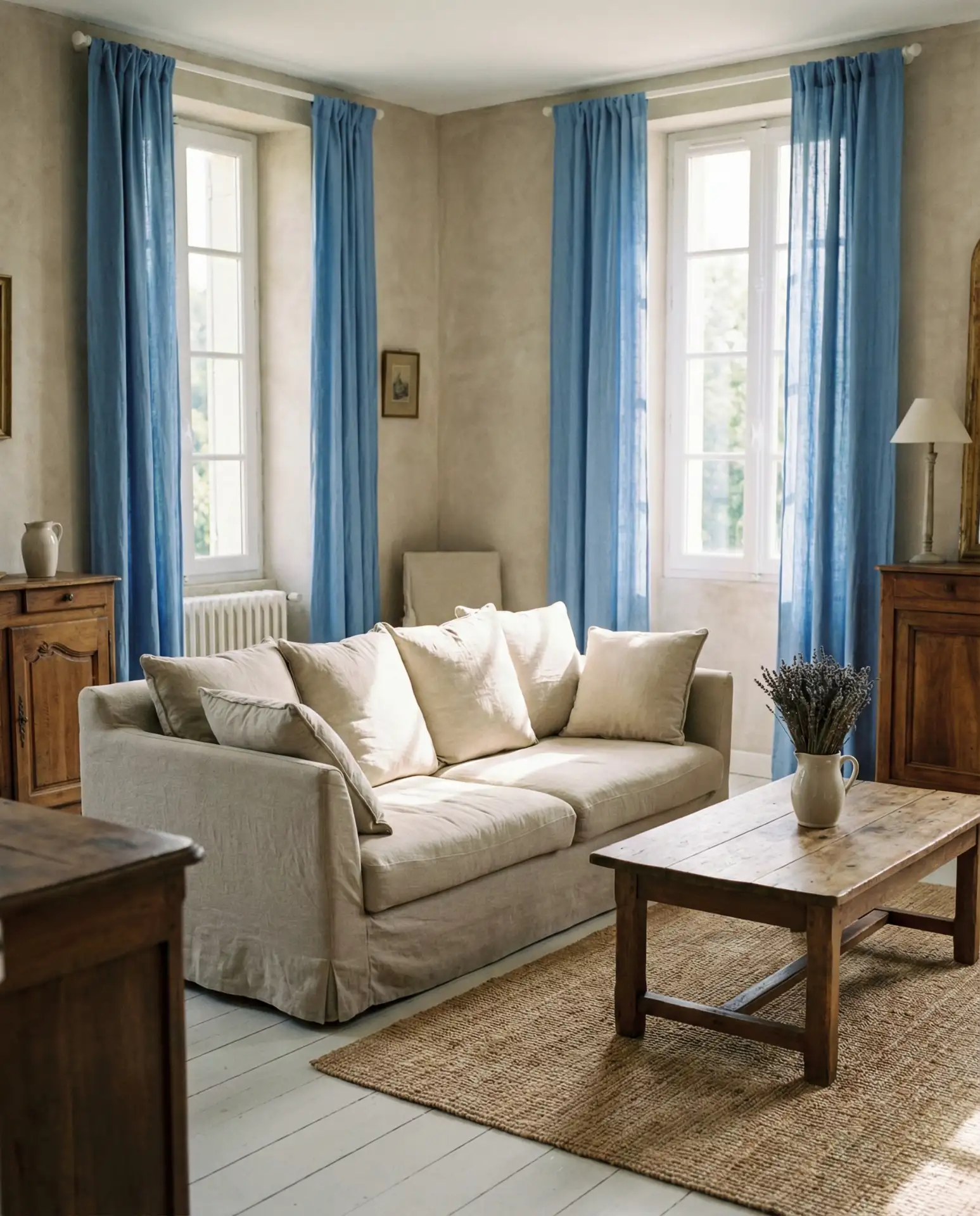
This look is especially popular in American farmhouses and colonial-style homes in the Northeast and Southeast, where the architecture already leans toward traditional and the palette feels like a natural fit. A micro-anecdote: a homeowner in rural Virginia put together her French country living room almost entirely from estate sales and her grandmother’s attic—and the room looks like something from a curated lifestyle magazine. The lesson is that this aesthetic rewards age and imperfection, so don’t be afraid of worn edges and mismatched blues.
20. Midnight Blue and Gold Glam Living Room
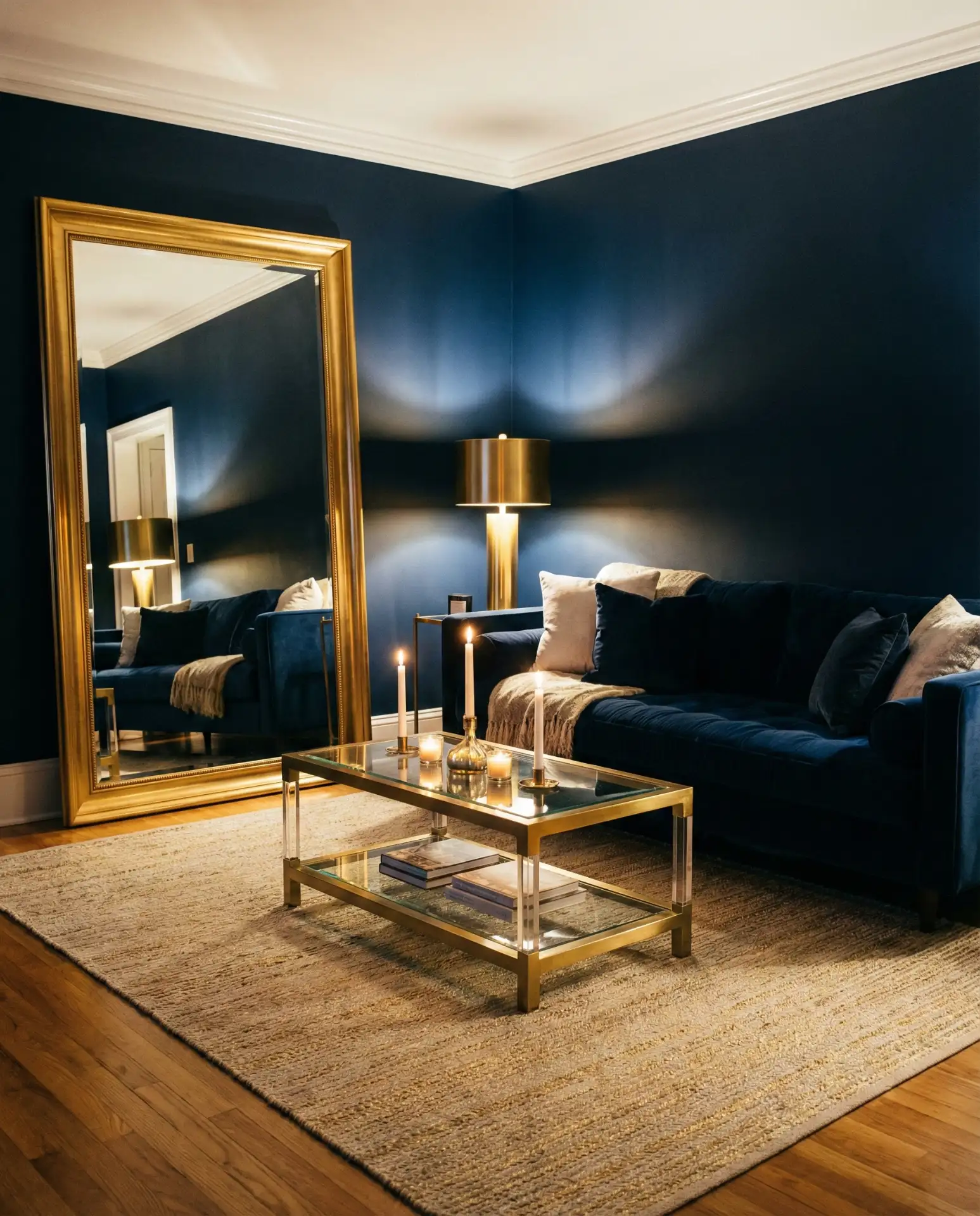
When midnight blue meets gold, the result is unambiguously glamorous—and in a living room, that glamour is entirely achievable without veering into excess. Think walls painted in the deepest, most saturated navy, paired with gold-framed mirrors, gilt-edged coffee table books, a lucite and brass side table, and an area rug with gold threads woven through it. The dark blue acts as the perfect foil for every glint of gold, absorbing surrounding light and making the metallic details look brighter and more significant than they would against a paler backdrop.
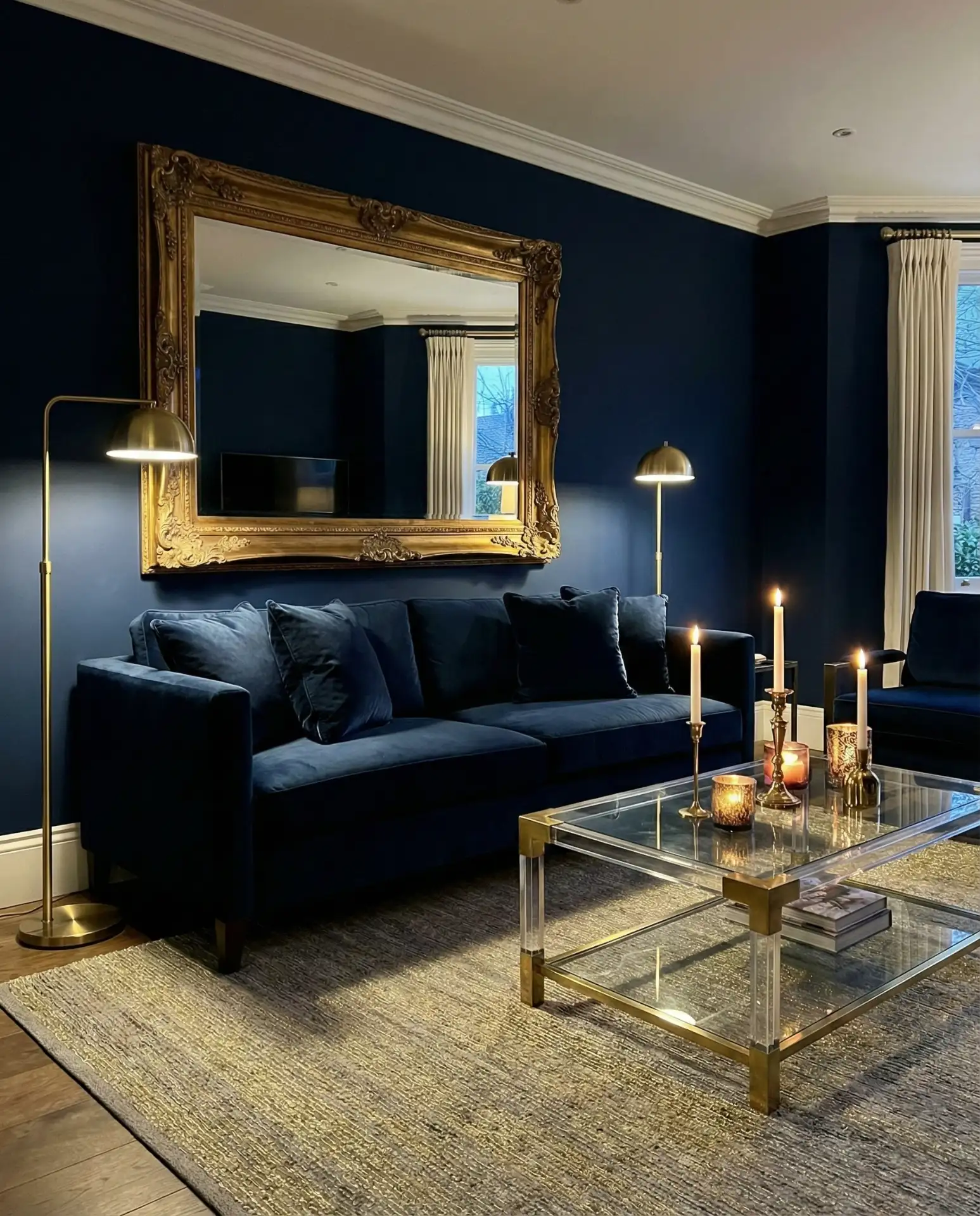
This combination translates especially well to formal living rooms and front parlors in urban row homes, where the design ambition is slightly elevated and the architecture can support a bit of drama. From a budget perspective, the gold accents don’t need to be expensive to land: a thrifted mirror repainted in gold spray, a set of brass-toned candle holders from TJ Maxx, and a gold-thread throw from a home goods store can deliver ninety percent of the effect at a fraction of the cost. Midnight blue and gold is, in this sense, a remarkably democratic palette.
21. Soft Blue Kids and Family Living Room
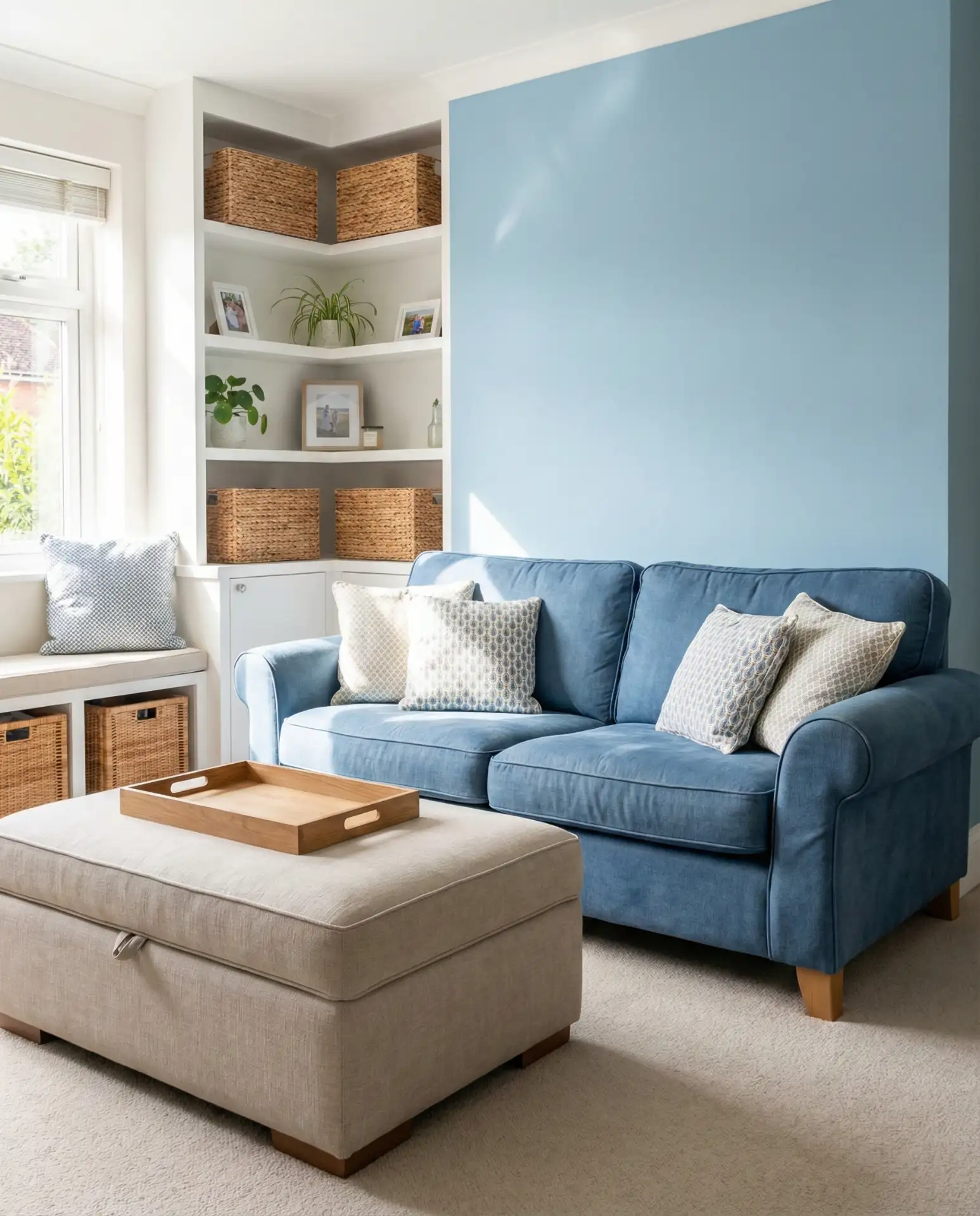
A light and sky blue living room for a family with kids has a gentle superpower: it’s visually calming without feeling cold, and it hides a surprising amount of everyday life without demanding constant attention. Soft powder-blue walls paired with durable performance fabric upholstery in a similar hue, washable slipcovers in cream or light grey, and furniture with rounded edges create a space that is simultaneously design-forward and completely livable for small humans. The blue creates a visual cohesion that makes a room feel tidier than it might actually be.
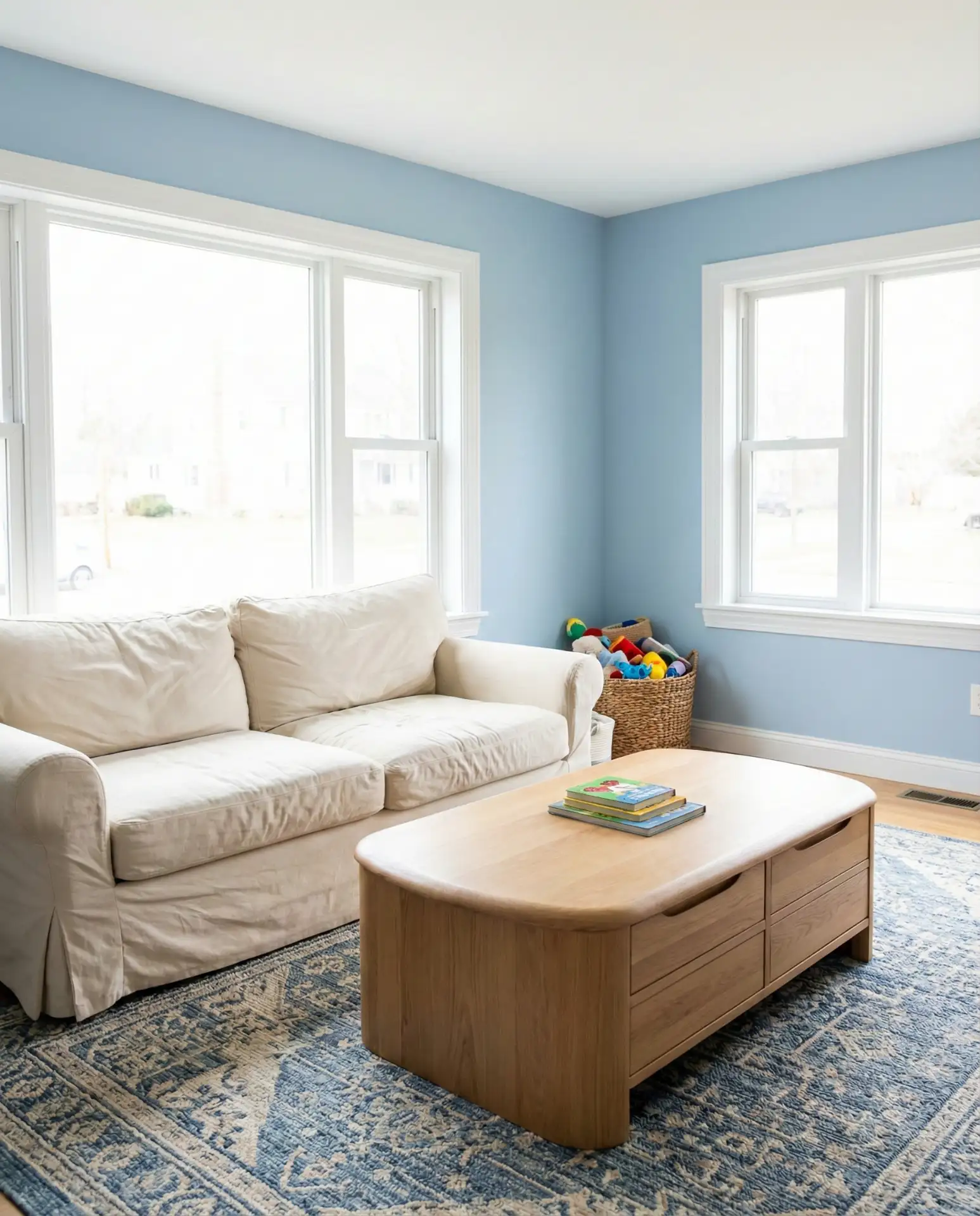
A practical insight worth sharing: light blue is one of the few living room colors that tends to register as neutral enough to survive trend cycles. Homeowners who painted their family rooms soft blue five years ago report that the color still feels fresh and relevant—partly because blue is perennially popular and partly because softer hues don’t date the way saturated statement colors can. If you’re planning to stay in your home long-term and want a color that will grow with your kids and your evolving taste, a soft blue is a genuinely wise investment.
22. Inchyra and Neutral Blue Layered Bedroom-Adjacent Living Room
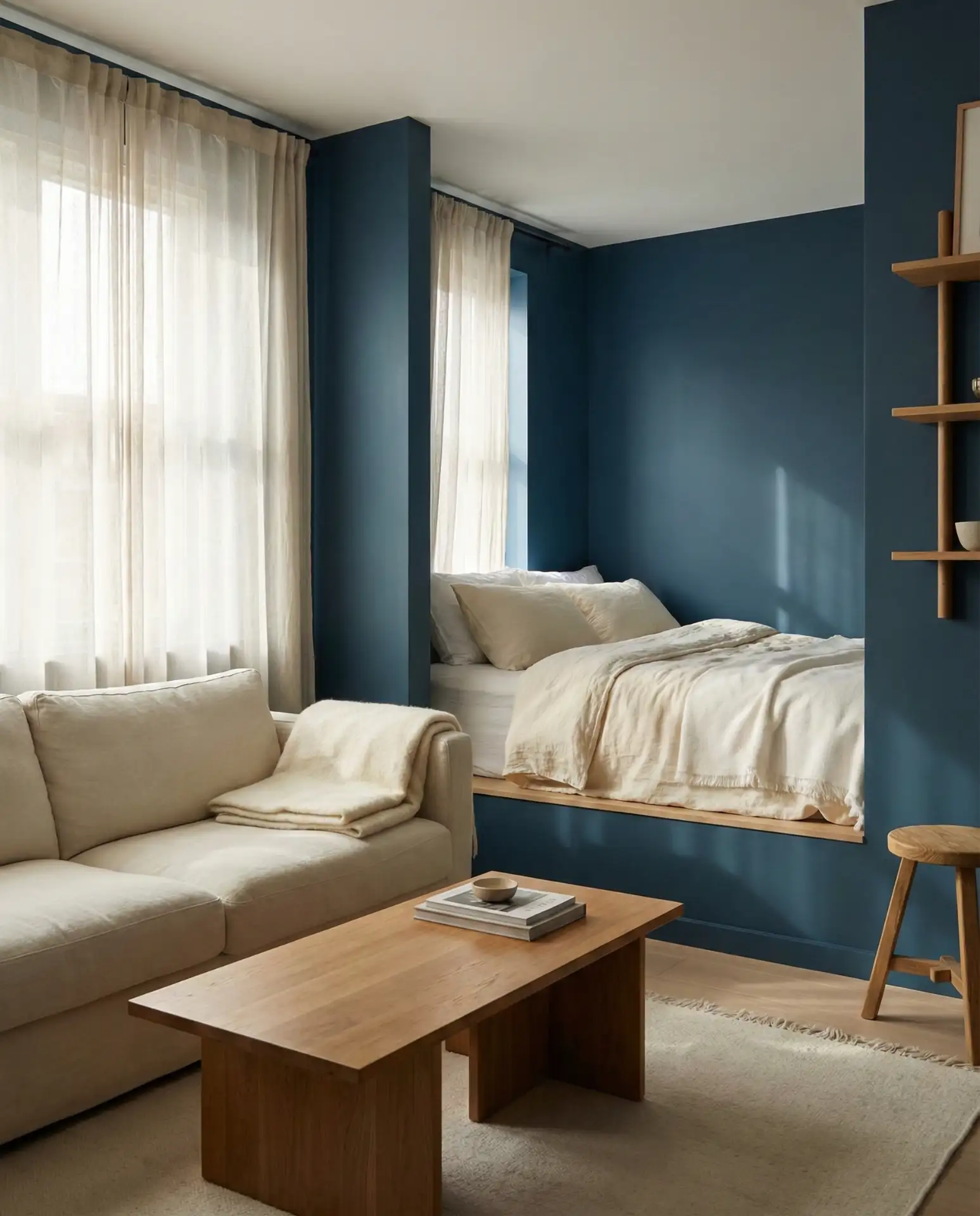
For open-plan homes where the living room sits adjacent to—or opens directly into—a bedroom or sleeping area, a layered Inchyra and neutral blue palette creates a seamless visual flow between spaces. Inchyra blue’s grey-green undertone makes it one of the most naturally restful colors in the spectrum, which means it works across both living and sleeping areas without jarring the eye. Layer it with soft whites, aged linens, and warm natural textures, and the entire open-plan area becomes a sanctuary from the moment you walk in the door.
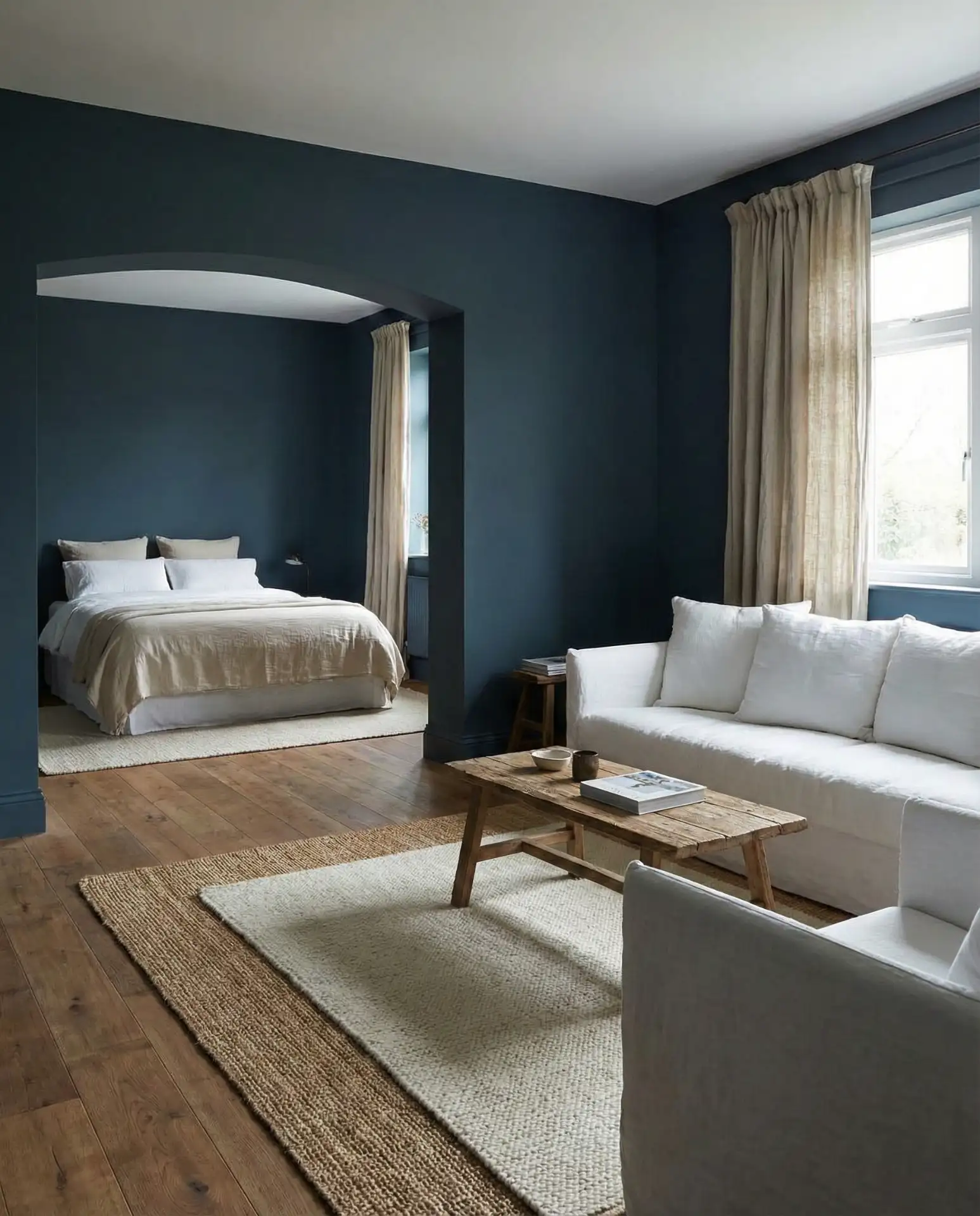
This is a look that resonates strongly with urban apartment dwellers—particularly those in cities like New York, San Francisco, and Chicago, where studio and one-bedroom apartments require the living space to do double or triple duty. Inchyra’s particular quality of shifting between grey, blue, and green depending on the light makes it adaptable to the changing needs of a room across a full day. Whether you’re working from the sofa at 8am or winding down at 10pm, the color meets you where you are without demanding anything in return.
Conclusion
Whether you’re drawn to the drama of Hague blue on a fireplace wall or the gentle simplicity of duck egg paired with white trim, there’s a version of the blue living room that’s right for your space, your lifestyle, and your budget. Blue’s staying power as a decorating choice isn’t accidental—it’s a color that works across architectural styles, regional aesthetics, and design sensibilities in a way that few others can match. We’d love to hear which of these ideas resonated most with you—drop your favorite in the comments below, share what shade of blue you’re thinking of trying, or tell us about a blue living room you’ve already created. The conversation is just getting started.