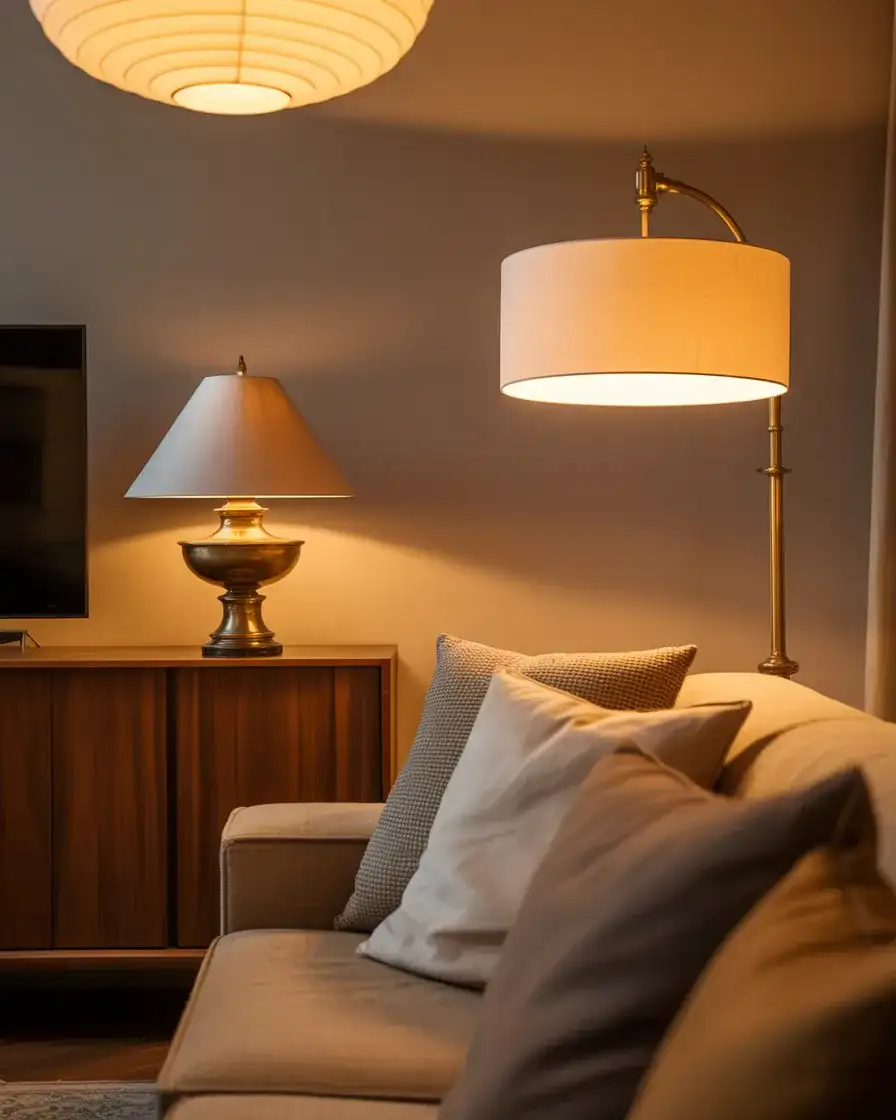
The brown couch has reclaimed its throne in American living rooms, and 2026 is shaping up to be its biggest year yet. Once dismissed as too traditional or heavy, brown sofas are now celebrated for their grounding warmth, timeless versatility, and ability to anchor a room without overwhelming it. Pinterest boards are flooded with brown couch styling ideas as homeowners search for ways to blend comfort with contemporary design. Whether you’re working with a tiny apartment or a sprawling suburban family room, these ideas will help you reimagine your space around this surprisingly adaptable centerpiece.
1. Chocolate Meets Sage Green
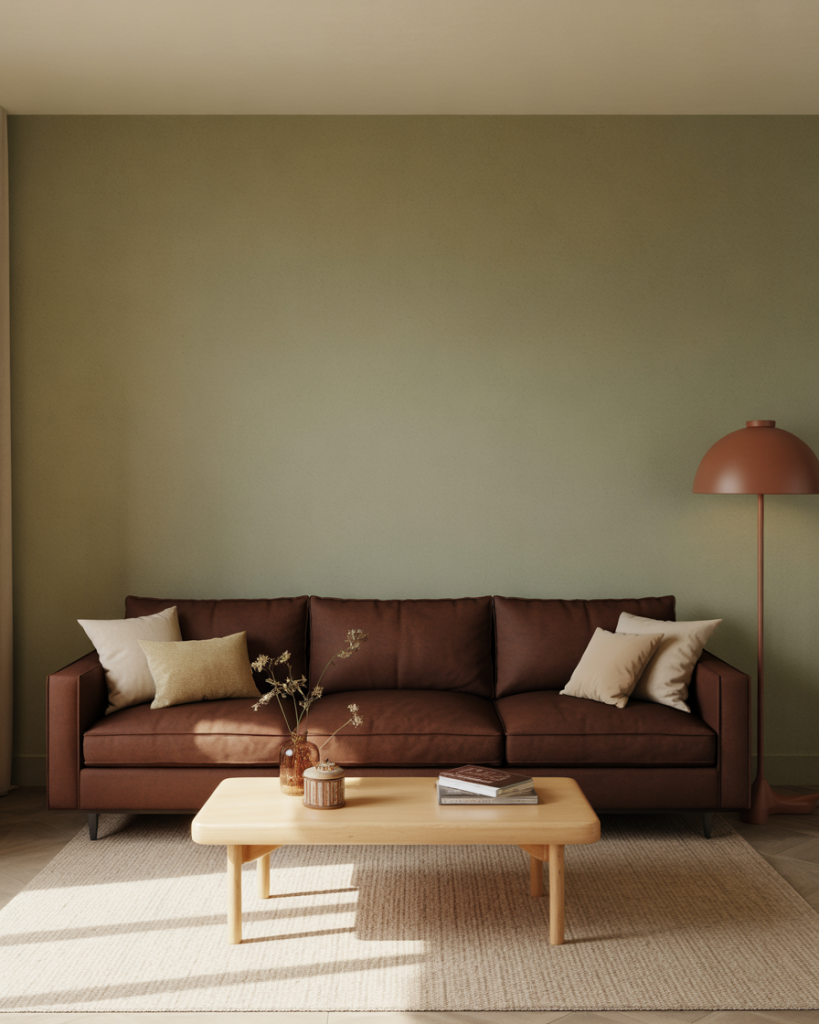
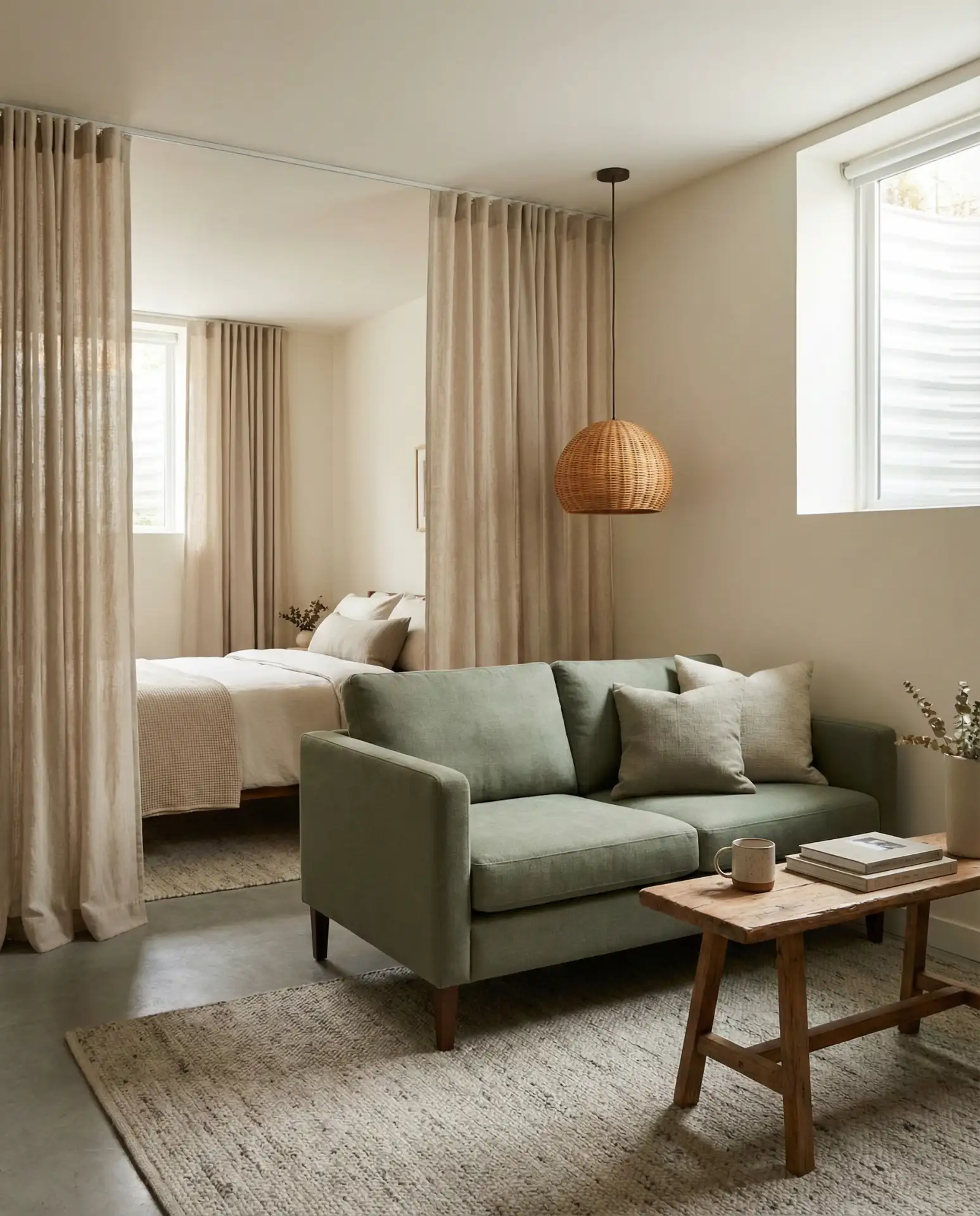
A dark chocolate sofa becomes the hero piece when paired with soft sage green walls and natural wood accents. This combination works beautifully in open-concept spaces where you want warmth without sacrificing brightness. The deep brown grounds the room while the muted green adds a refreshing, organic feel that’s gained massive traction in Pacific Northwest homes and beyond. 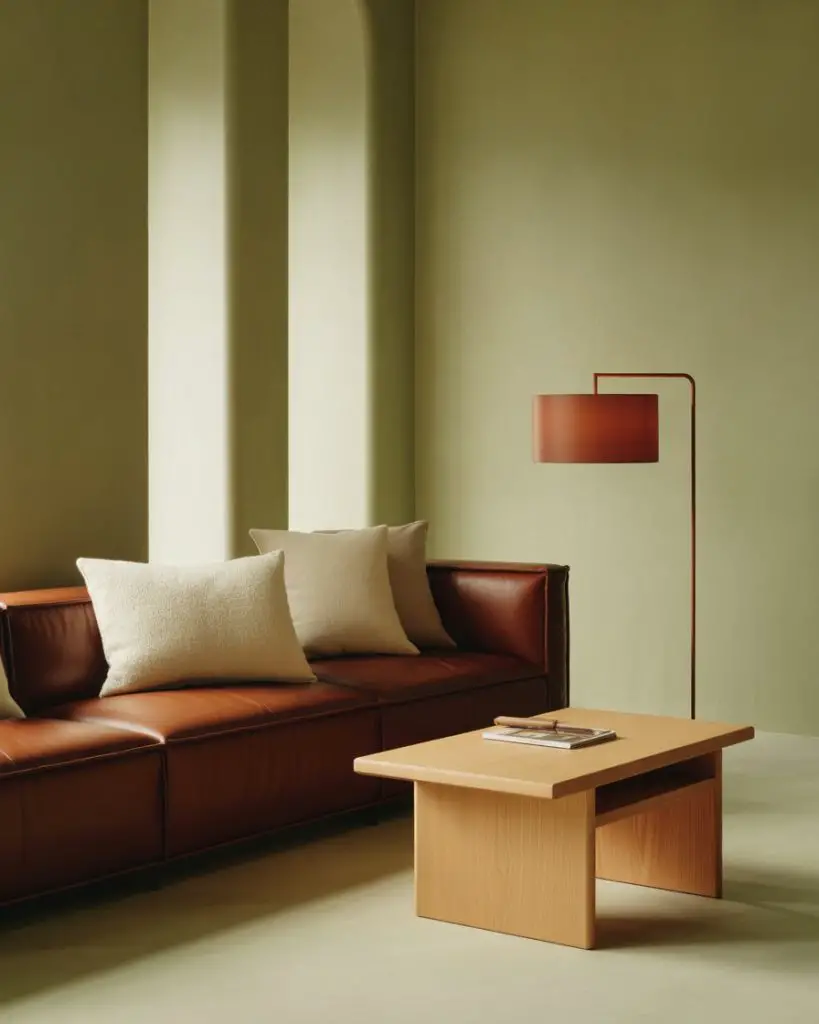
Budget-conscious shoppers should know that investing in a quality dark brown sofa often costs less long-term than replacing lighter pieces that show wear quickly. You can find excellent chocolate leather options starting around $1,200, while performance fabric versions hover near $800—both age gracefully and hide the inevitable coffee spills that come with real life.
2. Light Brown Linen in Coastal Settings
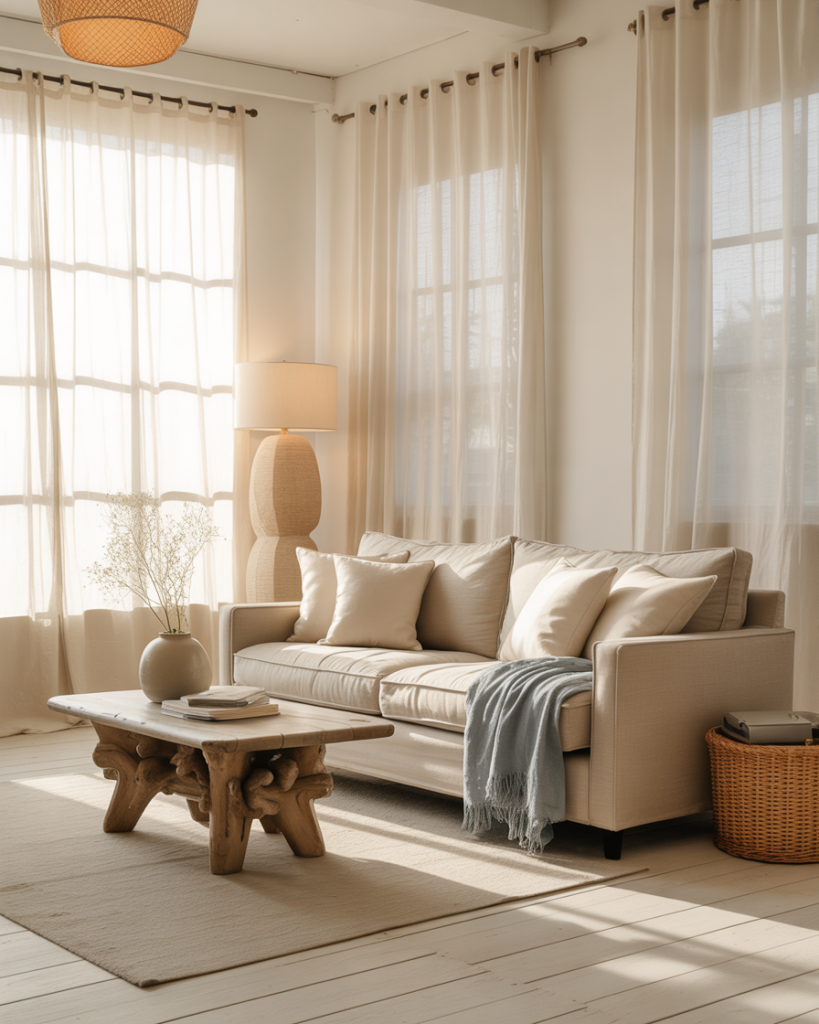
The rise of light brown linen sofas reflects a shift toward breathable, textured fabrics that feel lived-in from day one. These work exceptionally well in coastal climates where humidity demands natural fibers, and the sandy tones echo beachside palettes. Layer with white oak furniture and blue-gray accents for a California-casual vibe that feels effortless. 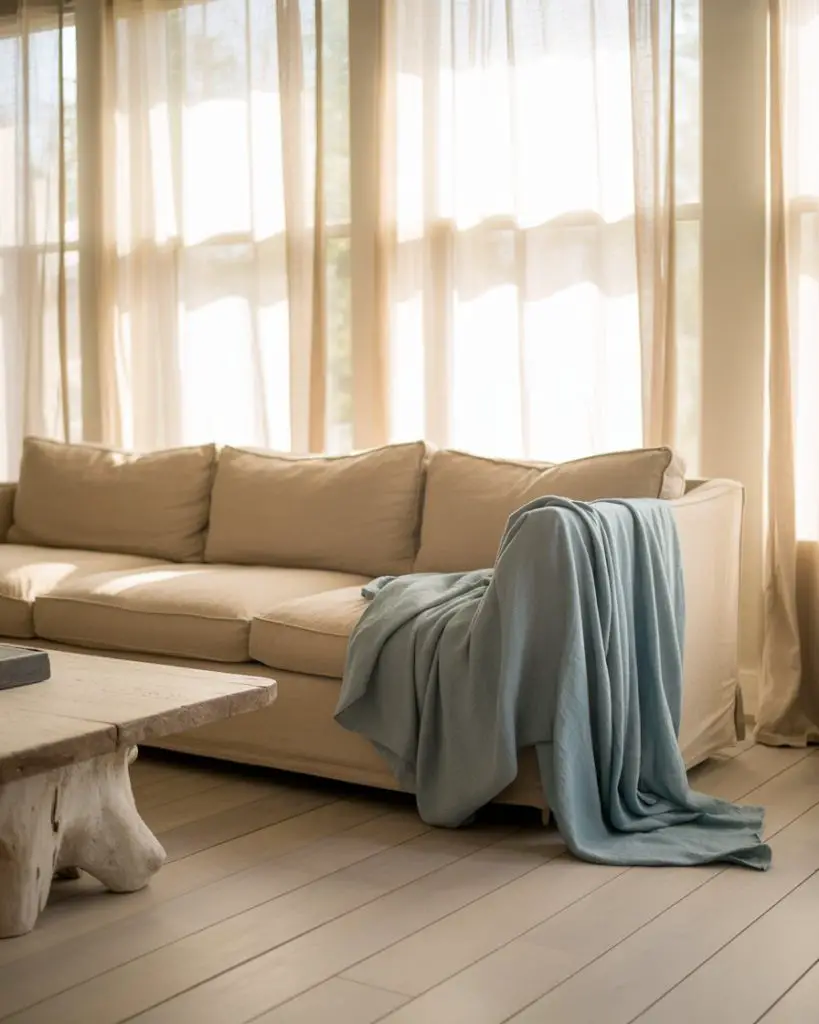
Where it works best: beach towns, lakeside cottages, and any space with abundant natural light. The pale brown won’t darken sun-drenched rooms the way deeper tones can, and linen’s casual wrinkles actually enhance the relaxed aesthetic rather than looking sloppy.
3. Velvet Glamour with Brass Hardware
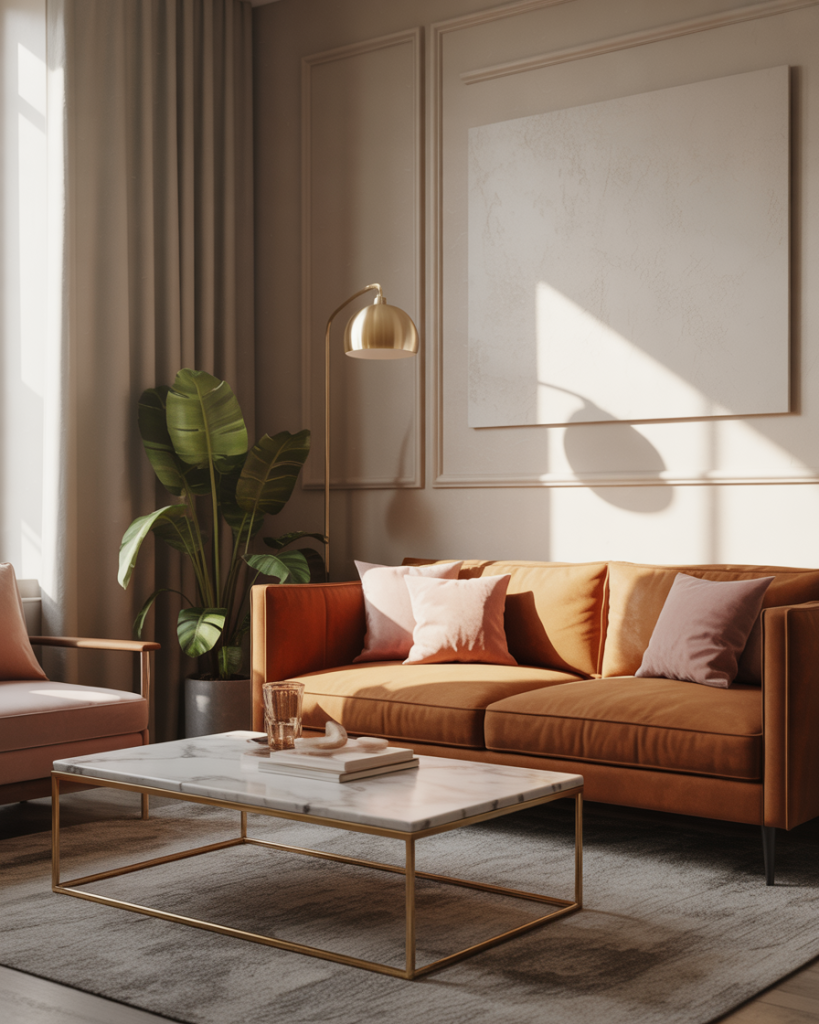
Rich brown velvet upholstery transforms an ordinary living room into something magazine-worthy when you introduce brass or gold hardware through lighting, side tables, and picture frames. This trend appeals especially to urban dwellers in loft spaces who want luxury without stuffiness. The tactile quality of velvet adds dimension that flat fabrics simply can’t match. 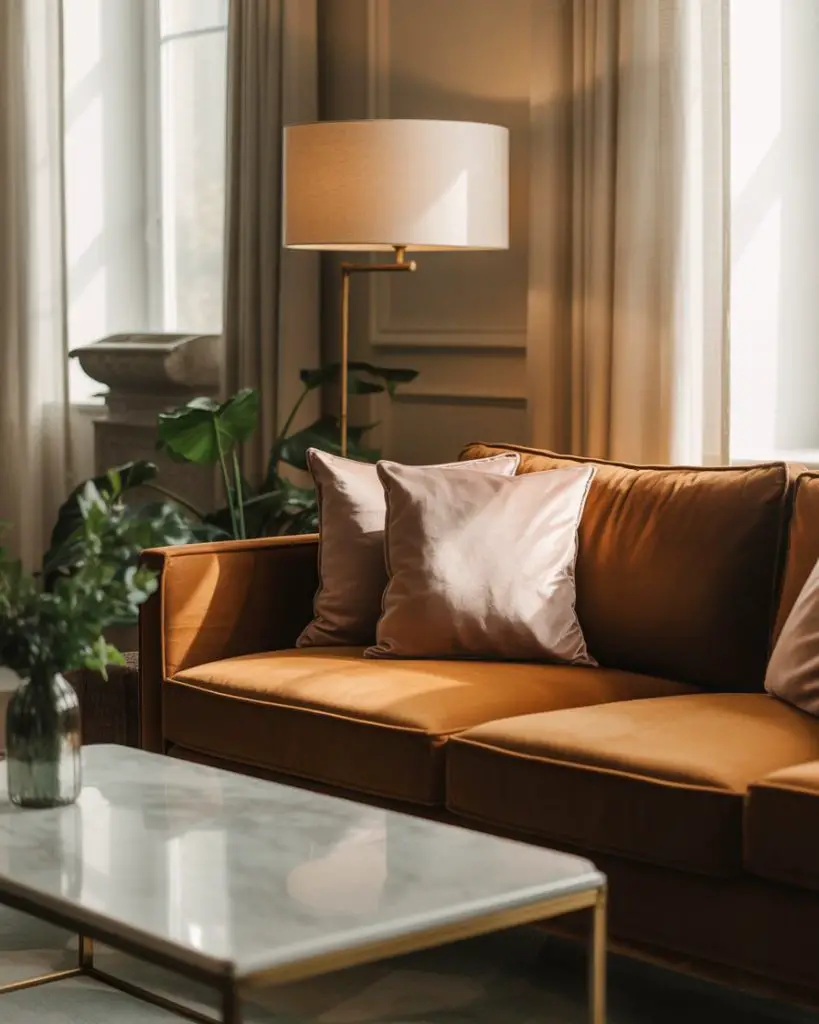
A designer once mentioned that clients consistently underestimate how velvet changes character throughout the day—morning light catches the nap differently than evening glow, creating visual interest that shifts with your routine. It’s like having multiple couches in one.
4. Leather and Midcentury Lines
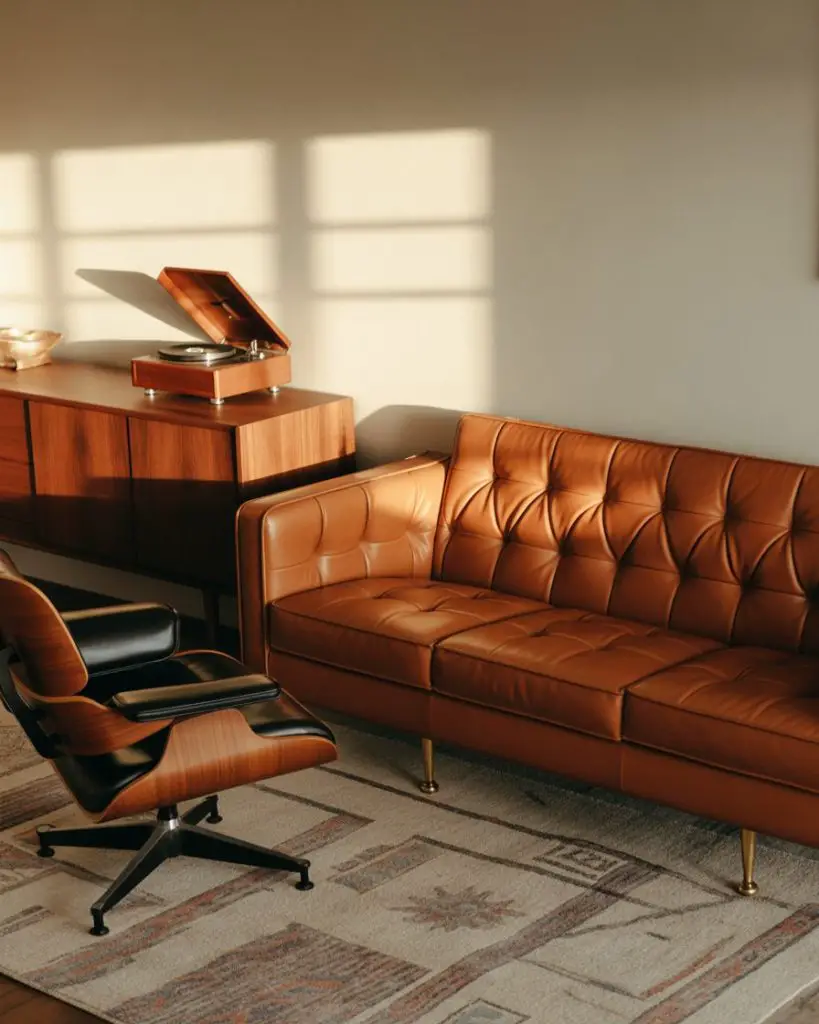
Classic brown leather paired with midcentury modern furniture creates that quintessential American look that’s been trending since the Mad Men revival. Tapered wooden legs, clean lines, and minimal ornamentation let the leather’s natural patina become the focal point. This approach works whether you’re furnishing a downtown condo or a suburban ranch house. 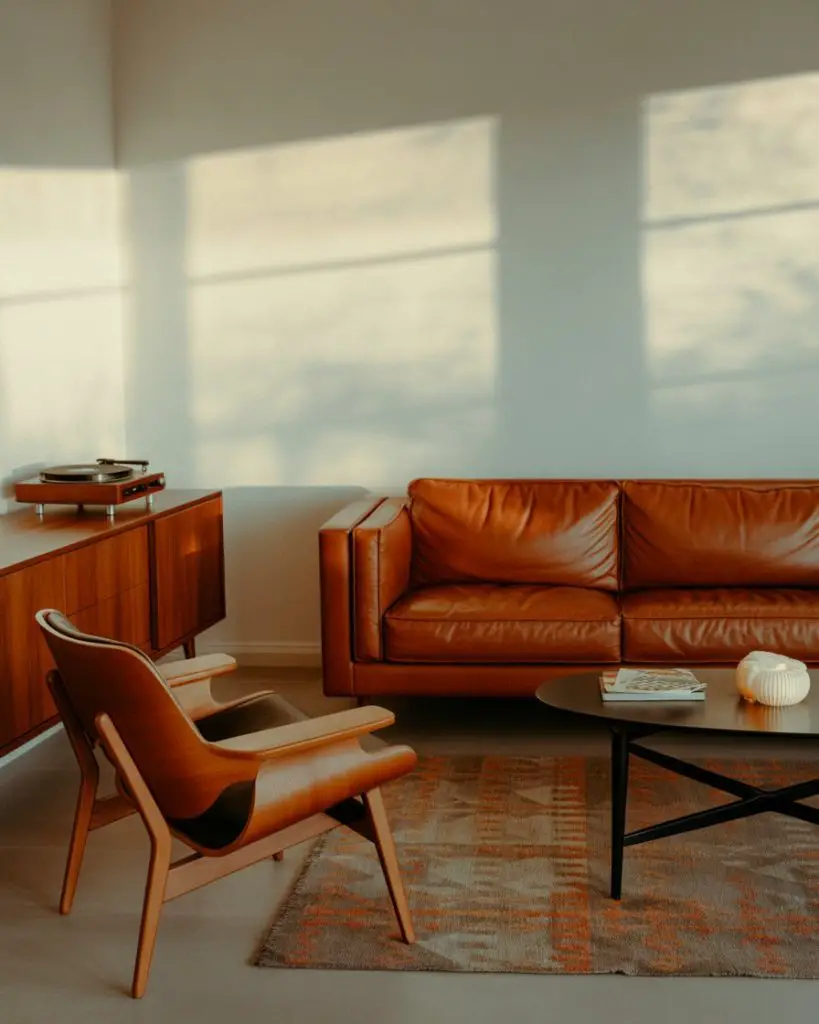
Real homeowners often make the mistake of over-matching their wood tones—mixing walnut furniture with cherry accents and teak shelving actually adds depth rather than creating chaos. Your leather sofa will tie these varied woods together through its own warm undertones.
5. Caramel Tones in Scandinavian Spaces
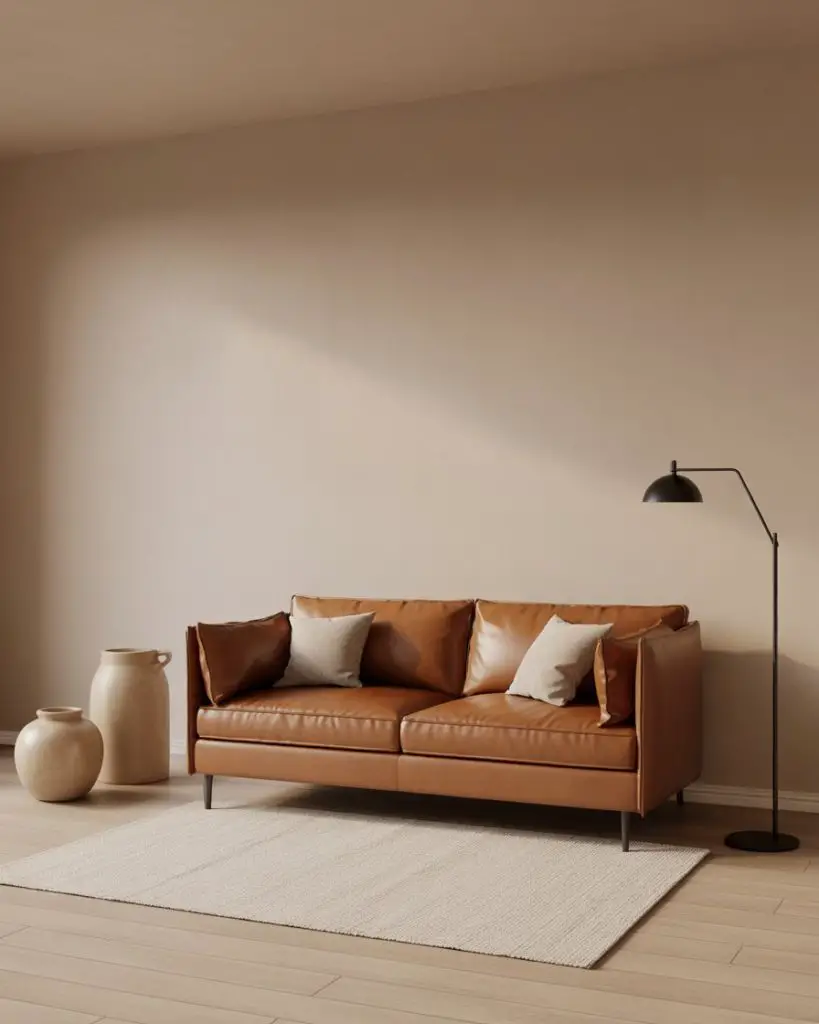
The caramel brown sofa has become a Scandinavian design staple, offering warmth that balances the minimalism inherent to Nordic aesthetics. When surrounded by white walls, light woods, and plenty of negative space, a caramel couch prevents the room from feeling clinical. Add chunky knit throws and sheepskin accents for texture without clutter. 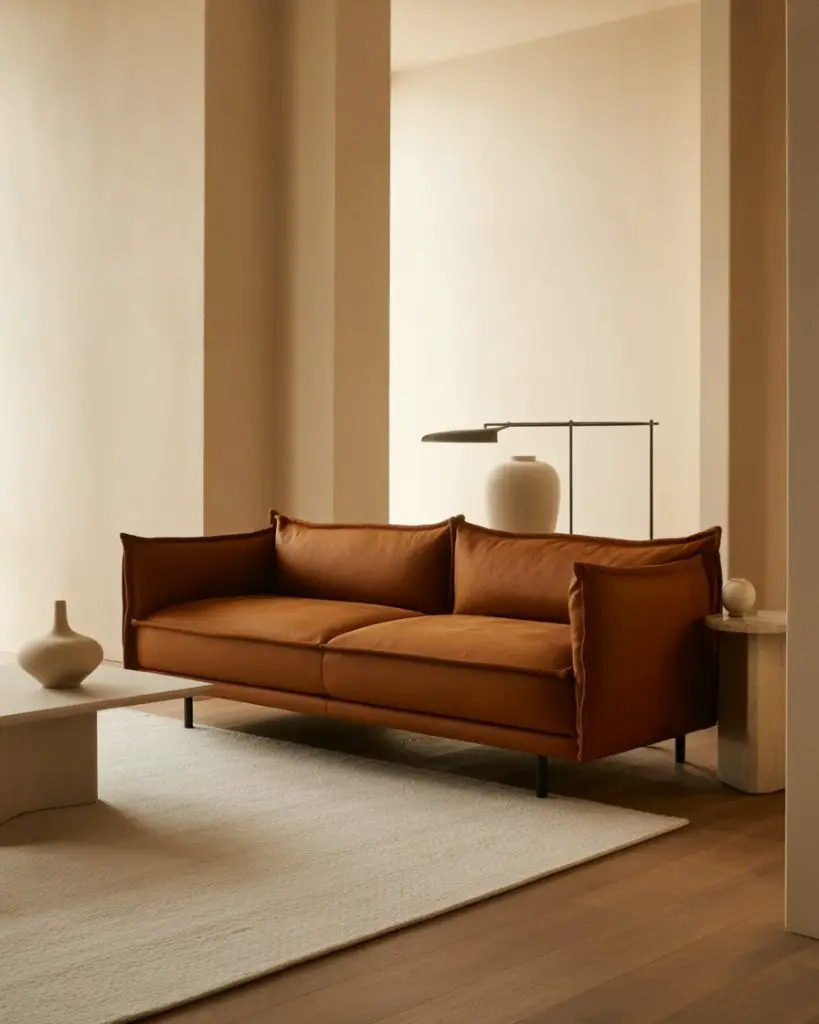
Practical insight: caramel leather develops the most beautiful patina of any brown shade, darkening slightly in high-use areas while maintaining its honey-like warmth. This natural aging process means your sofa actually looks better after five years than it did fresh from the showroom.
6. Mocha Hues with Terracotta Accents
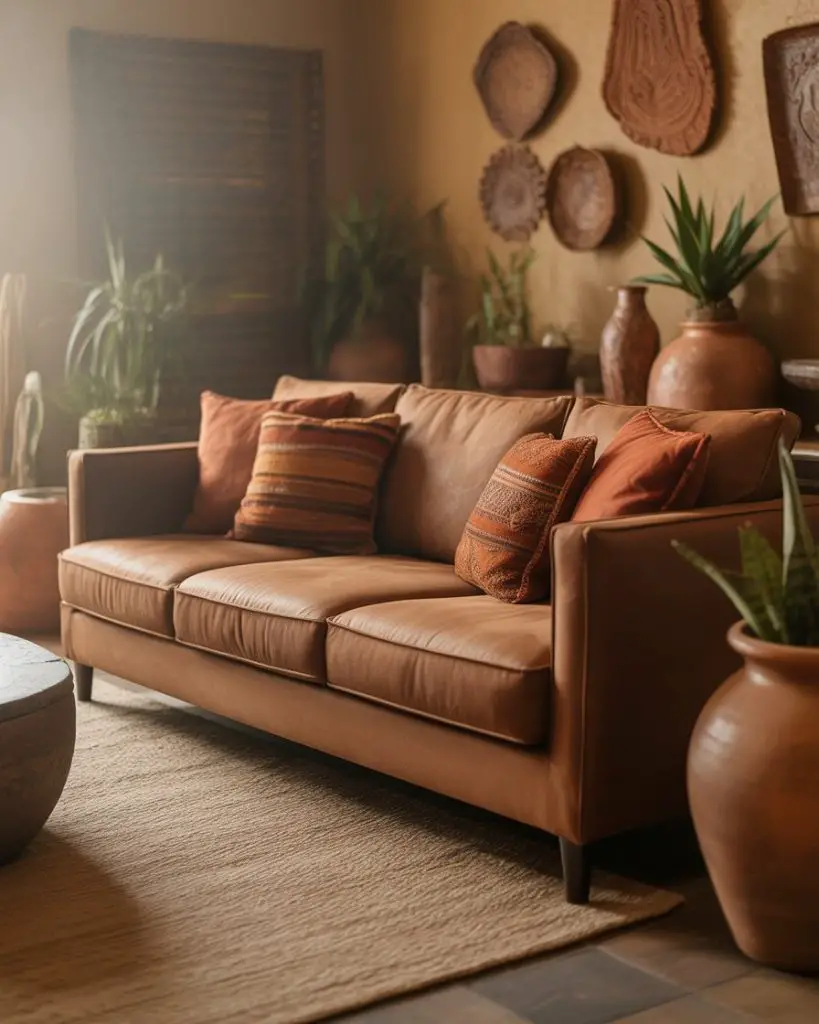
Earthy mocha sofas pair beautifully with terracotta pottery, rust-colored pillows, and clay-toned art for a Southwestern-inspired palette that’s exploded across Arizona, New Mexico, and Southern California. This combination feels grounded and organic, especially when you incorporate natural materials like jute rugs and rattan baskets. 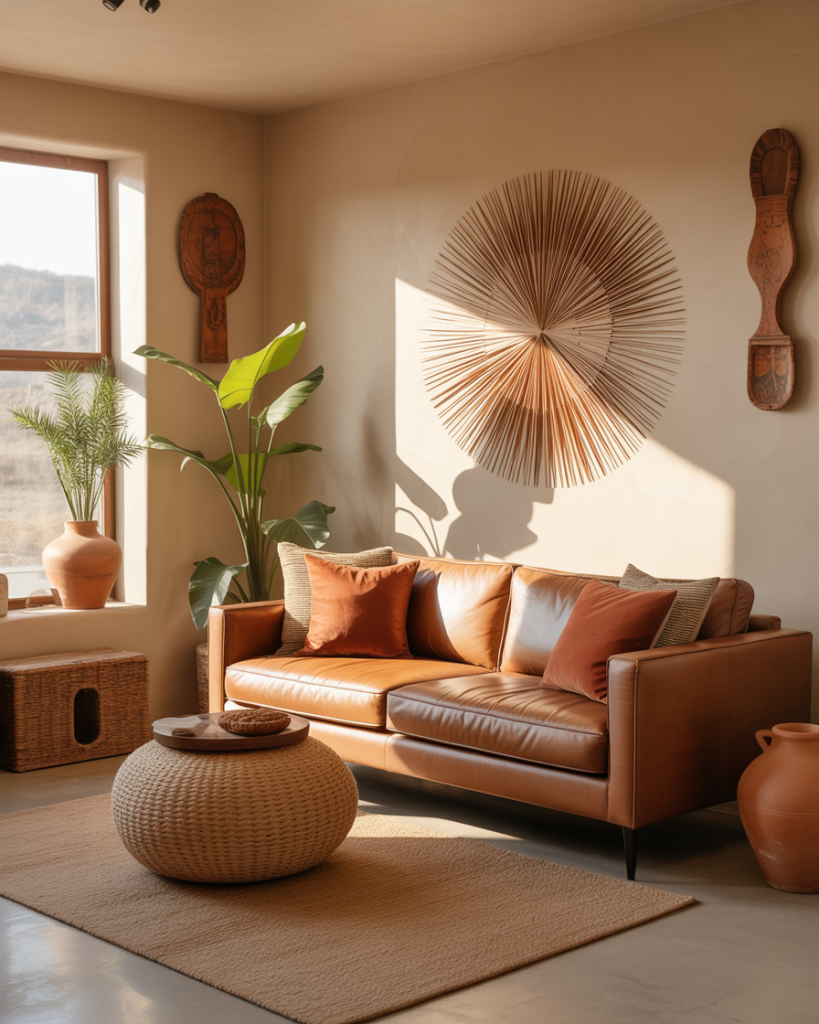
Where it works best: homes with abundant natural light and architectural features like exposed beams or adobe-style walls. The mocha tone won’t compete with these strong elements but instead creates a cohesive flow from furniture to architecture.
7. Espresso in Monochromatic Schemes

An espresso-toned sofa anchors a monochromatic brown palette that layers various shades from cream to nearly-black. This sophisticated approach works particularly well in formal living rooms or spaces where you entertain frequently. The key is varying textures—smooth leather, nubby linen, polished wood—to prevent visual flatness. 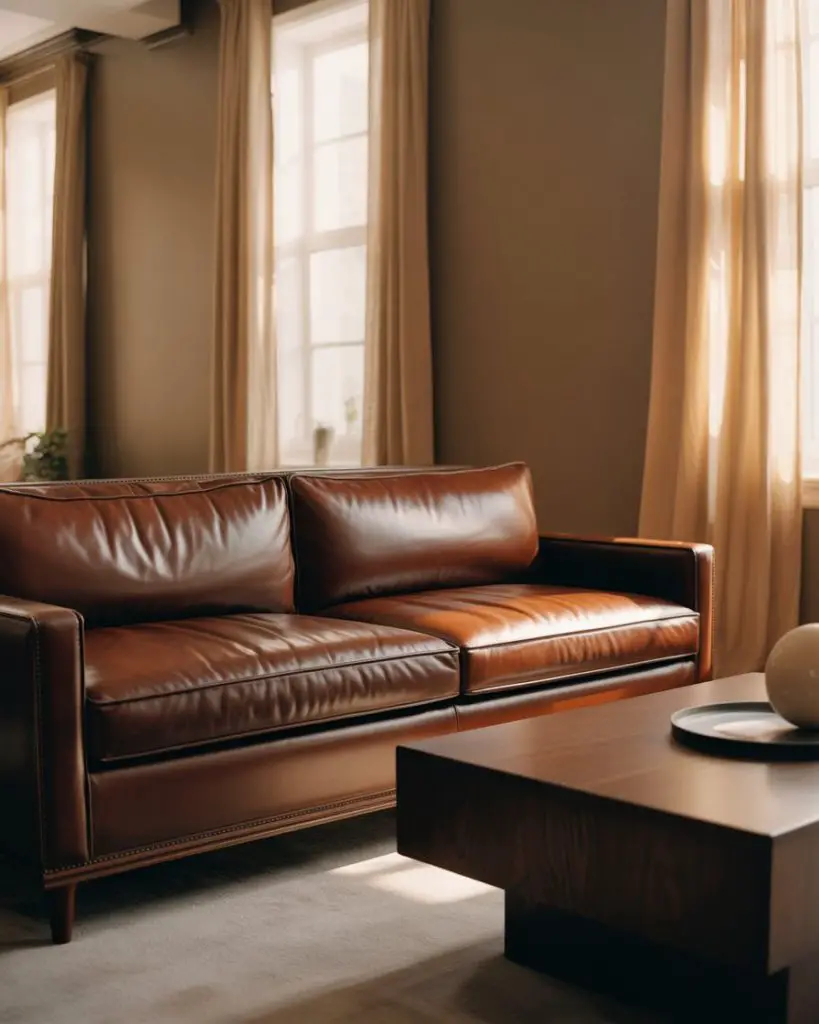
Expert designers note that monochromatic schemes require intentional lighting—install dimmer switches and use multiple light sources at different heights to create depth. Without varied lighting, even the most carefully curated brown palette can read as one-dimensional.
8. Tan Leather in Industrial Lofts
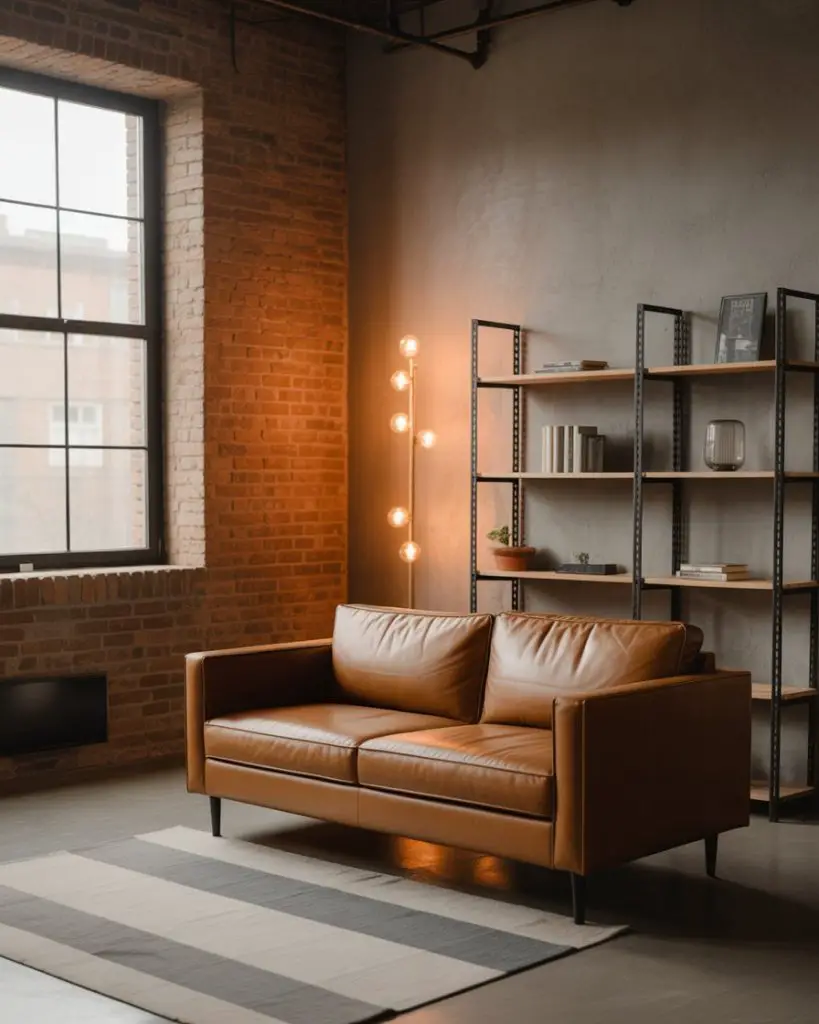
The contrast between soft tan leather and hard industrial materials like exposed brick, concrete floors, and metal shelving creates visual tension that defines urban loft living. This pairing softens the potentially harsh edges of industrial architecture while maintaining an edgy, authentic feel that appeals to city dwellers. 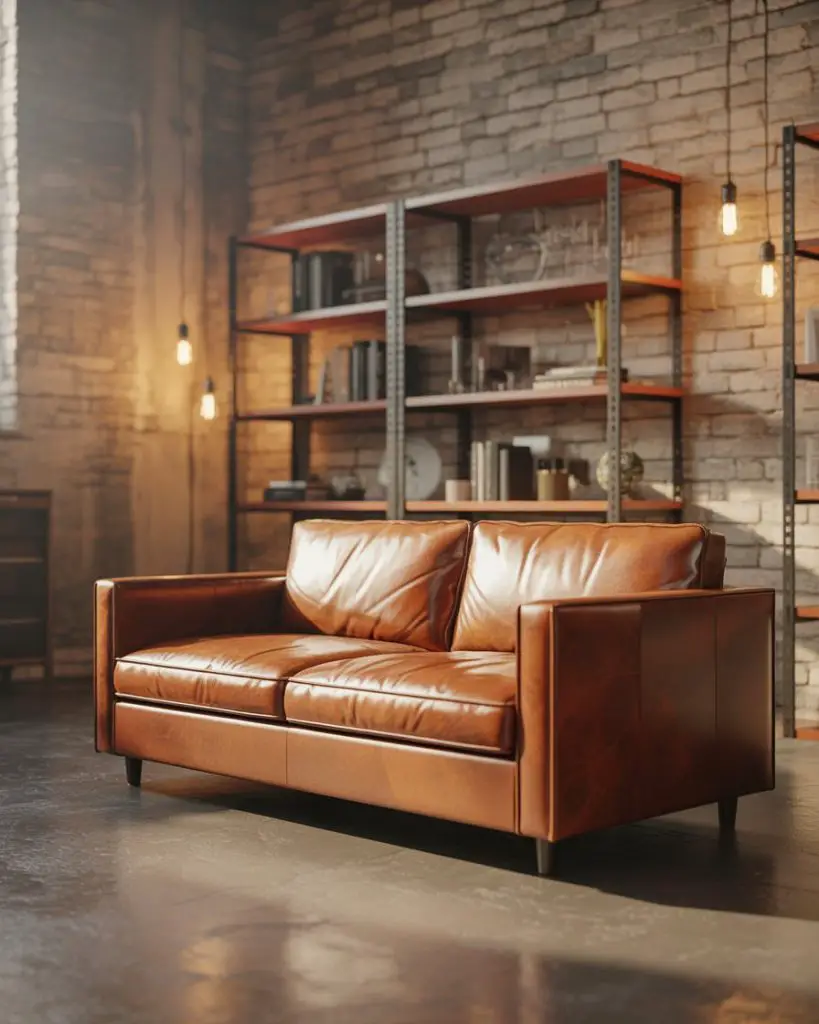
Budget angle: genuine leather sofas in tan start around $1,500 for quality pieces, but the investment pays off in durability. Factory-second furniture stores often stock tan leather at 30-40% discounts—minor imperfections are barely noticeable and don’t affect longevity.
9. Coffee Brown with Navy Blue

The unexpected pairing of coffee brown and navy blue has gained serious momentum as homeowners move away from brown-and-beige combinations. This duo feels both classic and fresh, working beautifully in traditional homes that need updating without full renovations. Add brass accents and you’ve created a palette that bridges multiple design eras. 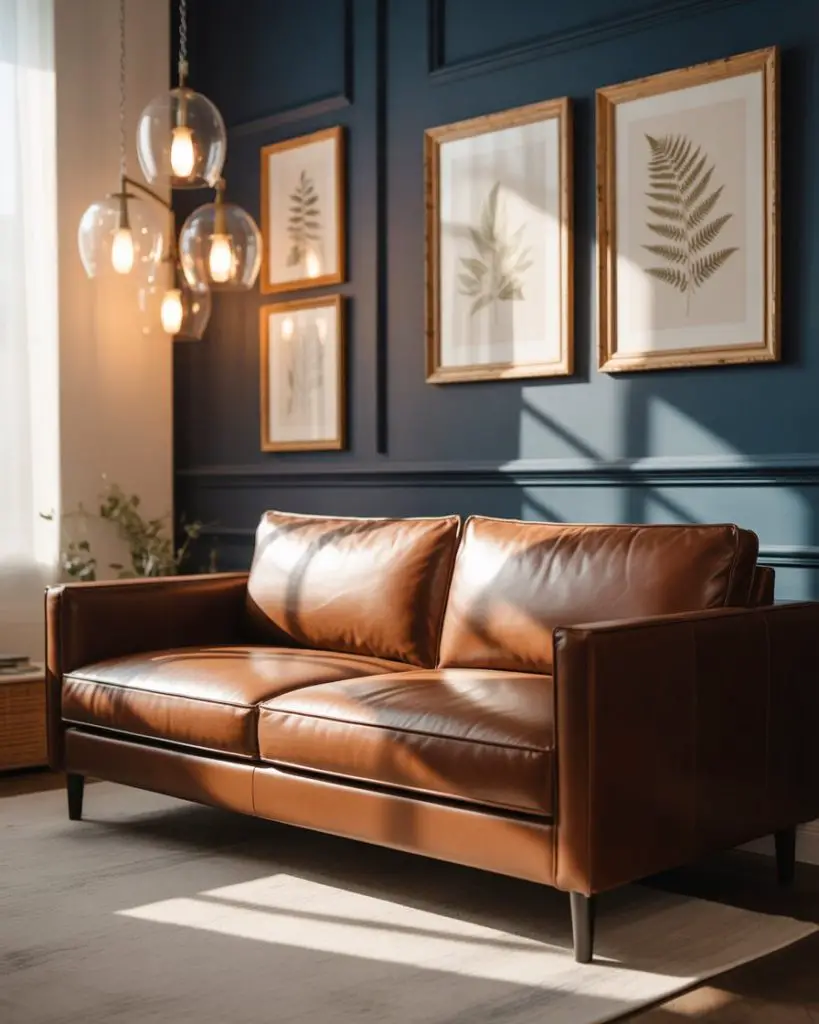
In New England homes, this color combination nods to maritime history while feeling thoroughly contemporary. The brown grounds the coolness of navy, preventing the room from feeling too nautical or themed—a common pitfall when working with blue-dominant palettes.
10. Rustic Leather in Farmhouse Settings
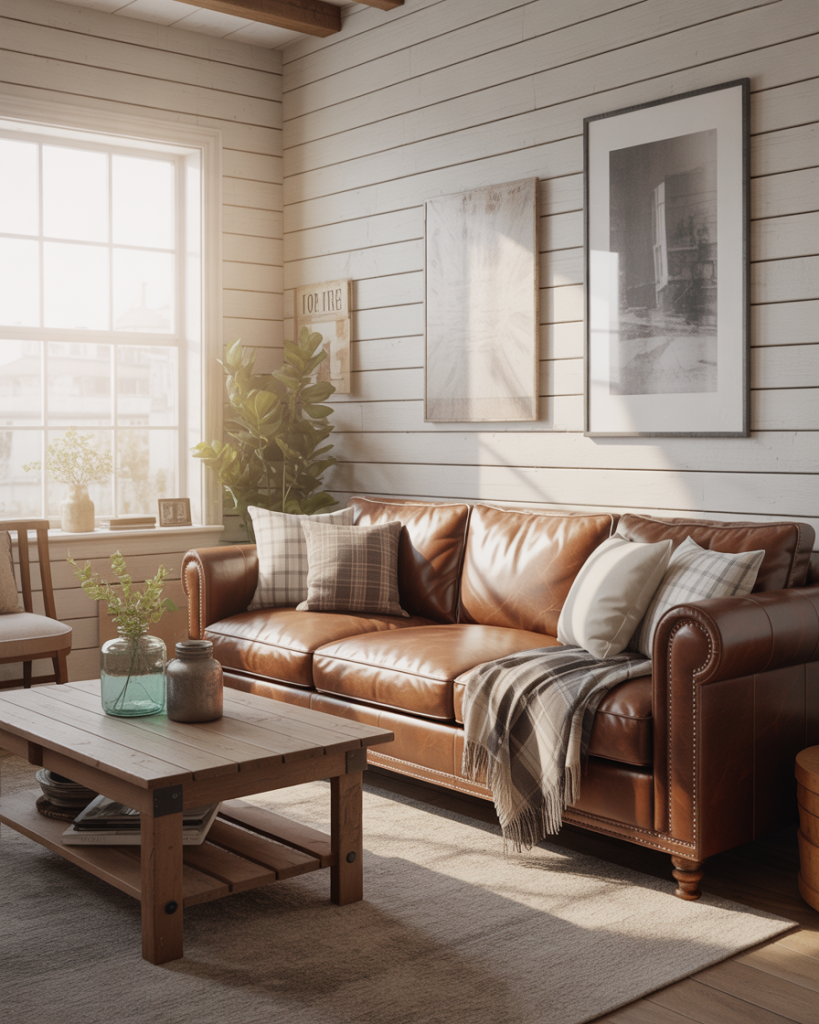
Rustic distressed leather sofas belong in modern farmhouse living rooms where shiplap, barn doors, and reclaimed wood create an intentionally weathered aesthetic. The worn appearance of the leather complements rather than clashes with these purposefully aged elements. Layer with plaid throws and vintage finds for authentic farmhouse charm. 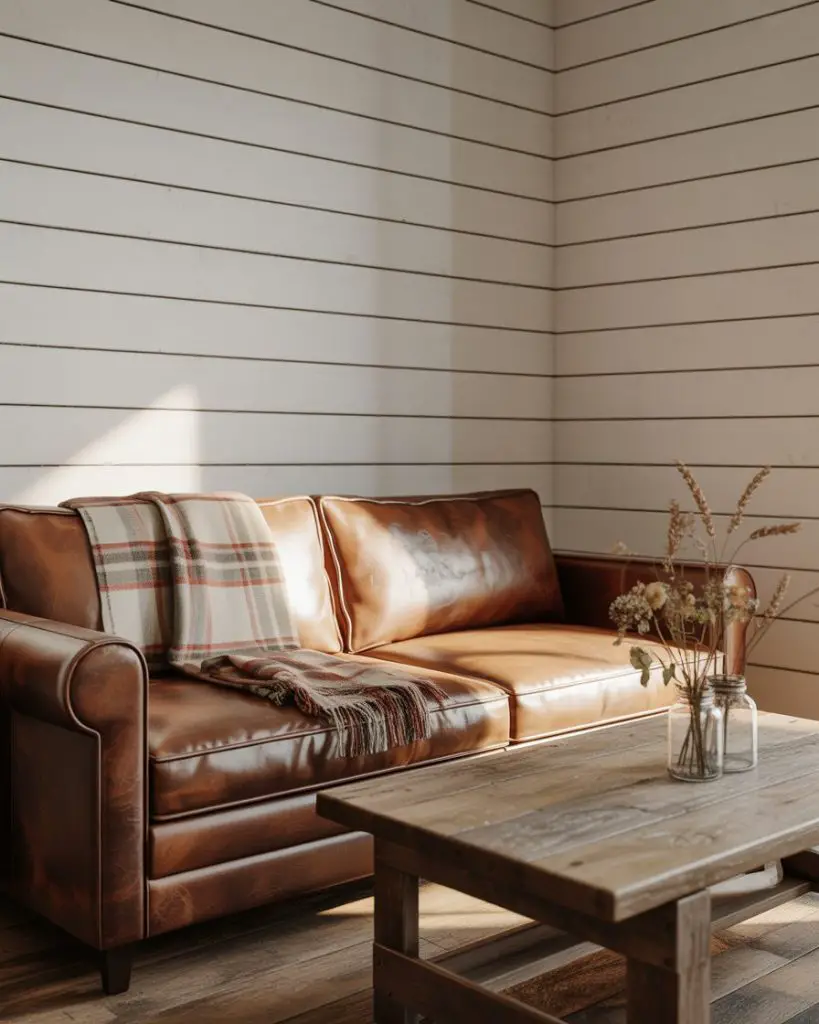
A common mistake is buying artificially distressed leather that looks costume-y rather than naturally aged. Look for pieces where the distressing varies in intensity—real wear patterns aren’t uniform. Run your hand across the surface; quality distressed leather should feel soft and broken-in, not stiff or plasticky.
11. Beige-Brown in Transitional Spaces
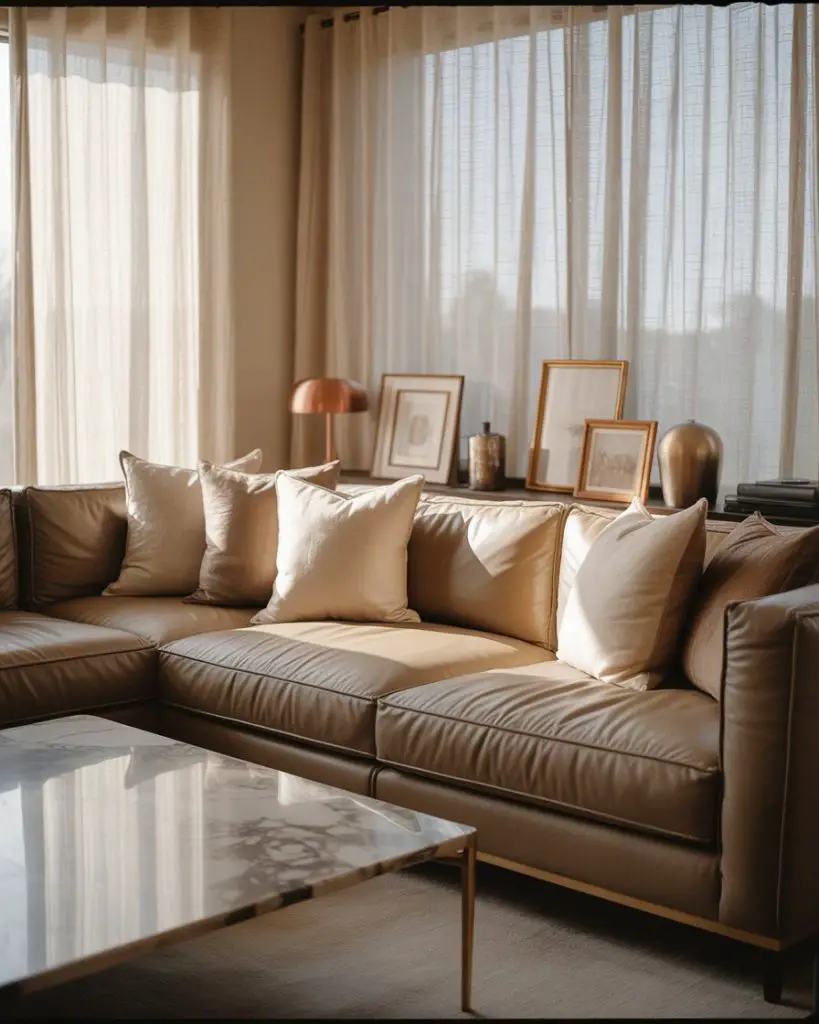
The beige-brown spectrum offers the most versatile foundation for transitional design, which blends traditional comfort with contemporary clean lines. These neutral-leaning browns work in homes where family members have different style preferences, serving as diplomatic middle ground. They’re particularly popular in open-plan suburban homes where living areas flow into kitchens and dining spaces. 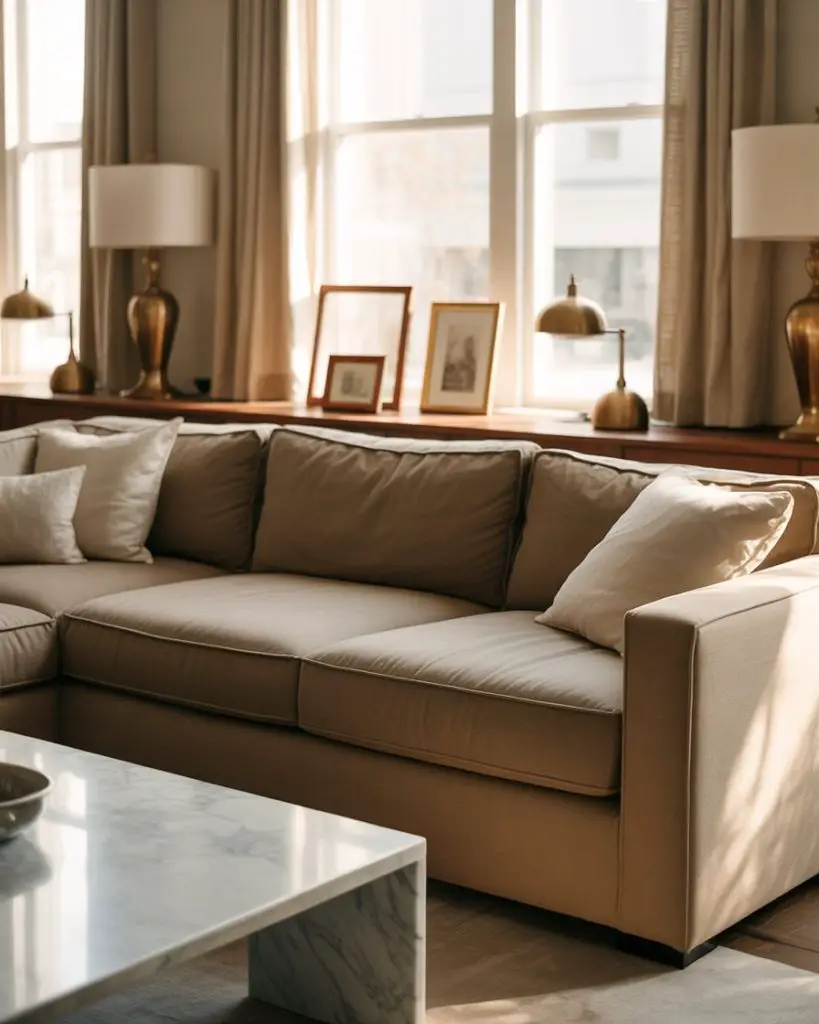
Real homeowner behavior shows that beige-brown sofas get reupholstered less frequently than stark white or very dark pieces, suggesting they have genuine staying power beyond trends. Their chameleon-like quality means they adapt as you swap accent colors or update accessories.
12. Orange-Brown in Retro Revivals
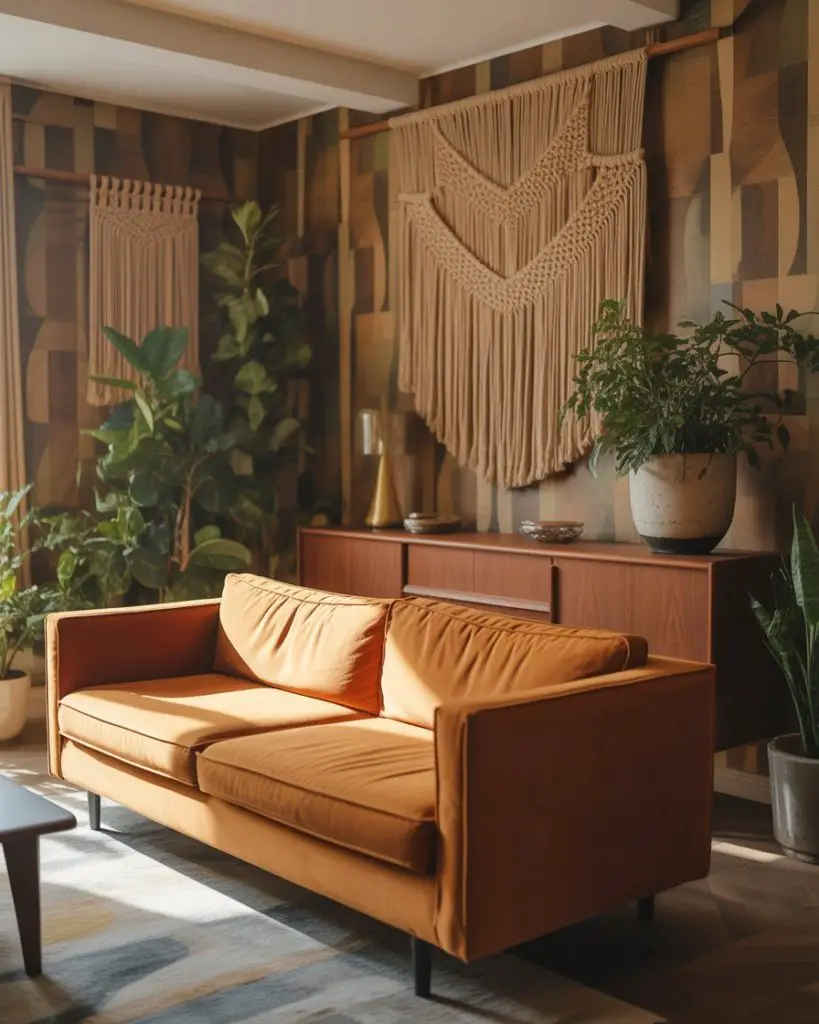
The warm orange-toned brown reminiscent of 1970s design has circled back with surprising vigor, especially among younger homeowners embracing maximalist, pattern-heavy decor. This shade pairs beautifully with geometric wallpaper, macramé wall hangings, and the kind of bold choices that define Gen Z and Millennial aesthetics. It’s unapologetically nostalgic without feeling dated. 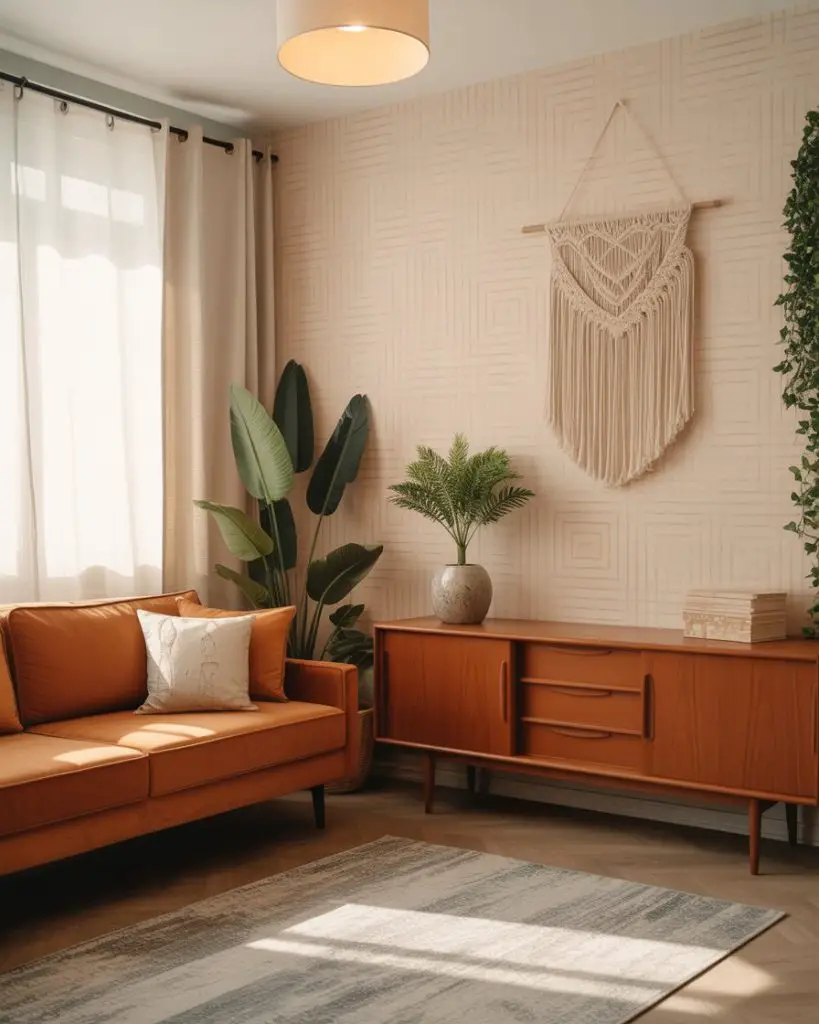
Where it works best: rooms with good natural light where the orange undertones won’t read as muddy or dark. South-facing windows in particular make these warmer browns glow rather than appearing flat or dull.
13. Grey-Brown for Contemporary Minimalism

The grey-brown hybrid—sometimes called “greige”—dominates contemporary minimalist spaces where pure neutrality is the goal. This cool-toned brown works brilliantly in modern interior design schemes that emphasize architectural features over decorative elements. It’s the go-to choice for new construction homes with concrete accents and floor-to-ceiling windows. 
Designers note that grey-brown is the most forgiving shade for rooms with mixed lighting—it looks consistent under warm LED bulbs, cool fluorescents, and natural daylight, which matters enormously in open-concept spaces where multiple light sources converge.
14. Bohemian Leather with Global Textiles
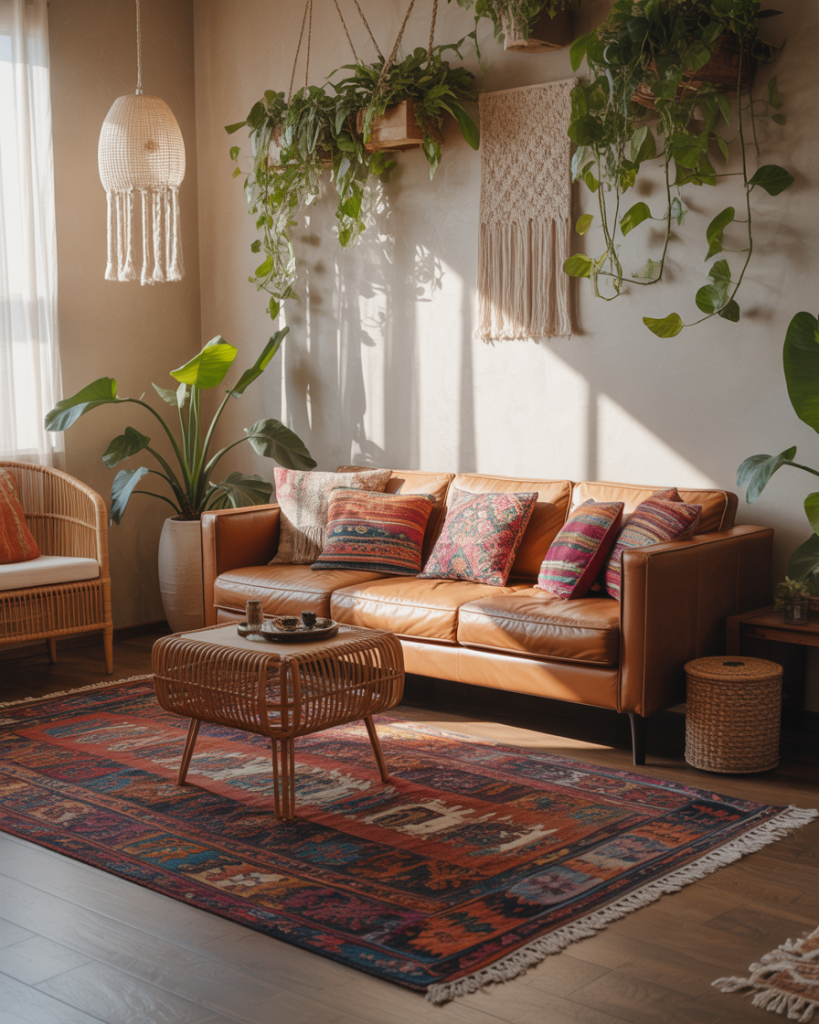
A worn bohemian leather sofa becomes the foundation for layered global textiles—Moroccan rugs, Indian block-print pillows, Turkish throws—creating that collected-over-time aesthetic that defines boho style. The leather’s neutral brown doesn’t compete with busy patterns but instead provides visual rest. This approach appeals to well-traveled homeowners and urban eclectics alike. 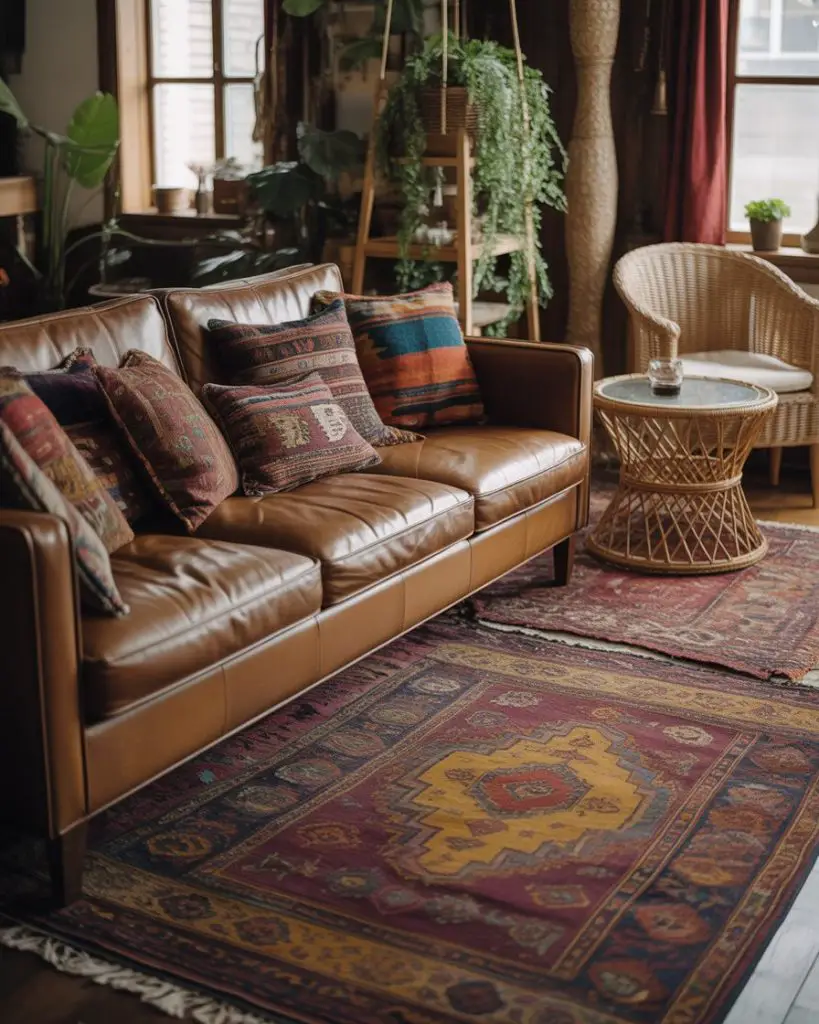
A textile dealer once shared that the biggest mistake in boho spaces is perfectly matching patterns—the magic happens when you clash scales and origins intentionally. Your brown leather sofa anchors this visual cacophony, preventing it from reading as chaotic.
15. Apartments with Space-Saving Brown Sectionals
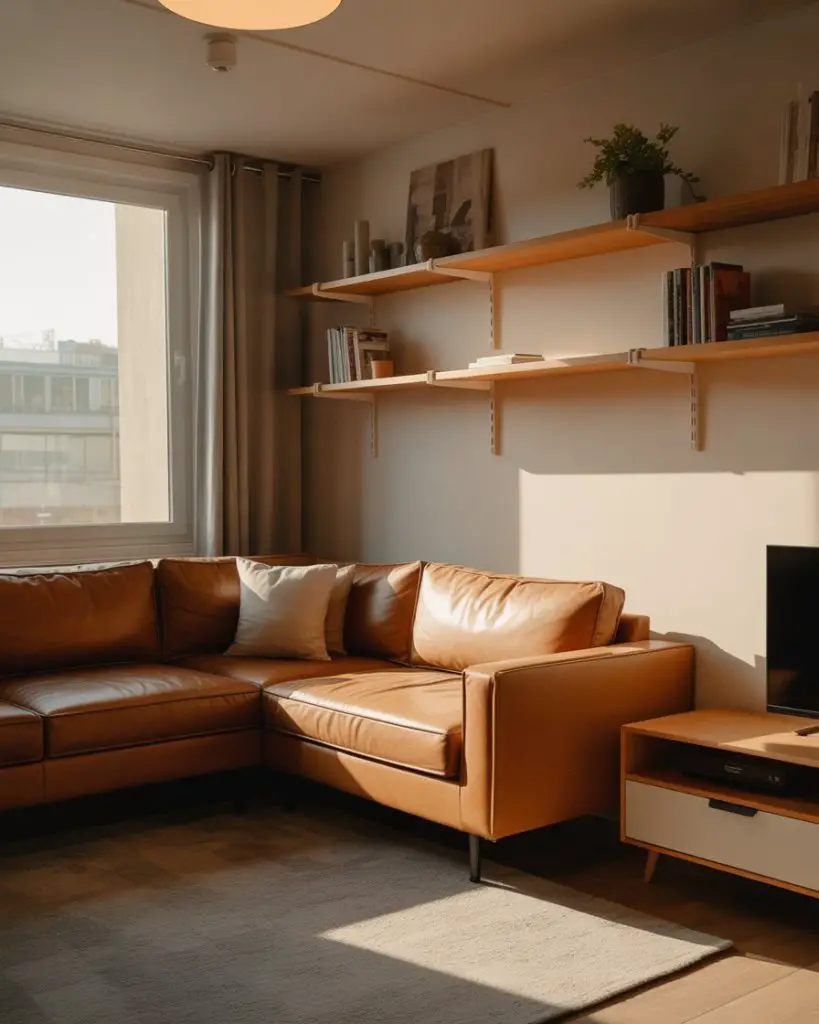
In urban apartments where every square foot counts, a brown sectional that doubles as a room divider solves multiple problems elegantly. The neutral brown won’t overwhelm small spaces the way darker colors might, and the sectional configuration maximizes seating without requiring multiple furniture pieces. This setup is particularly popular in studio and one-bedroom units. 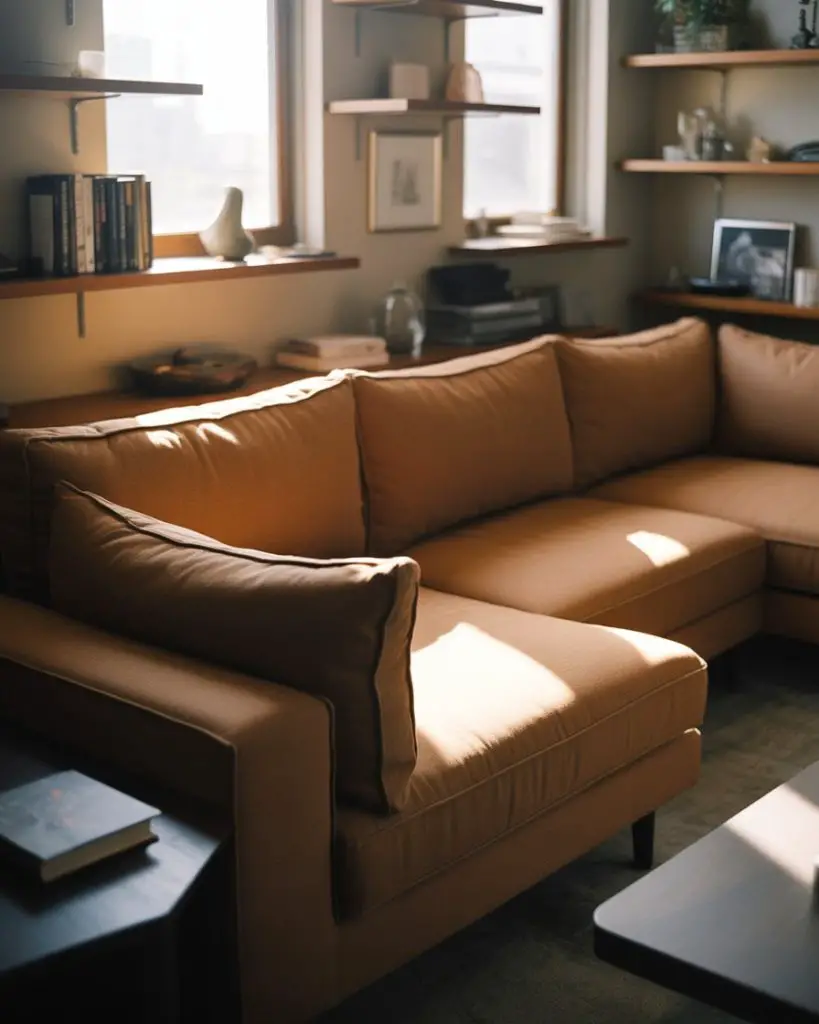
Practical insight: sectionals in apartments should have removable backs or modular pieces that fit through narrow doorways and tight stairwells. Many city dwellers learn this the hard way—measure your building’s elevator dimensions before falling in love with that floor model.
16. French Country Leather with Vintage Charm
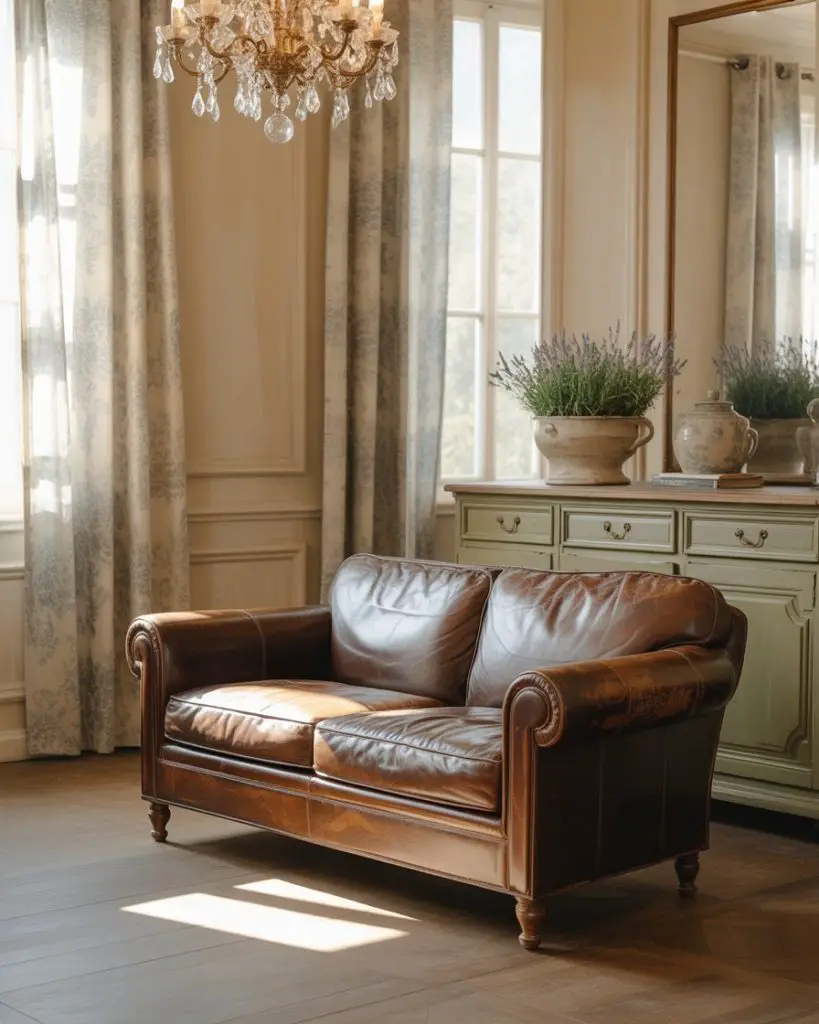
French country leather sofas with rolled arms and turned legs bring Old World elegance to American homes, especially popular in the South where European influences run deep. Pair with toile fabrics, distressed painted furniture, and crystal chandeliers for a look that’s refined but not stuffy. The aged leather patina is essential—shiny new leather disrupts the vintage narrative. 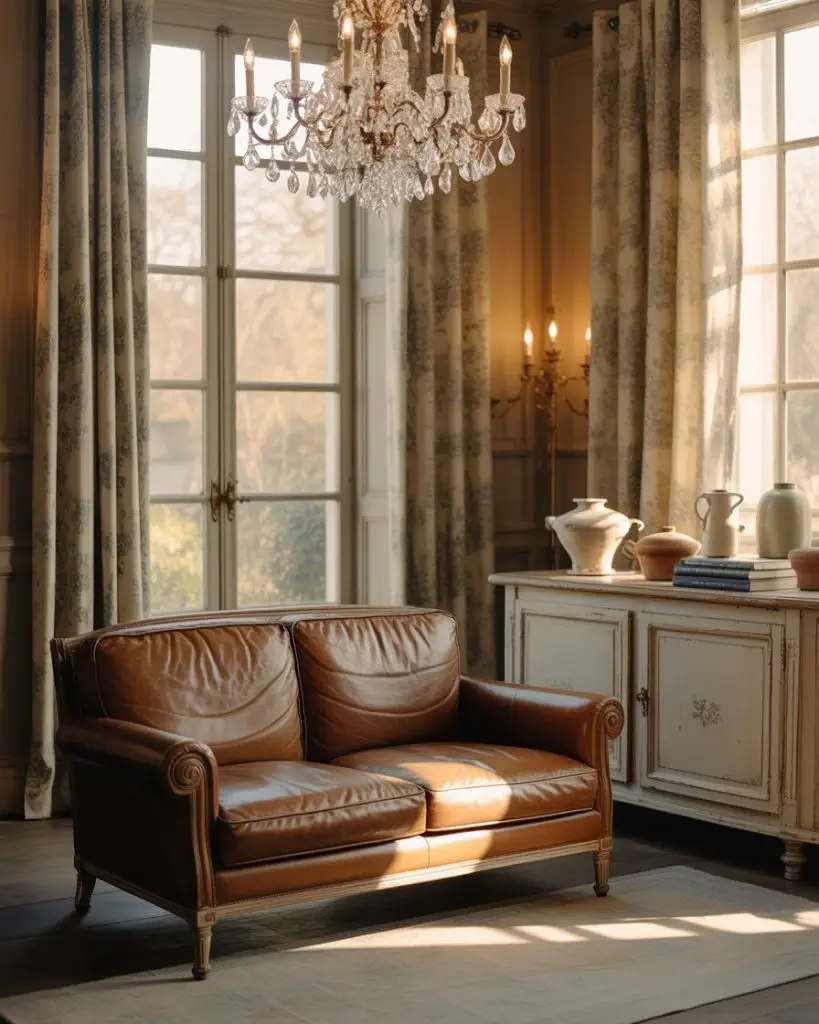
Where it works best: formal living rooms in historic homes or newer construction designed with traditional proportions. The curved silhouette of French country sofas needs adequate space to breathe—crowding them into tight corners undermines their elegant lines.
17. Cozy Brown with Oversized Throws
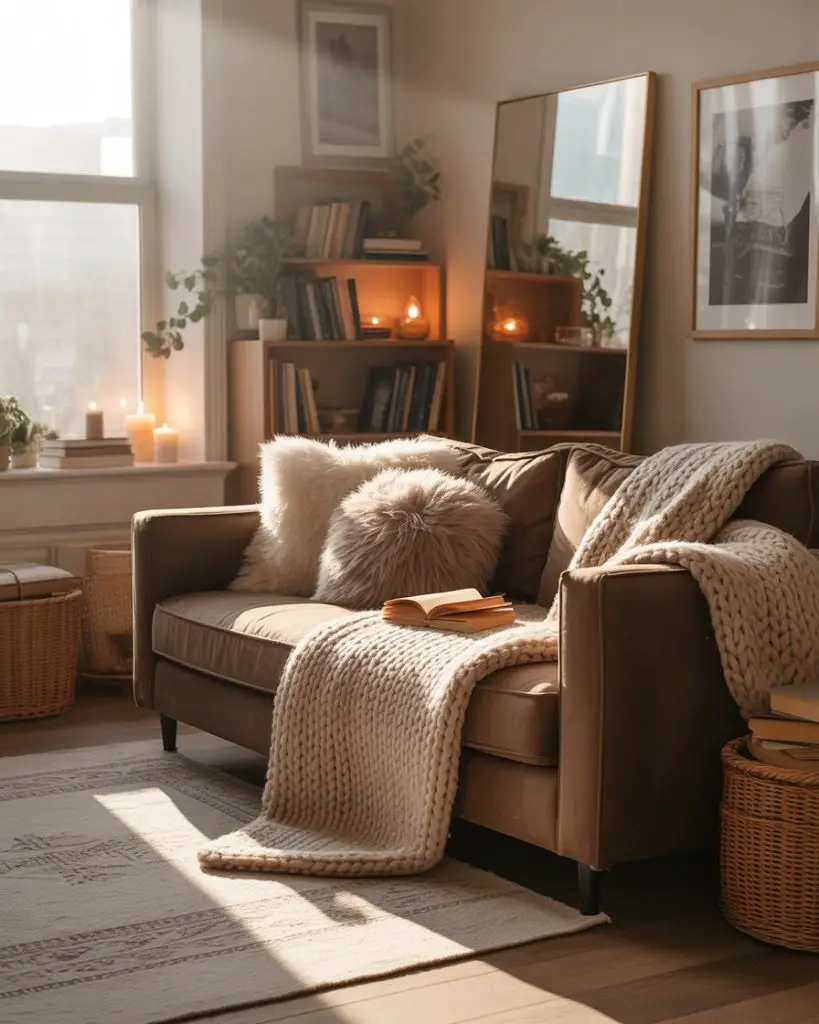
The pursuit of ultimate cozy leads many homeowners to brown sofas piled with oversized knit throws, faux fur blankets, and an abundance of pillows. This hygge-inspired approach works beautifully in family rooms and dens where comfort trumps formality. The brown base ensures the layered textiles don’t read as messy but instead intentionally inviting. 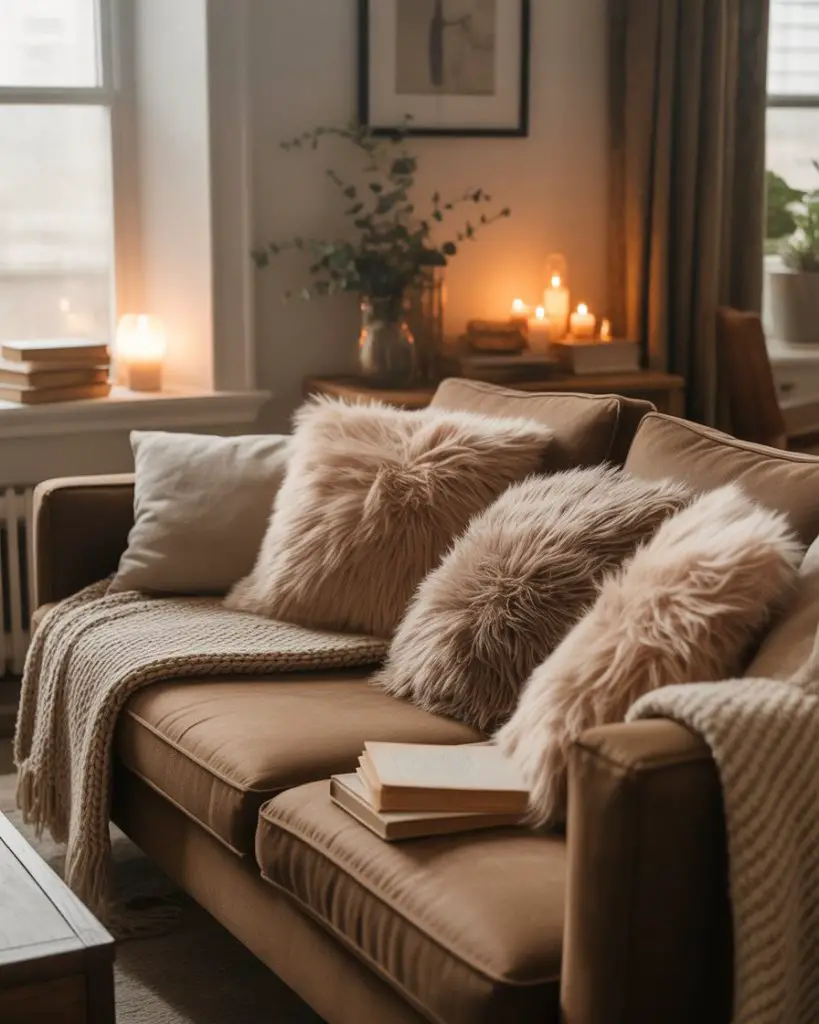
Real homeowners report that chocolate or espresso brown shows less pet hair and daily wear than lighter browns, making them more practical for the actual cozy lifestyle—not just the Instagram version. Dark browns also hide the red wine spills that accompany genuinely relaxed evenings.
18. Medium Brown as the Versatile Middle Ground
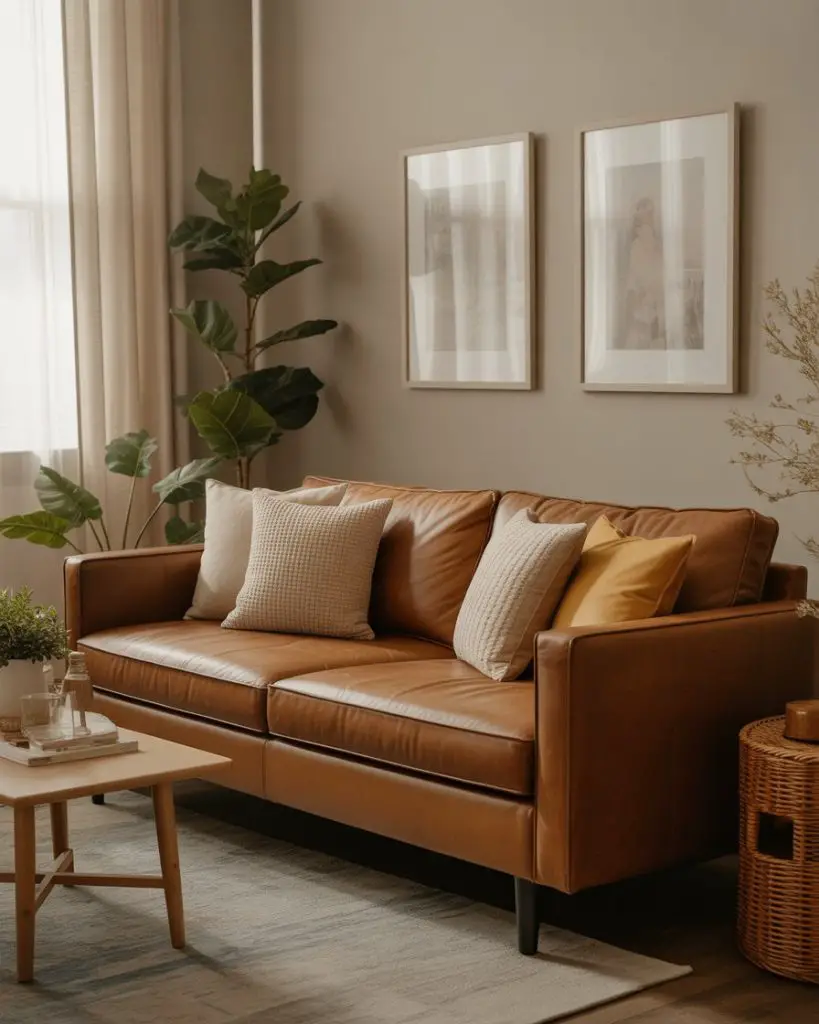
The medium brown sofa might be the most underrated choice—not too dark to overwhelm, not too light to show every mark. This shade adapts seamlessly to seasonal decorating, looking equally right with autumn oranges, winter whites, spring pastels, and summer brights. It’s the workhorse of brown sofas, reliable and endlessly reconfigurable. 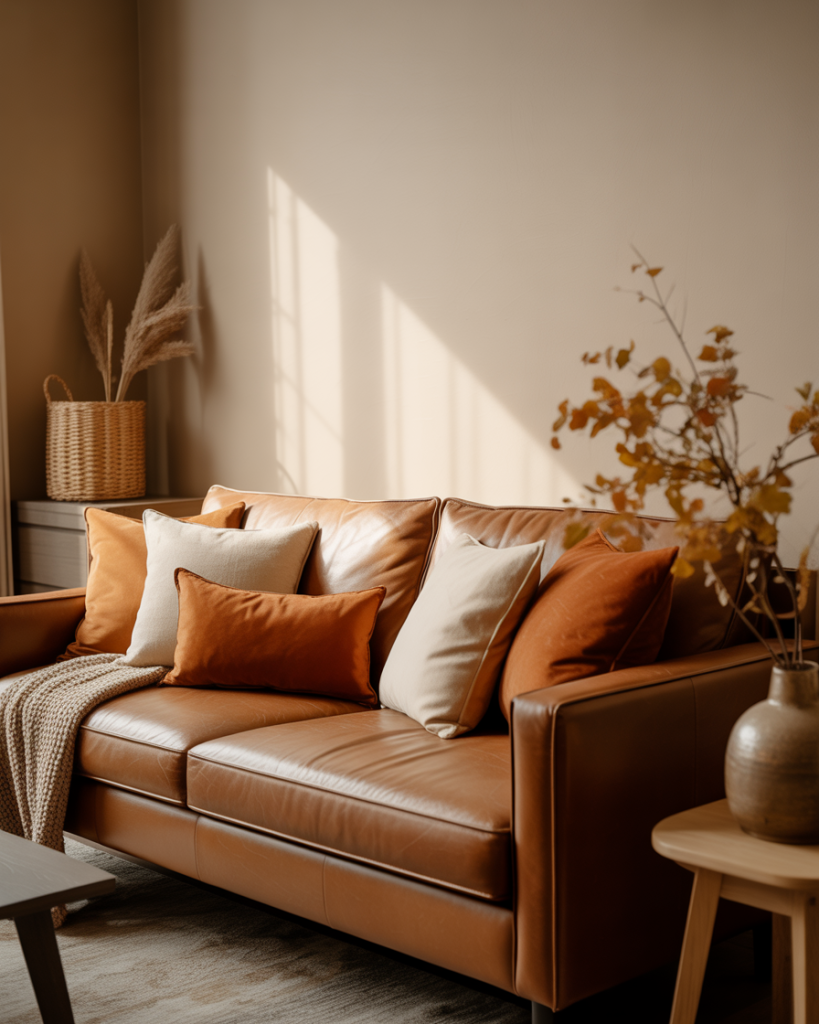
Budget-conscious decorators appreciate that medium brown works with existing furniture from previous homes or hand-me-down pieces, eliminating the need to replace everything at once. It’s the diplomatic choice that plays well with others, whether those others are Grandma’s antique side table or your modern glass coffee table.
19. Rust-Toned Brown in Earthy Palettes
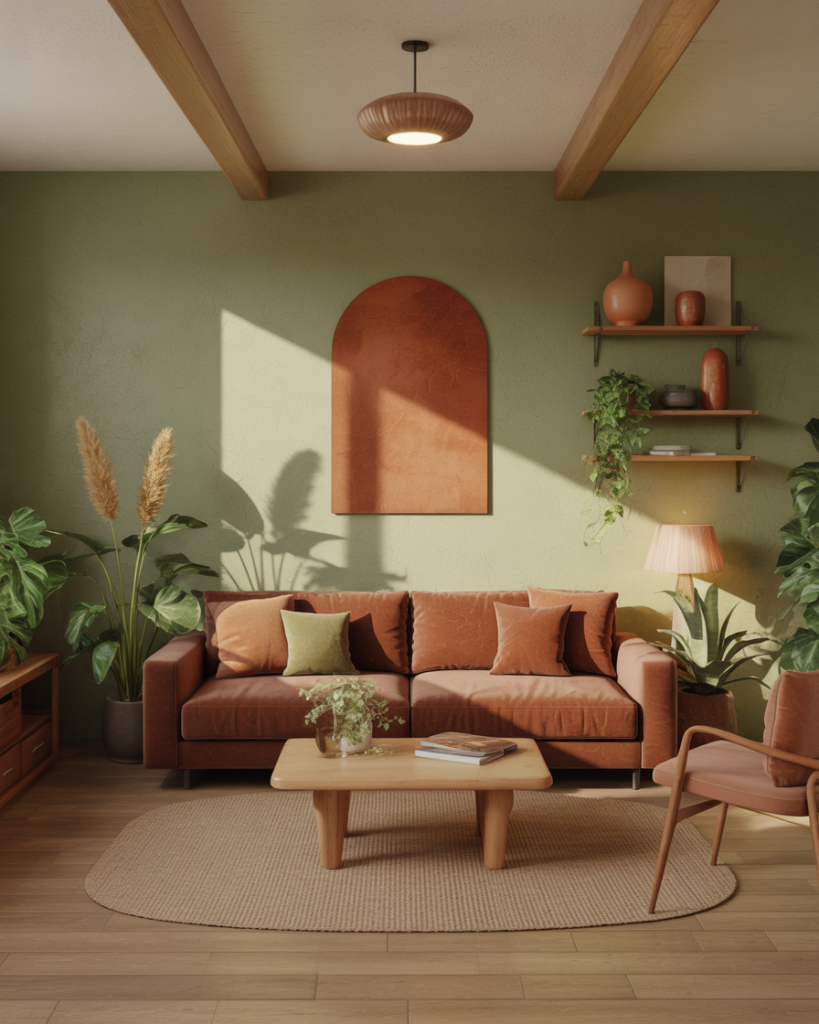
The rust-inflected brown brings warmth that borders on red, creating instant coziness in spaces that might otherwise feel cold or impersonal. This shade pairs exceptionally well with sage green, cream, and burnt orange for a palette that’s decidedly earthy and organic. It’s gained traction in Pacific Northwest homes where bringing outdoor colors inside feels natural.
An interior stylist mentioned that rust browns photograph beautifully—they have dimension that translates well to social media, which partly explains their Pinterest popularity. If you’re someone who shares home photos online, this shade delivers visual interest that flat browns sometimes lack.
20. Red-Brown for Statement Making
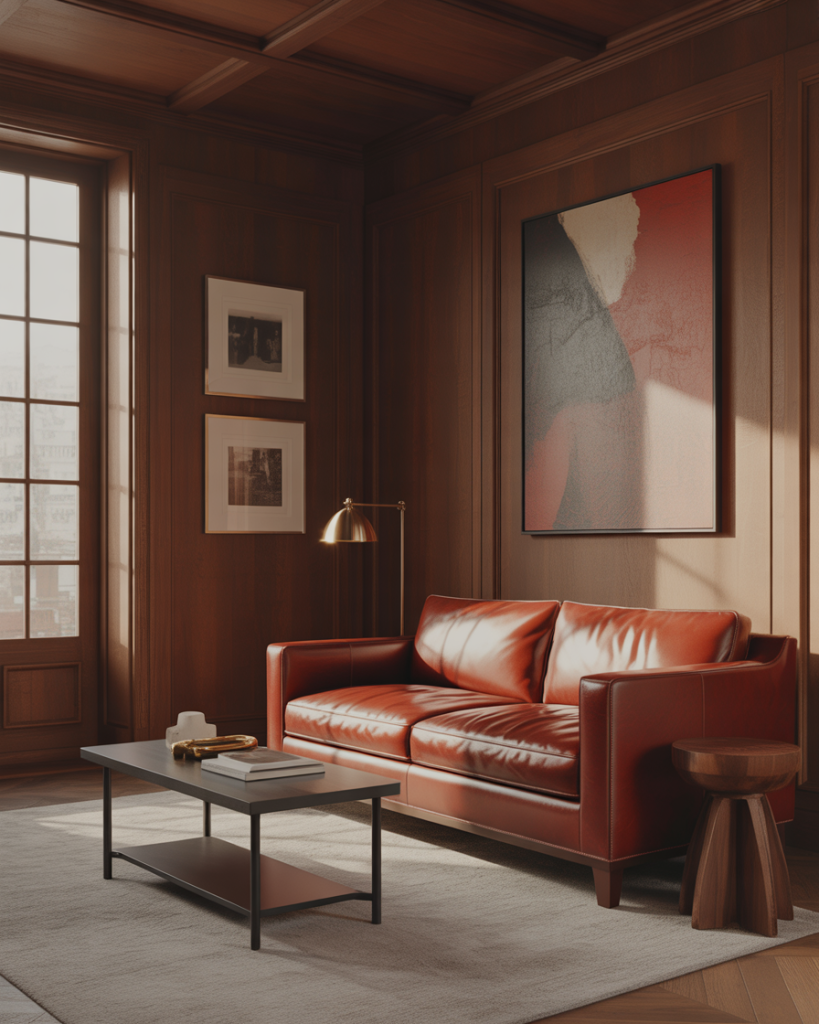
Going bold with a red-brown or mahogany-toned sofa makes an undeniable statement, particularly striking in libraries, studies, or formal living rooms. This rich shade recalls classic English club furniture but feels fresh when paired with contemporary art and modern lighting. It demands confidence but rewards with unmatched sophistication. 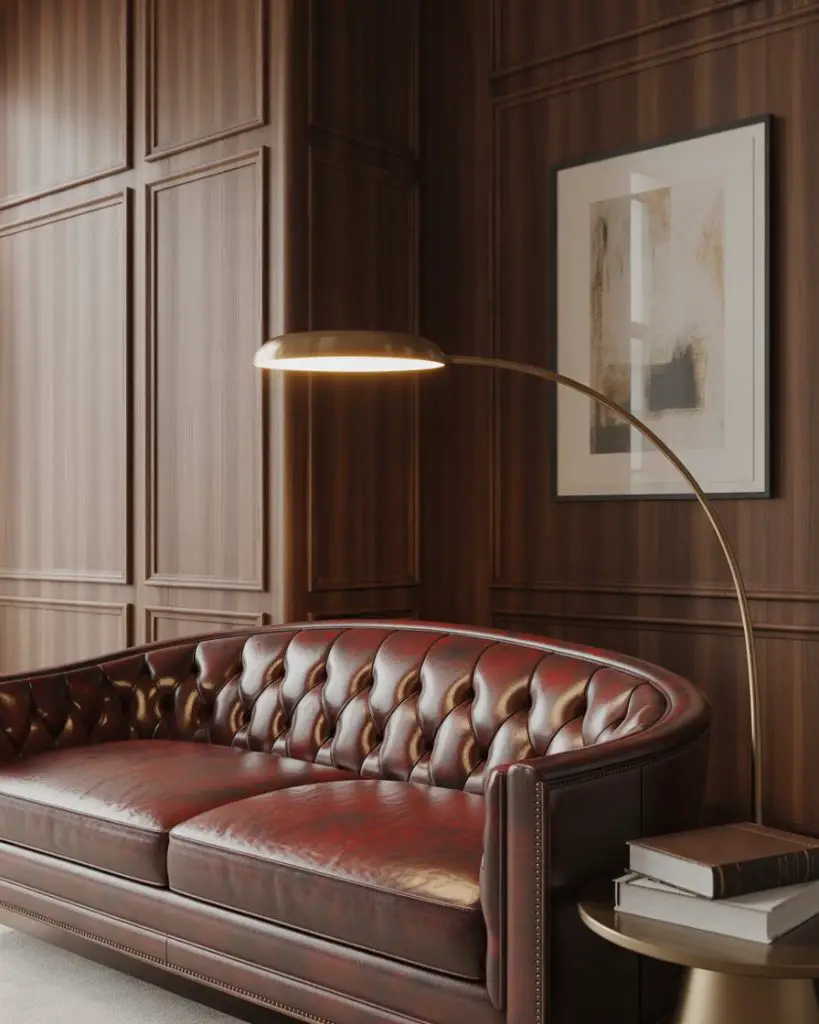
Common mistake: pairing red-brown sofas with too many other dark woods creates a heavy, oppressive atmosphere. Balance the richness with lighter elements—cream rugs, pale walls, or metallic accents—to prevent the room from feeling like a cave.
21. Colorful Accents on Brown Foundations
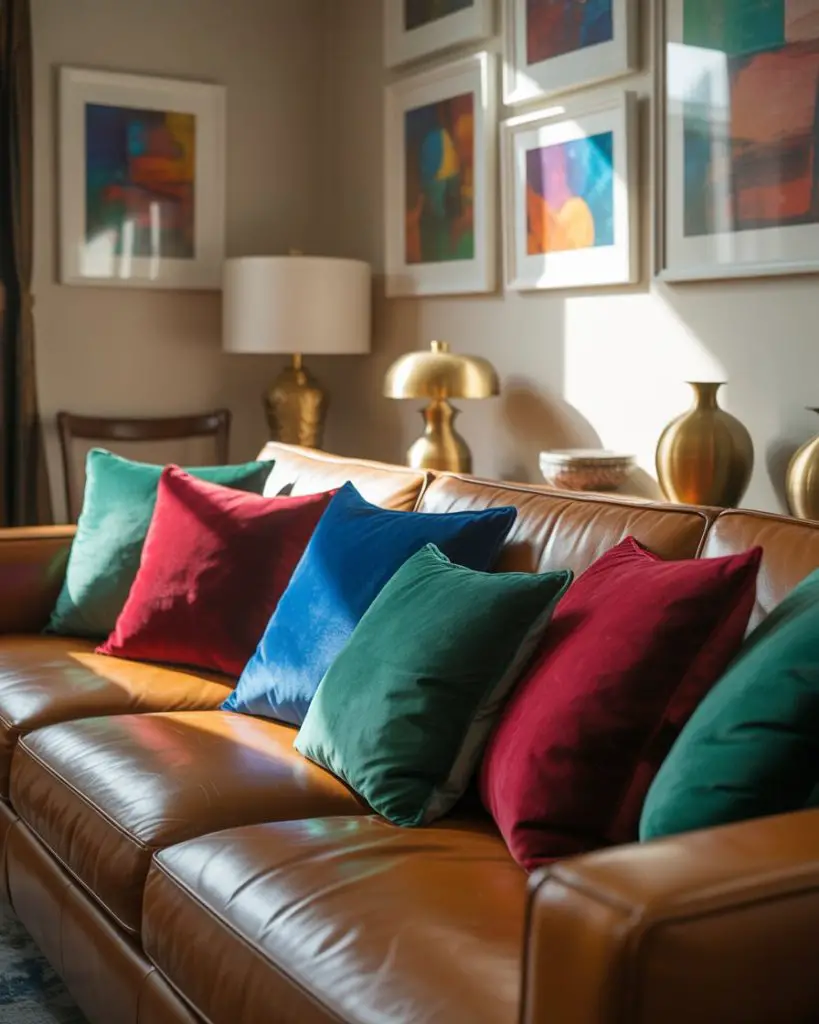
Using your brown sofa as a neutral backdrop for colorful rotating accents gives you decorating freedom without commitment. Swap pillow covers, throws, and nearby artwork seasonally or whenever the mood strikes. This approach appeals to renters and frequent redecorators who want flexibility without replacing major pieces. 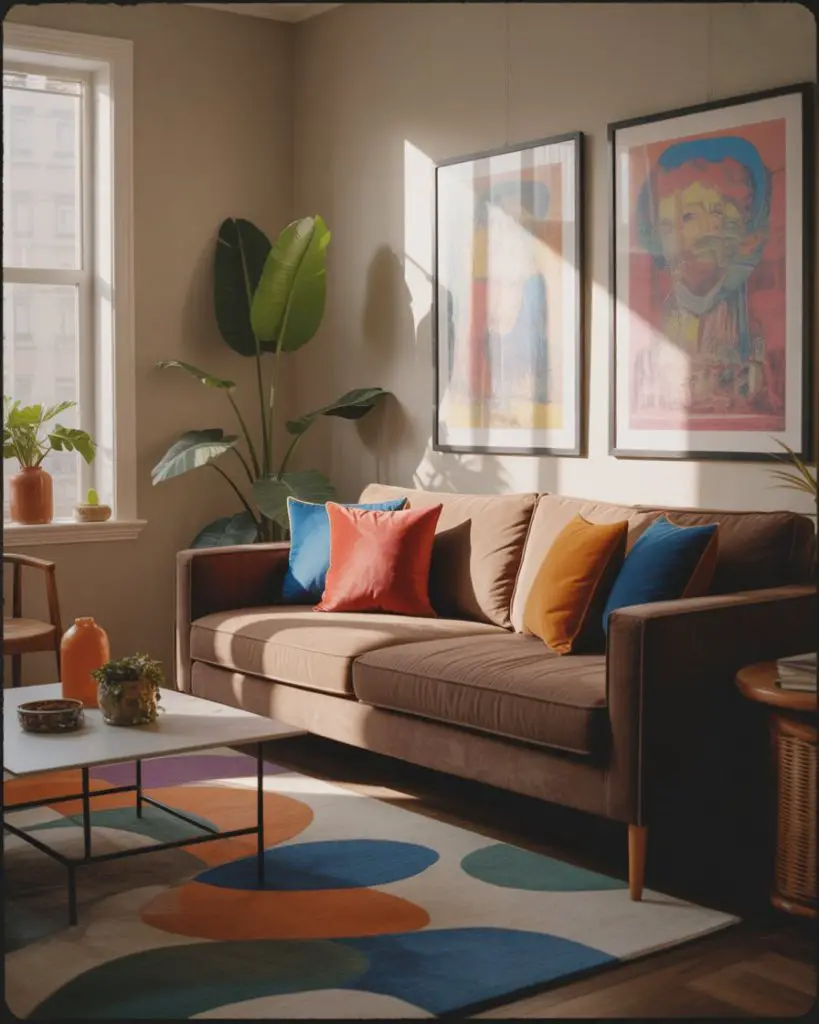
Practical insight: invest in quality pillow inserts and buy inexpensive covers you can change out. This strategy costs a fraction of reupholstering while delivering dramatic visual refresh. Thrift stores and estate sales are goldmines for unique pillow covers at $5-10 each.
22. Girly Glam with Blush and Brown
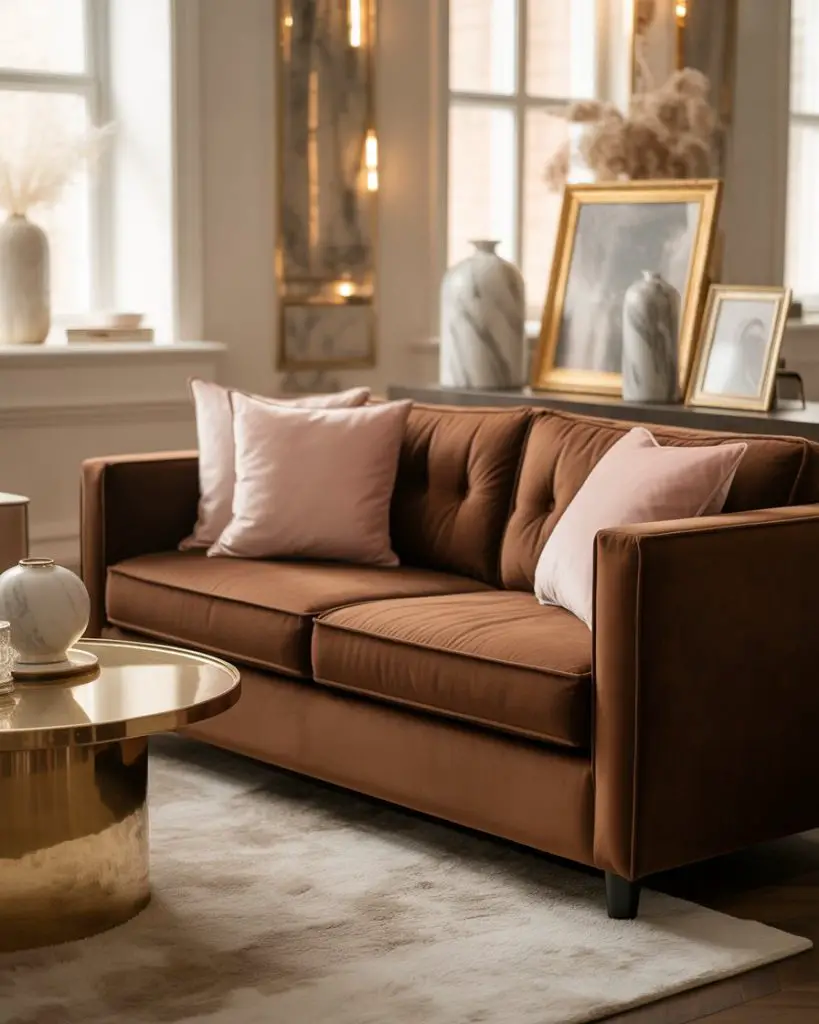
The girly aesthetic gets sophisticated when you pair a brown sofa with blush pink, gold accents, and luxe textures like velvet and marble. This combination has exploded on Pinterest among younger homeowners who want spaces that feel grown-up but still feminine and romantic. The brown keeps the pink from reading too sweet or juvenile. 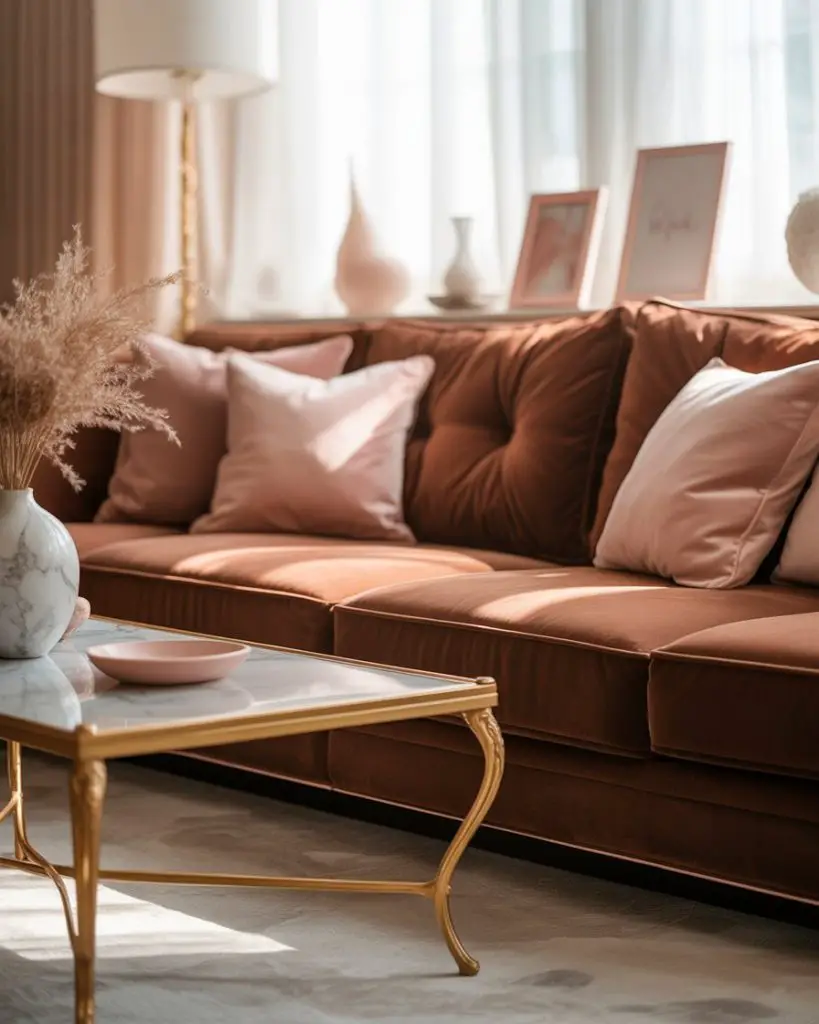
Where it works best: bedrooms converted to sitting rooms, studio apartments where one space serves multiple functions, or any area where you want softness without sacrificing substance. The brown grounds the potentially saccharine pink, making the combination work for adults, not just teenagers.
23. Decor Layering on Brown Canvas
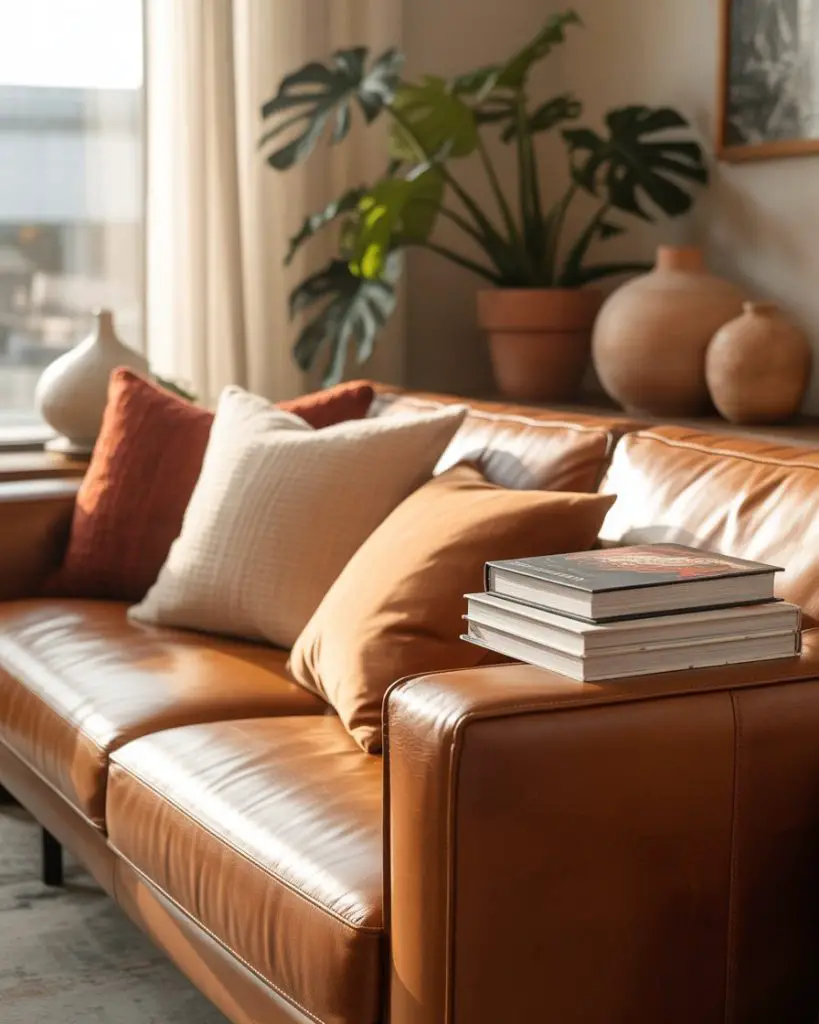
Treating your brown sofa as a blank canvas for creative decor layering allows personality to shine through accessories rather than the furniture itself. Books, plants, sculpture, textiles—these changeable elements define your space while the brown sofa provides consistent foundation. This philosophy aligns with sustainable living and mindful consumption increasingly valued by American homeowners. 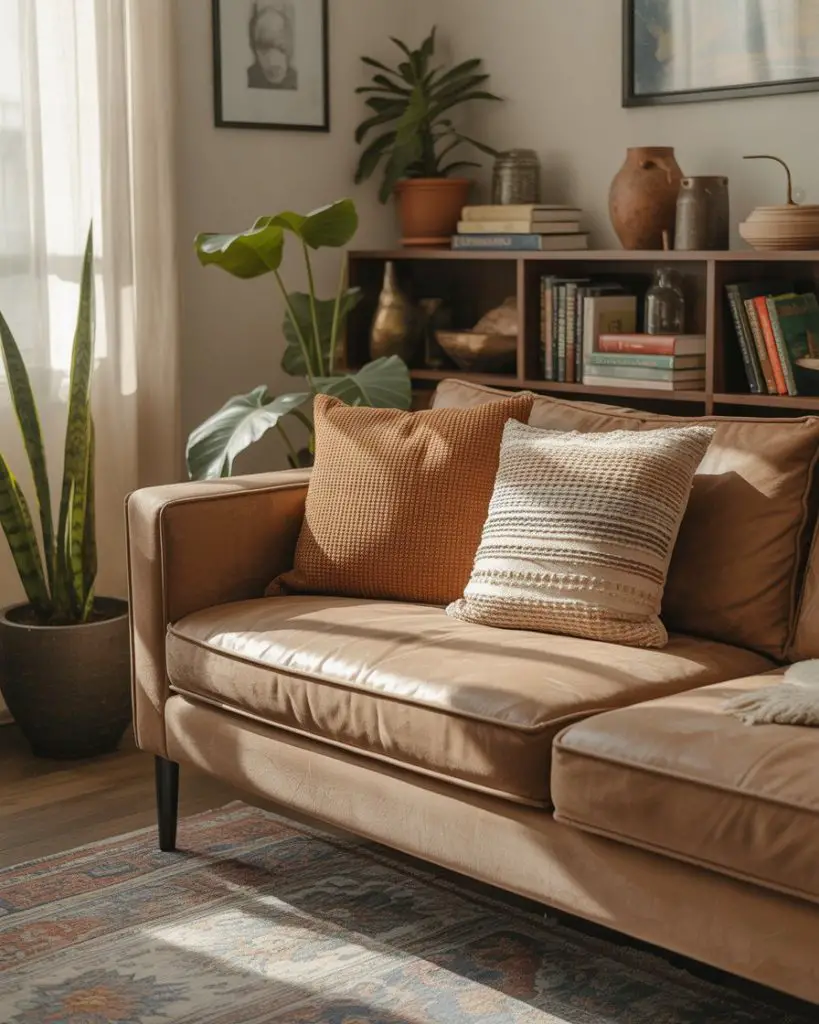
Real homeowner behavior reveals that people who choose brown sofas tend to keep them longer—often 10-15 years—precisely because the neutral base adapts as tastes evolve. You’re not locked into a look, which feels liberating in a culture that constantly pushes the next trend.
Conclusion
The brown couch has proven it’s far more than a safe fallback—it’s a design choice with genuine staying power and remarkable versatility. Which of these ideas resonates with your space? Drop a comment below and let us know how you’re styling your brown sofa, or share photos of your own living room transformations. We’d love to see how you’re making this timeless piece work in your home.