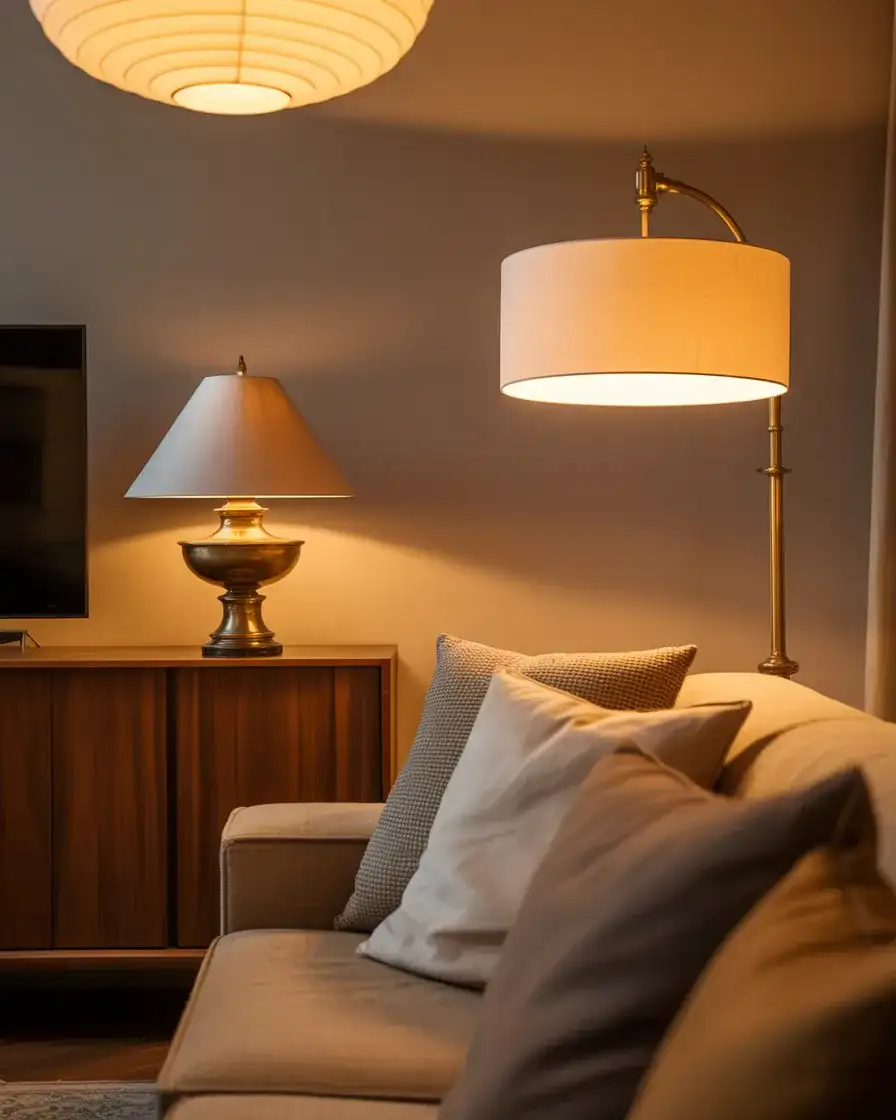
As we step into 2026, nursery design continues to evolve with fresh ideas that blend timeless comfort with modern aesthetics. American parents are turning to Pinterest more than ever for inspiration, seeking spaces that feel personal, functional, and Instagram-worthy all at once. Whether you’re working with a spacious room or a compact corner, this year’s trends celebrate everything from bold color choices to minimalist simplicity. From whimsical themes to gender-neutral palettes, there’s something here for every style and budget. Let’s explore inspiring nursery ideas that will help you create the perfect first room for your little one.
1. Soft Sage Green Sanctuary
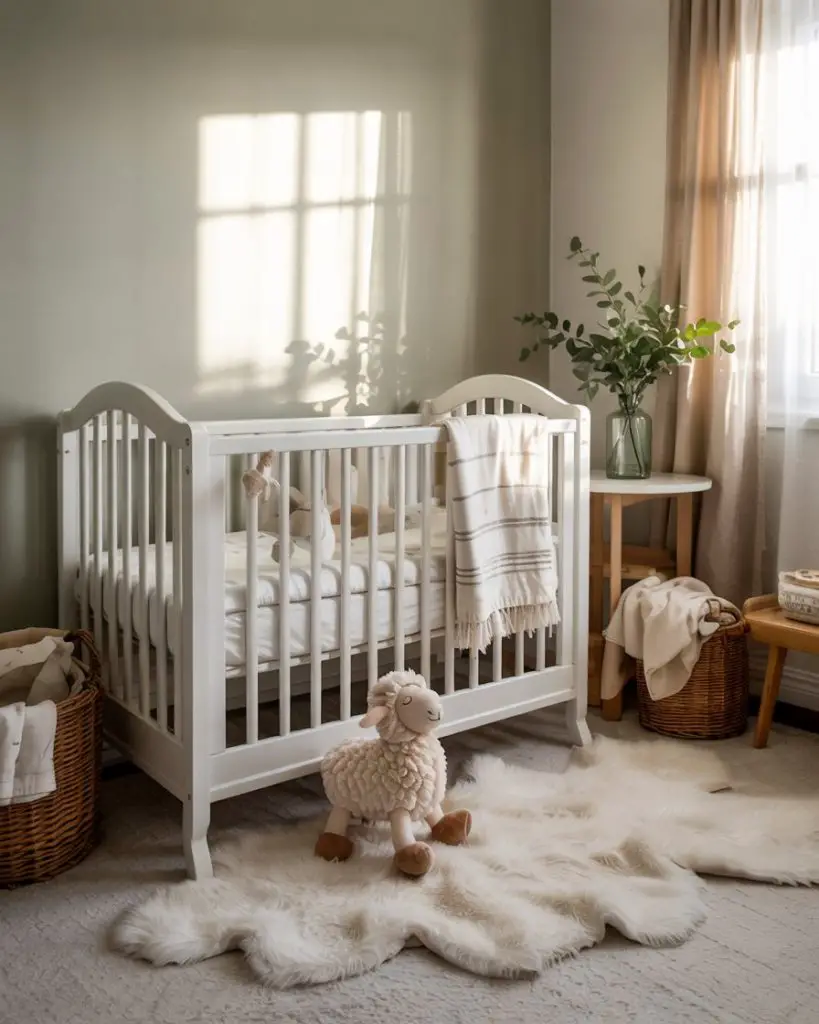
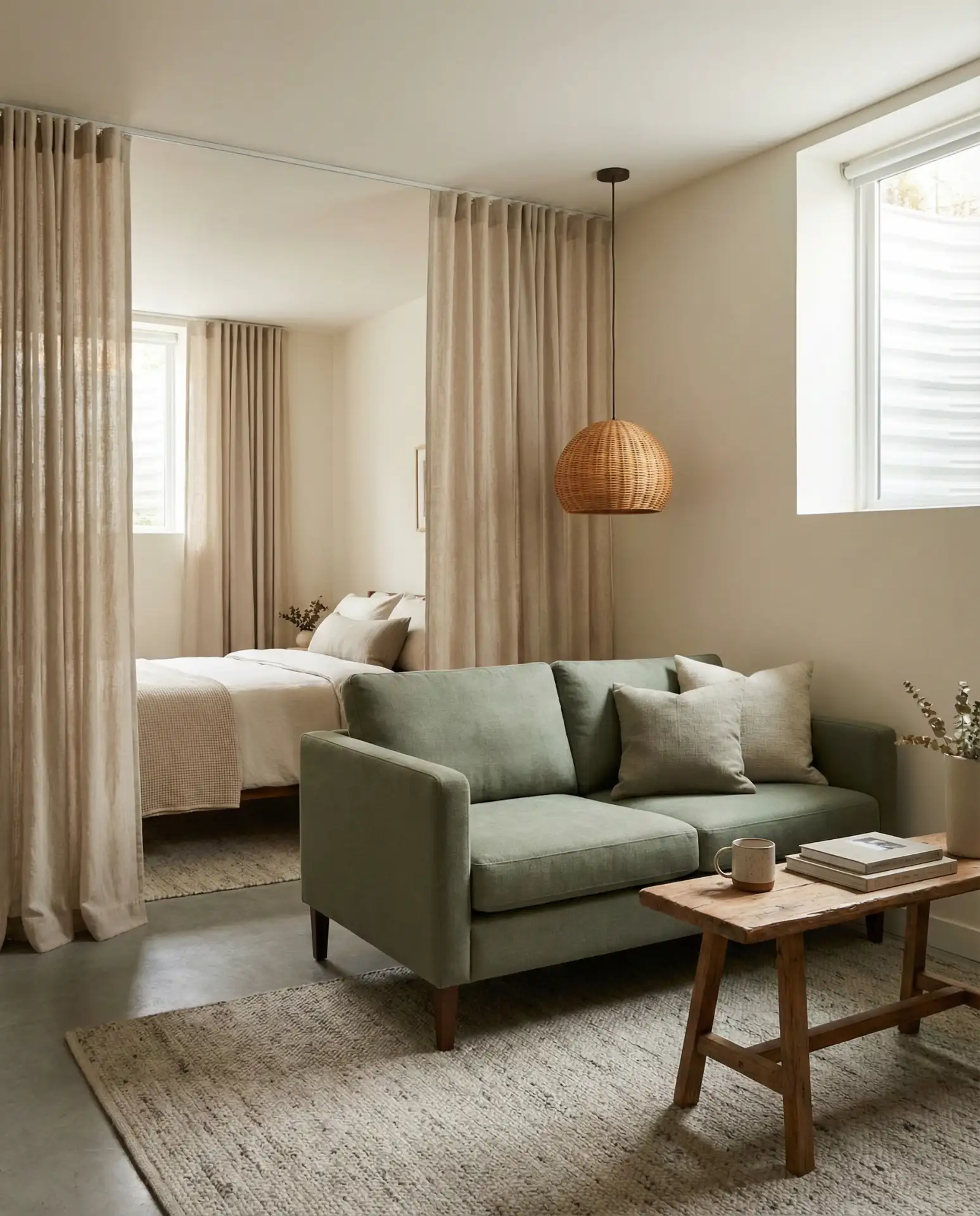
A sage green nursery offers a calming, nature-inspired backdrop that works beautifully in 2026’s design landscape. This muted green pairs effortlessly with natural wood furniture, cream textiles, and gold or brass accents. It’s a neutral alternative that feels both modern and timeless, creating a serene space where baby can rest and parents can unwind. The color’s versatility means it transitions easily as your child grows, adapting to toddler years without requiring a full redesign.
Where it works best: Sage green thrives in rooms with plenty of natural light, especially those facing east or south. The soft hue prevents the space from feeling too dark or cold, even in smaller bedrooms. Consider layering different shades of green through pillows, artwork, and plants to add depth without overwhelming the room. This palette is particularly popular in suburban homes across the Pacific Northwest and Northeast, where natural aesthetics reign supreme.
2. Nautical Adventure Without the Clichés
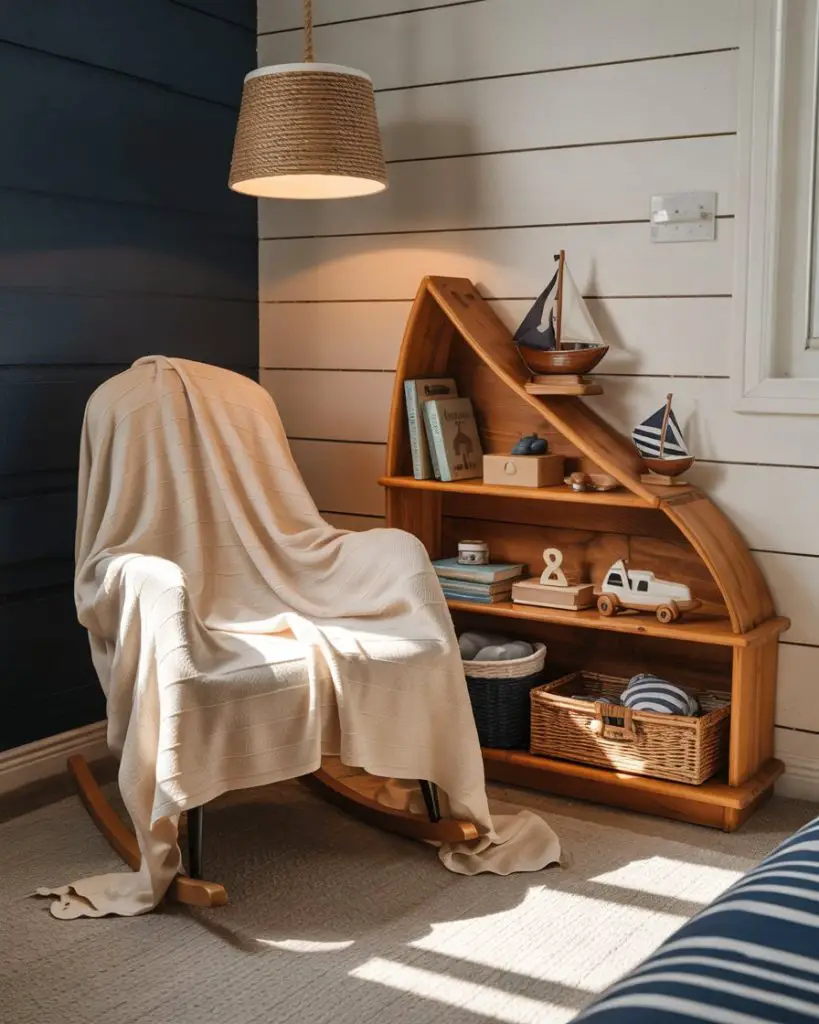
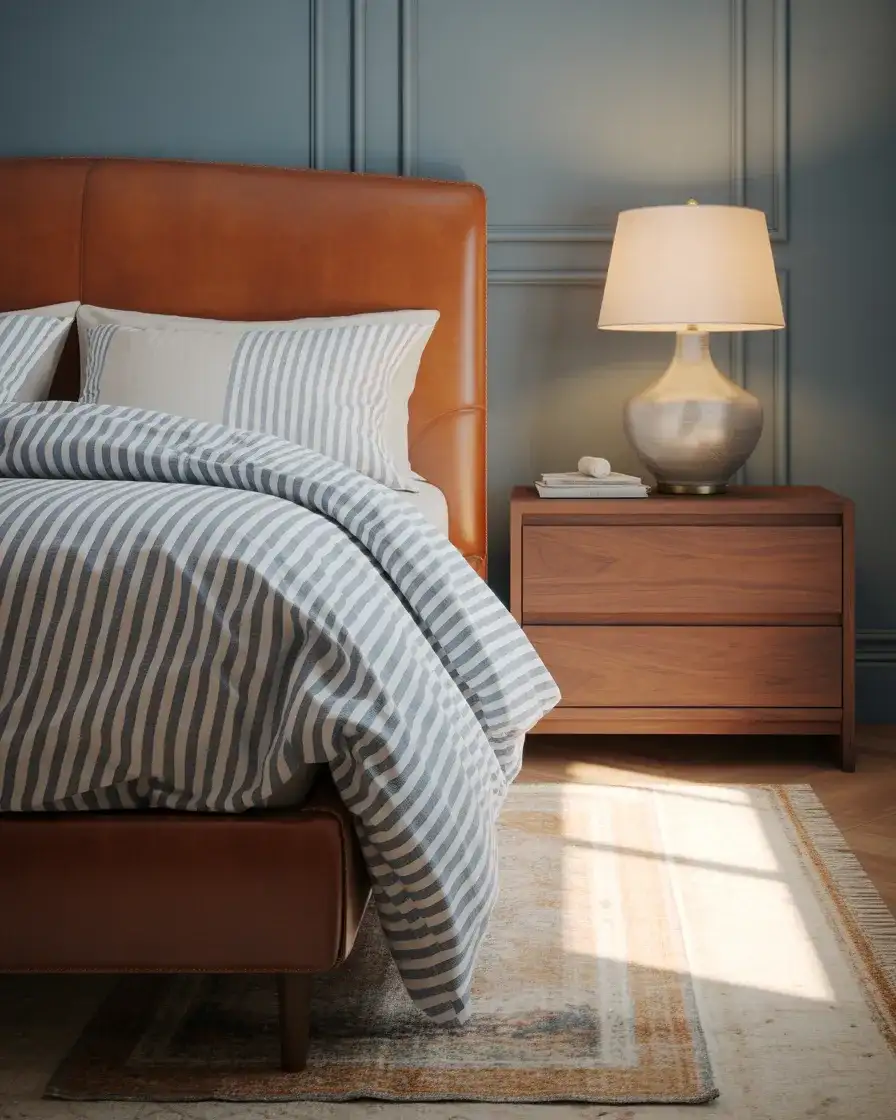
The nautical nursery gets a sophisticated update in 2026, moving beyond predictable anchors and sailboats. Think deep navy blues, crisp whites, and natural rope details that evoke coastal living without feeling costume-like. This approach works especially well for families near water or those who simply love the calming association of ocean themes. Pair it with vintage-inspired maps, brass fixtures, and linen textures for a grown-up take on a classic theme.
A common mistake is overloading the room with themed decor, which can quickly feel dated. Instead, choose two or three statement pieces—perhaps a ship wheel mirror or a canvas sail as wall art—and keep the rest understated. This approach allows the theme to feel intentional rather than overwhelming, and it’s easier to transition out elements as your child’s interests evolve. Coastal homes in New England and California particularly embrace this refined nautical sensibility.
3. Blush Pink with Grown-Up Edge
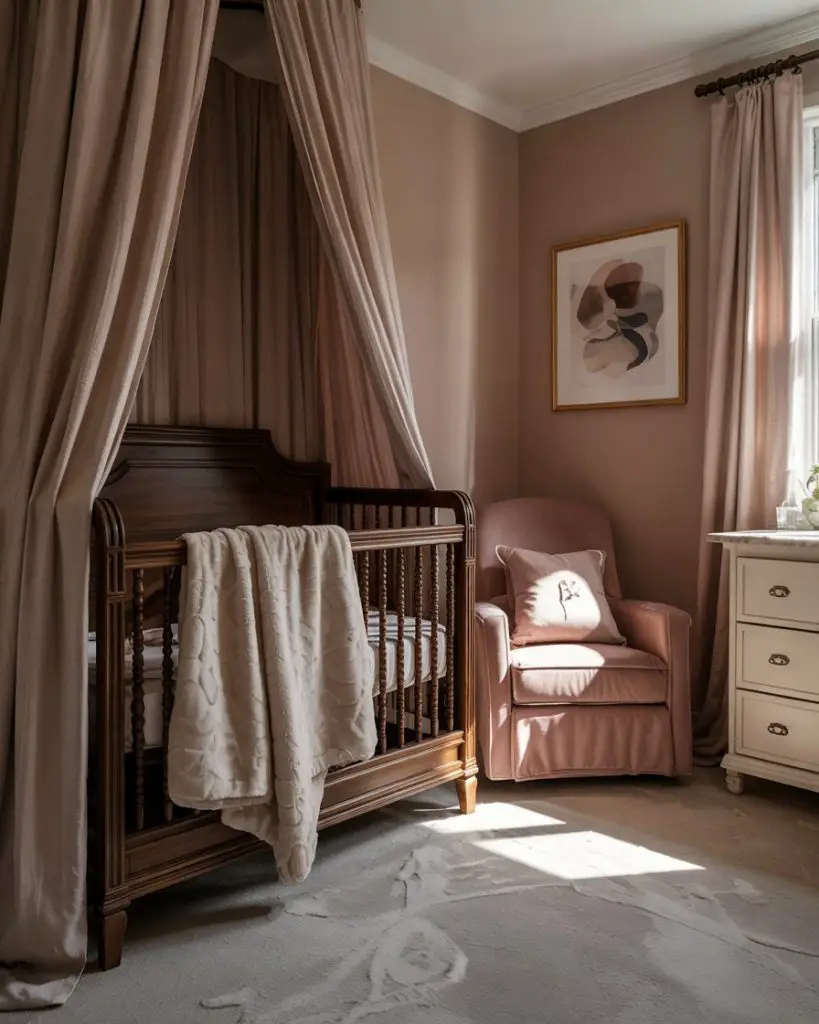
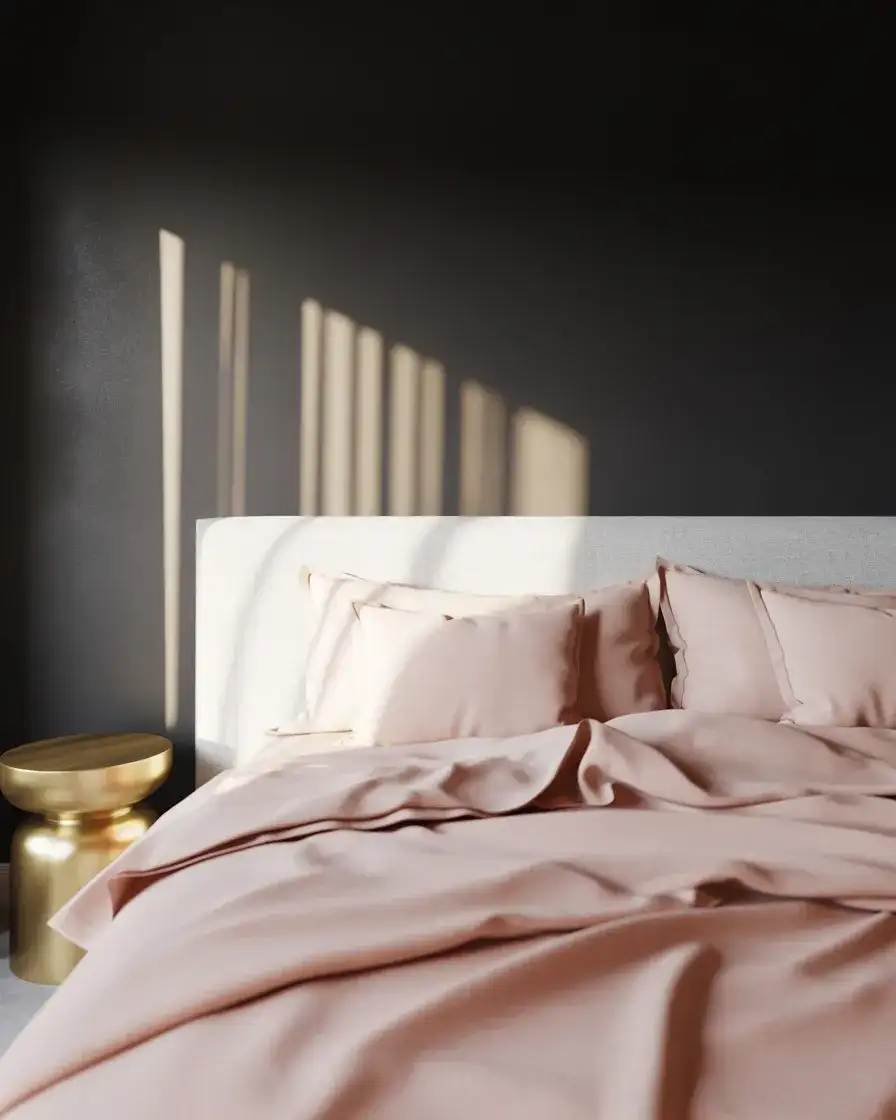
A pink nursery doesn’t have to mean bubblegum sweetness. In 2026, dusty rose and mauve tones dominate, offering a sophisticated alternative that pairs beautifully with charcoal, emerald green, or even black accents. This palette feels both feminine and modern, creating a space that’s Instagram-ready while remaining genuinely livable. Layer in velvet textures, gold hardware, and abstract art to elevate the look beyond traditional baby-pink territory.
Practical insight: Dusty pink is incredibly forgiving when it comes to lighting. Unlike bright pinks that can feel harsh under fluorescent bulbs, these muted tones maintain their elegance in both natural and artificial light. This makes them ideal for nurseries that double as reading nooks during those late-night feedings. The color also photographs beautifully, which explains its ongoing popularity among millennial parents documenting their parenting journey on social media.
4. Sunshine Yellow for Small Spaces
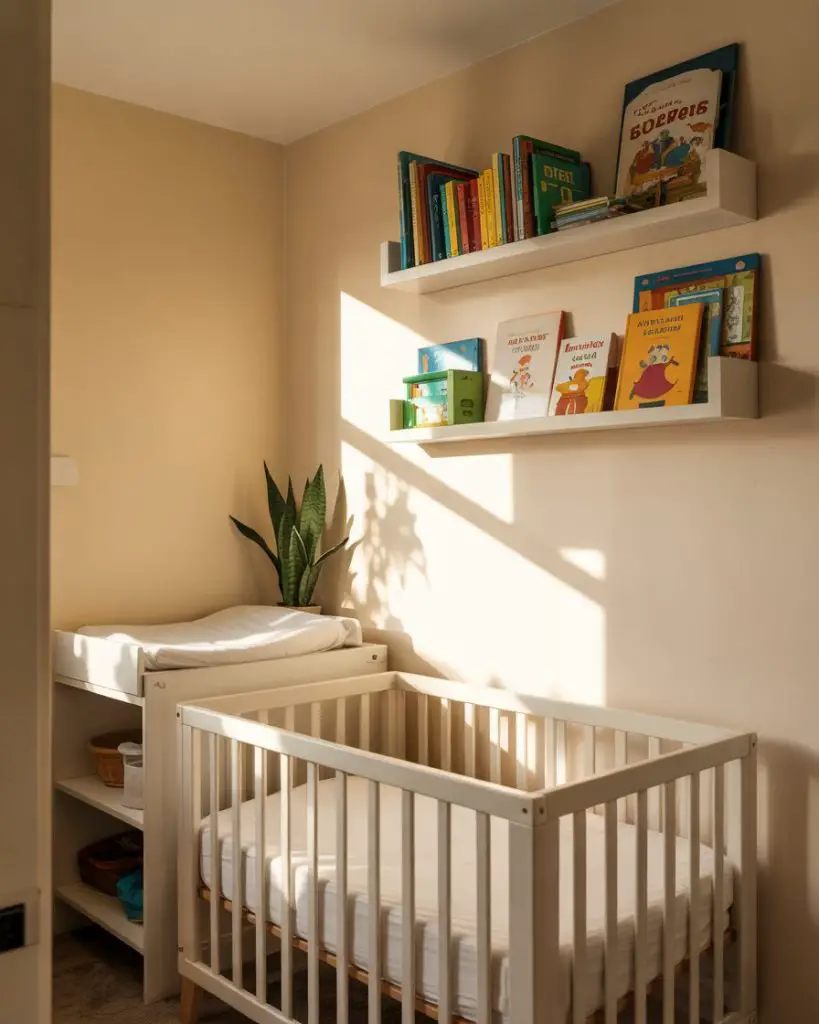
When working with a tiny nursery, yellow becomes your secret weapon for making the space feel larger and brighter. Soft butter yellows or pale lemon tones reflect light beautifully, creating an airy atmosphere even in rooms without large windows. This cheerful, gender-neutral option works particularly well in urban apartments where square footage is precious. Pair it with white furniture and minimal accessories to maximize the sense of openness.
Real homeowner behavior: Many parents in cities like New York, San Francisco, and Boston are getting creative with vertical storage solutions in their yellow nurseries. Wall-mounted organizers, over-door hooks, and ceiling-hung mobiles keep floor space clear while maintaining functionality. The yellow backdrop makes even a 60-square-foot space feel welcoming rather than cramped, proving that great design isn’t about size—it’s about smart choices.
5. Whimsical Forest Retreat
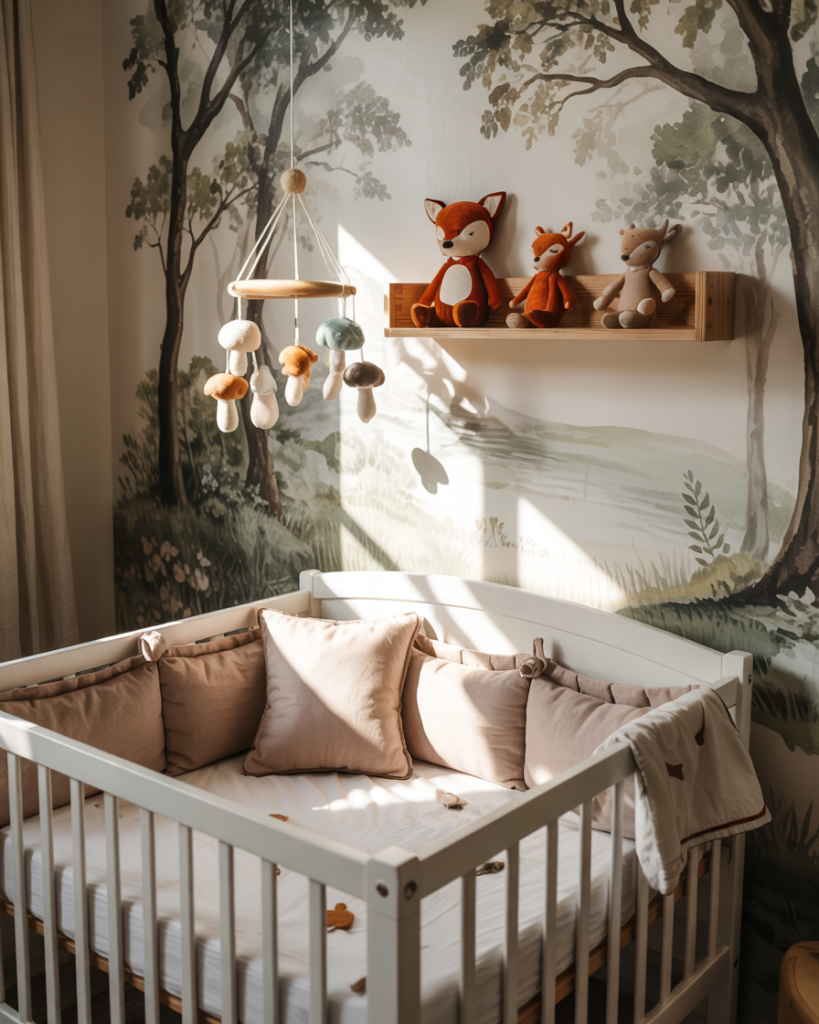
A whimsical forest theme brings the outdoors inside, creating a storybook setting that sparks imagination from day one. Think hand-painted tree murals, woodland creature prints, and natural wood elements that celebrate nature’s beauty. This theme works wonderfully in both modern farmhouse and contemporary settings, adapting easily to your existing home style. The key is balancing playful elements with sophisticated execution, so the room feels enchanting rather than overly childish.
Expert-style commentary: Interior designers recommend anchoring your forest theme with one major element—usually the mural or wallpaper—then keeping other pieces subtle. This prevents the room from feeling too busy while still delivering on the theme’s promise. Natural fiber rugs, live plants, and wooden toys reinforce the woodland vibe without adding visual clutter. The result is a space that feels both magical and calming, perfect for bedtime stories about adventures in the woods.
6. Church-Inspired Serenity
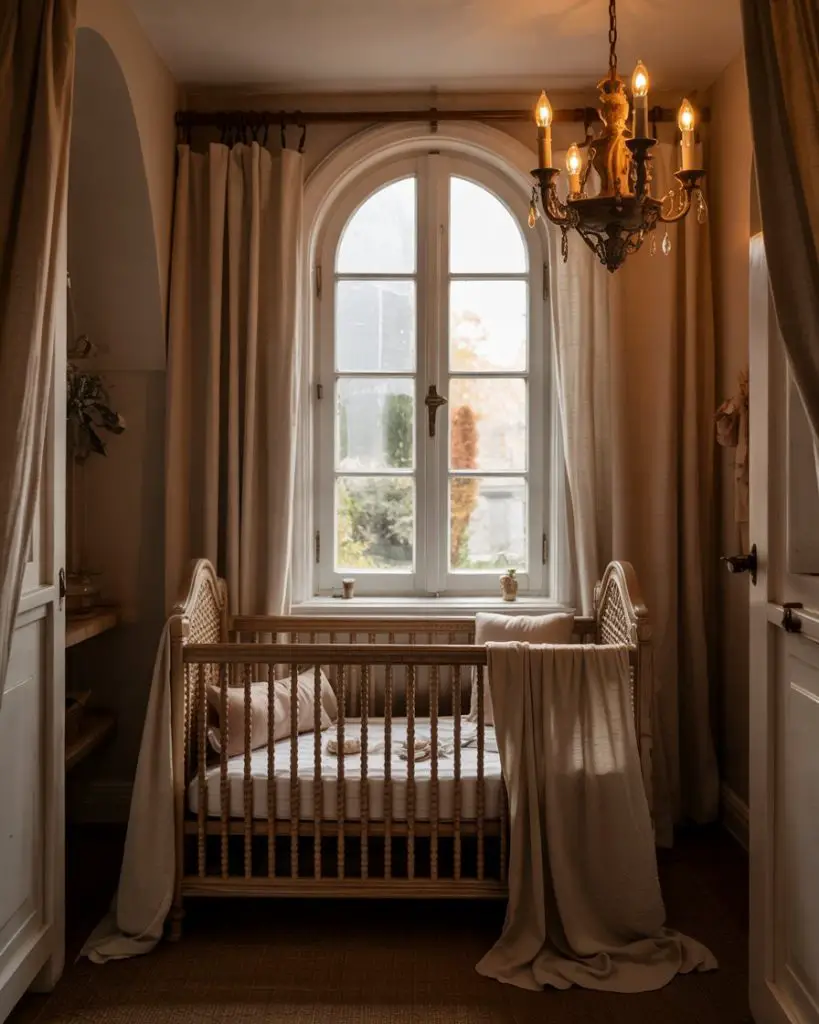
A church-inspired nursery might sound unconventional, but it’s gaining traction among families who appreciate the peaceful, reverent atmosphere of sacred spaces. Think vaulted ceiling details, arched mirrors, soft candlelight-style fixtures, and a predominantly white and cream palette. This approach creates a sanctuary-like environment that encourages quiet reflection and restful sleep. Religious symbolism remains subtle and optional, focusing instead on the architectural and emotional qualities of contemplative spaces.
American lifestyle context: This aesthetic resonates particularly in regions with strong architectural heritage, such as the South and parts of the Midwest, where historic churches dot the landscape. Families appreciate how the design encourages mindfulness and gratitude, creating a space where they can bond with their newborn away from digital distractions. The timeless quality also means the room ages beautifully, requiring minimal updates as trends come and go.
7. Winnie the Pooh Classic Revival
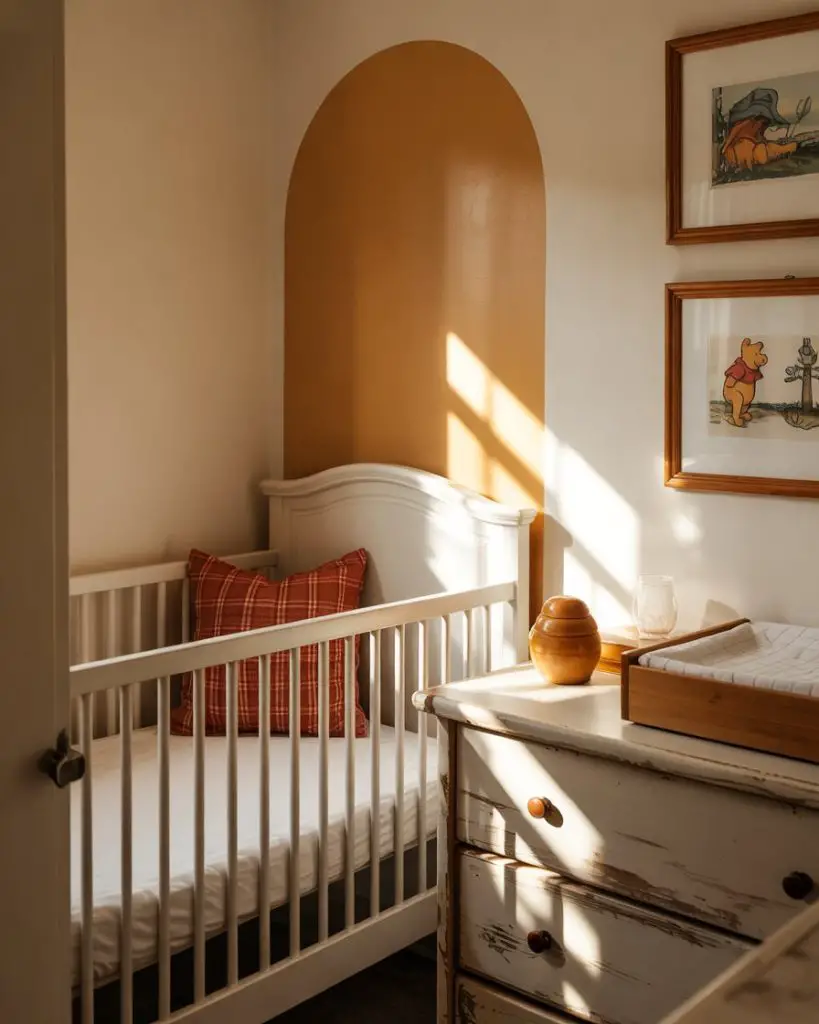
The beloved Winnie the Pooh theme returns in 2026 with a vintage twist that appeals to nostalgic millennial parents. Rather than bright, cartoon-style interpretations, today’s approach favors the original E.H. Shepard illustrations in muted honey golds, soft reds, and forest greens. This creates a literary, heirloom quality that honors the classic stories while feeling fresh and sophisticated. Incorporate vintage book pages as wall art or choose bedding featuring the classic sketches.
Micro anecdote: One Virginia mother shared that she framed pages from her grandmother’s original Winnie the Pooh books, creating a gallery wall that connects three generations. The vintage aesthetic allows for personal storytelling while maintaining a cohesive design. This approach transforms a children’s character theme into something genuinely touching and unique, proving that nostalgia and good design can coexist beautifully.
8. Colorful Maximalism Done Right
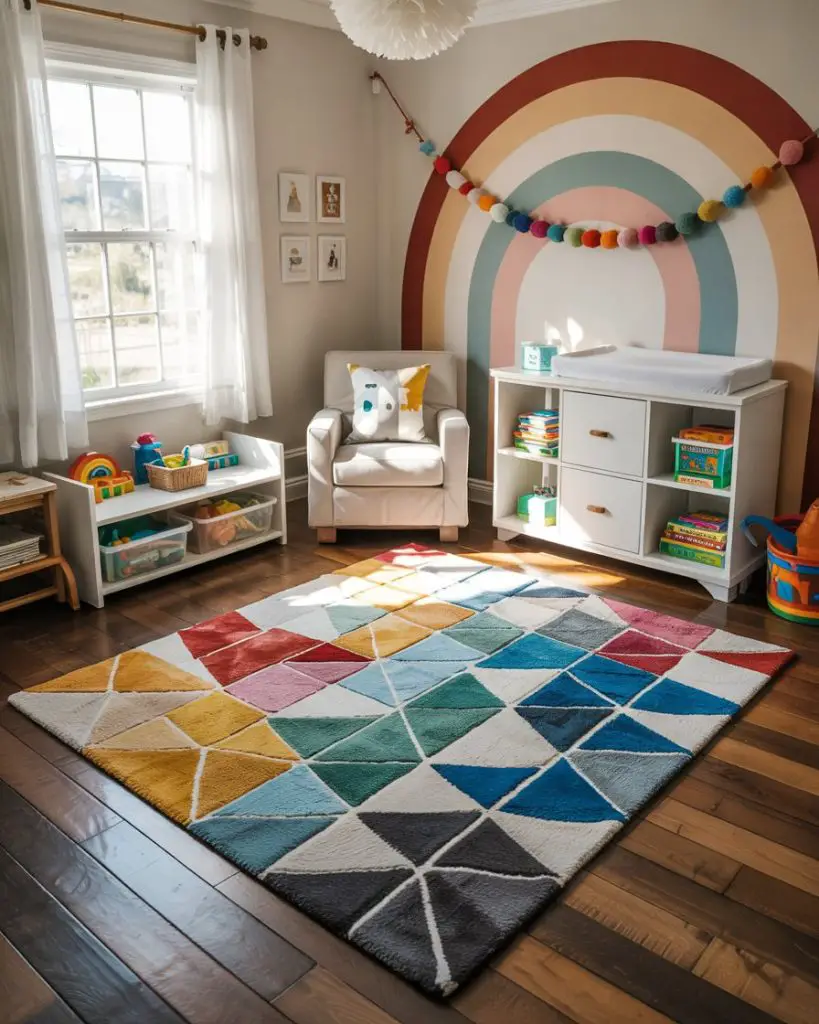
For families who reject minimalism, a colorful nursery offers joyful self-expression and visual stimulation. The key to success in 2026 is thoughtful curation—choosing a rainbow palette but sticking to consistent saturation levels and patterns. Whether you lean toward primary brights or jewel tones, ensure your colors share a similar intensity to avoid chaos. This approach works particularly well in larger rooms where multiple zones can handle different color stories.
Budget angle: Colorful nurseries can actually be more budget-friendly than you’d expect. Instead of investing in one expensive statement piece, you’re distributing your budget across multiple smaller items—paint samples, thrifted toys, DIY garlands, and affordable textiles. A gallon of paint costs under $40, and colorful accents from places like Target or HomeGoods won’t break the bank. The result is a highly personalized space that reflects your family’s personality without requiring designer-level spending.
9. Twin Nursery with Individual Identity
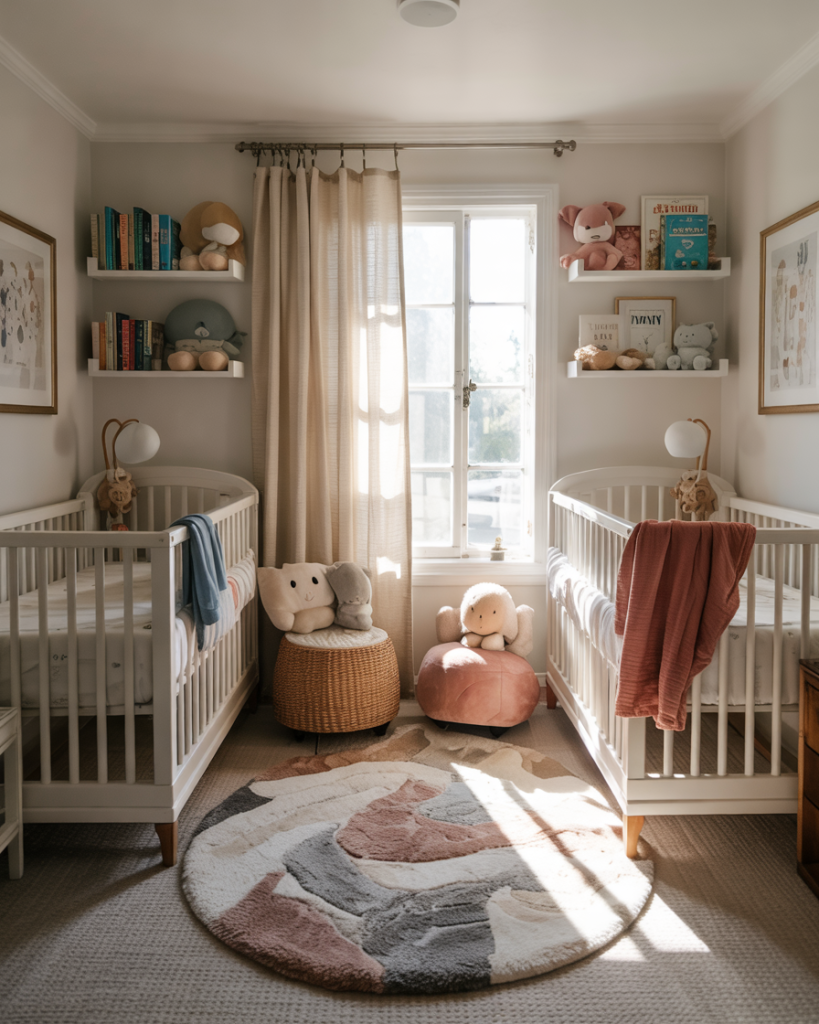
Designing for twin babies presents unique challenges, but 2026’s approach celebrates individuality within coordination. Rather than identical everything, choose complementary color schemes or mirrored layouts that give each baby their own visual territory. This might mean two cribs in the same style but different bedding colors, or personalized wall art above each sleeping area. The goal is creating harmony while acknowledging that even from day one, these are two distinct people.
Practical insight: Many twin parents recommend creating a dedicated changing station between the cribs, allowing you to attend to either baby without crossing the room repeatedly during those exhausting early months. Shared storage solutions—like a large dresser with divided drawers—keep things organized while acknowledging you’re managing double the gear. This setup works especially well in master bedrooms temporarily converted to nurseries, a common solution in suburban homes where space planning gets creative.
10. IKEA Smart Solutions
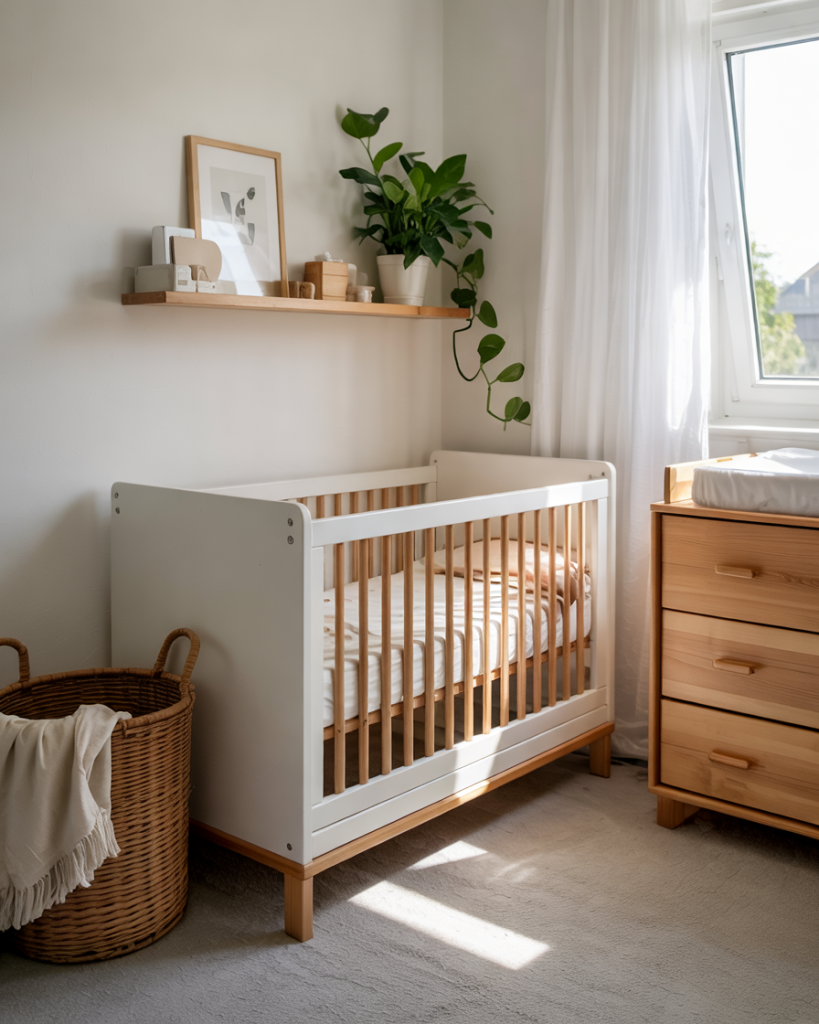
An IKEA-based nursery proves that style and budget consciousness aren’t mutually exclusive. The Swedish retailer’s modular systems, affordable basics, and clean Scandinavian design provide an excellent foundation that you can personalize with DIY touches and curated accessories. The SUNDVIK crib, HEMNES dresser, and FLISAT storage solutions appear in countless beautifully designed nurseries across America, proving that smart shopping matters more than big spending.
Real homeowner behavior: Savvy parents are hacking IKEA pieces to create custom looks—painting TARVA dressers in trendy colors, adding leather pulls to MALM units, or mounting RIBBA frames in gallery walls. These modifications transform recognizable pieces into something unique while keeping costs reasonable. The average IKEA nursery costs between $800-$1,200 for furniture, compared to $3,000-$5,000 for boutique baby stores, making it the go-to choice for budget-conscious millennials and Gen Z parents.
11. Jungle Adventure with Modern Twist
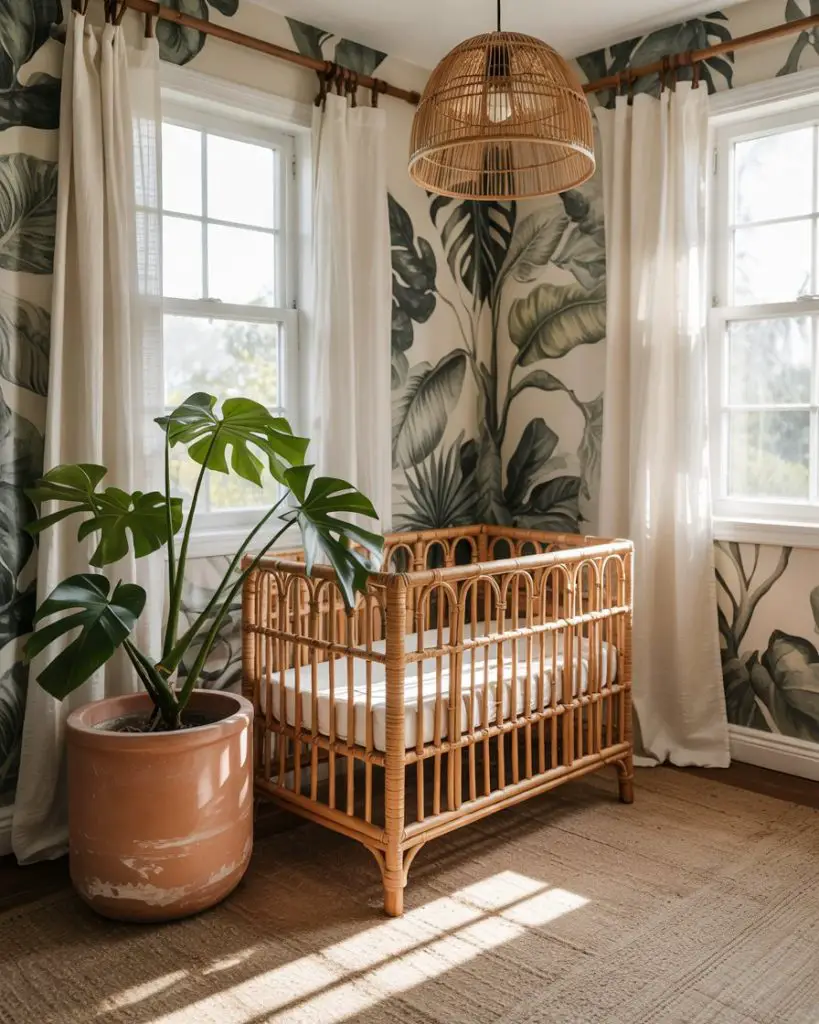
The jungle theme evolves beyond bright cartoon animals into a sophisticated celebration of tropical botanicals and exotic patterns. Think oversized palm leaf prints, woven textures, and a palette of deep greens, terracotta, and cream. This approach feels more editorial than typical kid’s decor, borrowing from the ongoing popularity of biophilic design in adult spaces. The result is a room that stimulates curiosity while maintaining the calm necessary for good sleep.
Where it works best: Jungle themes thrive in rooms with good natural light and enough space to include live plants safely away from the crib. The style is particularly popular in warmer climates like Florida, Southern California, and Texas, where indoor-outdoor living blurs boundaries. Consider incorporating humidity-loving plants that actually benefit from the room’s use—peace lilies and snake plants improve air quality while reinforcing your botanical theme naturally and practically.
12. Moody Gothic Glamour
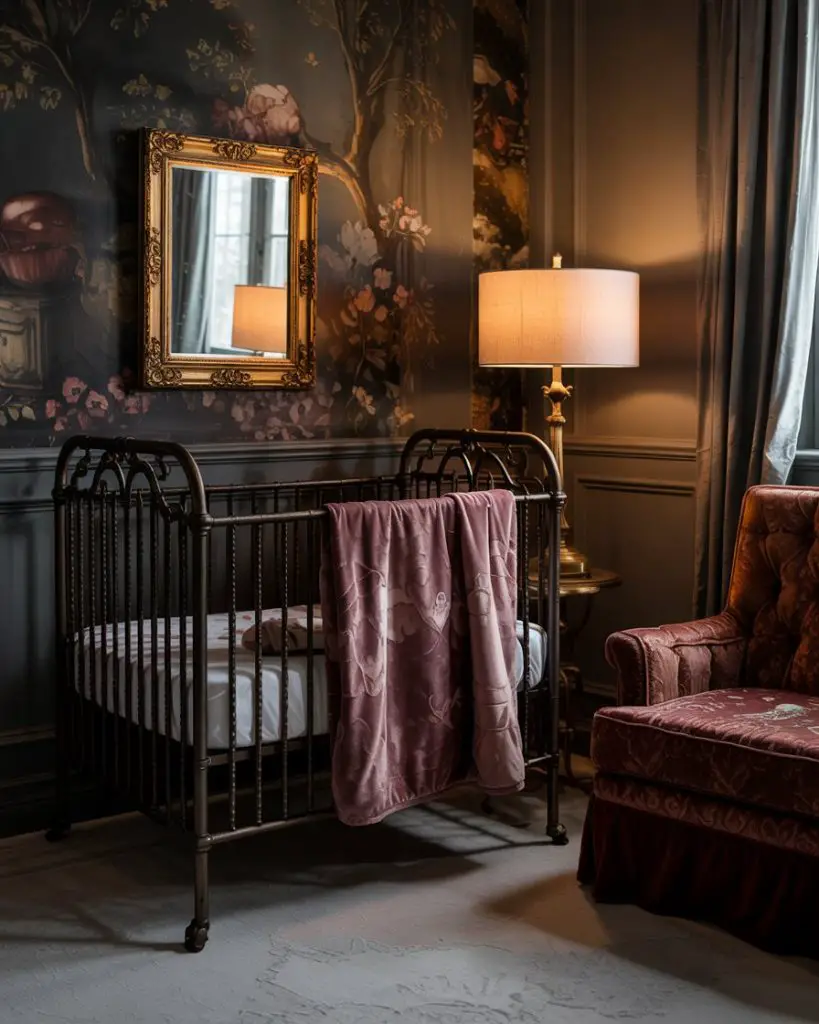
For alternative-minded parents, a moody gothic nursery offers dramatic sophistication that breaks all the pastel rules. Deep charcoals, blacks, burgundies, and forest greens create a cocoon-like environment that’s surprisingly restful. Vintage-inspired furniture, ornate mirrors, and velvet textures add romance without feeling heavy. This isn’t about creating a spooky space—it’s about embracing rich, saturated colors and romantic Victorian influences that feel both elegant and unconventional.
Common mistakes and how to avoid them: The biggest error in dark nurseries is insufficient lighting. Layer multiple light sources—a statement chandelier or pendant for ambiance, wall sconces for reading, and blackout curtains you can fully open during the day. This prevents the space from feeling cave-like while maintaining its dramatic character. Balance dark walls with lighter furniture and plenty of white or cream linens to keep the room from feeling oppressive. Done right, a gothic nursery feels like a jewel box rather than a dungeon.
13. Retro Mid-Century Magic
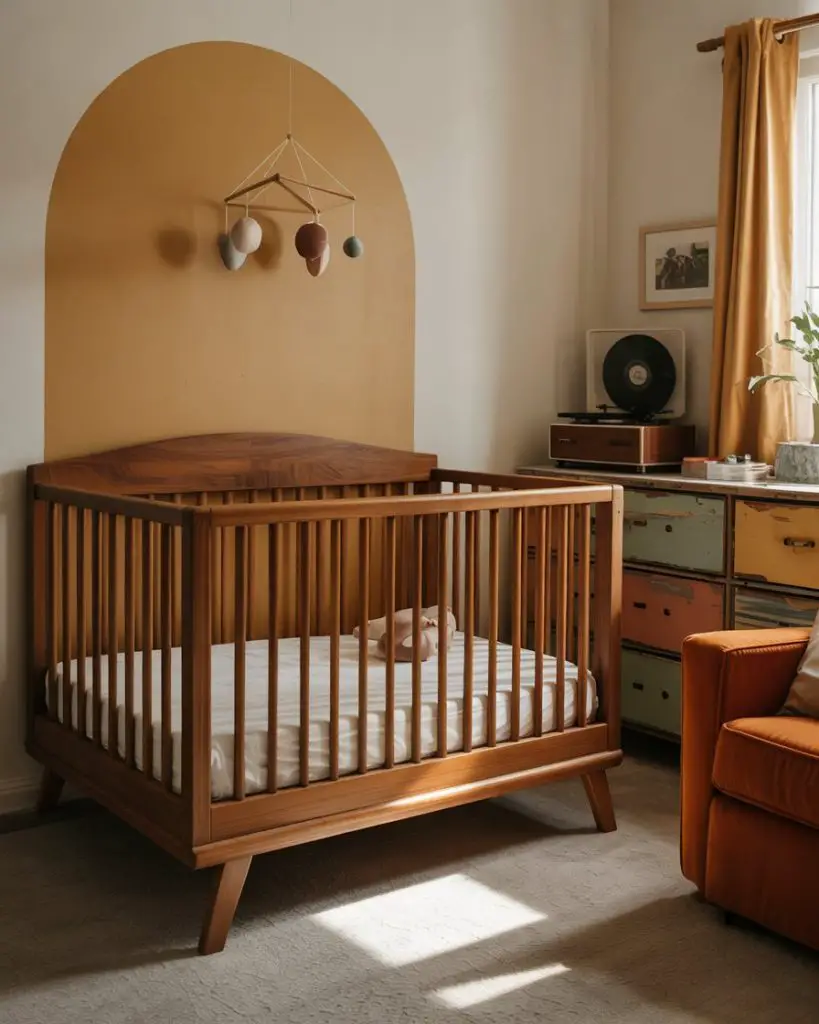
A retro mid-century modern nursery channels the optimistic design of the 1950s and 60s with clean lines, tapered furniture legs, and playful geometric patterns. Think warm wood tones, mustard yellows, burnt oranges, and avocado greens that feel both vintage and refreshingly current. This style works beautifully in homes with period architecture but can also provide charming contrast in contemporary spaces. The key is authentic proportions—choose actual vintage pieces or high-quality reproductions.
Expert-style commentary: Design historians note that mid-century modern’s enduring appeal lies in its democratic philosophy—good design should be accessible and functional, not precious. This makes it perfect for nurseries, which need to be beautiful but also withstand the realities of daily use. The style’s emphasis on built-in storage and multi-functional furniture aligns perfectly with modern parenting needs, proving that good design truly is timeless.
14. Purple Royalty Reimagined
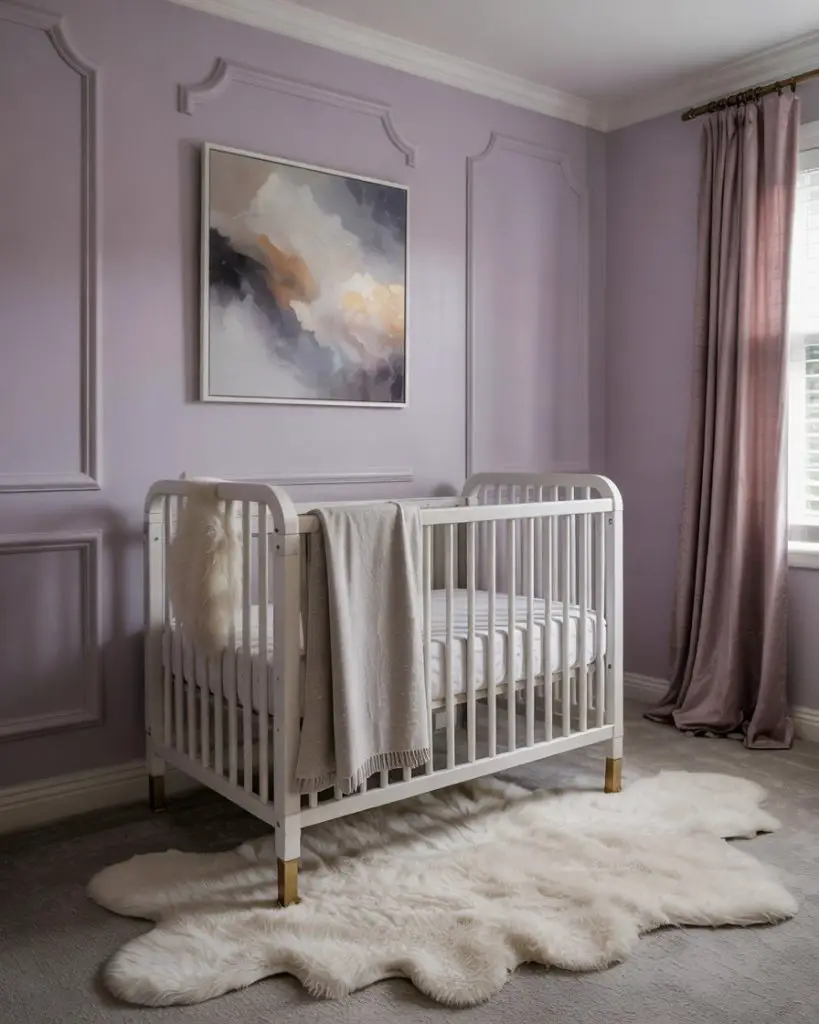
A purple nursery moves beyond princess clichés when you embrace the full spectrum from soft lavender to deep eggplant. These regal tones create a gender-neutral space that feels luxurious and calming simultaneously. Pair lighter purples with gray and white for a soft, cloudy atmosphere, or go bold with jewel-toned purples against cream and gold. The color’s association with creativity and spirituality makes it a meaningful choice for parents who want their child’s first space to feel intentional and special. 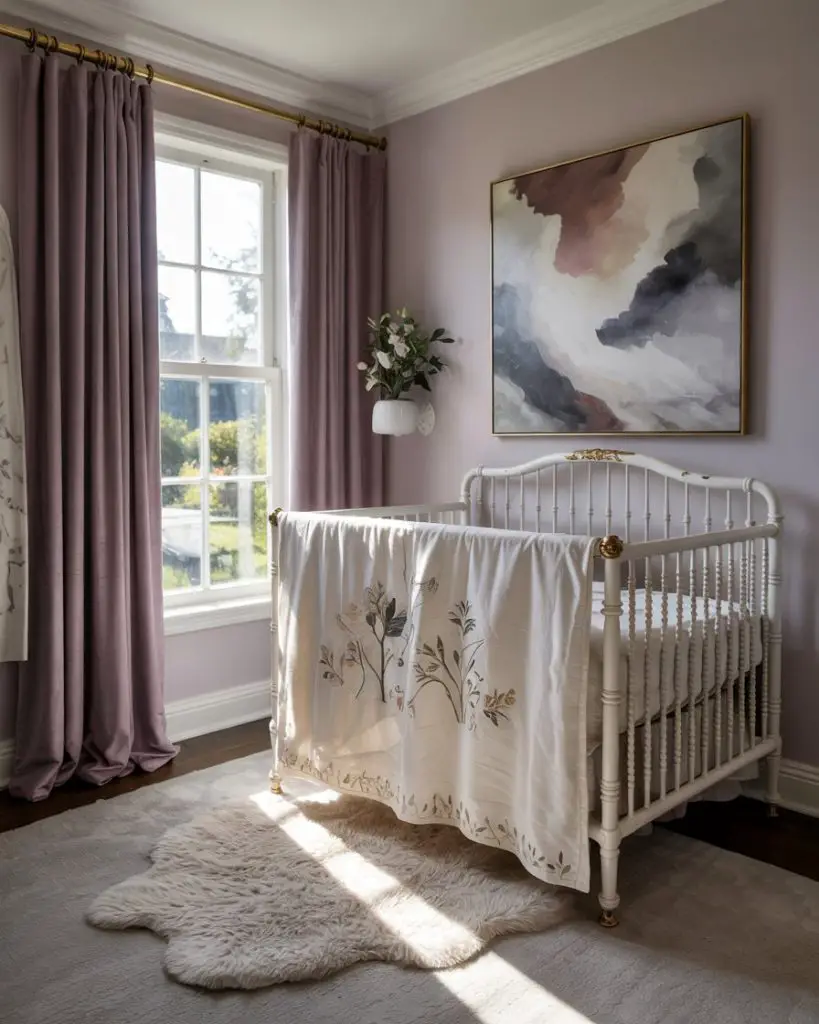
American lifestyle context: Purple nurseries are seeing particular growth in progressive urban areas where gender-neutral design is highly valued. The color manages to feel both sophisticated and playful, working just as well with dinosaur decor as with floral patterns. Parents appreciate the flexibility, especially when planning for potential future siblings or wanting a room that doesn’t immediately broadcast assumptions about their child’s identity or interests.
15. Harry Potter Magical Nostalgia
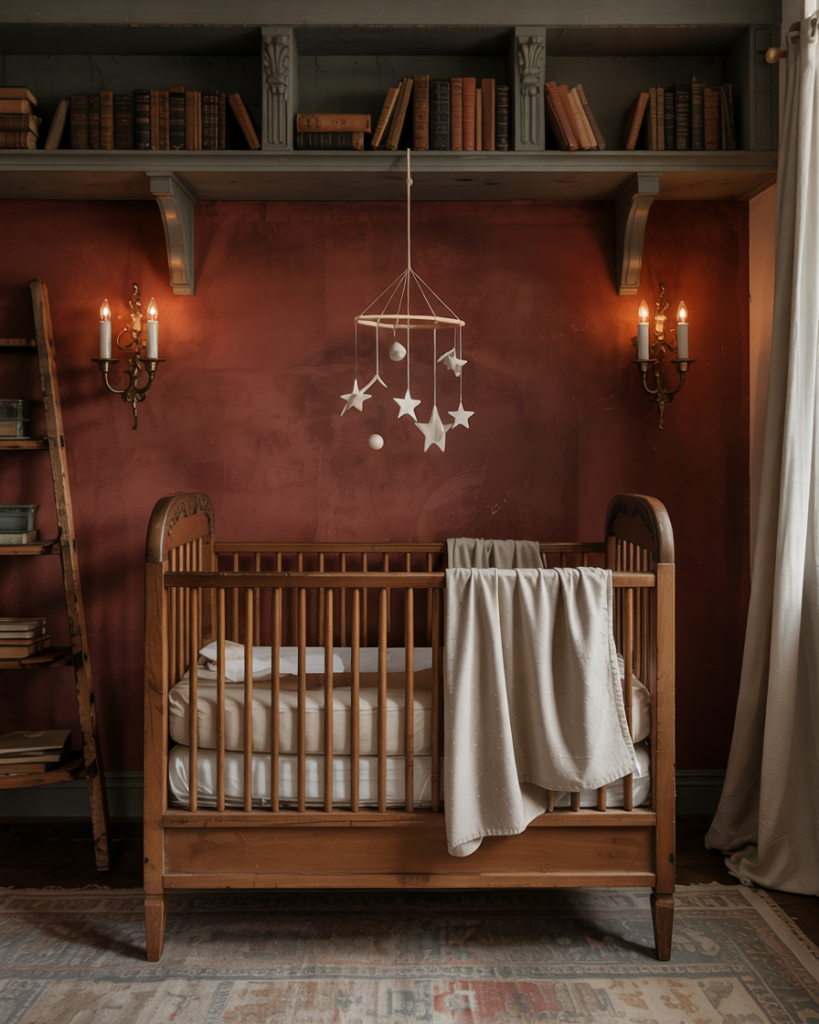
A Harry Potter-themed nursery taps into millennial parents’ deep connection to the series while creating a literary, magical atmosphere. The key is subtlety—think Hogwarts house colors used as accents, vintage-style book spines as art, and celestial elements rather than obvious character merchandise. This approach creates a room that feels enchanted and special without being commercially branded. Dark wood furniture, brass details, and library-inspired shelving reinforce the magical academia vibe.
Micro anecdote: A Seattle couple created Harry Potter-inspired “house points” jars for their nursery, filling them with colored pom-poms as a playful nod to the series. They placed vintage trunk storage at the foot of the crib and hung a Platform 9¾ sign so small you’d miss it if you weren’t looking. These Easter eggs delight adult visitors while creating a room that simply feels cozy and book-filled to anyone unfamiliar with the reference.
16. Fun Primary Colors Playroom
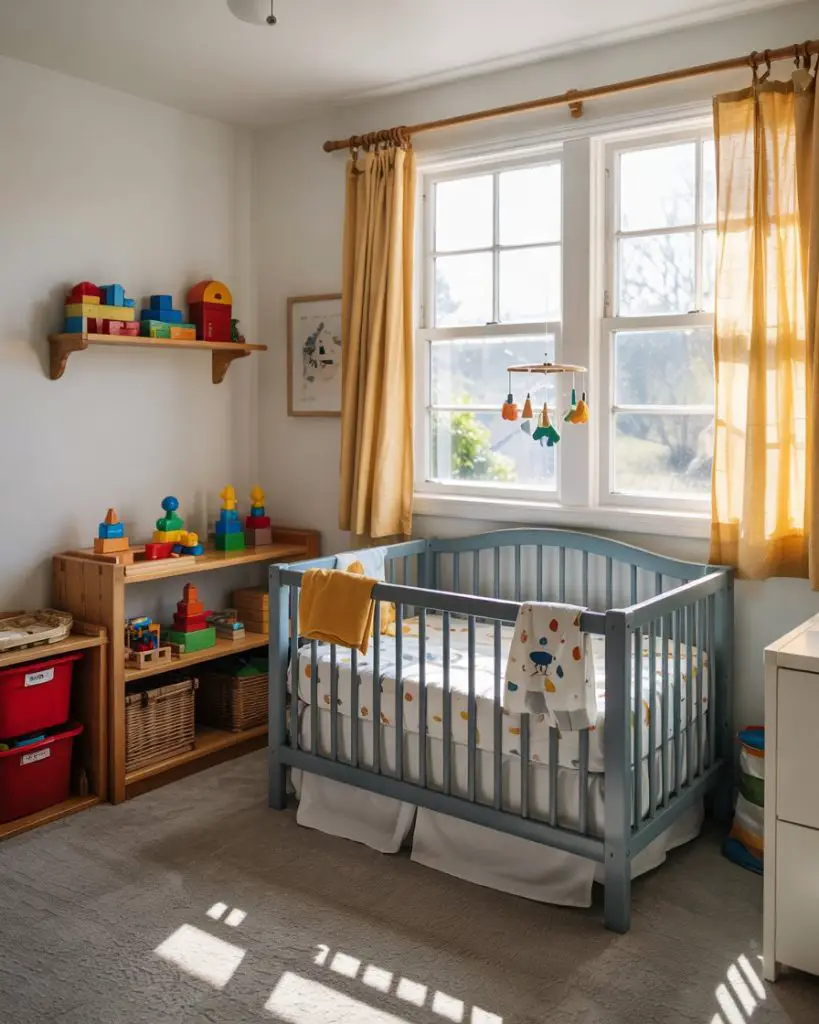
A fun primary colors nursery embraces bold reds, blues, and yellows in a way that feels energizing rather than overwhelming. This classic color combination works particularly well in contemporary or Scandinavian-inspired spaces where strong colors pop against white backgrounds. The approach stimulates visual development while creating an undeniably cheerful environment. Balance is everything—let one primary color dominate, use another as secondary, and add the third through small accessories.
Budget angle: Primary colored accessories are incredibly easy to find secondhand and at discount retailers, making this one of the most affordable design directions. Basic IKEA furniture in white provides the perfect neutral backdrop, while thrifted toys, books, and textiles add personality without premium pricing. Parents report spending as little as $500 to complete a fully furnished, stylish primary color nursery by shopping strategically and prioritizing what really matters—safety and function over brand names.
17. Floral Garden Romance
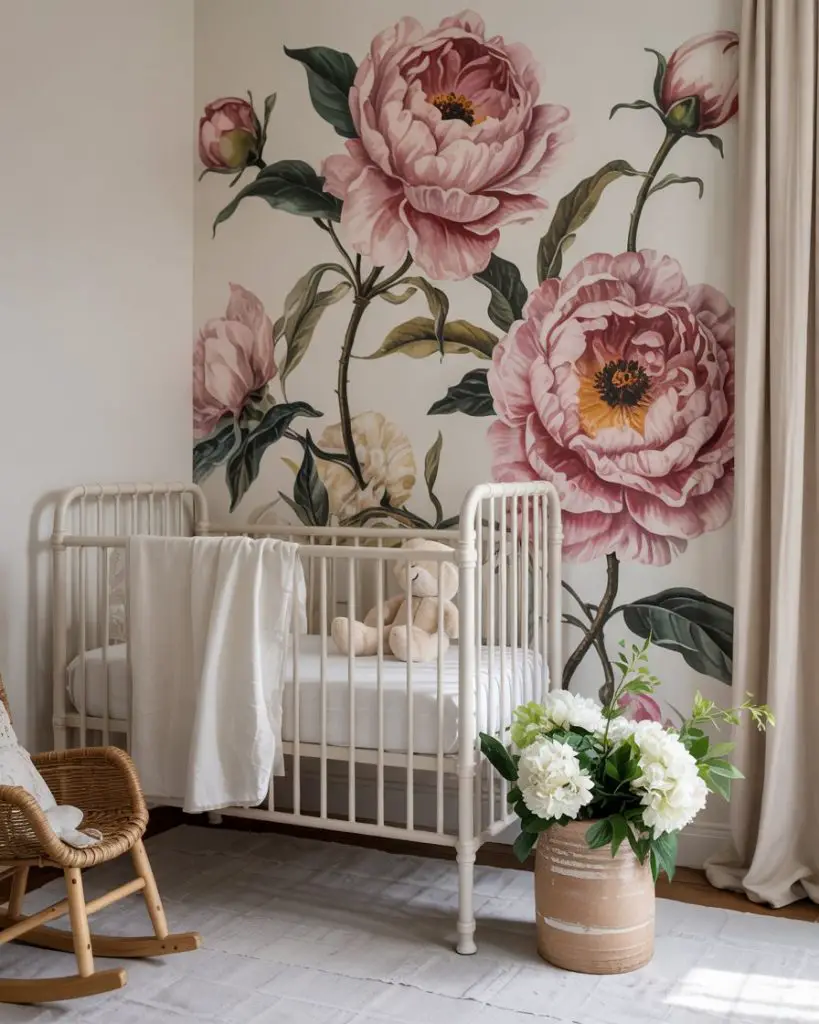
A floral nursery in 2026 leans toward oversized botanical prints and painterly watercolor styles rather than dainty ditsy patterns. These statement florals create focal points without requiring extensive decorating—a single wall of dramatic wallpaper or one large canvas can define the entire room. Pair with natural wood, plenty of white space, and organic textures to keep the look fresh rather than fussy. This approach works beautifully in homes with traditional or cottage-style architecture.
Practical insight: Large-scale florals actually work better in small spaces than tiny patterns, which can make a room feel busy and cramped. The oversized blooms create the illusion of depth while adding personality without clutter. Many parents are choosing removable wallpaper options, which allow for dramatic impact with the flexibility to change as their child grows. This makes the room feel special now while protecting your renovation budget for future years.
18. Box Room Efficiency
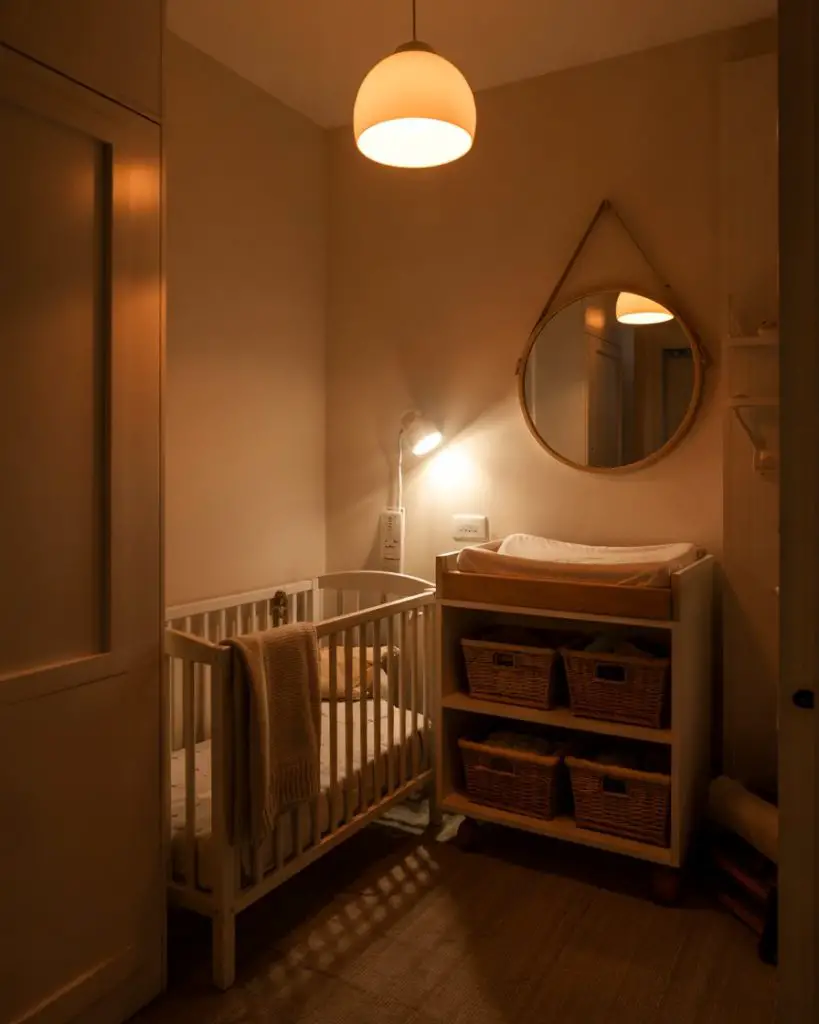
The box room nursery—that spare bedroom, former office, or repurposed walk-in closet—requires creative space planning but can be incredibly cozy. In 2026, parents are embracing these tiny spaces with clever multi-functional furniture, wall-mounted solutions, and light color palettes that maximize every inch. Rather than fighting the room’s limitations, successful designs celebrate the intimate scale, creating a snug nest that feels protective rather than confining. Murphy cribs and foldable changing tables are game-changers here.
Real homeowner behavior: Urban parents are increasingly choosing to keep their newborn in a dedicated box room rather than sharing the master bedroom, citing better sleep for everyone involved. The separate space, however small, creates healthy boundaries and allows for personalized design. These tiny nurseries are particularly common in cities like Boston, Chicago, and Washington D.C., where Victorian-era homes often include small extra bedrooms perfect for this purpose. The key is embracing minimalism—you truly don’t need as much stuff as baby retailers suggest.
19. Western Frontier Spirit
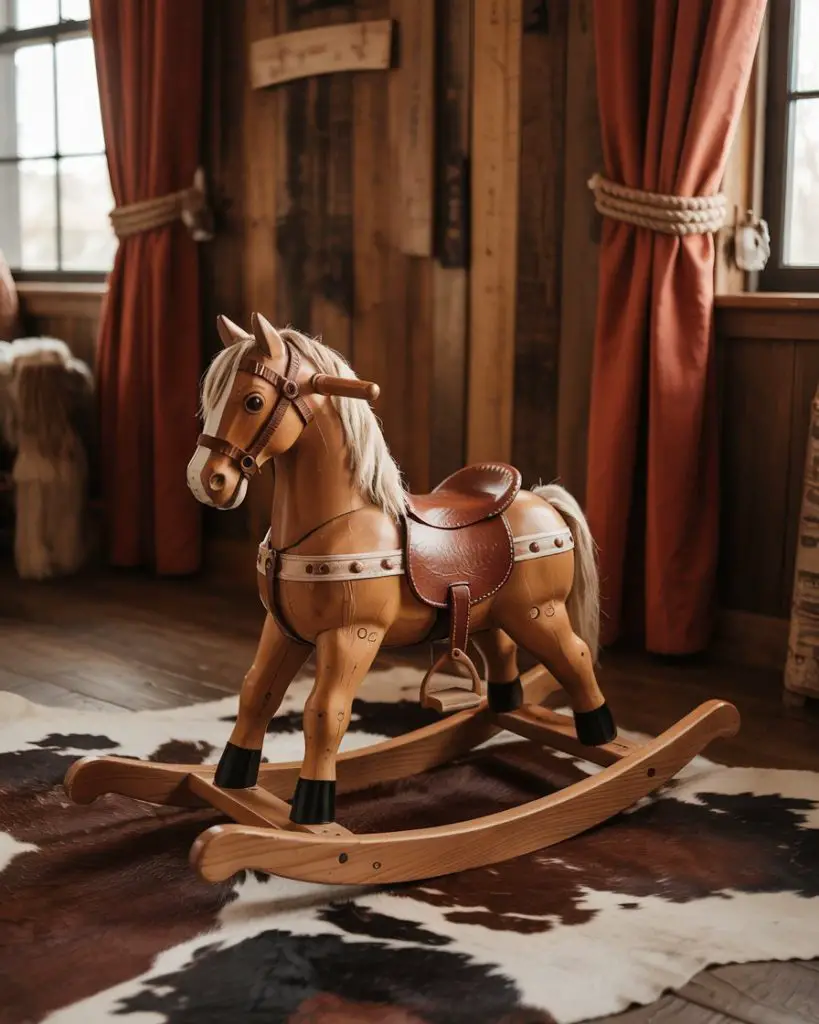
A western nursery channels ranch living and frontier nostalgia with leather accents, rustic wood, and warm earth tones. This theme resonates particularly in Texas, Montana, and the Southwest, where cowboy culture remains part of the regional identity. Think cowhide rugs, vintage boot storage, rope details, and warm terracotta or tan walls. The look works in both traditional ranch-style homes and urban lofts where the western aesthetic provides grounding texture and masculine warmth.
Where it works best: Western themes feel most authentic when they connect to your actual life—a family heritage of ranching, a love of horseback riding, or simply living in a region where this aesthetic feels native rather than costume-like. The key is avoiding kitschy cartoon cowboys in favor of genuine materials and craftsmanship. Real leather, actual barn wood, and quality felt details elevate the theme into something that feels collected and meaningful rather than purchased from a single store display.
20. Disney Magic Without Characters
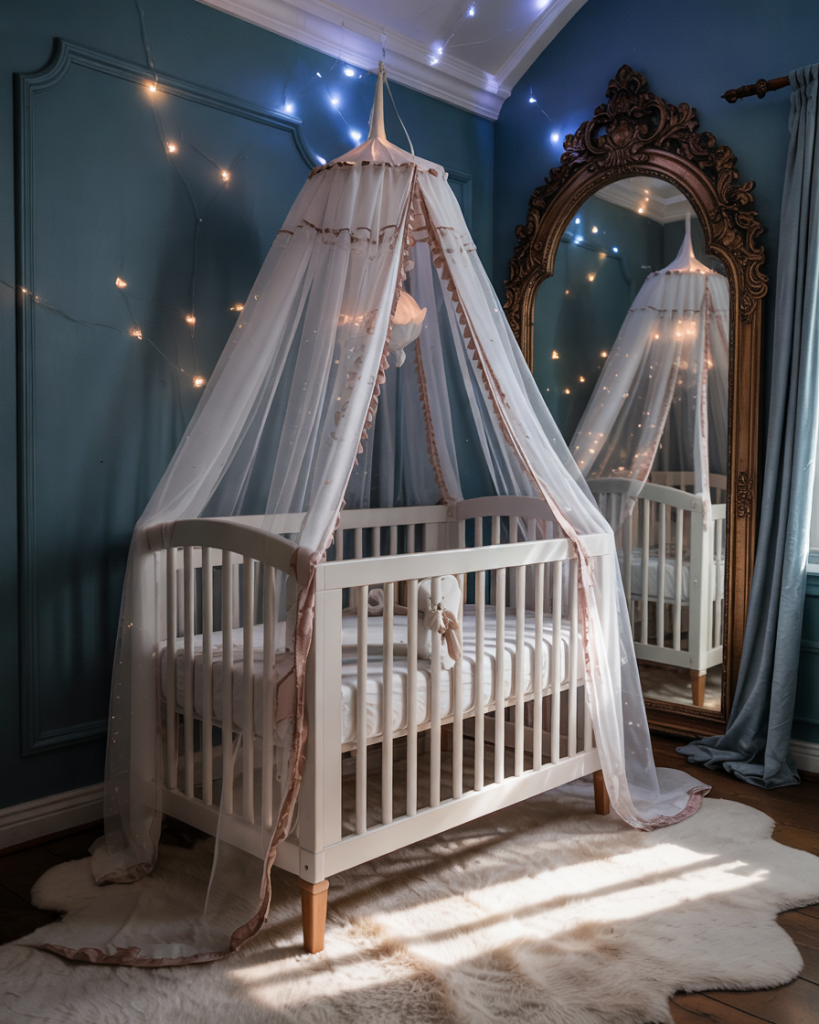
A Disney-inspired nursery succeeds in 2026 by capturing the magic and storytelling of Disney films without relying on character merchandise. Think enchanted forest elements from Sleeping Beauty, underwater color palettes from The Little Mermaid, or the provincial French aesthetic of Beauty and the Beast. This approach creates rooms that feel imaginative and special while avoiding the visual chaos of licensed products. Colors, themes, and moods replace branded imagery.
Common mistakes and how to avoid them: The biggest error in Disney nurseries is over-theming, which quickly dates the room and limits your child’s developing tastes. Instead of wall-to-wall Mickey Mouse, consider one subtle reference—perhaps a small hidden Mickey in the wall art or a color palette inspired by a favorite film. This creates a room that honors your family’s love of Disney while remaining flexible enough to evolve. Many parents report that their subtly themed rooms transition easily into toddler spaces with minimal adjustments.
21. Bloxburg Virtual Design Reality
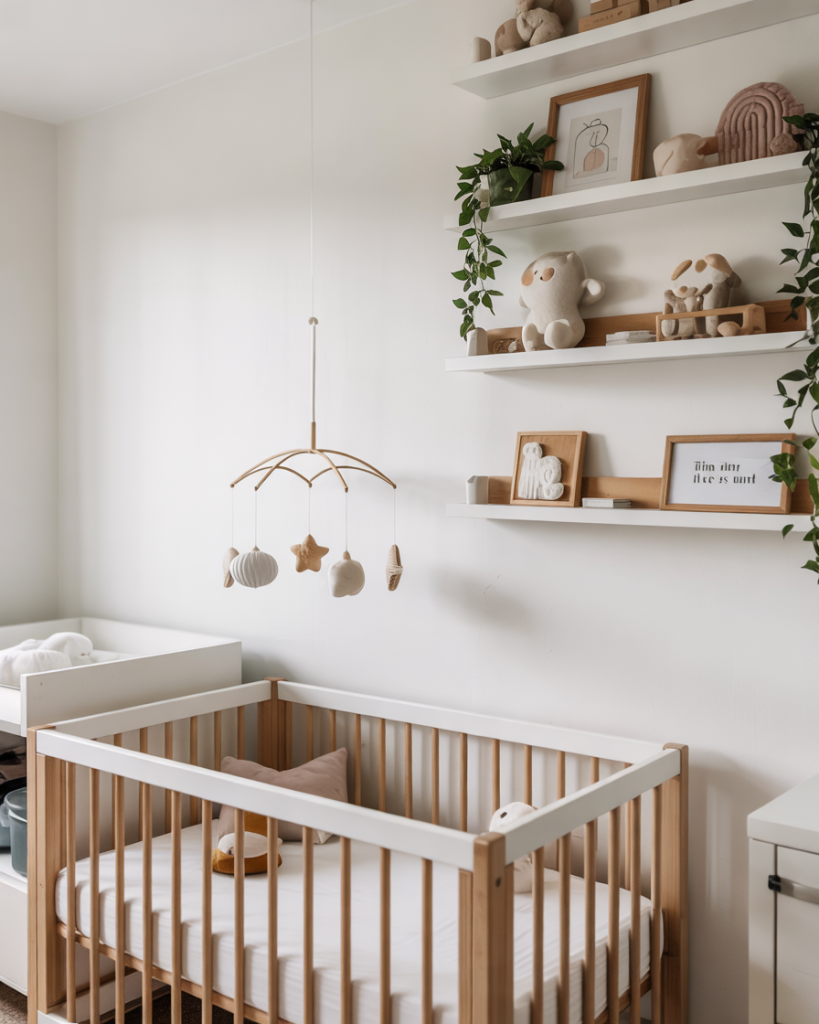
The Bloxburg phenomenon—where young people design ideal homes in Roblox—is actually influencing real nursery design as Gen Z begins having children. These digital-native parents bring aesthetic preferences honed in virtual worlds: open floor plans, maximized natural light, trendy color combinations, and that perfect blend of cozy and aspirational. The result is nurseries that photograph beautifully, prioritize visual flow, and incorporate the latest design trends with confidence. It’s digital culture manifesting in physical space.
Expert-style commentary: Interior designers are noticing that Gen Z parents approach nursery design with unusually sophisticated visual literacy, thanks to years of virtual design practice. They understand sight lines, scale, and color theory intuitively from arranging digital spaces. This generation is less likely to follow traditional “nursery rules” and more willing to experiment with adult design principles in children’s spaces. The result is rooms that feel current, confident, and highly personalized—less baby showroom, more editorial-worthy space that happens to include a crib.
22. Neutral Modern Minimalism
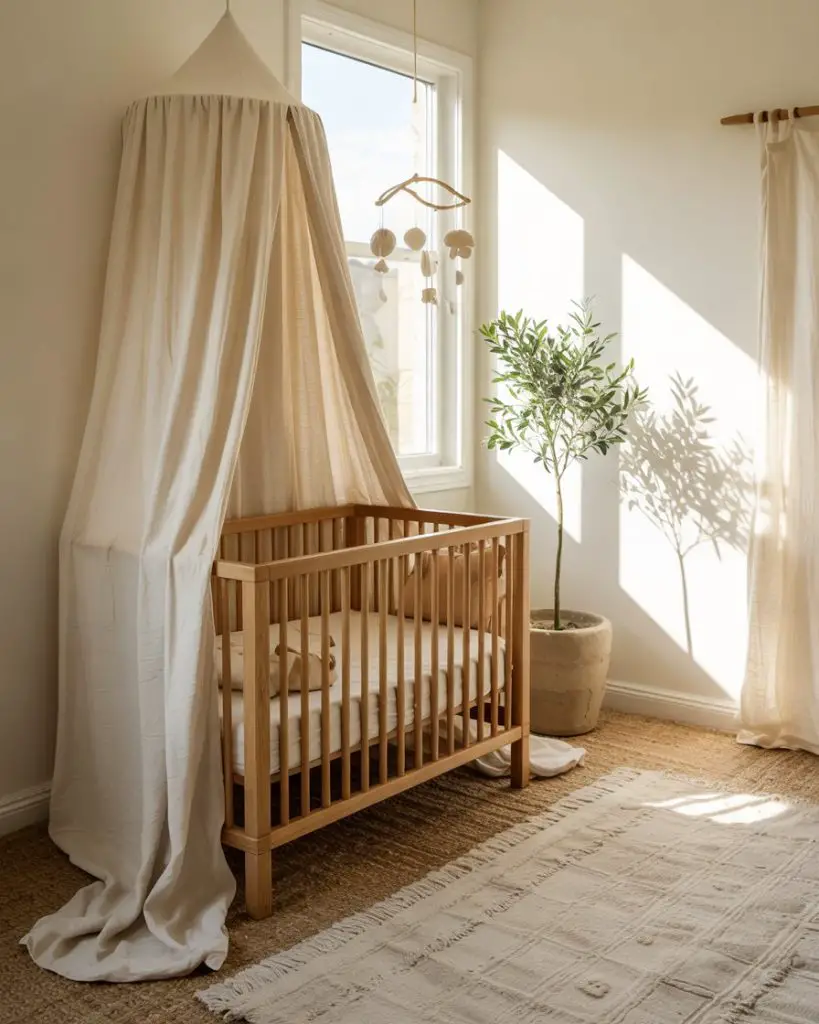
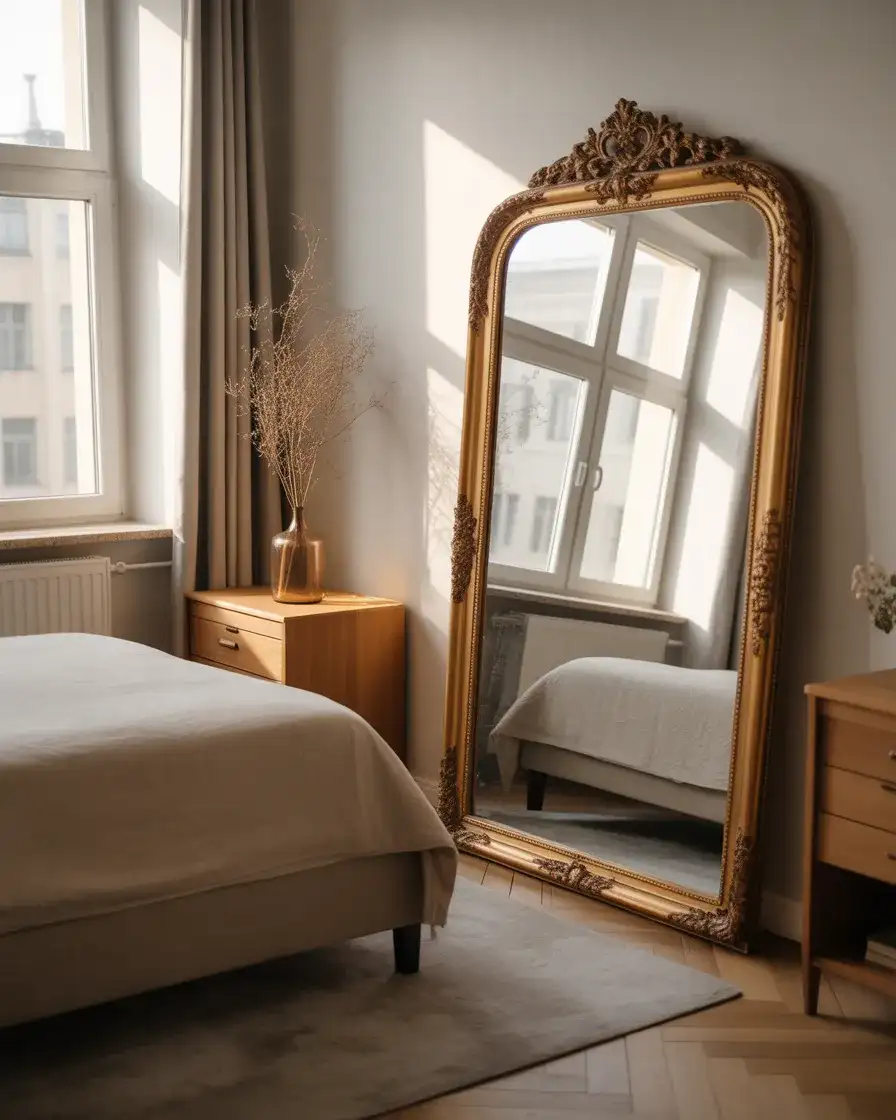
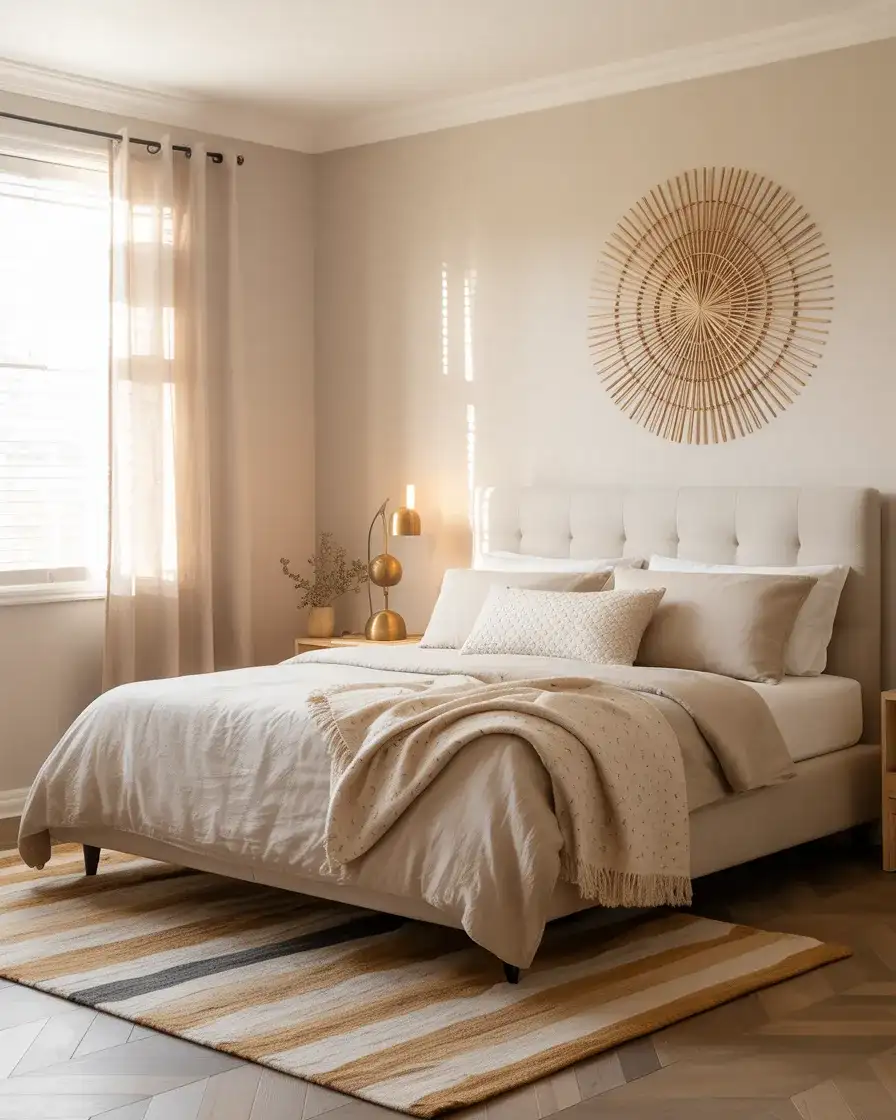
The neutral nursery remains timelessly popular, offering a calming, gender-free canvas that adapts easily as your child grows. In 2026, neutrals extend beyond beige and gray to include warm greiges, soft taupes, creamy whites, and natural wood tones layered with varied textures. This approach creates sophisticated simplicity that never feels stark, thanks to thoughtful layering of linen, wool, cotton, and wood. The minimalist philosophy celebrates quality over quantity—fewer pieces, better made, more meaningful.
Practical insight: Neutral nurseries offer unexpected practical advantages beyond aesthetics. Hand-me-down items blend seamlessly regardless of their original color scheme, reducing pressure to buy everything new. Stains and wear show less obviously on varied neutral tones than on pure white or bold colors. Perhaps most importantly, these rooms require minimal redecorating as your child grows—simply swap the mobile for different artwork and add age-appropriate books and toys. The neutral foundation accommodates any direction your child’s personality leads, making it both beautiful and pragmatically brilliant.
Conclusion
Which of these nursery ideas resonates with your personal style and space? Whether you’re drawn to bold color, subtle themes, or practical minimalism, the perfect nursery is one that reflects your family’s unique story. Share your favorite idea or your own nursery inspiration in the comments below—we’d love to see how you’re creating a special first space for your little one.