Stair railings have become one of the most transformative design elements in American homes, bridging function with pure visual impact. As we move through 2026, homeowners are searching for ways to elevate their staircases beyond basic safety features—they want railings that reflect personal style, complement architectural details, and create that “wow” moment guests remember. Pinterest boards are overflowing with inspiration ranging from sleek minimalist cables to dramatic wrought iron statements, proving that the right railing can completely reimagine a home’s interior flow. Whether you’re planning a full renovation or a budget-friendly makeover, these ideas will help you discover what works best for your space, lifestyle, and aesthetic vision.
1. Sleek Black Metal Railings for Modern Interiors
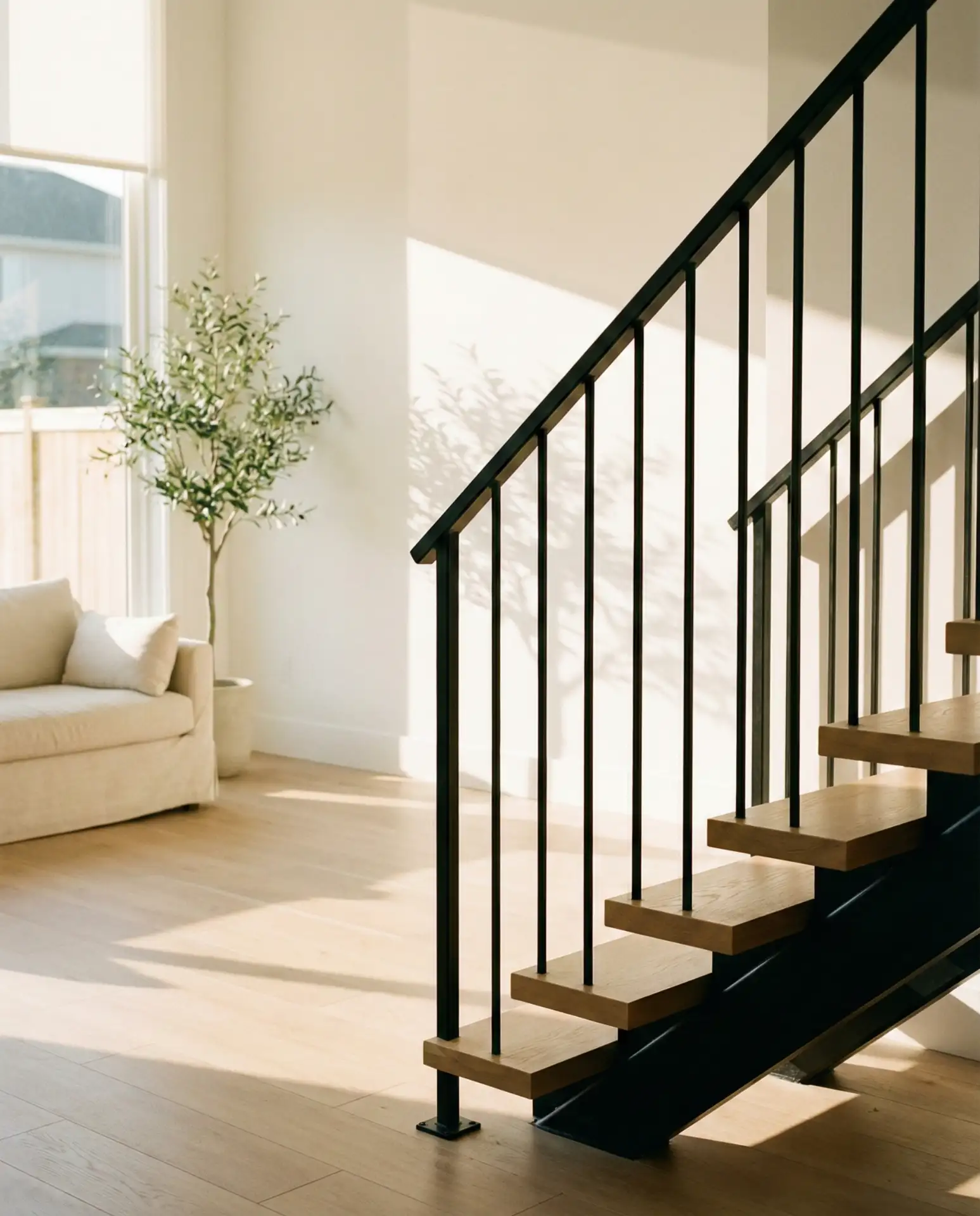
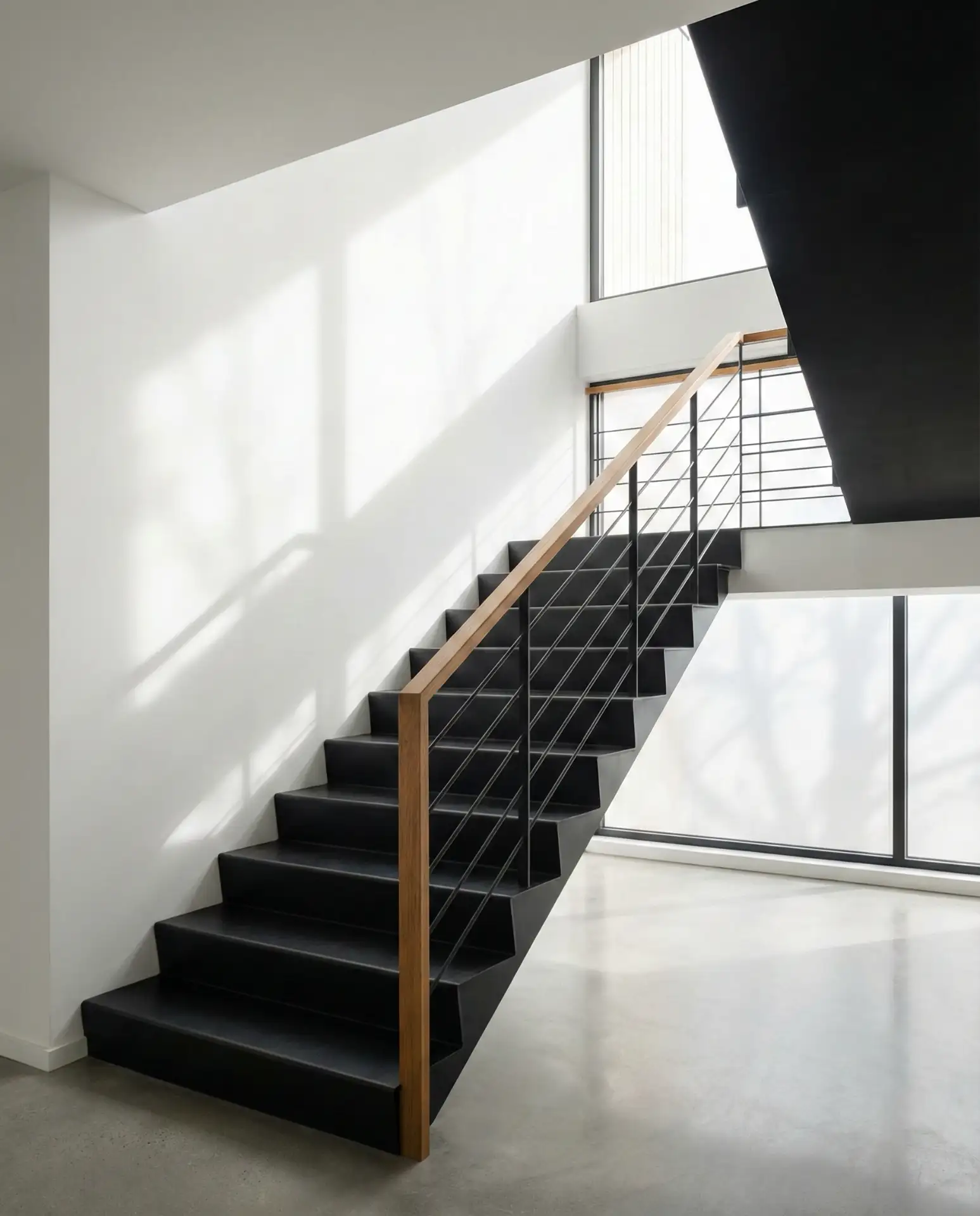
There’s something undeniably striking about black metal railings in a contemporary home. They create clean, geometric lines that draw the eye upward while maintaining an airy, open feel. Modern homes benefit especially from this approach—the dark framework contrasts beautifully against white or light-colored walls, wood treads, and natural light flooding through windows. Whether you opt for slim square tubing or round posts, black finishes work seamlessly in open-concept layouts where the staircase becomes a sculptural centerpiece rather than an afterthought.
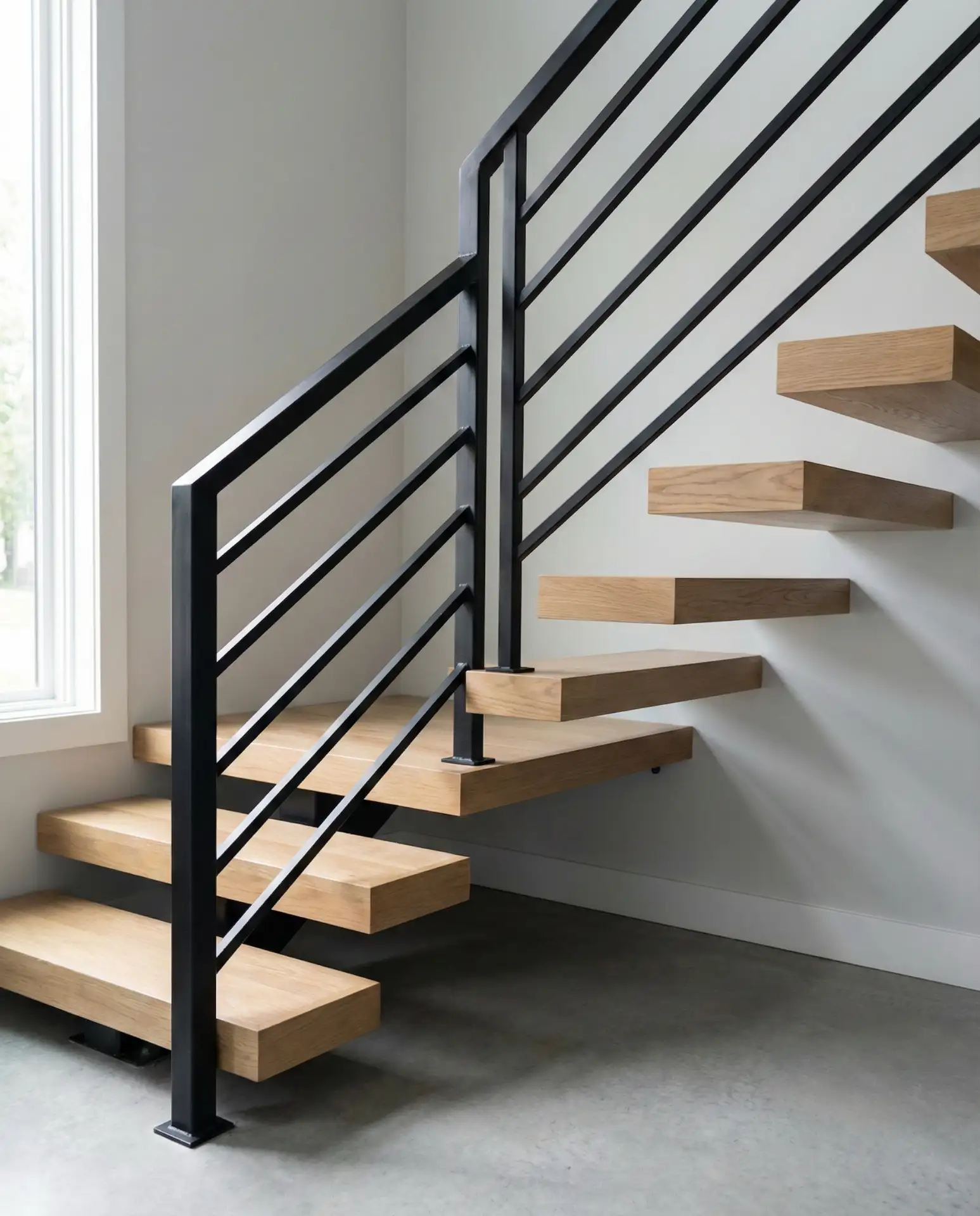
One practical insight: powder-coated black metal resists fingerprints and smudges better than glossy finishes, making it ideal for busy households with kids or pets. Maintenance stays minimal—just a quick wipe-down keeps the railing looking sharp. The durability also means this investment lasts decades without fading or chipping, unlike painted wood that might need refreshing every few years. For families prioritizing both style and real-world functionality, this choice delivers on both fronts effortlessly.
2. Warm Wood and Metal Combination Designs
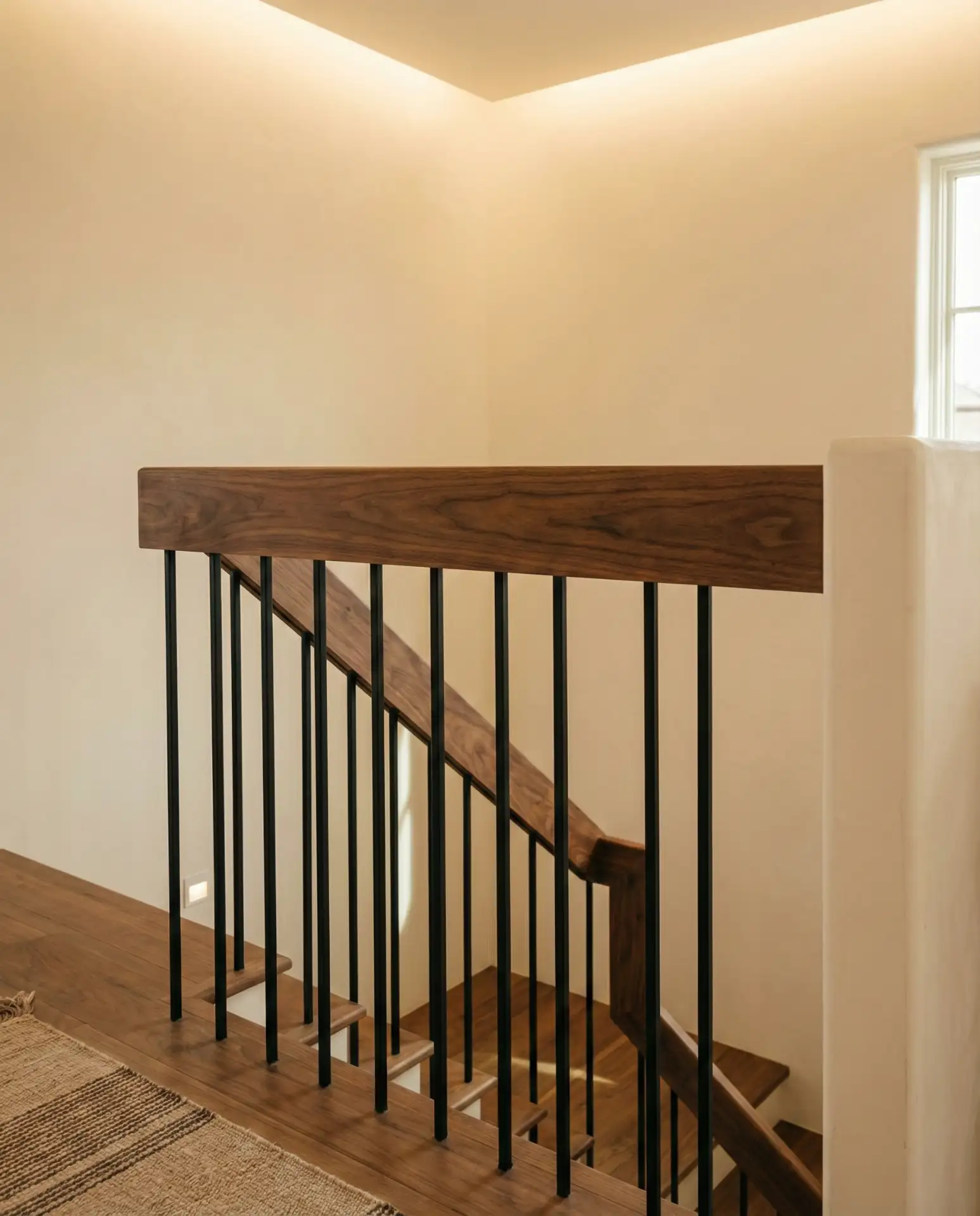
Pairing wood and metal creates a balanced aesthetic that feels both grounded and refined. The warmth of natural wood—whether it’s a rich walnut handrail or lighter oak posts—softens the industrial edge of metal supports, resulting in a railing system that works across multiple design styles. This combination is particularly popular in homes that blend rustic charm with modern sensibilities, offering texture and visual interest without overwhelming the space. Many homeowners choose this route when they want something timeless rather than trendy.
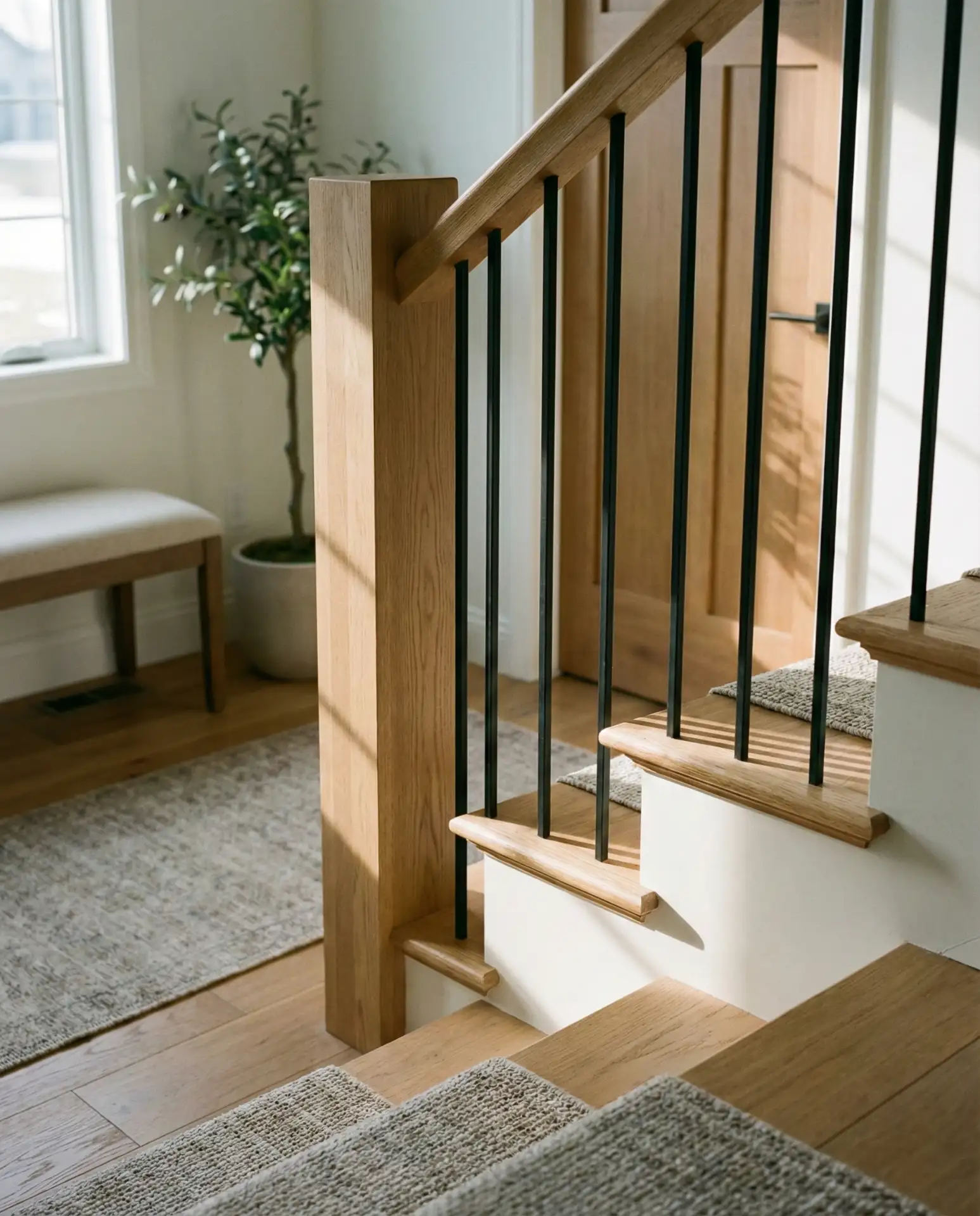
This design works best in homes where the architecture already features mixed materials—exposed beams, steel-framed windows, or reclaimed wood flooring. The railing becomes a natural extension of those existing elements rather than competing for attention. It’s especially effective in open floor plans where the staircase sits prominently in view from multiple rooms, anchoring the space with cohesive materials that flow throughout the home.
3. Minimalist Horizontal Cable Railings
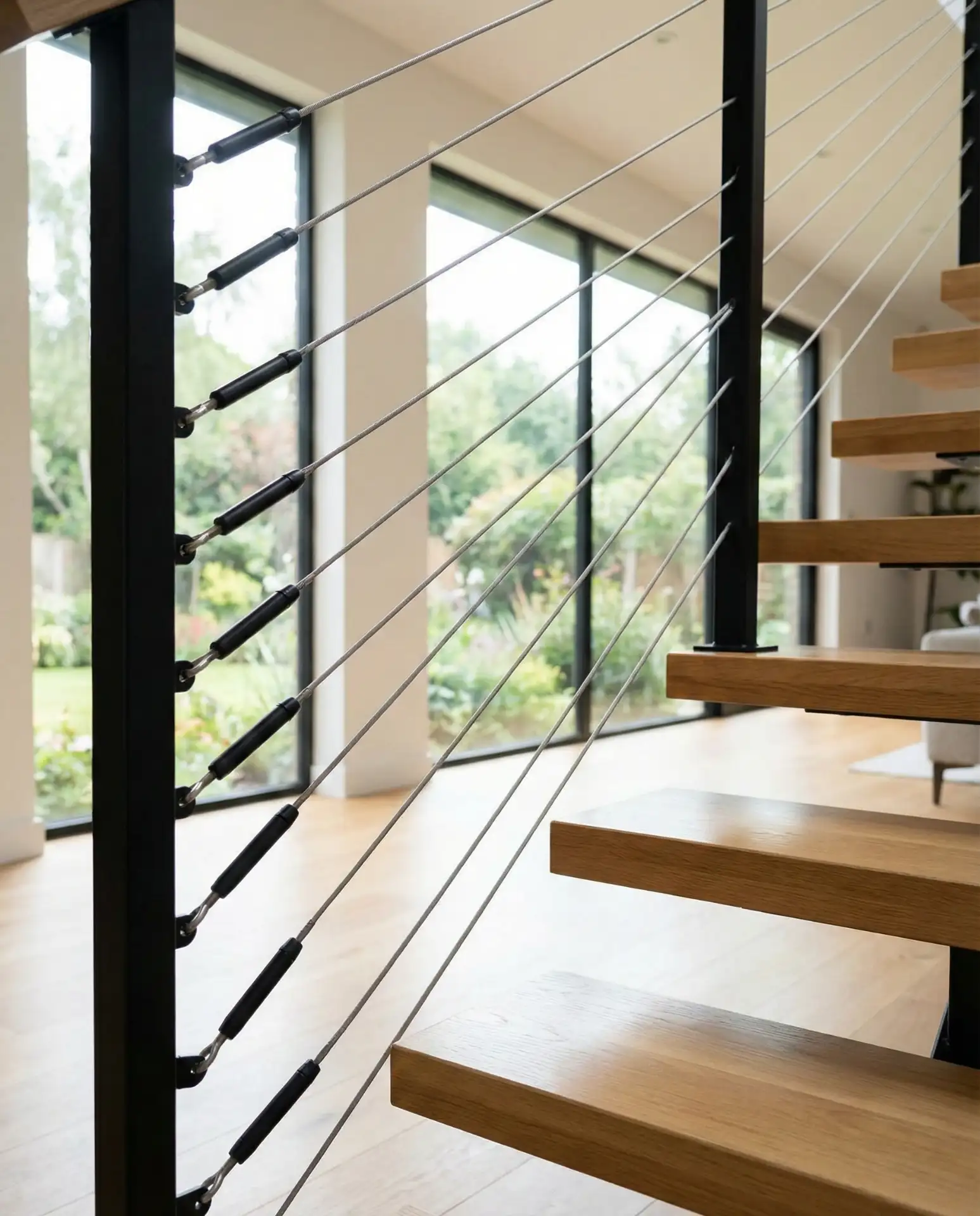
When you want your view unobstructed and your aesthetic clean, horizontal cable railings deliver exactly that. Thin stainless steel cables run parallel to the stairs, creating virtually invisible barriers that preserve sightlines while meeting building codes. This approach has surged in popularity among Americans renovating mid-century homes or building new constructions where light and openness matter most. The cable system works beautifully in homes with large windows, scenic views, or simply when you want the staircase to feel less visually heavy.
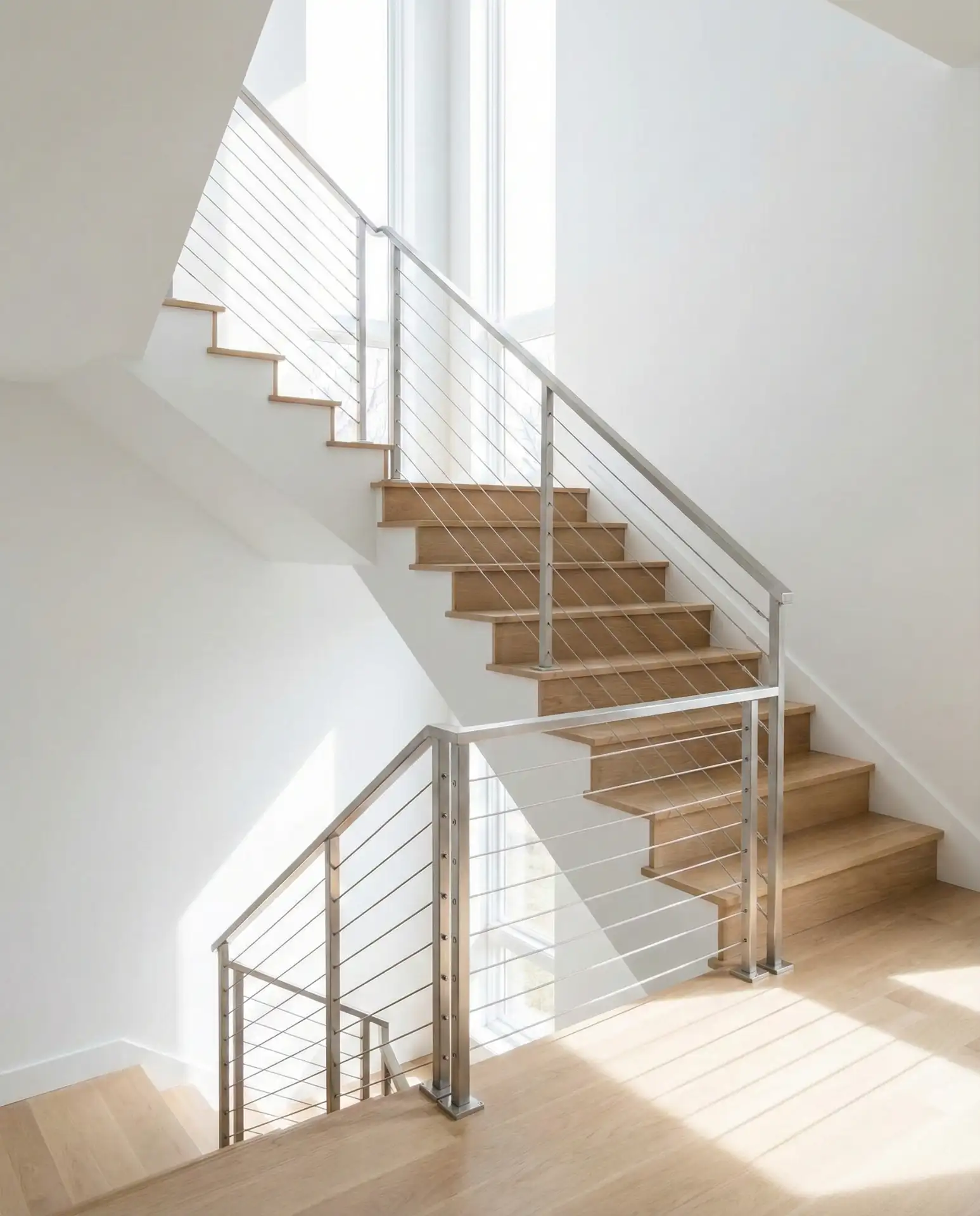
Budget-wise, cable railings typically cost more upfront than traditional wood balusters due to specialized hardware and installation requirements. Expect to invest between $80 and $200 per linear foot depending on your region and materials chosen. However, maintenance costs stay low—cables don’t warp, crack, or need repainting like wood, and stainless steel resists corrosion even in humid climates. For homeowners thinking long-term, the initial expense often pays off through durability and preserved resale value.
4. Classic Wrought Iron Elegance
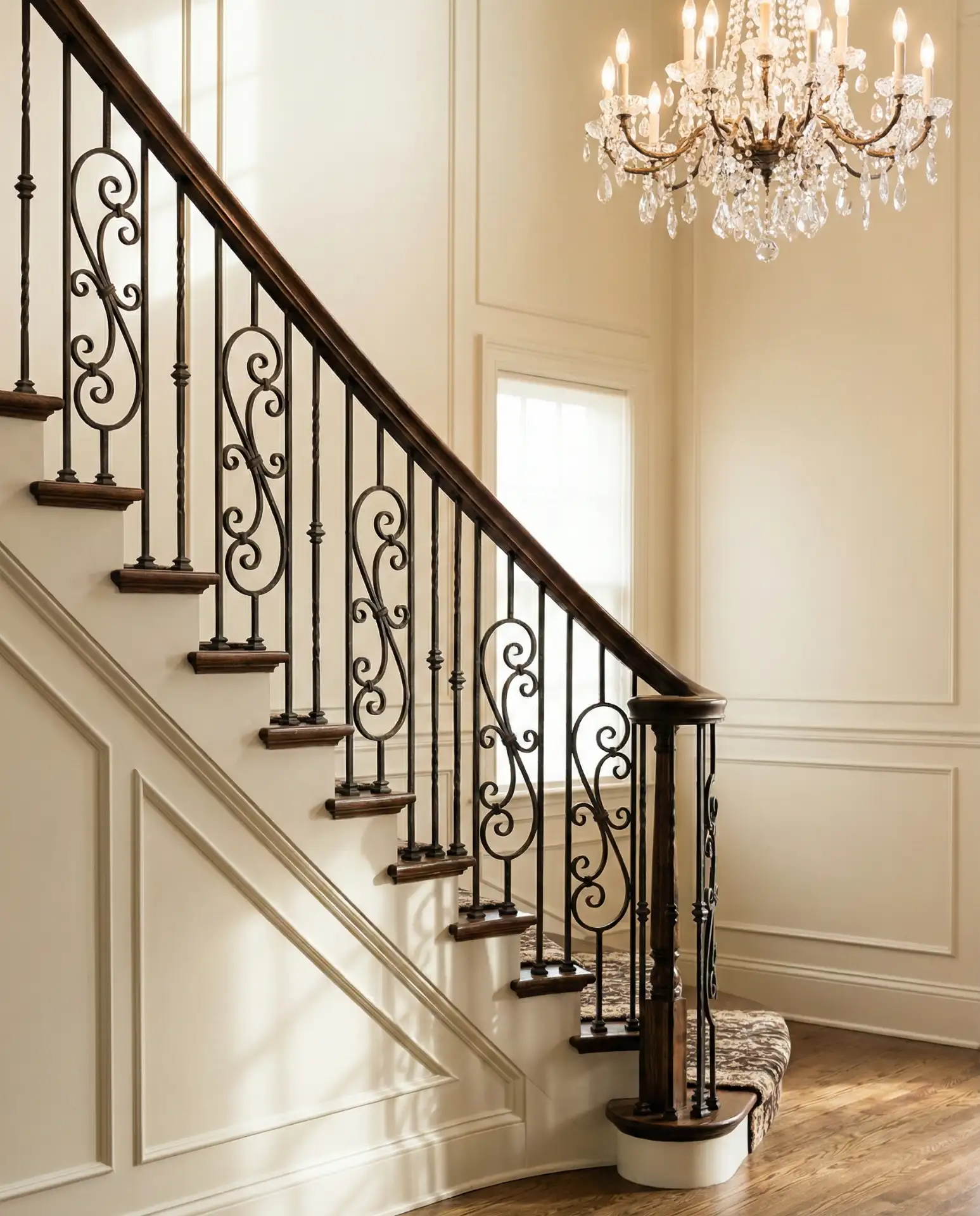
Wrought iron railings bring an undeniable sense of craftsmanship and permanence to any staircase. These hand-forged pieces often feature scrollwork, twists, or geometric patterns that feel both traditional and substantial. While iron railings have roots in historic European architecture, they’ve been embraced across American homes—from restored Victorians in the Northeast to Spanish Revival estates in California. The material’s strength allows for intricate designs that become functional art, transforming an ordinary staircase into a statement piece that guests notice immediately.

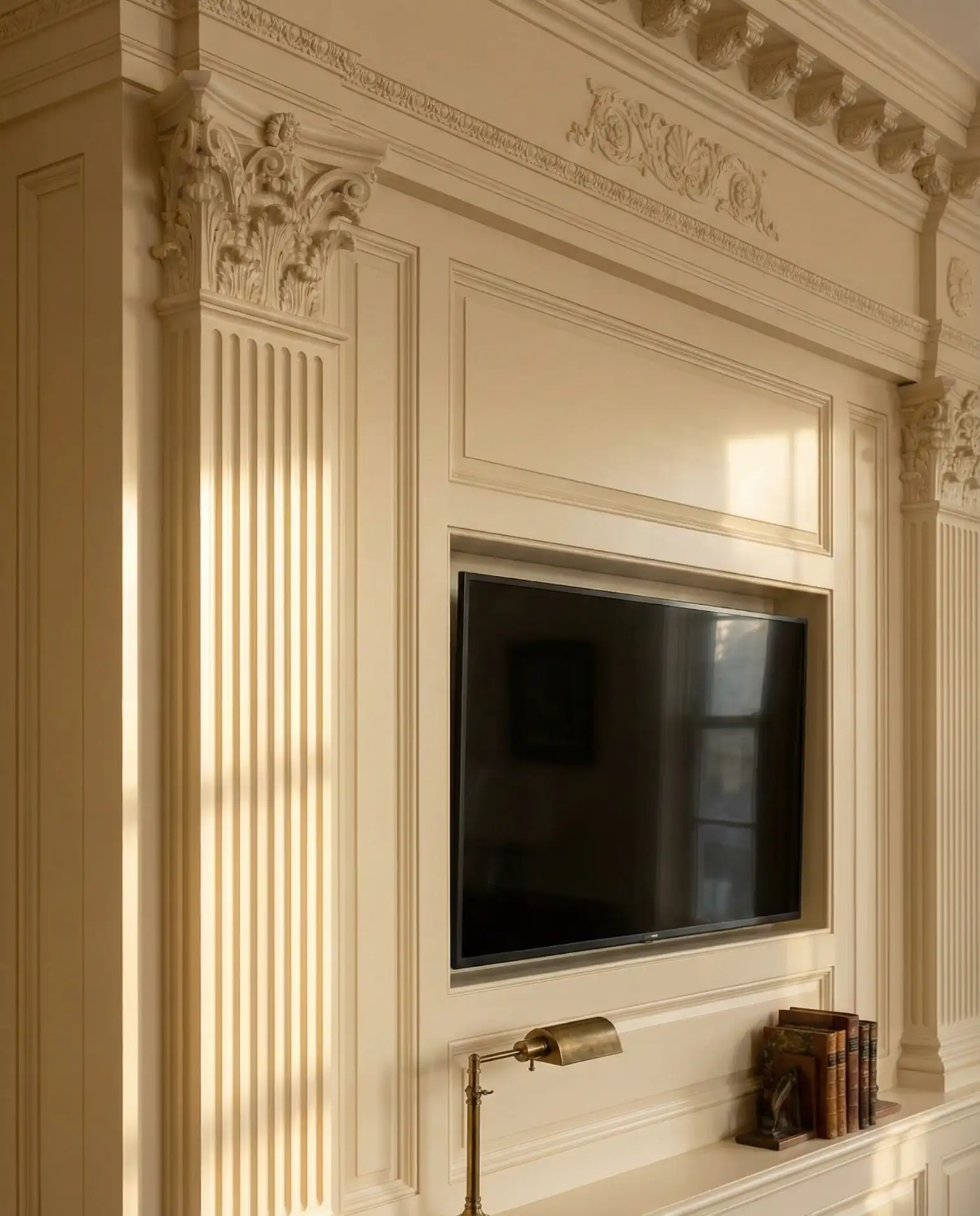
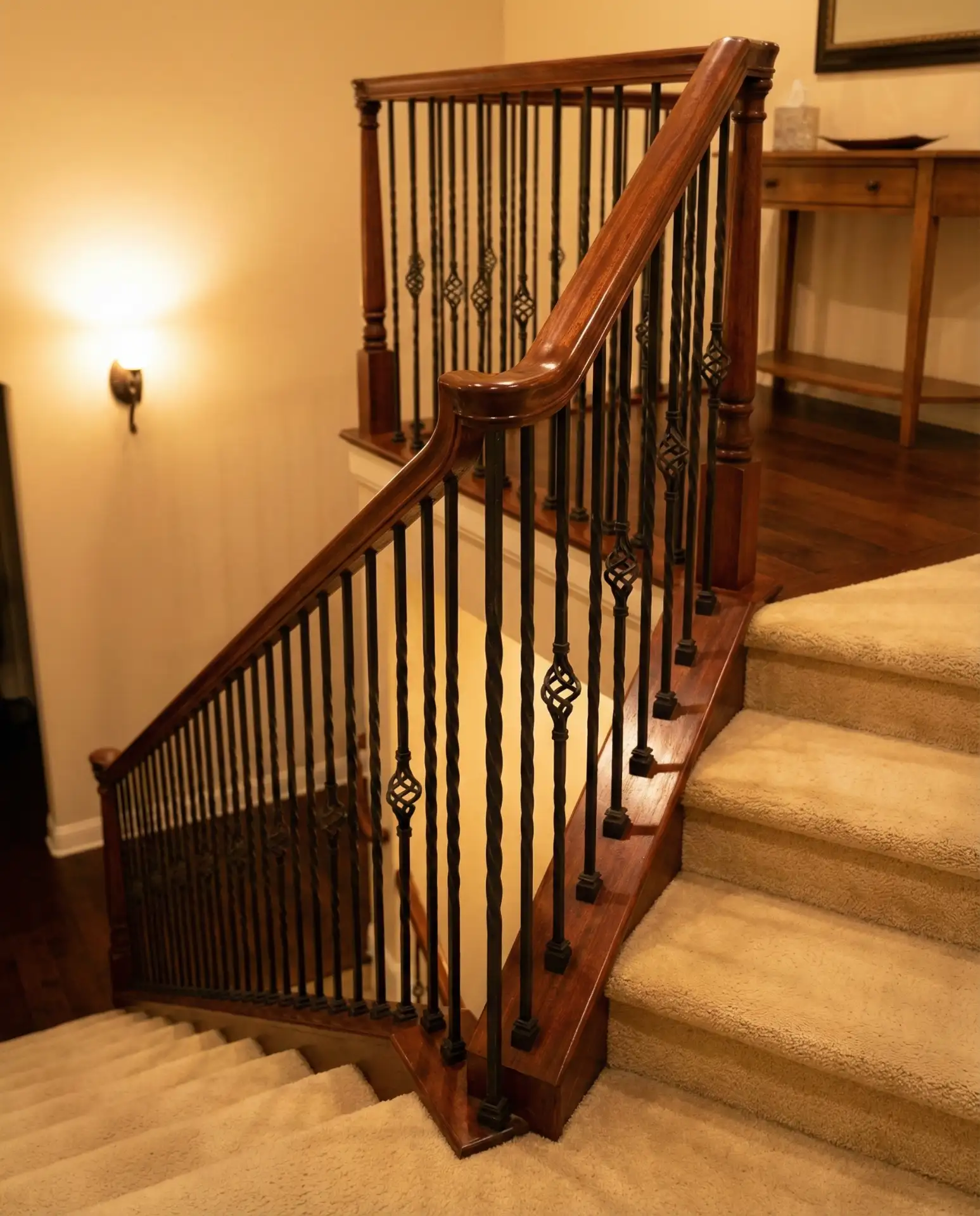
A small design firm in Charleston recently shared that their clients often choose wrought iron specifically because it ages beautifully—the patina that develops over time adds character rather than signaling wear. Unlike mass-produced alternatives, custom ironwork can be tailored to match existing architectural details in your home, whether that’s mimicking the curves in your front door hardware or echoing patterns in ceiling medallions. This level of customization turns the railing into a cohesive part of your home’s story.
5. Clean White and Black Contrast
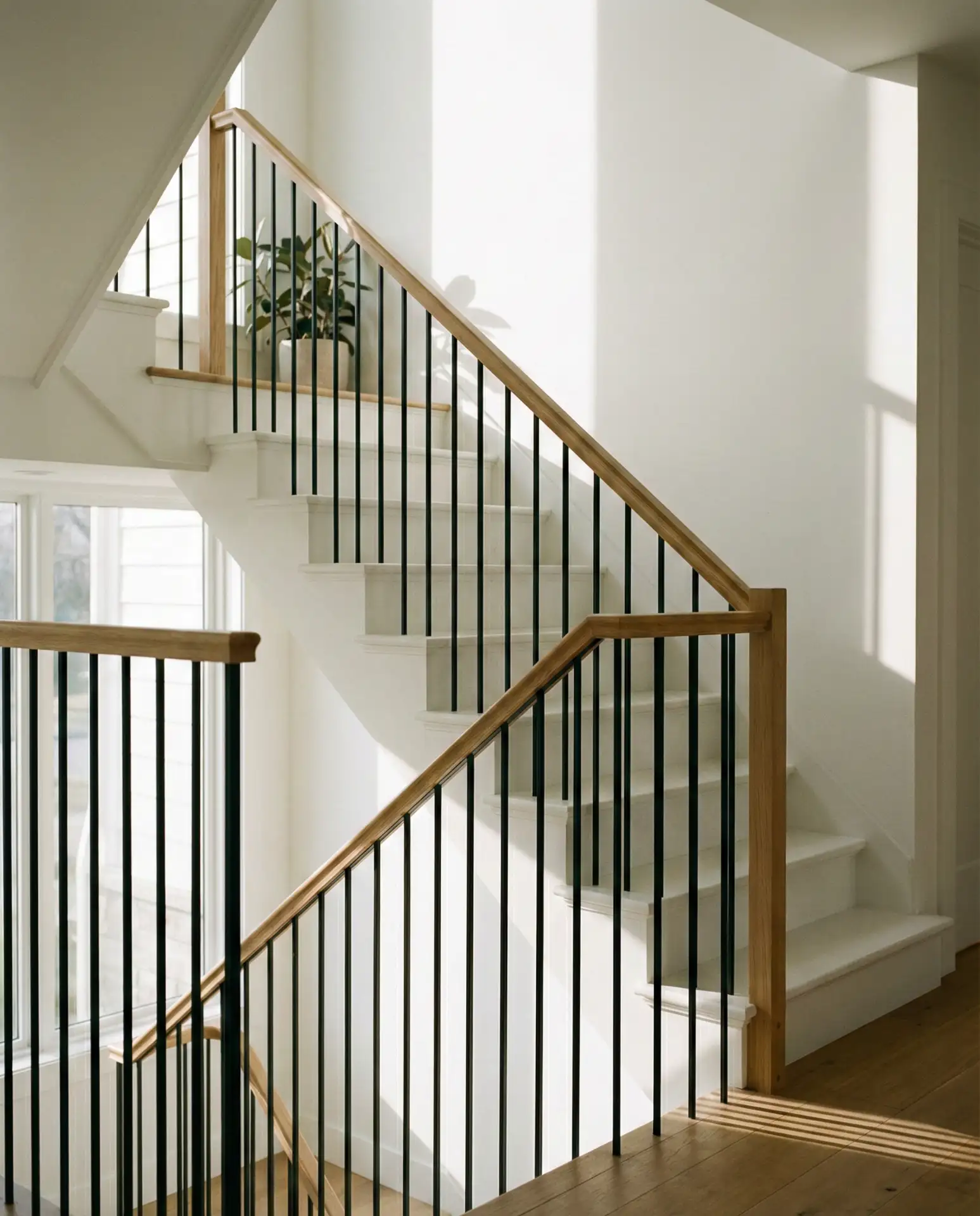
The timeless pairing of black and white delivers maximum impact with minimal complexity. Picture crisp white walls and treads offset by sleek black metal balusters or posts—the contrast creates visual drama while remaining remarkably versatile. This color scheme works across nearly every design style, from farmhouse to contemporary, because it relies on fundamental principles of light and dark rather than trendy hues. Homeowners appreciate how this approach makes spaces feel larger and brighter, especially in narrow stairwells or homes with limited natural light.
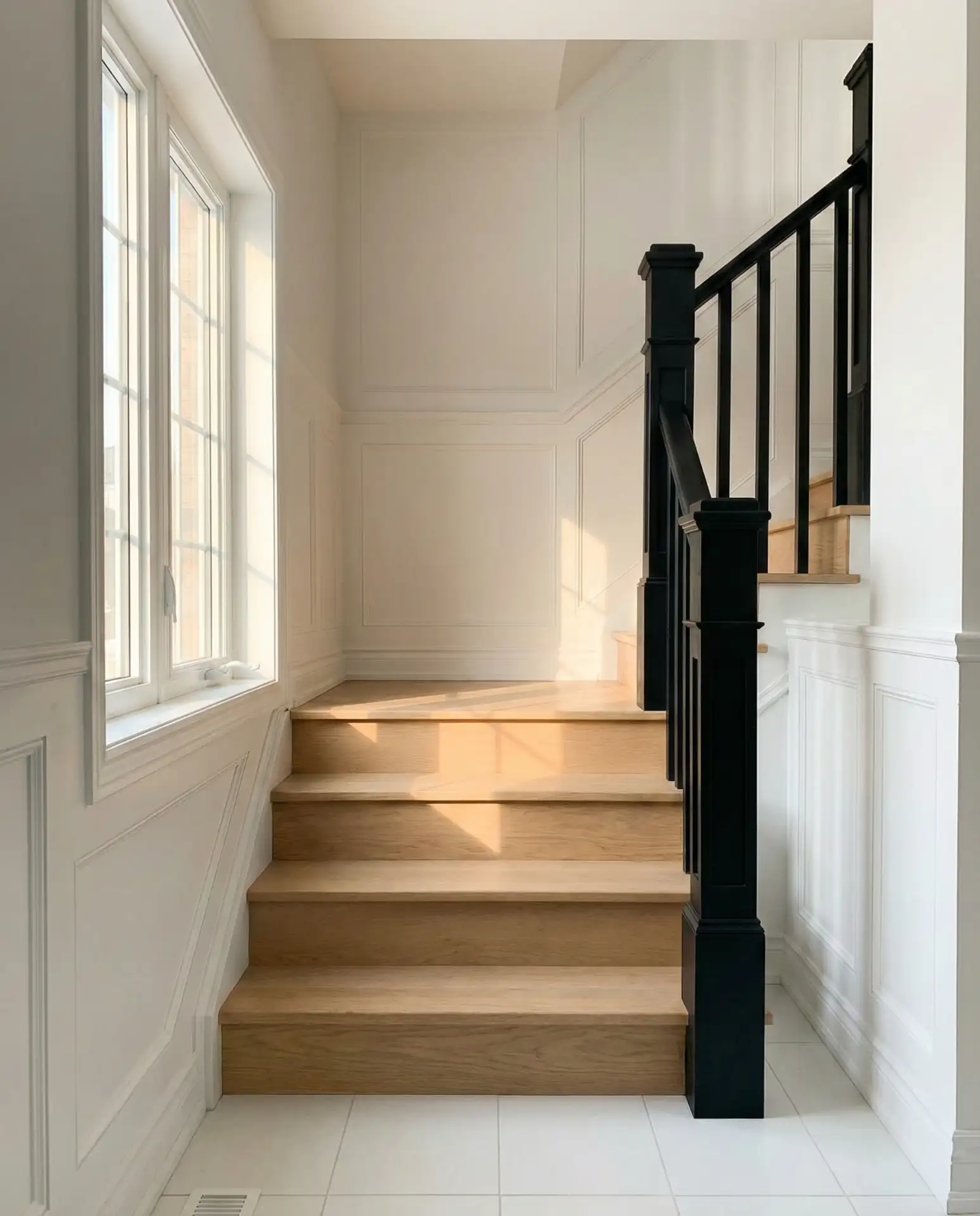
This works best in homes where you want the staircase to feel integrated rather than isolated. The neutral palette ensures the railing doesn’t compete with colorful artwork, patterned rugs, or statement furniture in adjacent rooms. It’s particularly effective in open floor plans where the staircase is visible from the kitchen or living area—the black and white theme can echo countertops, cabinetry, or trim details elsewhere, creating a sense of intentional cohesion throughout the entire home.
6. Industrial Steel with Raw Finishes
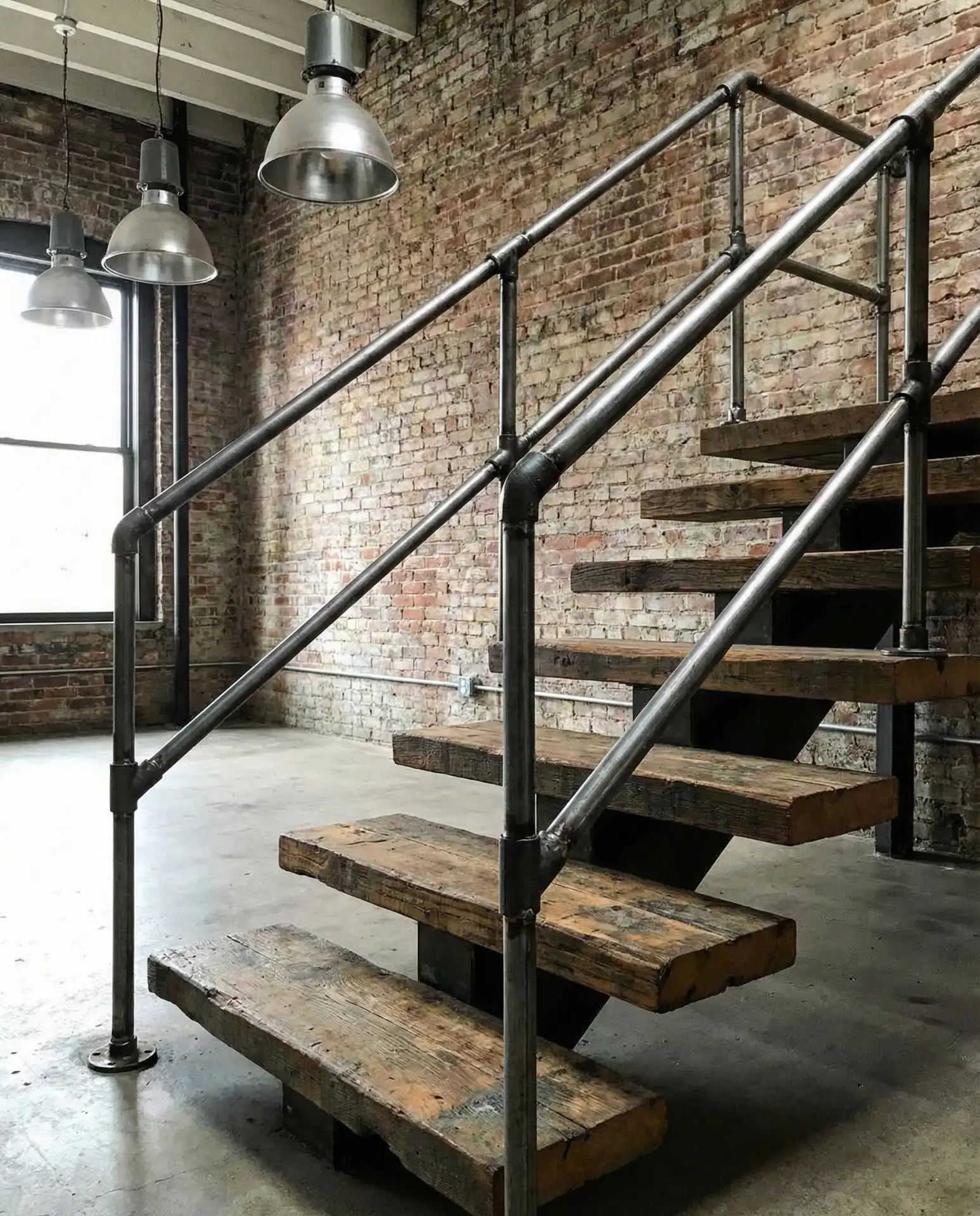
Steel railings with raw or lightly finished surfaces bring an urban loft aesthetic into residential spaces. Unlike polished metals, these pieces embrace imperfections—slight variations in tone, visible welds, or matte textures that feel authentic and unpretentious. This style resonates particularly well in converted industrial buildings or newer homes designed with exposed ductwork, concrete floors, and reclaimed materials. The steel railing becomes part of that narrative, contributing to an environment that feels honest and grounded rather than overly styled.
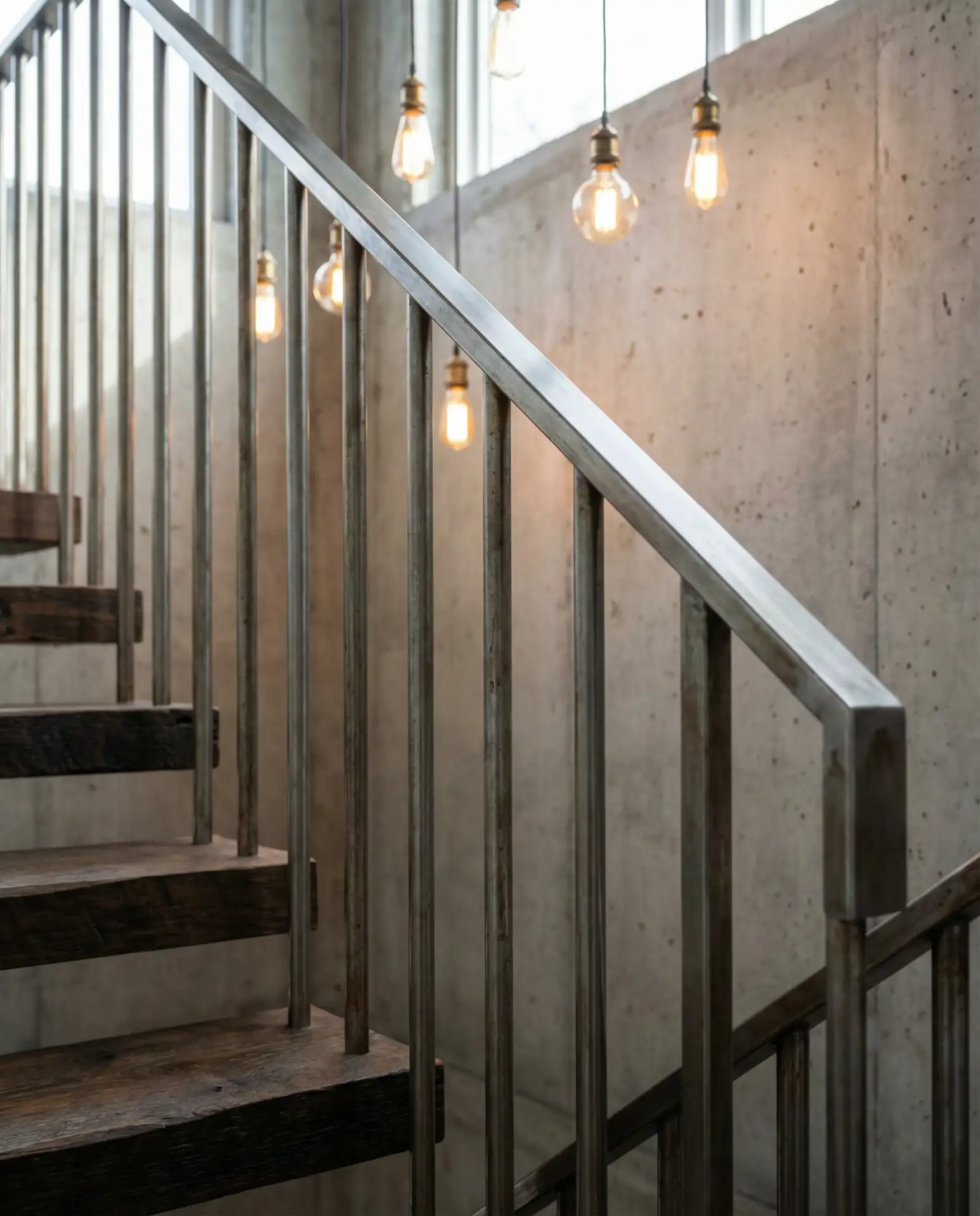
Real homeowners who’ve chosen this route often mention the low-maintenance appeal—raw steel doesn’t show fingerprints or scratches the way glossy surfaces do, and any aging actually enhances the aesthetic. If you’re living in a humid climate, consider applying a clear protective coating to prevent rust while maintaining that raw appearance. This small step extends the railing’s lifespan without compromising the unfinished look that makes industrial design so compelling.
7. Transparent Glass Panel Systems
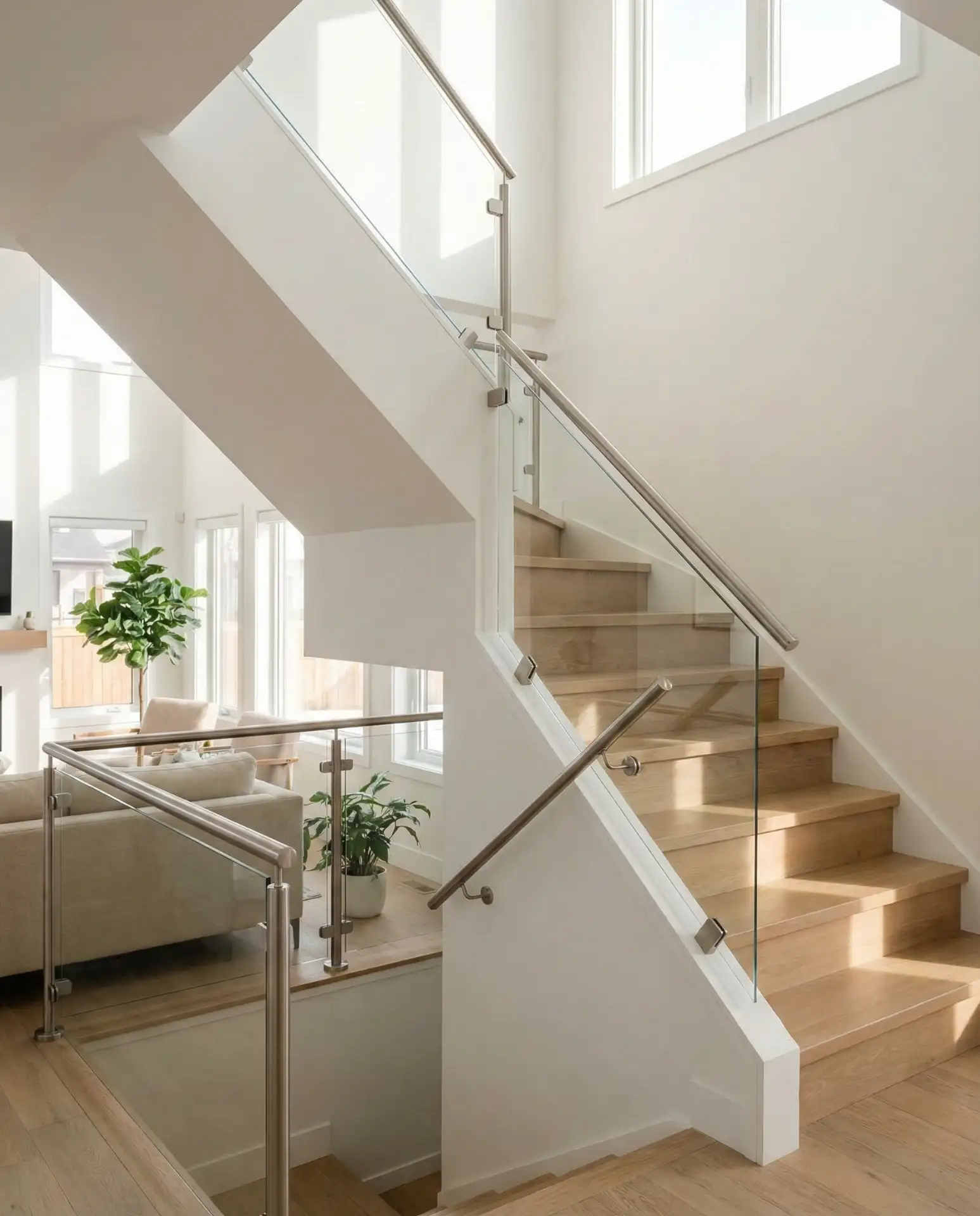
Glass railings create an almost floating effect, allowing light to travel freely through spaces while providing necessary safety barriers. Frameless or minimally framed panels have become increasingly popular in modern American homes, especially those designed with open concepts or two-story great rooms where maintaining visual connections between floors matters. The transparency prevents the staircase from feeling like a divider, instead letting it exist as a functional path that doesn’t interrupt the home’s spatial flow. Architects particularly favor this solution in homes with stunning views or abundant natural light.
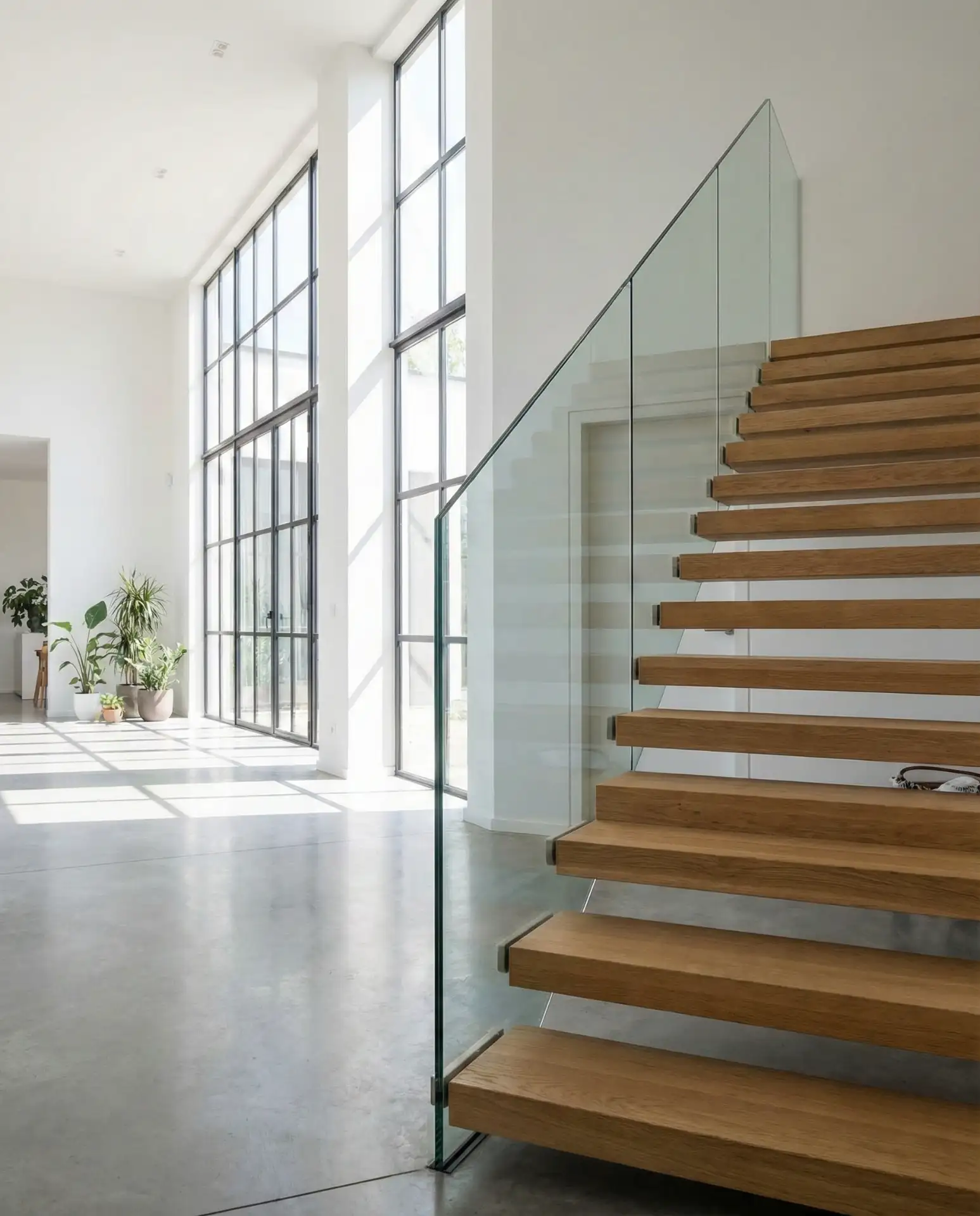
One common mistake is underestimating the maintenance glass requires—these panels show fingerprints, smudges, and dust more readily than other materials. Homeowners with young children or pets should be prepared for weekly cleaning to keep the glass looking pristine. However, for those willing to commit to regular upkeep, the payoff is substantial: a staircase that feels almost invisible, maximizing light and views in ways solid railings simply cannot achieve.
8. Mid-Century Modern Wood Slat Designs
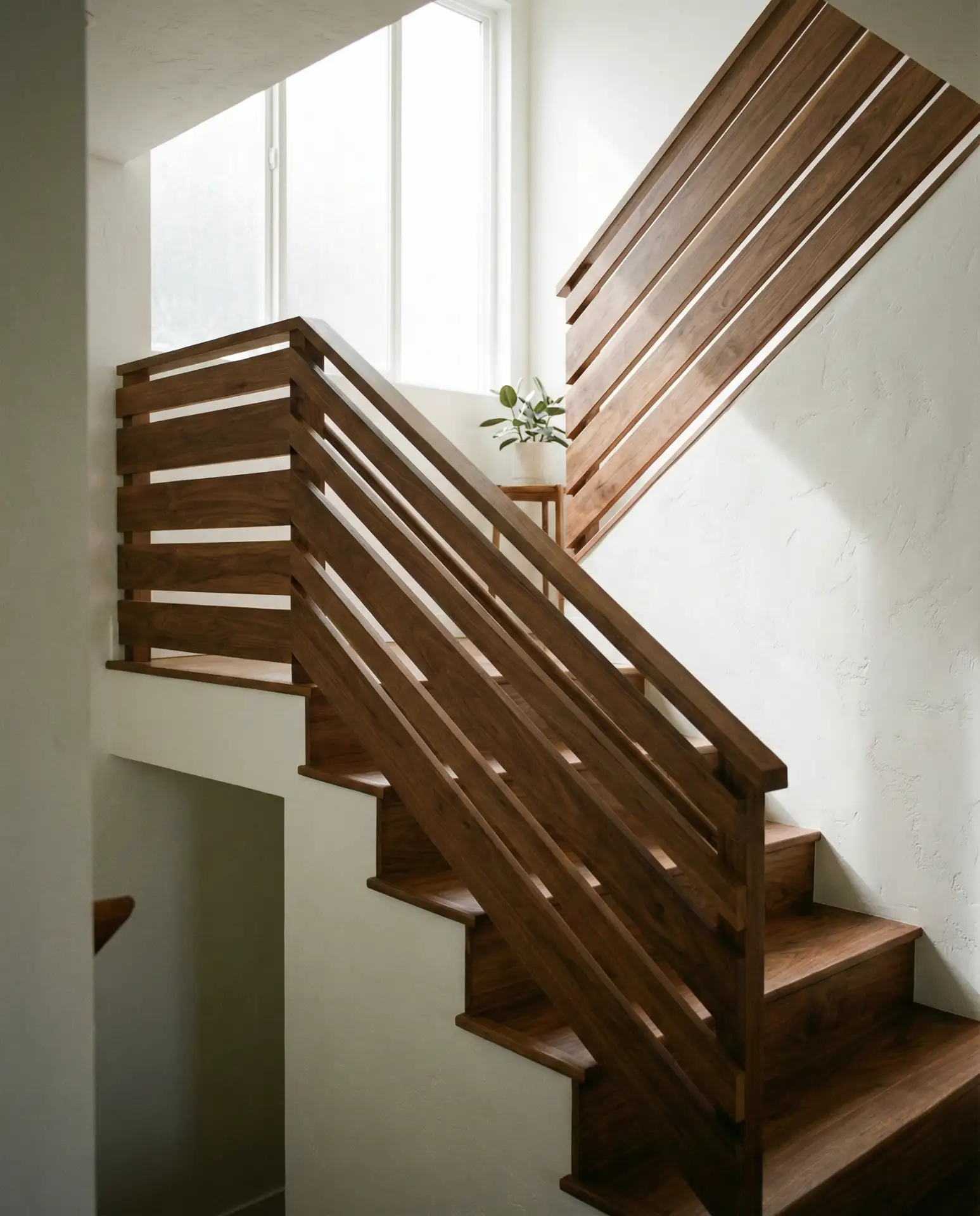
Mid-century design principles emphasize clean lines, natural materials, and functional beauty—qualities perfectly embodied in horizontal wooden slat railings. These systems typically feature narrow wood planks running parallel to the stairs, creating rhythm and texture without blocking sightlines. The aesthetic nods to 1950s and 60s architecture while feeling entirely current, making it ideal for homeowners renovating original mid-century properties or incorporating retro elements into newer builds. Walnut, teak, and oak are popular choices, each bringing distinct warmth and grain patterns.
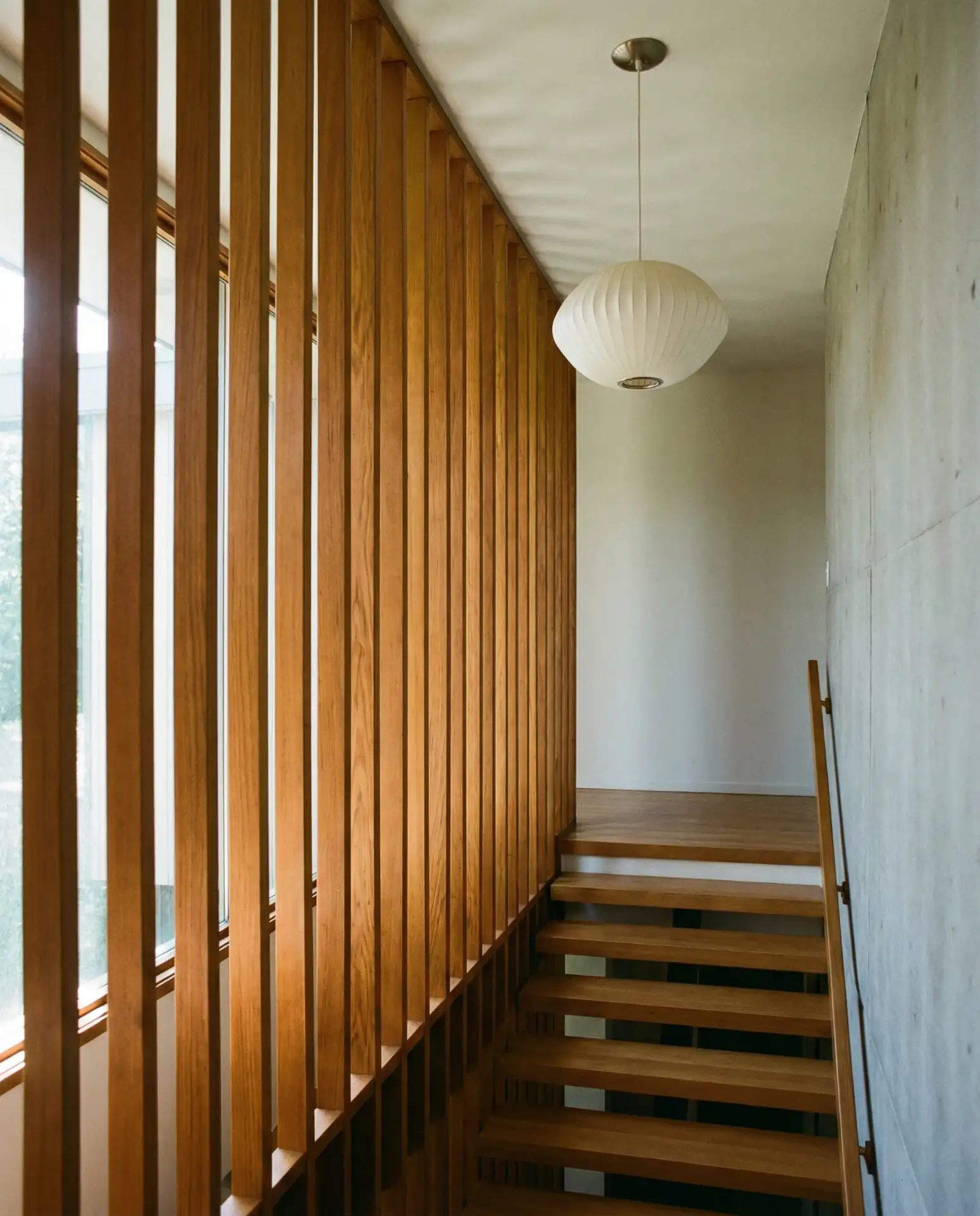
This style works best in homes with period-appropriate details—think terrazzo floors, clerestory windows, or built-in cabinetry with tapered legs. The wood slat railing reinforces those design cues rather than introducing conflicting elements. It’s particularly effective in split-level homes common to mid-century suburbs, where the staircase often sits prominently in the main living space and serves as a focal point. When executed well, these railings feel like they’ve always belonged, seamlessly blending with the home’s original character.
9. Rustic Wood with Decorative Accents
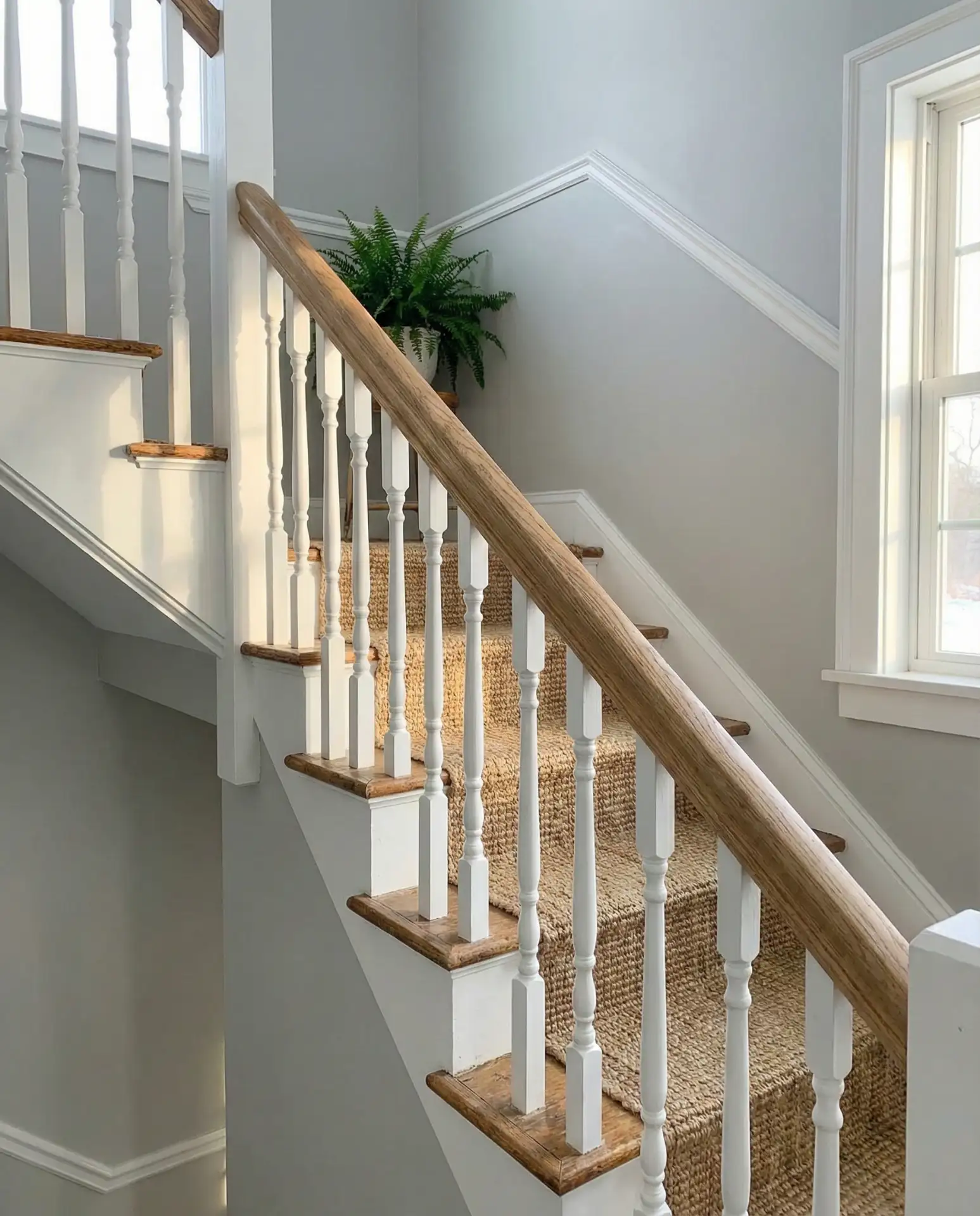
For homeowners drawn to farmhouse or cottage aesthetics, wooden railings with turned spindles or carved details offer warmth and character. These aren’t the dated oak railings of decades past—today’s versions often feature whitewashed or painted finishes, chunkier profiles, and thoughtful spacing that feels updated rather than traditional. The wood itself becomes a textural element, especially when combined with shiplap walls, exposed beams, or vintage-inspired hardware. This approach celebrates craftsmanship while remaining approachable and lived-in.
Many homeowners in regions like the Pacific Northwest or New England gravitate toward this style because it complements the local architectural vernacular. Homes with board-and-batten siding, front porches with rocking chairs, or kitchens with farmhouse sinks find natural cohesion with rustic wood railings. The key is balancing the traditional elements with enough restraint—too many decorative details can veer into overdone territory, while a curated approach keeps the space feeling fresh and intentional.
10. Modern Farmhouse with Painted Wood
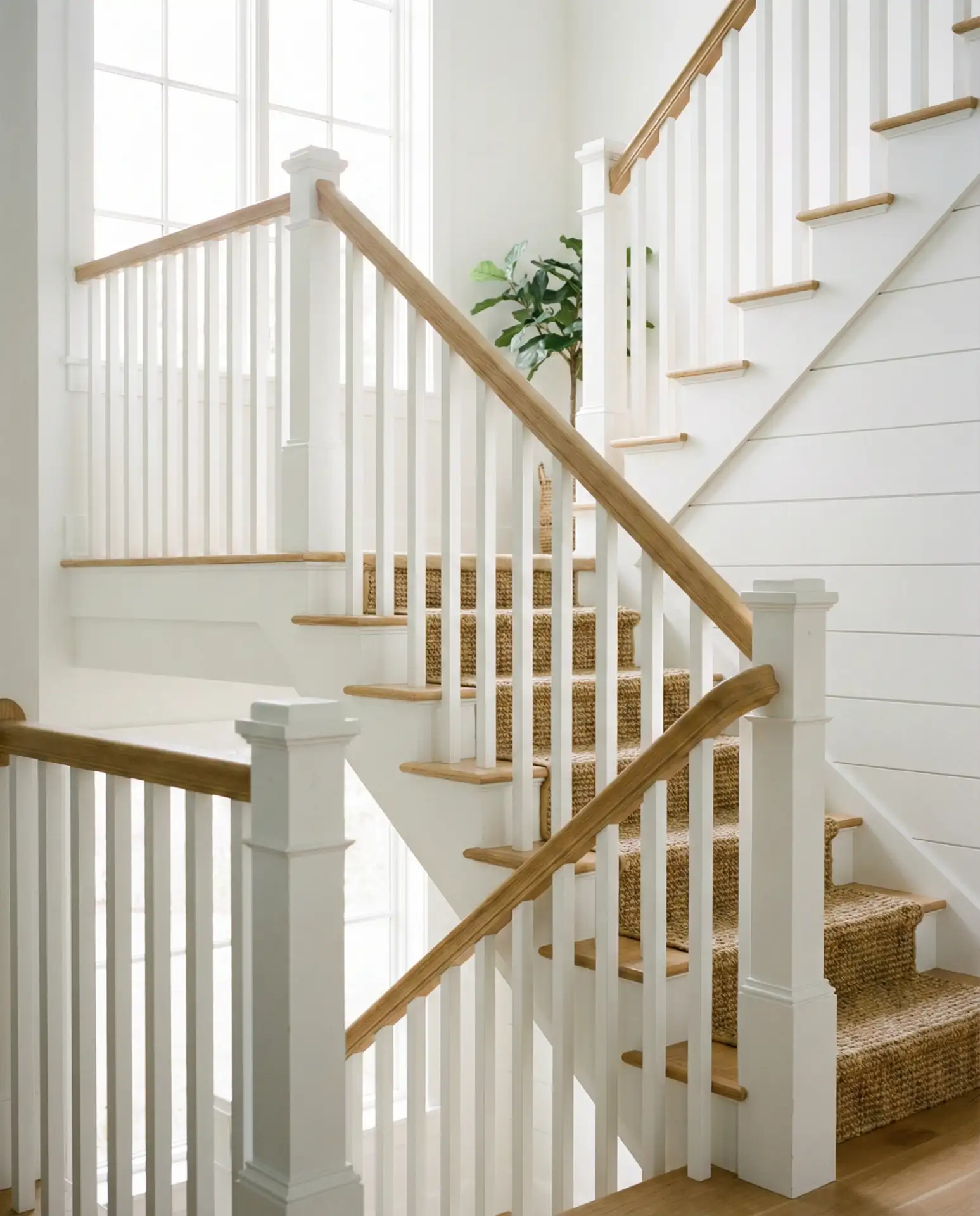
The modern farmhouse movement has redefined how Americans approach interior spaces, and railings are no exception. Crisp white or soft gray painted wood posts paired with natural or stained wood handrails strike that perfect balance between refined and relaxed. This combination works beautifully in homes where you want farmhouse charm without the heaviness of all-wood designs. The painted elements lighten the visual load, while the wood handrail adds warmth and practicality—it’s easier to grip and ages gracefully with use.
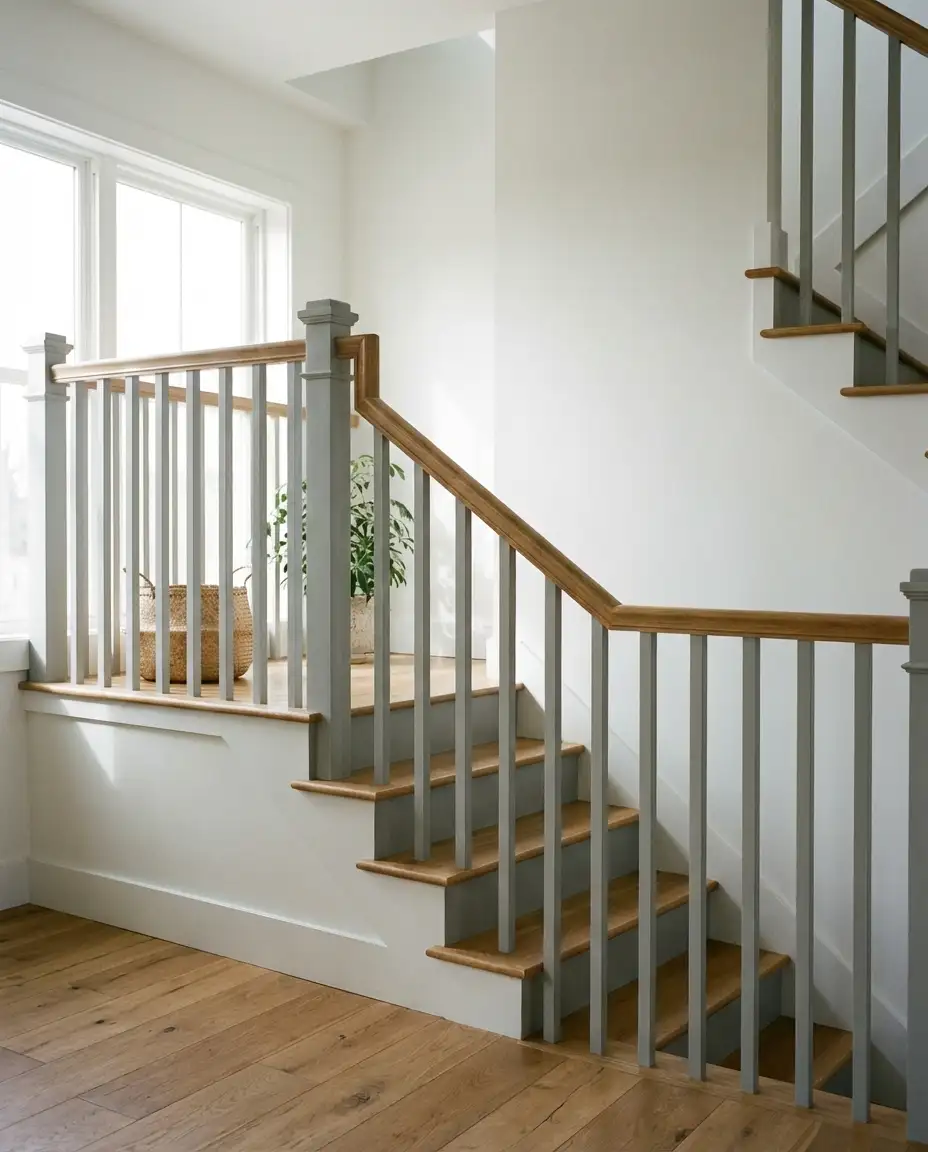
Expert designers often recommend this style when clients want flexibility in decorating. The neutrally painted posts won’t clash with seasonal changes—think adding greenery in spring, cozy textiles in fall, or Christmas decorating ideas like garland wrapped around the handrail in winter. The railing becomes a versatile backdrop that adapts to your evolving style preferences and holiday traditions without ever feeling dated or limiting.
11. Dramatic Black Iron Statements
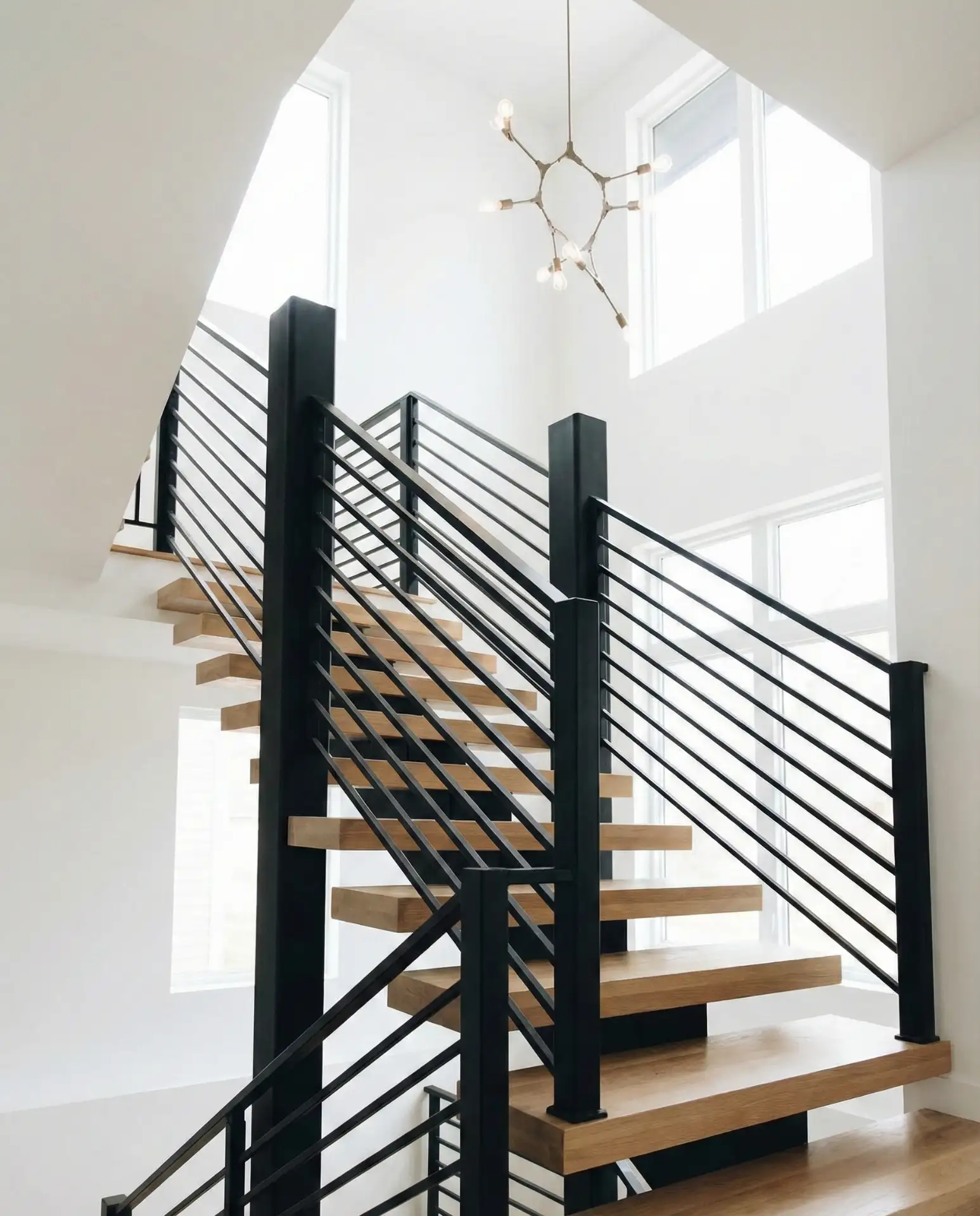
When you want your staircase to command attention, bold black metal railings with substantial profiles deliver exactly that presence. Unlike delicate balusters, these iron systems use thicker materials—chunky square tubes, wide flat bars, or robust round posts—that create architectural weight and drama. The dark finish draws the eye immediately, making the staircase a deliberate focal point rather than background infrastructure. This approach works particularly well in homes with high ceilings, open layouts, or when you’re aiming for a gallery-like atmosphere where every element feels intentional.
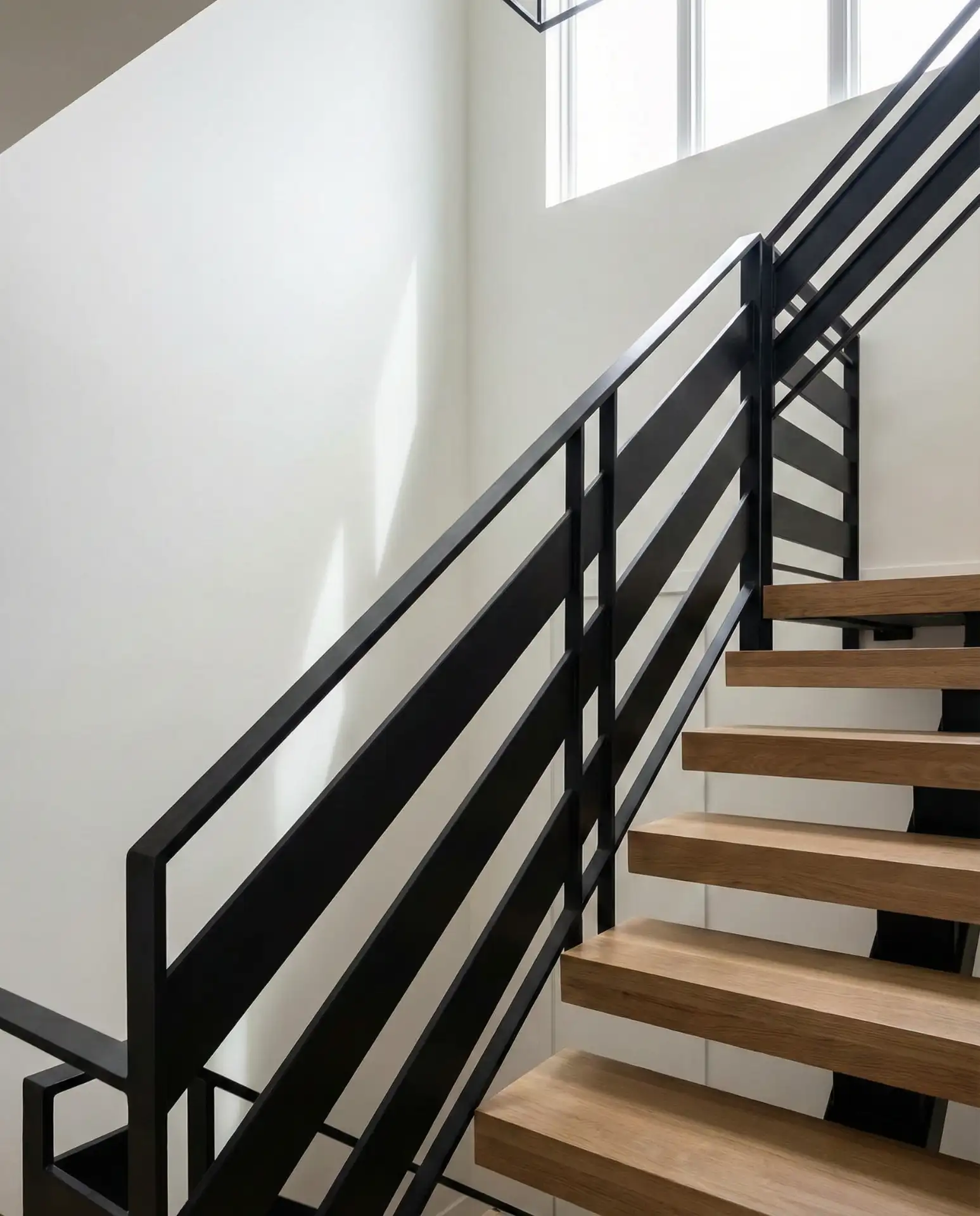
A contractor in Austin mentioned that homeowners sometimes hesitate on dark railings, worried about making spaces feel smaller. The reality is quite different—when paired with light walls and floors, black railings actually enhance the sense of volume by creating strong visual contrast that defines the space. The darkness reads as intentional design rather than encroachment, especially when the rest of the room maintains an airy palette and incorporates ample natural light.
12. Minimalist Cable with Wood Posts
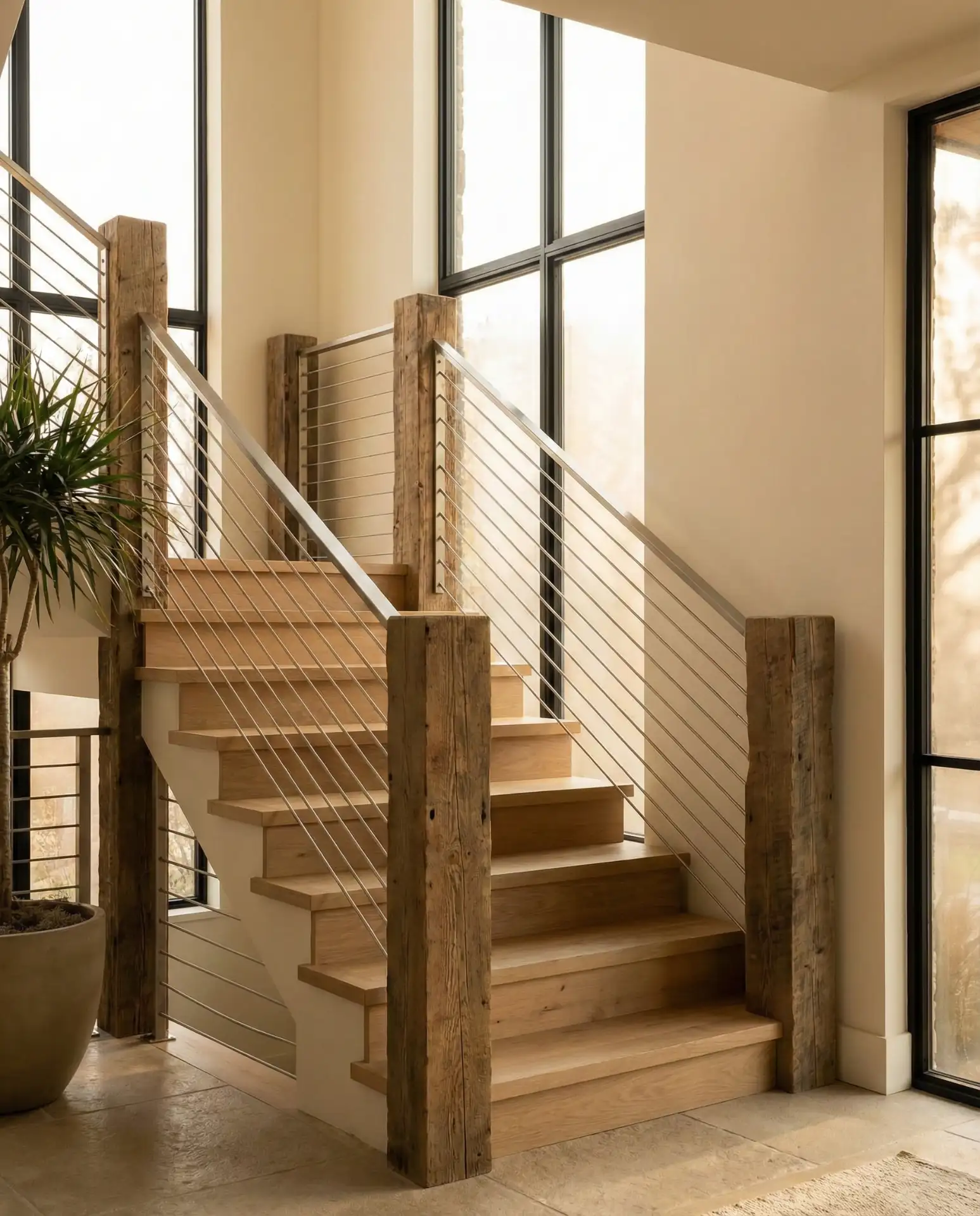
Combining cable infill with substantial wooden posts offers an interesting compromise for homeowners who want modern transparency without fully committing to an all-metal aesthetic. The wood posts—often in 4×4 or larger dimensions—provide visual anchors and warmth, while the horizontal cables between them maintain open sightlines. This hybrid approach works beautifully in homes transitioning between traditional and contemporary styles or in spaces where you want some architectural presence without solid barriers blocking light or views.
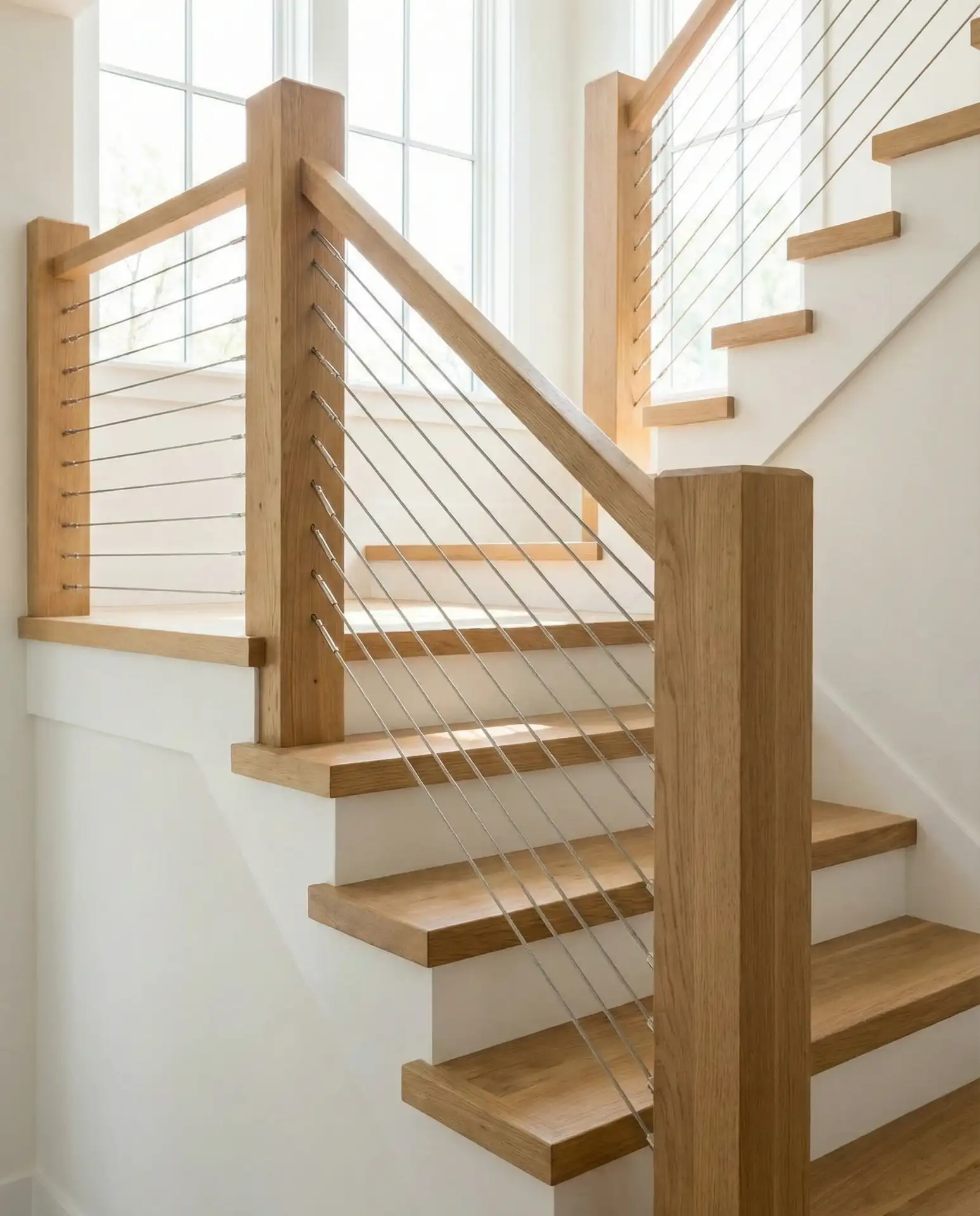
Budget considerations here land somewhere between all-wood and all-metal systems. The wood posts are less expensive than custom metalwork, while the cable infill costs more than basic wood balusters. Expect pricing around $60-$120 per linear foot depending on wood species and cable quality. Installation requires precision—cables must be tensioned properly to meet building codes—so this isn’t typically a DIY project, but the resulting look justifies the investment for many homeowners seeking that perfect middle ground.
13. Updated Traditional with Fresh Paint
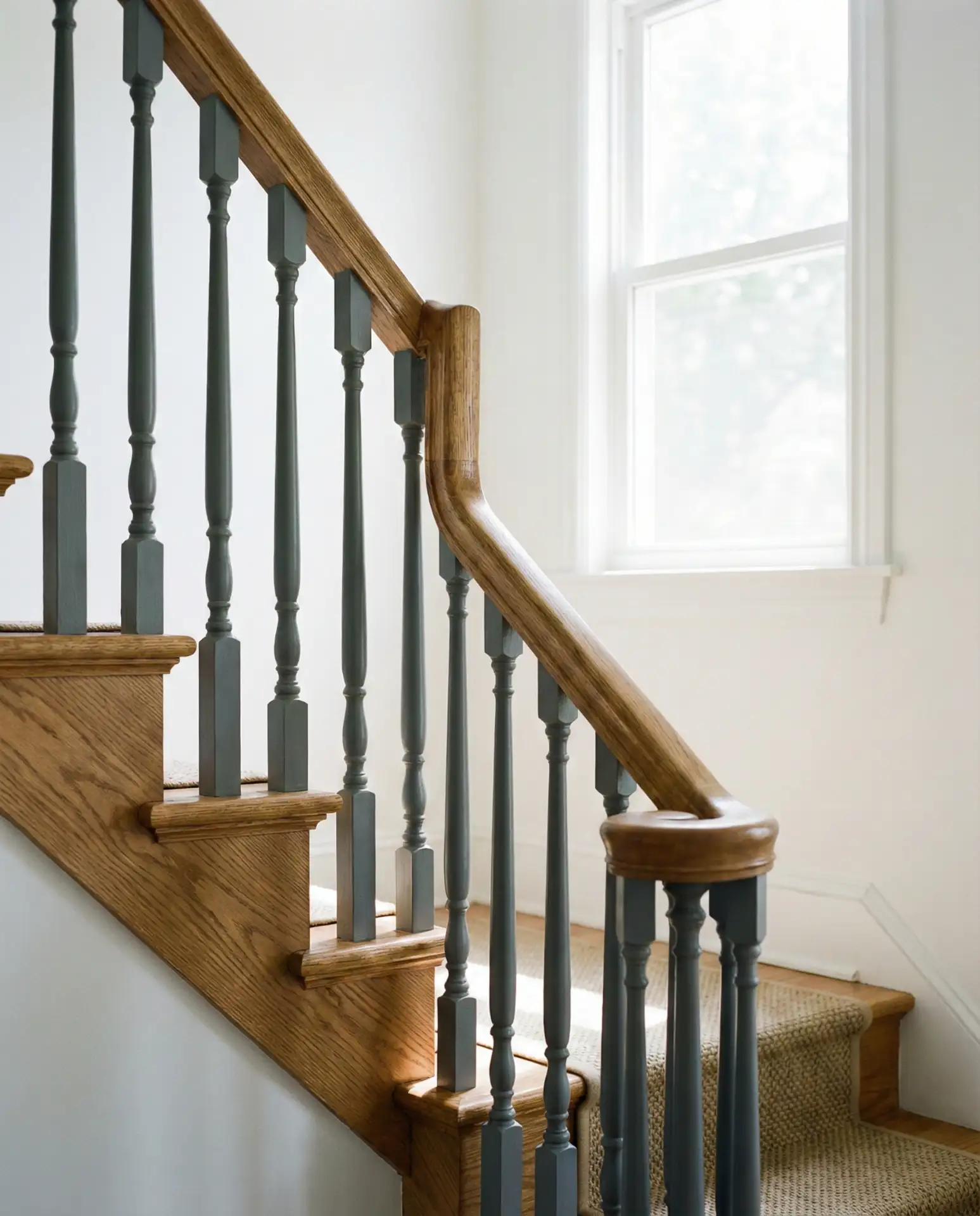
Sometimes the best makeover doesn’t involve replacement but rather transformation through strategic updates. Existing wood railings can be completely refreshed with modern paint colors—think charcoal gray, navy, or even black—that maintain the traditional structure while shifting the aesthetic toward contemporary. This approach preserves solid craftsmanship and saves significantly compared to full replacement, making it ideal for homeowners working with tighter budgets or those in older homes with quality original woodwork worth keeping. Pairing the updated paint with refinished treads creates a cohesive new look.
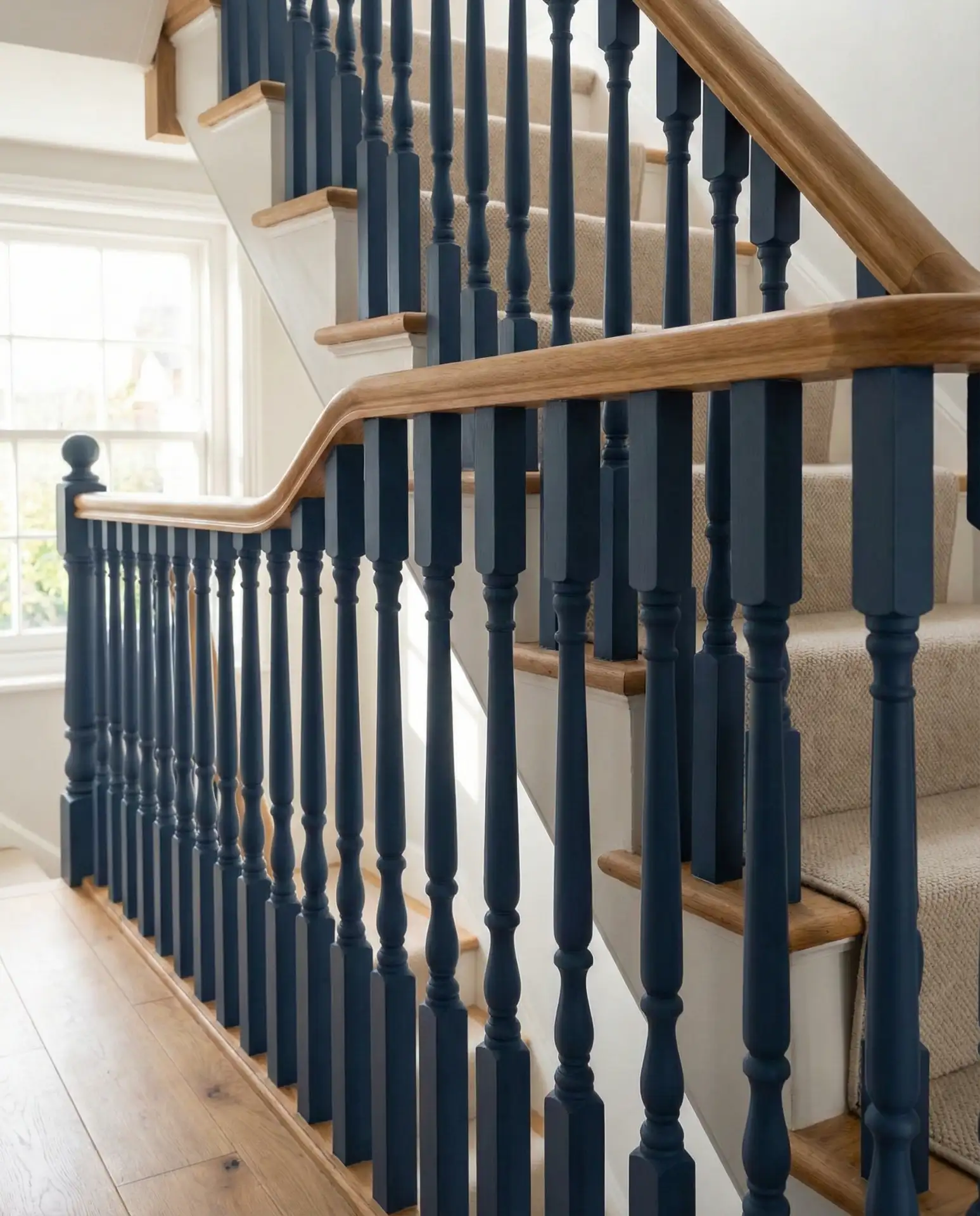
Real homeowners who’ve tackled this project report that proper prep work makes all the difference—sanding, priming, and using quality paint designed for high-traffic areas ensures the finish lasts. Many choose to hire professionals for the detailed work on balusters and spindles, where achieving smooth, even coverage requires patience and skill. The transformation can be dramatic: what once felt dated suddenly reads as deliberately curated, bridging the home’s architectural history with current design sensibilities.
14. Open Staircase with Floating Treads
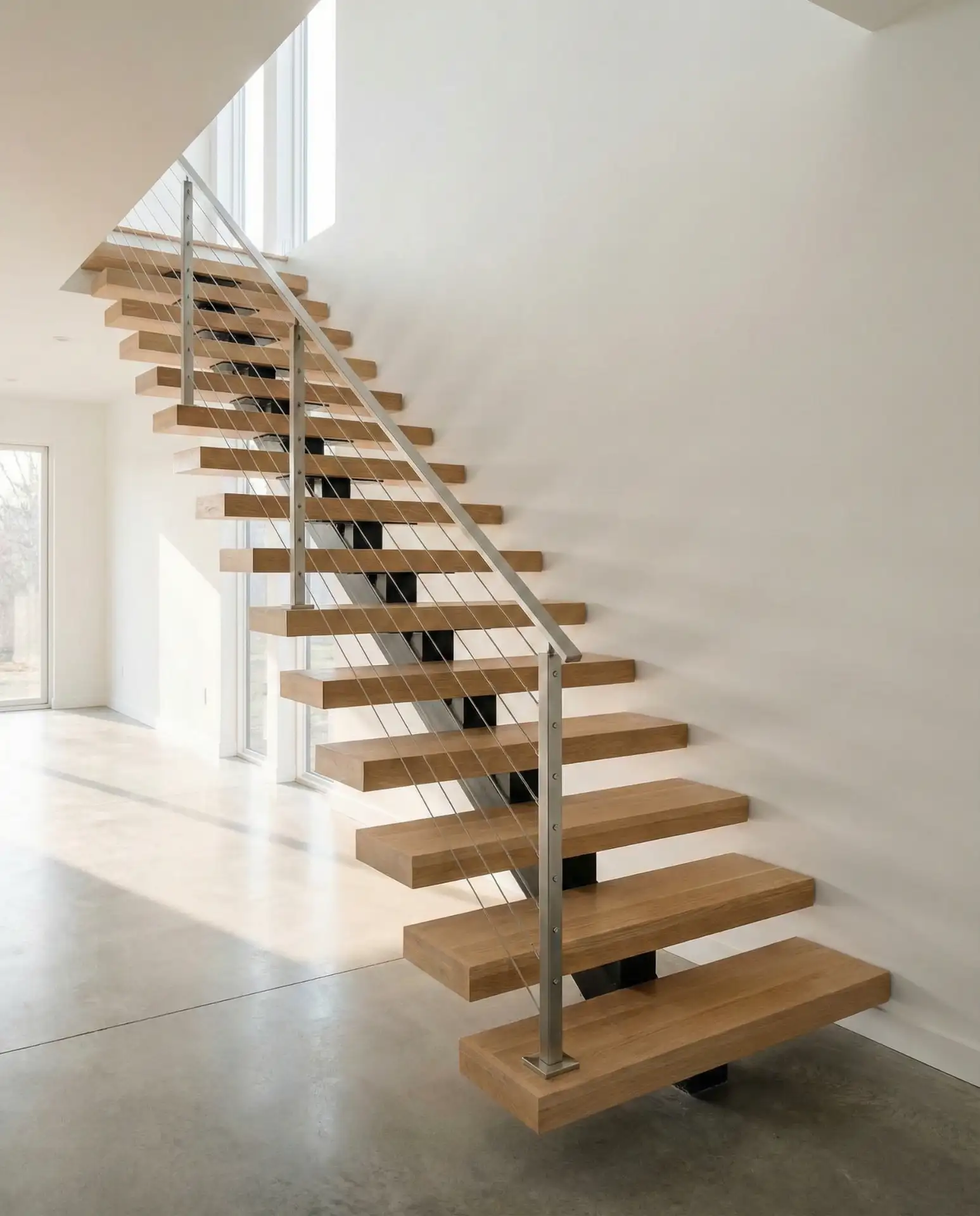
Floating stairs with minimalist railings create perhaps the most dramatic modern statement possible. The treads appear to cantilever from the wall with no visible support beneath, requiring railings that match that lightness—think slim steel cables, glass panels, or minimal metal posts. This modern design approach demands structural precision and often higher investment, but the result is genuinely breathtaking. Light flows beneath and around the stairs, making even compact spaces feel expansive and architecturally significant. It’s become increasingly popular in urban homes and contemporary new builds across America.
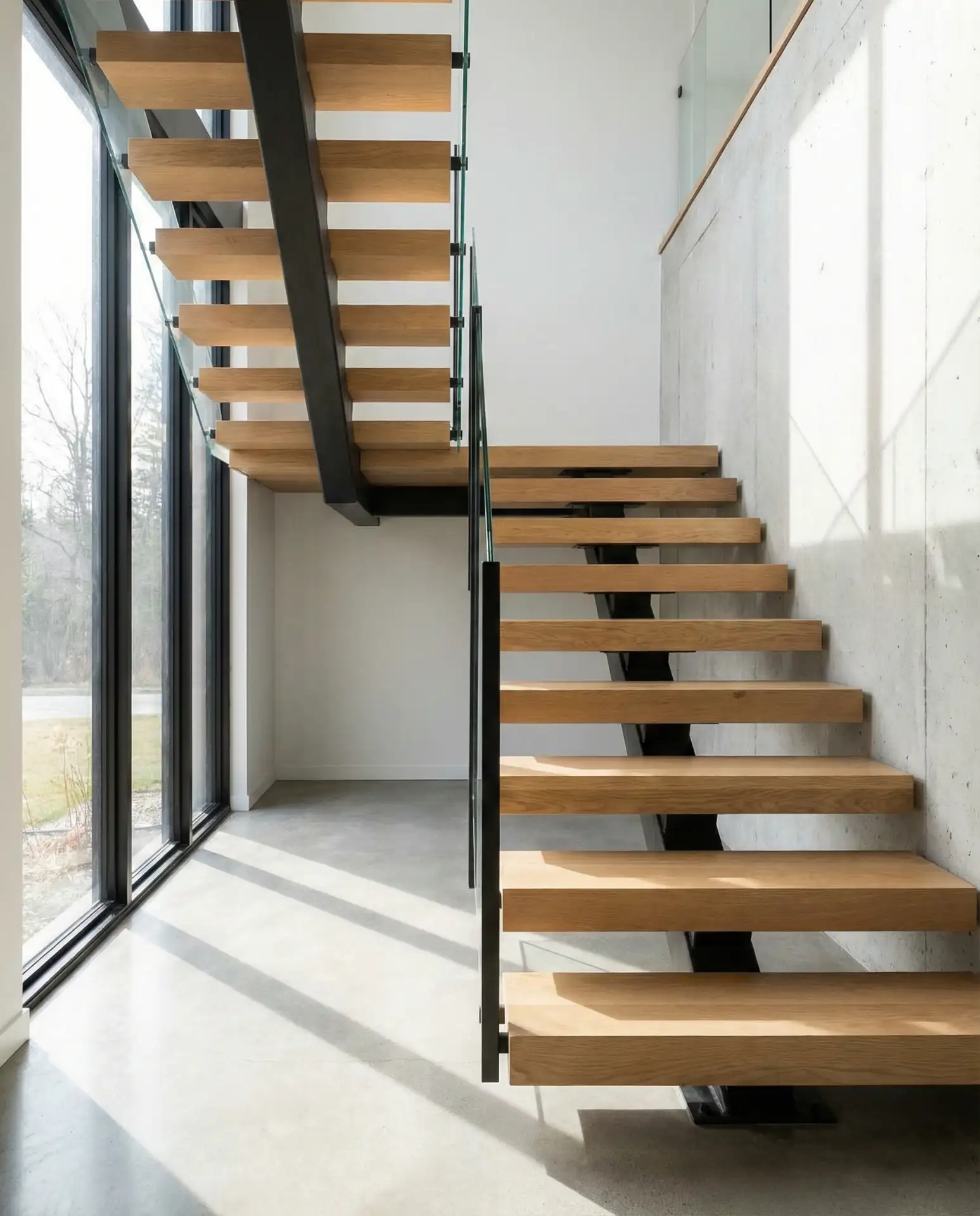
This works best in homes with solid concrete or steel-reinforced walls capable of supporting the structural loads. It’s particularly effective in lofts, modern two-story living rooms, or entryways where the staircase becomes an artistic feature rather than purely functional infrastructure. The openness beneath the stairs also provides opportunities for creative use of space—whether that’s built-in storage, a reading nook, or simply allowing light to reach areas that would otherwise sit in shadow.
15. Rod Iron with Decorative Twists
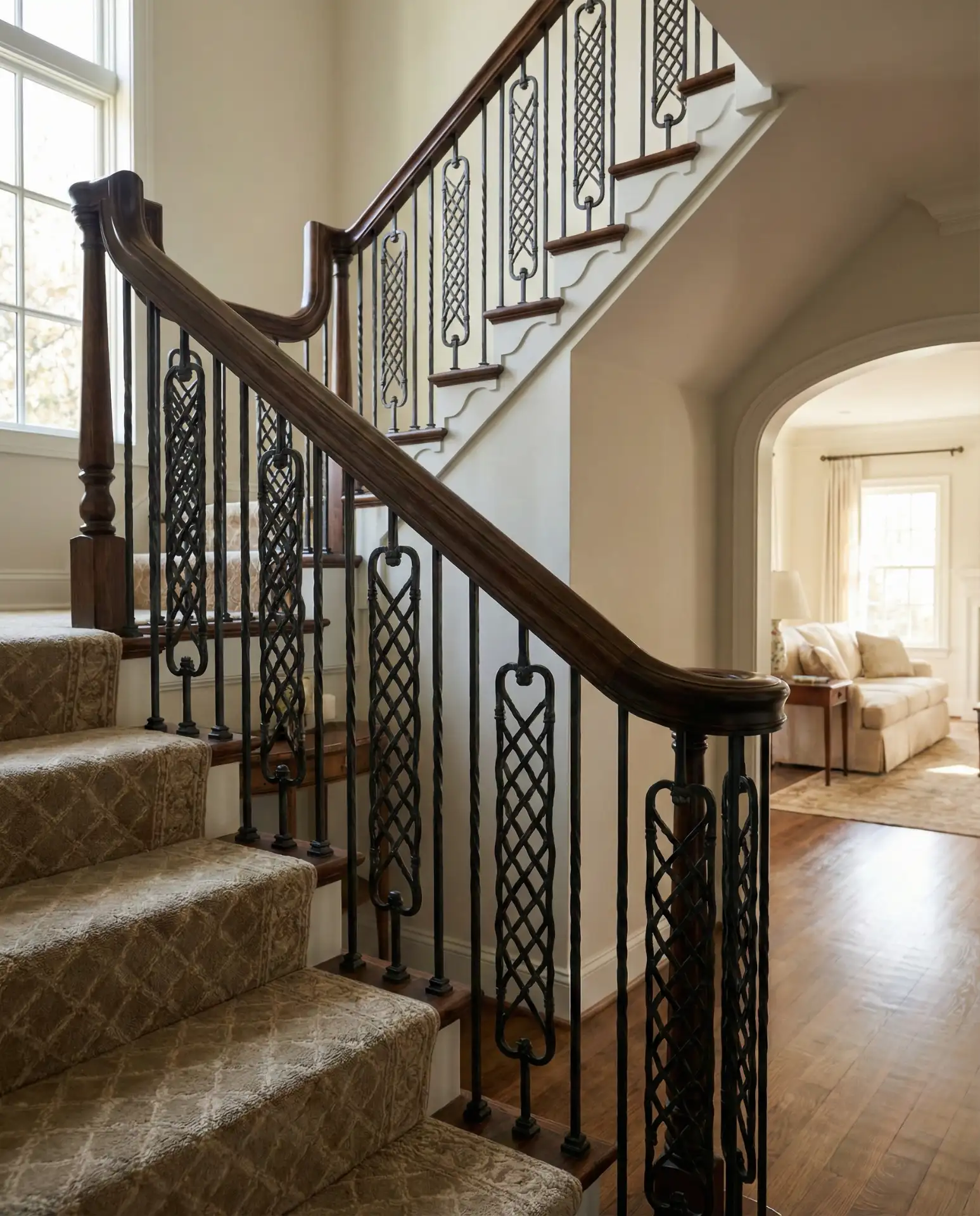
The term “rod iron” (though technically wrought iron) has become shorthand for those elegant twisted metal balusters that add Old World charm to staircases. These pieces feature spiraled, basket-weave, or hammered textures that catch light beautifully and introduce handcrafted detail without overwhelming the space. While traditionally seen in Mediterranean or Spanish Colonial homes, they’ve found their way into diverse architectural styles across the country—proving that quality metalwork transcends specific design movements. The dark finish, usually black or bronze, grounds the staircase, while the intricate details provide visual interest up close.
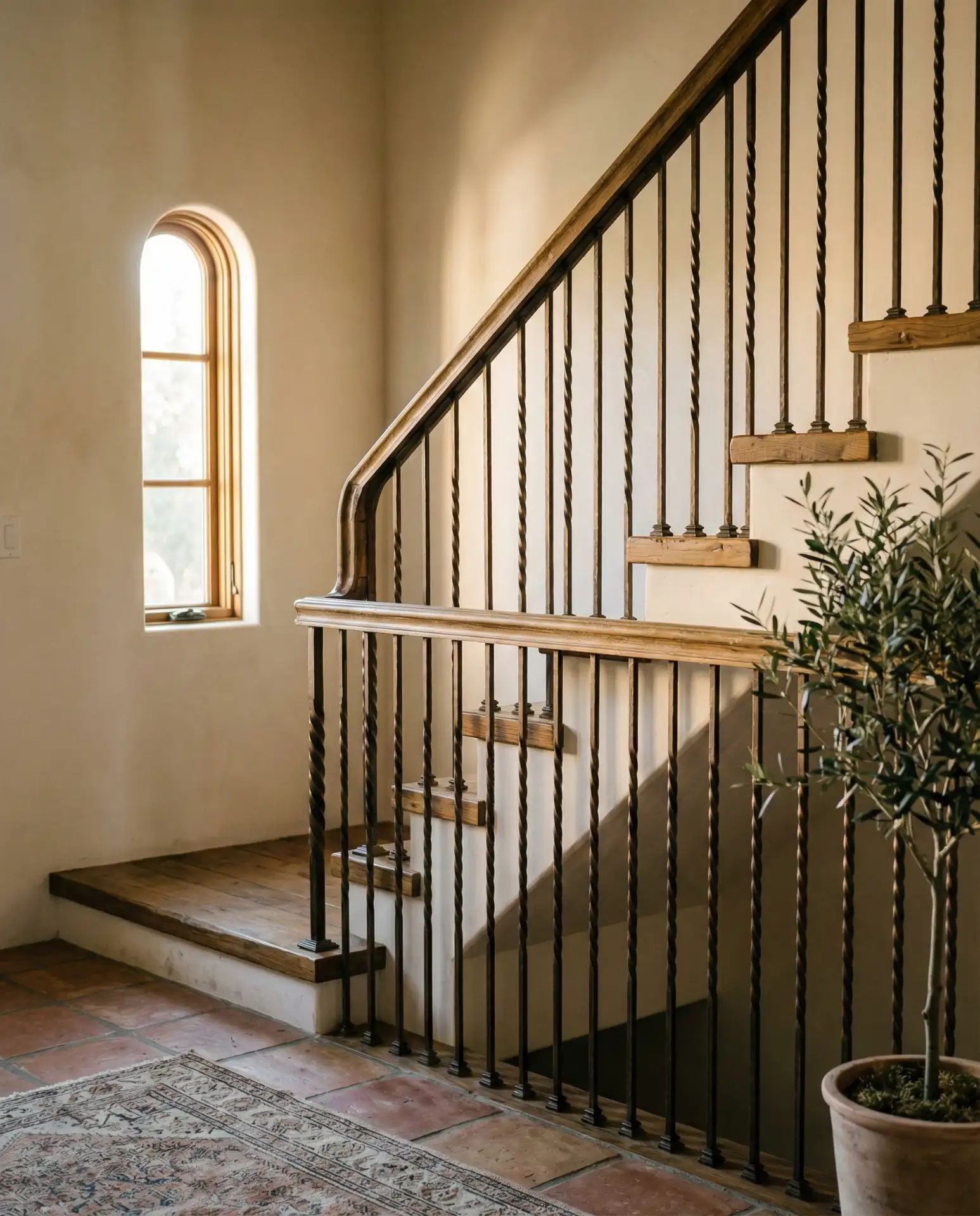
The Southwestern states—Arizona, New Mexico, and Texas—see these railings frequently because they complement regional architecture that emphasizes stucco walls, exposed wood beams, and tile work. The iron details echo other metal elements like light fixtures, door handles, and window grilles, creating cohesive design language throughout the home. Even in regions without Spanish influence, these railings add gravitas and artistry that feels custom and considered rather than builder-grade standard.
16. Contemporary Glass and Metal Hybrid
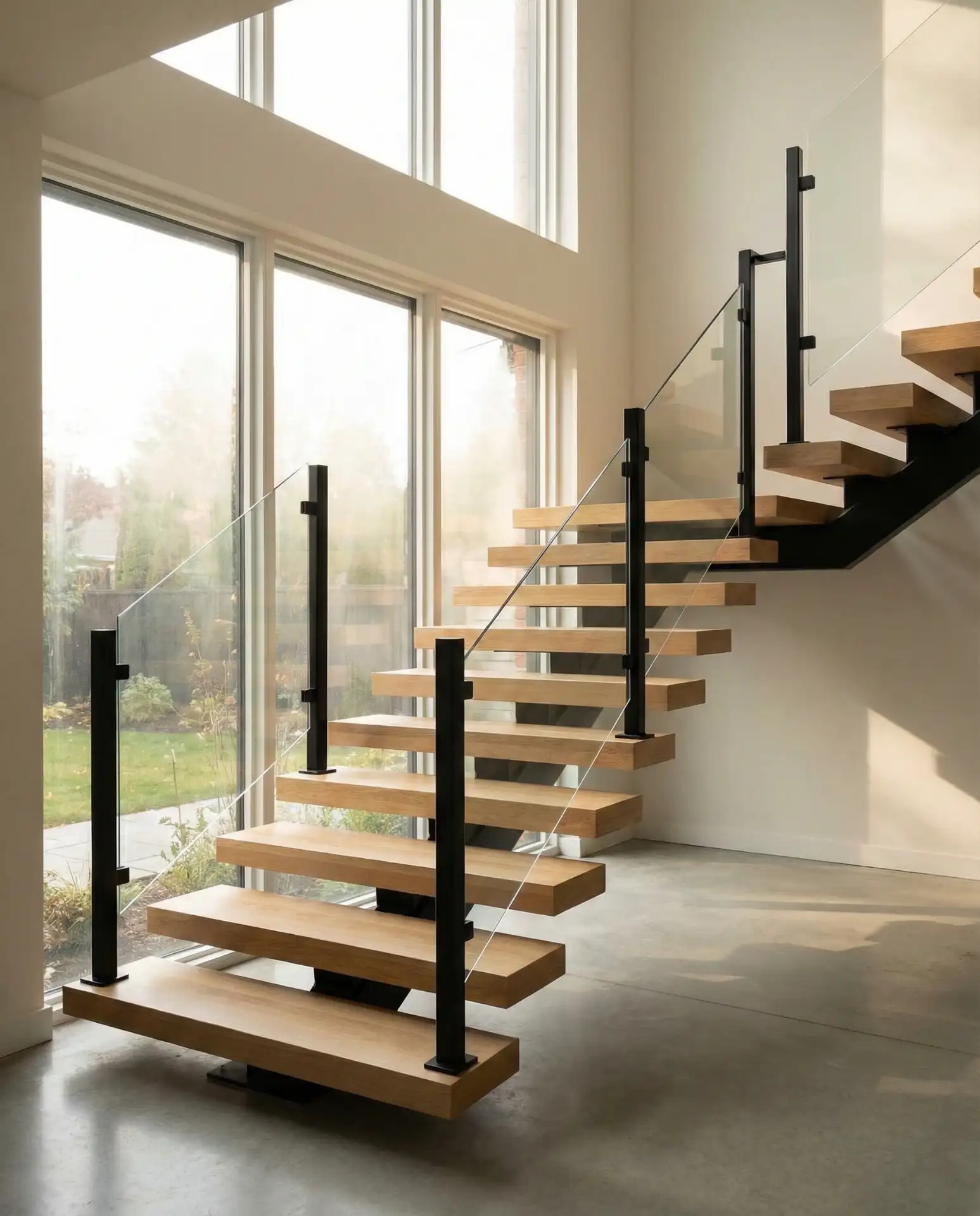
Merging glass panels with metal framing creates a contemporary railing system that balances transparency with defined structure. The metal—usually stainless steel or powder-coated aluminum—provides visual breaks between glass sections, creating rhythm and preventing the railing from appearing too stark or clinical. This combination works exceptionally well in homes with clean-lined architecture where every detail matters, offering a refined look that feels sophisticated without being cold. The glass maintains openness, while the metal introduces just enough materiality to ground the design.
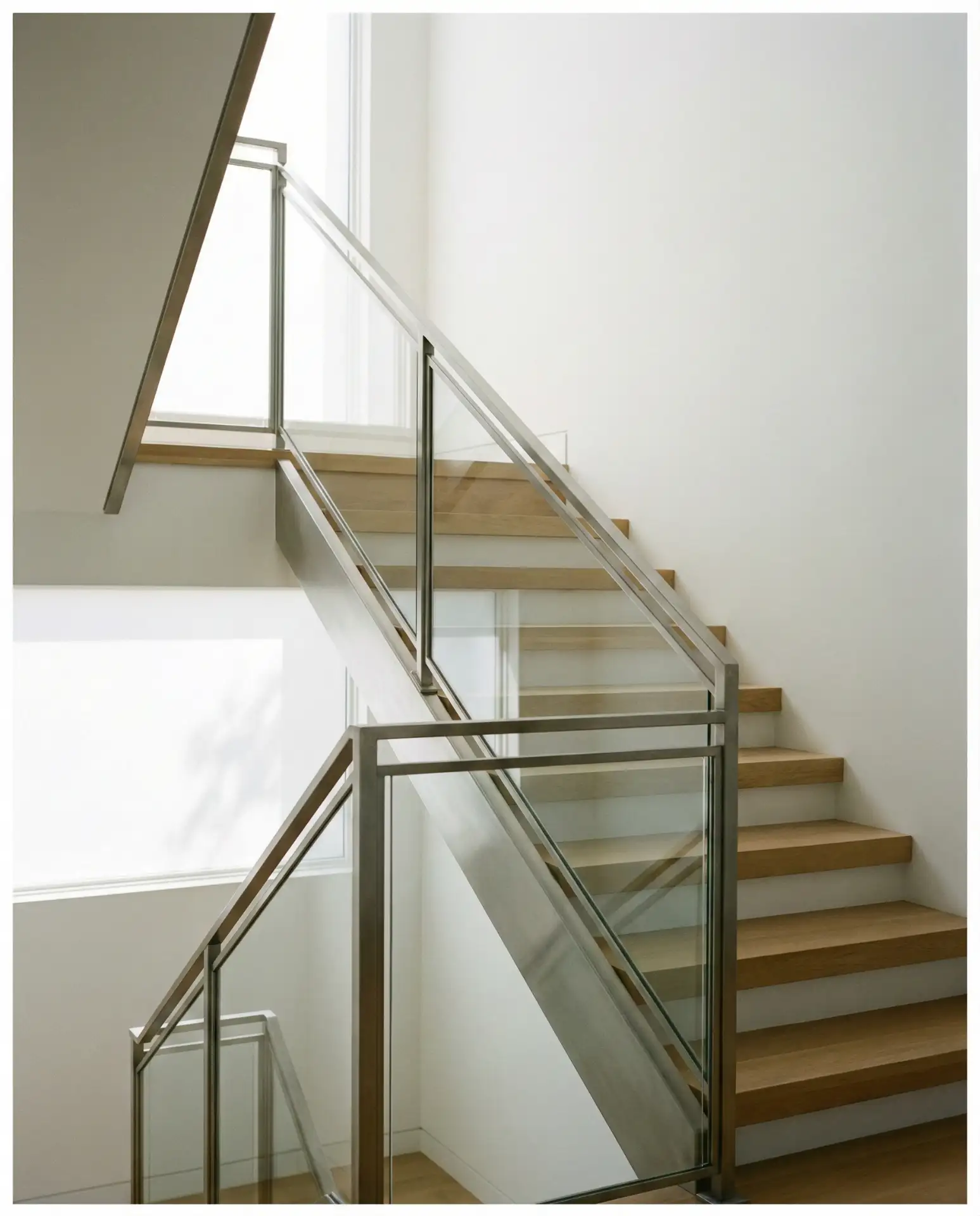
One practical insight often overlooked: the metal framing significantly reduces the fingerprint visibility issue that plagues all-glass systems. The vertical posts and horizontal rails provide natural grip points, meaning fingers touch metal more often than glass. This makes maintenance more manageable while preserving the clean, transparent aesthetic. For busy households wanting that modern glass look without constant cleaning, this hybrid approach offers a practical middle path.
17. Half Wall with Upper Railing Detail
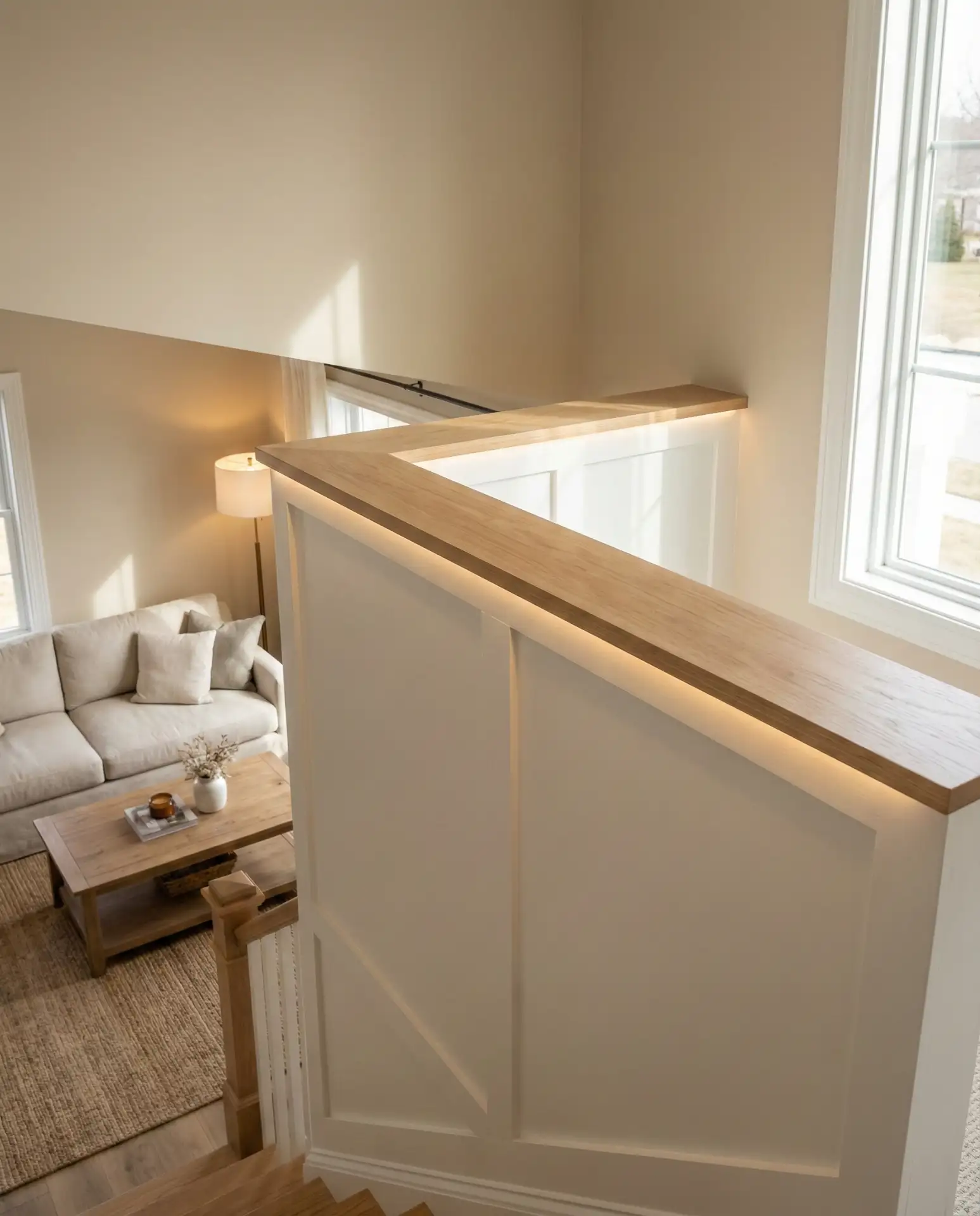
The ideas in the half-walls category address a specific architectural scenario: staircases open to lower levels where you want some visual separation without completely closing things off. Building a half wall—typically 36 to 42 inches high—along the staircase edge provides a solid barrier that feels more substantial than open balusters, while adding a handrail or detailed cap on top completes the safety requirements. This approach works beautifully in split-level homes, basements opening to main floors, or any space where the staircase overlooks another room. The wall can be painted, paneled, or finished to match surrounding architecture.
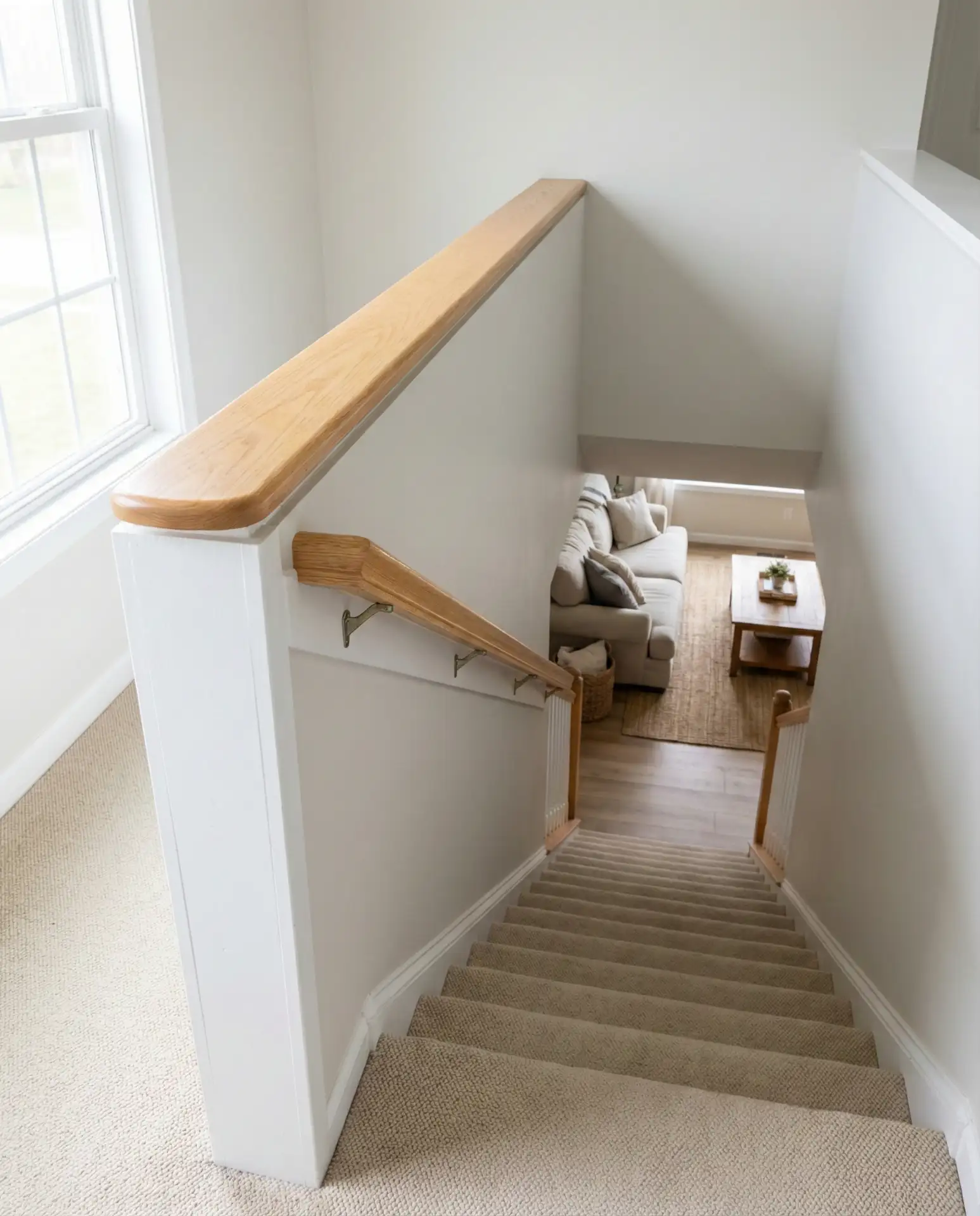
This design works best when you want to define zones without sacrificing connection between levels. It’s especially popular in homes where parents want to supervise kids playing downstairs while working in the kitchen or upper living areas. The solid wall provides acoustic dampening compared to open railings, reducing noise transfer between floors—a practical benefit many homeowners don’t anticipate until they live with the space. Adding trim details or built-in shelving into the wall elevates it from a basic barrier to an intentional architectural feature.
18. Industrial Pipe Railing Systems
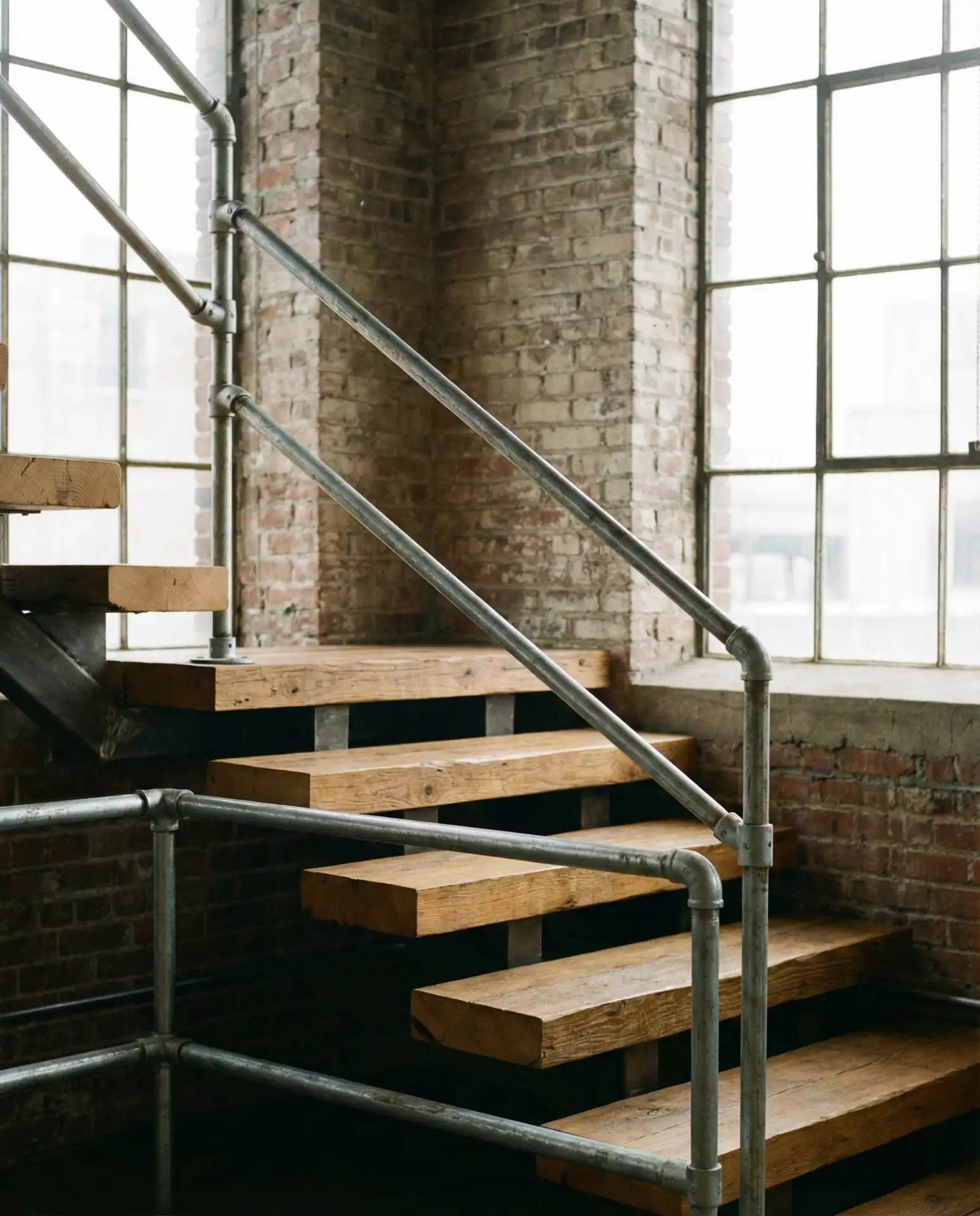
Black or galvanized iron pipe railings bring authentic industrial character to homes, offering a DIY-friendly alternative to custom metalwork. Using standard plumbing pipe and fittings, homeowners can create railings with exposed joints and utilitarian aesthetics that feel raw and honest. This approach has gained traction in loft conversions, modern farmhouses, and homes where mixing textures—smooth drywall against rough metal, polished floors against matte iron—creates visual interest. The pipes can run horizontally, vertically, or in geometric patterns depending on building code requirements and personal preference.
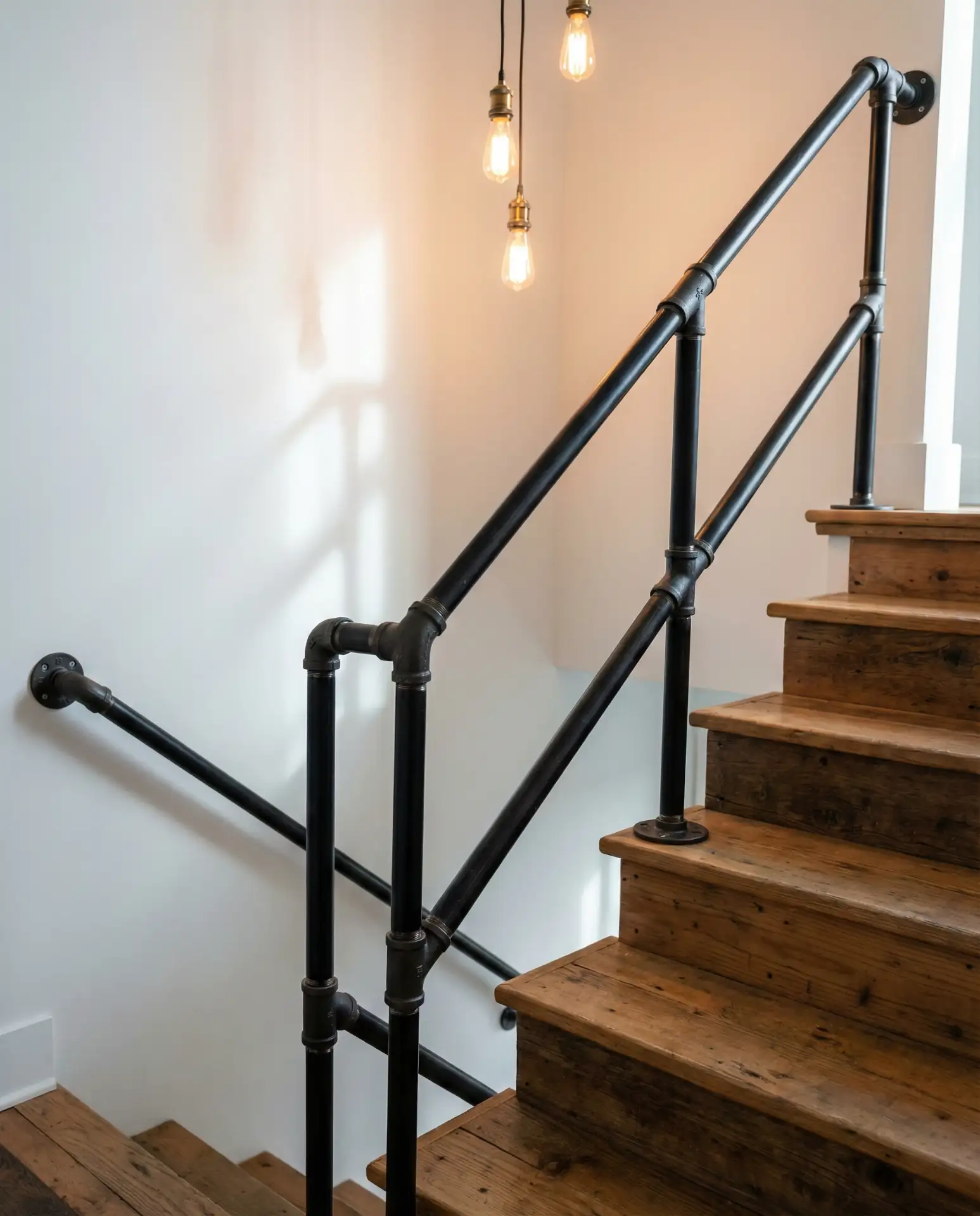
Common mistakes include using pipe that’s too thin—¾” pipe can feel flimsy, while 1″ or 1¼” provides better stability and visual weight. Also, failing to properly secure floor flanges can create wobbly railings that don’t meet code. Those willing to invest time in proper installation find that pipe railings offer surprising durability and unique character that prefabricated systems can’t match. The components are readily available at hardware stores, making repairs or future modifications straightforward and affordable.
19. Elegant Curved Staircase Railings
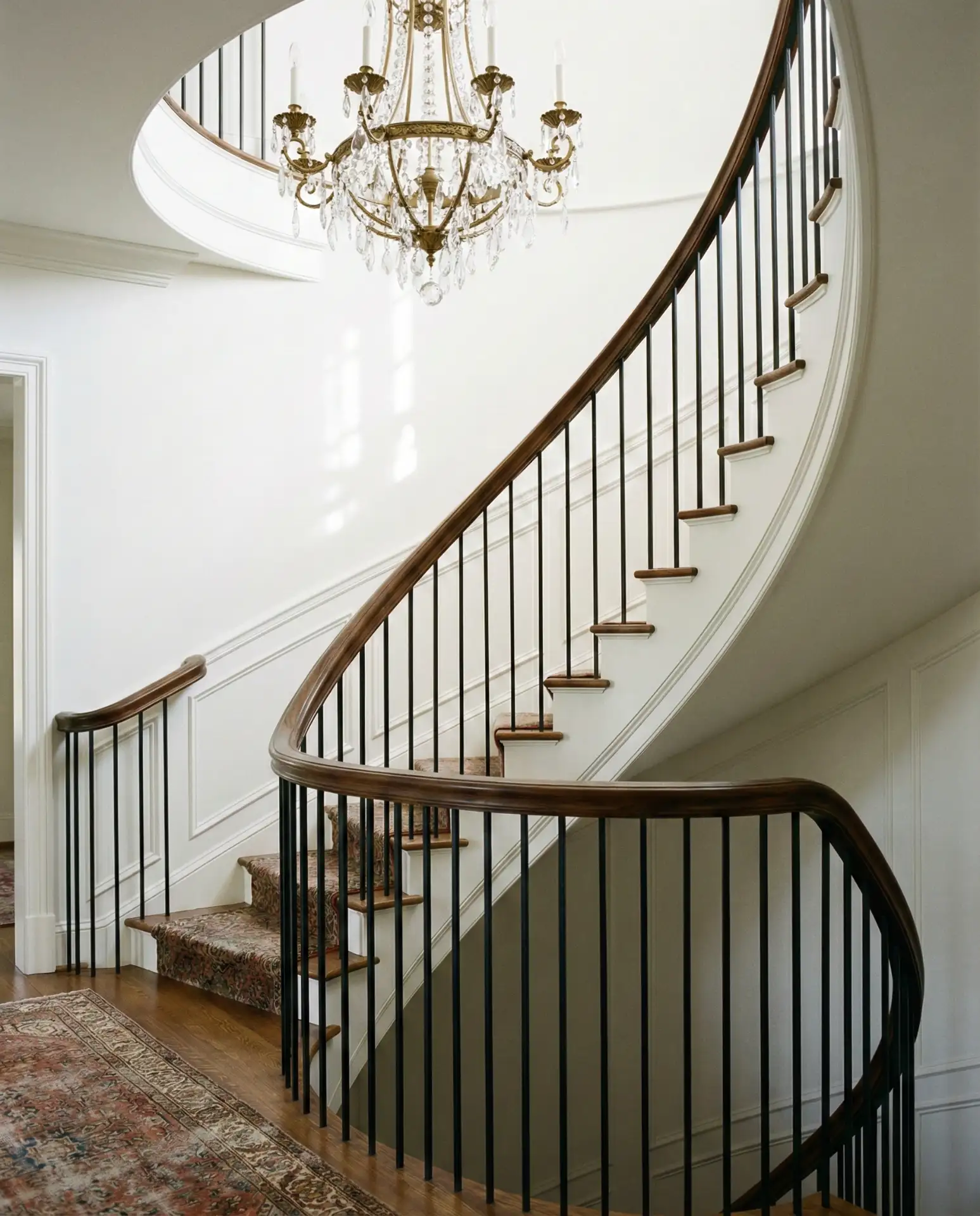
Curved staircases present unique opportunities for railings that follow graceful arcs, creating flowing movement through vertical space. Whether it’s a grand sweeping curve in a two-story foyer or a gentle spiral connecting floors, the railing must bend smoothly while maintaining structural integrity. Wood or metal handrails are typically custom-fabricated to match the curve exactly, with balusters or panels following the same arc. This level of customization means higher costs—curved railings can run 30-50% more than straight sections—but the architectural impact justifies the investment in homes where the staircase serves as a centerpiece.
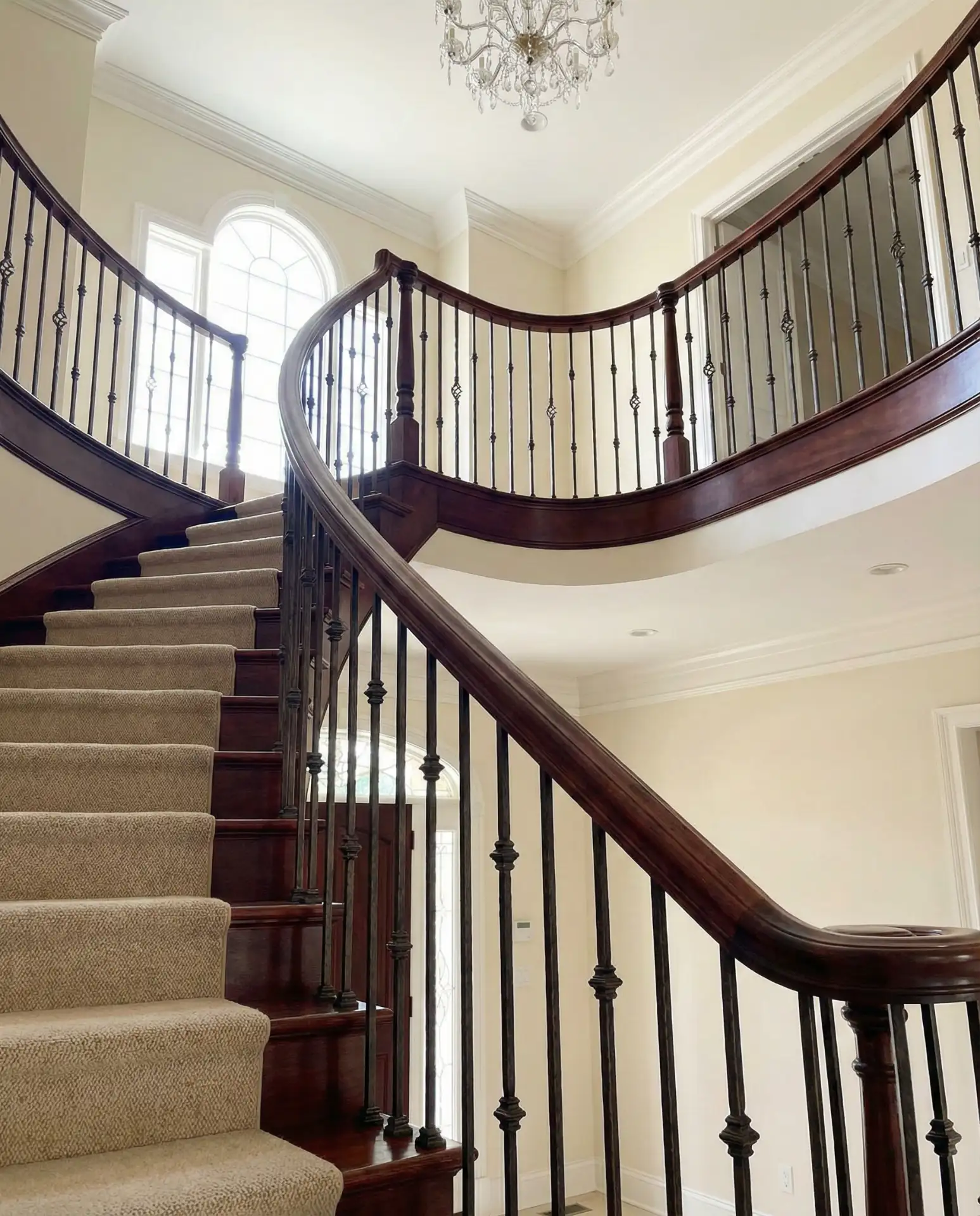
Regional architectural styles influence curved staircase prevalence—Southern estates, Colonial Revival homes in the Northeast, and Mediterranean villas in California frequently feature these dramatic elements. The curved railing demands skilled craftsmanship, typically requiring experienced installers who understand the geometry and structural requirements. For homeowners in historic homes maintaining period authenticity or those building custom new construction, the curved railing becomes a defining feature that elevates the entire property’s character and value.
20. Mixed Materials with Leather Details
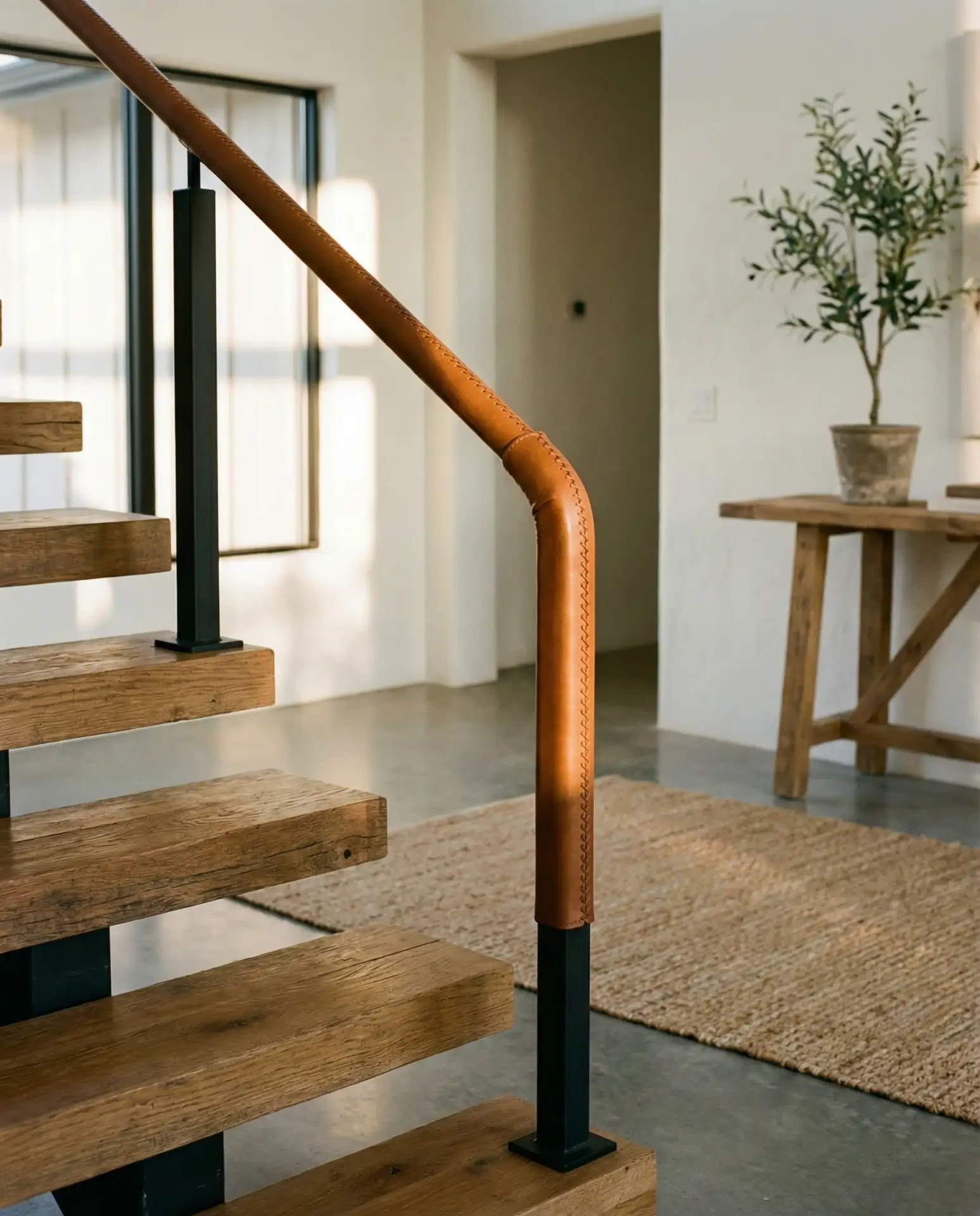
Some designers are pushing boundaries by incorporating unexpected materials like leather-wrapped handrails into railing systems. The soft texture contrasts beautifully against hard metal or wood components, adding tactile luxury that’s uncommon in stair railings. Leather wrapping provides exceptional grip, feels warm to the touch, and ages into a rich patina over time. This approach works particularly well in homes with equestrian themes, Western ranch aesthetics, or contemporary spaces seeking unusual textural combinations. The leather can be stitched, studded, or left plain depending on the desired level of ornamentation.
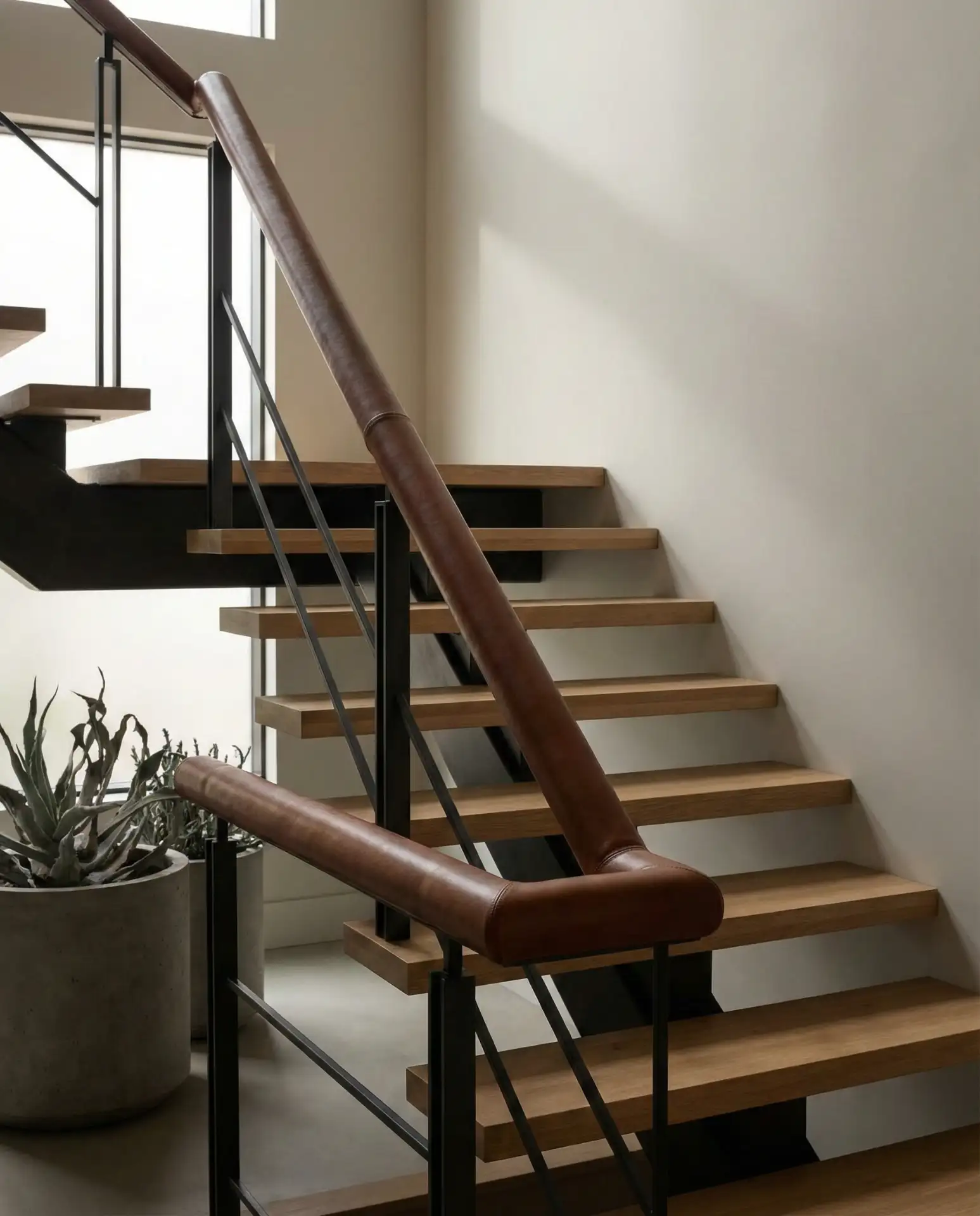
An interior designer in Montana shared that clients initially skeptical about leather railings became converts after feeling the difference in daily use—especially in colder climates where metal rails can feel brutally cold in winter. The leather maintains a comfortable temperature year-round and provides a cushioned grip that’s easier on hands and wrists. Maintenance involves occasional conditioning with leather cream, similar to caring for quality furniture, making this an option for those who appreciate materials that require and reward regular attention.
21. Scandinavian-Inspired Light Wood and White
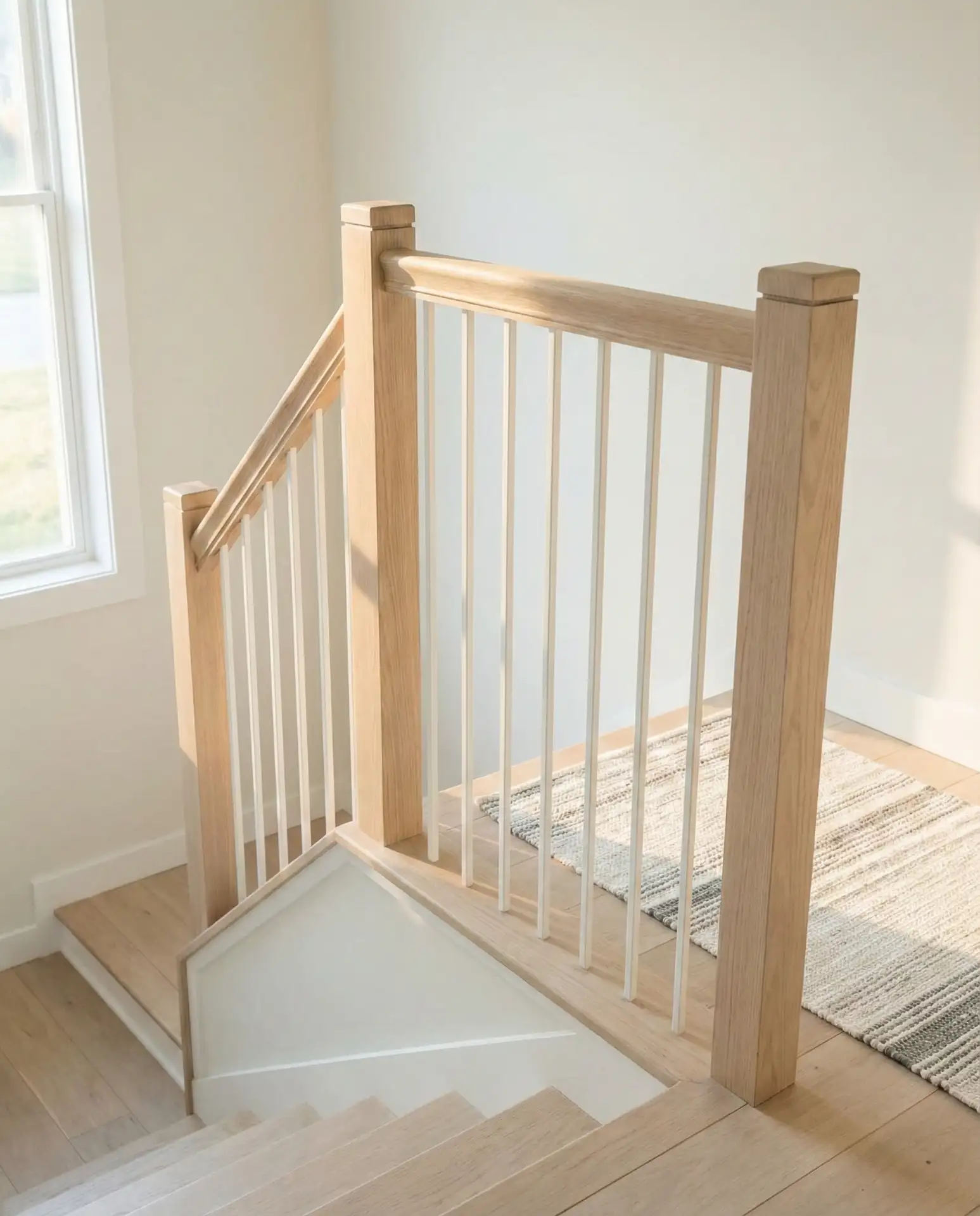
Scandinavian design’s modern principles emphasize lightness, functionality, and connection to natural materials—all embodied in railings that pair pale wood with crisp white elements. Think ash, birch, or light oak handrails combined with painted white posts or balusters, creating an atmosphere that feels airy, calm, and effortlessly sophisticated. This aesthetic works beautifully in homes prioritizing natural light and uncluttered spaces, where the railing supports the overall design philosophy rather than demanding attention. The pale palette maximizes perceived space, making it ideal for smaller homes or narrow stairwells.
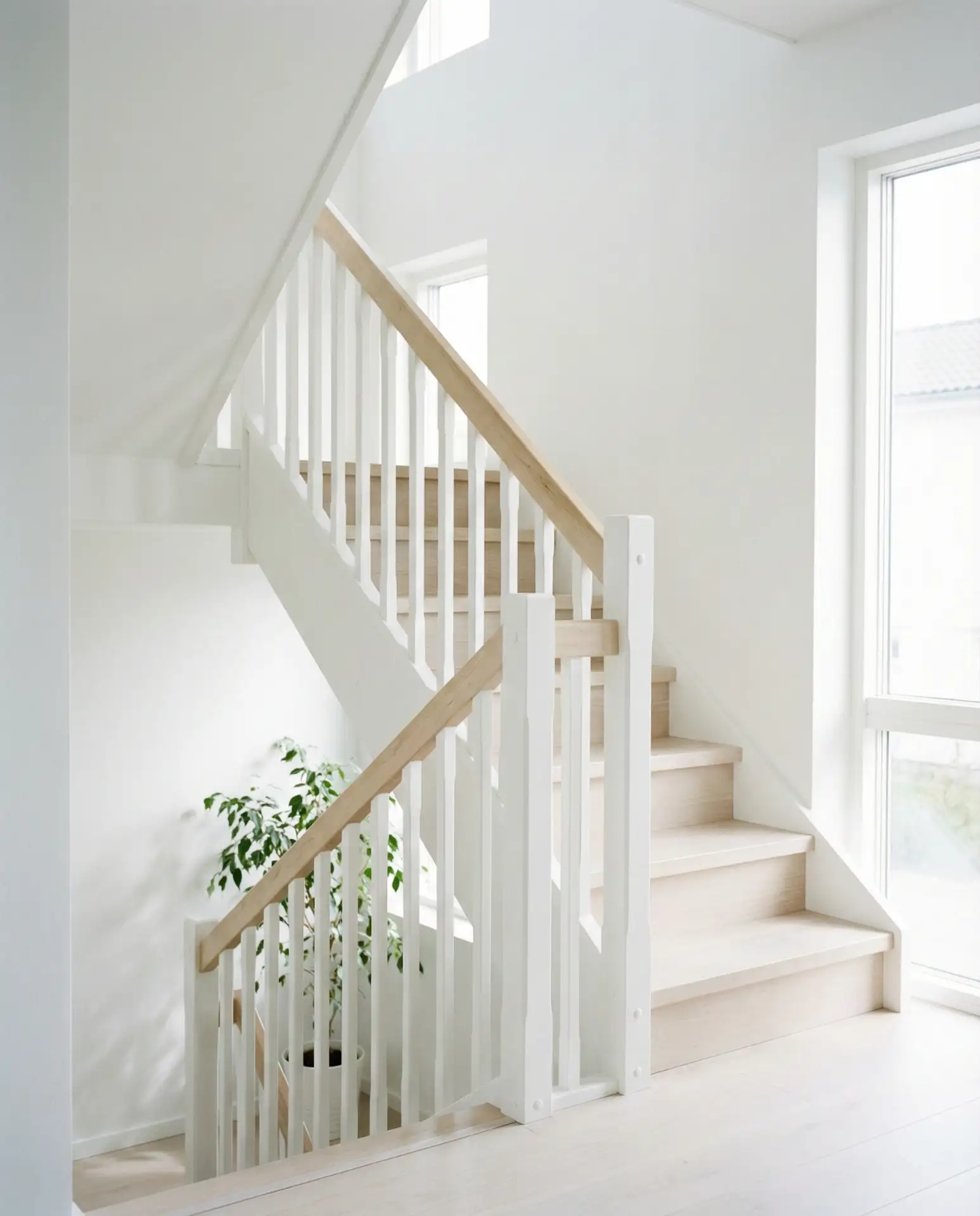
Budget-wise, this style can be quite affordable since it relies on simple profiles and readily available materials rather than custom fabrication or exotic woods. A straightforward installation using standard components keeps labor costs reasonable, making it accessible for homeowners working with moderate budgets. The lasting appeal of Scandinavian design also means the railing won’t feel dated in five years—the timeless aesthetic maintains value both visually and financially over the long term.
22. Statement Bronze and Brass Accents
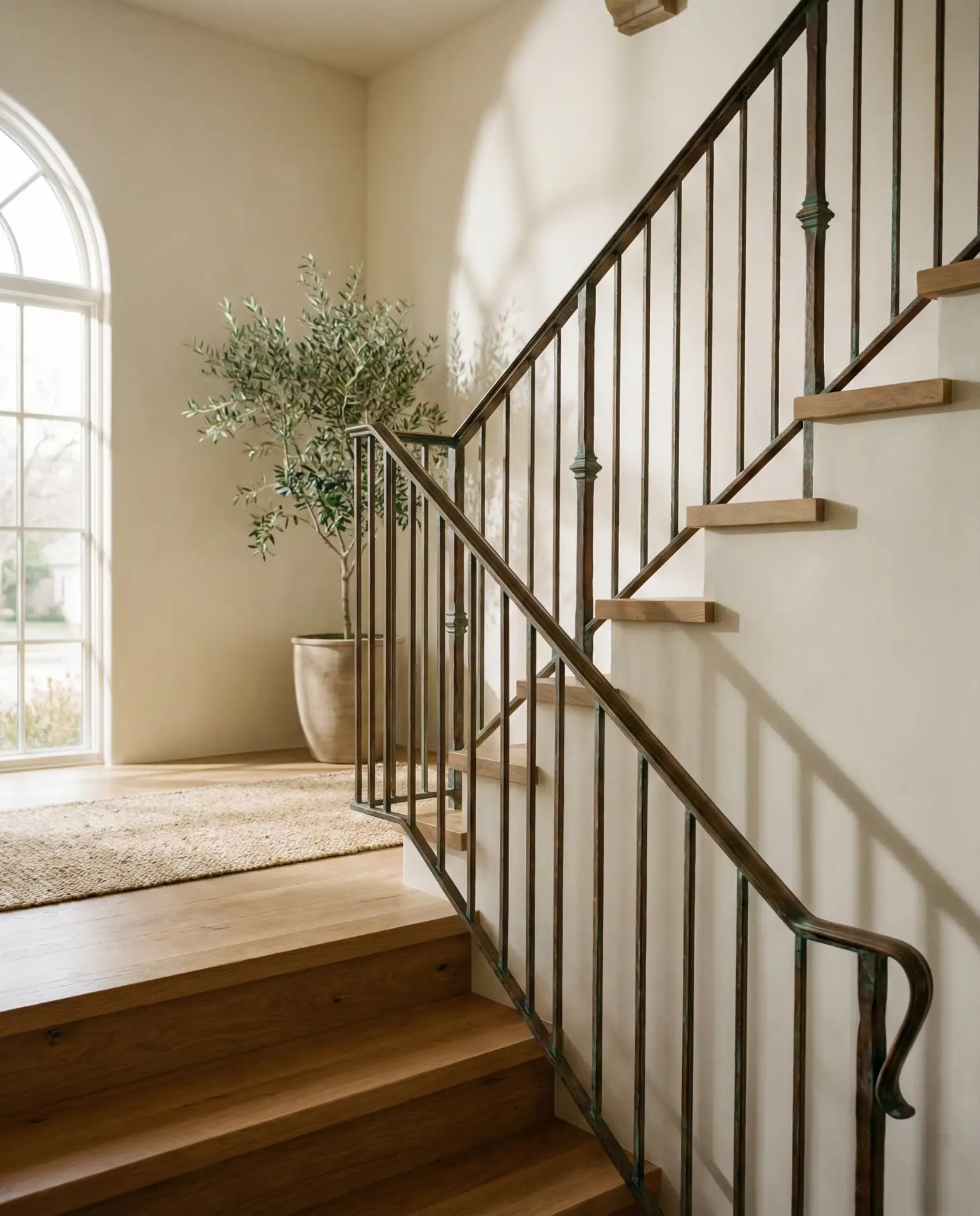
Moving beyond standard black or stainless steel, bronze and brass railings introduce warm metallic tones that feel luxurious and distinctive. These metals develop natural patina over time, adding character and depth that polished finishes can’t achieve. Brass especially has experienced a renaissance in interior design, appearing in fixtures, hardware, and now architectural elements like railings. The warm gold tones complement both traditional and contemporary spaces, working particularly well in homes with other brass or bronze elements—door handles, lighting fixtures, or plumbing finishes—that create cohesive material stories throughout.
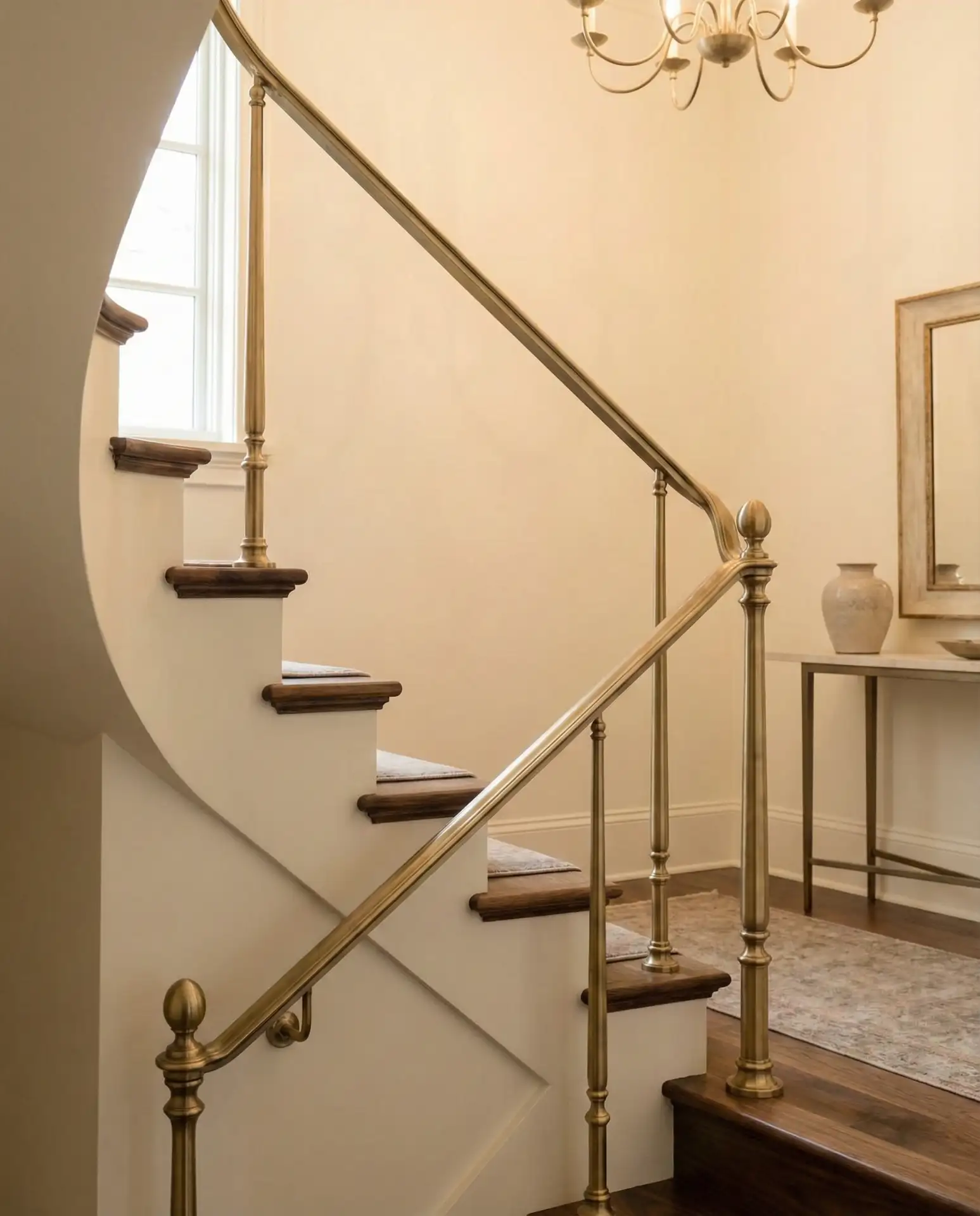
Real homeowner behavior shows that people either love the patina development or prefer lacquered finishes that maintain the original polish. There’s no wrong choice—it depends on whether you appreciate the living quality of aging metal or prefer consistent appearance. If you choose unlacquered brass or bronze, expect the metal to darken and develop spots within months of installation. Regular polishing can maintain brightness, but many homeowners embrace the patina as evidence of the home being lived in and loved.
23. Indoor Cable with Dark Wood Posts
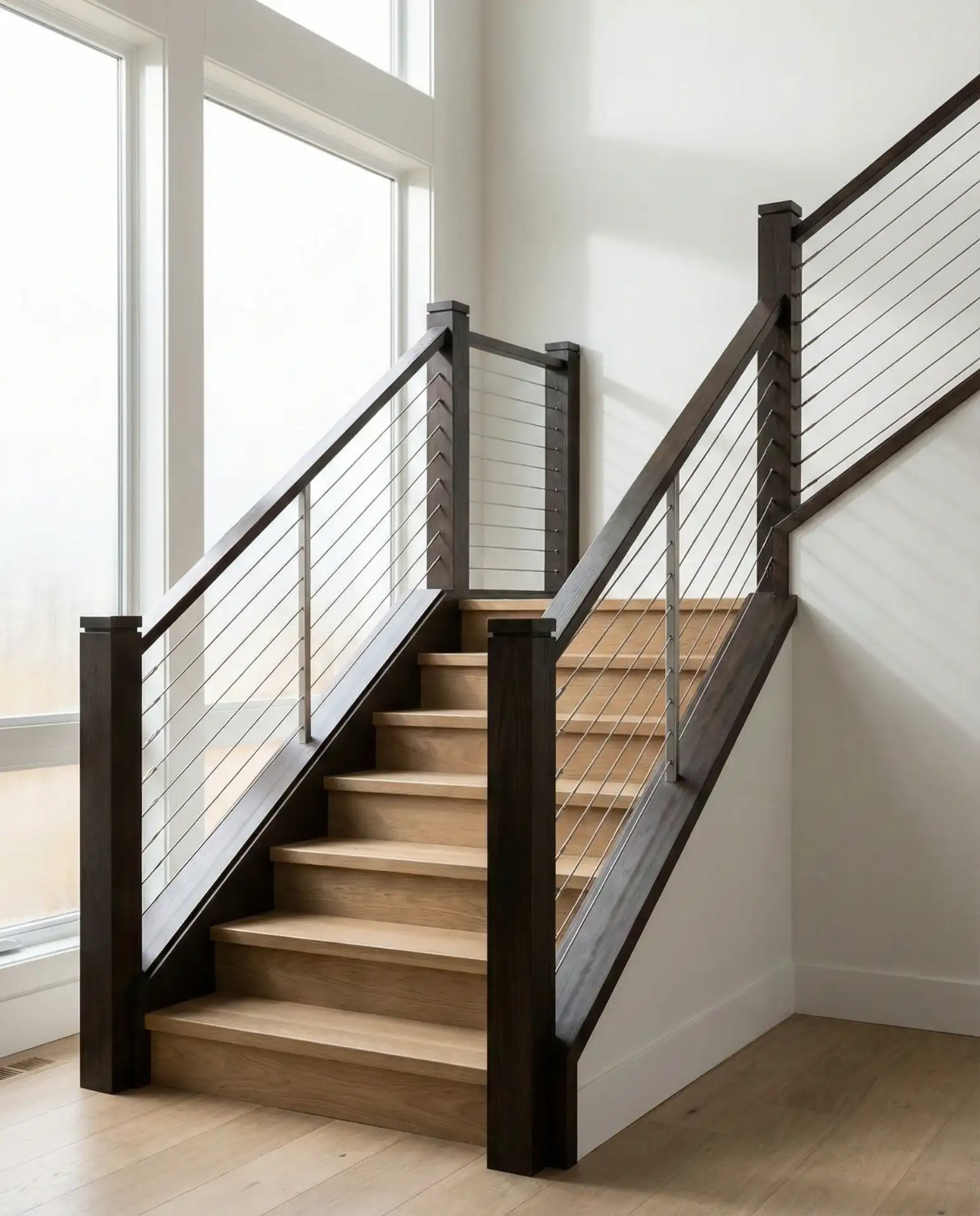
For indoor staircases seeking modern sophistication with grounding warmth, pairing cable systems with dark wood posts strikes an appealing balance. Rich walnut, espresso-stained oak, or even ebonized wood provides substantial visual anchors while the horizontal cables maintain the transparency and clean lines of contemporary design. This combination feels particularly resolved in homes with dark wood flooring or cabinetry elsewhere—the railing becomes part of a unified material palette rather than an isolated feature. The darkness adds drama without the industrial edge of all-metal systems.
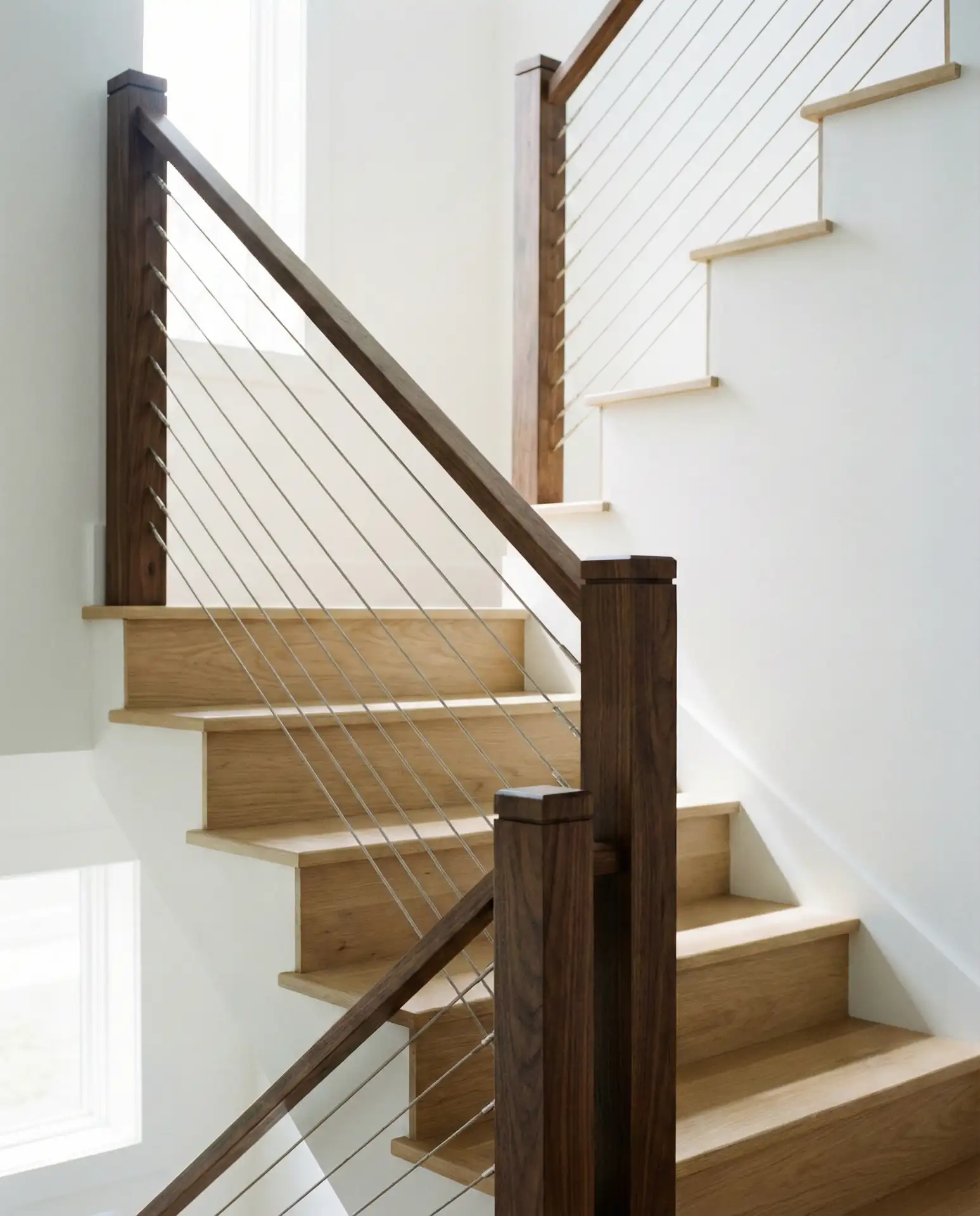
Where it works best: homes with significant wood elements already present, whether that’s exposed beams, built-in shelving, or wood-clad accent walls. The dark posts create visual rhythm and repetition that tie the space together, making the staircase feel like an integral part of the architecture rather than an afterthought. This is especially effective in open floor plans where the staircase remains visible from multiple vantage points, serving as a connecting thread between different areas of the home.
Conclusion
Whether you’re drawn to the industrial edge of raw steel, the timeless elegance of wrought iron, or the clean simplicity of cable systems, your stair railing choice profoundly shapes how your home feels every single day. These aren’t just safety features—they’re opportunities to express your aesthetic values, improve spatial flow, and create moments of architectural interest that elevate ordinary transitions into something memorable. We’d love to hear which ideas resonated with you most, or if you’ve tackled a railing project of your own. Share your thoughts, experiences, or questions in the comments below—your insights might inspire someone else’s perfect staircase transformation.