
You know that feeling when you’ve pinned forty wreaths and still can’t decide what belongs on your own door? Same. So we spent a few evenings digging through Etsy, Terrain, Target, and a couple of very good craft shops to find the ones actually worth copying — everything from an $18 bundle of berry sprigs to a $240 hand-tied magnolia wreath.
After filtering through hundreds of options, we narrowed it down to 39 ideas that deliver: traditional evergreen with red berries, natural twig-and-eucalyptus, frosted silver, and one gloriously odd miniature village nested inside a twig ring. Budget and luxury versions sit side by side, so you can see exactly where the money goes.
And stay until the end — we break down the most common mistakes that can ruin these looks. Small disclosure: a few links here are affiliate links, which cost you nothing. 📌 Save this to Pinterest for later — you’ll want to revisit these ideas.
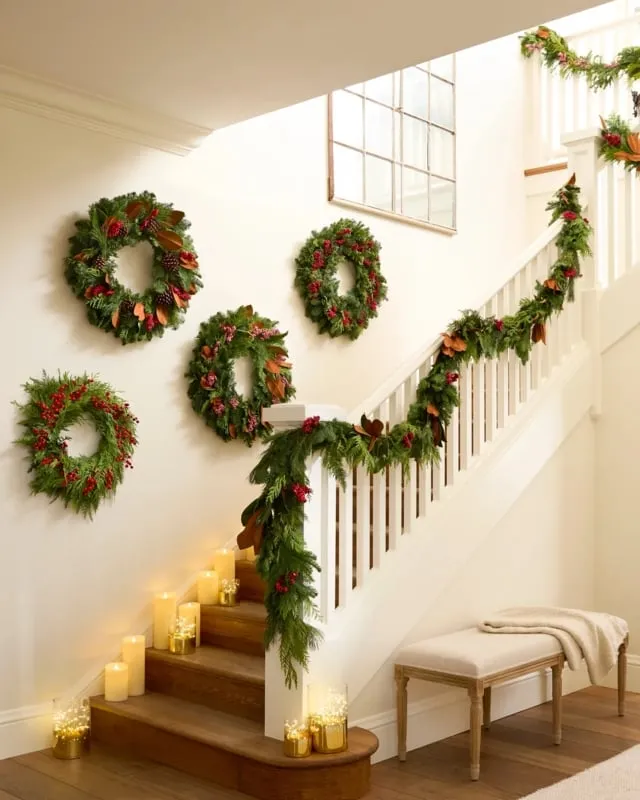
1. Evergreen Wreaths Climbing a White Staircase
On a staircase, treat wreaths like a rhythm, not a collection. Space them 24 to 30 inches apart, center to center, so they read as one deliberate run rather than scattered leftovers. Keep every wreath the same diameter and the same height above the handrail — the cream pillar candles and gold fairy-light holders can vary, the wreaths can’t.
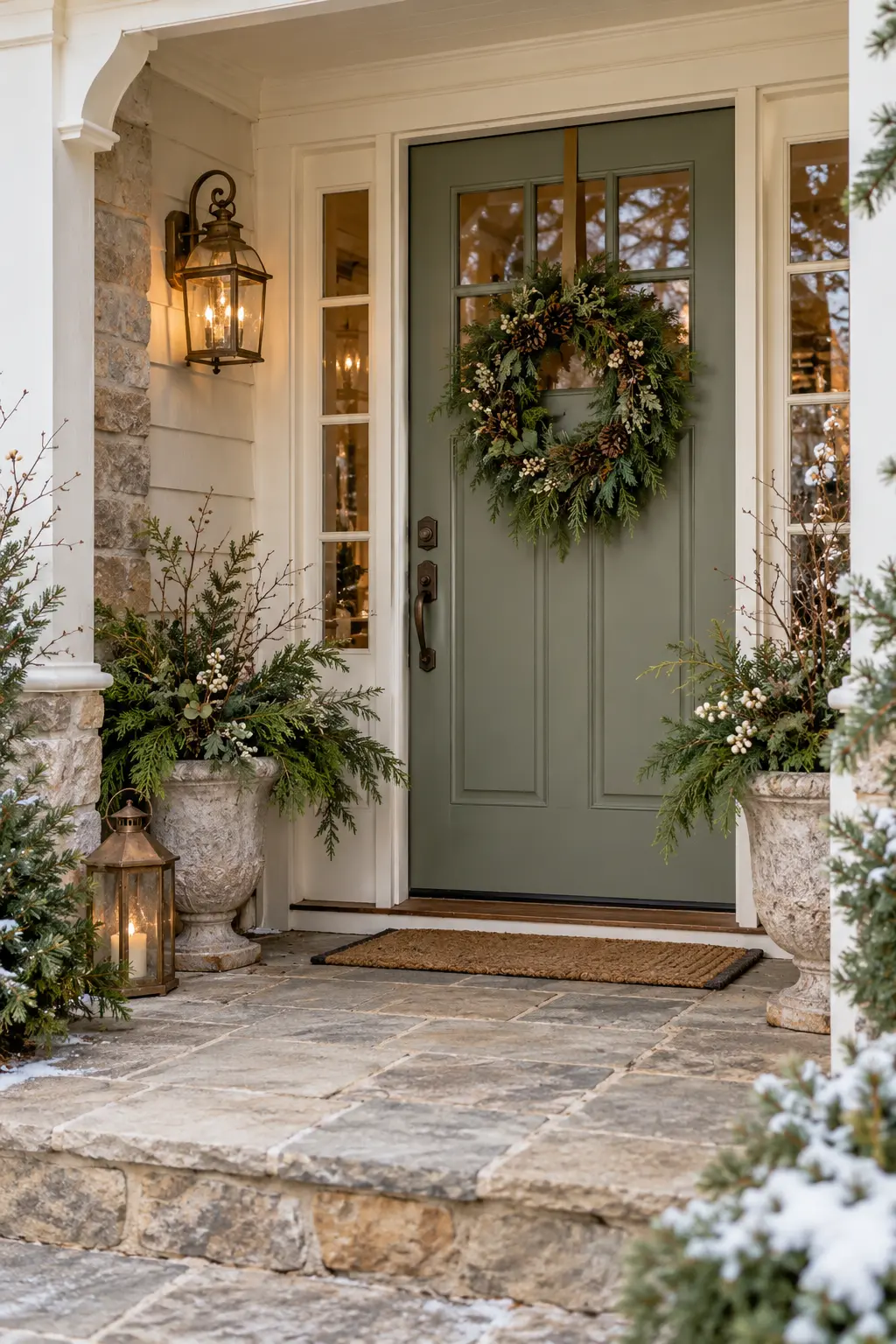
2. Sage Green Door With Stone Urns and a Bronze Lantern
What makes this entry work isn’t the wreath — it’s the two stone urns. Remove them and the pinecone-and-white-berry wreath floats on a sage door with nowhere to land. The urns repeat the evergreens at ground level and give the bronze lantern something to talk to. Fill them to the brim; half-filled planters read as an afterthought.
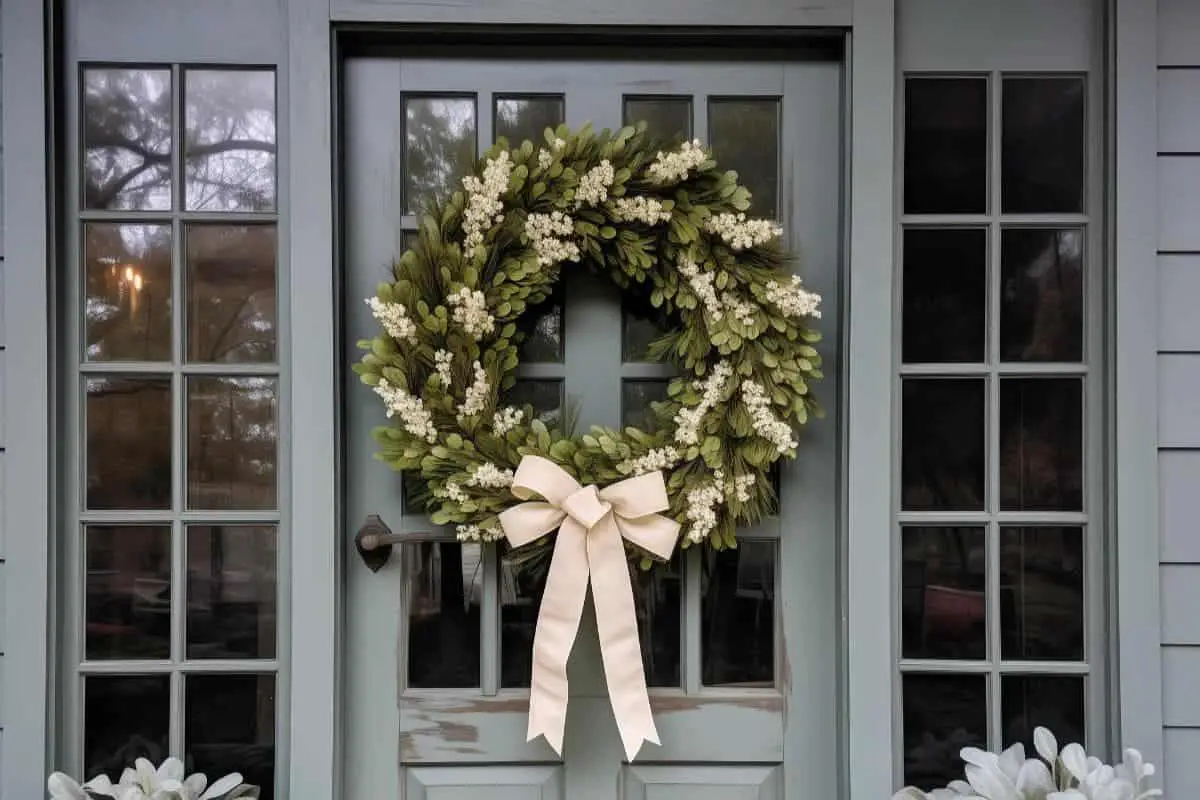
3. Boxwood, White Berries, and a Low Beige Bow
Two quiet moves carry this door. The wide beige bow sits at the bottom of the boxwood wreath, so your eye drops before it lifts — far more interesting than the expected top-center knot. And the muted blue-gray door shares a dusty undertone with the cream ribbon, which is why the white berries and green foliage get to do all the shouting.
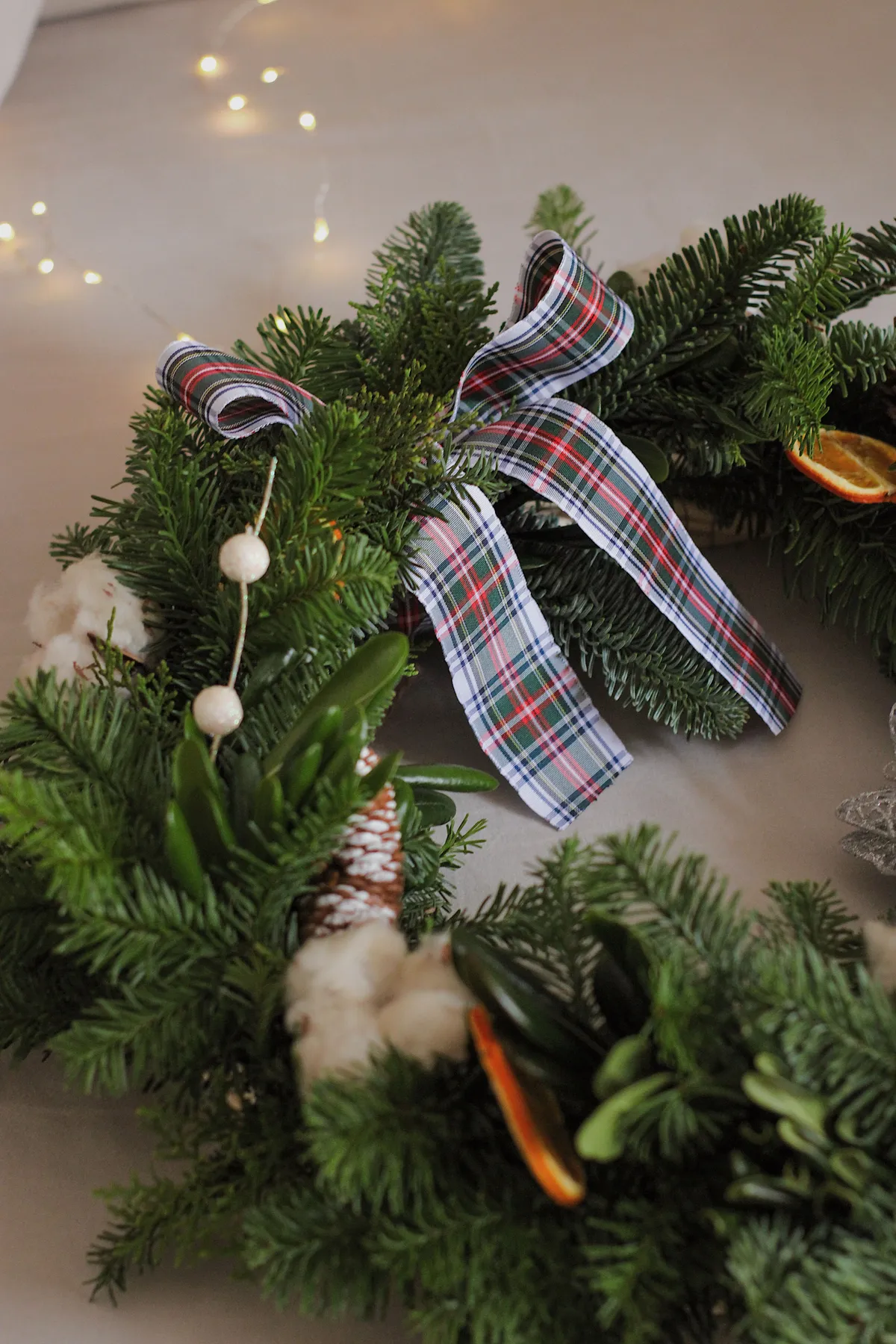
4. Plaid Ribbon, Cotton Bolls, and Dried Orange Slices
Door wreaths live or die by diameter. On a standard 36-inch door, stay between 22 and 26 inches; smaller looks like a napkin ring, larger hides the paneling you paid for. This full evergreen with its plaid bow, cotton bolls, and orange slices sits right around 24 — big enough to read from the sidewalk, small enough to breathe.
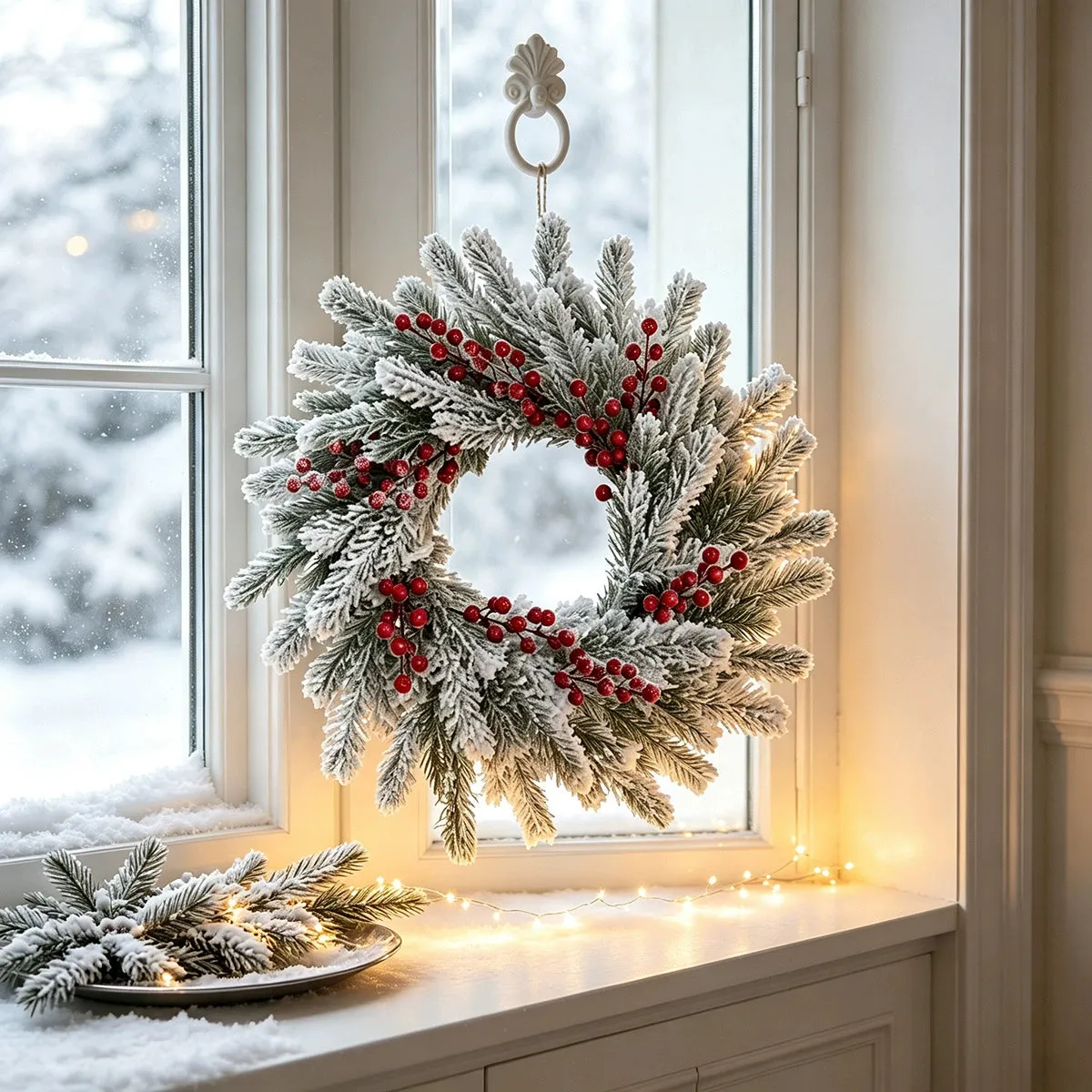
5. Flocked Evergreen and Red Berries in a Snowy Window
60% frosted evergreen, 30% bright red berries, 10% warm white light. That’s the whole formula in this snowy window, and it’s why the flocking reads as snow instead of dust. Swap the red for cranberry and copper and you get a warmer, less candy-cane version without changing a single branch. Keep the fairy lights on the sill, not on the wreath.
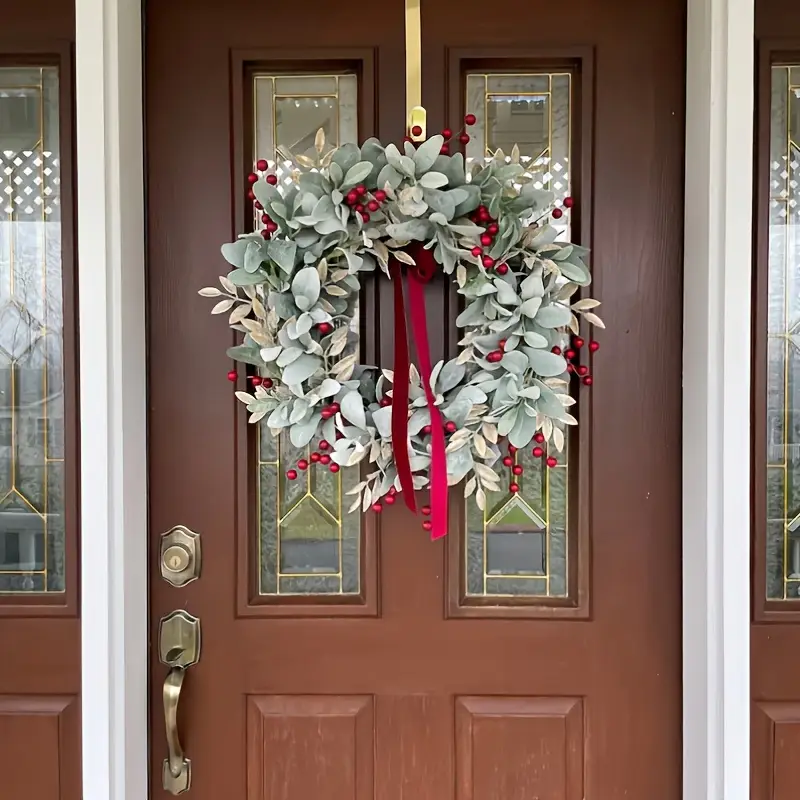
6. Dusty Green Foliage With a Deep Red Velvet Ribbon
Velvet is heavier than it looks. Wire-edged velvet holds a bow shape, but the tails droop and drag the wreath sideways within a week, so anchor it: run florist wire through the frame at four and eight o’clock, then pin the tails behind the bow with a clear strip. Two minutes now, zero crooked wreath in February.
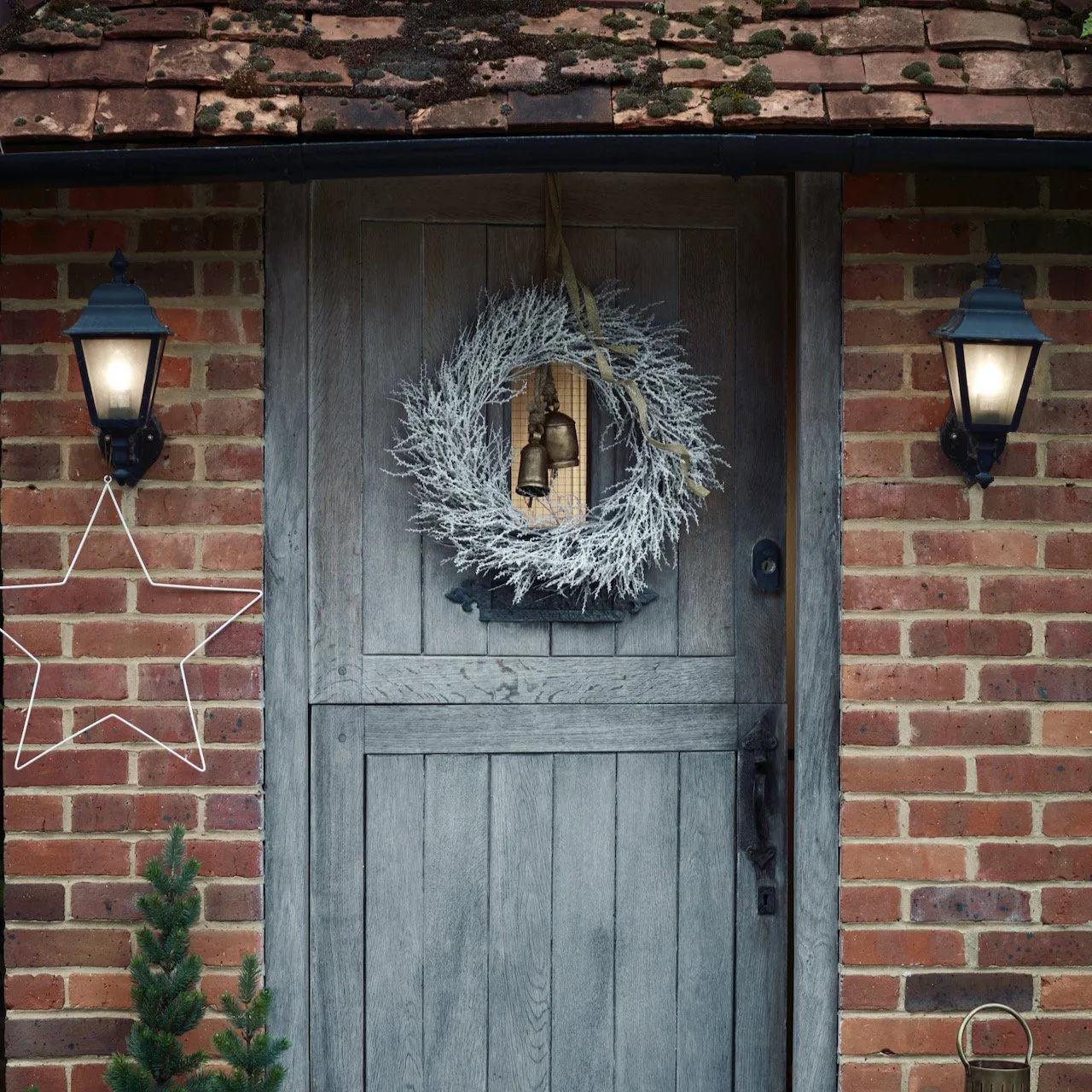
7. Frosted Pinecones and a Slim Gold Ribbon
You don’t need a designer wreath to get this. Start with a $20 plain pine wreath, add a bag of frosted pinecones and one sprig of red berries from the craft store, then finish with a narrow gold ribbon knotted — not bowed — at the top. Total, about $35. The trick is quantity of one element, not variety of ten.
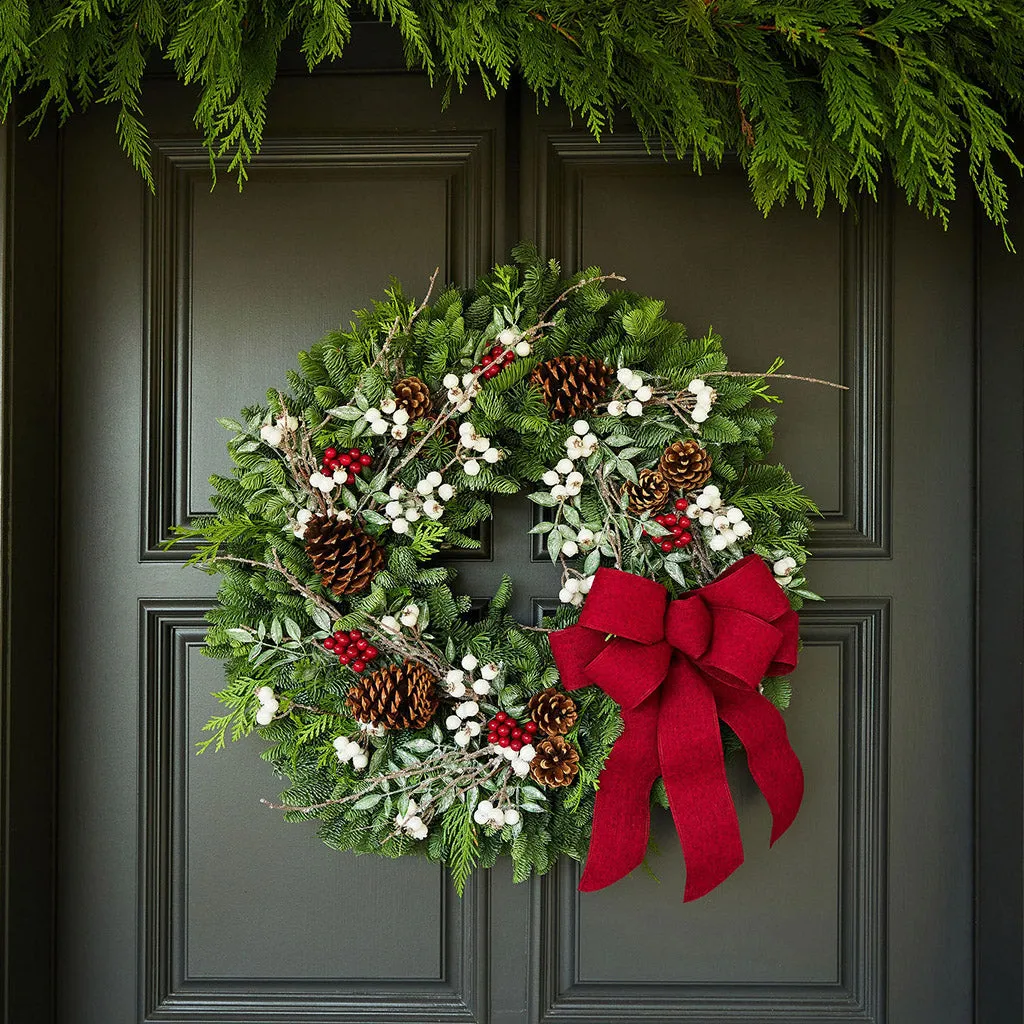
8. The Off-Center Red Bow on a Dark Paneled Door
The off-center bow has quietly taken over: a good share of this season’s wreaths tie their ribbon at four or five o’clock instead of dead center. It photographs better, it looks less like a store display, and it lets a big bow live on a wreath that would be crowded at the top. The garland over the door frame is doing the same job.
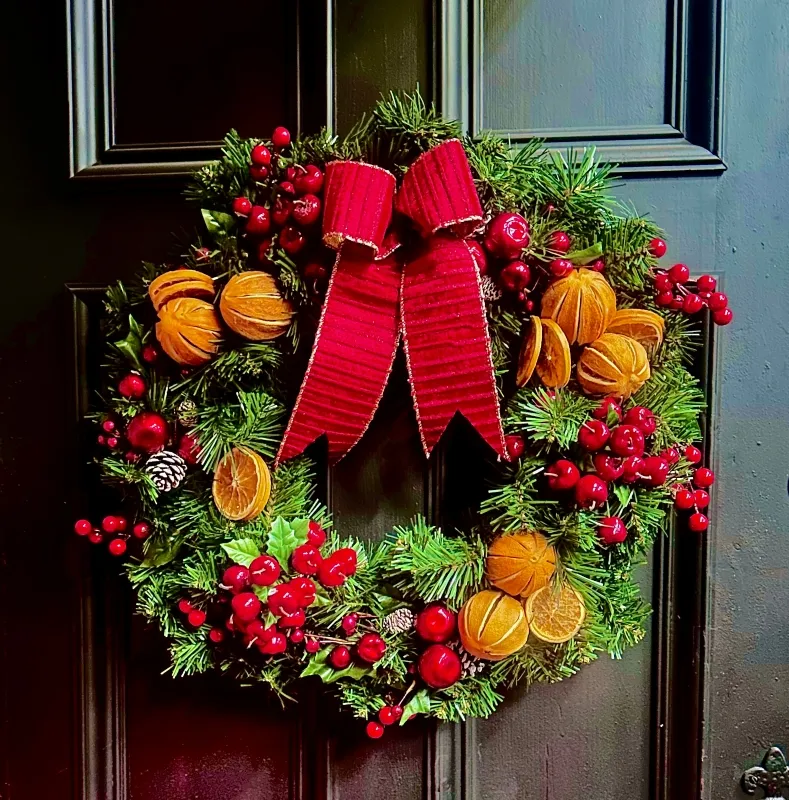
9. Pine, Dried Oranges, and a Gold-Edged Red Bow
Dried orange slices are gorgeous and slightly high-maintenance. They fade toward brown in a season of direct sun, and they’re heavy — citrus plus a big gold-edged bow can push a wreath to eight pounds. Check your hanger’s weight rating, and if the door faces south, dry your own slices and seal them with a matte spray.
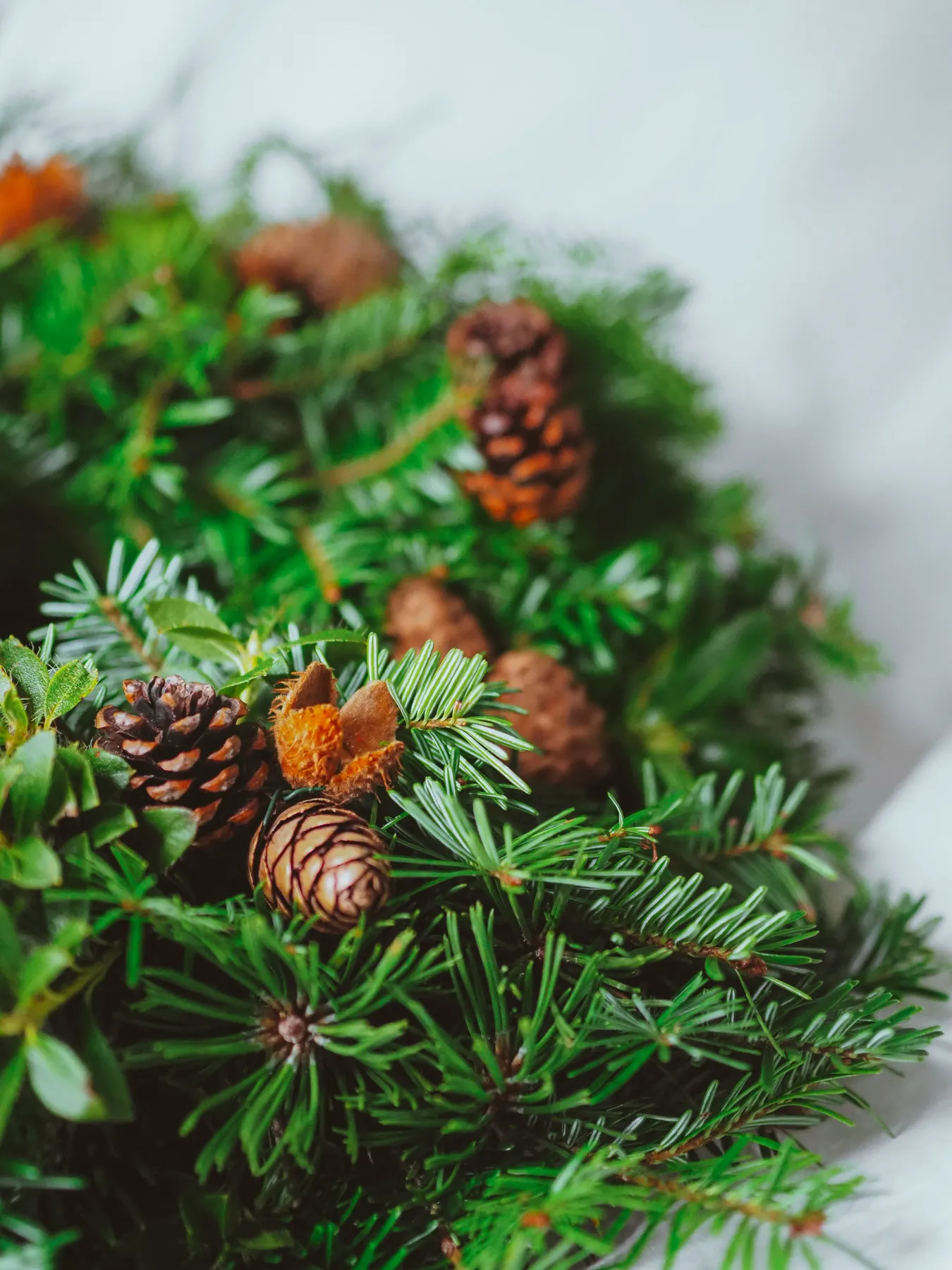
10. Pinecones and Spiky Seed Pods in a Dense Evergreen Ring
The seed pods. Everyone expects pinecones; the lighter, spiky pods tucked between them are what keep this wreath from looking like every other one on the block. They add a second texture and a paler brown that lifts the dark needles. Building your own? Look for lotus pods or sweetgum balls and place three, not thirty.
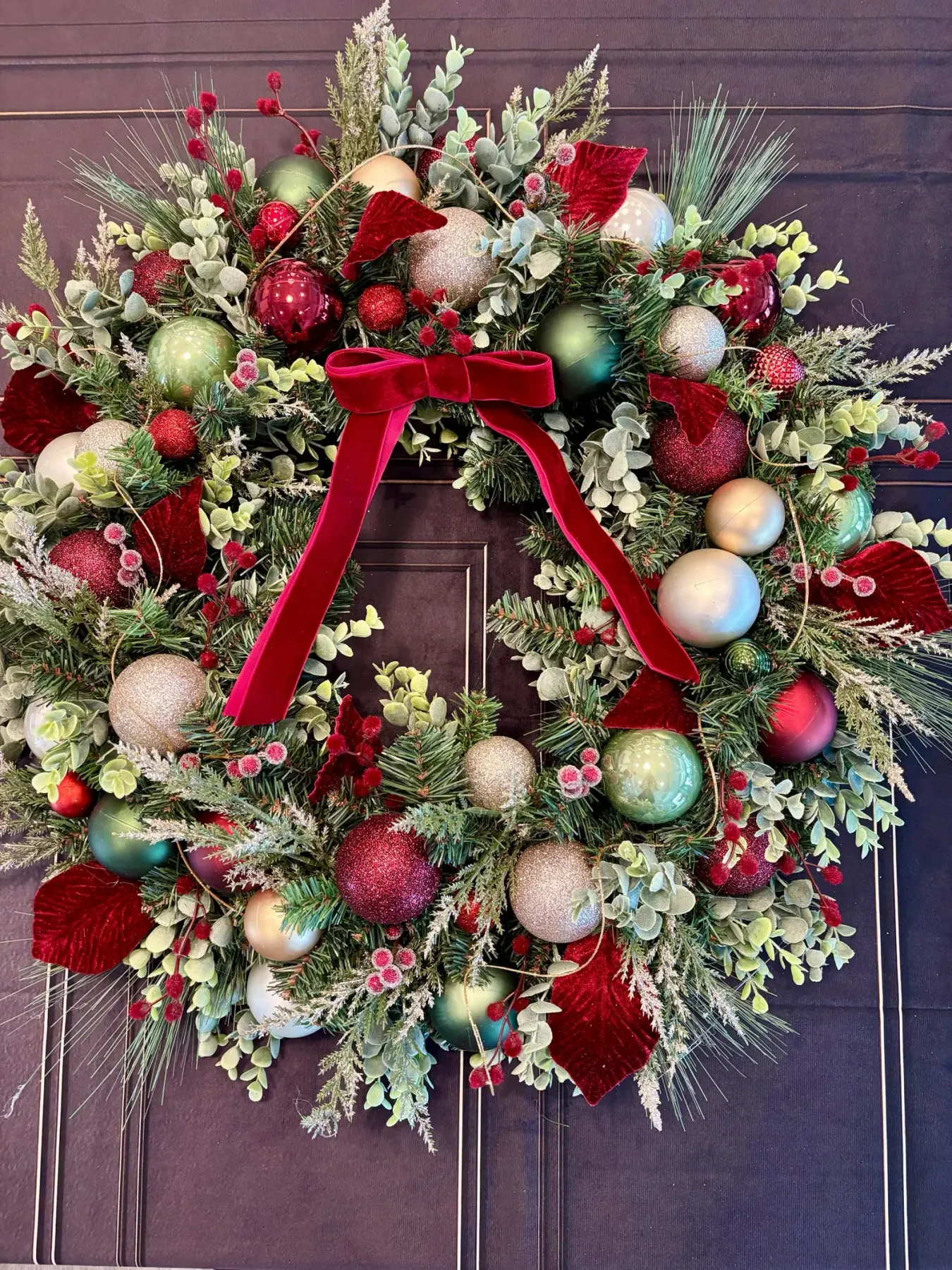
11. Red Velvet Bow With Mixed Matte and Glitter Baubles
Look closely and the ornaments sit in clusters of three, not scattered evenly. That’s the whole trick: odd-numbered groupings, mixed finishes — matte, glitter, velvet — and a deliberate gap of plain greenery between each cluster so your eye gets a rest. Even distribution is what makes a decorated wreath look like a store sample.
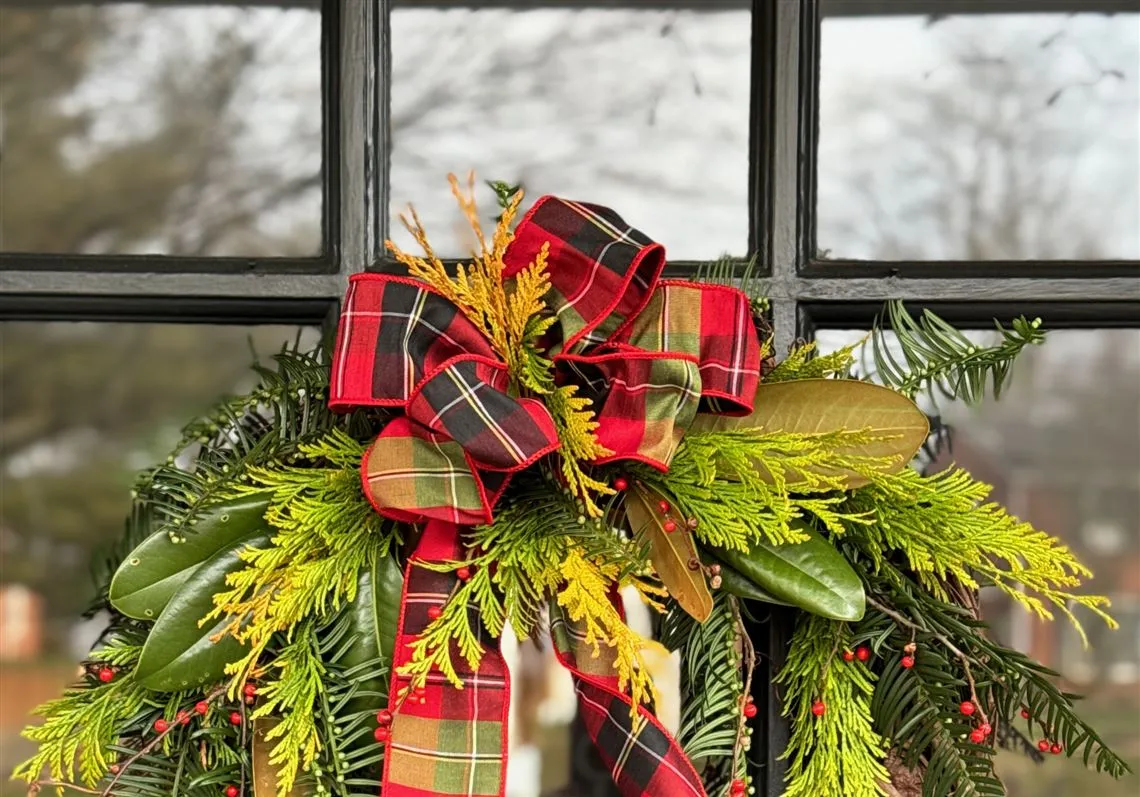
12. Magnolia Leaves and a Red-and-Green Plaid Bow
Formula: 70% mixed evergreen (pine plus magnolia for two leaf shapes), 20% plaid, 10% berries and gold sprigs. The magnolia matters more than you’d think — its brown-backed green gives the red and lime plaid something to sit against. Swap plaid for ticking stripe in summer and the same wreath works year-round. Compare with Idea #9.
13. White Berries and Pinecones on a Gold Mistletoe Hanger
Hang a wreath so its center sits about 66 inches off the floor — roughly eye level, or a hand’s width below the top of the door. Too many wreaths float near the header and make a standard door look nine feet tall in a bad way. A slim gold mistletoe hanger like this one lets you fine-tune height without redrilling anything.
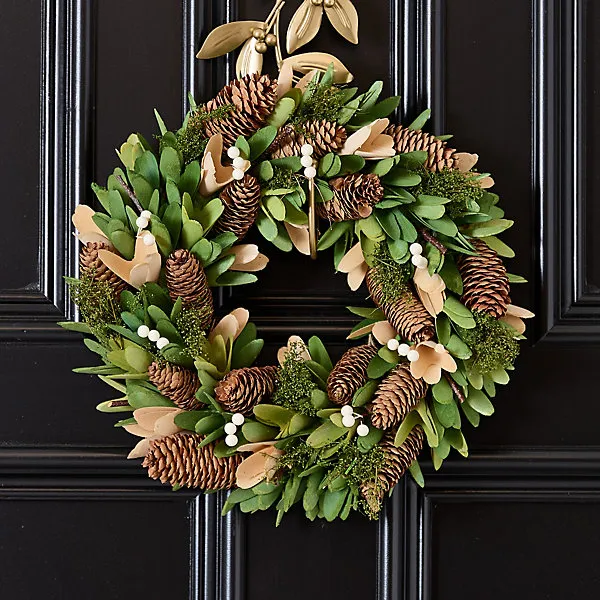
14. Twig Wreath With Berry Clusters and Red Velvet
Twig wreaths read smaller than they measure because you can see through them. A 24-inch twig base covers the visual ground of a 20-inch dense evergreen, so size up if your door is wide. On a standard 36-inch door, 26 to 28 inches keeps those red berries and the velvet ribbon in proportion instead of swimming in white paneling.
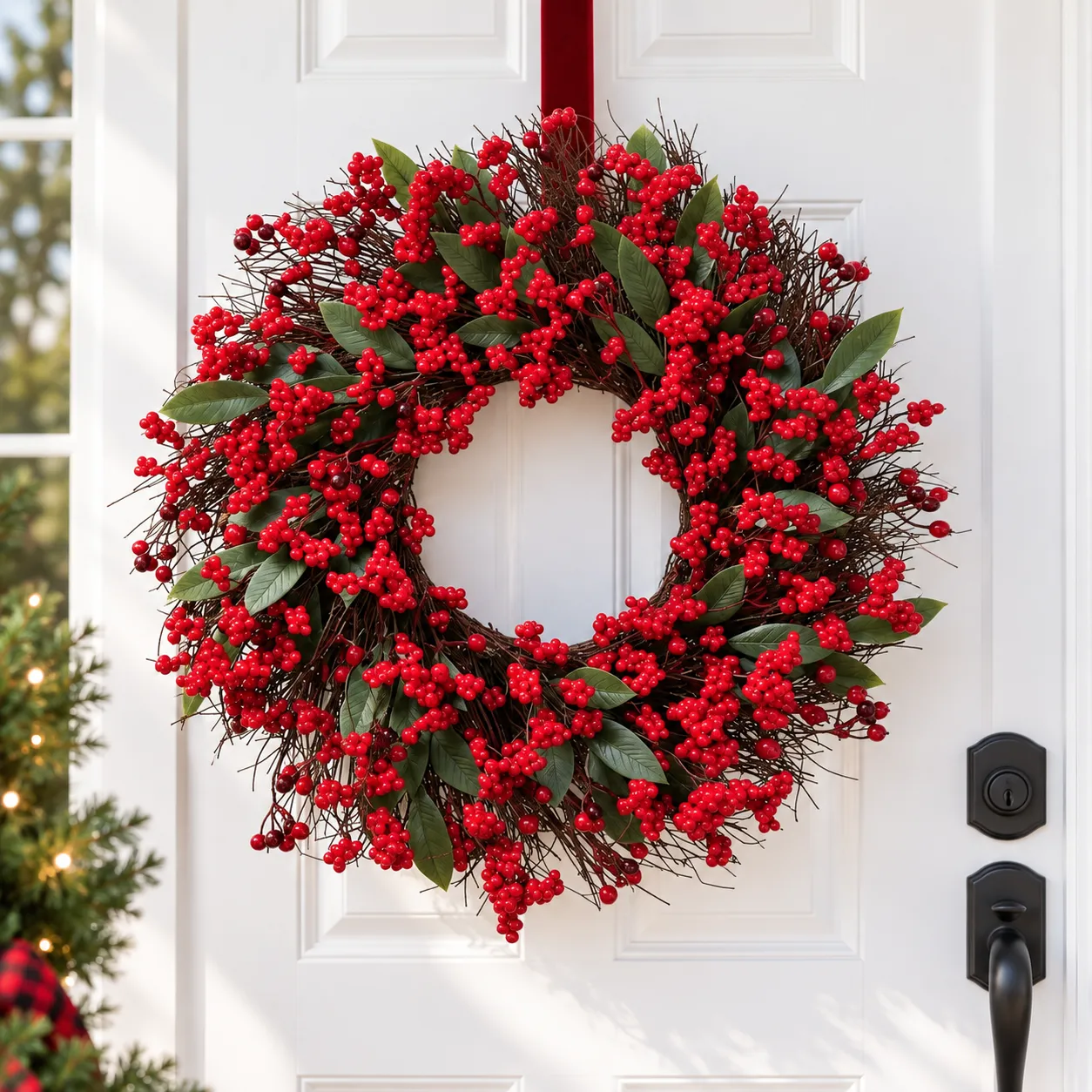
15. Burlap Bow, Gold Leaves, and a Faux White Owl
Novelty figures are a commitment. A white owl can be charming on rustic wood in December and slightly spooky by February, so place it off to one side — as here — where it reads as a detail rather than a mascot, and plan to pull it after the holidays. Also: burlap fades in sun and sheds. Keep the bow under cover.
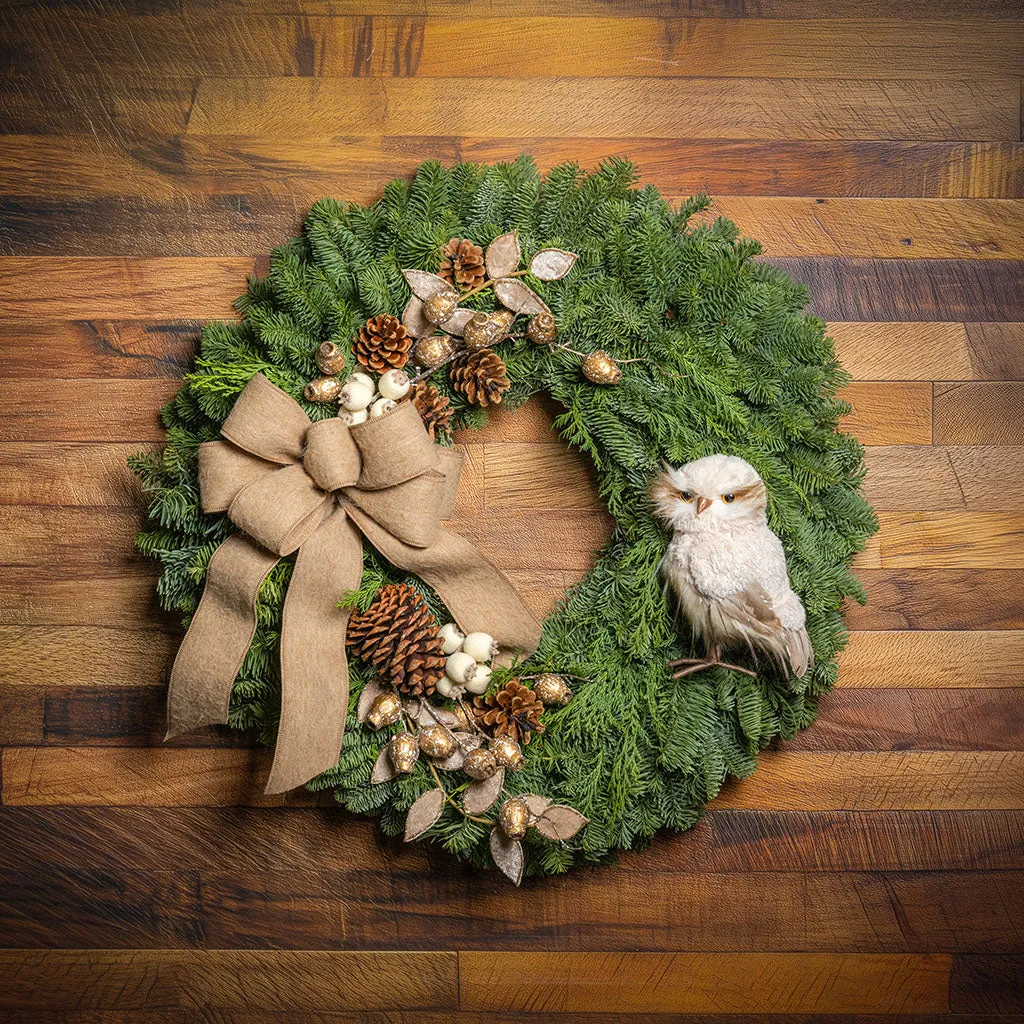
16. Red Berry Clusters Against Peeling White Planks
Faux berries are the first thing to go. Cheap ones fade from red to pink after one sunny season, and the paint flakes onto your threshold. Look for UV-treated berries, store the wreath in a breathable bag — not a trash bag, which traps moisture — and expect two to three good years before you’re re-fluffing. Real pine lasts about three weeks indoors.
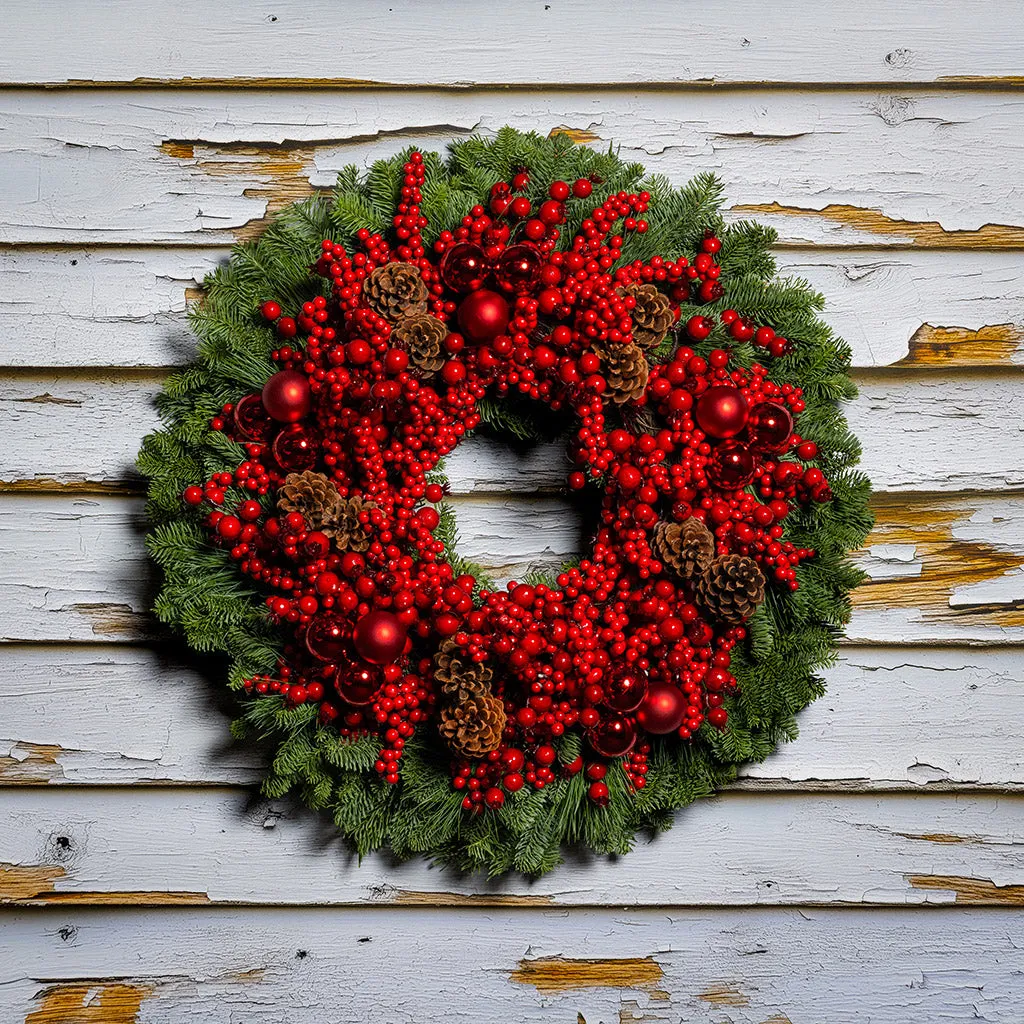
17. Gingham Bow Held Against a Cream Knit Sweater
A cream knit sweater, a full evergreen, a gingham bow — this look costs almost nothing to fake. Buy a $25 untrimmed evergreen wreath, a spool of red-and-white gingham wire ribbon, and a bag of red berry clusters. Wire the berries in threes, tie the bow slightly left of center, and put your money into fullness instead of ornaments.

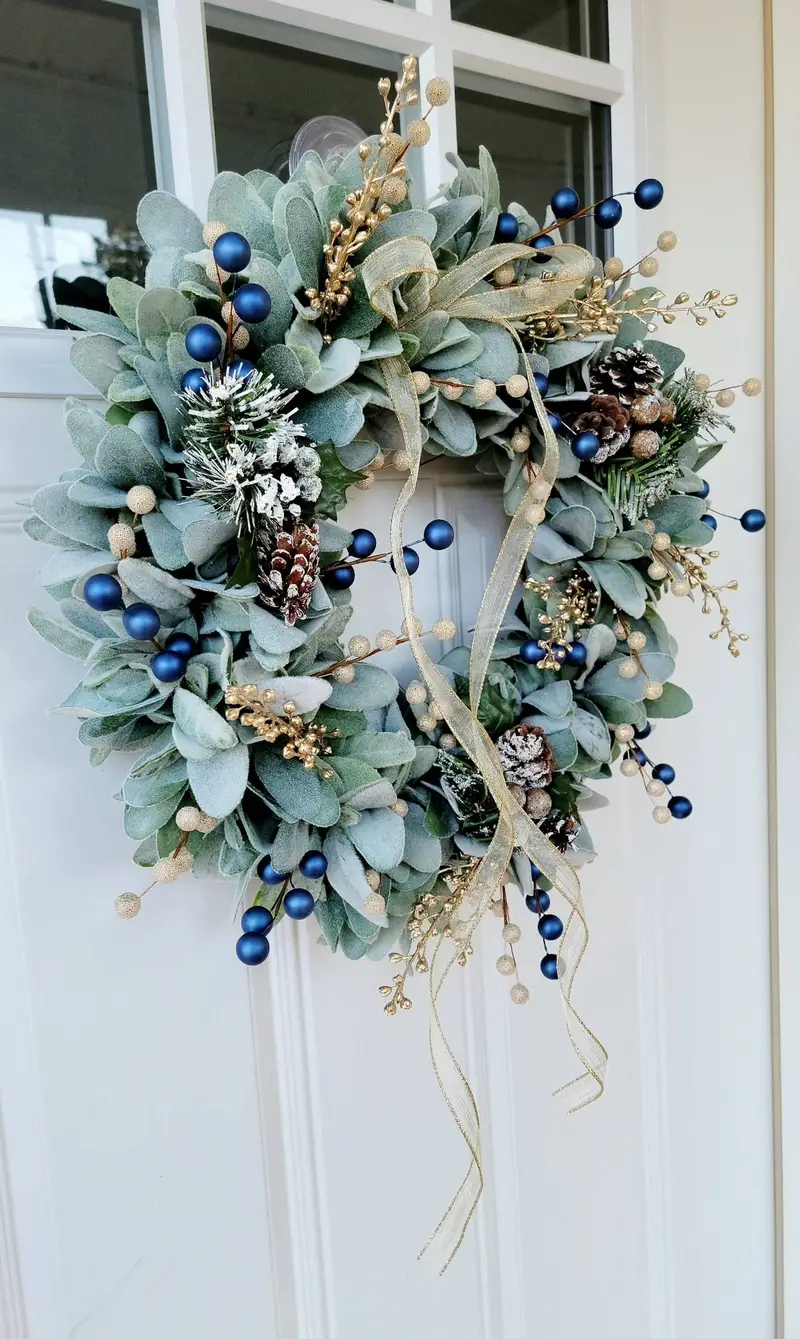
18. Frosted Lamb’s Ear With Blue Berries and Gold Sprigs
Here’s the formula: dusty green base, one cool accent (matte blue berries), one warm accent (gold glittered sprigs), and a sheer ribbon to soften both. The lamb’s ear texture is what carries it — soft, velvety leaves catch light differently than pine, so the frost reads as frost instead of glitter. Skip the flocking entirely; the leaves do that job.
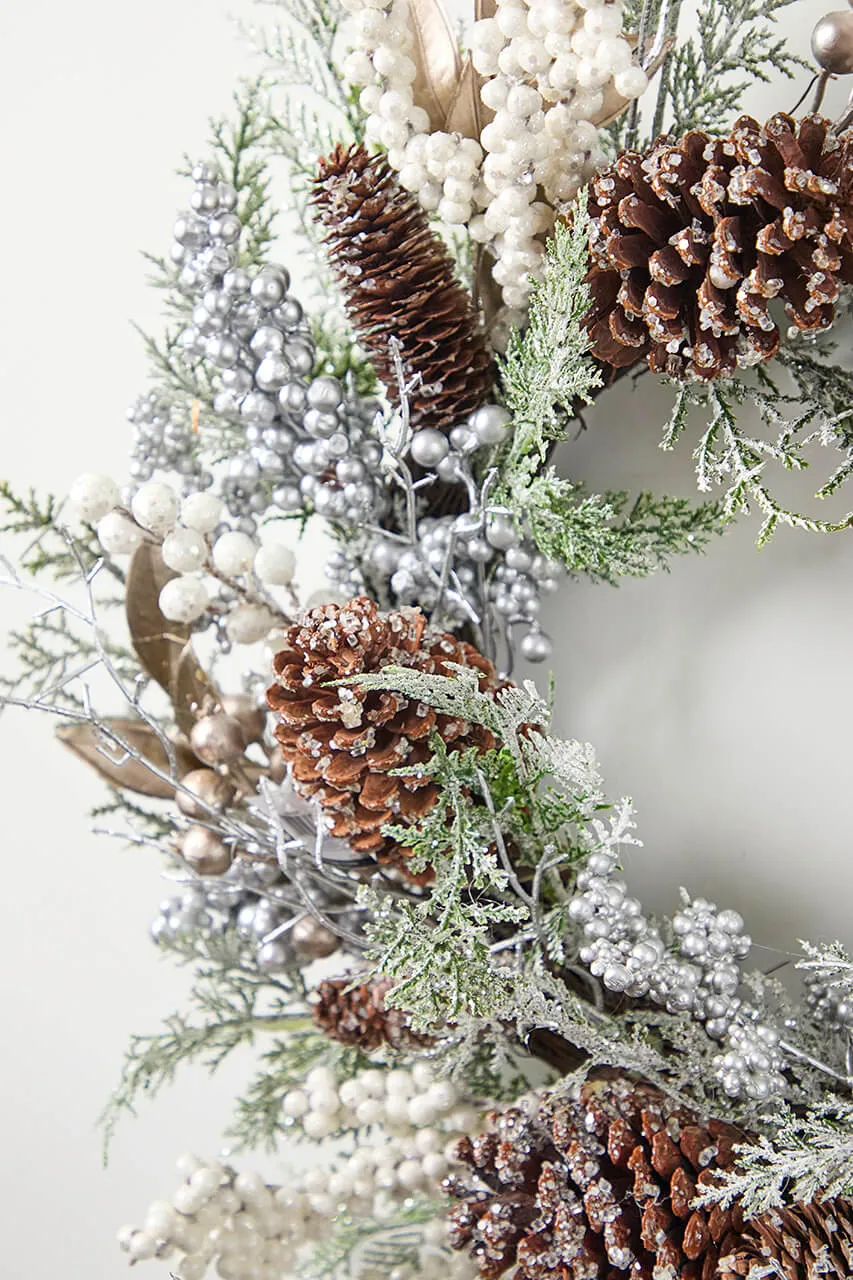
19. Silver Pearl Berries and Metallic Gold Leaves
Three metallics, one temperature. Silver pearl berries, gold leaves, and glittered brown pinecones all sit in the cool range, so nothing clashes — they just layer. The lesson: pick metallics that share an undertone and you can use as many as you like. Mix warm brass with cool chrome on the same wreath and it looks like an error.
20. Evergreen Ring With Three Red Pillar Candles
- Plain evergreen wreath base: $18–$35
- Three red pillar candles: $15–$40
- Berry clusters and sprigs: $10–$20
- Heat-safe tray or charger: $8–$25
Total: $51–$120 (roughly $30 with a thrifted wreath and dollar-store candles)
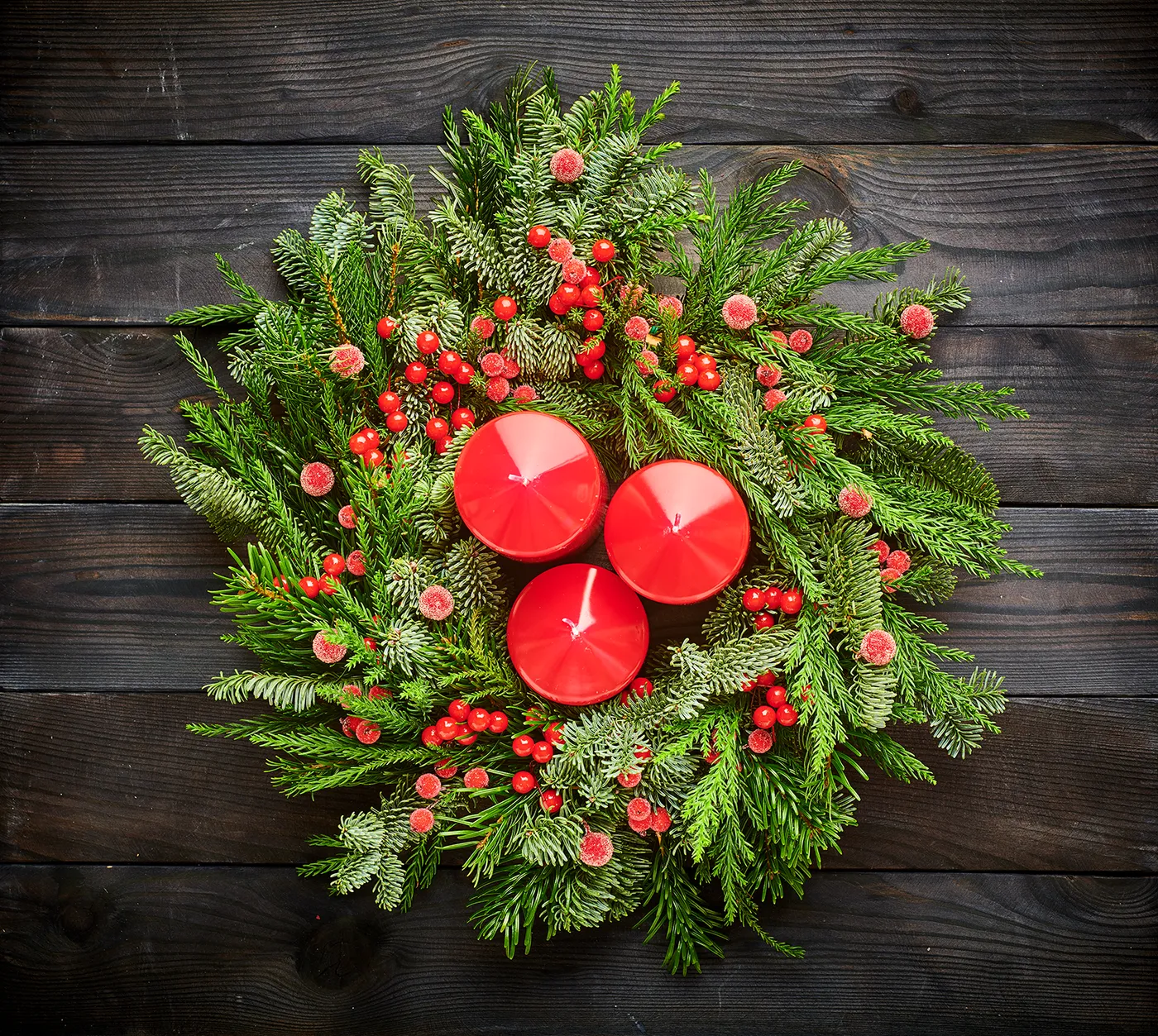
Compare with Idea #5 — same palette, no flame.
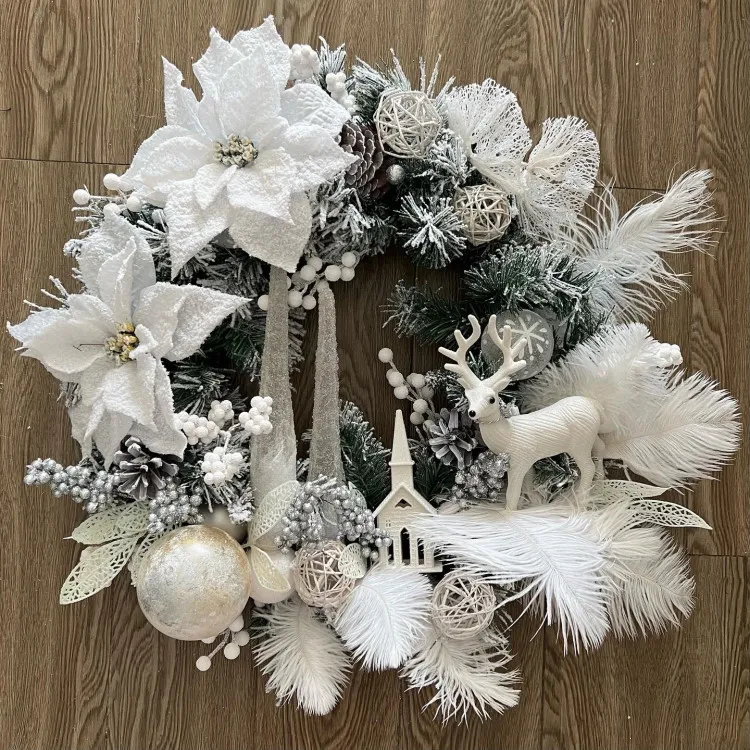
21. White Poinsettias, a Deer, and a Tiny Church
Figurines and dust are natural enemies. A wreath with a deer and a little white church collects fuzz in every arched window; one pass with a soft paintbrush a month keeps it crisp. Keep it out of direct sun, too — white resin yellows faster than white paint and can’t be repainted convincingly.
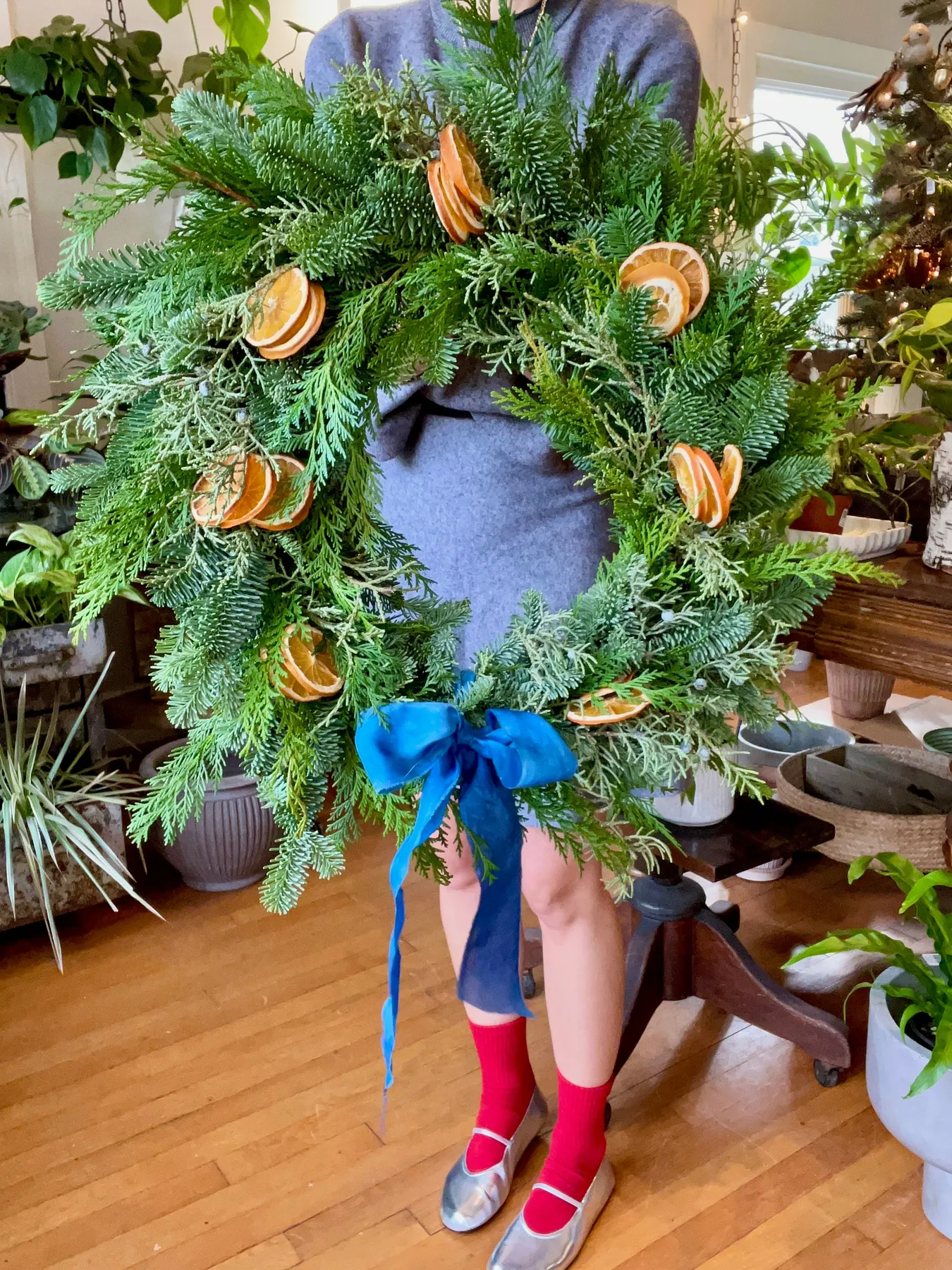
22. Dried Oranges and a Cobalt Blue Silk Bow
The cobalt blue bow is doing all the heavy lifting. Against lime and forest greens with orange slices, a red ribbon would be expected; that saturated blue makes the oranges look intentional and the greens look fresher. If blue feels like a leap, try aubergine or deep plum — same contrast, same surprise, slightly safer.
23. Red Velvet With Gold-Trimmed Ornaments
Frosted wreaths shed. If your branches have a glitter or snow dusting, seal them with a light coat of matte acrylic spray — outside, on newspaper, one pass only. It locks the flocking, stops the glitter trail down your door, and keeps the finish looking like frost rather than craft confetti. Let it cure 24 hours before hanging.

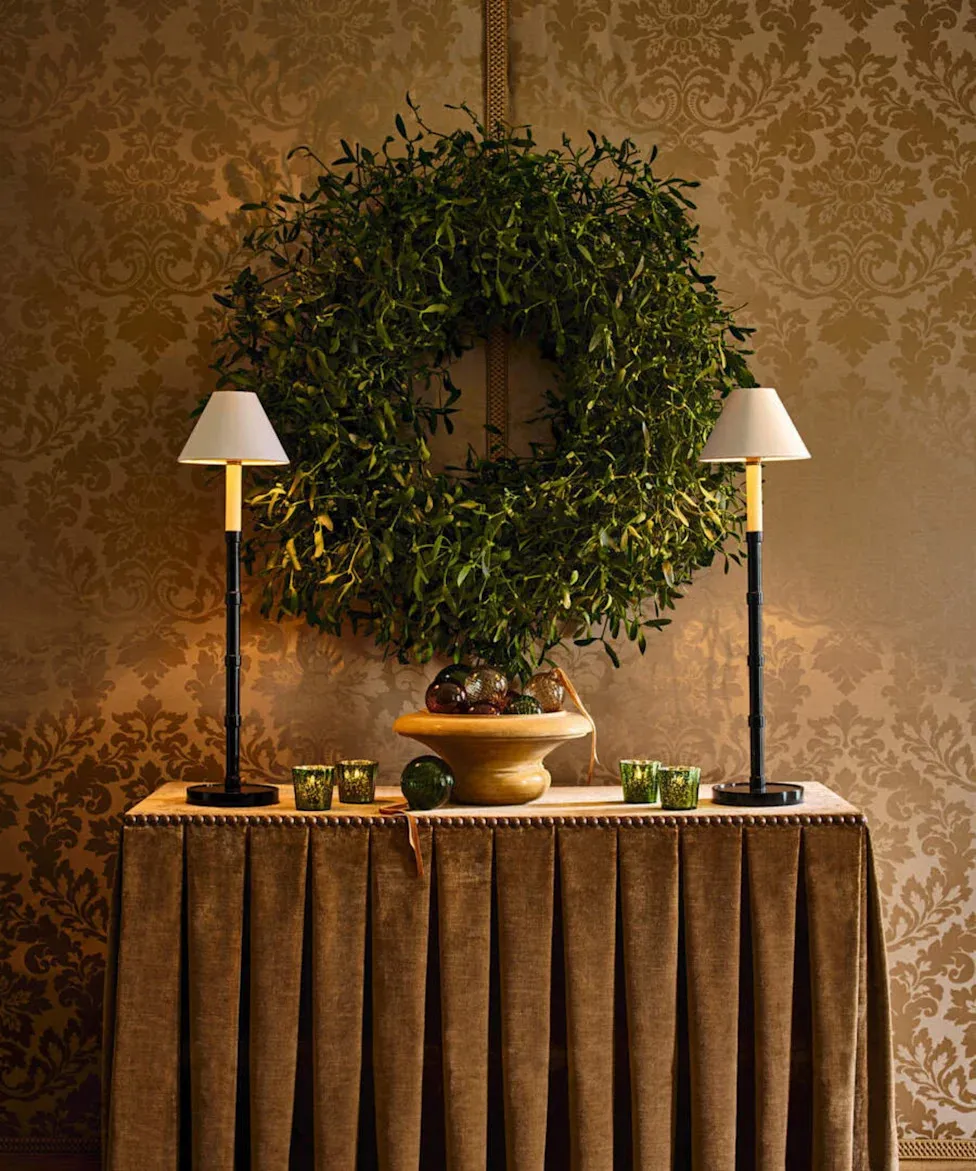
24. Mistletoe Wreath Above a Pleated Gold Console
This is a wall wreath, not a door wreath, and the rules change. Over a console like this, 30 to 36 inches wide with the bottom sitting 12 to 16 inches above the lampshades keeps it in scale. Anything smaller gets swallowed by gold damask; bigger fights the pleated velvet skirt. Measure the table first, then buy.
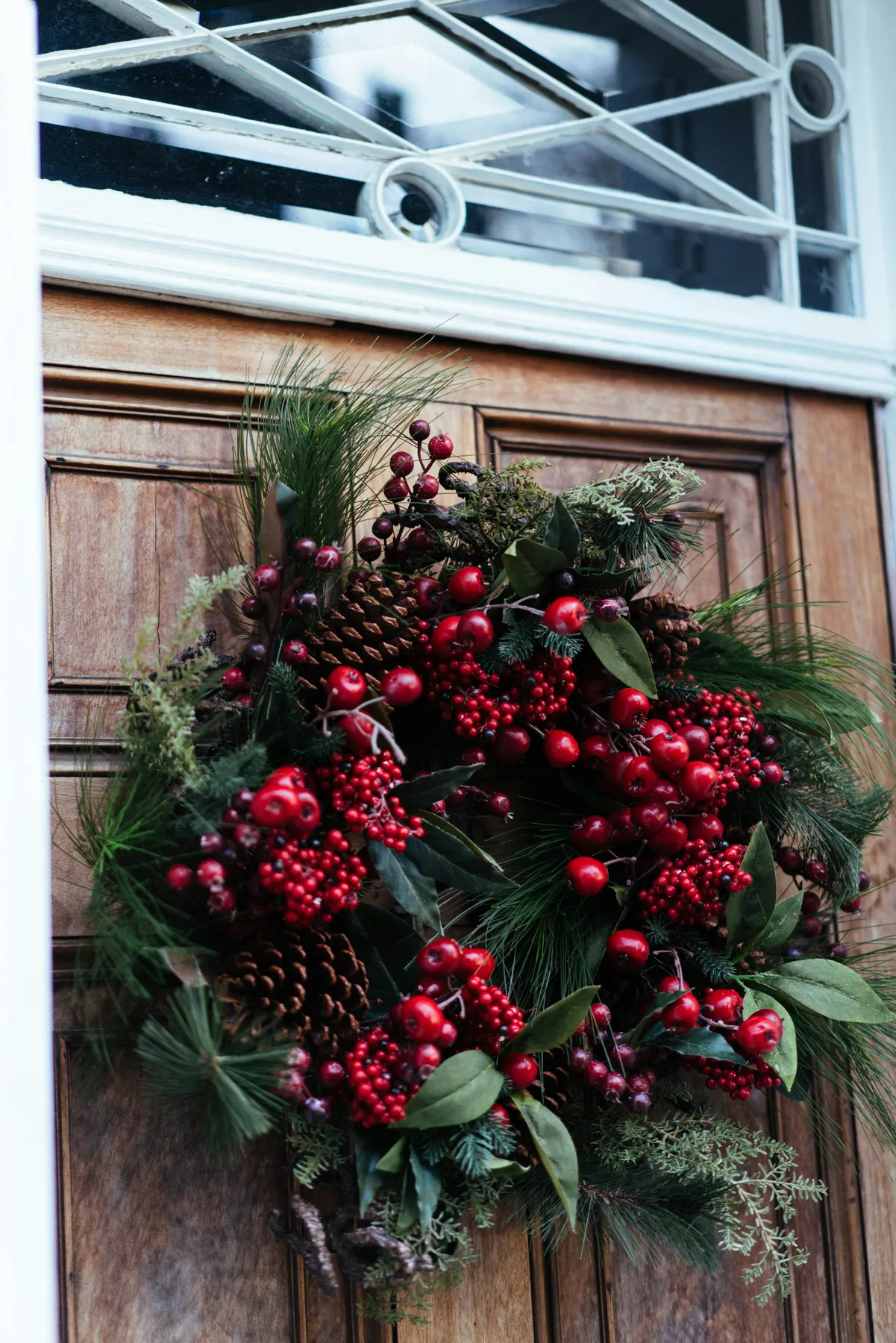
25. Deep Pine and Cranberry Berries on Warm Wood
If your door faces the weather, a lush real wreath is a three-week commitment. Sun bleaches the berries, frost turns needles brittle, and a wet wreath against wood can leave a damp ring you’ll see in April. Hang real greens on a covered porch; save the dense faux wreaths for exposed doors where nobody’s sniffing them.
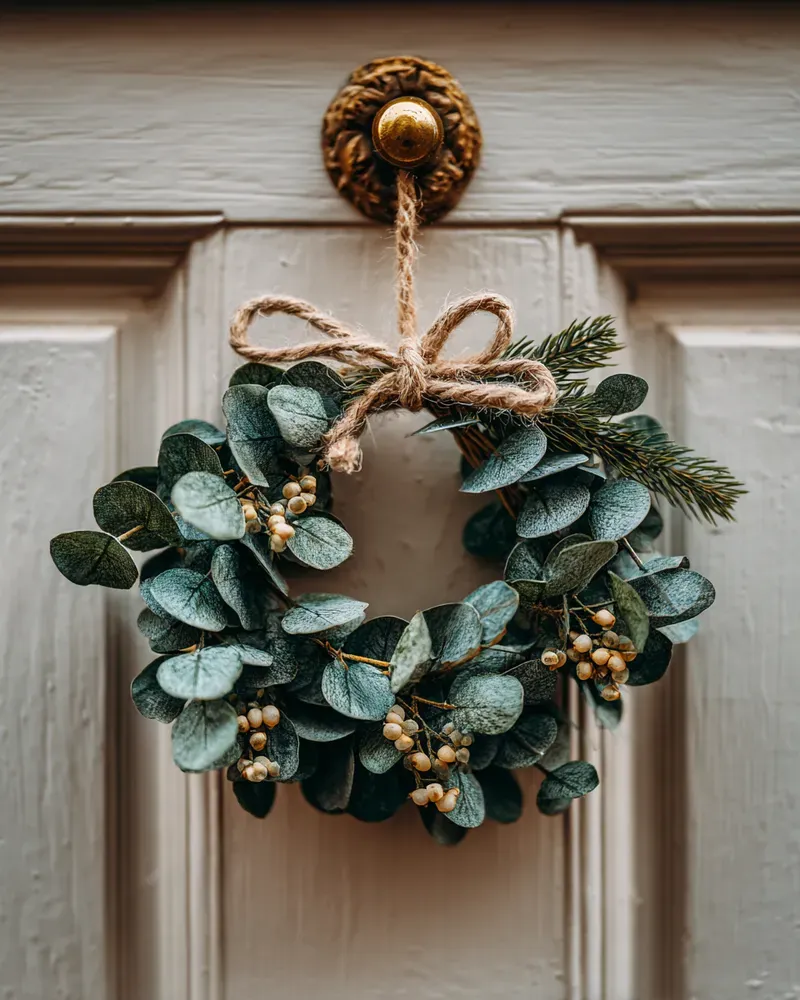
26. Eucalyptus, Pale Yellow Berries, and Jute Twine
Eucalyptus is floppy by nature, so it needs a spine. Wire the stems to a hoop base first, add pine sprigs at three and nine o’clock for structure, and keep the eucalyptus at about three times the pine. The jute bow here stays small on purpose — a big ribbon on a wispy wreath reads as a bow wearing a wreath.
27. Red Magnolias With Metallic Gold Leaves
Velvet magnolias are the expensive part of this look — often $8 a stem. Cheaper route: buy three good magnolia stems, fill the rest of the wreath with pine and berry clusters, then add a $6 bunch of gold metallic leaves from the floral aisle. Nobody counts your magnolias; they register red, green, and shine.

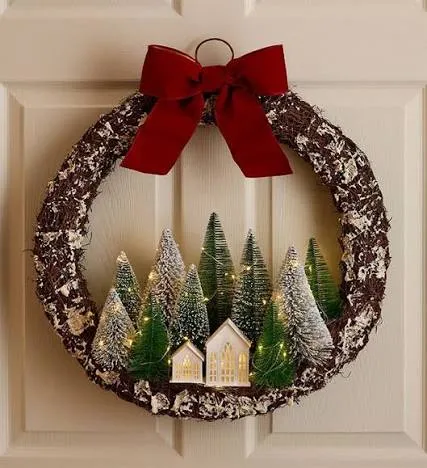
28. Twig Ring With a Miniature Illuminated Village
Wreaths as tiny dioramas are the sleeper trend of the season: miniature villages, bottle-brush trees, and warm fairy lights nested inside an open twig ring. It’s cheaper than a full wreath, endlessly customizable, and it scratches the same itch as a dollhouse. The twig ring itself works for years — swap the village for eggs in spring.
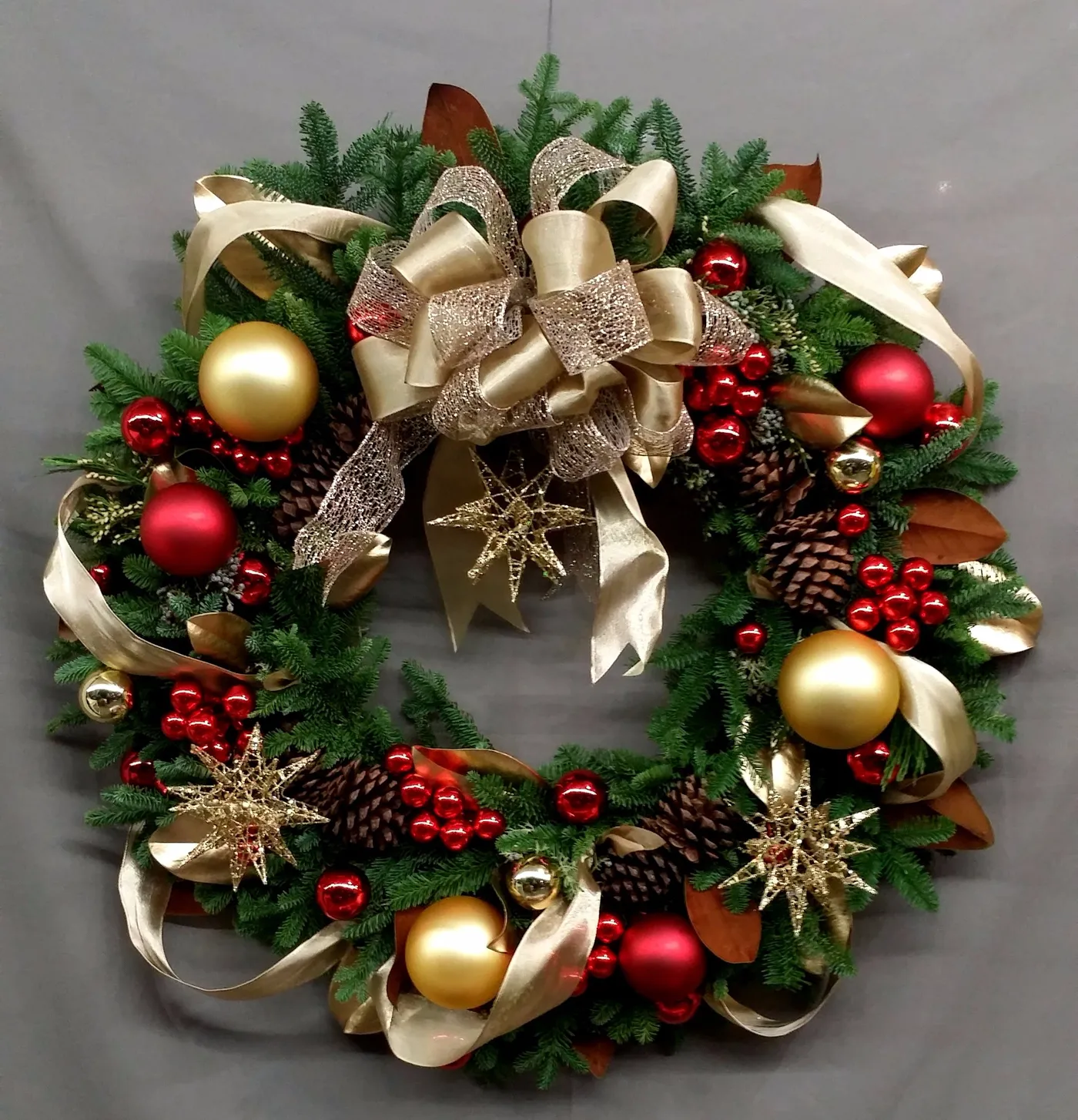
29. Woven Gold Ribbon and Matte Gold Baubles
Count the materials: green, gold, red, brown. Four. That restraint is why a wreath this loaded still reads as elegant. The gold ribbon is woven through the branches rather than wrapped around them, which softens the shine, and the dark magnolia leaves give all those bright baubles somewhere to land.
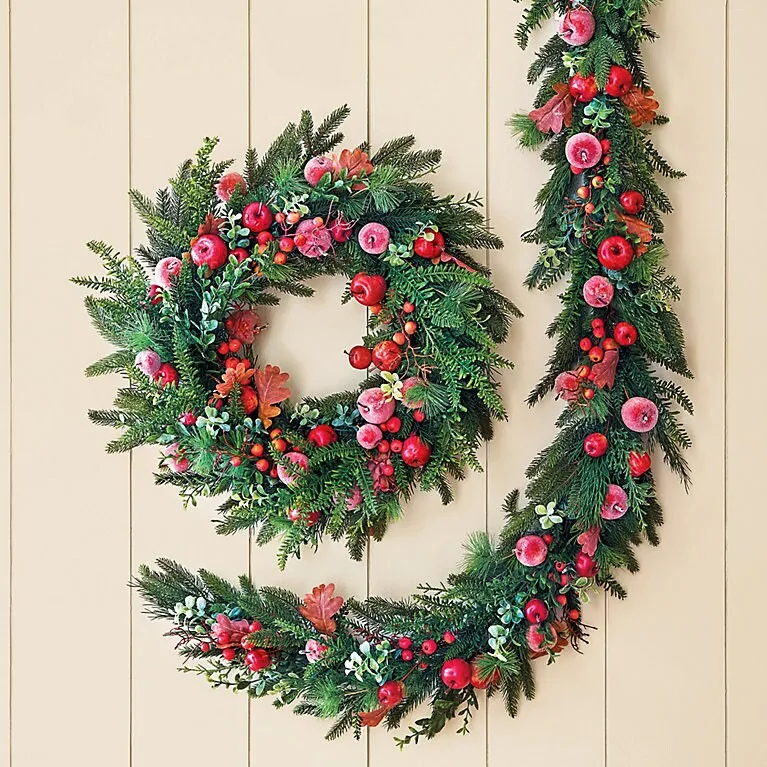
30. Frosted Red Apples Paired With a Matching Garland
Formula for a wreath-and-garland pairing: match the elements, not the shape. Both pieces here share red berries, frosted apples, and the same scattered leaves, but the garland is looser and longer on purpose. Keep the palette at 60% green, 30% red, 10% frosted pink, and let the garland echo Idea #22‘s fruit-and-green logic.
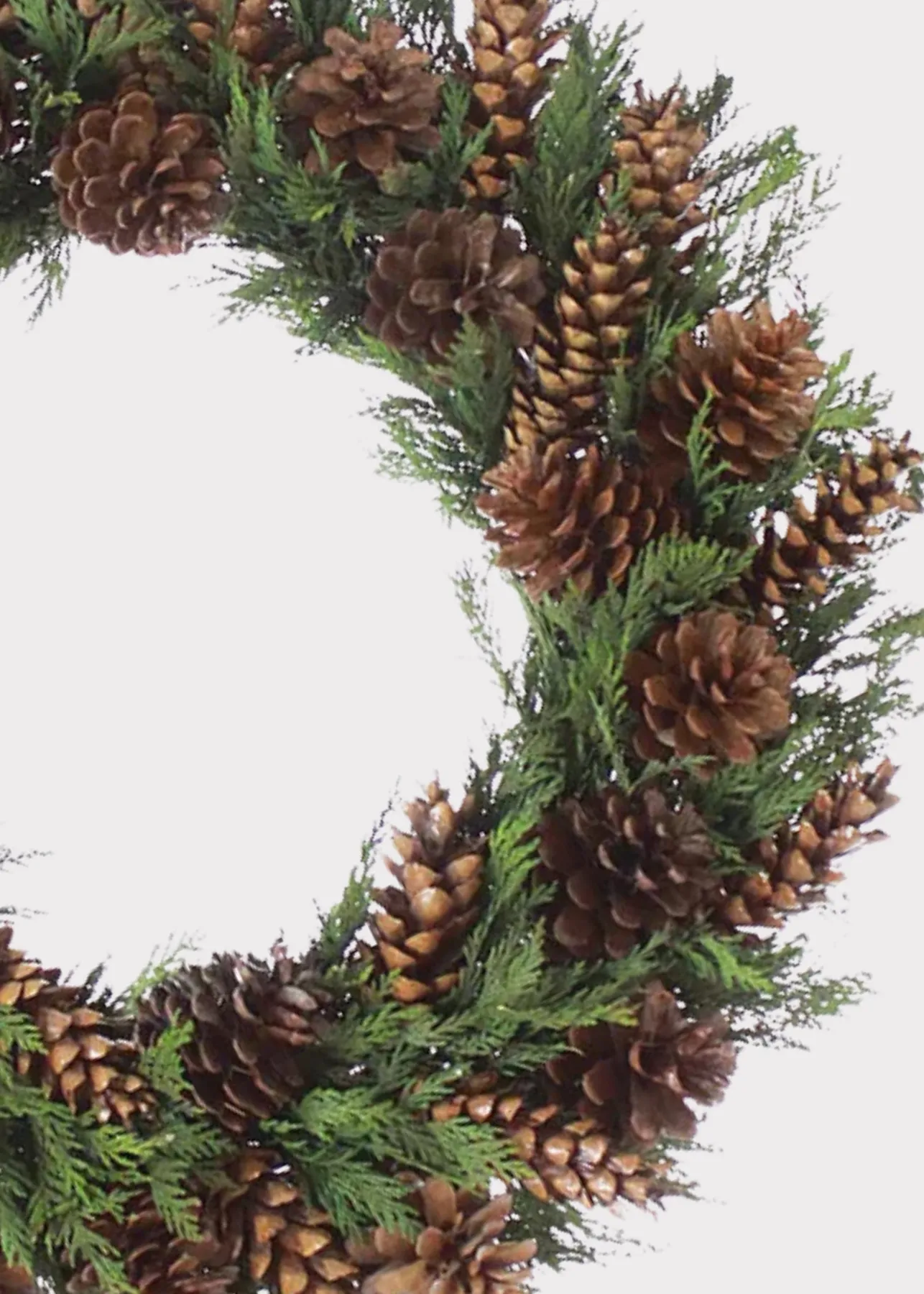
31. Crammed Shoulder to Shoulder With Pinecones
The pinecones, obviously — but specifically the sheer number of them. Most wreaths use five or six as accents; this one is built around them, with three sizes packed shoulder to shoulder. That repetition is what turns a green ring into something hand-gathered. Buy a bag of mixed sizes, not a uniform pack.
32. Glossy Red Apples on Rustic Wood Planks
Real apples on a wreath need two things: a pick and a seal. Push a wooden floral pick into the core, wire it to the frame, and wipe the skin with a little vegetable oil so it doesn’t wrinkle in dry indoor heat. Replace them every ten days — or use faux apples and spend the savings on magnolia leaves.
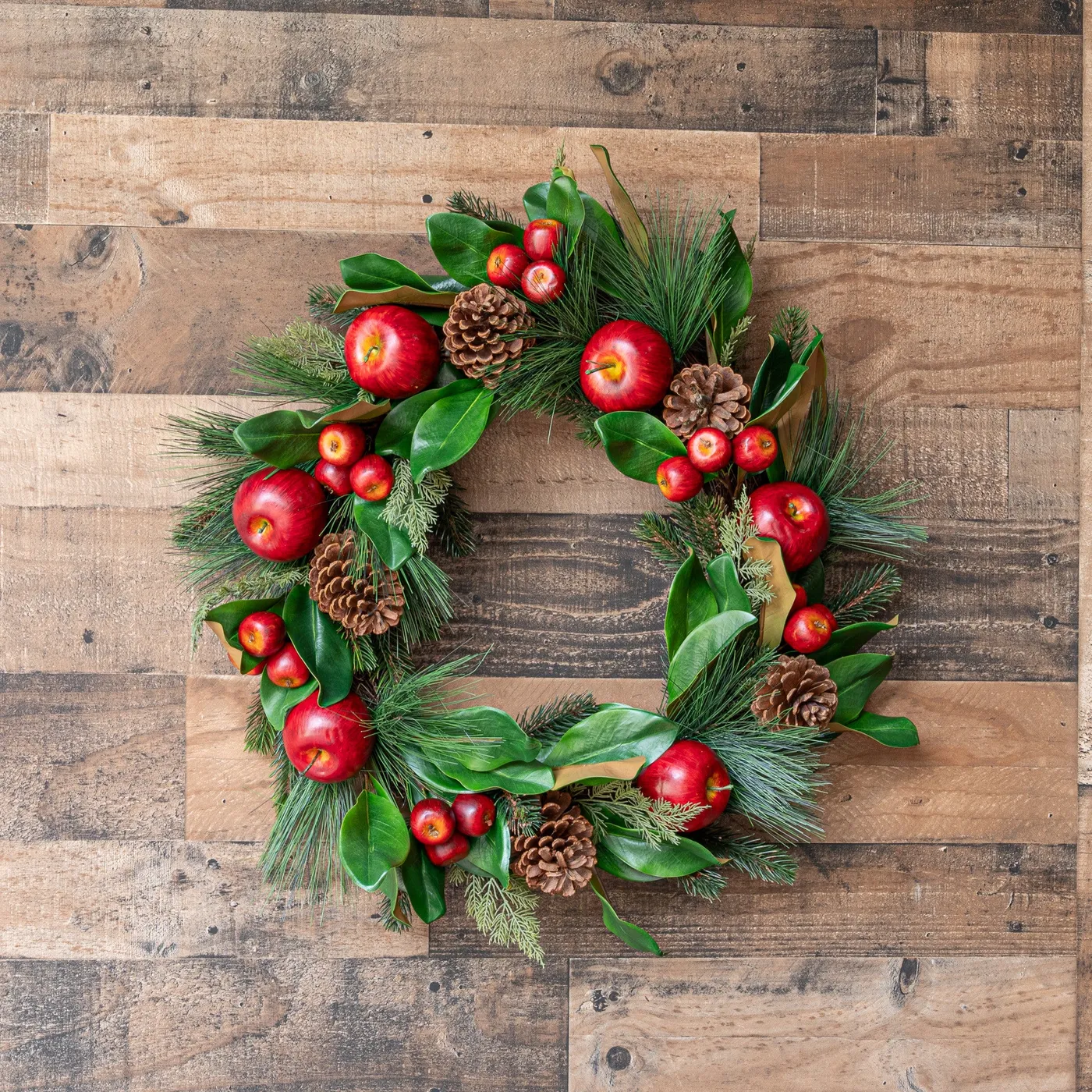
33. Silver Glitter Bow on a Frosted Evergreen
Glitter is a maintenance decision. A big silver bow like this one will dust your entry floor for weeks, and silver finishes tarnish in humid rooms. Hairspray or a matte sealant helps, tissue paper storage helps more, and keeping it away from a steamy front door helps most. Silver reads best in cool light — check it at night first.
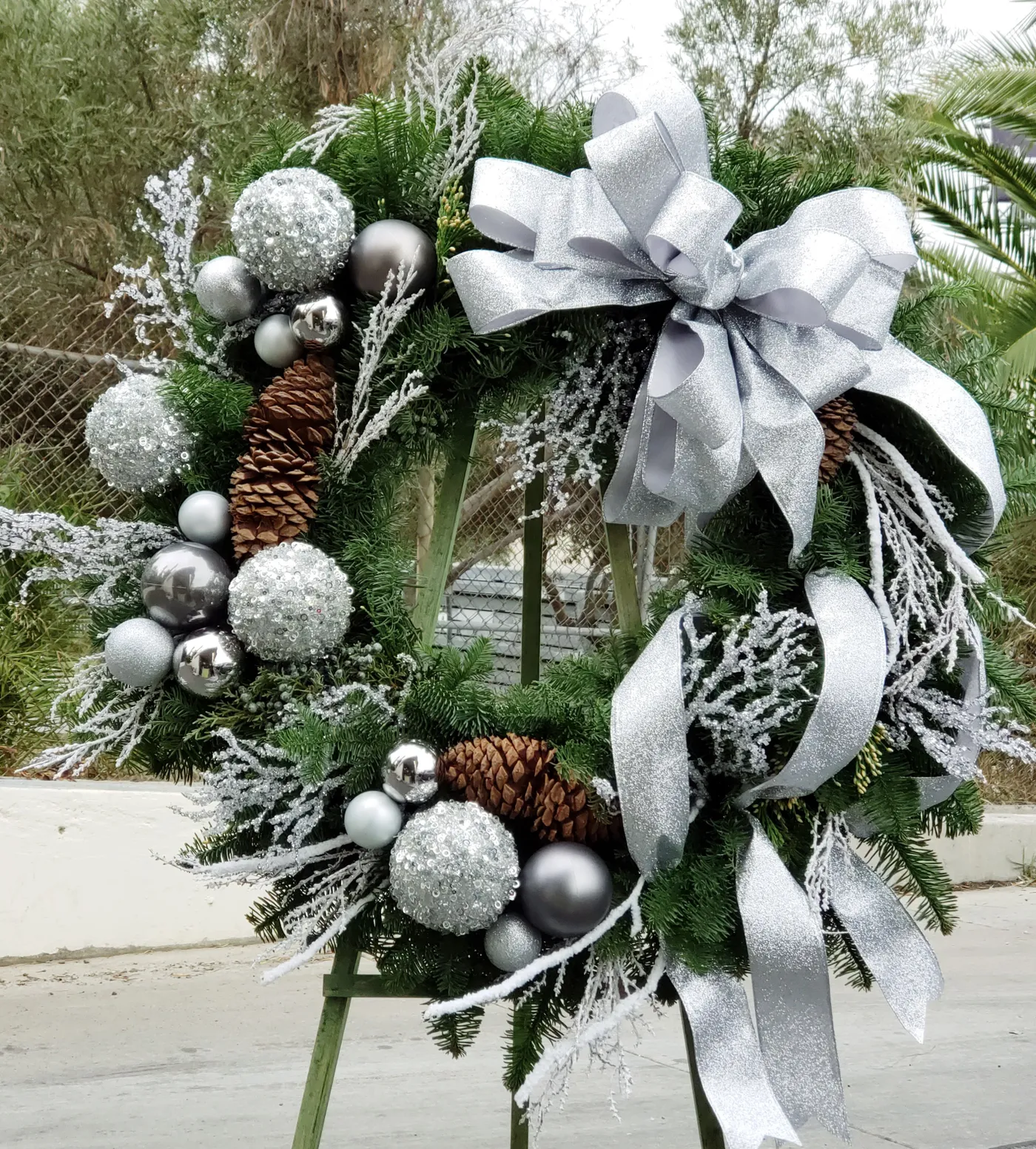
34. See-Through Pine With Red Berry Twigs
See-through wreaths are unforgiving. With a dark woven base visible between the needles, every gap reads as a hole, so fluff the branches outward from the center in layers before you hang it — and hang it against a wall, not a bright window. Backlit by glass, a sparse wreath looks twice as sparse.
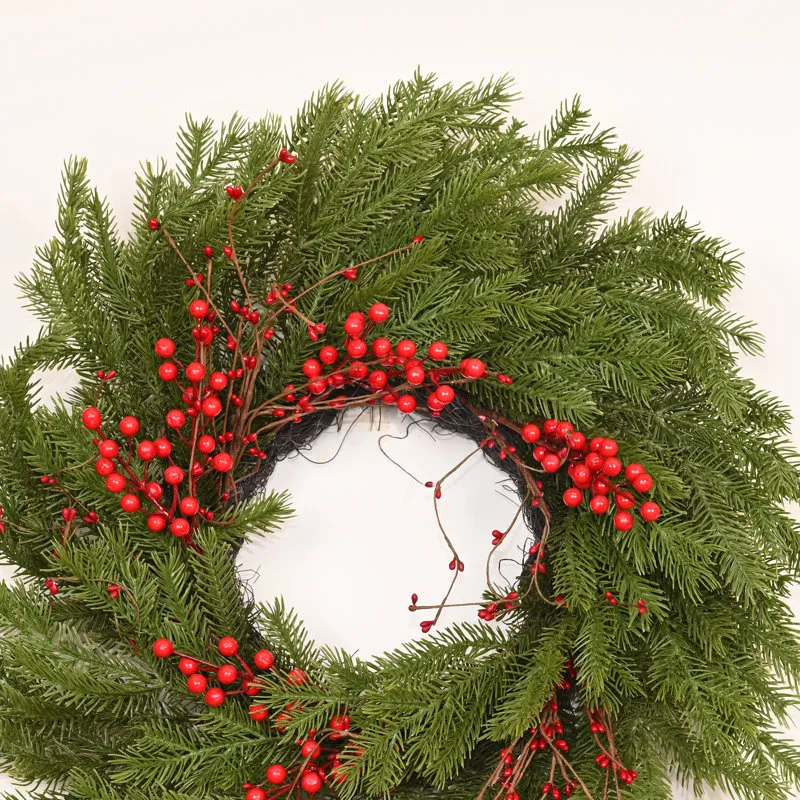
35. Layered Burlap and Red Glitter Bow
Two ribbons, one bow — that’s the expensive-looking trick here. Buy a yard of burlap-style ribbon and a yard of red glitter ribbon, layer them, and tie them as a single bow. Add dried orange slices from the grocery store and gold sprigs from the dollar aisle, and you’ve built a $30 wreath that photographs like $130.

36. Small Red Ribbon on a Light-Colored Door
Restraint has a size. On a light door, a smaller wreath with a small red ribbon and a few white berries looks intentional; that same wreath on a dark door vanishes. If your door is cream or white, stay at 22 to 24 inches and keep the bow narrow. Contrast is doing more work here than volume ever could.
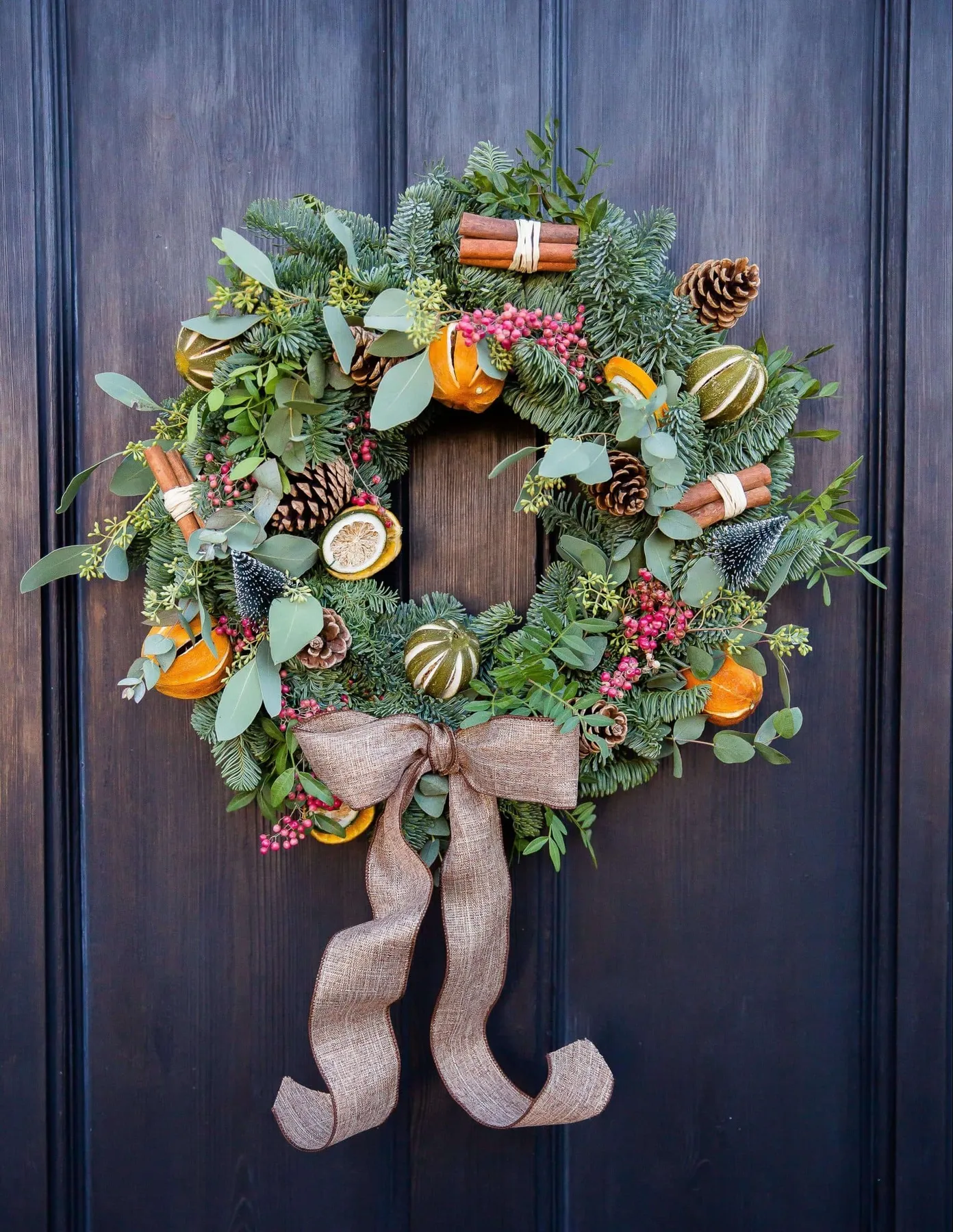
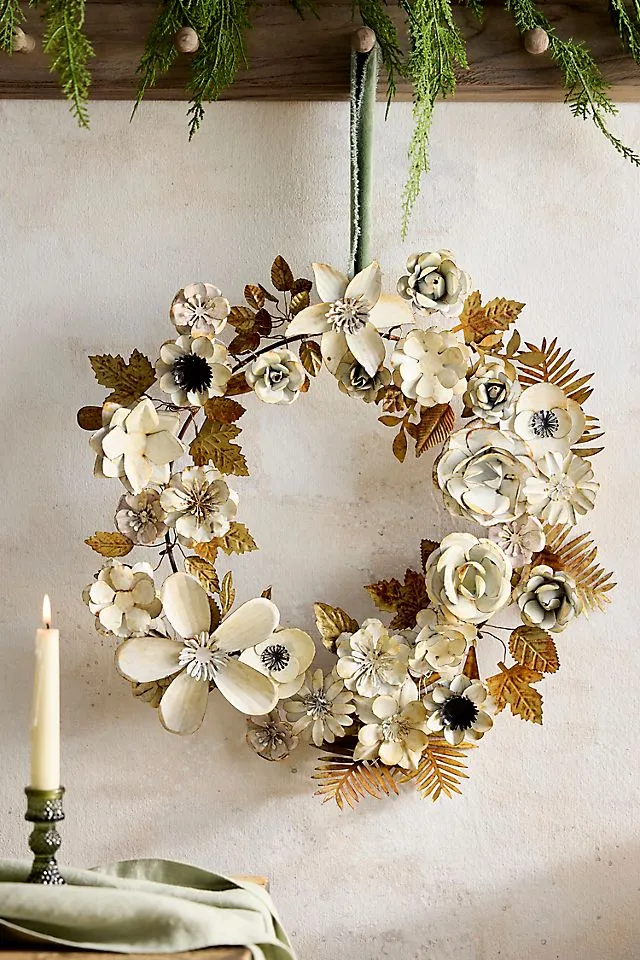
37. Metallic Cream Flowers and Golden Leaves
Nobody expects metal flowers on a wreath, which is exactly why it works. The cream and gold-bronze petals catch candlelight instead of absorbing it, so the whole thing glows before anything is even lit. It’s also the one wreath here that doesn’t scream Christmas — it will hang happily through January and February.
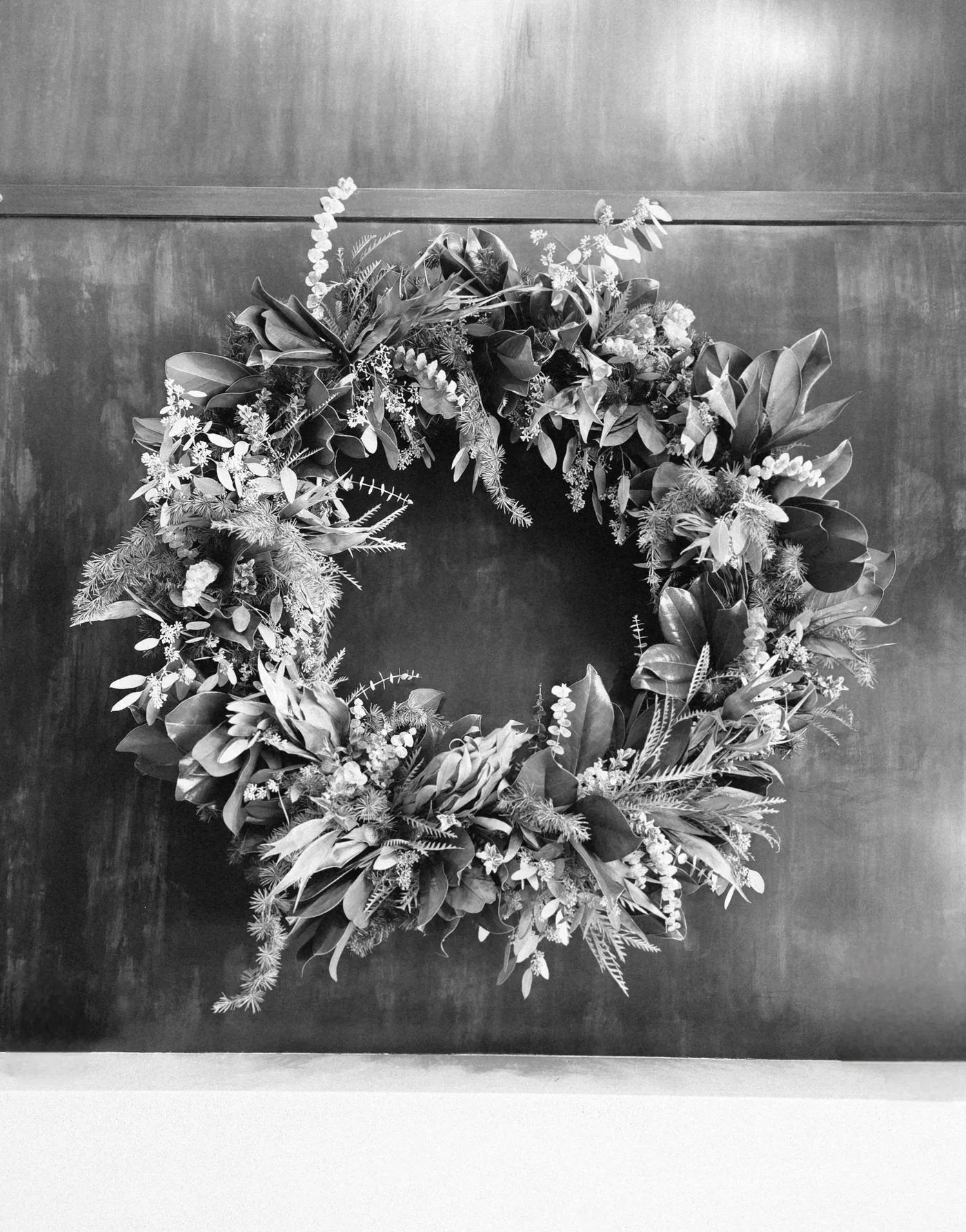
38. Broad Leaves and Fine Needles on a Dark Wall
Against a dark wall, texture beats color. This wreath works because it layers three leaf shapes — broad, needle, and fine sprigs — in near-identical greys and greens, so depth comes from shadow instead of contrast. If your wall is dark, check it at night with the room lights on; if it goes flat, add a leaf shape, not a color.
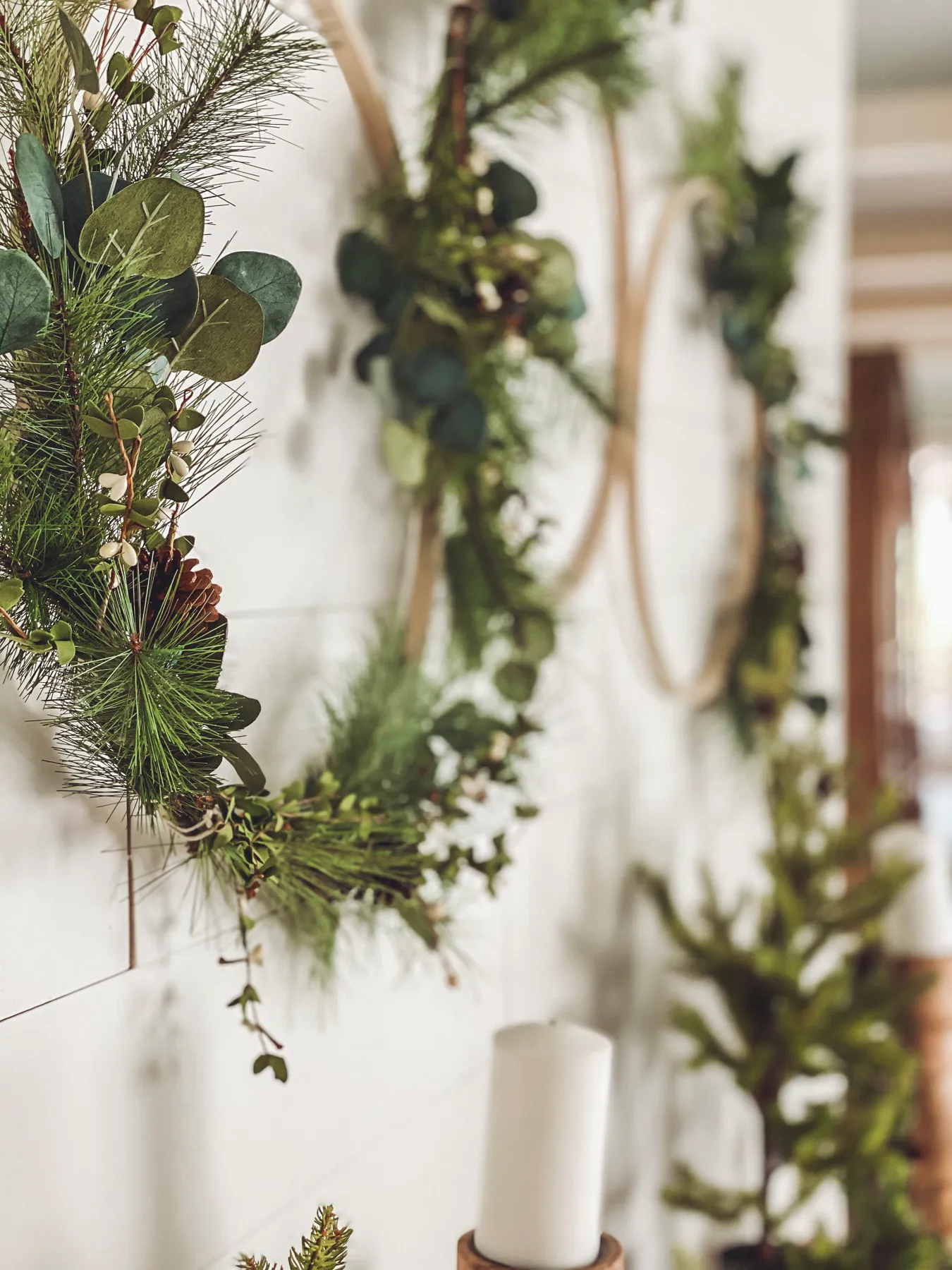
39. Layered Hoop Wreaths on White Shiplap
The wooden hoops. Layering three thin-hoop wreaths on white shiplap does what one dense wreath can’t: it makes a wall look collected over time rather than decorated in one afternoon. Keep them in the same material and vary only the greenery, hang them 3 to 4 inches apart, and add a white pillar candle below for warmth.
Your Front Door Is the Last Blank Wall You Own
Start with one wreath you genuinely love, hang it at the right height, and let the rest of the entry follow — the urns, the garland, the candles on the stair treads can all wait until next weekend. Come February, the greenery stays and only the red comes down. 📌 Pin your favorites now so you’re not scrolling for them in November.