Your entryway is the first thing guests see—and the last thing you touch before walking out the door. In 2026, Americans are pouring serious creativity into their foyers and entryways, turning these often-overlooked spaces into intentional design moments that set the tone for the entire home. Pinterest searches for entryway inspiration have skyrocketed, proving that people want their front hallways to feel just as curated as their living rooms. Whether you’re working with a narrow apartment corridor, a soaring two-story grand hall, or a cozy rustic mudroom, this roundup of 22 fresh ideas will give you real, actionable inspiration to transform the way your home says hello.
1. Modern Luxury Console Statement
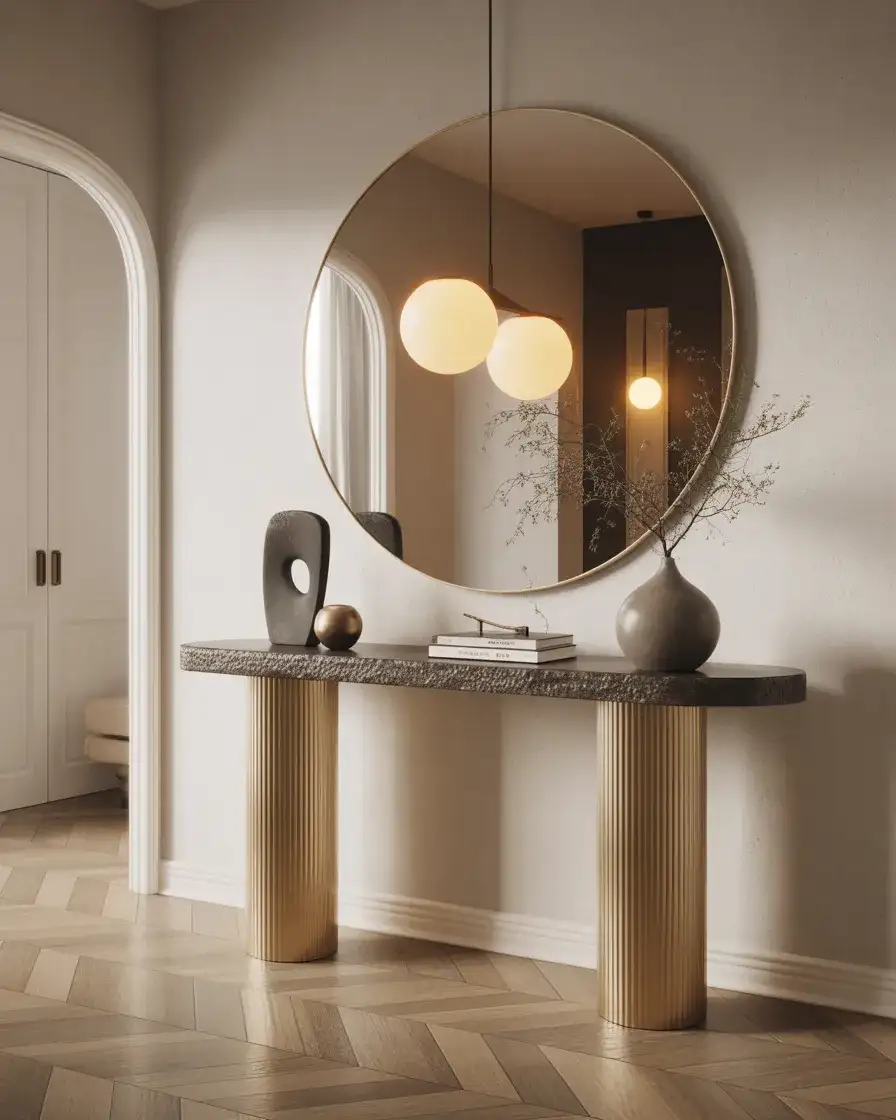
The modern luxury entryway trend is all about one anchor piece that does all the talking. A sculptural console table—think sintered stone tops, brushed brass legs, or lacquered walnut—positioned against a freshly painted wall creates an immediate sense of arrival. This works beautifully in a large or open-plan home where the foyer flows visibly into adjacent rooms, demanding a design moment that holds its own. Layer in an oversized mirror, a single artful object, and intentional lighting to let simplicity do the heavy lifting.
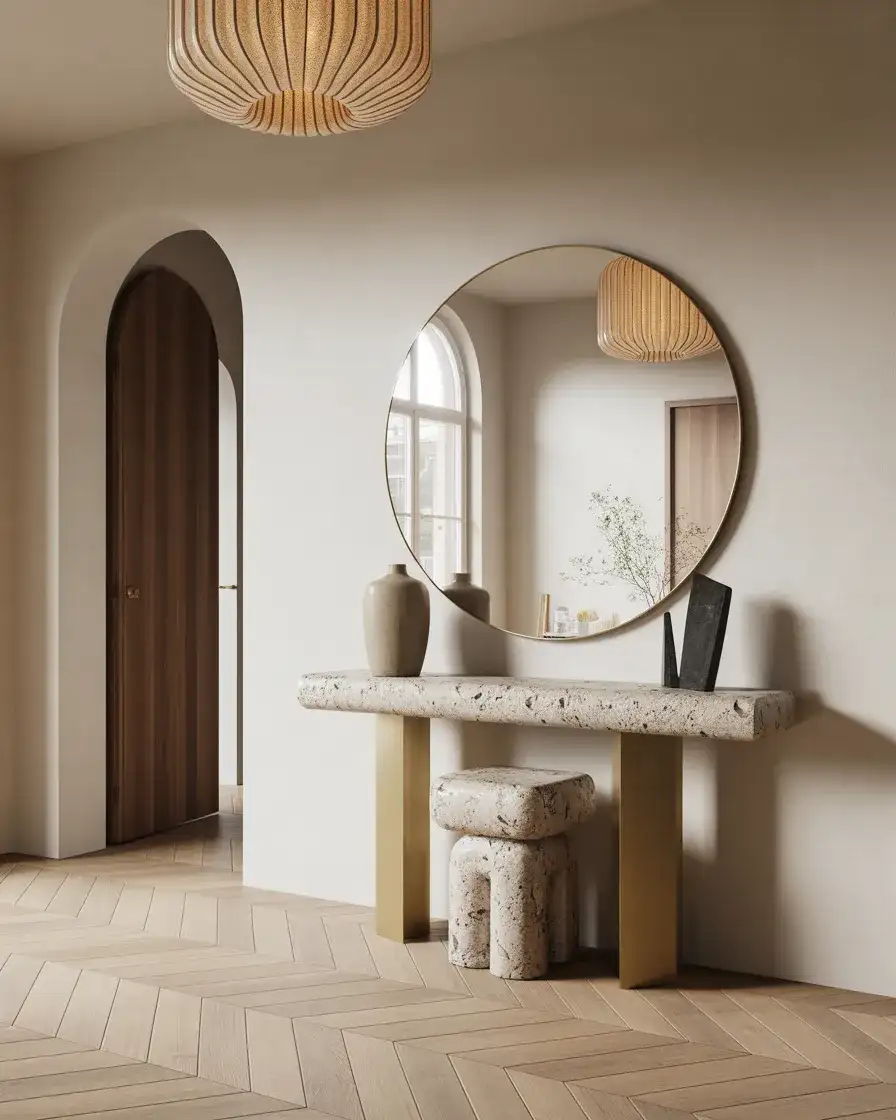
Interior designers consistently point to the console table as the single highest-impact investment in any entryway. Unlike furniture that requires daily maintenance or styling adjustments, a well-chosen console anchors the space year-round with minimal effort. Budget-wise, you don’t have to spend a fortune—retailers like CB2, Article, and West Elm offer stone-look options starting around $400 that photograph and live just as beautifully as the four-figure versions.
2. Narrow Entryway with Floating Shelves
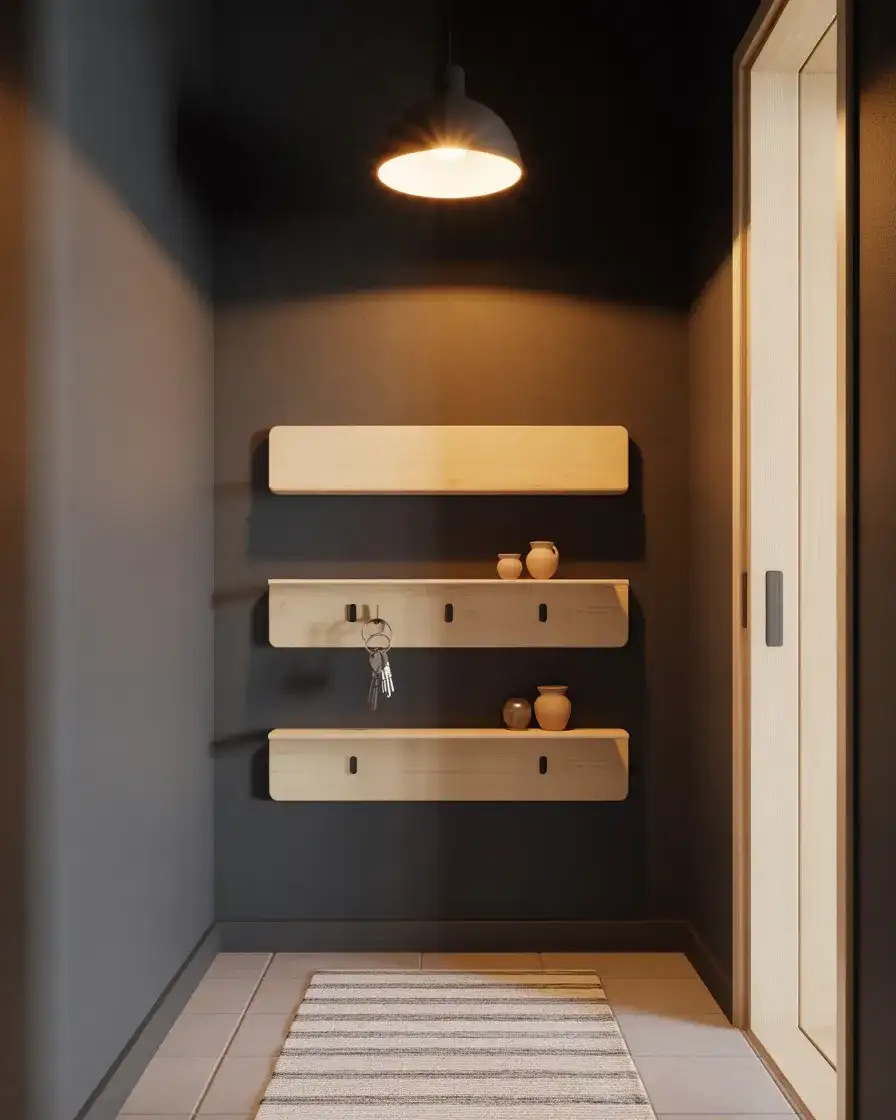
When your narrow front hall feels more like a corridor than an entrance, floating shelves are your best friend. Rather than pushing a bulky bench or cabinet into limited square footage, a series of wall-mounted shelves draws the eye upward and keeps the floor clear—making even the tightest passage feel intentional. This approach is especially smart in apartment entryways where every inch counts. Style the shelves with a curated mix of hooks for keys, a small trailing plant, and a few personal objects to make the space feel lived-in rather than staged.
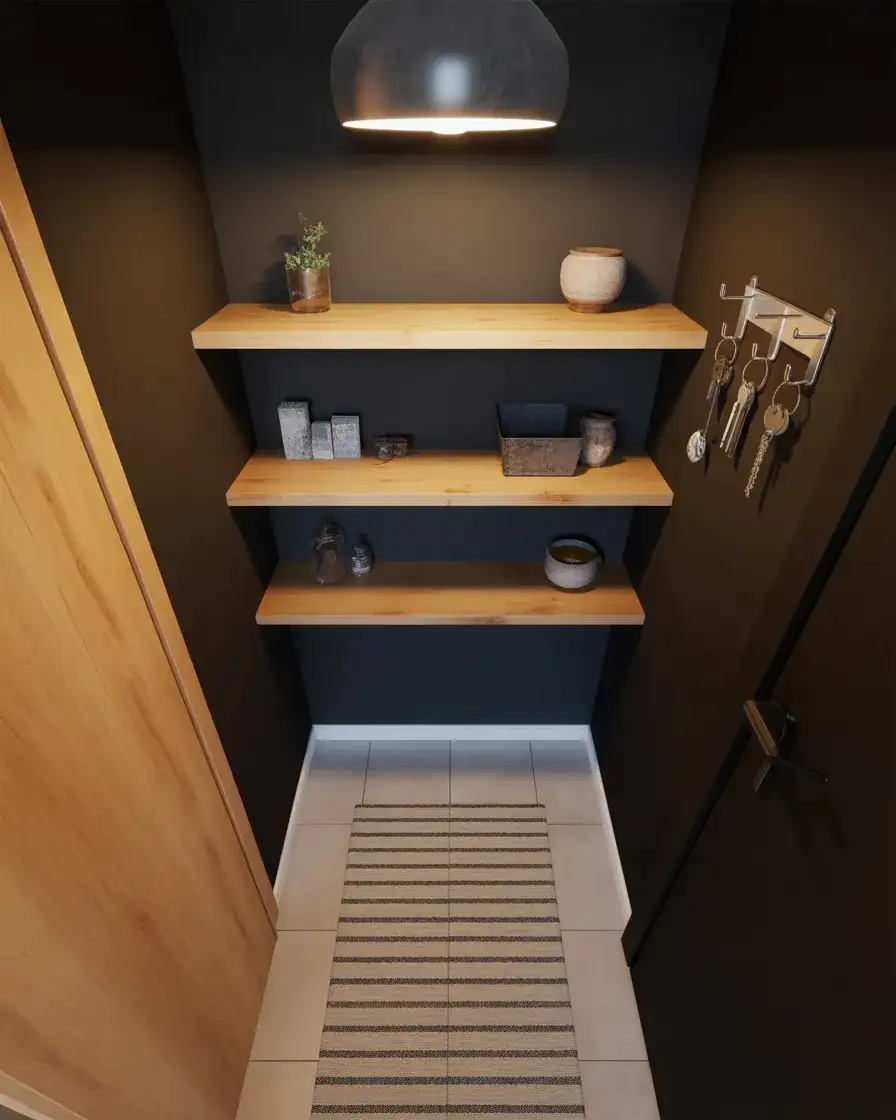
One mistake people make in narrow hallways is hanging too many things at the same height—it creates visual chaos and makes the space feel even more claustrophobic. Instead, stagger your shelf heights intentionally and limit yourself to three or four objects per shelf. Homeowners who follow this editing rule almost universally report that their hallway feels twice as wide just from the breathing room the empty wall space provides.
3. Two-Story Grand Foyer with Dramatic Lighting
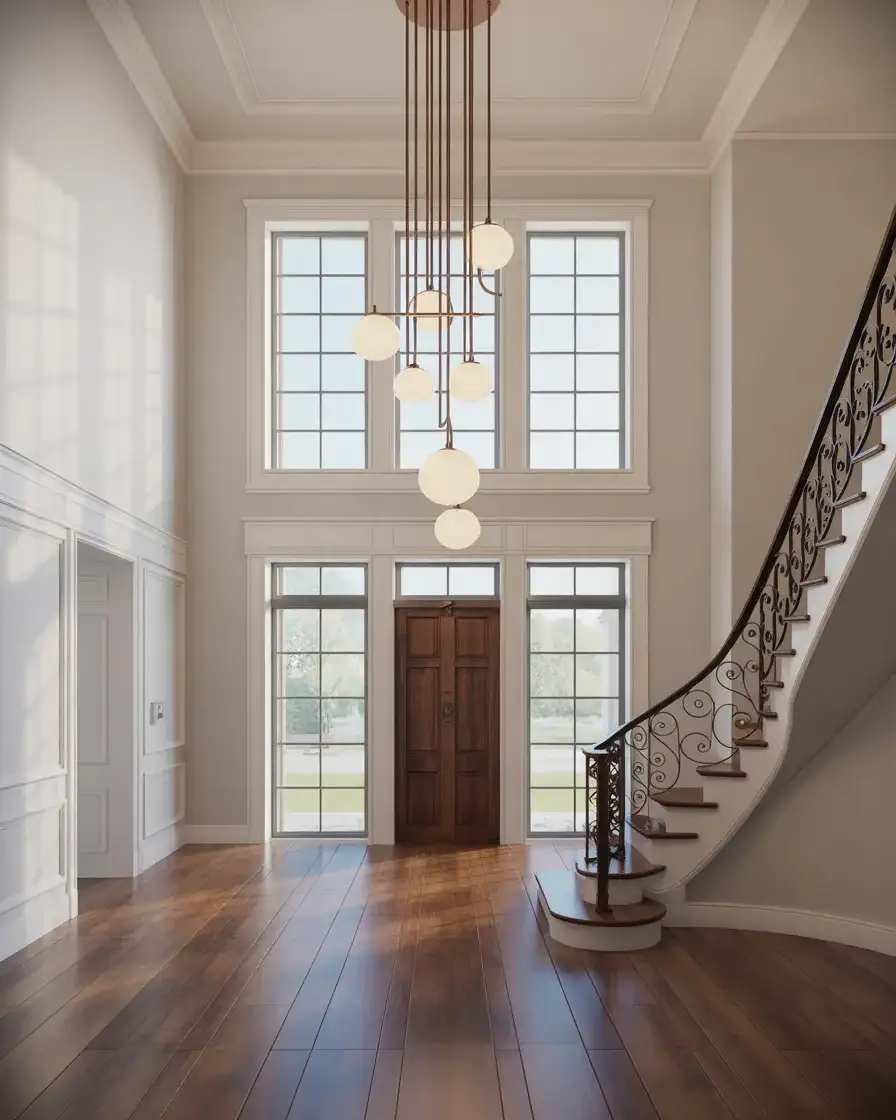
A 2-story entryway with high ceiling proportions is one of the most coveted features in American new construction—and designers are finally giving it the treatment it deserves. The key in 2026 is leaning into the verticality rather than fighting it. A cascading chandelier or a cluster of pendant lights dropped at varying heights fills that empty airspace and transforms a cold, echoey foyer into something genuinely theatrical. Pair the overhead drama with a bold floor treatment—geometric tile, wide-plank hardwood, or even a large-format stone—to ground the space below.
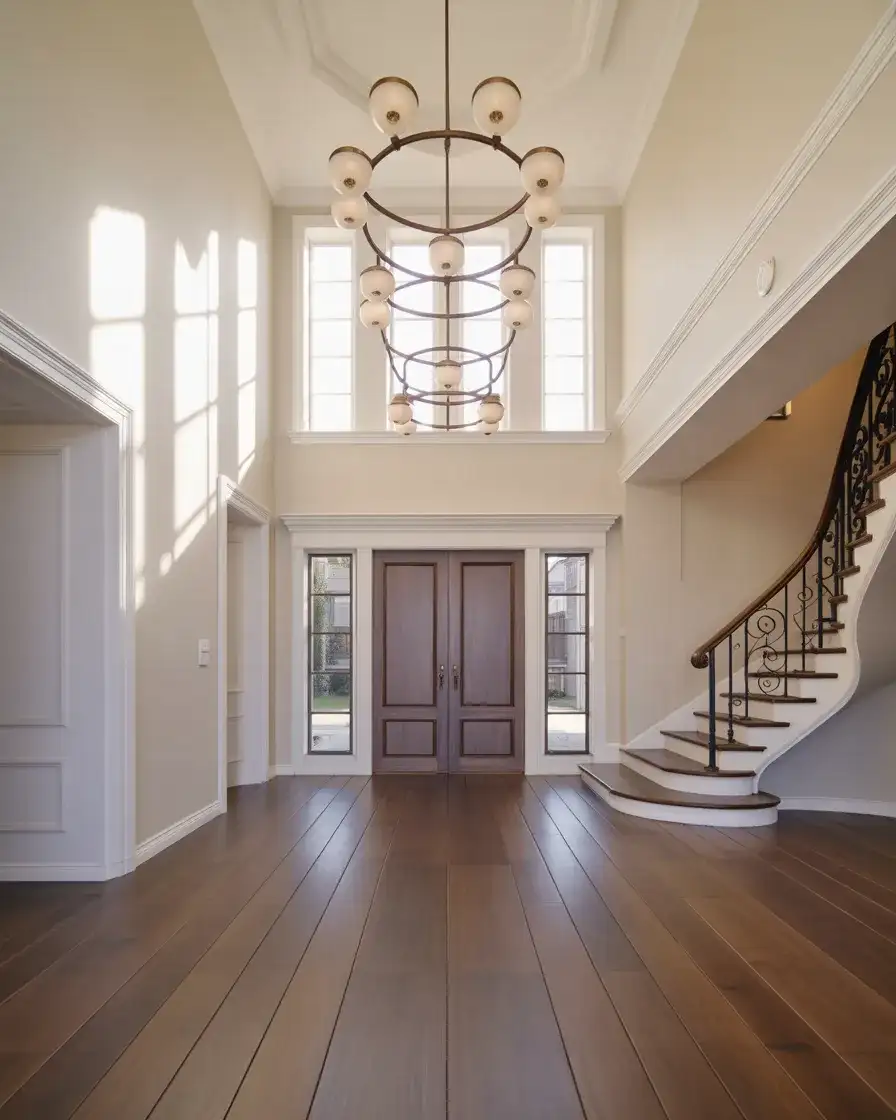
Where this works best: suburban homes built after 2000 with open-riser staircases are practically made for this treatment. The double-height void above the entry is essentially a blank canvas that most homeowners underutilize for years. An interior designer once told a client debating whether to invest in lighting this space, “You walk past it every single day—it should feel like an event.” That reframe tends to settle the decision quickly.
4. Indian Modern Entryway with Jaali Screens
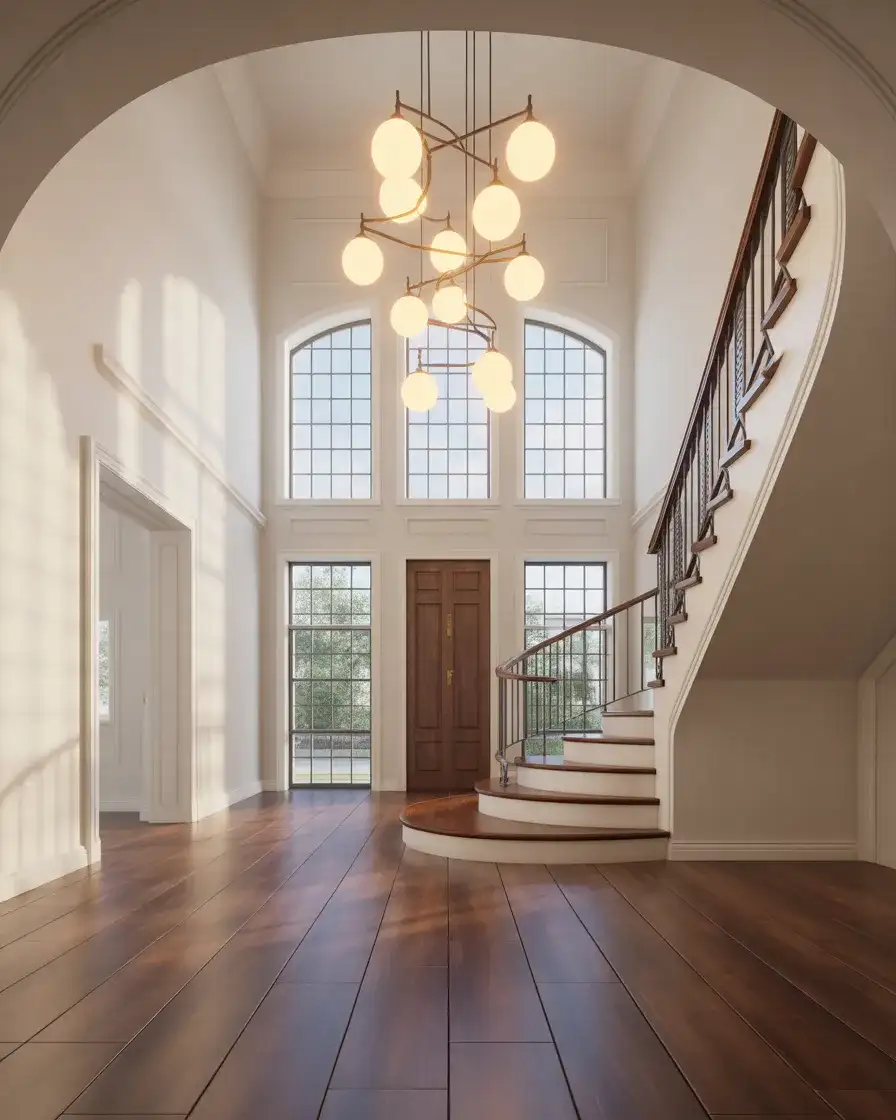
The modern Indian aesthetic is having a serious moment in American interiors, and the Indian design tradition of layered pattern and craftsmanship translates beautifully to the entryway. A jaali-inspired screen—the perforated lattice woodwork rooted in Mughal architecture—used as a room divider or decorative wall panel brings instant character and filters light in a way that feels almost magical at golden hour. This approach suits both open-concept entries and more traditional homes looking for a global influence that feels considered rather than random.
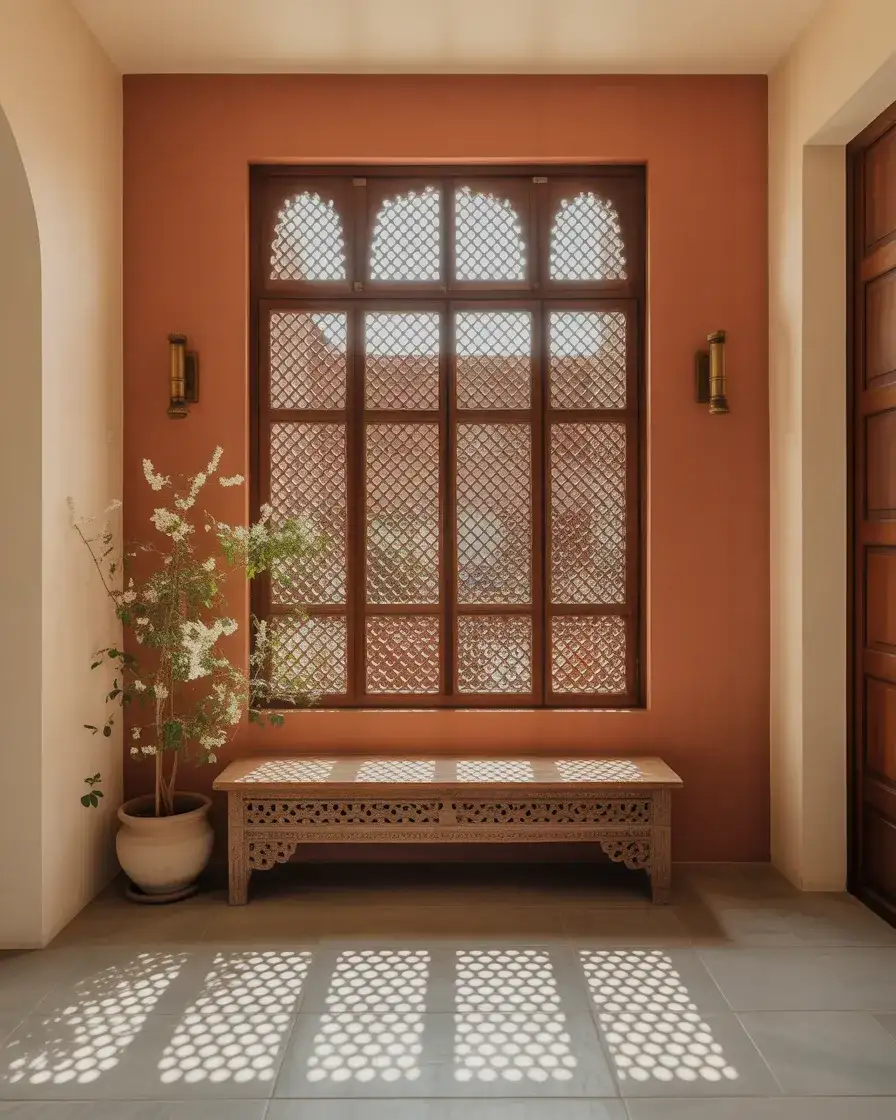
In cities like Houston, Atlanta, and the Bay Area—which have large South Asian communities—this design choice often reflects a genuine cultural connection rather than trendy borrowing. For Indian apartments and diaspora households, incorporating jaali details is a quiet, personal way of bringing home into the home. Paired with a neutral base palette, the woodwork becomes an heirloom-quality focal point that grows more beautiful as it ages.
5. Moody Dark Entryway with Dramatic Walls
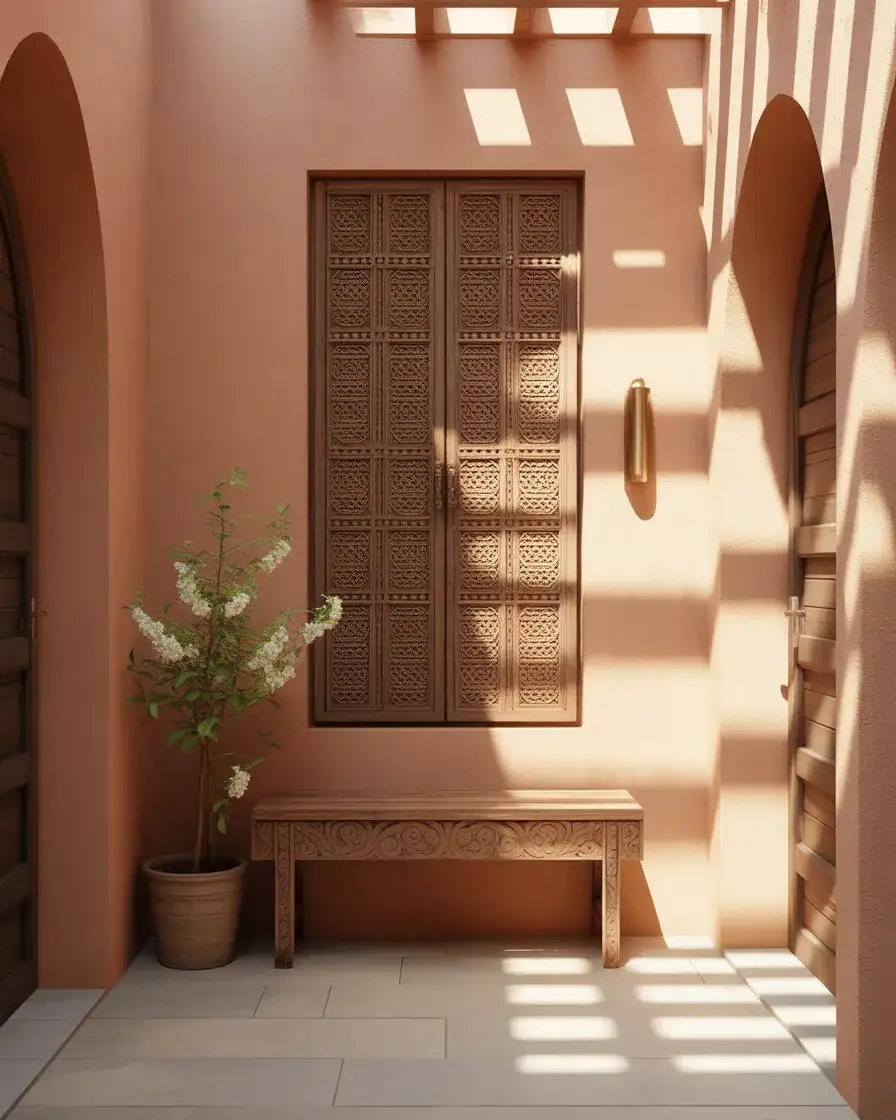
Going moody in the entryway is one of those design moves that sounds counterintuitive but consistently delivers. A deep forest green, inky navy, or near-black paint color on all four walls—ceiling included—creates an enveloping, jewel-box quality that feels luxurious rather than claustrophobic. This is especially powerful in a long hallway or a front entry where you want to create a transitional pause between outside and the rest of the house. The darkness actually makes artwork and lighting pop in a way that white walls simply cannot achieve.
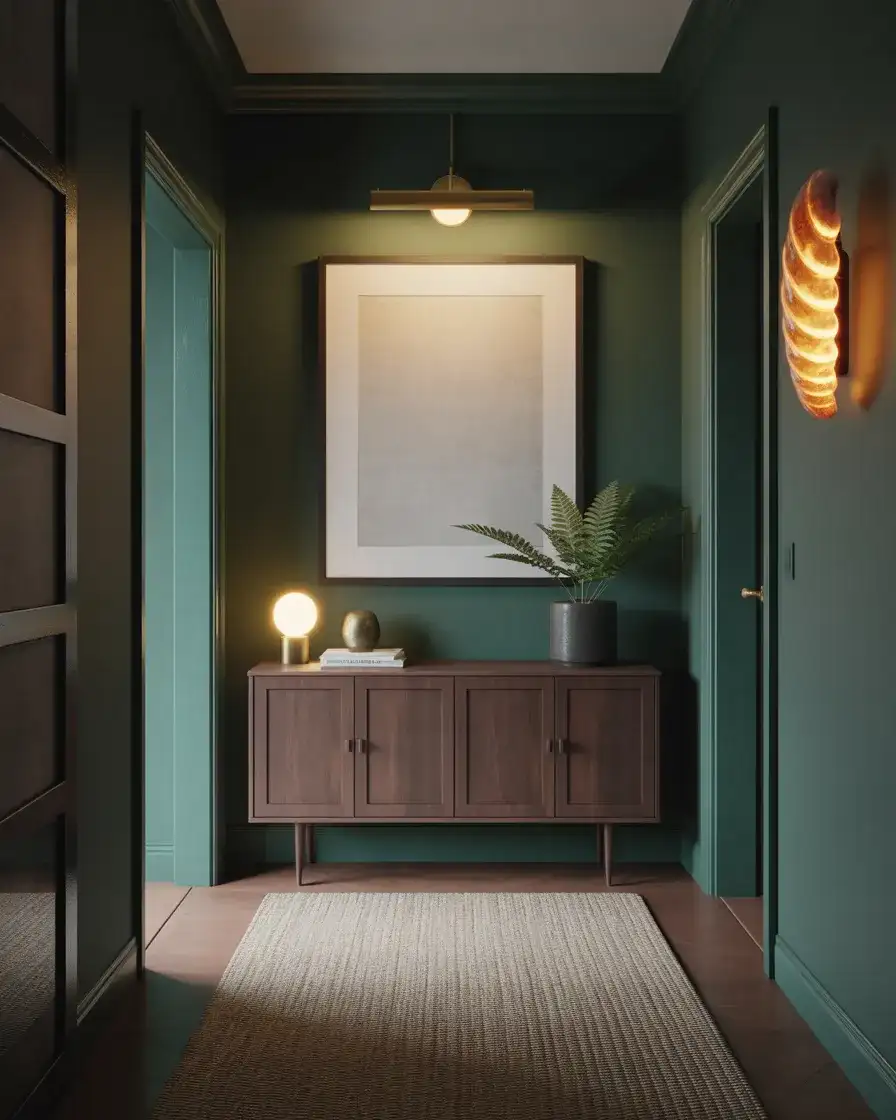
Real homeowners who’ve made the leap to a dark entryway almost universally say they wish they’d done it sooner—and that their biggest regret is not going dark enough on the first try. The practical insight here: always test your paint in the actual space at different times of day before committing. A color that reads charcoal in the showroom might go near-black in a north-facing hallway, which can be either a happy accident or a disaster depending on your goals.
6. Rustic Farmhouse Entryway with Reclaimed Wood
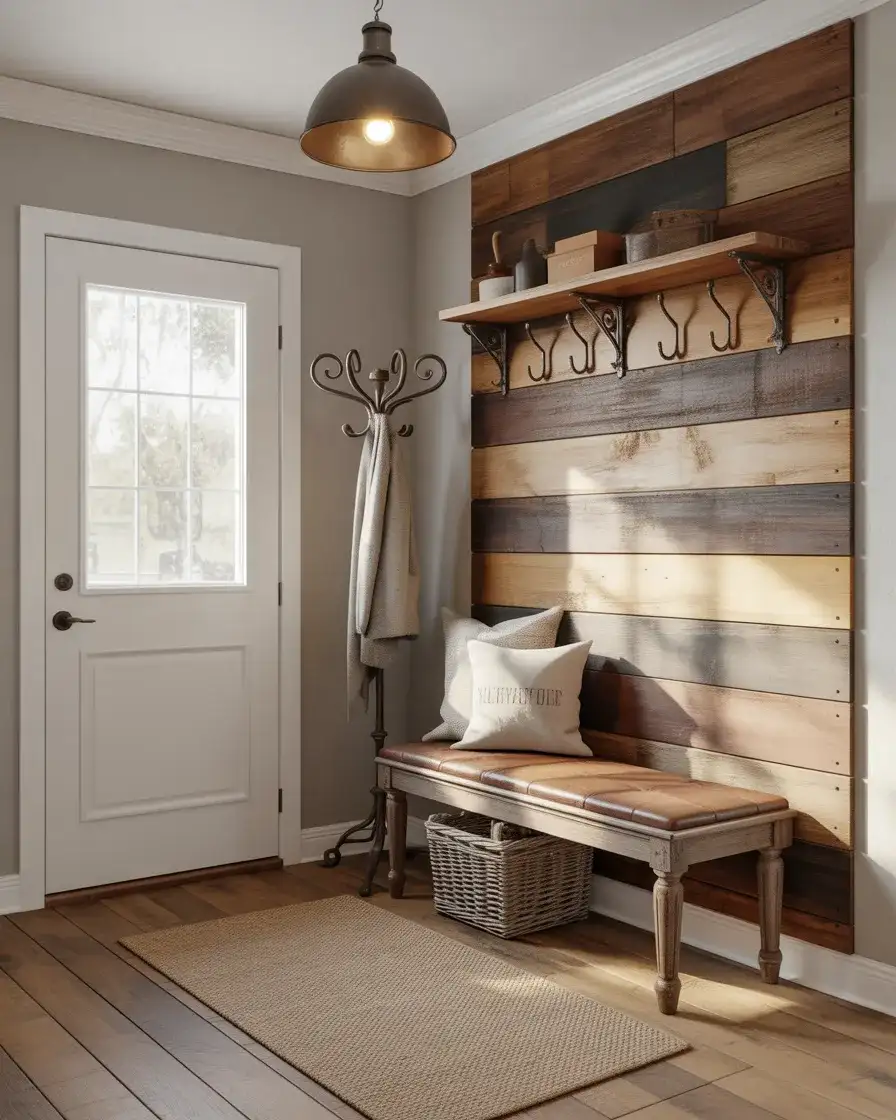
The rustic entryway is evolving in 2026 — moving away from the overly curated shiplap-and-buffalo-check look toward something rawer and more authentic. Reclaimed barn wood accent walls, hand-hammered iron hooks, and vintage milking stools used as seat surfaces bring in genuine history rather than its simulation. This style feels most at home in rural Midwest and Southern properties, but it translates beautifully to suburban homes looking for warmth and a sense of story. Layering textures—raw wood, woven jute, aged leather—is the secret to making rustic feel rich rather than rough.
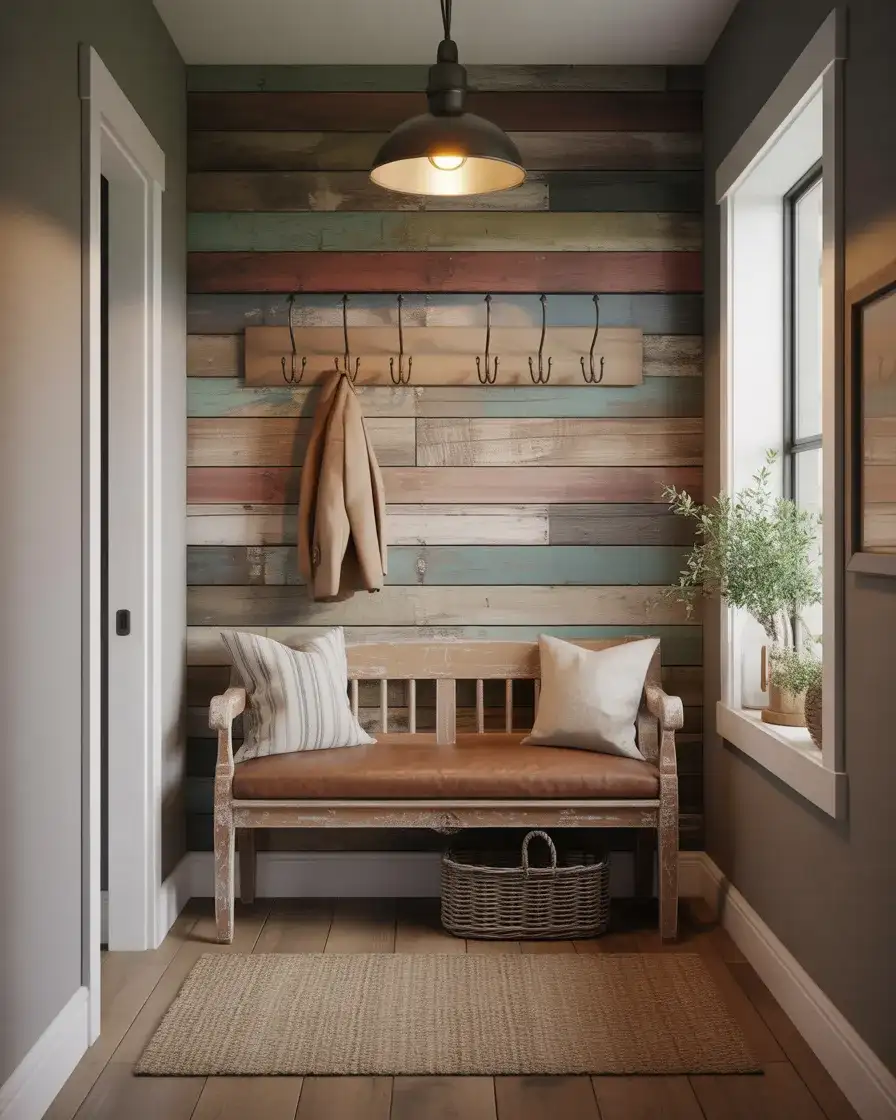
Budget-conscious homeowners can source reclaimed wood through local salvage yards, Facebook Marketplace, or architectural salvage shops—often at a fraction of the cost of new lumber. A single reclaimed wood accent wall in an entryway typically runs $200–$600 in materials for an average-sized hallway, depending on wood species and source. The texture and character you get simply cannot be reproduced with new materials, making it one of the better value plays in entryway design.
7. Elegant Staircase Entryway with Wainscoting
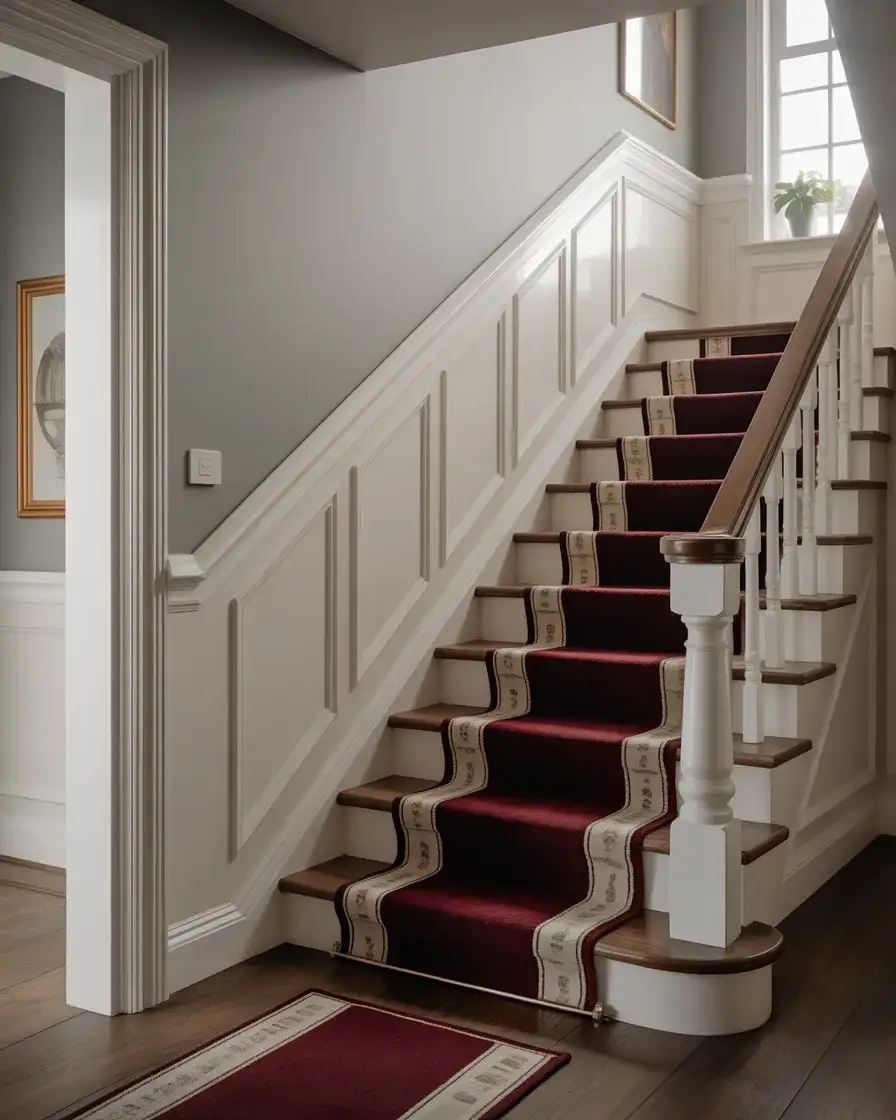
Few architectural details elevate an entryway as reliably as wainscoting paired with a stairs feature wall. The classic combination of raised-panel millwork running up a staircase creates an elegant visual rhythm that feels tailored and permanent—the kind of detail that makes guests assume the house has always looked this way. In traditional American homes, particularly Colonial and Craftsman styles, adding or restoring wainscoting along a staircase can dramatically increase perceived value and character with a relatively modest investment in materials and labor.
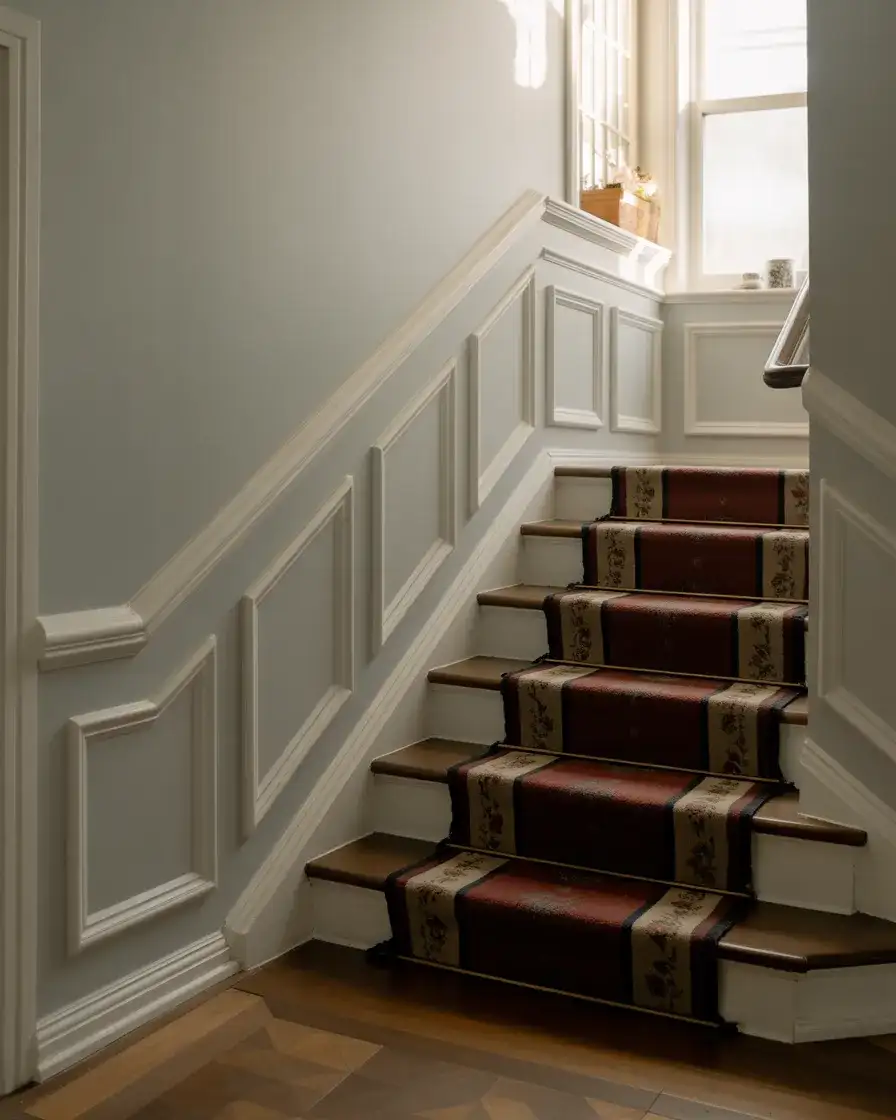
The most common mistake people make with staircase wainscoting is stopping the panel at the wrong height—either too low, which looks timid, or inconsistently carried up the staircase angle, which breaks the visual flow. The rule of thumb from most millwork contractors: run the chair rail at exactly one-third of the wall height on the straight sections, then follow the stair pitch precisely. Getting those angles right is what separates a polished result from one that looks DIY in the wrong way.
8. Tiny Apartment Entryway with Multifunctional Bench
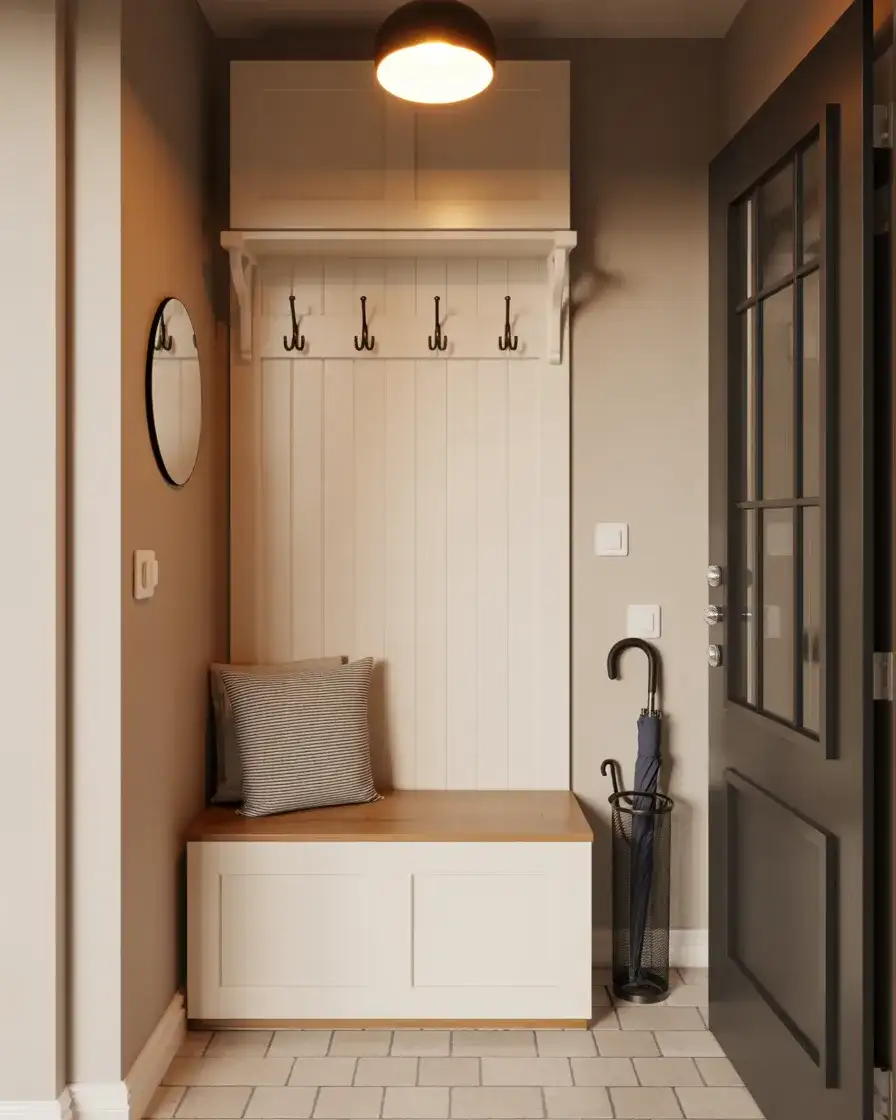
In a tiny urban apartment, the entryway is often just a doormat and a prayer. But even the most minimal landing can be transformed with a single well-chosen piece: a storage bench. The best versions in 2026 combine a lift-top seat (for shoes, gym bags, or seasonal accessories), built-in hooks above, and a slim profile that doesn’t eat into the walkway. This is the entrance equivalent of a Swiss Army knife—it handles function without compromising the few precious square feet you have to work with.
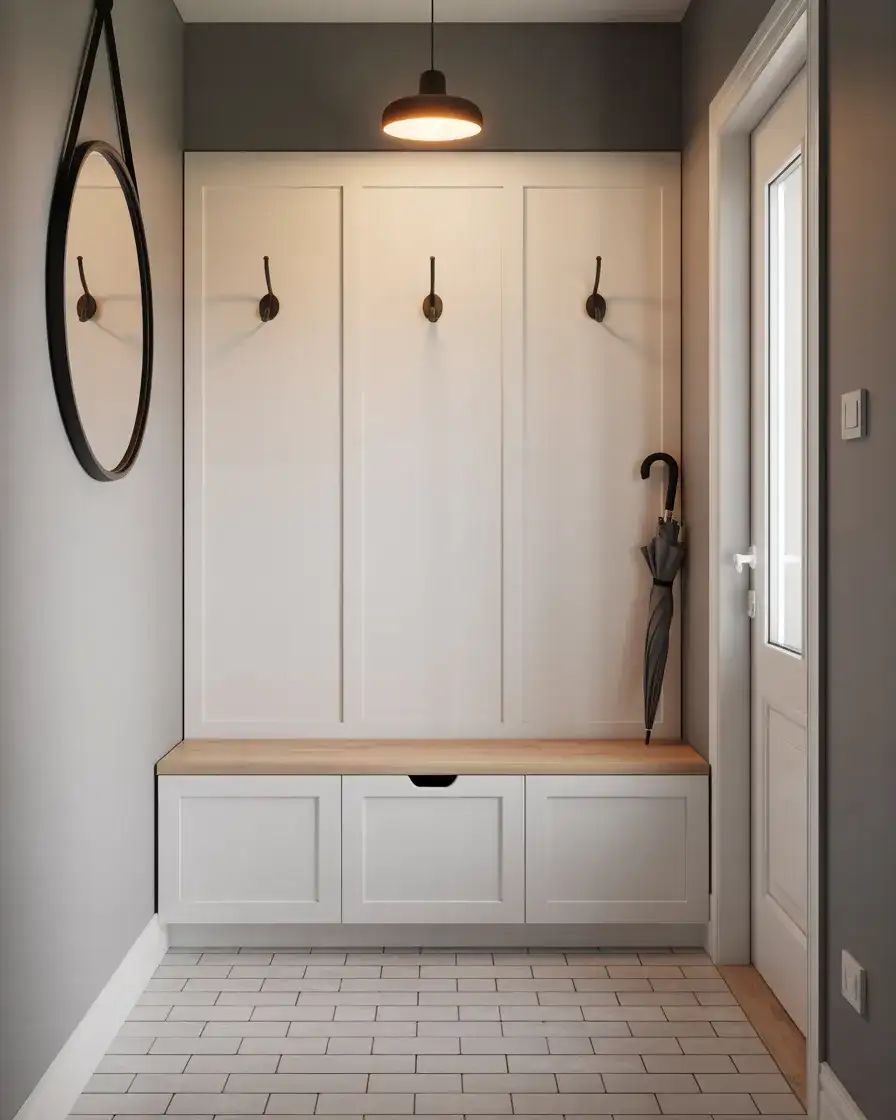
For renters in New York, Chicago, or San Francisco, where entryways might be literally five feet of space between the front door and the living room, the multifunctional bench under $300 has become something of a community standard. It’s the piece most frequently recommended in apartment living forums and subreddits, praised for keeping shoes contained and keys findable without requiring any drilling or permanent modification—crucial for anyone with a security deposit on the line.
9. Open Foyer with Statement Area Rug
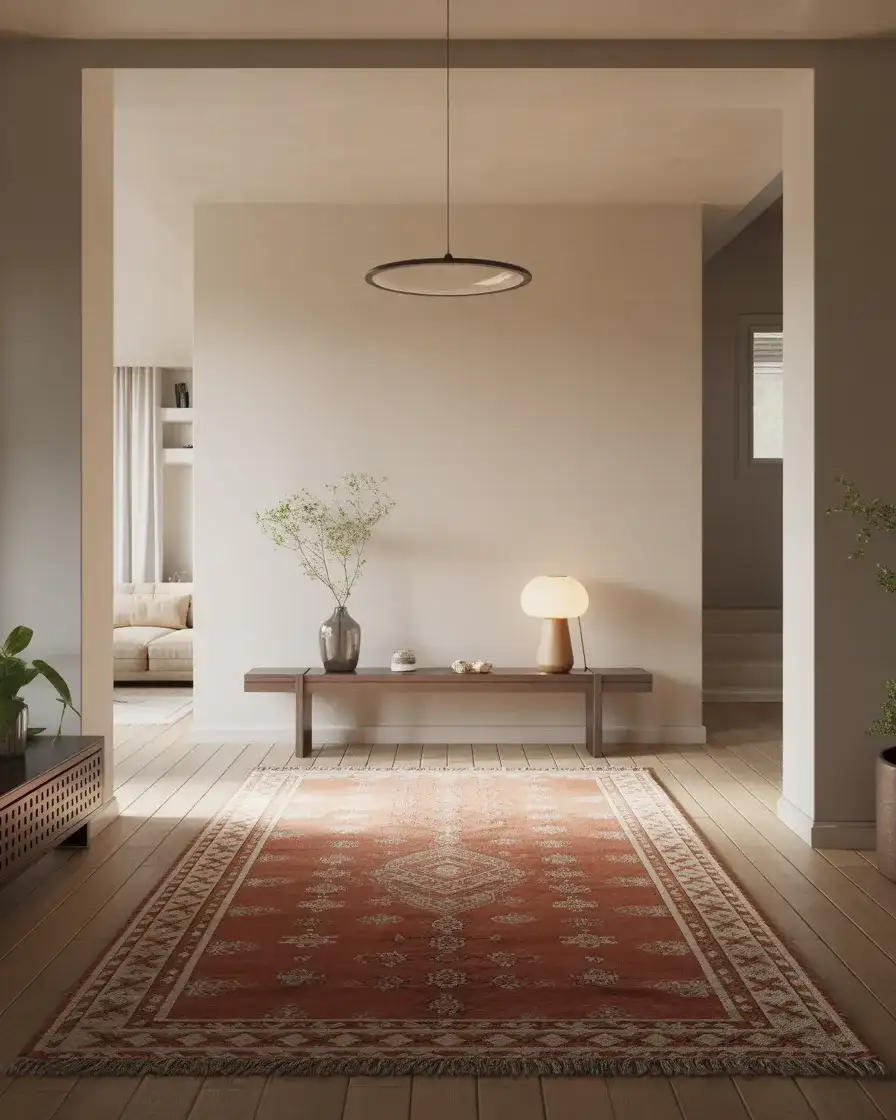
An open foyer that flows directly into the living or dining room presents both a design opportunity and a challenge: how do you define the entryway as its own space without walls to help you? The answer in 2026 is consistently: go bold with a rug. A large, pattern-forward area rug—Moroccan-inspired, Persian revival, or geometric abstract—creates an immediate visual boundary that tells the eye “this is the arrival zone.” In a large home with a wide-open floor plan, this single layering decision can do the work of a full room divider.
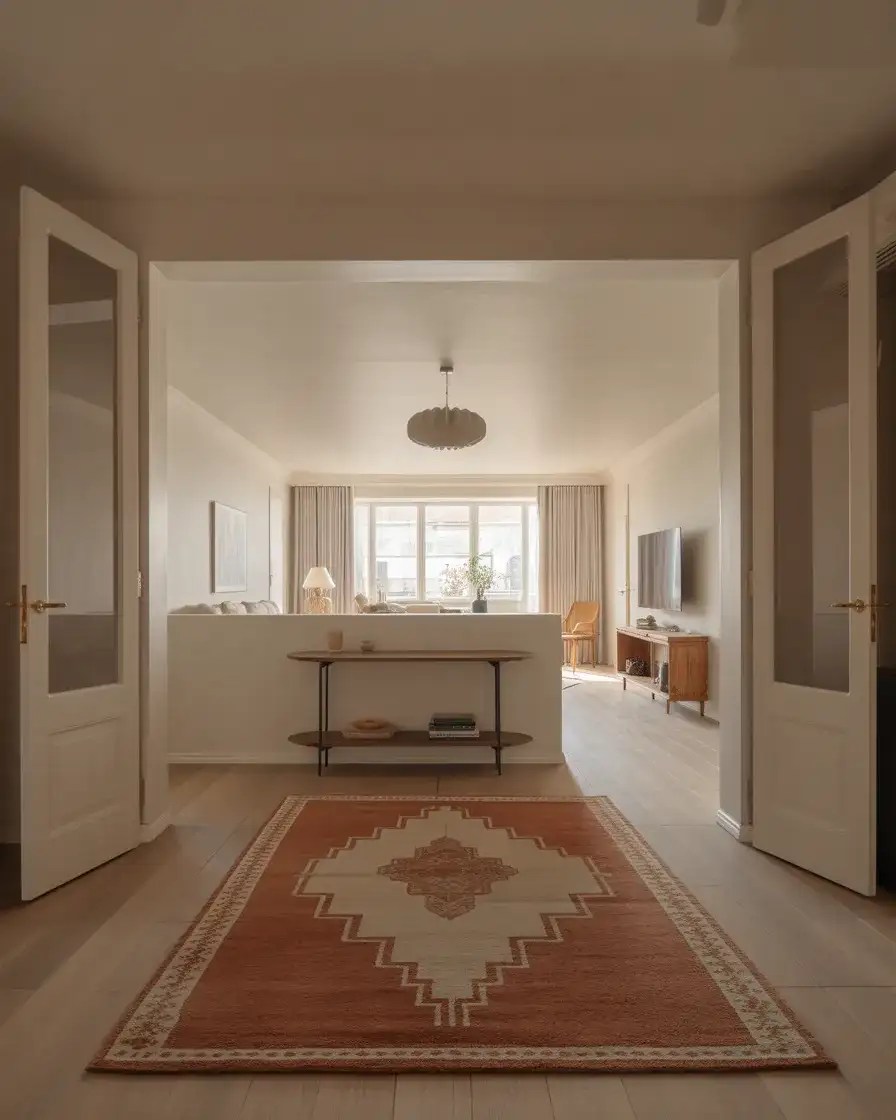
One practical consideration worth knowing: in households with young children and dogs, the entryway rug absorbs more abuse than almost any other piece in the house. Interior stylists who work on family homes consistently recommend either machine-washable options (Ruggable has become popular for exactly this reason) or low-pile flatweave rugs that can be vacuumed quickly and don’t trap pet hair. The most beautiful rug is the one you can actually maintain with your real daily life.
10. Split-Level Entryway with Architectural Steps
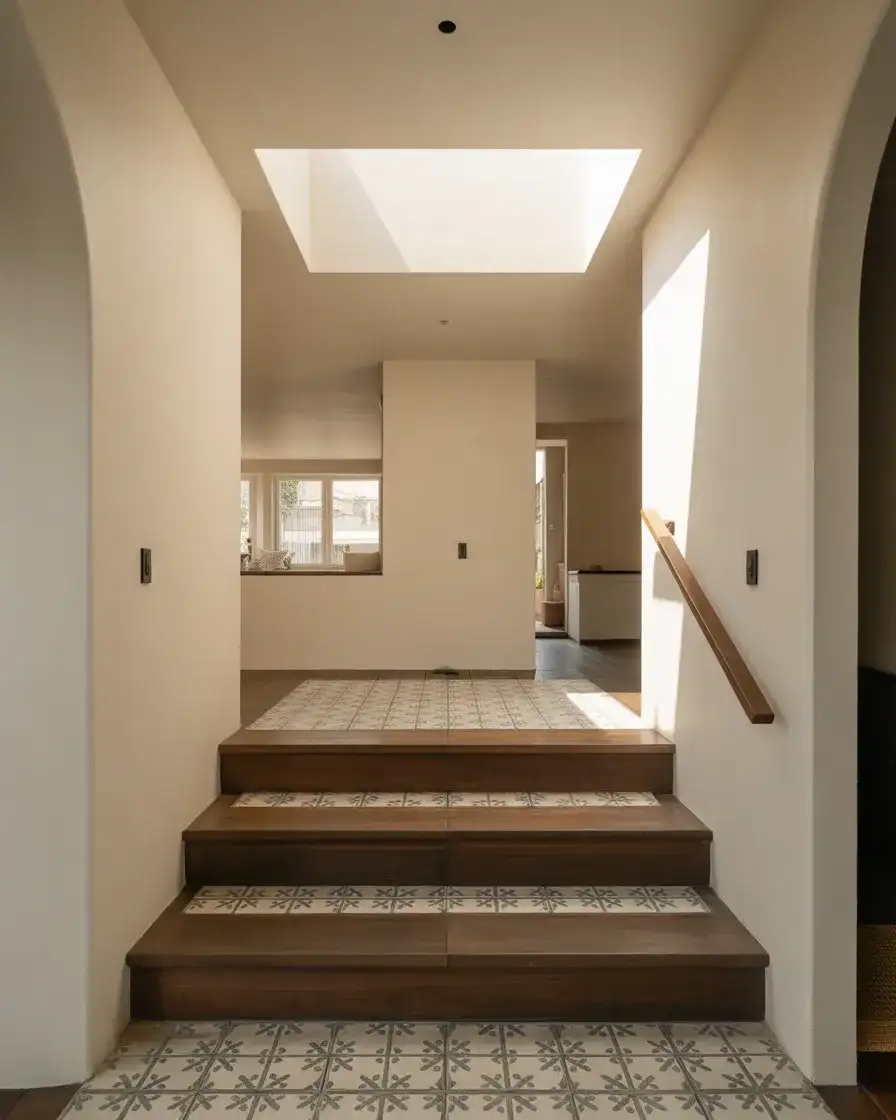
The split-level home’s entry presents a uniquely American design challenge—those few transitional steps between the front door and the main living level are so often treated as an afterthought. In 2026, designers are treating the step-down or step-up entry as an architectural feature to celebrate rather than camouflage. Contrasting tile inlays on the step risers, a dramatic runner that follows the descent, or cantilevered floating treads in wood all transform this awkward zone into one of the most photographed corners of the home. The front entry becomes a genuine event.
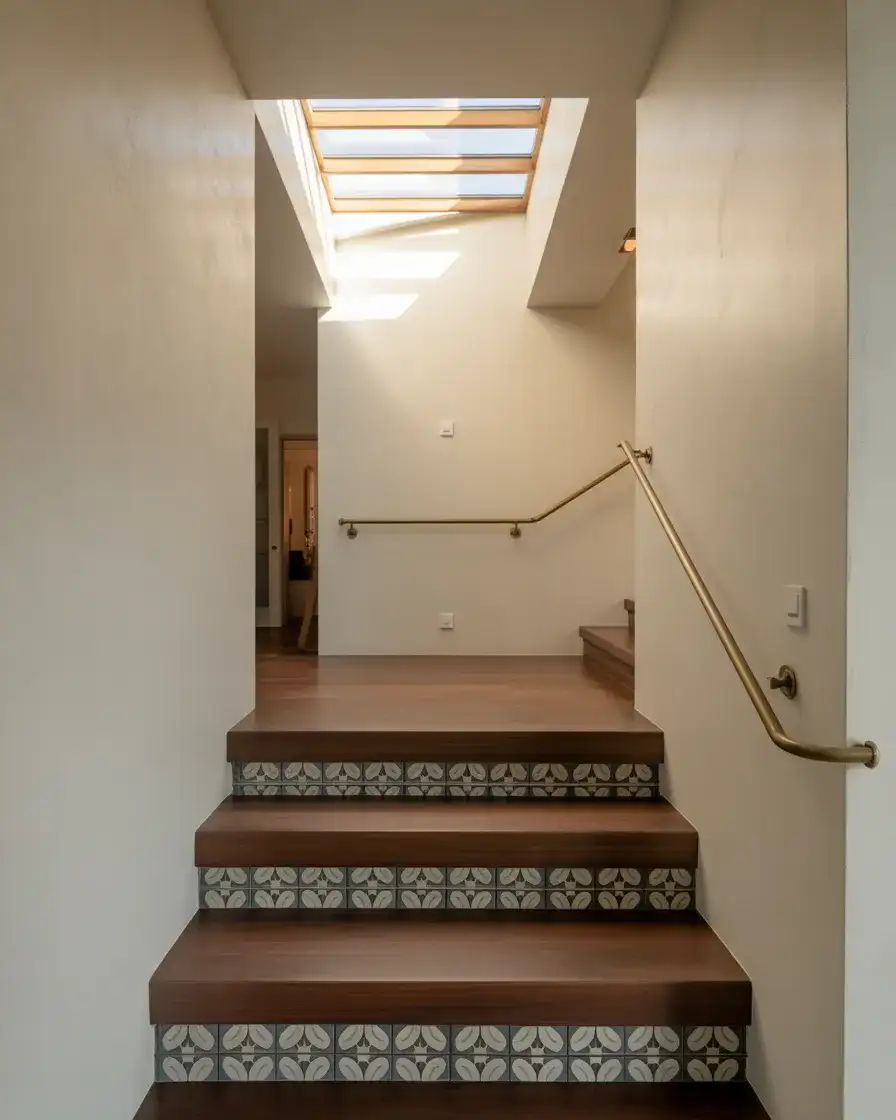
This design zone works best when the flooring material changes at the transition point—it reinforces the split-level logic visually rather than trying to fight it. Using a contrasting material on the upper landing (tile, stone) versus the lower level (hardwood) gives each zone its own identity and makes the steps feel like a designed moment rather than an awkward structural compromise. It’s a move that reads as intentional to every visitor who comes through the door.
11. Traditional Indian Story Entryway with Kolam Art
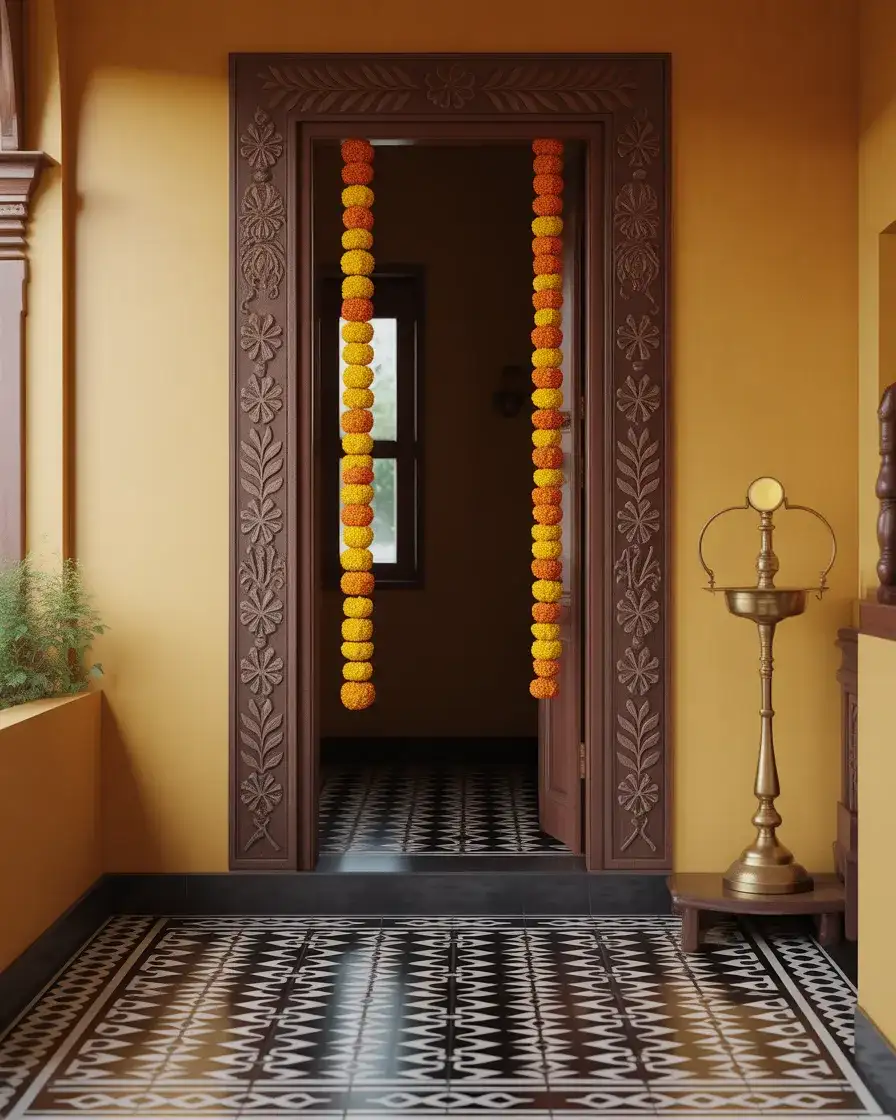
Drawing from the rich Indian story of threshold rituals, a traditional entryway inspired by South Indian design brings sacred geometry and daily artistry into the modern American home. Kolam-inspired tile work—the intricate dot-and-line patterns historically drawn in rice flour at doorsteps—is now available through specialty tile makers as permanent floor installations that honor this ancient welcome tradition. Pair with a deep red or ochre accent wall, hand-carved wooden door surrounds, and a brass deepam lamp to create an entry that feels spiritually intentional and visually stunning.
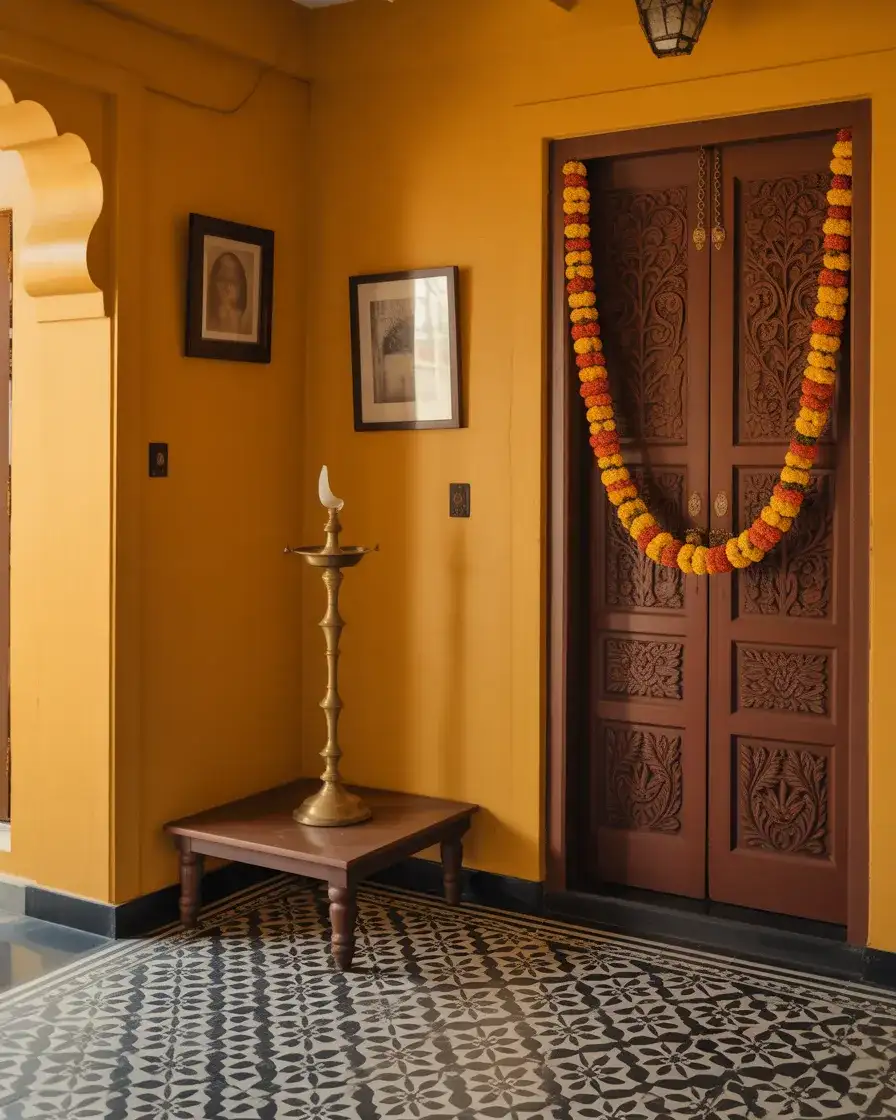
For many South Asian American families, this design choice goes far beyond aesthetics—it’s a way of anchoring cultural memory in the physical home. An architect who works primarily with South Asian diaspora clients in the Dallas-Fort Worth area described it as “designing for the soul of the family, not just the footprint.” When the design language of one’s heritage is built into the home’s threshold, every arrival and departure carries meaning beyond the functional.
12. Tall Ceiling Entryway with Vertical Gallery Wall
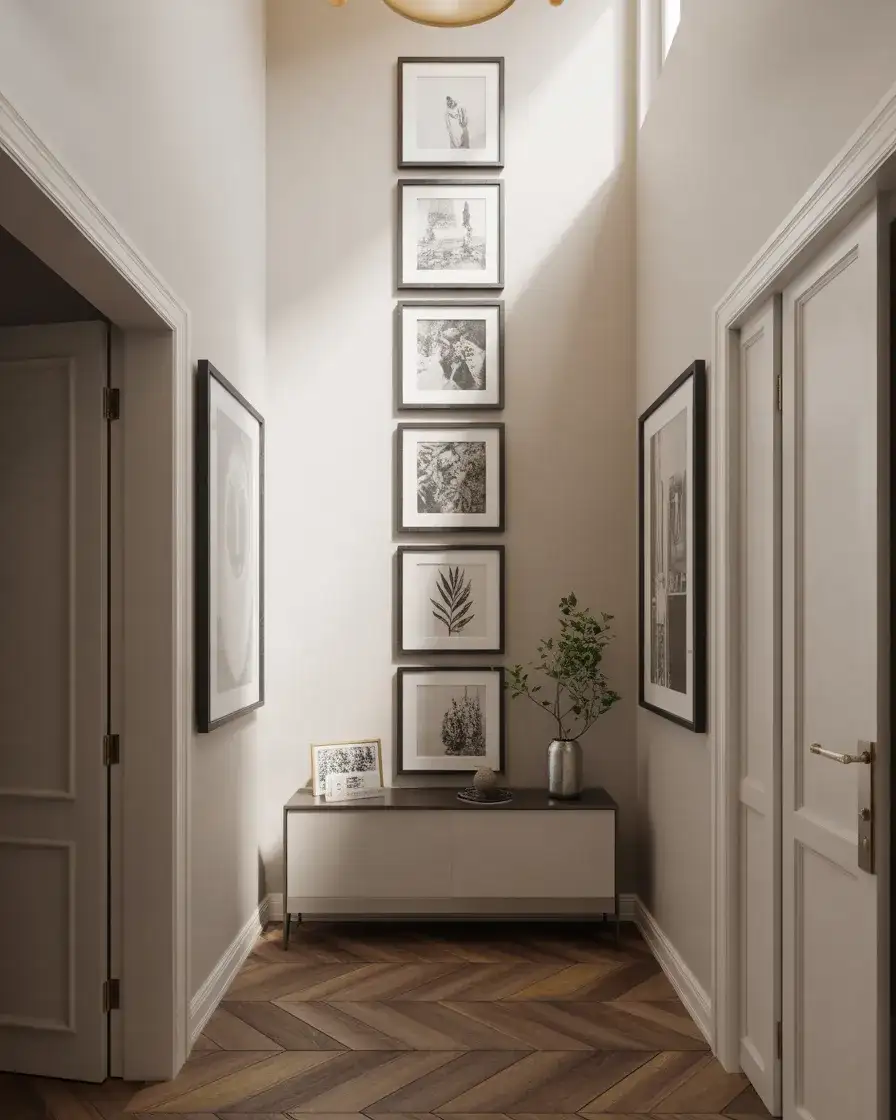
When you have tall ceilings in your entry, the temptation is to hang art at normal eye level and leave a vast expanse of blank wall above—which makes the proportions feel awkward and the ceiling feel even higher in an uncomfortable way. The 2026 solution is the vertical gallery wall: a column of frames that climbs from chair-rail height all the way toward the ceiling, treating that vertical real estate as prime display space. This approach works beautifully in both modern luxury entries and more eclectic, curated homes where personal photography and prints tell a family’s story.
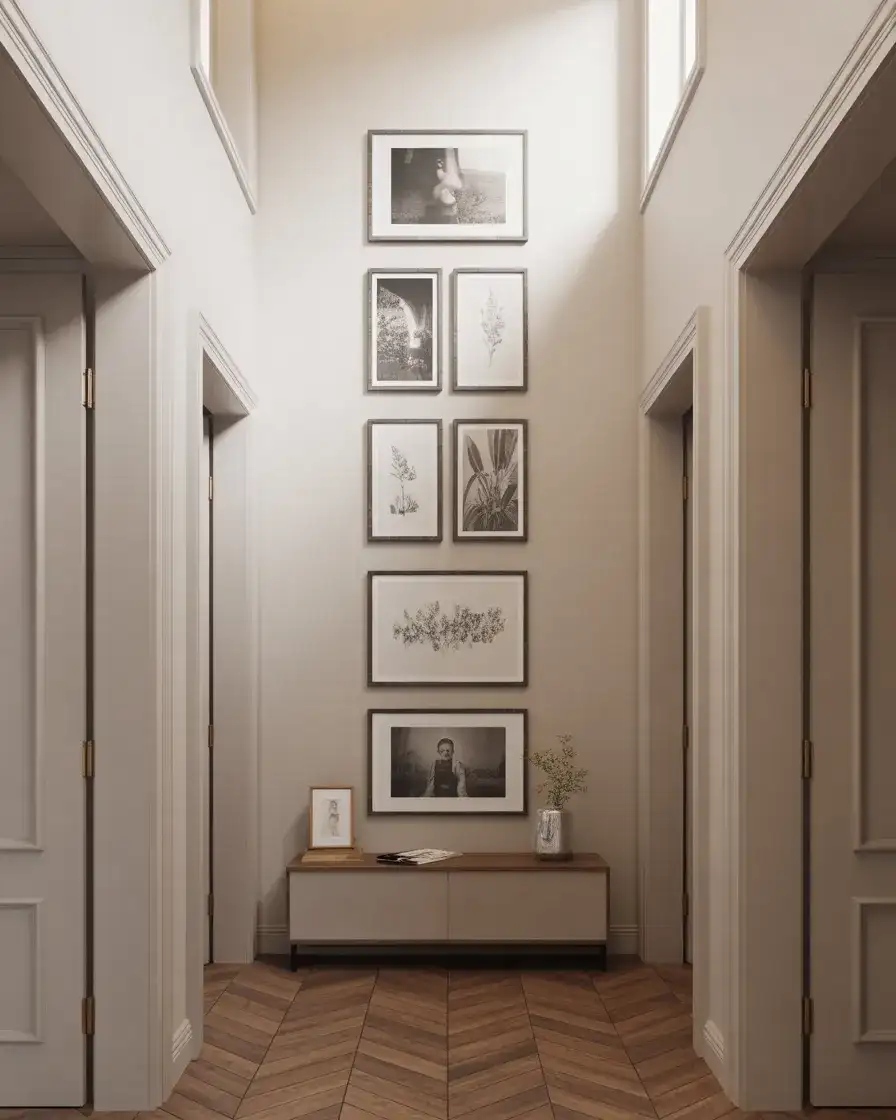
The expert guidance on hanging a vertical gallery effectively: always start with the piece at eye level as your anchor (roughly 57–60 inches to the center of the artwork), then build upward from there in consistent spacing. Going too tight between frames creates a compressed, claustrophobic stack; too loose and the column falls apart visually. Six to eight inches between frames tends to be the sweet spot that reads as intentional from across the room.
13. Long Hallway Entryway with Mirrored Accents
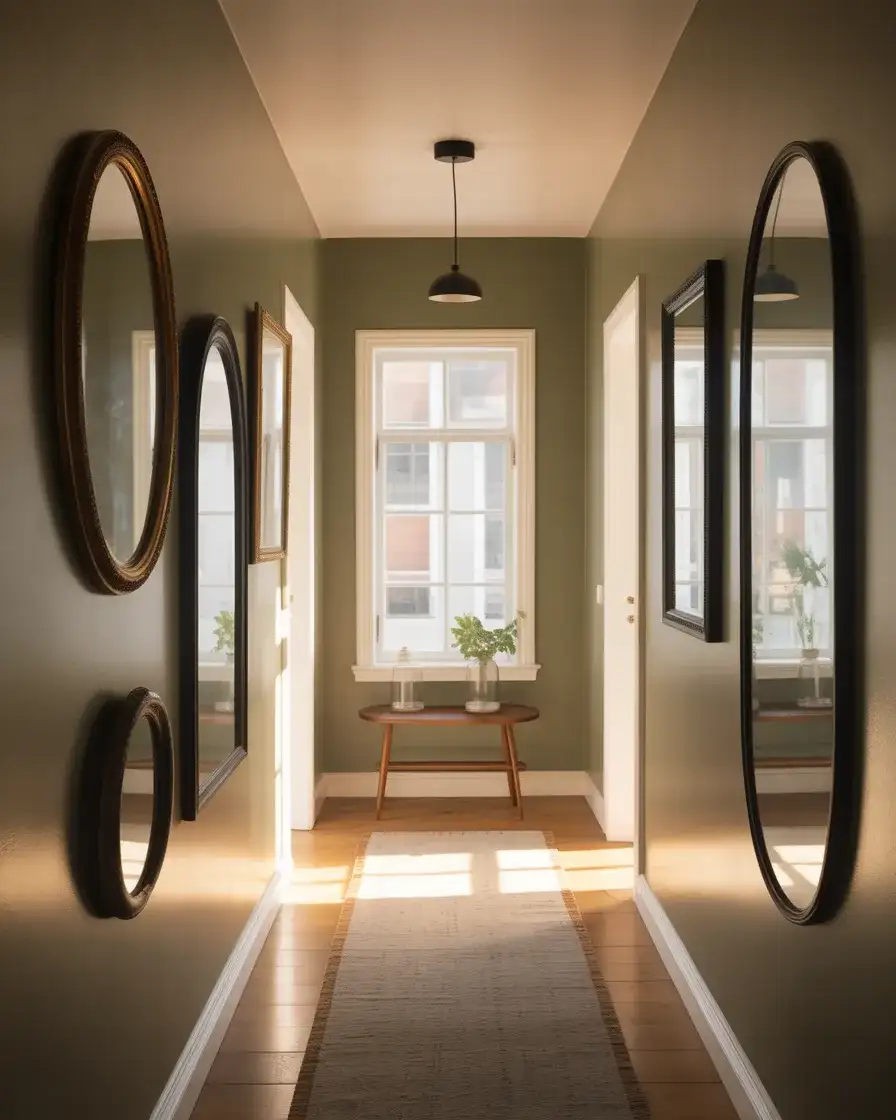
A long hallway entryway can feel like a corridor in the worst sense—functional but uninviting, with no reason to linger. Mirrors are the oldest trick in the designer’s book for making corridors feel wider, but in 2026 the approach has gotten significantly more interesting. Rather than one flat mirror, designers are layering multiple mirrors of varying shapes and sizes down the hallway wall, creating a dynamic, gallery-like rhythm that also bounces natural light from the front door deep into the space. The result feels curated and spacious rather than a functional design fix.
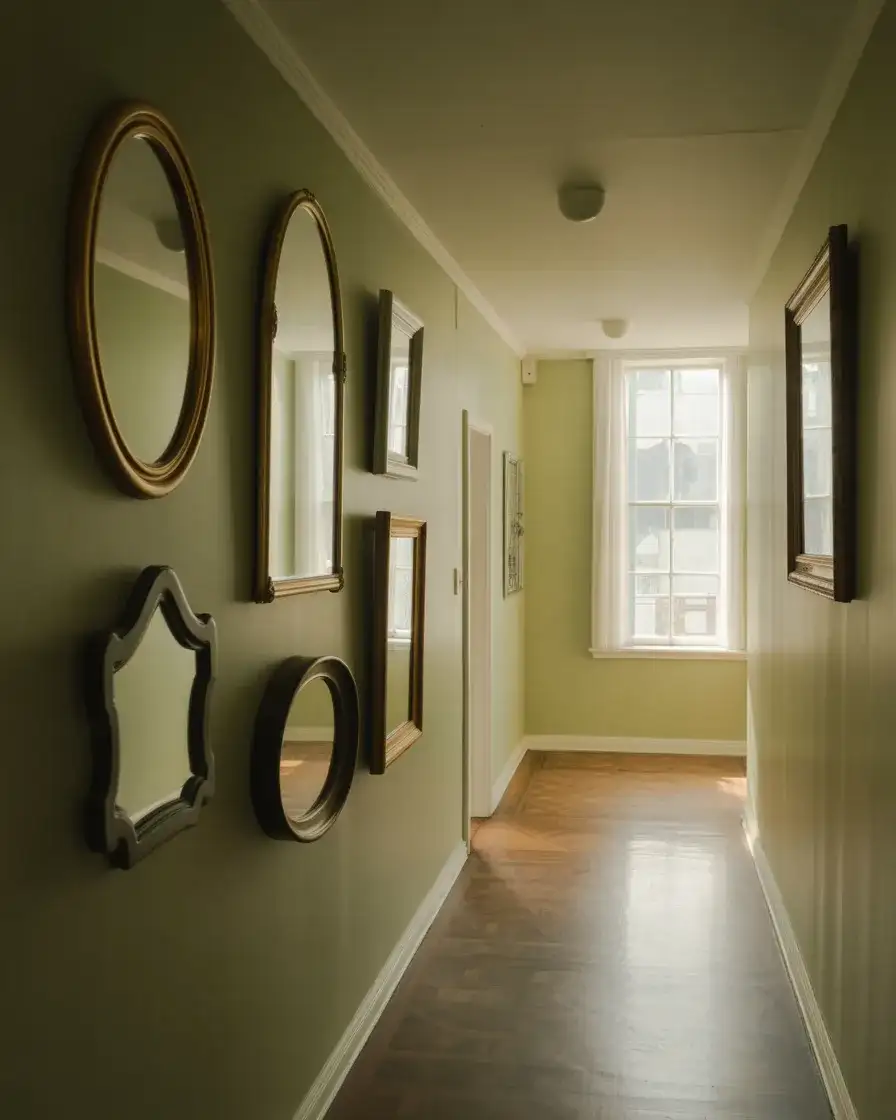
One design mistake specific to long hallways is placing a mirror directly opposite another mirror or a window in a way that creates a disorienting infinity effect or washes out the walls with blown-out light. The better approach is to angle or offset your largest mirror slightly so it reflects an interesting vignette—a piece of art, a plant, a light fixture—rather than a direct reflection of itself or harsh outdoor light.
14. Wide Open Entryway with Curved Console
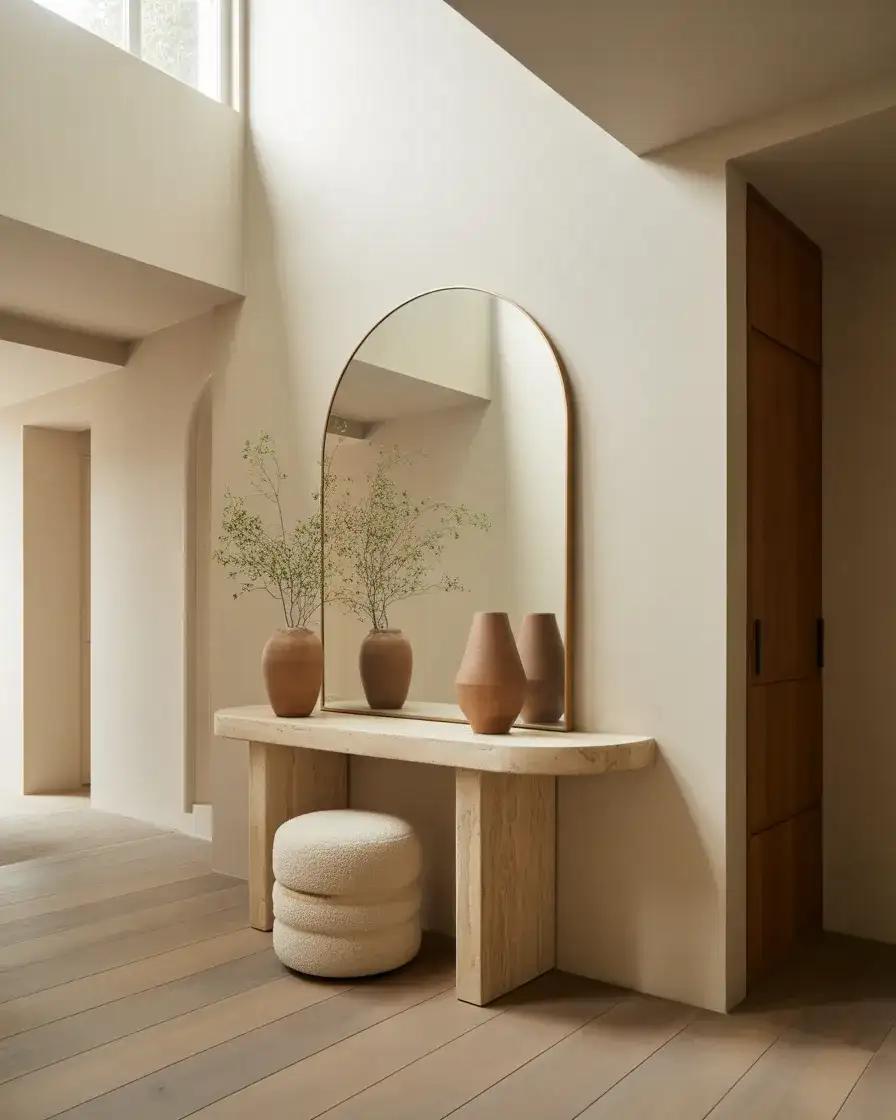
A wide entryway is a gift that many homeowners don’t know how to receive—they either cram it with furniture or leave it so minimal that it feels like a hotel lobby rather than a home. The 2026 answer is the curved console table, which softens the expansive footprint and adds organic movement to what might otherwise be a boxy, symmetrical space. An arched or kidney-shaped table in plaster, travertine, or curved steel creates visual interest that reads well from every angle—essential when a wide foyer is visible from multiple rooms simultaneously in an open floor plan.
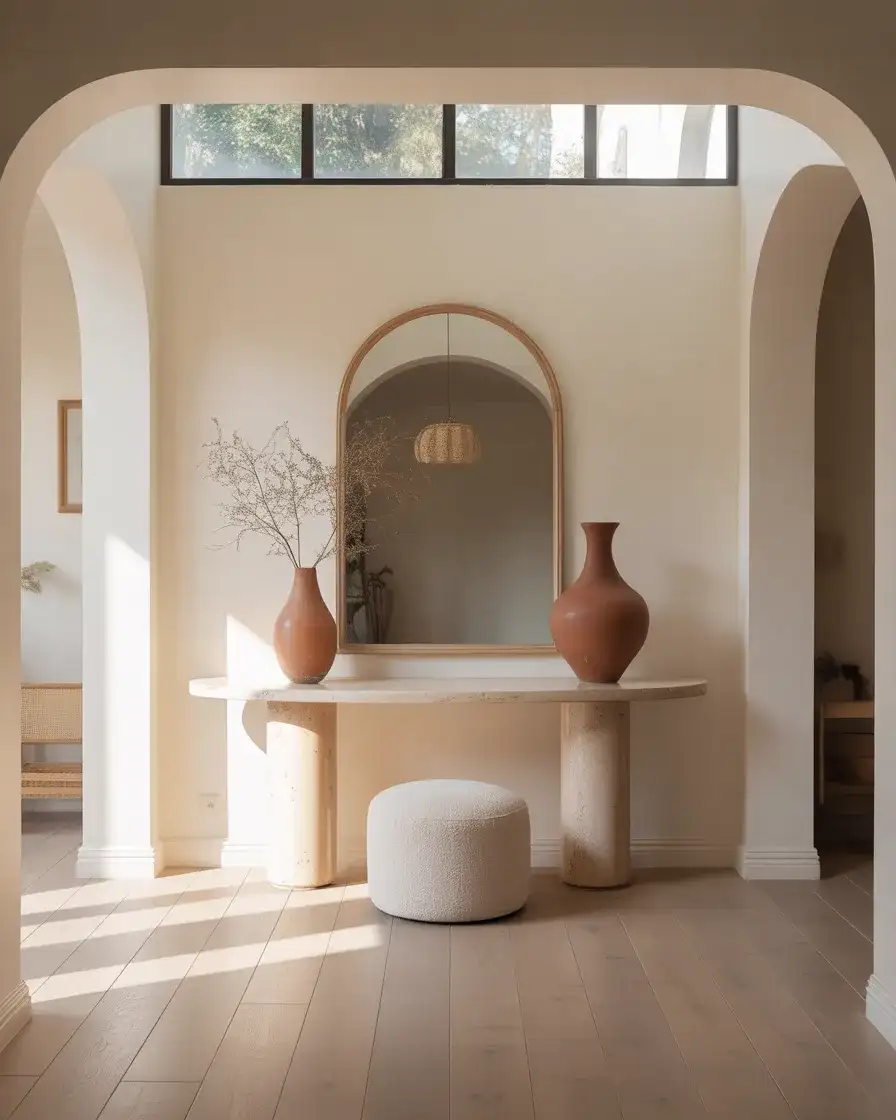
Realtors consistently note that entryways make the first and most lasting impression during home showings. A wide foyer with good bones but poor furniture choices—too small, too busy, or too generic—can undercut a home’s perceived value before a buyer has even made it to the kitchen. Styling the entry with one statement piece that fits the scale of the space is something that comes up in staging consultations more often than most homeowners would expect.
15. Elegant High Ceiling Entry with Drapery Panels
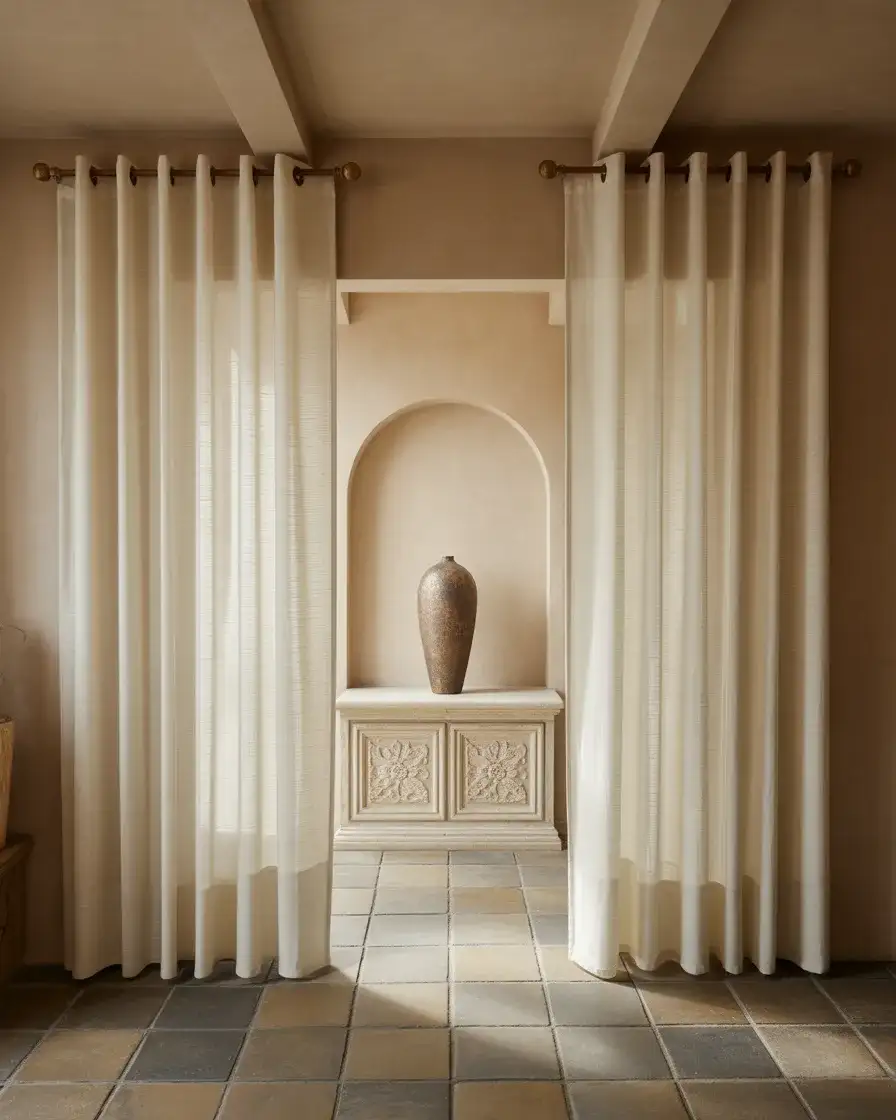
One of the most unexpected but genuinely luxurious moves for an elegant foyer with high ceiling proportions is adding floor-to-ceiling drapery panels—not over windows, but as pure decorative architecture. Mounted at ceiling height and pooling softly on the floor, linen or velvet panels in a neutral or deep tone add texture, warmth, and acoustic softness to a space that would otherwise echo with hard surfaces. This is a move borrowed from high-end hotel lobbies and now showing up in residential foyers in a way that feels organic rather than overwrought.
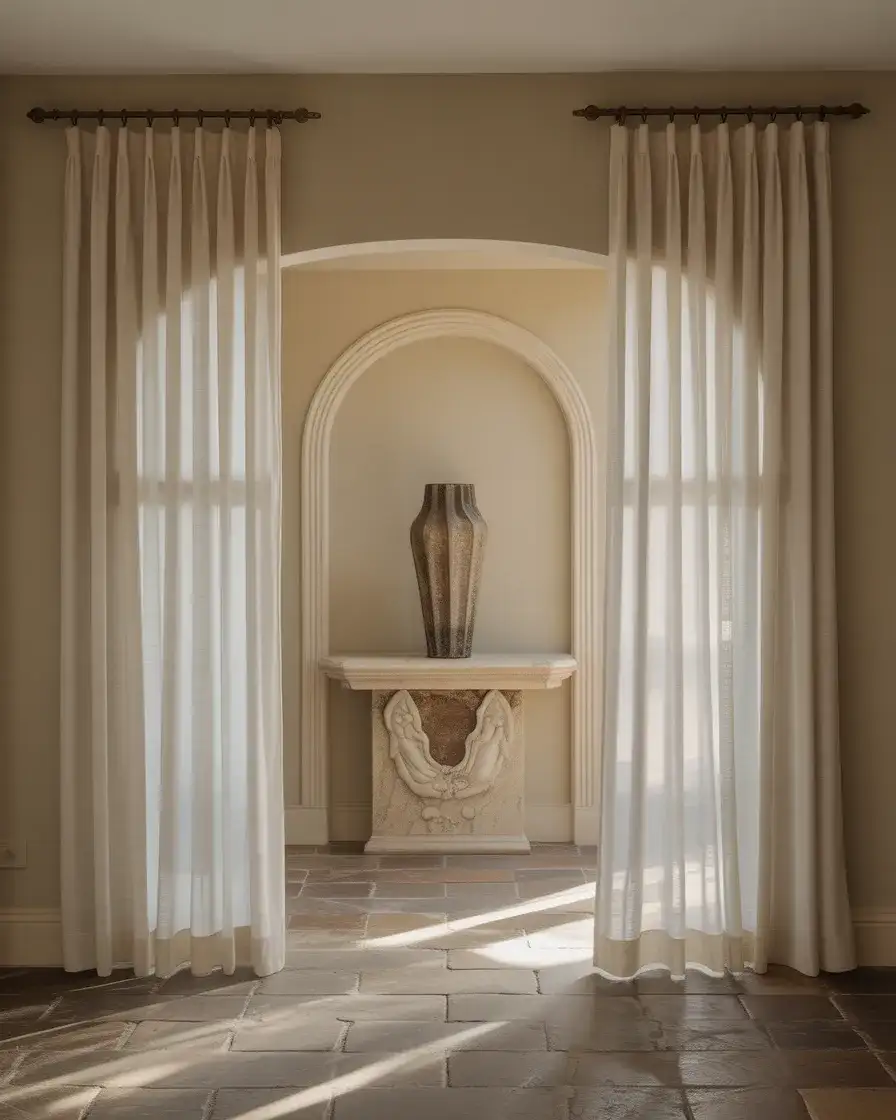
This is a particularly smart approach in the American South and in older homes where the entryway may have architectural quirks—awkward doorways, mismatched ceiling heights, or transitions between spaces that feel unresolved. Drapery panels at ceiling height can visually smooth out these imperfections and make a space that needed correcting feel purposefully designed. They also have the added benefit of being rental-friendly when mounted with tension hardware or Command hooks rated for the weight.
16. Modern Bloxburg-Style Entryway with Clean Lines
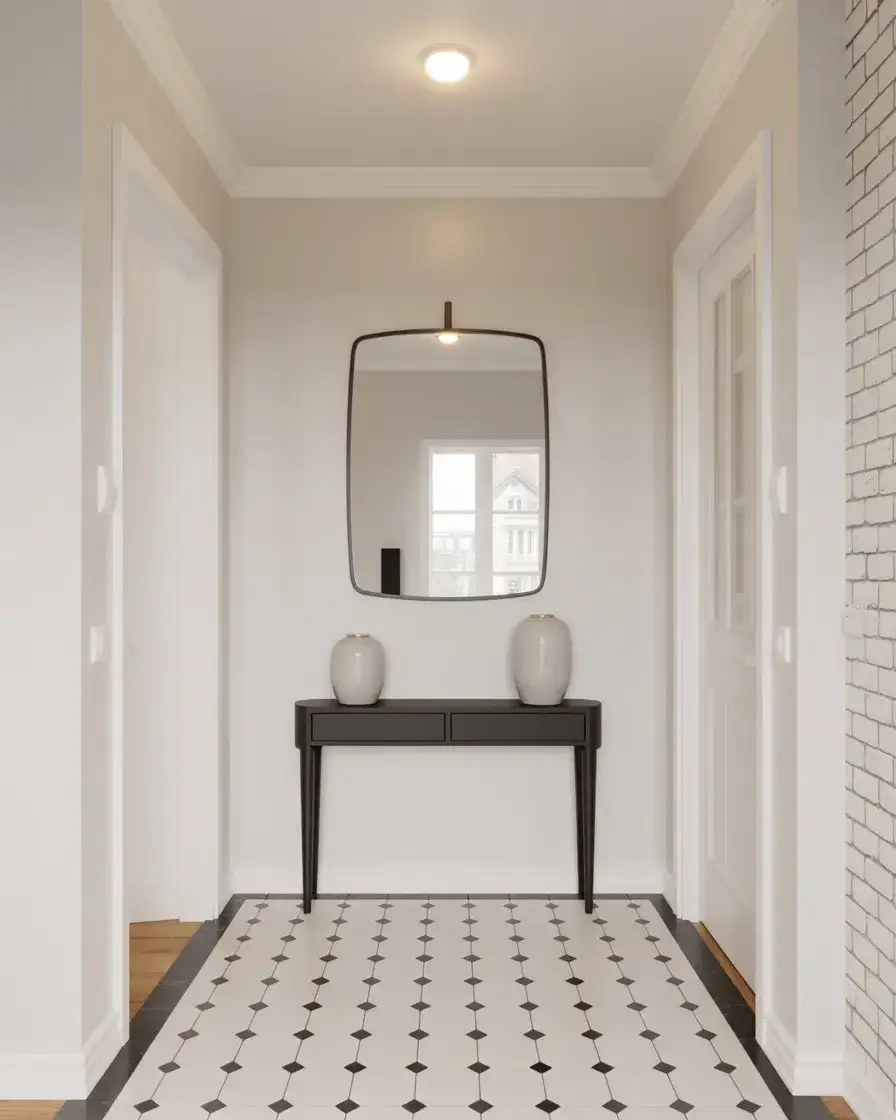
If you’ve been on Pinterest or TikTok lately, you’ve likely encountered the Bloxburg aesthetic—a hyper-clean, architecturally precise style inspired by the popular Roblox game where players design idealized interiors. What started as a gaming aesthetic is now influencing real-world design, particularly among younger homeowners in their 20s and 30s who grew up playing these games and now have their first real spaces to design. The modern Bloxburg-style entryway is characterized by crisp white walls, sleek black accents, perfectly symmetrical arrangements, and zero visual clutter.
A micro anecdote worth sharing: a 26-year-old first-time homeowner in Phoenix described spending hours on Bloxburg before ever looking at a single home decor website, sketching out her entryway on graph paper based on the game’s proportions and color schemes. When she finally got her keys, she built the exact room she’d designed in the game—and said it felt “exactly right” in a way that years of scrolling Pinterest never quite achieved. The gaming generation’s approach to design is precise, visual, and deeply iterative.
17. Indian Apartment Entryway with Compact Puja Nook
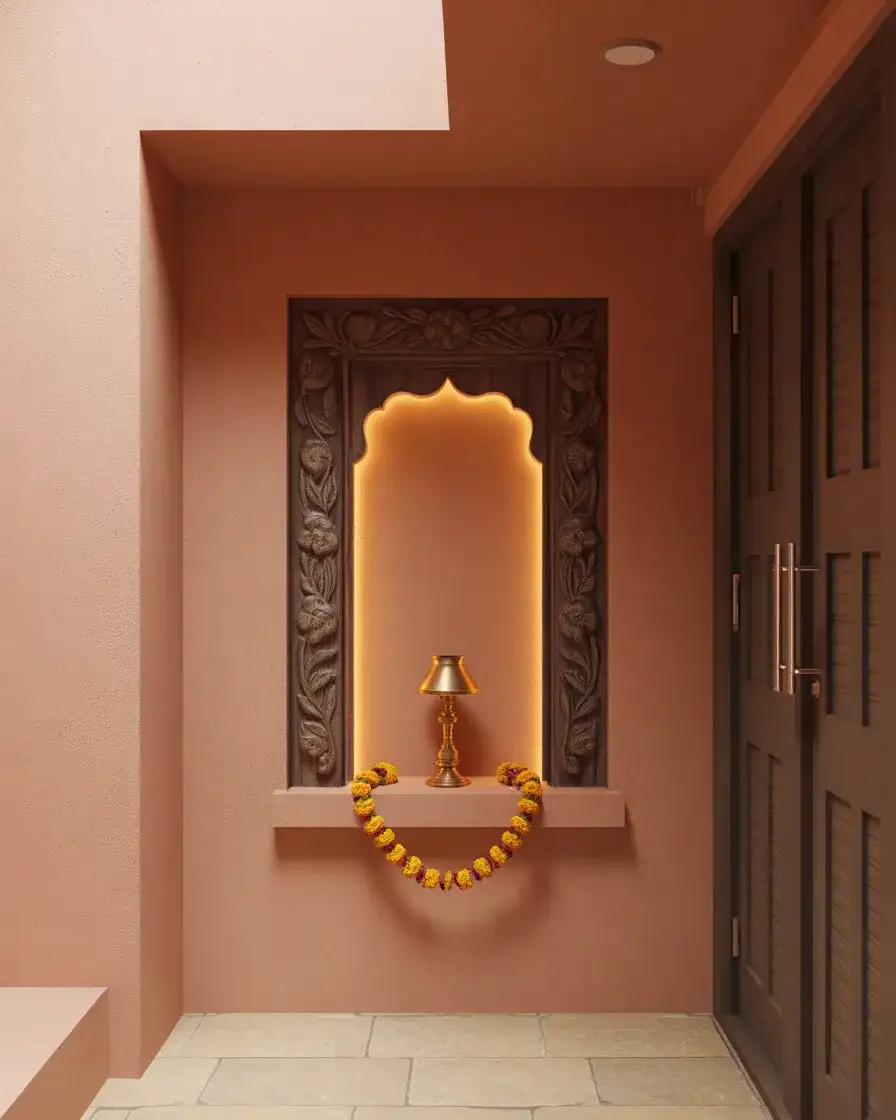
In Indian apartments—both in India and in the South Asian diaspora across America—the entry is traditionally the site of the home’s first blessing. Incorporating a compact puja nook into the foyer design has become a sophisticated interior design choice that honors spiritual practice without requiring a dedicated prayer room. A recessed wall niche with a carved wood surround, soft warm LED lighting, a small brass idol or sacred object, and a shelf for a diya creates a sacred pause point that feels elegant and culturally rooted rather than improvised. This is community-specific design at its most thoughtful.
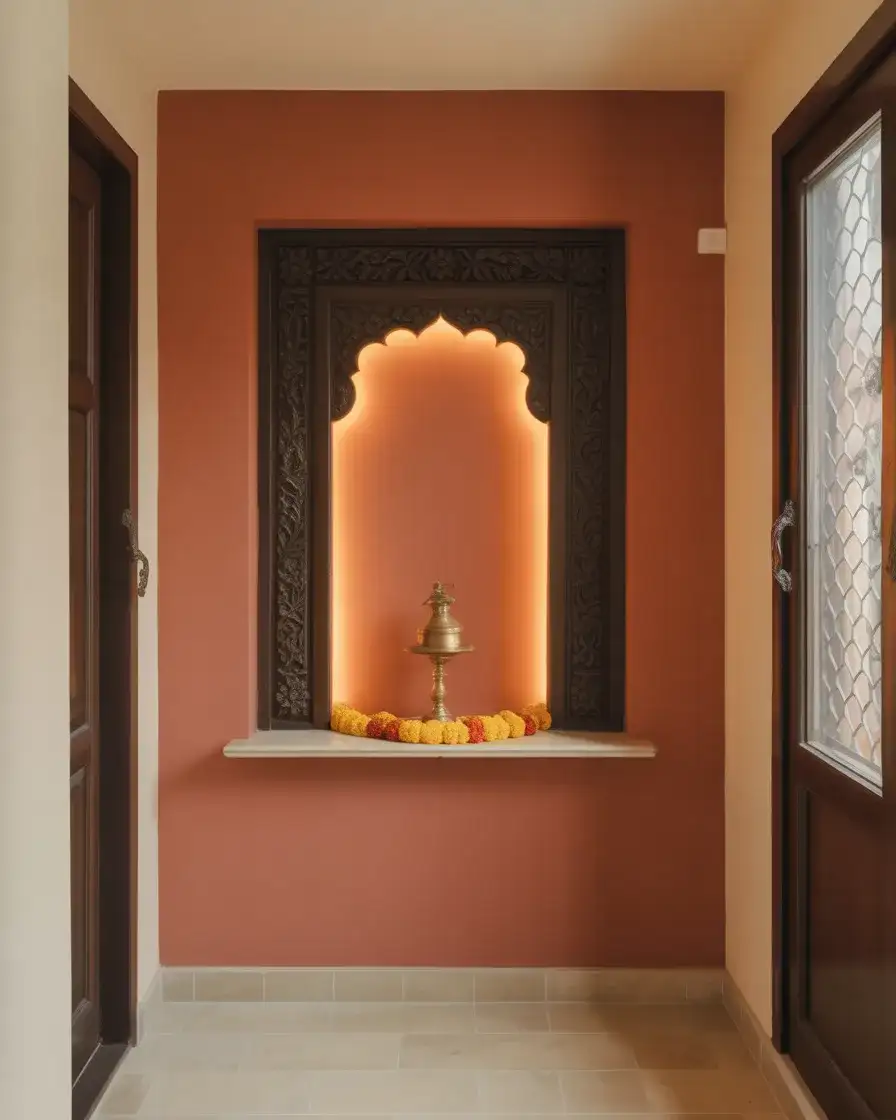
For renters in American cities with large Indian communities, creating a portable version of this—a wall-mounted shadow box with hooks for lighting, a removable shelf, and peel-and-stick tile panels—allows the spiritual function without permanent modification. Interior designers who specialize in South Asian diaspora homes note that this is often one of the first requests from clients, not the last. It sets the intention for the entire home’s design before a single other decision is made.
18. Front Door Entryway with Bold Color Statement
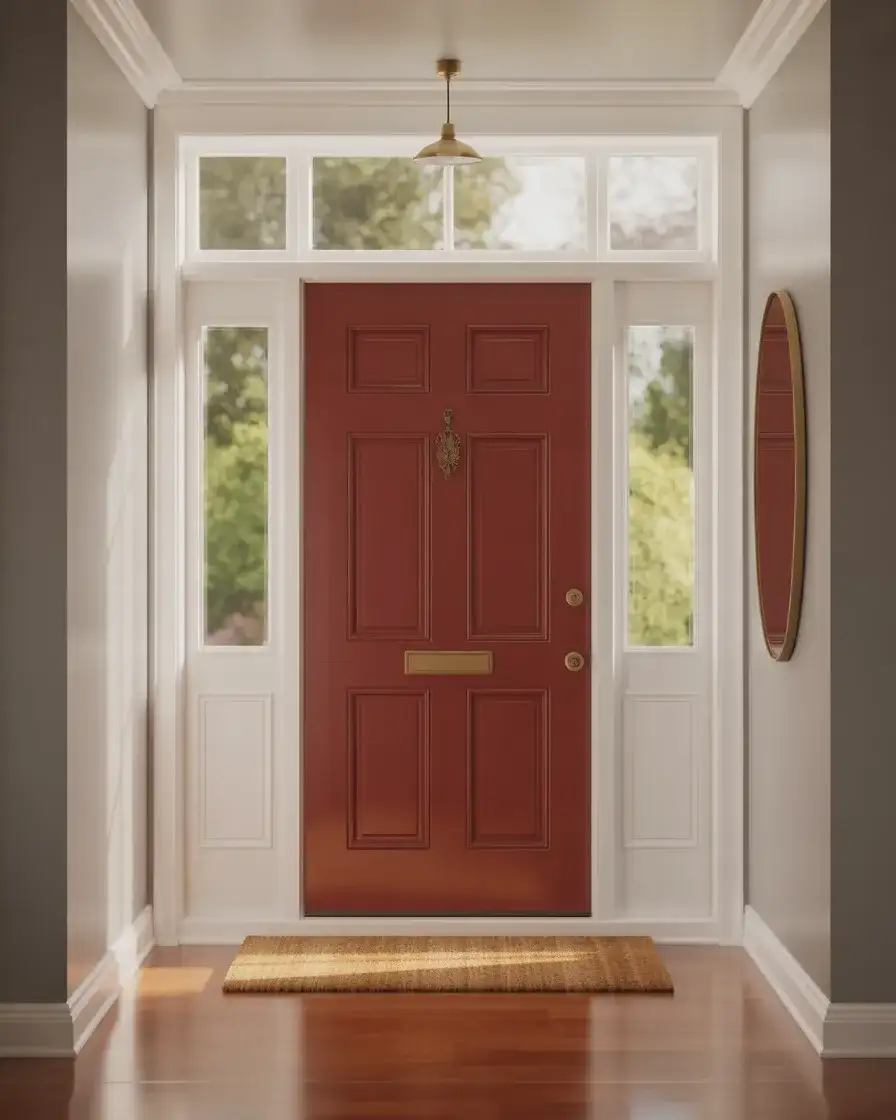
The interior side of your front door is one of the most underused design opportunities in the entire home. In 2026, painting the interior face of a front door in a bold, saturated color—and then carrying that same color into the foyer as an accent—is one of the highest-impact, lowest-cost moves you can make in your entrance. Terracotta, deep teal, lacquer red, and ink black are all trending. The key is that the door color becomes the first piece of art you see upon entering, setting a chromatic tone for the rest of the home’s interior palette.
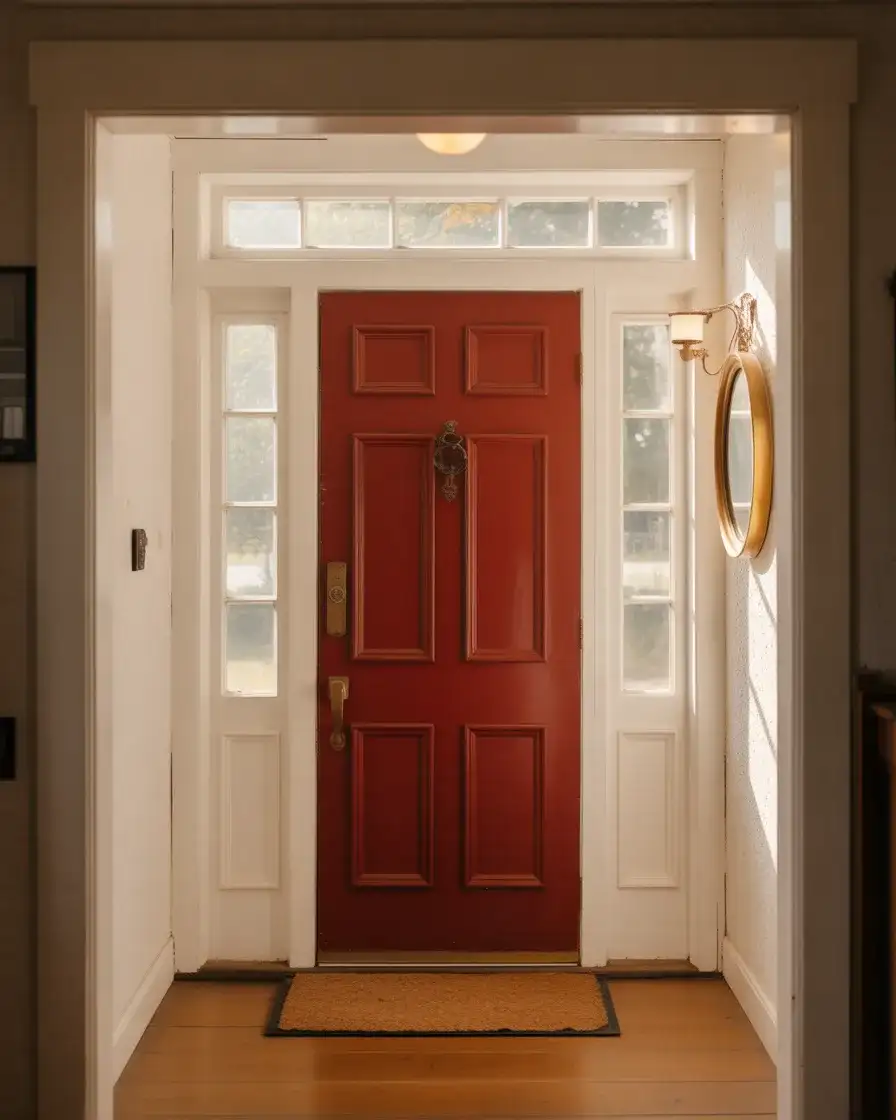
From a pure budget standpoint, painting the interior of your front door costs between $30 and $80 in paint and supplies—making it one of the best dollar-per-impact design decisions available to any homeowner or renter. Many landlords who would say no to painting entire rooms will approve a single door, especially if you agree to return it to its original color upon move-out. A quart of paint and one afternoon is genuinely all it takes to change how you feel about coming home every day.
19. Stairs Entry with Dramatic Geometric Runner
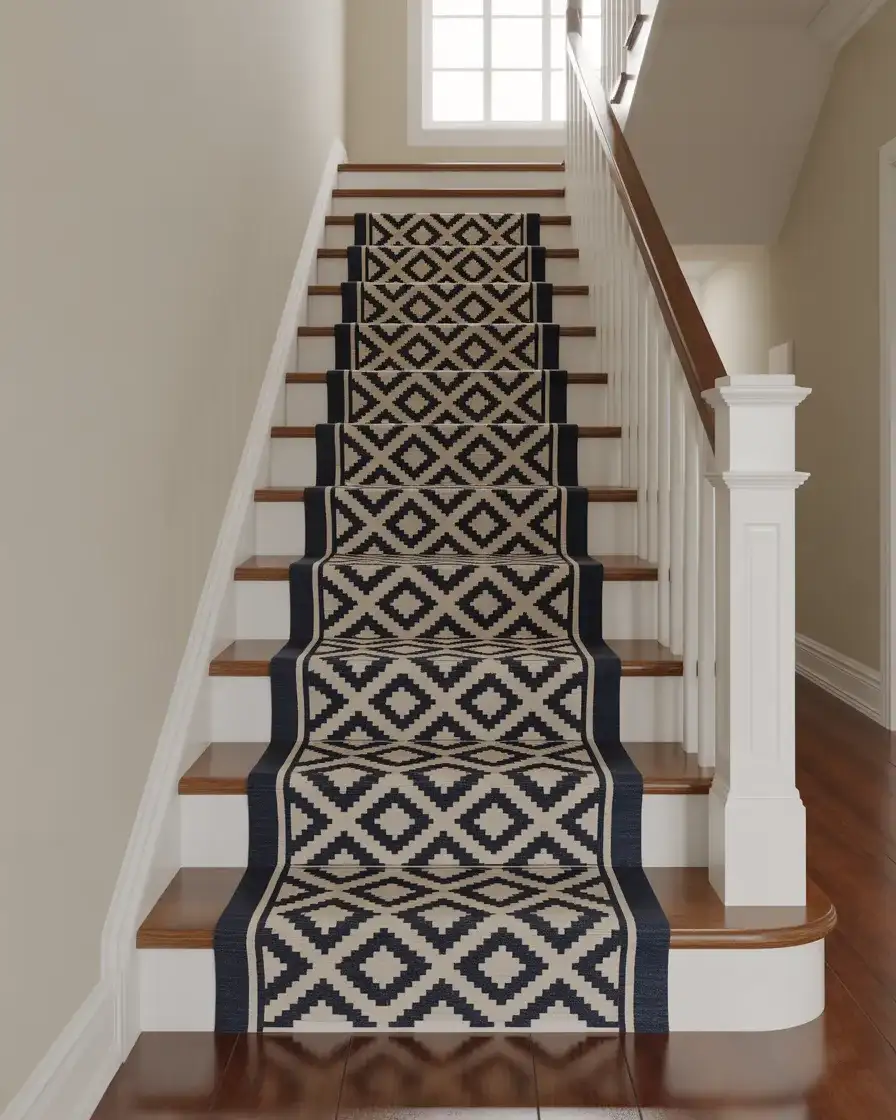
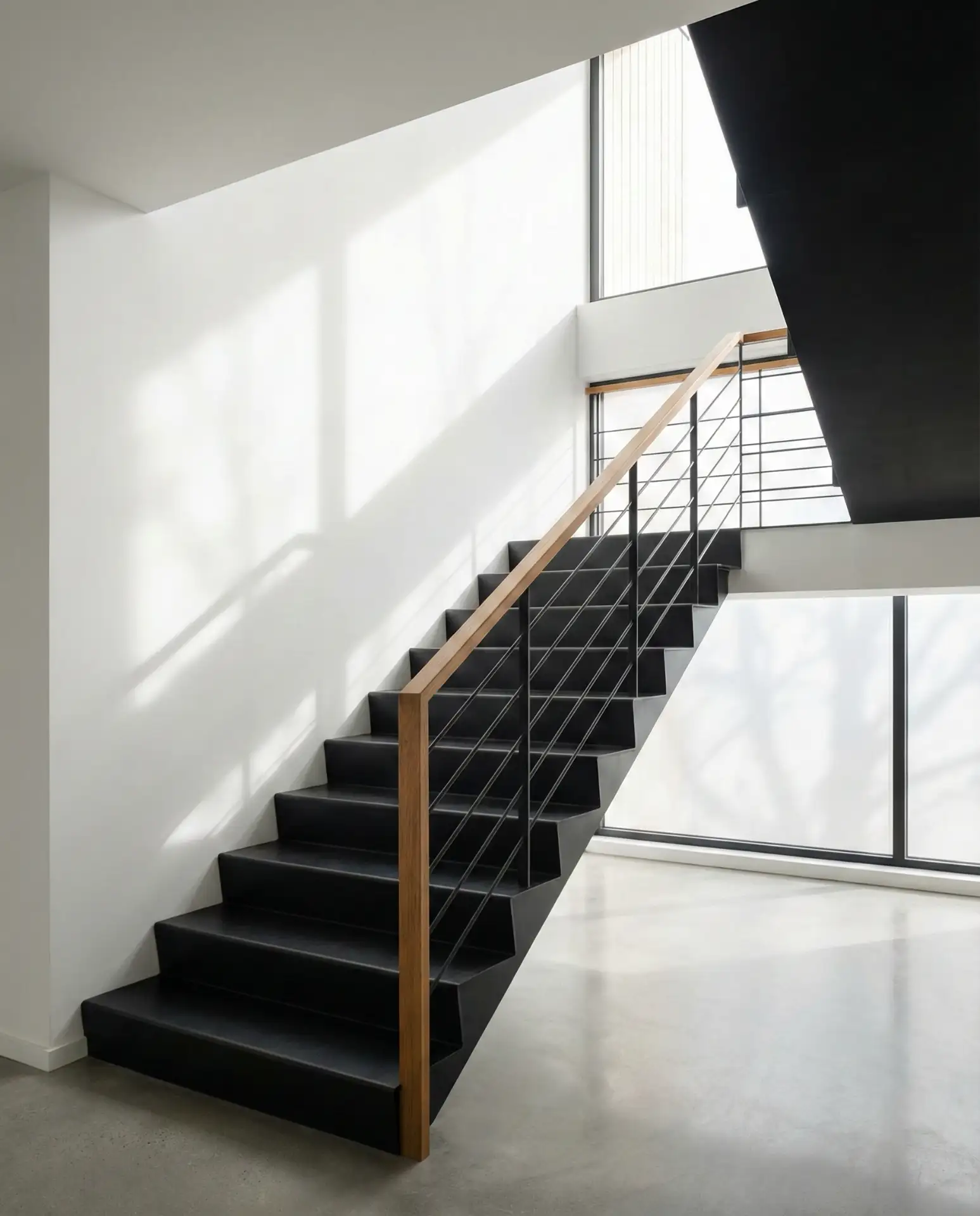
The staircase in an entry-adjacent position is one of the most photographed design moments in American homes—and the runner is what makes or breaks the shot. In 2026, geometric patterns in high-contrast colorways are replacing the safe, neutral stripe that dominated the last decade. Bold diamond grids, chevrons, and even maximalist medallion-style patterns in navy and cream, charcoal and rust, or black and gold are showing up on stairs in both modern suburban builds and renovated traditional homes. The pattern brings movement to a static architectural feature in a way that nothing else can replicate.
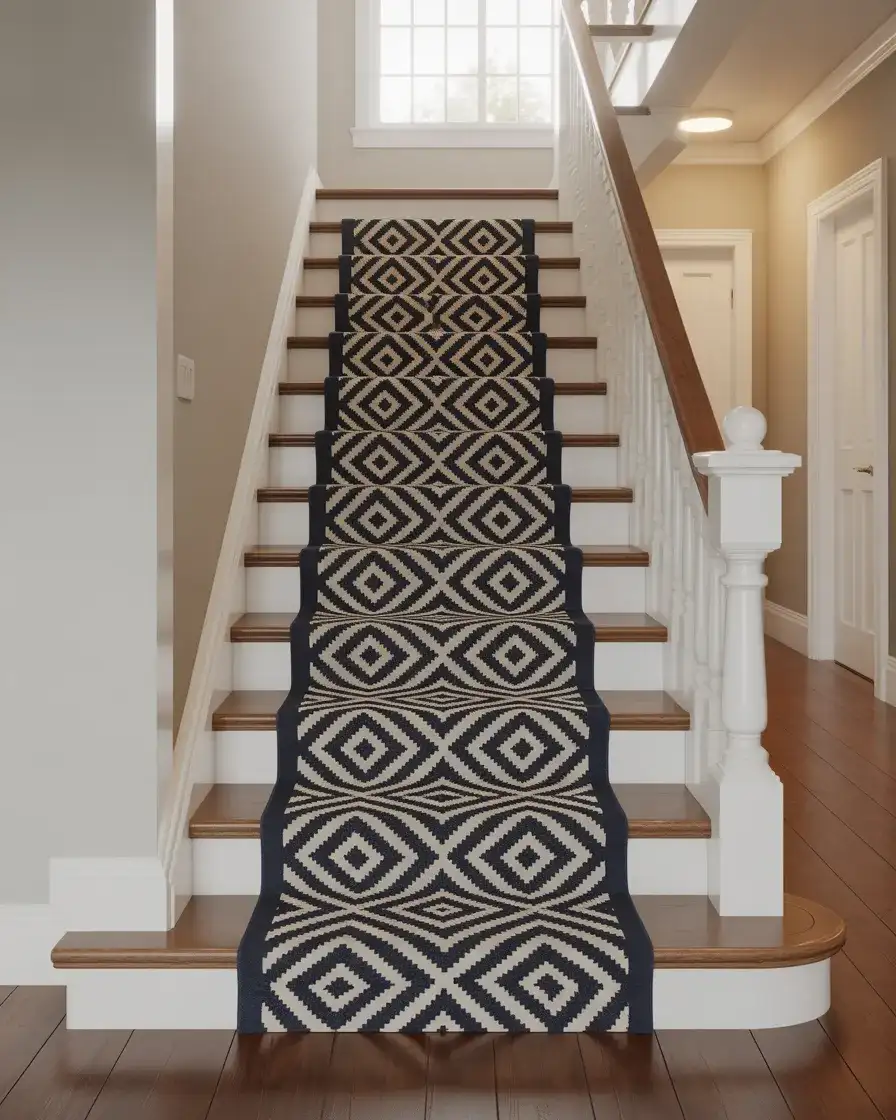
One thing real homeowners discover after installing a stair runner: the safety benefit is almost as valuable as the aesthetic one. Hardwood stairs without runners are genuinely hazardous, especially for children and seniors. A well-secured runner with proper padding underneath reduces slip risk significantly—which means this design upgrade doubles as a functional improvement that insurance adjusters and real estate agents both look favorably upon. Beauty and safety in the same roll of carpet is a very good value proposition.
20. Rustic Elegant Entryway with Mixed Metal Accents
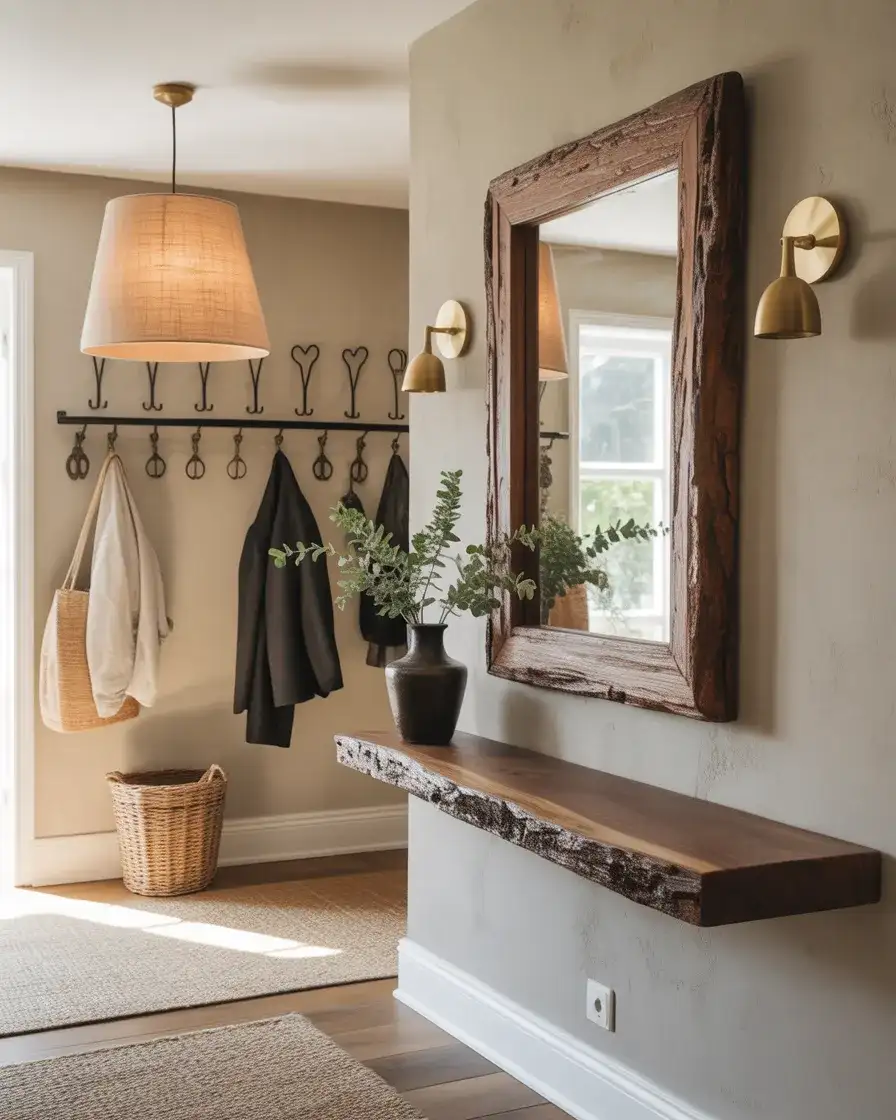
The false binary between rustic and elegant is one that 2026 design is actively dismantling. The most interesting entryways happening right now mix raw, imperfect natural materials with refined metallic accents that elevate the whole composition without sacrificing warmth. Think aged linen concrete-look wall panels alongside a polished brass sconce, or rough-hewn walnut shelving with chrome hardware and leather drawer pulls. The tension between the two registers is what makes it feel alive—like a space assembled by someone with actual taste and a history of collected objects rather than a single shopping cart full of matching items.
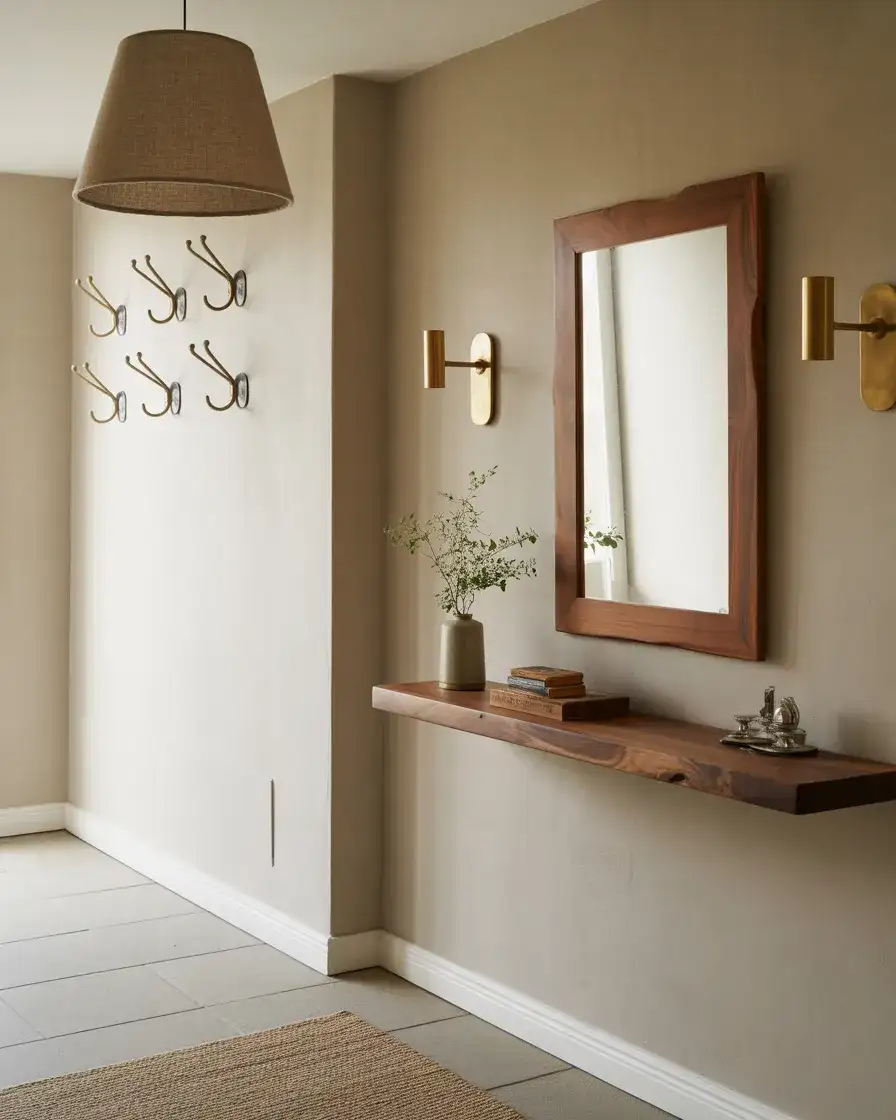
Interior designers who specialize in transitional and eclectic styles almost universally advise clients to stop trying to match metals. The most polished, intentional-looking rooms—including entryways—typically contain three or more different metal finishes that complement rather than mirror each other. The rule of thumb: pick one dominant metal (say, brass), one secondary (iron or bronze), and one surprise element (chrome or copper) to add visual intrigue. The entryway is the perfect low-stakes space to experiment with this before taking the approach through the whole house.
21. Home Entryway Storage Wall with Built-ins
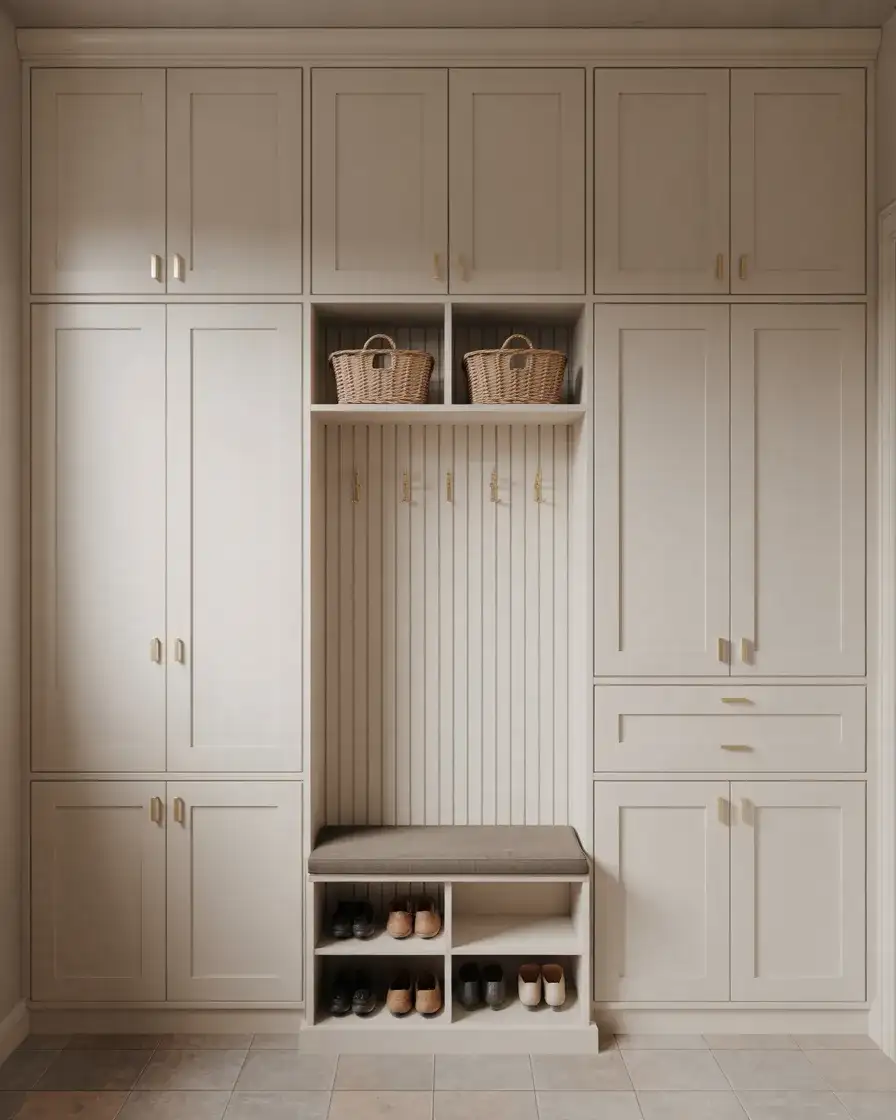
For family home entryways that need to work as hard as they look good, a full built-in storage wall is the 2026 upgrade that keeps showing up in renovation reveals across Instagram and YouTube. Floor-to-ceiling cabinetry flanking a central open cubby section—for shoes, bags, sports equipment, and the daily chaos of family life—with concealed storage behind painted doors creates a hallway that can absorb the entropy of a busy household and still look put-together by the time guests arrive. This is the design version of doing the work ahead of time so you don’t have to scramble later.
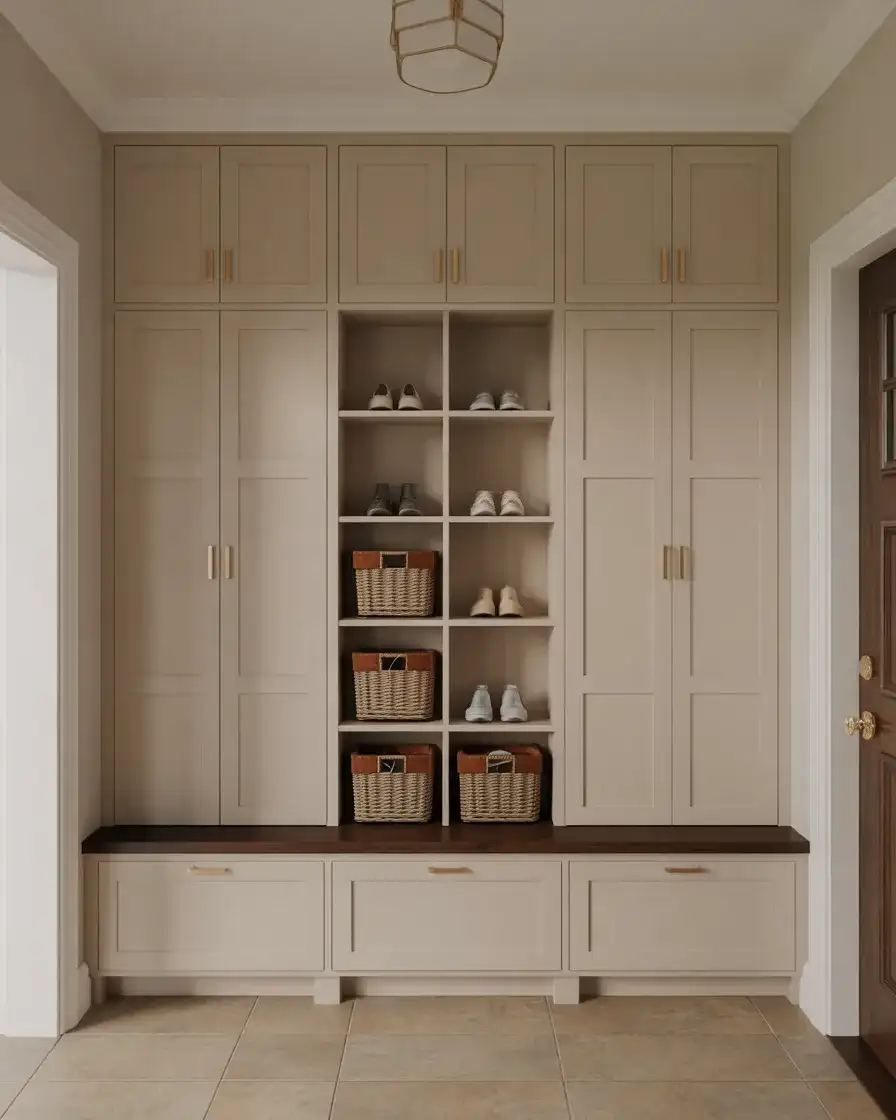
The built-in storage wall is where function and design intersect most powerfully in the American family home context. Midwest and suburban homeowners with multiple children and sports activities report that this is the single renovation most likely to be described as “life-changing”—not just because of the storage, but because of how it changes morning and evening routines. When everything has a designated place visible from the moment you walk in, the behavior of the household shifts to match the system. Good design changes how people live, and nowhere is that more immediate than in the entryway.
22. Modern Indian Entryway with Handcrafted Textile Art
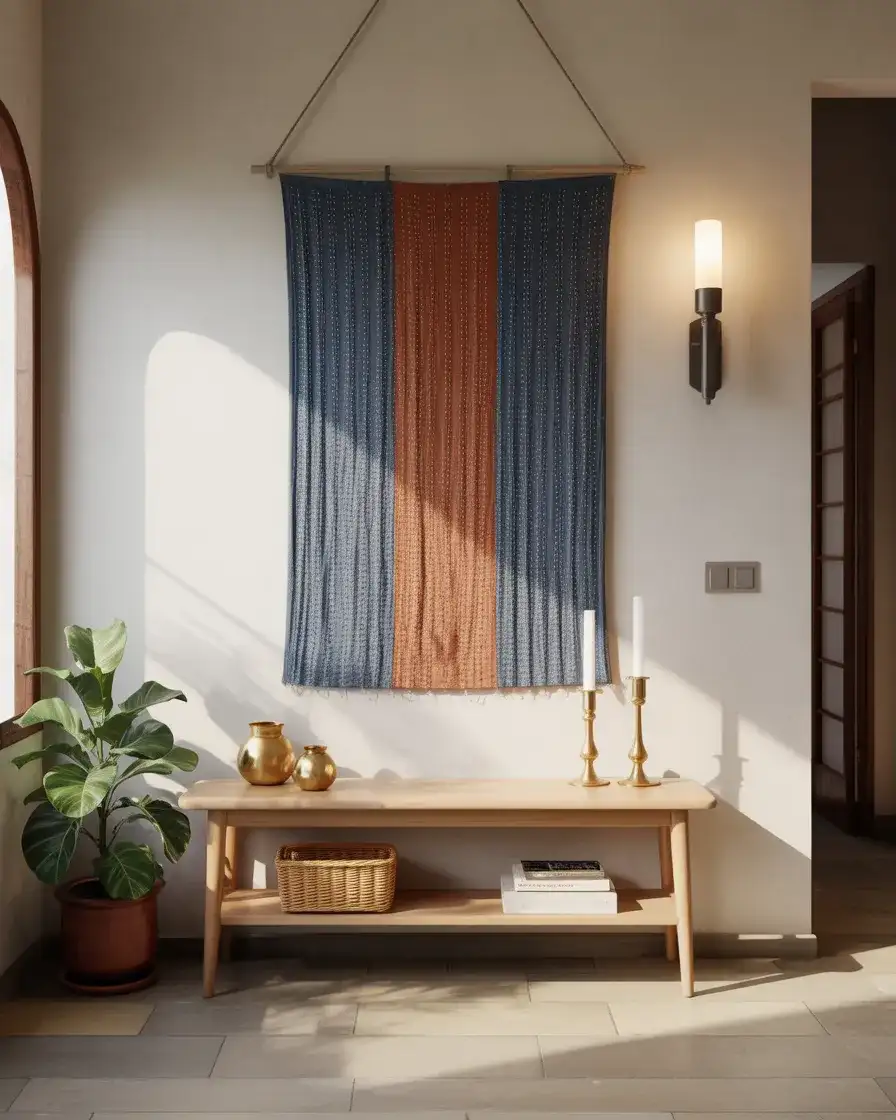
The intersection of Indian modern design and global craft culture is producing some of the most visually rich entryways of 2026. Handwoven wall hangings—block-printed textiles from Rajasthan, hand-embroidered Kantha panels, or indigo-dyed ikat pieces—bring incredible depth and texture to an entry wall in a way that no paint color or wallpaper can fully replicate. The movement, warmth, and inherent storytelling of handmade textile art make an entry feel inhabited and meaningful from the very first glance. This approach works across a spectrum from traditional to contemporary design orientations.
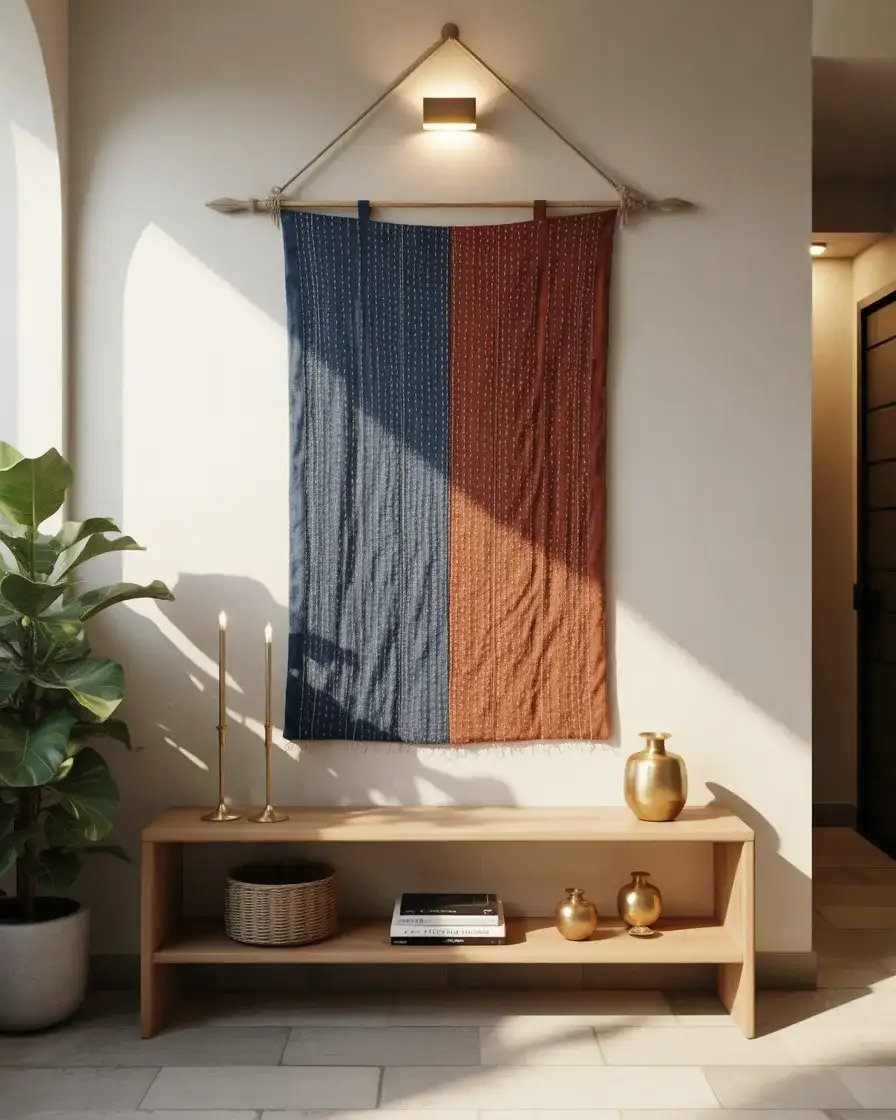
The textile art trend in entryways has a practical, American lifestyle dimension worth noting: unlike framed artwork, textile wall hangings are much easier to transport, install without major wall damage, and swap out seasonally. For homeowners who move frequently—a significant portion of American households, particularly renters and military families—investing in one or two significant textile pieces rather than heavy framed art is a design strategy that travels well and adapts to any new space’s proportions and light. The craft tradition behind the object gives it a story wherever it lands.
Conclusion
Your entryway is one of the smallest spaces in your home that carries one of the largest emotional weights—it sets the tone for every moment of arrival and departure, for you and everyone who visits. Whether you’re drawn to the drama of a moody two-story foyer, the intimacy of a tiny apartment nook done exactly right, or the cultural depth of an Indian-inspired traditional entry, the right idea is the one that feels like you. We’d love to know which of these 22 ideas spoke to you most—drop your thoughts in the comments below, share what your own entryway looks like right now, and tell us what transformation you’re planning for yours in 2026.