There’s something quietly exciting happening inside American apartments right now. With rents still high and square footage often tight, more people than ever are turning to Pinterest for proof that a beautiful home doesn’t require a massive budget—and they’re finding it. Whether you’re moving into your first place, refreshing a rental without losing your deposit, or trying to make a studio feel like a sanctuary, the ideas flooding feeds in 2026 are more creative, more accessible, and more stylish than ever before. This article walks you through 22 genuinely doable decorating ideas—complete with the design thinking behind each one—so you can steal what works and make it completely your own.
1. Layer Thrift Store Textiles for an Instant Cozy Feel
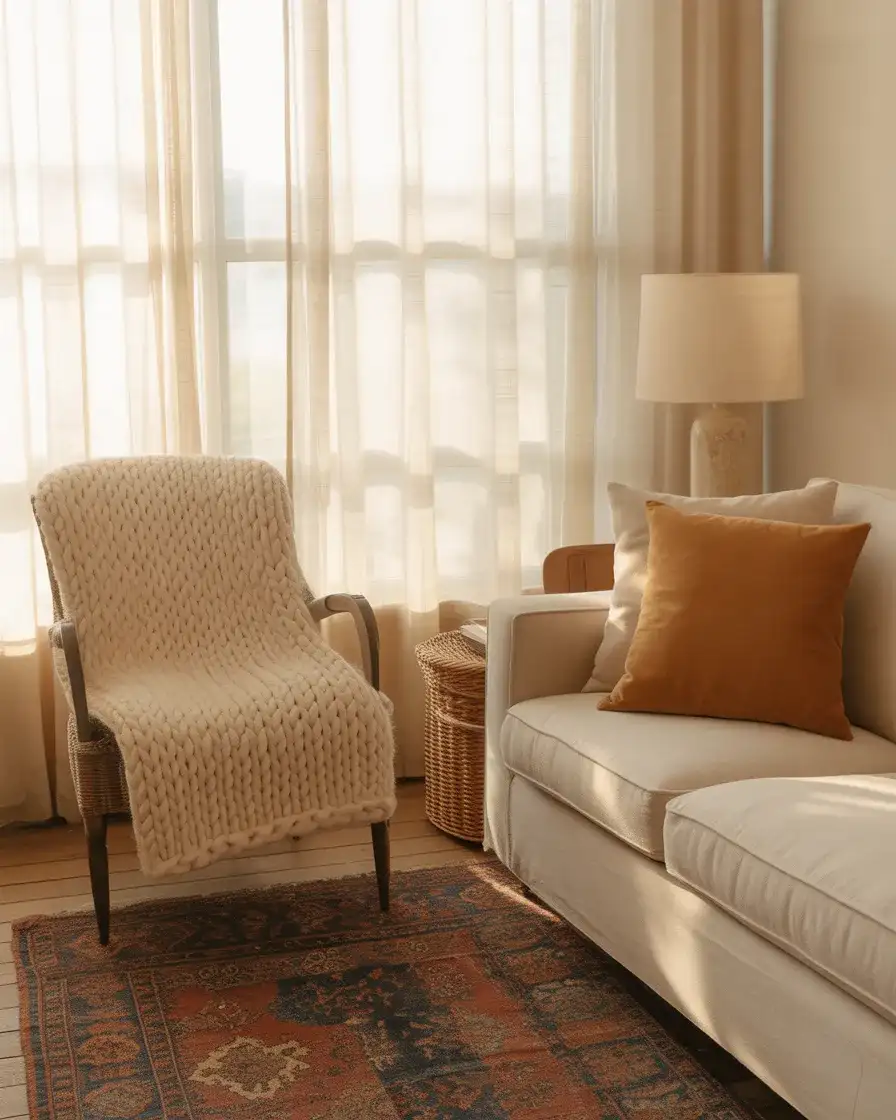
One of the fastest and most affordable ways to transform any room is also one of the most overlooked: layering textiles. Thrift store finds like woven throws, mismatched pillow covers, and vintage rugs can completely change the emotional temperature of a space. The key isn’t buying everything in matching sets—it’s mixing textures and weights so the room feels genuinely lived-in. A chunky knit blanket draped over a $15 secondhand chair, a patterned rug layered over a plainer one, a couple of velvet pillows tossed on a linen sofa—that’s the formula for a cozy room that looks curated.
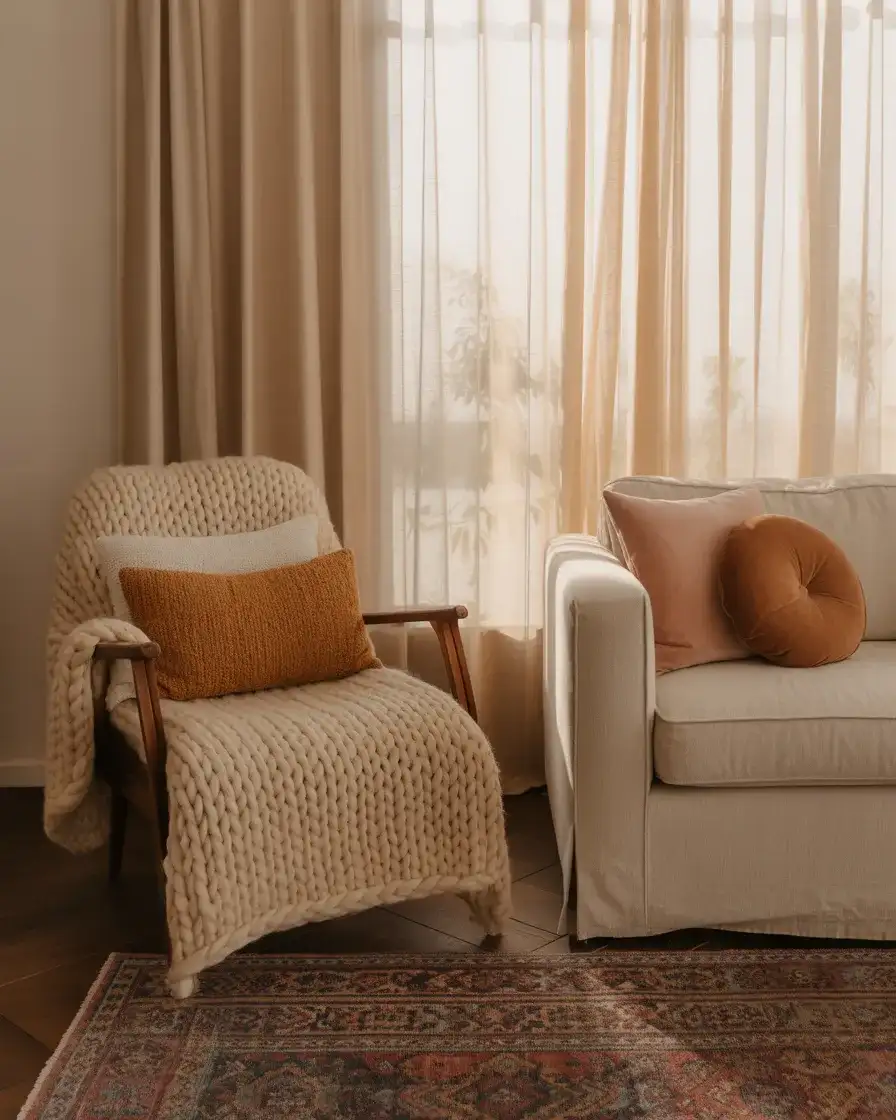
Budget-minded decorators know this trick well: the total spend can be under $40 for a transformation that looks like it cost hundreds. Goodwill, Facebook Marketplace, and local estate sales are goldmines for quality wool blankets and handwoven pieces that mass-market stores charge a premium for. Don’t be afraid of slight pattern clashing—what decorators call “intentional clash” is exactly what gives a room personality instead of that catalog-showroom look. The secret is to anchor the whole arrangement with one neutral tone so the mix reads as collected rather than cluttered.
2. Swap Out Hardware for a Rental-Friendly Kitchen Update
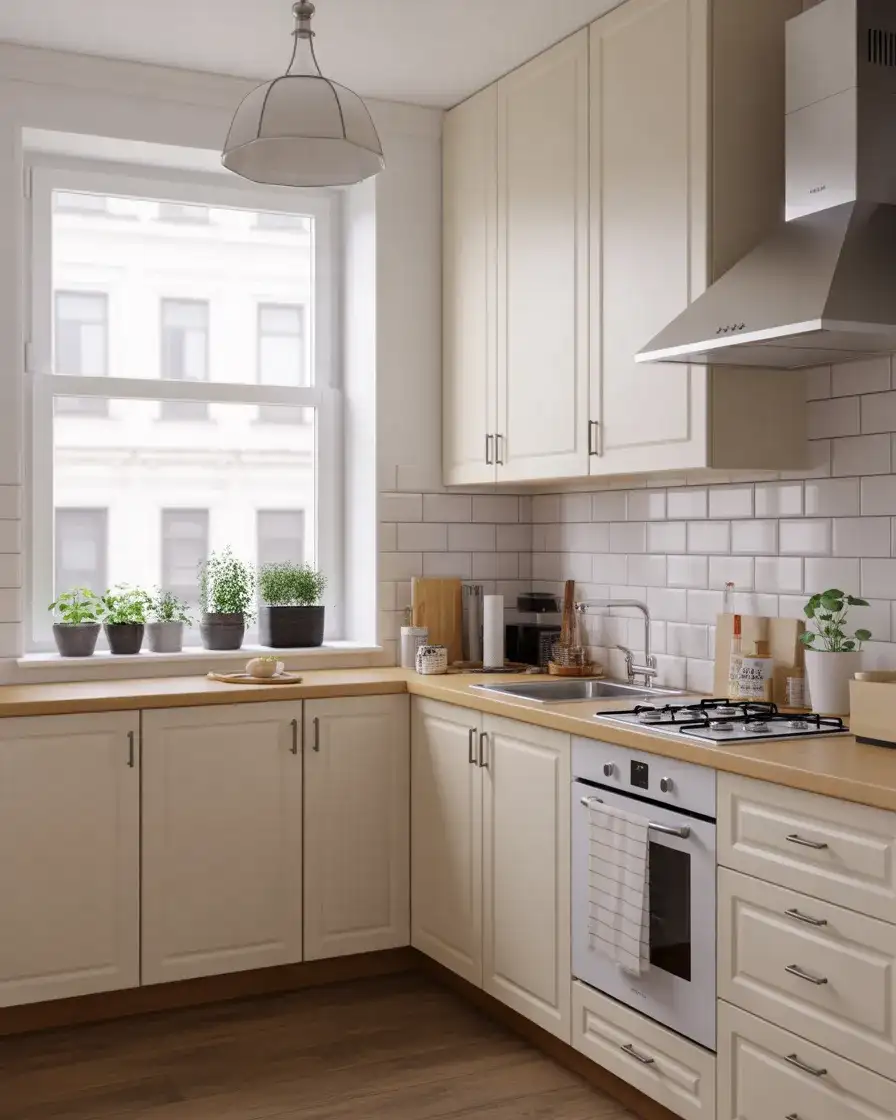
You don’t need a renovation to make a rental kitchen feel like yours. Swapping cabinet knobs and drawer pulls is one of the most beloved rent-friendly decor ideas because it’s reversible, inexpensive, and surprisingly impactful. Brushed brass, matte black, or aged ceramic hardware can shift a kitchen from builder-grade to boutique with nothing more than a screwdriver. For rented apartments where painting or replacing cabinetry isn’t allowed, this kind of small swap does enormous visual work.
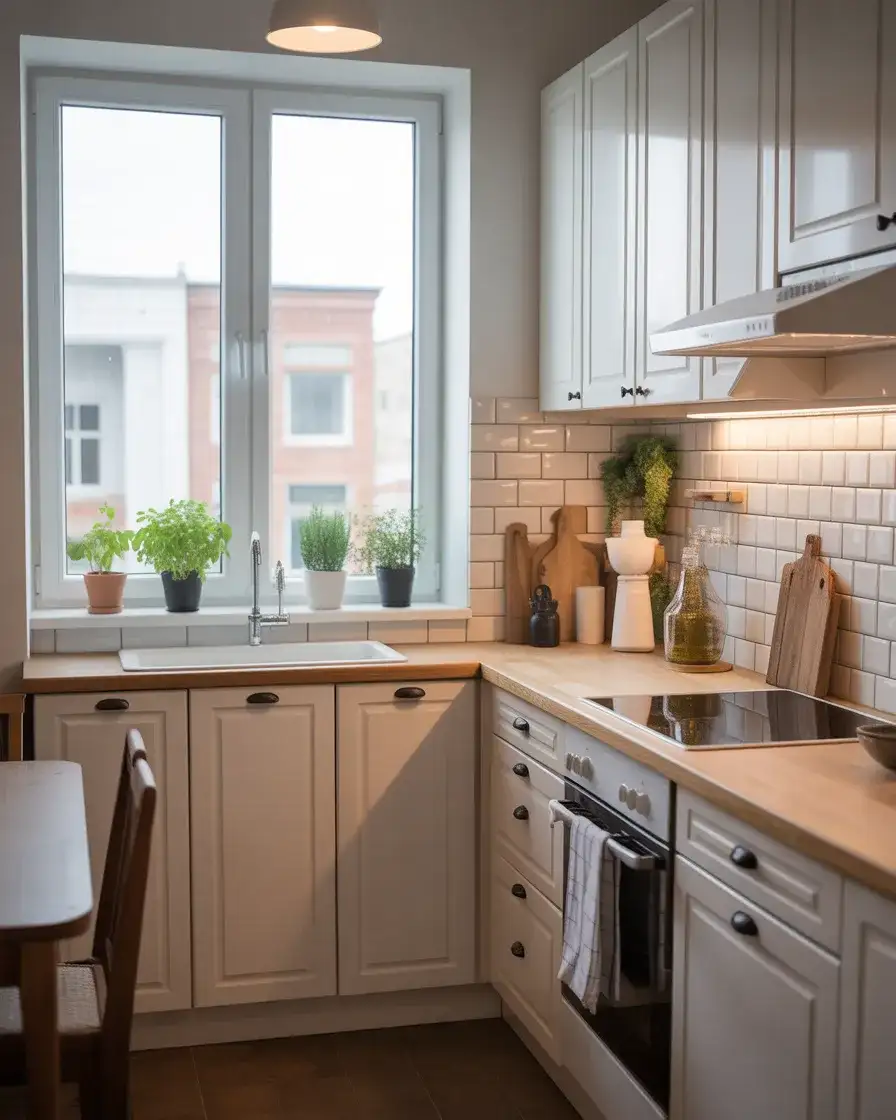
The common mistake here is forgetting to save the original hardware in a labeled bag. Before swapping anything, photograph the original screws and keep everything together so restoring it when you move out is effortless. Hardware sets run anywhere from $12 to $60 for a full kitchen’s worth, making this one of the highest-return investments in the budget decorating world. It works especially well in kitchens with flat-front cabinets, where the hardware becomes the focal point rather than the door style itself.
3. Build a Gallery Wall with Secondhand Frames
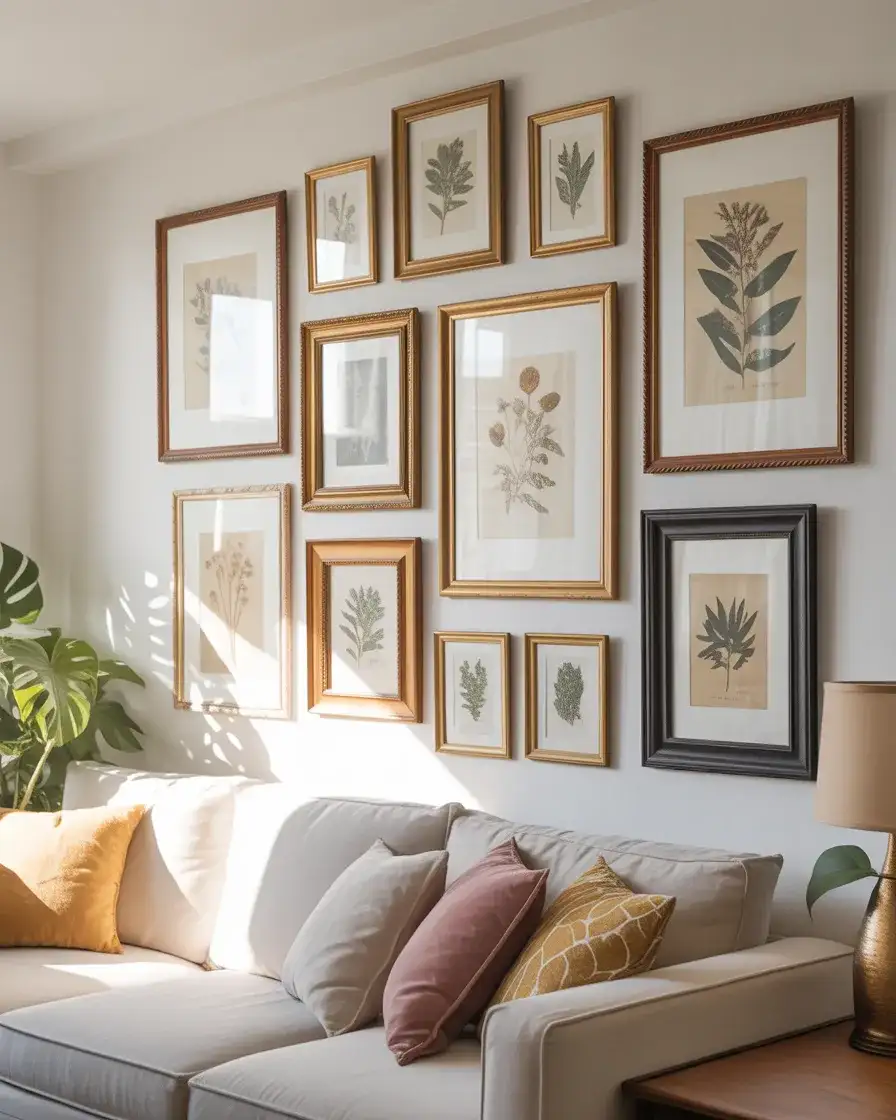
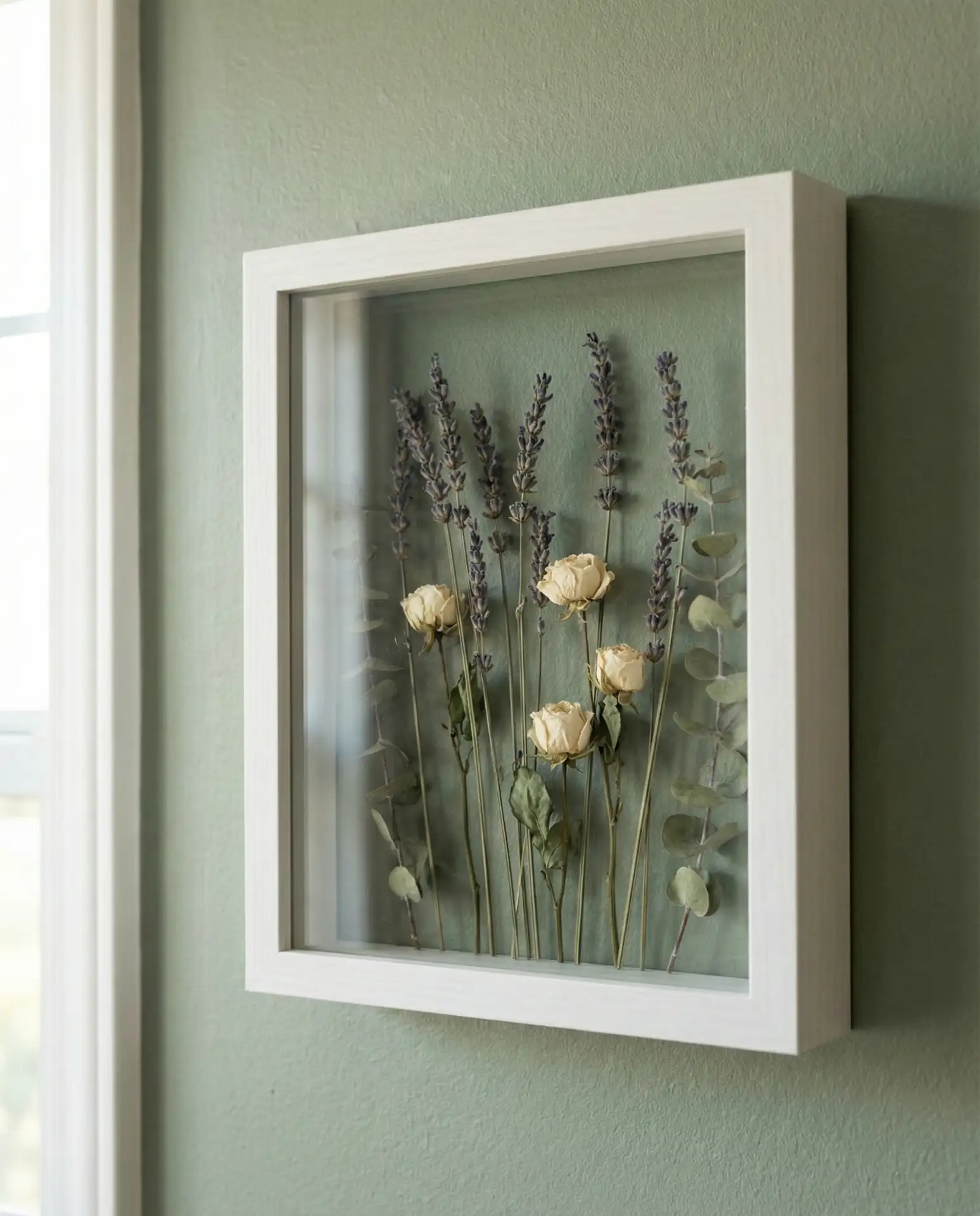
A gallery wall is one of the internet’s most beloved decorating moves—and for good reason. It transforms a blank rental wall into something that tells a story. The vintage approach works brilliantly here: mismatched thrift store frames in different finishes, paired with a mix of art prints, personal photos, and even pressed botanicals, feel far more interesting than anything bought as a coordinated set. For a first apartment especially, a gallery wall is an identity statement that costs almost nothing if you’re strategic about sourcing.
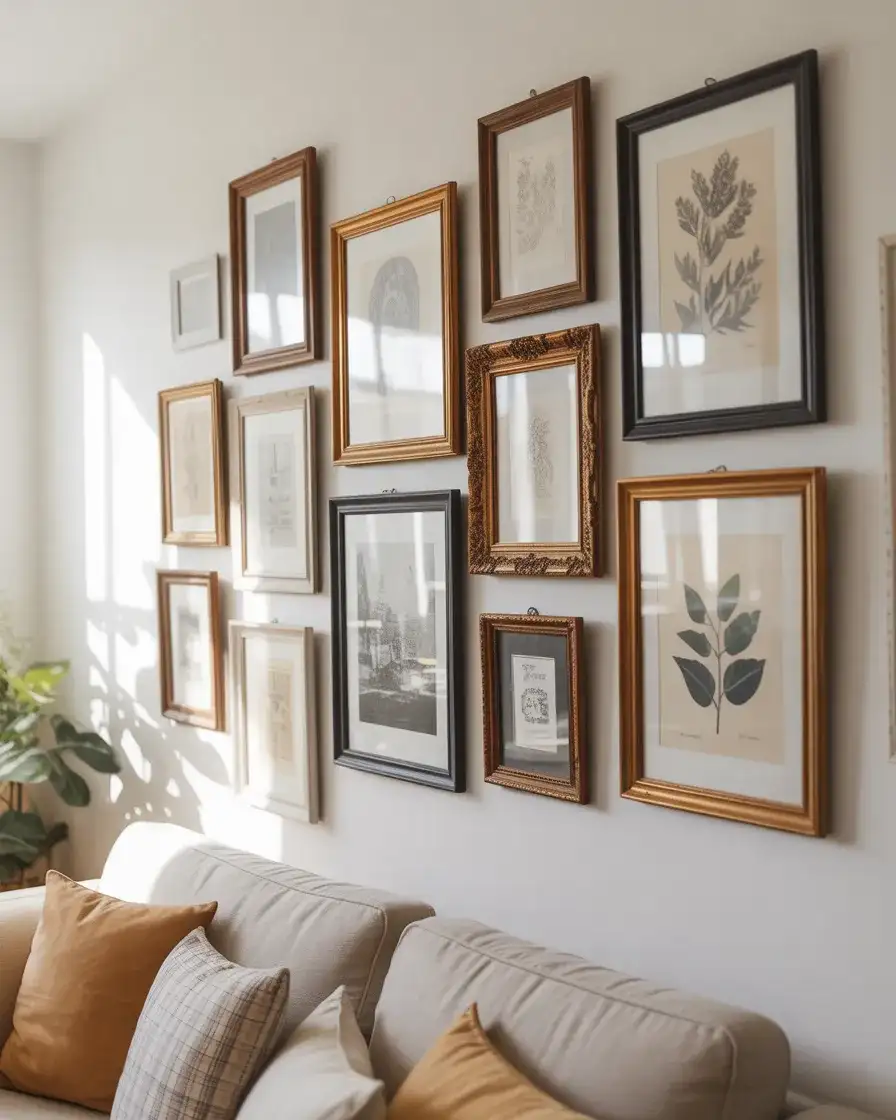
The trick most people miss is doing a dry run on the floor before anything goes on the wall. Lay out all the frames and rearrange until the composition feels right—asymmetrical clusters with varied sizes almost always look better than a rigid grid. Free art is everywhere: Unsplash and Postersy offer high-resolution downloads, botanical prints can be scanned from library books, and even beautiful wrapping paper framed behind glass makes surprisingly sophisticated wall art. The whole wall can cost under $30.
4. Maximize a Studio with Smart Zone Dividers
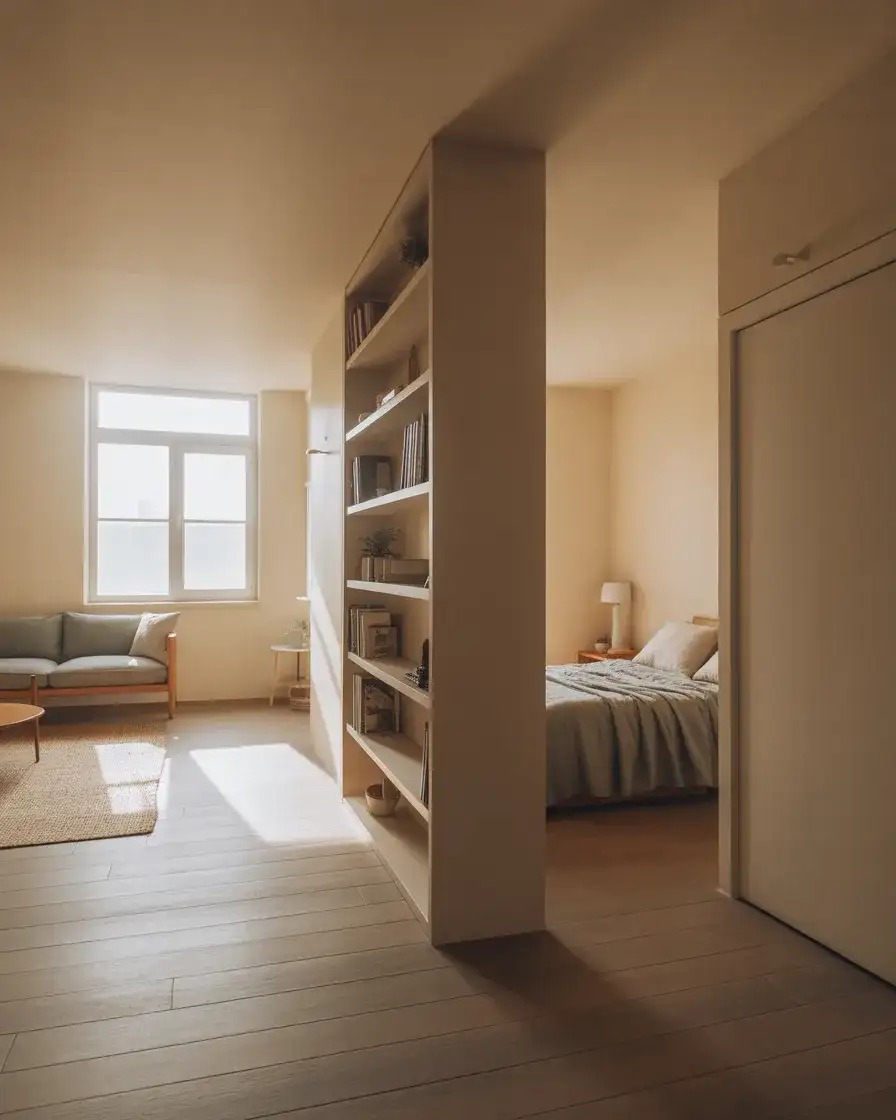
Living in a studio doesn’t have to mean living in a single undifferentiated box. The key to making a one-room apartment feel intentional is creating visual zones without building walls. A bookshelf used as a divider, a hanging curtain separating the sleeping area, or a strategically placed sofa with its back to the “bedroom” side—these are the moves that make a small studio feel like it has rooms. For anyone working from home in a studio, this kind of zoning is practically a mental health necessity.
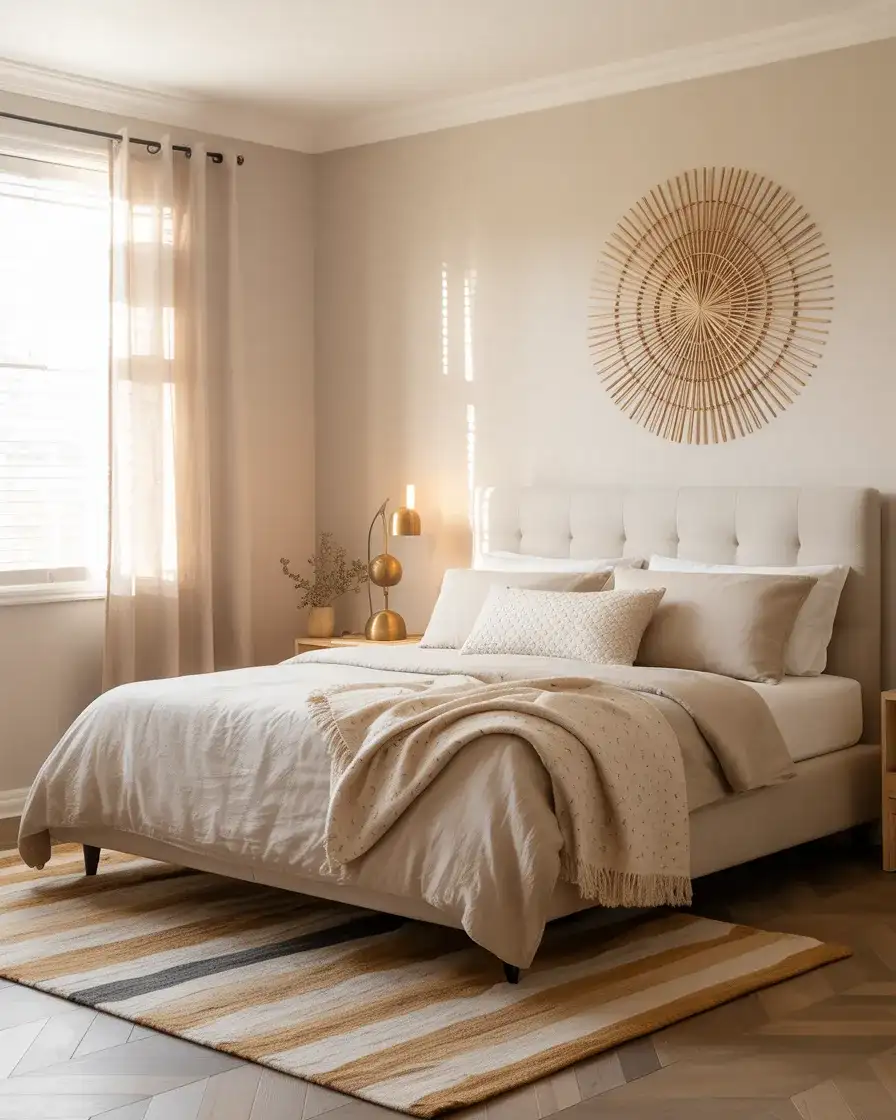
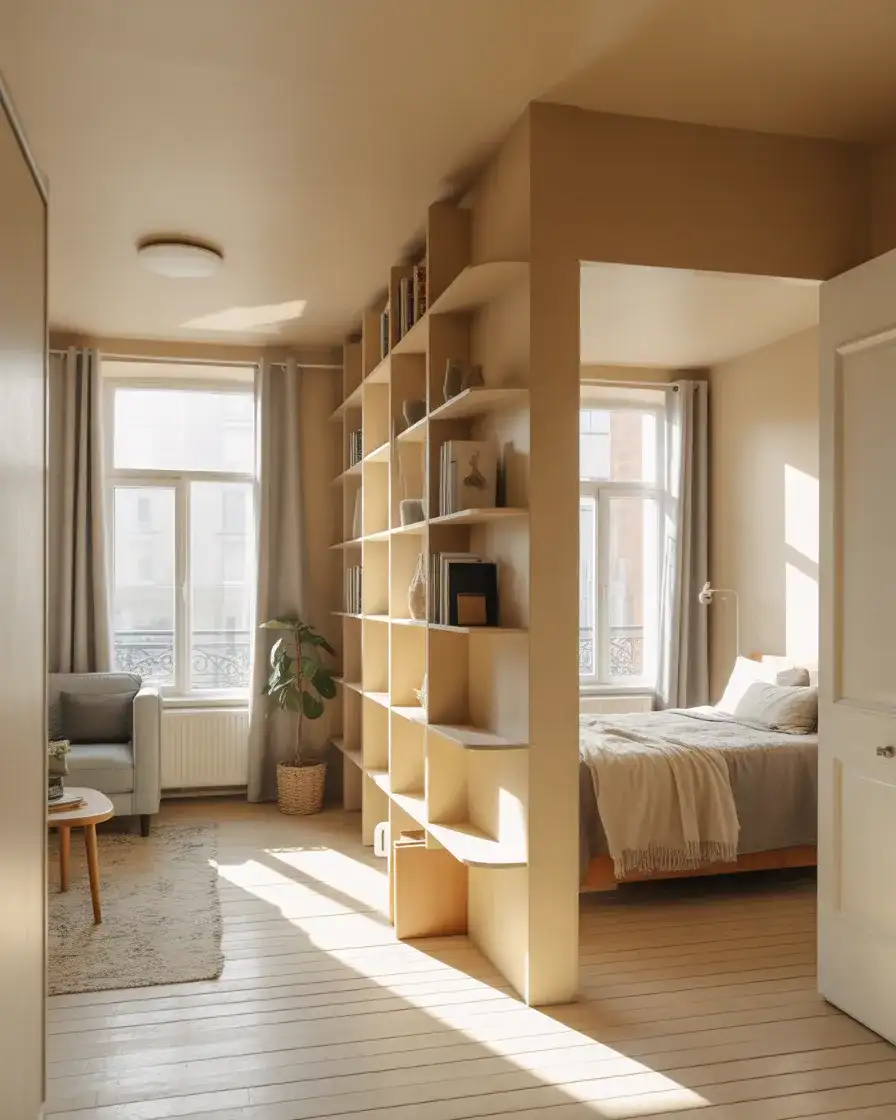
Interior designers who specialize in small-space living consistently recommend starting with the rug. Anchor each zone with its own area rug—even a small one—and the eye immediately reads them as separate spaces. A sheepskin rug beside the bed, a flat-weave rug under the dining table, and a plush rug in the “living room” area all communicate distinct purpose without any construction. Curtain dividers hung from ceiling-mounted tracks are another favorite because they can be opened up when you want the space to breathe.
5. Create a Minimalist Bedroom with a Neutral Palette
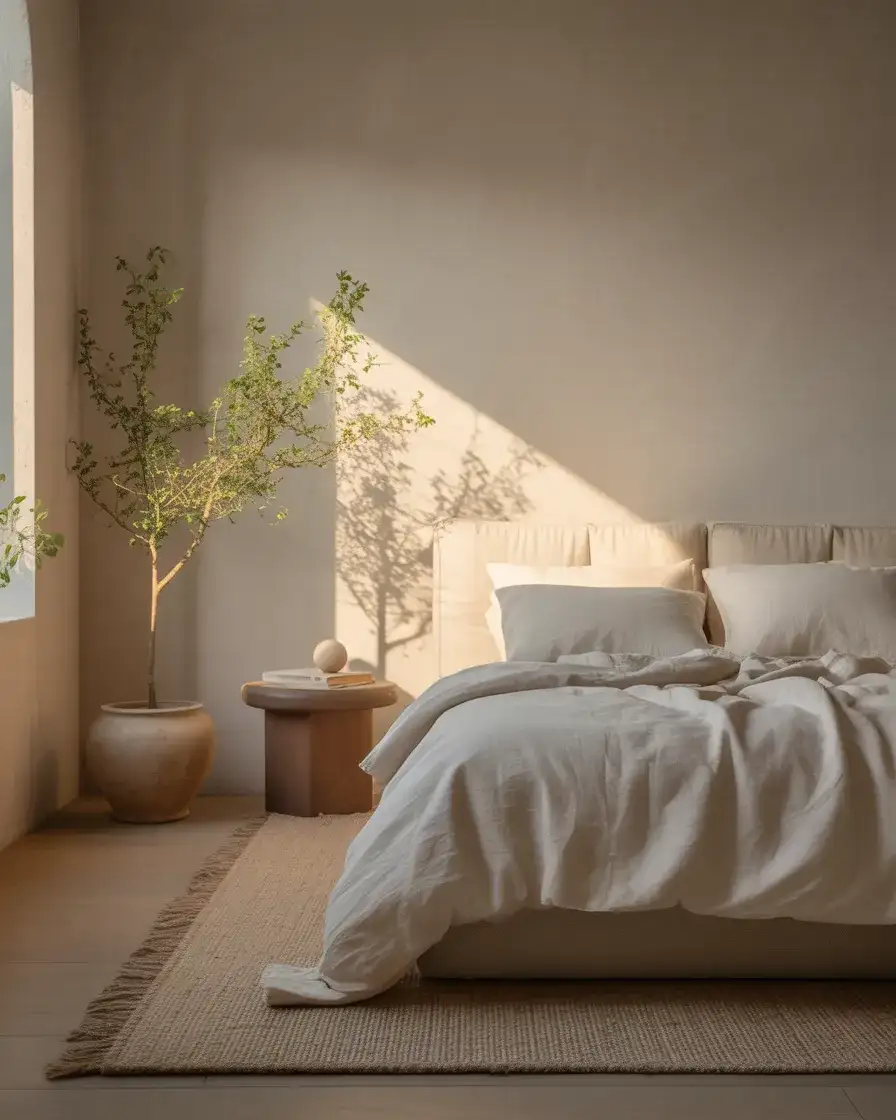
The minimalist bedroom aesthetic that took over Pinterest isn’t going anywhere—in fact, it’s deepening in 2026, with more Americans actively choosing calm, uncluttered sleeping spaces over maximalist sensibility. The formula is straightforward: keep the palette to two or three soft neutrals, invest in quality linen bedding (even one good set elevates the whole room), and ruthlessly edit what’s on display. For a college dorm or first apartment bedroom, this approach has an added bonus—it photographs beautifully, and a beautiful-looking bedroom genuinely reduces morning stress.
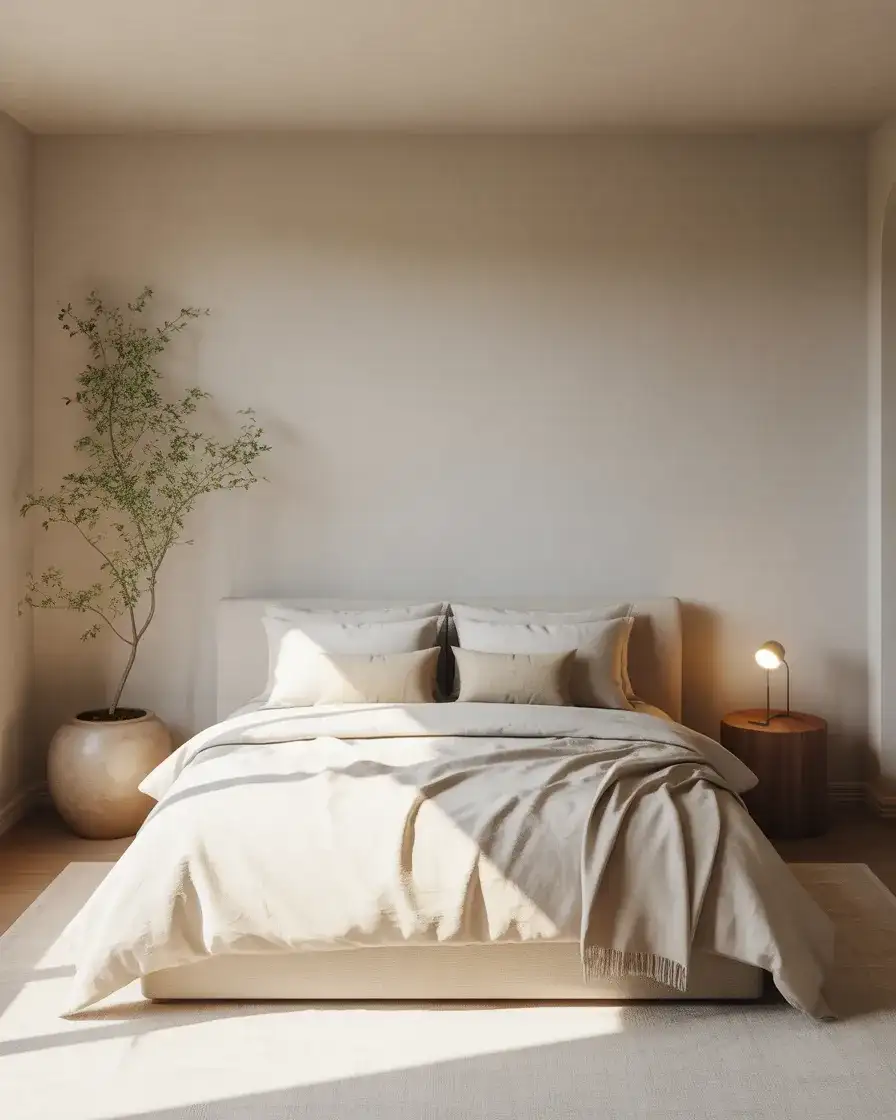
Here’s a practical truth many budget decorators discover: a minimalist bedroom actually costs less to furnish and maintain. Fewer decorative objects mean fewer things to dust, break, or replace. The most frequent mistake is keeping too many things out of habit rather than love. A once-a-season edit—removing anything that doesn’t actively make the room feel better—is the single best maintenance habit for this style. Start with the nightstand: if it has more than three things on it, it’s probably a candidate for a declutter.
6. Use Peel-and-Stick Wallpaper in a Bathroom Refresh
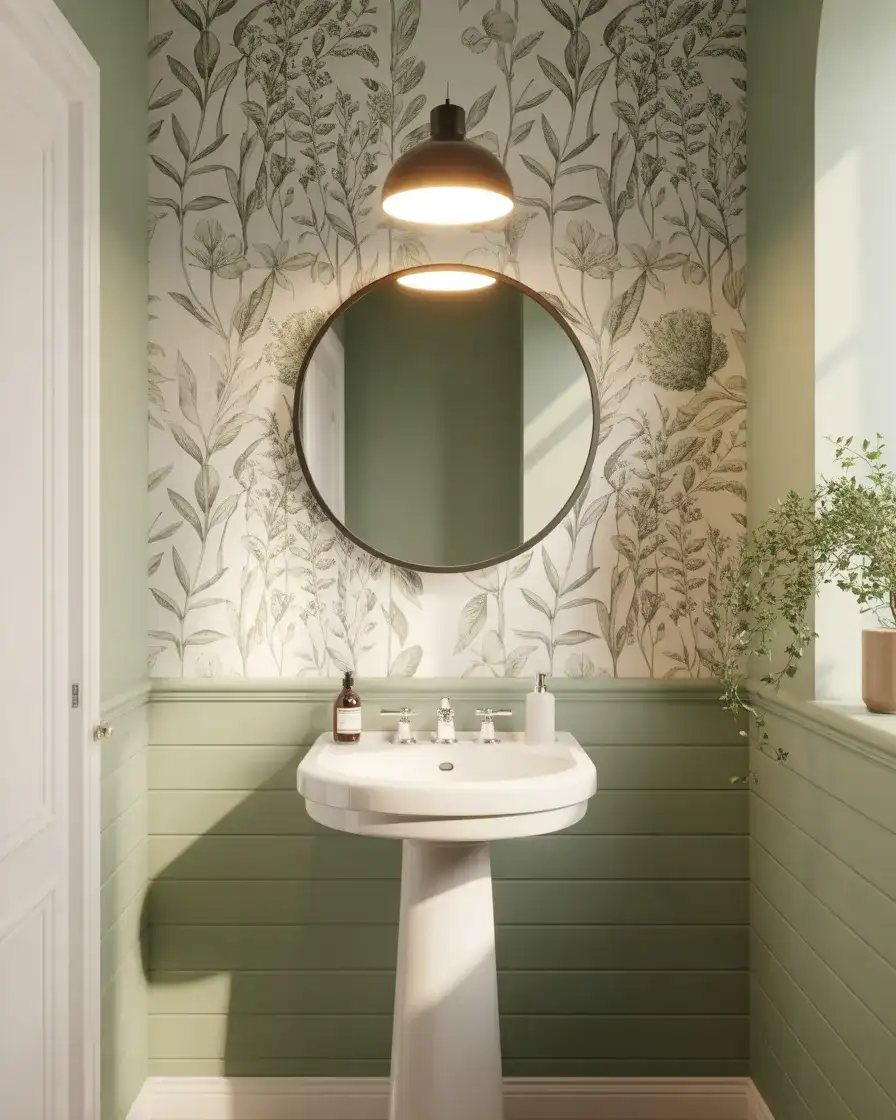
The bathroom is often the last room people think to decorate and the first one that impresses guests. Peel-and-stick wallpaper has made renter-friendly bathroom upgrades genuinely achievable—even on one wall as an accent, the impact is significant. Patterns that work especially well in small bathrooms include soft geometric prints, classic zellige-inspired tiles, and anything with a botanical repeat. Because bathroom walls tend to be smaller, the cost is lower and the application is faster than any other room in the house.
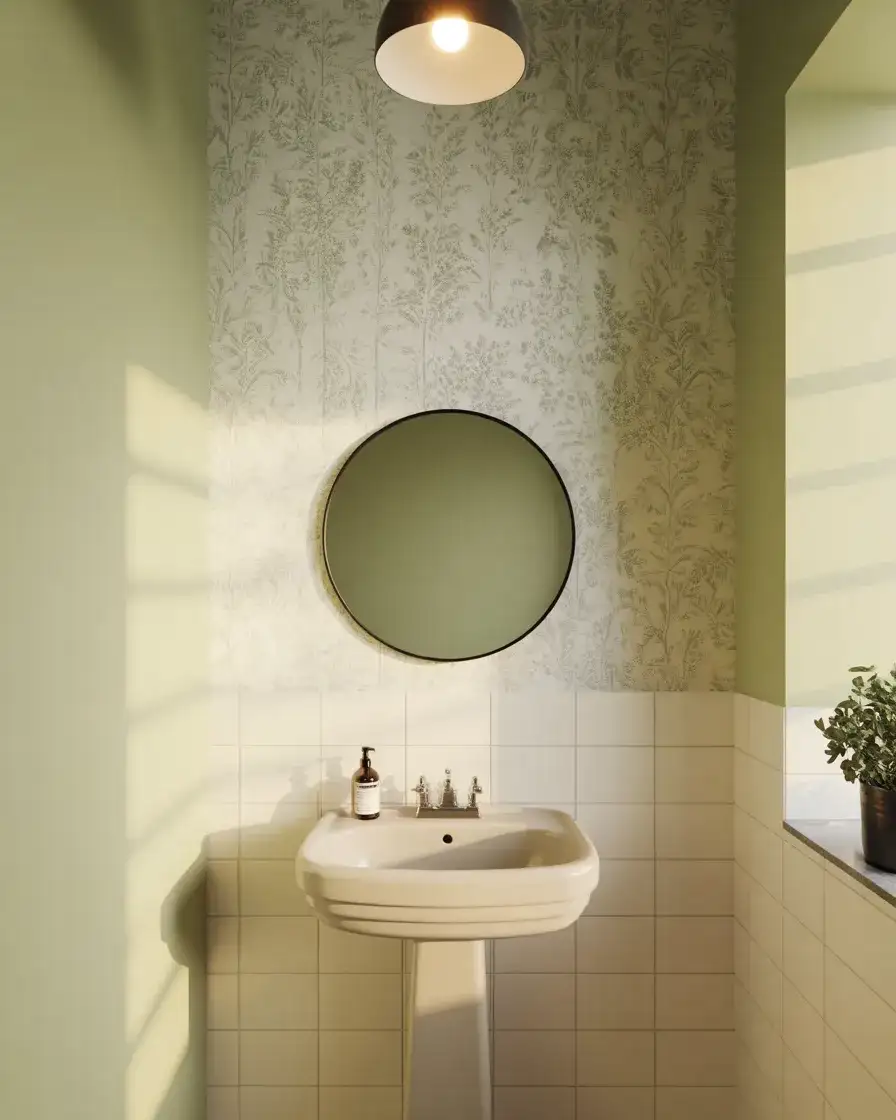
Where this works best is in bathrooms that already have a neutral tile or white fixtures—the wallpaper becomes the single statement piece in an otherwise clean space. The main mistake people make is underestimating how much moisture affects adhesion over time. Choosing a brand specifically rated for bathrooms and sealing seams with a clear bathroom caulk along the bottom edge dramatically extends the life of the installation. Brands like Tempaper and Chasing Paper have solid renter-specific lines that remove cleanly without residue.
7. Style Open Shelving Like a Scandinavian-Inspired Pro
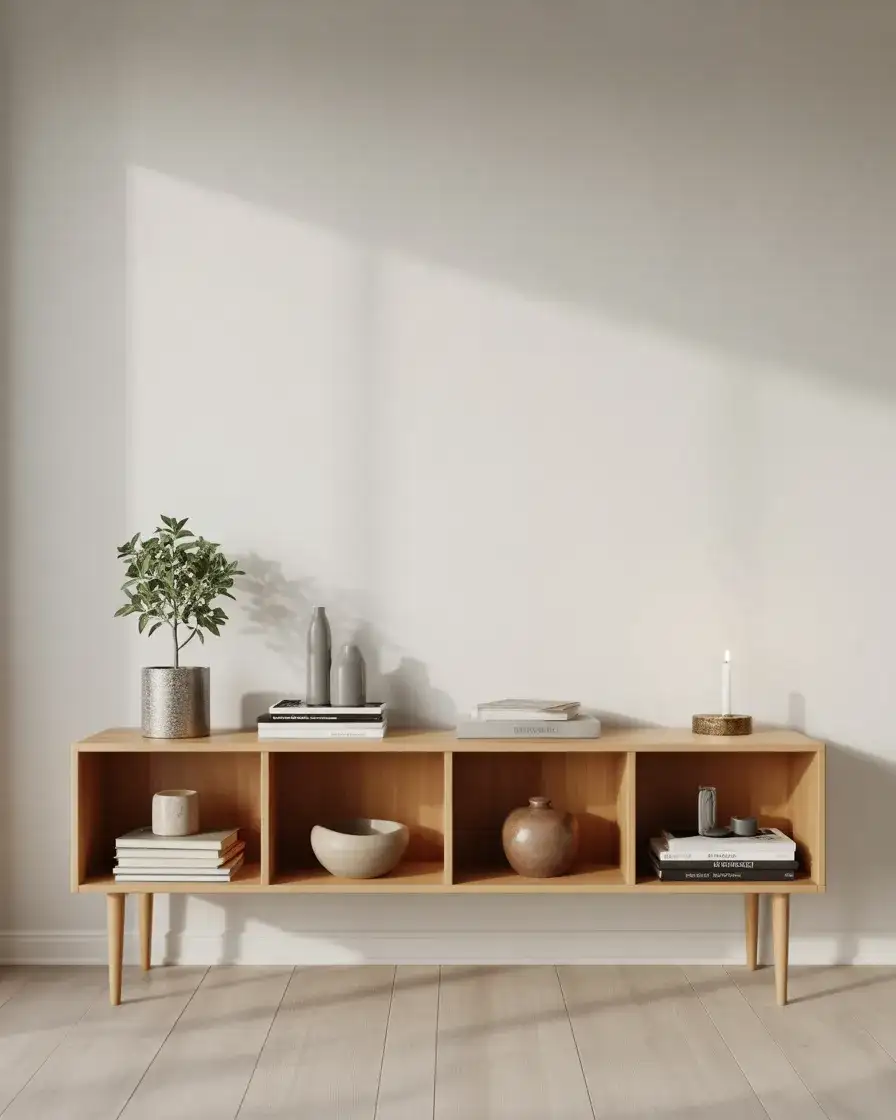
Open shelving is simultaneously the most rewarding and most frequently botched DIY decorating project. Done right, it creates a Scandinavian-inspired sense of curated calm—a few beautiful objects, some breathing room, a trailing plant, maybe a stack of books with their spines aligned. Done wrong, it becomes visual noise. The rule most designers swear by is the “rule of three”: group objects in odd numbers, vary the heights within each grouping, and always include something organic—a plant, a stone, or a piece of driftwood—to soften the arrangement.
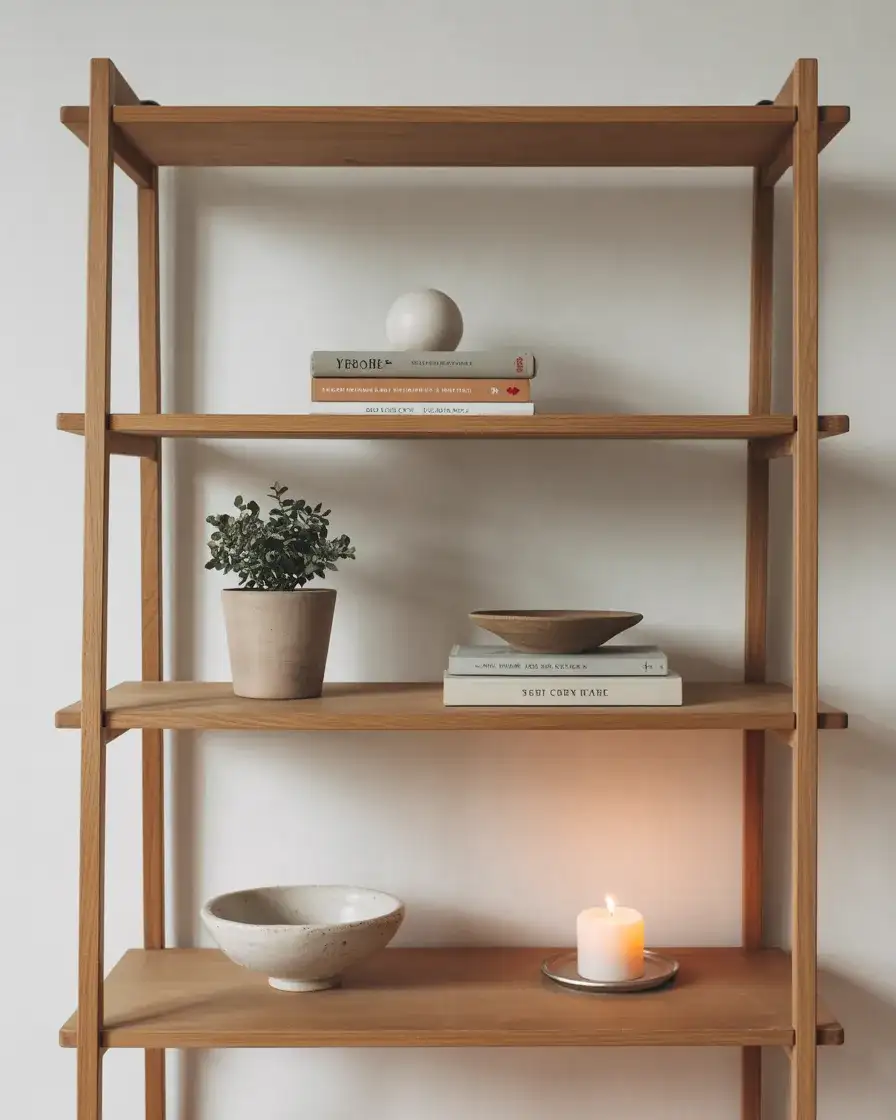
One real homeowner approach that’s been spreading on Pinterest is a monthly “shelf refresh.” Rather than permanently committing to one arrangement, they rotate seasonal objects—pinecones in winter, shells in summer, dried lavender in spring—keeping the display feeling current without buying anything new. It’s also worth noting that the shelf itself matters less than what’s on it. Even a basic IKEA LACK floating shelf, styled well, holds its own against more expensive alternatives.
8. Go Boho with Macramé and Woven Wall Art
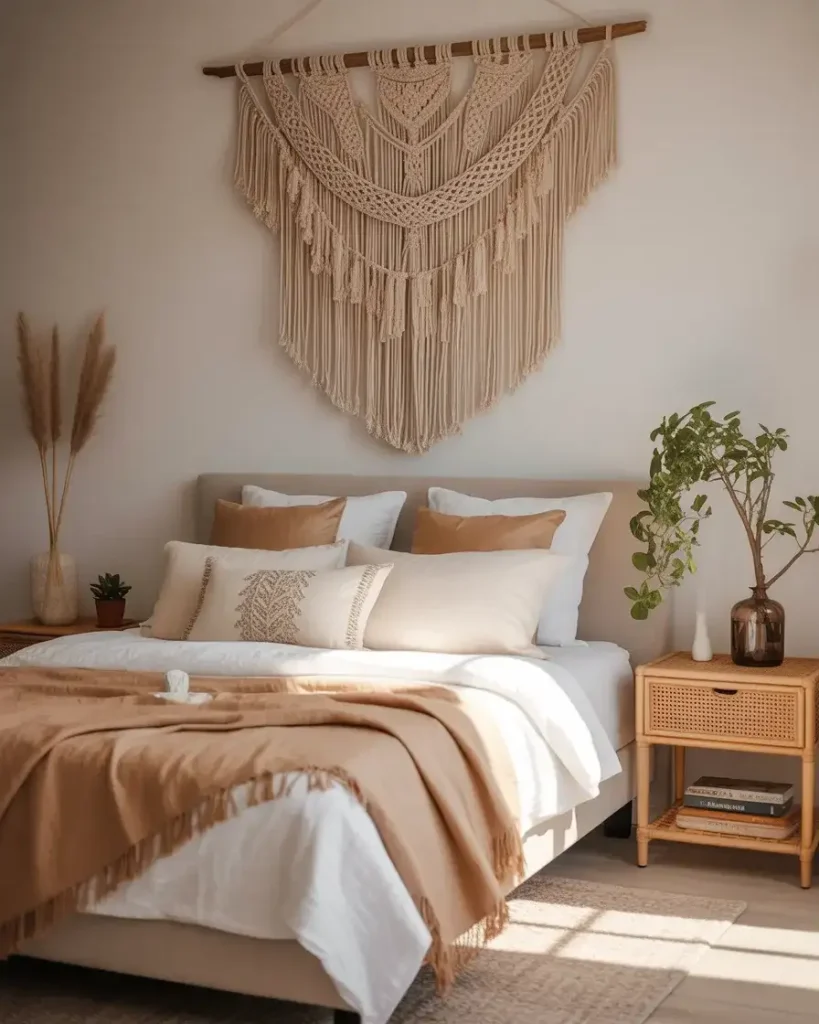
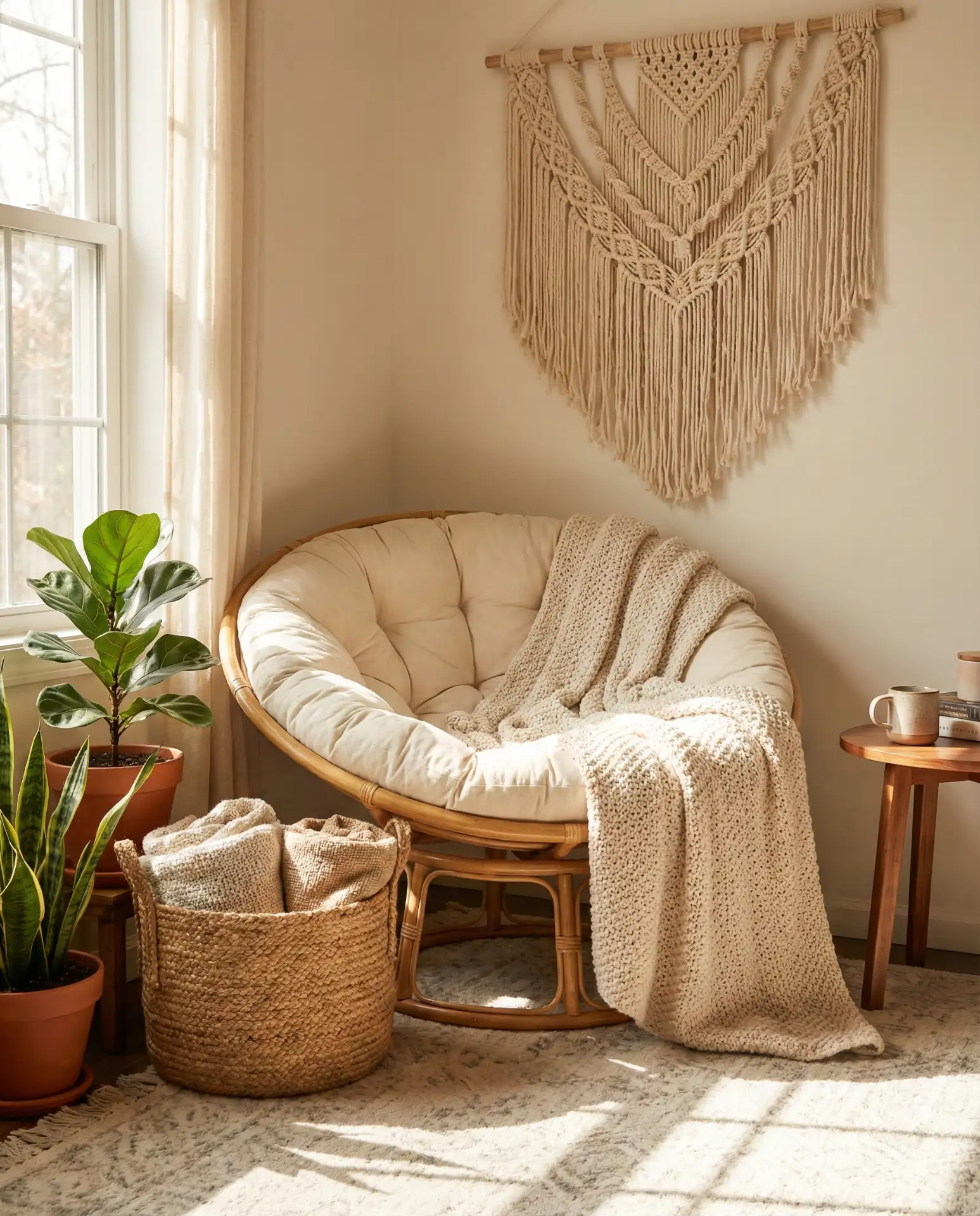
The boho aesthetic has proven it isn’t a trend—it’s a sensibility. Macramé wall hangings, woven tapestries, and rattan accents consistently rank among the top-saved decorating ideas on Pinterest, year after year. What makes them work on a tight budget is that they do the visual heavy lifting of an entire wall treatment for a fraction of what art or wallpaper would cost. A single large macramé piece hung above a bed or sofa instantly warms a room and adds the layered texture that makes a space feel lived-in and personal.
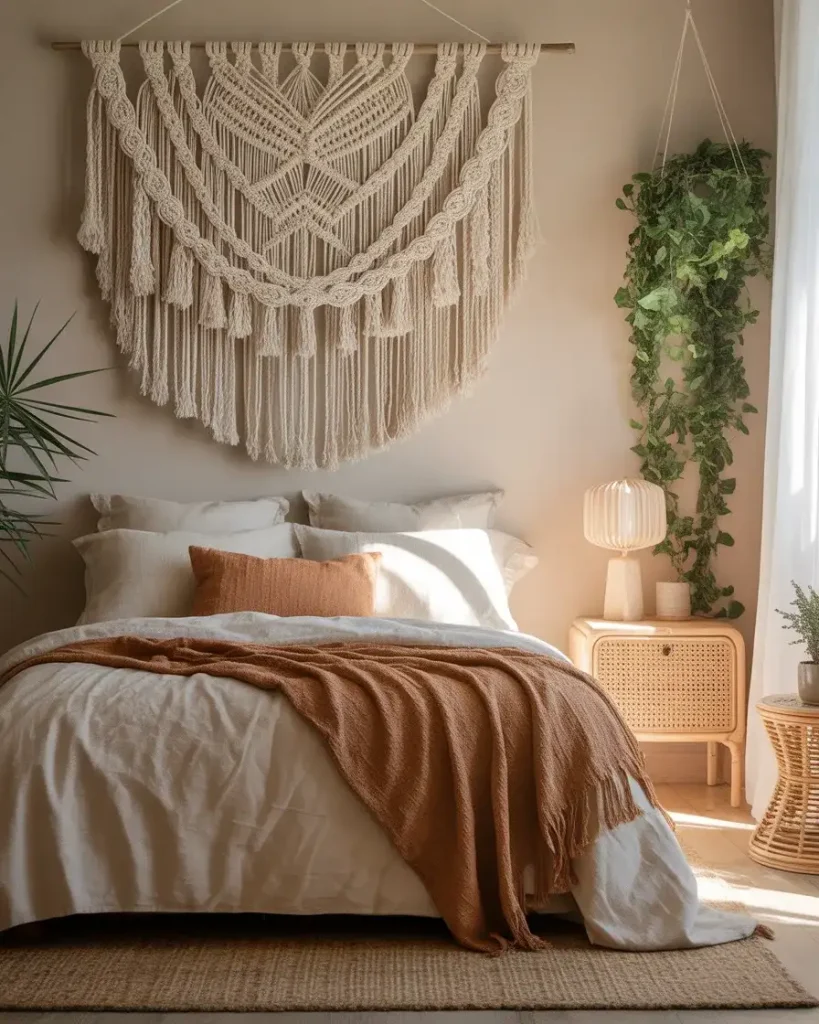
Macramé kits on Etsy and Amazon start around $25 and most beginners can finish a simple wall hanging in an afternoon—YouTube tutorials have genuinely democratized this craft. For those who’d rather buy than make, handmade options on Etsy range from $30 to $80 and support independent makers, which gives the piece an extra layer of meaning. If you’re decorating a couple’s apartment together, this is one of the most rewarding weekend projects you can do as a team: it ends up being both art and a shared memory.
9. Embrace Creative Storage Solutions that Double as Décor
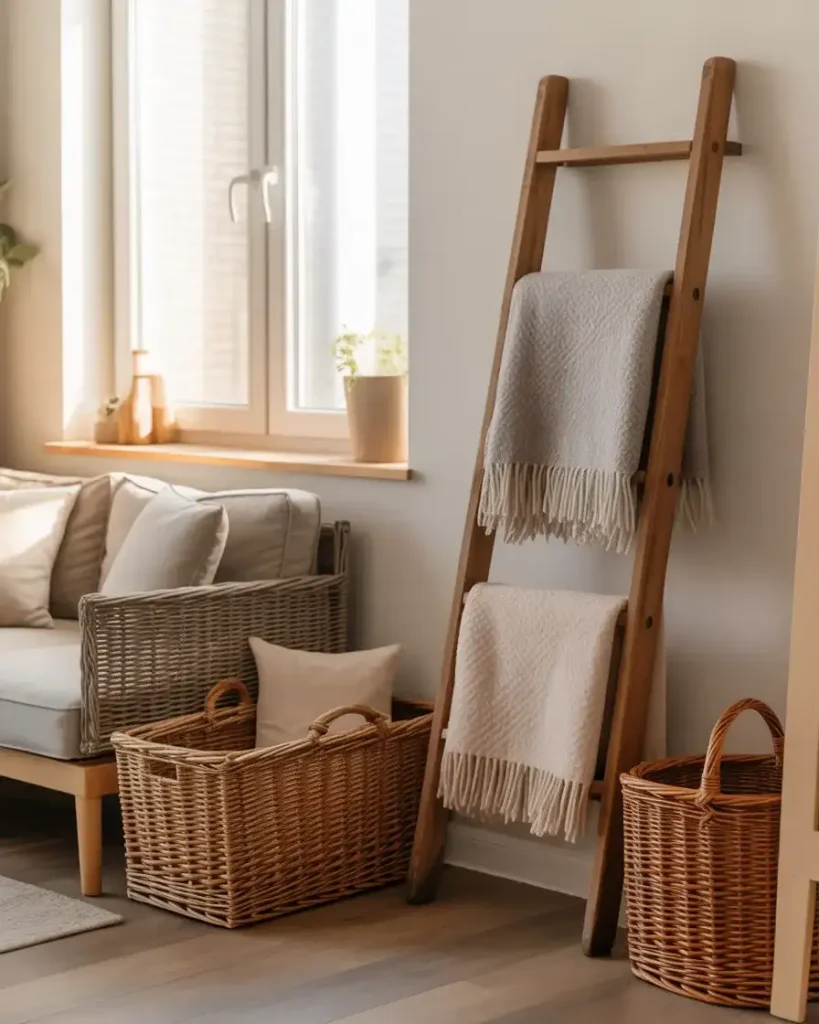
Storage is the unglamorous backbone of any well-functioning apartment—but in 2026, the best creative storage solutions don’t look like storage at all. A row of ceramic canisters on the kitchen counter stores dry goods while looking intentional. A vintage ladder leaning against a wall holds throw blankets beautifully. Wicker baskets tucked under a console table keep clutter invisible while adding warmth. The goal is making every storage element earn its visual rent—if it’s out in the open, it should be something you’d actually want to look at.
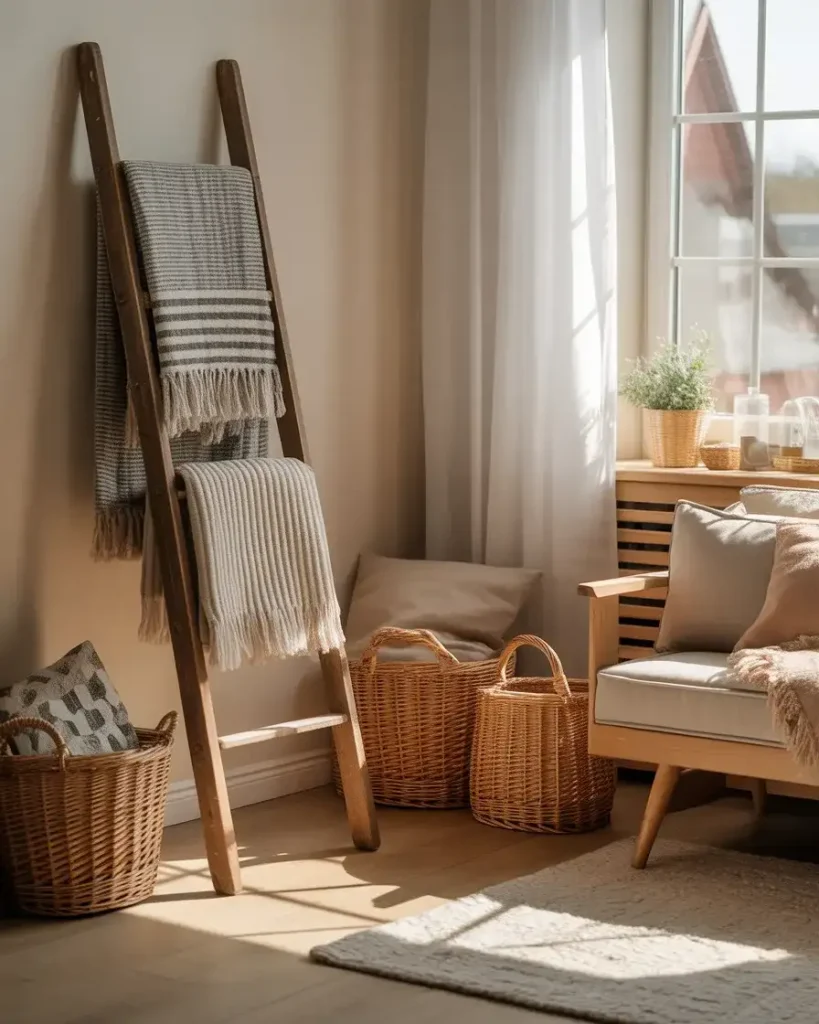
This approach works best in small living rooms and studios where every inch has to serve double duty. The mistake most people make is buying storage that fits the stuff rather than the aesthetic. Start instead by deciding what the storage piece should look like—then figure out what it can hold. A beautiful rattan trunk that works as a coffee table, pouf, and blanket storage is a perfect example of this thinking. Often found at thrift stores for $20 to $40, they represent tremendous value and functionality in one.
10. Bring In Plants for a Coastal-Inspired, Airy Vibe
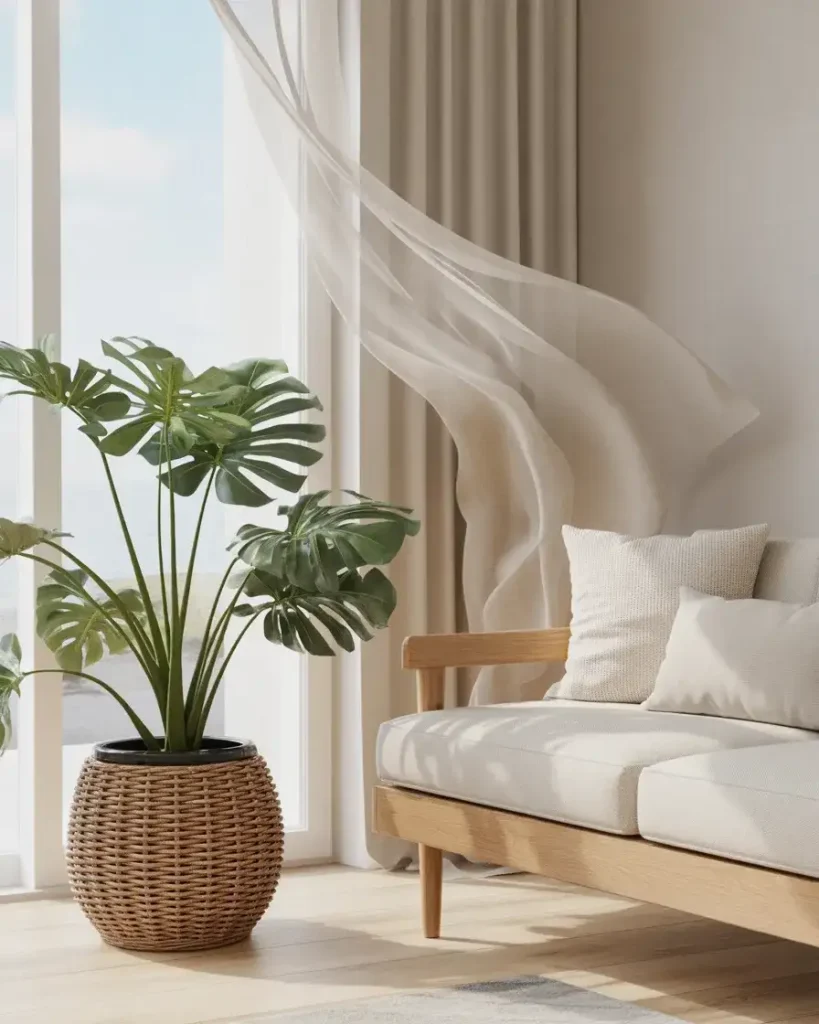
Plants remain one of the single most powerful decorating tools available—and also among the most budget-friendly. For a coastal-inspired look that’s been trending strongly in American apartments, the formula involves large-leafed tropicals like monstera, bird of paradise, or fiddle-leaf figs paired with airy sheer curtains and light wood tones. This combination mimics the breezy, sun-drenched quality of coastal living without requiring a beachfront address or a designer budget.
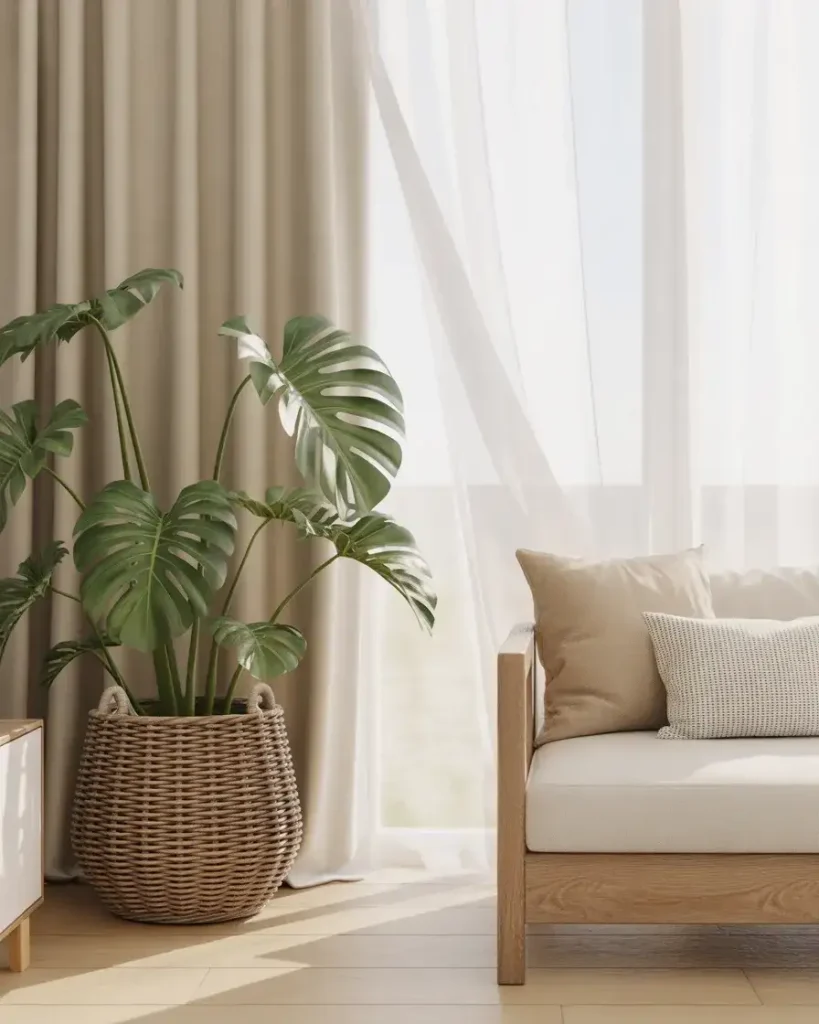
A monstera plant can be purchased for under $15 as a small starter at most garden centers and will grow into a statement piece over a single season. Home Depot, Trader Joe’s, and IKEA are reliable cheap sources for beginner-friendly species. The budget-smart move is to propagate: once you have one healthy plant, taking cuttings to root in water costs nothing and fills the apartment with greenery. Propagation has become its own Pinterest category, with beautifully arranged cutting stations in bud vases becoming a decorating idea in themselves.
11. Tackle DIY Furniture Projects for One-of-a-Kind Pieces
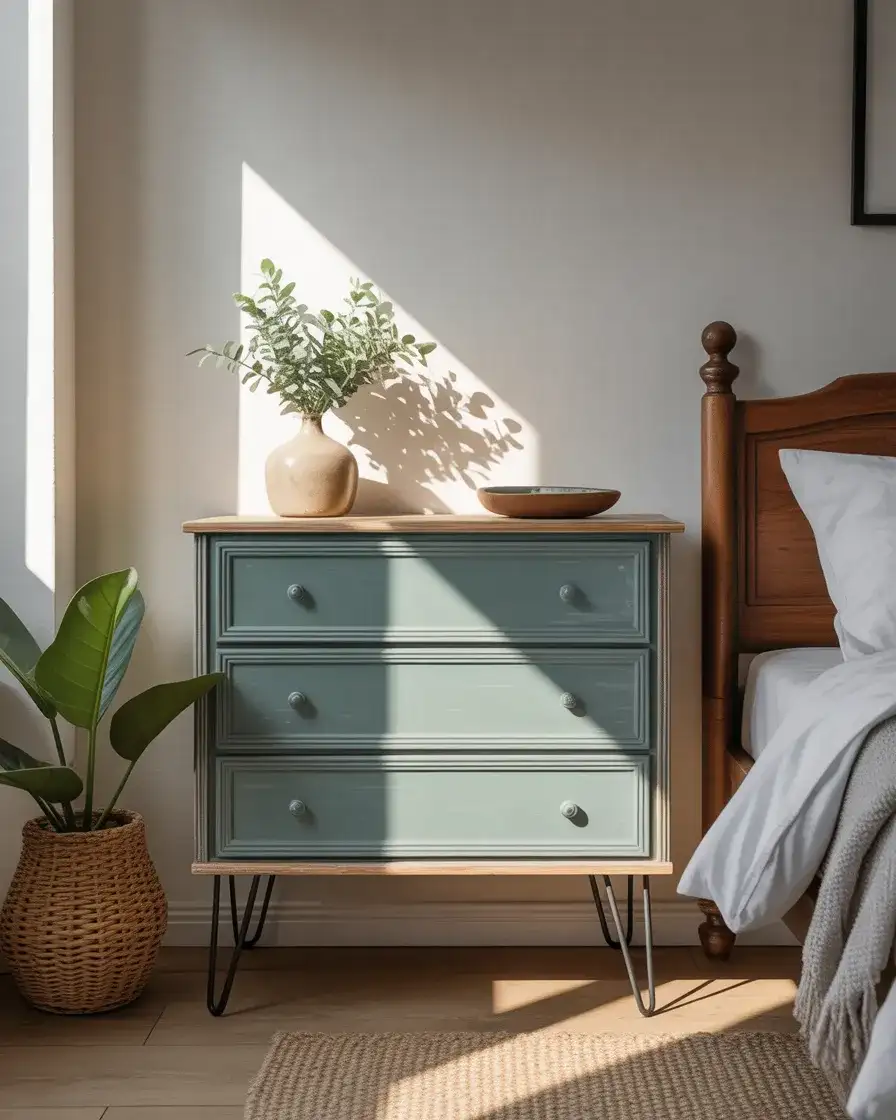
Furniture projects are having a serious renaissance. With a can of chalk paint, a sheet of contact paper, or a new set of legs from Hairpin Legs Co., a craigslist dresser or a yard sale side table can become something genuinely worth showing off. This isn’t about hiding the budget—it’s about making something yours in a way that mass-produced furniture simply can’t deliver. For a minimalist home especially, one beautifully refinished statement piece carries more visual weight than an entire room of new-but-ordinary furniture.
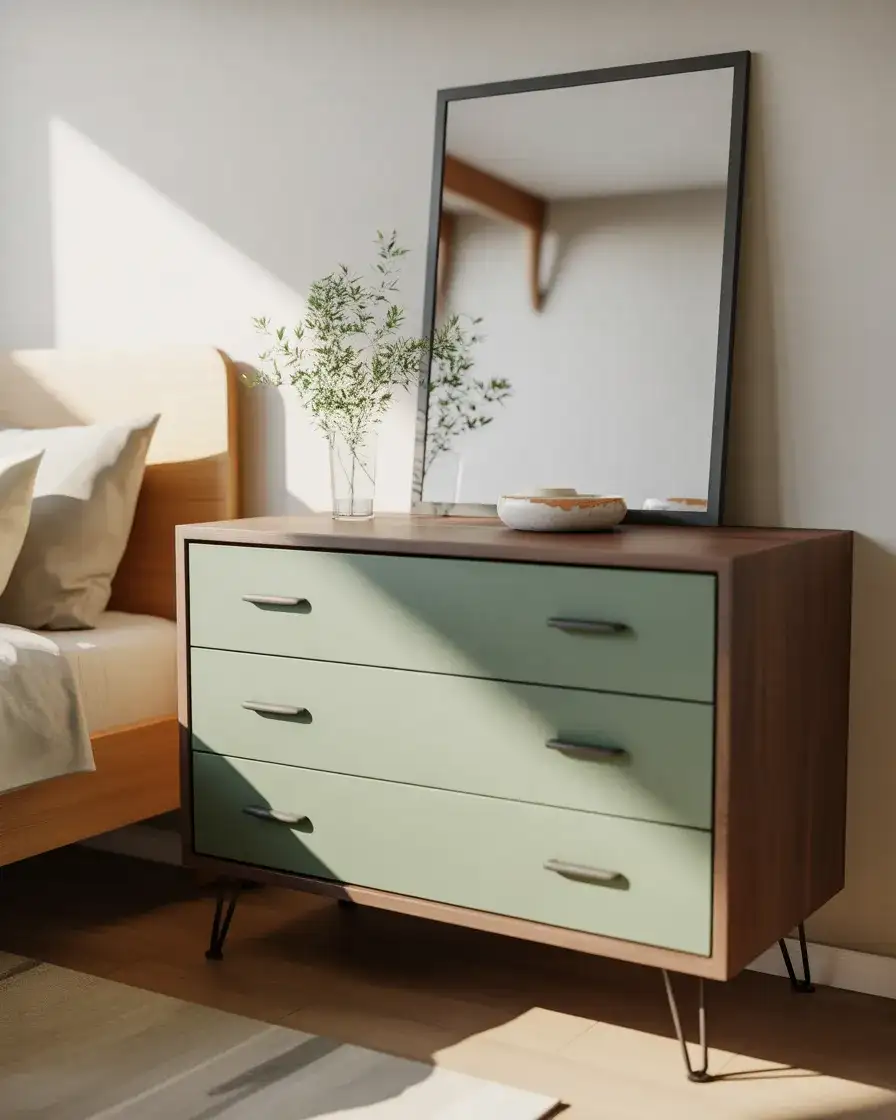
A can of Annie Sloan chalk paint runs about $35 and can cover multiple pieces. The transformation is almost always dramatic—a $12 Facebook Marketplace nightstand painted in a rich, moody color with new hardware regularly goes viral because the result looks far more expensive than the inputs justify. The one thing to do before starting any furniture project is sand and prime properly; skipping this step is the number one reason DIY furniture projects peel or look unfinished within months.
12. Fake Luxury with Strategic Lighting Upgrades
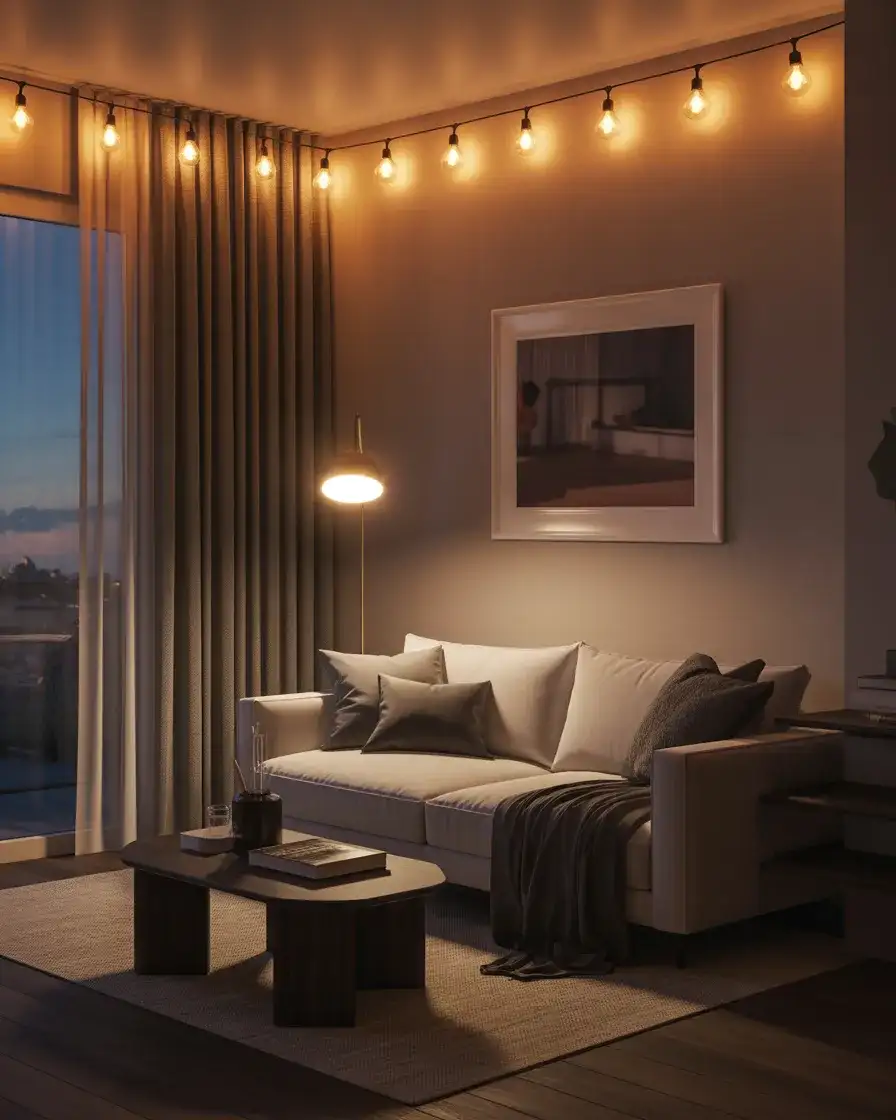
Nothing separates a truly great-looking apartment from a mediocre one faster than lighting. Luxury-feeling rooms almost always have layered lighting—ambient, task, and accent—rather than relying on a single overhead fixture. The good news is that achieving this doesn’t require an electrician or a big budget. Plug-in sconces (no wiring needed), thrifted floor lamps, and string lights used architecturally to outline a ceiling edge or a window frame can completely reshape how a room feels after dark.
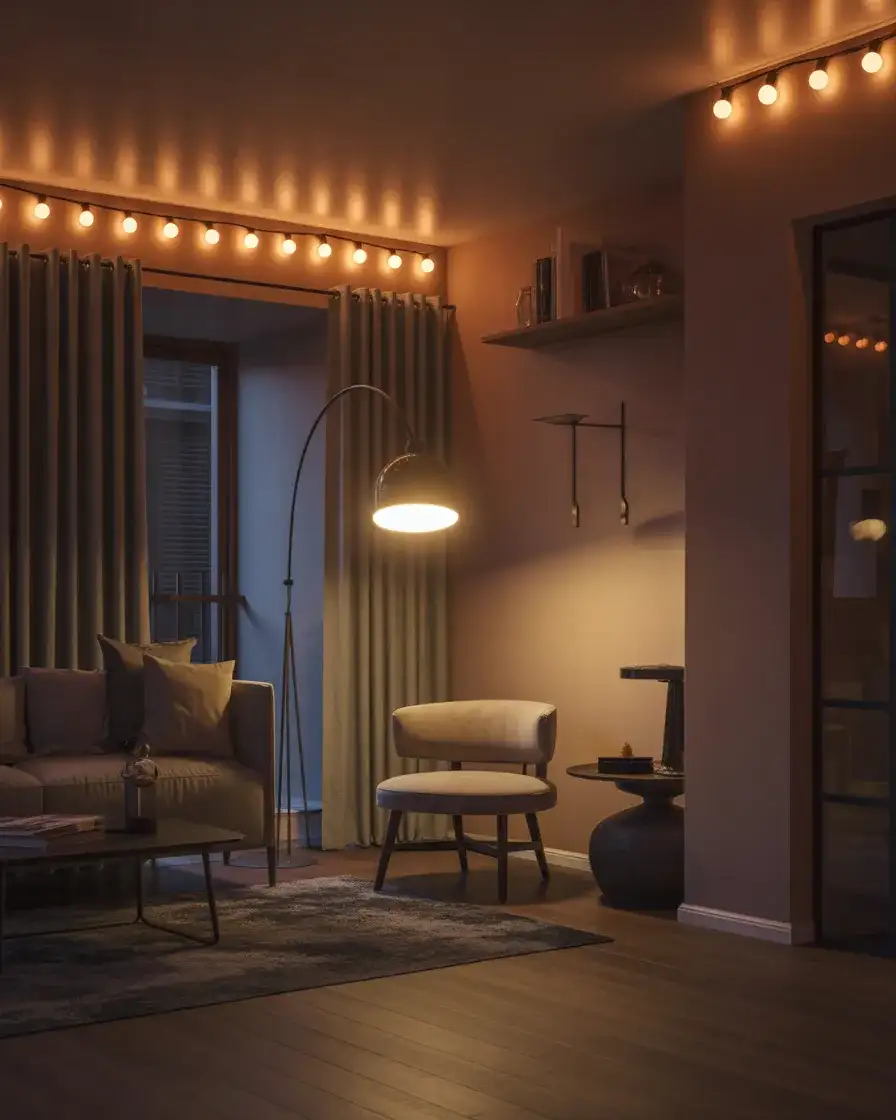
Swap overhead fluorescent or cool-white bulbs for warm-white LEDs (2700K is the sweet spot), and the transformation is immediate and costs about $8. Adding a dimmer switch—which plugs in and requires no electrical work for most floor and table lamps—is another $15 that punches well above its weight. Interior designers consistently cite lighting as the single most transformative and most underutilized tool in the budget decorator’s kit. Once you start seeing apartments through the lens of their lighting quality, it’s impossible to unsee.
13. Design a Minimalist Living Room Around One Statement Piece
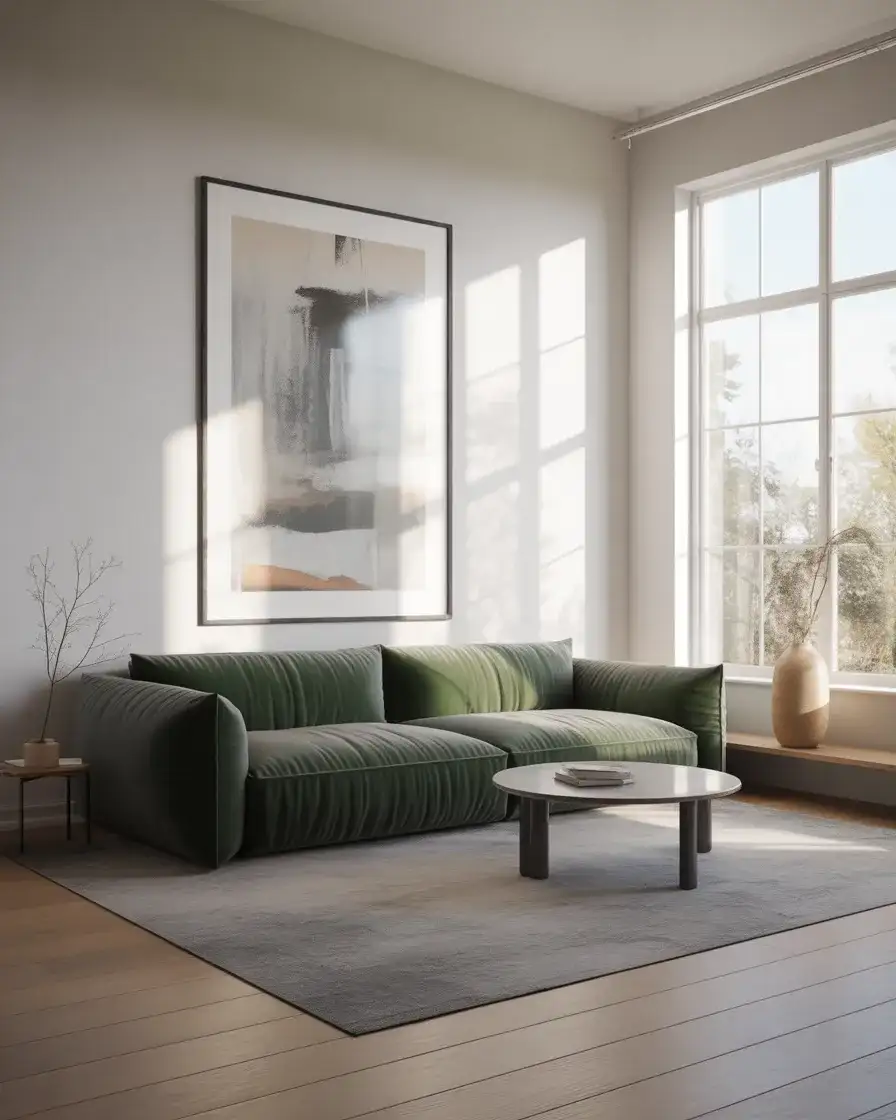
The minimalist living room concept that’s dominated design conversation for years is really about restraint—and in 2026, Americans are embracing it not just aesthetically but philosophically. The approach that works for small spaces: choose one genuinely beautiful or interesting anchor piece—a sofa in a rich velvet, a sculptural coffee table, or an oversized art print—and let everything else serve it. Living room ideas for small spaces consistently show that editing down to one hero piece makes the room look bigger, calmer, and more intentional.
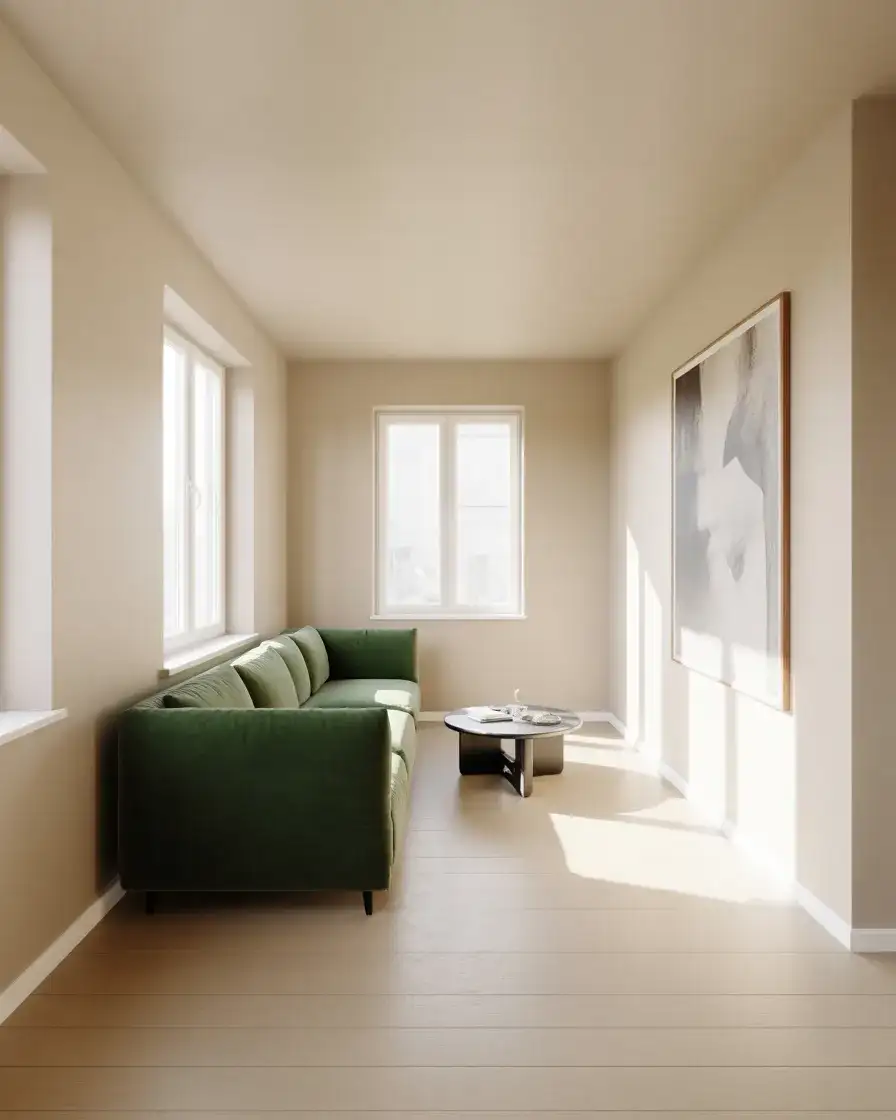
From a practical standpoint, designing around one statement piece is actually easier on the budget than trying to furnish a room all at once. You buy the one anchor item you love—even if it’s a splurge—and then source everything else inexpensively, since the supporting pieces don’t need to impress on their own. A $400 sofa surrounded by thrifted and secondhand supporting pieces reads far better in real life than a matching set of mediocre furniture from a big-box store.
14. Use Contact Paper for a Countertop or Shelf Makeover
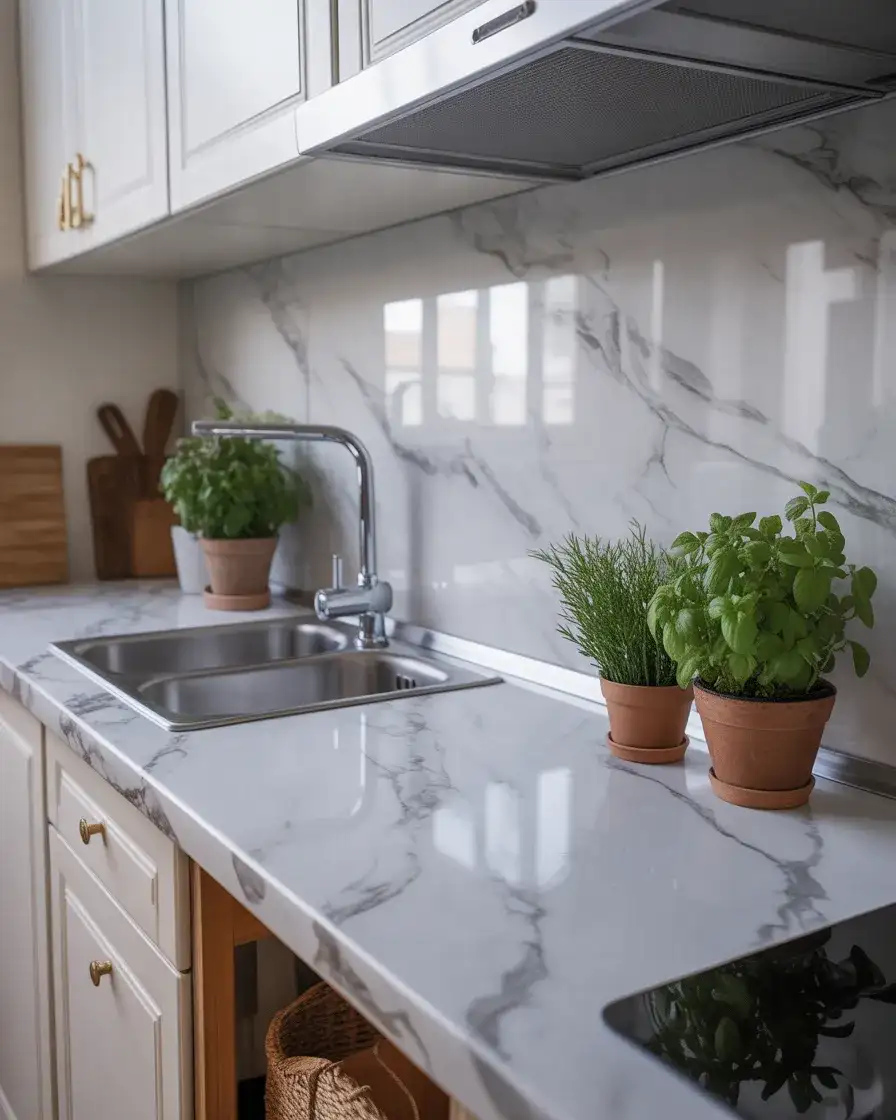
Contact paper is a secret weapon in the rental decorator’s toolkit that’s been significantly underrated—until recently. Modern contact papers convincingly mimic marble, travertine, slate, and wood grain, and the application is easier than ever with newer adhesive formulas that don’t bubble or peel at corners. Covering ugly laminate countertops in a kitchen or bathroom costs less than $20 and can be removed cleanly when moving out. It’s the kind of fix that looks bespoke in photos and in person.
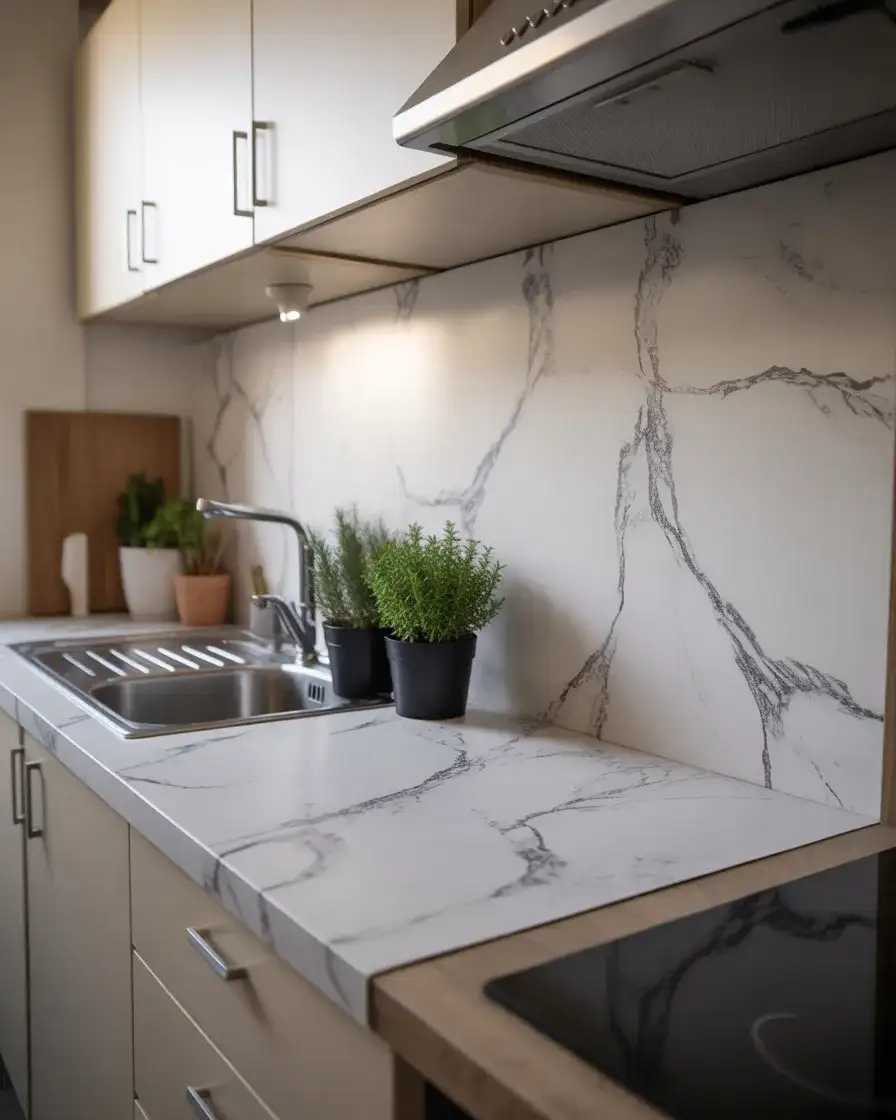
The technique that makes or breaks the final result is surface prep. Wipe the surface completely with rubbing alcohol to remove any oils, let it dry fully, then apply the contact paper slowly from one end, smoothing out bubbles with a credit card as you go. Cutting around edges with a sharp craft knife rather than scissors makes the finish look professional. Brands like d-c-fix and Con-Tact have become cult favorites in the renter decorating community for their quality and realistic textures.
15. Curate a Cozy Reading Nook in a Corner or Alcove
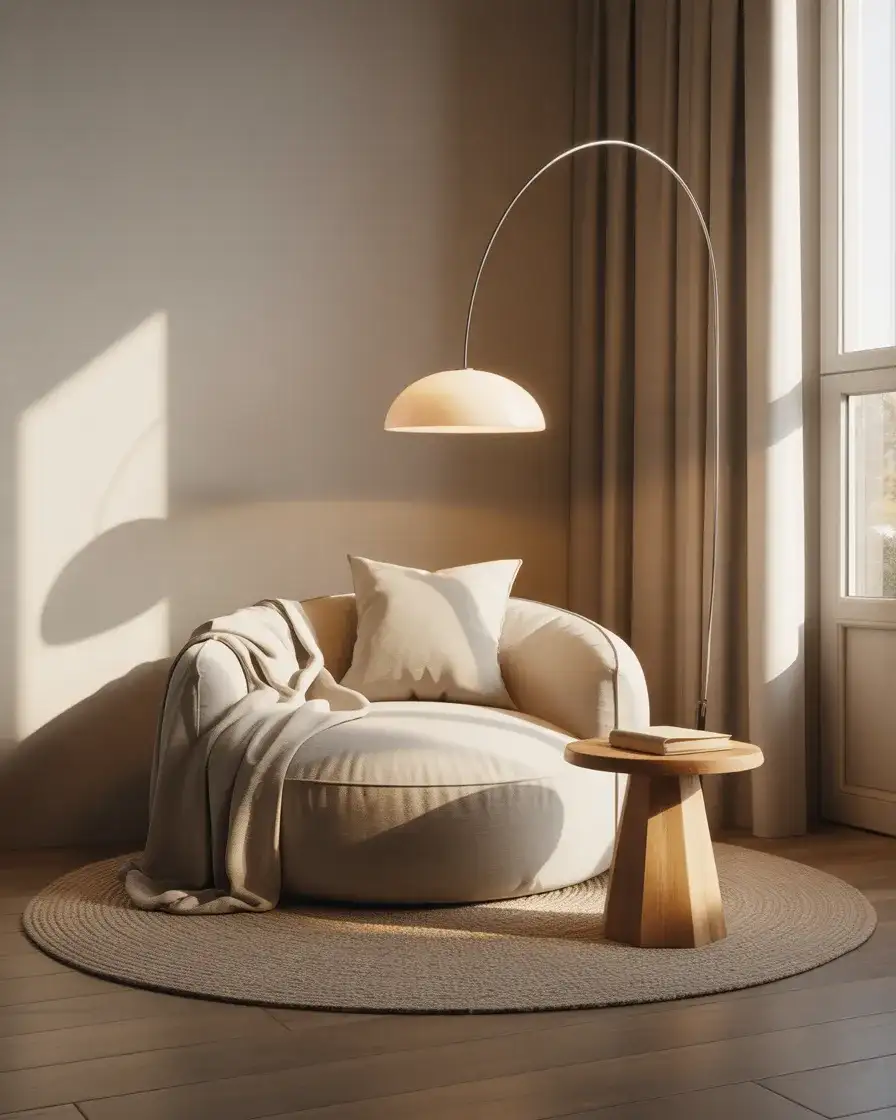
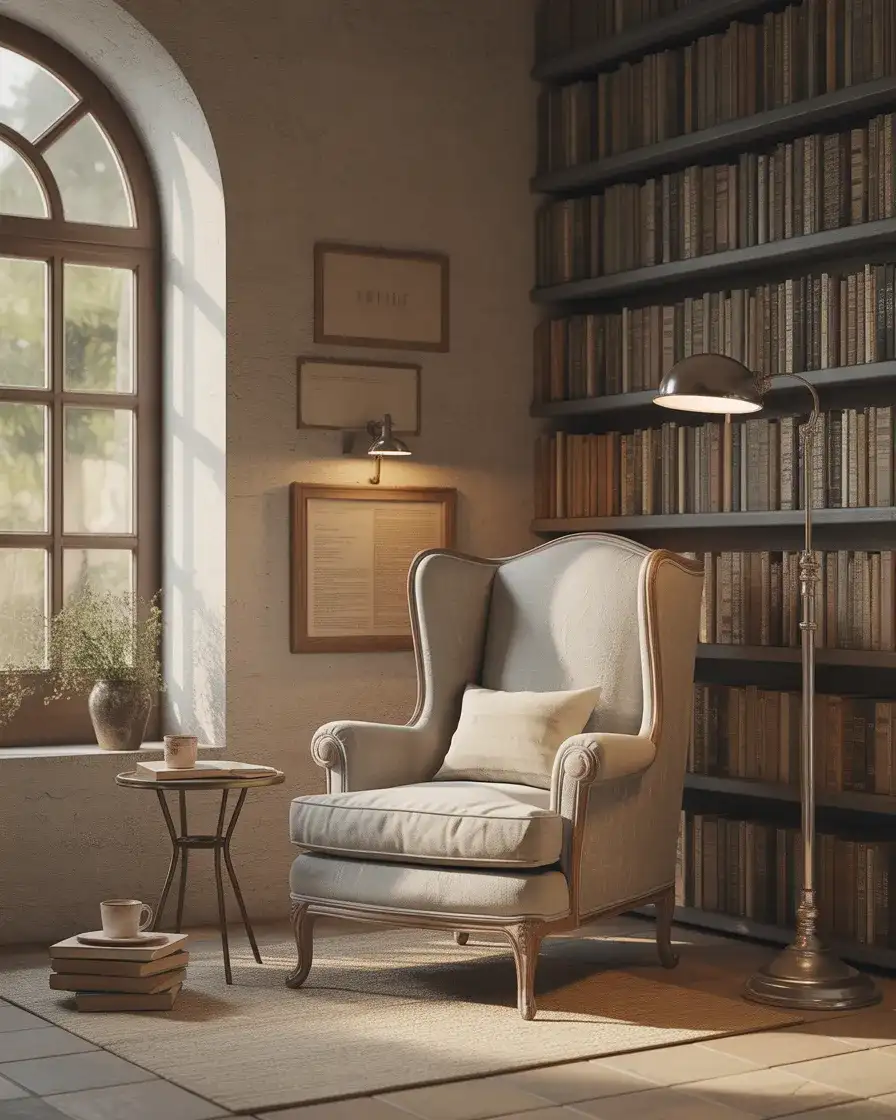
A reading nook is one of those ideas that sounds indulgent but is actually one of the most practical things you can create in a small apartment—it designates a specific purpose for an otherwise dead corner. The minimalist cozy version that’s performing best on Pinterest right now is a low chair or floor cushion, a small side table or stack of books as a makeshift surface, one good lamp, and a soft throw. That’s it. The restraint is the point. In a modern apartment, a reading nook carved from a corner adds warmth without competing with the clean lines of the rest of the space.
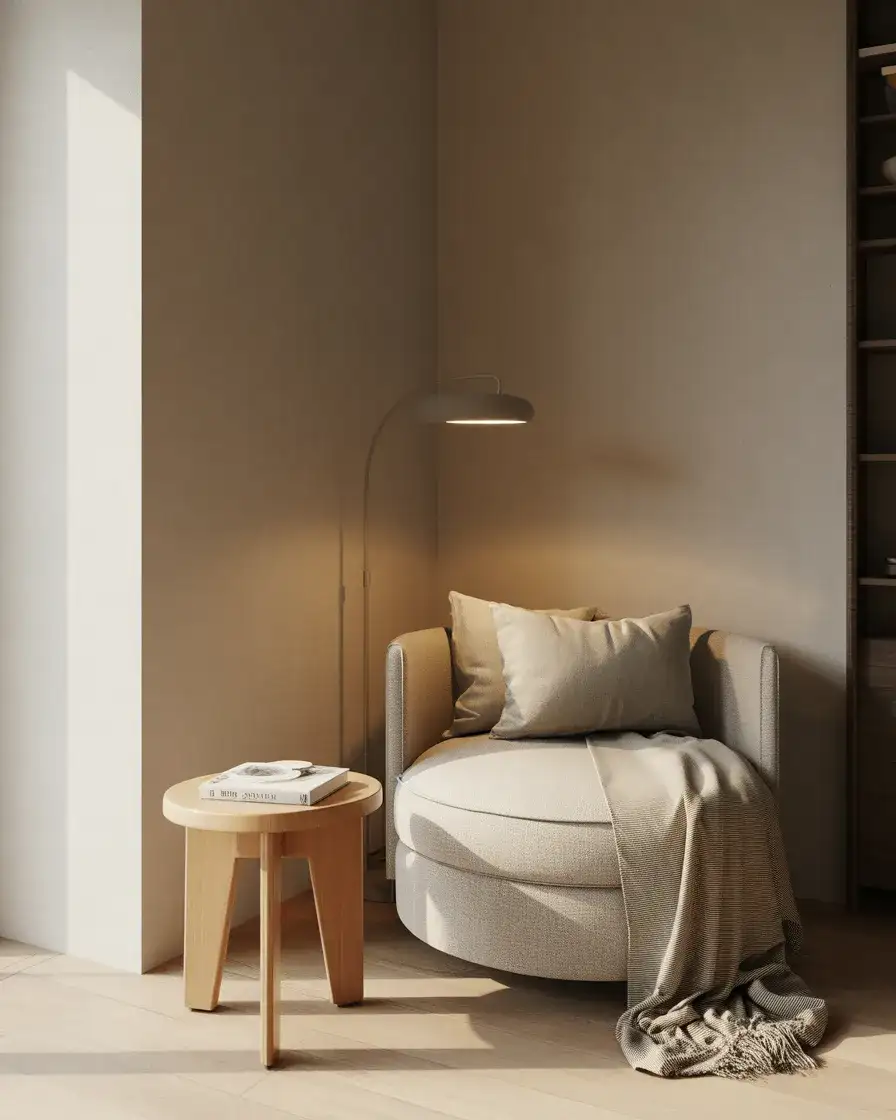
Many Americans living in apartments report that creating a designated reading nook—even a minimal one—fundamentally changed their relationship to their home. It gave the apartment a sense of intention it didn’t have before. The whole setup can be assembled for $60 to $100: a floor cushion from Target, a secondhand lamp, and a small basket for books. The nook also works brilliantly as a homework zone for college students or a meditation corner for anyone who needs a mental gear-shift space in a single-room living situation.
16. Organize Small Spaces with Vertical Storage Systems
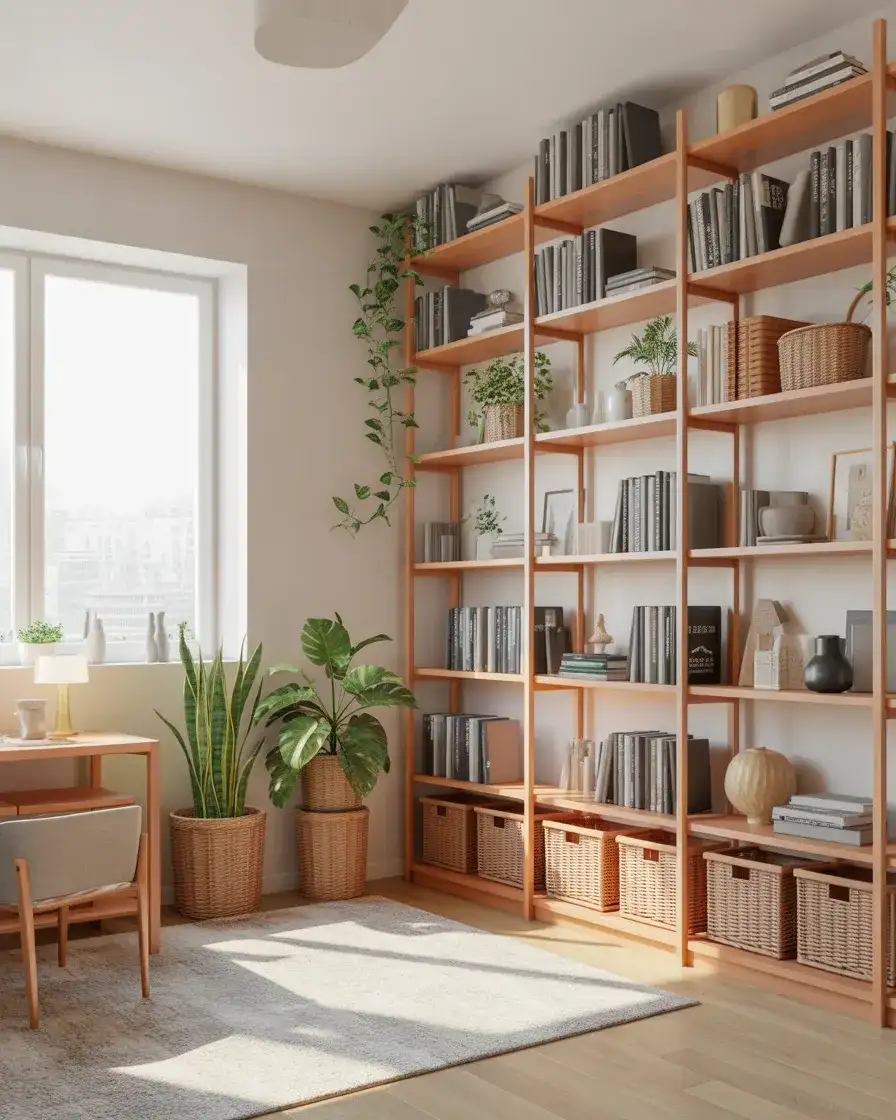
When floor space is limited, the only direction to go is up. Small space organization ideas that work with vertical systems—tall bookshelves, wall-mounted pegboards, floating shelves stacked to the ceiling—consistently outperform horizontal solutions in tight apartments. A floor-to-ceiling KALLAX unit from IKEA or a simple pegboard in the kitchen can absorb an extraordinary amount of clutter while simultaneously looking deliberate and attractive. The modern organizing mindset of 2026 treats every vertical surface as potential storage real estate.
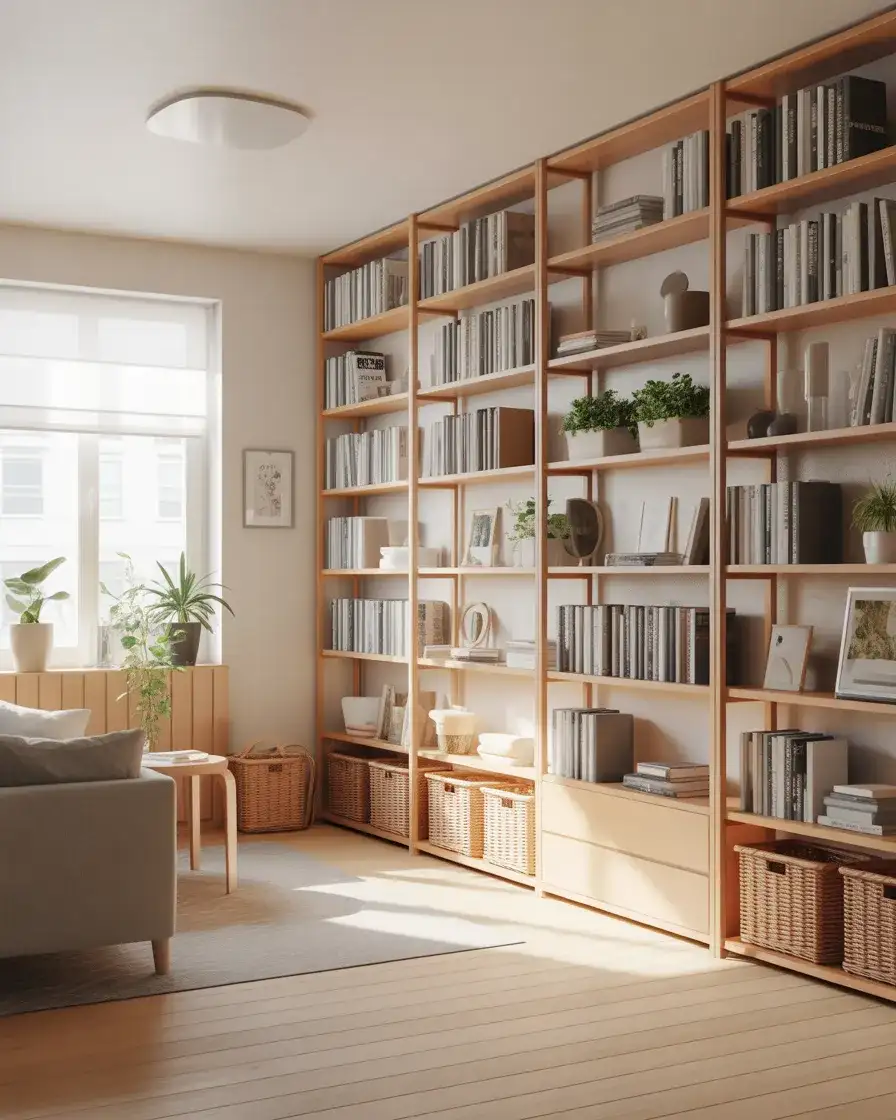
Expert organizers note that the single biggest mistake in small-space storage is going wide instead of tall. A short, wide bookcase uses the same floor footprint as a tall one but stores a fraction of the volume. When shopping for storage furniture, always check the maximum height first and choose the tallest option that fits under the ceiling. Command strips and tension rods add even more vertical storage capacity with zero wall damage—ideal for renters who can’t drill holes in every room.
17. Add a Vintage Mirror to Expand a Small Room
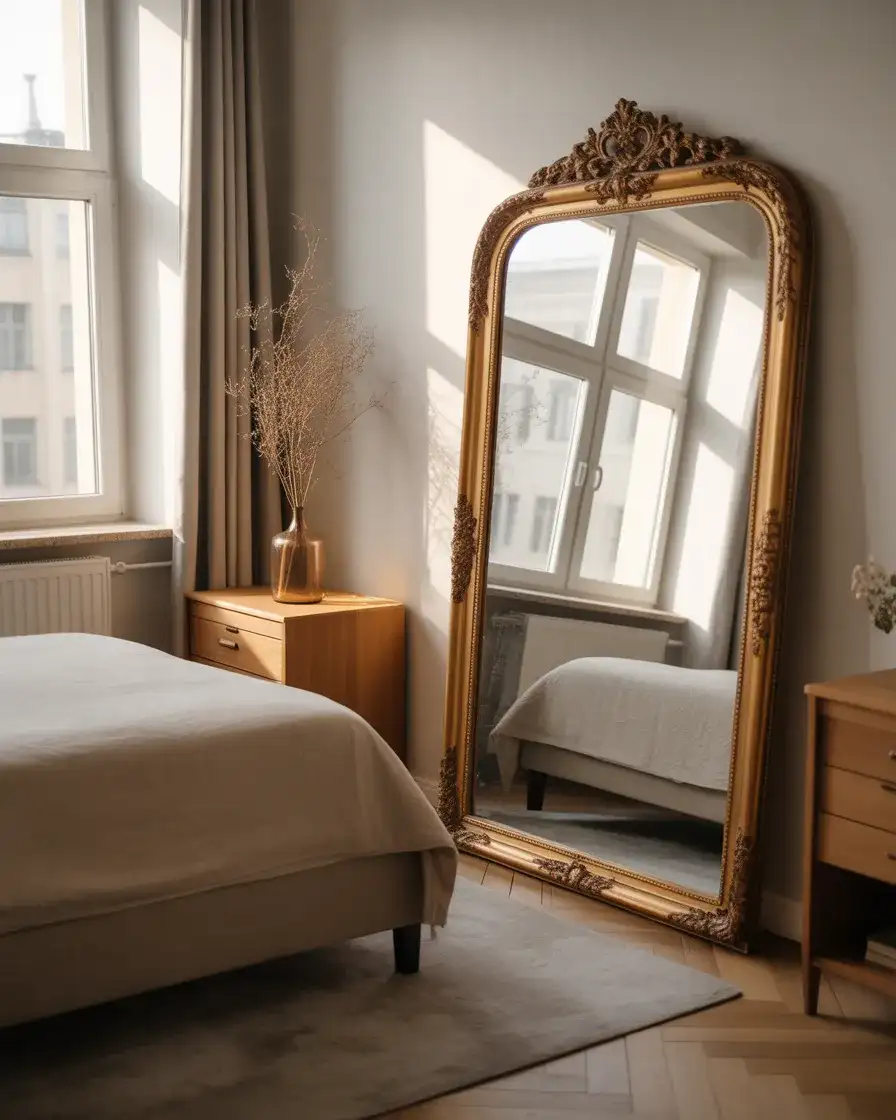
Mirrors are one of the oldest interior design tricks in the book, but the vintage mirror approach currently circulating on Pinterest takes it a step further. Rather than a generic frameless rectangle, the goal is an interesting frame—ornate gilded, sunburst rattan, or simple arched—that functions as both a visual expander and a piece of art in its own right. For couples decorating a shared bedroom or entryway, a beautiful vintage mirror is often the one piece that both partners agree looks great, which makes it a reliable starting point for a whole room’s aesthetic.
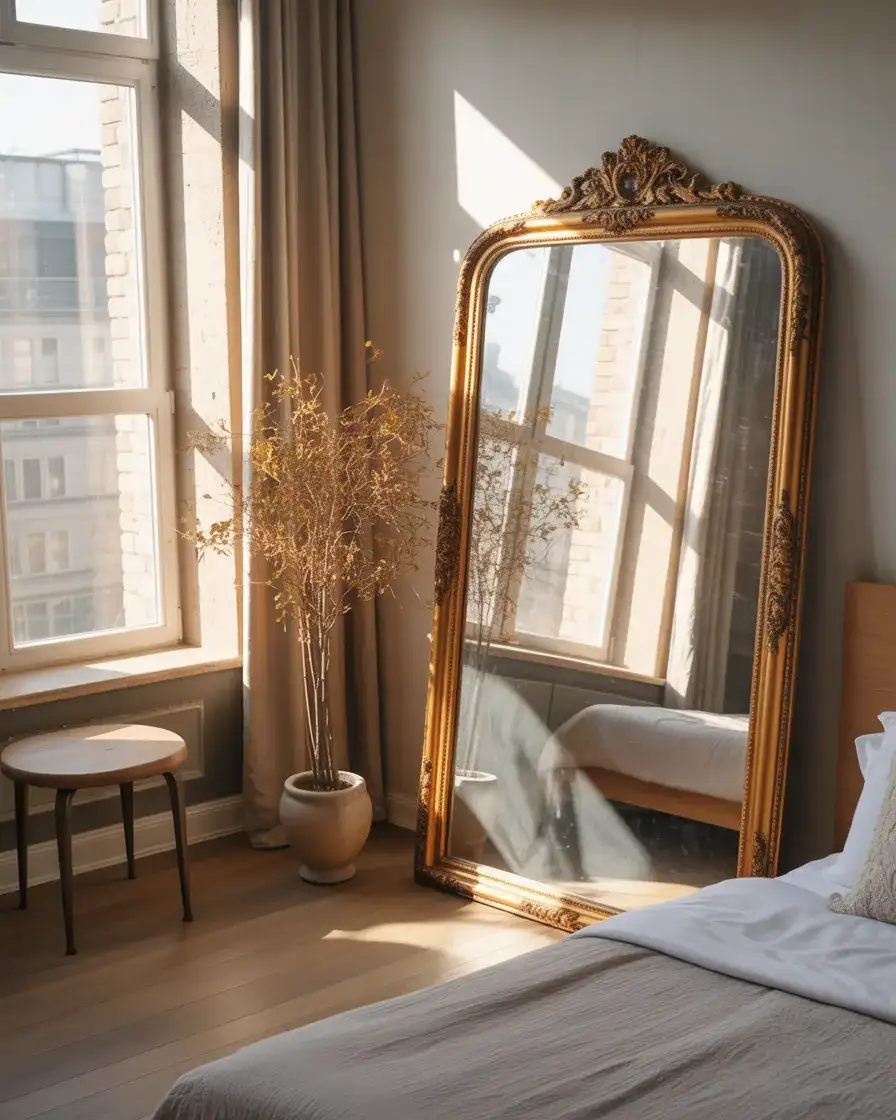
Leaning a large mirror against the wall rather than hanging it is a renter-friendly move that actually looks more intentional than hanging—it’s the Parisian apartment approach that interior designers have long favored. Thrift stores, antique malls, and estate sales regularly yield mirrors with exceptional frames for $15 to $50. The frame can always be painted to suit your palette, and the underlying mirror quality is typically better than anything comparable at retail. Position the mirror to reflect a light source or a view, not a blank wall—that’s what maximizes the room-expanding effect.
18. Create an Inviting Entryway on Zero Square Footage
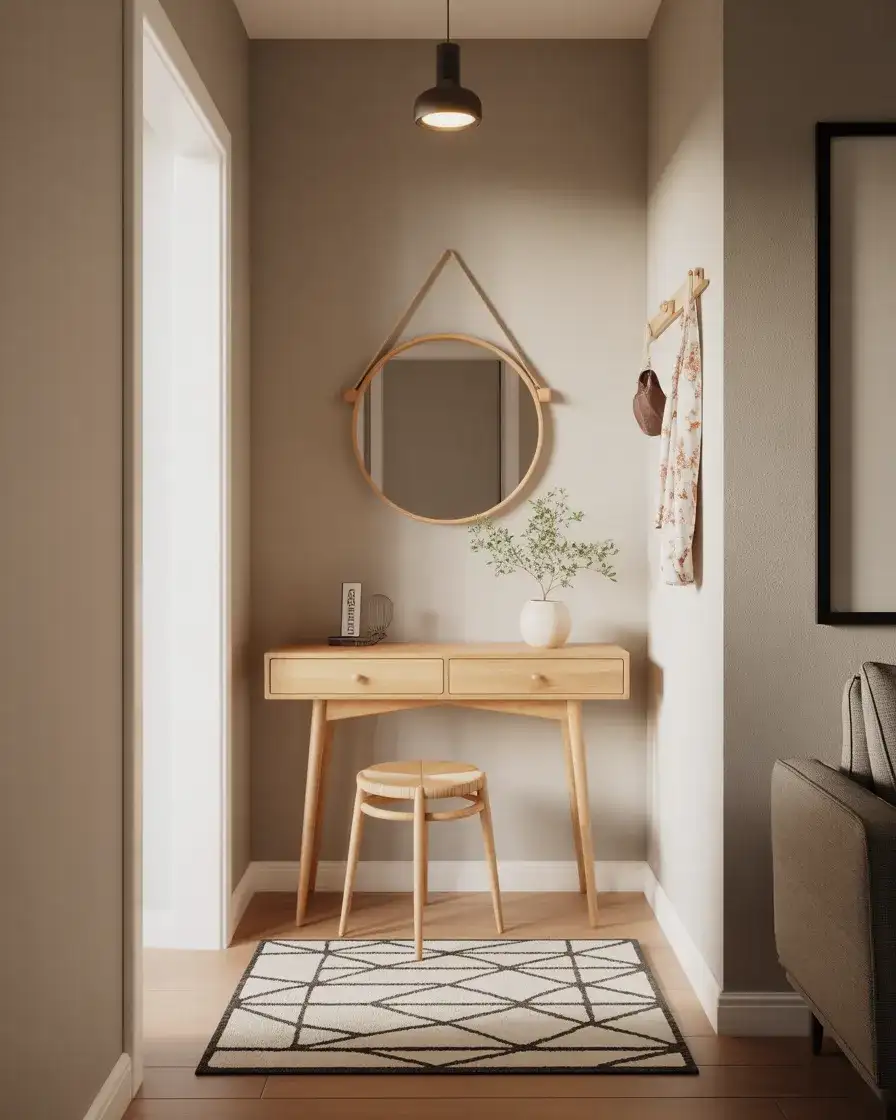
Most apartments don’t have a proper entryway—there’s just a door that opens directly into the living room. Creating the feeling of an entry zone is one of the most impactful things you can do for daily life and for how guests experience your home. A small console table or a narrow floating shelf, a mirror, a hook for keys and bags, and a small rug to delineate the “entry” area is all it takes. This is a classic rent-friendly decor idea that works just as well in a tiny studio as in a larger apartment.
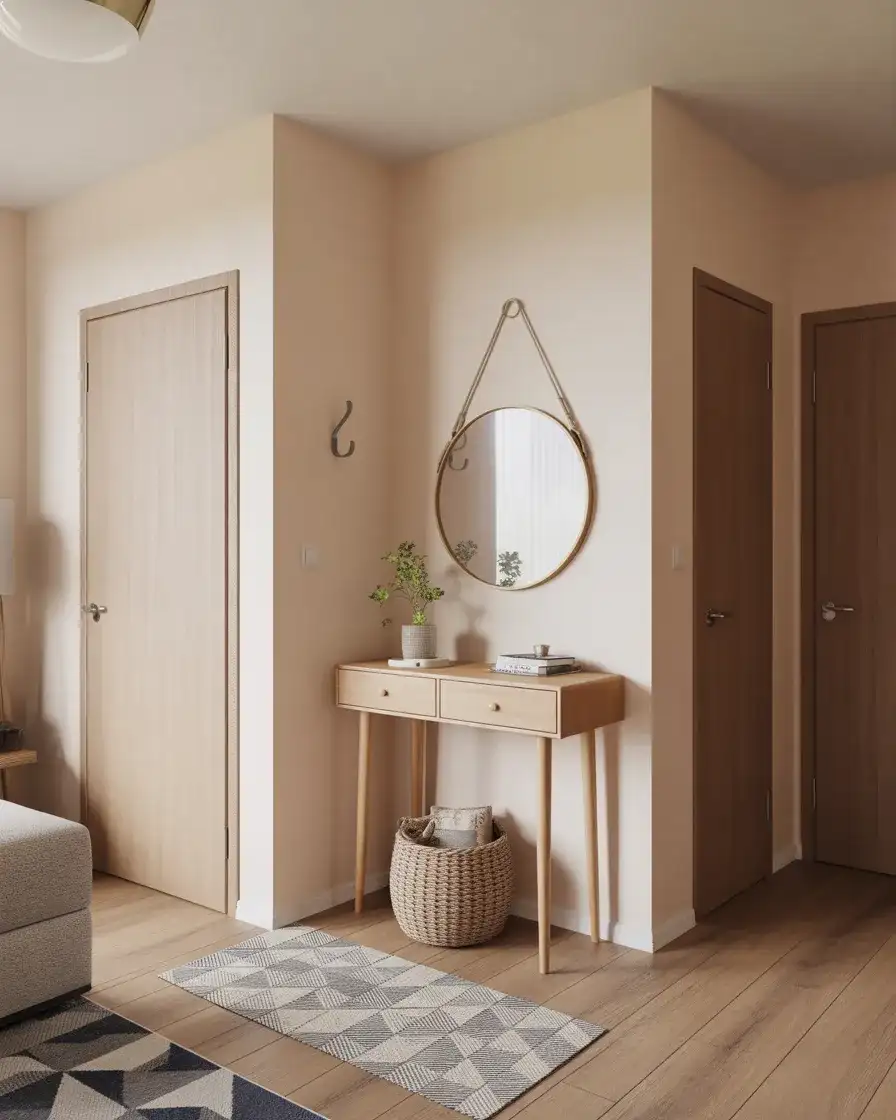
The functional value of a defined entry zone goes beyond aesthetics. Having a dedicated hook and surface means keys, bags, and mail get deposited in one place every day—which is genuinely life-improving in the small-apartment context where things disappear into the clutter. The whole setup can be assembled for under $80 using a thrifted console table or a wall-mounted floating shelf from IKEA, a $15 entryway rug, and a $10 adhesive hook set. The return on investment—both aesthetic and functional—is enormous.
19. Style a Bed Like a Designer with Budget Bedding Layers
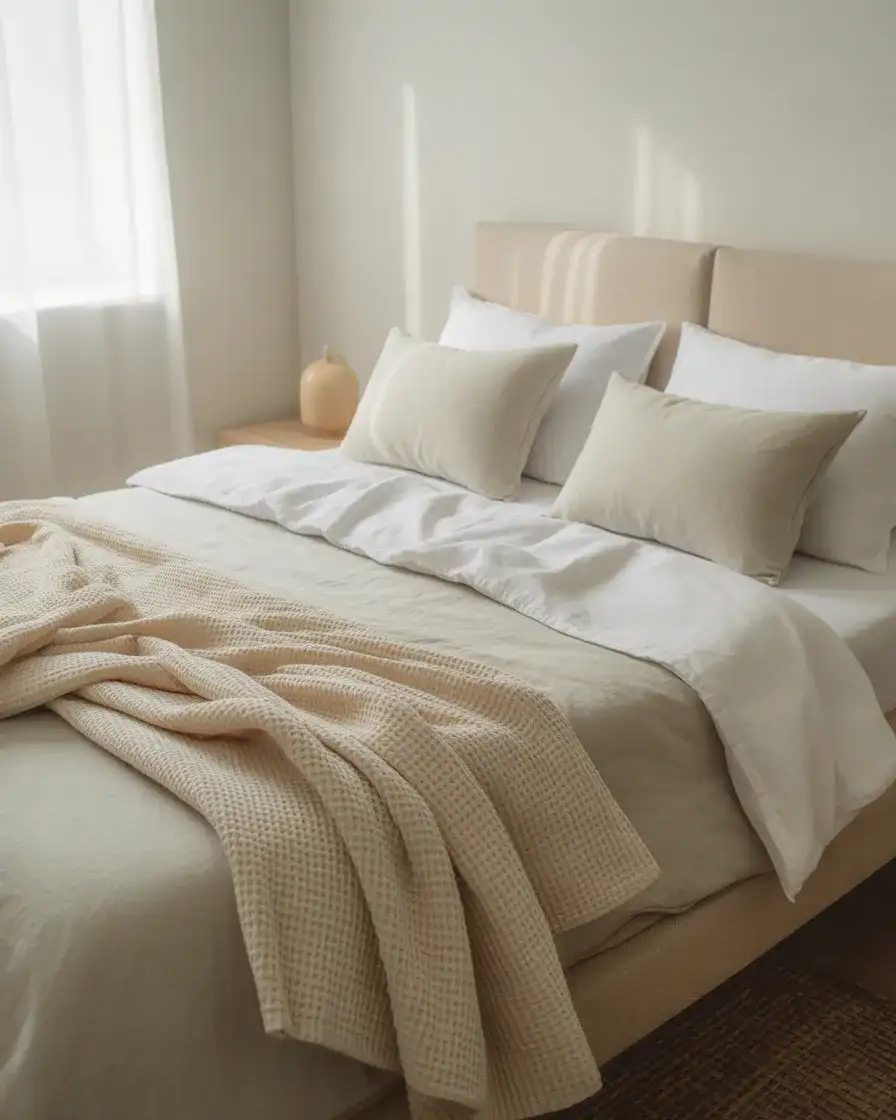
The bed is the largest piece of furniture in most bedrooms and the single most photographed element of any home on Pinterest. Getting it right—especially on a tight budget—is entirely doable with the right layering strategy. Start with white or off-white fitted sheets (always wash them before using—this alone improves the visual texture dramatically), add a linen duvet cover in a soft neutral, then layer a waffle-weave blanket at the foot. For a minimalist cozy look, two good Euro shams in the same fabric as the duvet are enough to look luxurious without overcrowding the pillow arrangement.
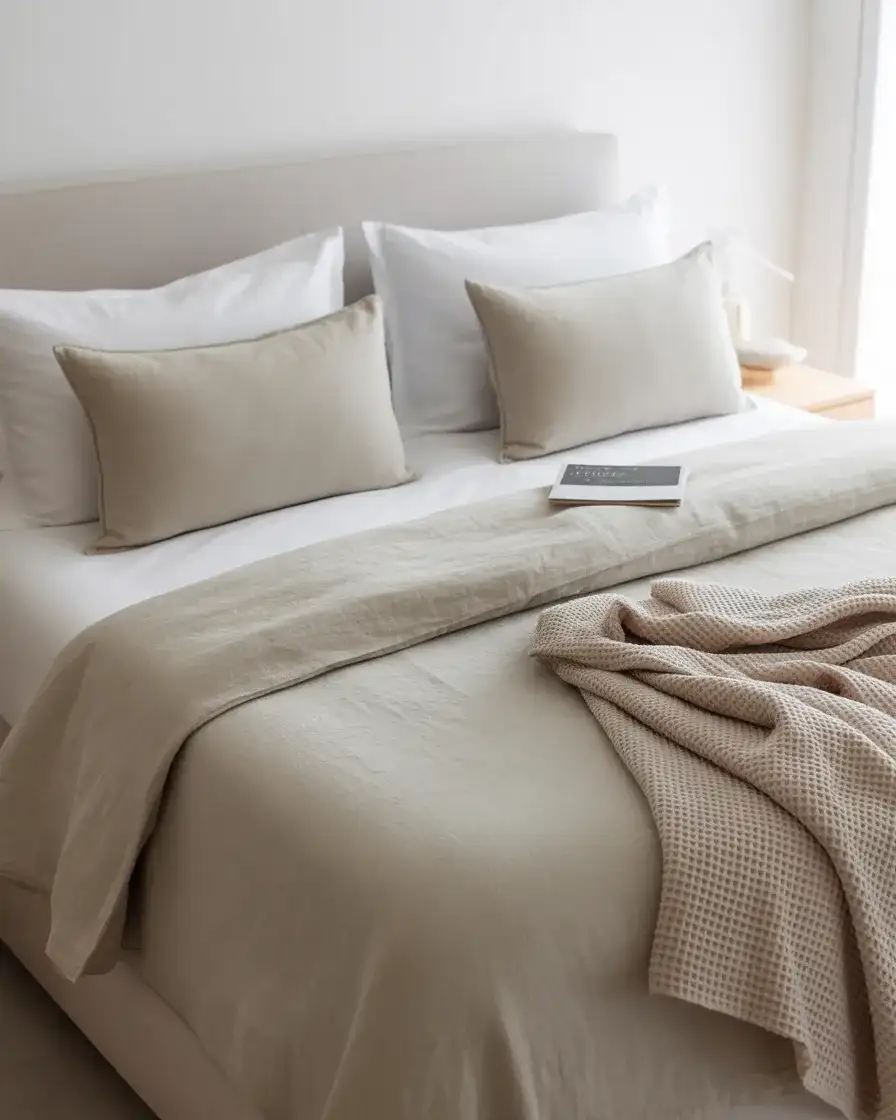
IKEA’s DVALA sheets and Brooklinen’s Luxe Core set are consistently recommended by budget-conscious design enthusiasts for quality that exceeds their price point. The real secret to a great-looking bed, though, isn’t the specific brand—it’s the ironing. Taking five minutes to run a hot iron or a fabric steamer over the top layer of bedding before making it creates the smooth, pressed appearance that signals care and intention. It’s a micro-action with an outsized visual payoff and costs nothing beyond a few minutes of time.
20. Build a Home Office Corner that Doesn’t Look Like an Office
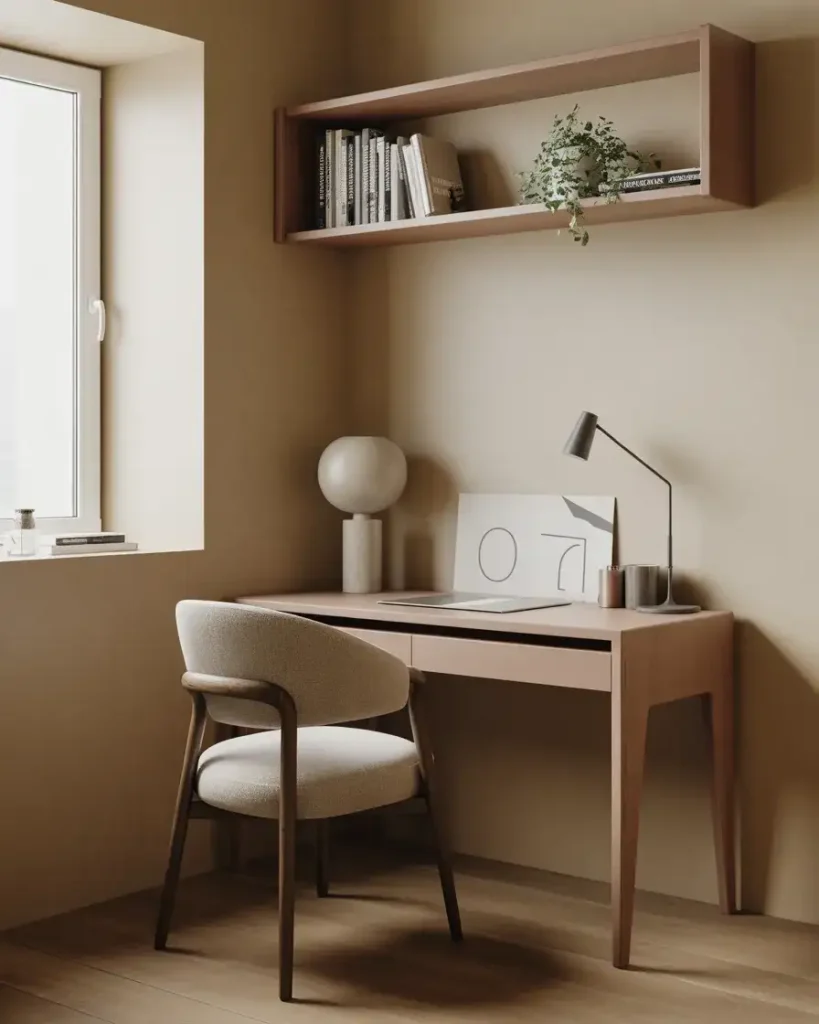
Working from home in a small studio or one-bedroom apartment means the desk zone is always visible—and that matters. The shift happening in American apartments is away from the utilitarian “setup a folding table” approach and toward a desk corner that genuinely looks good even when it’s in the middle of the living room. Small space organization ideas for home offices tend to focus on concealment: a bulletin board that doubles as art, cable management that hides the tech chaos, and desk accessories that match the room’s palette rather than the office supply store’s.
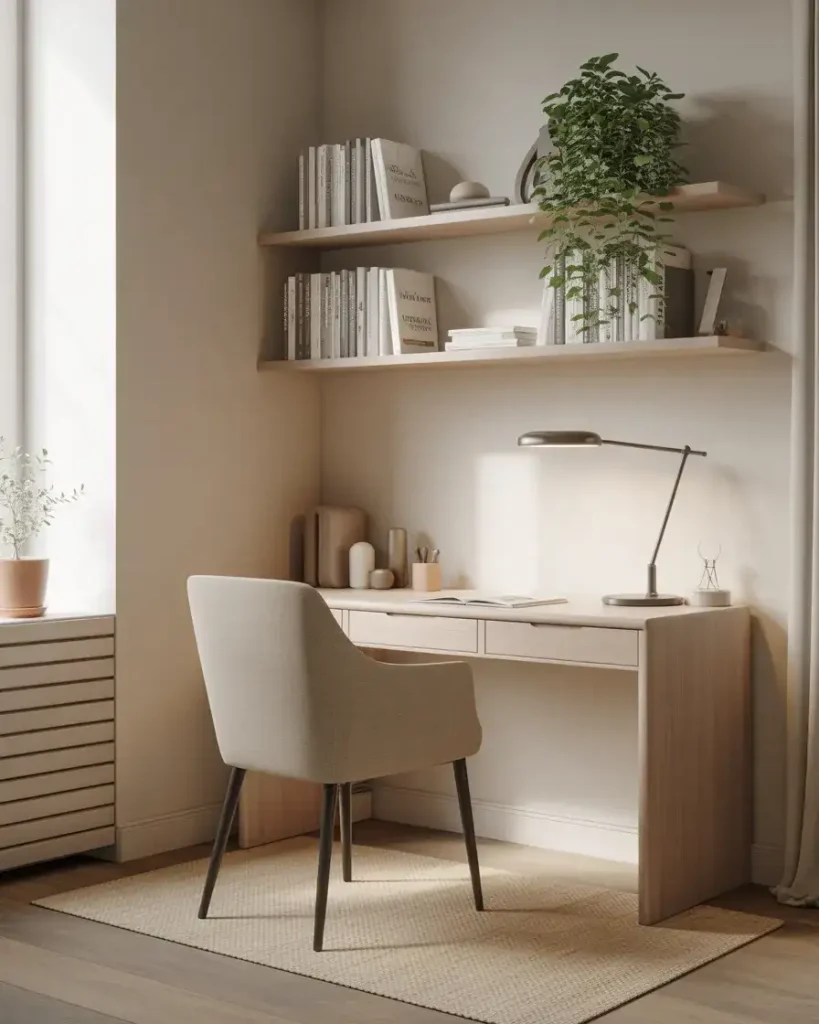
A folding or wall-mounted desk that closes flat when not in use is the ultimate small-apartment office solution—visible only when in use, invisible the rest of the time. The NORBERG wall-mounted table from IKEA at $40 has become a cult object for this exact reason. Pairing it with an attractive, lightweight chair that can be moved around the apartment means the desk area is genuinely multi-functional. When the workday is done, putting everything away behind closed surfaces gives the room back to its living function—a boundary that’s increasingly important for mental health in small-space living.
21. Choose Multipurpose Furniture for Maximum Flexibility
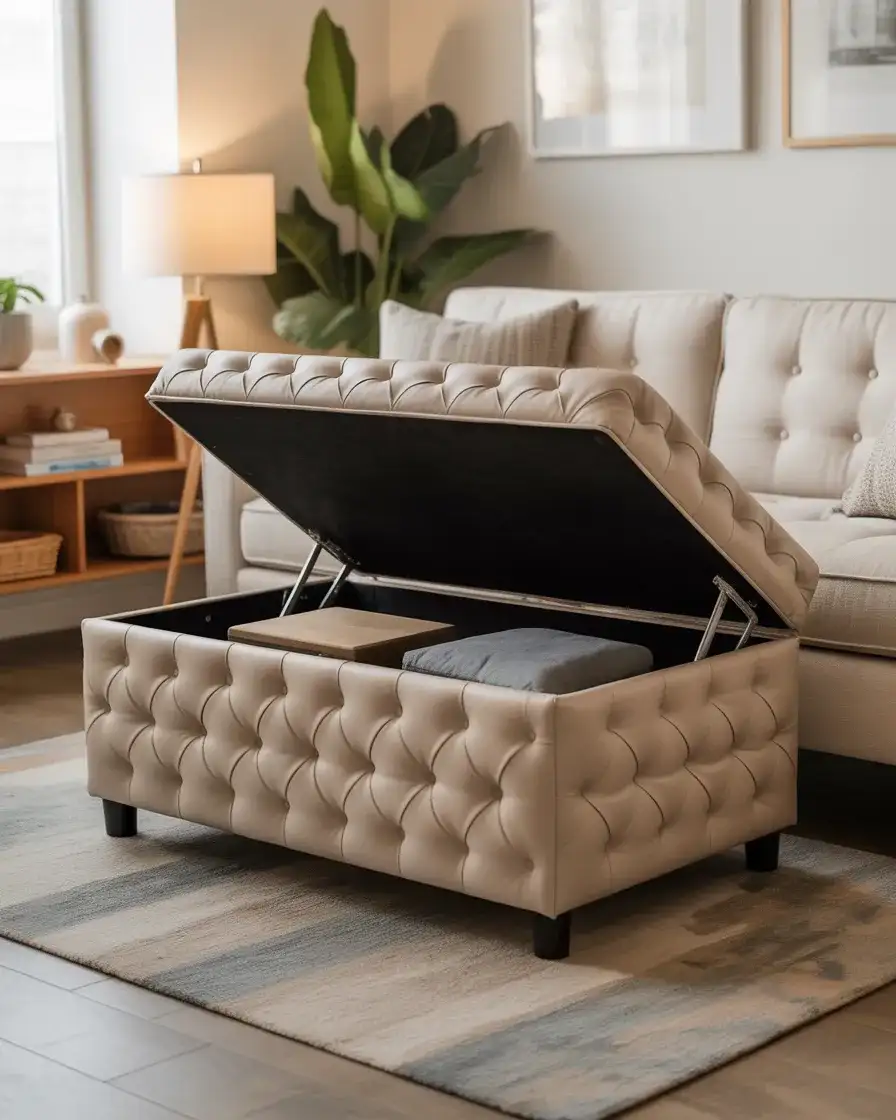
The smartest furniture investment in any apartment—but especially a rental or studio—is a piece that does at least two things at once. An ottoman that opens for storage and doubles as a coffee table. A daybed that works as a sofa by day and a guest bed by night. A dining table that folds against the wall when not in use. This kind of design thinking, which has long been standard in European small-space living, is now firmly embedded in American apartment culture, driven partly by necessity and partly by a growing appreciation for intentional, uncluttered living.
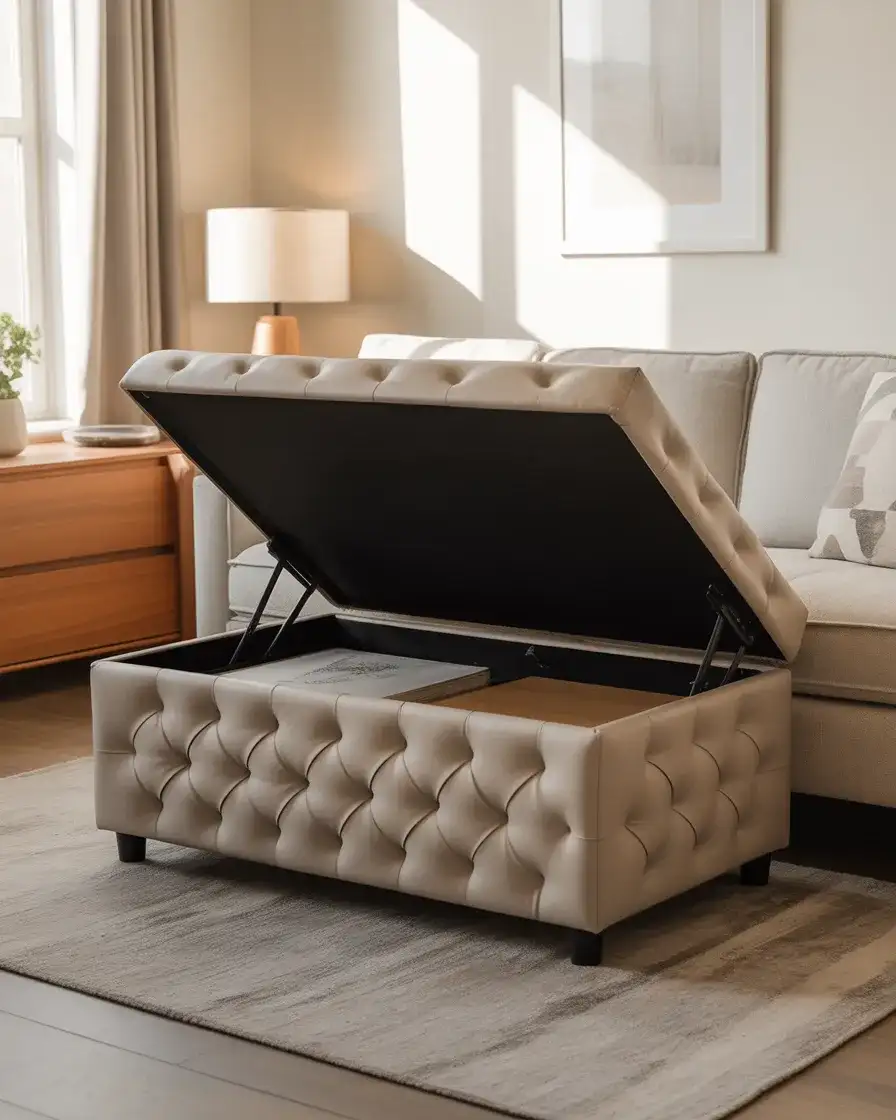
When evaluating any piece of furniture for a small apartment, the question to ask is: what is this doing when I’m not using it for its primary purpose?” A beautiful basket on the floor is doing double duty as a side table and a laundry hamper. A storage bench at the foot of the bed stores linens and provides seating. This framework—always asking what else a piece does—fundamentally changes the quality of purchasing decisions and prevents the trap of filling a small space with furniture that only serves one purpose.
22. Paint an Accent Wall with a Free or Low-Cost Sampling Strategy
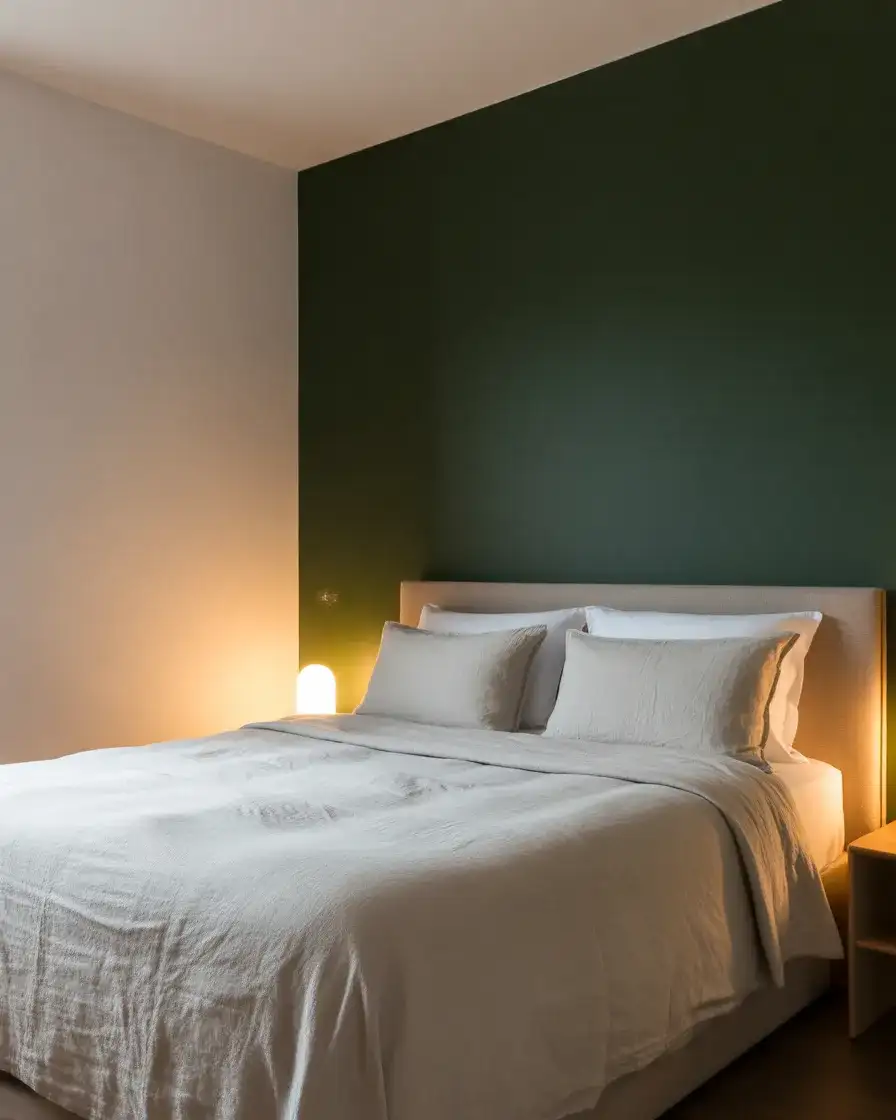
For apartments where the landlord allows painting—which is more common than people assume, especially with a written agreement to repaint before moving out—an accent wall is one of the highest-impact, lowest-cost decorating moves available. Deep, moody tones that function as a backdrop for a minimalist living room or minimalist bedroom: charcoal, forest green, terracotta, and dusty rose. A single wall in the right color can completely anchor a room and make everything in front of it look more deliberate and designed.
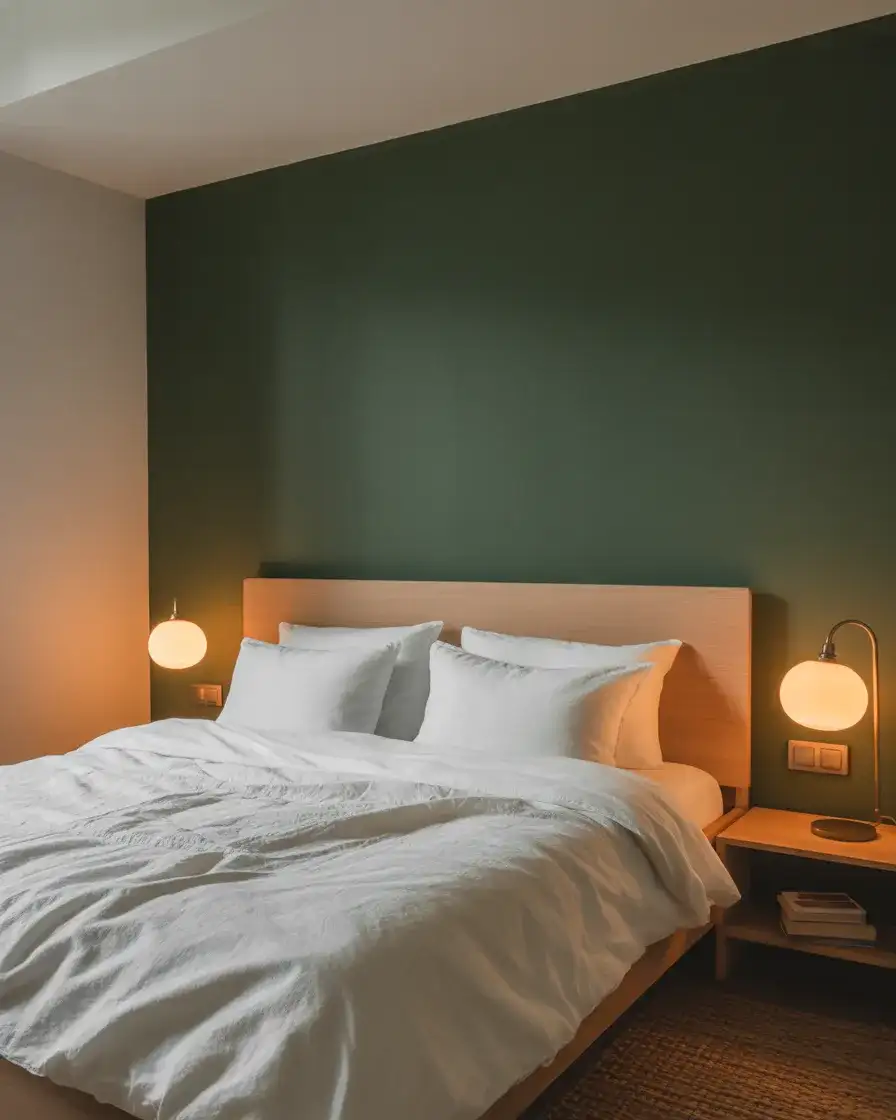
The sample-first strategy is non-negotiable for anyone who’s ever painted a wall based on a small chip and ended up with something entirely different than expected. Brands like Clare and Backdrop sell $10 sample pots; paint several large swatches directly on the wall and live with them for two to three days, observing how they look in morning light, afternoon sun, and evening lamplight. Color reads completely differently throughout the day, and that $10 sample investment can save you from a $60 paint job you’ll want to undo immediately. One quart of paint covers a standard accent wall and costs under $25 — the total project, including brushes and tape, stays well under $50.
Conclusion
Whether you’re starting fresh in your first apartment, refreshing a rental you’ve lived in for years, or finally committing to making your studio feel like a real home, every single one of these ideas is built around one honest truth: a beautiful space is a product of intention, not budget. The most stunning apartments featured on Pinterest and in design magazines are often decorated on remarkably modest budgets—it’s the thinking behind the choices that makes the difference. If any of these ideas sparked something for you, we’d love to hear about it in the comments. Which ones are you trying first? And what budget-friendly decorating tricks have you discovered that we should know about?