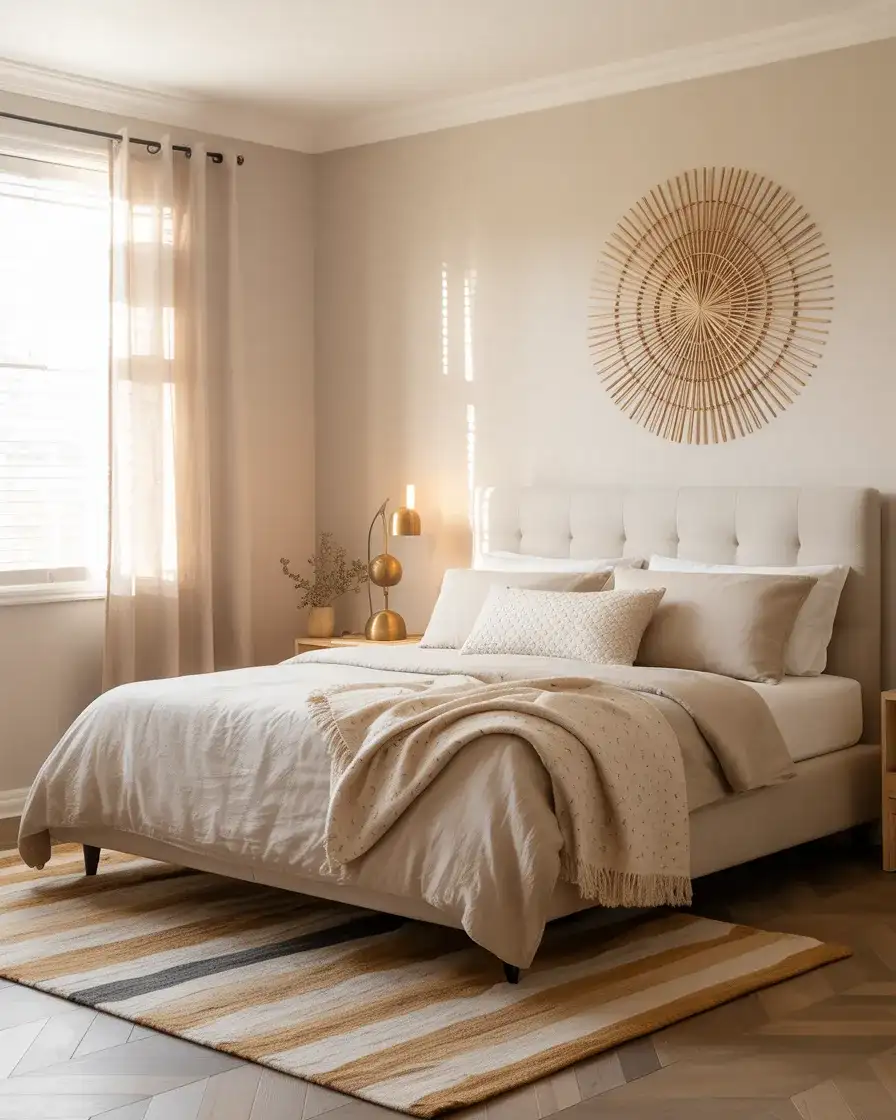
There’s something special about designing a nursery for a baby girl—it’s one of the first spaces you’ll ever create entirely for someone else, and the choices you make will shape her earliest memories. In 2026, nursery design has moved well beyond pale pink walls and cartoon prints. Parents searching Pinterest are craving spaces that feel layered, intentional, and genuinely beautiful—rooms that grow with their daughters and feel as curated as any other space in the home. Whether you’re starting from scratch or refreshing an existing room, this guide covers some of the most inspiring girls’ nursery ideas for the year ahead, from dreamy wallpaper moments to vintage-influenced furniture finds and everything in between.
1. Soft Blush Walls With Warm Ivory Trim
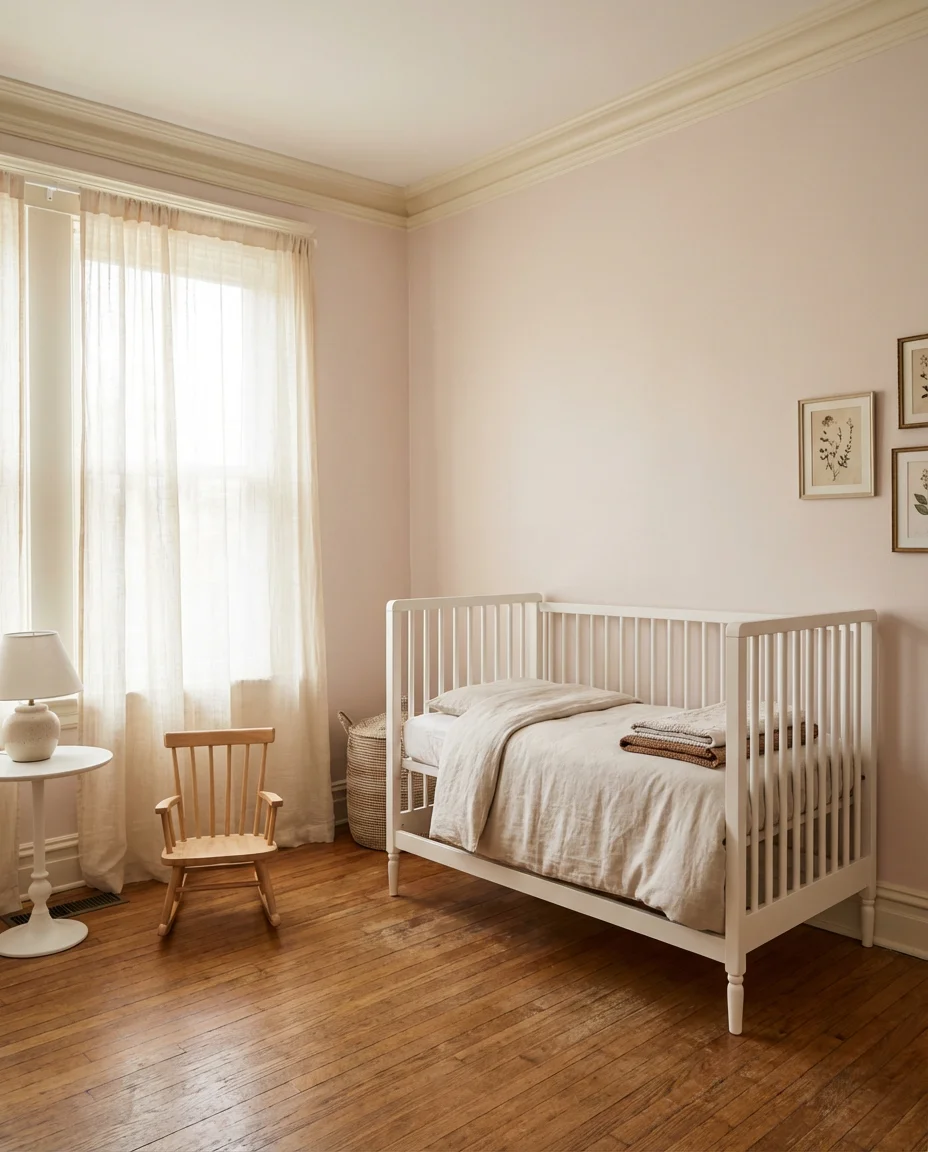
Few color pairings feel as quietly beautiful in a nursery as soft blush paired with warm ivory trim. This combination sits at the intersection of modern and timeless—it reads as pink without feeling saccharine, and the creamy trim adds a sense of craftsmanship that bare white simply can’t match. It’s one of those ideas that photographs beautifully on Pinterest but also lives gracefully in real life, in morning light or lamplight, all year round.
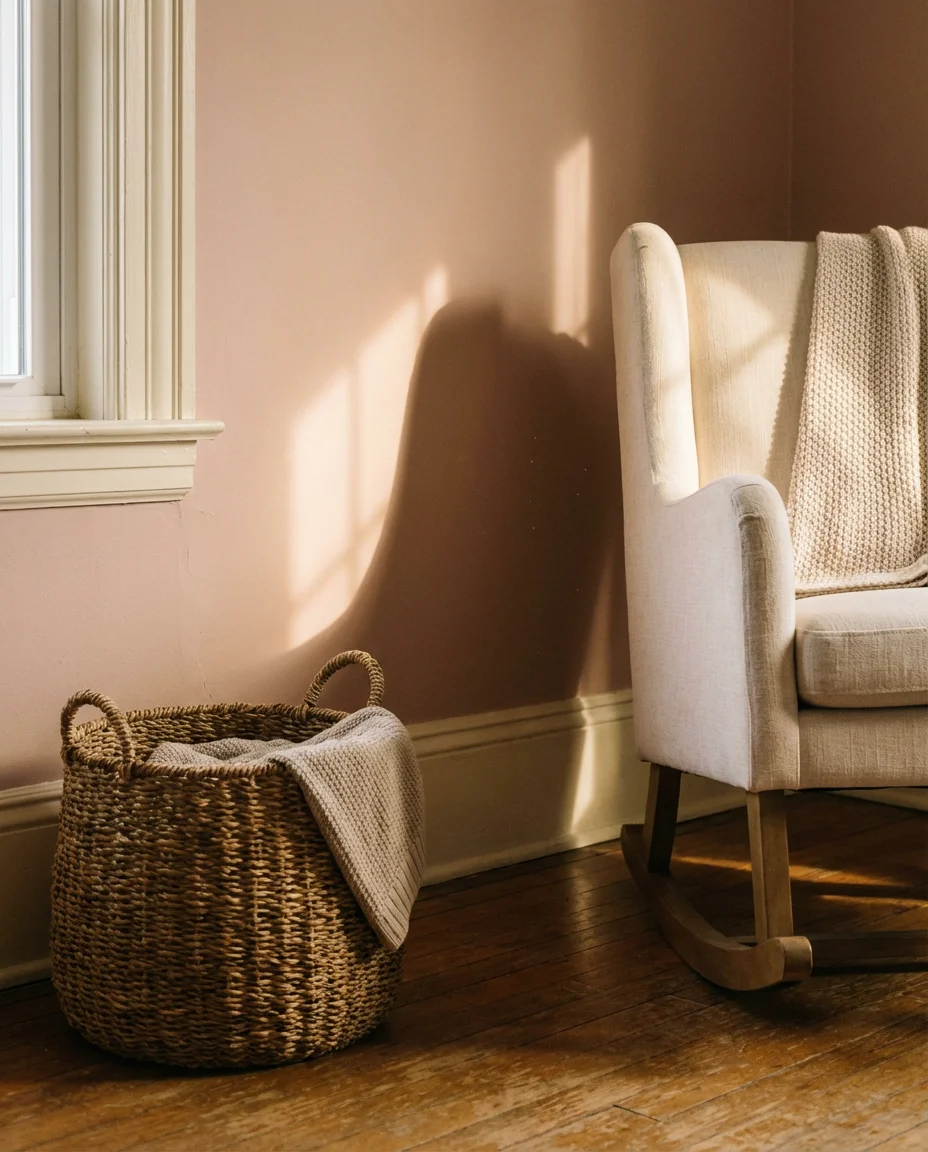
If you’re worried about committing to pink long-term, blush is genuinely one of the easiest nursery colors to transition into a toddler or big-kid room. Swap out the crib for a bed, add some bolder textiles, and the walls hold their own across every stage. One designer tip worth noting: choose a blush with a slight peach or terracotta undertone rather than a blue-based pink—it stays warm as the light shifts throughout the day and avoids looking washed out in north-facing rooms.
2. Botanical Wallpaper Accent Wall
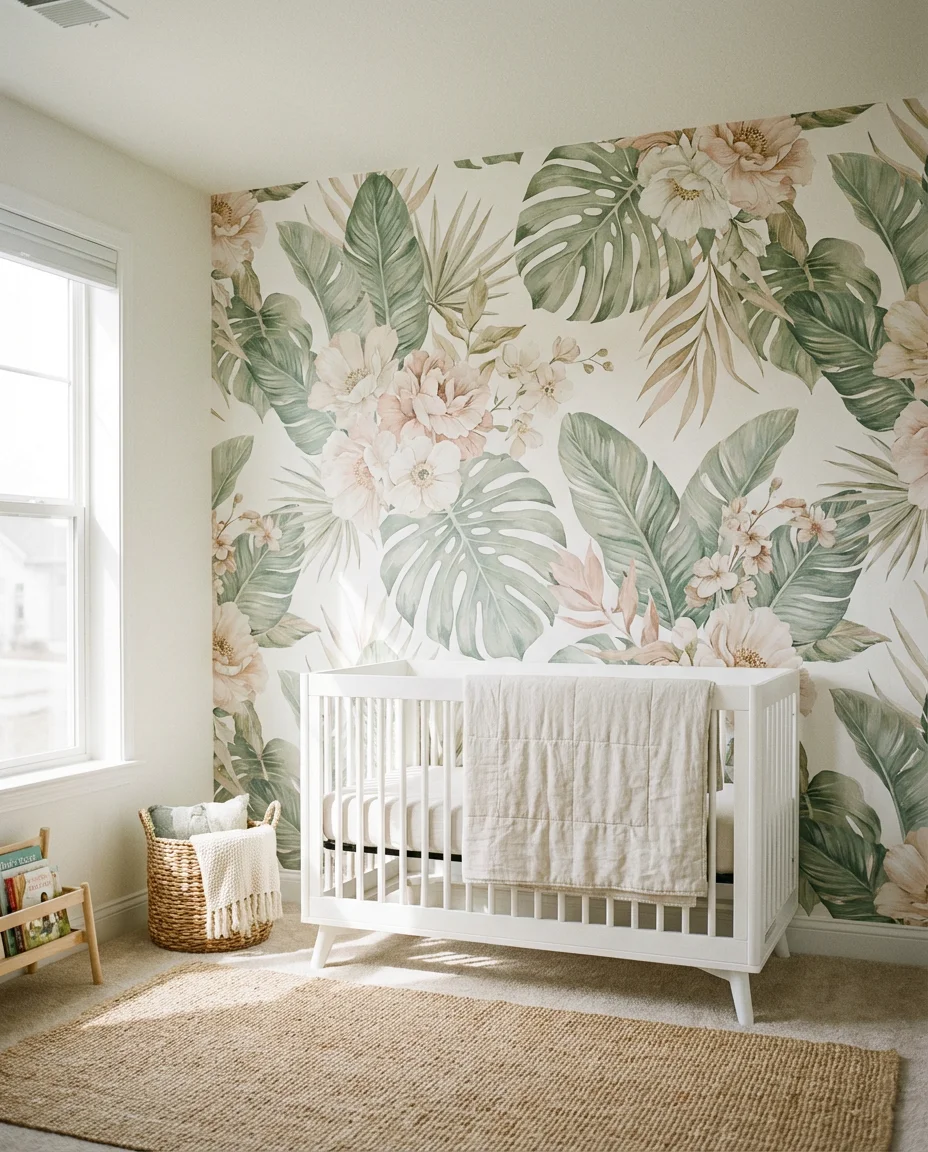
A botanical wallpaper accent wall is one of the smartest investments you can make in a nursery. It does the heavy decorating work all on its own—you don’t need much else on the walls when the paper is doing that kind of storytelling. The best botanical prints for nurseries in 2026 lean into oversized leaves, delicate florals, and hand-painted textures. When the room gets this kind of treatment behind the crib, the whole space feels lush and considered.
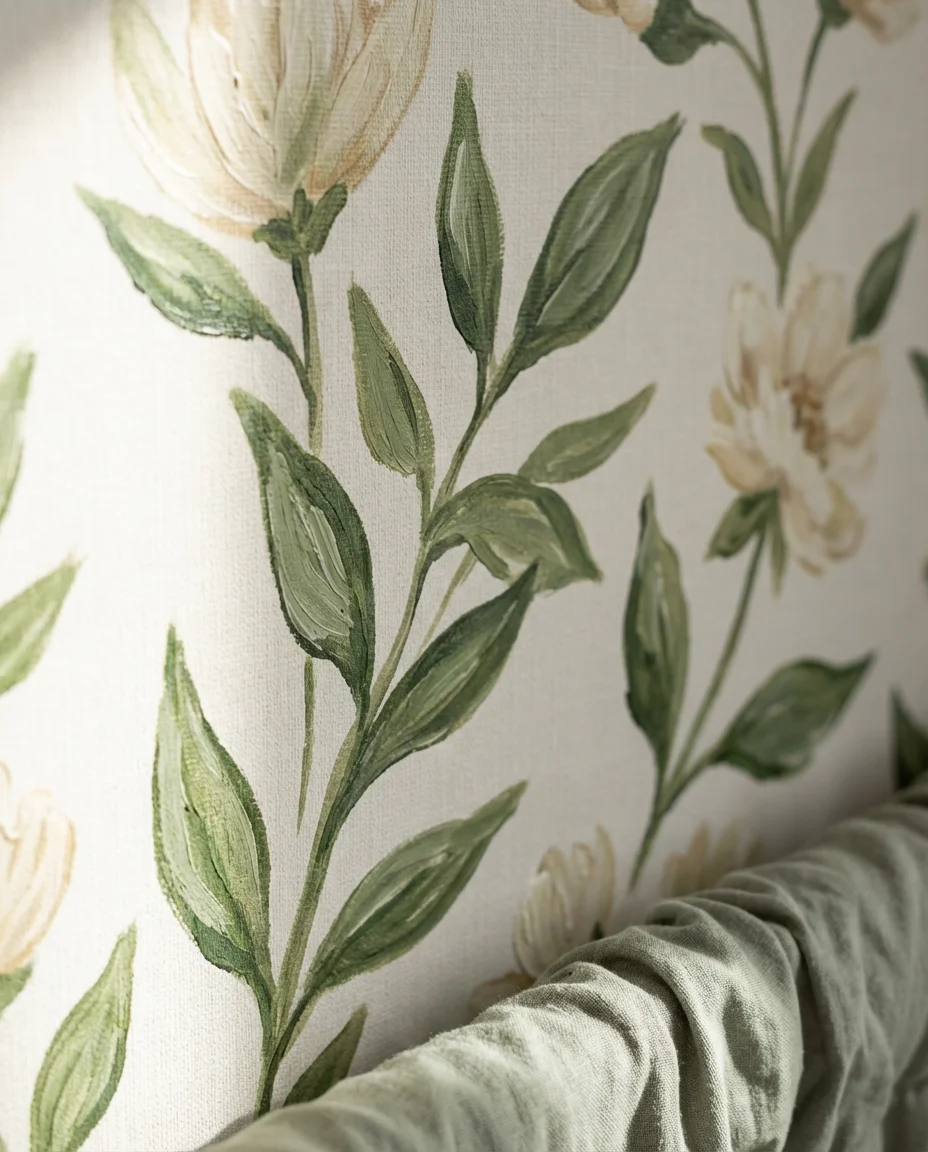
One thing real homeowners often overlook: wallpaper installation in a room with a crib requires planning around furniture placement before you hang a single strip. Measure the wall behind the crib carefully and center the most prominent motif—whether that’s a large bloom or a dramatic leaf—directly behind where the baby will sleep. It becomes the visual anchor of the whole room, and it photographs magnificently for those first-year milestone shots parents love to share.
3. Vintage-Inspired Dresser as Changing Table
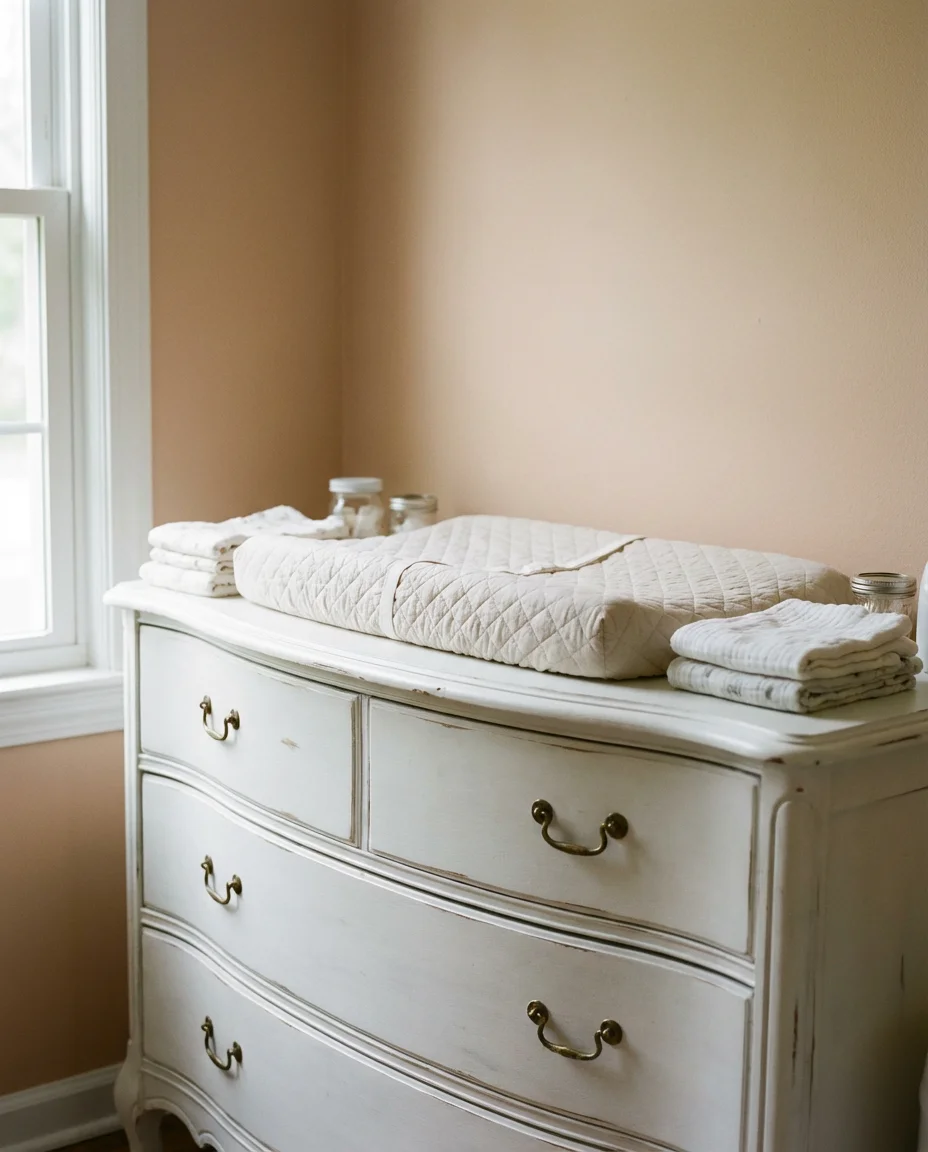
One of the smartest moves in modern nursery design is ditching the dedicated changing table in favor of a vintage-inspired dresser topped with a changing pad. It’s a piece that earns its keep long after diapers are done, and it brings genuine character to the room in a way that flat-pack furniture simply can’t. Look for curved drawer fronts, original brass hardware, or a painted milk-glass finish—these are the details that make a piece feel found rather than bought.
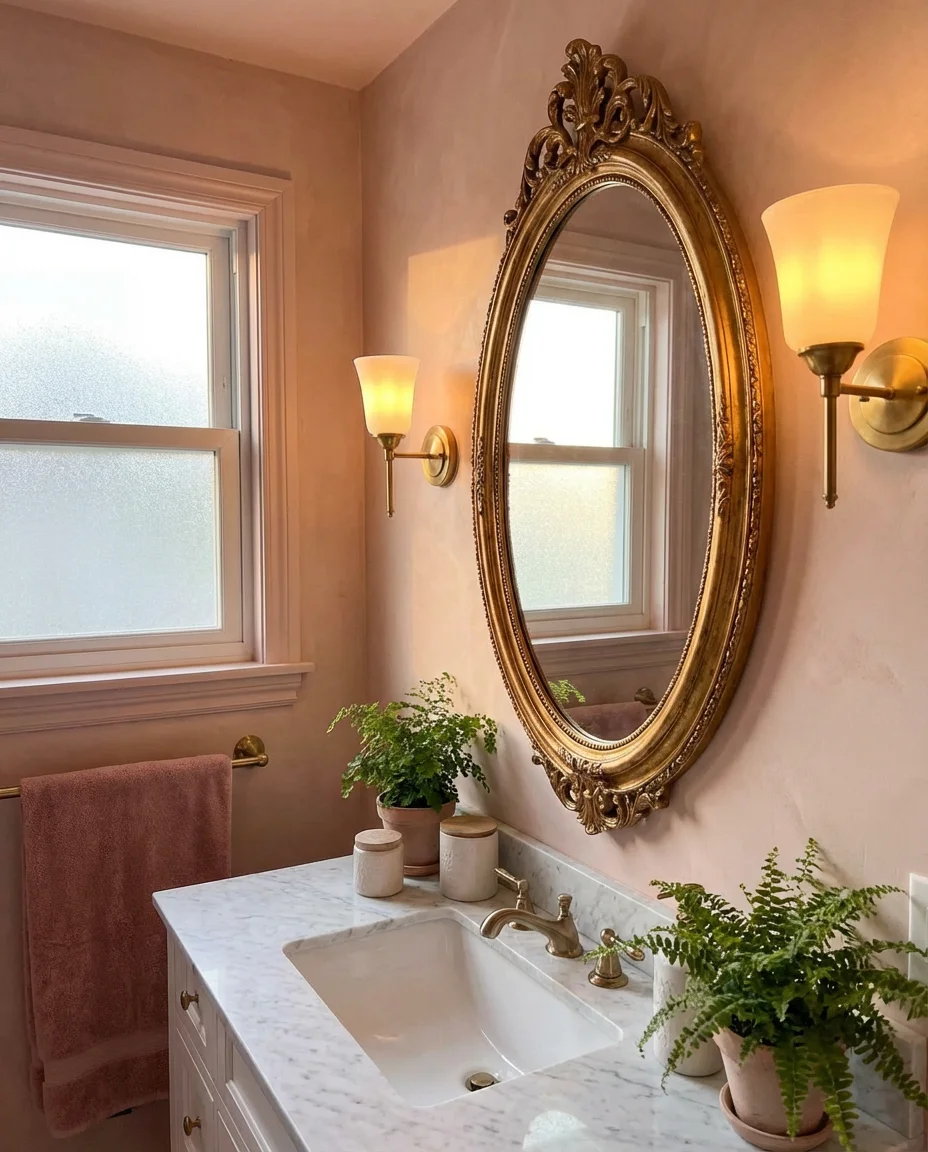
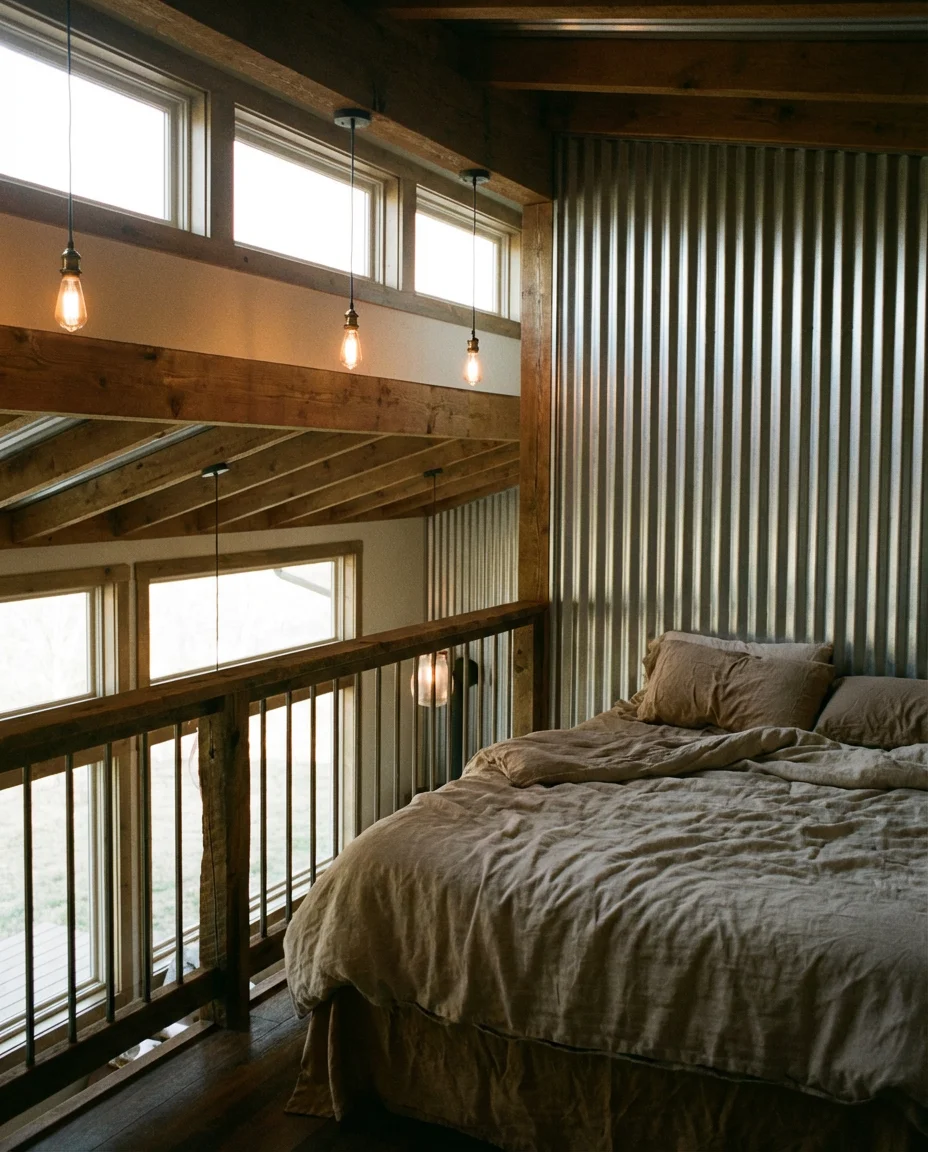
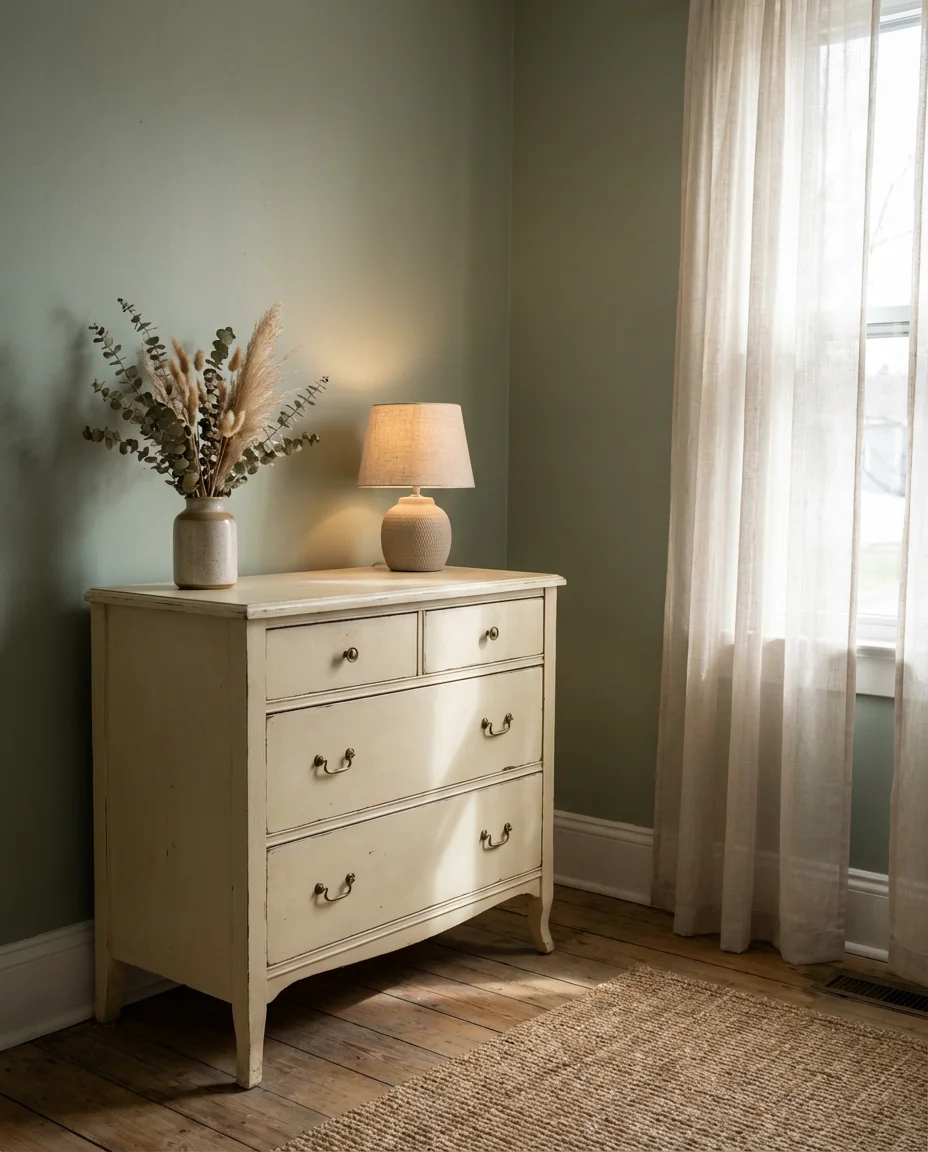
Budget-conscious parents will appreciate that a well-chosen vintage dresser from an estate sale or Facebook Marketplace often costs less than a brand-new changing table—and it can be repainted, rehardwared, and repurposed indefinitely. Just make sure the piece is solid wood and has no wobble before you commit. Secure it to the wall with an anti-tip strap regardless—this is non-negotiable for safety—and you’ll have a changing station that looks like it belongs in an interior magazine.
4. Canopy Crib for a Dreamy Focal Point
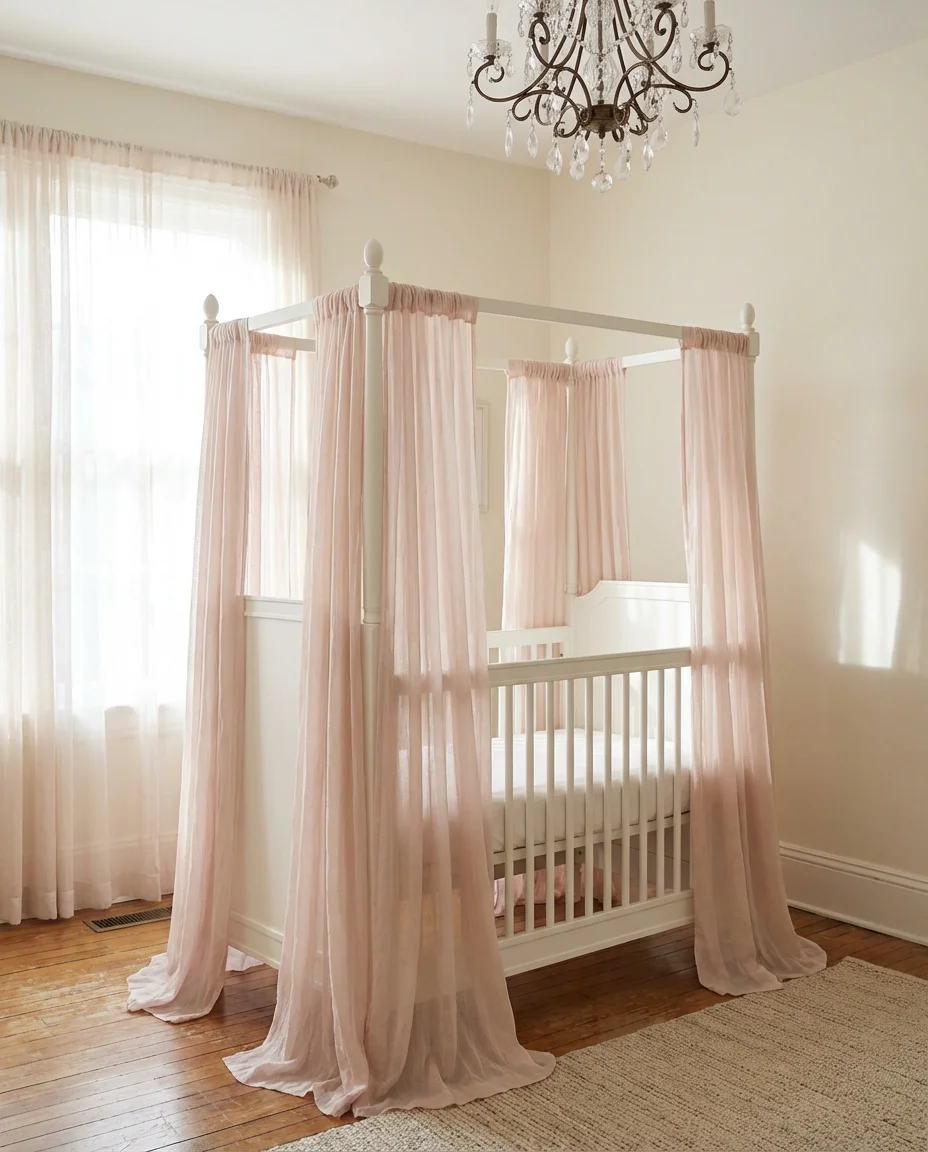
A canopy crib has become the nursery centerpiece of the moment, and it’s easy to see why—there’s nothing quite as visually arresting as sheer fabric pooling softly above a sleeping baby. This kind of decor move works especially well in rooms with higher ceilings, where the canopy draws the eye upward and makes the whole space feel more intentional. Pair it with pink or cream linen draping for a romantic, heirloom-quality look that doesn’t feel fussy.
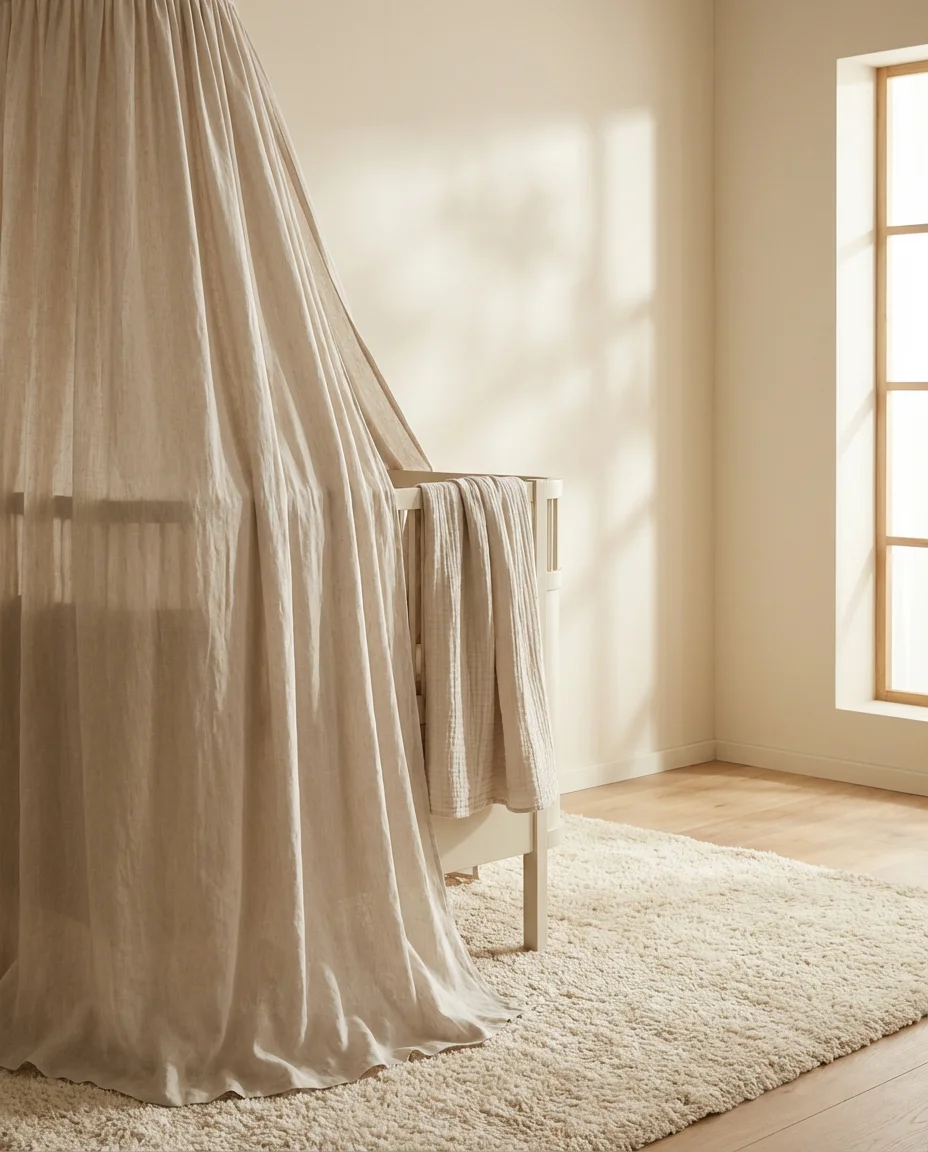
Where this works best: rooms that are otherwise relatively minimal. A canopy crib is a statement piece by nature, and it thrives in a space that lets it breathe. Keep the surrounding furniture low-profile and the color palette restrained. One common mistake is adding too many competing statement pieces—a gallery wall, a bold rug, and a canopy crib all fighting for attention will make the room feel chaotic rather than curated. Let the canopy be the star.
5. Earthy Terracotta and Cream Color Palette
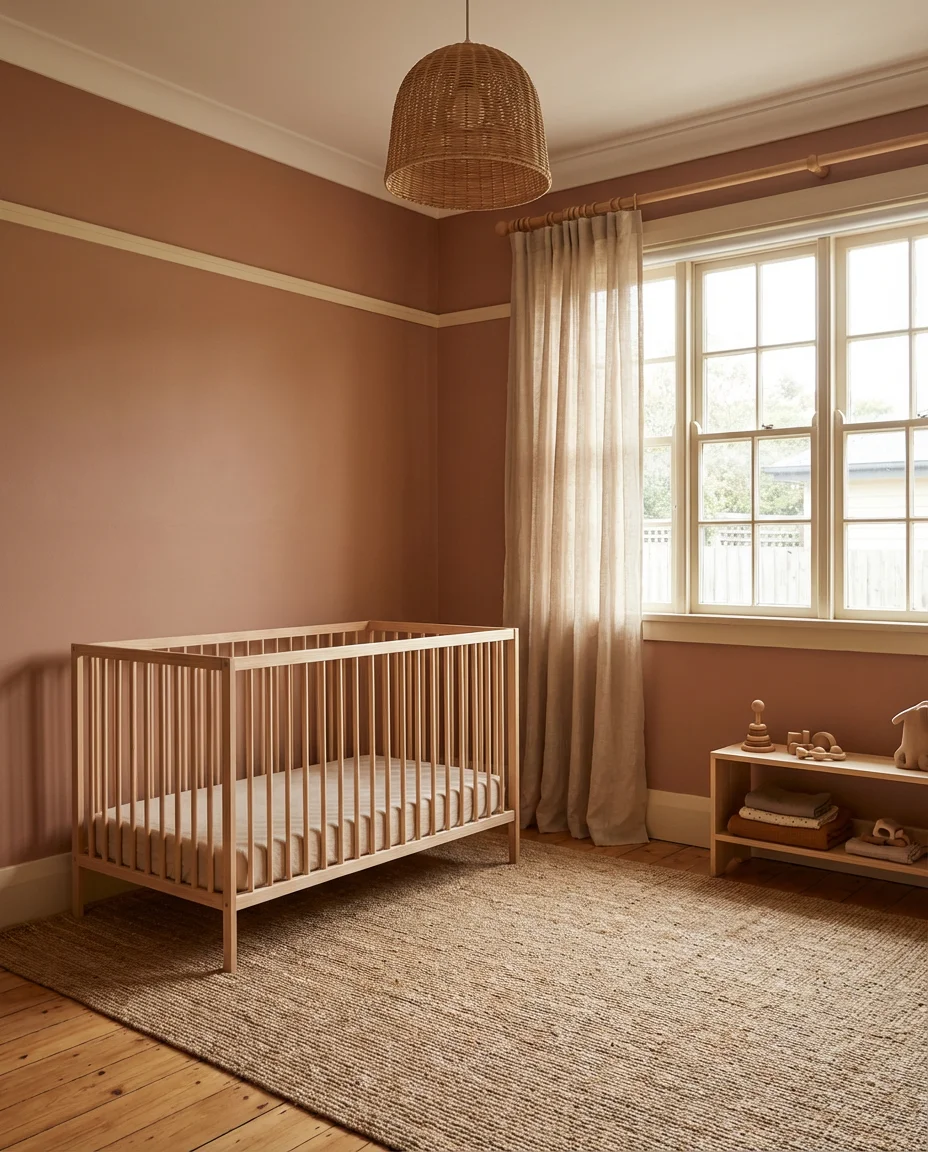
Not every girl’s nursery needs to be pink, and in 2026, more parents are choosing earthy, grounded palettes that feel sophisticated from day one. Terracotta and cream is a combination that inspiration-seekers on Pinterest keep returning to because it photographs warmly, works with natural wood tones, and sidesteps the gender-color script entirely. Layer in a woven rug in a complementary sand tone, and you have a foundation that feels like it belongs in a high-end interior.
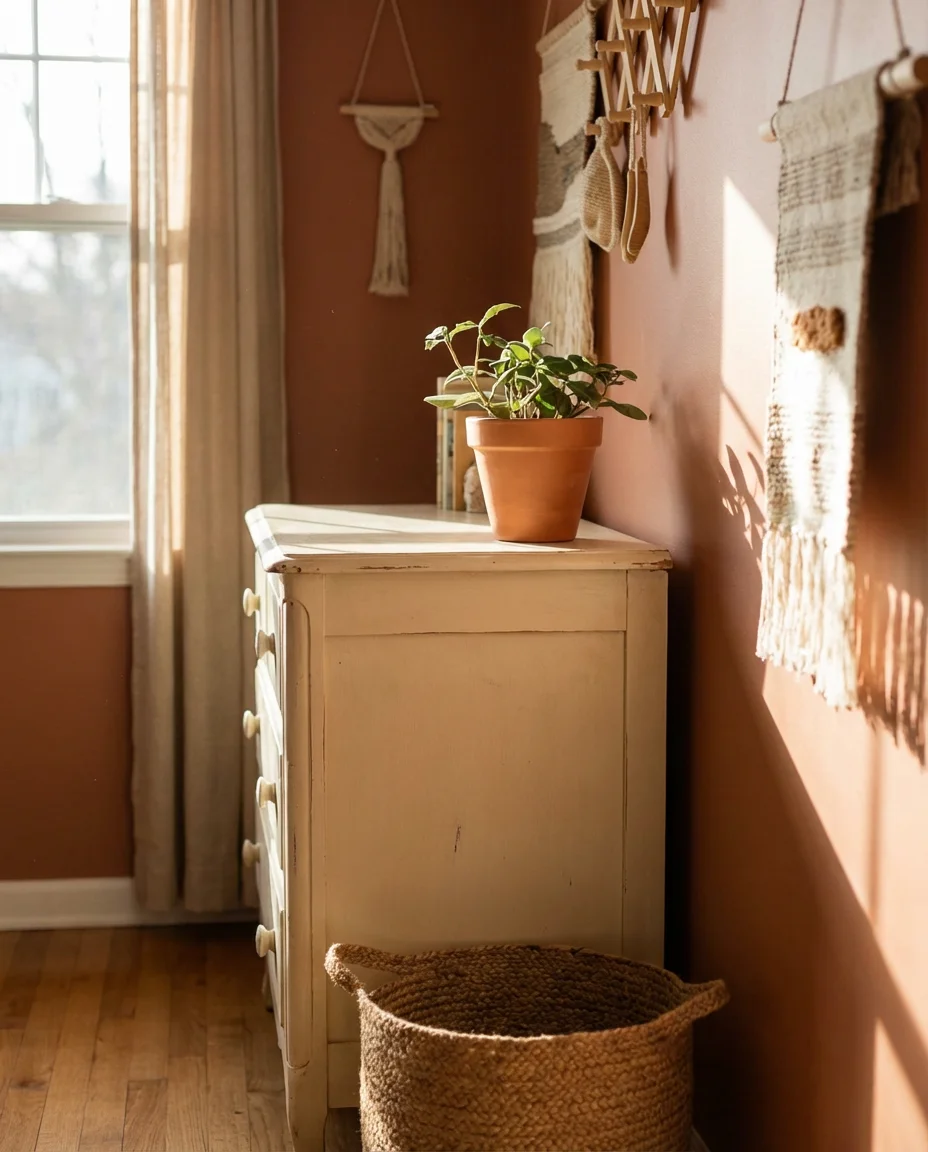
The terracotta-and-cream palette has strong roots in Southwestern and Mediterranean design traditions, both of which have deep cultural resonance in large parts of the American South and West. For families in Arizona, New Mexico, or Southern California, this palette feels like a natural extension of the surrounding landscape rather than a trend borrowed from a magazine. It also ages incredibly well—a room that looks this considered in the nursery years will transition effortlessly into a toddler space without a single wall repaint.
6. Dusty Blue Nursery With Gold Accents
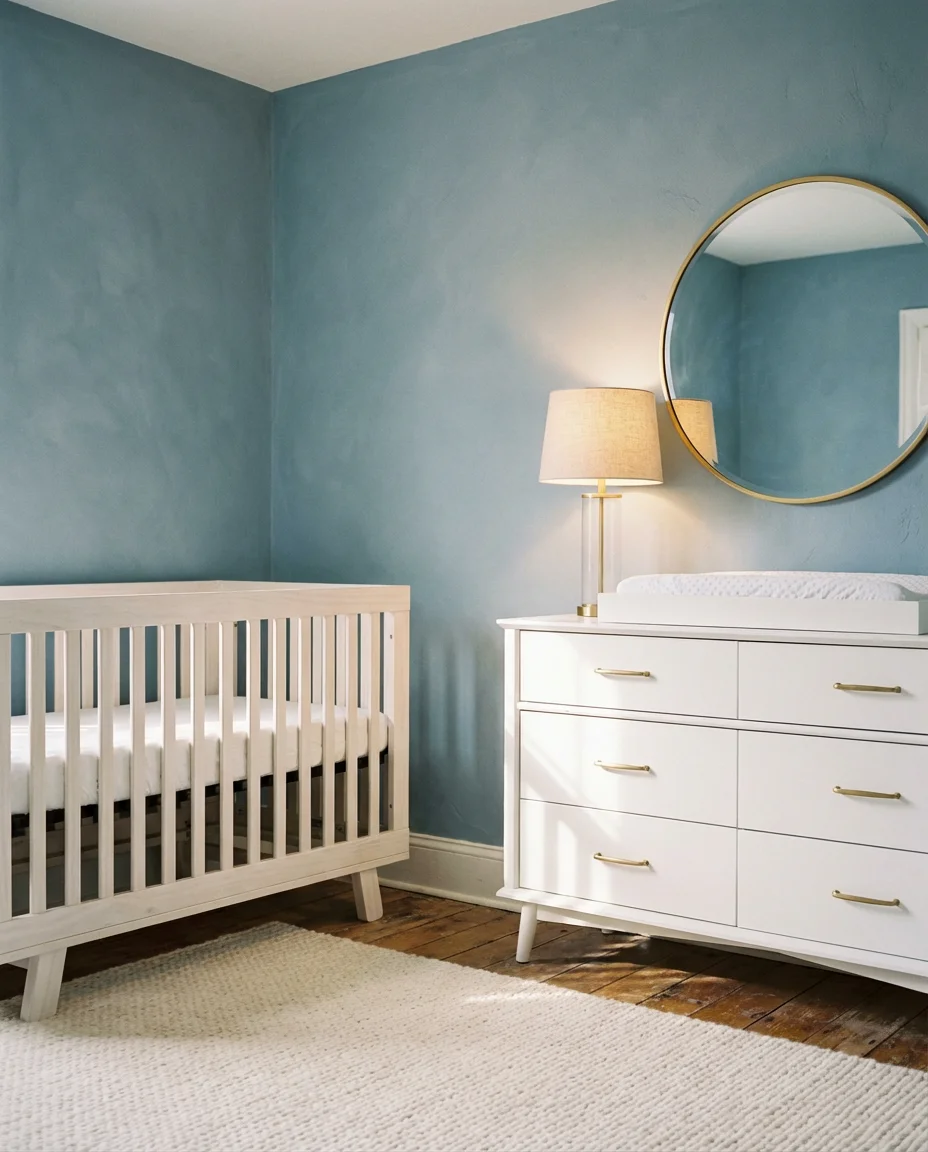
Dusty blue has officially crossed over from boys’ rooms into the nursery mainstream, and parents designing for girls are embracing it wholeheartedly. When layered with warm gold accents—a gilded mobile, brushed brass hardware, a gold-framed mirror—the palette takes on a quiet elegance that feels far more grown-up than the typical pastel approach. This is a themes-driven room concept with real staying power.
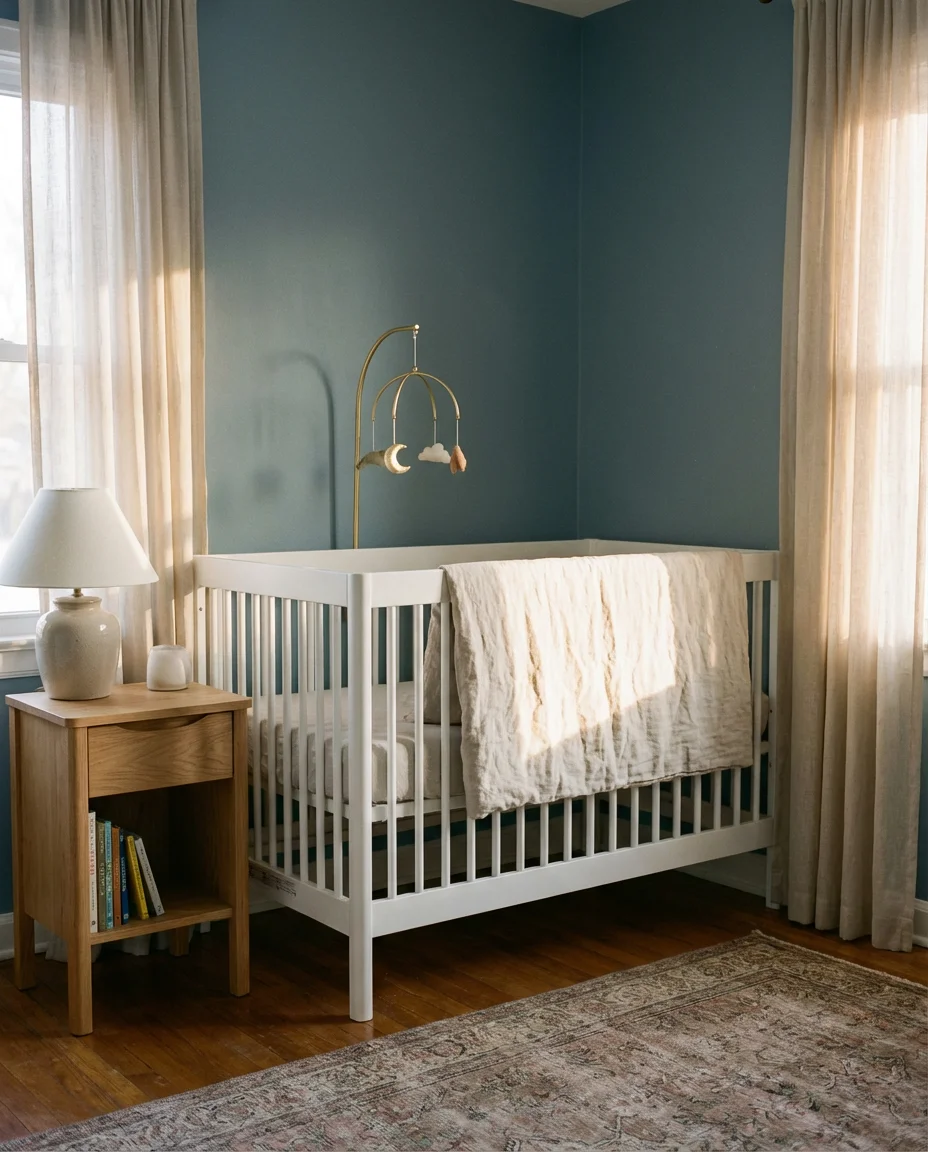
An interior stylist would tell you that the secret to making blue and gold work in a nursery—rather than feeling like a hotel lobby—is texture. The blue needs to live in a matte, chalky finish on the walls, and the gold needs to appear in organic, handmade-feeling objects rather than shiny, mass-produced pieces. Think of a hand-thrown ceramic lamp base, a woven gold-thread pillow, or a vintage brass sconce. These small distinctions separate a genuinely beautiful room from one that just looks expensive.
7. Whimsical Moon and Stars Wall Mural
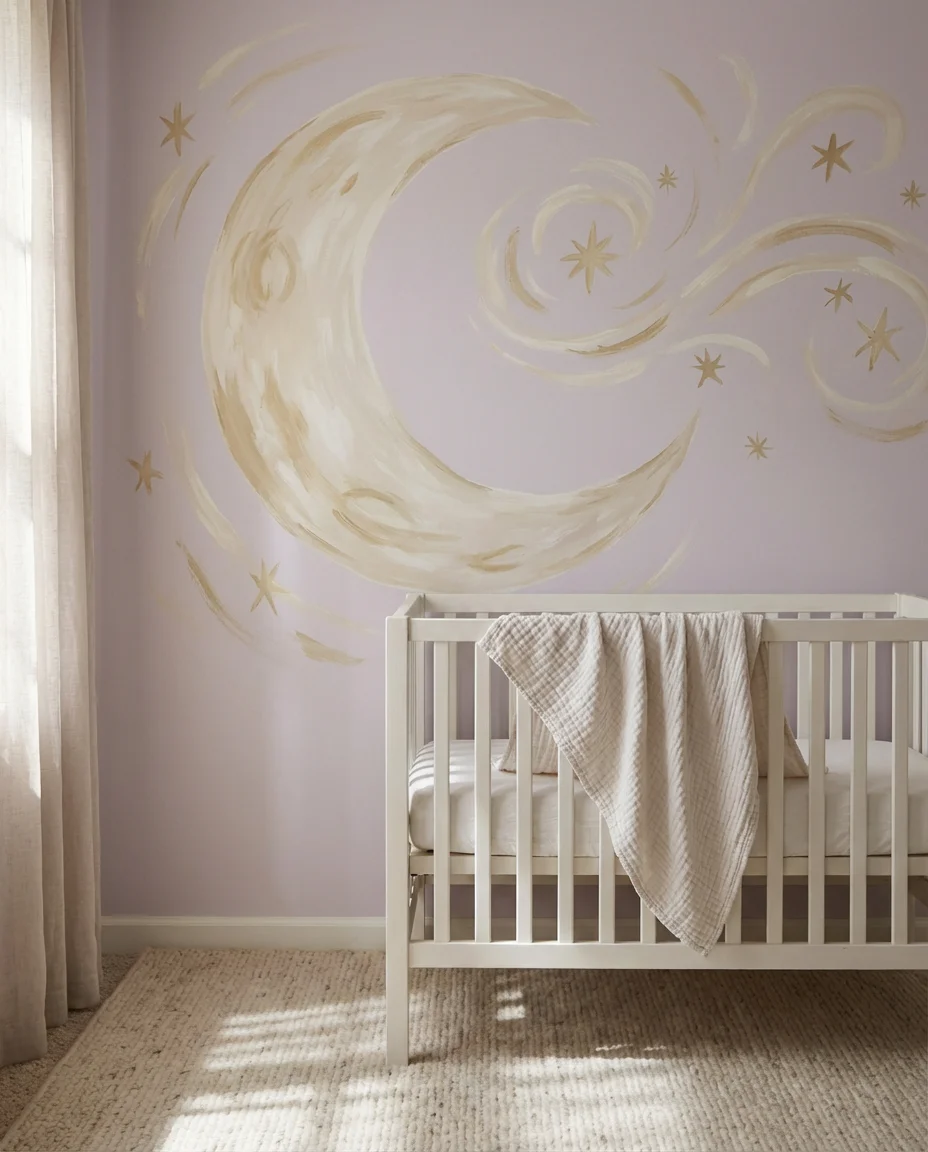
A hand-painted moon and stars mural on the nursery wall is one of those design choices that feels genuinely magical in person—and it photographs like a dream for all those newborn lifestyle shoots. In 2026, the trend has moved away from cartoon-style celestial imagery toward something more painterly and abstract: soft crescent shapes, loose brushwork, and constellations rendered in thin gold lines. This kind of wall decor brings an artisanal quality that no printed poster can replicate.
Hiring a local muralist doesn’t have to break the bank. Many emerging artists on Instagram offer nursery murals at accessible price points—often between $300 and $800 depending on wall size and complexity—and the result is a completely one-of-a-kind room that no one else has. Search locally for “nursery mural artist” plus your city, and you’ll likely find several options. It’s one of the few places in home design where a modest budget can yield a genuinely extraordinary result.
8. Rattan and Natural Wood Furniture Mix
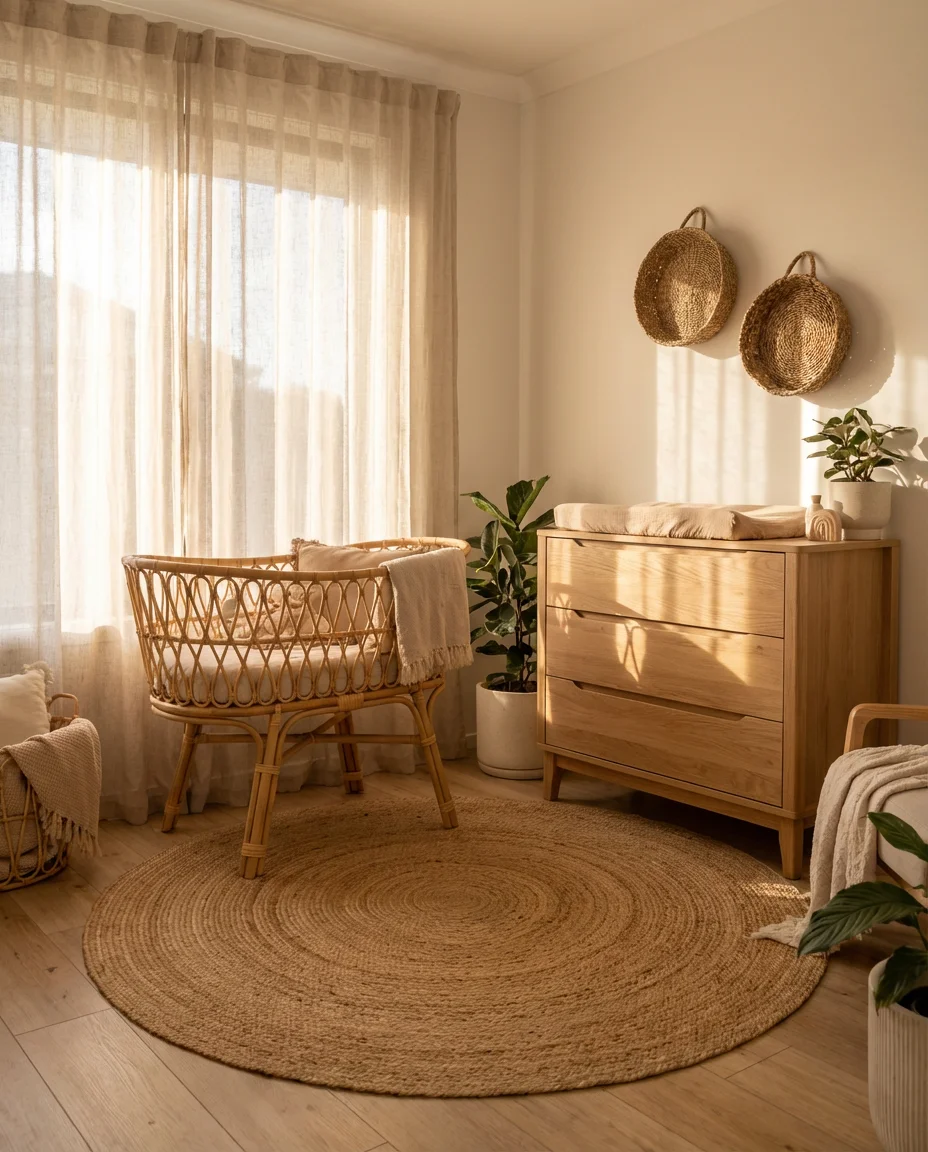
The organic nursery look—all rattan, raw wood, and woven textures—has become one of the defining themes of modern baby room design, and it shows no sign of slowing in 2026. A rattan bassinet next to a natural oak dresser next to a jute rug creates a warmth and coherence that painted furniture simply can’t match. The natural material palette also photographs beautifully in the golden-hour light that fills so many American homes in the late afternoon.
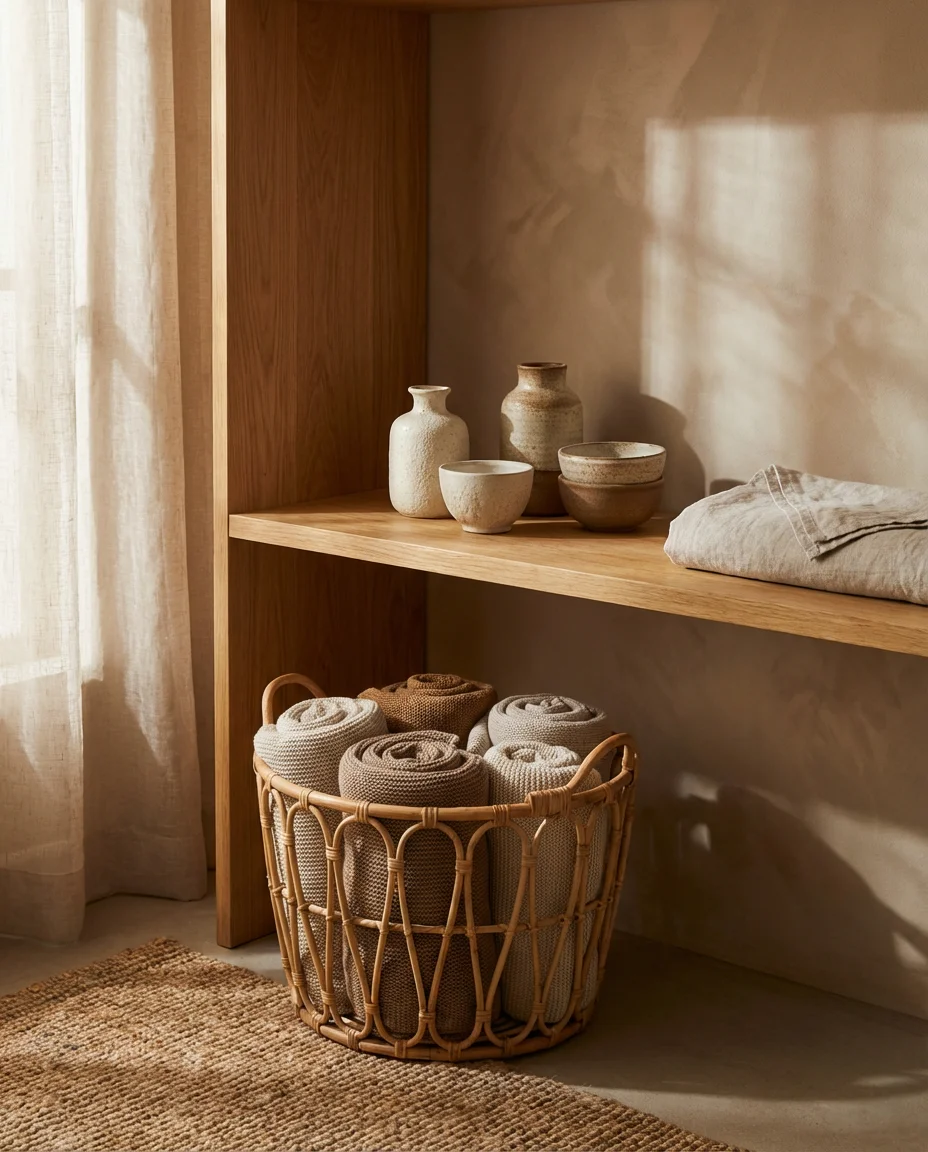
One thing worth knowing before you commit to all-natural materials: rattan furniture requires slightly more care in very dry climates. In low-humidity regions like the Mountain West or parts of the Southwest, rattan can become brittle over time if not occasionally misted or kept in a humidified space—which, for a nursery, is actually already a common recommendation for a baby’s respiratory health. So the humidifier you’d buy anyway doubles as furniture maintenance. Practical and beautiful, this pairing genuinely delivers.
9. Oversized Floral Print Bedding
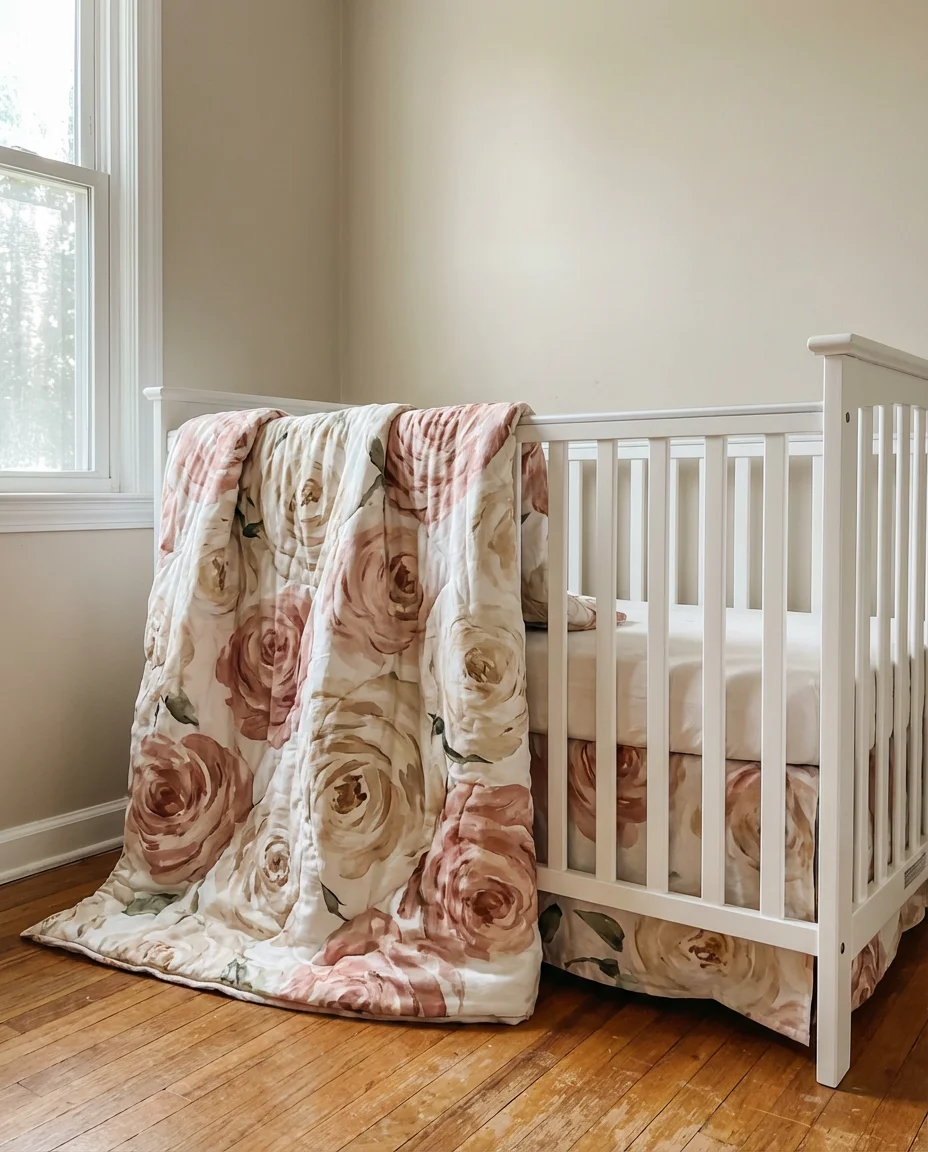
Bedding is the easiest and most cost-effective way to introduce a bold pattern into a nursery without committing to anything permanent. In 2026, the most-pinned crib bedding features large-scale floral prints—think cabbage roses, peony blooms, and painterly wildflowers—rendered in soft, slightly faded palettes that feel antique rather than loud. This approach bridges the gap between classic pink decor and something with a bit more design sophistication.
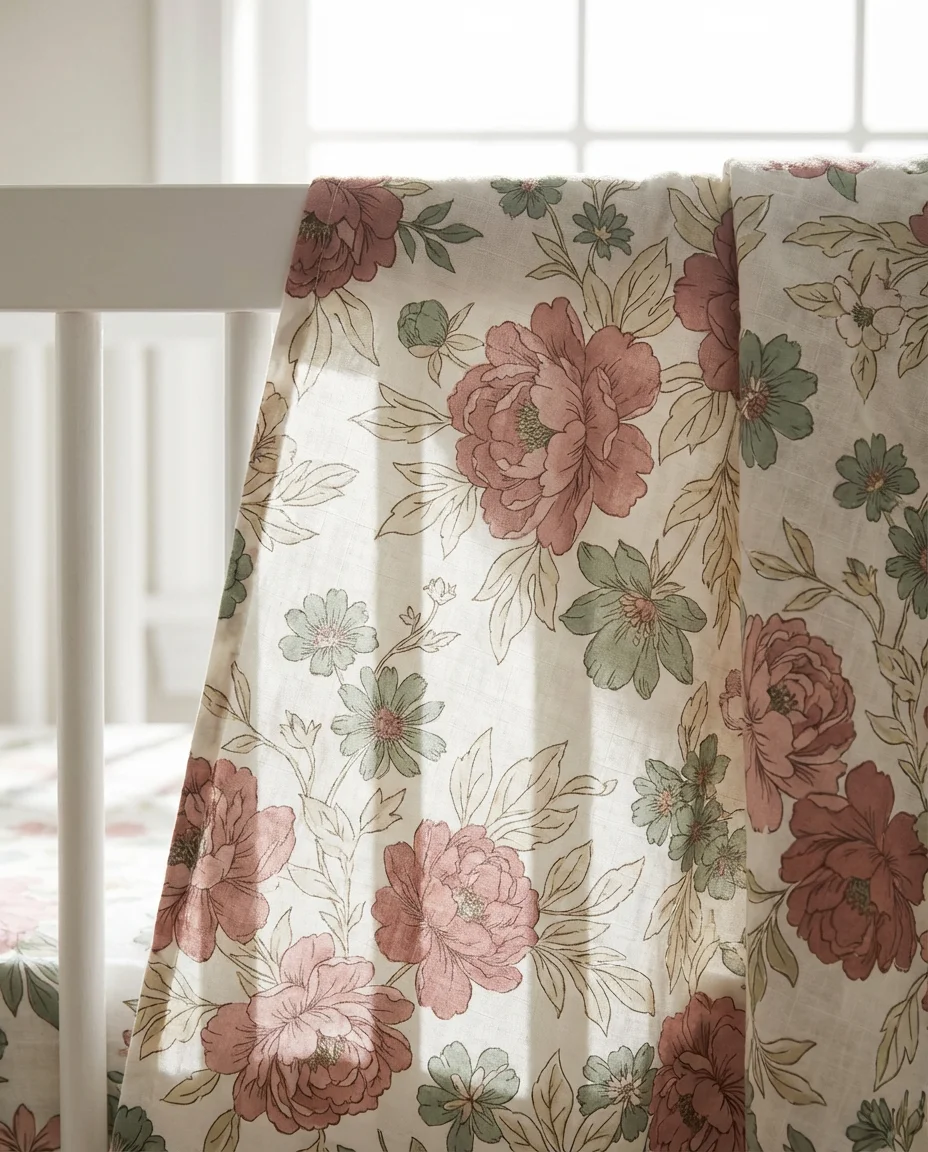
A note on safety that every new parent needs to hear: loose bedding, bumpers, and pillows should never be used inside the crib itself. Current AAP safe sleep guidelines recommend a firm, flat mattress with a fitted sheet only—and that’s it. The beautiful floral bedding sets you’re eyeing on Etsy are best used as decorative throws draped over the side of the crib when baby isn’t sleeping or as toddler bedding down the road. Style and safety can coexist beautifully—it just takes a little planning.
10. Scallop-Edge Wall Shelf Display
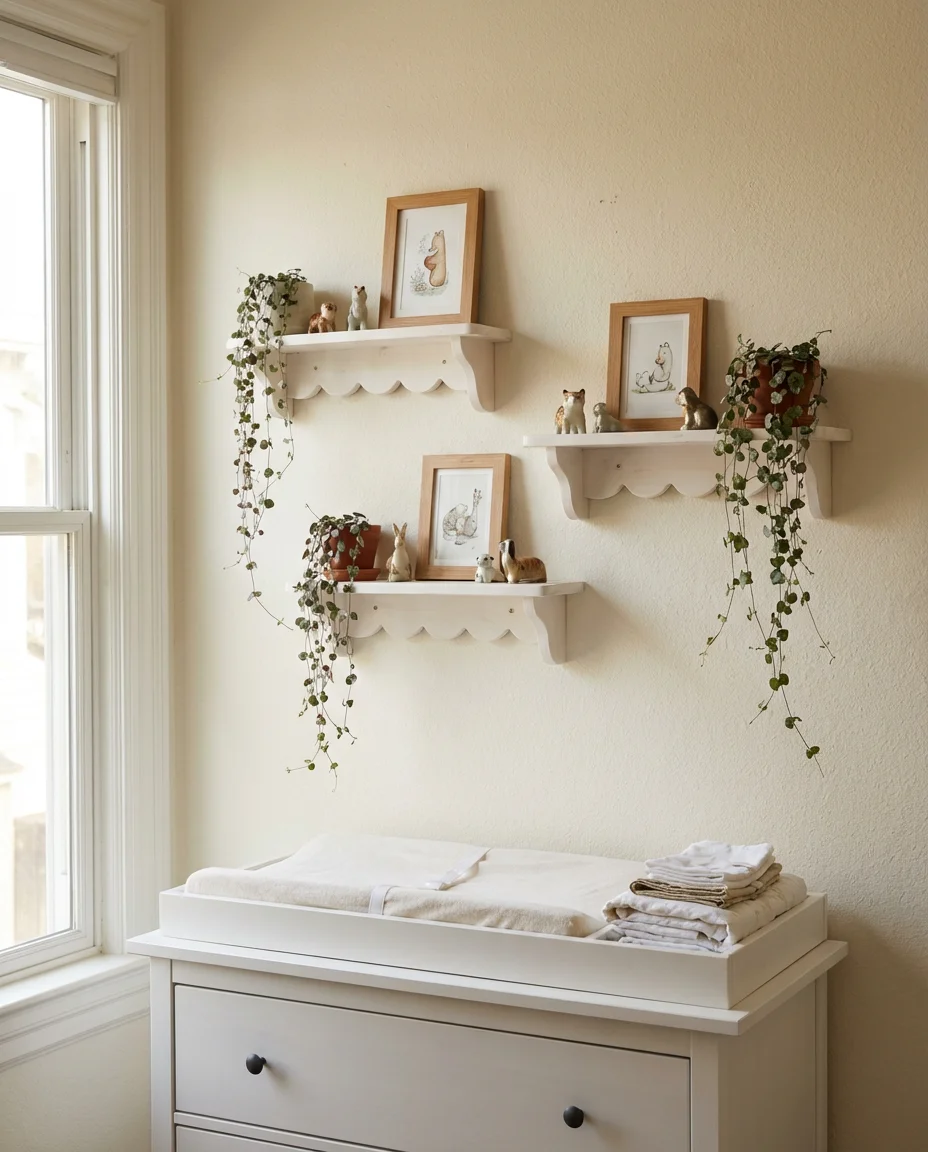
Scallop-edged shelving has become one of the most recognizable signatures of 2026 nursery decor, and it works precisely because it adds architectural personality without requiring any construction work. A row of small scallop shelves above a dresser or changing area creates an instant display moment—the kind that looks effortlessly curated when loaded with a few ceramic animals, a small framed print, and a trailing plant. The wall decor possibilities are genuinely endless.
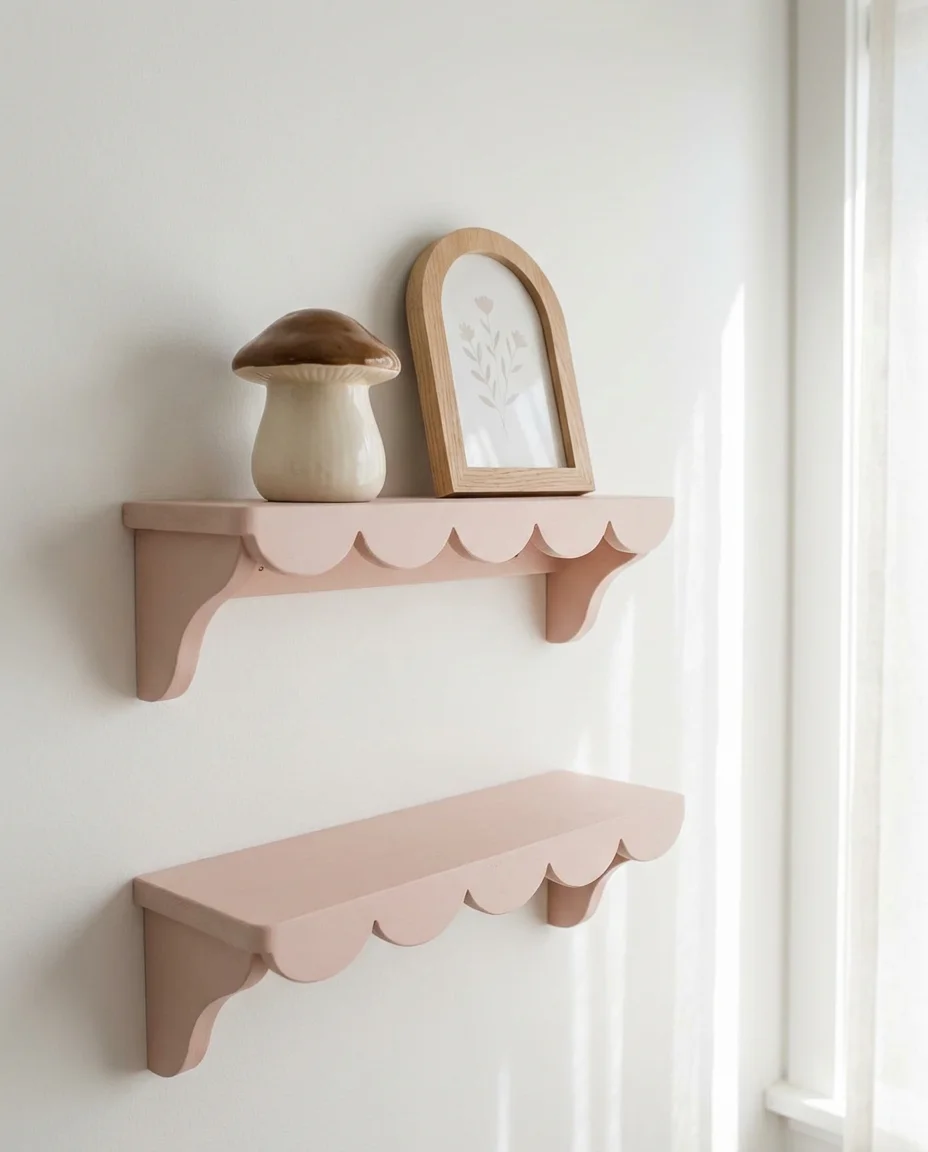
Scallop shelves come in painted MDF versions starting around $25 apiece on Etsy and Amazon, making this one of the most budget-friendly ways to elevate a nursery instantly. The trick to styling them well is restraint: three to five small objects per shelf maximum, varying height and material—ceramic next to wood next to a small framed print. Resist the urge to fill every inch. Negative space is doing real design work here, giving each little object room to breathe and be noticed.
11. Vintage French Provincial Crib
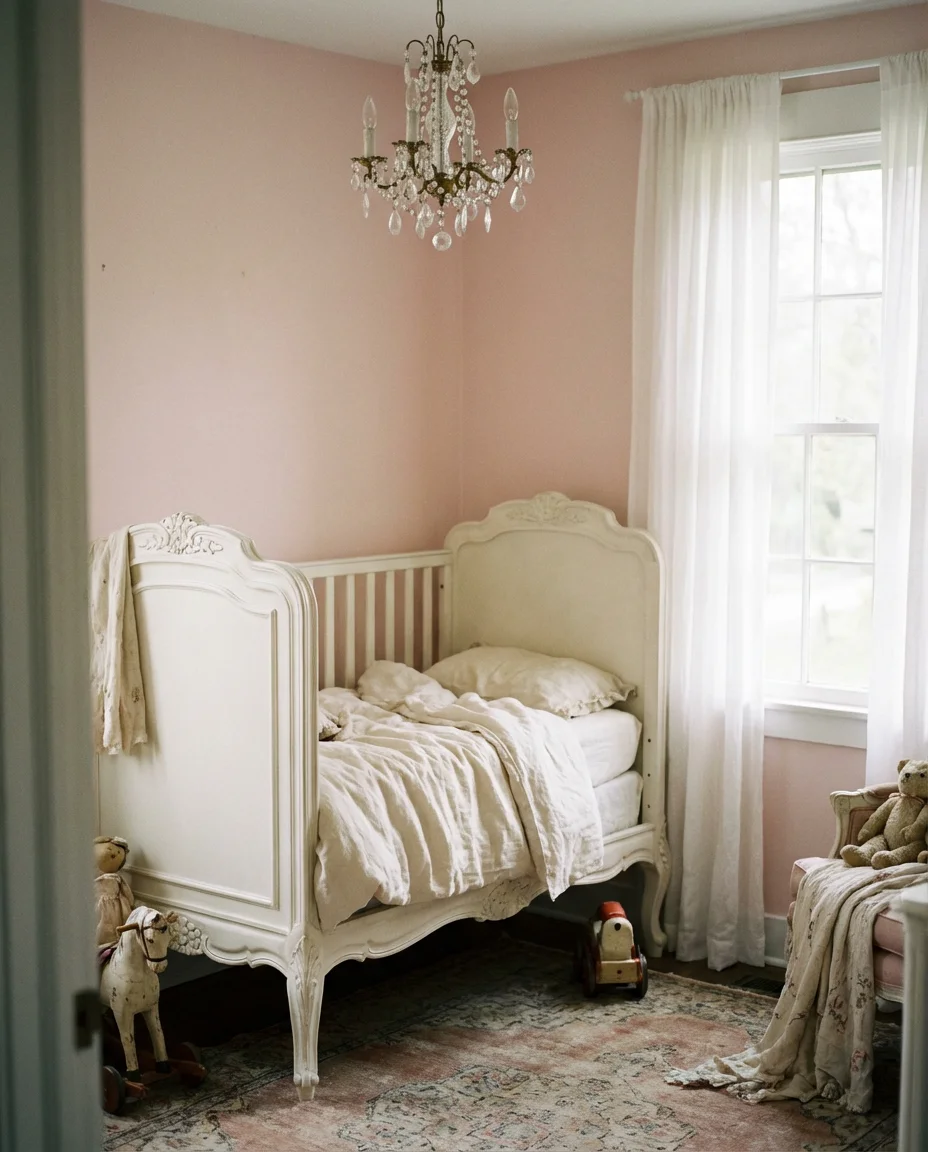
A vintage French Provincial crib—with its carved cabriole legs, curved headboard, and creamy white finish—is one of the most romantic nursery statements a parent can make. It reads as an heirloom from the moment it enters the room, and it gives the entire space a storybook quality that contemporary cribs rarely achieve. Pair it with linen bedding, a chandelier, and a soft pink palette, and you have something genuinely extraordinary.
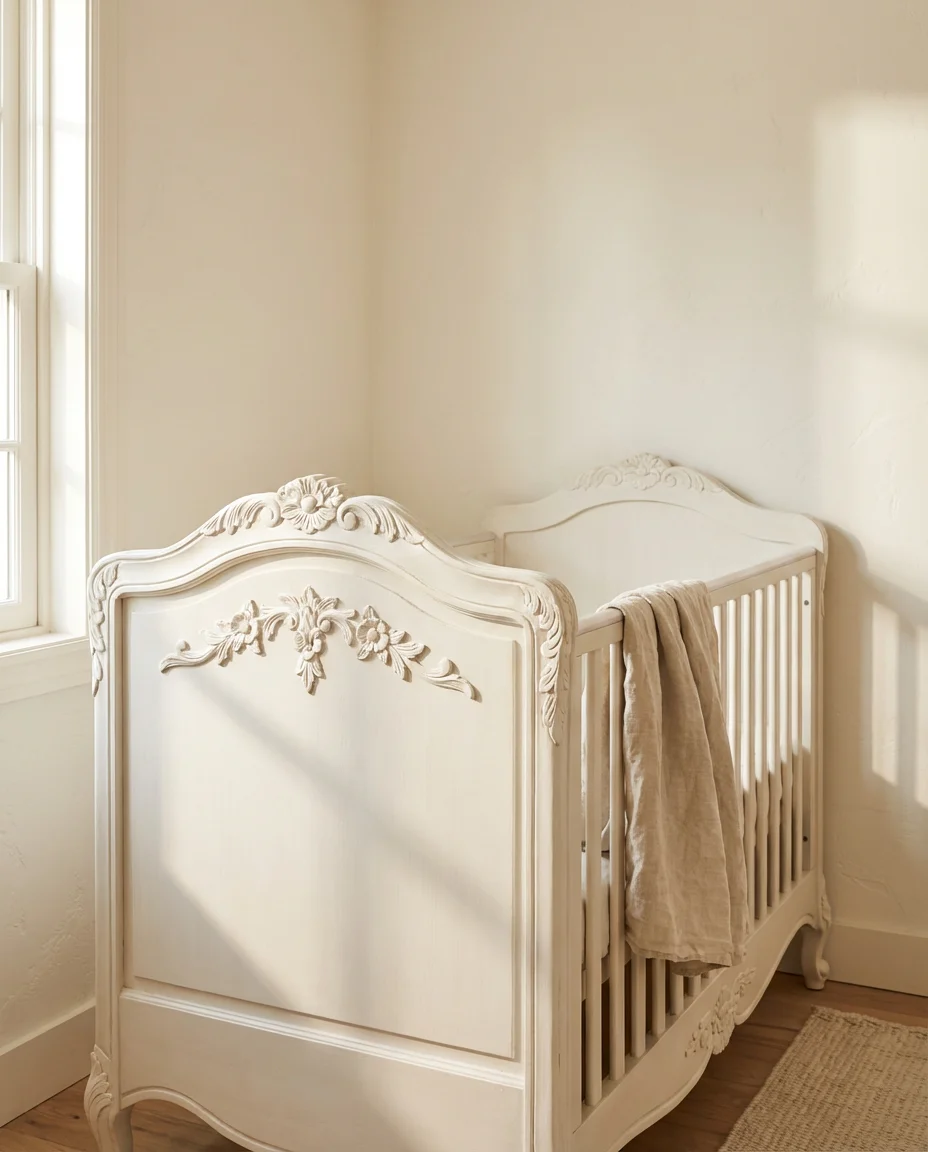
If you’re sourcing a vintage crib, this comes with an important safety note: cribs manufactured before 2011 do not meet current CPSC safety standards. Drop-side cribs in particular are now banned for sale in the U.S. The safest approach is to find a new crib that’s designed in the French Provincial style—several brands, including DaVinci and Pottery Barn Kids, offer excellent reproductions—rather than repurposing a true antique. You get the aesthetic without any of the risk, and frankly, the reproductions are beautiful.
12. Pastel Rainbow Arch Wall Art
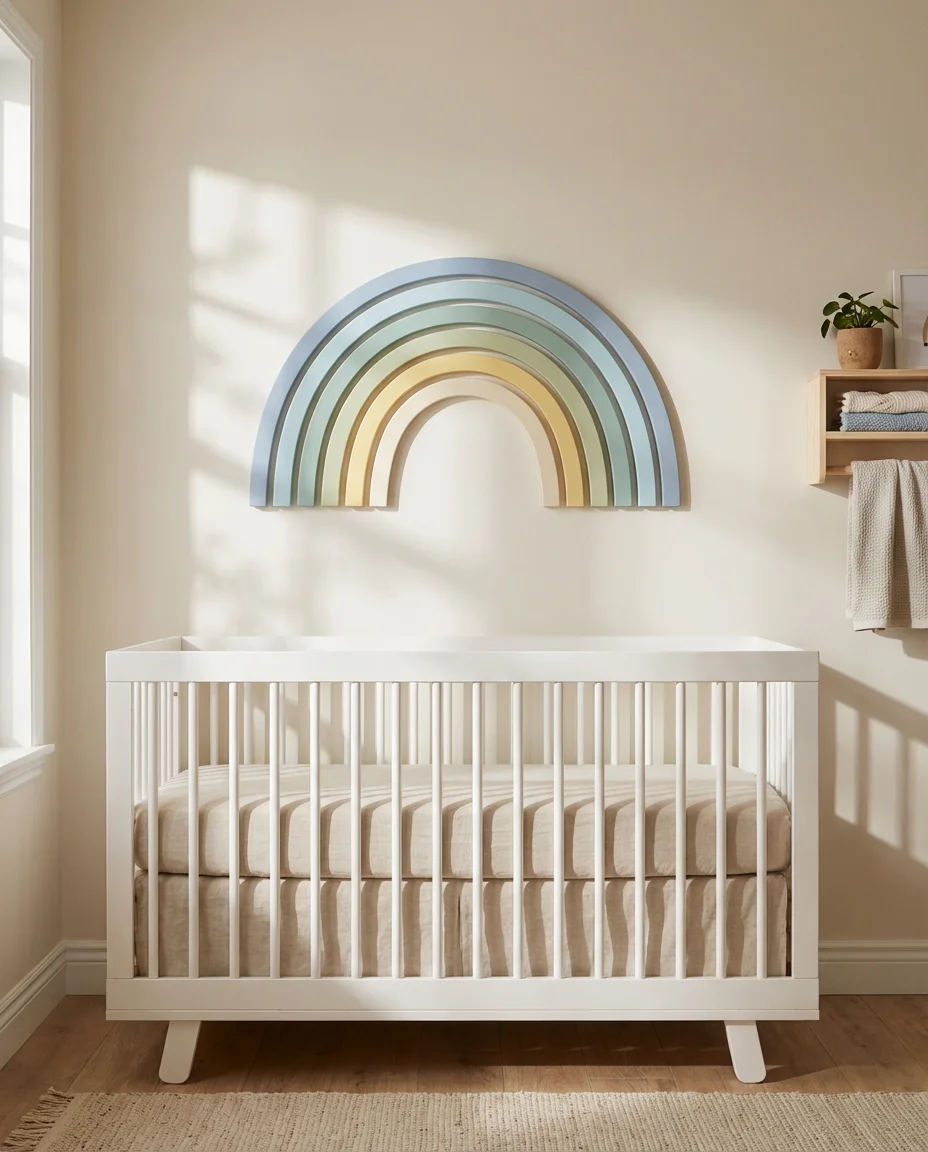
The pastel rainbow has become one of the most enduring motifs of modern nursery design, and in 2026 it’s evolving into something more architectural—arched canvases, three-dimensional wooden rainbows mounted directly to the wall, and painted arch shapes that frame the crib like a portal into a softer world. This kind of wall decor is among the most shared nursery inspiration on Pinterest right now, and for good reason: it’s joyful without being childish.
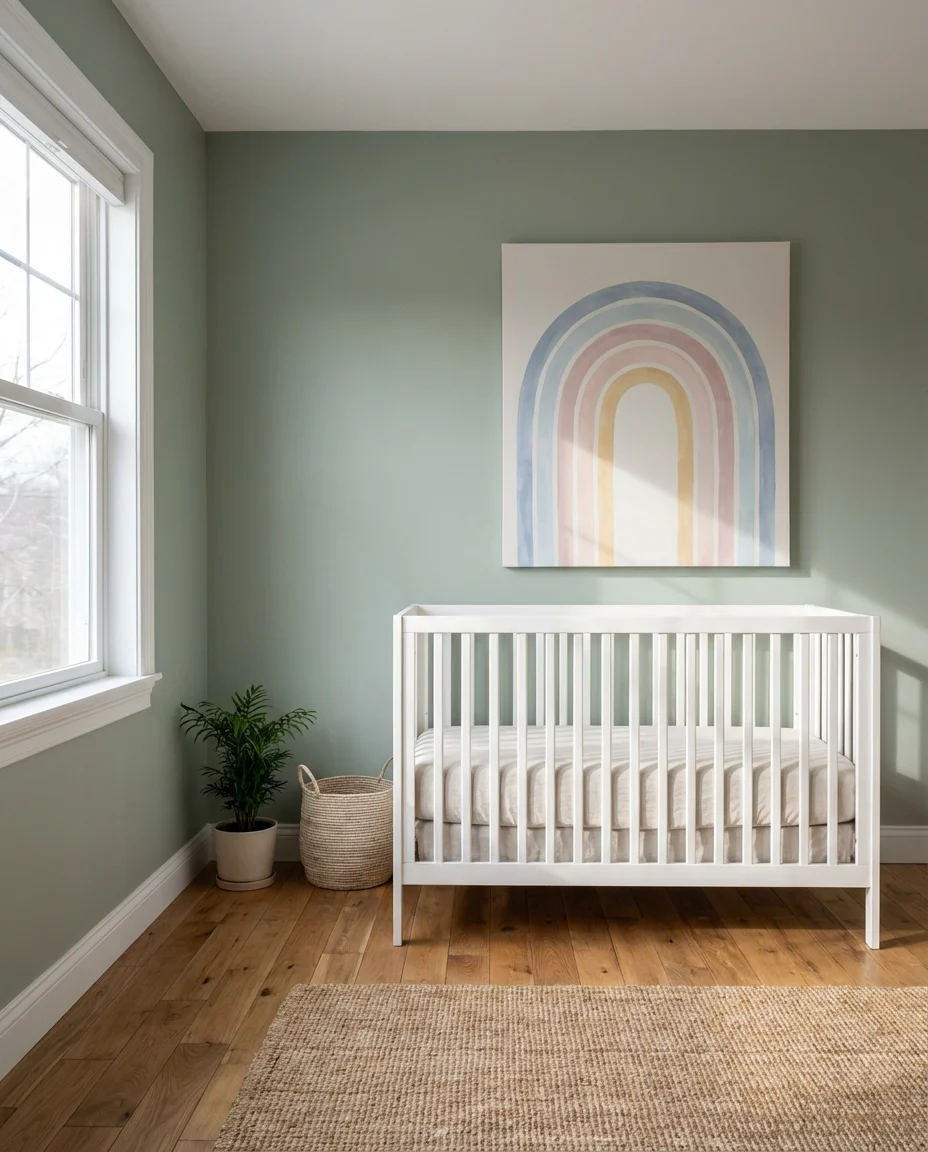
A rainbow arch works in almost any nursery layout, but it truly shines in smaller rooms where a full gallery wall might feel overwhelming. A single large-scale arch above the crib does the work of ten smaller pieces and makes the room feel cohesive rather than cluttered. American parents have embraced this look especially enthusiastically in apartment nurseries and converted bedrooms where wall space is at a premium and every design decision needs to pull double duty on style and impact.
13. Soft Sage Green With Warm Wood Tones
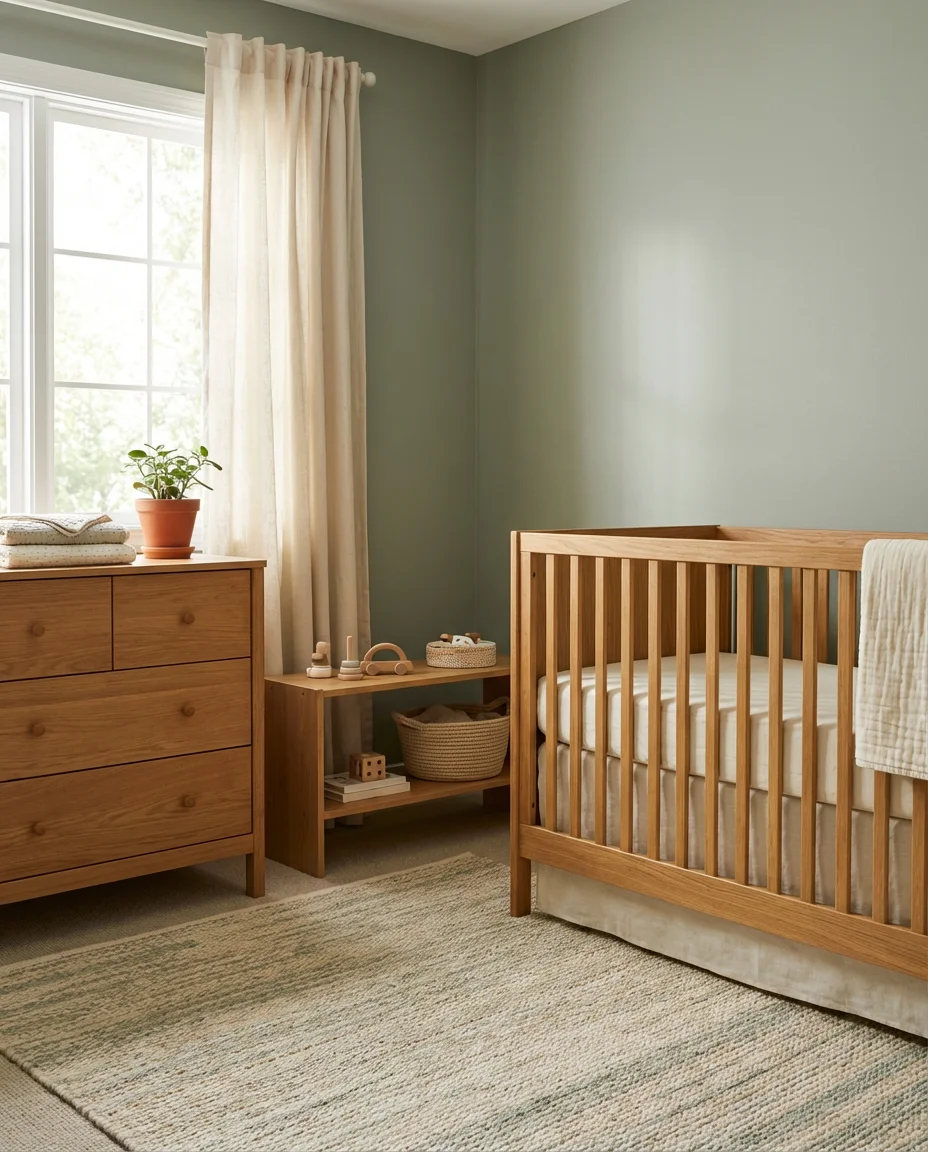
Sage green has quietly become one of the most beloved nursery colors in recent years, and it works for girls’ rooms in a way that feels fresh and unexpected. It pairs beautifully with warm walnut and honey oak tones, creating a room that reads as botanical and serene rather than cool or clinical. Layer in a rug with cream and green tones and soft linen curtains, and the room feels like something from a Scandinavian interior blog—effortlessly composed.
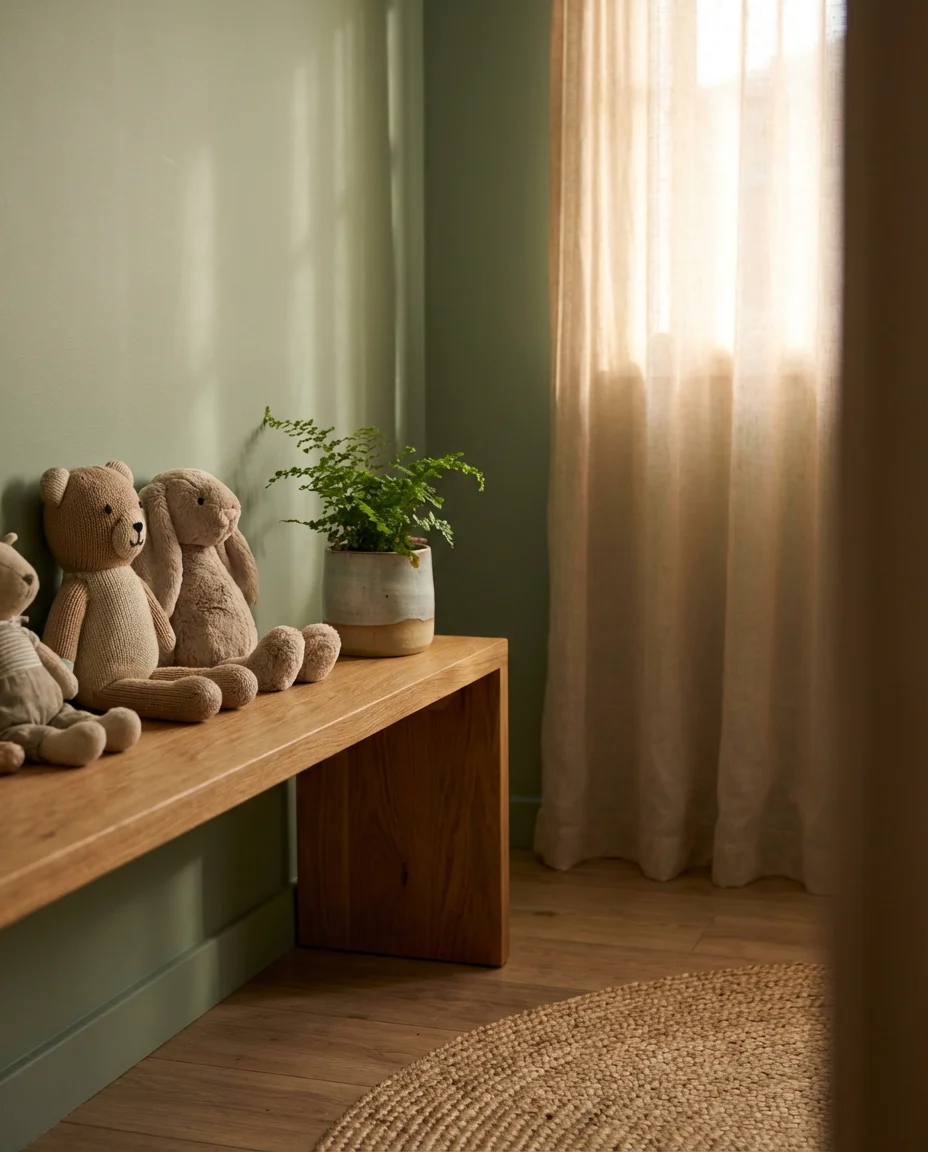
One real homeowner shared that choosing sage for their daughter’s nursery was the decision they were most glad they made—not because it’s trendy, but because it made the room feel calming to be in as a parent during those long nighttime feeds. Color psychology research consistently shows that muted green tones lower cortisol levels, which means a sage nursery might actually help both baby and parent feel more relaxed. That’s a design benefit you can’t get from a perfectly curated Instagram grid.
14. Gallery Wall of Watercolor Animal Prints
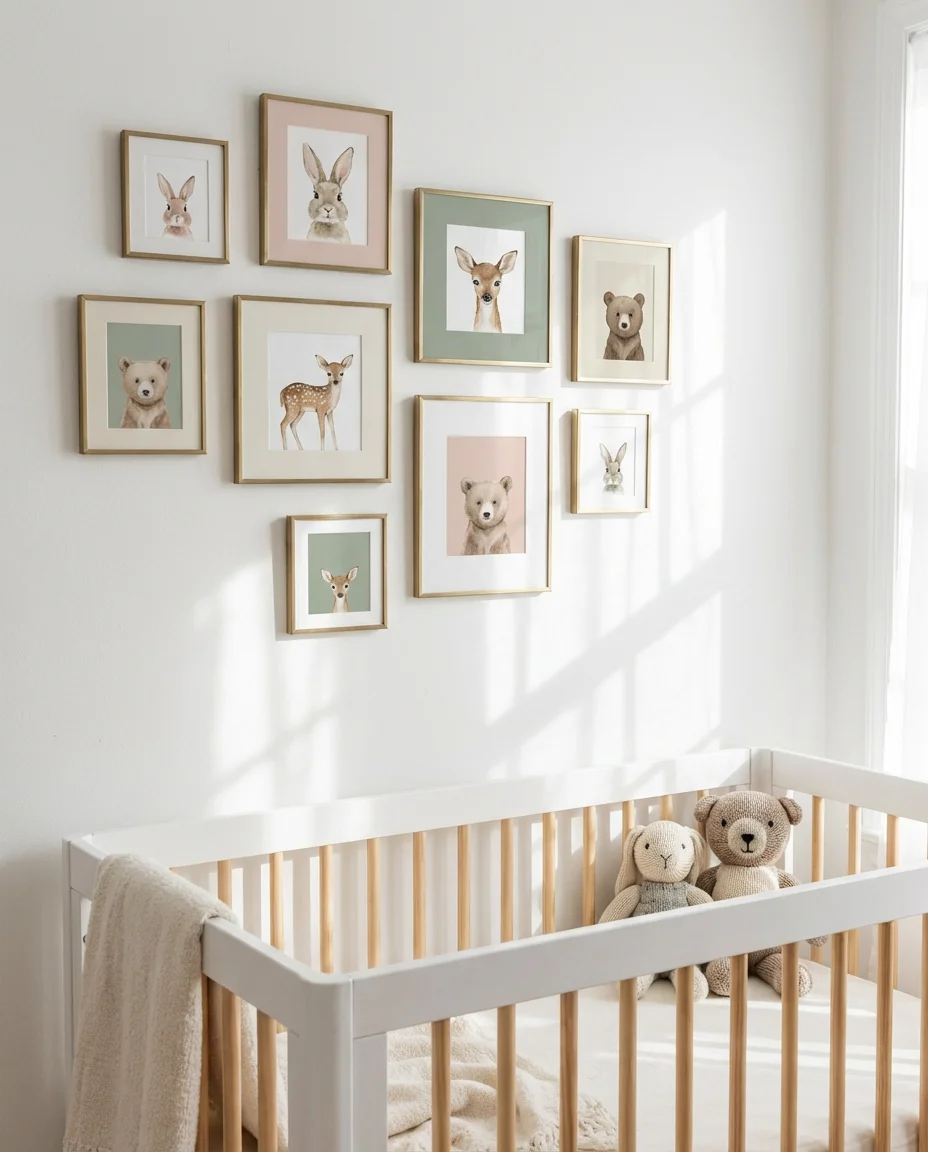
A gallery wall in a nursery sounds intimidating, but when you anchor it with a consistent style—like watercolor animal prints in a soft, limited palette—it comes together with surprising ease. The key is choosing prints that share a color story: blush, cream, sage, and gold, for example, or dusty blue, terracotta, and ivory. Frame them in matching thin brass frames, and the wall reads as a collection rather than a jumble. It’s one of the most shareable ideas in nursery design right now.
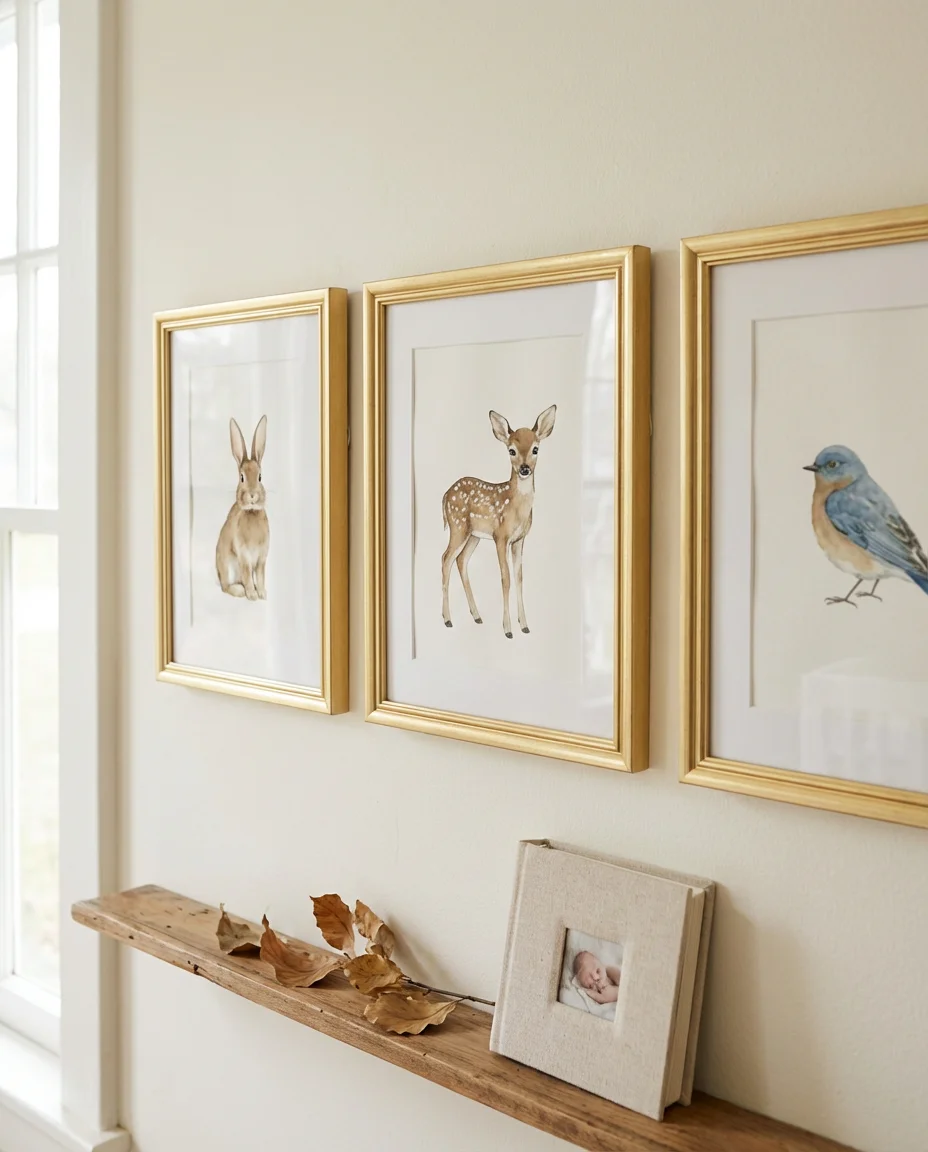
The most common gallery wall mistake in nurseries is hanging everything too high. Artwork in a room where the primary occupant spends a lot of time horizontal—looking up from a crib or playing on the floor—should be hung lower than you’d place it in a living room. Aim to center the grouping at roughly 50 to 55 inches from the floor rather than the standard 57 to 60, and you’ll find the room feels more proportionate and the prints are actually visible to the little person they’re meant for.
15. Plush Boucle Rocker or Glider
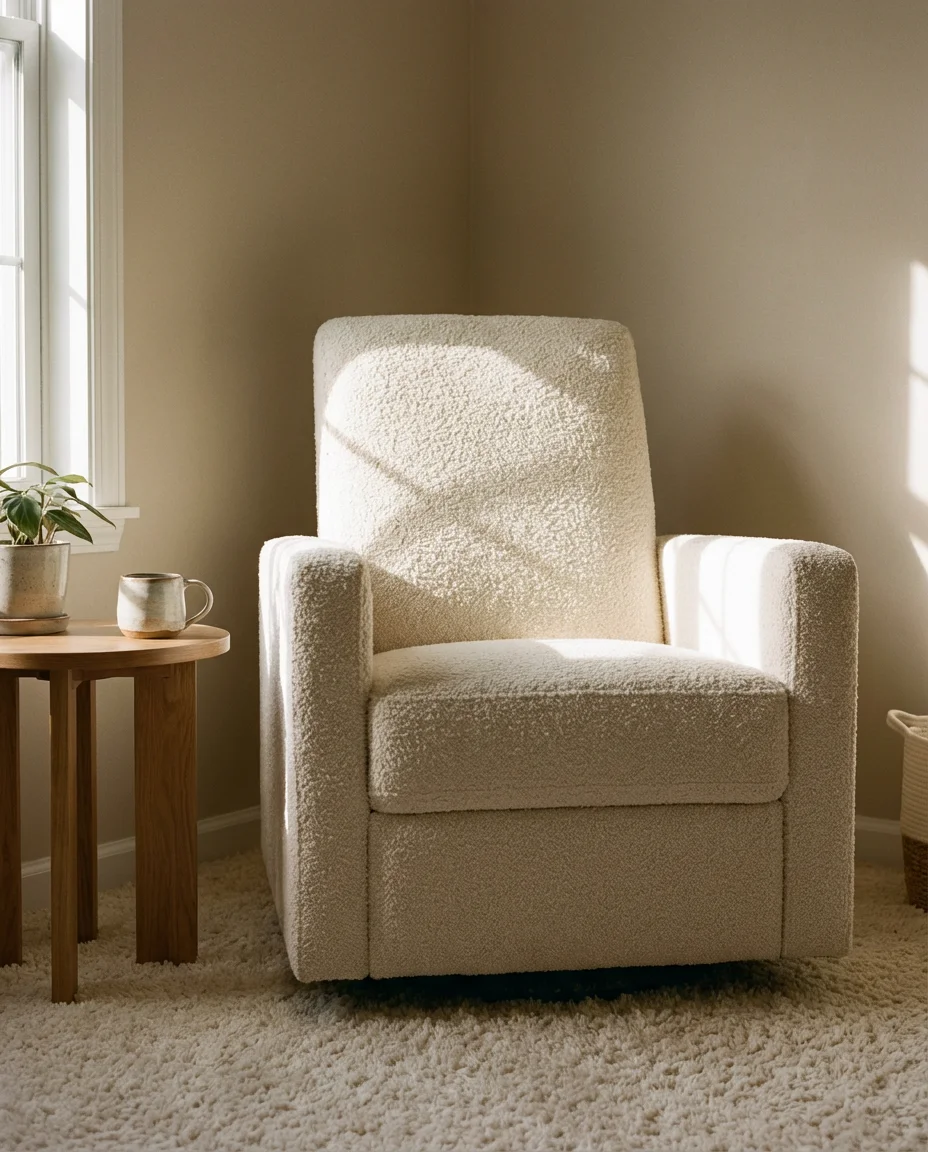
The nursing chair is perhaps the single most important piece of furniture in the nursery—you will spend more hours in it than you can currently imagine—and in 2026, the boucle upholstered rocker or glider is the choice that keeps appearing in the most beautiful nursery inspiration boards. The looped, textured fabric adds tactile warmth and visual softness that makes even a functional piece feel like genuine decor. It photographs beautifully against both neutral and colorful walls.
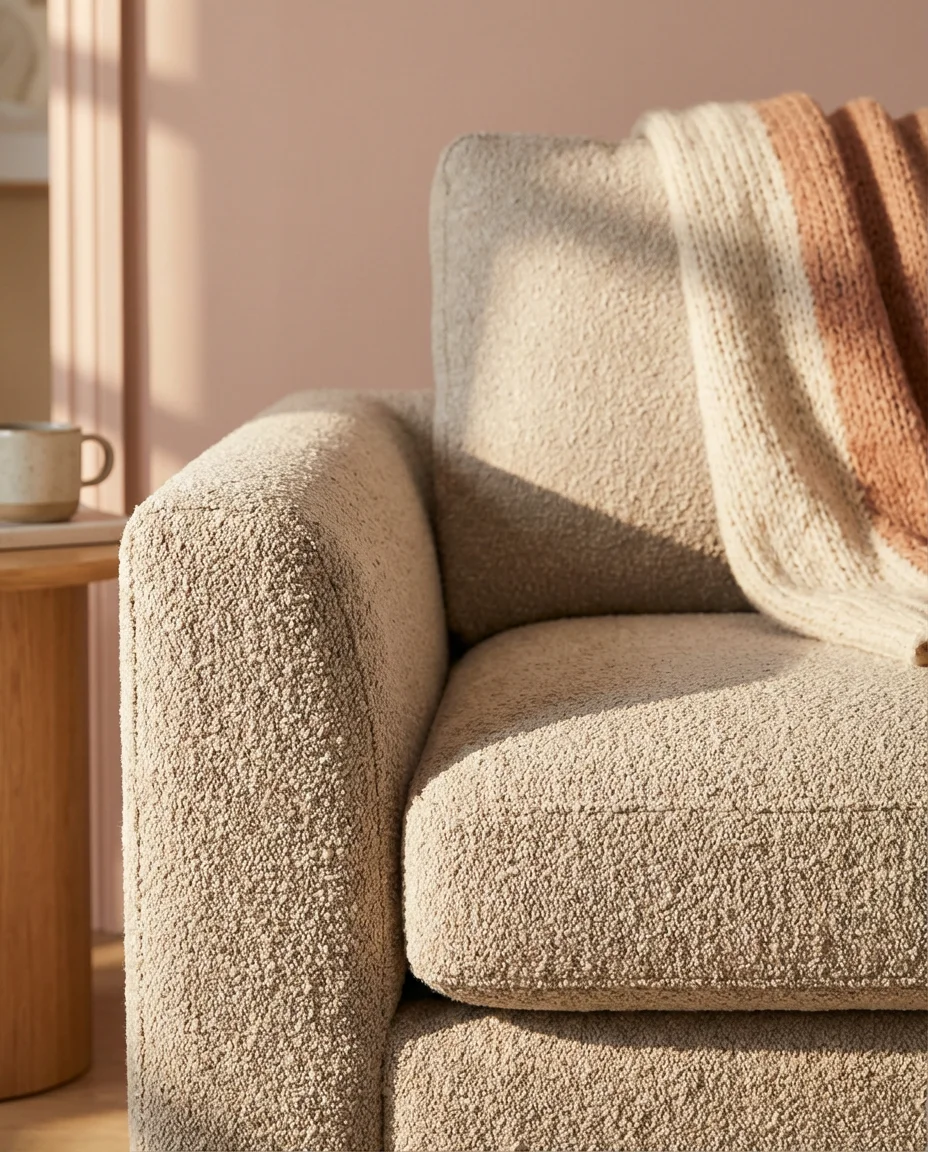
Before you fall completely in love with a boucle chair, a practical word: boucle fabric can snag on jewelry and can be tricky to clean if spit-up or leaking bottles get involved—which they will. Look for boucle options with a performance weave or a stain-resistant treatment, or choose a chair with removable, washable cushion covers. Several brands, including Babyletto and Namesake, now offer boucle-look gliders specifically engineered for nursery life, combining the aesthetic you want with the durability you actually need.
16. Floral Ceiling Treatment for a Wow Moment
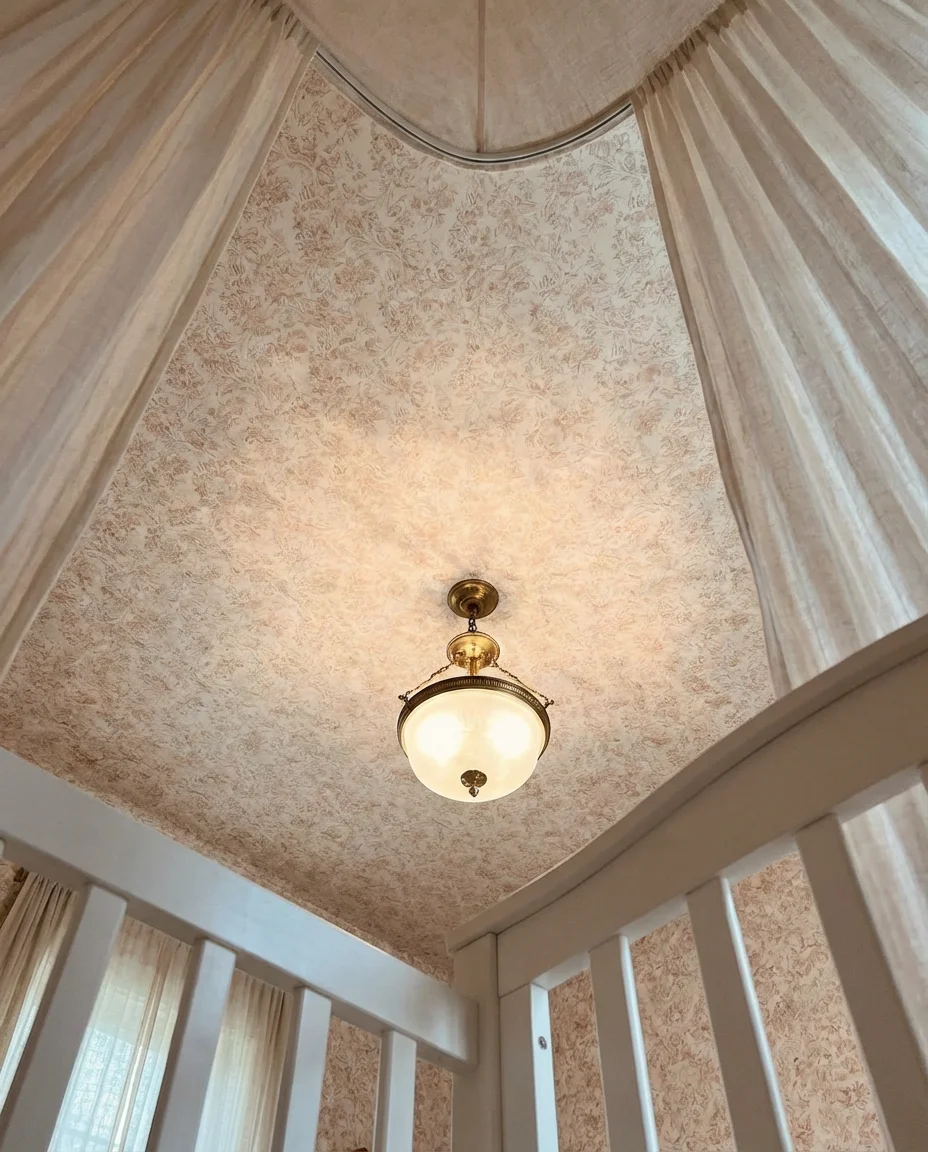
The ceiling is the one wall in the nursery that the baby will actually study—and yet it’s almost always left plain white. Painting it a soft complementary color, papering it with a delicate floral wallpaper, or adding a hand-painted wreath of botanicals directly above the crib creates the kind of moment that stops people cold the first time they walk into the room. It’s unconventional, utterly personal, and one of the most talked-about themes in forward-thinking nursery design right now.
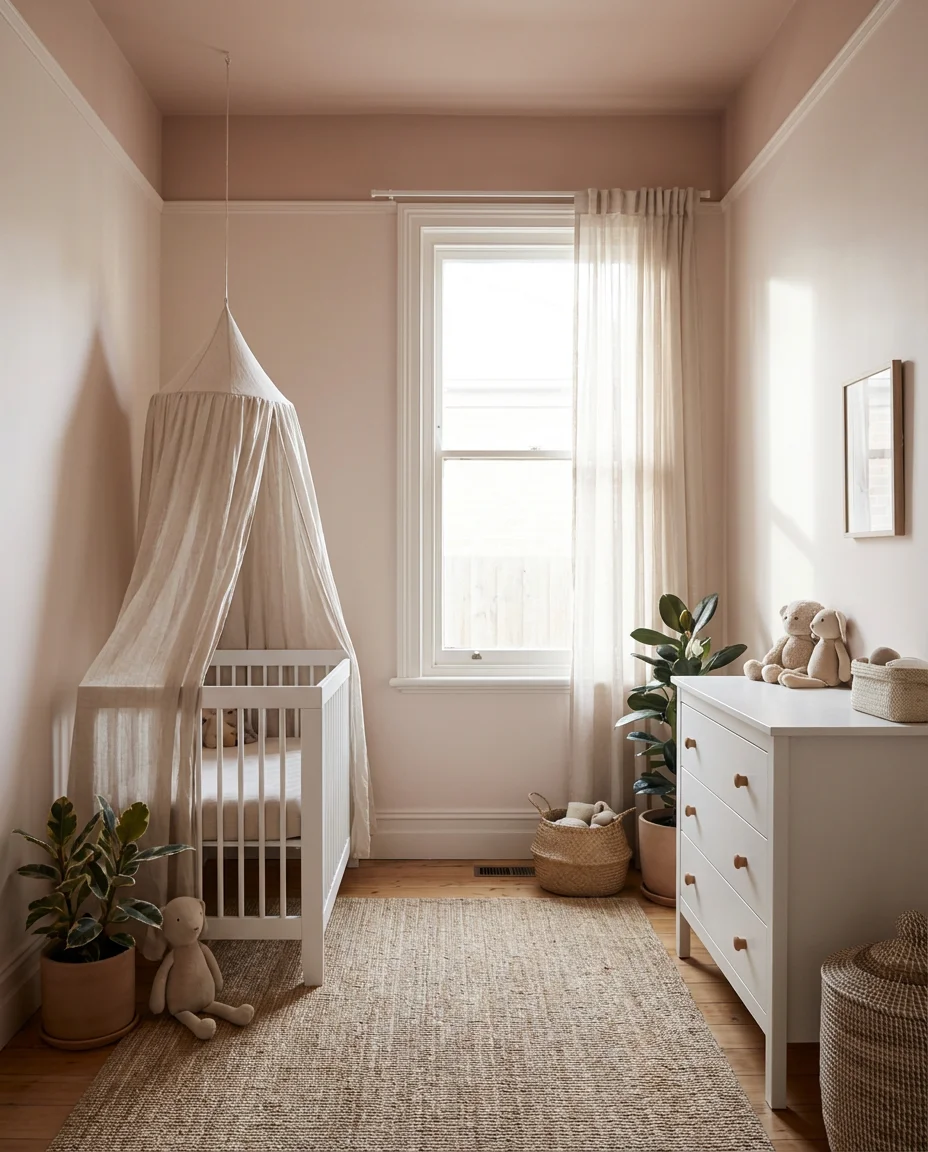
This works best in rooms with a standard eight-foot ceiling rather than vaulted or coffered ceilings, where the intimacy of the gesture really lands. A painted ceiling in a slightly deeper version of the wall color—just one or two shades richer—creates a cocooning effect that makes a small nursery feel intentionally intimate rather than cramped. If painting the full ceiling feels like too big a commitment, papering a medallion shape or painting an arch directly above the crib creates the same magic on a smaller scale.
17. Layered Textiles for a Cozy Nook Feel
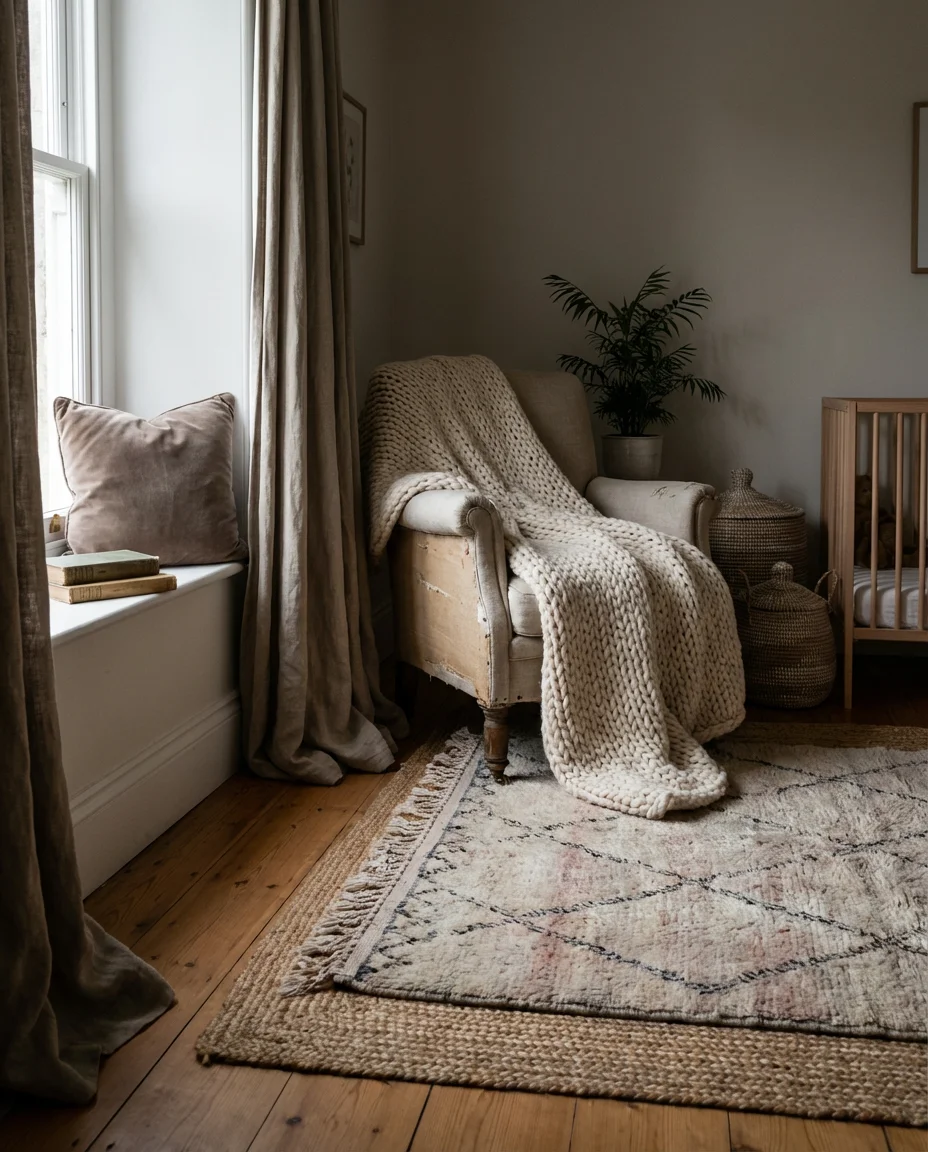
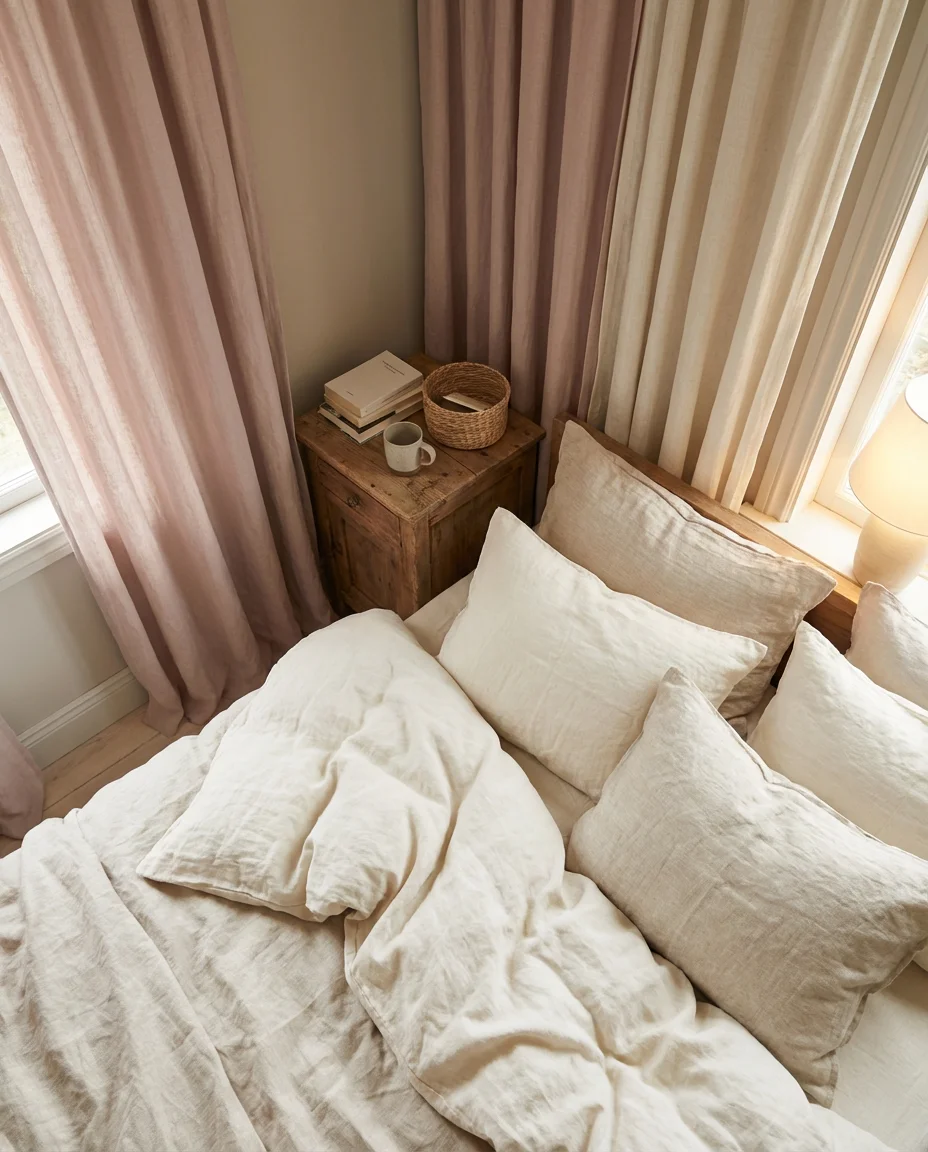
A nursery that feels truly cozy—not just decorated, but genuinely warm and enveloping—usually owes that quality to layered textiles. A chunky knit throw over the glider, a Moroccan-style rug layered over a jute base, linen curtains pooling slightly on the floor, a velvet cushion on the window seat—each layer adds depth and makes the room feel lived-in and loved from day one. This is the kind of decor approach that Apartment Therapy calls “collected,” and it’s exactly right.
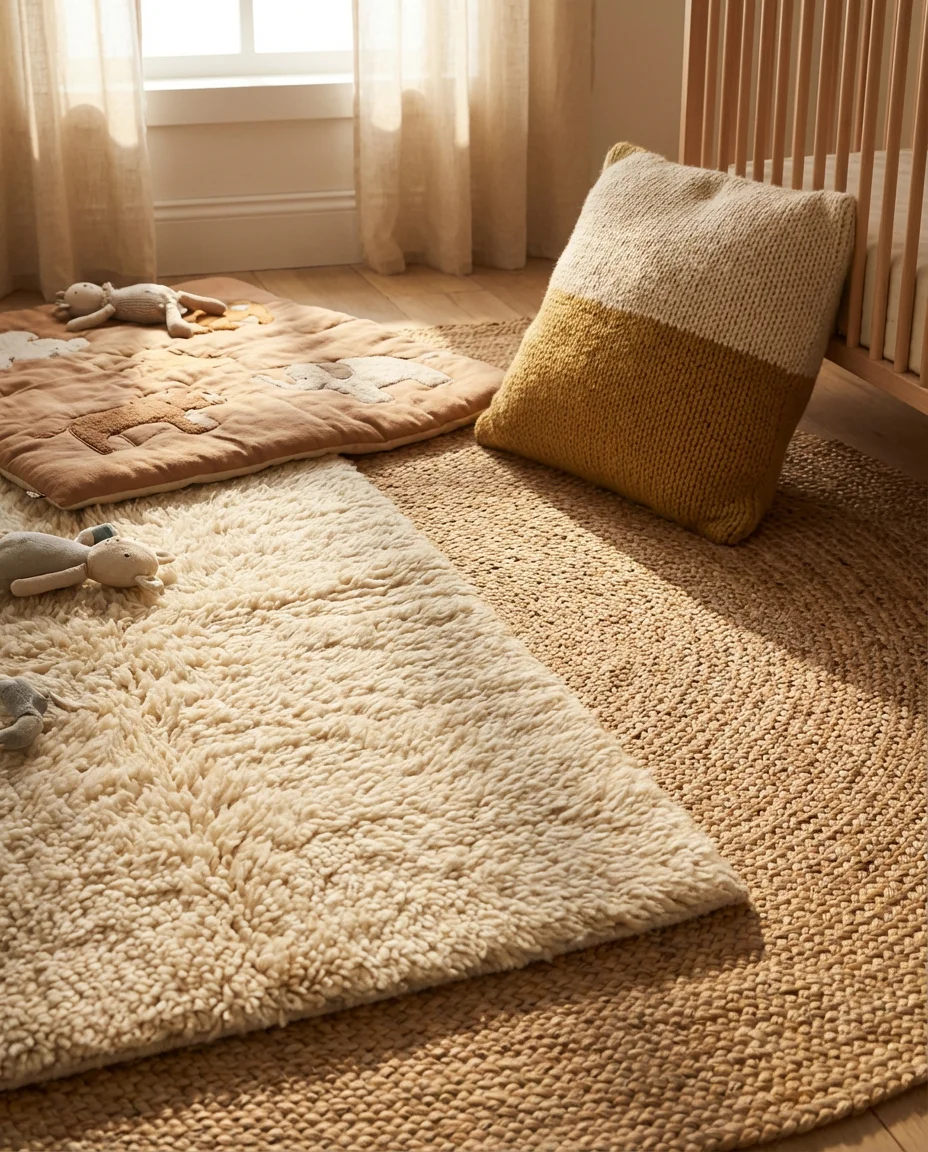
The layered-textile approach is particularly well-suited to nurseries in the American Northeast and Midwest, where long winters make warmth—visual and physical—a genuine priority. A thick wool rug underfoot makes a 6 AM feeding feel far less brutal, and heavy linen drapes block early-morning light and street noise in a way that thin sheers simply can’t. Think of your textile choices as doing triple duty: aesthetics, acoustics, and temperature regulation, all at once.
18. Monogram Wall Initial as Art
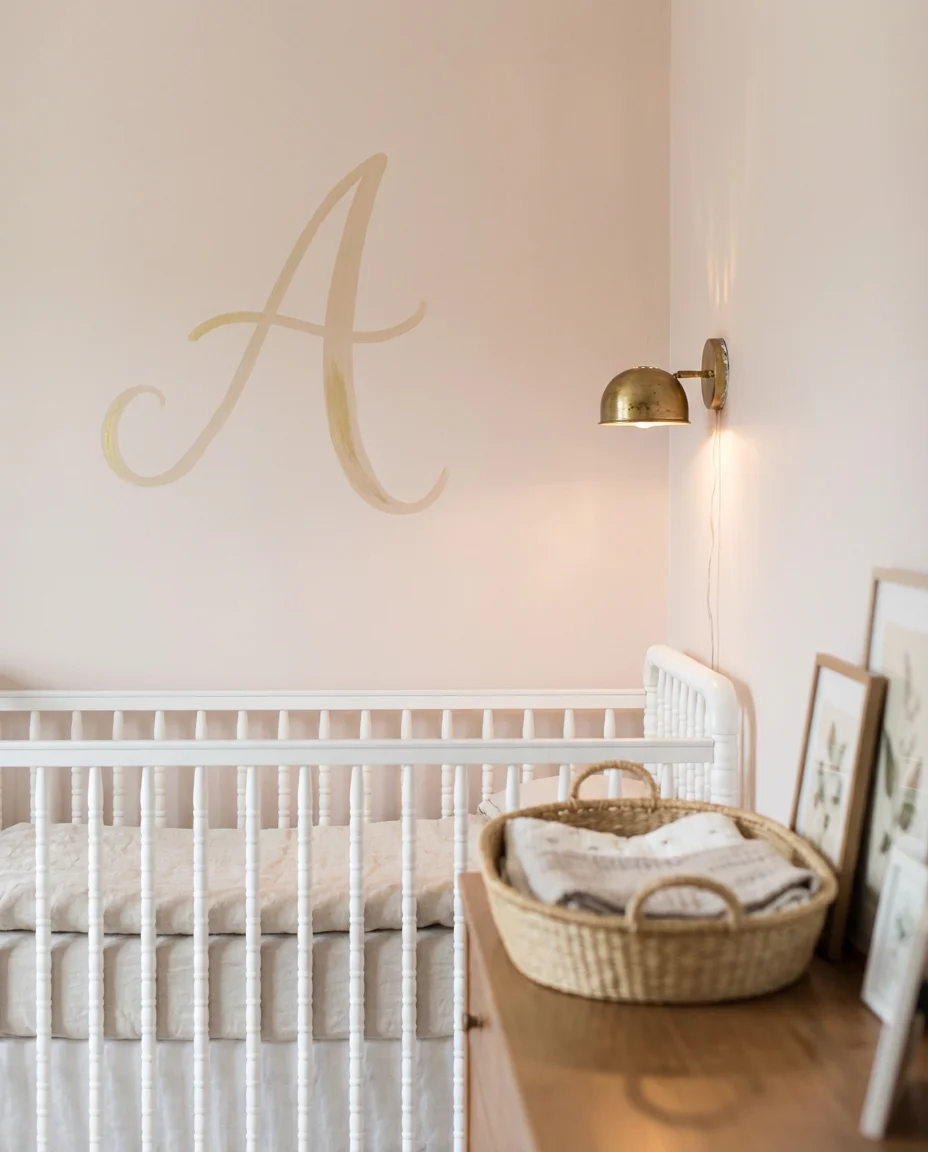
There’s something deeply personal and genuinely timeless about a large-scale monogram letter on the nursery wall. In 2026, the look has evolved beyond simple wooden block letters toward more sculptural interpretations: hand-painted script initials, neon-light letters in soft blush or warm white, or oversized wooden letters with a hand-carved or wicker-wrapped finish. It’s personal wall decor that anchors the room in the child’s identity from the very beginning and doubles as genuine inspiration art.
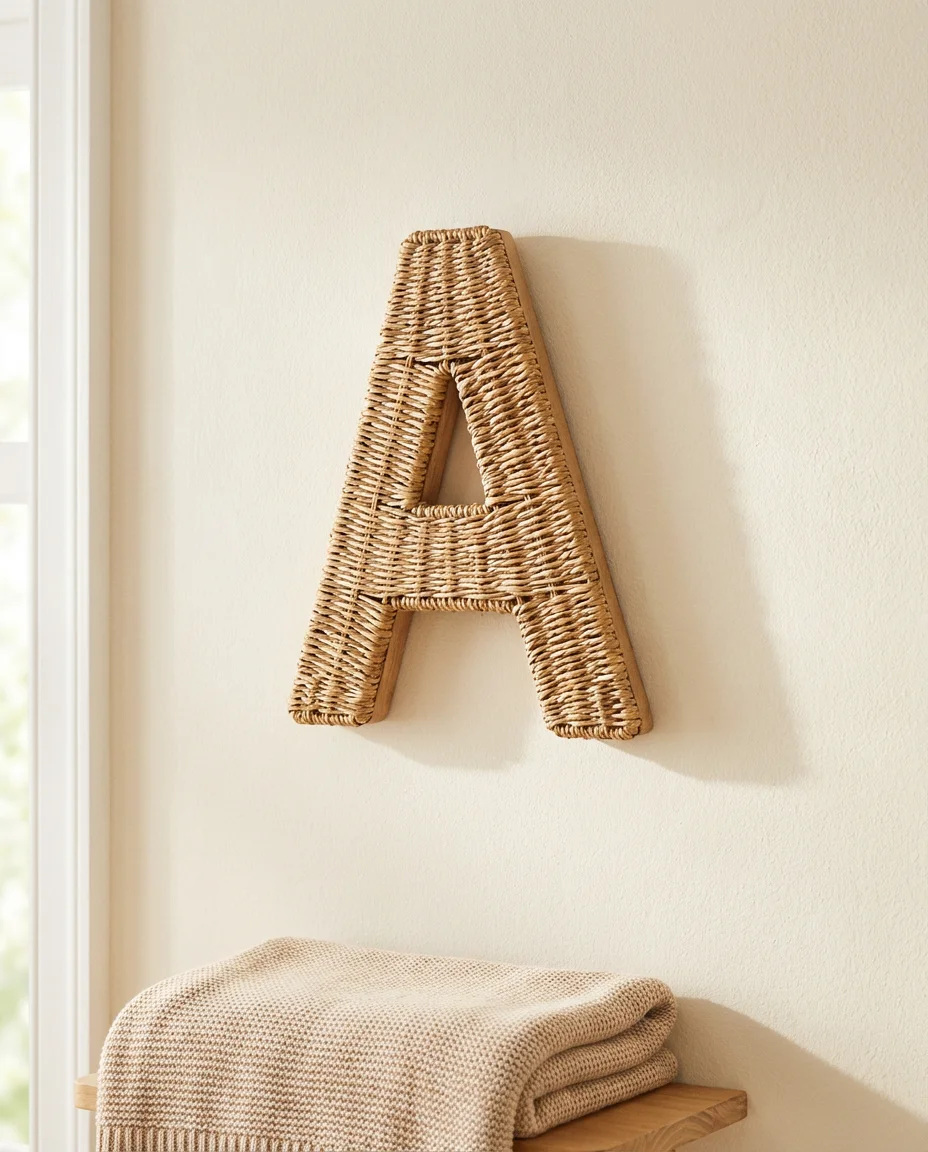
In American nursery culture, the personalized initial has deep roots—it appears in baby shower traditions, birth announcements, and heirloom quilts across generations. Translating that tradition into a designed, intentional wall moment gives it new life. A 24-inch painted wooden letter in a script font, hung at center-wall height above the crib, costs between $40 and $120 depending on material and source, and it’s one of the most immediately personal details in any nursery. It tells the story of who this room belonged to before a single other object was in place.
19. Dreamy Lilac and Lavender Color Story
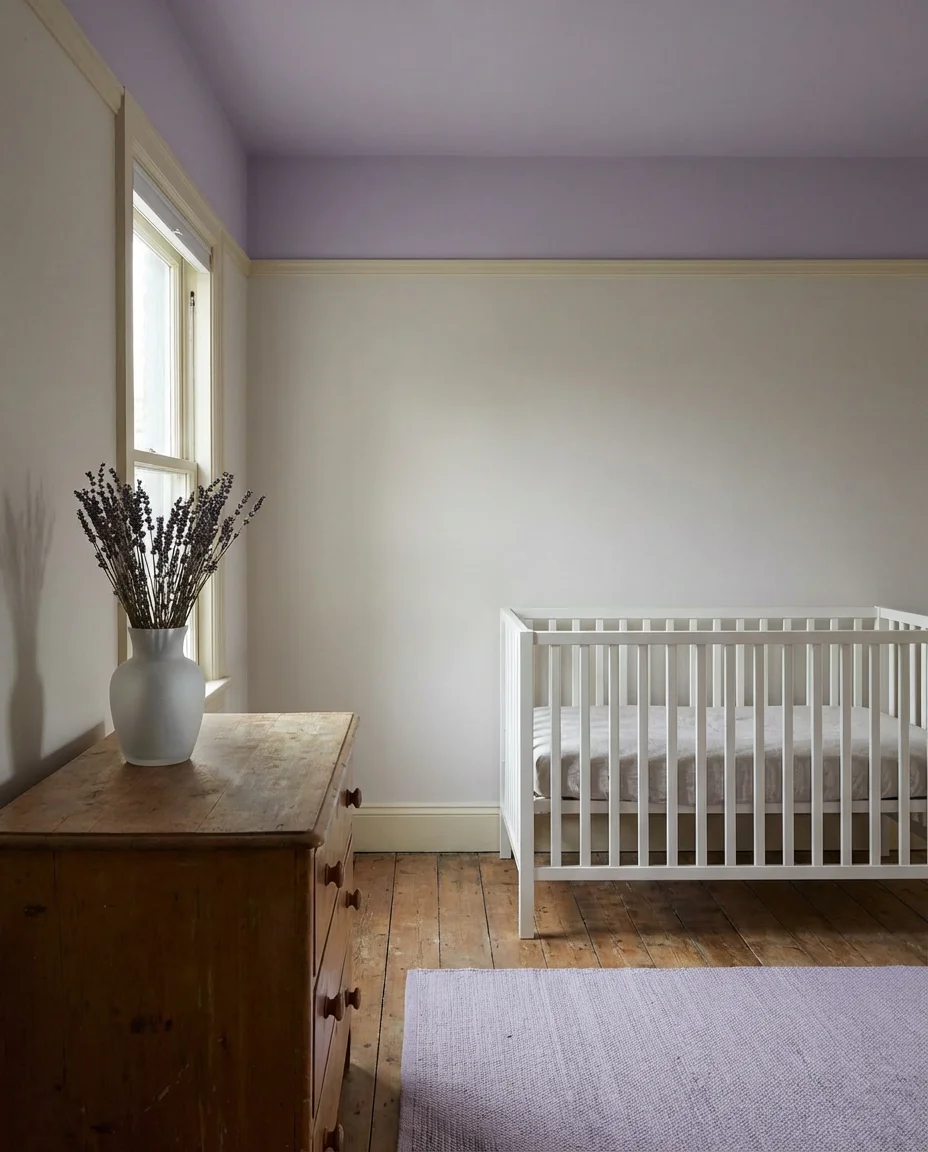
Lilac and lavender are having a significant moment in interior design broadly, and the nursery is where the palette feels most at home. Soft purple tones carry all the warmth and femininity of pink but with an added dreaminess—they read as more unusual, more personal, and more specific to a particular sensibility. A lilac-washed room with cream woodwork, a woven rug in pale purple and ivory, and a few dried lavender stems in a ceramic vase is the kind of space that feels genuinely unlike anything else.
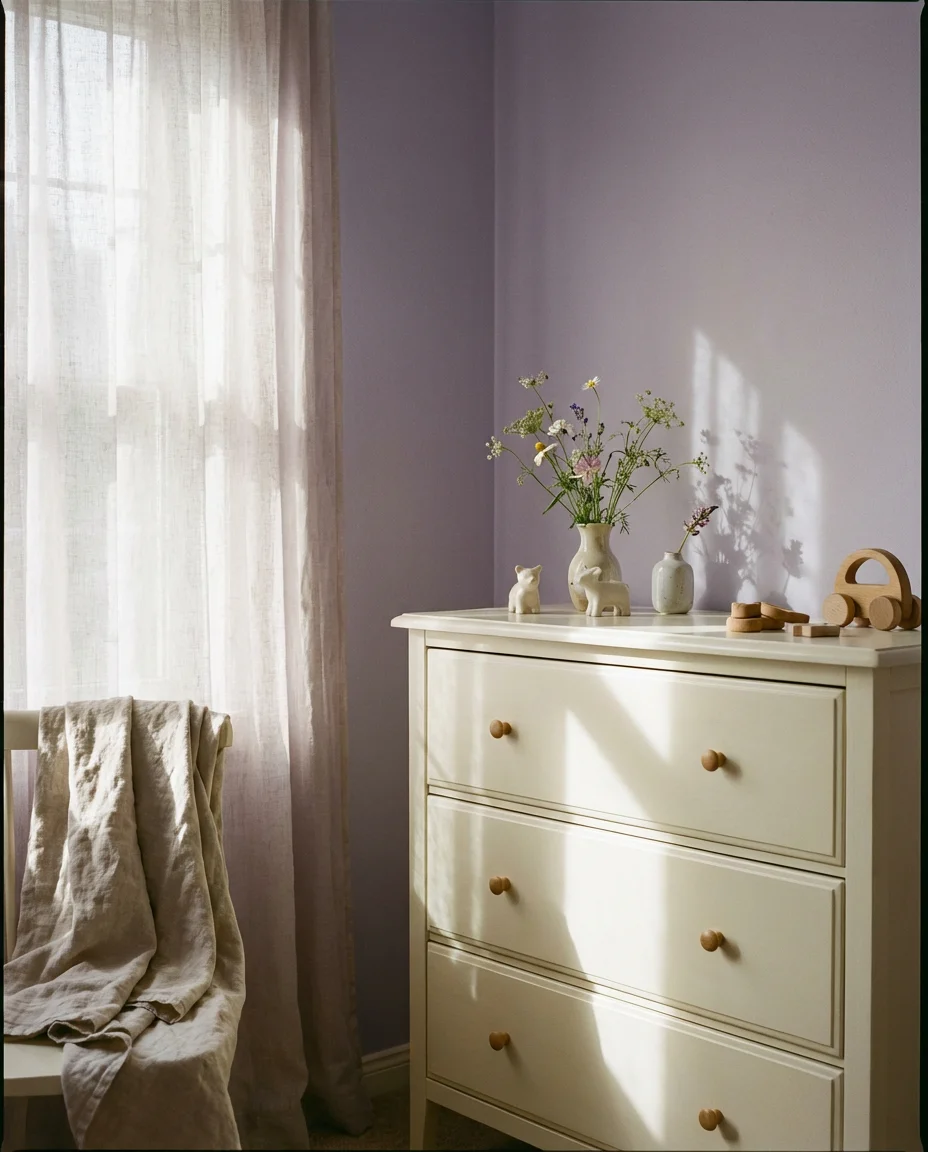
Lavender and lilac are notoriously tricky to get right on walls because they’re highly sensitive to light—the same color can read as gray-purple in morning light and almost pink in afternoon sun. Before committing, paint large swatches (at least 12 by 12 inches) on multiple walls and observe them at different times of day and under the nursery’s specific lighting. If the room gets mostly north-facing light, look for a lavender with a warmer, slightly pink undertone to prevent it from reading cold and gray. A proper test swatch saves a lot of repainting.
20. Statement Mobile as Sculptural Art
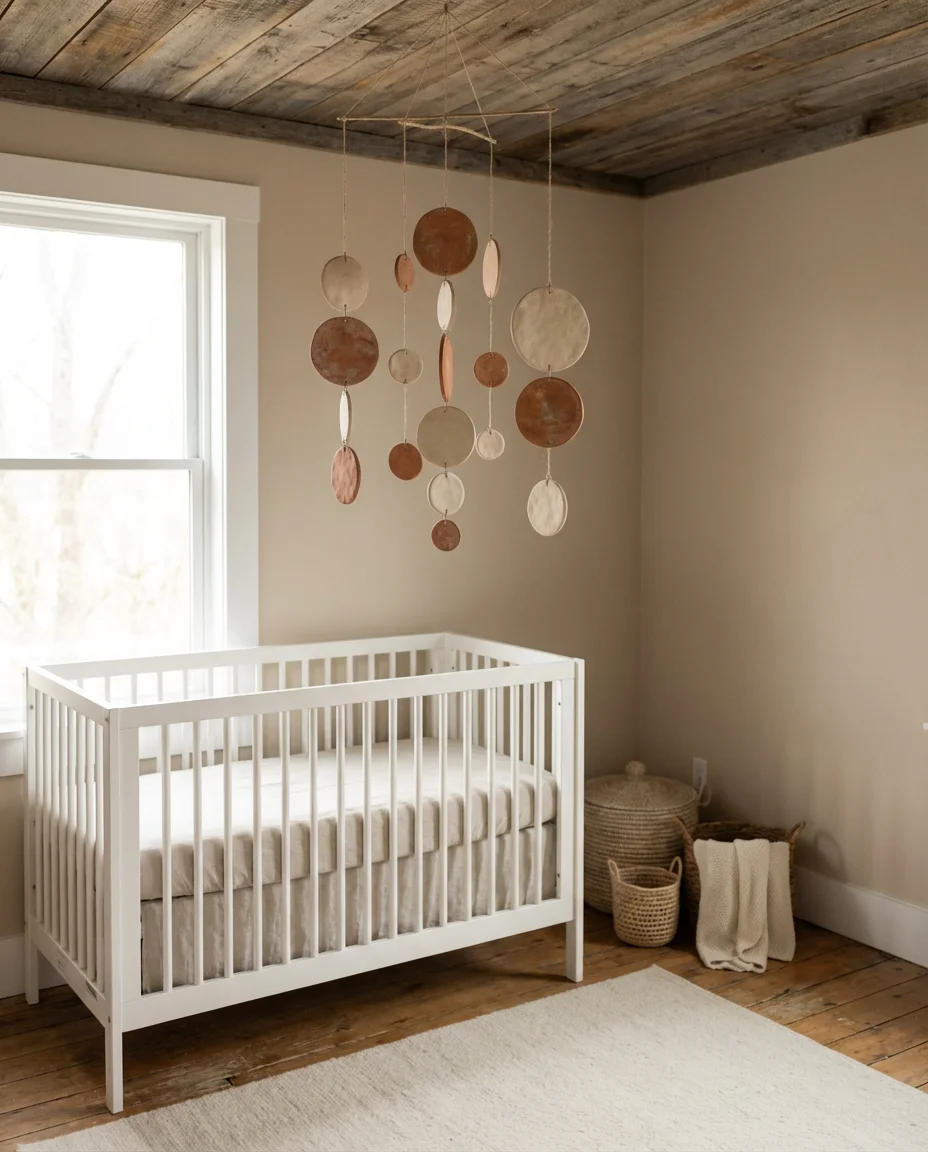
The crib mobile has graduated from a developmental toy to a genuine design statement, and in 2026 the options are extraordinary. Handmade mobiles from independent Etsy artists—featuring air-dried clay discs, hand-cut paper cranes, or tiny woven circles in earthy tones—function as sculptures that happen to gently spin. When paired with a neutral room and simple themes, a stunning mobile becomes the piece that takes the space from nice to unforgettable.
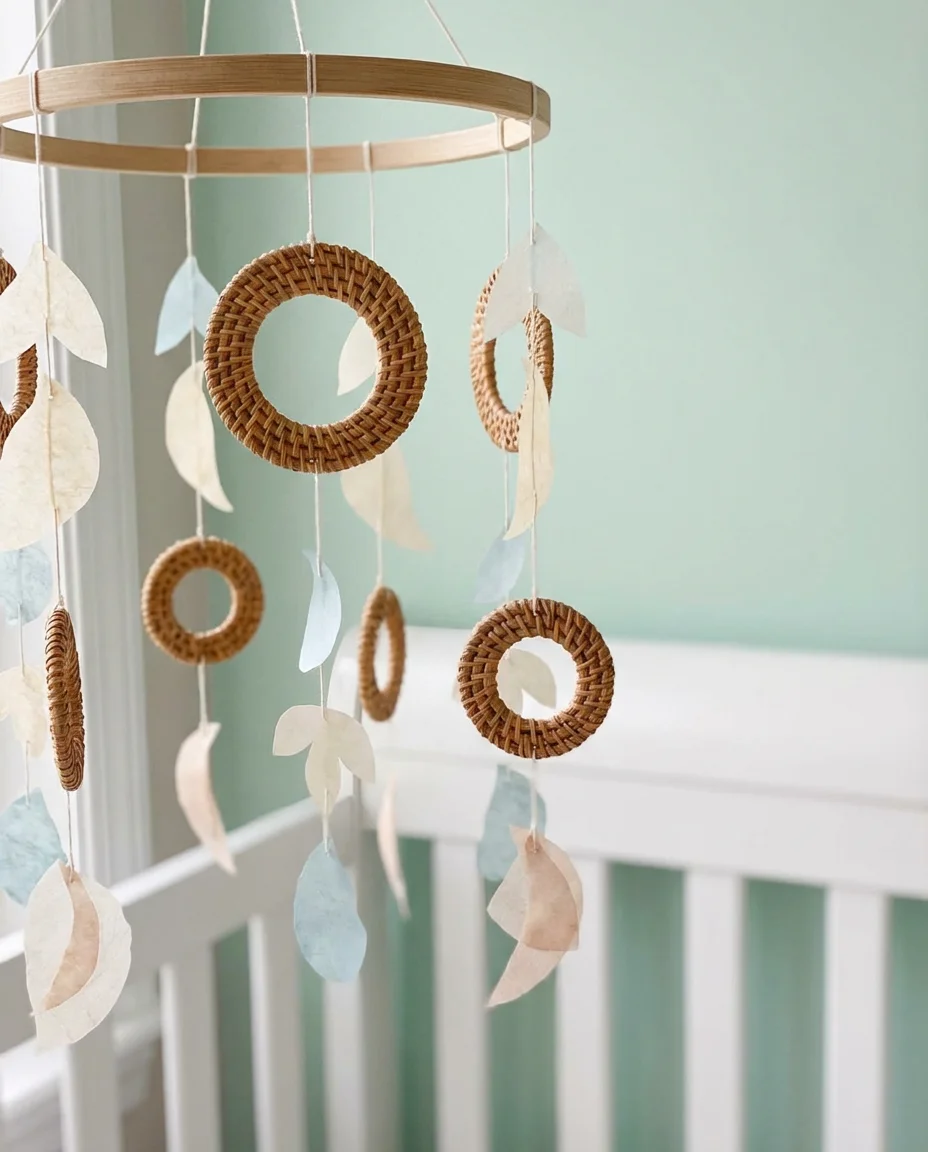
Searching Etsy for nursery mobiles opens up a remarkable world of artisan craft—and it’s worth the time. Handmade mobiles in custom colorways can be ordered to match your exact nursery palette, and many makers offer personalization options. Prices range from around $45 for simpler fabric designs to $150 or more for elaborate sculptural pieces with ceramic or wooden elements. Whatever you choose, ensure it’s mounted securely to a ceiling hook rated for the weight, and remove it once the baby can push up on hands and knees—typically around five months.
21. Striped Accent Wall in Blush and Cream
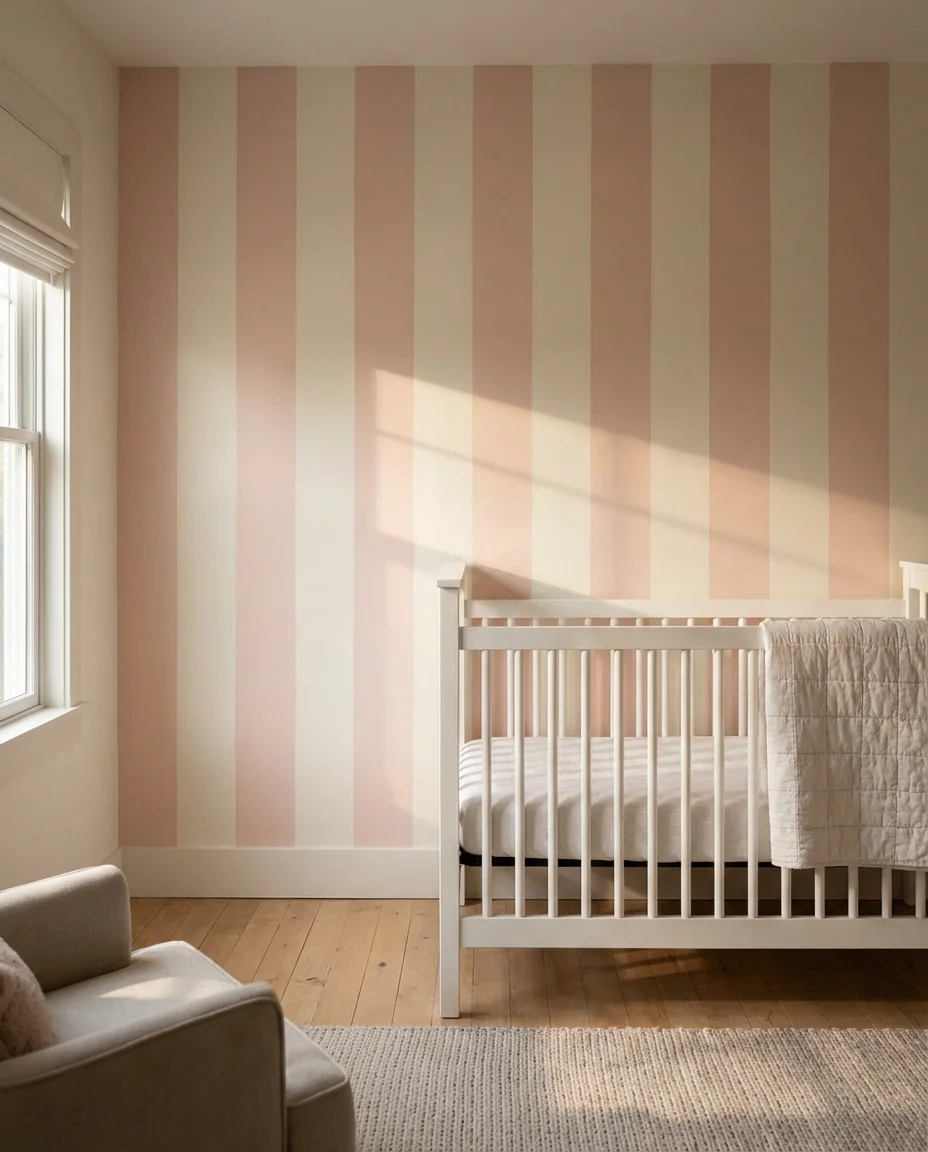
A painted stripe accent wall is one of the most DIY-friendly ways to create serious visual impact in a nursery, and the blush-and-cream combination makes it feel refined rather than sporty. Vertical stripes read as elegant and architectural—they make ceilings feel higher—while horizontal stripes create a more playful, coastal feel. For a girls’ room, vertical blush and cream stripes behind the crib, set at about 6 to 8 inches wide, have the kind of quiet drama that makes the entire space feel designed, not decorated.
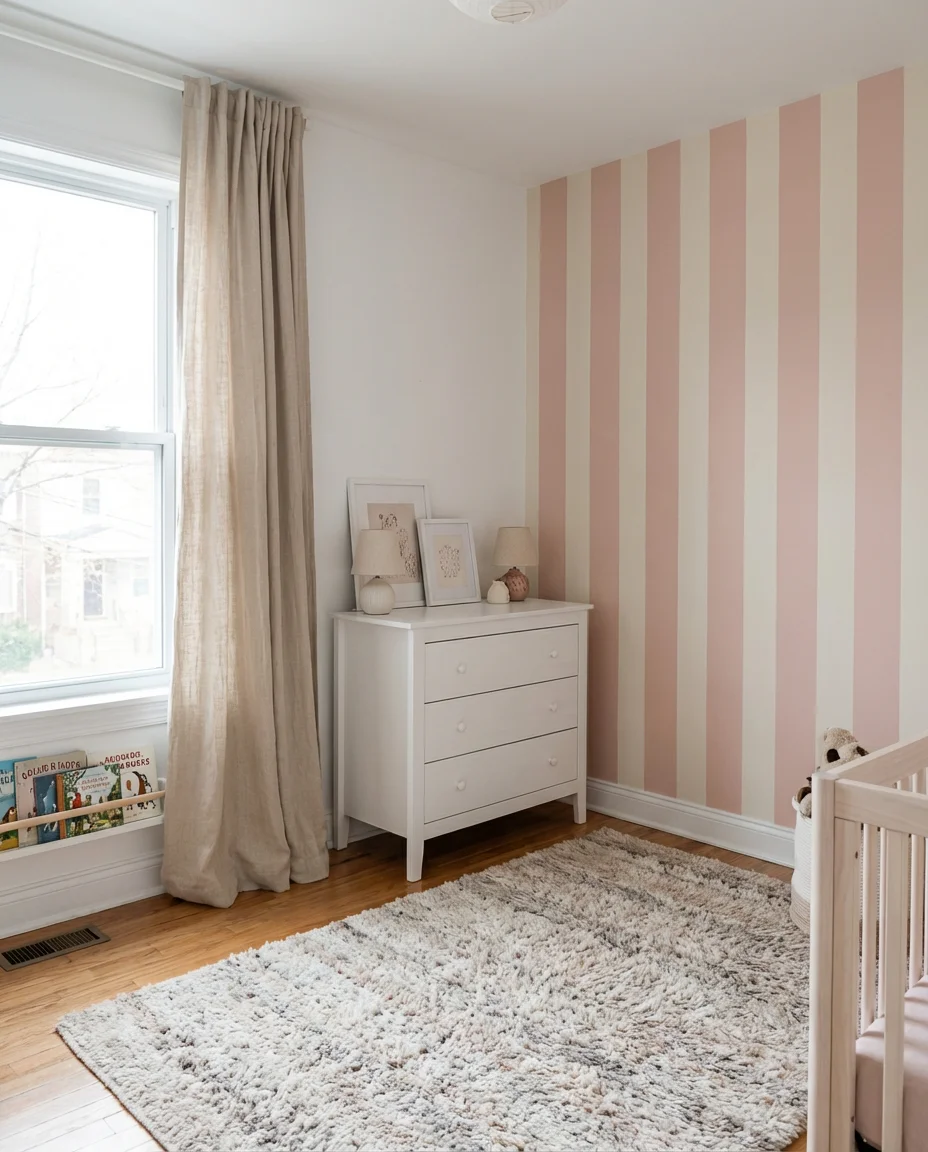
The biggest mistake people make with painted stripe walls is rushing the tape removal. Use Frog Tape rather than standard painter’s tape, and remove it at a 45-degree angle while the paint is still slightly wet—not fully dry. Waiting until the paint cures fully causes the tape to pull edges and creates ragged lines that undermine the whole effect. Score along the tape edge lightly with a blade if needed. Done well, a painted stripe wall is one of the most impactful weekend projects in nursery design, achievable for the cost of a few gallons of paint.
22. Full Bookshelf Wall for a Literary Nursery
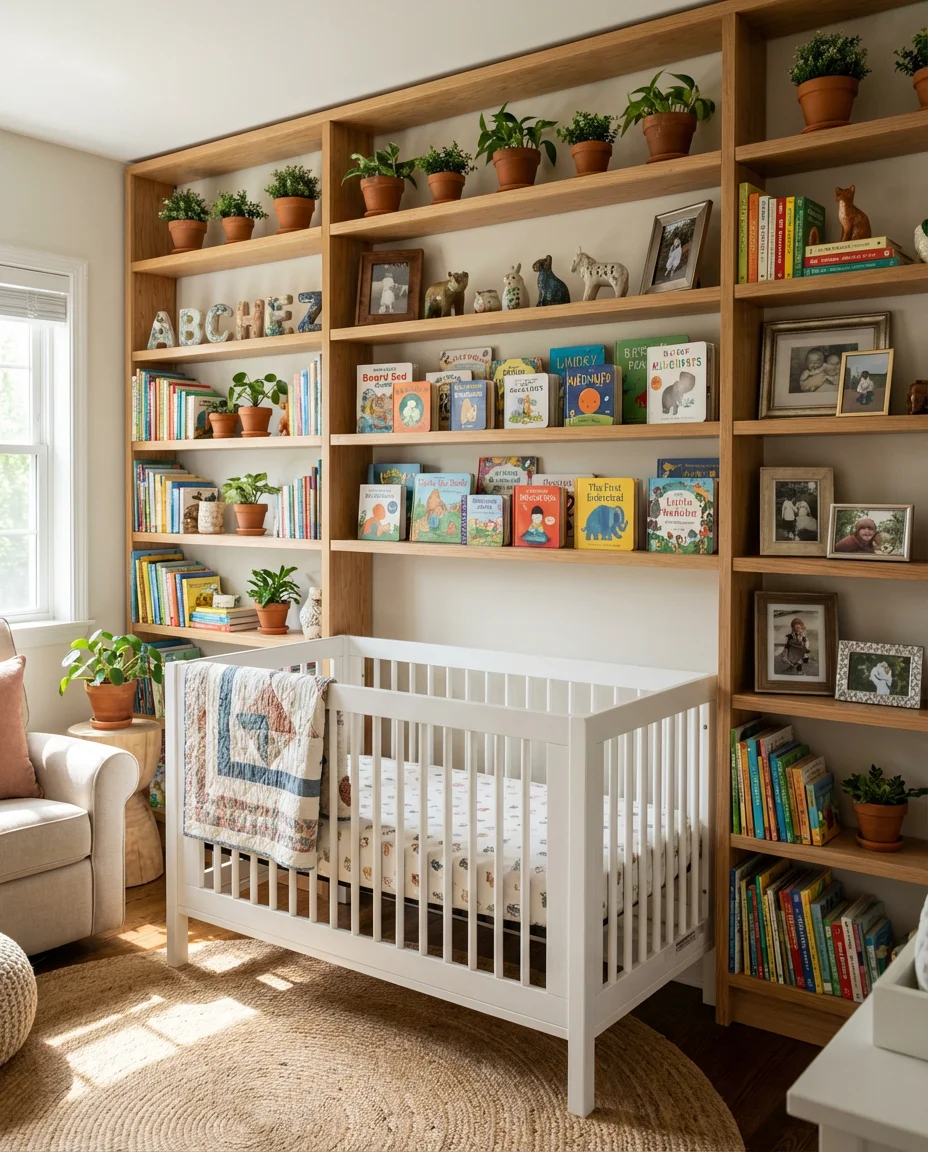
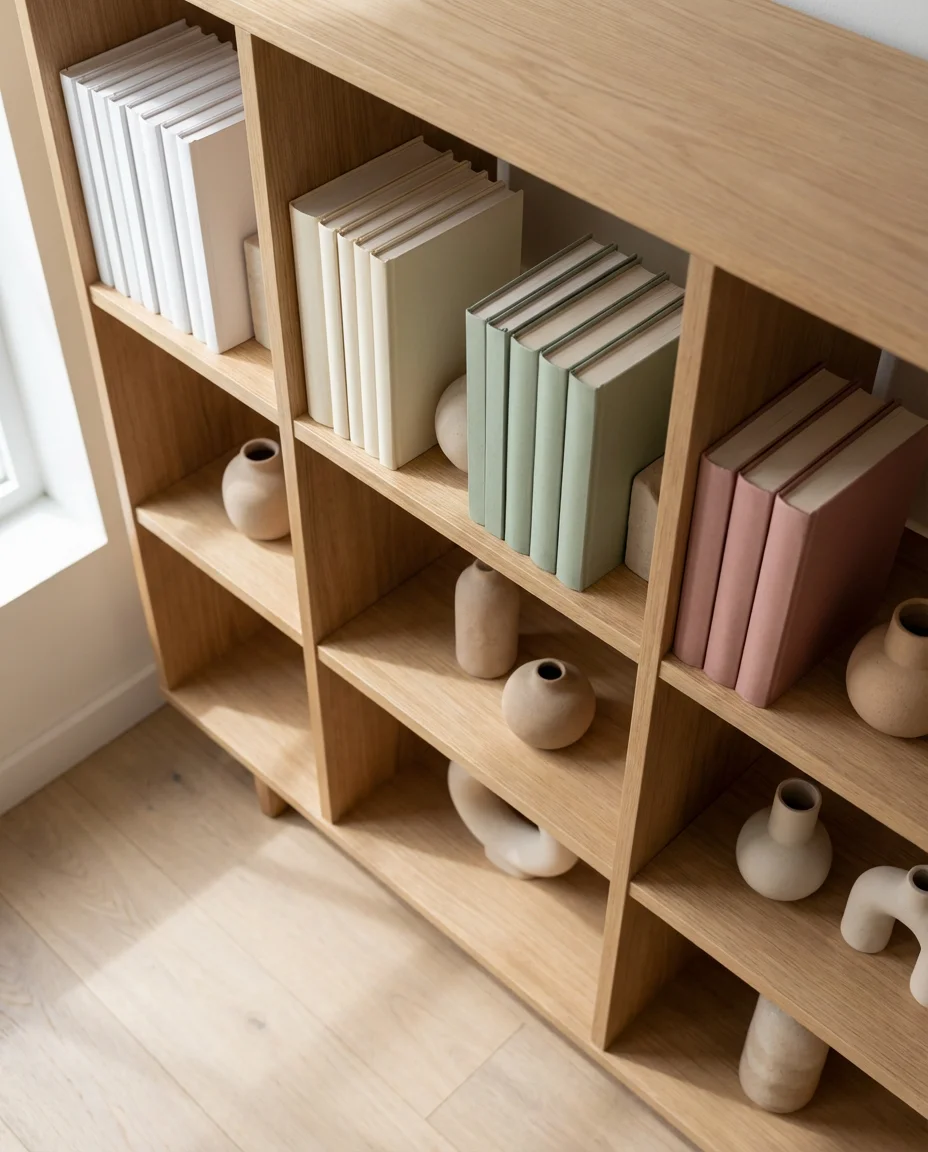
A floor-to-ceiling bookshelf wall in a nursery is one of the most aspirational—and genuinely functional—design choices a parent can make. It signals a value system from day one, and it creates a backdrop that grows richer as the library fills over time. Style the shelves with a mix of forward-facing board books, small plants, ceramic objects, and a few framed photos alongside the titles. The result is a kind of living wall decor that changes as the child does—a perfect blend of vintage literary atmosphere and modern home design.
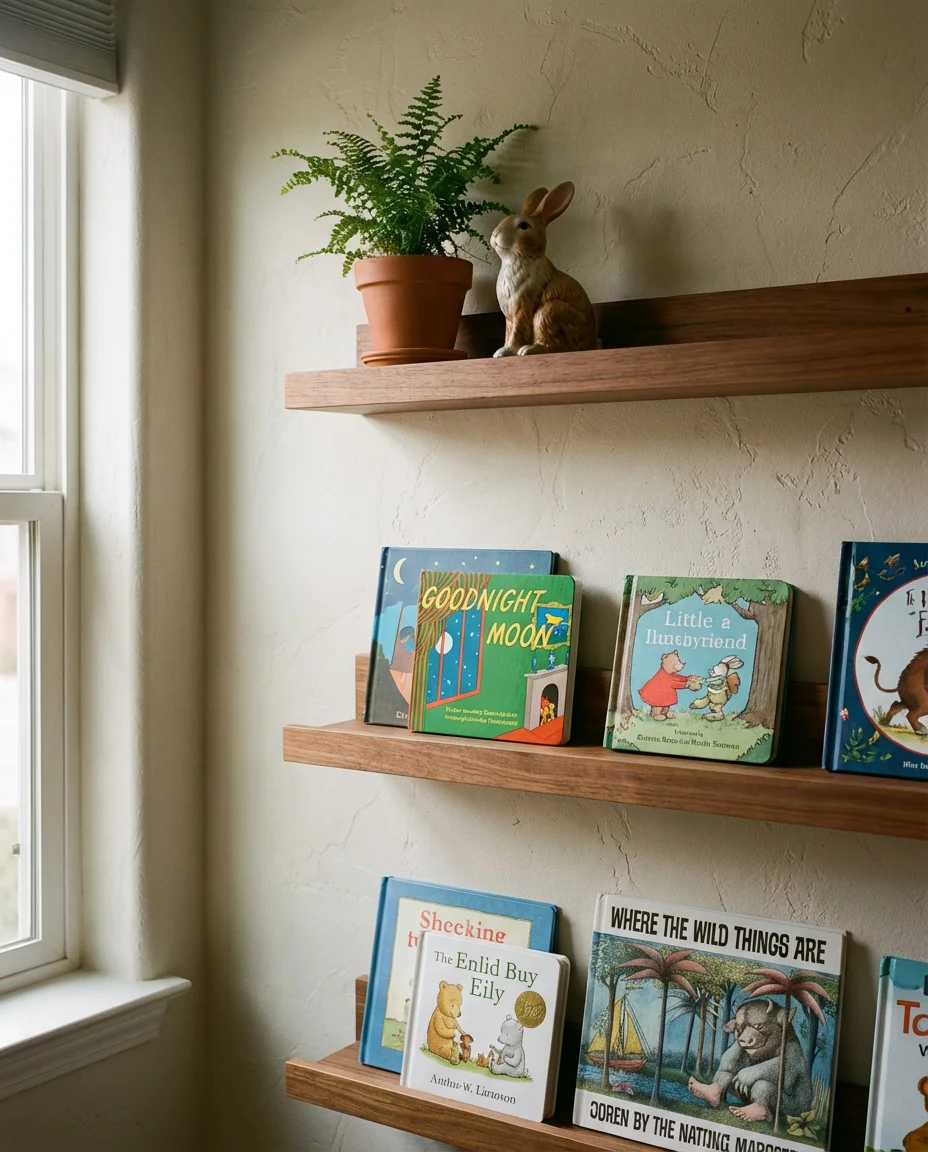
Research in early childhood development consistently shows that the presence of books in the home—specifically, books that are physically accessible and visible to young children—is one of the strongest predictors of early literacy. A nursery bookshelf wall isn’t just beautiful; it’s doing genuine developmental work. Secure all bookcases to the wall with anti-tip hardware, keep heavier objects on lower shelves, and as your daughter grows, hand her the stewardship of organizing her own collection. That sense of ownership over her literary world will matter more than any single design choice you make.
Conclusion
These 22 ideas represent the best of what’s happening in girls’ nursery design right now—and we’d love to know which directions resonate most with you. Are you drawn to the vintage romanticism of a French Provincial crib, the grounded warmth of terracotta and cream, or the quiet drama of a botanical wallpaper wall? Drop your favorites—and any questions—in the comments below. We read every one, and your ideas often inspire future posts too.