
Still scrolling past the same red and gold Christmas tree photos, unsure which one actually fits your living room? You’re not alone — and 2026’s version of this classic pairing is warmer, deeper, and far less glitter-bombed than the ones you saved three years ago.
We spent serious time digging through Hobby Lobby, Etsy, Balsam Hill, Target, and Walmart to pull together only what’s worth your attention this year, from $18 ornament sets to $2,400 pre-lit showpieces.
Inside you’ll find 29 curated ideas covering traditional red-and-gold glam, opulent velvet-and-ribbon styling, whimsical flocked trees, cozy keepsake displays, and grand staircase moments — with budget and luxury versions compared side by side. And stay until the end — we break down the most common mistakes that can ruin these looks.
Why now? After a few seasons of neutral, quiet-luxury holidays, searches for deep red velvet and warm antique gold are climbing again — people want rooms that feel like a memory, not a catalog.
📌 Save this to Pinterest for later — you’ll want to revisit these ideas.
1. Red Bows and Gold in the Bay Window
The bay window is doing half the decorating here. Deep green branches sit against a snowy white backdrop, so the red bows read crisp instead of muddy, and the warm string lights bounce off the glass once it gets dark. Notice the symmetry too: fireplace on one side, red velvet armchair on the other, tree dead center. That framing turns a corner of the living room into a stage, and it costs nothing but furniture placement.
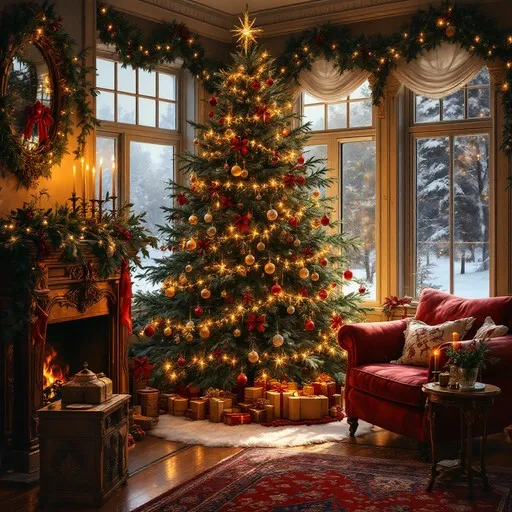
- Main furniture (velvet armchair, secondhand): $180–$650
- Lighting (warm-white pre-lit 7.5 ft tree): $220–$900
- Textiles (red bows, ribbon, tree skirt): $45–$180
- Decor (gold and red ornaments, gift wrap): $70–$260
- Paint or wall treatment (original trim, untouched): $0
Total: $515–$1,990. Budget alternative: buy a secondhand artificial tree on Facebook Marketplace in October for $40–$80, reuse the ornaments you already own, and add one spool of wired red ribbon — you’ll get 60% of this look for roughly $150.
2. Angel Topper, Black Lanterns, Full Glamour
It’s the black lanterns. Everything else on this tree — the angel topper in red and gold robes, the velvet bows, the berry and pinecone sprays — is textbook. The pair of dark lanterns stuffed with spare baubles at the base is what keeps it from looking like a showroom display. They echo the dark gray paneled wall, ground all that shine, and give you somewhere to stash the ornaments that wouldn’t fit.
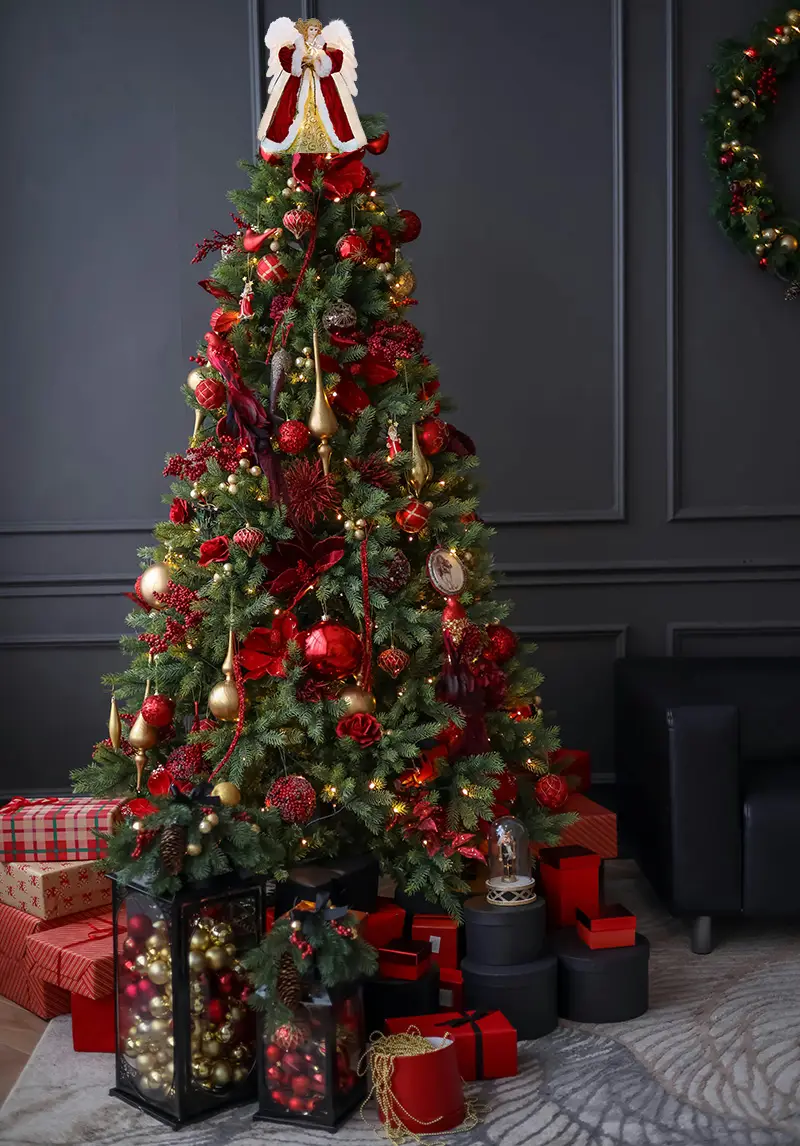
Layer ornaments in three size tiers — 4-inch, 2.5-inch, and 1.5-inch — and hang the biggest ones deepest in the branches rather than on the tips. Large baubles tucked inside add depth and let light pass in front of them, while small ones out front read as sparkle from across the room. Budget about 100 ornaments per 6 feet of tree, and don’t count the florals or the ribbons.
3. Flocked, Candy-Caned, and Slightly Patriotic
Flocked trees look like a snow day in the store and like a dust problem at home. That white coating sheds for the first week or two, and again every time you drag a branch. If you have pets who chew, toddlers, or anyone with asthma, skip it. Red, white, and blue also leans patriotic fast on flocked branches — keep blue to under a fifth of the ornaments and it stays Christmas.
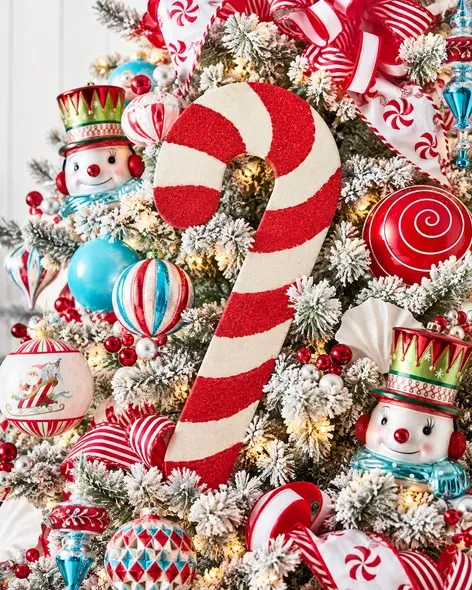
The formula: 55% flocked white branches, 25% red, 15% light blue and silver, 5% evergreen peeking through. Swap the blue for mint and it turns pastel candy; swap it for gold and you’re back to traditional. The oversized candy canes and peppermint ribbons are that last 5% — two statement pieces carry the whimsy, ten would bury it.
4. Velvet Red, Glossy Red, One Warm Gold Bow
Velvet ornaments hold dust like a lint roller. Plan on a five-minute pass with a soft brush before they go back in the box, and store velvet and flocked pieces separately — the pile crushes and never quite recovers. Glossy red baubles are the opposite: one damp microfiber cloth and they look new. If you love the richness but hate the upkeep, matte-finish red gives you the same depth with half the maintenance.
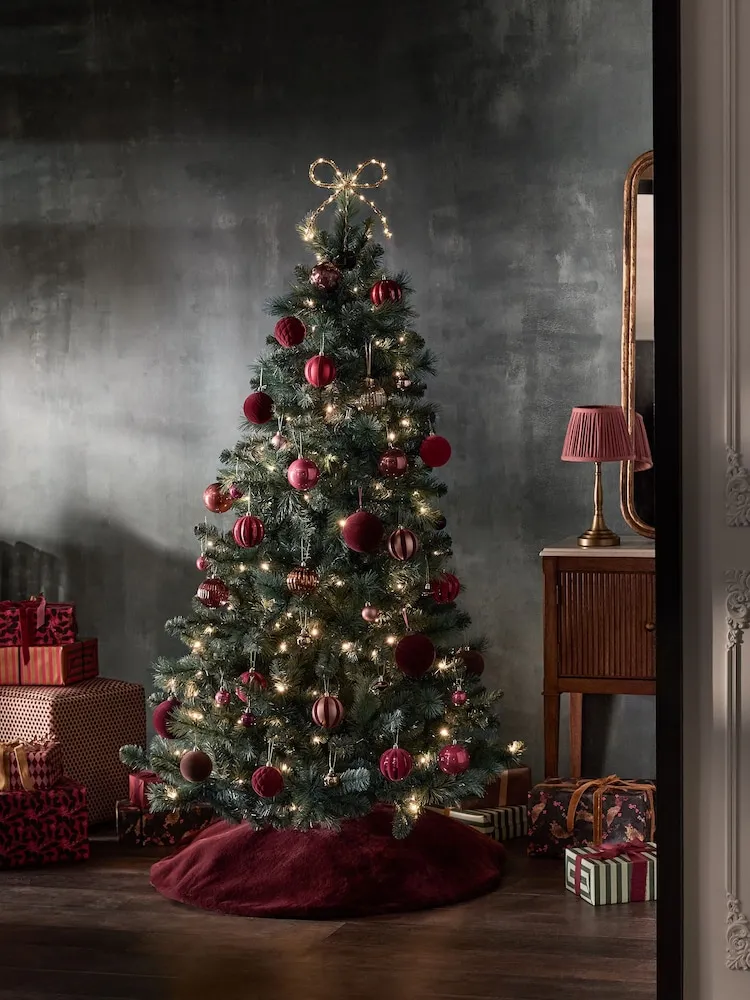
Match your topper to your light temperature, not just your palette. Warm-white 2700K bulbs make gold read as antique brass; a cool 4000K turns the same gold to chrome. The lighted bow, the ribbon, and the baubles on this tree all sit in that warm range, which is why the deep red never tips toward orange. Buy your lights first, then shop ornaments under them.
5. That Glitter Red Drape Behind the Branches
The red glitter drape behind the tree. It isn’t a wall treatment, it’s a backdrop — a length of sparkling red fabric pinned behind the branches so the tree silhouettes against it. That one move gives the ornaments contrast, hides whatever is behind, and effectively doubles the glow from the string lights. Everything else here is a well-decorated tree. The drape is what makes it cinematic.
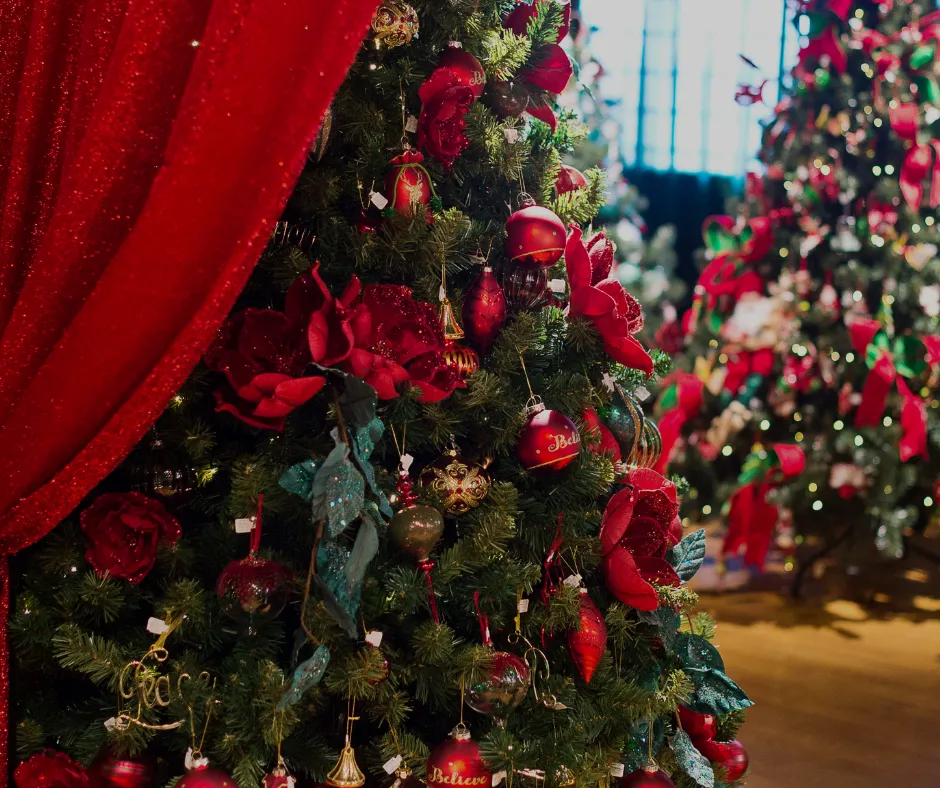
Fabric backdrops are one of the bigger holiday shifts heading into 2026 — people are treating the tree like a photo set rather than a piece of furniture. It’s the same impulse behind the velvet-and-ribbon maximalism filling Pinterest boards, and behind warm antique gold pushing cool silver aside. Verdict: the drape is cheap, reversible, and gone in January.
6. Glitter Poinsettias and Snowflakes Up Close
Building the poinsettia cluster:
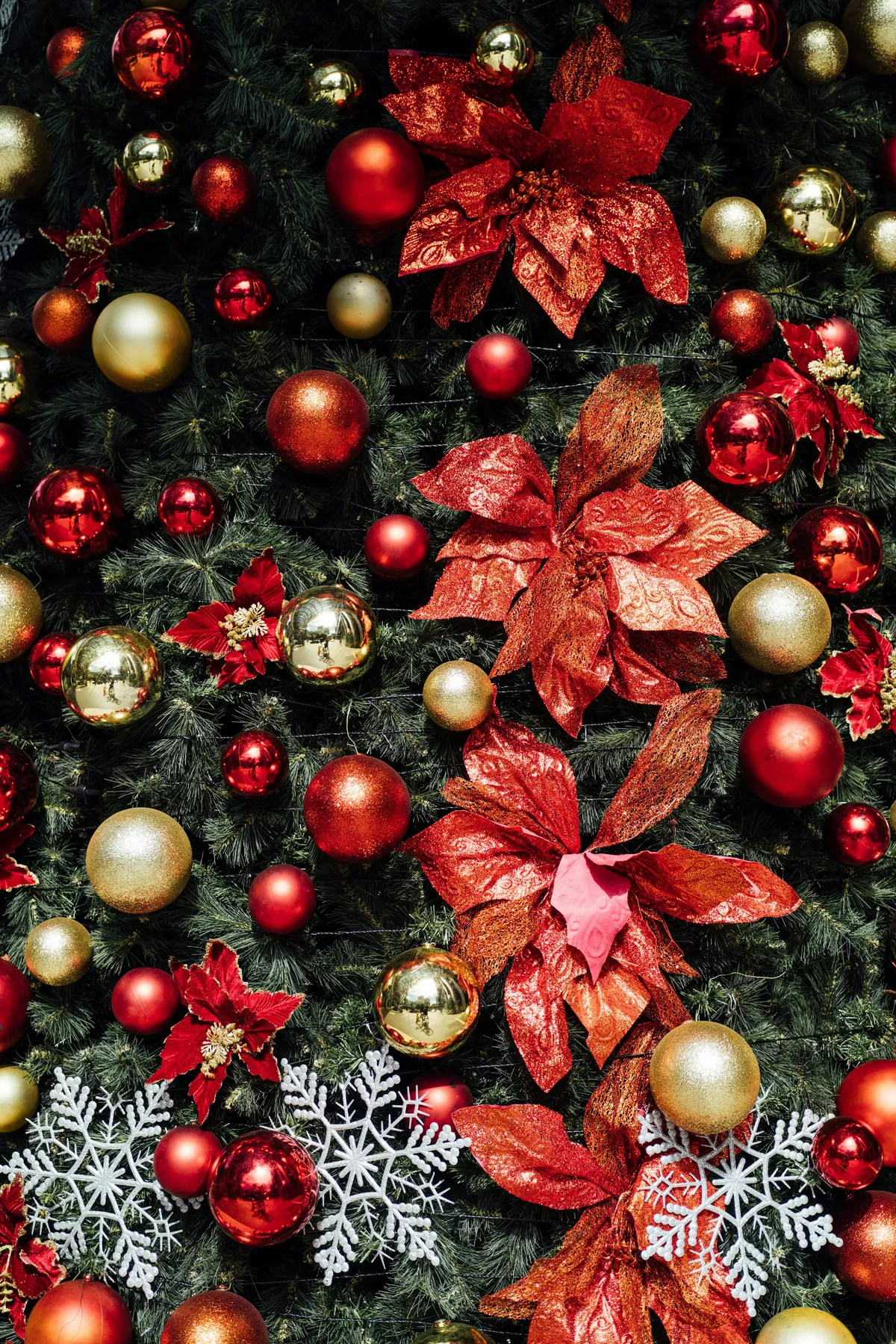
- Clip three large glitter poinsettias and trim the wire stems to about 4 inches.
- Bend each stem into a shallow hook so it grips a branch instead of sliding.
- Place them at 10 o’clock, 2 o’clock, and 6 o’clock on the front face — odd numbers always read better.
- Tuck white snowflake cutouts one branch deeper so they peek from behind the red.
- Step back six feet and add one more bloom wherever your eye lands first.
About 20 minutes of work and $12–$30 for a set of three.
Dollar Tree and Walmart sell glitter poinsettia stems for $1.25 to $4 each, and a plain red bauble set runs about $18 for 40 pieces at Target after Black Friday. Michael’s floral picks go 60% off in early December — that’s when you buy the expensive-looking stuff. Spend on the tree and the lights; nobody inspects an ornament from four feet away.
This close-clustered style is built for trees you actually stand near — a 6 to 7.5 foot tree in a room under 200 square feet, or a slim tree in a hallway. On a 12-foot tree in a double-height space, single poinsettias vanish; you’d need clusters of five. For the opposite approach, compare with Idea #19, where scale is monumental instead of intimate.
7. Five Finishes, Two Colors, Zero Restraint
Count the finishes, not just the colors: matte red, glossy red, glitter red, bright gold, antique gold — five textures inside a two-color palette. That’s the whole trick. Two colors plus five finishes reads expensive; four colors plus one finish reads like a clearance bin. Keep it near 60% red to 40% gold, and let the beaded strands of garland run through as connective tissue.
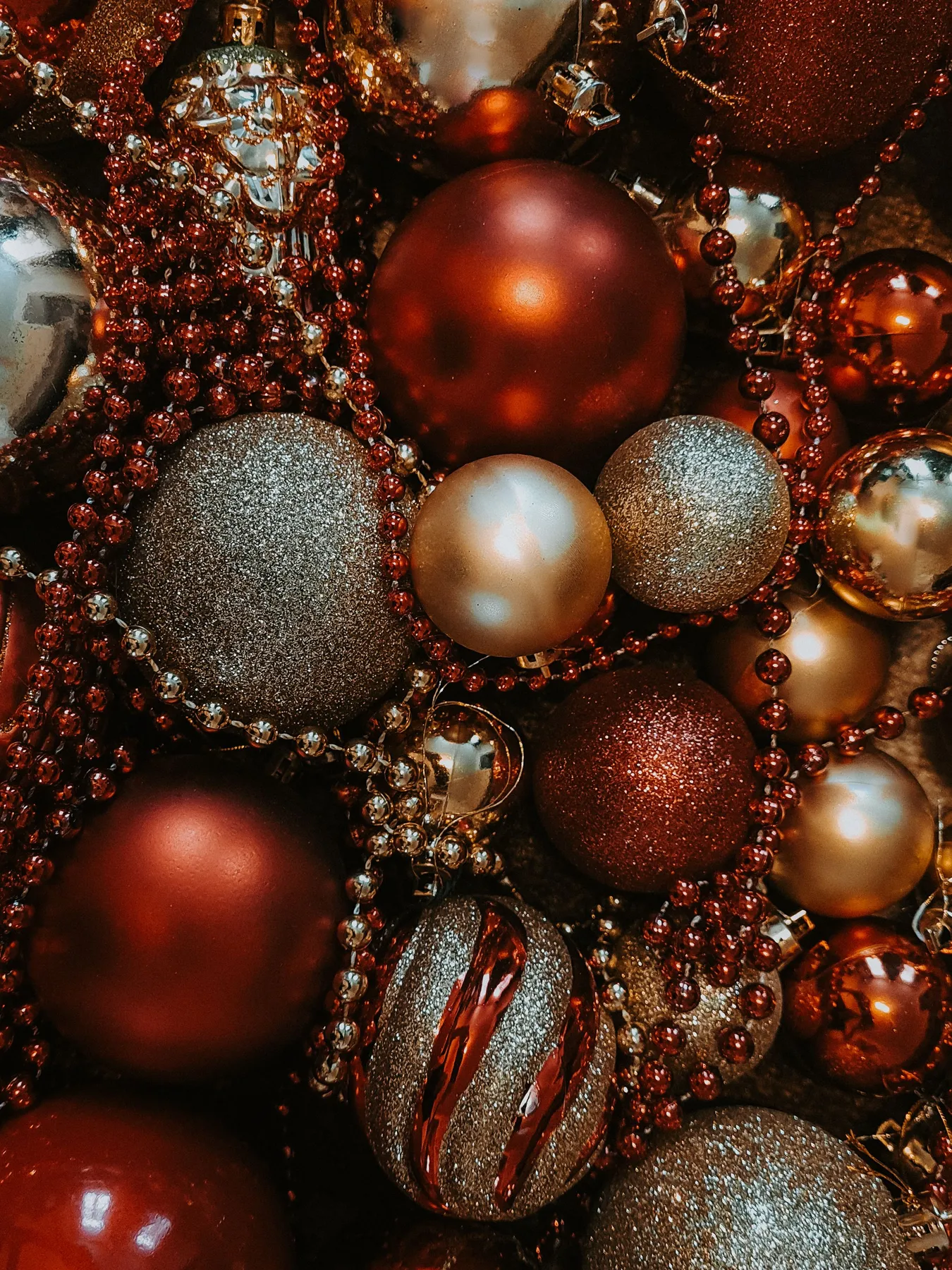
Beaded garland is the cheapest way to make a tree look costly. Run it in a loose spiral — roughly one full turn every 12 to 15 inches of tree height — and never wrap it tight against the tips. Tight wrapping flattens the silhouette and crushes beads against the ornaments. Loose gives the eye somewhere to travel and hides the gaps between baubles.
8. Shiny Red and Bright Gold on Dark Green
Two principles are doing all the work here: contrast and restraint. Shiny red and bright gold reflect the warm white light instead of absorbing it, so the dark green branches recede to near-black behind them — maximum sparkle from two ornament colors. The repetition is relentless but orderly, same finishes, same sizes, evenly spaced. It looks luxurious because it looks intentional.
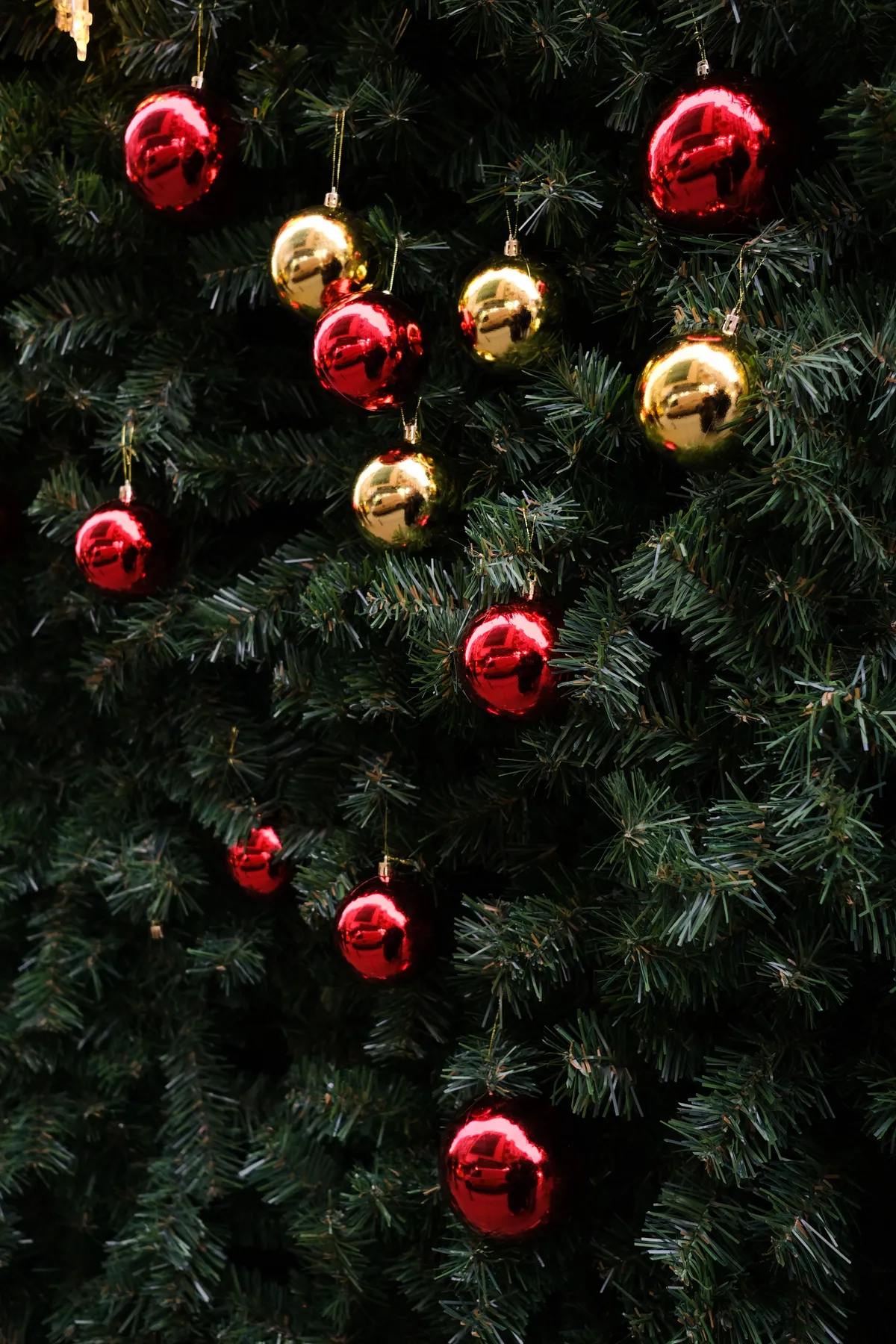
Even spacing like this needs room to breathe. It works best on a tree at least 7 feet tall under 9-foot ceilings, where ornaments land at eye level but the tree still towers. In a low-ceiling apartment, drop to a 6-foot tree and shrink your baubles to 2 inches so the pattern doesn’t look cramped. Tighter rooms do better with a curtain-backed setup like Idea #26.
9. Gold Angel, Teal Accents, Multi-Color Lights
- Tree (7.5 ft artificial): $180–$1,200
- Lighting (multi-color strings, angel topper): $25–$90
- Textiles (red beaded garland, tree skirt): $30–$110
- Decor (red, gold, and teal ornaments, hangers): $60–$240
- Paint (beige and dark teal wall, if you repaint): $0–$180
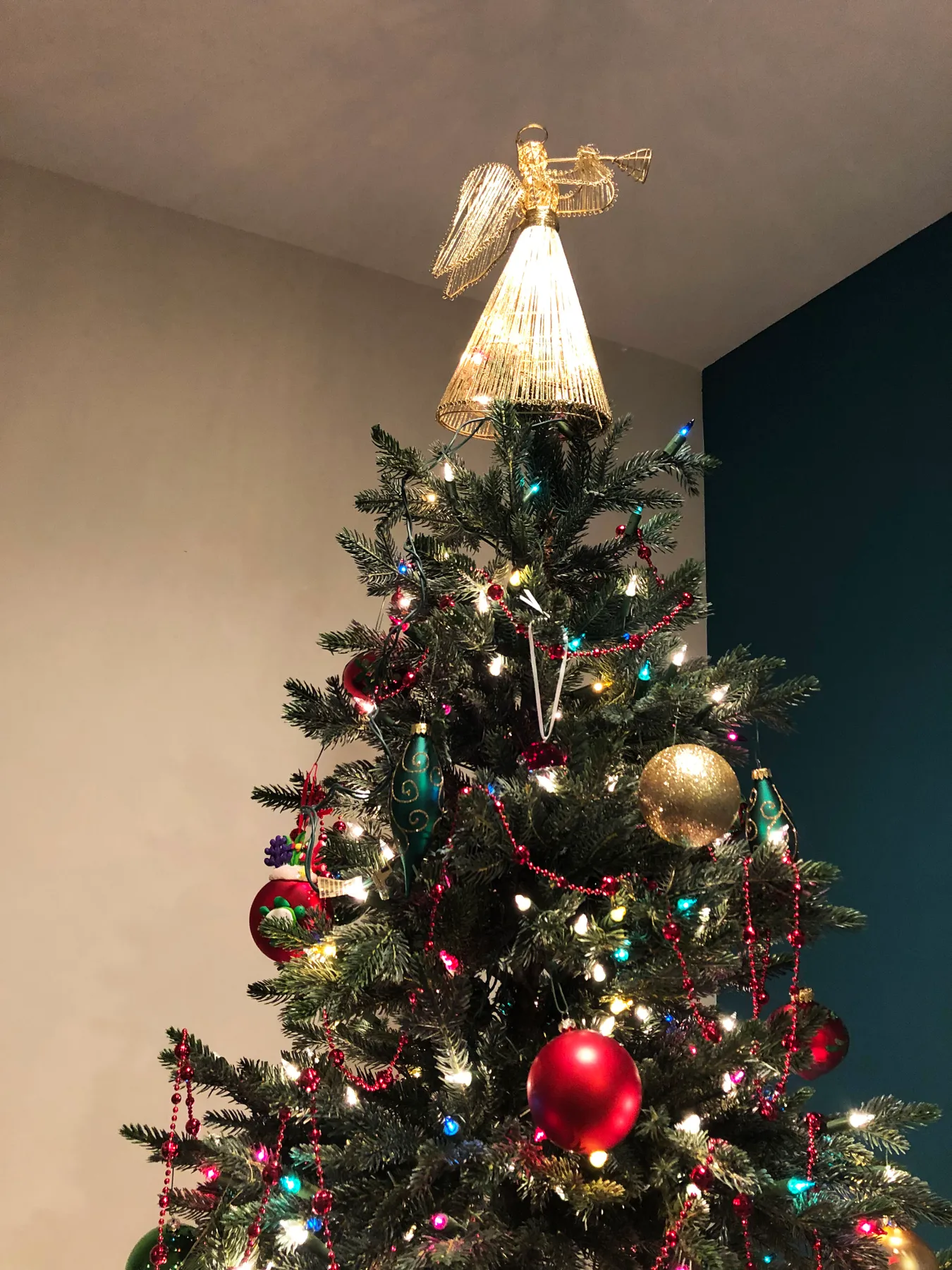
Total: $295–$1,820. Budget alternative: buy the garland and the angel topper after December 26 at roughly half price, then store them in a labeled bin with the lights so next year is a 20-minute setup.
Multi-colored string lights are the one thing people either love or quietly unplug. They read nostalgic in daylight and chaotic after dark, especially against teal — that’s three colors competing on one tree. If you want the look but calmer, switch to warm white bulbs and keep the red-and-teal ornament contrast. One more note: red beaded garland snags live needles, so keep it on artificial trees.
10. Flocked Tree Full of Family Names
Making the personalized ornaments:
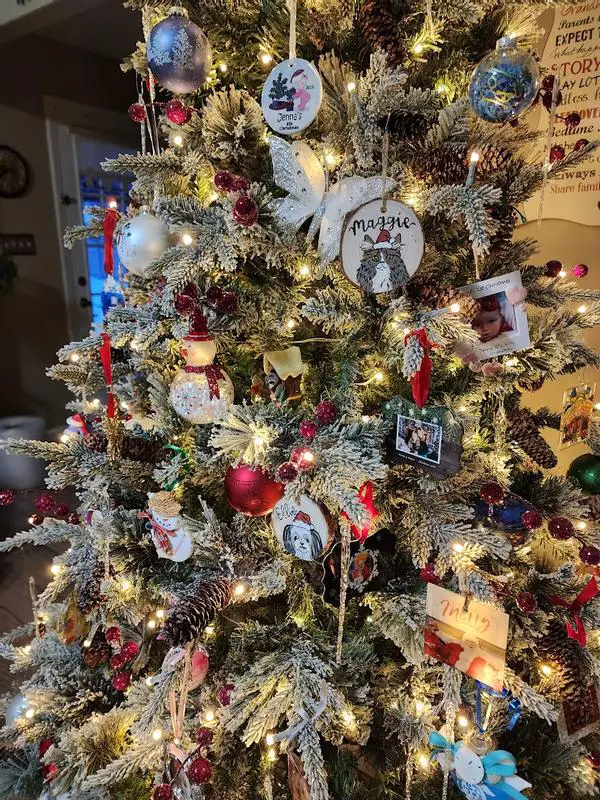
- Order 3-inch wooden slices, or use last year’s photo prints trimmed into circles.
- Write names and dates in a fine paint pen and let them dry flat for an hour.
- Drill a 1/8-inch hole near the top of each piece.
- Thread with red-and-white baker’s twine and knot it tight.
- Hang only on the front third of the tree, at eye level.
Roughly an hour of work and $15–$40 for a dozen blanks.
The photo and name ornaments are the one thing that matters here. Without them, this is a pretty flocked tree with red berries — lovely, and identical to thousands of others. The personalized pieces turn it into a family record that changes every year, and they break the red-and-gold rhythm exactly where guests stand and look.
11. Garland Down the Rail, Tree Glowing Behind
- Measure the handrail run and buy garland 1.5 times that length — fullness eats inches fast.
- Find your nearest outlet and confirm your extension cord is rated for indoor use.
- Check that your ties won’t scratch a painted or wood rail; use florist wire rather than zip ties.
- Decide the light color now — warm white will match the tree glowing in the background.
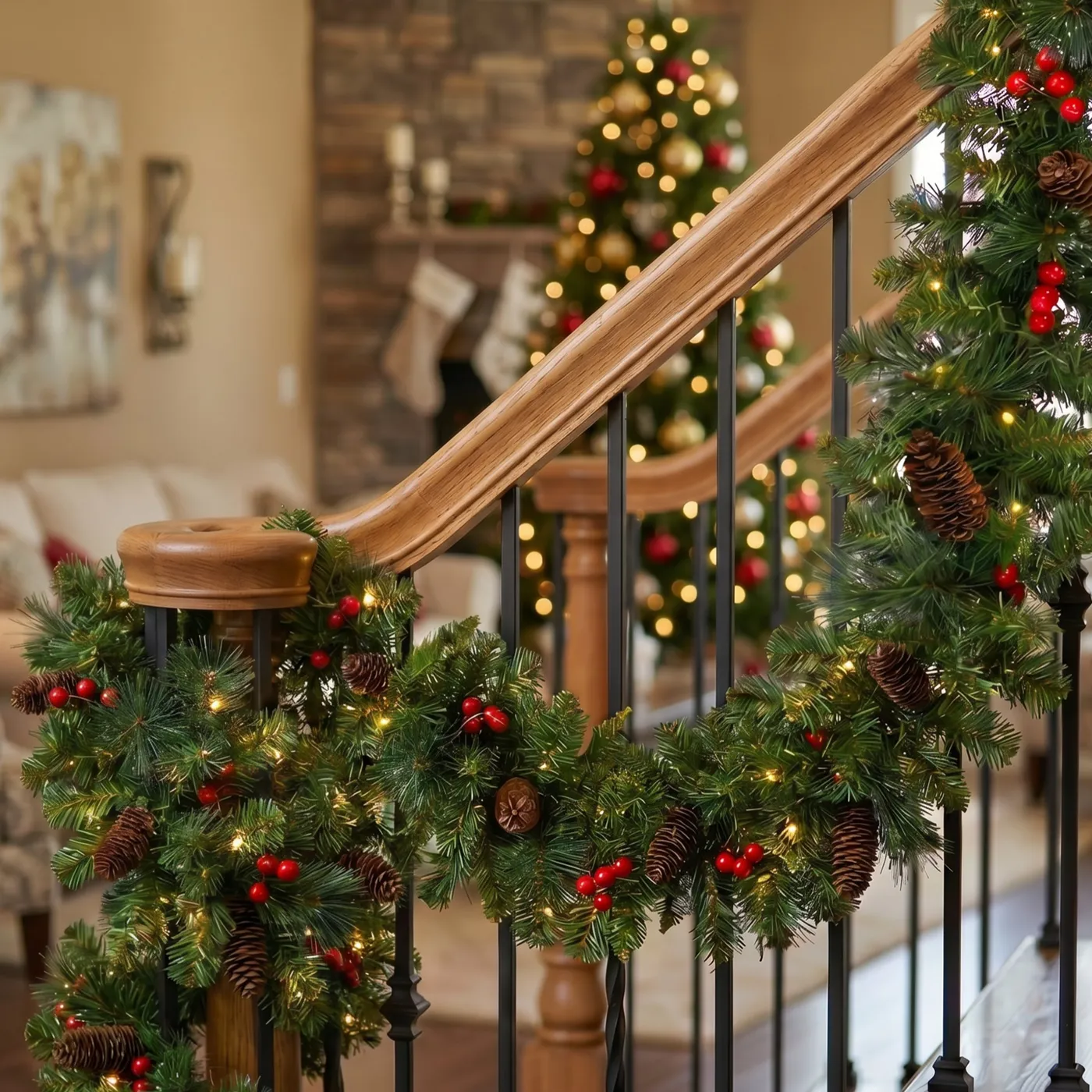
Attach garland every 8 to 10 inches, not just at the ends. Secure it with 22-gauge florist wire twisted around the rail and buried in the greenery, so nothing shows and nothing sags by week two. If small kids use the stairs, leave the bottom 12 inches bare — hand contact is what kills garland by mid-December.
12. Red Slipcovers Take Over the Dining Room
Slipcovers are where this room becomes affordable. Walmart and Amazon carry red holiday chair covers with printed motifs for $8 to $15 each, so four of them change an entire dining room for under $60. Add a red snowflake table runner (about $12 at Target) and a thrifted candelabra for $15. Compare with Idea #1 — same palette, completely different room energy.
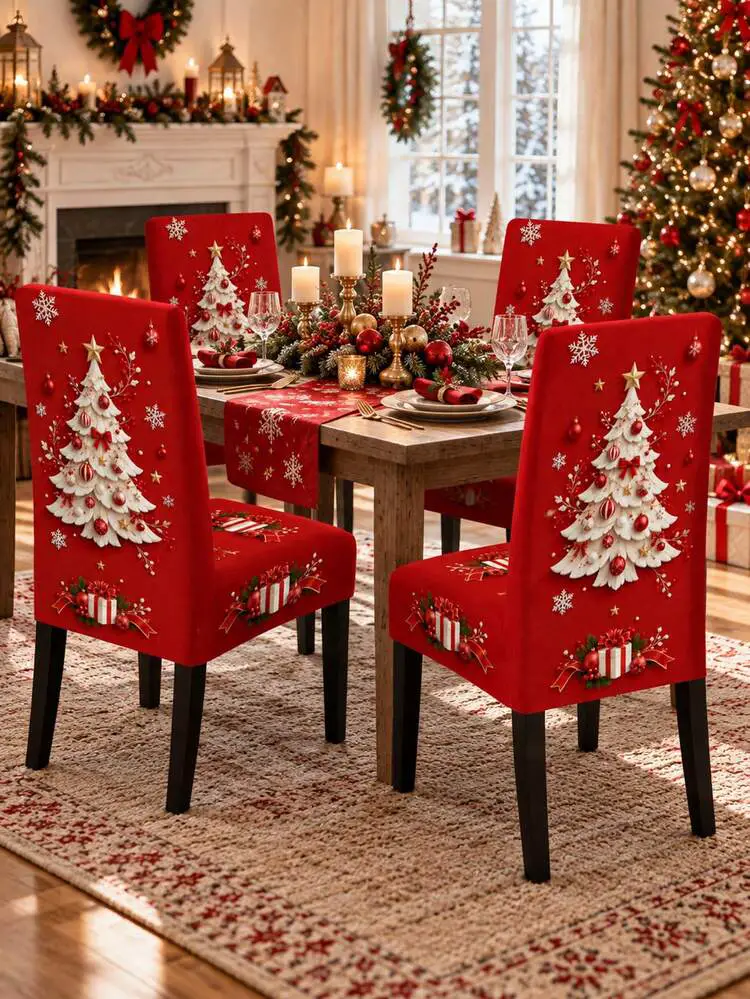
Printed chair covers are festive for about three weeks and then they’re a laundry situation. They wrinkle, kids wipe their hands on them, and gravy is forever. If you host more than one dinner, consider a red table runner and a green centerpiece instead and leave the chairs bare. Or buy machine-washable covers and accept an ironing session on December 20.
13. Apples, Pears, and Candlelight Like 1890
Fruit ornaments are the oldest trick on this list. Victorian trees were decorated with apples, pears, and nuts because that’s what was on hand and edible — the glass bauble came later, as an imitation of fruit. That history is exactly why the look is surging in 2026 alongside old-world Christmas searches on Pinterest. It photographs beautifully, and it survives trend cycles because it predates them.
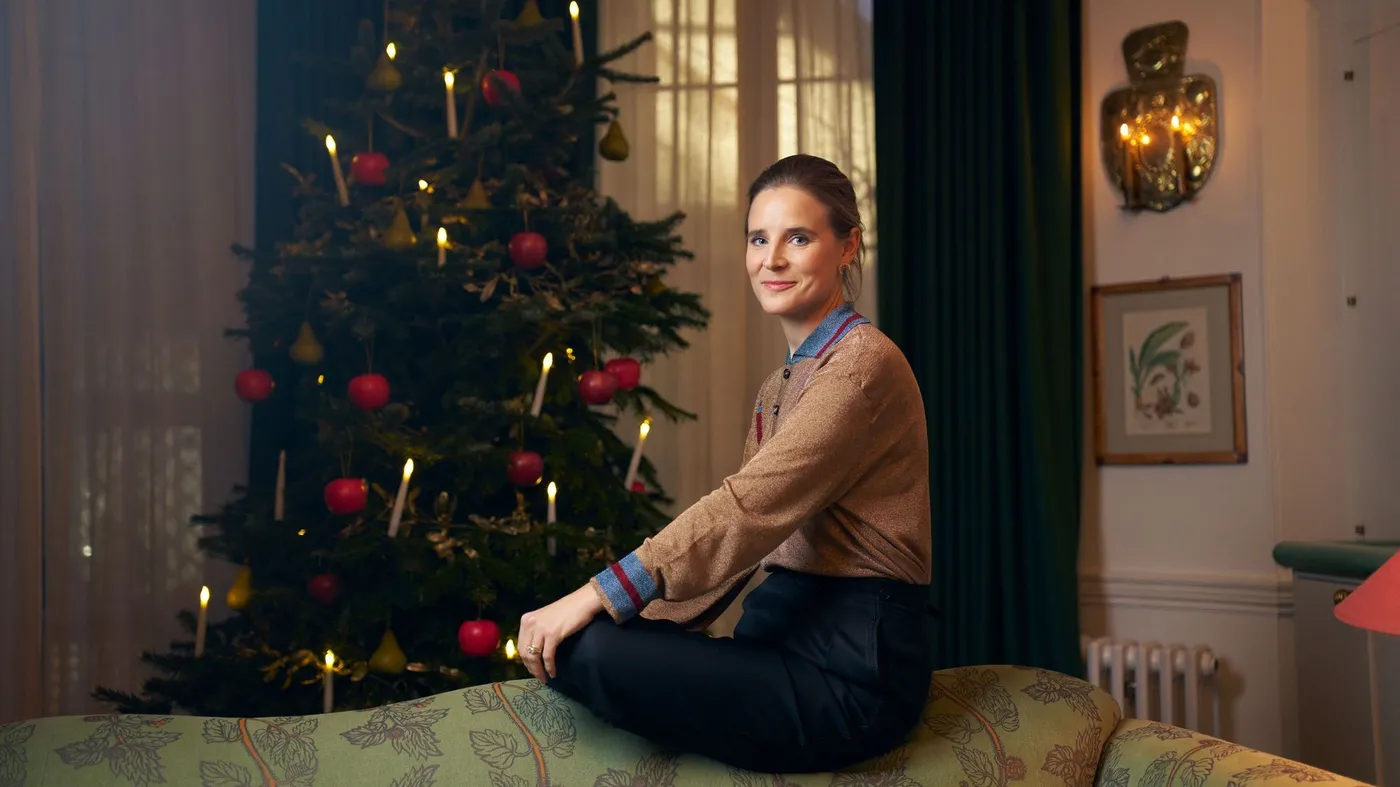
Real candles on a tree are a genuine fire risk. Never leave them lit unattended, never light them on a dry tree, and keep an extinguisher in the room. Clip-on LED candles give you the same warm flicker without the danger or the wax drips. Fruit ornaments are lighter than they look, so tie them with ribbon rather than metal hooks that slip off.
14. Glass Trees and One Gold Candle
Building the glass tree vignette:
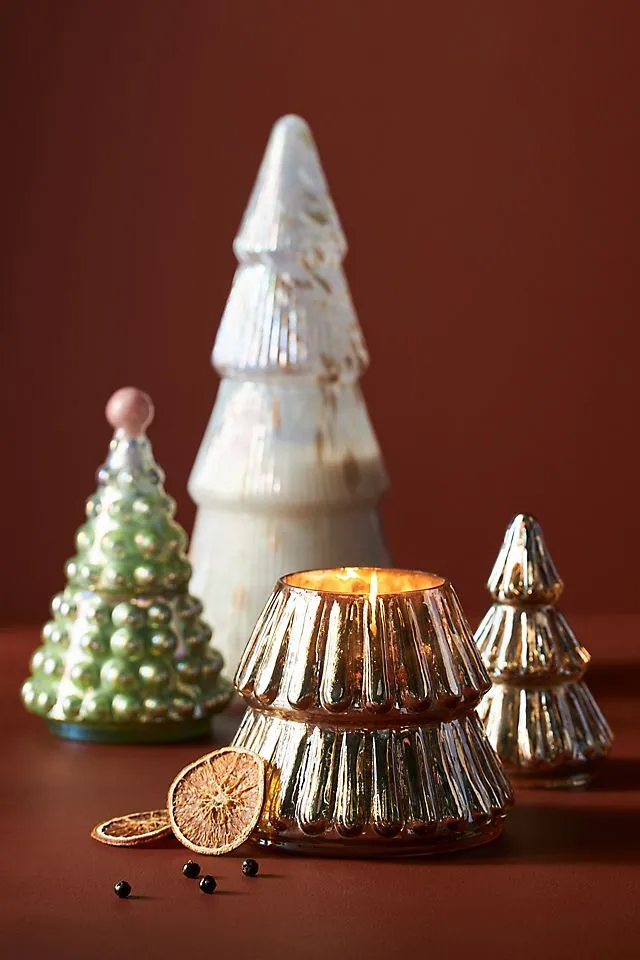
- Start with an odd number — three to five glass trees in mixed heights, say 8, 6, and 4 inches.
- Group them on a tray or a wood slice so they read as a single object.
- Add one fluted gold candle holder at the highest point in the arrangement.
- Scatter dried orange slices and dark berries in front, not around the sides.
- Light the candle, step back, and remove whatever competes for attention.
Fifteen minutes and $25–$70.
The formula is 60% clear and iridescent glass, 25% gold, 15% natural. Swap the gold holder for silver and the whole thing turns frosty; swap it for copper and it warms toward amber. The iridescent finish is the secret — it picks up candlelight and room light, so the vignette shifts through the evening.
15. A Tree Drawn in Golden Light
This is what happens when golden light meets total darkness — no competing colors, no ambient glow, just warm light and dark brown branches. The tree shape is drawn in light trails, which means your eye completes the picture. That principle translates indoors almost perfectly: a dark wall, a green tree, and 2700K bulbs create the same luminous halo. Darkness isn’t a problem to fix; it’s an ingredient.
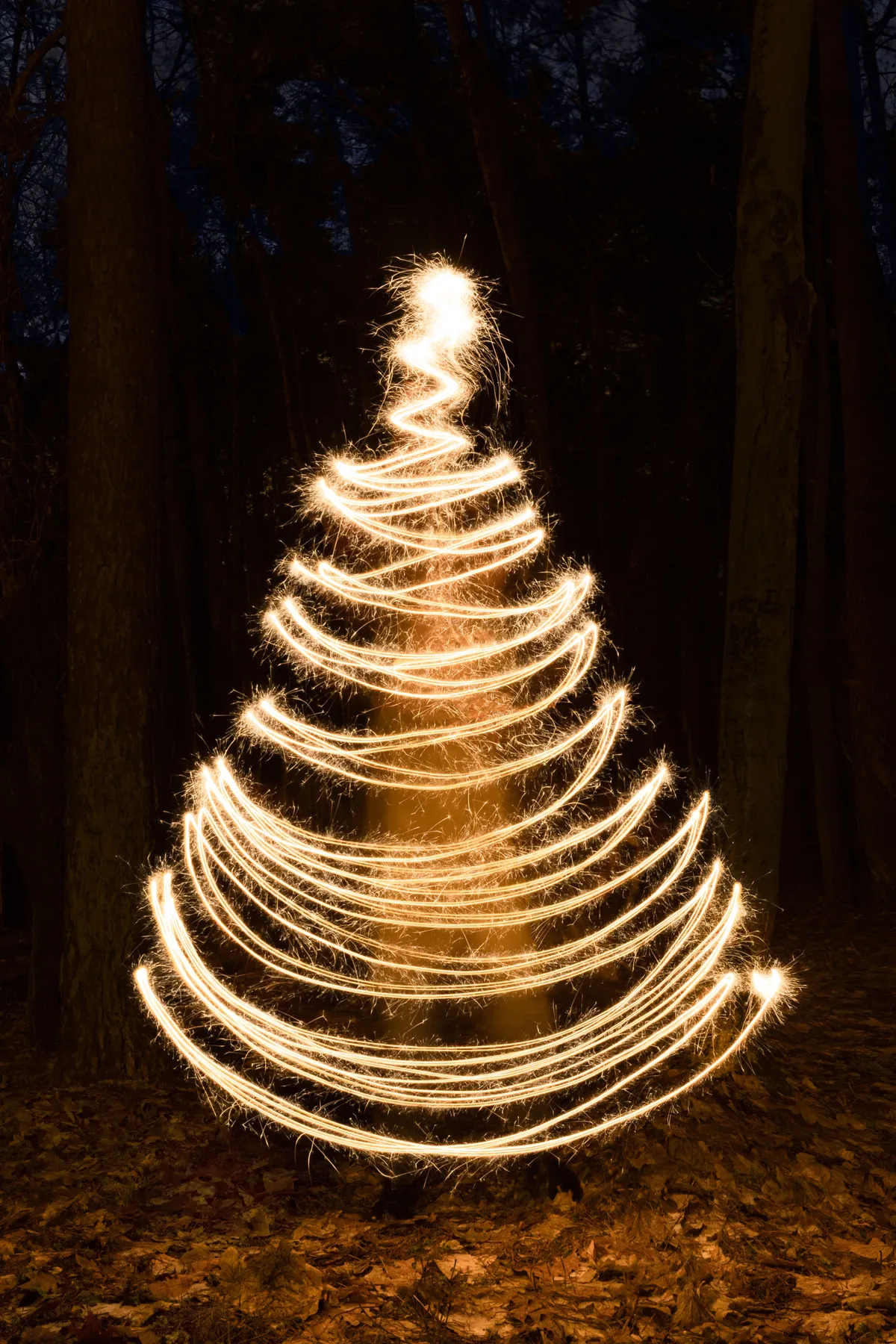
Light-painted holiday photography has been exploding on Pinterest, and it’s nudging people toward darker, moodier holiday styling at home — deep green walls, low ambient light, warm string lights doing all the work. It’s a direct reaction to years of bright white everything. Expect this amber-on-dark look to carry into 2026 tablescapes and mantels.
16. Coral, Feathers, and a Fishing Net Skirt
The fishing net skirt. A nest topper and coral branches are striking, but the net is what ties the whole coastal-Christmas story together, and it’s the detail guests remember. It costs about $10 at a craft store, drapes over any tree stand, and doubles as a place to tuck spare ornaments. Lose it and the feathers and coral read as random rather than deliberate.
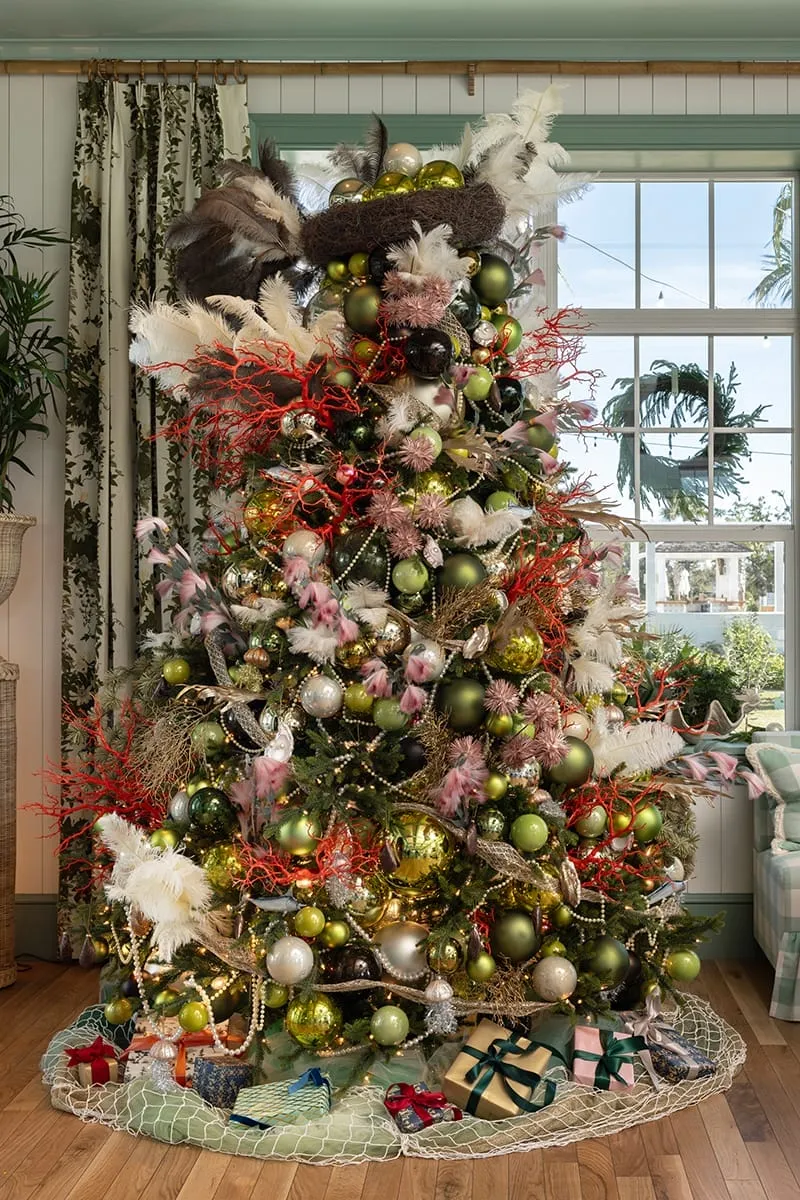
Feathers shed, coral branches snap, and that nest topper will not survive a move intact. A curious cat will absolutely treat the net skirt as a hammock. This is a display tree, not a family workhorse, so put it where it gets admired rather than touched, and keep it away from radiators — heat dries the feathers and makes them brittle.
Mixed textures need one repeating color to stay calm. Green and gold baubles run through this tree as the base, and the red coral, white feathers, and pearl strands sit on top as accents. Rule of thumb: no more than three accent materials per tree, spaced at least 18 inches apart, or abundance turns into clutter.
17. A Lit Nutcracker Guards the Red Door
- Main decor (illuminated nutcracker figure): $70–$400
- Lighting (outdoor-rated warm white strands): $25–$80
- Textiles (ribbon, wreath hangers, hooks): $15–$50
- Decor (bauble garland, two wreaths, floral picks): $40–$160
- Paint (red plank wall, existing or faux panel): $0–$120
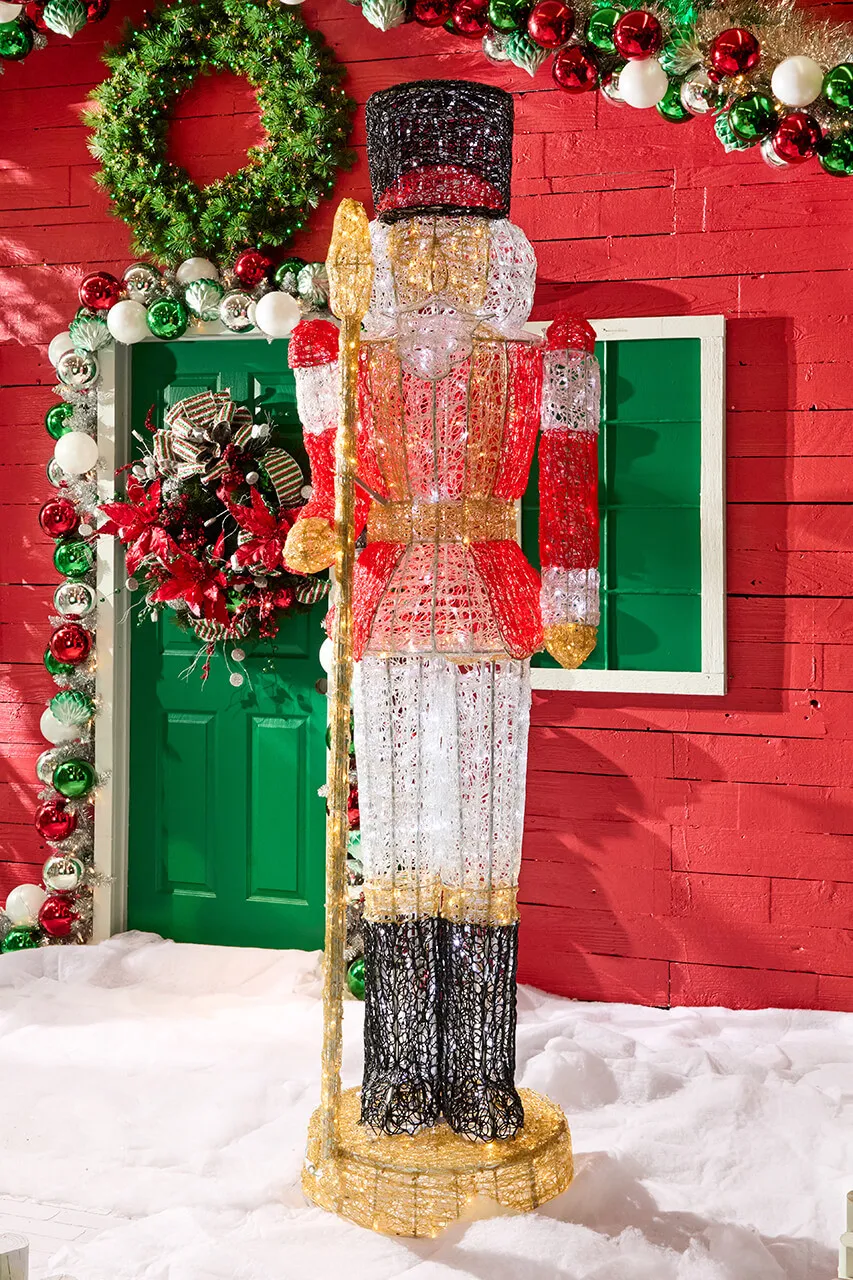
Total: $150–$810. Budget alternative: Walmart and At Home sell 4-foot lit nutcrackers for under $100 in late November, and thrift stores in early January are gold mines if you can wait a year.
A figure like this needs a wall at least 8 feet tall and 4 feet wide to look intentional rather than wedged in. Two wreaths work on a double door because the door is wide; on a single 32-inch door, use one. If your entry is a tight apartment hallway, hang the bauble garland over a mirror instead.
18. Wooden Sleighs and Glitter-Dusted Pinecones
Break it down as 65% deep green tree, 20% red, 10% gold, and 5% natural wood and pinecones. That last 5% is what keeps a formal palette from turning cold — the wooden sleigh and boot ornaments, the glitter-dusted cones. Swap the wood accents for silver and it turns icy; swap them for more gold and it turns baroque. Small ingredient, big swing.
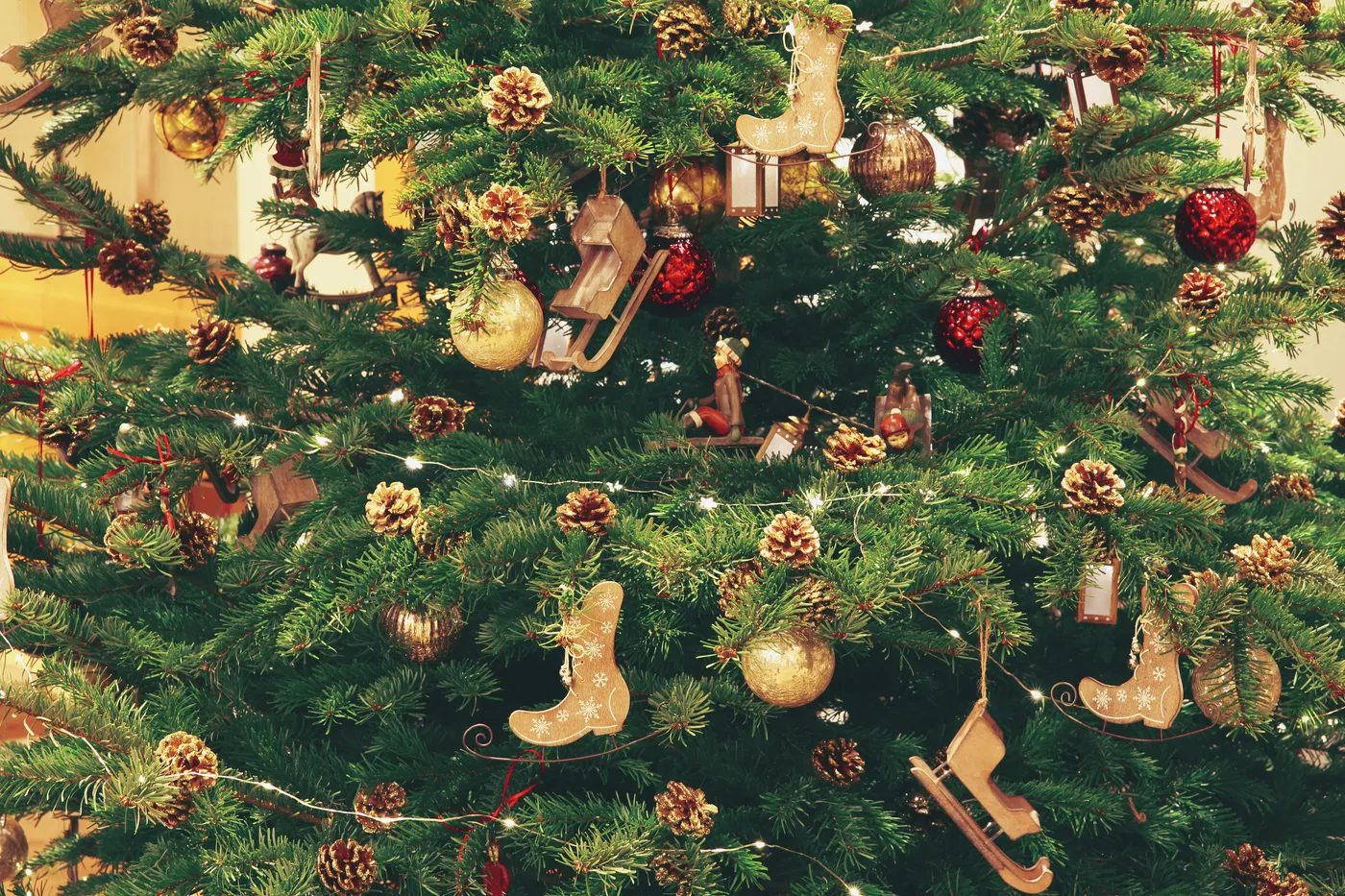
Glitter pinecones are the messiest thing on this tree. They shed onto whatever sits below, so keep them away from a white sofa or a tablecloth you love. Real pinecones should bake at 200°F for about 30 minutes before they come inside, or you’re inviting bugs. And check your string lights for frayed wire each season — on a dry tree, the wiring is the real risk.
19. A Copper Star in a Two-Story Atrium
In tall spaces, hang lights in vertical runs, not horizontal ones. Vertical strands exaggerate ceiling height because the eye follows them upward; horizontal wrapping flattens a big volume. Space them every 3 to 4 feet across the opening, and use one large ornament — 24 inches or bigger — as the focal point instead of a dozen medium ones. Past 15 feet, small ornaments simply disappear.
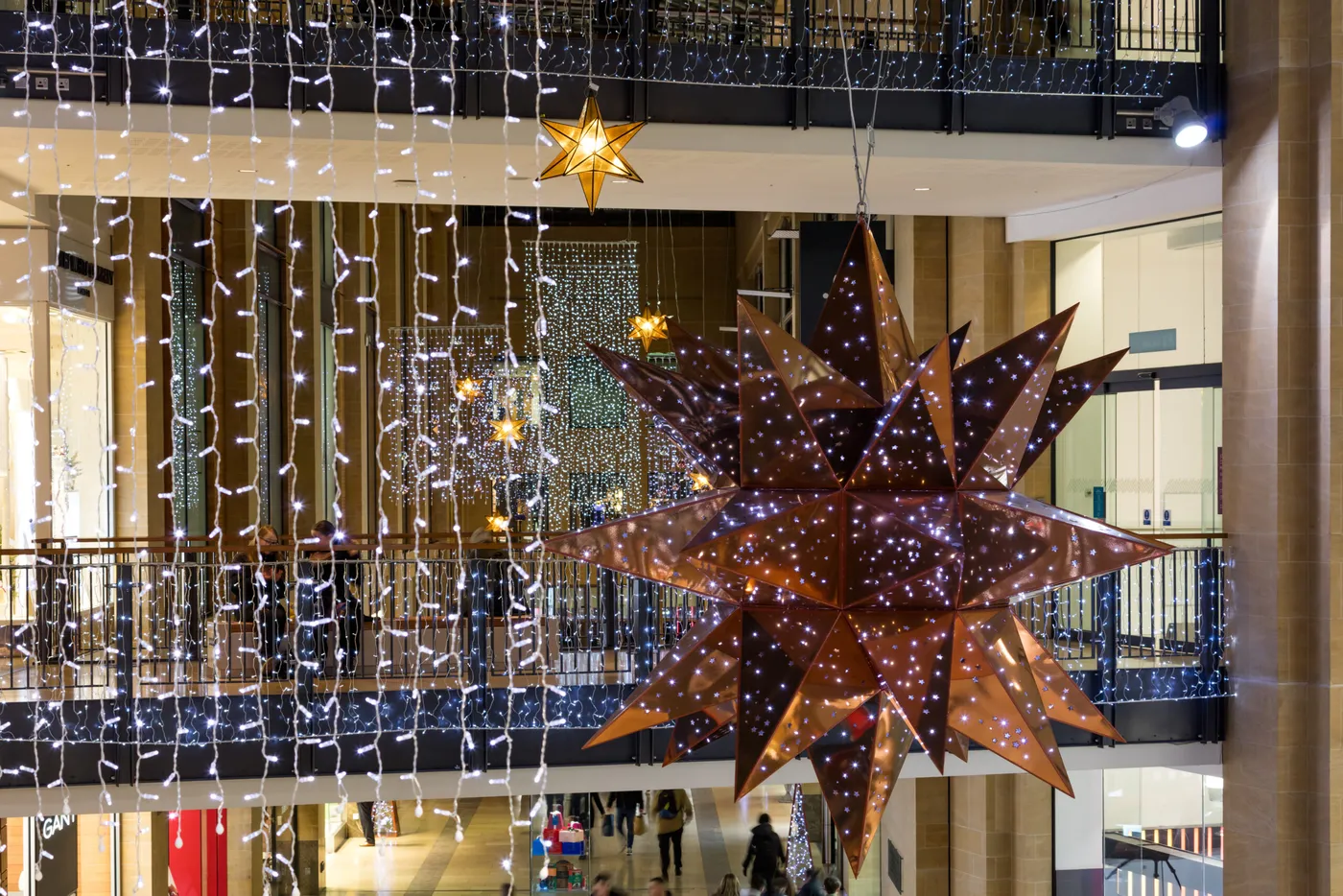
This only works in a void of 20 feet or more with generous balcony clearance. In a standard 9-foot room, that 24-inch copper star would read as a comically large object with no architectural context. If you love the metallic star shape but live in a normal house, buy the 10-inch version and hang it in a stairwell or above the mantel.
20. Teardrops, Filigree, and Woven Ribbon
Weaving ribbon through the branches:
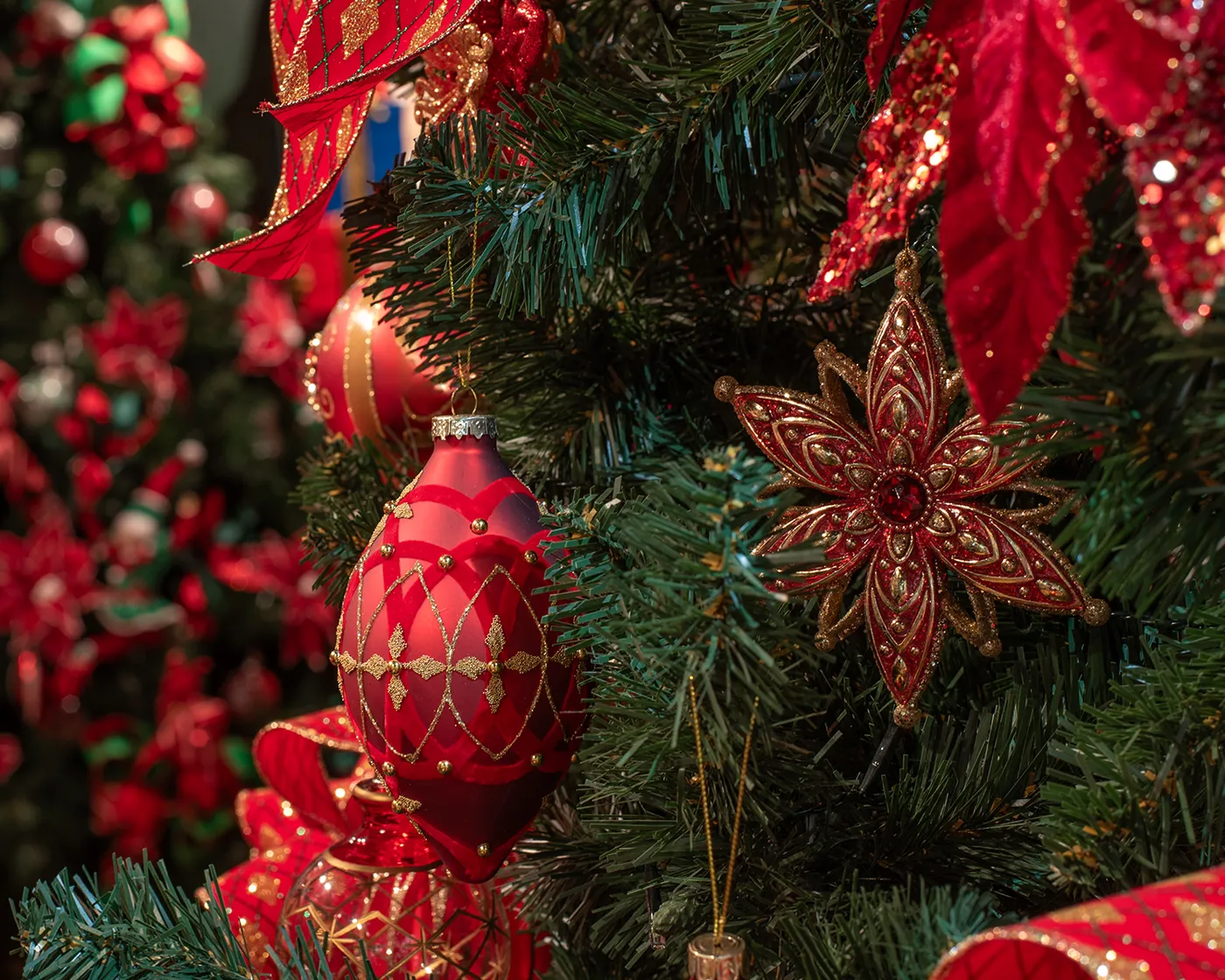
- Buy wired ribbon, not flat craft ribbon — it has to hold a curve.
- Cut 18-inch lengths on a sharp diagonal so the ends don’t fray.
- Thread through the branches in a loose S-curve, about one loop per 10 inches.
- Tuck the raw ends behind needles so nothing shows.
- Add one showpiece ornament at each loop — a teardrop or a filigree star.
Thirty to forty-five minutes and $8–$18 per roll.
Three things are happening in this close-up. Scale contrast: a 5-inch teardrop beside 1.5-inch baubles makes both look more expensive. Repetition: the gold filigree star echoes the gold in the ribbon, so the eye connects them. And depth — everything sits inside the tree rather than on its surface. Compare with Idea #7 for the same idea in dense clusters.
21. Cherub on the Banister, Garland Everywhere
The gilded cherub. It’s a small figure perched on a container of greenery and golden ornaments, and it’s the reason this staircase looks collected instead of decorated. It gives the eye one place to land between the garland swags, and it makes the whole arrangement feel like a scene from a house that’s been doing Christmas for a hundred years. Take it away and you have nice garland with nothing to remember.
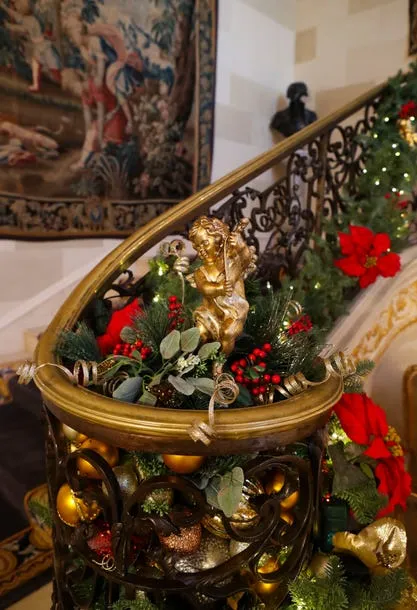
Thrift stores and estate sales are where cherub figures live — expect $8 to $30 for a decent gilded one, versus $80 and up new. For the garland itself, Costco and Sam’s Club sell 9-foot pre-lit strands for about $40 in early November, and Michael’s floral poinsettias go half price the first week of December. The dark banister you already have.
22. Tinsel, Baubles, and a Bear of a Tree
- Tree (tall, full artificial): $150–$1,100
- Lights (white strings, 300–600 count): $20–$70
- Textiles (red ribbon, tree skirt, gift wrap): $35–$120
- Ornaments (red baubles, gold glitter balls, tinsel): $50–$200
- Window and wall treatment (none): $0
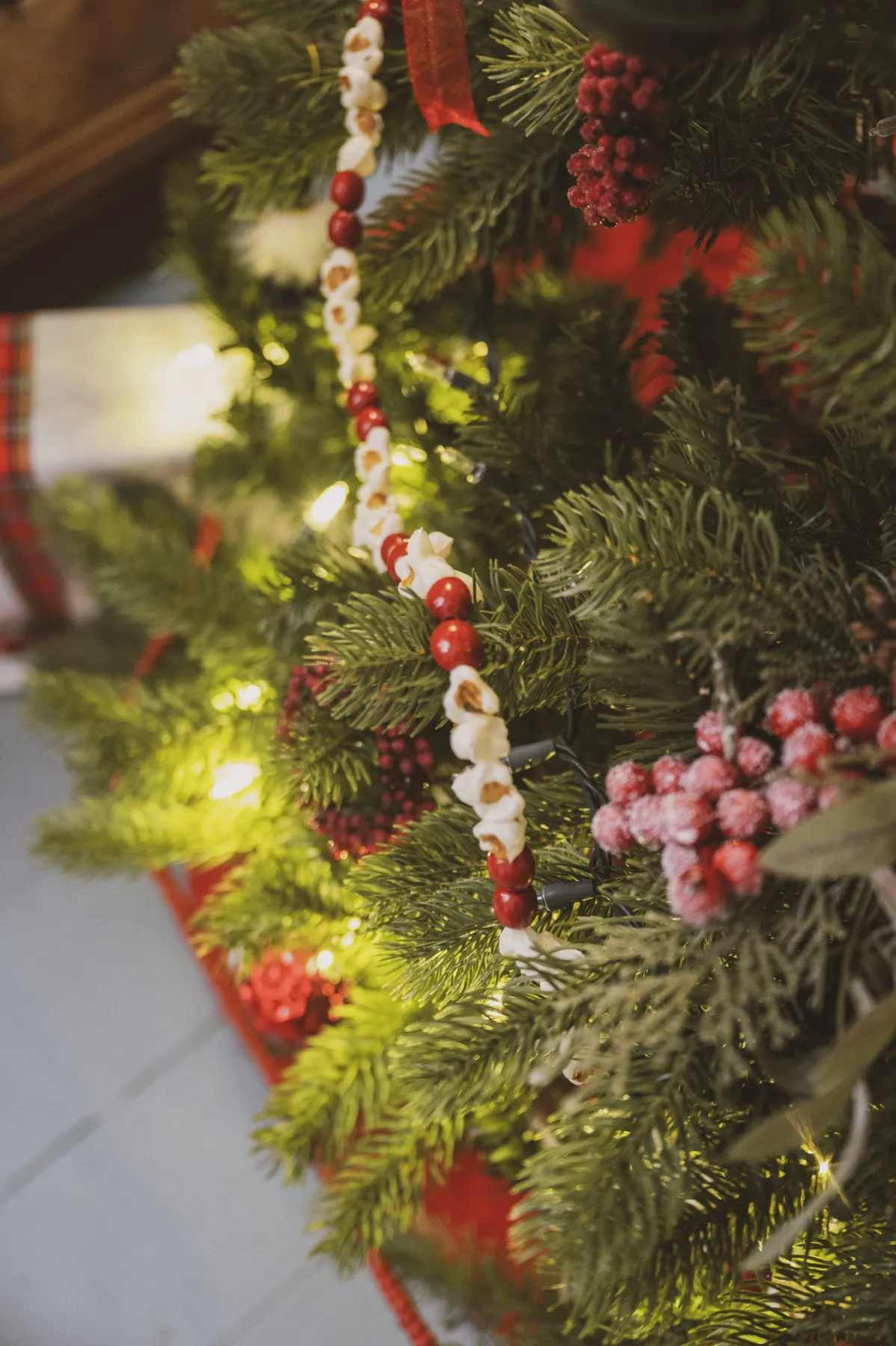
Total: $255–$1,490. Budget alternative: one $20 box of assorted red and gold baubles plus a $5 pack of gold tinsel from Walmart gets most of this at 40% of the cost — the tinsel fills gaps so you need fewer ornaments.
Tinsel is divisive, and it’s also a dust magnet that sheds into carpet for months. Loose strands end up on the vacuum roller and on pets. If you want shine without the shedding, ribbon and beaded garland do the same job. Keep tinsel to the top third of the tree, where hands and pets don’t reach.
23. Flat-Lay Formula: Red Boxes on Green
This flat-lay is a formula you can copy anywhere: 50% green foliage base, 30% red across the gift boxes and flowers, 20% gold in the baubles and ribbon, with matte and glitter finishes split evenly. Swap the red boxes for burgundy velvet pouches and it turns moody; swap the gold baubles for aged brass and it turns vintage. The base never changes, because dark green makes both colors pop.

- Choose your surface first — dark wood and deep red cloth both flatter this palette.
- Check your overhead light direction; flat arrangements photograph dead under even light.
- Set a budget cap before you shop, because small gold baubles multiply fast.
- Count who will actually see it — for a coffee table, buy fewer and bigger.
24. Gold Baubles and Warm Fairy Light Bokeh
Fairy lights should sit inside the branches, not on top of them. Push the wire 4 to 6 inches down toward the trunk so the needles partially hide each bulb — that’s what creates the soft bokeh glow in good photos. You need roughly 100 bulbs per foot of tree height, which on a 7-foot tree means about 700 lights, not the 200 that came in the box.

Warm white has fully won the argument over cool white. Searches for amber and candlelight-toned holiday lighting keep climbing, and gold-on-green is the palette doing the heavy lifting — the same quiet-luxury instinct that made beige interiors so popular, translated to December. Compare with Idea #27 if you want more red in that glow.
25. Firelight, Stockings, and One Warm Glow
It’s the firelight. A lit fire, warm string lights, and gold ornaments all sit in the same amber range, so the room has one light temperature instead of three. The red stockings and ornaments then read as the only saturated color in the scene. That’s why it feels cozy rather than busy — everything agrees with the fire. Check your bulb temperature against your fireplace before you buy anything.

Real fires and Christmas decor need distance. Keep garland, ribbon, and stockings at least 3 feet from an open firebox, and never hang anything flammable directly over a working fireplace. Stone mantels collect soot, so wipe them with a dry cloth monthly through the season, and empty the ash pan every few fires. A screen buys you a lot of peace of mind.
26. Red Damask Curtains Behind the Tree
Red damask behind a green tree pushes the wall forward, so this needs a corner at least 5 feet wide with 8-foot ceilings minimum. In a small room the red-on-red gets claustrophobic fast — swap the backdrop for cream and keep the gold. In a formal dining room or entry with 10-foot ceilings, scale the tree to 7.5 or 9 feet so it doesn’t get swallowed by the architecture.
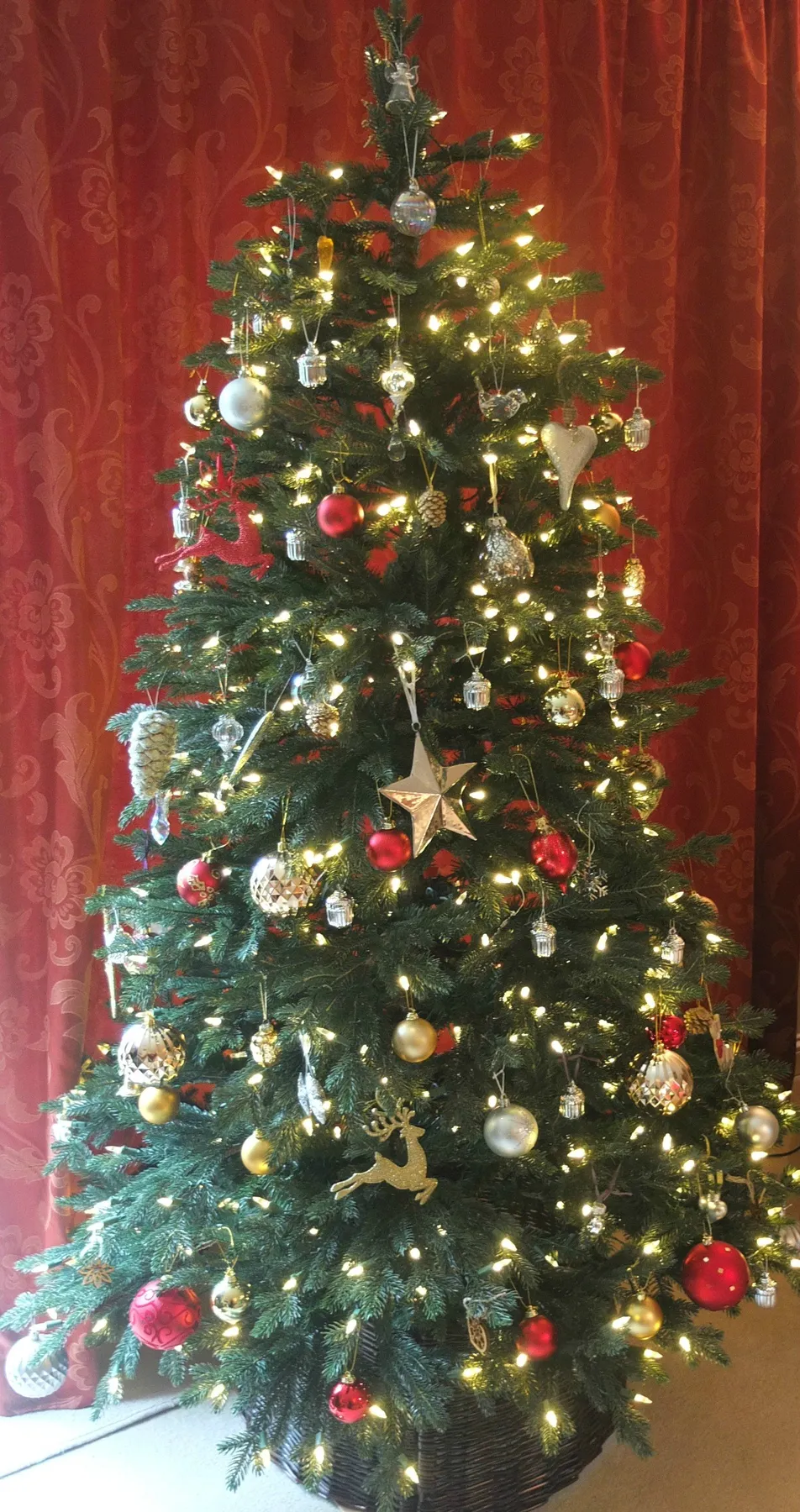
The trick is that dark red curtains are doing more work than the ornaments. Thrift stores and Facebook Marketplace regularly have damask panels for $10 to $25 a pair, and IKEA velvet curtains run $30 to $60. If curtains aren’t an option, a red tablecloth pinned behind the tree has fooled plenty of guests.
27. Poinsettias with a Silver Glitter Problem
Silver glitter and warm white lights are quietly fighting each other. Silver has a cool cast, and next to warm bulbs it can look gray instead of bright. If you love these poinsettias, switch to a neutral 3000K white and the silver will read as intended. Also, glitter accents shed — vacuum under the tree before you take it down, not after.
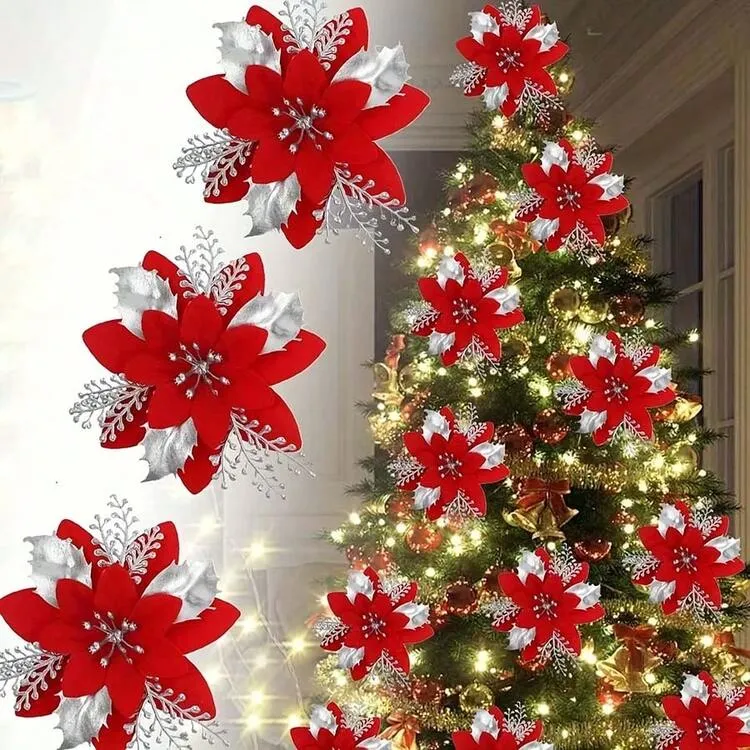
Large poinsettia picks need to be anchored, not just poked in. Bend the wire stem into a hook and clip it around a branch two nodes deep, then turn the bloom to face the room’s main sightline. A 6-inch flower holds fine on a real tree but slides out of a sparse artificial one, so add a twist tie if your branches are thin.
28. Frosted Branches Over a White Fur Skirt
- Tree (frosted 7.5 ft, pre-lit): $200–$900
- Lighting (warm white, included or added): $0–$80
- Textiles (faux fur skirt, red velvet ribbon): $35–$140
- Ornaments (red and gold baubles, mixed sizes): $60–$250
- Paint (white mantel wall, existing or repaint): $0–$150
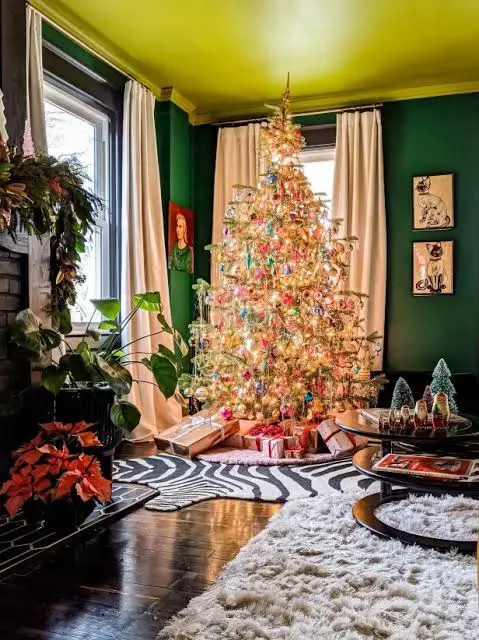
Total: $295–$1,520. Budget alternative: a white fleece blanket arranged around the stand reads like faux fur from three feet away for $12 at Walmart, and a plain green tree plus spray snow on the tips gets you close to frosted for a third of the price.
The white faux fur skirt is the one thing here. It’s what lets red and gold sit on a frosty tree instead of clashing with it — a soft white base that matches the frosted tips, so the tree reads as one continuous object from trunk to floor. A red or green skirt would chop it in half.
29. When the Wall Is as Red as the Tree
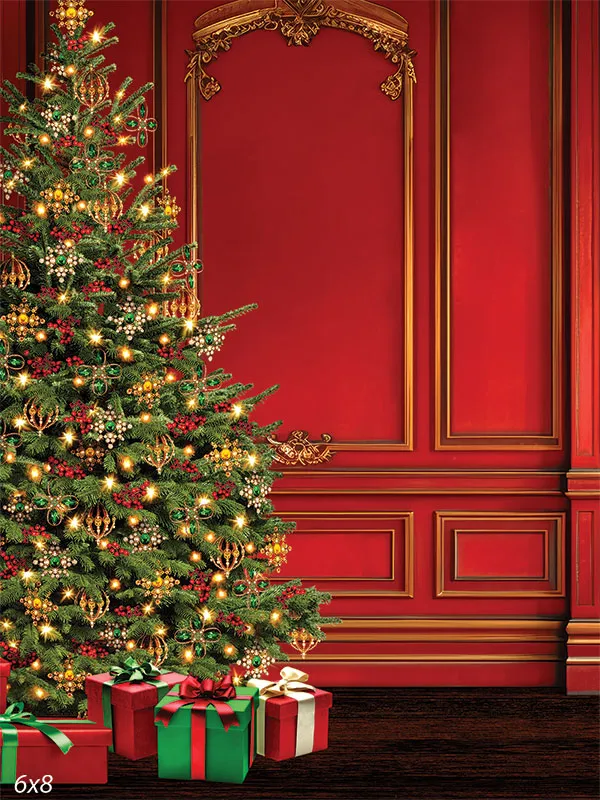
The wall is the decoration. Deep red paneling with gold molding repeats the tree’s palette at architectural scale, and the arched molding at the top crowns the tree like a frame. Green and gold ornaments then sit between the two reds and read clearly. It works because background and subject share a palette — a plain white wall would have flattened the whole thing. Compare with Idea #2, where the contrast comes from dark gray instead.
- Photograph your wall at night with the tree lights on before committing to a paint color.
- Measure the wall width; the tree should take up roughly a third to half of it, not all of it.
- Check whether your molding is paintable or original — gold leaf doesn’t take latex well.
- Cap your gold accent budget, because trim and frames add up faster than ornaments.
Now Go Hang Something Red on It
Start with one idea that feels doable today — a single garland, a spool of wired ribbon, a $20 box of red baubles — and let the rest of the room catch up next weekend. The trees that look best in February photos are the ones that grew slowly, season by season, with a few pieces that actually mean something.
📌 Save this to Pinterest so next December starts with a plan instead of a scroll.