
You know that feeling when a Christmas tree photo stops your thumb mid-scroll — the one with sparse branches, a woven basket, one strand of warm light — and you think, why doesn’t mine look like that? Same. That’s exactly why we pulled together 28 modern Christmas tree ideas for 2026, from Nordic minimal evergreens to mid-century living rooms where the tree is practically a piece of furniture.
After filtering through hundreds of options across Etsy, Target, and West Elm, we narrowed it down to 28 ideas that actually deliver — from a $25 strand of fairy lights to an $850 statement tree.
Inside you’ll find Nordic minimal, rustic woodland, frosted glam, and mid-century eclectic, with budget and luxury versions compared side by side so you can see exactly what the extra money buys.
In 2026 the pendulum has swung hard toward restraint — searches for sparse trees and neutral ornaments are climbing while tinsel maximalism sits this one out. And stay until the end — we break down the most common mistakes that can ruin these looks.
📌 Save this to Pinterest for later — you’ll want to revisit these ideas.
1. Nordic Minimal Evergreen with Wooden Ornaments
- Tree and basket: 7 ft natural-look evergreen $150–$450, woven seagrass collar $40–$90
- Lighting: three strands of warm white fairy lights $25–$60
- Decor: wooden star and house ornaments $35–$80, textured white and silver baubles $30–$70
- Main furniture: carved wooden side table $120–$320
- Wall: soft grey limewash or plaster finish $80–$300
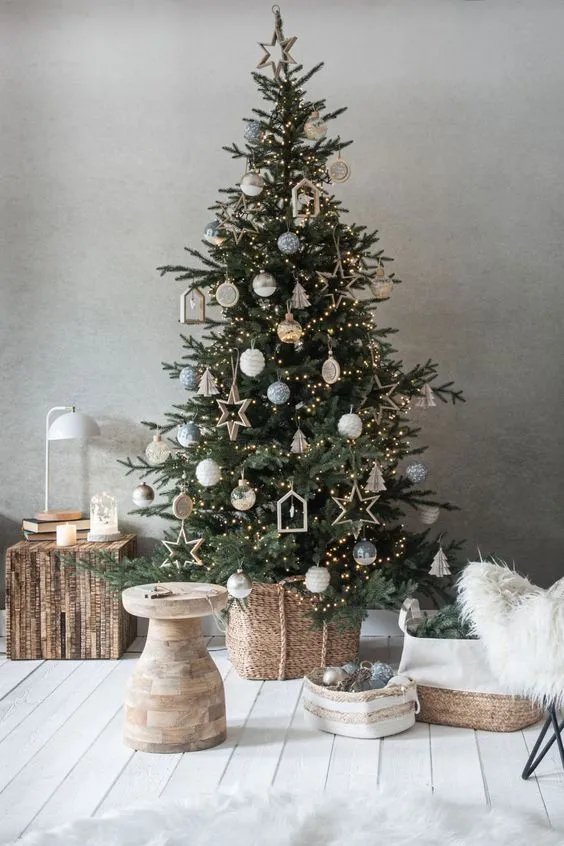
Total: $480–$1,370 Budget alternative: a thrifted basket, IKEA wooden ornaments, and a Facebook Marketplace tree land the same look for under $250.
Ornaments need breathing room. Cluster in odd numbers — three baubles of graduated size on one branch — and leave at least 6 inches of bare branch between clusters. Stick to 2700K bulbs only; one cool-white strand will make the forest green read chalky and turn the natural wood orange.
Here’s the honest catch with sparse trees: they show everything. The trunk, the wire, the gap where a branch should be. If your room gets north-facing light all winter, an under-lit sparse tree reads gloomy rather than serene. Double the light strands — three or four for a 7-footer — and keep the basket collar proportionate, roughly a third of the tree’s height.
2. Quiet Neutral Corner Anchored by a Candlelit Mantel
The detail that makes this corner work isn’t the tree — it’s the mantel mirroring it. Same greenery, same warm light, same restraint, repeated at mantel height. Take the garland away and you have a perfectly nice tree standing alone in the corner. Keep it and the whole wall becomes one continuous gesture, which is why the room reads calm instead of empty.
This setup wants a room at least 10 by 12 feet with 9-foot ceilings. The tree needs about 6 inches of clear air above the topper, and the mantel needs room to breathe beside it — tighter than that and the two focal points start competing for attention. Working with 8-foot ceilings and a smaller footprint? A slender tree in a ceramic pot solves the same neutral mood in a fraction of the space.
3. Frosted Tree with Patterned Ribbon and Cream Textiles
Flocked trees shed — there’s no polite way to say it. Expect a fine white dust on that textured cream rug for the first two weeks, and again every time you move a branch. Vacuum the tree with a brush attachment before you decorate, keep a lint roller nearby, and if you have a long-haired dog, a flocked tree plus a cream rug is a commitment, not a look.
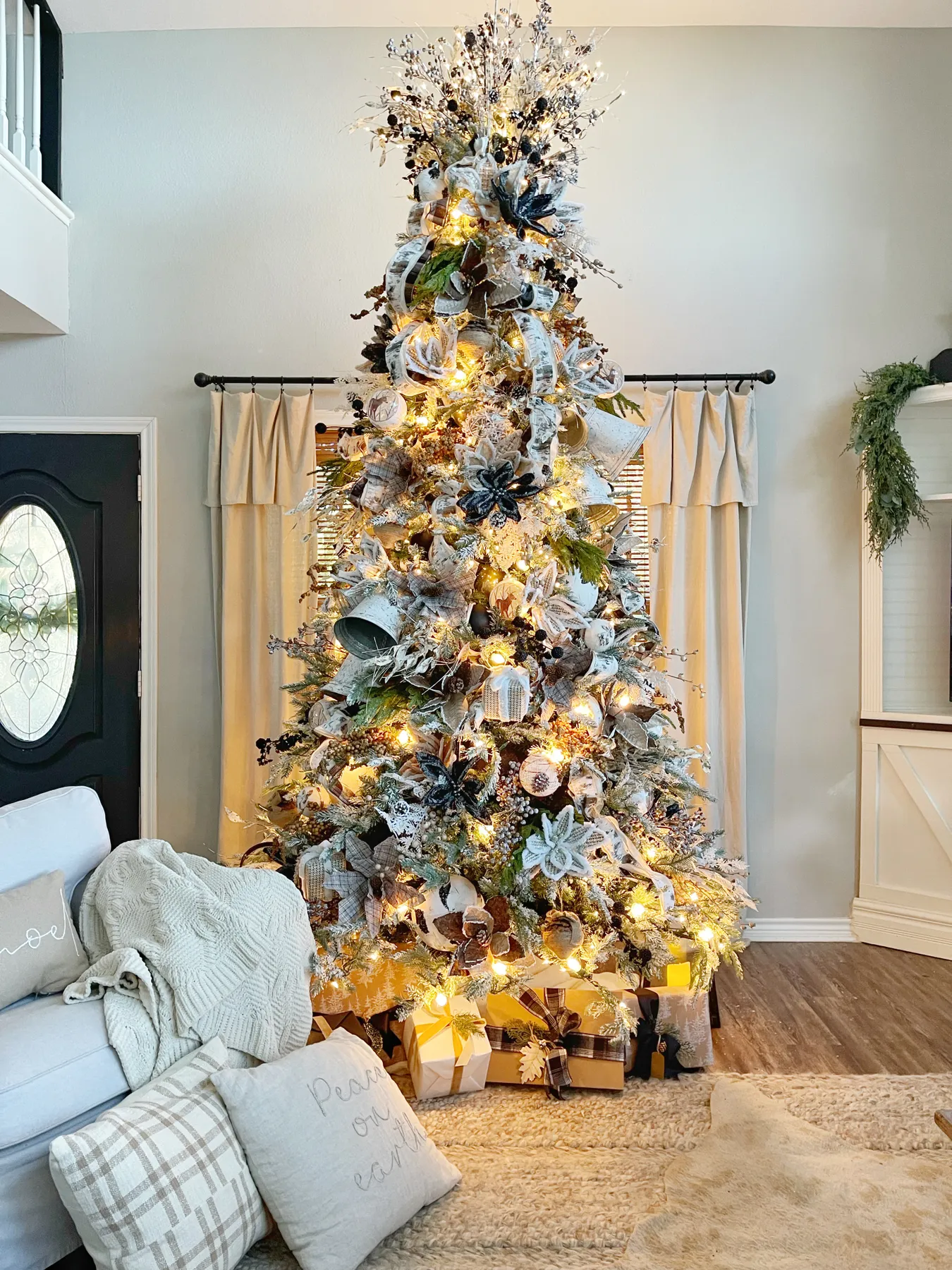
The formula here is roughly 70% frosted branches and warm white light, 20% cream and beige textiles, 10% dark accents. That last slice is the part people skip:
- 70% — frosted branches, warm white light
- 20% — textured rug, throw pillows, ribbon
- 10% — black or charcoal: wrapped paper, a dark stripe in the ribbon
Without the dark 10%, cream on cream on white goes flat in photos and slightly sickly in person. Swap the cream for pale sage and the formula still holds.
4. Rustic Dining Room with Suspended Evergreen Rings
Building the suspended rings is a weekend-afternoon project:
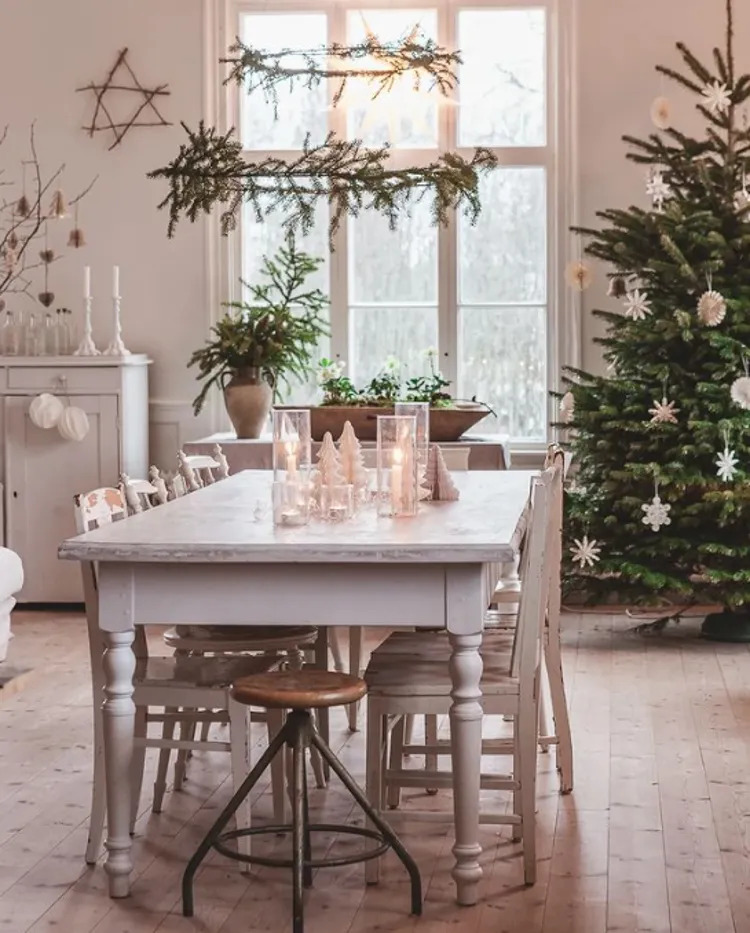
- Bend two 12-inch wire wreath frames into a ring, or use two embroidery hoops.
- Wire on evergreen sprigs in one direction only — clockwise — so the ring looks intentional from below.
- Thread fishing line through three points and knot at equal lengths.
- Hang from a ceiling hook so the bottom sits 30 to 33 inches above the table.
- Add a battery tea light in the center for glow without a cord.
About 90 minutes per ring, $25–$45 in materials.
Two things are happening here. First, repetition — the same evergreen moves from the tree to the table to the ceiling, so the eye has a rhythm instead of a single stopping point. Second, the rings occupy the dead zone above a dining table, normally wasted air. They hang at seated eye level, so they frame conversation rather than block it.
Hanging greenery needs vertical real estate. You want 9-foot ceilings, ideally 10, to leave proper clearance between a 30-inch ring and the tabletop. Dining rooms under 8 by 10 feet will feel crowded with two rings — one centered over the table is plenty. On a lower ceiling, keep the tree and skip the suspension entirely; the room still reads organic and warm.
5. Sparse Evergreen in a Minimalist Ceramic Pot
Skip the skirt and the collar — a glazed ceramic pot does both jobs. Size matters: the pot’s diameter should be roughly a third of the tree’s height, so a 7-foot tree wants a 20- to 24-inch pot. Line it with a plastic nursery pot so you can water without cracking the glaze, and raise the tree inside on a brick or foam block so the trunk doesn’t disappear into the mouth of the pot.
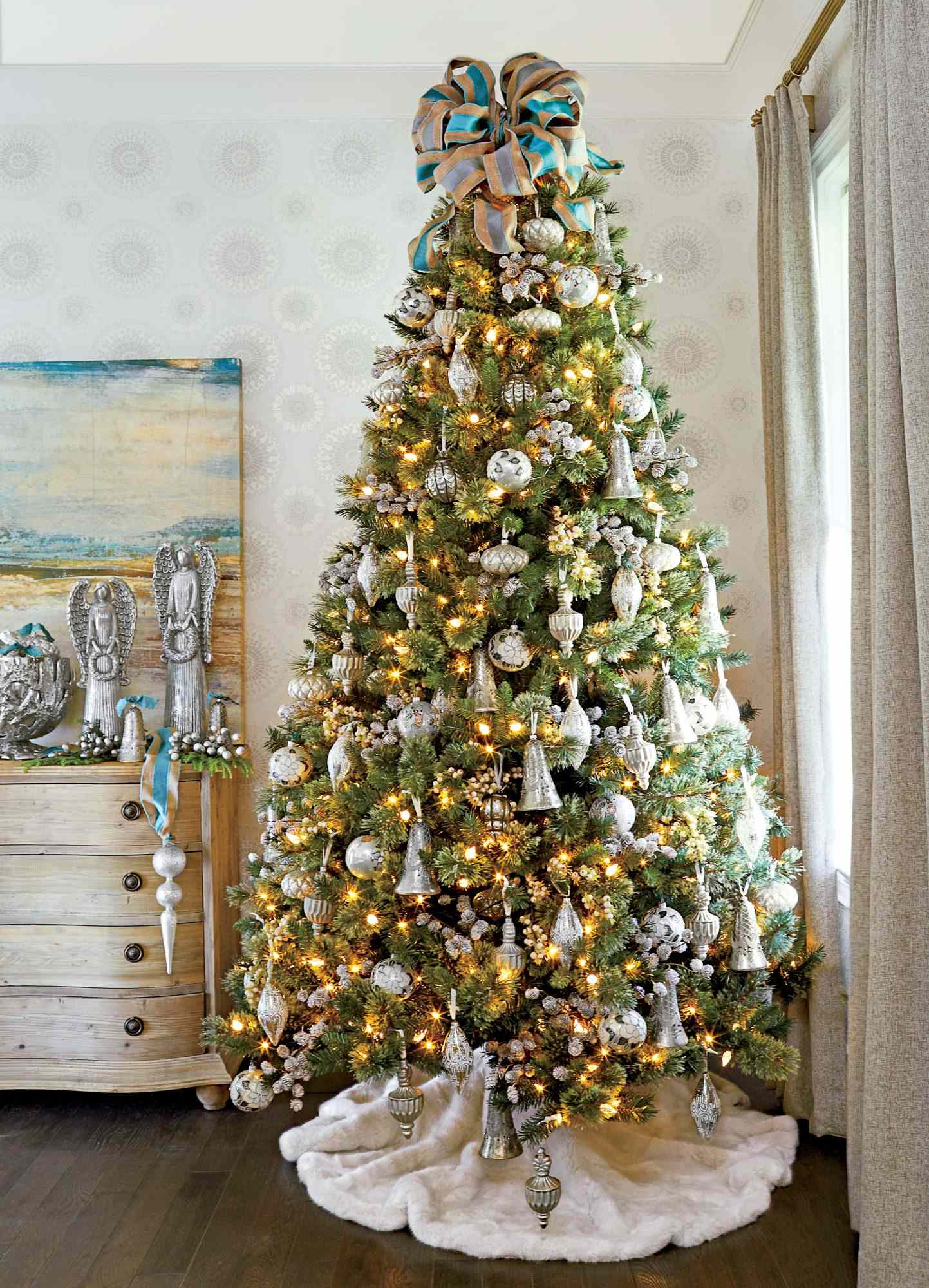
The budget version of Idea #1 lives right here. Target’s ceramic planters run $40–$70 in 20-inch sizes, IKEA has matte cream pots around $30, and Facebook Marketplace is full of oversized planters every January when everyone downsizes. A thrifted 22-inch planter, a $150 7-foot sparse tree, and two strands of warm lights get you 90% of this look for under $250.
6. Snow-Dusted Tree in White and Gold
- Tree: 7.5 ft frosted fir $220–$600
- Lighting: 600 warm white mini lights $30–$70
- Ornaments: white and patterned rounds $45–$110, gold reflective baubles $35–$85
- Garland: beaded or sequined strand $25–$60
- Figurine ornaments: dancer and bird pieces $12–$35 each
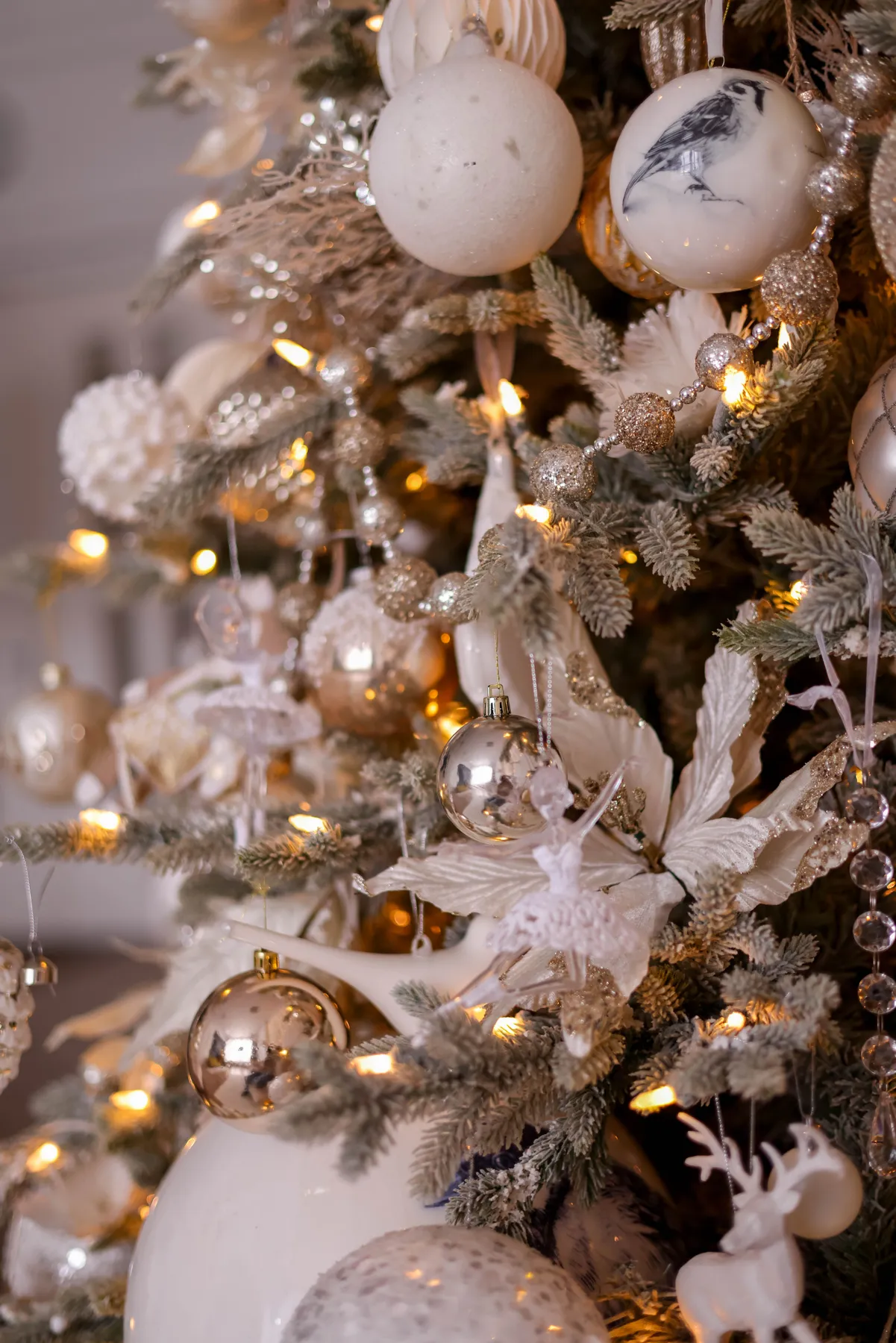
Total: $367–$1,060 Budget alternative: buy plain white baubles in bulk and add the gold yourself with a $6 can of metallic spray paint — a 40-ornament set costs about $18 instead of $90.
The figurine ornament is having a real moment. Vintage-inspired dancer and bird pieces — the kind that used to live in your grandmother’s box — are showing up in 2026 styling because they add narrative to a tree that’s otherwise all spheres and shine. Three or four sculptural pieces mixed into a strict white-and-gold scheme keep it from looking like a showroom display.
7. Flocked Tree with a Vintage Mirror at the Base
The mirror leaning behind the tree is the whole trick. It doubles the tree’s light, bounces warm string lights back into the room, and gives that pile of presents somewhere to reflect. Remove it and you have a perfectly nice flocked tree against a blank wall — flat, and probably a little dark in the evening. It costs nothing if you already own one; a large thrifted mirror runs $60–$150.
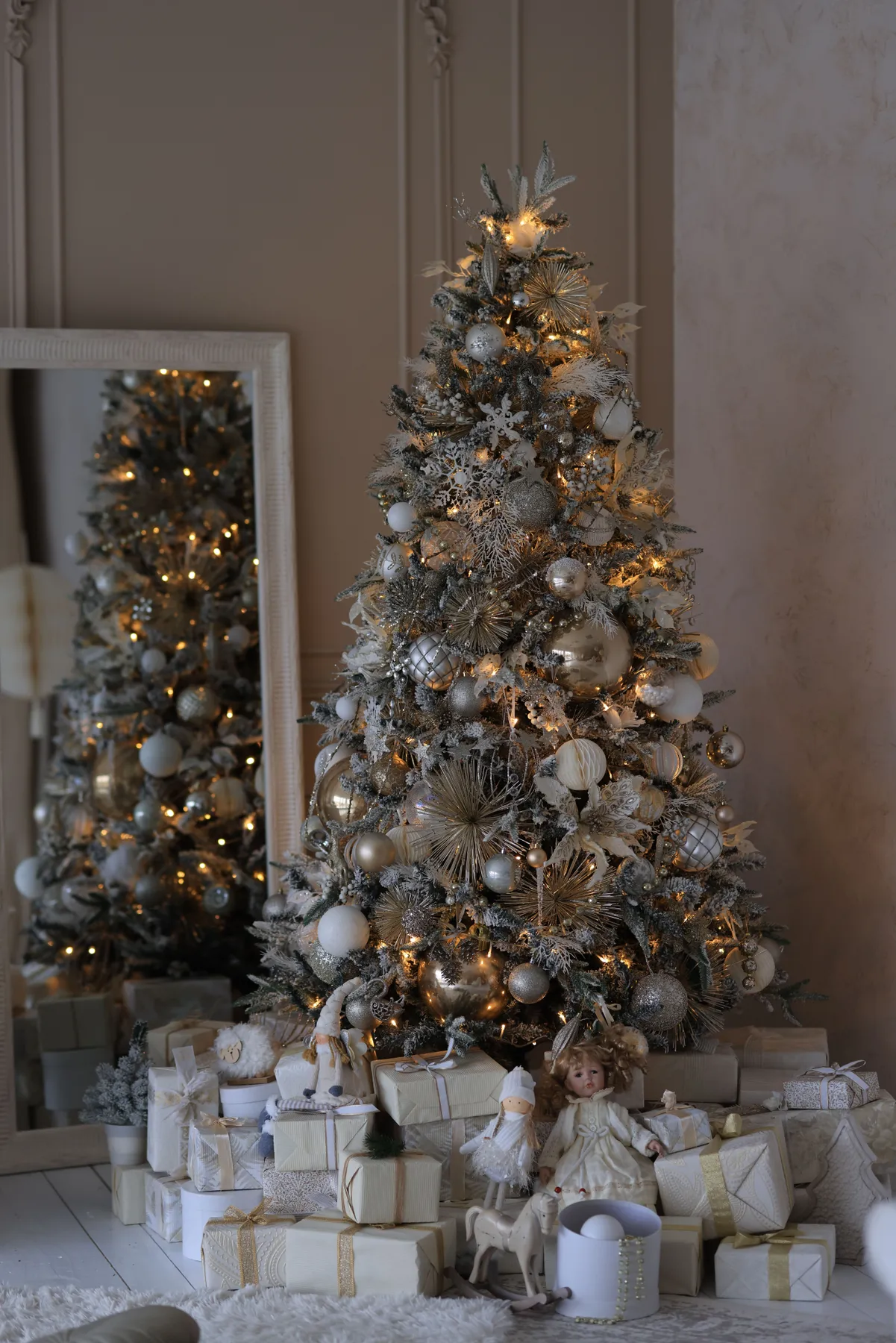
A leaning floor mirror plus a full tree needs real floor space — plan on a 12 by 14 foot room minimum, with the mirror at least 5 feet tall so it actually catches the tree’s lit side. Angle it 5 to 10 degrees back from vertical and secure the top to the wall. In a smaller room, a shorter arched mirror on a console works the same way at half the footprint.
8. Bronze and Chocolate Tree Stacked on Wooden Crates
60% green branches, 25% bronze and chocolate brown, 10% champagne silver, 5% cream. The brown is what separates this from a standard gold tree — it reads warmer and more expensive, and it photographs beautifully against a dark metal collar. Want a cooler version? Trade the bronze for pewter and the cream for pale grey, and keep the proportions identical.
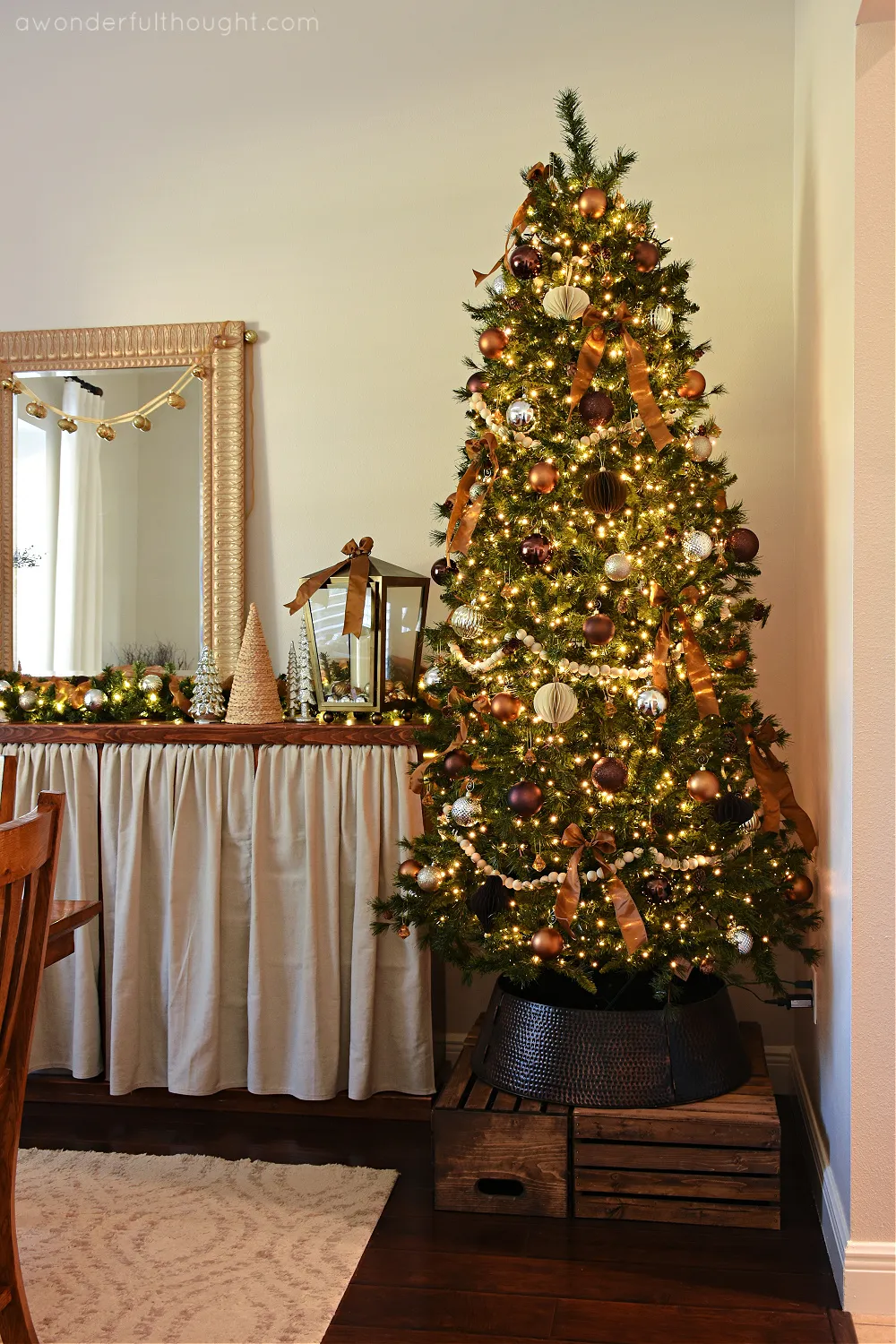
Wooden bead garlands are unforgiving if you drape them wrong. Work in vertical swags about 18 inches long, anchored at a branch and dipping 8 to 10 inches before you tie off, spaced roughly 12 inches apart around the tree. Let the brown satin bows sit on top of the bead dips, not beside them — stacking is what makes the layers read as one gesture instead of three competing ones.
9. Flocked Fir with Gold Poinsettias and a Wire Reindeer
Cluster, don’t sprinkle. Three gold poinsettias grouped on one side of the tree, a second cluster slightly lower on the opposite side, and nothing in between. That asymmetry is deliberate — it gives the eye a path and keeps a heavily flocked tree from looking uniformly dense. The lit wire reindeer works for the same reason: one sculptural silhouette against a plain white wall beats five small decorations every time.
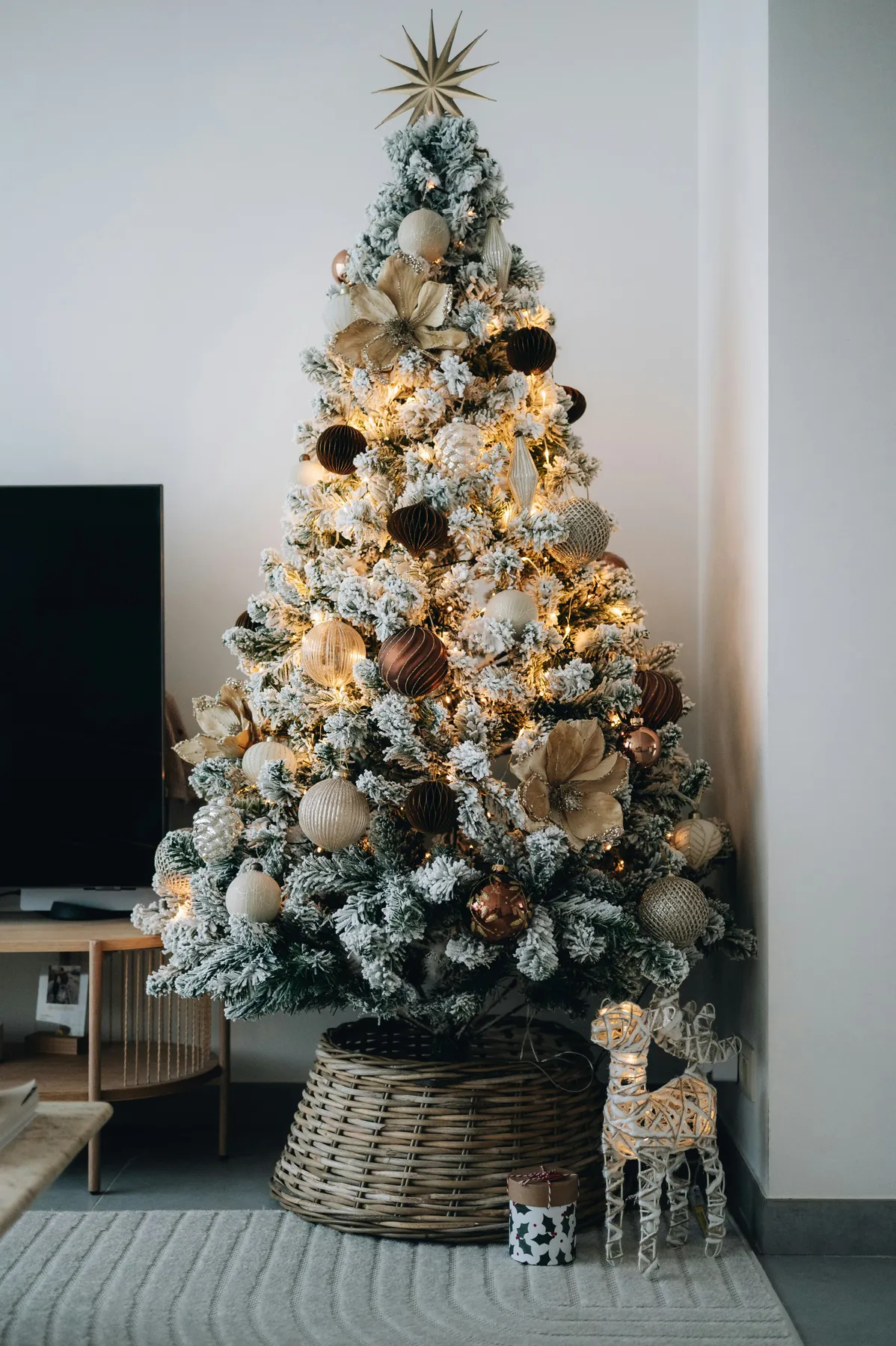
Two things to know before you buy a lit wire figure. It throws a lot of light and can look glare-y against a bright white wall at night — a nearby lamp on a dimmer fixes that instantly. And the flocked tree will shed onto the wood stand beneath it, so a felt pad under the collar saves you an hour of cleaning in January.
10. A Tiered Cone Tree Glowing on a Snowy Lawn
You don’t need a commercial display piece. Two or three wire tomato cages stacked and zip-tied, wrapped in green garland, plus 300 warm white lights and a $20 star topper gets you the same silhouette for under $120. Add a few shatterproof balls at the widest tiers and no one walking past will be able to tell. Compare with Idea #6 if you want the same sparkle indoors.
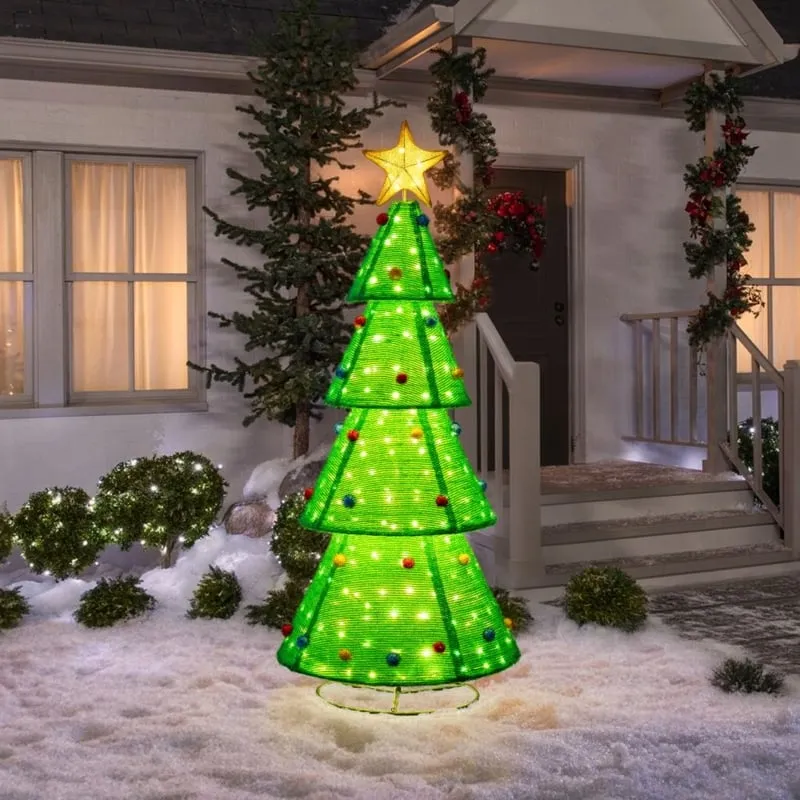
- Zip-tie three tomato cages in descending sizes into a single cone shape.
- Wrap the frame edge to edge with green garland, working bottom to top.
- Run warm white string lights vertically in four even sections.
- Clip shatterproof ornaments at the widest point of each tier.
- Stake the base, add a lit star, and plug into an outdoor-rated timer.
Roughly 2 hours and $110–$160 in materials.
This wants at least 8 by 8 feet of clear, visible space and a sightline from the street. Tiered cones read best at 6 to 8 feet tall — shorter and they disappear behind shrubs, taller and they start looking like sculpture instead of a tree. Make sure the plug reaches an outdoor outlet, or budget for a weatherproof extension cord.
11. Paper Stars and Wooden Houses in a Galvanized Tub
White paper star ornaments are semi-transparent, which means they need light behind or beside them to look like anything. Hang them within 12 inches of the window, or clip a small LED inside the tree behind each star. Against a dark green branch with no backlight they read as flat grey discs — the single most common complaint about this style, and the easiest to avoid.
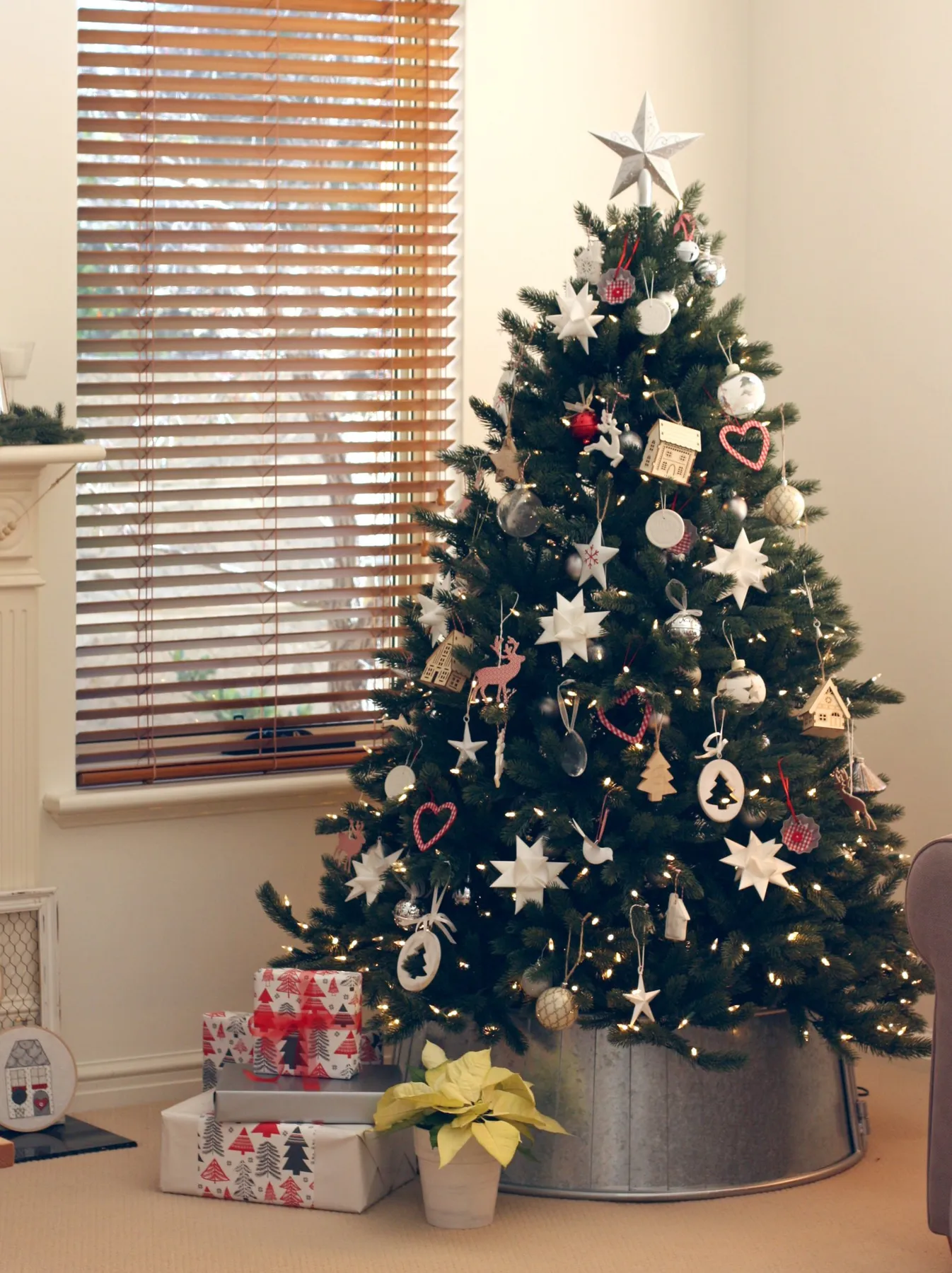
- Measure ceiling height minus tree height — you want 4 to 6 inches of clearance above the topper.
- Check which way the window faces; north-facing glass means white stars look grey by 3pm.
- Confirm the metal tub has a liner or plastic pot inside — bare galvanized steel rusts with water.
- Count your existing ornaments first; this look needs restraint, not volume.
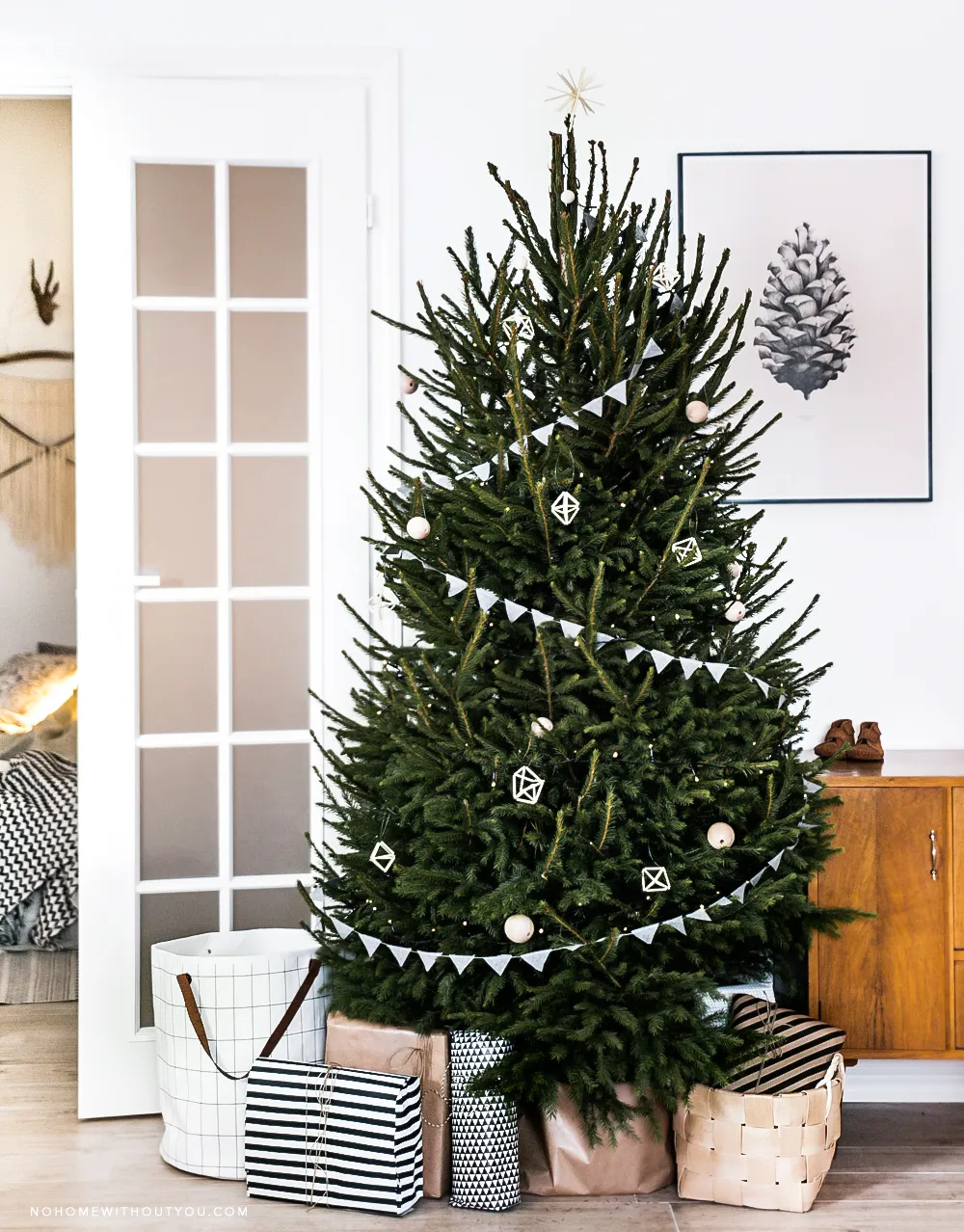
12. A Slender Pine, Warm Lights, Almost Nothing Else
Slender trees are the fix for small rooms: 10 by 10 feet or less, 8-foot ceilings, and a footprint barely 30 inches wide. A 7.5-foot pencil tree fits a corner most full trees can’t touch. Give it clear air above the topper and keep 6 inches between the tree and the nearest chair back. Bigger space, same restraint? Idea #2 covers that version with a full-size tree beside a mantel.
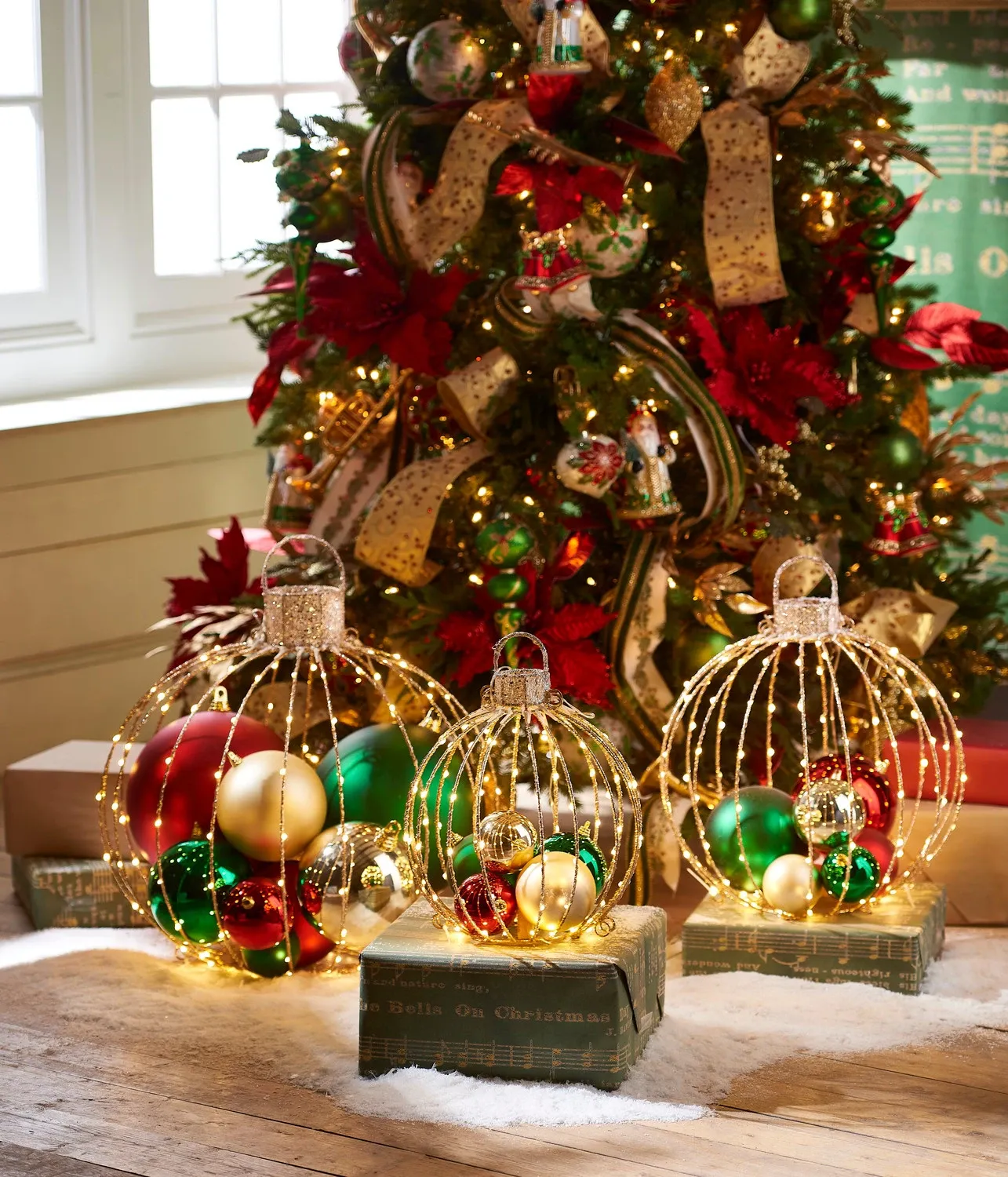
The negative space is the design. Look at how much bare branch sits between ornaments — that’s not an unfinished tree, that’s editing. Add a fourth strand of lights or one more box of baubles and this collapses into an ordinary Christmas tree. The discipline of stopping early is what makes it look curated instead of decorated.
13. Warm Lights Against a Cool Daylight Room
80% green foliage, 15% warm white light, 5% natural wood tones. That’s it — no red, no metallic, no ribbon. The reason this formula holds up in a bright room is that the light source is doing the decorating. Swap the natural wood for matte black and you get a slightly sharper, more modern read without touching the percentages.
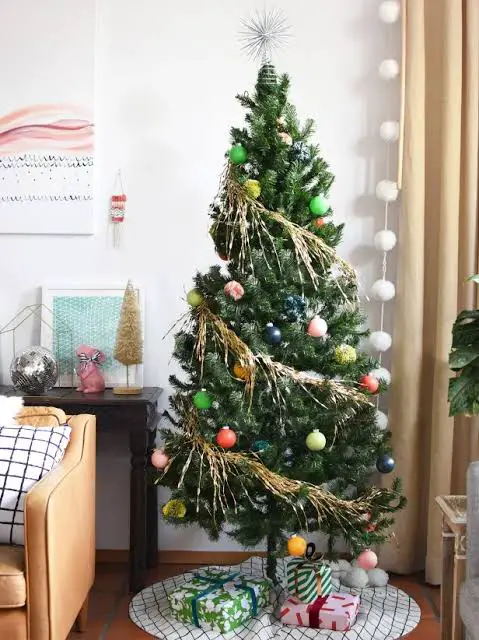
This is a lesson in color temperature. Daylight through a window sits around 5000K — cool and blue-ish. Tree lights are 2700K — warm amber. Put them in the same frame and the contrast does something lovely: the tree becomes the warmest thing in the room, which is exactly what you want in December. Switch to cool white LEDs and that relationship disappears, and everything reads flat.
14. Woodland Tree with Fabric Poinsettias and Birch Ribbon
For the birch ribbon cascades:
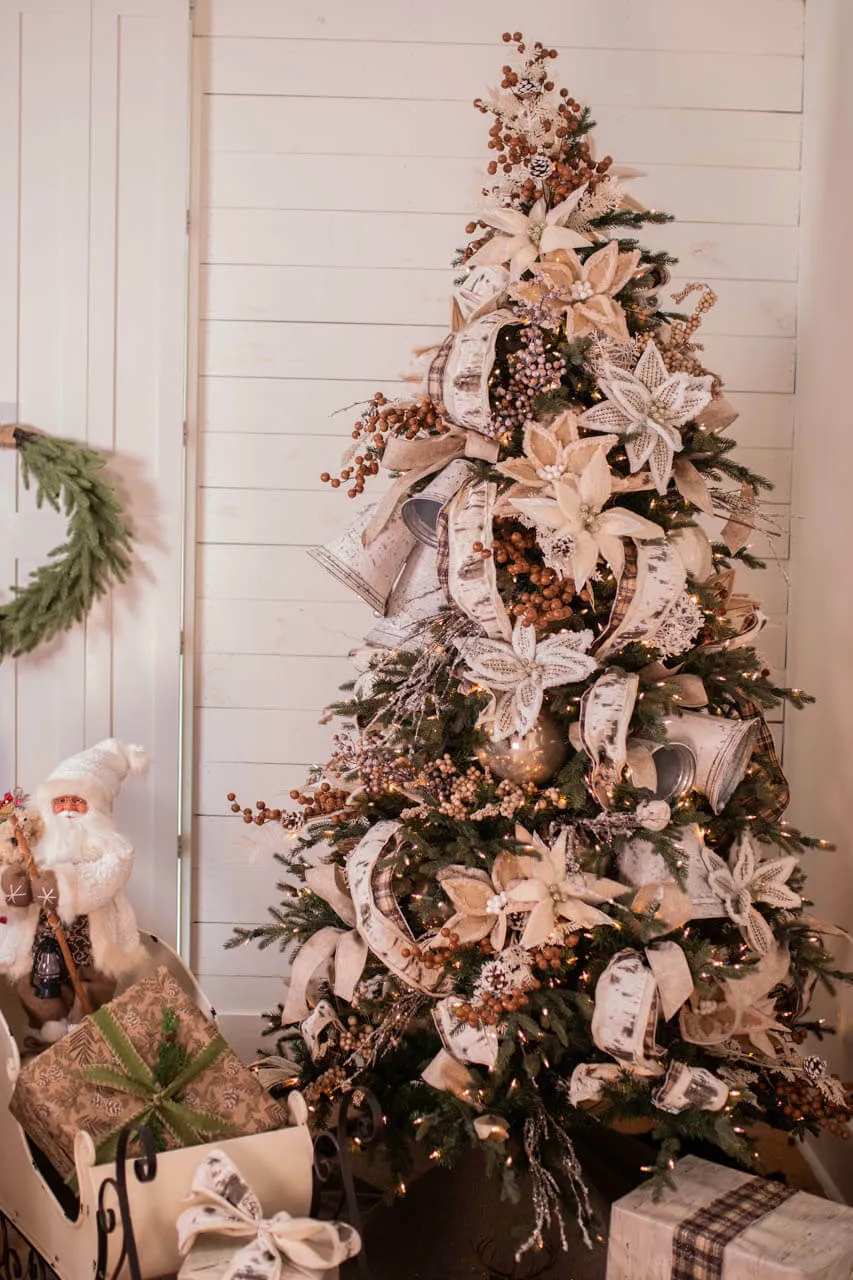
- Cut 3-inch-wide birch-patterned ribbon into 4-foot lengths, one per cascade.
- Fold each length in half and pinch it around a sturdy branch in the top third.
- Let the tails fall naturally, trimming the ends on a diagonal.
- Place six to eight cascades, evenly spaced around the visible side.
About 30 minutes and $18–$30 in ribbon.
- Tree: 7 ft evergreen $150–$400
- Florals: cream and beige fabric poinsettias, 12 to 18 stems $60–$140
- Ribbon: birch-patterned, 6 rolls $18–$35
- Filler: brown berry picks and pinecone sprays $40–$90
- Base: cream metal sleigh $80–$250, or a crate you already own
Total: $348–$915 Budget alternative: dollar-store poinsettias at $1.25 a stem plus twine-wrapped pinecones from a walk in the park brings the trim cost under $45.
15. Clear Glass Ornaments on a Snow-Covered Tree
Clear glass ornaments on a flocked tree are invisible unless you give them something to catch. Hang them where a warm bulb sits directly behind or inside them, and cluster two or three sizes together so the reflections overlap. A 2.5-inch, a 3-inch, and a 4-inch glass ball hung in a triangle reads as one deliberate moment instead of three lonely ornaments.
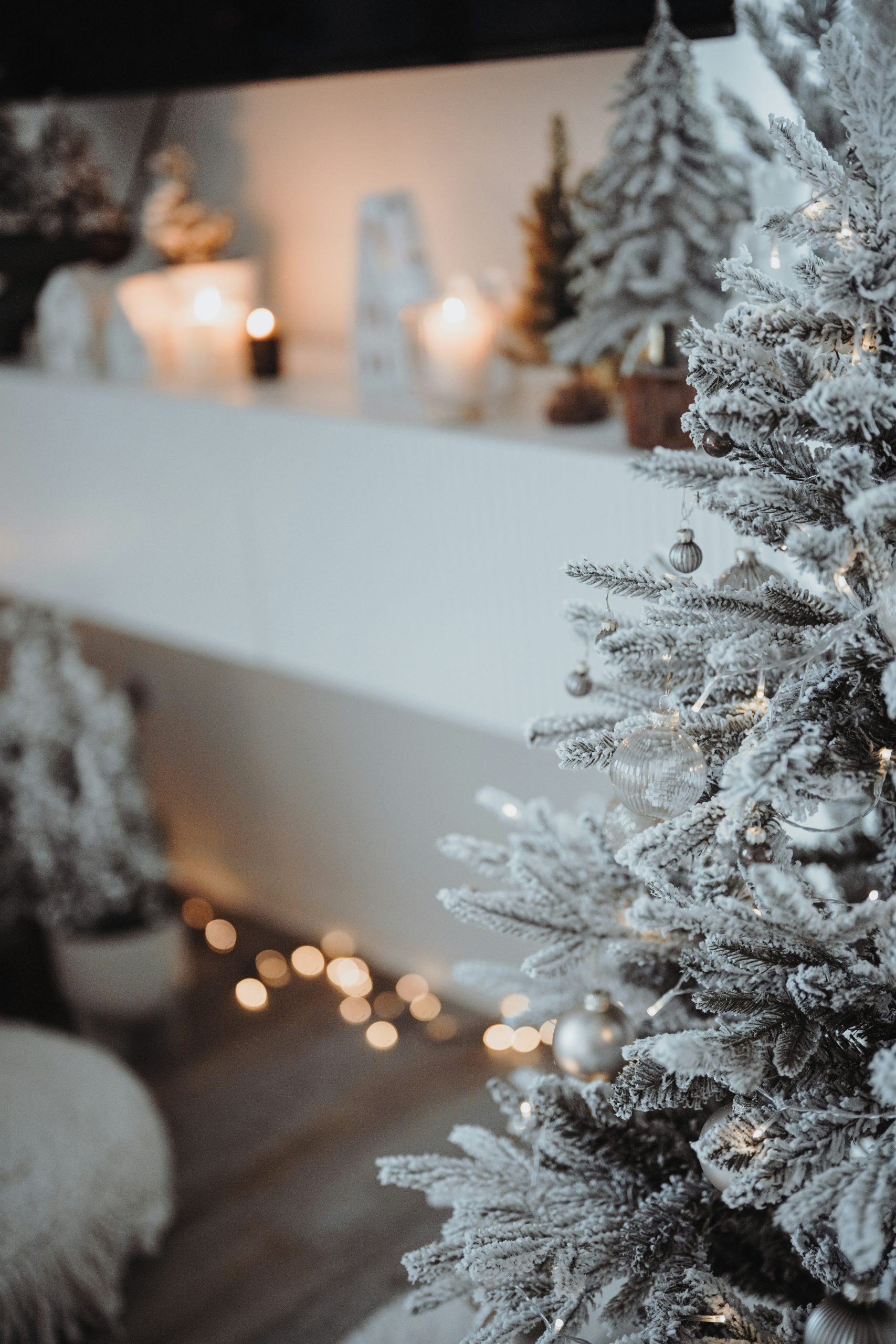
Flocked trees need a routine, so plan for it:
- Vacuum the branches with a brush attachment at setup and again at takedown.
- Expect light shedding for two weeks; a felt mat under the stand catches most of it.
- Store in a breathable bag, not plastic — trapped moisture turns flocking yellow.
- Wipe glass ornaments dry, never wet; water spots etch the finish.
16. Cascade-Lit Tree with a Fiery Star Topper
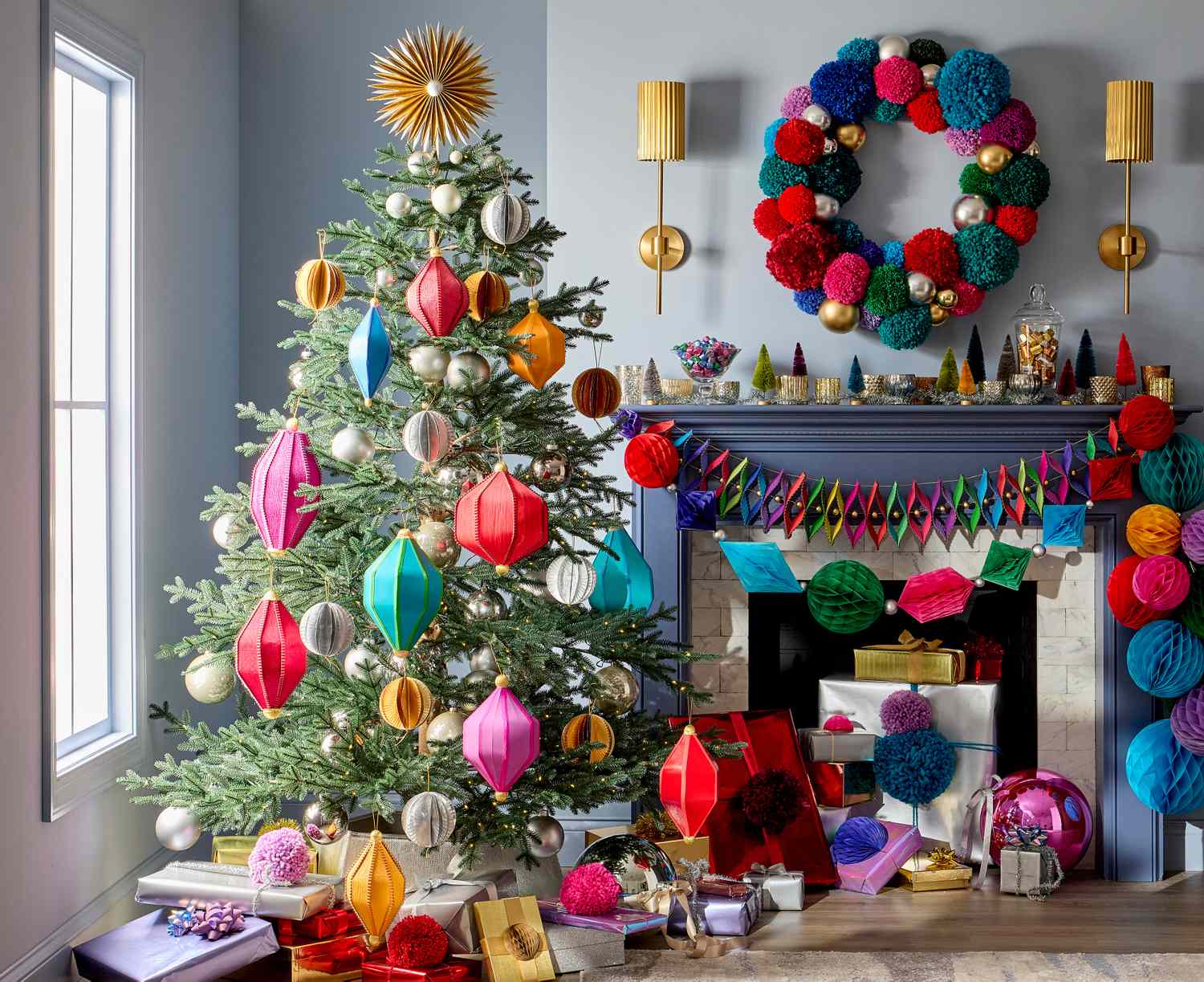
Color is back, but differently than the 90s. In 2026 the bold tree is styled deliberately — saturated ornaments grouped by color instead of scattered randomly, with vertical light strands giving it structure. It’s less “box of ornaments” and more curated maximalism, and it pairs neatly with the grandmillennial love of shiny, glossy, unapologetically festive finishes.
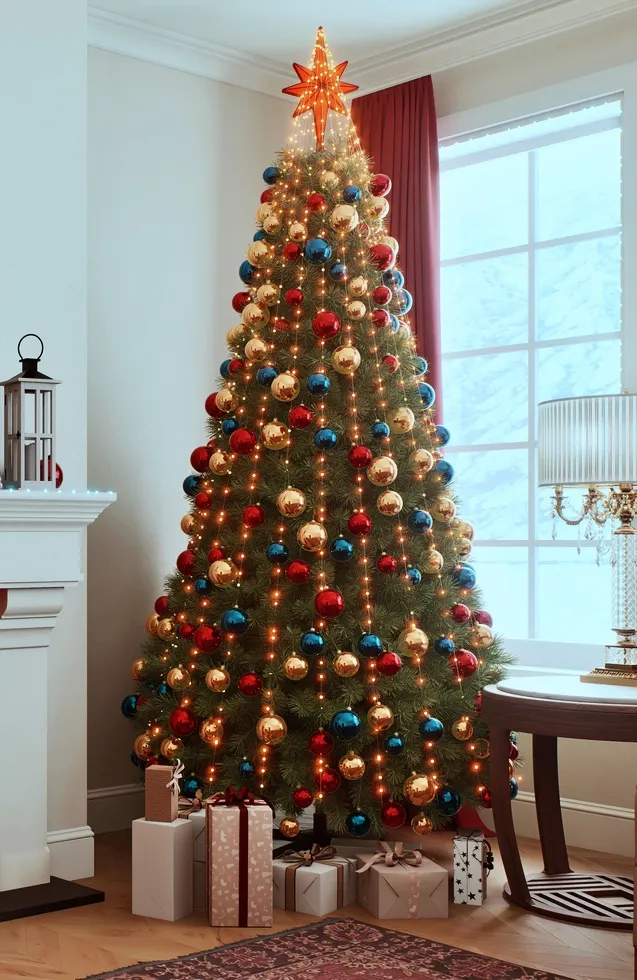
Fair warning on shiny ornaments: they show every fingerprint, and a red-blue-gold scheme tips into chaos fast if you don’t group the colors. Keep red clustered on the lower half, blue and gold weighted toward the top, and leave the topper as the only orange-red element. Also plan for the cascade lights — vertical strands need an extension cord up the trunk and a switch you can actually reach without kneeling.
17. A Sparse Tree Dressed Only in Velvet Bows
The long cream velvet bows with trailing tails are the entire decoration, and that’s the point. Eight or nine bows, one large one at the top, nothing else. What makes it work is the tail length — most people cut ribbon too short. These tails run 18 to 24 inches, which lets them move and catch light. Take the tails away and you have a bare tree. Keep them and you have a mood.
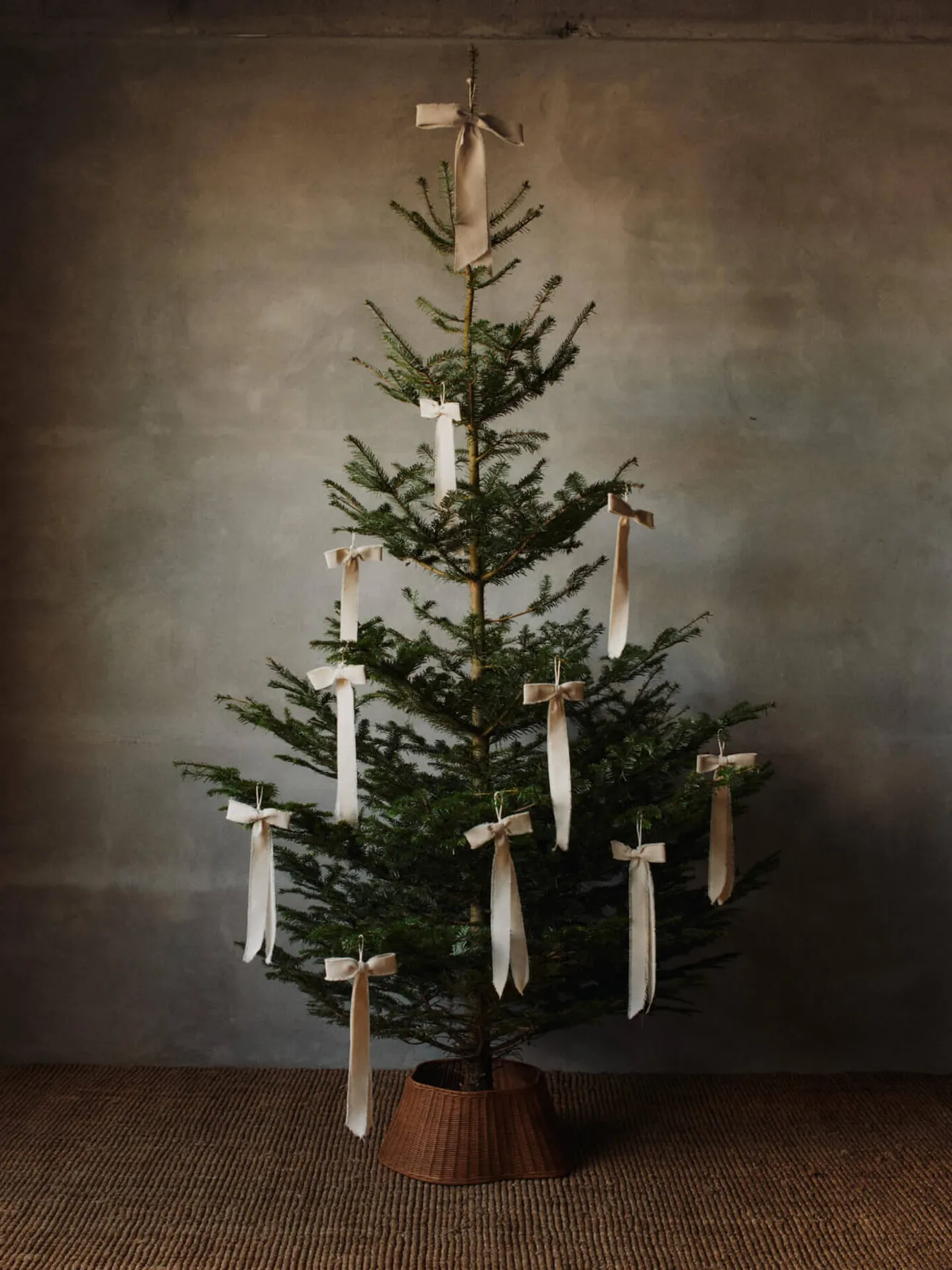
This look is built for small, quiet spaces: a 7-foot sparse tree needs about a 28-inch footprint and works in a 9 by 10 foot room without crowding a low ceiling. Against a mottled concrete-style wall it reads almost gallery-like. In a large room with high ceilings, the same styling looks under-furnished — scale the bow count up and widen the basket collar.
Velvet ribbon attracts dust like nothing else, and both the woven basket and coir mat shed. Plan on a lint roller for the bows and a quick shake-out of the mat every couple of weeks. Store ribbon rolled around cardboard tubes, never folded — creases in velvet are almost impossible to steam out without crushing the pile.
18. Lush Green Tree with Gifts Stacked to the Mantel
- Tree: 8 ft lush artificial evergreen $250–$650
- Lighting: 800 warm white mini lights $35–$80
- Gifts: paper, ribbon, and boxes for 15 parcels $50–$120
- Mantel: garland, stocking holders, four stockings $60–$180
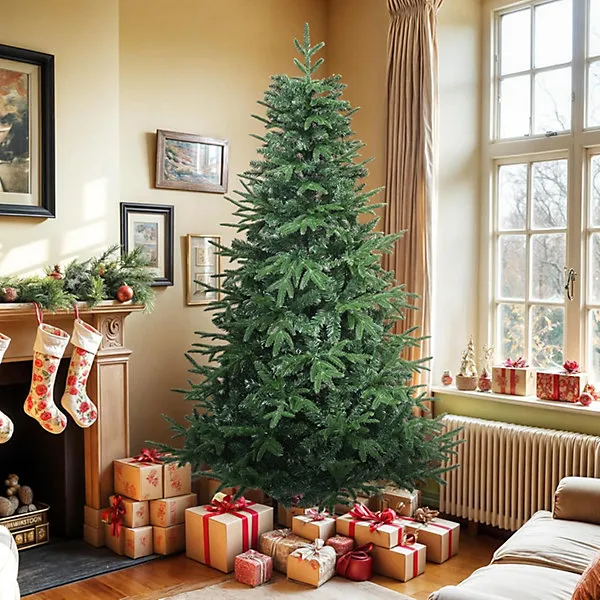
Total: $395–$1,030 Budget alternative: reuse last year’s boxes with fresh dollar-store paper and skip the mantel garland — the tree and the gift pile do the work.
The gift pile isn’t storage, it’s design. The red ribbons repeat the red in the stockings, and the parcels stack in a loose pyramid that reads as one soft mass from across the room. Scatter them and the base of the tree turns into clutter. One caution from our mistakes section below: give the tree and the gift pile room to breathe, or you’ll block the path between the sofa and the window.
19. Blue and White Tree Beside a Knit Stocking
Striped ribbon behaves better when you alternate the cut. Cut half your lengths on the true bias so the stripe runs diagonally, and half straight across so it runs horizontally. Tie them in alternating order around the tree and the stripes read as movement instead of a pattern repeat. One roll of 2.5-inch ribbon yields about 14 bows.
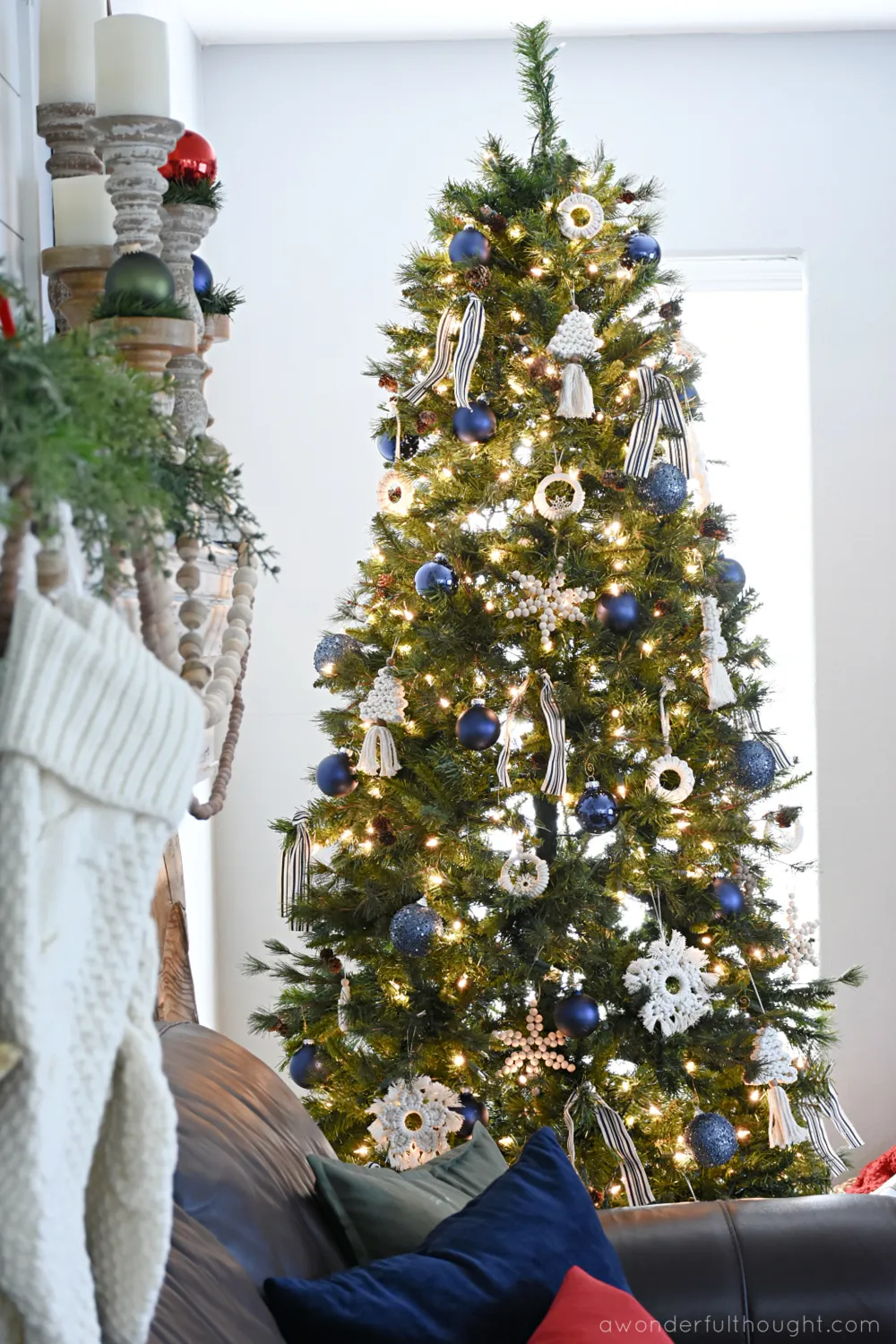
55% green foliage, 25% navy and deep blue, 15% white, 5% warm gold light. The navy is what keeps this from looking like a generic winter tree — it’s dark enough to read almost black under warm light, which gives the white snowflakes something to pop against. Want a softer version? Swap navy for deep teal and change nothing else.
20. Dried Oranges and Rust Velvet on a Fur Rug
Drying your own citrus is genuinely easy:
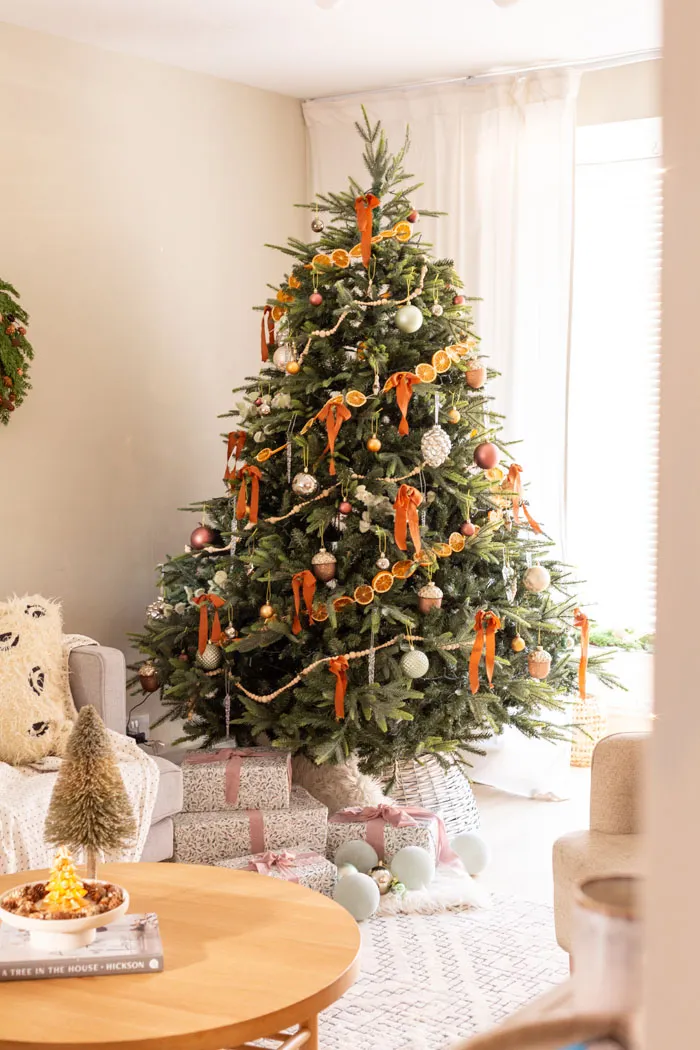
- Slice oranges 1/4-inch thick and blot them dry with paper towel.
- Lay them in a single layer on a parchment-lined baking sheet.
- Bake at 200°F for 3 to 4 hours, flipping once at the halfway point.
- Cool completely, poke a hole with a skewer, and thread with twine.
About 4 hours and roughly $6 in oranges for 20 slices.
The white faux fur rug under this tree is the expensive-looking part, and it’s also the easiest to fake. A 5 by 7 faux fur or sheepskin-look rug runs $60–$120 at Target or Walmart — or buy two smaller ones and overlap them. Wide dollar-store ribbon and a thrifted box of large ornaments (about $10–$15) finish the pile.
Dried citrus holds up for years if it’s fully dry and turns moldy in a sealed box if it isn’t. Test one slice: it should snap, not bend. Faux fur needs a weekly shake and mats down under foot traffic; a flatweave jute rug gives a similar natural base with far less upkeep.
21. Green Tree, Silver Gifts, Grey Wall
Silver-wrapped gifts against a grey wall is a beautiful, cold combination — and it photographs better than it feels. In person, at night, with only the tree lights on, the whole corner can read chilly. Warm 2700K bulbs plus one floor lamp in the corner solves it. If your wall is a cool blue-grey rather than a warm greige, expect the silver to look flatter still.
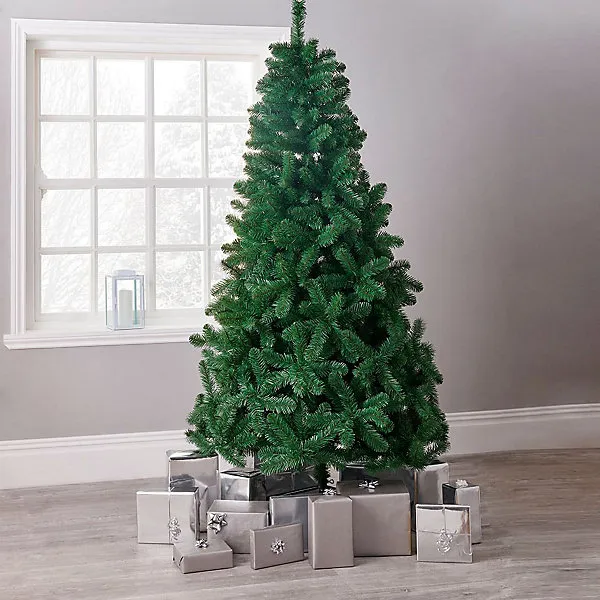
- Confirm the wall’s undertone — warm greige keeps silver looking luxurious, cool blue-grey turns it dull.
- Check the view from your main seating spot, not just from the doorway.
- Measure the gap between tree and window: blinds need 4 to 6 inches of clearance to open.
- Set a gift-wrap budget before you shop; matching silver paper for 20 parcels adds up fast.
22. Fairy-Lit Branches over a Maroon Velvet Skirt
A slender tree with a full velvet skirt needs surprisingly little floor. Plan on a 10 by 10 foot room, an 8-foot ceiling, and a skirt roughly twice the diameter of the tree’s base spread — for a 30-inch base, that’s a 60-inch skirt. In a room under 100 square feet, skip the skirt and use a woven basket instead so you’re not tripping over fabric.
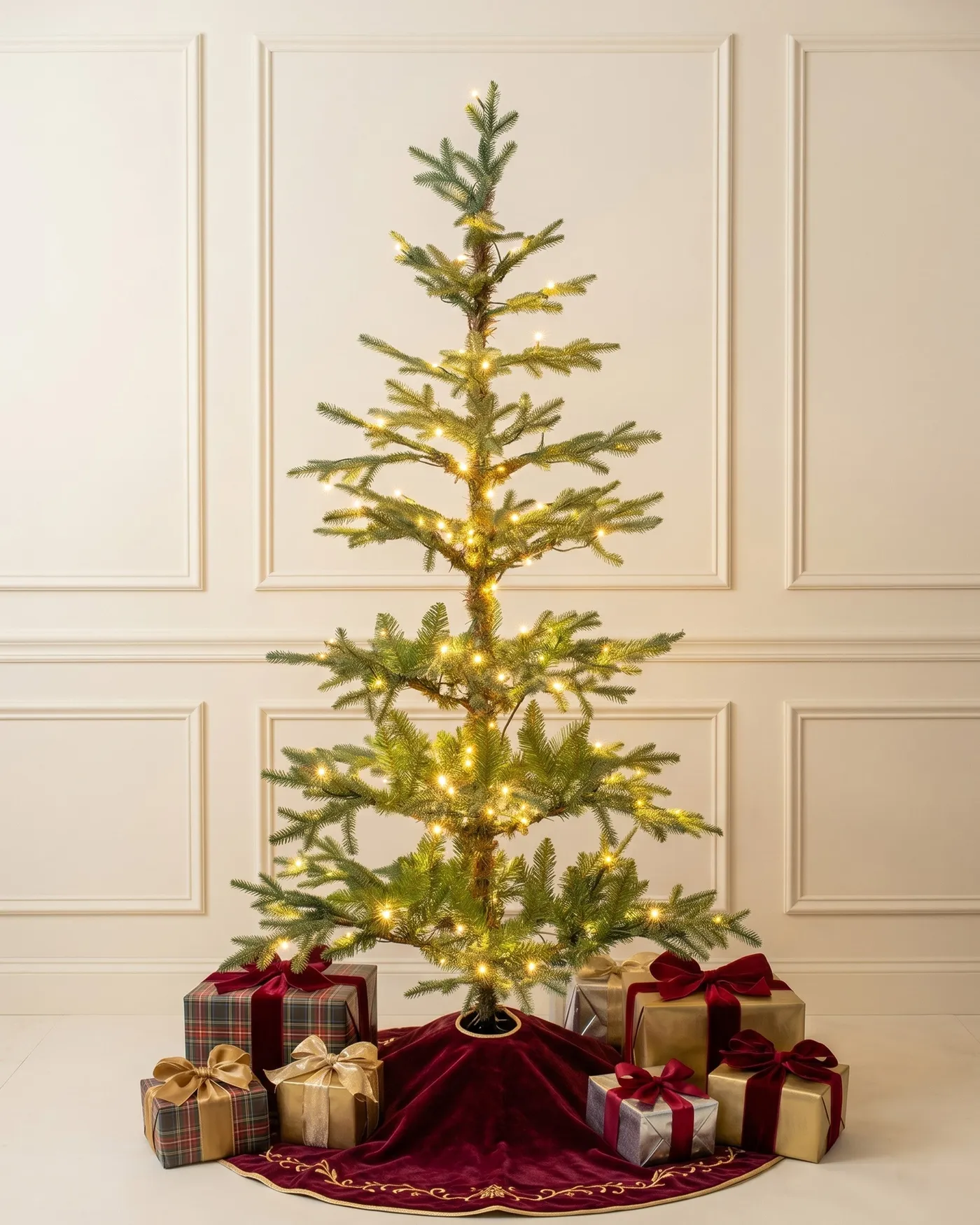
The tree skirt is doing more work than you think. A maroon velvet with gold embroidery, spread flat rather than bunched, creates a wide warm base that visually anchors a slender tree — which otherwise floats. Push the skirt edges out until they nearly touch the wall, and arrange gifts on the outer third, kept back from the center. Bunching the fabric kills the effect entirely.
23. Slender Evergreen in Quiet Contemporary Light
White and metallic ornaments age visibly. White baubles yellow within about three seasons, especially in a sunny room, and cheap gold finishes tarnish where fingers touch them. A yearly wipe with a dry cloth helps; storing ornaments in acid-free tissue in a hard box helps more. If your tree catches direct sun, rotate ornaments to the back every few weeks so the fading is even.
There’s no overhead light here, and that’s deliberate. All the glow comes from the tree itself plus ambient bounce off neutral walls, so after dark the tree becomes the room’s only light source. It’s the cheapest way to make a minimal tree feel special — turn the ceiling fixture off and let it work. Add a warm floor lamp in a far corner if you need light to read by.
24. A Black Cone Tree with Glowing Cutouts
The abstract tree is finally mainstream. For 2026, a growing share of design-forward homes are skipping evergreen altogether — black metal cones, plywood cutouts, and lit geometric frames are turning up in modern interiors and front yards. It’s partly a maintenance thing (nothing to water, vacuum, or store) and partly a reaction against maximalist holiday decor.
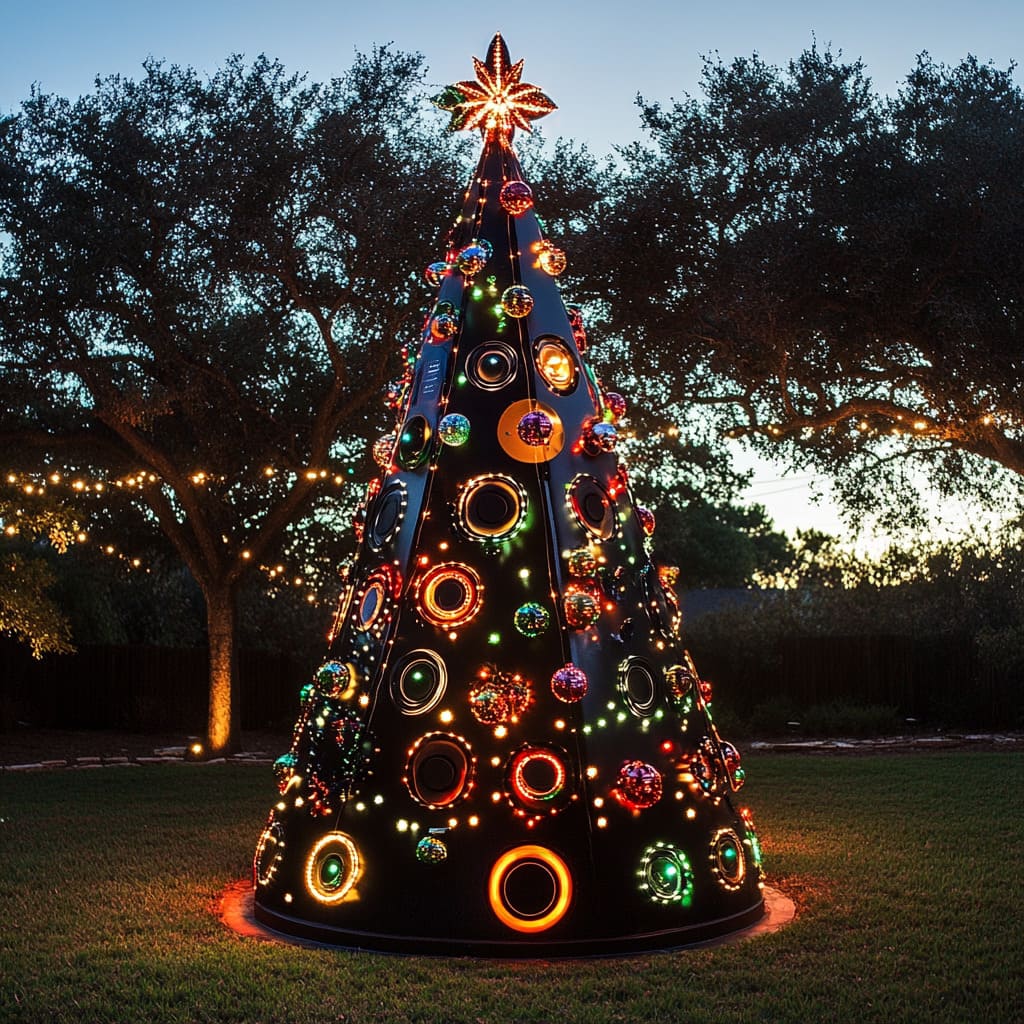
You can build a convincing version for under $200. A 6-foot plywood cone or a large tomato-cage frame painted matte black, plus a string of multicolored LED lights and a star topper, gets you the silhouette. If you’d rather rent, holiday display rental companies charge $150–$400 for a season on statement pieces — often cheaper than buying something you’ll store for eleven months.
25. Chocolate, Copper, and Honeycomb Paper
60% green, 25% matte brown and copper, 10% cream, 5% silver. Compared with the bronze tree in Idea #8, this one leans lighter and softer because copper carries warmth rather than shine. Trade the copper for brushed brass and the same percentages give you a dressier, slightly more formal tree without changing anything else.
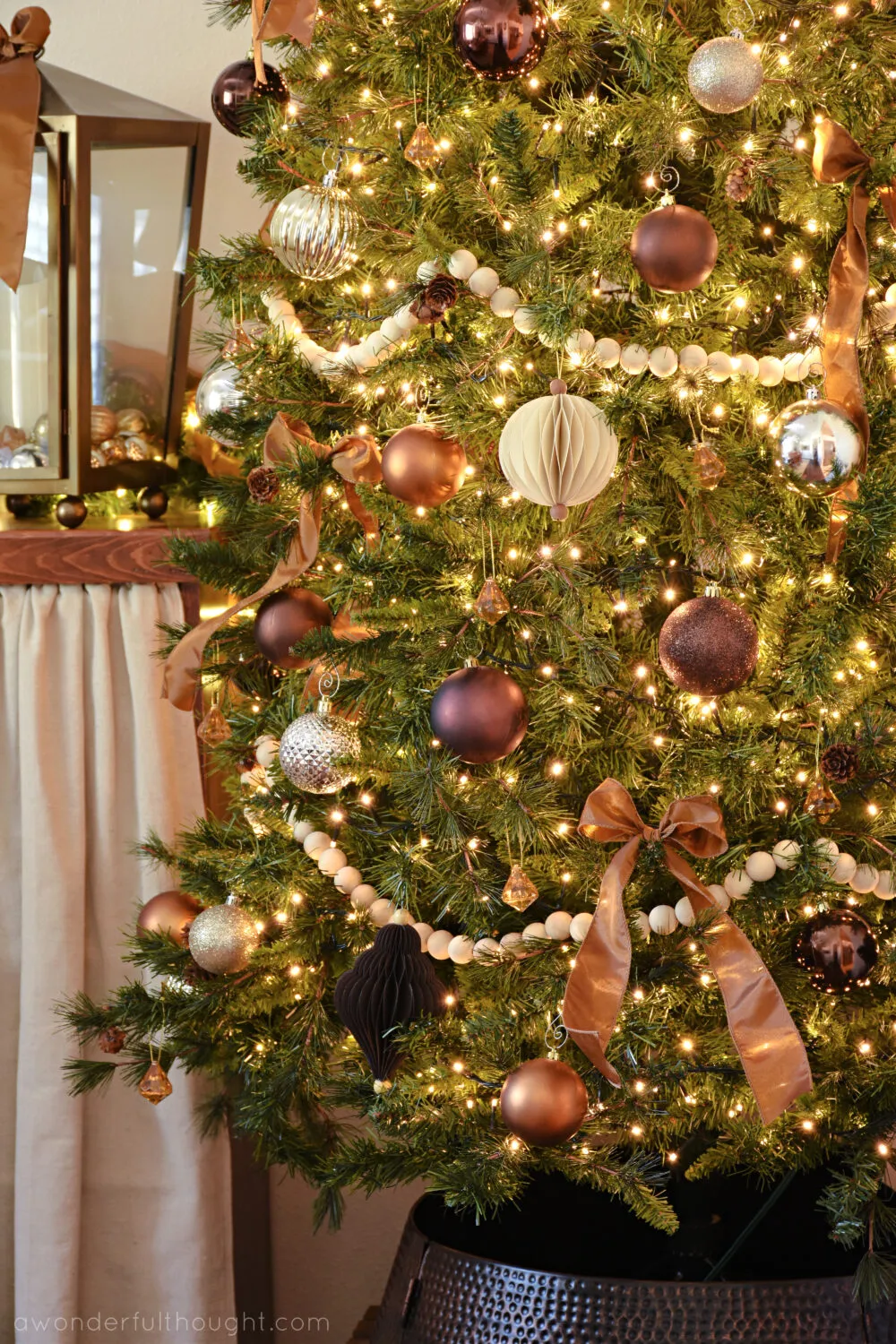
The honeycomb paper ornaments are the detail that keeps this from being just another brown-and-gold tree. They’re matte and slightly dull, which gives the eye a rest between all the metallic and glass. Mixing texture finishes — not adding more colors — is what makes a monochromatic scheme look layered instead of repetitive.
26. Slim Frosted Tree Against Wood Paneling
- Tree: 7.5 ft slim frosted artificial $120–$320
- Stand: low-profile metal stand $25–$60
- Rug: woven jute or natural fiber, 5 by 7 $90–$300
- Lighting: 400 warm white mini lights $20–$45
- Ornaments: frosted glass and pale gold rounds $40–$95
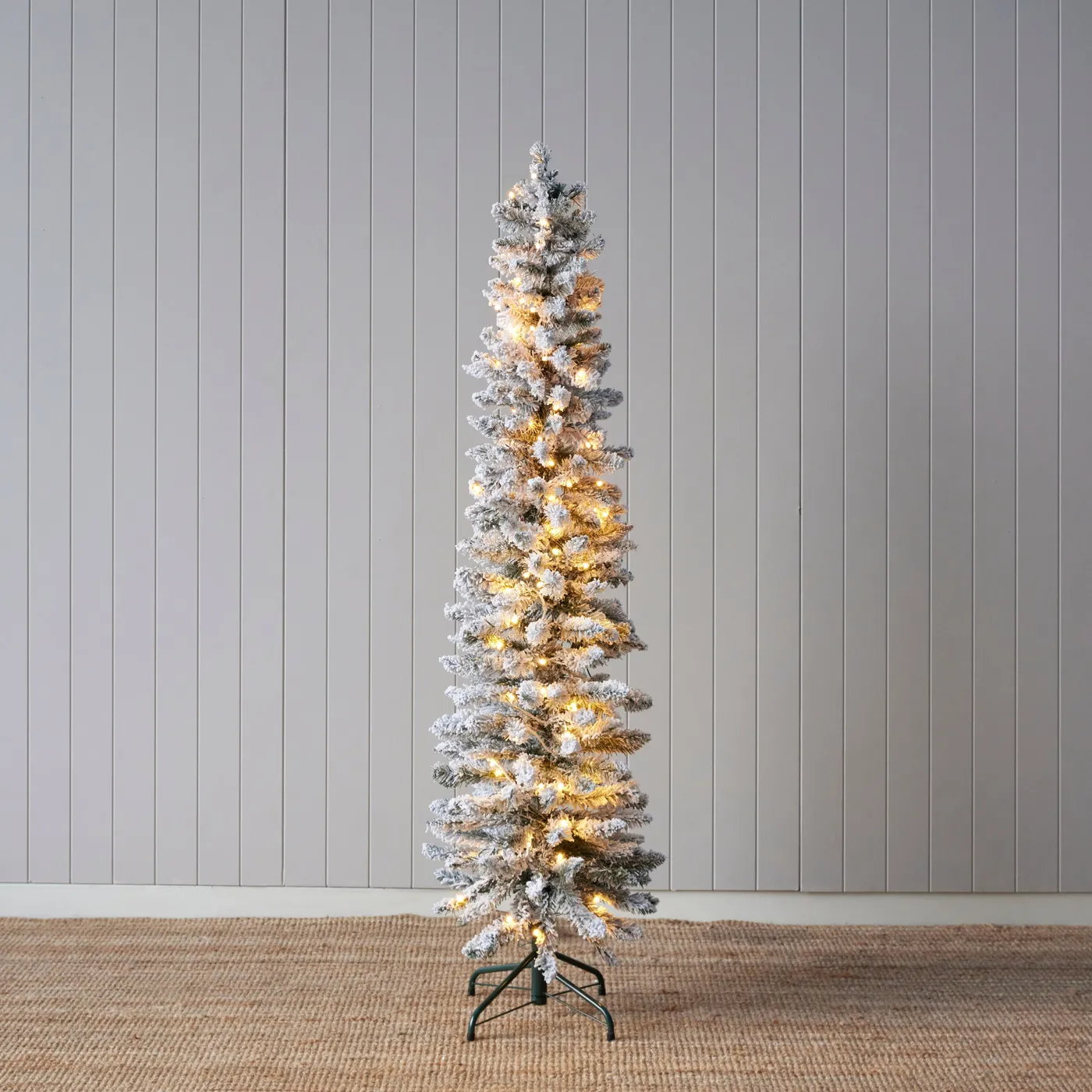
Total: $295–$820 Budget alternative: a slim unlit tree around $80 plus two strands of warm lights and a thrifted jute rug brings this in near $180.
Frosted trees vanish against pale walls unless you give them contrast. Here, the warm light line does the separating — every extra ornament matters less than the glow. If your wall is very light, shift toward pale gold and champagne ornaments instead of pure white; they hold their shape against frost in a way white simply doesn’t.
27. A Cedar Tree and Brown Paper by the Brick Fireplace
- Buy the cedar no more than 10 days before you want it looking its best — cedars drop fast once dry.
- Check the water reservoir daily; a 6-foot cedar can drink a quart a day.
- Measure from tree to fireplace and keep at least 3 feet of clearance.
- Confirm your basket is lined — raw wood slats stain from a wet trunk.
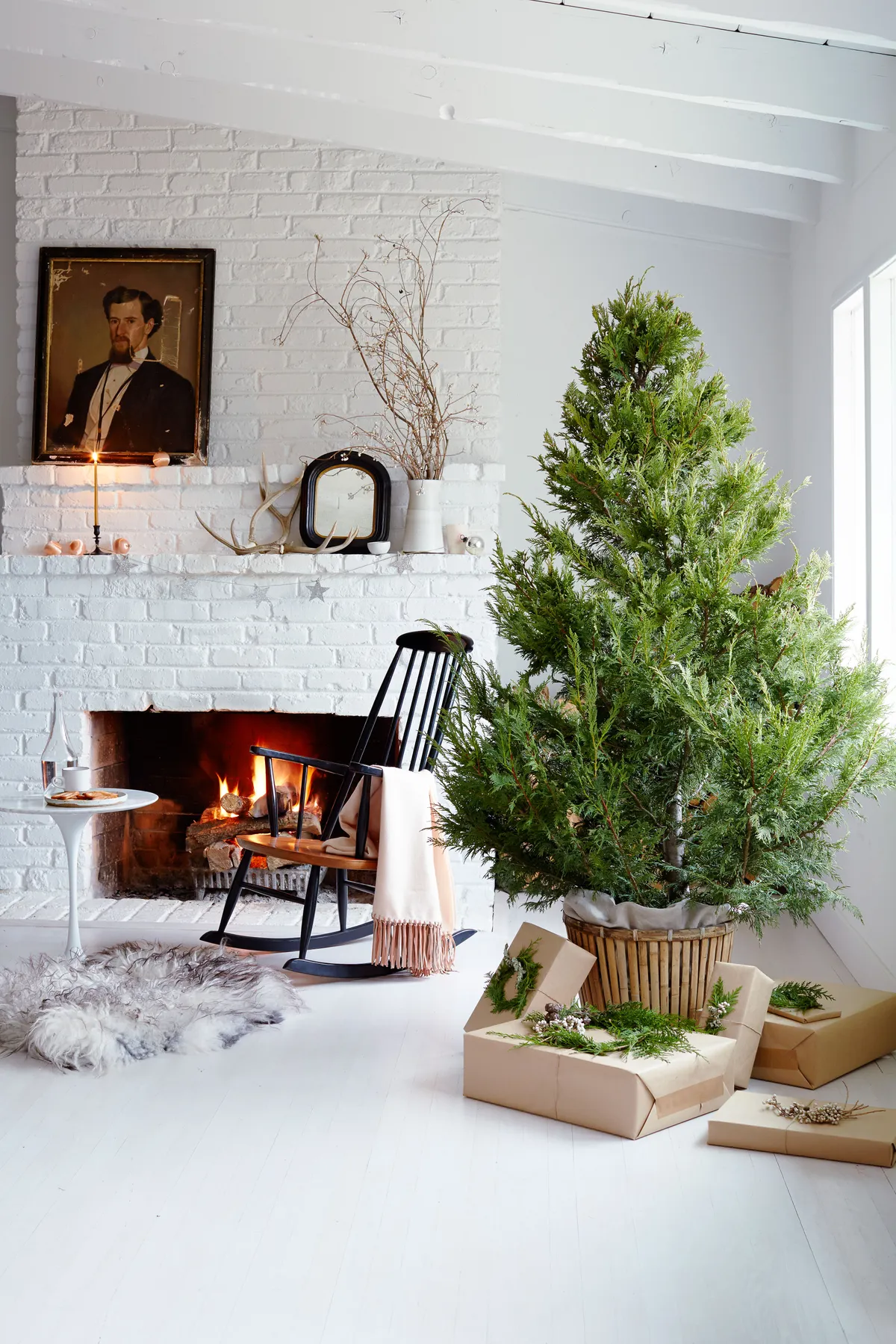
For the brown paper parcels:
- Wrap the box in kraft paper and tape the seam on the bottom, not the top.
- Cut 2-inch ribbon to length and wrap it twice around the box, crossing underneath.
- Knot at the top and leave the tails around 10 inches long.
- Tuck a 3-inch sprig of cedar or rosemary under the knot.
About 3 minutes per parcel, roughly $0.80 each in materials.
28. A Lit Tree in a Mid-Century Living Room
Mid-century seating sits lower and wider than modern sofas, so a tree here can be shorter and still hold its own. As a rough guide:
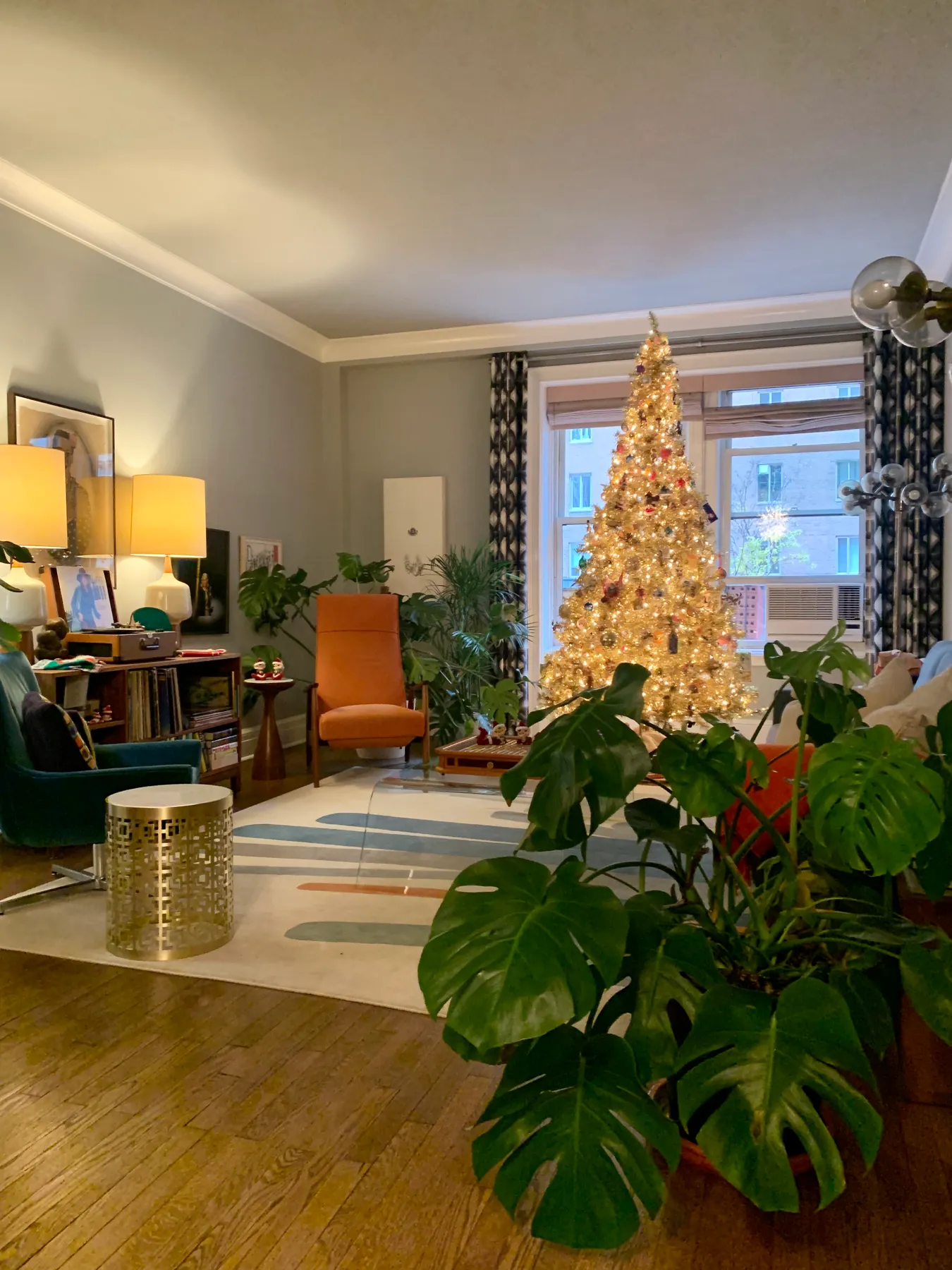
- Room: 12 by 14 feet minimum for two armchairs, a rug, and a tree
- Tree: 7 feet against a 9-foot ceiling
- Clearance: 36 inches between the tree and the nearest chair
- Rug: 6 by 9, tucked just under the front legs
This is a 1960s palette doing exactly what it was designed to do: warm gold light, burnt orange, and teal sitting at roughly equal distance apart on the color wheel. The tree’s warm bulbs make the orange chair hum, and the teal keeps the whole thing from turning into a pumpkin. Same principle as Idea #17 — one strong accent held in check by a cooler counterweight.
Twenty-Eight Trees, One Very Merry December
Start with the one photo that made you stop scrolling, then work backward to a budget and a tree size that actually fits your room. Every look here can be built slowly — a basket this year, wooden ornaments next — and honestly, the trees that look the most collected usually took two or three Decembers to get there.
📌 Pin the ones you love right now, so next November you’re decorating instead of researching.