
You know that feeling when you finally find the Christmas photo that looks exactly right for your home — and then realize you have no idea where to start buying any of it?
We spent serious time browsing Etsy, IKEA, and Target to bring you only what’s worth your attention this year, then filtered through hundreds of options at Anthropologie, Walmart, and Amazon to narrow it down to 31 ideas that actually deliver — from about $4 for a packet of straw ornaments to $1,200 if you’re replacing the tree and the sofa.
Inside you’ll find 31 curated ideas covering Scandinavian folk, Nordic farmhouse, minimalist Scandi, and traditional folk craft, with budget and luxury versions compared side by side and every pick shoppable with direct product links. In 2026 the shift is away from color-coordinated, catalog-perfect trees toward hand-stitched felt, natural straw, and pieces that look collected instead of bought.
And stay until the end — we break down the most common mistakes that can ruin these looks.
📌 Save this to Pinterest for later — you’ll want to revisit these ideas.
1. A Candlelit Tree With Folk Baubles and Purple-Wrapped Gifts
Real taper candles on a tree come down to two numbers, not a vibe. Clip each one so the flame sits at least 10 inches below the branch above it, and never directly beneath another flame. Water the tree daily — dry needles plus open fire is the only genuine risk here. Battery tapers in a warm 2200K tone give you the same flicker with zero supervision, and from across the room nobody can tell the difference.
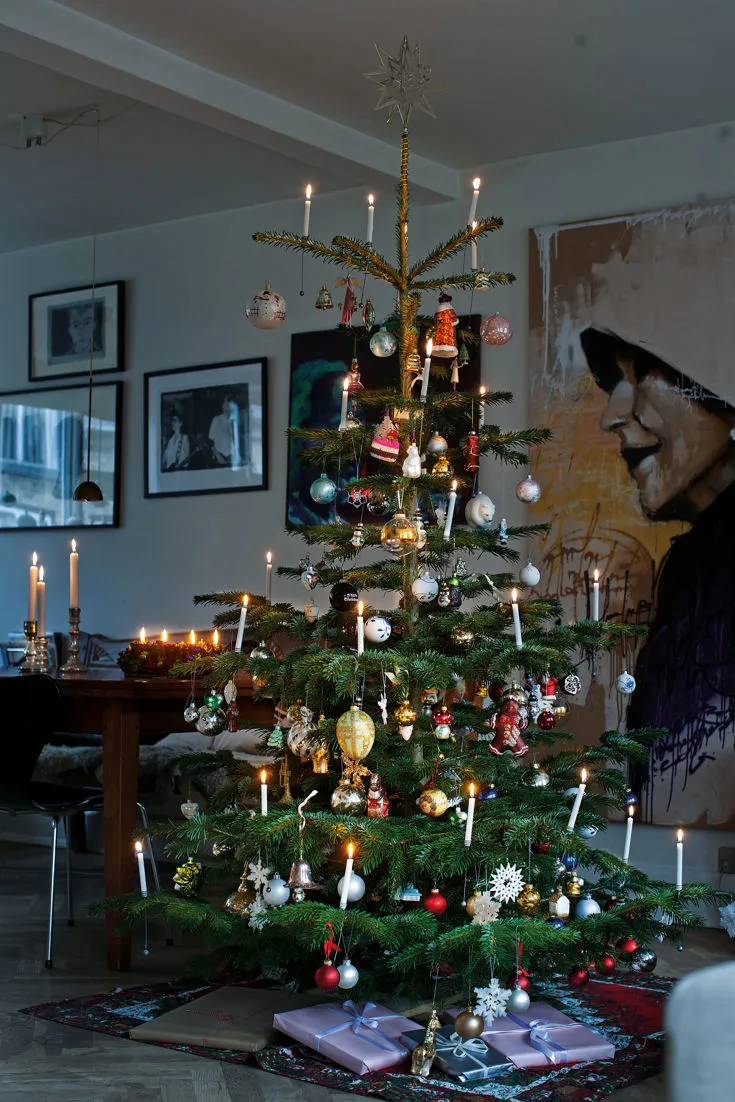
What makes this tree feel collected rather than themed is deliberate mismatch. Small folk ornaments and simple baubles sit at different heights instead of marching in even rows, a clear star tops the whole thing, and the gifts wrapped in purple, silver, and brown paper catch the candlelight rather than compete with it. The dark red patterned rug does quiet work underneath, grounding the tree so it doesn’t float on bare floor.
2. A Corner Chair Styled Around a Straw Yule Goat
Take away the straw Yule goat and this is just a nice chair with a blanket. The goat is what turns a cozy corner into a folk corner — it carries the old Scandinavian harvest tradition forward, and its rough golden texture plays hard against soft linen and smooth candle wax. If you buy one thing for a reading nook this season, buy the goat. It costs less than a candle holder and tells a much better story.
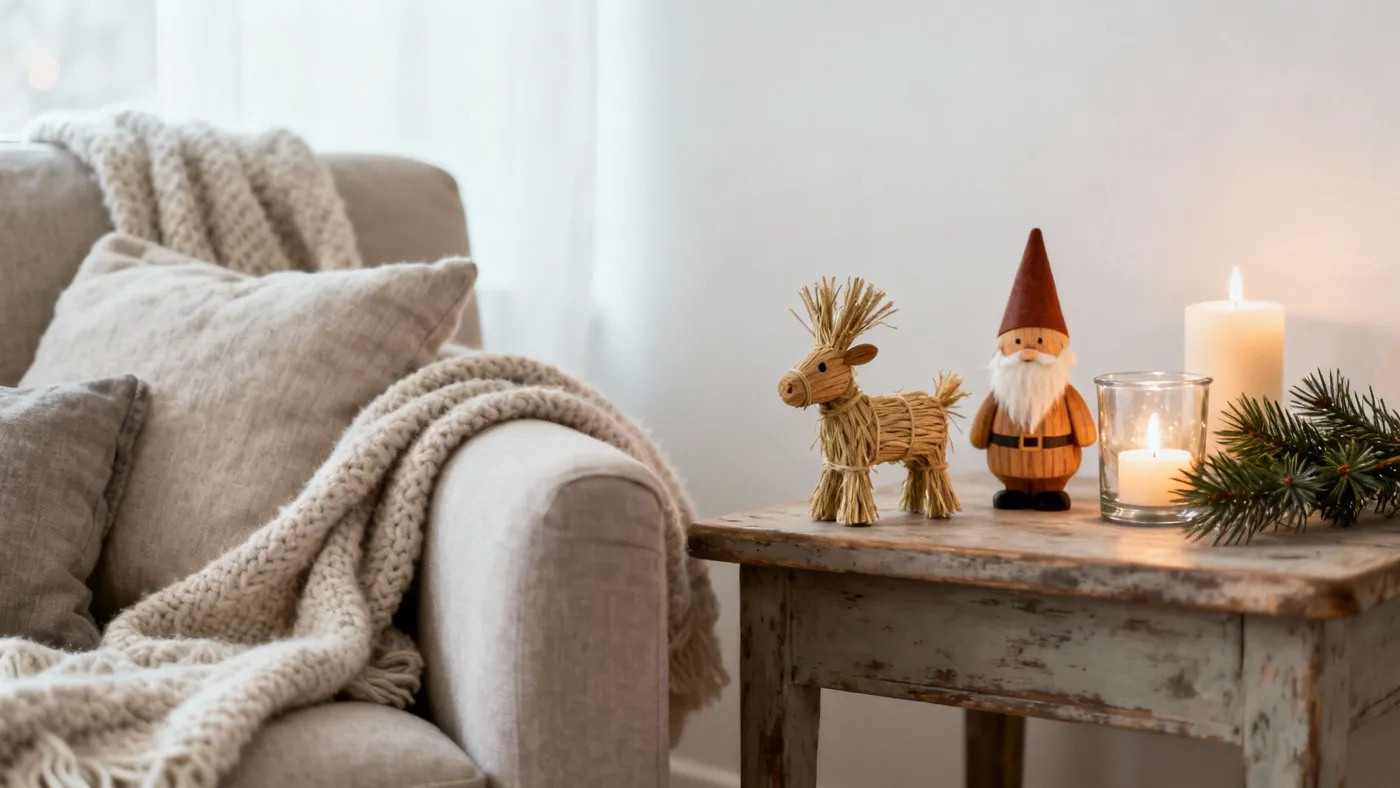
Two honest warnings. Chunky knit blankets shed, a lot, and a light beige linen chair means weekly lint-rolling. Straw decorations are also basically cat toys with a marketing budget — if your cat chews, move the goat to a shelf. And always put a plate or felt pad under lit candles on distressed wood, because wax rings on raw timber do not come out.
3. A Sage Tablecloth With Folk-Illustrated Glassware
The formula runs about 55% sage green tablecloth, 25% natural wood and clear glass, 15% white and soft cream, and 5% tiny accents — pinecones, one wooden mushroom, a scatter of pale blossoms. Swap sage for dusty blue and the math holds. Swap the glass for ceramic and it still works. The point is that every single item is matte or natural, so nothing throws a hard shine across the table.
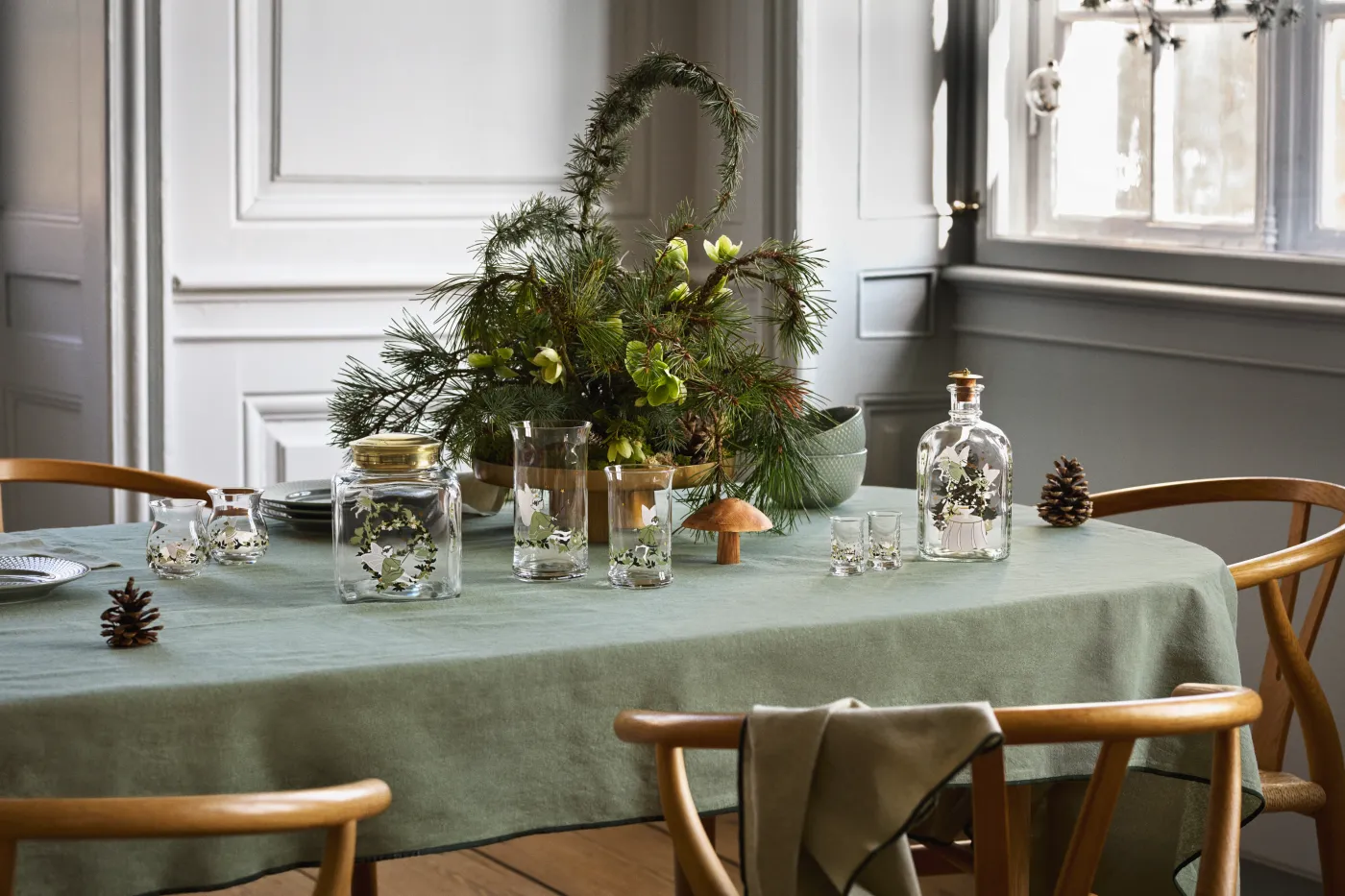
Painting your own folk glassware is a two-evening project.
- Wipe jars and glasses with rubbing alcohol so the paint grips.
- Practice the motif on paper first — simple figures, a wreath, a row of dots.
- Use enamel glass paint and a fine liner brush, all in one muted palette.
- Air-dry 24 hours, then bake per the label to make it washable.
- Seal with matte clear coat if you want soft illustrations rather than glossy ones.
Budget $18 in paint and $12 in brushes.
4. A Dala Horse Vignette on Linen and Woven Straw
- Main pieces: Dala horse figurine $25–$90, gnome $15–$45, small goat figurines $12–$30
- Textiles: linen table runner $18–$45
- Decor: woven straw heart ornaments $6–$18
- Base: rustic wood tray or board $20–$60
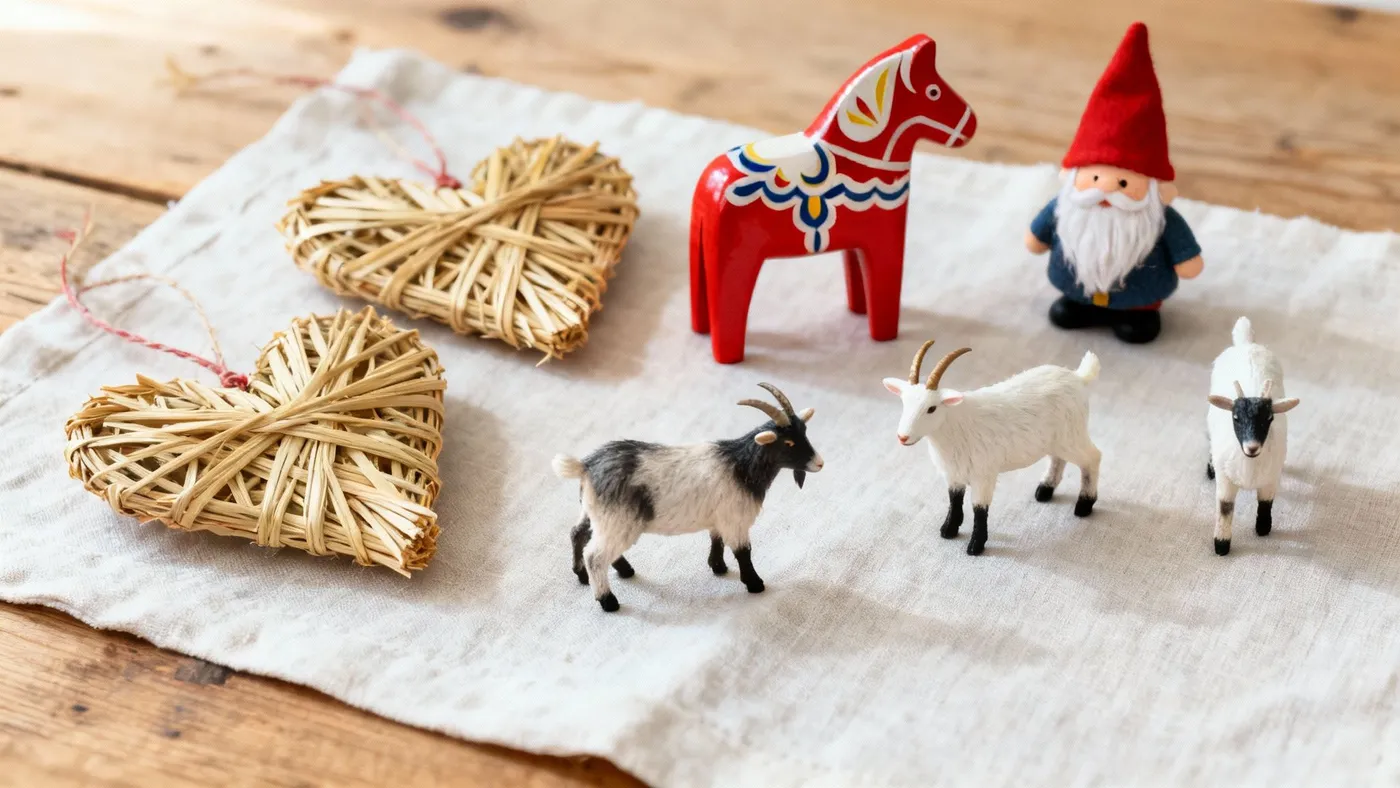
Total: roughly $96–$288. Budget alternative: hunt a painted Dala horse at a thrift store or on Facebook Marketplace for $8–$15, add a dollar-store gnome and a $3 straw heart set, and nobody will know the difference.
The Dala horse has been quietly climbing for three years, and 2026 is the year it went fully mainstream — hand-painted versions are everywhere on Etsy and even big-box stores are stocking red and white ones again. What’s driving it is a broader shift: after a decade of monochrome minimalism, people want objects with a story and a handmade wobble. Folk decor tends to stick around because it isn’t trend-shaped at all — it’s regional craft that keeps getting rediscovered.
5. A Two-Layer Felt Star With Hand-Stitched Leaves
- Cut a five-point star from dark blue felt and a slightly smaller one from white.
- Center the white layer on the blue, pin, then blanket-stitch the edge in light blue thread.
- Embroider simple blue leaf shapes across the middle with two strands of floss.
- Add red French knots between the leaves and sew a small red button at the center.
- Attach a twisted thread loop at the top point for hanging.
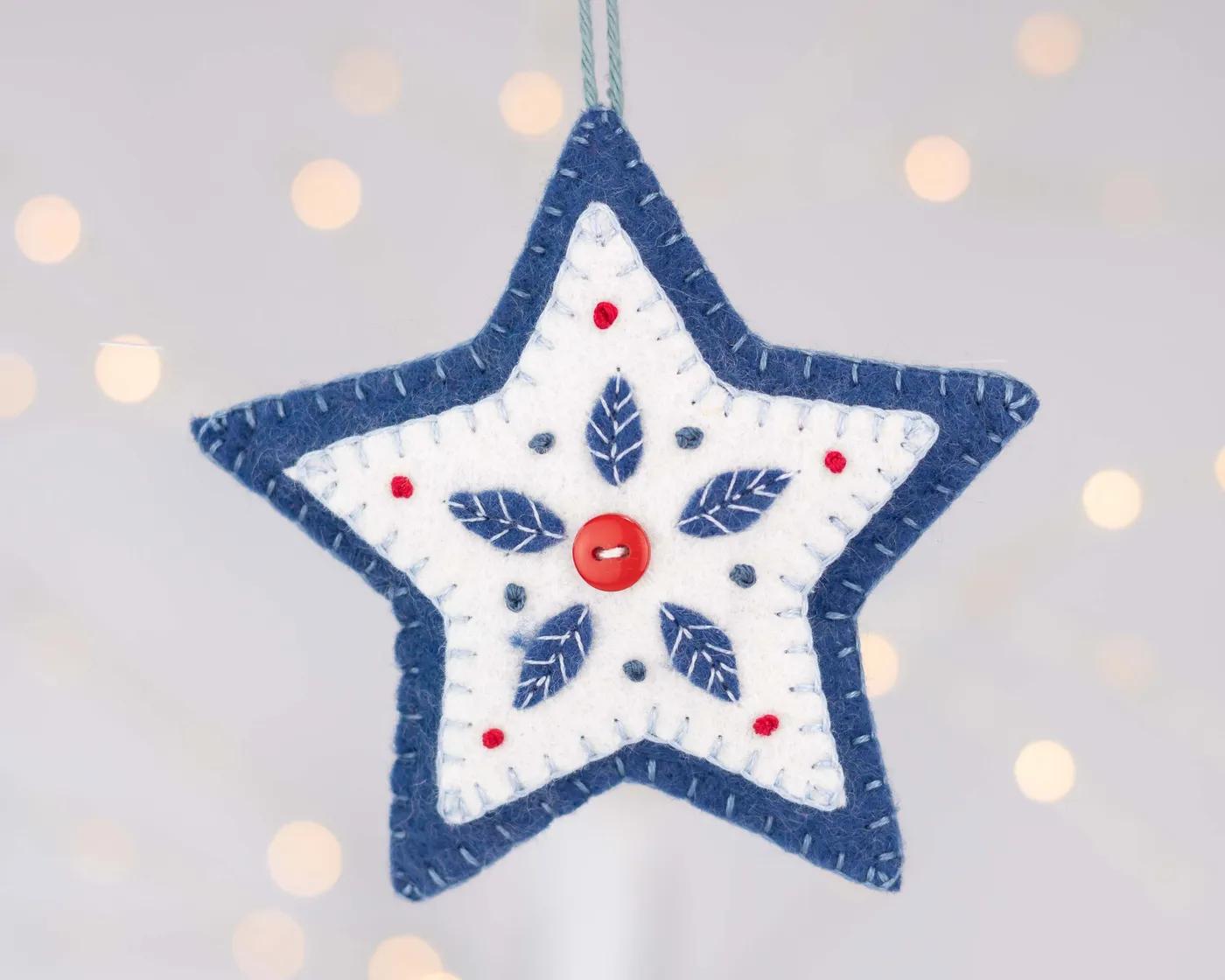
One evening, about $8 in supplies, and enough felt left over for four ornaments.
The trick that separates a handmade ornament from a craft-fair one is the size gap between layers — cut the inner shape an eighth of an inch smaller on every point so the stitching line has room to breathe. Then use a thread color nobody expects, like pale blue on dark blue, and keep your stitch length short and even. Contrast stitching is what makes layered felt look intentional instead of improvised.
6. Cross-Stitch Snowflakes Framed in Kraft Paper
Cross-stitched ornaments look expensive and cost almost nothing. A six-strand floss set runs $6–$10, a pack of ornament frames $8–$14, and kraft cardstock about $5. Etsy sellers charge $14–$22 for a single finished snowflake, which means a set of six you make yourself lands well under half price. Target and Walmart both carry blank stitching ornaments from October — grab them early, they vanish before Thanksgiving.
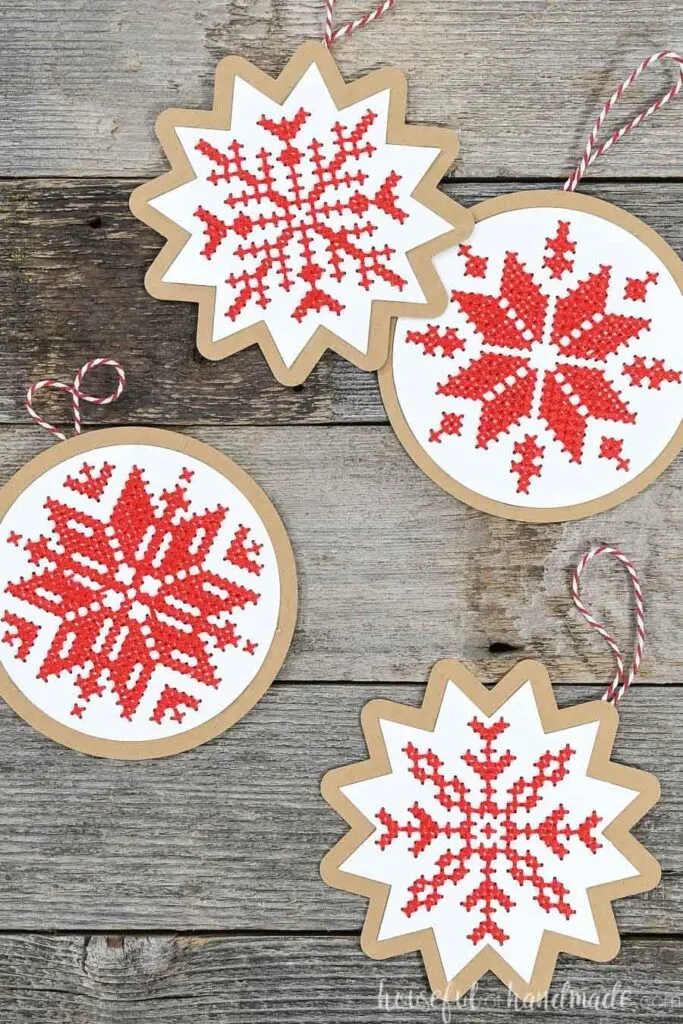
Three things are doing the work here. The kraft paper ring around each ornament acts like a mat in a picture frame, giving the red-and-white pattern somewhere to stop. The repetition of circular and star shapes across the display reads as a collection rather than a pile. And the red and white baker’s twine echoes the stitching, so the hanger becomes part of the design instead of an afterthought.
7. A Neutral Tree Anchored by a Basket of Throws
Roughly 60% green tree and white wall, 30% beige and brown ornaments, 10% wood stars and warm white light. The trick is that nothing in the palette is brighter than anything else — the whites are off-white, the browns are soft, and the only real shine comes from the string lights. Trade the beige spheres for soft grey and the same math works in a cooler room. Keep the basket neutral; a red one would break the formula entirely.
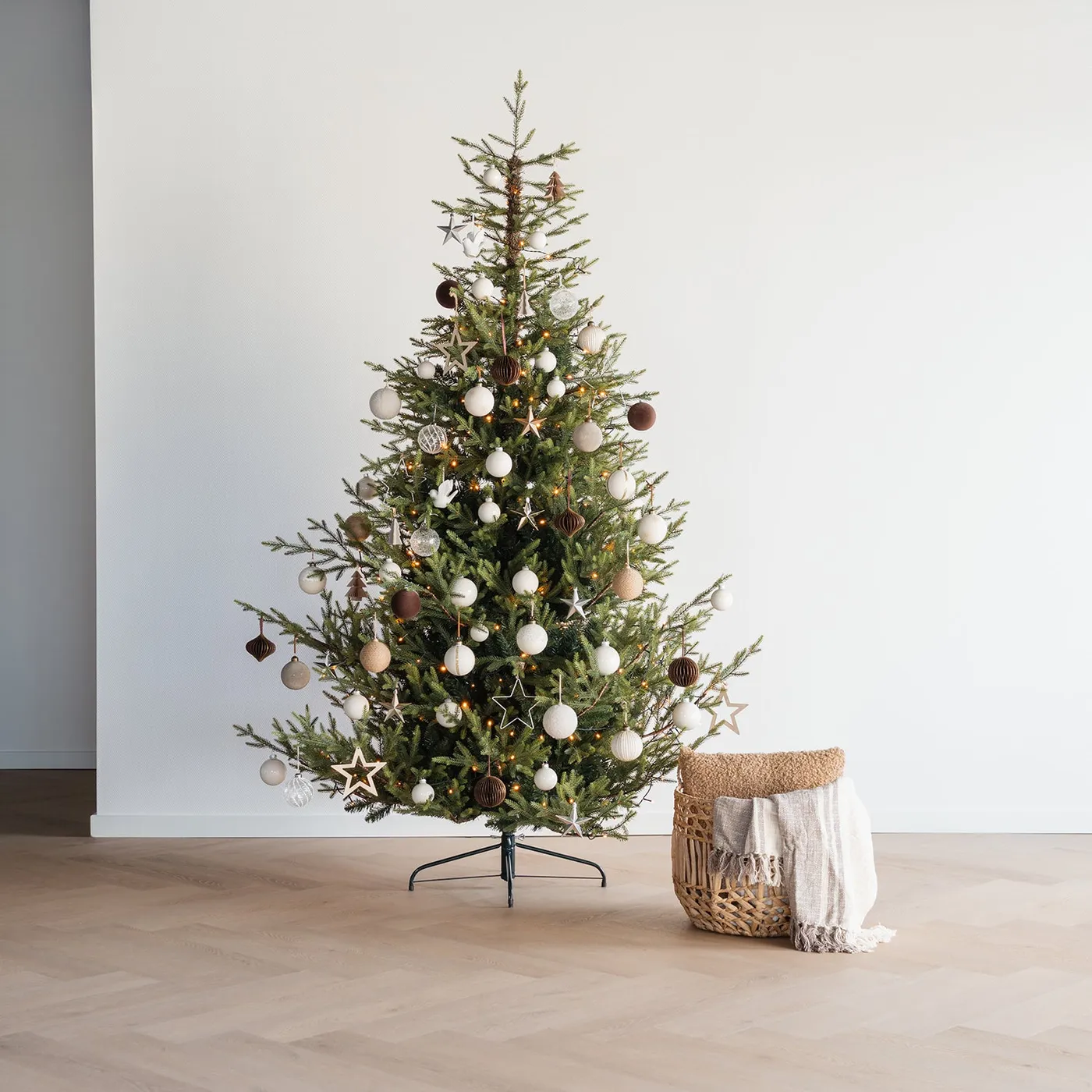
This look needs very little room. A 7 to 7.5 foot tree against a wall with about 18 inches of clearance on one side works in a space as small as 8 by 10 feet with standard 8-foot ceilings. In a larger room a single neutral tree can disappear, so add a second. For a big open living space, see Idea #14 for how a tree holds its own against an archway.
8. Red Velvet Ribbon and Tartan Plaid on a Full Tree
Use wired velvet ribbon 2.5 to 3 inches wide — anything narrower disappears into the branches. Cut lengths around 4 feet and weave each one in and out so it loops every 12 to 14 inches, tucking the ends behind a branch. Plan on six to eight ribbons for a 7-foot tree, and layer the plaid underneath the velvet so the velvet reads as the dominant note.
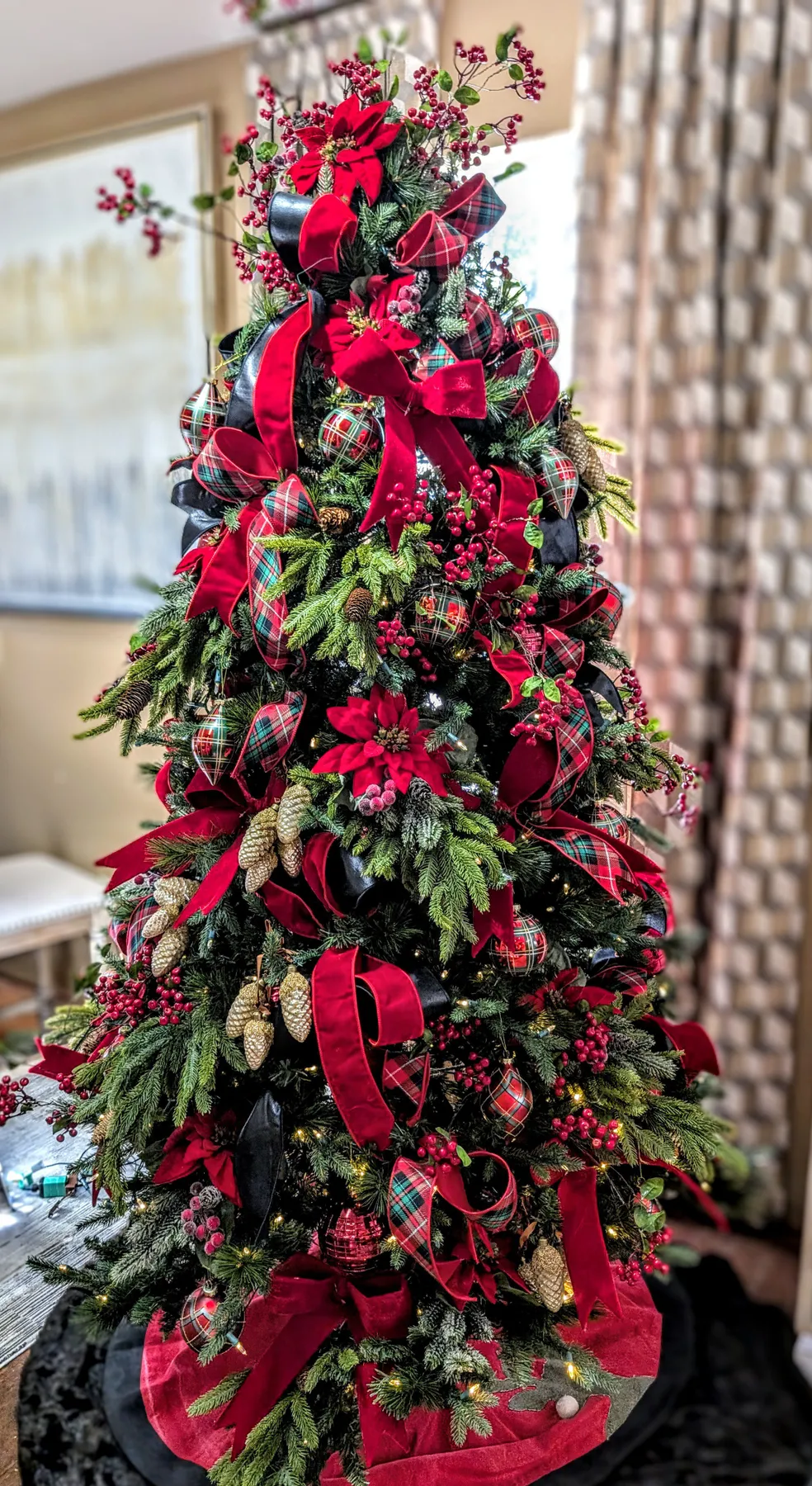
Velvet ribbon crushes permanently in a bag, so wrap each length around a cardboard tube from a paper towel roll and stack them in a bin. Tartan ribbons fray at the cut ends — dab fray check or clear nail polish before tucking them in. Poinsettia picks up dust fast and berries shed their coating; a soft paintbrush is the right tool for both, never a cloth.
9. Dusty Blue Velvet, Silver Ornaments, and a Vertical Garland
Sticking to one color family — dusty blue, white, silver — lets you pile on pattern without the room feeling busy. The toile-effect wallpaper, the printed wrapping paper, and the hydrangea garland are all different, but they share a temperature, so the eye reads calm instead of cluttered. Hanging the garland vertically beside the tree also stretches the composition upward, which makes a standard ceiling feel taller than it is.
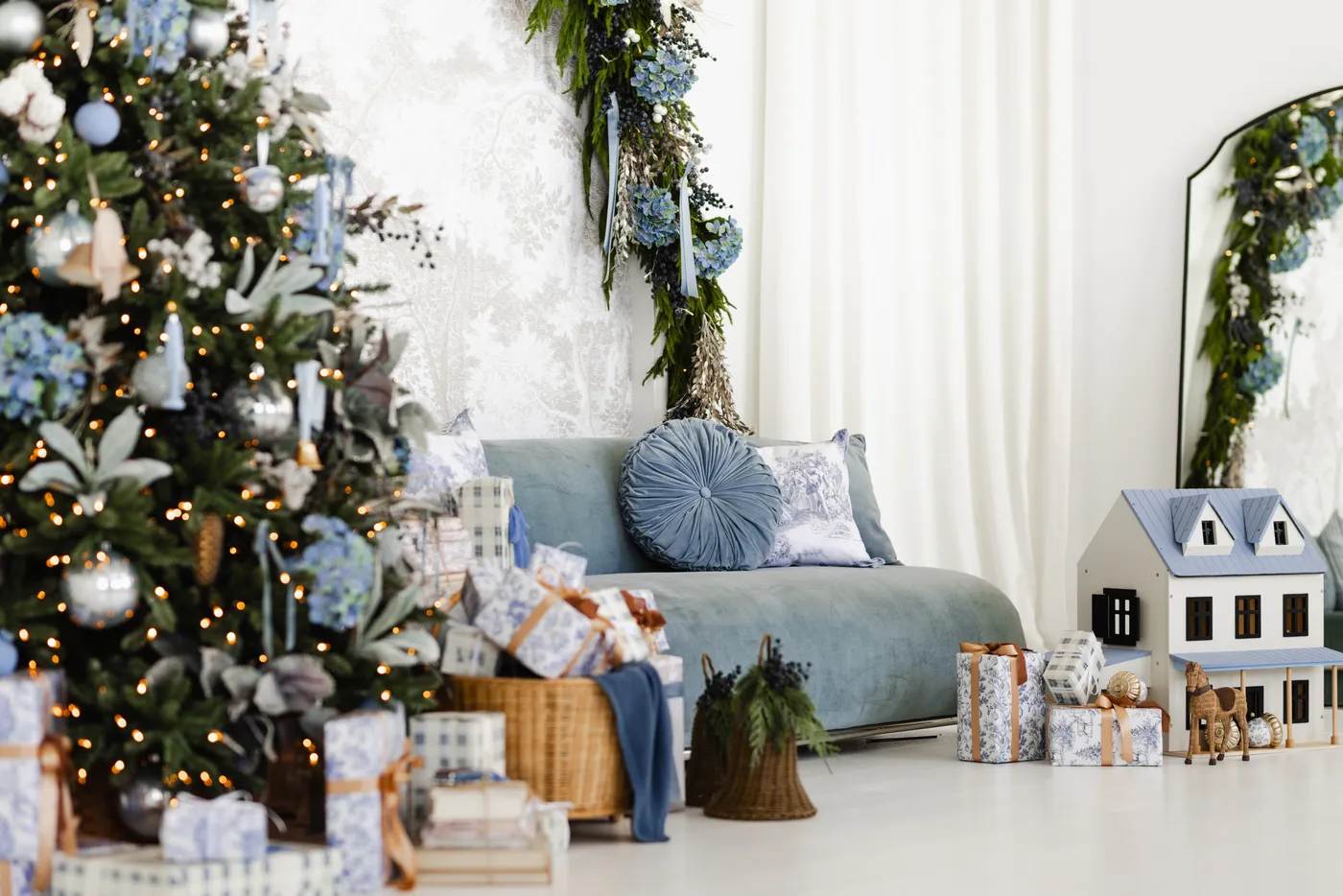
- Main furniture: velvet sofa $900–$2,500, or a $60–$140 slipcover on what you own
- Lighting: warm white tree lights $25–$60
- Textiles: velvet cushions $30–$90, throw $40–$120
- Decor: blue ornaments $25–$70, hydrangea garland $30–$80
- Wall treatment: wallpaper $200–$900 per wall, or $35–$60 for peel-and-stick
Total: roughly $1,250–$3,800.
10. Three Slim Pre-Lit Trees in the Entryway
Three slim trees need a runway. Figure 12 to 14 inches of clearance per trunk plus breathing room, so a 3-foot-wide entry wall is the practical minimum — and you still want 30 inches of walking space in front of them. Heights of 4, 5, and 6 feet staggered tallest to shortest read as a deliberate arrangement; three identical trees read as a store display. In a narrow hallway, one 4-footer plus the bag is plenty.
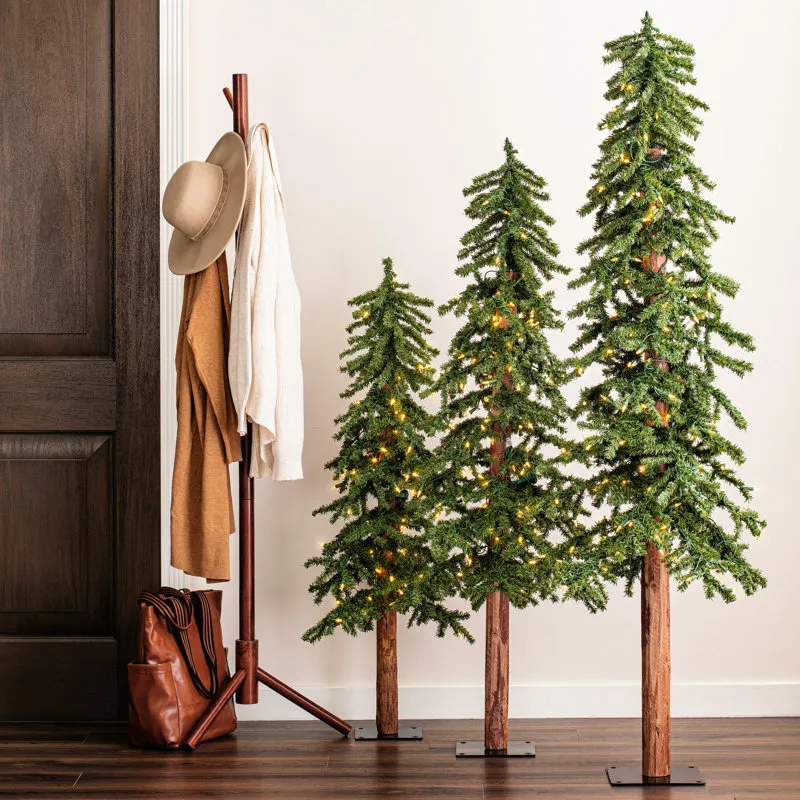
Remove the matching bases and this arrangement falls apart. Three trees in mismatched pots look like clutter; three trees on identical low-profile stands look like a plan. Uniformity is what sells it, and it costs nothing — just buy the same stand for each tree. The unsung co-star is the coat rack beside them, which quietly signals that this is a real entryway and not a set piece.
11. Yarn-Wrapped and Accordion Paper Ornaments
Texture variety only works inside a tight palette. Pick three materials — smooth glass, yarn-wrapped, accordion paper — keep every one of them in the same off-white-to-chocolate range, then add maybe three metallic stars as punctuation. The moment a saturated color enters a texture-forward tree, the textures stop reading and the color takes over. Group textured ornaments in clusters of three so each one actually gets looked at.

Roughly 70% neutral ornaments in white, beige, and cream, 20% brown and chocolate tones, and 10% metallic gold or brass. That last 10% is doing heavy lifting — it’s the only thing keeping the tree from looking flat in photographs. Want it warmer? Trade gold for copper. Cooler? Swap in brushed silver. The proportions stay exactly the same either way.
12. A Kraft-Bordered Snowflake Star on the Tree
- Measure your stitching frame first — most ornament frames take a 2.5 to 3 inch design.
- Check your fabric count. 14-count Aida gives a chunkier, more folk-looking stitch than 18-count.
- Confirm the background is bright white or cream so the red pattern pops.
- Test one snowflake before committing to six and see how far a skein of floss stretches.
- Decide on hangers now: baker’s twine reads traditional, ribbon reads modern.
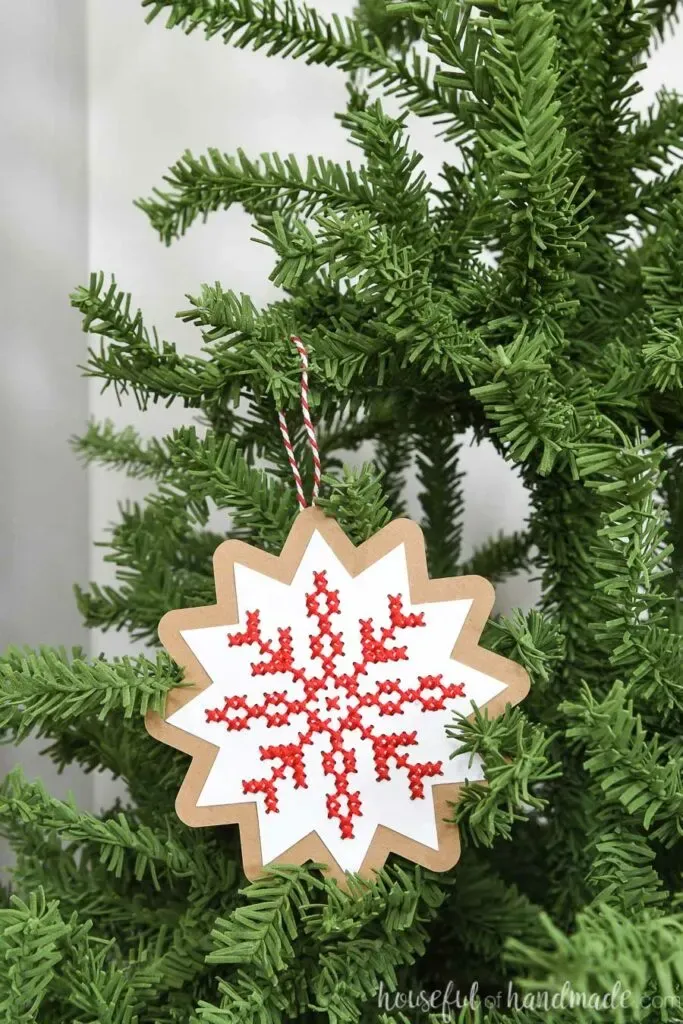
Small ornaments live or die by contrast and silhouette. This one works because a red pattern on a white field inside a kraft brown frame is about as high-contrast as holiday decor gets — you can read the design from ten feet away, which is exactly how far you’ll be standing. The star shape also introduces a second geometry beyond spheres. Compare with Idea #6 for the round version of the same technique.
13. A Bench Nook Under Botanical Wallpaper and Star Lights
String lights and wallpaper are a bad combination if you’re careless. Skip staples and nails entirely — use adhesive clips rated for paper, and test one in a hidden corner for a week before committing to the whole wall. Battery packs are safer than plug-in strands near fabric cushions, and LED bulbs stay cool enough to touch paper safely. Kids and lit candles are a firm no; put the tabletop candle tree out of reach or swap in battery tapers.
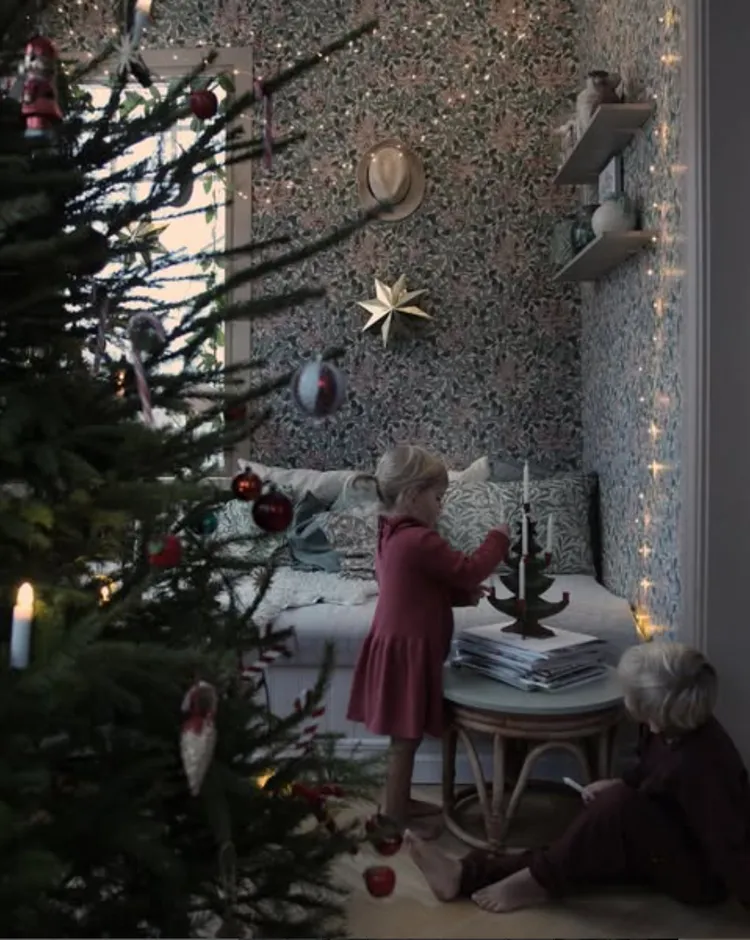
Built-in benches look effortless and are almost always built wrong. Aim for a seat depth of 18 to 20 inches and a height of 17 to 18 inches to the top of the cushion. Cushions at 3 inches thick stay comfortable without swallowing the backrest, and a 12-degree slanted back is the difference between a nook people actually sit in and one that merely looks nice.
14. A Basket-Based Tree Framing a Dining Archway
In open-plan spaces the tree needs to be a specific fraction of the architecture — roughly two-thirds the height of the opening it stands beside. Against a standard 7-foot archway, that’s a 5 to 6 foot tree; anything taller blocks the sightline into the dining room instead of framing it. Leave at least 3 feet between the tree and the nearest chair back so nobody shoulder-bumps a branch mid-dinner. For tighter rooms, Idea #7 covers the compact version of this.
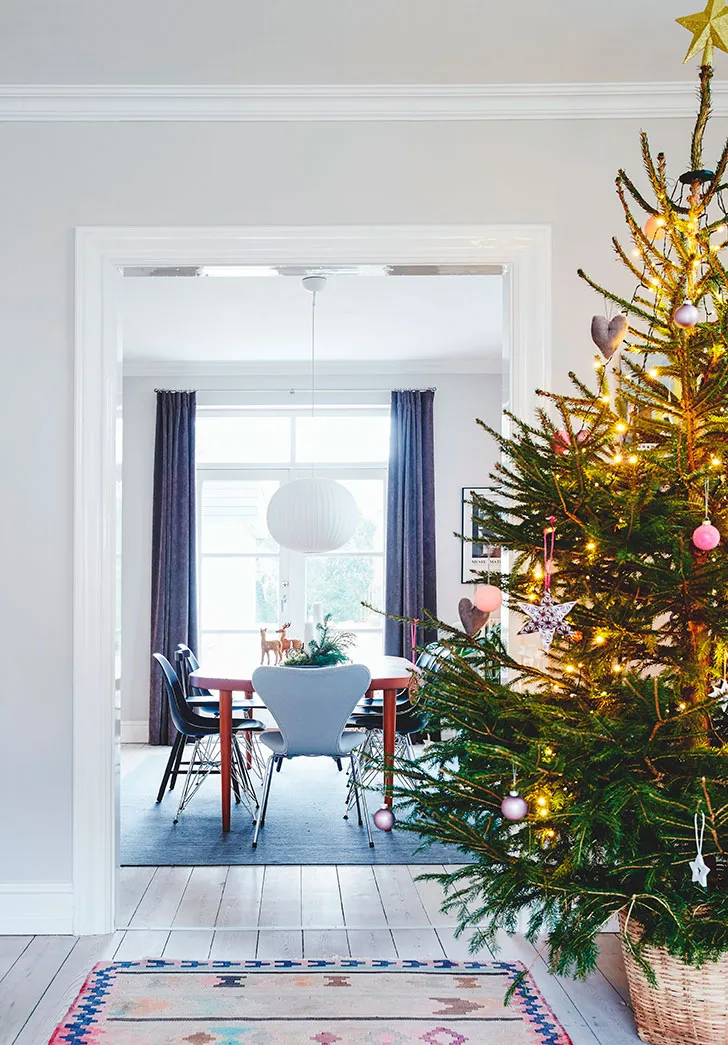
The wicker basket base is the quiet genius here — it makes an artificial tree look rooted rather than perched on a metal stand, and it echoes the woven texture of the dining chairs beyond the arch. The round pendant light repeats the sphere shapes on the tree, and the colorful rug gives the eye a place to land before it travels into the next room. Nothing matches exactly, and that’s what keeps it feeling lived in.
15. Carved Bird Ornaments With Painted Folk Florals
- Sand a flat wooden bird blank with 220-grit, then wipe it clean.
- Base-coat the body in pale blue or cream and let it cure for an hour.
- Paint one-stroke flowers with a flat brush — load two colors on the bristles, press, twist, lift.
- Add simple leaves and a few red dots for berries once the flowers are dry.
- Seal with matte polycrylic so the paint doesn’t chip in storage.
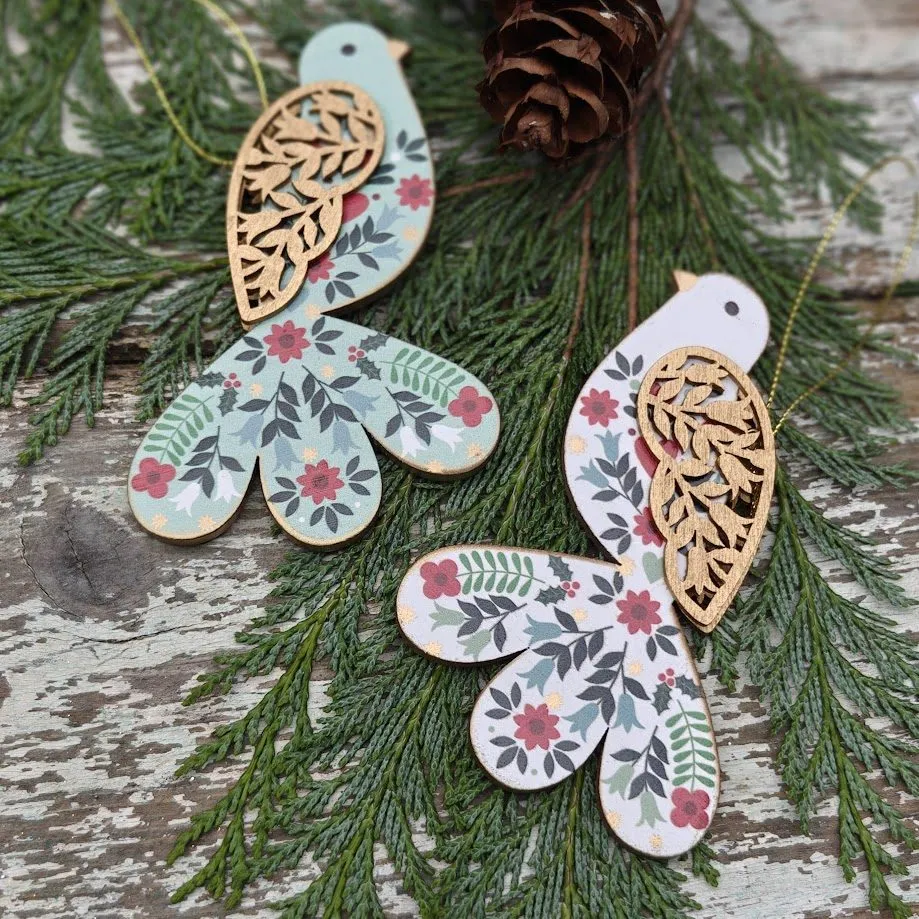
Two hours per bird, about $14 in supplies for a set of four.
Folk floral painting — rosemaling in Norway, kurbits in Sweden — has been moving out of museum gift shops and onto everyday objects for a couple of years, and 2026 is the year it hit full momentum on Pinterest. The appeal is decorative without being delicate: bold strokes, muted colors, imperfect on purpose. Unlike most holiday trends, this one has centuries behind it, so what you paint now still looks right in 2040.
16. Two Carved Figures Keeping Watch on the Windowsill
The windowsill is the whole idea. Put these same two figures on a shelf and they’re knickknacks; put them where daylight comes through behind them and they become silhouettes with personalities. Backlighting also catches the snowflake and geometric patterns painted on their coats in a way overhead light never will. If you have a kitchen window or a stair landing sill, that’s your spot.
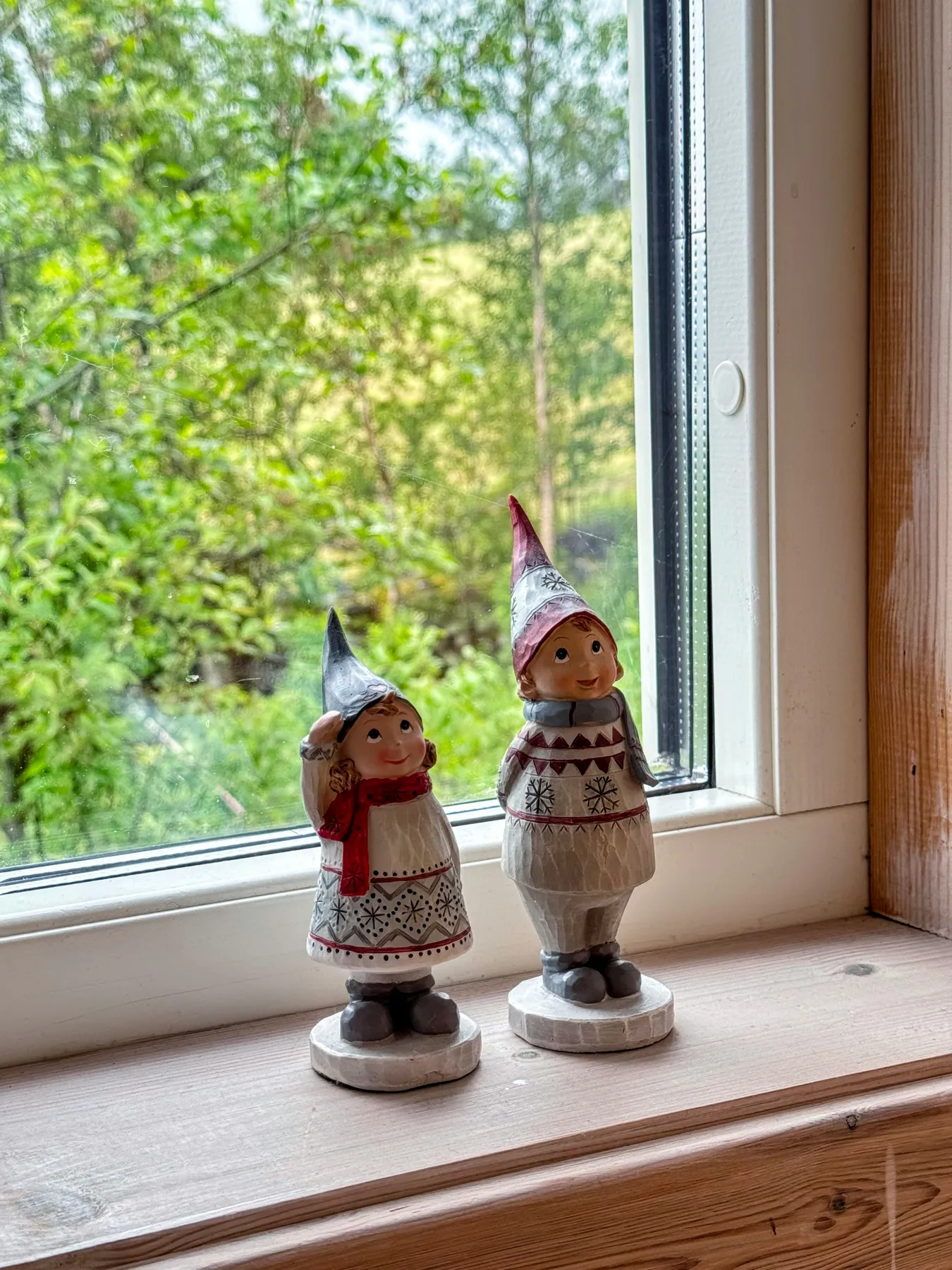
Hand-carved figures run $40–$120 apiece on Etsy, which adds up fast. Mass-market versions at Target and Walmart land between $8 and $22, and they photograph nearly identically once backlit. If you want the real thing on a budget, watch Facebook Marketplace in November — people purge holiday decor before Thanksgiving and carved wooden figures show up regularly at $15–$30. Thrift stores in older neighborhoods are the other goldmine.
17. A Red-Hatted Gnome Among Silver Ornaments
Glitter is a lifestyle, not a decoration. Silver glitter ornaments shed every time they’re touched, so set them once and leave them alone. Real silver-plated pieces tarnish and need yearly polishing; glass with a mirror finish gives the same shine and never needs attention. And if you have a cat, silver balls in an open bowl are gone within a week — a lidded glass jar keeps the sparkle and saves the ornaments.
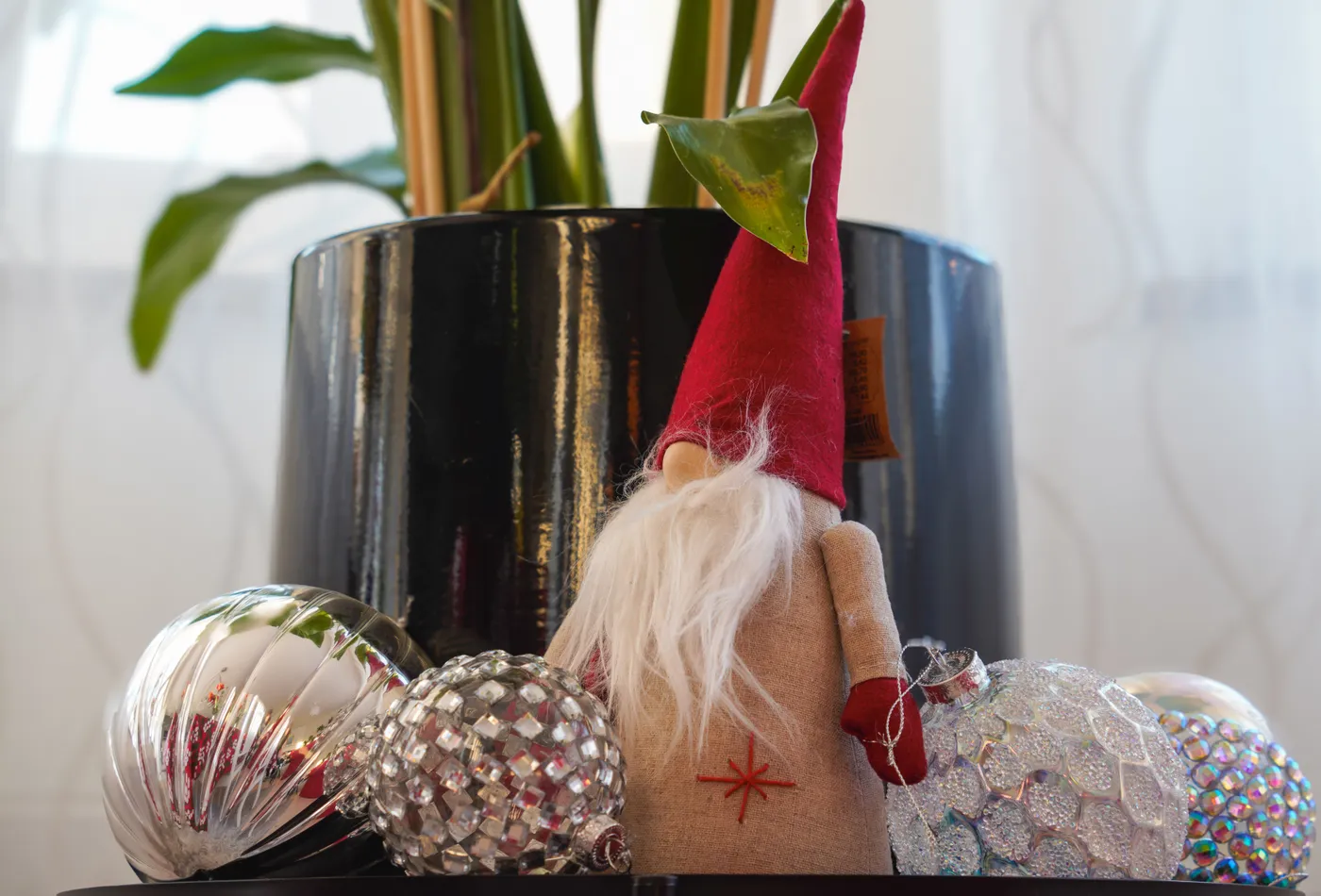
The plant in the glossy planter is what actually holds this vignette together — it’s the only living thing in a sea of shine, and it gives the eye a rest. Keep it where it gets indirect light; direct sun will scorch leaves and fade the gnome’s felt within a season. Water from the bottom so you’re not splashing ornaments, and expect to lift the whole arrangement once a week to dust underneath.
18. The Tinsel Tree Behind the Pale Blue Door
Tinsel is entirely about density. A 7-foot tree takes roughly 250 to 300 feet of strands for that full nostalgic look — most people use a third of that and wonder why it reads sparse. Drape in 18-inch sections, alternating direction as you spiral downward, and hang ornaments after the tinsel so they sit on top instead of getting buried. Thin strands read vintage; wide foil garland reads 1974 in the wrong way.
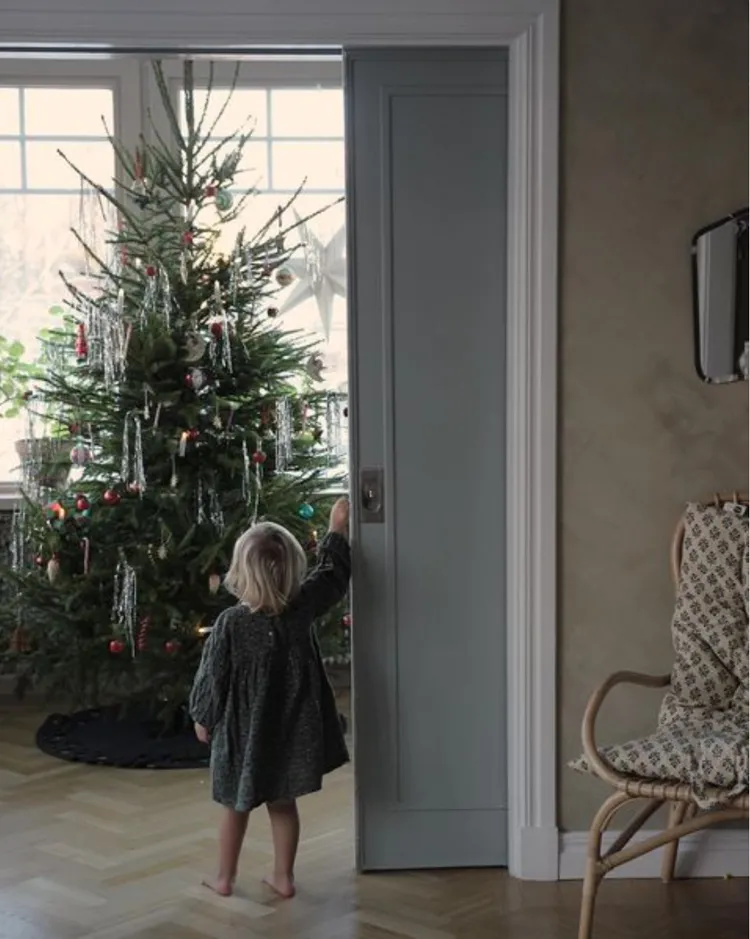
- Put the tree up and fluff every branch outward before anything decorative goes on.
- Run the lights first, close to the trunk as well as the tips.
- Add tinsel in 18-inch sections, spiraling and alternating direction.
- Hang ornaments by size — largest low and deep, smallest out front.
- Step back every ten minutes; a tree always looks fuller from where you’re standing.
Two to three hours for a 7-footer, plus $20–$40 in tinsel.
19. A Flag-Draped Village Tree Lit in Warm Gold
Tabletop village scenes are having a moment because they let people collect slowly instead of buying one coordinated look all at once. The flag-covered tree at the center nods to Scandinavian village traditions translated into winter, and it’s the detail keeping the scene from reading like a generic snow village. Buy one building a year and the display becomes a family record rather than a purchase.
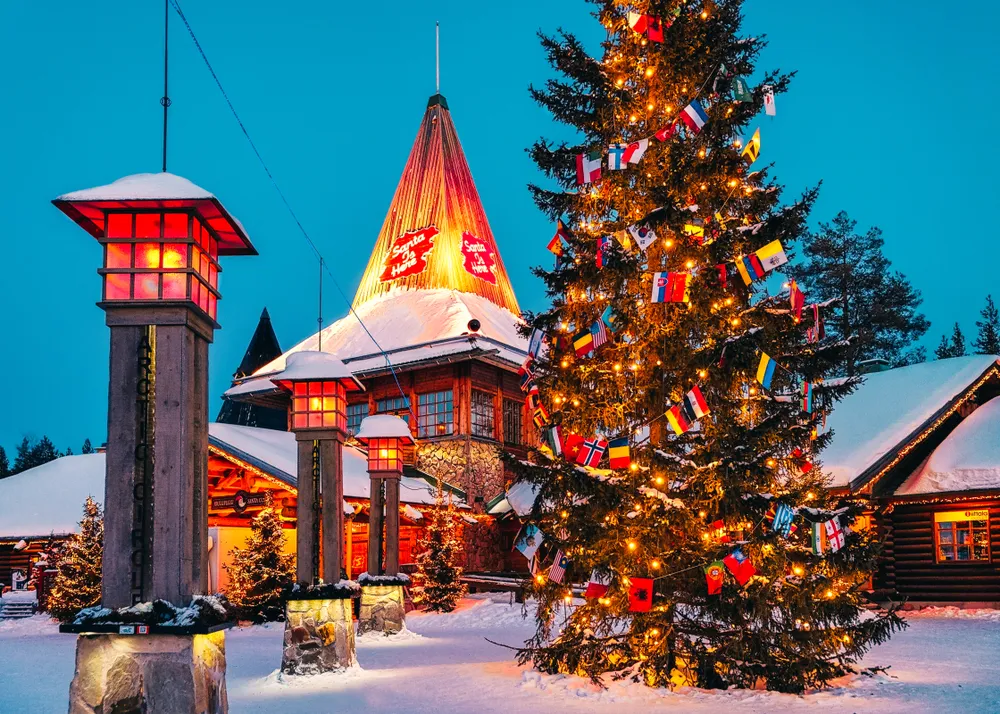
Give a village scene a table at least 4 feet long and 2 feet deep, positioned where you’ll see it near eye level — these scenes are wasted on a coffee table you look down at. Aim for the tallest piece to be about a third the height of the wall behind it; any taller and the scene closes in on itself. Think of it as the miniature cousin of the full-scale staging in Idea #30.
20. A Fuzzy Red Doll With Wooden Bead Hands
The wooden head and bead hands are what make this ornament feel handmade instead of manufactured. A fully fabric doll would read as a toy; natural wood gives it a folk-art anchor and ties it to the rest of a Scandinavian tree. If you’re making your own, don’t skip the beads — they’re the difference between charming and faintly unsettling. Same goes for the painted face: two dots and a nose, nothing more.

- Wooden doll head and bead set $6–$18
- Red yarn or felt for the body $4–$10
- Knitted cap $3–$8, hanging cord $2–$5
- Tools: craft glue, needle, scissors $10–$20 one-time
Total: roughly $25–$61, and once the tools are bought each extra doll costs about $4. Budget alternative: plain wooden beads from a craft store plus leftover worsted yarn, around $9 per ornament.
21. Straw Stars Bound With Red Thread
- Soak dried straw or natural raffia in warm water for 20 minutes so it bends without cracking.
- Flatten four strips and fold each one in half.
- Interlock the loops into a four-point star, tucking each end through the next.
- Bind the center tightly with red thread, wrapping six or seven times.
- Trim the points at an angle and hang with a red loop.
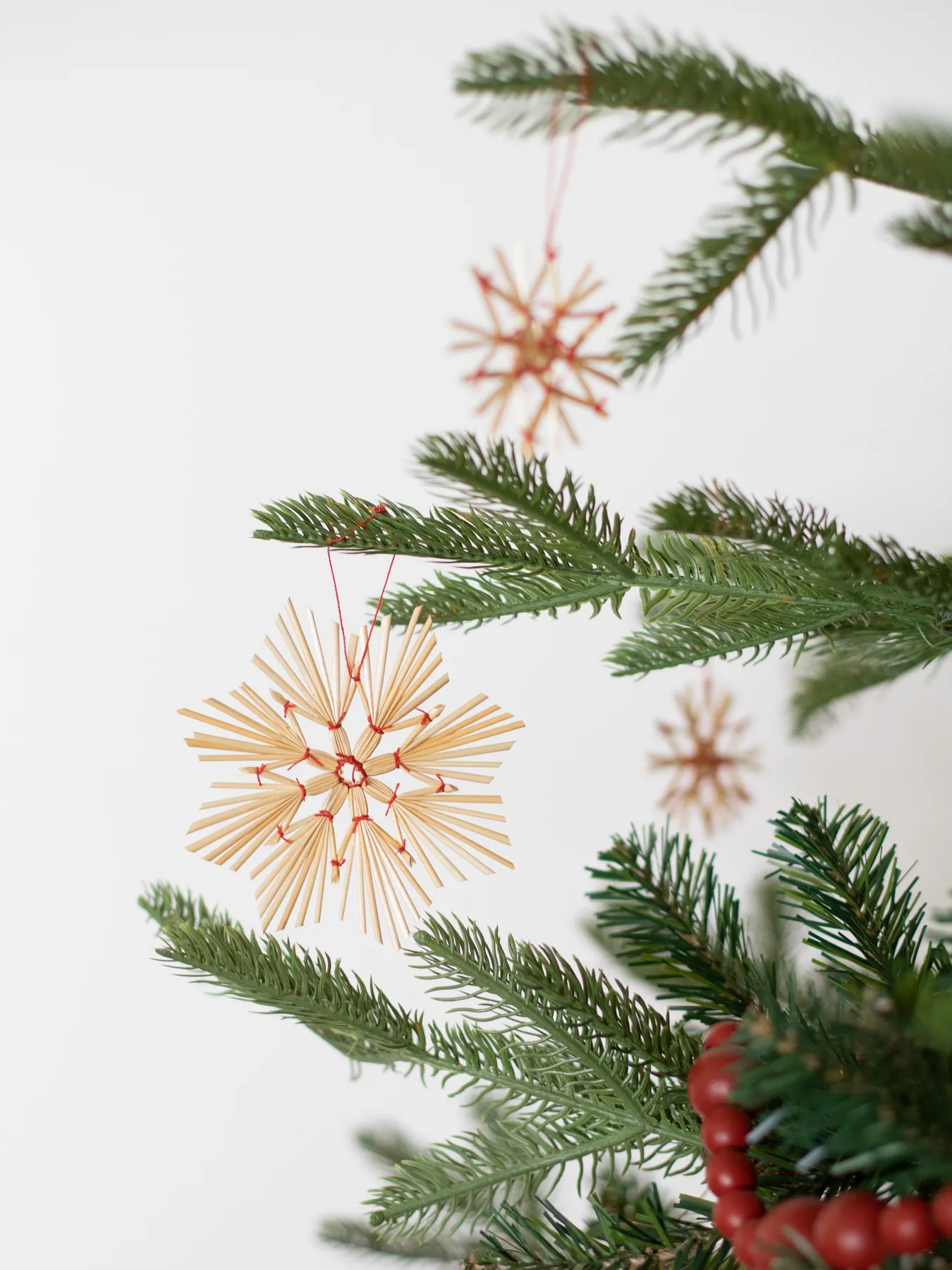
About 15 minutes per star, roughly $10 for enough straw to make a dozen.
Straw is sturdy but dry. In a heated home it turns brittle by February, so store ornaments in a box with a silica packet rather than a damp basement. Dust with a soft brush — water will spot the straw and eventually mold the binding. Expect three to five seasons before natural straw starts shedding; woven paper versions look nearly identical and last decades if that matters to you.
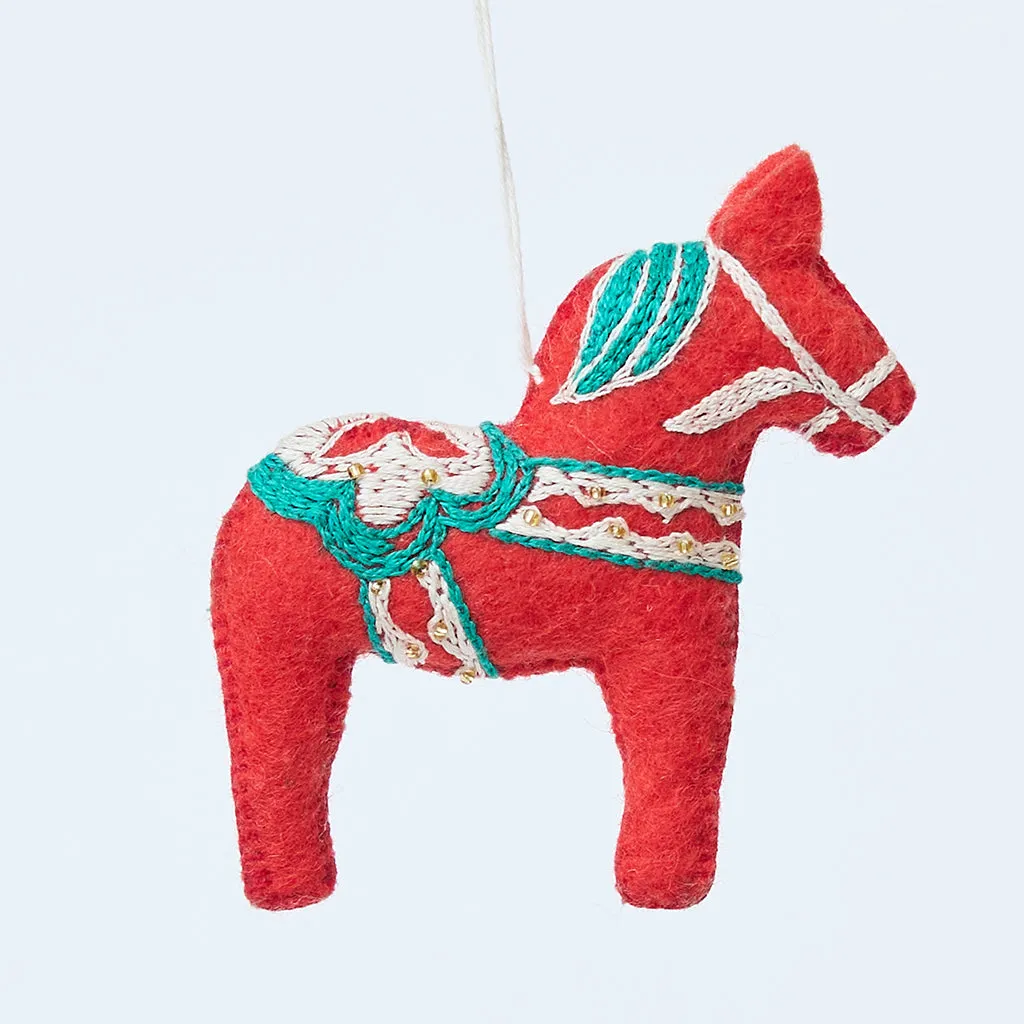
22. An Embroidered Felt Dala Horse in Red and Teal
Split your embroidery by weight: two strands for outlines and the saddle, one strand for the fine mane lines, and add gold beads at only three points — eye, chest, and tail. More beads and it turns costume-y. Then back the felt with a layer of fusible interfacing before you stitch, or the red felt will pucker around dense embroidery and the horse loses its clean silhouette.
Silhouette first, detail second. Even at a distance you know this is a horse — the shape is legible from across a room, and that’s the real test for any ornament. The palette does the rest: deep red, crisp white, one hit of teal green, and tiny gold. Four colors, three of them classic Scandinavian folk tones, with negative space left unstitched so the eye has somewhere to rest.
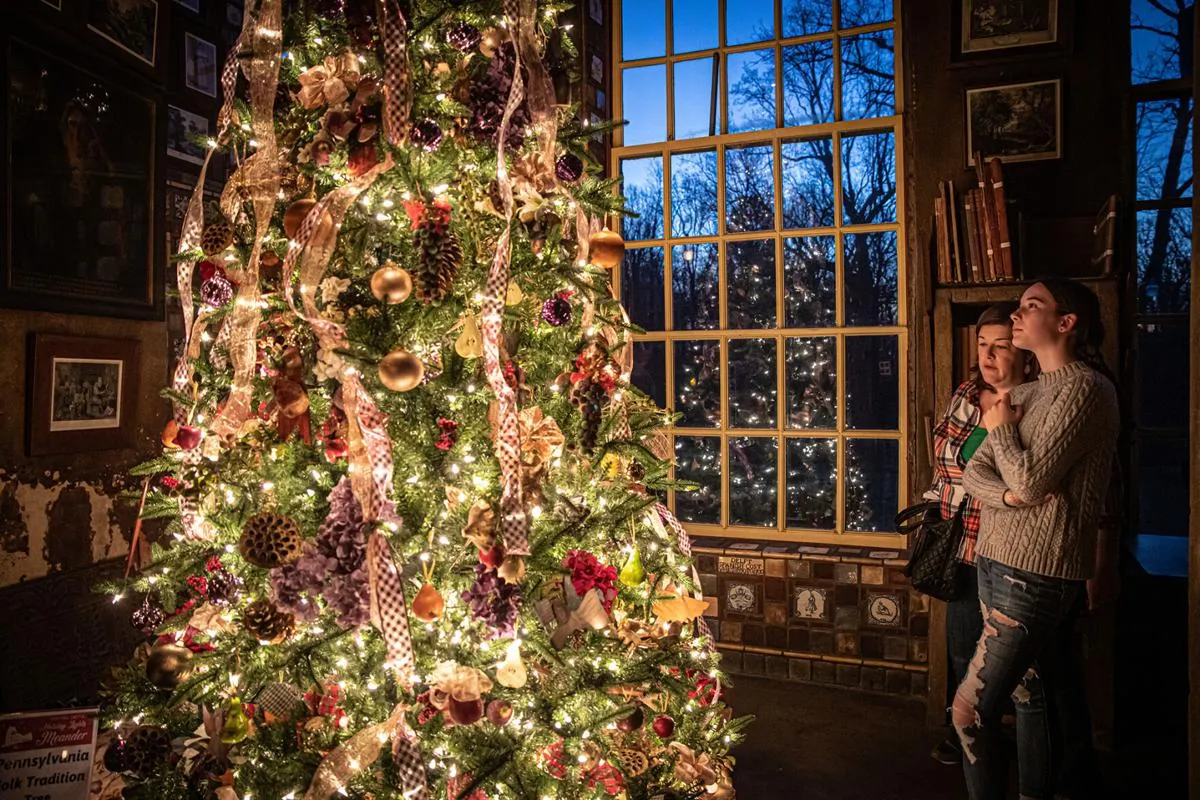
23. Checkered Ribbon and Pinecones Against a Dark Window
A brightly lit tree in front of a dark window is gorgeous in person and a nightmare to photograph — you’ll catch your own reflection in every shot. A floor lamp on a dimmer behind the camera side of the room solves most of it. Also check your window trim for drafts before hanging anything heavy nearby; cold glass plus warm indoor air means condensation, and condensation is rough on ribbon.
About 50% green foliage, 25% warm white light, 15% gold and brown from spheres, pinecones, and berries, and 10% red for punctuation. The checkered brown-and-cream ribbon is the wildcard holding it together — it lives in that 15% brown zone but introduces pattern. Want a cooler tree? Swap warm bulbs for soft neutral white and trade gold for antique silver. Keep the red at 10%.
24. Six Felt Reindeer With Red Ribbon Collars
- Trace a simple reindeer shape onto tan felt and cut two matching pieces.
- Stitch around the edge with a blanket stitch, leaving a one-inch gap.
- Stuff lightly with polyfill — you want flat and floppy, not plump.
- Close the gap and sew on a small red pom for the nose.
- Tie a red ribbon bow at the neck and add a ribbon loop on top.
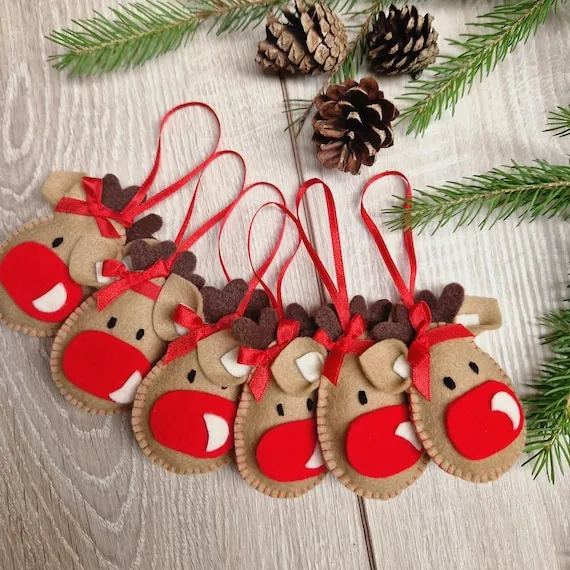
Twenty minutes each once you find your rhythm. A set of six runs about $18 in materials.
If you’d rather buy than make, handmade felt reindeer sets run $28–$60 for six on Etsy. The mass-market equivalent is $10–$18 at Target or Walmart, though the felt is thinner and the stitching is printed rather than sewn. A middle path: buy plain tan felt ornaments in a pack of twelve for around $8 at a craft store and add the noses and bows yourself. Nobody will know.
25. A Gnome Ornament Still Wearing Its Tag
Scale is the entire story with small ornaments. One 3-inch gnome alone on a branch is invisible; three clustered within a 6-inch radius become a scene. Group tiny ornaments in odd numbers and hang them at slightly different depths — half an inch forward or back — so the cluster has dimension instead of looking stuck on like a sticker. The red cord matters too; clear filament would kill the folk look entirely.
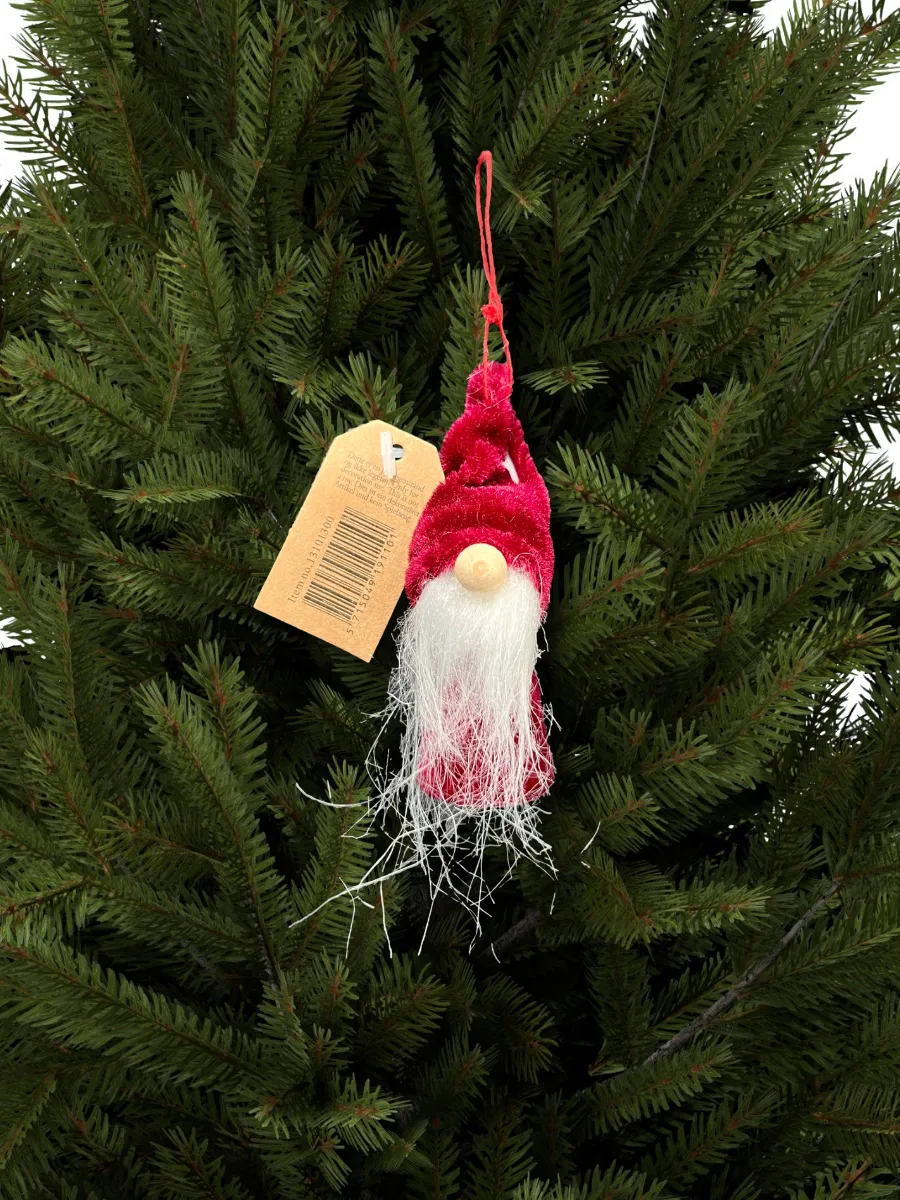
- Check the hanging cord — anything over 4 inches and small ornaments dangle awkwardly low.
- Confirm scale against your tree: 3-inch pieces need a 6-foot tree minimum to read.
- Snip the price tag before hanging, unless it’s a gift.
- Plan your clusters before you start so you’re not rearranging branches for an hour.
26. Dark Red Baubles on Lichen-Covered Branches
- Decor: 12 dark red and green ornaments $24–$60
- Branches: foraged free, or a bundle of birch $15–$35
- Hanging: gold cord or ribbon $5–$12
- Vessel: ceramic or stoneware floor vase $40–$140

Total: roughly $84–$247. Budget alternative: a $20 vase from a home discount store and dollar-store ornaments in red and green. The lichen-covered branches and gold cord are what sell the look, and they’re nearly free.
A word about foraged branches: check them for bugs before they come inside, since lichen and moss often hitchhike with small residents. A day in a cold garage usually handles it. Branches in a floor vase also need weight at the bottom or they’ll topple the first time someone brushes past — a bag of sand or river stones fixes it for about $5.
27. Knitted Gnomes Strung Along Brown Twine
- Knit a small cone-shaped hat in red, working in the round on double-pointed needles.
- Knit a body section in white for the beard and stuff it lightly.
- Sew a small beige bead or felt ball on as the nose, just under the hat brim.
- Fray white yarn for the beard if you want a shaggy finish.
- Thread a white ribbon through the top and tie onto a length of brown twine.
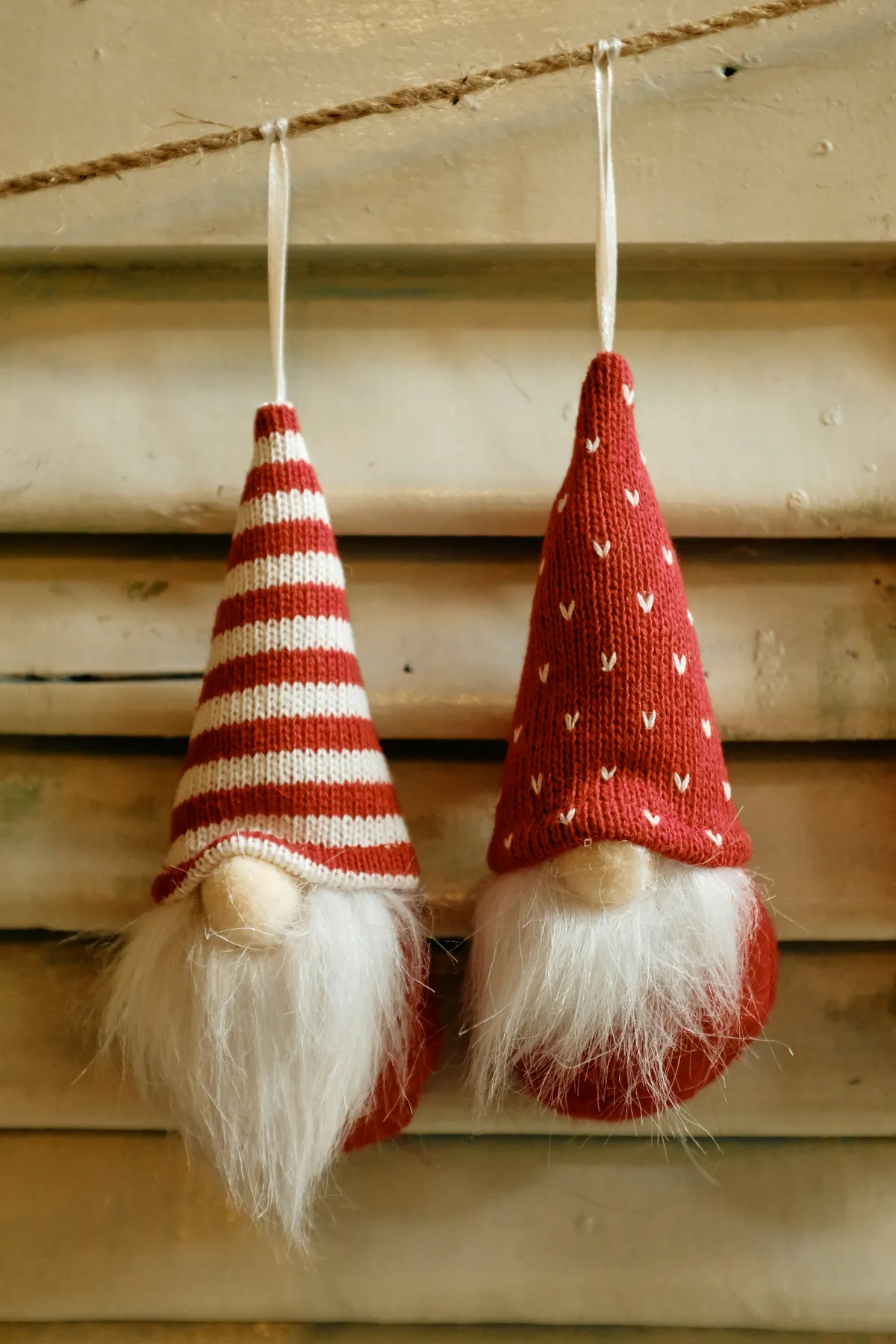
About 45 minutes each, and a pair costs under $10 in yarn if it isn’t already in your stash.
If knitting isn’t happening this year, Target and Walmart both carry knitted gnome ornaments for $4–$8, and from a foot away they look nearly identical. Thrift stores are the other option — knitted ornaments from the seventies and eighties turn up constantly for a dollar or two with exactly the right handmade texture. Compare with Idea #5 if you’d rather do a felt project.
28. Pink Knitted Gloves and a Brown Geometric Motif
Bright pink at 40%, dark brown at 30%, forest green at 20%, white at 10% — that’s the whole formula, and it moves indoors surprisingly well. A pink throw with brown stripe trim, pink and brown patterned stockings, or cushions in that pairing against a green tree all carry the same energy. The brown is what keeps the pink from turning saccharine; without it the palette reads as candy rather than folk.
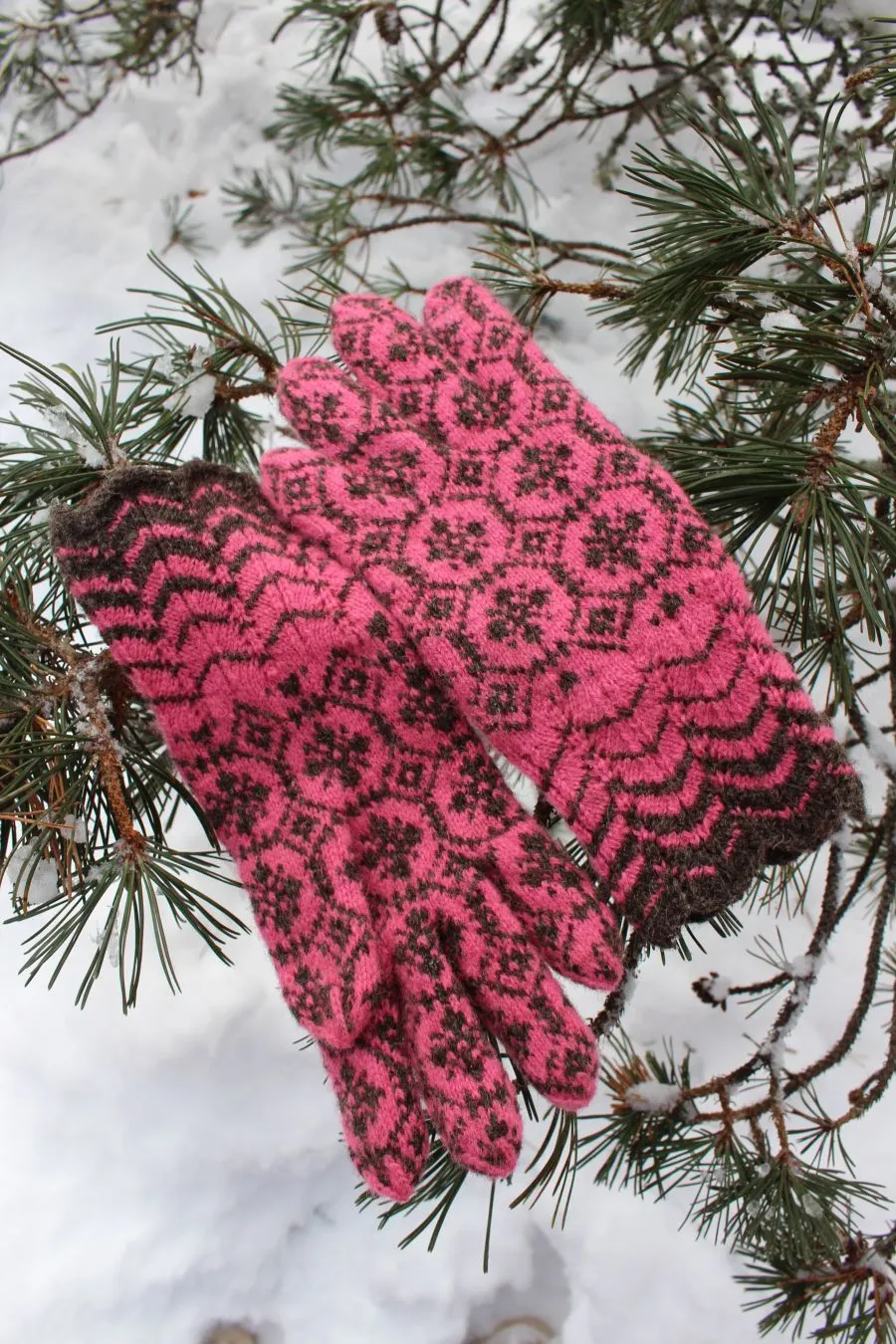
Knitwear-inspired decor has been building since the cottagecore wave, and in 2026 the color story moved from cream and oatmeal into saturated folk tones — pinks, deep browns, mustard. Part of the shift is that people got bored of all-neutral holiday decor and wanted real color that still feels traditional. Flat-lay knit photos have also become a Pinterest staple for pattern inspiration.
29. Glitter Snowflakes Piled on a Linen Pouch
- Decor: 12 assorted glitter snowflakes $12–$30
- Textiles: linen drawstring pouch $8–$22
- Greenery: evergreen sprig or small wreath $10–$25
- Ribbon: white and red satin, two spools $6–$14
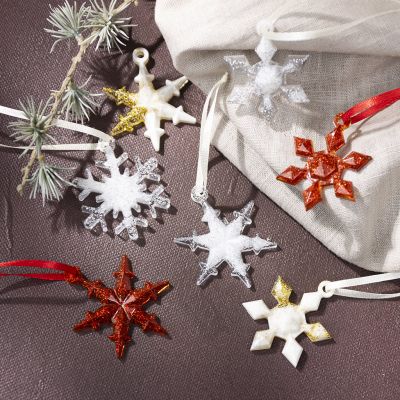
Total: roughly $36–$91. Budget alternative: dollar-store snowflakes plus a thrifted linen napkin tied with kitchen twine lands under $15 total. Glitter density matters more than price — a mix of clear, white, red, and gold reads richer than twelve identical pieces.
Glitter gets everywhere. Lay parchment paper down before you unpack these, and do it on a hard floor rather than carpet, or you’ll be finding flecks until next Christmas. Clear or translucent snowflakes also yellow if stored in direct sunlight. Keep the linen pouch for actual storage — it breathes, which keeps glitter from flaking off in a sealed plastic bin.
30. Clip-On Candles Over a Dark Grey Sectional
Clip-on candles suit rooms with a little height. They add roughly 4 inches above every branch, so a 7-foot tree wants a 9-foot ceiling to keep the top candles below eye level. In a standard 8-foot room, stick to a 6-foot tree with candles on the lower half only.
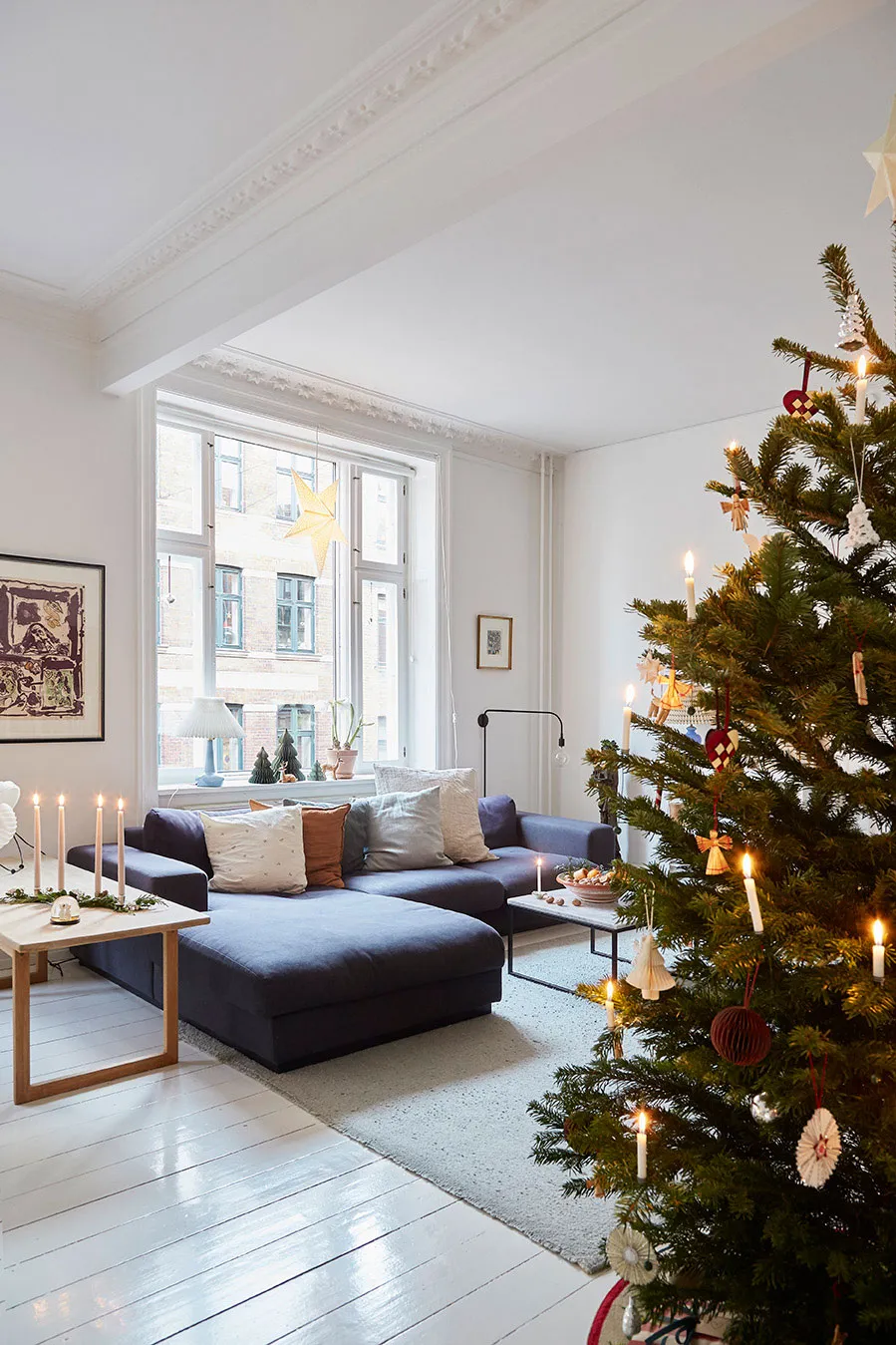
- 8-foot ceiling: 6-foot tree, battery tapers only
- 9-foot ceiling: 7 to 7.5-foot tree with clip-on candles
- 10-foot and up: 9-foot tree, full candle coverage
The dark grey sectional also needs 30 to 36 inches of walking clearance in front — this is a room built for moving through, not around.
White painted floorboards show every scuff, and December is scuff season. Felt pads under the tree basket and sofa legs save the finish. Real clip-on candles need replacing every other season, and the clips lose tension over time, so buy a spare set of ten. Check the illuminated paper star’s cord for fraying before it goes up.
31. A White Wicker Wreath Next to Dried Orange Slices
The white wicker wreath is the unlikely hero. A second evergreen wreath would have been predictable; the pale, textured wicker gives the display a light-toned anchor and makes the green wreath with dried oranges and red berries look more saturated by contrast. It also bridges rustic and refined — wicker reads cottage, white reads clean. That tension is exactly why the arrangement works.
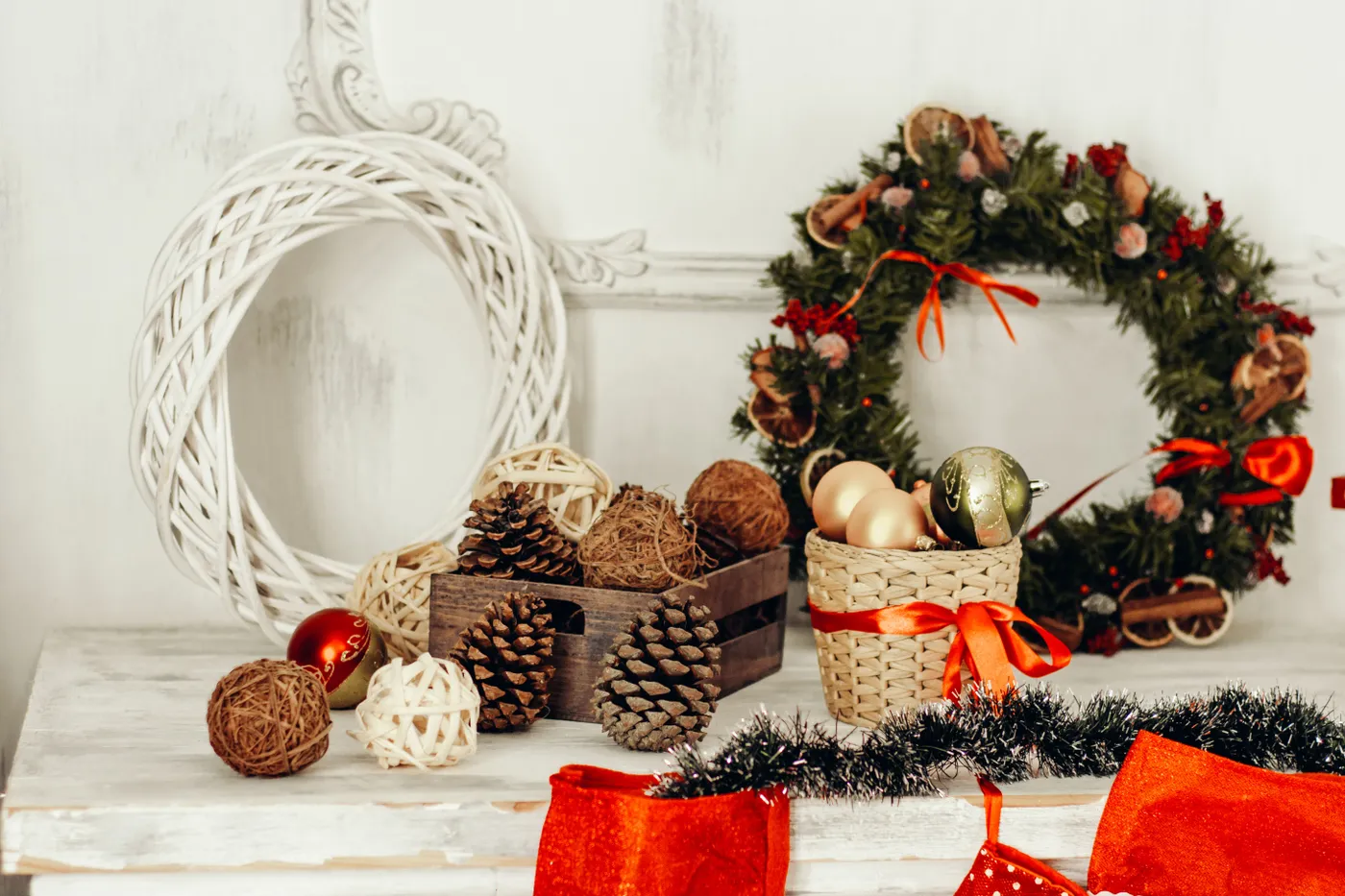
Three principles are running quietly. Texture contrast: smooth painted wood, rough pinecones, woven spheres, soft dried citrus. Color restraint: white, dark green, brown, and a measured amount of red. And repetition — round shapes appear at least six times across the display in wreaths, spheres, and orange slices. The red ribbons are the only true accent, which is why they pull the eye so effectively. See Idea #21 for the same natural-materials approach on a much smaller scale.
Bring the Folk Home, One Straw Star at a Time
Scandinavian folk decorating isn’t a shopping list — it’s the habit of collecting slowly, choosing handmade over perfect, and letting a straw goat share the shelf with your grandmother’s ornaments. Start with one thing this year: a felt star, a straw ornament, a windowsill figure. Next December, add another.
📌 Pin your favorites from this guide so you can find them again when the holiday bins come out.