You know that feeling when you’ve saved forty photos of handmade stockings and still can’t decide which one belongs on your mantel? Same. Sewn and hand-stitched Christmas decorations are quietly taking over holiday boards this year.
After filtering through hundreds of options across Etsy, Michaels, Hobby Lobby, and Joann, we narrowed it down to 36 ideas that actually deliver — from $8 felt ornaments to a $180 quilted tree skirt.
Inside you’ll find felt woodland creatures, quilted patchwork stockings, embroidered tree skirts, and nativity panels, with budget and luxury versions compared side by side.
2026 is the year handmade beat mass-produced on Pinterest — people want pieces with visible stitching and a little personality, not another box of identical baubles.
Save this post now — you’ll want it when you’re ready to shop. And stay until the end — we break down the most common mistakes that can ruin these looks.
This post contains affiliate links. 📌 Save this to Pinterest for later — you’ll want to revisit these ideas.
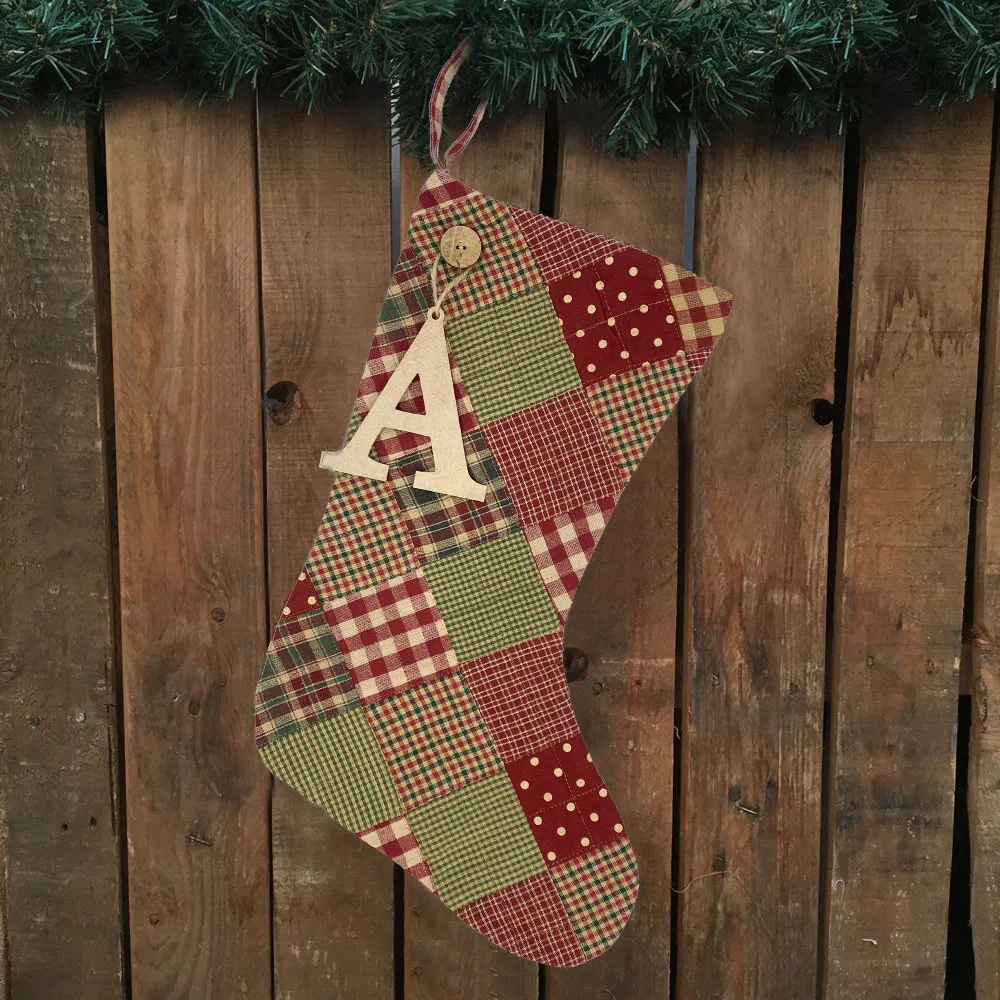
1. Quilted Patchwork Stocking on a Rustic Slat Wall
Piecing a quilted stocking? Cut squares at 2½ inches with a ¼-inch seam — that gives you roughly 5-inch finished blocks, the sweet spot where plaid, gingham, and polka dot can share a stocking without shouting. Press each seam open as you go; lumpy intersections are what make handmade look homemade in the wrong way.
2. Mini Embroidery Hoop Ornaments Stitched With a Reindeer, Santa, and Snowman
Mini hoop ornaments take one evening:
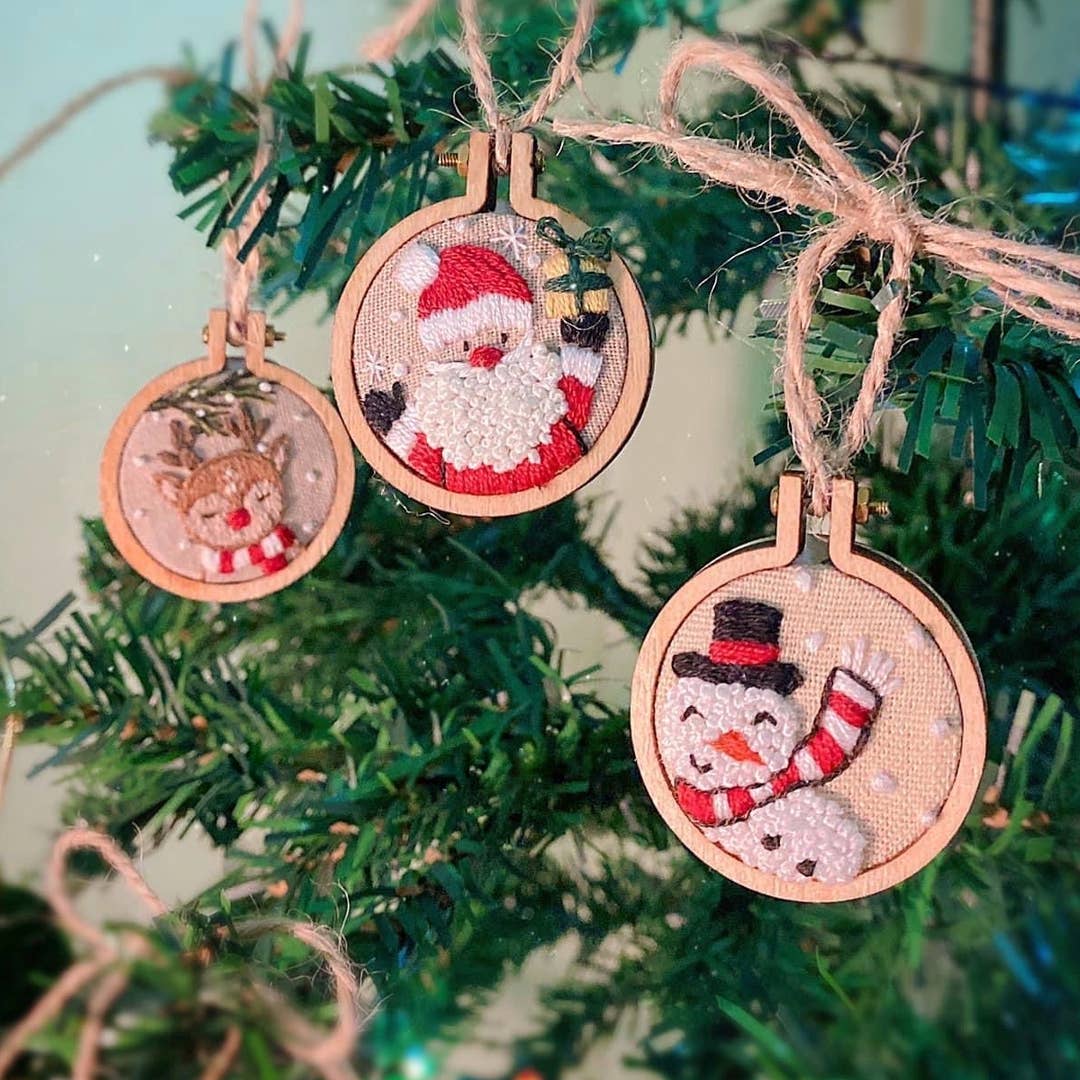
- Stretch a 3-inch scrap of linen in a 2½-inch hoop and trace a simple reindeer or snowman outline.
- Fill with three strands of cotton floss — satin stitch for bodies, French knots for eyes, backstitch for outlines.
- Trim the fabric flush to the back edge and glue a felt circle over it.
- Thread rustic twine through the screw fitting for a hanging loop.
About 2 hours per ornament, roughly $2 in materials.
3. Hand-Embroidered Textile Ornaments You Can Feel
The pull here is visible stitching — hand-embroidered textile ornaments read as small pieces of textile art, not mass-produced baubles, and their imperfections are the point. Take the stitching away and you’re left with a plain fabric shape any big-box store could have made. When choosing, buy the one where you can see the thread doing the work.
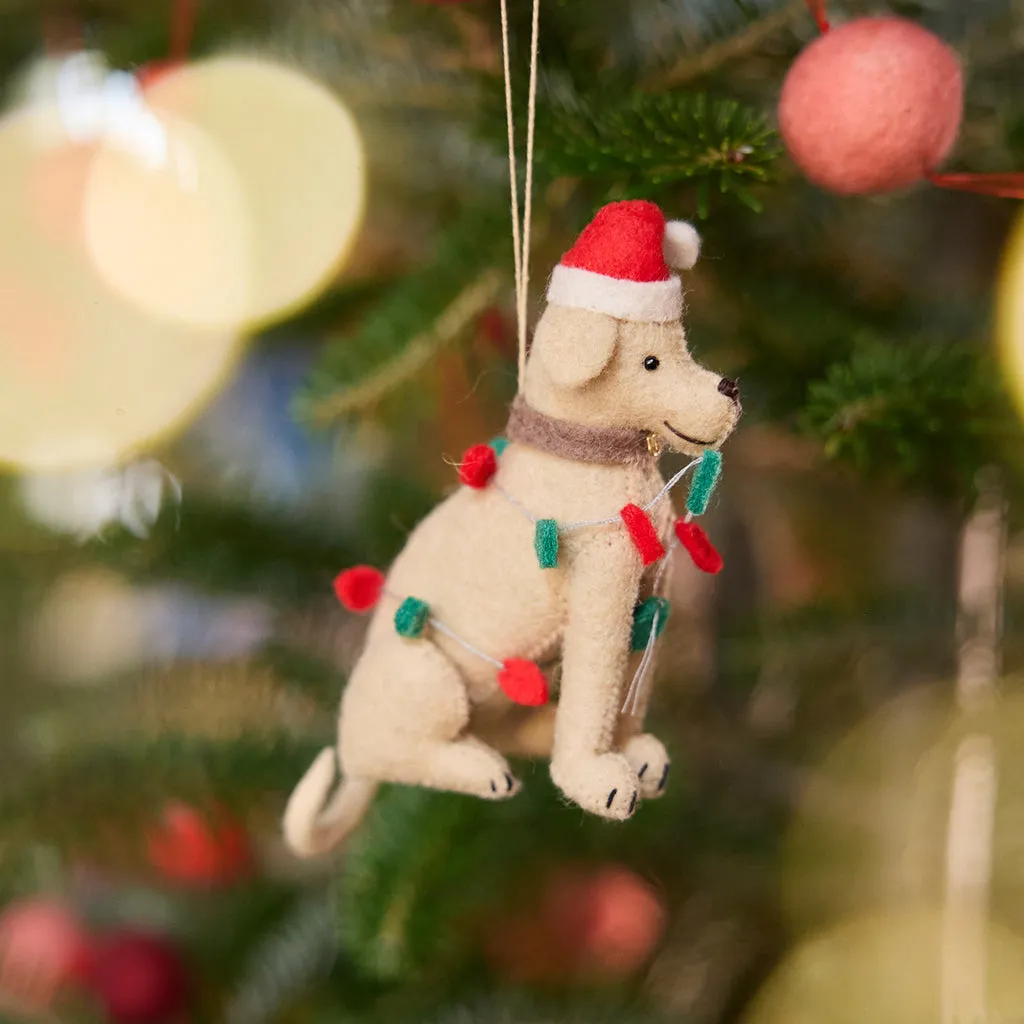
4. A Felt Puppy in a Santa Hat, Wrapped in Felt Lights
You don’t need a $16 boutique ornament to get a felt puppy in a Santa hat with a strand of tiny felt lights. Craft-store felt sheets run about 50 cents each, and one 9×12 sheet covers a whole pup. Acrylic felt is stiffer than wool blend, which actually helps small limbs hold shape. A bag of poly-fil lasts a dozen ornaments, so the second one costs about a dollar.
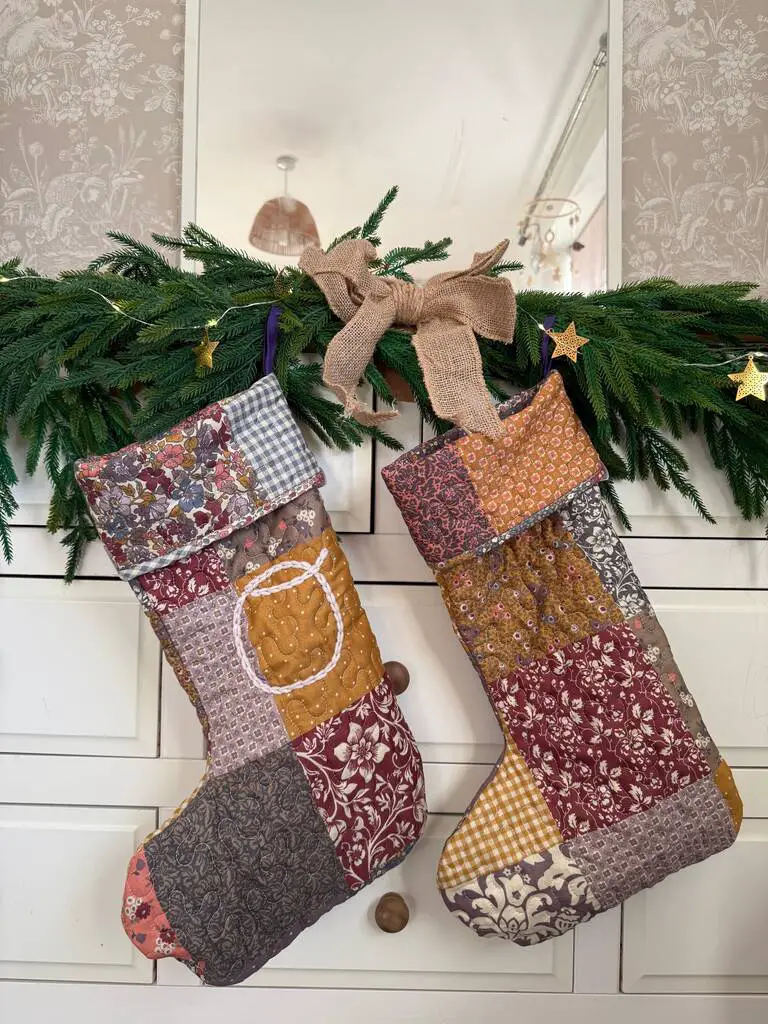
5. Two Patchwork Stockings on a Lighted Fir Garland With Burlap
Two patchwork stockings on a fir garland work because everything is mismatched in pattern but matched in temperature. The florals, geometrics, and dusty mauves all sit in the same muted, slightly faded range, so no single print fights for attention. Add the white monogram outline and the burlap bow and you’ve got contrast in texture instead of color — a much quieter way to build a focal point.
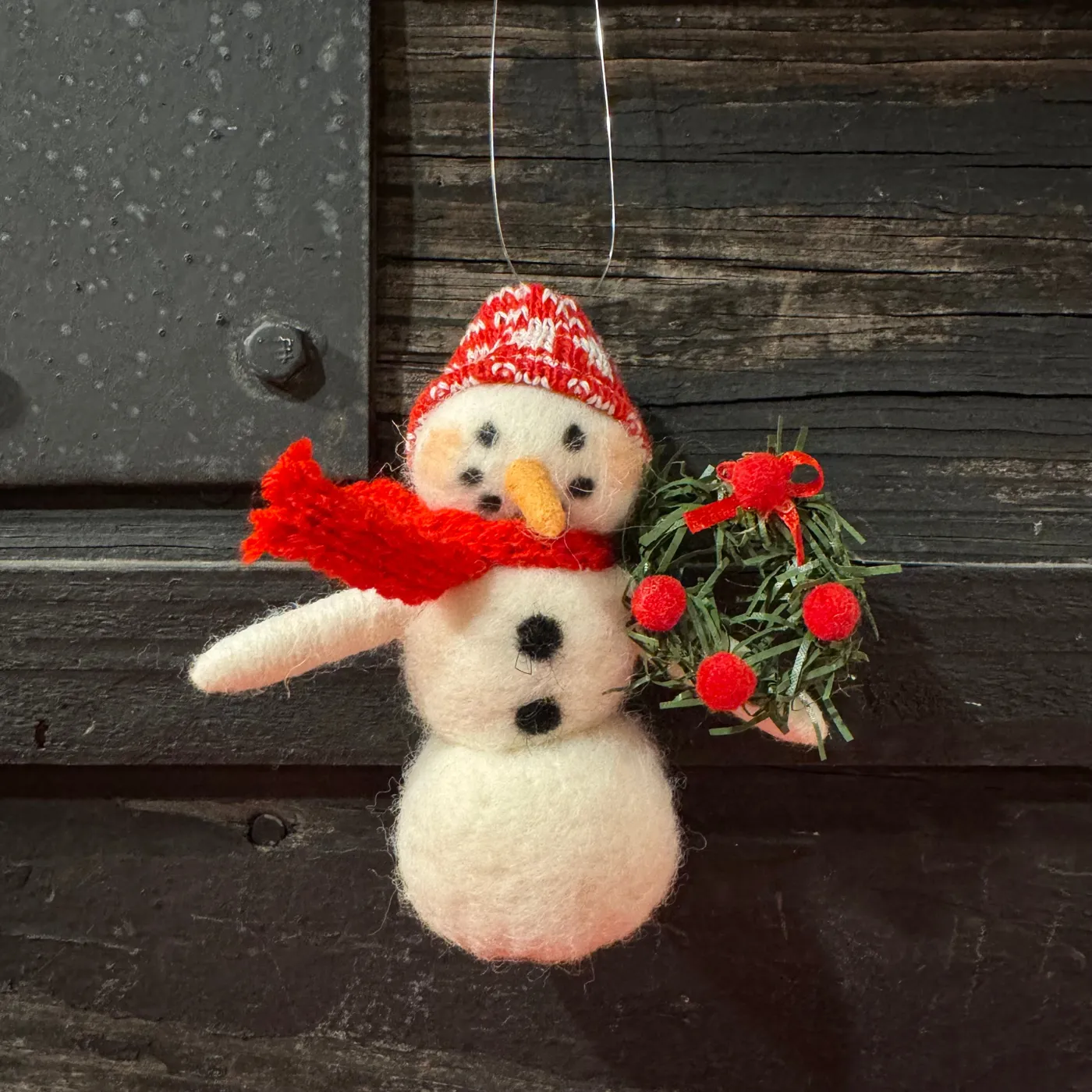
6. Felt Snowman in a Knitted Beanie and a Tiny Berry Wreath
The formula: 70% white felt base + 15% knitted red + 10% green wreath + 5% orange carrot nose. That last 5% is doing more work than any other color, which is exactly why it lands. Keep the ratios and you can swap the beanie for navy and the scarf for mustard — it still reads as the same character. Change the white base and the whole thing collapses.
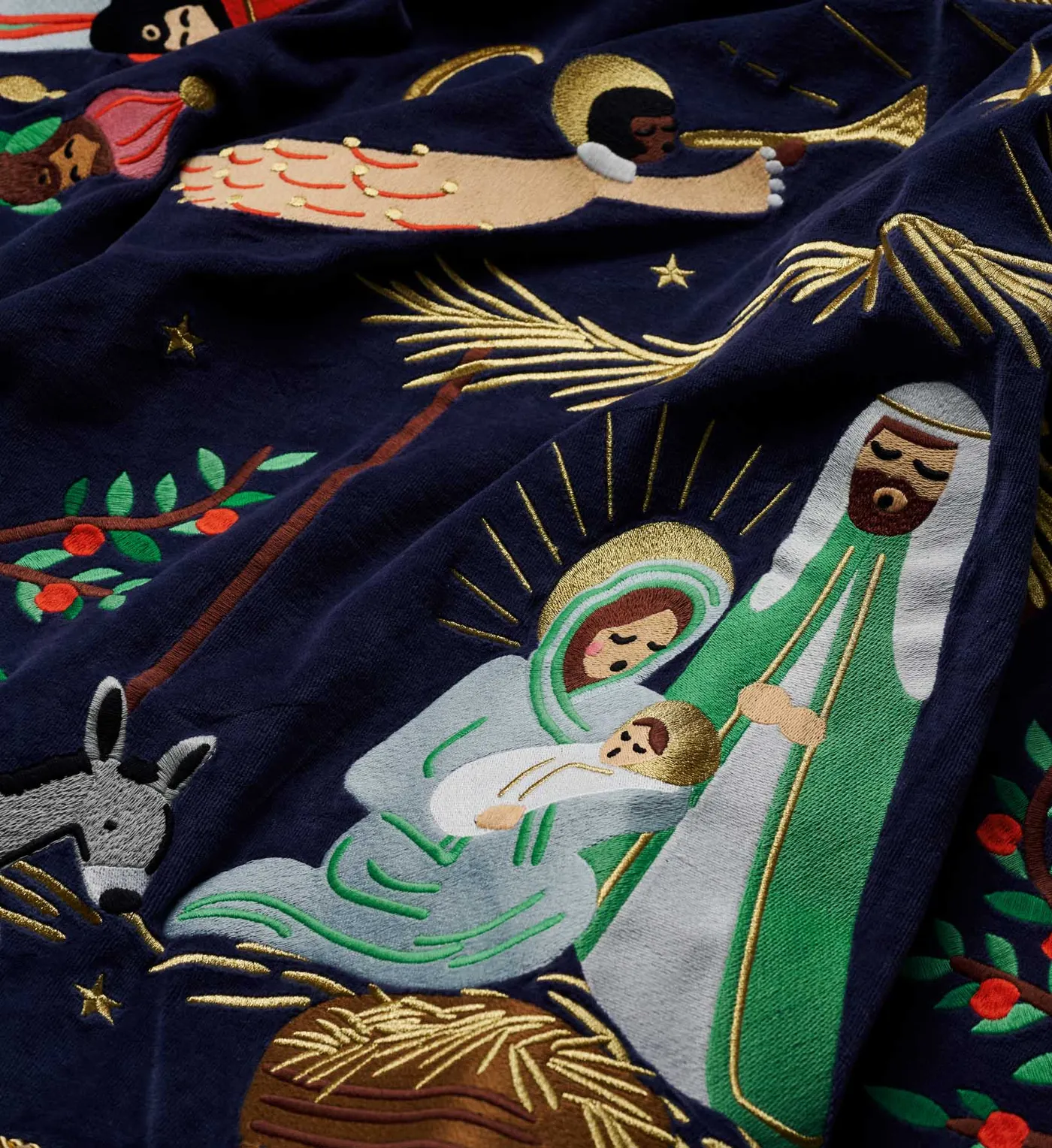
7. Navy Nativity Embroidery With Golden Angel and Stars
Deep navy as an embroidery ground is having a moment because it makes gold thread glow like nothing else. A nativity stitched on midnight blue reads more like an heirloom textile than a holiday craft, which fits the 2026 swing toward pieces you’d leave out year-round. It also has real staying power — navy and gold have been a pairing long before it was trending.
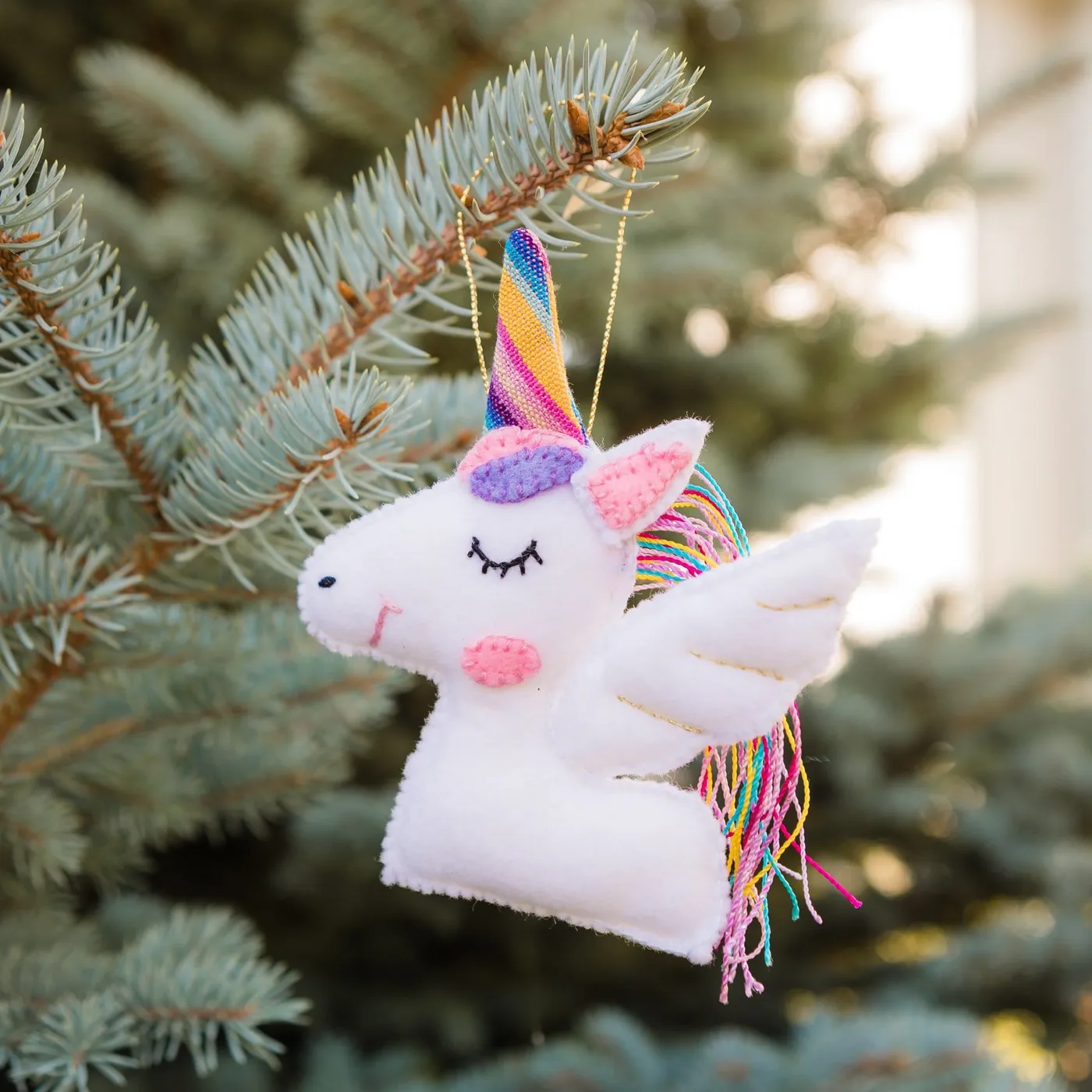
8. A White Felt Unicorn With a Rainbow-Threaded Horn
A felt unicorn with a fringe mane and rainbow-threaded horn is adorable and slightly hazardous. Fringe strands pull loose under small hands, and stitched details come off under determined teeth. If this is heading to a tree with kids or a cat, stitch the mane down in short rows instead of letting it hang, and anchor the horn with a dot of fabric glue as well as thread.
9. Three Quilted Stockings and Brass Bells on a White Mantel
Recreating the mantel trio:
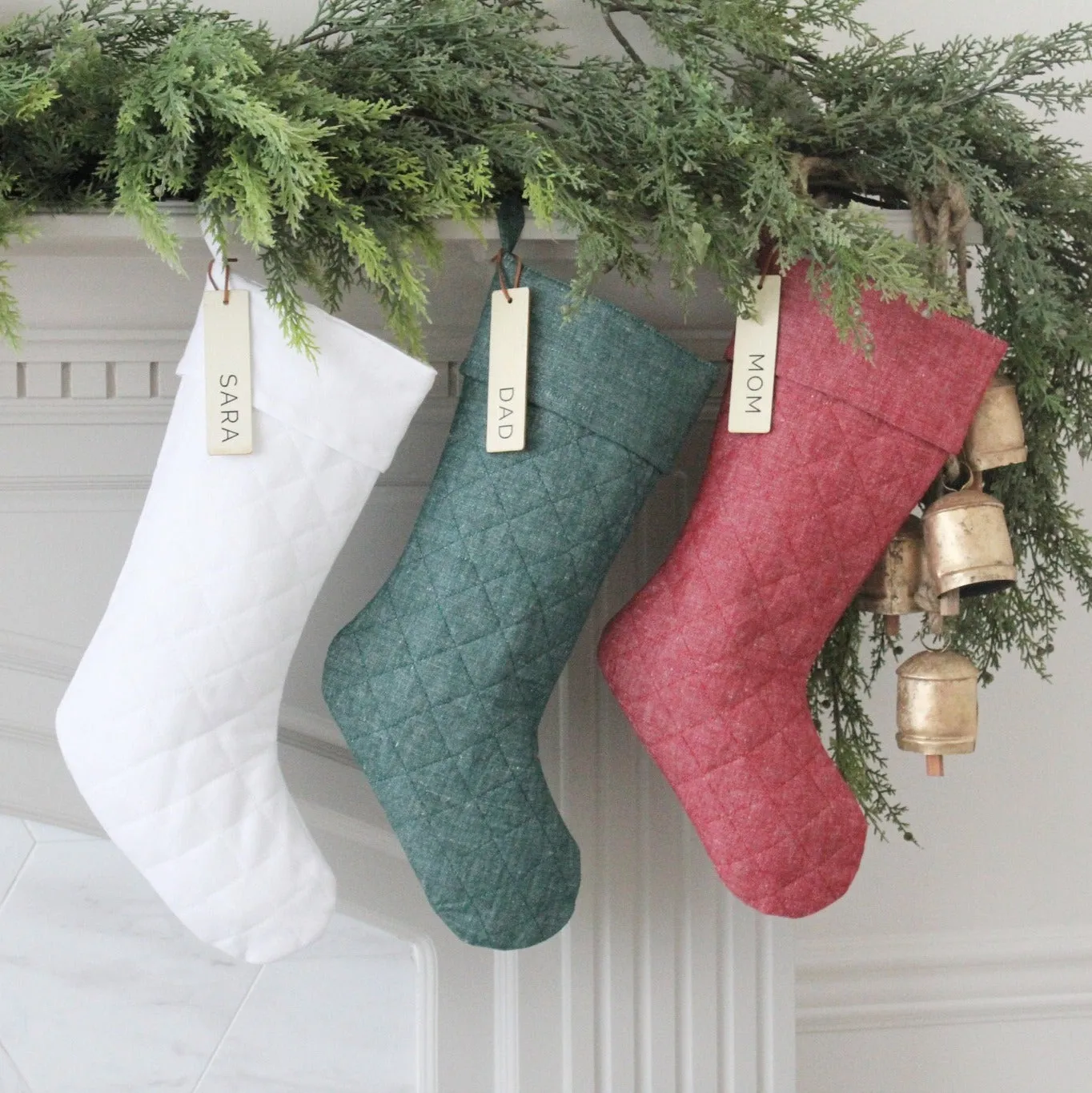
- Quilted stockings (3): $30–$120 each, or $18–$25 per yard of quilting cotton if you sew
- Fresh evergreen garland: $35–$60 for 9 feet
- Brass bells: $12–$30 per set
- Stamped wooden name tags: $3–$8 each
Total: roughly $150 to $400 depending on whether you sew.
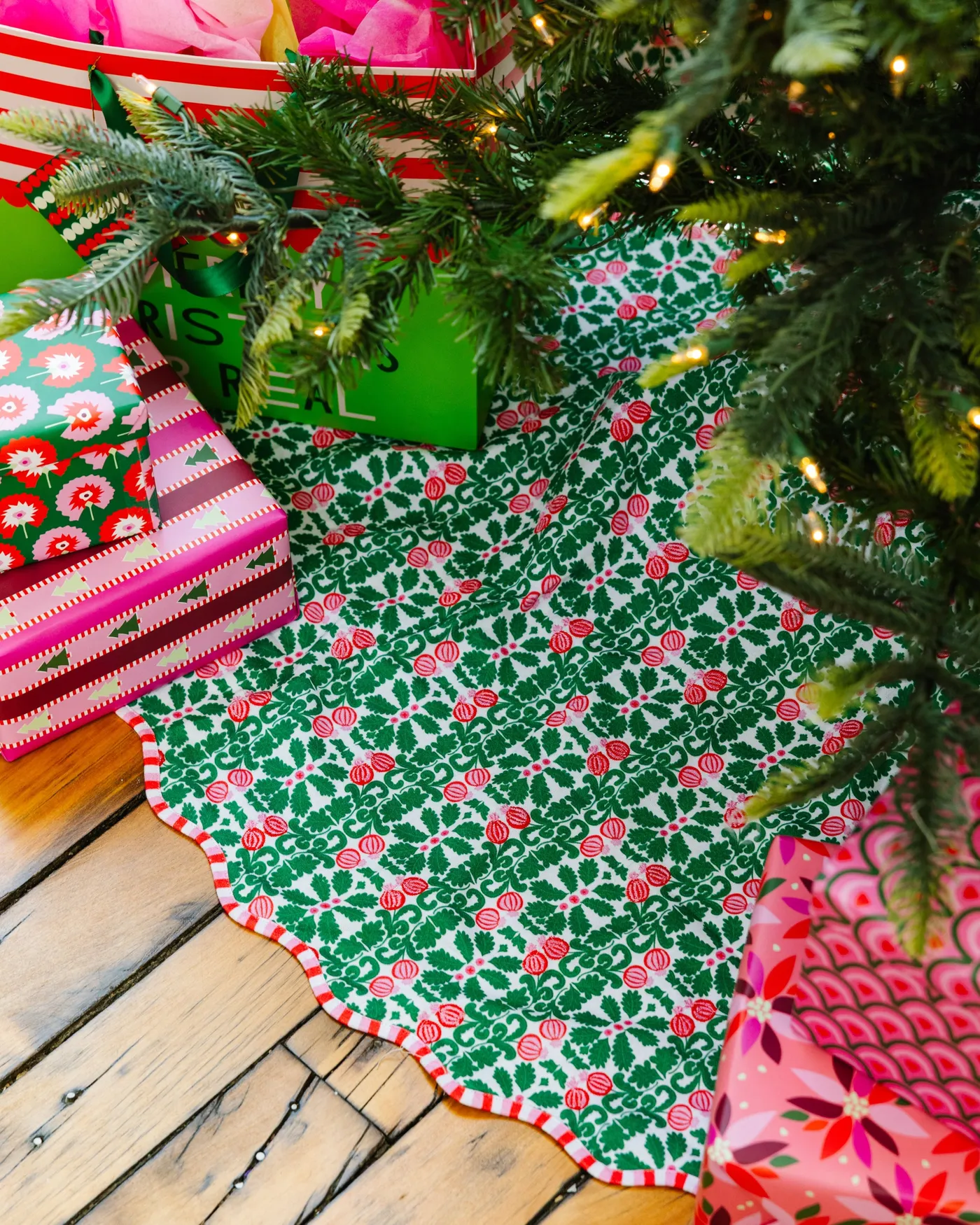
10. Scallop-Edged Botanical Tree Skirt With Red Piping
It’s the piping. That thin red-and-white line running along the scalloped edge is the difference between a homemade skirt and one that looks like it came from a shop that only sells adorable things. Scallops without trim go soft and shapeless fast, especially in a botanical print. If you have time for one finishing detail, make it the piped edge — it defines the shape from across the room.
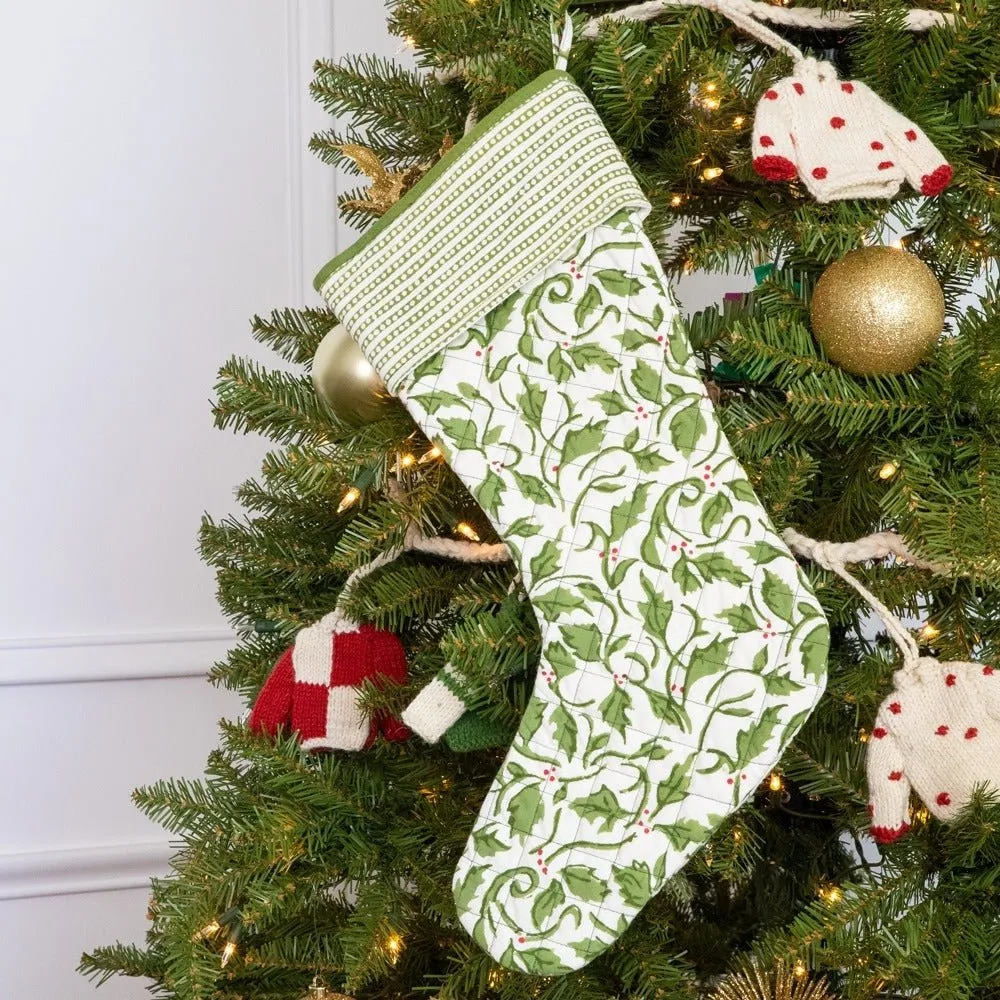
11. Green Botanical Stocking Beside Knitted Sweater Ornaments
Match your stocking cuff to your tree’s ornament scale. This one works because the striped cuff carries about the same visual weight as the mini knitted sweaters hanging beside it. On a 7-foot tree, keep stocking patterns under 3 inches tall; on a 4-foot tabletop tree, drop below 1½ inches. Big prints on small trees are the fastest way to make a room feel cramped.
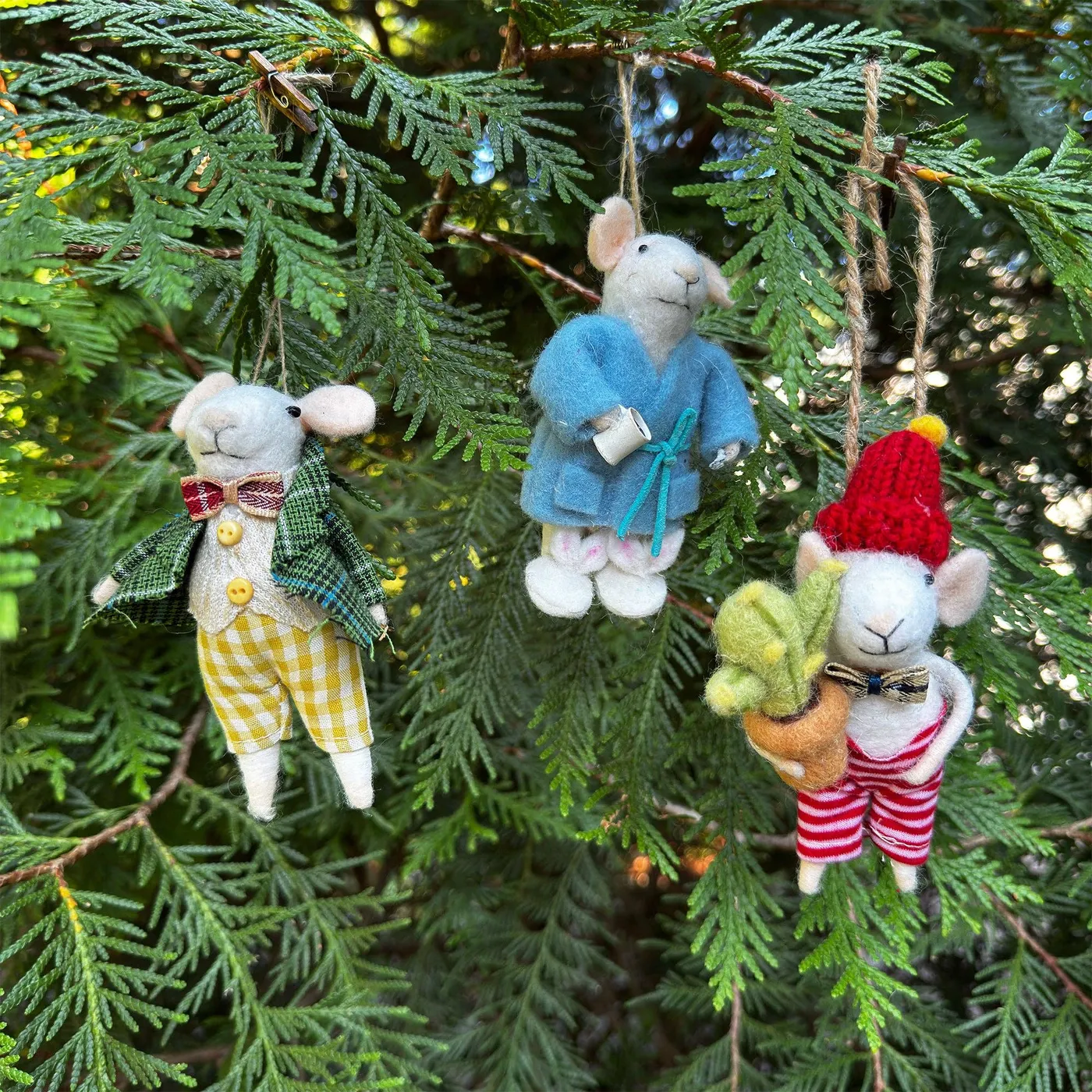
12. Felt Mice in Plaid Jackets and a Blue Bathrobe
Felt mice in stitched clothing read best on trees 6 feet and up, where the tiny plaid jackets and knitted caps have room to register. On a 4-foot tree they vanish. They’re also ideal for narrow spaces: three take up the shelf space of one medium glass bauble, which makes them a smart apartment pick. A 9-foot tree can carry eight to ten across the branches.
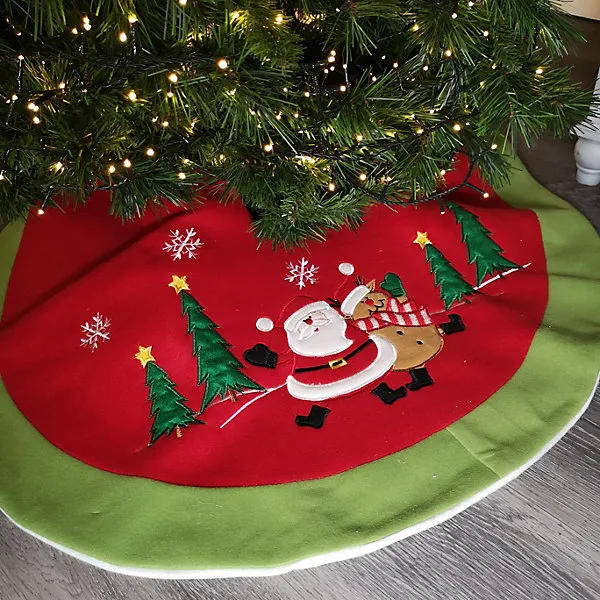
13. Embroidered Santa and Reindeer Tree Skirt in Red and Green
A tree skirt takes more abuse than anything else on your holiday list. Appliquéd and embroidered motifs collect dust, pet hair, and pine needles in every stitched crevice. Vacuum on the lowest setting with a brush attachment weekly through December, and spot-clean with a damp cloth rather than machine washing — appliqué edges fray fast in a washer.
14. Blue Felt Star and Heart Ornaments With Magenta Tassels
Blue felt star and heart ornaments, with tassels:
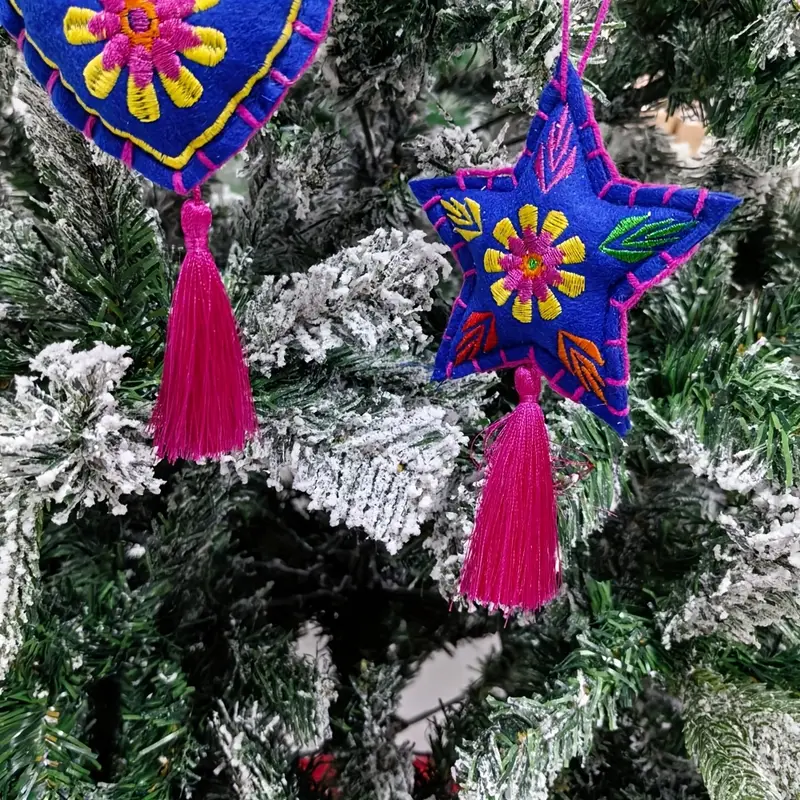
- Cut two identical shapes from royal blue felt and blanket-stitch the edges in magenta, leaving a 1-inch gap.
- Stuff lightly with poly-fil and close the gap.
- Embroider a small yellow-and-pink floral motif on the front using three strands of floss.
- Knot a bundle of magenta floss through the bottom point and trim to 2½ inches.
- Add a braided loop at the top.
About 90 minutes and $3 per ornament.
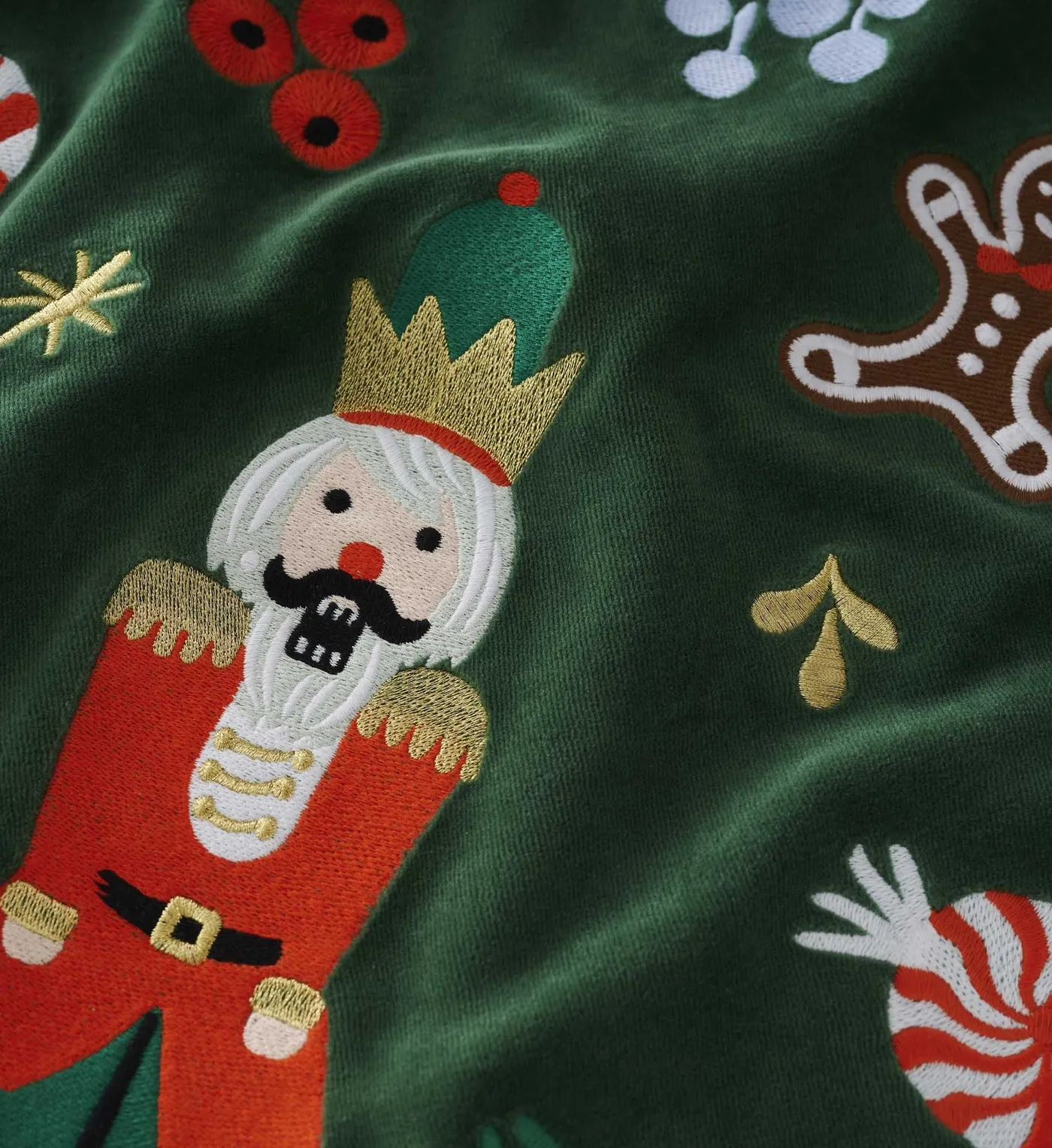
15. Embroidered Nutcracker Panel on Deep Green Fabric
A nutcracker surrounded by gingerbread, peppermints, and holly works because the composition is built around one clear hero. Everything else is stitched slightly smaller and slightly duller, which keeps the eye sliding back to the center. Gold stars scattered near the edge act like punctuation. Without that hierarchy, a busy embroidery design just turns into a wall of thread.
16. Felted Raccoon With a Green Scarf and Tiny Lantern
Before you needle-felt this guy:
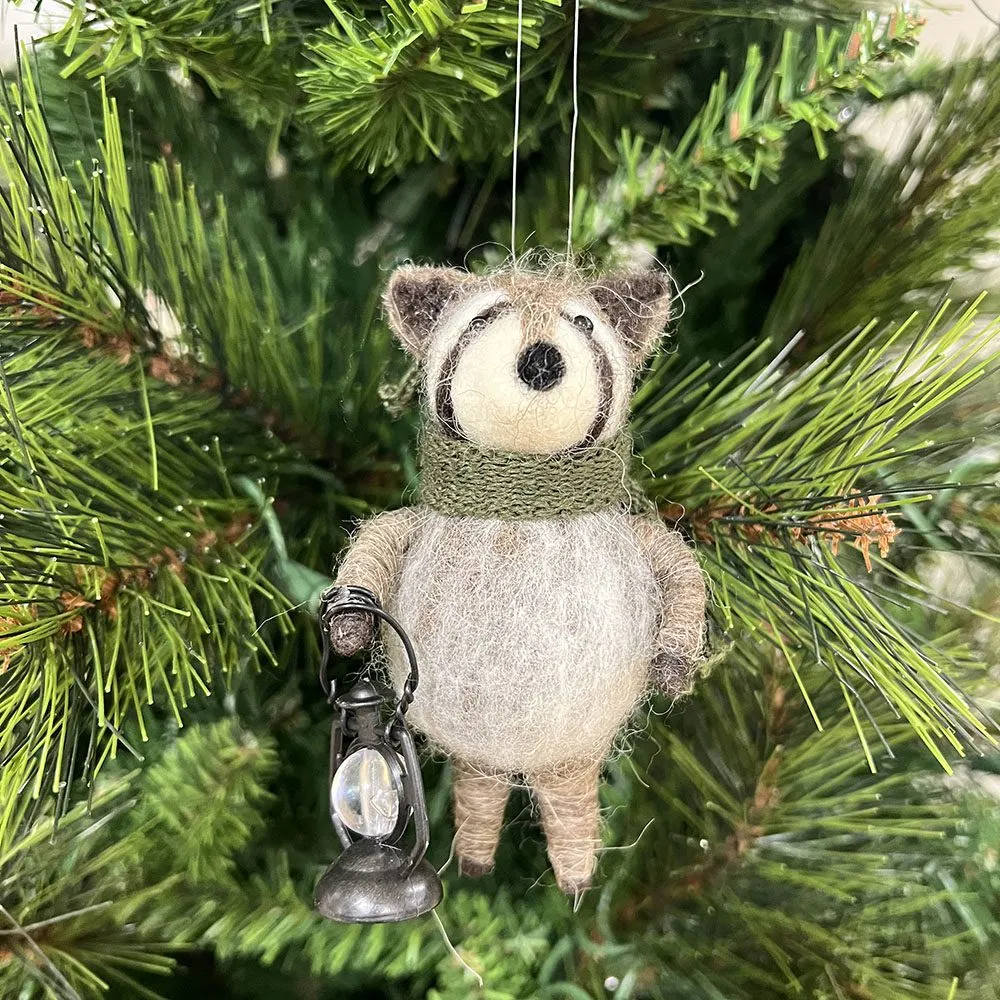
- Confirm your roving is 100% wool — acrylic blends won’t felt.
- Work over a foam pad with a 38-gauge needle; finer ones snap easily.
- Budget 3–4 hours for the body, plus an hour for the scarf and lantern.
- Decide the hanging point before you finish the head, or it will hang off-balance.
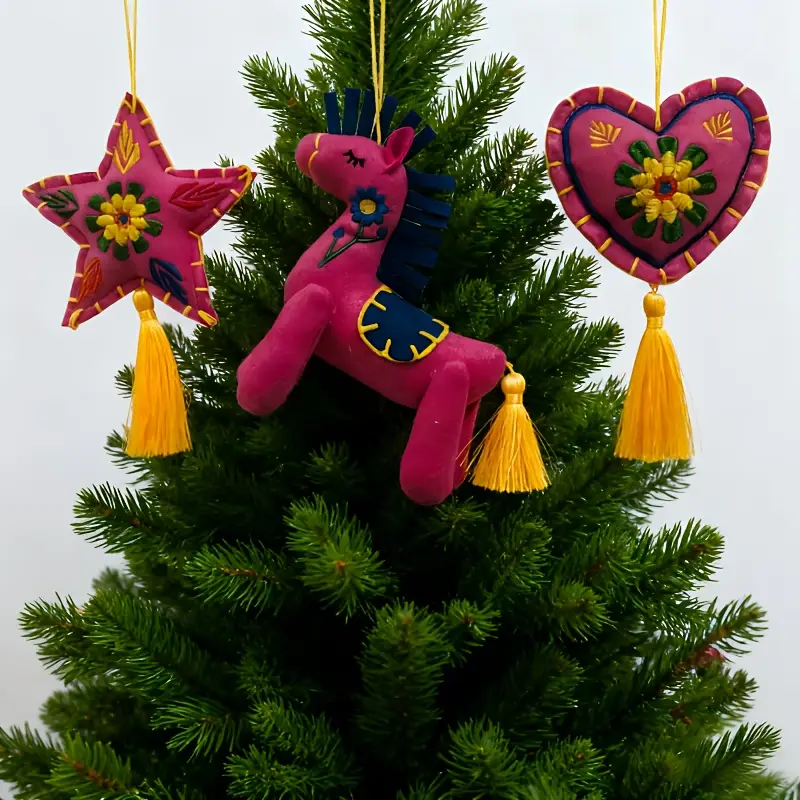
17. Pink Felt Star, Horse, and Heart Ornaments With Yellow Tassels
Yellow tassels on pink ornaments are doing something specific: they’re the third color that keeps a two-color scheme from going flat. If you’re making your own, pick a main color (pink), an accent (yellow), then commit to one blue detail — like the horse’s mane. Three colors, no more. A fourth and the ornaments start looking like a craft-fair table instead of a collection.
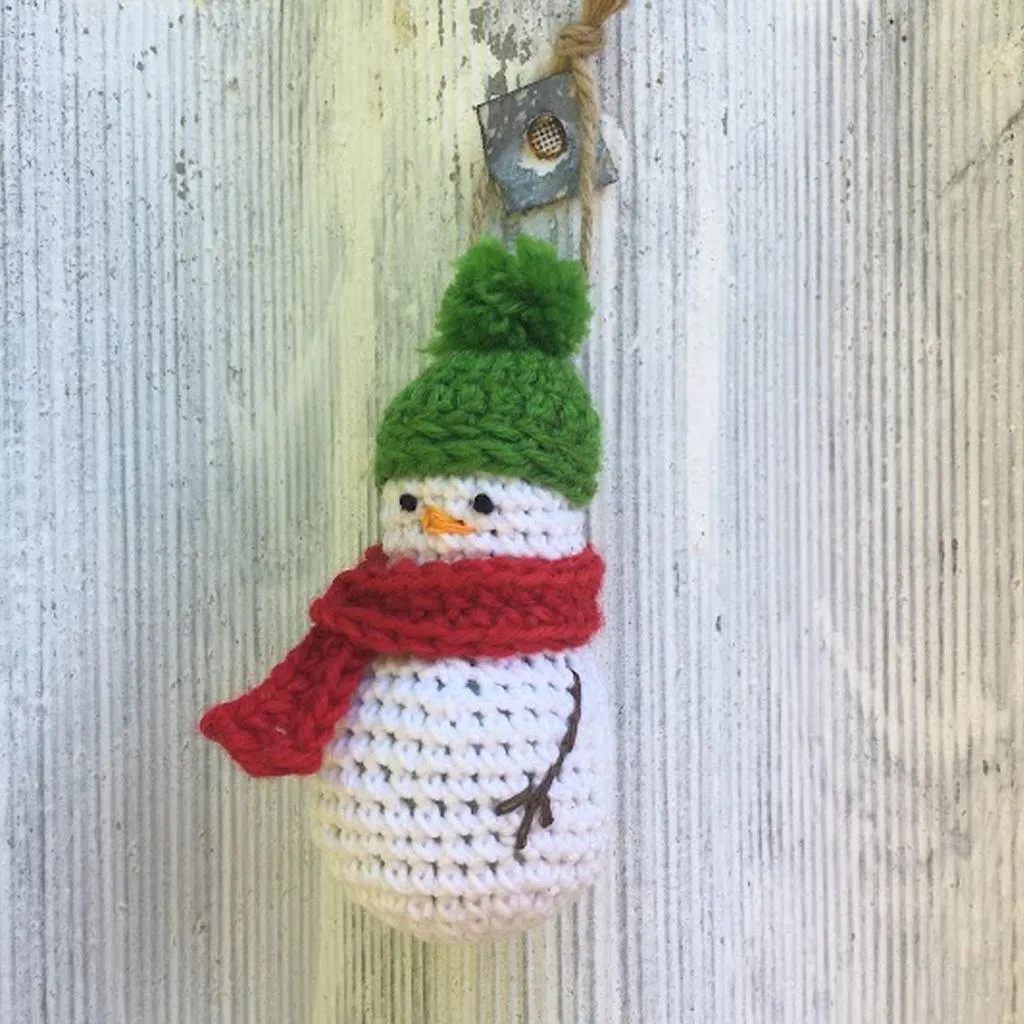
18. Crocheted Snowman With a Green Pom-Pom Beanie
The pom-pom. That single green bobble on the crocheted beanie is what turns a white snowman into a character with a personality. Everything else — the red scarf, the embroidered smile, the little brown stick arms — is supporting work. Lose the pom-pom and you still have a perfectly nice snowman; you just don’t have one anyone remembers.
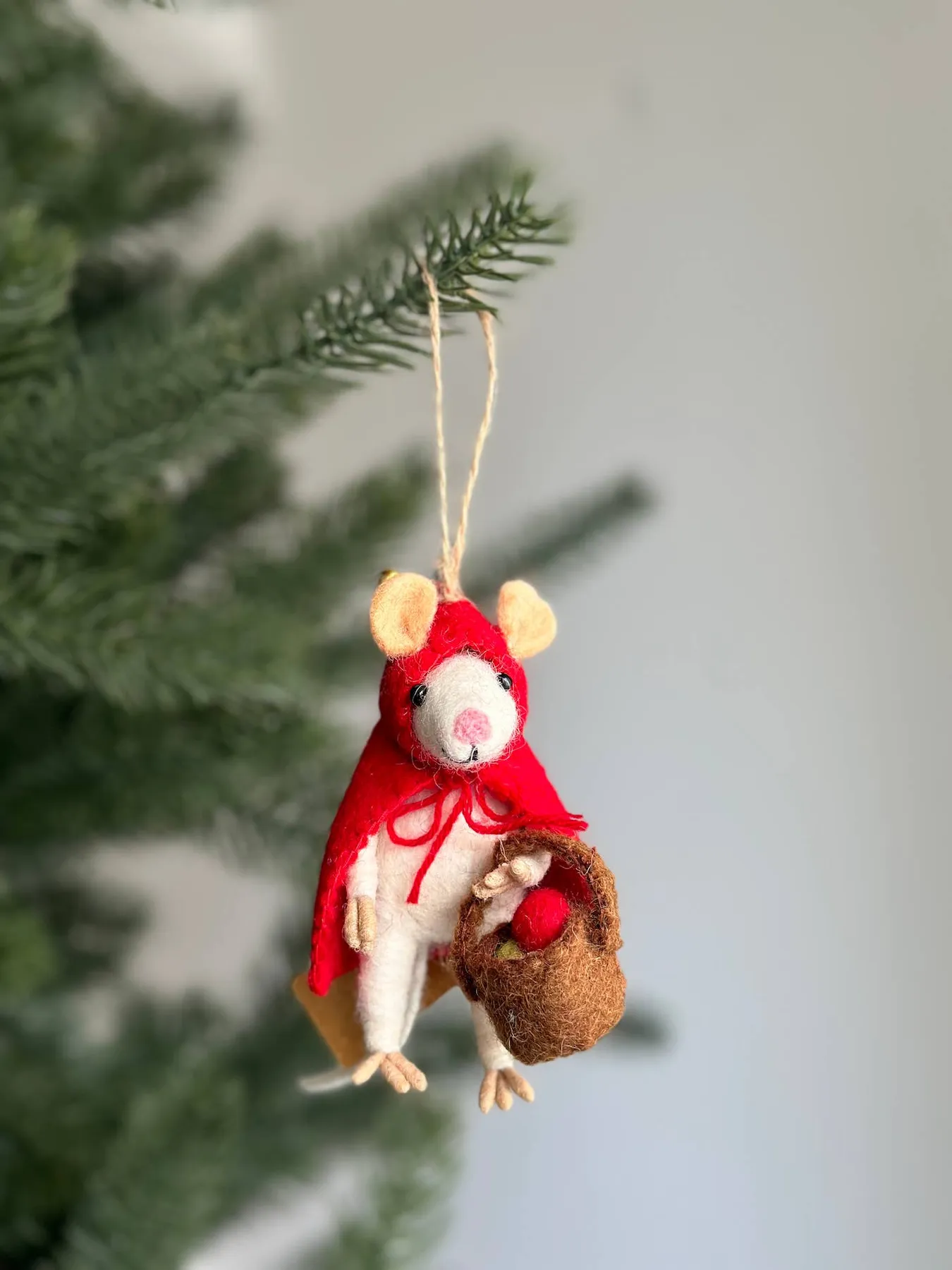
19. A Needle-Felted Mouse in a Red Hooded Cape
Storybook ornaments — a mouse in a red hooded cape carrying a basket of berries — are the 2026 answer to minimalist holiday fatigue. Holiday boards have been filling up with narrative, character-driven ornaments as people hunt for pieces with a little plot. This one ages well, too: handmade figures have been collected for a century and never look dated on a tree.
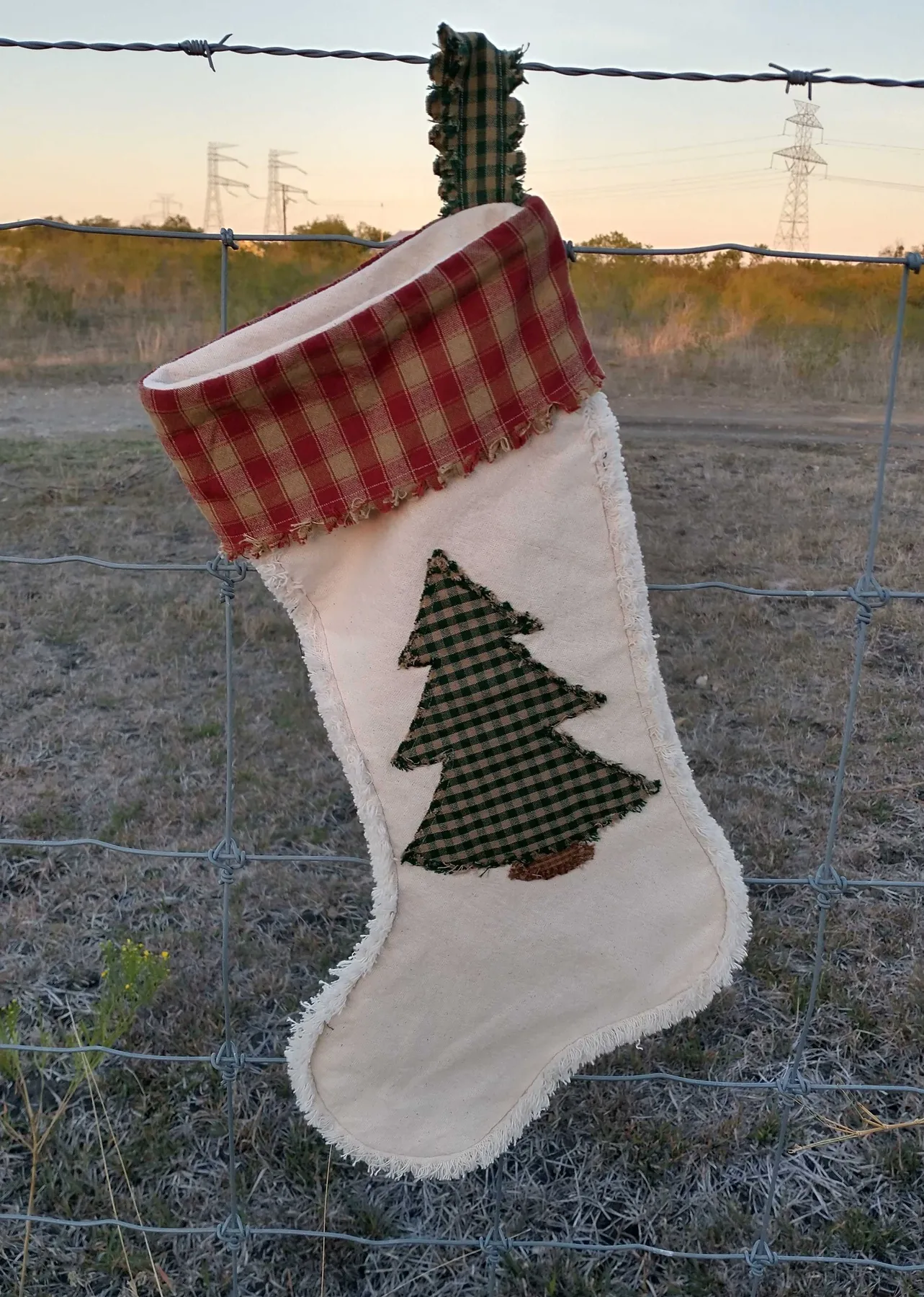
20. Rustic Stocking With Frayed Edges and a Checkered Tree
Raw, frayed edges are the whole charm of a rustic stocking — and also its liability. Off-white cotton frays further every time it’s handled, and by January you’ll be finding threads in the carpet. Run a single line of stay-stitching a quarter inch inside your cut edge before assembling and the fray stops where you want it to. The plaid cuff will hold up far better than the base.
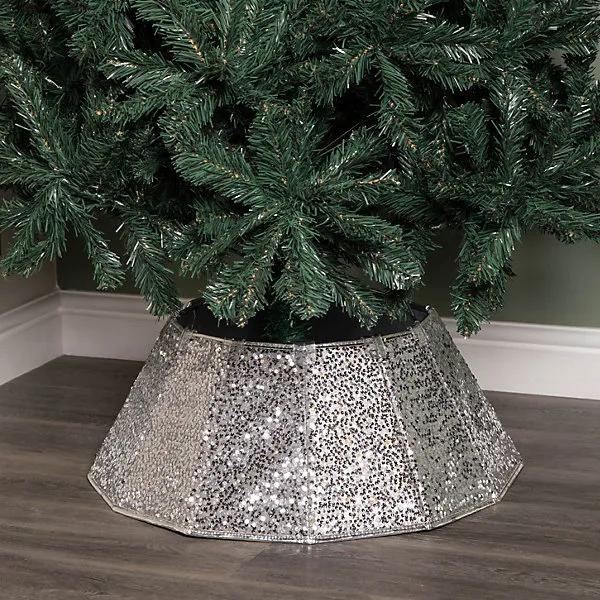
21. Silver Sequin Tree Collar on a Dark Wood Floor
A silver sequin tree collar is a small-room hero and a big-room risk. It suits trees from 4 to 7½ feet with a stand base under 24 inches — measure the stand, not the tree. In rooms under 150 square feet it reflects light and makes the corner feel twice as bright. Push past an 8-foot tree and the sequins look undersized; go with a wider pleated collar instead.
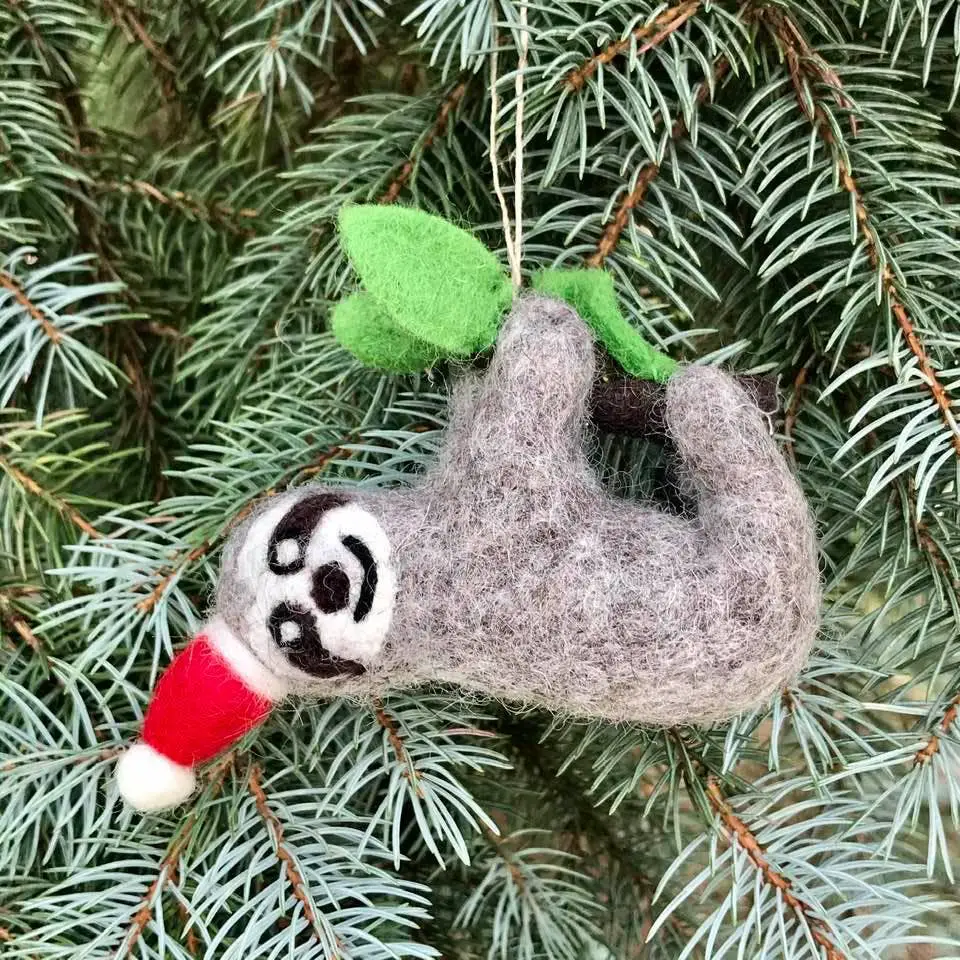
22. Felt Sloth in a Santa Hat Holding a Green Branch
This sloth follows a simple recipe: 60% gray felt body + 25% red-and-white Santa hat + 10% green leaves + 5% embroidery. The hat is the only element that actually says Christmas — everything else is just a woodland animal. That’s the trick with character ornaments: pick one holiday cue, keep the rest neutral, then swap that single cue each year without rebuilding the whole thing.
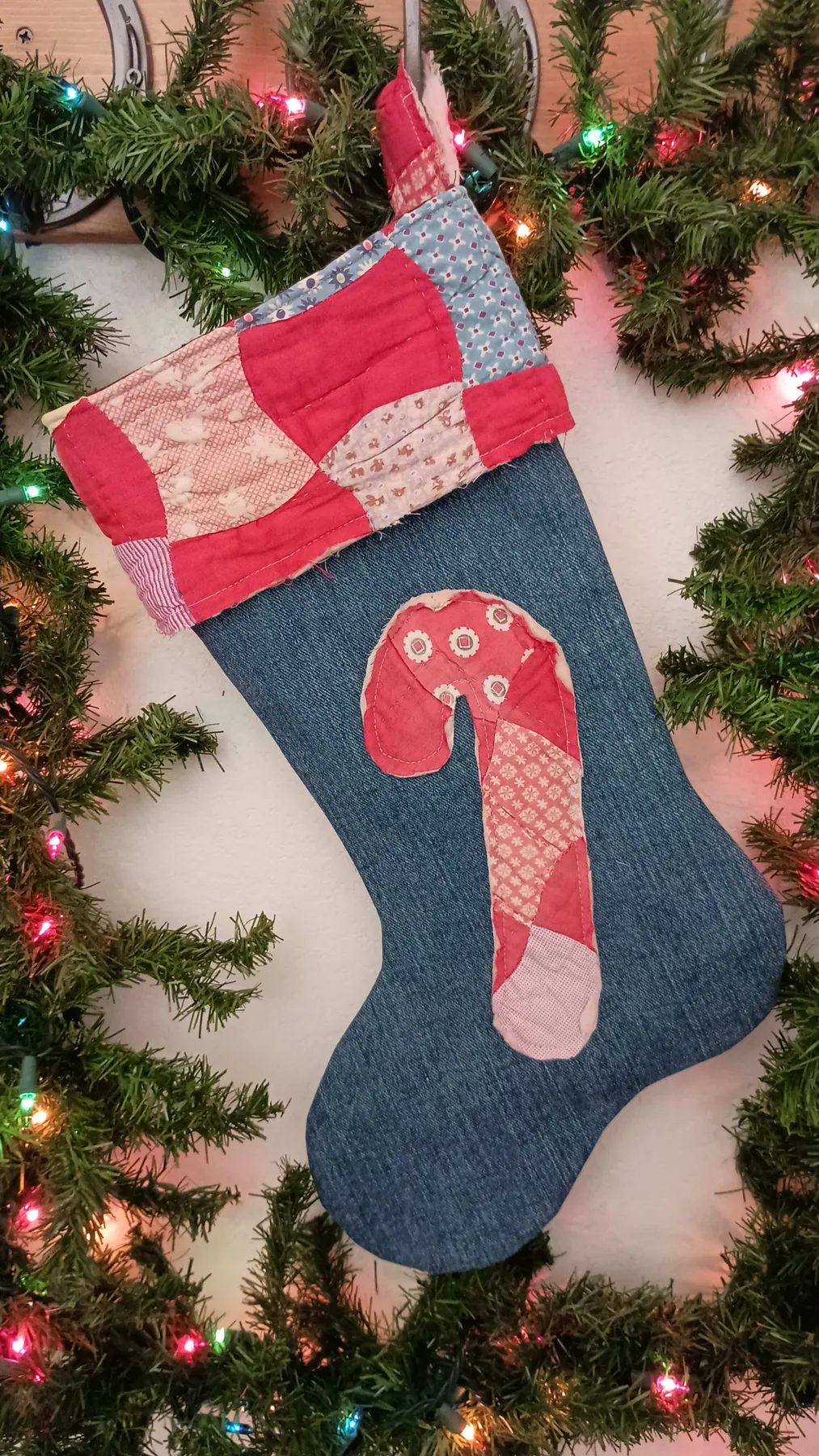
23. Denim Stocking With a Calico Cuff and Candy Cane
Denim is the cheapest fabric in this entire article. Thrift a pair of jeans for $3–$6, cut the legs into stocking panels, and quilt a cuff from calico scraps you already own. The patchwork candy cane appliqué is five 2-inch squares arranged on a diagonal. Fabric glue instead of a machine holds the appliqué fine. Compare with Idea #5 — same patchwork logic, completely different palette.
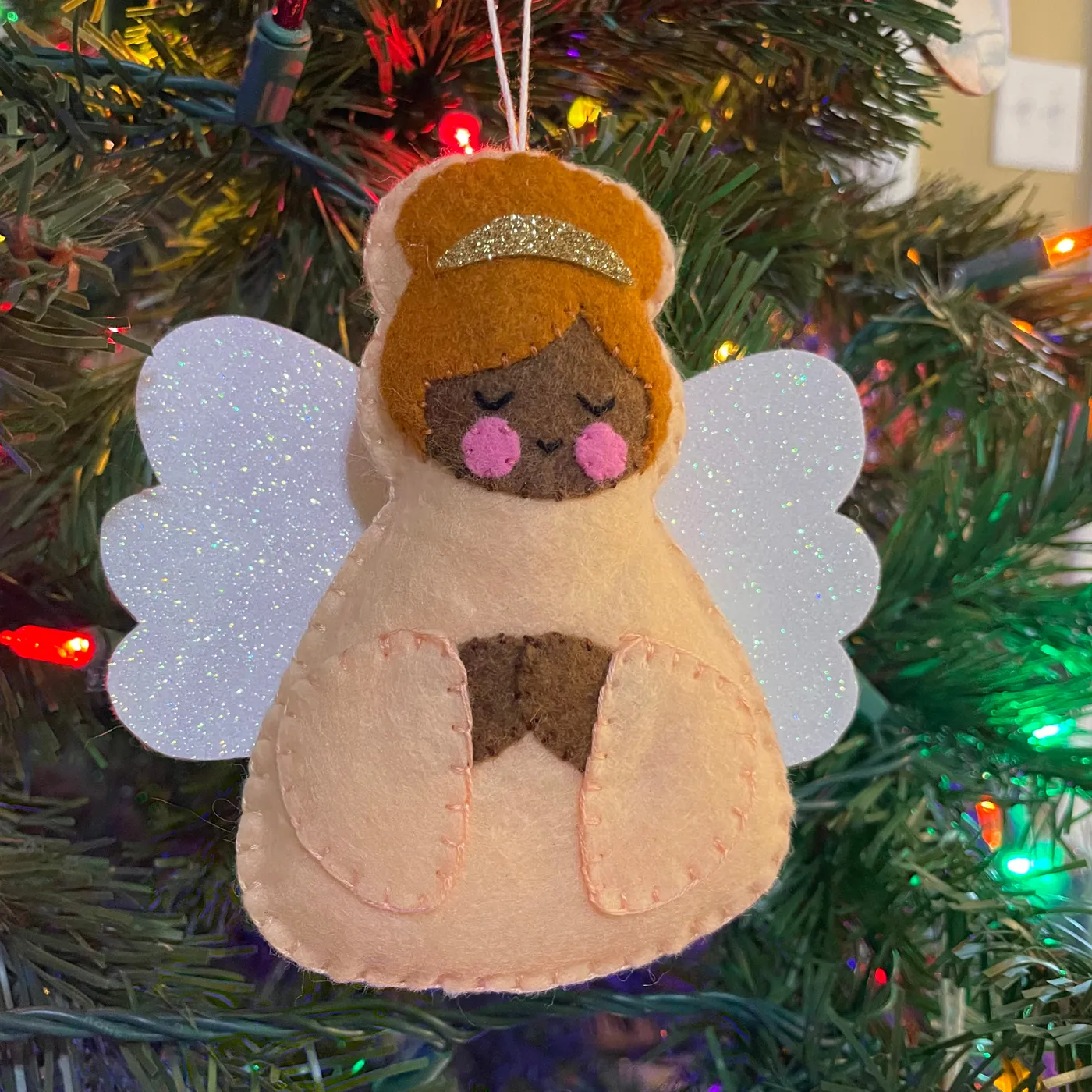
24. Felt Angel With Glittery Wings and a Gold Halo
Glitter wings look better when they’re the only sparkle on the ornament. On this felt angel, the gold halo is matte and the wings carry all the shine — that contrast is why it reads as handmade rather than store-bought. Use glitter felt for wings and plain wool felt for the body, and never glitter the face. A whole glittery angel just looks like a disco ball.
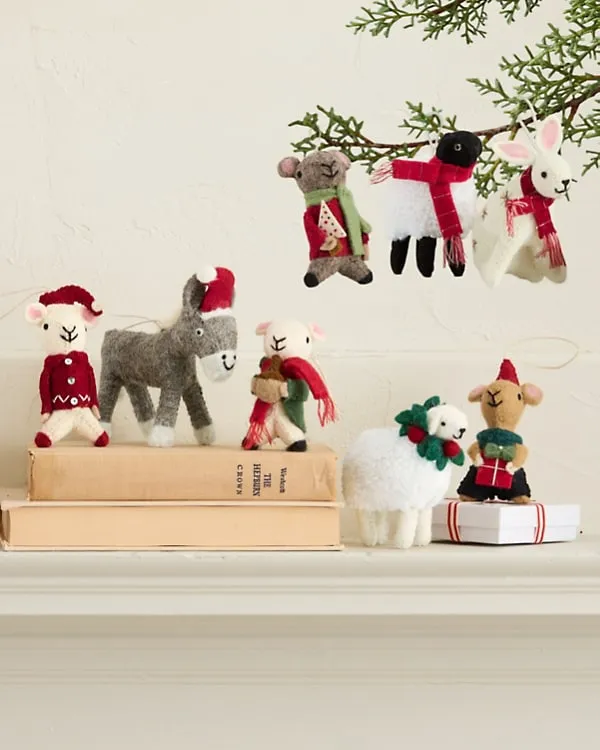
25. A Mantel Menagerie of Felt Animals and Vintage Books
Grouping felt animals on a mantel instead of hanging them all works because it turns ornaments into a collection. Stacking a few on vintage books gives you varying heights, and evergreen boughs overhead tie the group to the rest of the room. The scarves are the unifying thread — same crimson and forest green running through every figure, no matter how different the animals are.
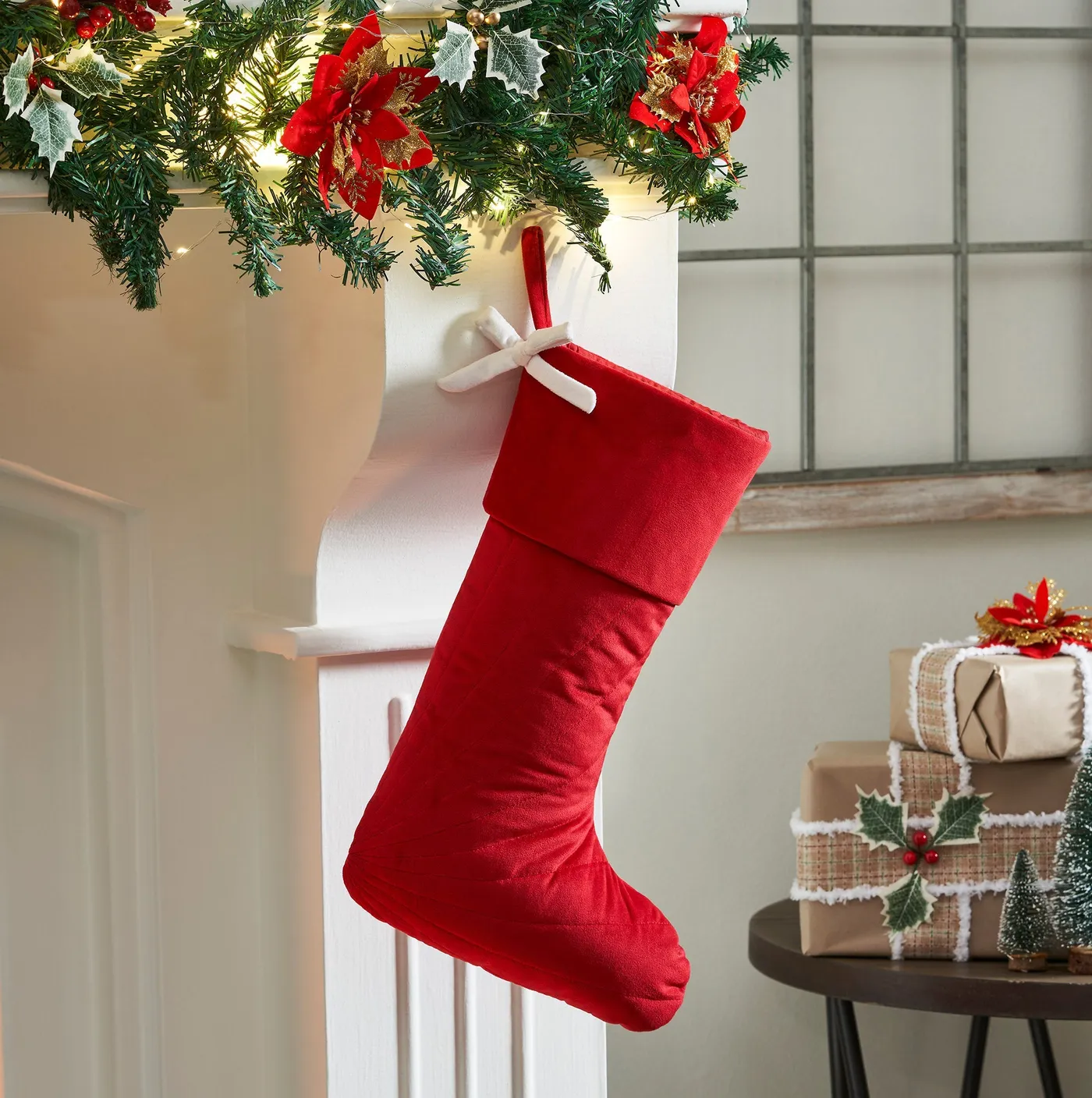
26. Bright Red Quilted Stocking on a Poinsettia Mantel
Bright red quilted fabric shows everything: dust, garland sap, the faint gray smudge where hands grab the cuff every morning. Budget for one dry clean after the season ($15–$25) or wash cold and air-dry flat — never a dryer. Poinsettias nearby will drop on it, so shake the stocking out weekly. A printed fabric hides the same wear with a third of the fuss.
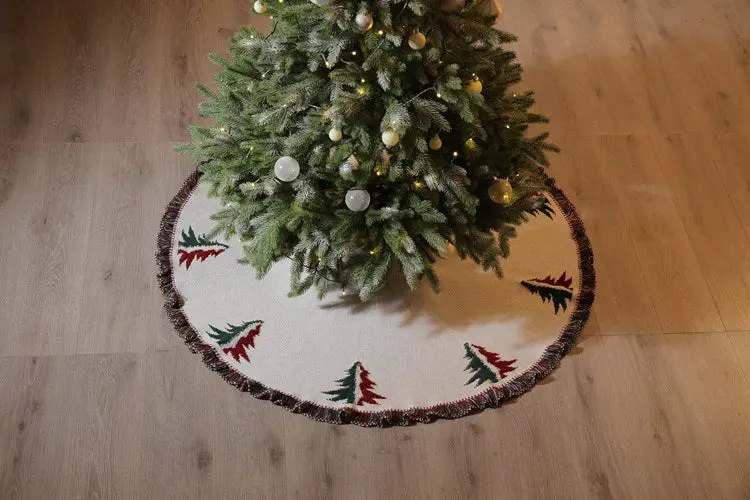
27. Round Woven Tree Skirt With Fringed Pine Motifs
Woven and fringed tree skirts shed. Expect loose fibers on the floor for the first couple of weeks, and expect fringe to tangle with any gift ribbon stored underneath. A lint roller handles most of it, but this is not the skirt for a house where everything lives on the floor. A flat quilted skirt gets you a similar warm look and vacuums in seconds.
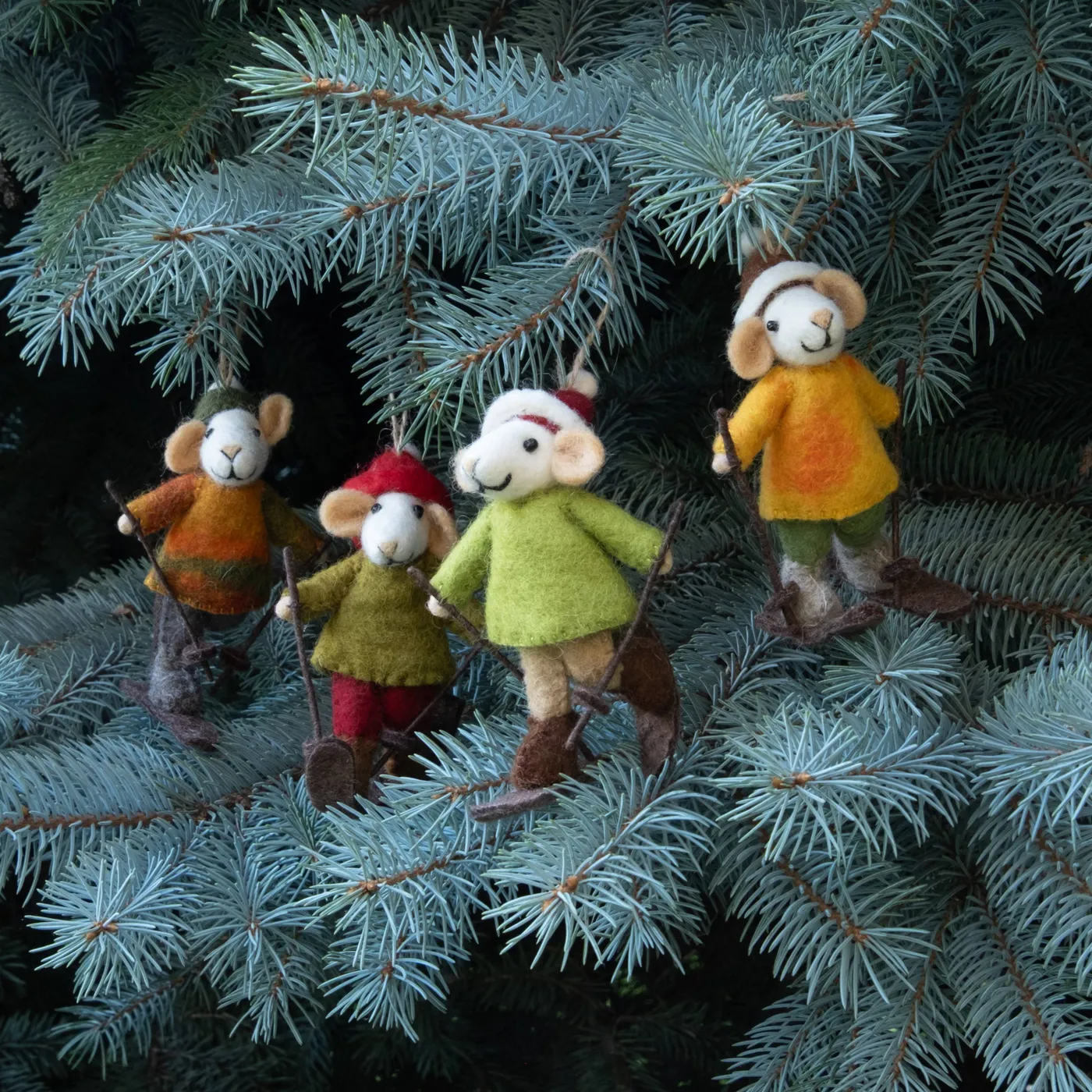
28. Felt Ski Mice in Wool Sweaters and Hats
Ski-mouse ornaments suit trees 6 feet and taller; on anything smaller, the skis overlap the branches below and the whole scene turns into a tangle. They need a spruce or fir with horizontal branch structure so the poles can sit clear. If your tree is 4 to 5 feet, hang just two near the outer edges rather than spreading them through the middle.
29. Brown Felt Deer With White Spots and Slim Antlers
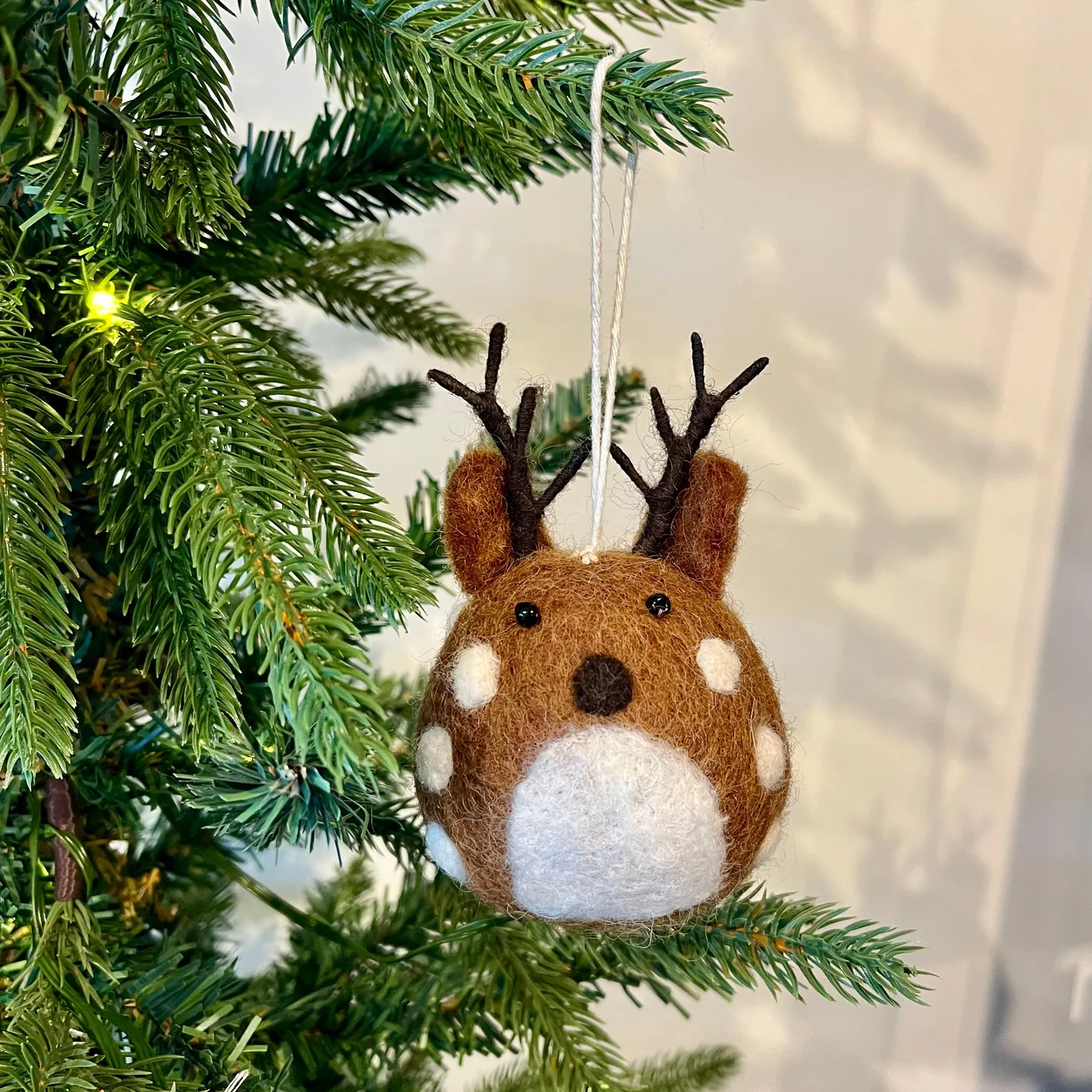
Spots are what separate a felt deer that looks like a deer from one that looks like a brown blob. Cut white circles in three sizes — ½ inch, ⅜ inch, ¼ inch — and place the largest along the spine, shrinking toward the legs. And cut the dark antlers slightly thinner than feels right, or the head gets heavy and tips forward off the branch.
30. Felted Reindeer With One Very Red Nose
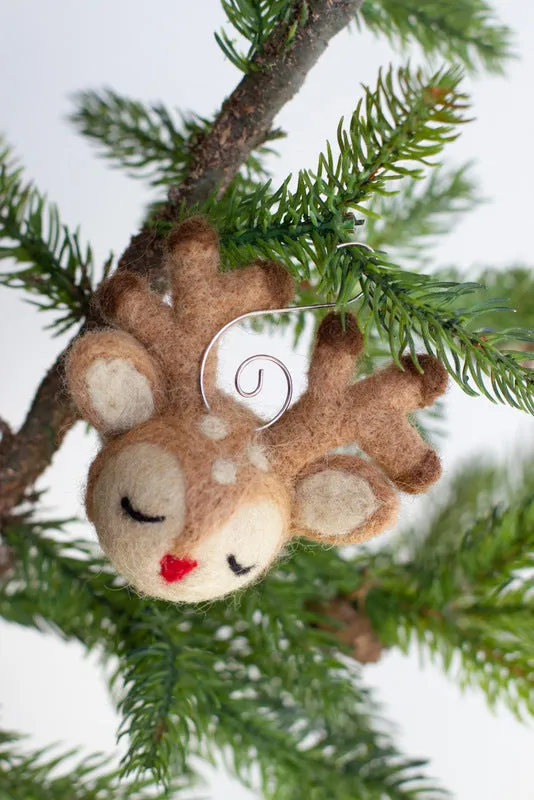
The nose. Everything on this reindeer is brown, tan, and green — soft, low-contrast, easy on the eye — and then there’s one saturated red dot in the middle of the face. It’s the only bright note in the whole ornament, which is exactly why you notice the closed embroidered eyes and the antler texture. Take the nose away and you have a lovely, forgettable reindeer.
31. Blanket-Stitched Reindeer With a Snowflake Scarf
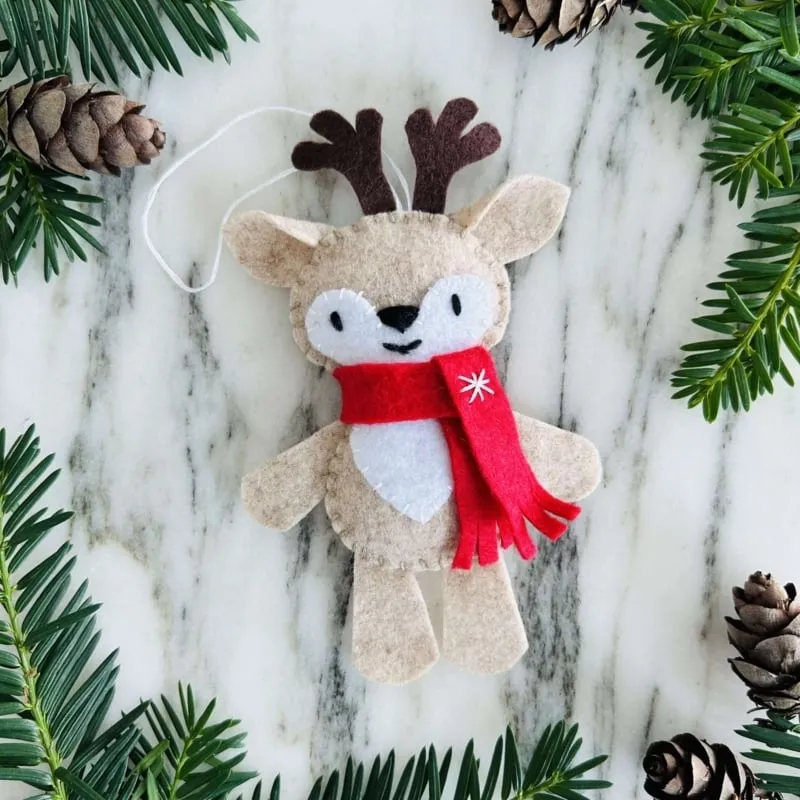
Blanket stitching along the outline is the rare detail that’s both decorative and structural. The visible stitches tell you it’s handmade, and they also reinforce the seam so the stuffing stays put through years of packing and unpacking. Set on white marble with real pinecones, the beige-and-brown palette stays calm while the red scarf does the festive work.
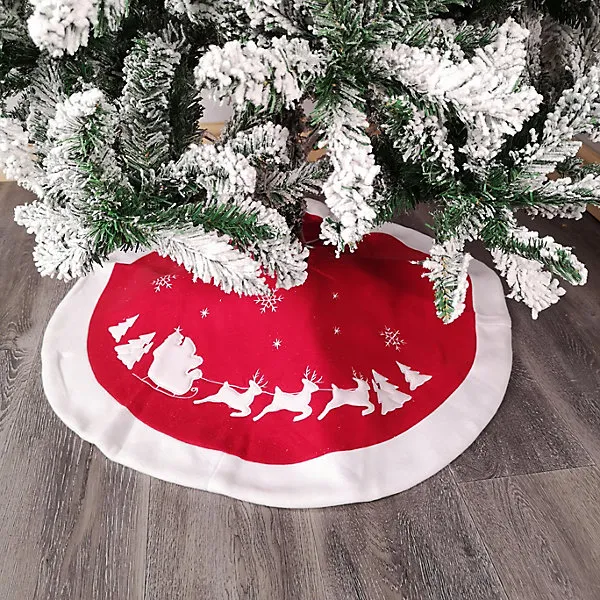
32. Red Tree Skirt With White Sleigh and Reindeer Silhouettes
The recipe: 60% red base + 25% white appliqué border + 10% silhouette motifs + 5% stitched snowflakes. Nothing here is a new color — it’s the same red-and-white pairing repeated at different scales, which is why it reads clean instead of busy. Swap red for forest green and white for cream and the formula still holds. What you can’t swap is the wide border; it frames the silhouettes.
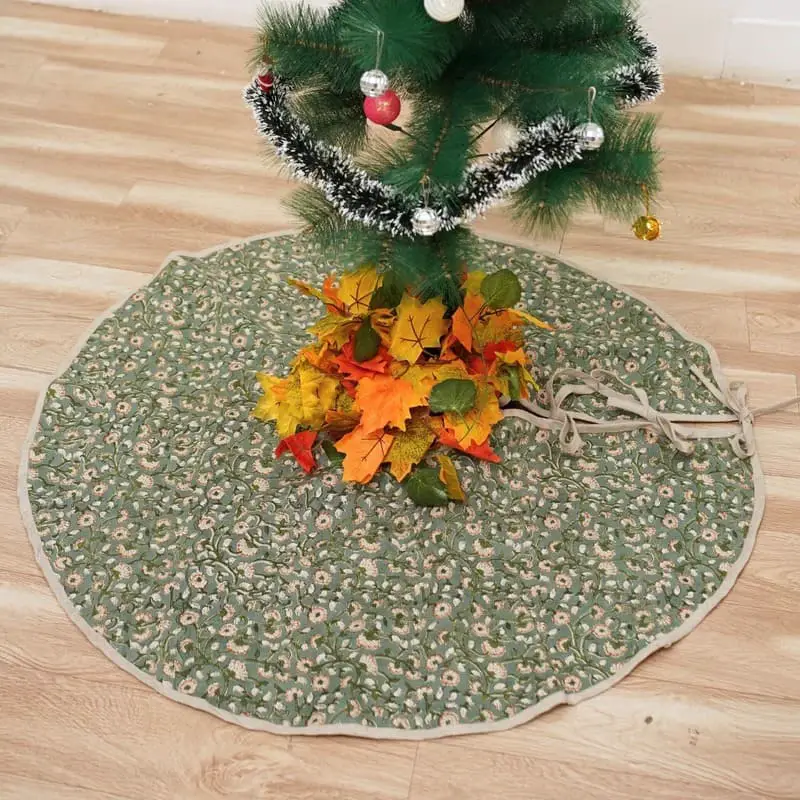
33. Sage Green Quilted Tree Skirt With Fabric Ties
A quilted skirt with fabric ties is the easiest of the bunch to live with, mostly because ties beat Velcro and elastic every time. Wash it cold on a gentle cycle twice a season and air-dry flat — quilted cotton takes it fine. The muted sage and beige palette also hides pine sap and dust better than red or white, which is worth something by the third week of December.
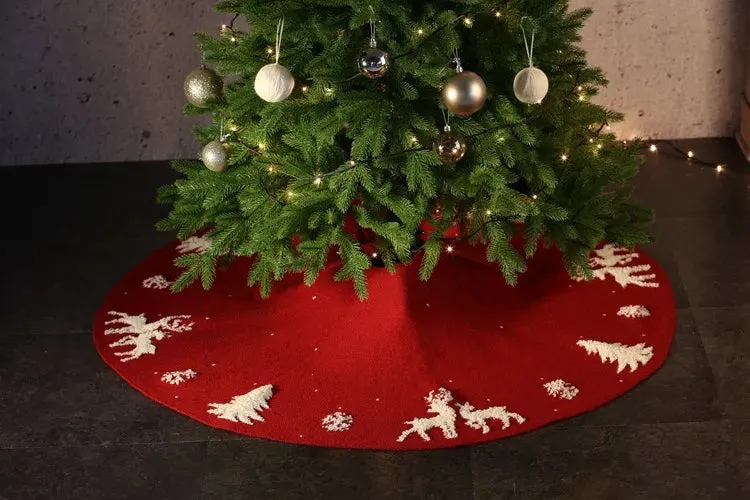
34. Red Skirt With White Embroidered Reindeer and Pines
White embroidered motifs on red fabric look expensive and cost almost nothing if you use iron-on transfer patterns. A transfer pen and a pack of white floss runs about $12, and you trace reindeer, pines, and snowflakes straight onto the fabric — no embroidery machine required. A plain red cotton skirt runs $15–$25, and a weekend of stitching gets you the rest of the way.
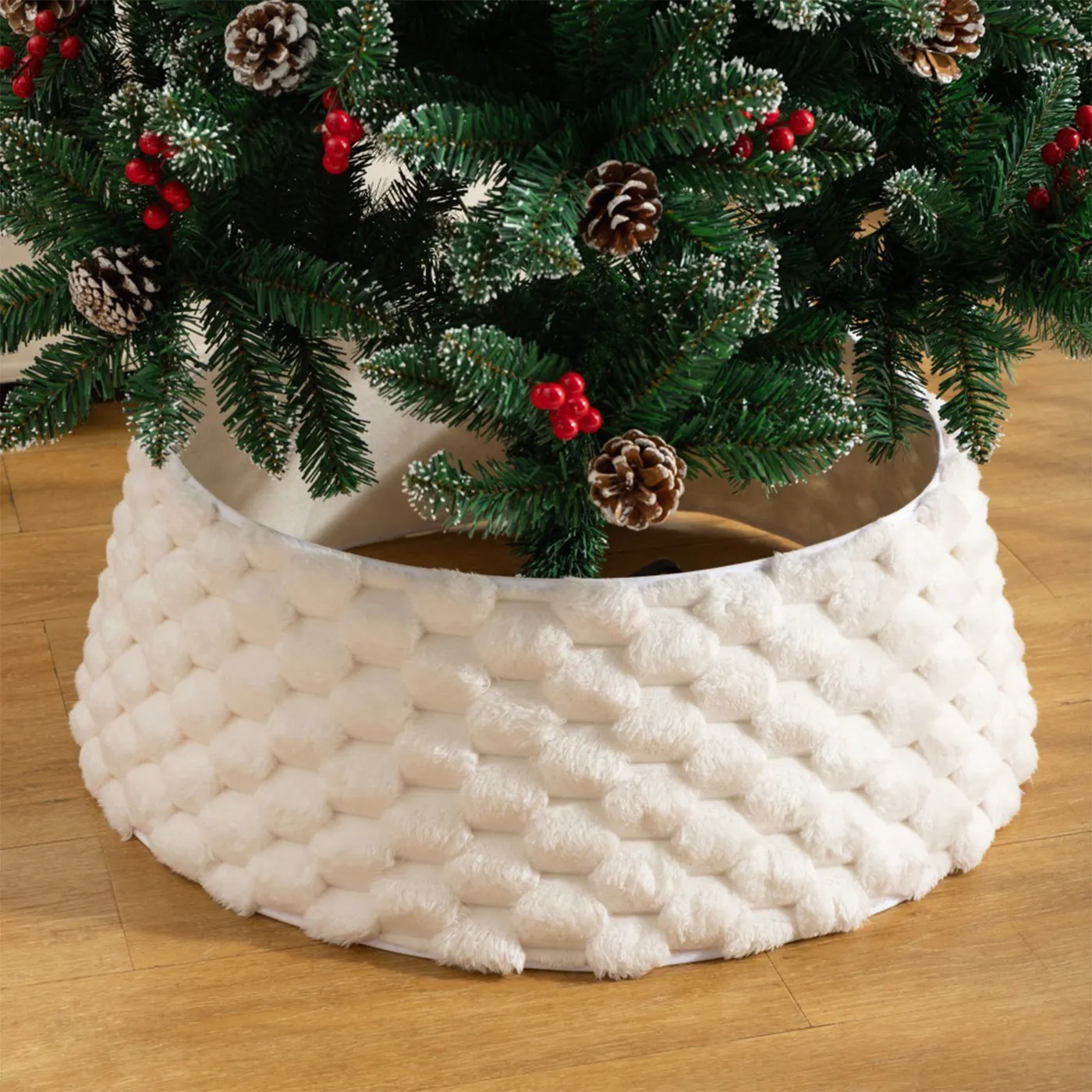
35. White Pom-Pom Tree Collar Under Frosted Branches
Pom-pom tree collars took off because they solve a real problem: nobody wants to look at a metal tree stand. Texture is the 2026 shorthand for cozy, and a collar of dense off-white pom-poms reads warm from across the room while hiding cords and the water reservoir. It’s also the most forgiving trend in this article — nothing to stain, nothing to iron.
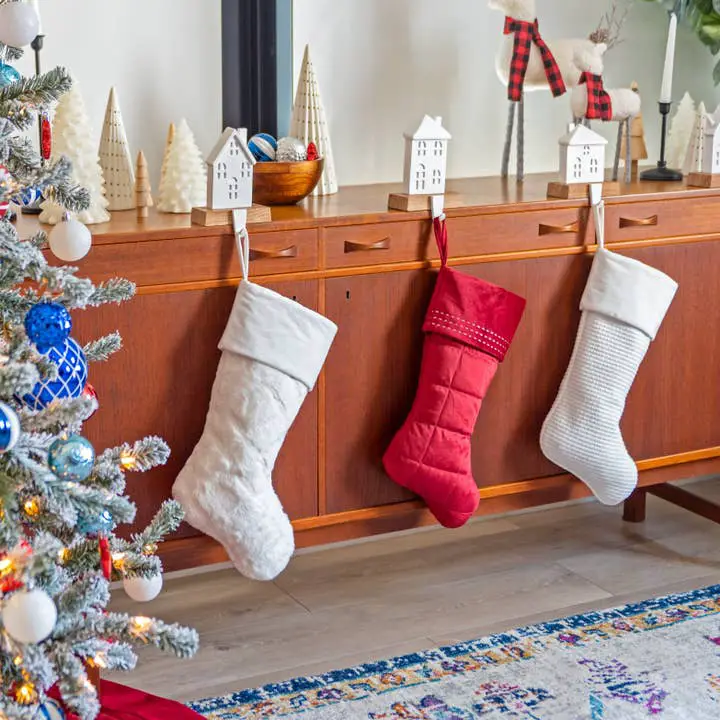
36. Three Stockings on a Mid-Century Credenza
Hang stockings so the cuff sits at least 4 inches below the top of the credenza or mantel edge — any higher and they float. On a mid-century credenza, three stockings spaced 10 to 12 inches apart, centered under the artwork or tree, look intentional; four or more start to look like a retail display. Match the stockings to the ornaments, not the room.
Your Sewn Christmas Starts With One Small Square
Start with a single ornament — a felt mouse, a mini embroidered hoop, one patchwork square — and let the rest of the season build around it. Homemade holiday décor rewards patience, and nobody notices the uneven stitches except you.
📌 Pin your favorites now so you can find them again when the fabric store sales hit in October.