
Ceramic Christmas trees are having a major moment on Pinterest right now — and not just the dusty ones your grandmother unwrapped every December. We spent weeks browsing Etsy, Anthropologie, Wayfair, Target, and Amazon to bring you only what’s worth your attention, from $18 starter trees to $240 hand-glazed statement pieces.
Inside you’ll find 38 curated ideas covering vintage mid-century light-ups, farmhouse white ceramic, modern ribbed minimalism, and full-on retro disco styling — with budget and luxury versions compared side by side, plus direct product links for every single one.
Part of why these trees feel so current in 2026 is the wider shift toward nostalgic holiday decor that doubles as year-round shelf styling: small, sculptural, and easy to live with in a rental or a compact apartment.
Pin this guide for later — your future self will thank you when it’s time to actually shop.
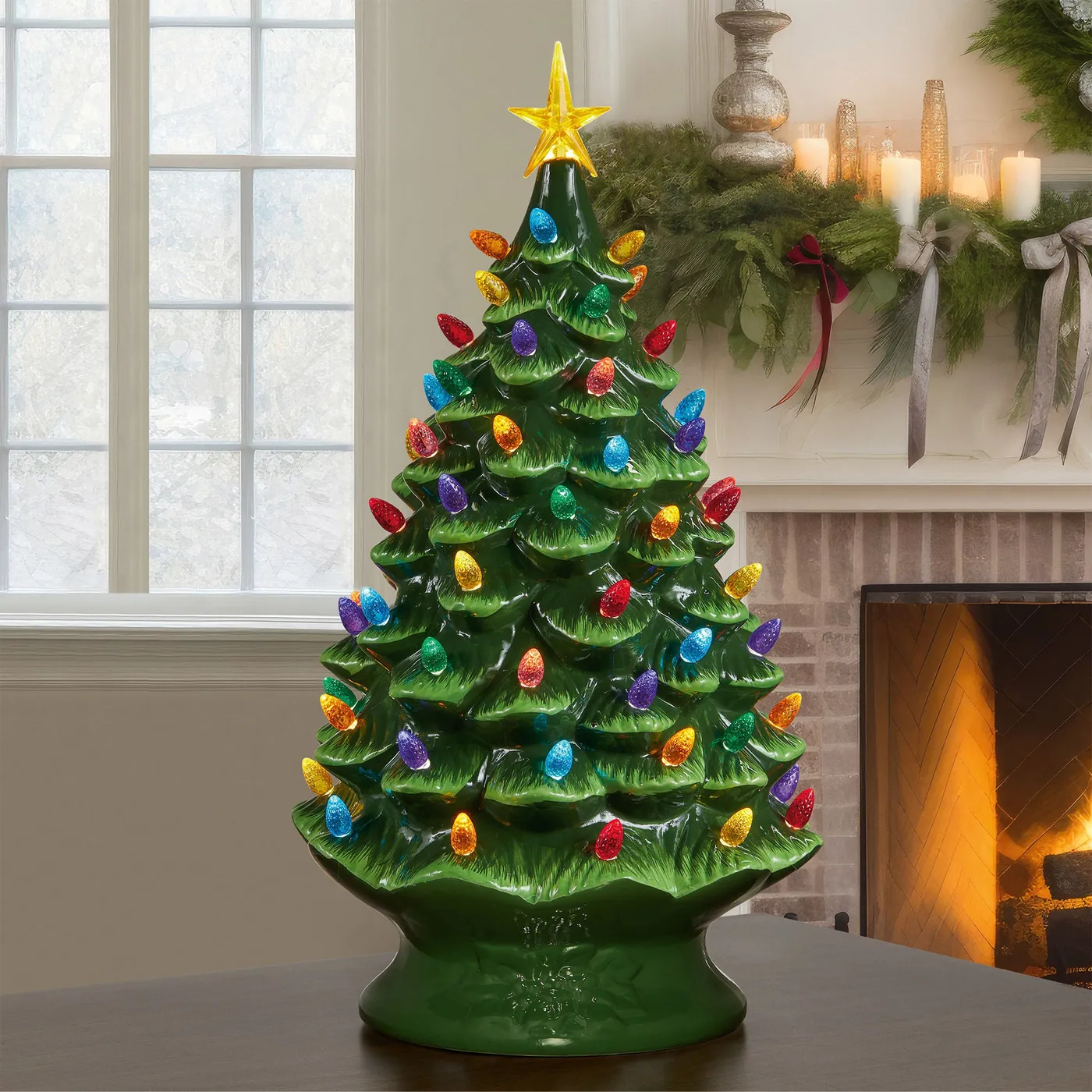
1. The Glossy Green Tree That Sits With the Firelight
What sells this corner is the glow hierarchy: the tree’s multicolored bulbs sit closest, the fireplace flames flicker mid-distance, and the white multi-pane window bounces it all back. The dark wood table and glossy green glaze anchor the eye so all that color never scatters.
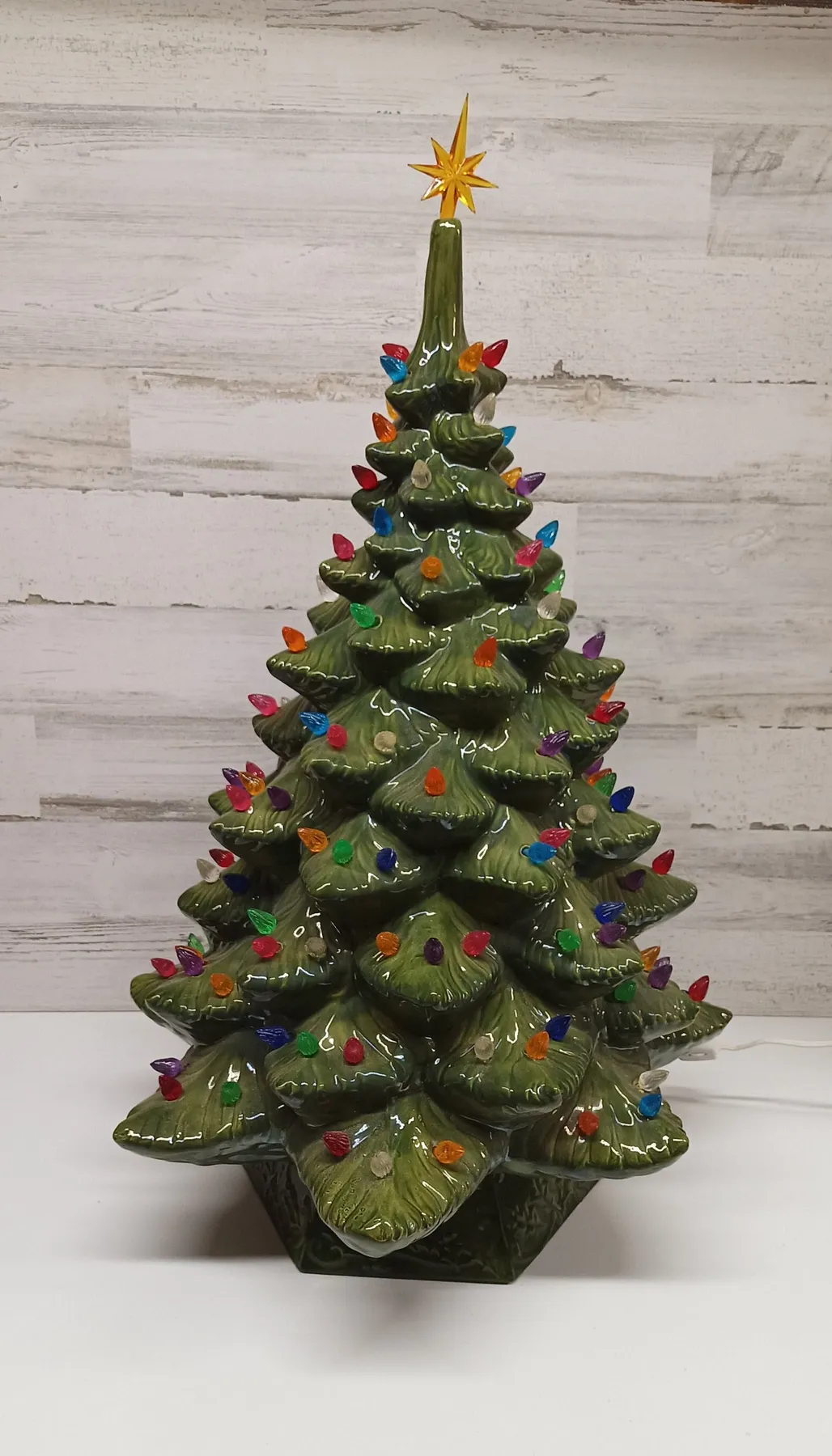
2. Reading the White Cord Before You Set the Tree Down
Before you set a plug-in ceramic tree on a white surface, check which way the cord exits. Here it trails right, so the tree sits slightly left of center. Center the tree over the outlet rather than the shelf, and you’ll never fight a visible white cord again.
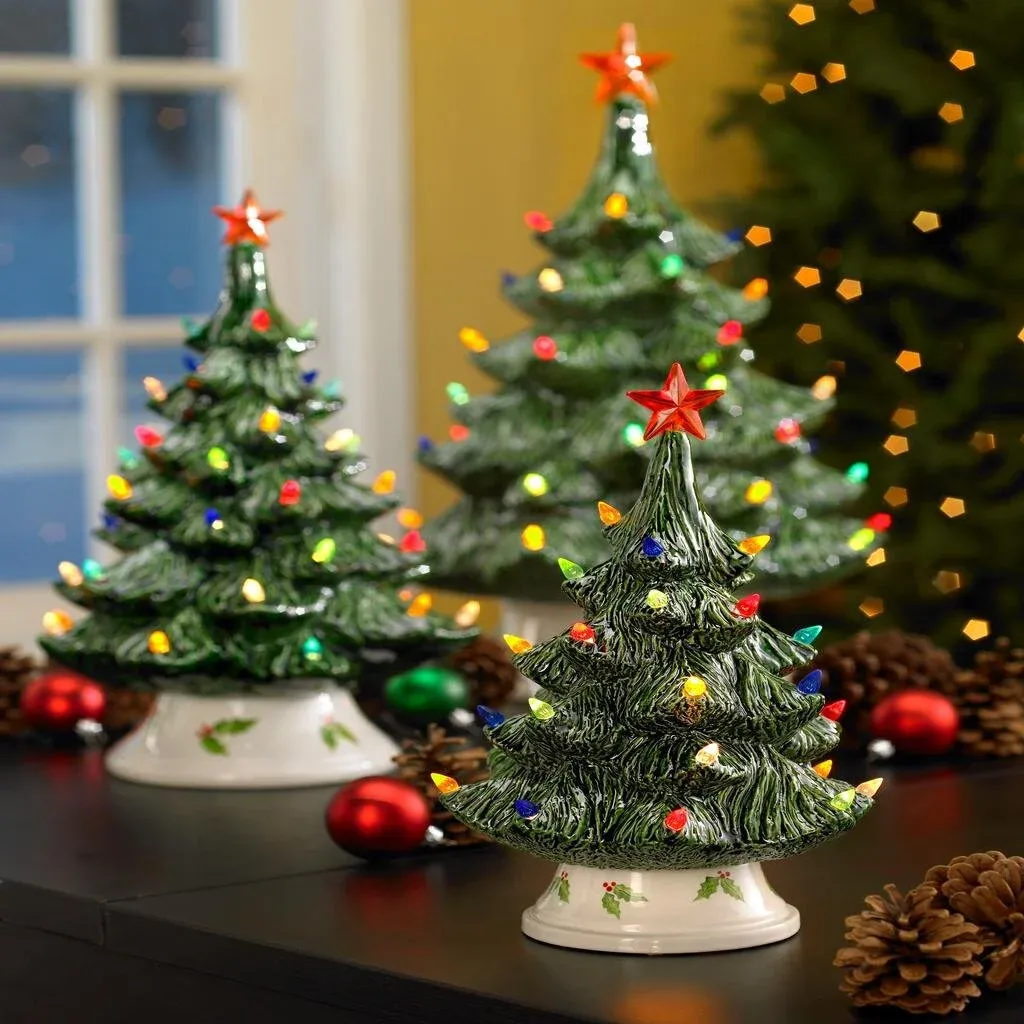
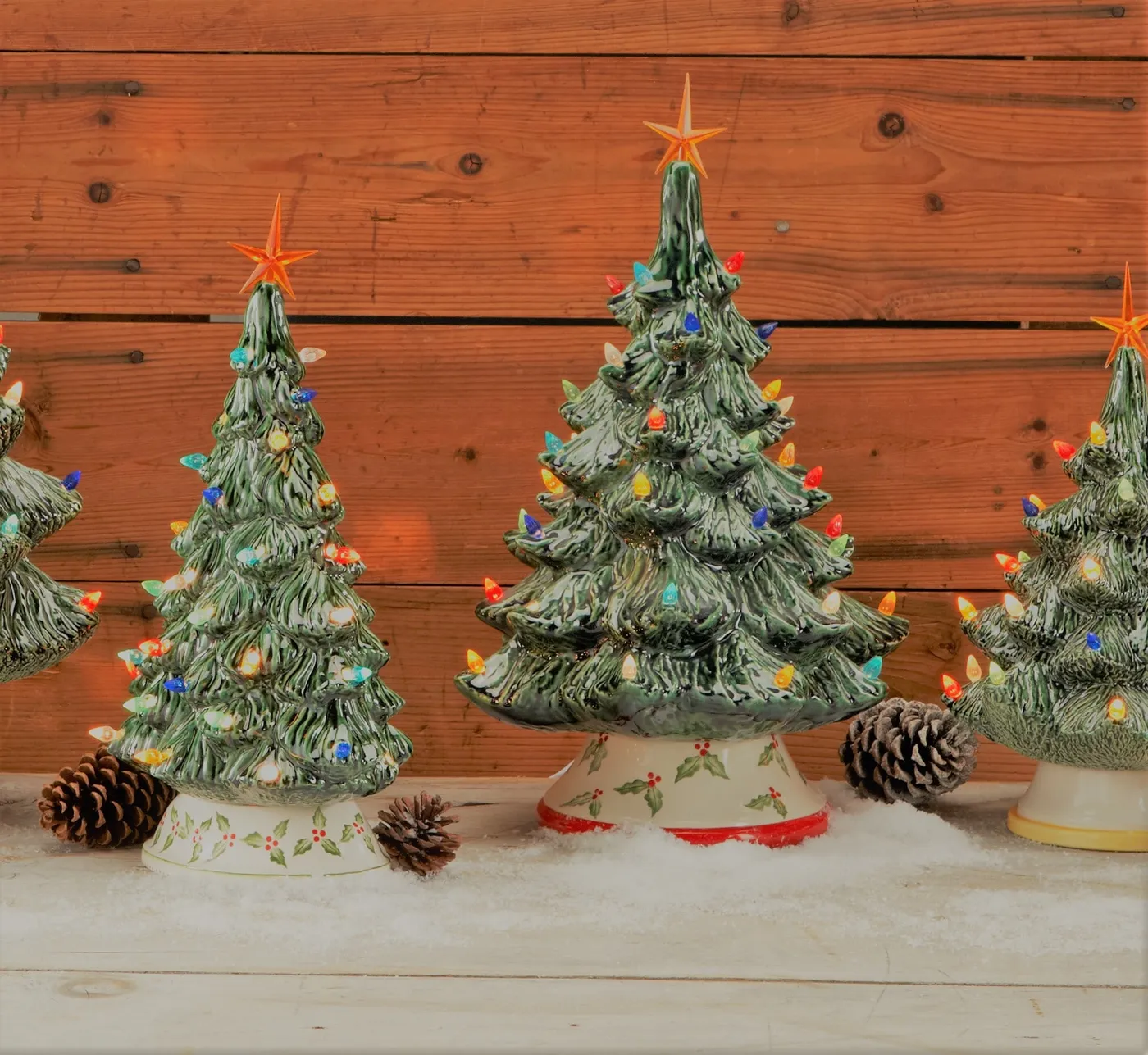
3. Three Trees, Holly Bases, and a Color Ratio You Can Steal
Read these three as a formula: 60% glossy dark green, 30% white base with holly detailing, 10% red star and berry accents. Swap the holly bases for plain white and the red stars for gold, and the same trio reads modern instead of traditional.
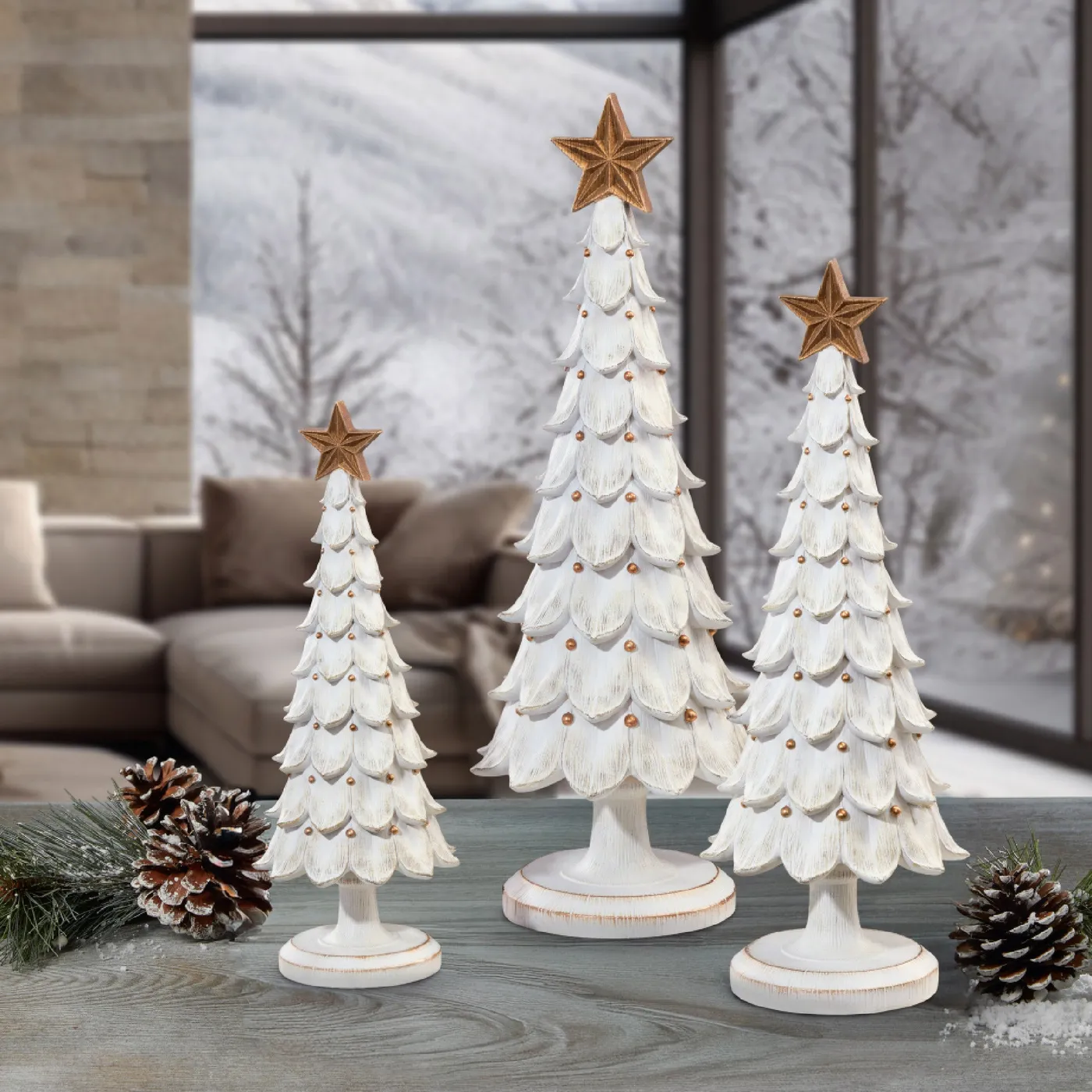
4. Tiered White Trees With Copper Beads and Faux Snow
Tiered white trees with metallic star toppers are the quieter side of the ceramic revival — Scandinavian winter rather than full-color nostalgia. The copper bead accents and pinecones dusted with faux snow keep it from reading sterile, which is why this version keeps surfacing on mood boards.
5. What to Check Before You Buy a Vintage Dolomite Tree
Vintage white dolomite trees are the ones most likely to arrive with problems: chipped branch tips, brittle wiring, a socket that hums. If you’re buying secondhand, ask for a photo of the cord and the underside of the base. Rewiring a small tree runs about $40 at a local lamp shop.
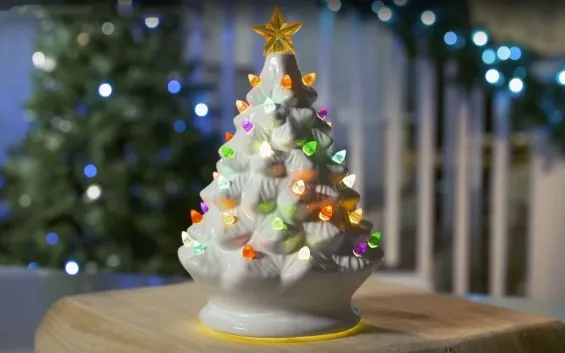
6. The Interior Glow Is the Whole Trick on a Faceted White Tree
The internal glow does all the work here. Because the bulbs sit inside the faceted ceramic, the light reads as one soft mass instead of a dozen separate points — that’s what makes this classic white tree feel warm rather than busy. Lose the interior illumination and it’s just a white object.
7. A Big White Tree, a Dark Console, and the Real Numbers
Here’s what a setup like this runs:
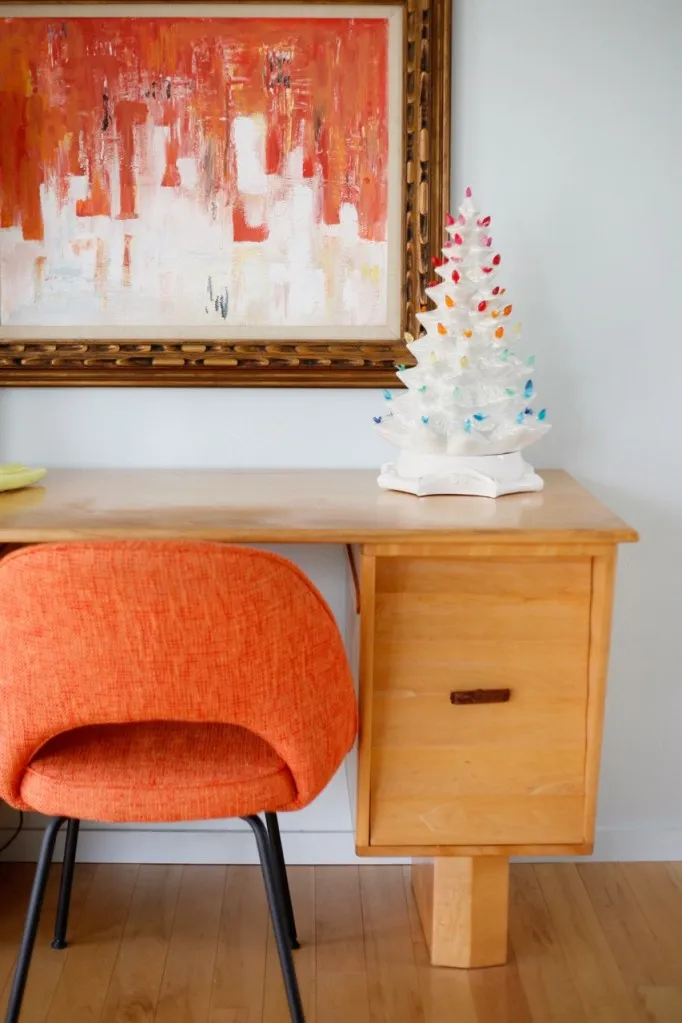
- Large white ceramic tree: $60–$140
- Dark wood console table: $120–$400
- Framed art and gold accents: $40–$120
- Replacement bulbs and pegs: $10–$20
Total: roughly $230–$680. A thrifted console and a clearance-aisle tree can land near $100.
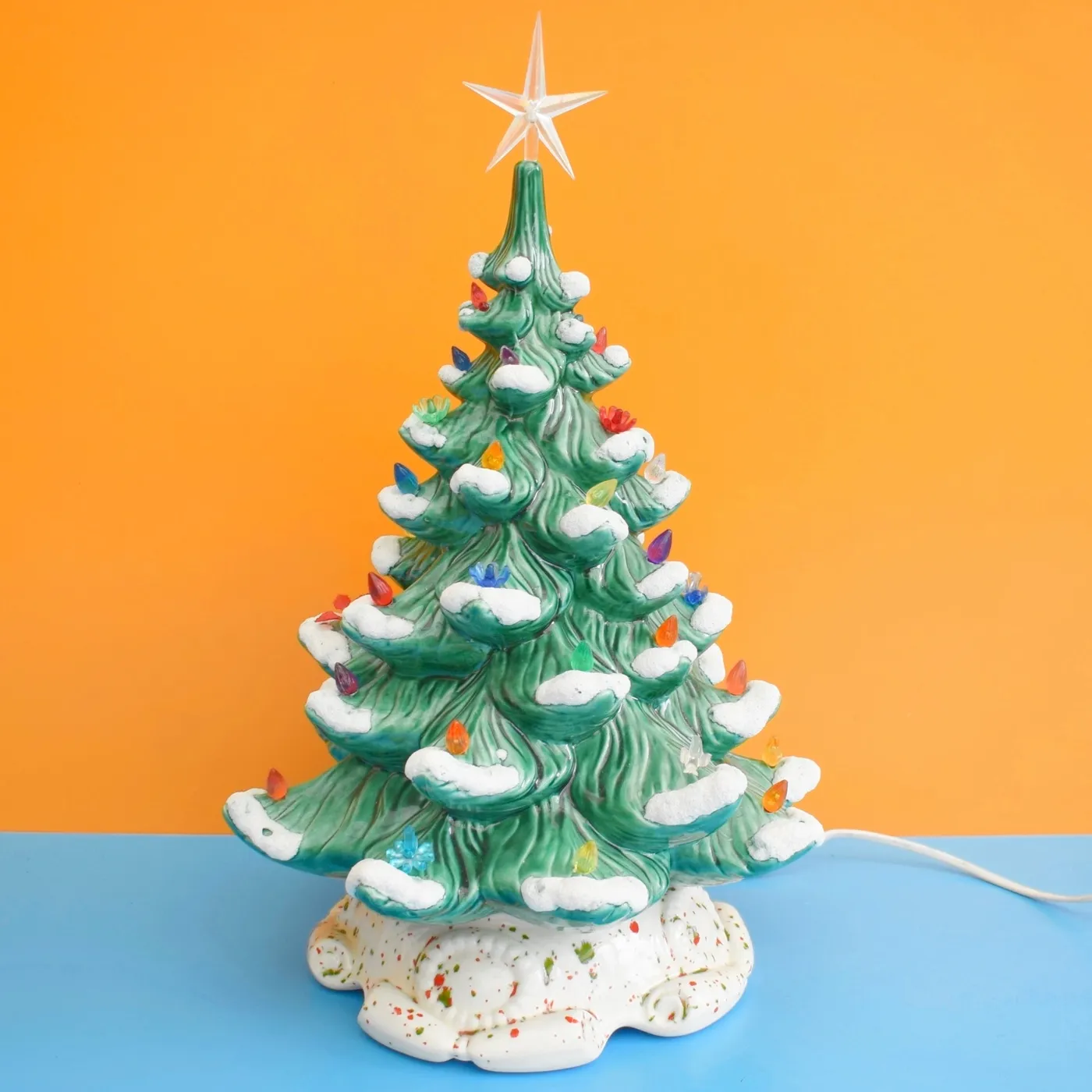
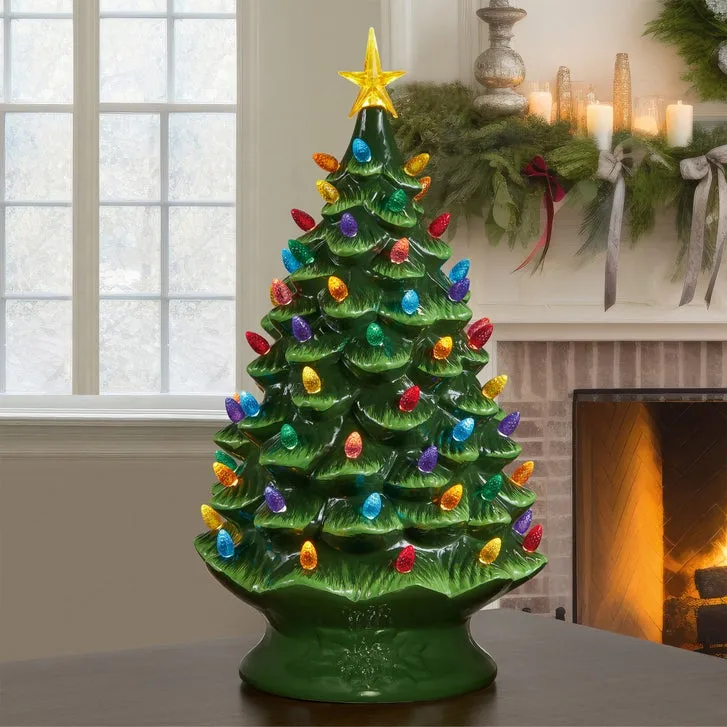
8. Green Glaze, Molded Snow, and Pegs You Can Actually Pull
Those white snow ridges on a glazed green tree are molded, not painted — so clean them with a soft toothbrush and warm water instead of a cloth that snags. Also check the pegs: most are removable, meaning you can pull the orange and purple ones for a calmer palette.
9. Sizing a White Tree for a Light Blue Wall
A tree this size wants a surface at least 4 inches deeper than its base and a wall that isn’t already busy — a light blue backdrop and one small ceramic house are enough. Smaller room, smaller tree: compare Idea #24, where a single fluted white tree carries the whole vignette.
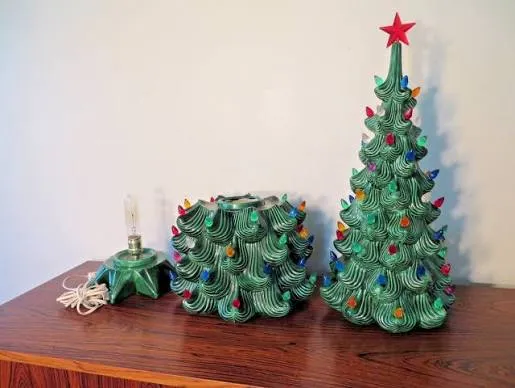
10. Green Tree, White Doily, Estate Sale Price
The doily is doing the heavy lifting and it costs almost nothing. Thrift stores sell lace doilies for $1–$3, and glossy green trees turn up at estate sales and Facebook Marketplace for $15–$40, often with a full set of pegs. Line one up on a white base and you’re under $50.
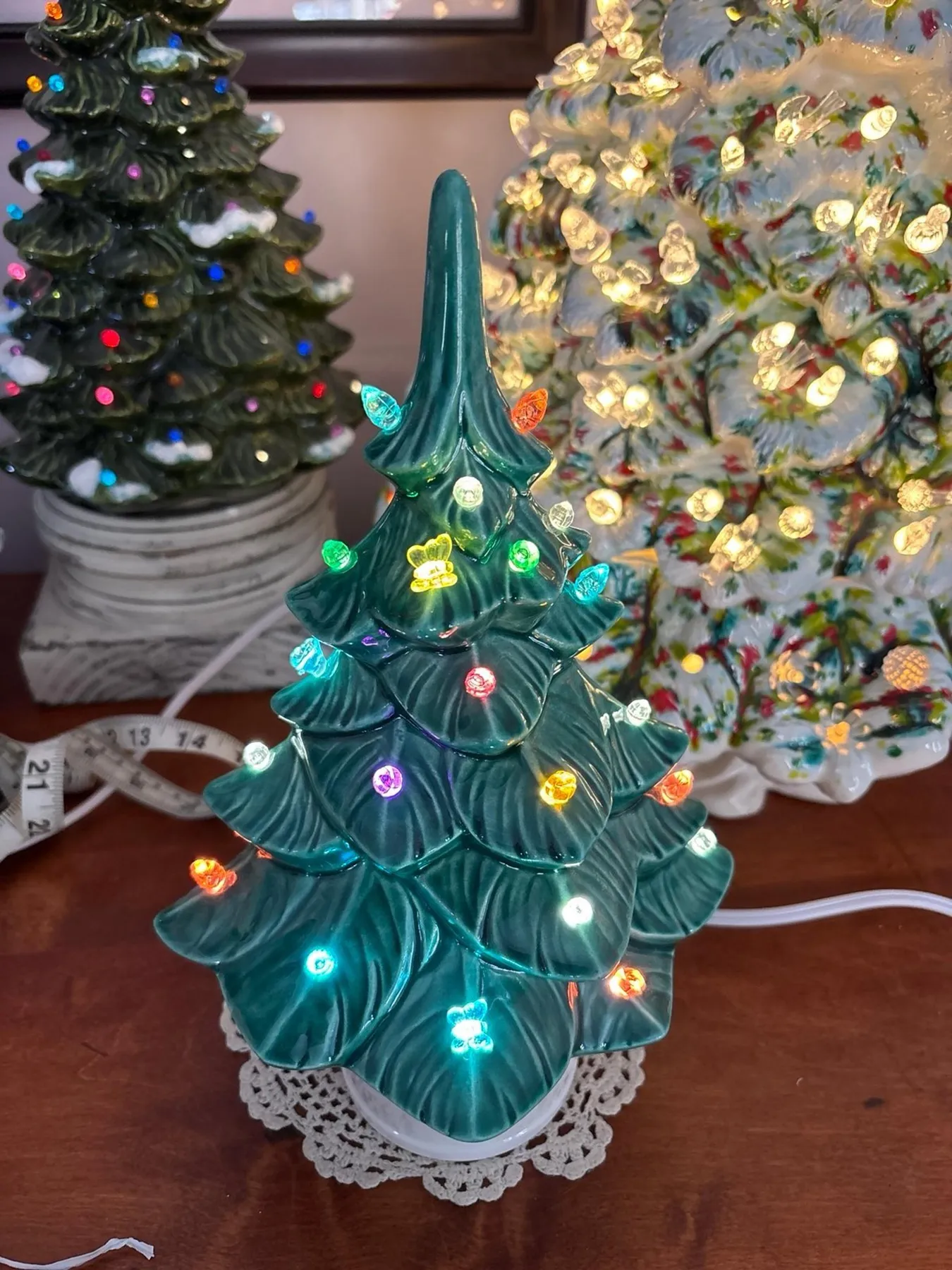
11. Red Fabric, Teal Backdrop, and the Dust They Hold
Ceramic trees are low-effort, with two caveats: the plastic pegs loosen over time, and fabric backdrops like this teal-and-red setup collect dust fast. Wiggle each peg once a season and press it back in. Wipe the tree with a dry microfiber cloth — water can creep into the socket at the base.
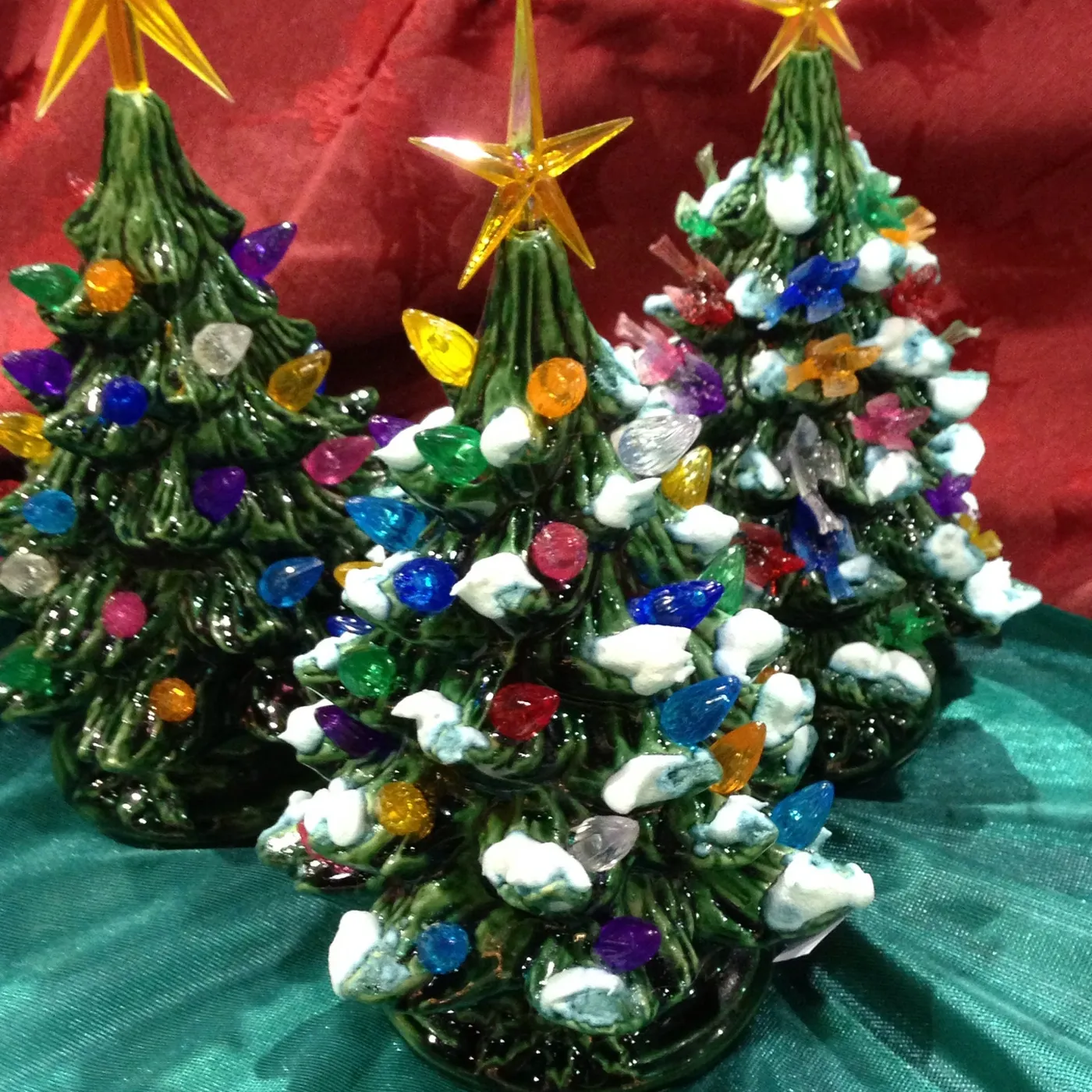
12. The Disco Ball That Turns a Cabinet Into a Stage
The disco ball. It throws speckled light across the wall and turns a mustard cabinet into a stage. Remove it and the dark green tree is just a nostalgic object; with it, the corner reads playful and alive. Keep the candy garland short so the reflections stay the star.
13. Gold Edges and a Suspended Angel on a White Tree
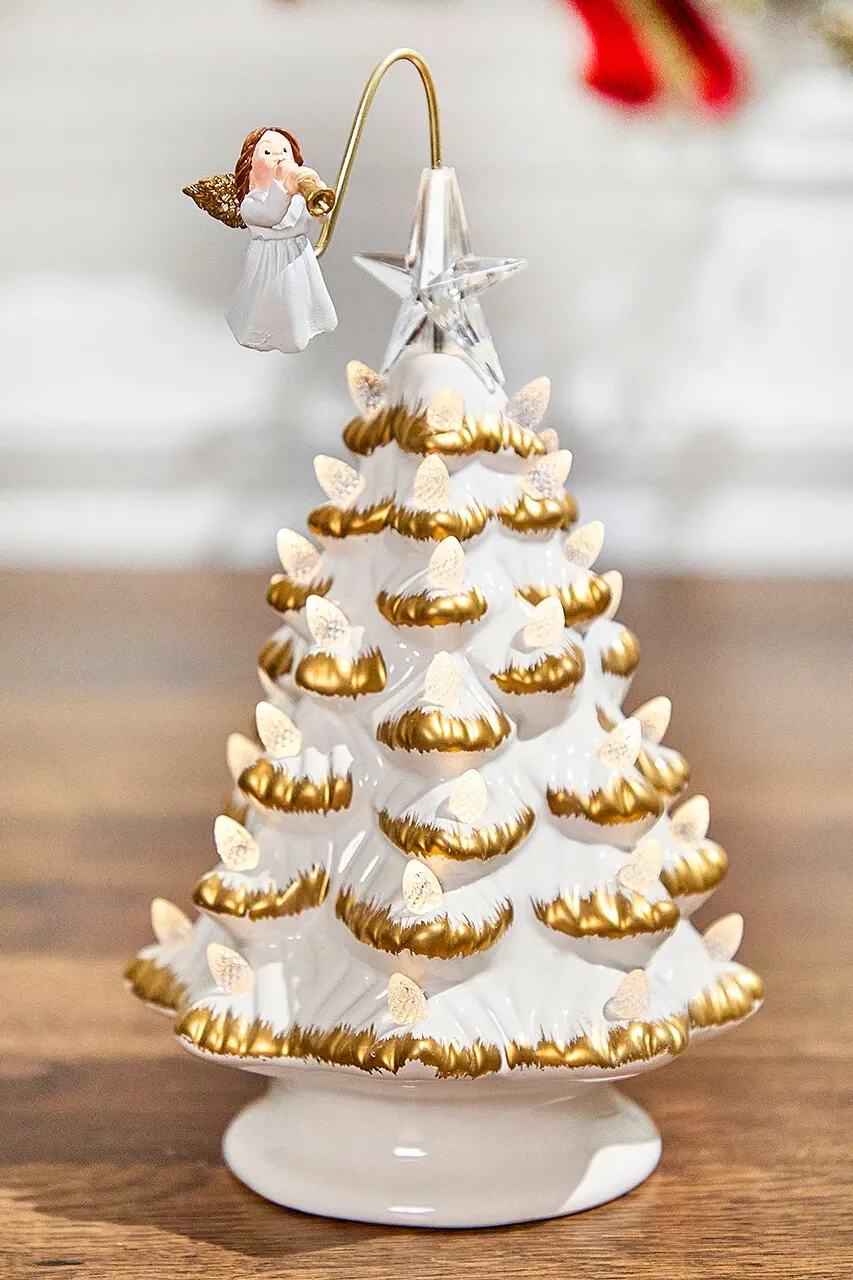
If you want gold detailing without buying a new tree, tape off the branch edges and use a fine brush with liquid gilding — about 15 minutes per side. Then hang a small ornament from the star the way this one suspends an angel on a curved gold wire; the wire nearly disappears against the glow.
14. Tiered Texture and a Clear Star Pulling the Eye Up
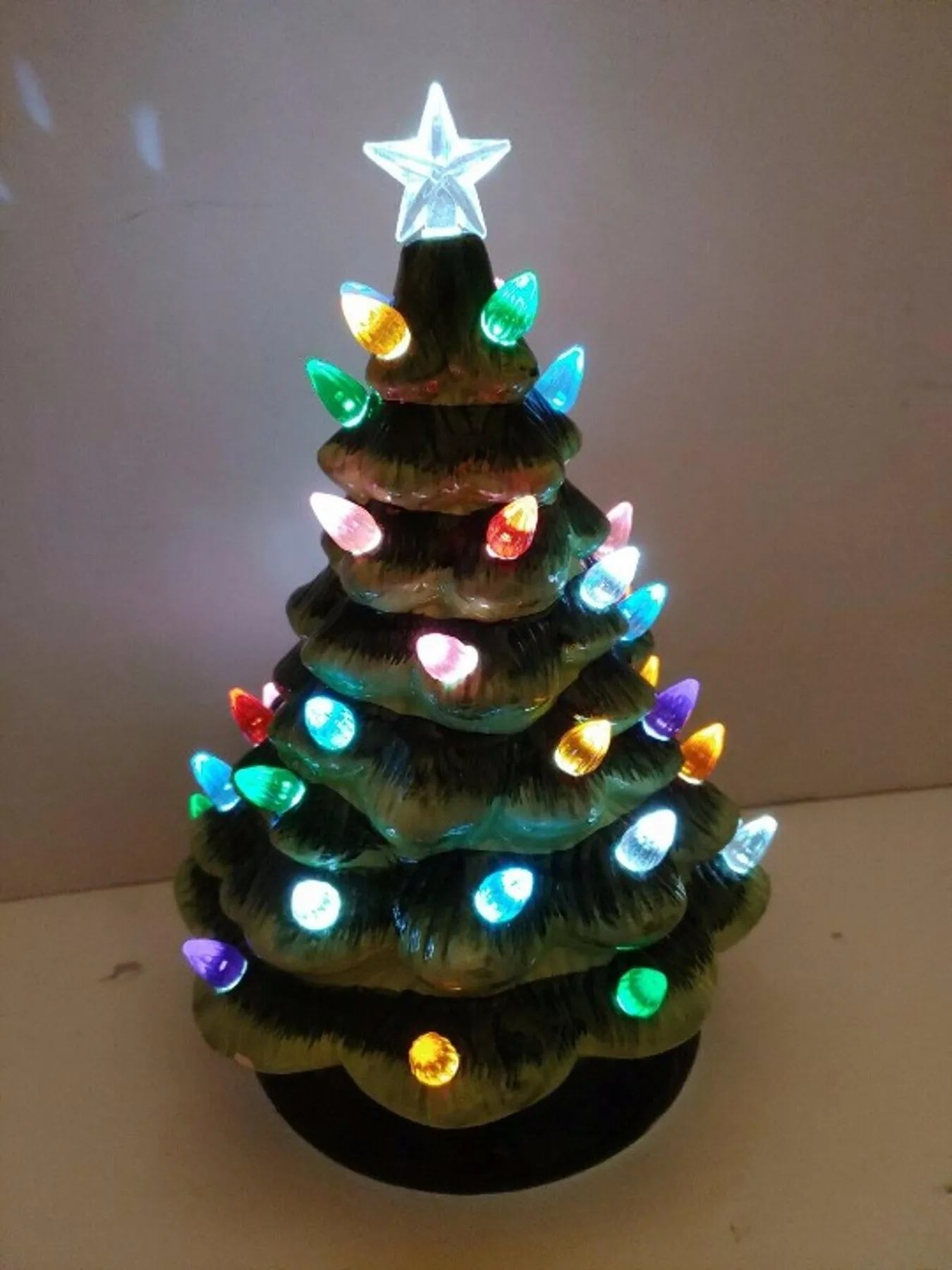
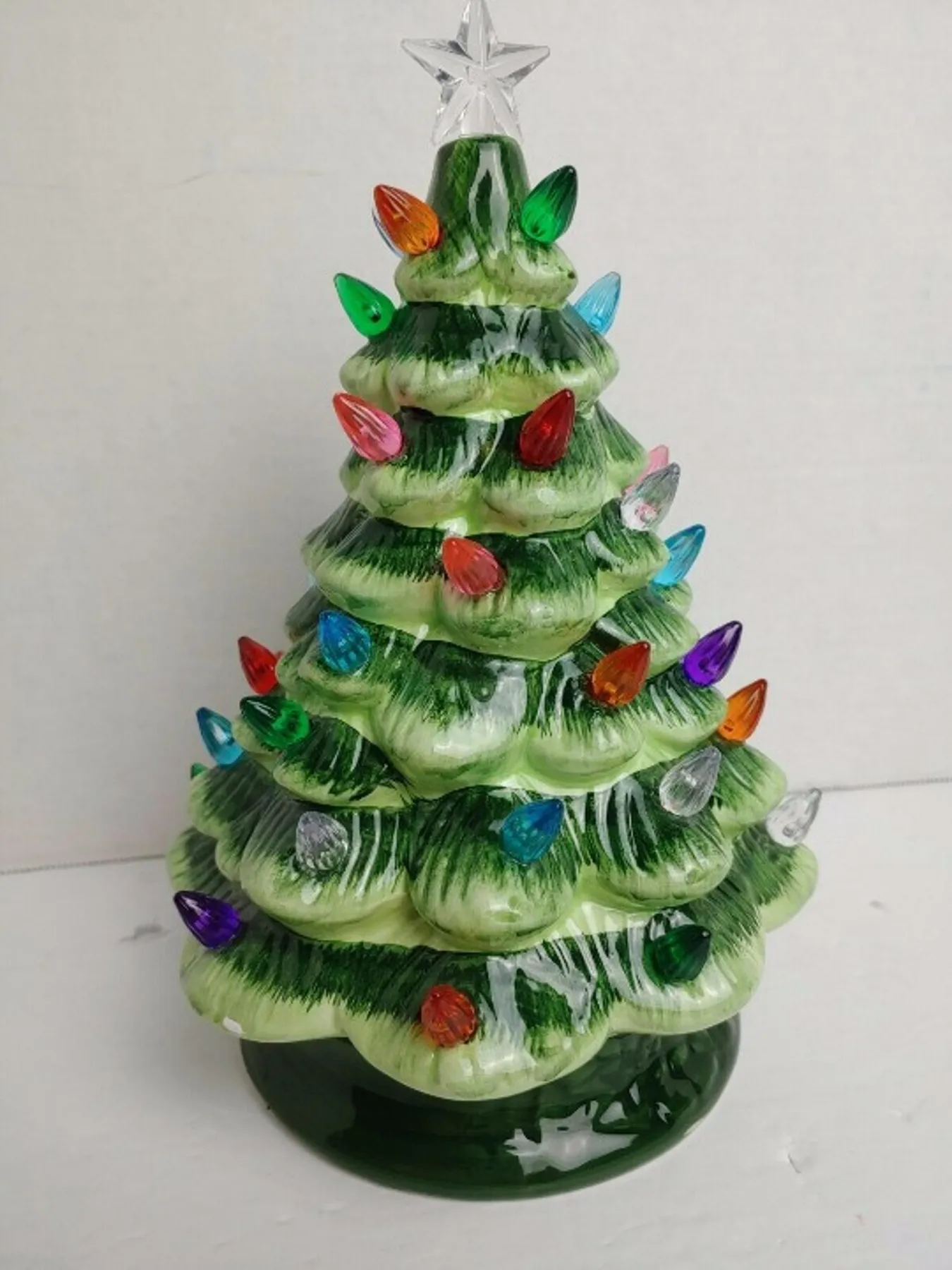
Two moves make this read as a tree rather than a lamp: the tiered, textured surface breaks up the light, and the clear star topper pulls the eye upward instead of letting it pool at the base. A dark round base keeps the whole silhouette from floating on a white table.
15. Molded Snow and a Red Star: Lovely, and Very Specific
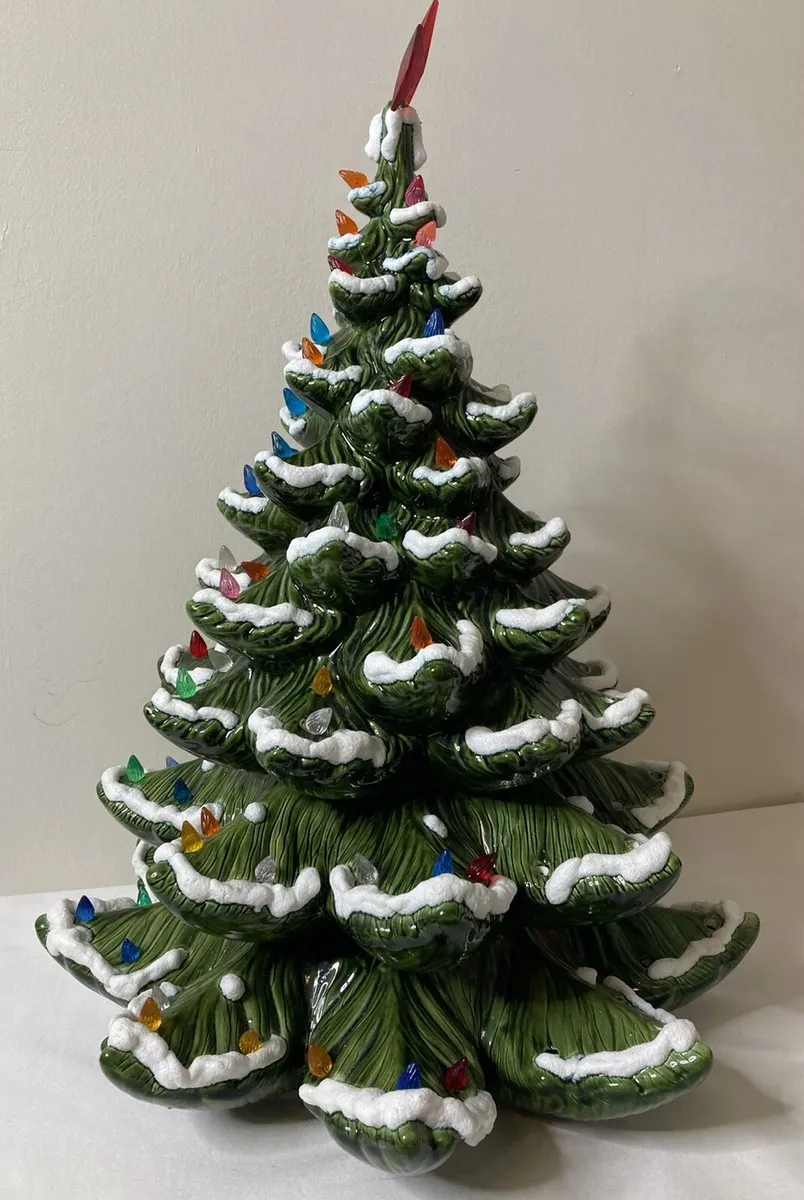
Molded snow plus a red star is a strong point of view — traditional, slightly retro. If your room leans modern, that red star will fight your palette; swap it for clear or gold and the snow suddenly reads neutral. Also check the wattage, since older trees can run warm inside the base.
16. Why Teal on an Orange-Red Pedestal Works Right Now
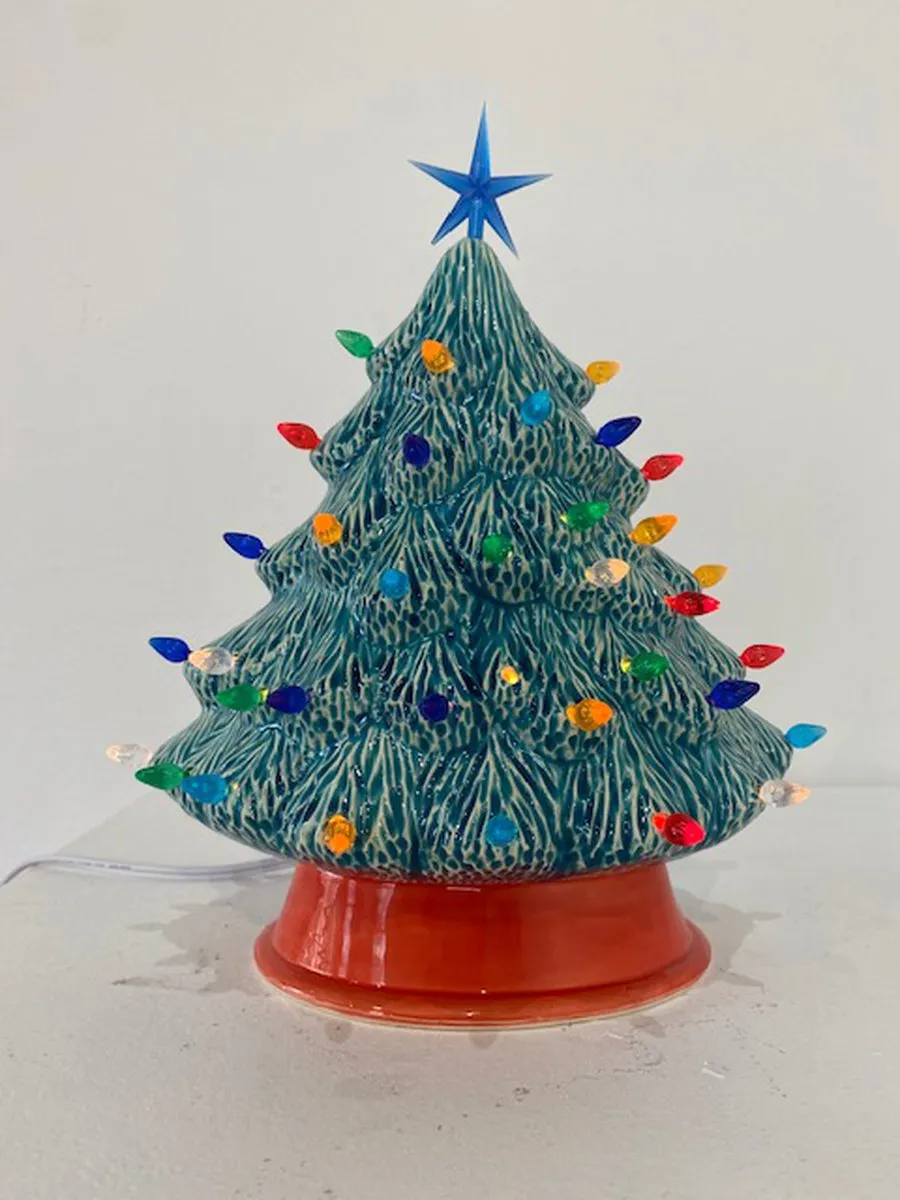
Teal is the color that made ceramic trees feel current again. Against an orange-red pedestal and a blue star topper, this one borrows straight from 1970s color blocking — which is exactly why it keeps popping up in retro-inspired holiday feeds and vintage resale listings.
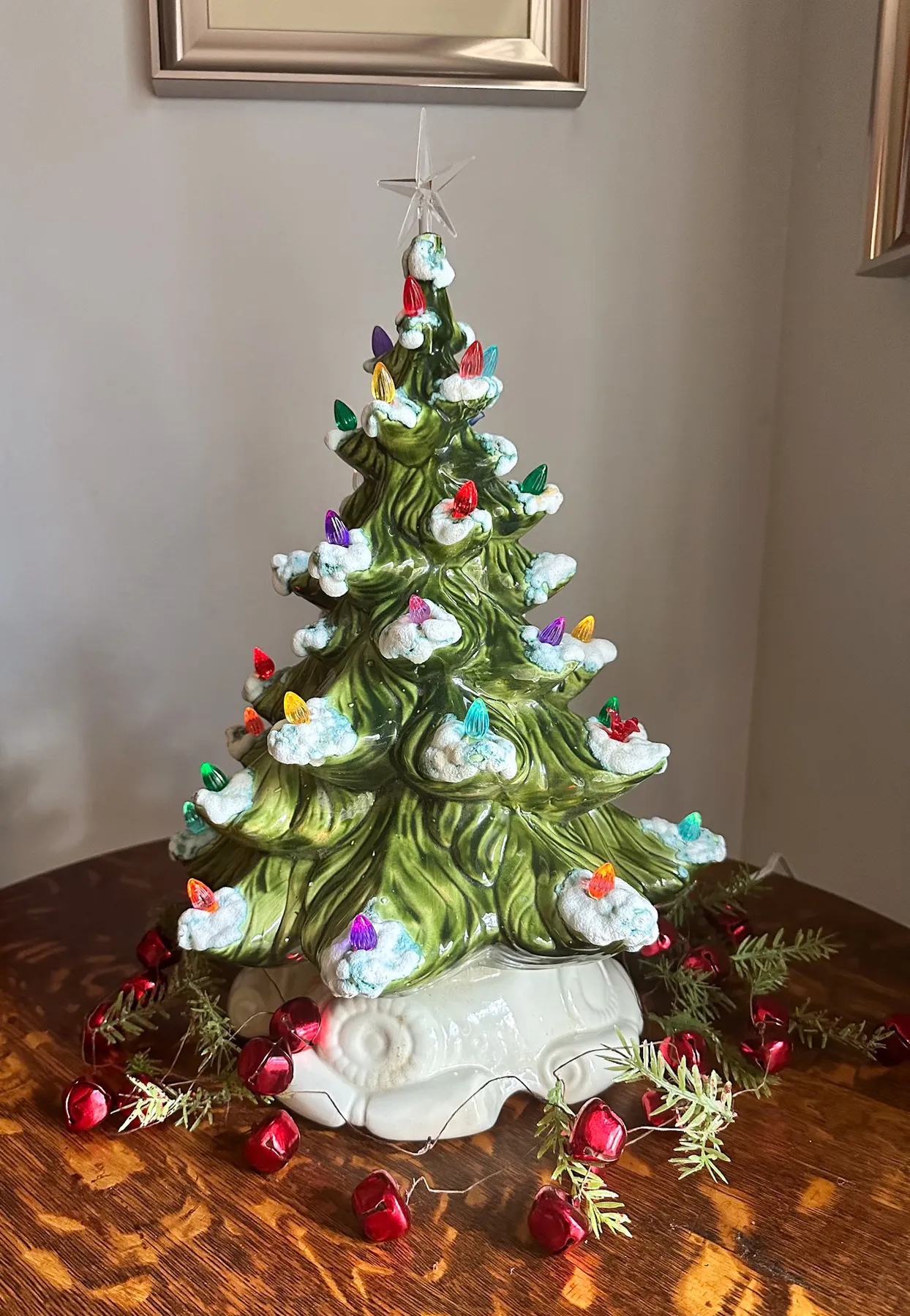
17. Jingle Bells, Pine Sprigs, and a 70/20/10 Breakdown
Count it out: 70% glossy green tree, 20% white snow and base, 10% red jingle bells. Scatter the bells and pine sprigs loosely on the table rather than draping them, and the same proportions work with a burgundy ribbon instead of bells for a more grown-up finish.
18. Painting a Dripped-Glaze Finish in an Afternoon
To get that dripped-glaze look on a plain tiered tree:
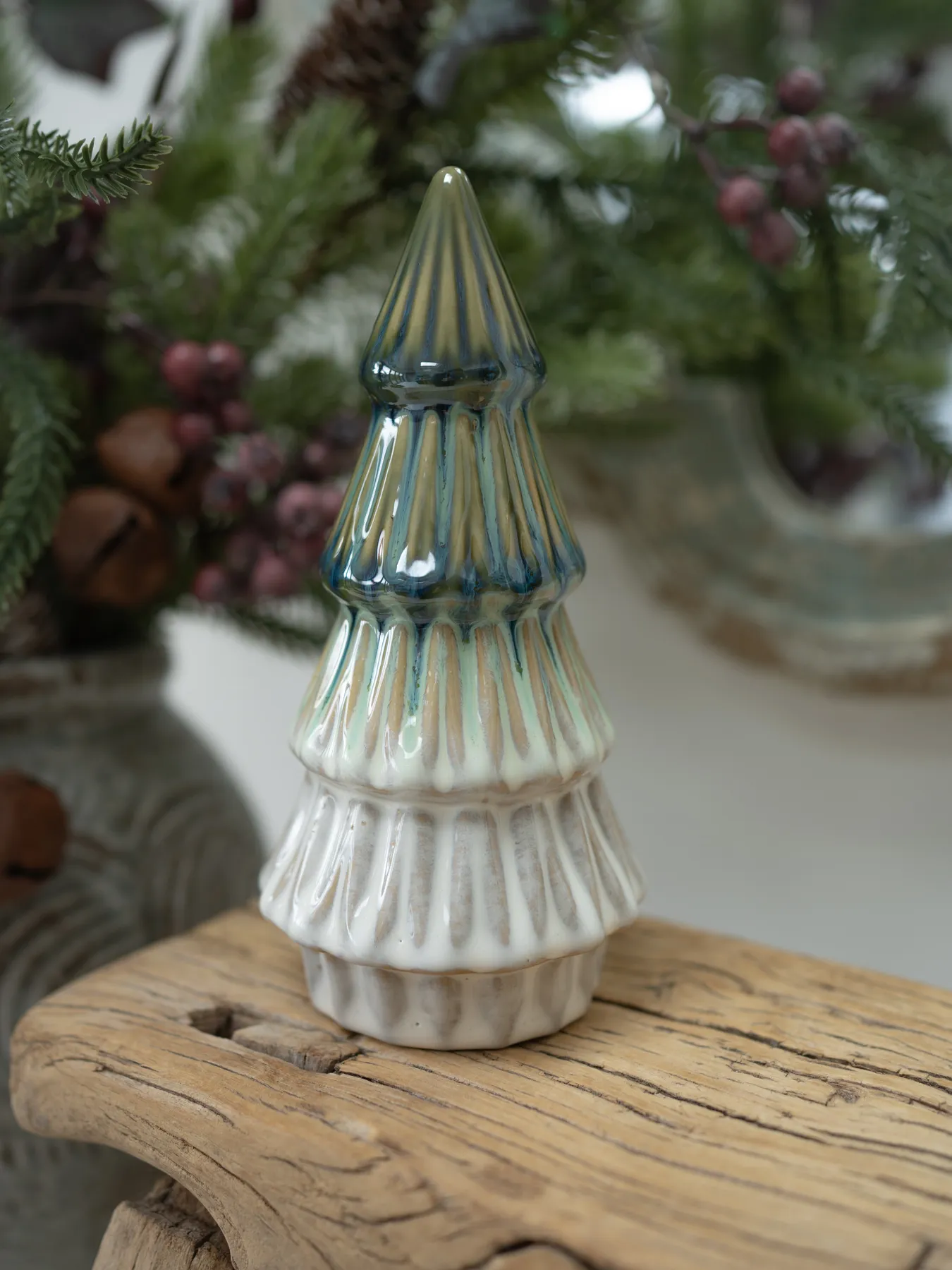
- Sand the piece lightly and wipe it clean.
- Brush teal glaze over the top third.
- Wipe the bottom edge with a damp sponge so it fades to cream.
- Seal with matte acrylic.
About 2 hours and $25 in supplies.
19. The Mantel Behind It Does Half the Work
The mantel. The garland, white candles, and silver ribbons echo the tree’s warm glow and give the glossy green something to sit against — without it, the tree floats. That’s the real lesson: a ceramic tree reads best when a second, quieter light source answers it.
20. Faking a Two-Tone Glaze With One Can of Spray Paint
Tiered trees with a two-tone glaze are the easiest to fake. Spray the top two tiers dark green, leave the lower tiers lighter, then dry-brush the ridges with a touch of gold. Ten minutes, one can of paint, and it looks hand-dipped from across the room.
21. Three Heights You Don’t Have to Buy as a Set
You don’t need a matched set. Singles turn up constantly at thrift stores and Facebook Marketplace for $10–$35, and three different heights grouped on a woven runner read just as well. Compare Idea #3, where matching holly bases do the grouping instead.
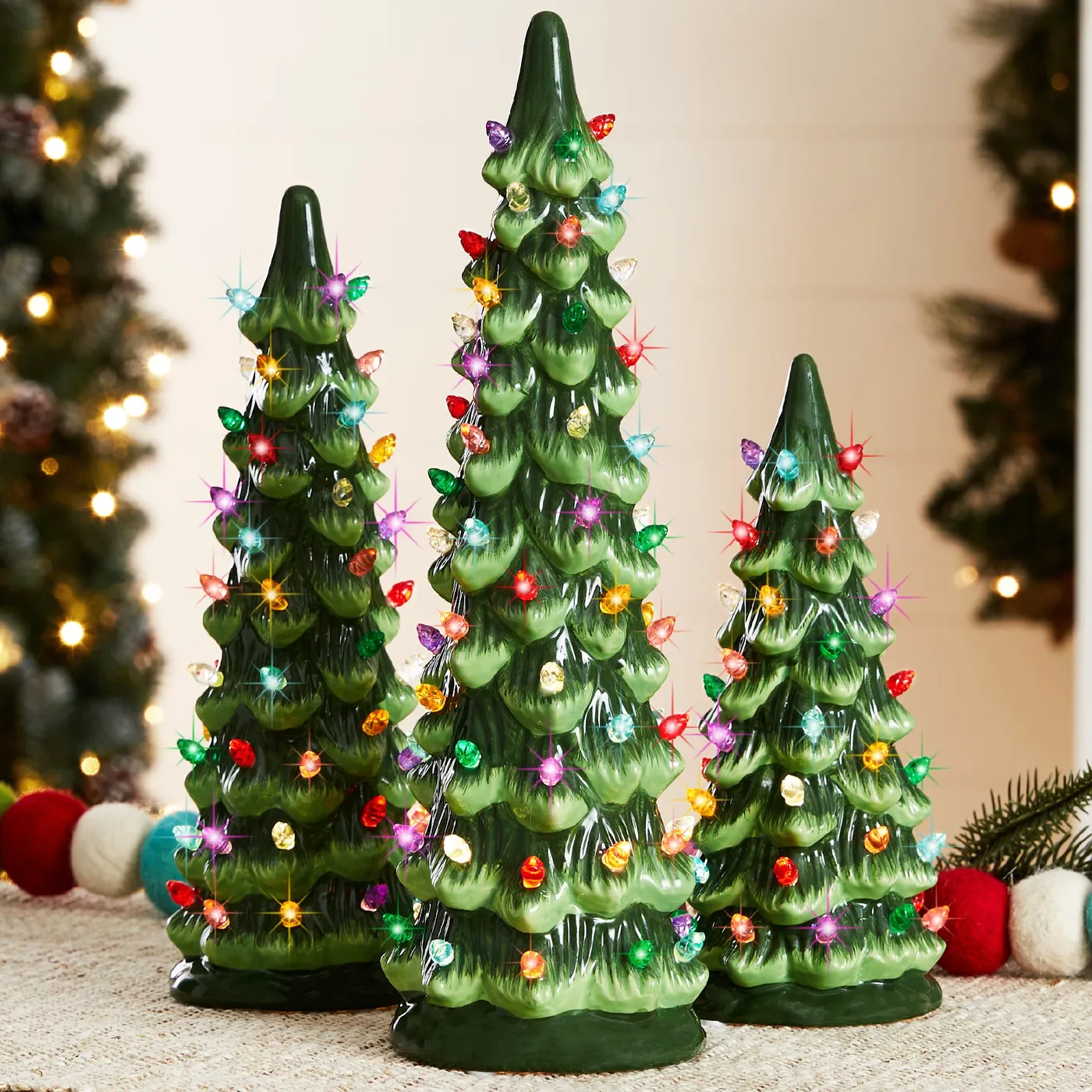
22. Clear C6 Bulbs on the Focal Tree, Color Everywhere Else
Look at the bulbs: clear C6 shapes on the white tree, mixed colors on every other tree behind it. That single deliberate choice keeps the focal piece crisp while the surrounding gold, purple, and black trees supply the color. Repetition in form, contrast in finish.
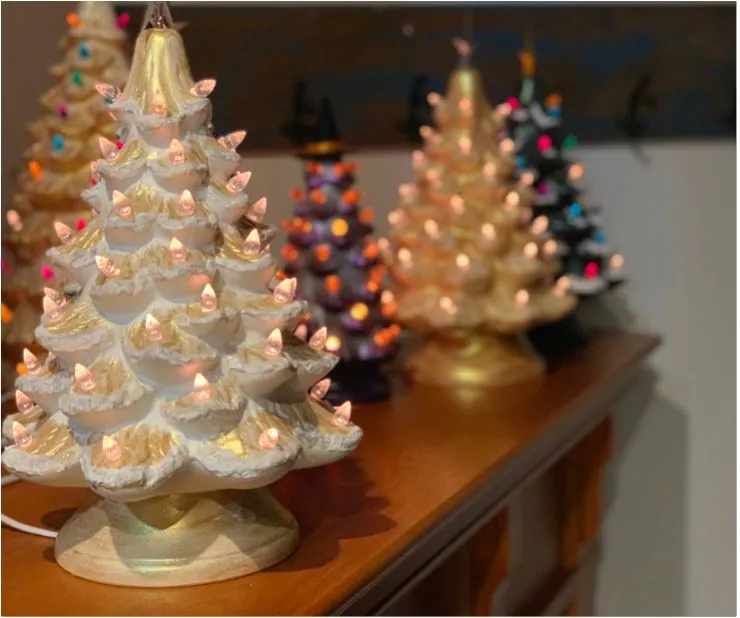
23. Sculpted Snow, Metallic Star, and a Gold Shelf Track
Formula: 60% deep green, 25% white sculpted snow, 10% metallic star and shelf hardware, 5% colored pegs. The gold shelving track matters more than it looks — repeating the star’s metallic tone in the architecture is what makes the shelf read styled instead of simply stored.
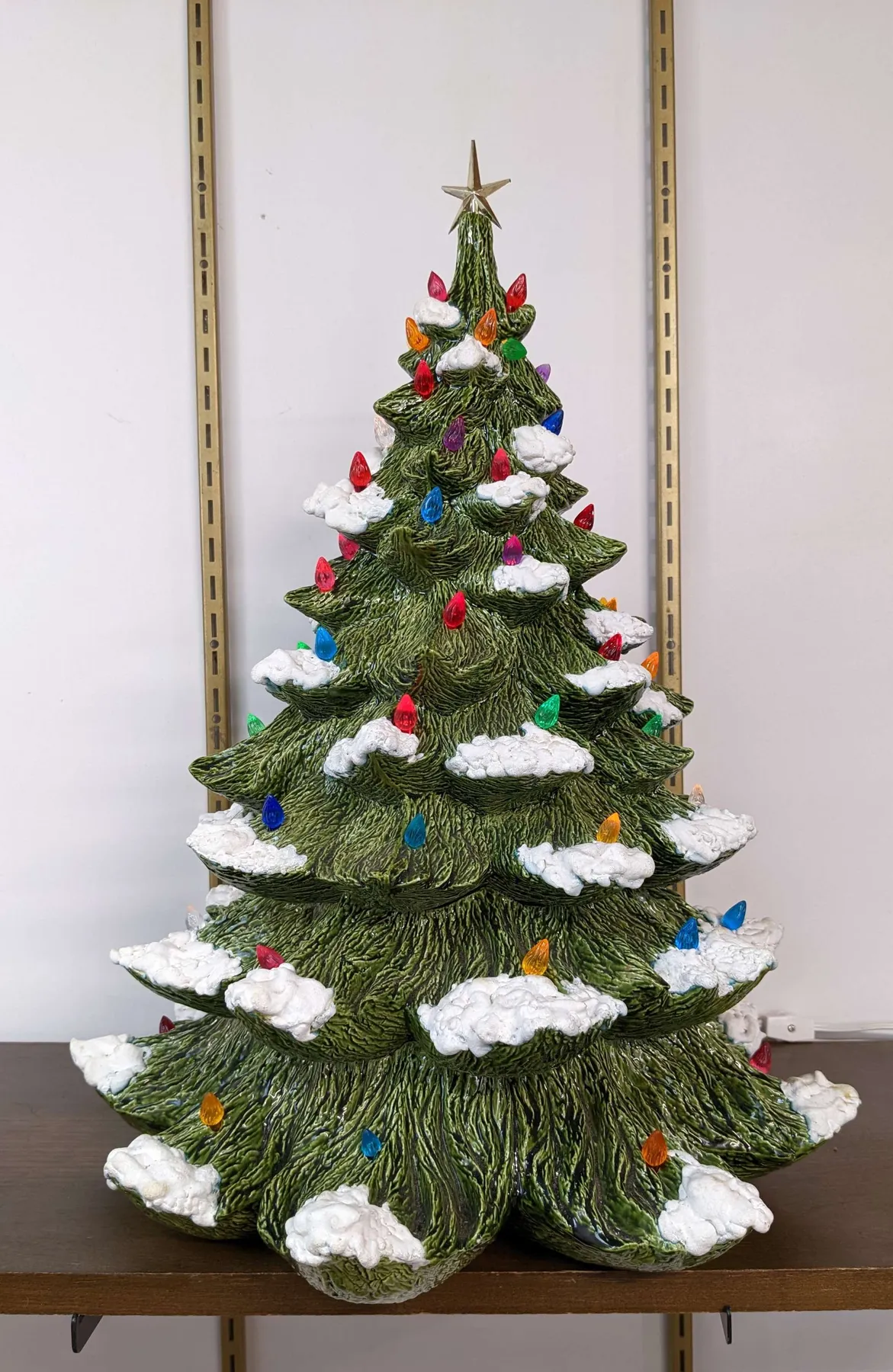
24. Where a Fluted White Tree Actually Fits
A tiered white tree under 14 inches tall is the safest choice for a narrow side table, a bathroom ledge, or a rental kitchen counter — anywhere you have 8 inches of depth and an outlet nearby. Pair it with one soft glow source behind and small spaces still feel dressed.
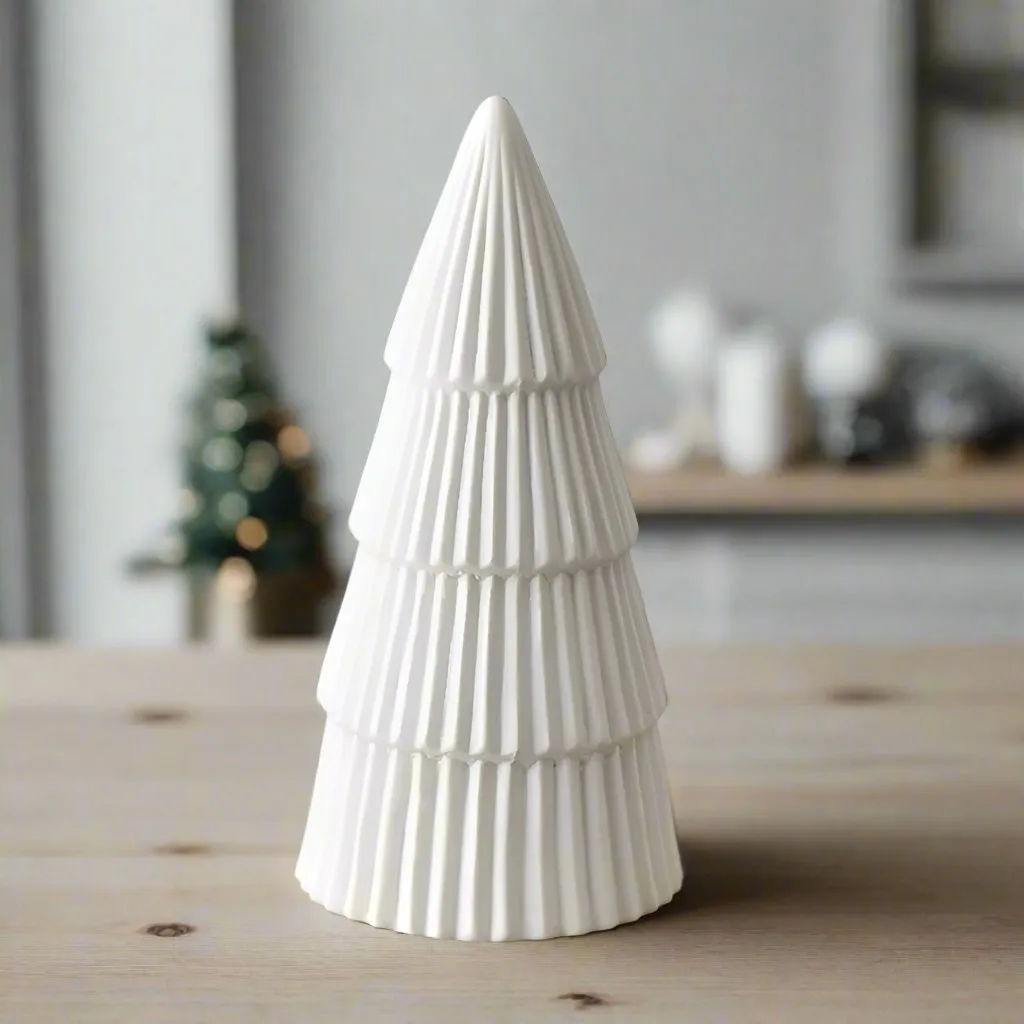
25. Deep Texture, Deep Dust: Living With a Pine-Needle Surface
Heavily textured surfaces trap dust in every ridge. A soft paintbrush once a week handles the deep ones; skip compressed air, which pushes debris toward the socket. Note the internal warm-white lights too — when one burns out the whole glow dims, and replacements are getting harder to find.
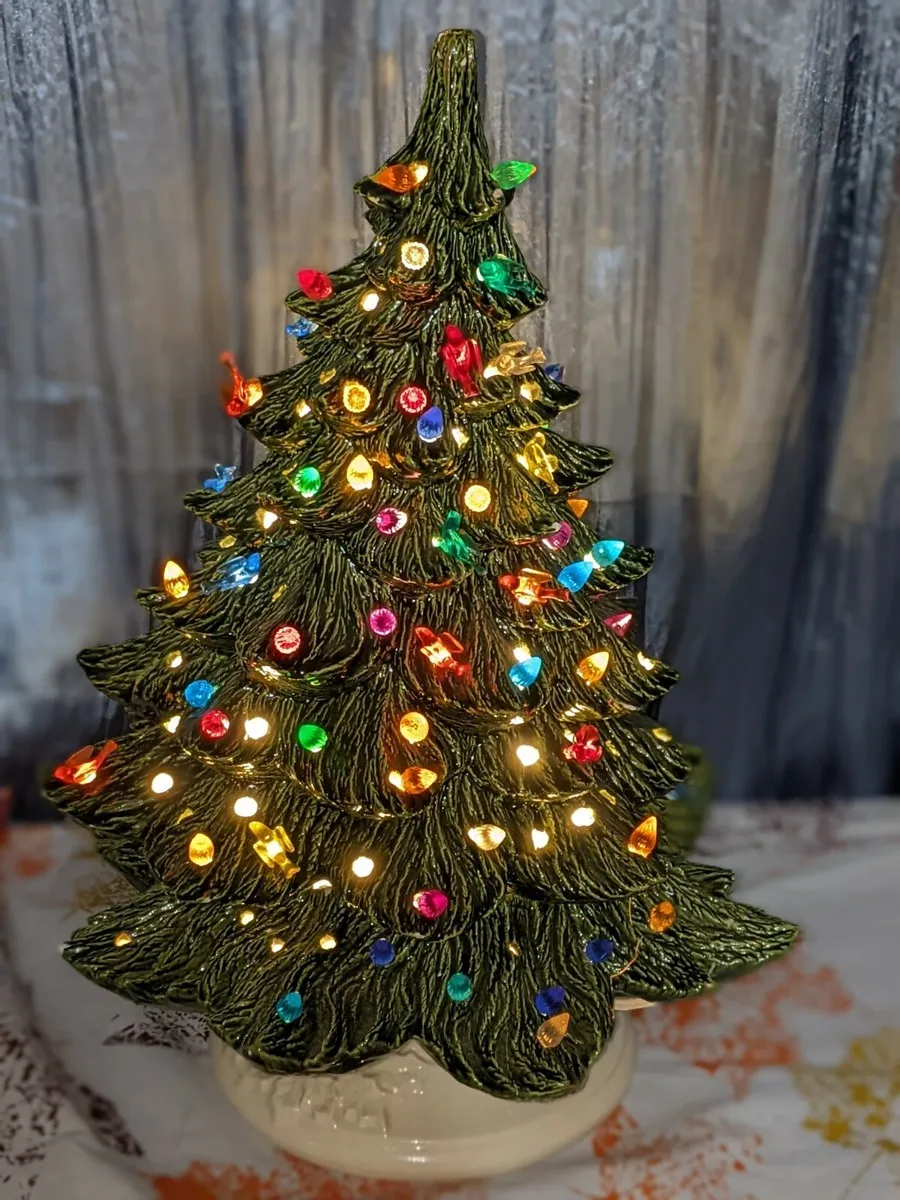
26. Buying Used Means Gambling on the Pegs
Buying used ceramic trees is a gamble on the pegs — they crack, yellow, or go missing. Ask how many are included before you pay, and check that each one twists in smoothly. Missing pegs are easy to replace in bulk; a cracked socket is not.
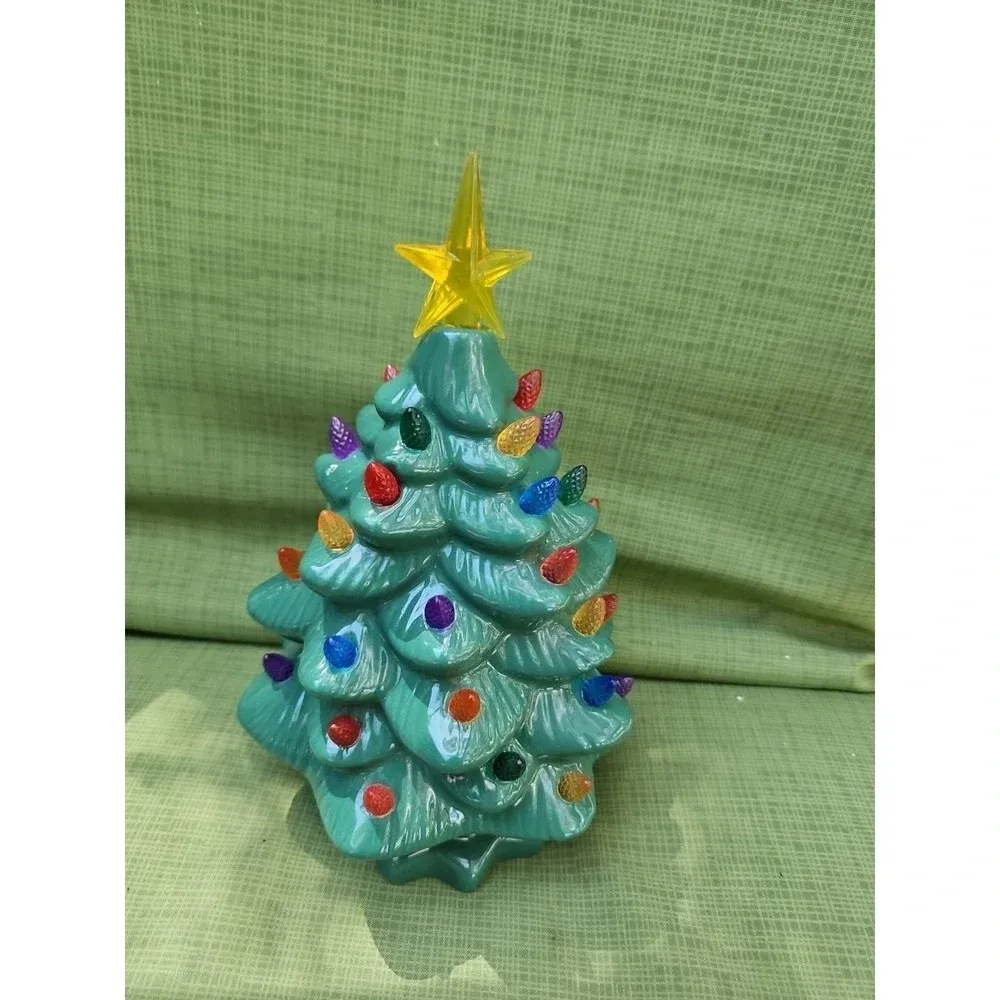
27. Mixing Bulb Shapes Without the Chaos
Mix light shapes on one tree without it looking chaotic:
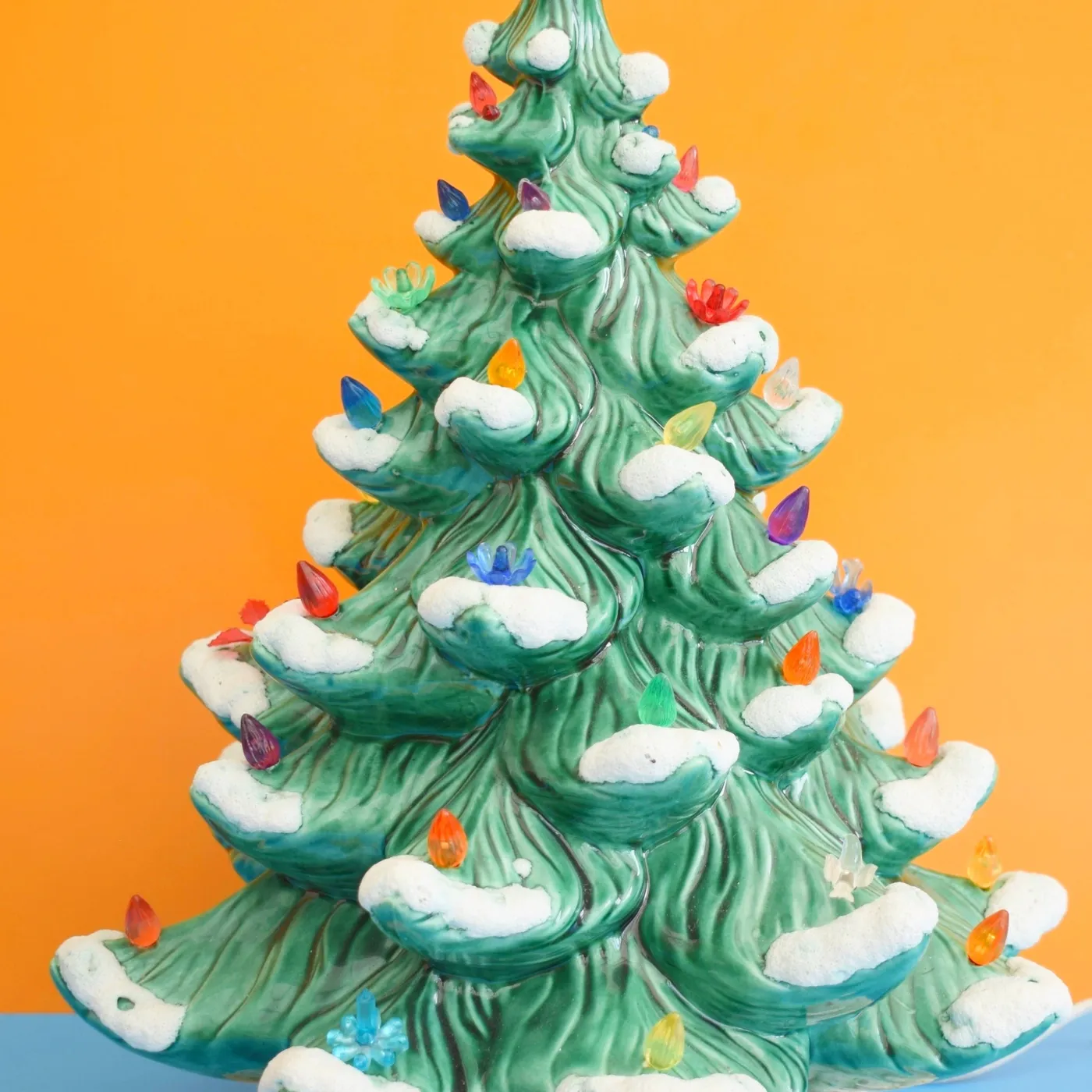
- Keep every peg the same translucent plastic finish.
- Space C7-style bulbs evenly, roughly 3 inches apart.
- Slot flower or snowflake shapes only on the lower tiers.
- Leave the top third to the star.
Ten minutes of arranging, no cost.
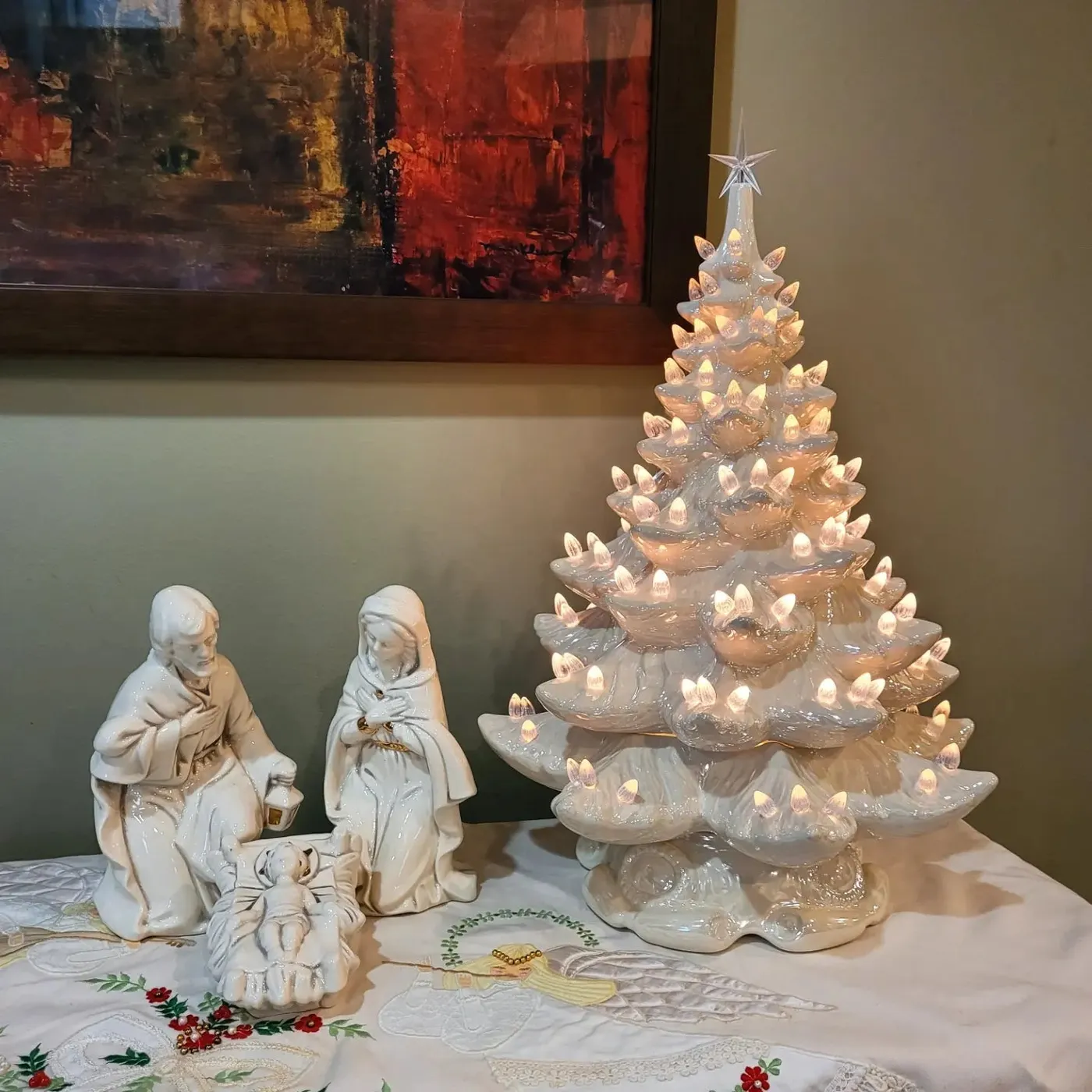
28. A White Nativity Set on the Same Embroidered Runner
The nativity set. A white ceramic tree alone is decor; paired with matching white figures on the same embroidered runner, it becomes a scene — and the olive green wall behind gives both pieces somewhere to rest. Keeping them in one material is what makes the pairing feel intentional.
29. Hand-Painted Trees Held Together by a Tight Palette
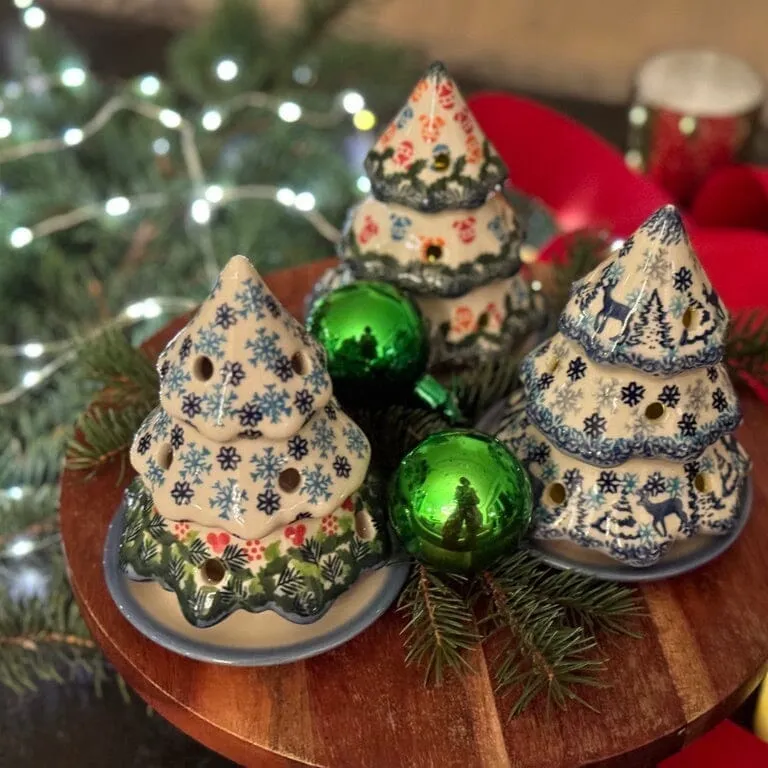
Hand-painted patterns work when the palette is tight: cream ceramic base, deep green and navy motifs, one bright red accent, plus shiny green ornaments repeating the green. If your room runs warm, swap the navy for rust and the same formula holds.
30. The Plainest White Tree Is Also the Cheapest
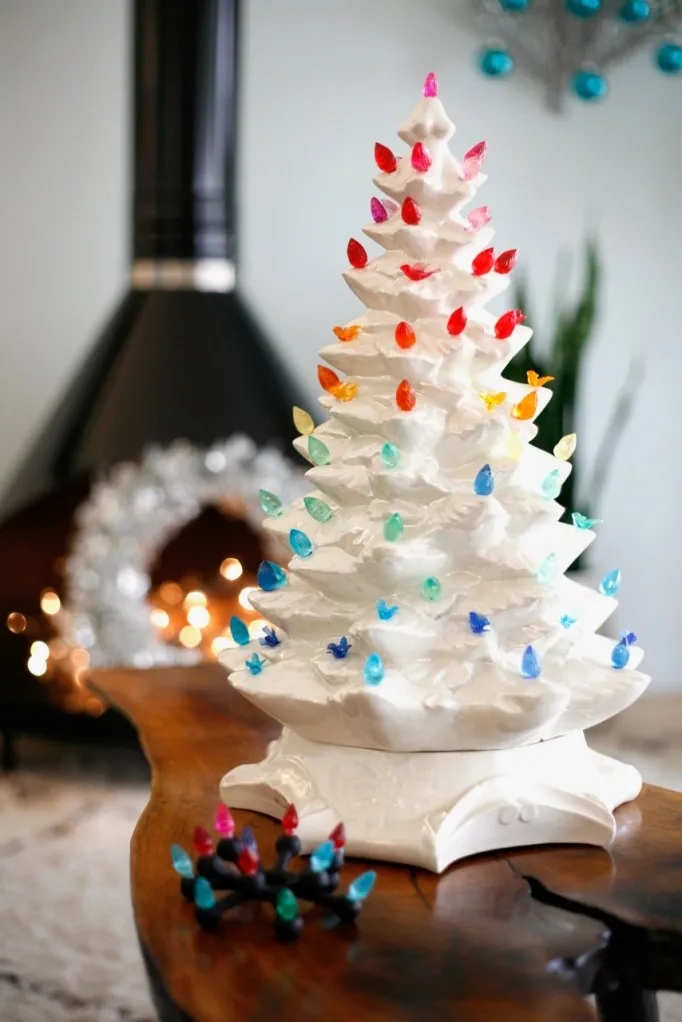
A plain white tree with mixed bulbs is the cheapest version of this look and the most flexible. Target and Walmart stock them for $20–$35 in season; add a few green leaves or a sprig of real greenery beside it and it stops looking like a bare product shot.
31. Paint the Base Instead of the Tree
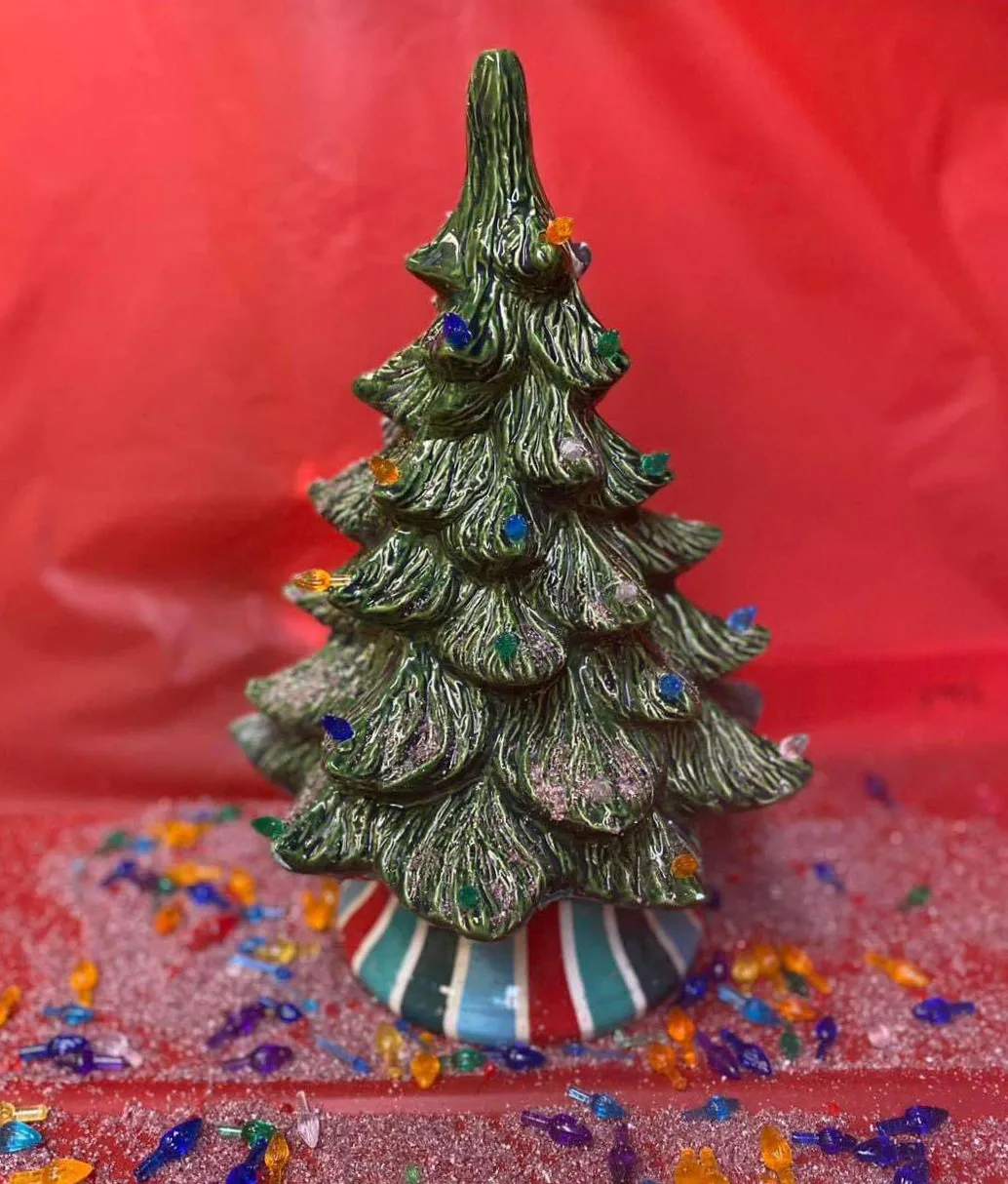
Skip the tree and paint the base. Vertical stripes in red, light blue, and white take about 20 minutes with tape and craft paint, and they tie a green tree to colors you already own. Scatter a few spare pegs on the surface for a lived-in, slightly undone look.
32. Ribbed White Ceramic, Grouped in Odd Numbers
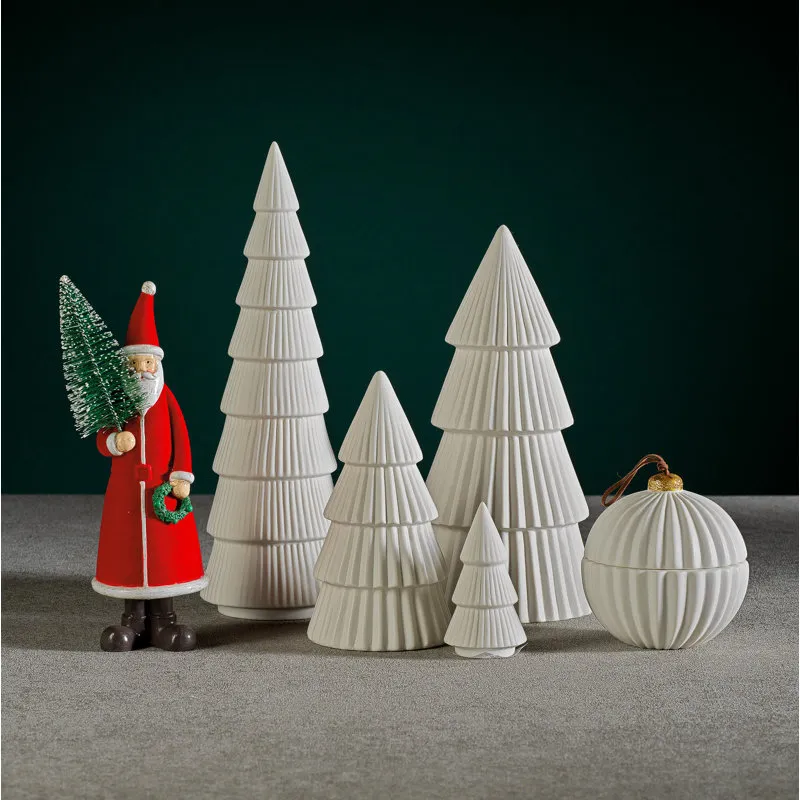
Ribbed white ceramic is where this trend is heading for 2026 — cleaner lines, no bulbs in sight, clustered in odd numbers. It reads modern next to bottle brush trees and a single Santa figure, and it photographs beautifully against a dark teal wall, which is why it’s spreading fast.
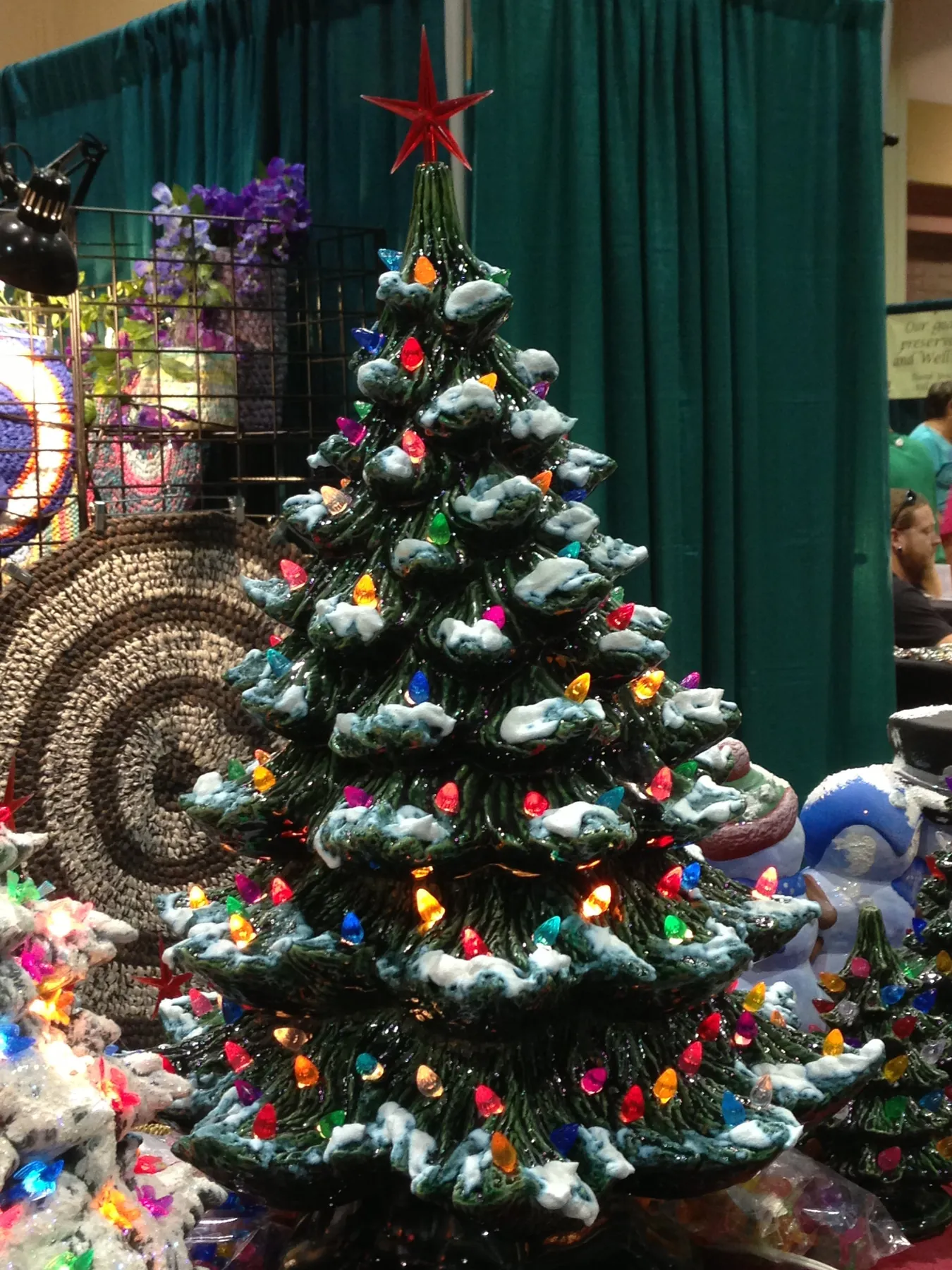
33. The Pleated Curtain That Makes a Small Tree Look Jewel-Like
The backdrop sets the mood: a pleated teal curtain turns a small green tree into a gem, and the woven spiral mat underneath adds texture without competing. Red star topper, scattered pegs, a few craft bits — nothing here is perfectly placed, and that’s the charm.
34. How to Photograph Your Ceramic Tree Like a Stylist
Shoot your ceramic tree like a stylist:
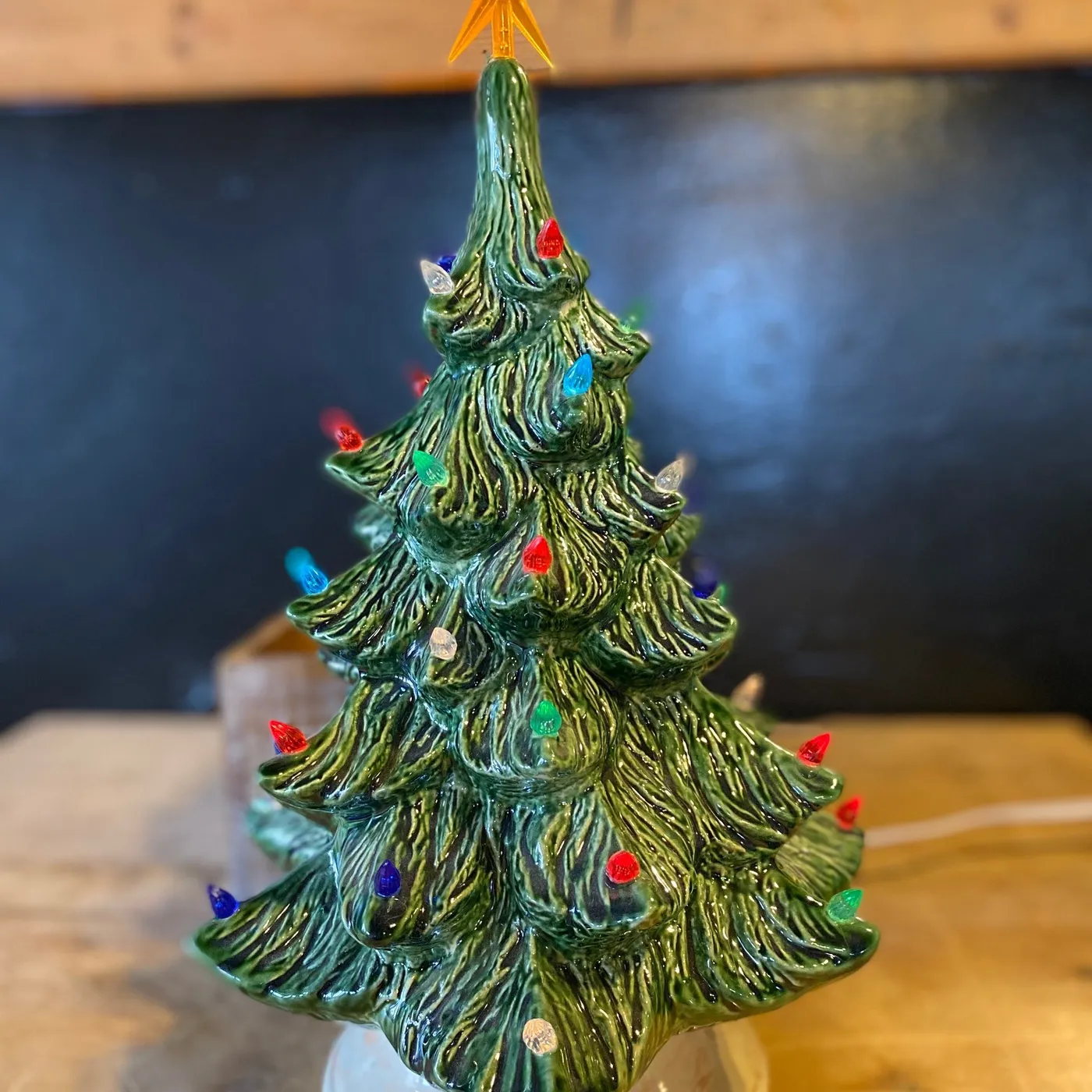
- Set it on warm wood that stays in frame.
- Turn off the overhead light.
- Shoot at eye level with the tree, not above it.
- Keep one lamp glowing behind for depth.
Five minutes, phone camera, no filter.
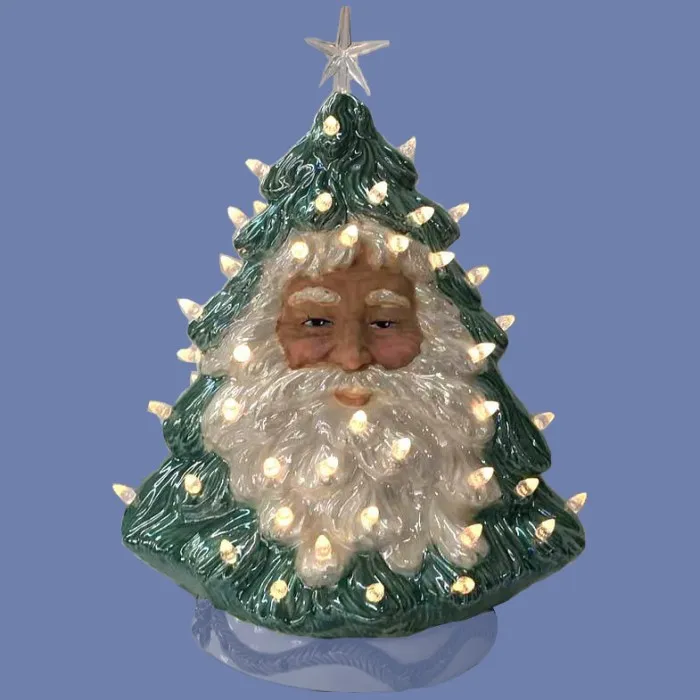
35. Santa-Faced Trees: Charming, and Very Particular
Santa-faced trees are charming and very specific — if your holiday decor leans minimal, this one will look like a guest from another house. Keep it on a bar cart, kitchen counter, or hallway where the humor lands. The white beard detail also shows dust, so it wants a wipe-down more often.
36. Disco Balls Need Distance to Cast Speckled Light
Disco-ball styling needs room for the light to travel — roughly 4 feet of clear wall behind the tree, or the speckles disappear and it just reads as clutter on a narrow shelf. Compare with Idea #12, where the same mirror trick works on a cabinet top with more distance.
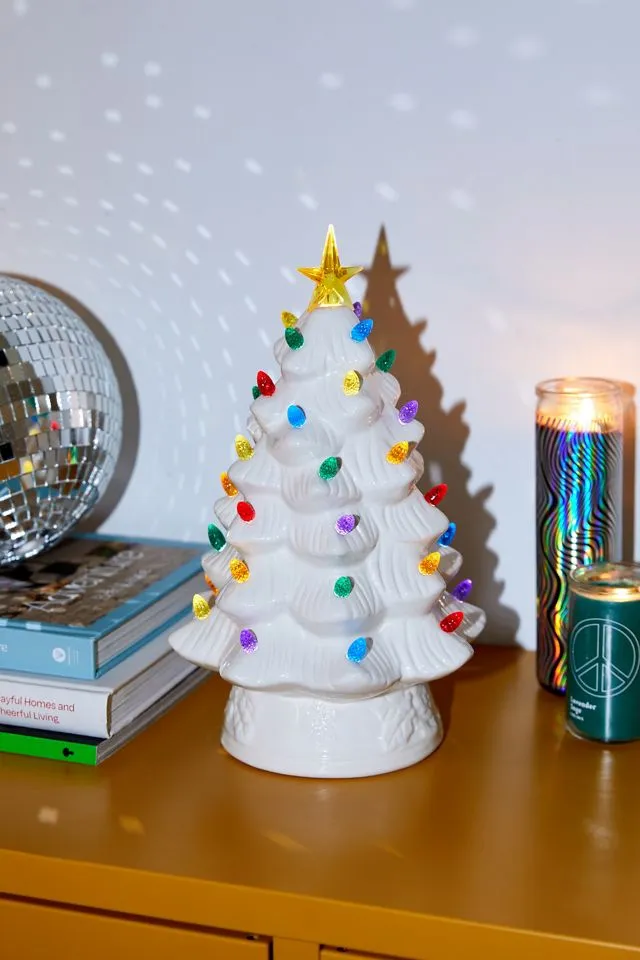
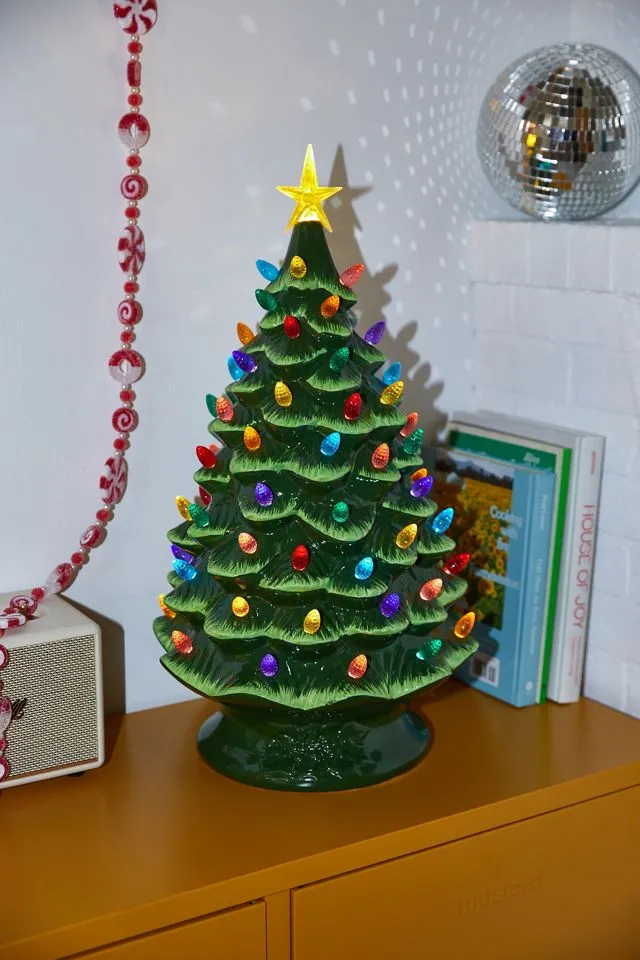
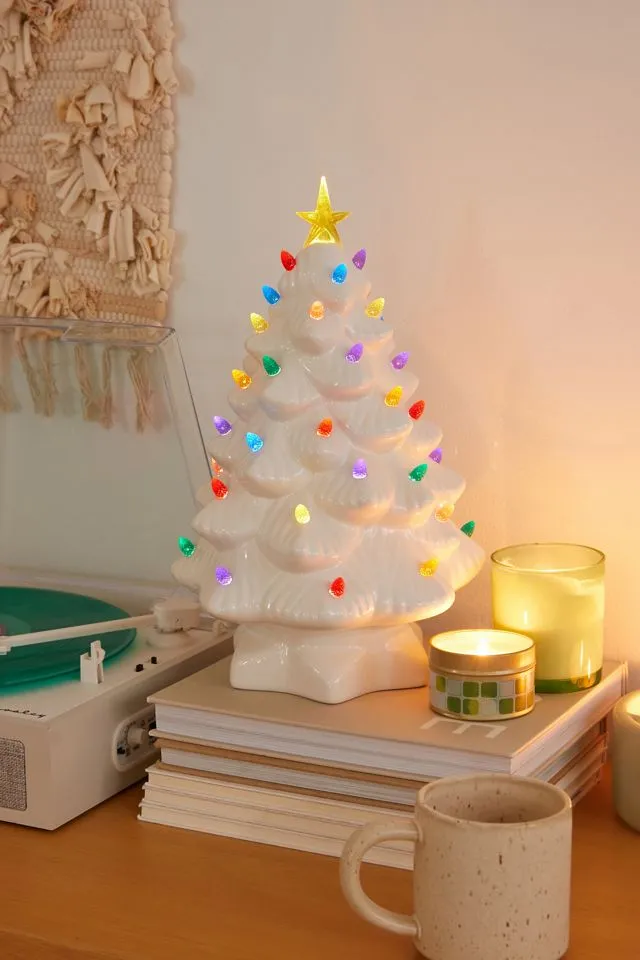
37. The Book Stack That Lifts the Star to Eye Level
The book stack. Raising the tree four inches off the surface puts its star at eye level when you’re on a sofa or reading in bed, and the stacked spines add color no ornament could. It’s the cheapest height fix in holiday styling.
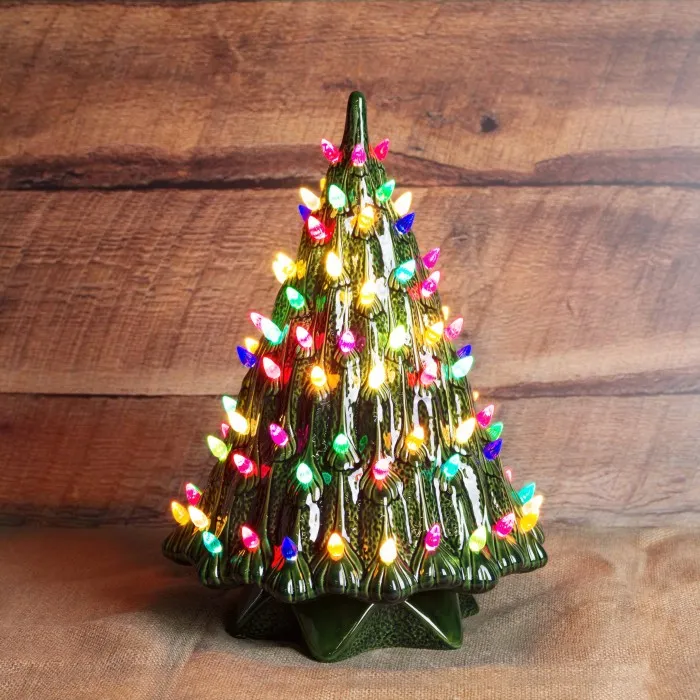
38. Dark Gloss Against a Rustic Plank Wall
Dark on dark: a glossy green tree against a rustic wood plank wall feels intentional because the tones echo each other and only the multicolored bulbs break through. The star-shaped base and textured surface keep the silhouette from flattening into the background behind it.
Thirty-Eight Trees, One Perfect Corner
Start with one tree, one surface, and whatever light you already have — the rest tends to sort itself out from there. If you try one of these, tell us which corner got the glow. 📌 Save this to Pinterest so you can find it again when the holiday bins come out.